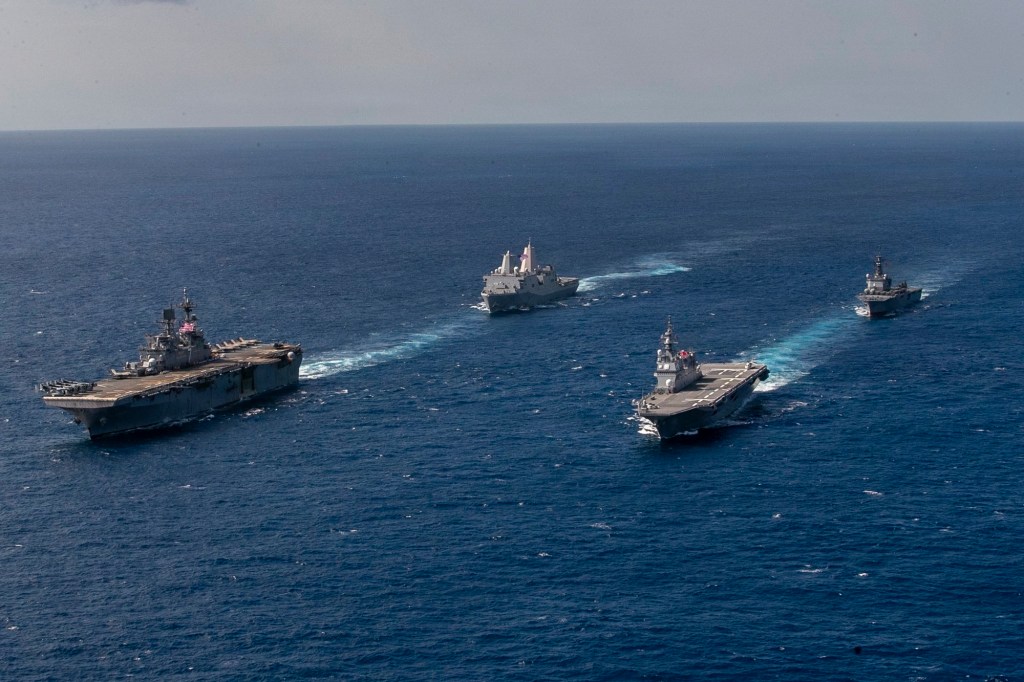
March 13th it was announced that a Marine Expeditionary Unit and its supporting warships would be deploying to the Middle East region at the request of the U.S. Central Command, to help with the current operation in Iran.
This move was originally reported by the Wall Street journal and is seen as a response to the ongoing attempted closure of the Strait of Hormuz, a thin stretch of ocean that Iran has threatened to close for years, cutting off much of the oil coming from the region. The closure has had a direct effect on oil prices and the price at the pump in America and beyond.
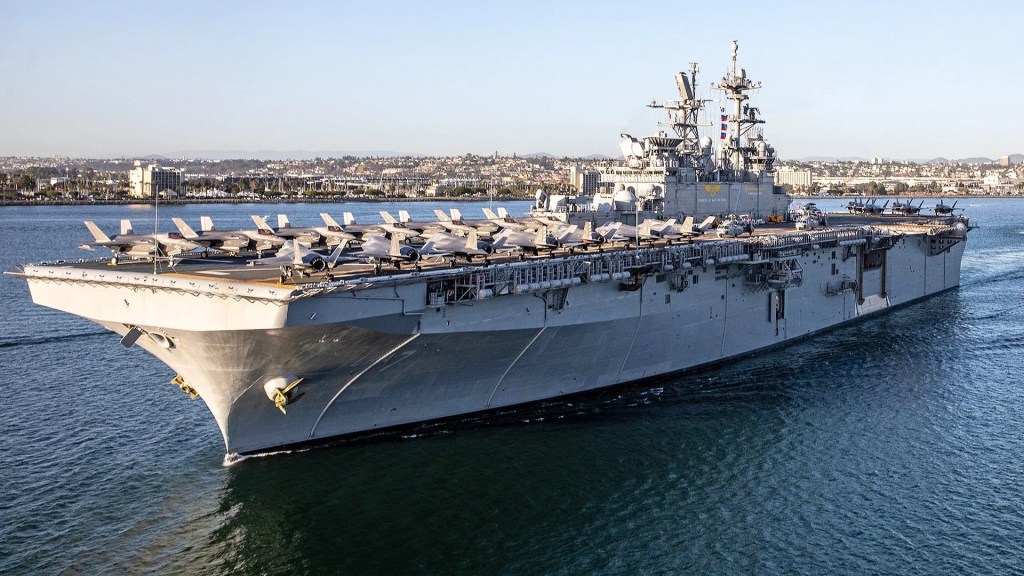
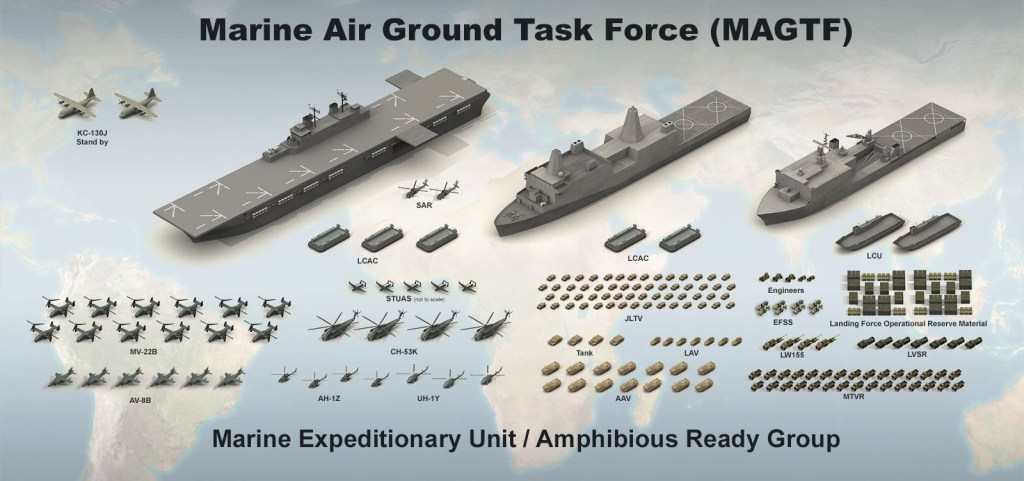
The Wall Street journal reported that the U.S. Secretary of Defense Pete Hegseth has approved a request from CENTCOM for an element of an Amphibious Ready Group as well as the attached Marine Expeditionary Unit, according to three US officials who spoke with the WSJ. The amphibious ready group or ARG is usually made up of an assault ship, two (SAN ANTONIO-Class) transport docks, and a support vessel that carries an embarked Marine Expeditionary Unit (MEU) of at least 2,200 Marines. In this case the sources who spoke to the WSJ said the USS Tripoli(LHA-7) is being sent from its usual base in Japan along with the USS San Diego (LPD-22) and USS New Orleans (LPD-18). These ships make up the 31st Marine Expeditionary Unit (31st MEU).
If needed, other MEU’s are also available for operations in the Middle East.
The Marine Expeditionary Unit was developed as a highly versatile, somewhat self-contained fighting force that can be called upon to quickly respond to situations. They were put together and usually kept in areas where the U.S. expects to need marines quickly, such as the pacific or often in the Middle East.
As stated by the Marines website the four elements of the MEU are as follows.
Command Element – Serves as the headquarters for the entire unit and allows a single command to exercise control over all ground, aviation, and combat service support forces.
Ground Combat Element – Provides the MEU with its main combat punch. Built around a Marine infantry battalion, the GCE is reinforced with tanks, artillery, amphibious vehicles, engineers, and reconnaissance assets.
Aviation Combat Element – The ACE consists of a composite medium helicopter squadron containing transport helicopters of various models and capabilities, attack helicopters and jets, air defense teams, and all necessary ground support assets.
Logistics Combat Element – Providing the MEU with mission-essential support such as medical/dental assistance, motor transport, supply, equipment maintenance, and landing is the mission of the LCE.
The marine website also list some of the missions that the MEU trains for.
– Peacekeeping/Enforcement
-Humanitarian/Disaster Relief
– Security Operations
– Noncombatant Evacuation Operations
– Reinforcement Operations
– Amphibious Raids/Assaults/Demonstrations
– Tactical Deception Operations
– Airfield/Port Seizures
– Show-of-Force Operations
– Reconnaissance and Surveillance
– Seizure/Recovery of Offshore Energy Facilities
Having the MEU available in the region does not necessarily mean that they will be used for ground combat roles. Iran still has a large fighting force made up of Iranian Revolutionary Guards Corp as well as the regular army meaning any ground operation will likely involve considerably more troops than come with the MEU. However the MEU provides a wide range of options for commanders to use towards completing their goals.
Let’s look at some of what the MEU brings to the fight.
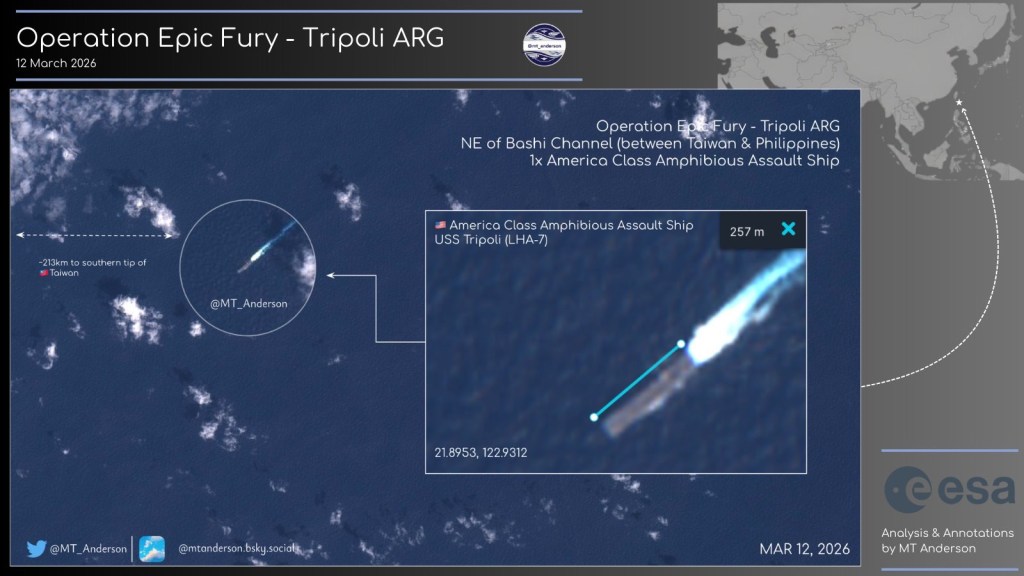
The USS Tripoli (LHA-7) is the second of the America-class amphibious assault ships, which is itself an upgrade on the Wasp-Class amphibious assault ship. This class removed the well deck usually used for landing ships, giving the Tripoli, and the America much more hanger space as well as extra aviation repair and armament storage.
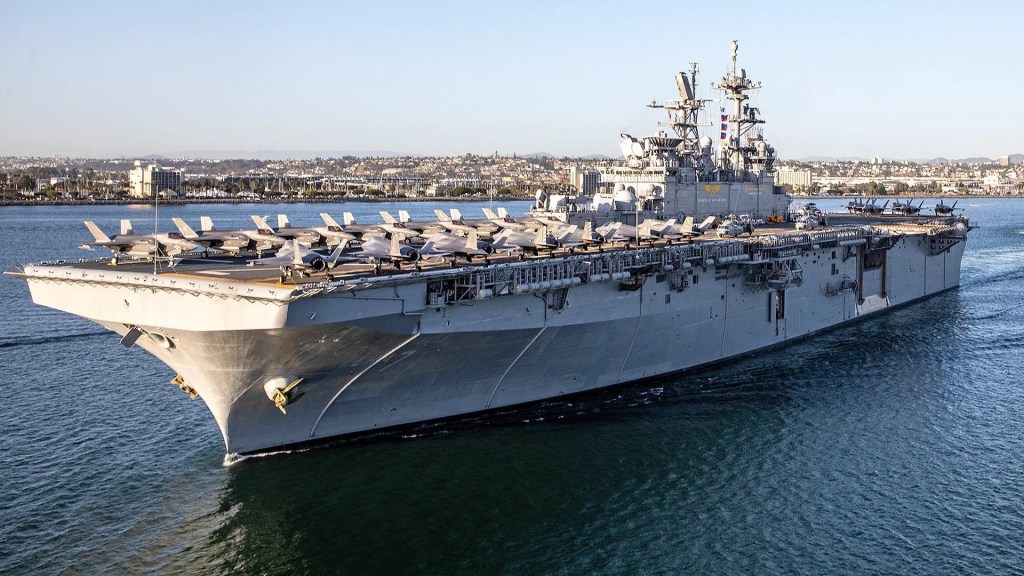
The ship is protected by RIM-116 Rolling airframe missiles for protection primarily against anti-ship missiles.
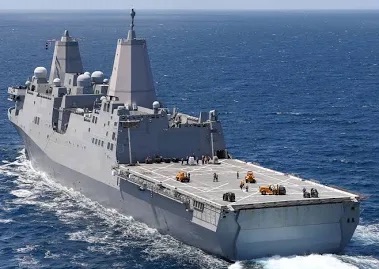
USS San Diego and USS New Orleans are both San Antonio-Class Amphibious Transport Docks. These ships mostly focus on carrying Marines and using their large CH-53 Sea Knight and MV-22 Osprey’s and landing ships to put a good sized marine fighting force anywhere nearby in a short amount of time, useful for seizing a landing zone for example.
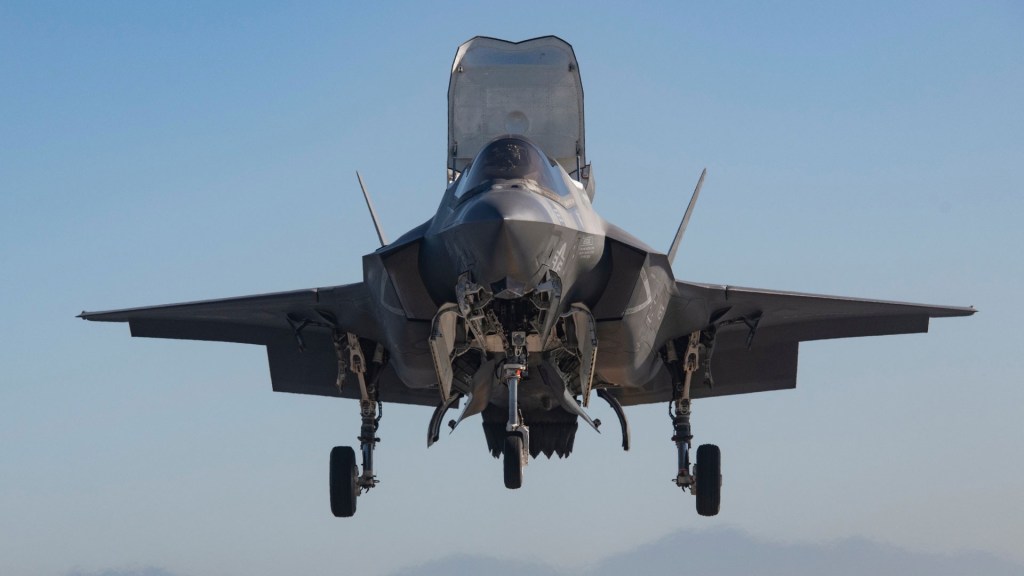
The ability of the 31st MEU to to strike targets using the F-35B’s as well as AH-1Z Viper and UH-1Y Venom helicopters it’s important in supporting the marine fighters and would be especially useful for hunting down the slow flying Shahed drones as well as the smaller craft used by the Iranian navy.
The 31st MEU should arrive in the Middle East in about two weeks.the Tripoli was spotted on satellite imagery heading south from its Okinawa home port.
The other Marine expeditionary units could be called to the region if needed.
 Global Conflict Reporting
Leave a comment