Early this morning, Ukrainian drone forces launched an attack on the Rostov-on-Don region of Russia, starting a large fire at a facility connected to the Novoshakhtinsk Oil Products Plant (also called NZNP or Yug Rusi). The facility isn’t the refinery but instead a riverside oil-loading terminal used to store and pump oil to ships on the Don River or trains. The Don River feeds out to the Sea of Azov and the Black Sea.
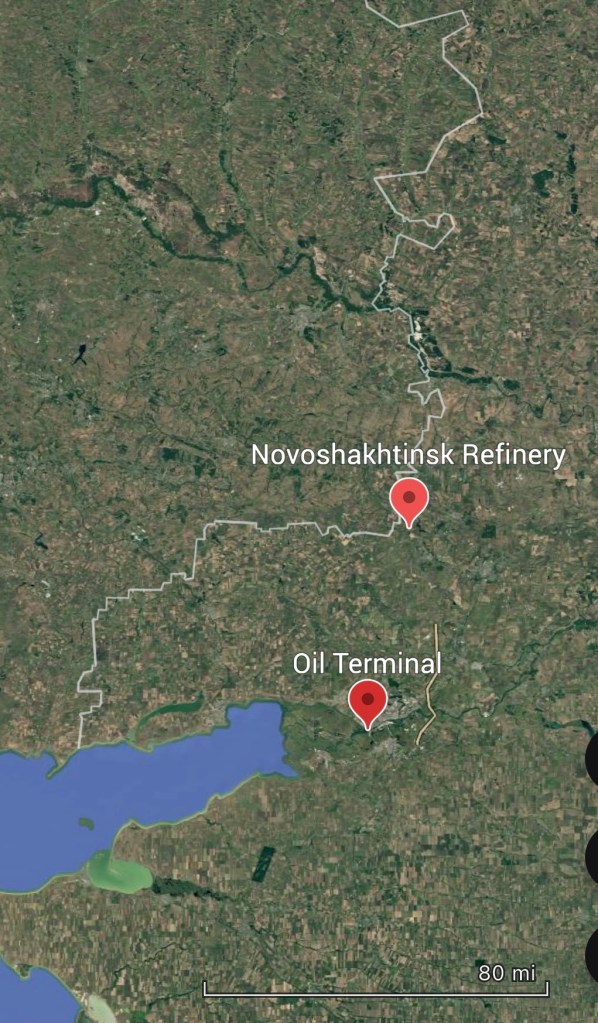
The facility mostly handles oil products from the Novoshakhtinsk Oil Refinery, 46 miles to the north. This facility was also attacked back on September 25, 2026, and a large fire resulted from it.
Google Earth view showing the location of the Oil Refinery and the Oil-Loading Terminal.
Videos circulating on multiple accounts on Telegram appeared to show large fires coming from the facility as well as thick smoke.
Ukraine has so far not taken credit for the attack. Russian authorities only admit that air defense was active this morning, but wouldn’t confirm damage to the site.
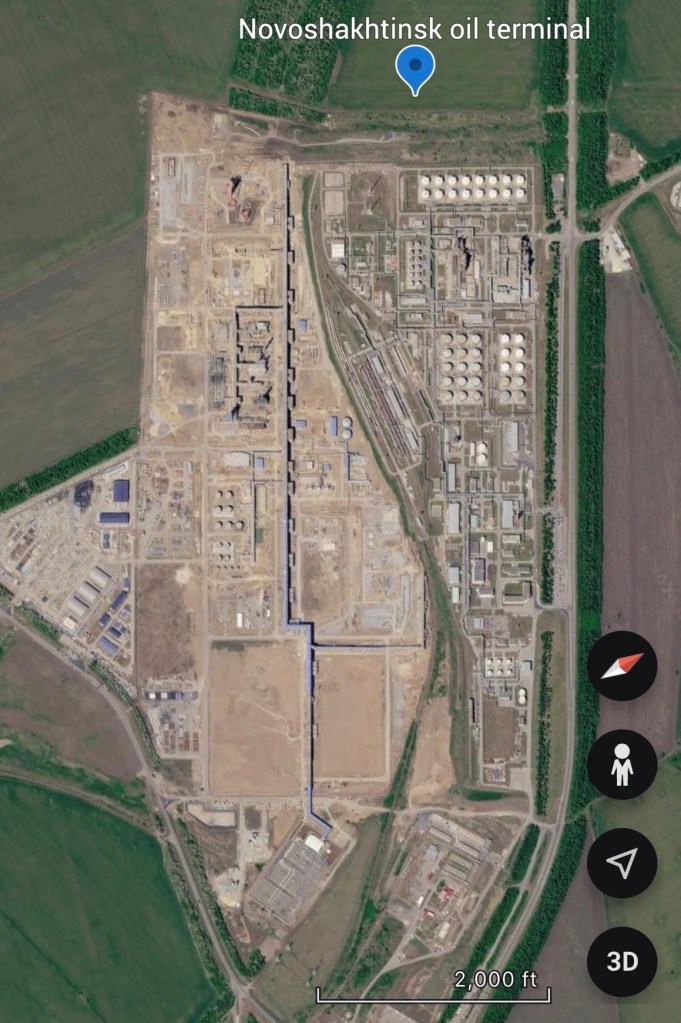
The location of the oil refinery can be seen below. It’s a large facility with room to grow. As mentioned before, the site has been targeted 5 times before, most recently on September 25, 2026.
Google Earth image of the Novoshakhtinsk Oil Products Plant (NZNP)The Oil-Loading Terminal
The site is one of the larger refineries in southern Russia. The facility processes 5.6 million tonnes of crude per year. The site mainly produces fuel oil (mazut), furnace fuel, marine fuel, diesel, and straight-run gasoline/naphtha.
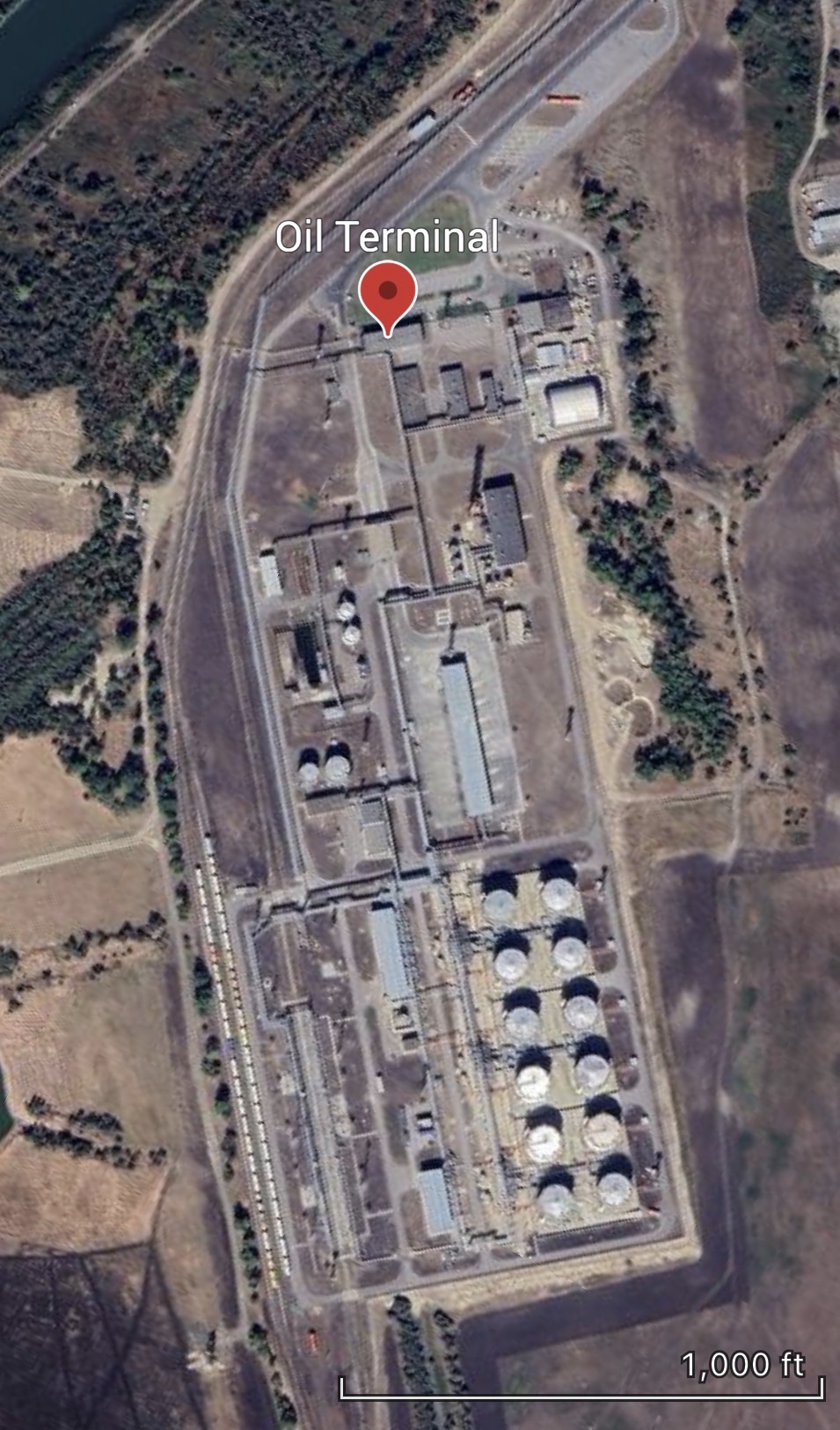
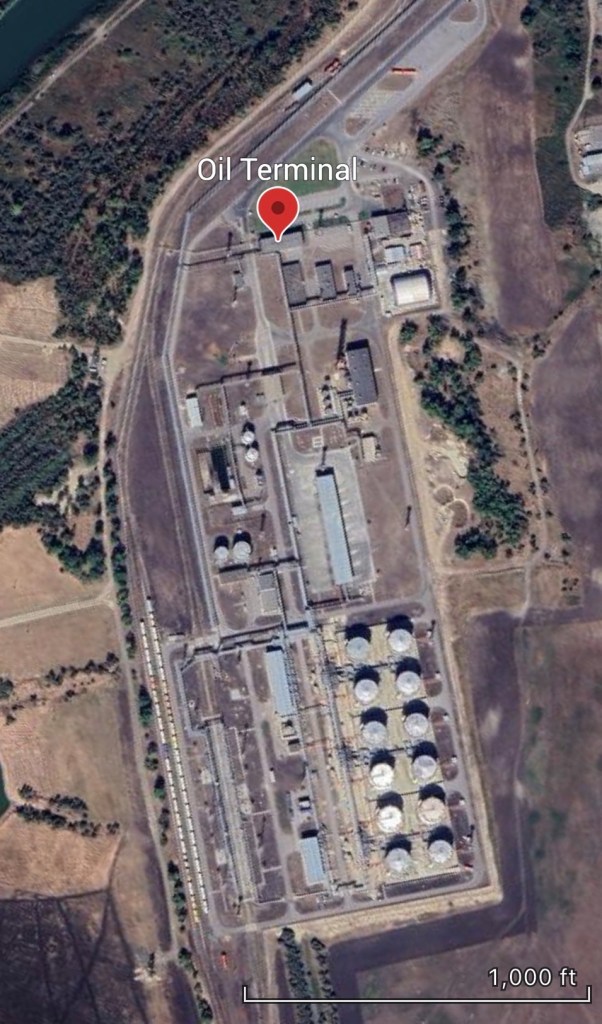
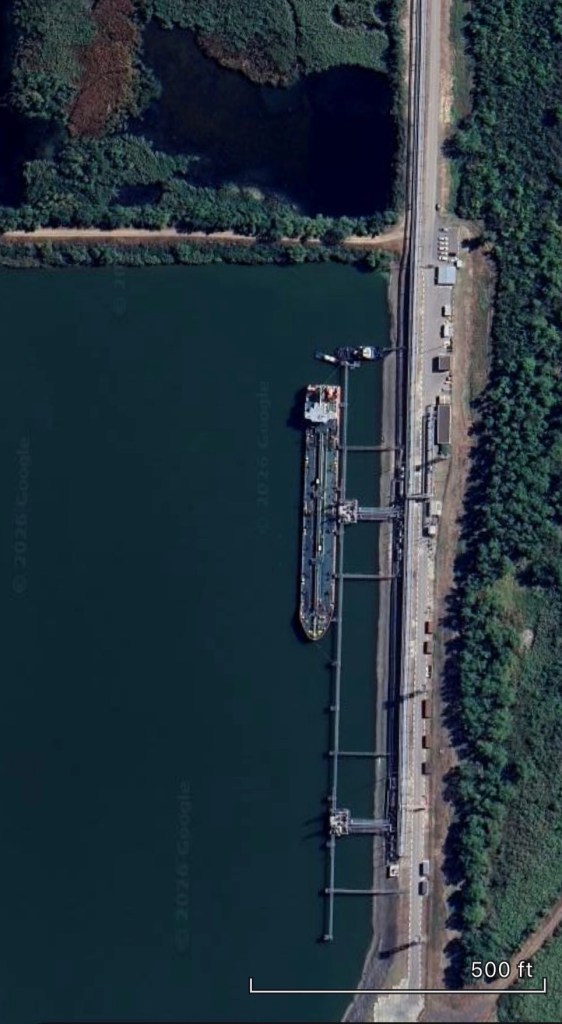
The Oil-Loading Terminal (shown below) sits almost 50 miles away on the River Don and handles loading onto trains and river barges. Products go to domestic southern Russian markets, military supply, and export (including via the Sea of Azov).
Image shows the river loading terminal.
This strike happened on the night of the day that U.S. President Donald Trump announced on social media a deal made with Russian President Vladimir Putin. The statement said that Russia will supply diesel to global and U.S. markets to help reduce fuel prices, leading to a temporary lift of US sanctions on Russian fuel.
Ukraine’s President Zelenskyy argued that the deal would not help in achieving peace and would instead allow Russia to continue its aggression. Even many of Trump’s fellow Republicans have condemned this agreement, the details of which can be seen in Trump’s post below.
U.S. President Donald Trump’s Truth Social post announcing the deal with Russia.
Most of the criticism of the deal stems from the low amounts of product actually being sent. Energy analysts and experts have said that the U.S. alone uses approximately 3.6 million to 3.9 million barrels of diesel a day (or roughly 414,000 tonnes), making the first shipment enough to cover one single day of U.S. use. The other shipments are larger, but the whole deal total only covers 3-4 days of America’s diesel needs.
This deal reverses many of the sanctions put on Russia, at least temporarily. It gives Russia financial relief at a time when Ukraine feels pressure is more important.
Houthi forces based in Yemen have struck the King Khalid International Airport in Riyadh, Saudi Arabia, with ballistic missiles.
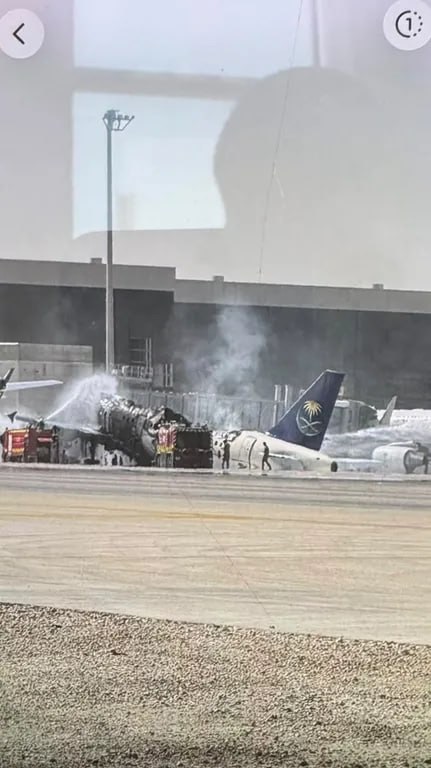
The attack was reported this morning, October 8, 2026, and images and video were released showing smoke coming from the scene.
Smoke coming from King Khalid International Airport.
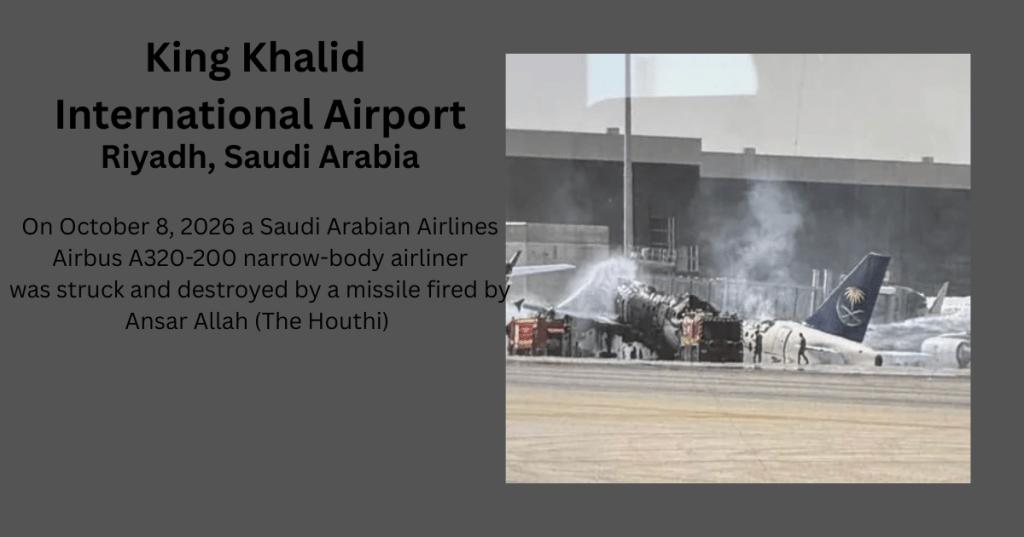
Destroyed in the attack was an Airbus A320-200 narrow-body airliner owned by state-owned Saudi Arabian Airlines. The plane was parked in a terminal at the time of the strike but no passengers were on board.
Aftermath of the strike which destroyed a Saudi Airbus A320-200. The Saudi airlines tail is clear in the image.
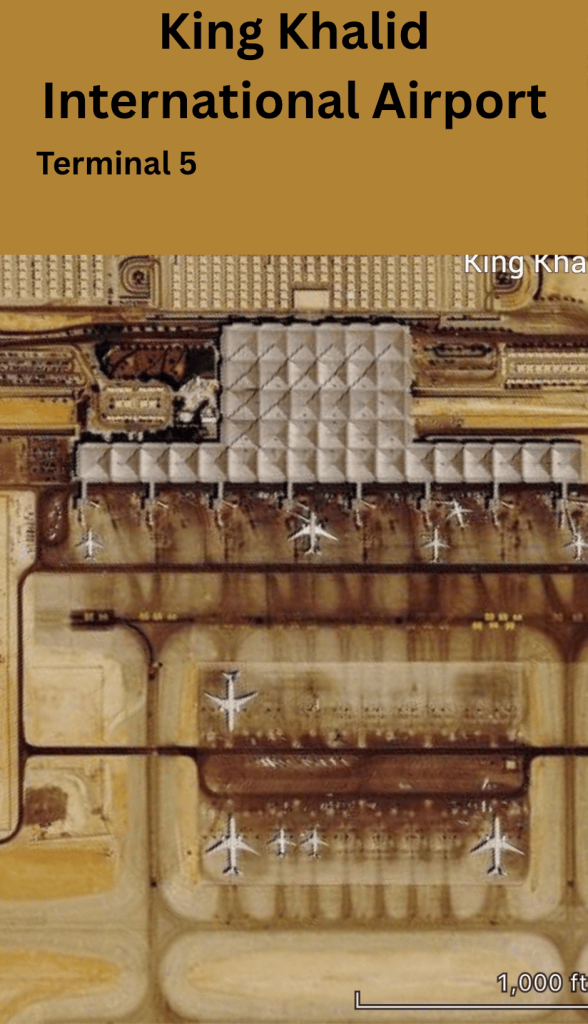
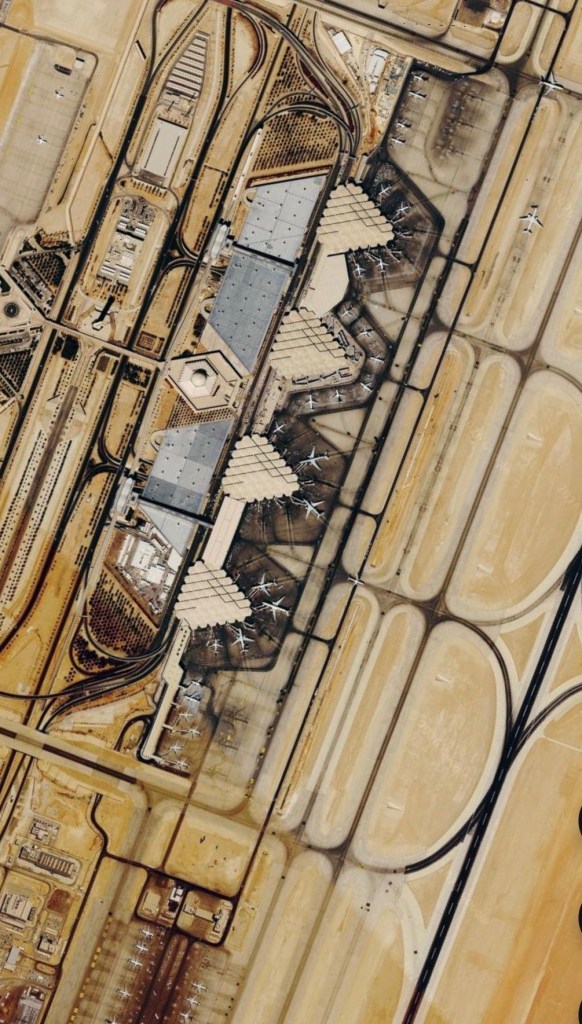
GCR has analyzed video and images of the strike and determined that the plane was sitting at one if the gates at Terminal 5 at the time of the strike. (Image with post) This terminal is newer than the others and used for the domestic Saudi flights. The roof and shape of the building were key to the identification as the building is flat faced with the other 4 terminals all follow the same style with a portion of the terminal gates protruding out. The roof pattern was also noted in as the overhang is specificity different from the thermals 1-4.
The site GCR believes the plane was sitting when it was hit. It’s unclear from the footage exactly where however this terminal has enough individual characteristics that distinguish it from the other four terminals that we are confident in this general location. The shape of the building and roof matches images and videos available of the scene. Terminals 1-4 going right to left. Here the gates in the terminal partridge from the terminal in a way which doesn’t match the image, leaving only Terminal 5 as the possible location.
Airlines Lufthansa and Air India announced through company spokesperson’s statements to media that they have cancelled flights into Riyadh for the next several days. A Lufthansa spokesman cited “current developments in the Middle East” to Reuters as the reason for the suspension. Others have followed since.
Saudi Arabia said that during the attack, additional missiles were intercepted by air defense; however, debris from the falling munitions landed on a school and medical center.
Saudi aviation authorities on Wednesday said that three people had been killed and a more than 30 injured in strikes Riyadh airport and Abha airport in the southwest earlier this week. This is the third day in a row the airport in Riyadh has been targeted.
The Houthis have claimed they are targeting Saudi Arabia due to the kingdom’s support for Yemeni government forces currently fighting against the Houthis. Saudi Arabia is backing the government forces currently fighting an offensive and attempting to retake some of the territory lost in a recent Houthi blitz down the Red Sea coast. That offensive put the Houthis in a strategic position if they wanted to project power into the Red Sea and the Bab Al-Mandab strait.
The conflict between the Houthis and the Yemeni government forces plus Saudi Arabia is an extension of the U.S./Iran war with the Houthis being a major proxy of Iran, receiving material support and training.
A disclaimer, any geolocation in this article or any others is just my best guess with the current information and any images and videos available. While I go to great lengths to make sure the information on this website is always true, I am human and reserve the right to make mistakes. Should you spot a mistake in the facts or geolocation work reach out to us directly through our email, available on our contact page.
On October 4, 2026, the Government of Yemen announced that they would be launching a large-scale offensive campaign against Ansar Allah—better known as the Houthis— after Houthi forces recently waged a ground offensive of their own, blitzing south from their held territory in northwestern Yemen and capturing a number of coastal towns and islands.
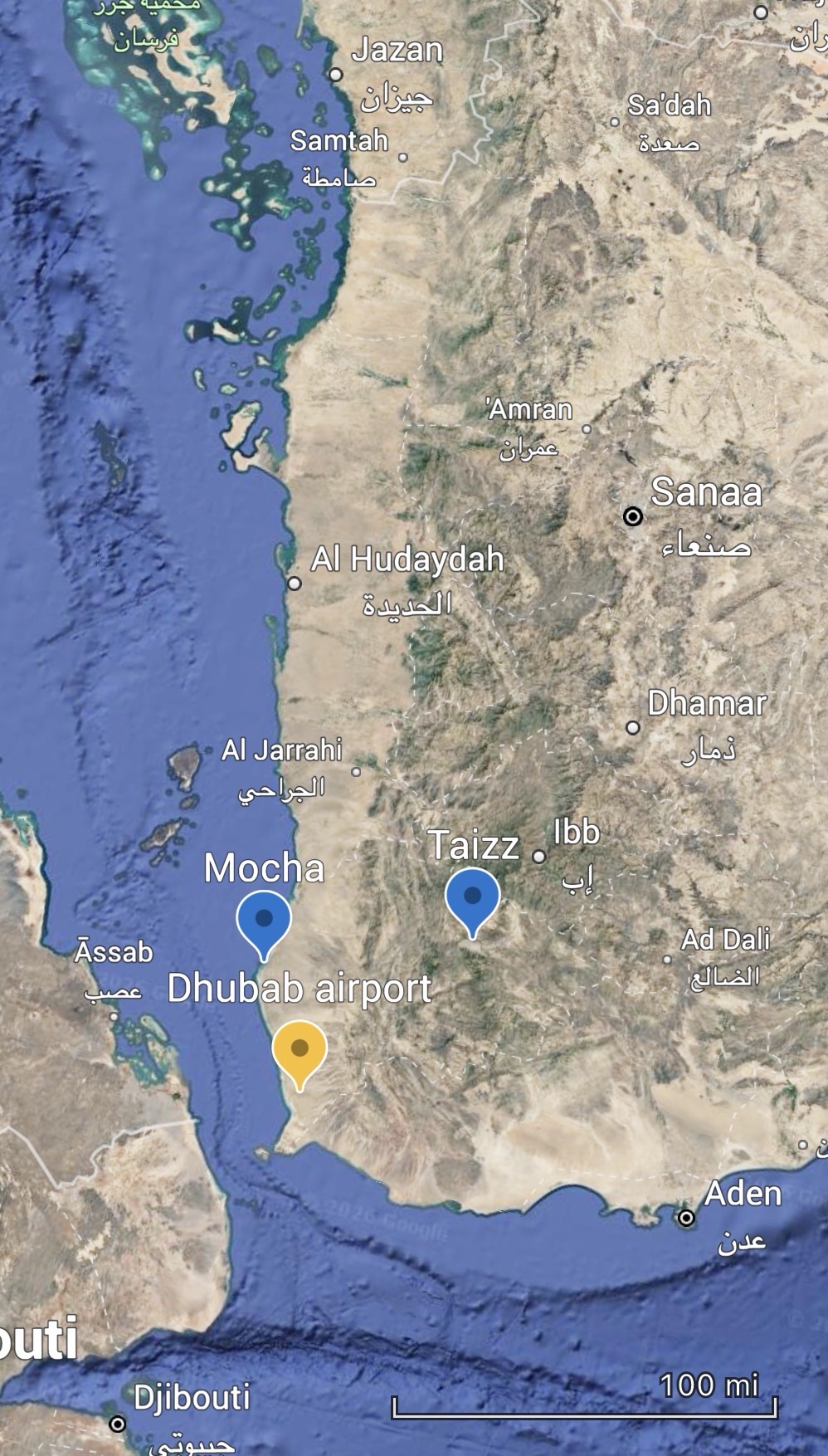
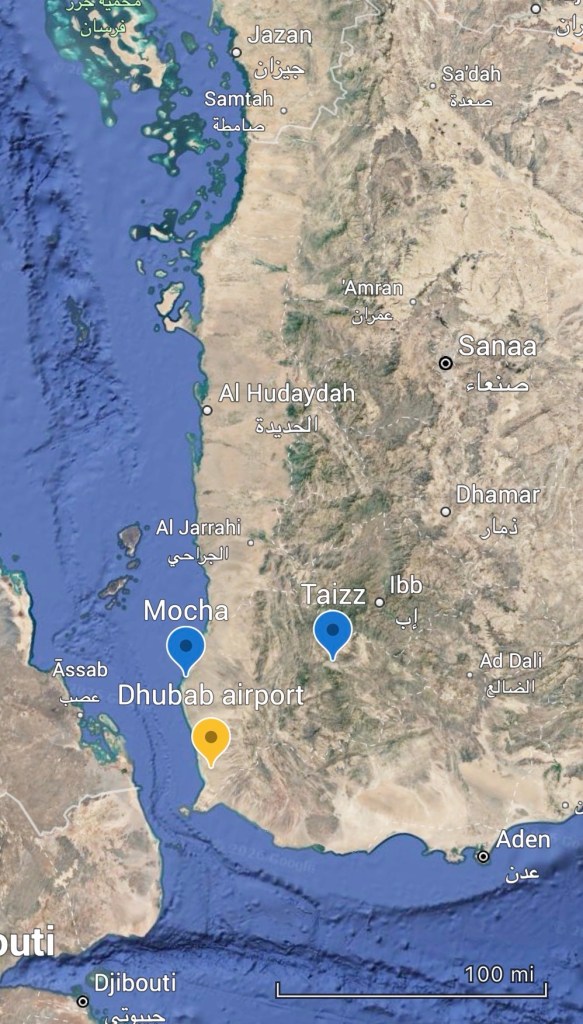
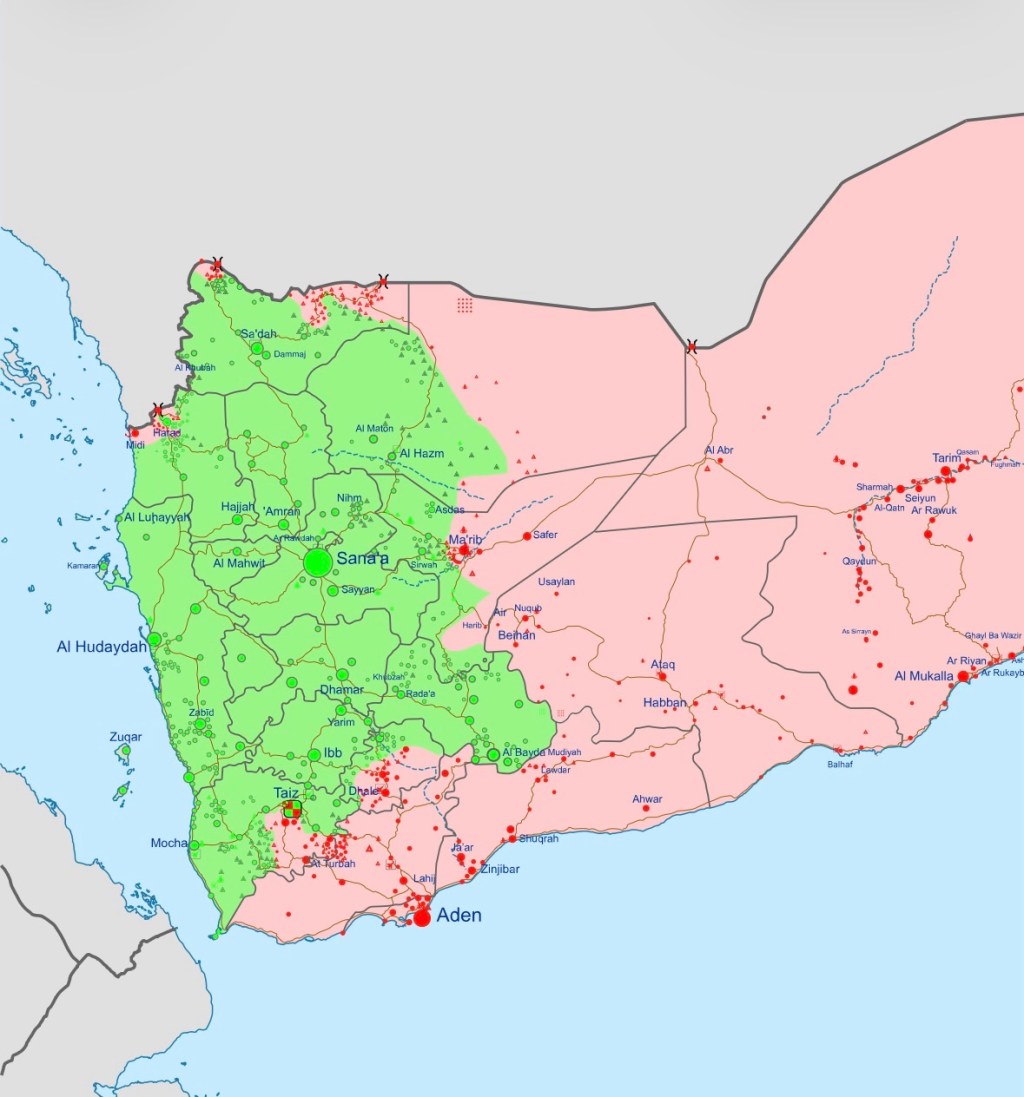
Map showing some of the locations covered in this article.
Yesterday, October 4, 2026, Rashad al-Alimi, the Presidential Leadership Council chairman, announced an offensive to retake all remaining Houthi-held territory, saying de-escalation had been exhausted. The operation is being referred to as Yemen Dawn, with operations kicking off late last night.
Moving to today, after heavy fighting, the Yemeni government has claimed to have recaptured Mocha city as well as Dhubab district airport at the mouth of the strait, both on the coast of the Red Sea. The government forces are being backed by Saudi aircraft, conducting airstrikes on Houthi positions.
Saudi Apache gunship operating as an apart of the campaign against the Houthis. Location unknown.
The Yemeni government is specifically attempting to push the Houthis back and reclaim some of the September gains made by the Houthis along the coast of the Red Sea. While recapturing this territory would make it harder for the Houthis to disrupt shipping between the Mediterranean and the Indian Ocean. While this would make attacks on shipping harder. However, the Houthis would still maintain the ability to launch attacks from further up the coast.
AH-64 Apache attack helicopters as well as a number of CH-47F Chinook heavy lifting helicopters arriving somewhere in Yemen.
In the mountain town of Taiz, Houthi rebels have claimed to have cut off government forces in the city by capturing sections of the one main road that goes into the city, leaving the government defenders besieged and cut off.
The escalating situation has prompted a response from Saudi allies and signers of the Mecca accords, Turkey and Pakistan, who met in Saudi Arabia and will reportedly be sending military equipment and forces to assist.
More on this story as it develops. This is very ongoing as of right now, and the lines of control are changing often.
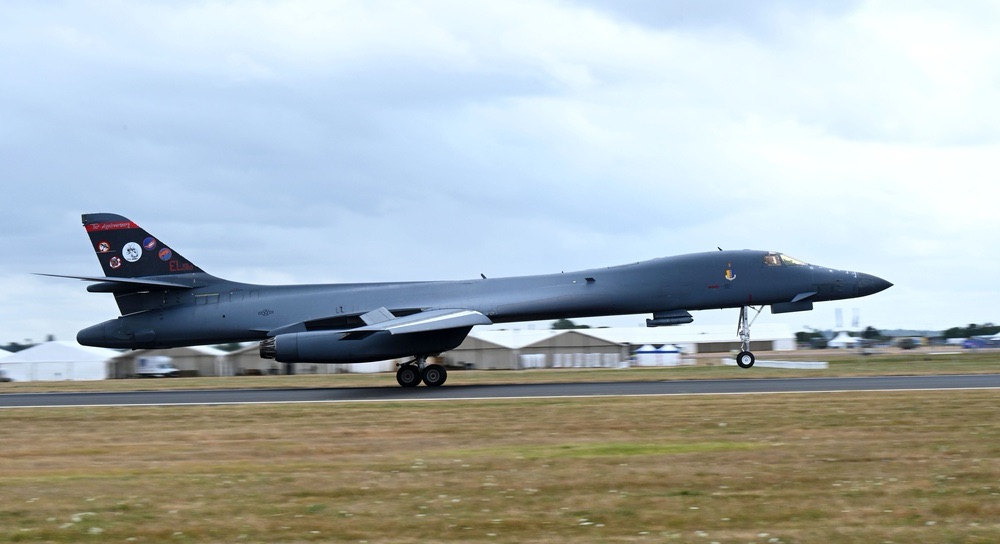
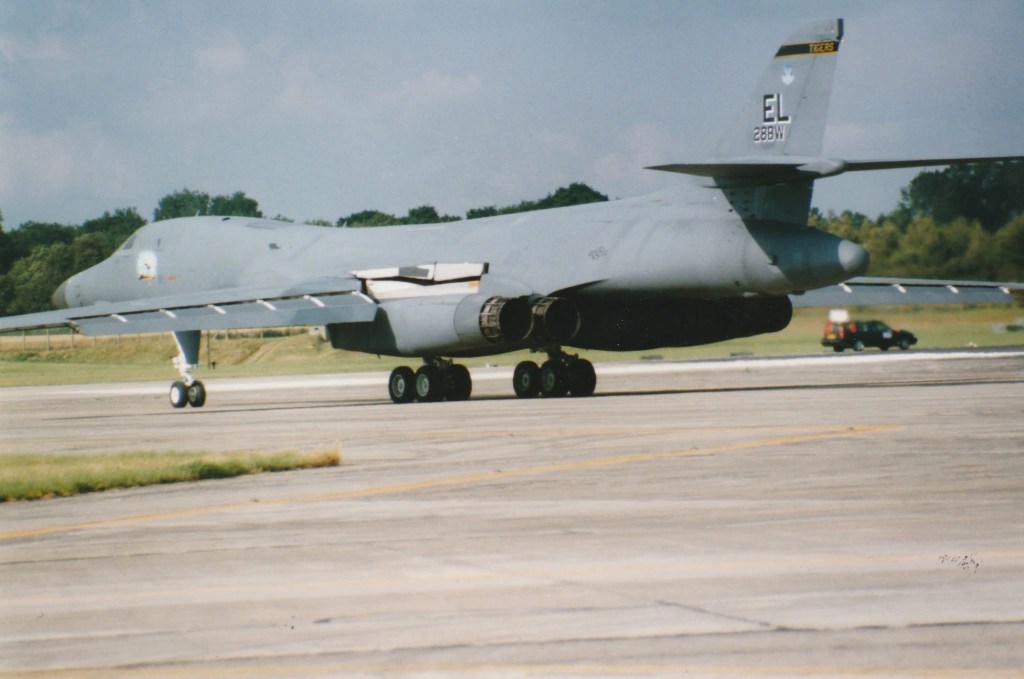
On the morning of September 27th, 2026, Gloucestershire police arrested five men that police believe to have been attempting to break onto RAF Fairford, currently home to a number of US B-1B Lancer bombers.
The men were stopped several hundred meters from Crash Gate 6A. Close to the base but not on it, as some reporting has suggested.
A major incident was declared after the arrest. About 85 households in Whelford were evacuated to a nearby leisure centre, and a 400-metre cordon was placed around the vehicles while the Army’s explosive ordnance disposal team examined them. Officials said they believe the incident is contained. Counter Terrorism Policing is leading the investigation into the men and their motives.
Image from local writer Andy Ambrose, taken the morning of the incident.
“I saw a group of Middle Eastern-looking youngguys running off through the trees. Some of them had masks or balaclavas on, and they all scattered ahead of us as we drove back past,” a local farmer told the Daily Telegraph. She continued, “Some of them ran into the fields, and some of them turned to run towards the air base… I mean, you don’t see masked men running around at half one in the morning in the countryside near a secure air base and not have concerns.”
The local preferred to stay anonymous for safety reasons.
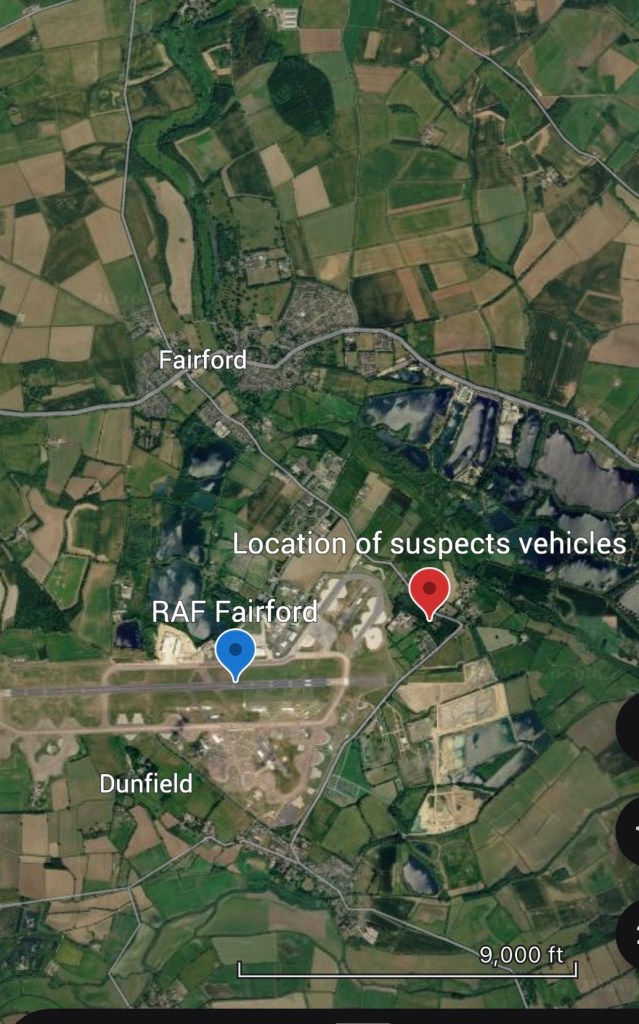
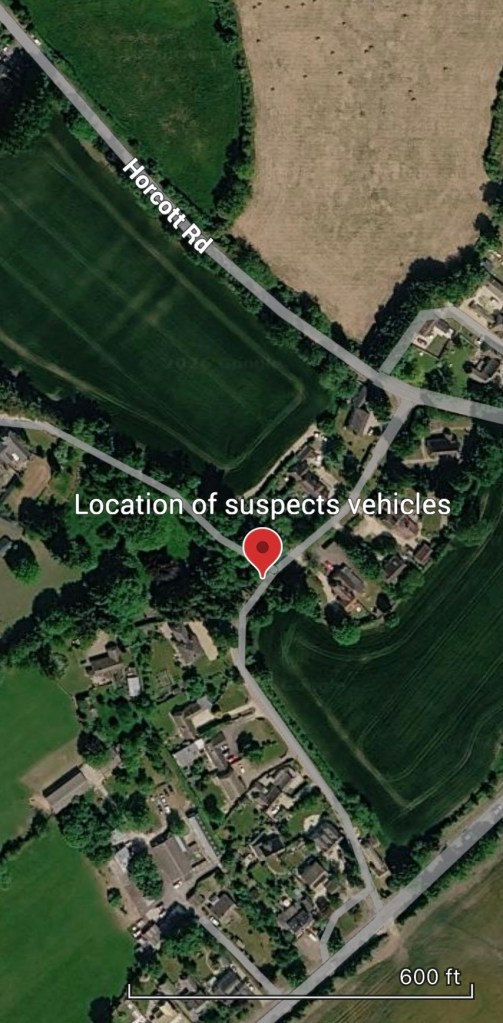
Overview of the base area as well as the location of the men’s vans which police are searching.
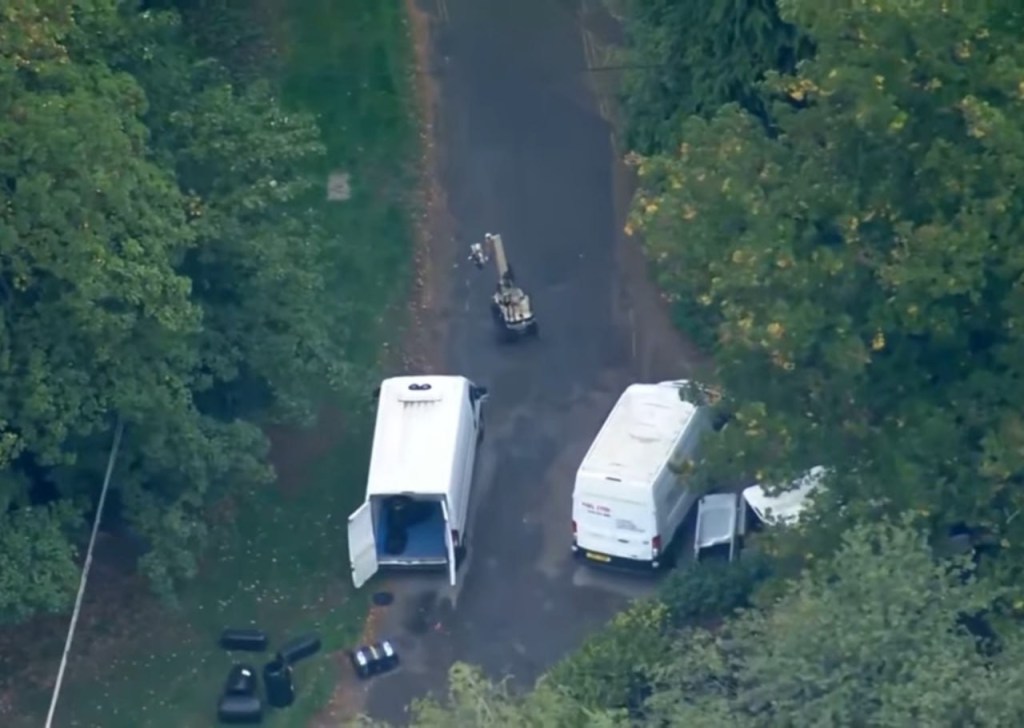
The men were apprehended outside of the base under the Explosives Act, with EOD examining their vehicles. Broadcast aerial footage from CNN and others has shown EOD robots removing large black items from the back of the van; however, police have not yet confirmed their contents. Other outlets have reported chemicals/explosives, but that hasn’t been confirmed anywhere yet.
Image reported to be taken of the suspects after they were apprehended.
RAF Fairford is home to the 501st Combat Support Wing and has been used by U.S. bombers for missions against Iranian missile infrastructure after London authorised that use earlier in the conflict. A U.S. Air Force spokesperson at the base told CNN that, for operational security reasons, the service would not discuss specific force protection measures. Photographs from Sunday showed at least one B-1B on the tarmac.
While a motive has not been established, U.S. President Donald Trump said the suspects were “looking to do big damage” and had been “under view for a long time.” However, multiple UK reports contradict this and say the operation to apprehend the men was not intelligence-led and rather started when a member of the public called 999 and voiced their suspicions and concern. Local detectives are reporting that they are investigating any link to Iran, but officers have declined to comment on origin or sponsorship. This is a natural line of question given the base’s importance in U.S. operations during the conflict with Iran, with U.S. bombers flying strike missions from RAF Fairfield to Iran. Iran’s Islamic Revolutionary Guard Corps earlier warned that any base used for attacks on Iranian territory would be treated as a legitimate target. Since that threat, the base has been under a heightened security posture.
Prime Minister Andy Burnham said the situation would be deeply concerning for local residents and urged the public not to speculate while the investigation continues.
This image shows the EOD robot removing items from the vans that police have identified as belonging to the suspects.
Update 09/28/2026
According to the British police, the five men that were arrested were all British nationals from London and all in their early 20s. This morning, they were released on bail pending the completion of the investigation.
“Thanks to the excellent work of the army’s explosive ordnance disposal team, the scene is now safe, and the residents of Whelford will shortly be returning home,” British interior minister Shabana Mahmood said.
While nobody has come out and said it, it appears from the wording in the quote above that explosives were discovered at the scene and later handled by the EOD; however, that hasn’t been confirmed yet.
An investigation is now ongoing to determine if these individuals were acting for a foreign state, unknowingly or else. A common tactic used by intelligence agencies has been to outsource intelligence work by making content with people inside of a country, and then paying them for whatever task they need done. The task starts as things somebody wouldn’t question like delivering a package or taking a picture, and they see how far they can get you to go as the task gets more and more complicated and/ or illegal. There are documented cases of Russia using this tactic in Ukraine and Poland as part of their ongoing hybrid warfare campaign. There is no current connection to Russian intelligence; however, it could be that UK authorities believe a page has been taken out of Russia’s playbook.
This page will be updated when further information is released.
The security situation in Yemen has been violently changed in the past week as Houthi forces in Yemen made a coordinated push down the western coast. A fighting force made up of Yemeni government soldiers and National Resistance Forces (Tareq Saleh) withdrew from the city of Mocha rather than attempt to hold it. That port city is now under solid Houthi control. Government sources further reported that the Houthis had pushed towards the Hanish islands, attacking with rockets and boat-borne landings. Government forces chose to fall back to Dhubab, the last significant town facing Perim Island and the Bab el-Mandeb. More on Dhubab later.
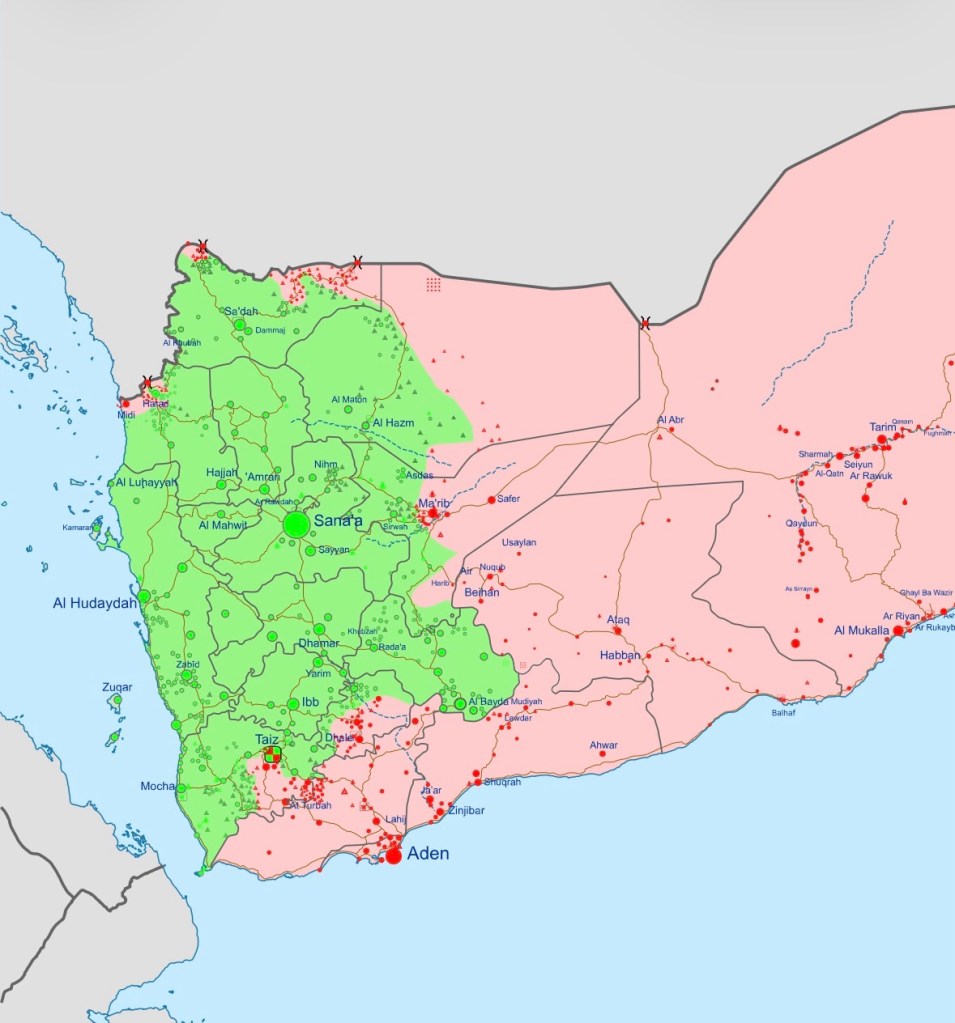
Map showing the current state of the conflict in Yemen including the newly taken Houthi territory. Green=Houthi control, Red= Saudi-backed Yemeni Government control.
Several reports from Reuters and Al Jazera mention Yemeni government taking heavy losses at Hays, al-Wazi‘iyah, and the Khalid ibn al-Walid base, all along the costal plains in the days leading up to and the day of the loss of Mocha. The bottom line is that the Yemeni government lost the whole of their government-held Red Sea coastal belt in Taiz governorate and, according to its own officials, the main offshore positions that matter for the strait.
Moving on the Sept 11. the strategic situation in Yemen gets even worse. Two Yemeni government officials told Reuters that the town of Dhubab had been lost. The Houthis had already taken Perim, the island just across the strait from Dhubab when the forces had withdrawn from there as well. Perim Island is strategically important as it sits directly in the middle of the Bab al-Mandab Strait, where it divides the waterway into two channels. This gives them direct line of sight on incoming and outgoing shipping in one of one of the most strategic choke points in the world. So far, the Houthis are saying that shipping will not be impacted besides Saudi Arabia’s shipping. While they have said this before, notably with the U.S. and Israel during their support for Palestinian Hamas during the fighting in Gaza.
It’s fairly common knowledge that the Houthis are backed by Iran indirectly, Tehran offers them weapons and supplies as well as training. This has been expanded as Reuters said that their source’s claimed two Iranian sources told Reuters that Tehran instructed the Houthis in the last week to escalate attacks on Saudi Arabia and promised additional funding, weapons and senior officers.
With Iran and the U.S. currently locked over the Strait of Hormuz the Red Sea has turned into an important route for middle eastern oil production as most countries with the capability to do so have been pumping their oil across the country to the West and then loading there.
Saudi Arabia took a hit as it was forced to temporarily close their East-West oil pipeline, a 1,200km (746-mile) conduit stretching across the Arabian Peninsula. The pipeline was reported on Sept. 11 as being attacked by projectiles and drones launched from Iraq. Iraq has a large number of Iranian backed groups which are linked to the attacks.
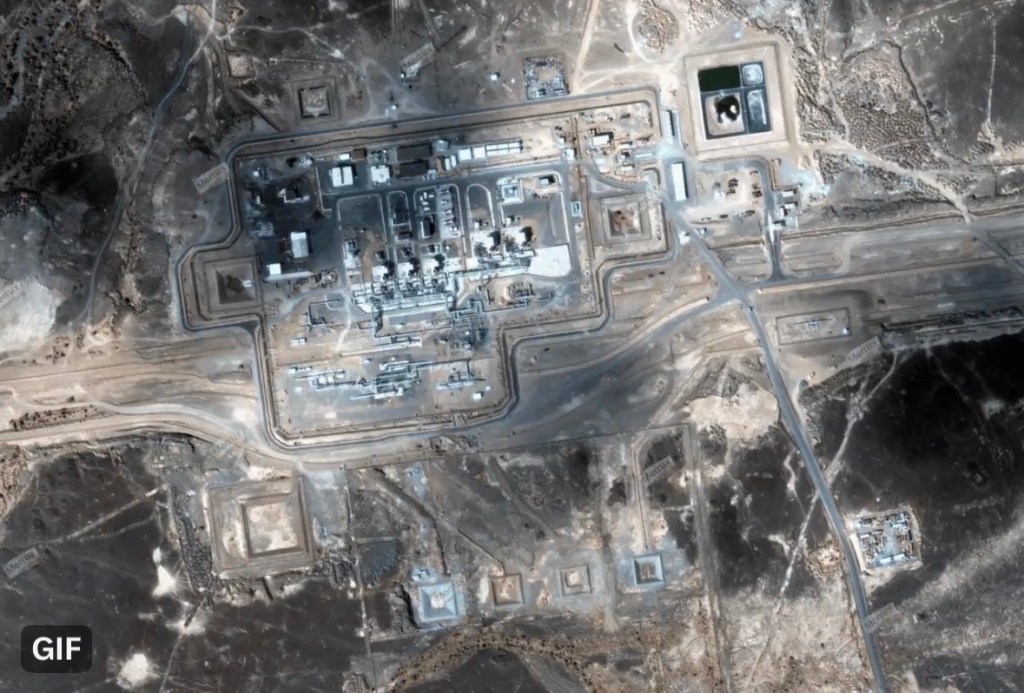
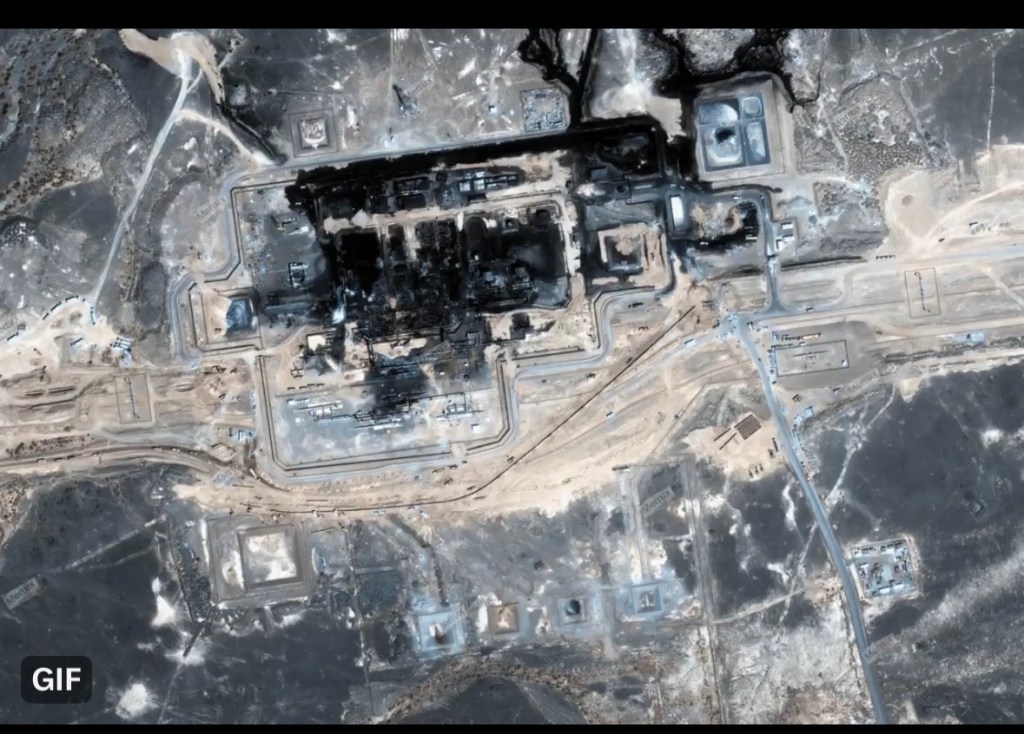
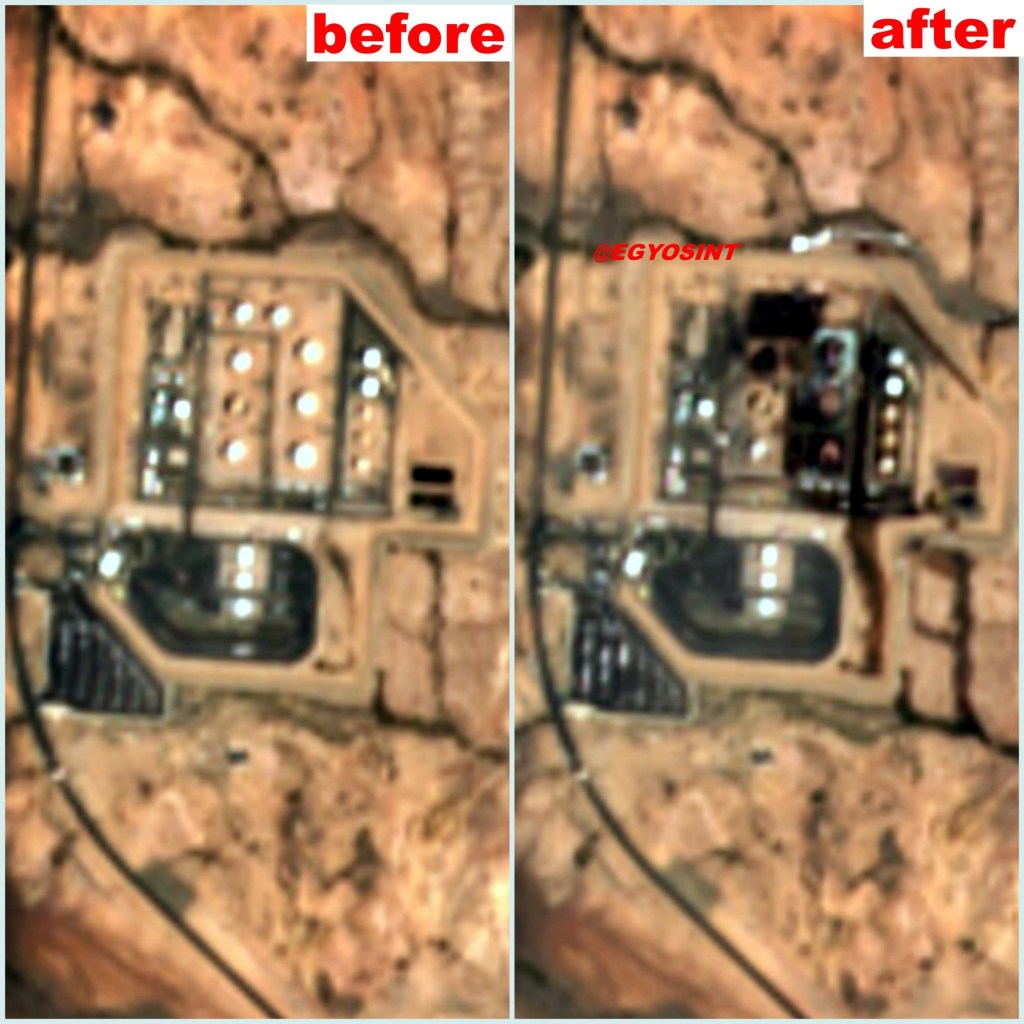
Before image showing the pumping station of the Saudi East-West pipeline. Photos released by Maxar,After images.
Aramco’s Abha bulk plant also received damage according to satellites image analysis. This damage was first seen on imagery from Sept 8.
Sentinal-2 imagery shows the aftermath of some sort of an attack on the Saudi Abha bulk plant.
In the days since the attack, multiple pumping stations on the Saudi “East-West” pipeline have been confirmed to have been attacked. This video includes the images from above as well as additional images of other locations.
Video from SOAR showing the Saudi pumping stations that have been targeted in the days since the Houthis campaign’s begun.
Reports from sources who spoke to CNN of Yemeni forces that were stationed in some of these towns as being partially made up of “ghost soldiers”, or only existing on paper to collect a salary make the Yemeni withdrawal and losses make more sense.After the government forces pulled out of their positions, Houthi soldiers were shown loading up Saudi/U.S. vehicles that were left behind.
Video reportedly shows the equipment captured by the Houthis.
The Houthis (Ansar Allah) have four primary goals in this conflict according to the Institute for the Study of War — ending Saudi military operations in Yemen, lifting the Saudi blockade of Houthi-controlled Yemeni ports and airports, coercing Saudi Arabia to pay Houthi civil servant salaries, and coercing Saudi Arabia to pay reparations to Yemeni civilians.
During the attack on Mocha, Saudi Crown Prince Mohammed bin Salman reportedly called President Trump twice on September 10 (as Mocha was falling) and urged American strikes against the advancing Houthis. Trump declined, with Us officials framing the reasoning that the U.S. president didn’t want to open up another major combat theater while U.S. forces are focused on Iran and the Strait of Hormuz.
For now, U.S. involvement in Yemen is limited to around 100 personal sent to act as advisors to Saudi Arabia who the U.S. hopes can manage the situation in this front.
Saudi Arabia carried out reportedly anywhere from several dozen to over a hundred bombing attacks on the advancing Houthi forces during their march to Mocha and Dhubab. These attacks did little to stop or slow Houthi advances. Yemeni forces report a lack of airstrikes during critical hours of fighting in Mocha.
Saudi Arabia has changed their Yemen strategy since around 2015 choosing to focus more on containment and diplomacy and limited pressure on the ground. However that was mostly as a way to avoid a full escalation in which Houthi forces targeted Saudi energy infrastructure which is now happening anyway. Saudi Arabia, like the U.S. is also facing a shortage of air defense missile interceptors which has led to key energy installations being targeted by Iranian backed elements, including the Houthis.
For now as an overall update, the Houthis are currently consolidating their control over their newly taken territories. They are digging in around the Bab-el Mandeb region in an effort to hold that area because of the large strategic advantage they hold with it . They are also moving in logistics and administration personnel to further help control the newly taken regions. The Houthis in 2014 received a lot of support from Hezbollah in Lebanon, another group with a strong focus on acting as a state institution and actually bringing benefits to the populations of regions they patrol.
This article was written primarily on and around the 11th and 12th but I took a little break and was going to just scrap this article but figured it had a lot of good info and is still relevant to everything that happened. I’ve updated some things to reflect on new information.
On September 5, 2026, U.S. forces struck and disabled three Iranian crude oil tankers after Iran’s Islamic Revolutionary Guard Corps (IRGC) fired ballistic missiles at elements of the U.S. Navy, according to a report by U.S. Centcom.
Iranian forces fired upon an unnamed aircraft carrier and guided-missile destroyer, which evaded the Iranian missiles. No U.S. personnel were harmed, according to the statement from CENTCOM.
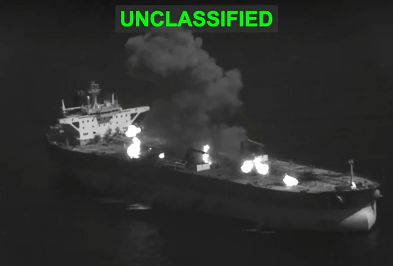
In response to the attack, U.S. forces targeted and disabled the M/V Downy near Kharg Island and the M/T Stark 1 near Jask. A third tanker, the unladen, Kylo also sometimes referred to as the Noxen, was also hit and completely destroyed in the Gulf of Oman.
Video is the strikes. M/V Downy (IMO:9218480)
M/V Downy is a 22 year old, 296,977 ton, Iran-flagged Very Large Crude Carrier (VLCC). Downy (IMO 9218480) was struck in the stern with the intent of diabling its steering.
M/T Stark 1 IMO:9171450)
26 year old, 159,681 ton, Iran-flagged Suezmax tanker Stark I (IMO 9171450) suffered a similar hit. It’s believed both of these were disabled rather than destroyed because they were loaded. (Judging by their draft)
Kylo (IMO:9189146)
The Kylo is Comoros-flagged, and a 25 year old. The 160,573 ton Suezmax tanker was anchored to the east of the Strait of Hormuz admid other ships waiting to load. Per the video it was hit with multiple pieces of ordnance.
These tankers are apart of the Iranian shadow fleet—a fleet of ships that use concealing tactics (illegal flag and name changes) to hide, not so much what they are hauling but where it’s from.
Video taken by the crew of the Iranian general cargo ship Iran Shahed (IMO:9184691) ,which recorded the radio call of the U.S. aircraft in the minutes before the strike on the M/T Stark 1. The fighter pilot gave the crew three minutes to evacuate the stern of the ship.
“Let the message to the IRGC be clear: If you shoot at two of our ships, we will impose an even higher economic cost, taking out three of yours,” said Adm. Brad Cooper, CENTCOM commander. “We will not hesitate to defend American forces, and if necessary, destroy Iran’s limited and exposed oil fleet.”
September 1, 2026, Jordanian air defenses engaged 13 Iranian ballistic missiles that entered the country’s airspace and destroyed 10 of them. The Jordan Armed Forces said the remaining three landed in remote, unpopulated areas. Jordan reported no injuries, no deaths, and no significant damage to property.
Iran’s Islamic Revolutionary Guard Corps said the barrage was aimed at Camp Titin, a small U.S. Marine training camp south of Aqaba used to train Jordanian forces along the Gulf of Aqaba. Iranian state media claimed the strike destroyed military buildings and helicopters and killed a large number of U.S. personnel. Those claims have not been independently verified. Two U.S. officials told Reuters there were no reported U.S. casualties at facilities in Jordan based on initial information.
Video shows the Iranian ballistic missile impacting near the city of Aqaba.
This was the second Iranian attack into Jordan in roughly 48 hours. Overnight August 30–31, Iran launched missiles and drones at U.S.-linked sites in the kingdom, including the Muwaffaq Salti / Azraq area, after a U.S. strike on Larak Island in the Strait of Hormuz. The two exchanges are the first major kinetic back-and-forth since the June U.S.–Iran Memorandum of Understanding expired in August.
The latest Iranian fire came after a wave of U.S. strikes on September 1. Iranian media and local reports said explosions were heard in Chabahar, Bandar Abbas, Qeshm Island, Konarak, Jask, Sirik, and Minab. CENTCOM did not name those cities. It said U.S. forces struck IRGC air-defense sites, radar systems, maritime assets and facilities, mine-laying capabilities, and communications sites, following attempted IRGC attacks on commercial shipping in the Strait of Hormuz and on American service members.
Video reported to show the U.S. bombardment of Sirik.
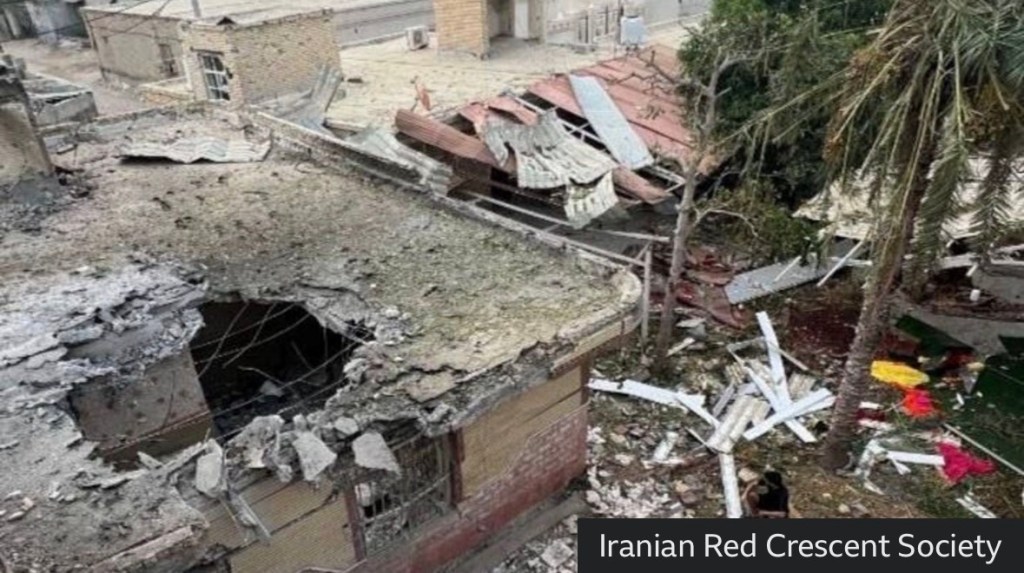
Iranian officials say one of those strikes hit a home during a wedding ceremony in Kuhestak, in Sirik County, killing four people, including a child, and wounding 67 others. Reported figures have varied. The United States says it does not target civilians.
Video taken from Sirik and obtained by GCR confirms that a U.S. strike hit the area. It does not confirm what was hit. Precision geolocation is difficult with the footage currently available. A second video shows the building Iranian media identified as the wedding site. The clip shows a damaged structure. It does not, on its own, prove a wedding was underway.
Video captured in the aftermath of the incident shows a residential style building on fire. Image from the Iranian Red Crescent Society, showing the house which was the site of a bombing in Sirik. This was the site of the alleged wedding celebration.
“Unfortunately, this is a residential building. And unfortunately, this happened during my daughter’s wedding ceremony,” Ali Mallahi, father of the bride and owner of the building, said in a video broadcast by Iranian state media.
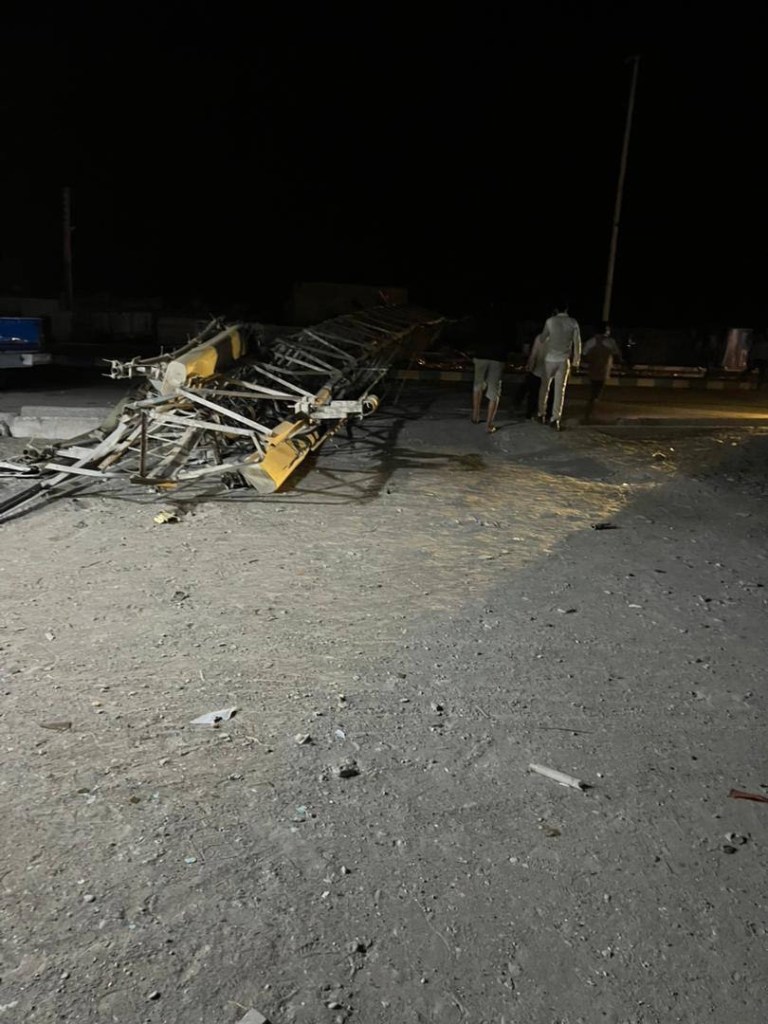
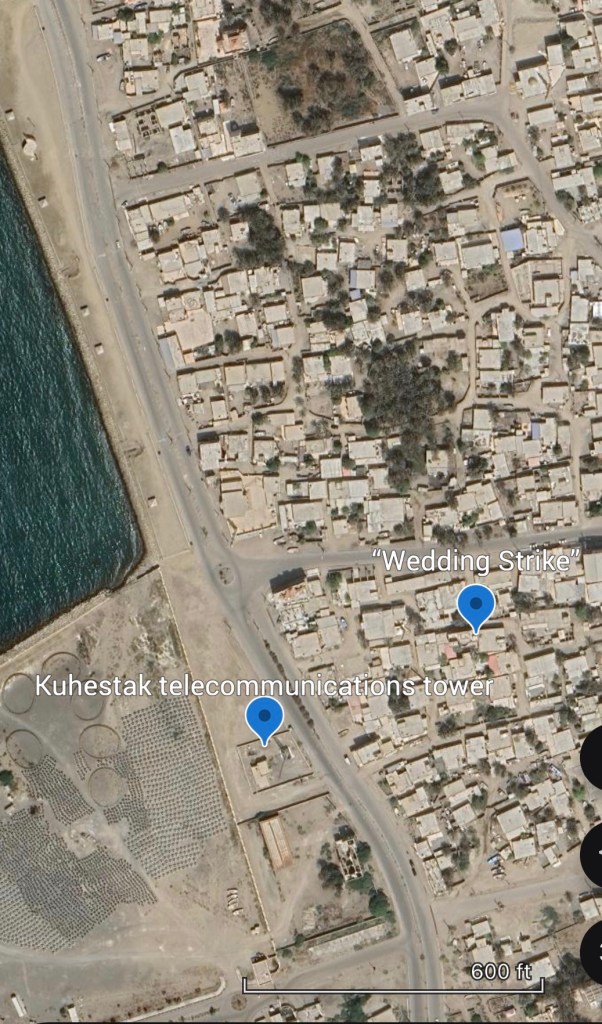
Looking at maps of the area, the U.S. targeted a telecommunications tower in the vicinity of the house, which was struck.
Kuhestak telecommunications tower in SirikThis Google Earth Image shows how close the house and Telecom tower are to each other.
It appears just from looking at the map, the images, and the video from the scene that if the strike on the house wasn’t intentional, it was possibly hit in a U.S. strike that missed its original target, which is only 143 meters away from the house where the wedding celebration was said to be taking place. A tragedy, but one that happens in war often enough. The U.S. faced a similar situation during the raid on Venezuela when one of its upgraded AGM-88 HARM missiles missed its target and hit an apartment.
President Donald Trump said the U.S. operation was a response to Iranian forces attempting to lay more mines in the Strait of Hormuz. Sirik was one of multiple reported aimpoints in that wave, not a standalone strike.
In the hours after the U.S. attacks, IRGC missile forces appear to have targeted Camp Titin in Jordan. Iranian state media presented the camp as a successful hit. Footage obtained by GCR of one incoming missile does not show an intercept and appears to show the weapon striking the side of a mountain rather than a developed part of the camp. That can mean several things: the missile was already going to miss anything that mattered, the air-defense battery chose not to spend an interceptor on it, or the system was occupied with other tracks. Jordan has absorbed a large volume of Iranian fire since the start of hostilities. The more likely reading of this particular clip is that the missile was heading into the high ground around Aqaba and was not assessed as enough of a threat to engage. That is what the video appears to show. It does not prove a successful strike on the camp, and it does not prove Jordanian or U.S. air defenses were out of ammunition.
Today’s exchange is a return to open kinetic strikes. That is a sharp contrast with late August, when U.S. officials leaned hard on economic pressure — including the “Economic Outcast” / “economic D-Day” track and talked as if large new bombing campaigns were no longer the main tool. Limited strikes and intercepts are not the same thing as a full restart of the February war. They are also not the pause Washington had been describing.
Military actions are often used in conjunction with economic pressure to reach a goal. In most cases, military action, nor economic action alone, is enough. Using them together adds extra pressure. It also appears that the military strikes are supporting the economic strikes by targeting radars, air defense, and missile sites near the coast that Iran has tried to use to maintain control over the strait.
CENTCOM said after the strikes:
“U.S. forces struck Islamic Revolutionary Guard Corps (IRGC) targets including air defense sites, radar systems, maritime assets and facilities, mine laying capabilities, and communications sites.
The strikes follow recent attempted attacks by the IRGC against commercial shipping in the Strait of Hormuz and against American service members.
More than 50,000 U.S. service members are currently operating across the Middle East and remain vigilant, lethal, and prepared to continue executing operations directed by the Commander in Chief.”
In the following days, Iran is claiming that the U.S. strike on the wedding is a war crime, a claim being repeated by many in Iran, including Iranian foreign ministry spokesman Esmaeil Baqaei. Iranian authorities say another 14 people were killed in separate attacks that took place at the same time.
CENTCOM video
Author note.
I know this strike was several days before I posted about it. In some cases, I’m not able to verify the footage I’m sent or that I find, and it takes me a while to go through my steps to verify that footage is what it is claiming to be. While GCR does often cover breaking news, its mission is more about analysis and verification. Thank you always for all the support.
Please feel free to comment. I always want to do better. I’m not trained in any of this stuff. Writing, conflict reporting, and analysis is something I’ve taught myself how to do, and I know there are areas I can improve, so please, if you have a question, comment, or anything that can help me improve. Message me on Facebook or I can be reached through the email found on the contact me page.





You must be logged in to post a comment.