On September 5, 2026, U.S. forces struck and disabled three Iranian crude oil tankers after Iran’s Islamic Revolutionary Guard Corps (IRGC) fired ballistic missiles at elements of the U.S. Navy, according to a report by U.S. Centcom.
Iranian forces fired upon an unnamed aircraft carrier and guided-missile destroyer, which evaded the Iranian missiles. No U.S. personnel were harmed, according to the statement from CENTCOM.
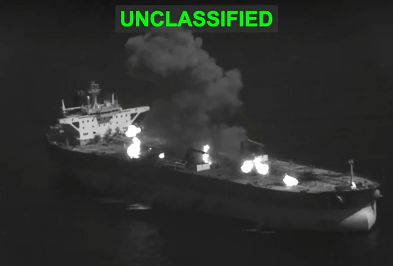
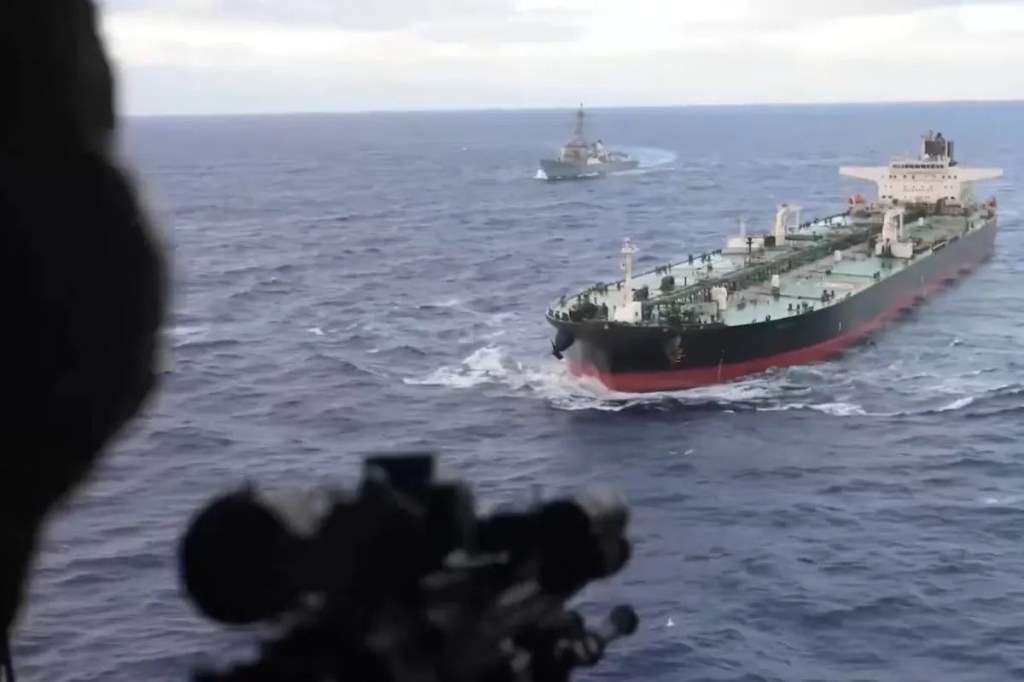
In response to the attack, U.S. forces targeted and disabled the M/V Downy near Kharg Island and the M/T Stark 1 near Jask. A third tanker, the unladen, Kylo also sometimes referred to as the Noxen, was also hit and completely destroyed in the Gulf of Oman.
Video is the strikes. M/V Downy (IMO:9218480)
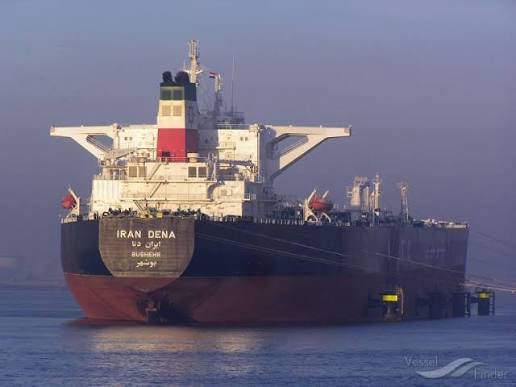
M/V Downy is a 22 year old, 296,977 ton, Iran-flagged Very Large Crude Carrier (VLCC). Downy (IMO 9218480) was struck in the stern with the intent of diabling its steering.
M/T Stark 1 IMO:9171450)
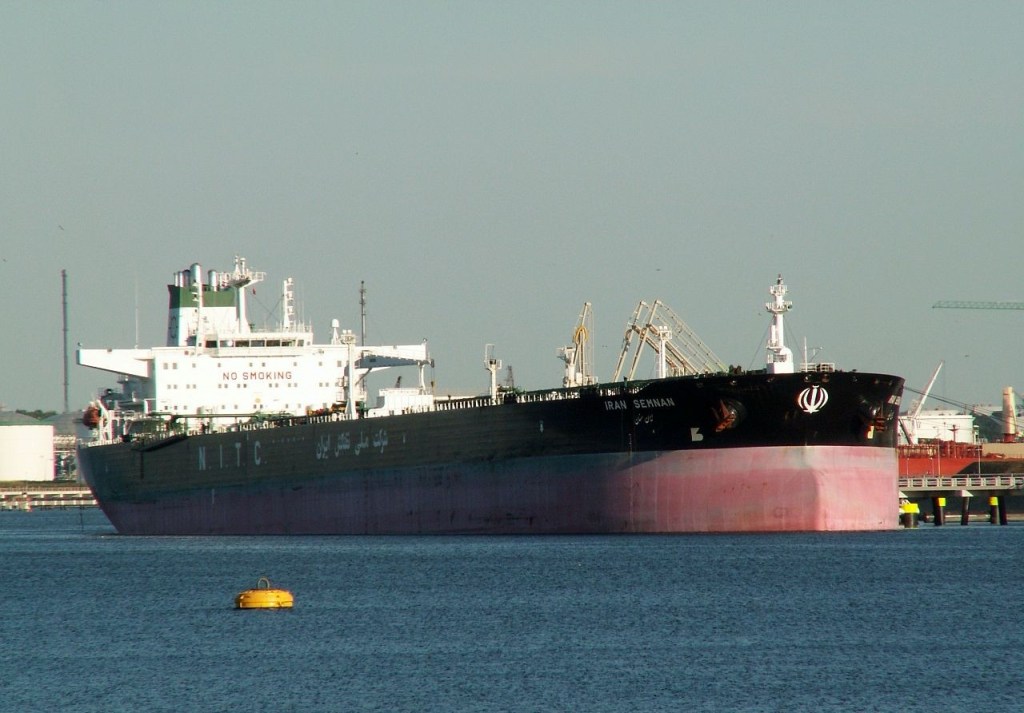
26 year old, 159,681 ton, Iran-flagged Suezmax tanker Stark I (IMO 9171450) suffered a similar hit. It’s believed both of these were disabled rather than destroyed because they were loaded. (Judging by their draft)
Kylo (IMO:9189146)
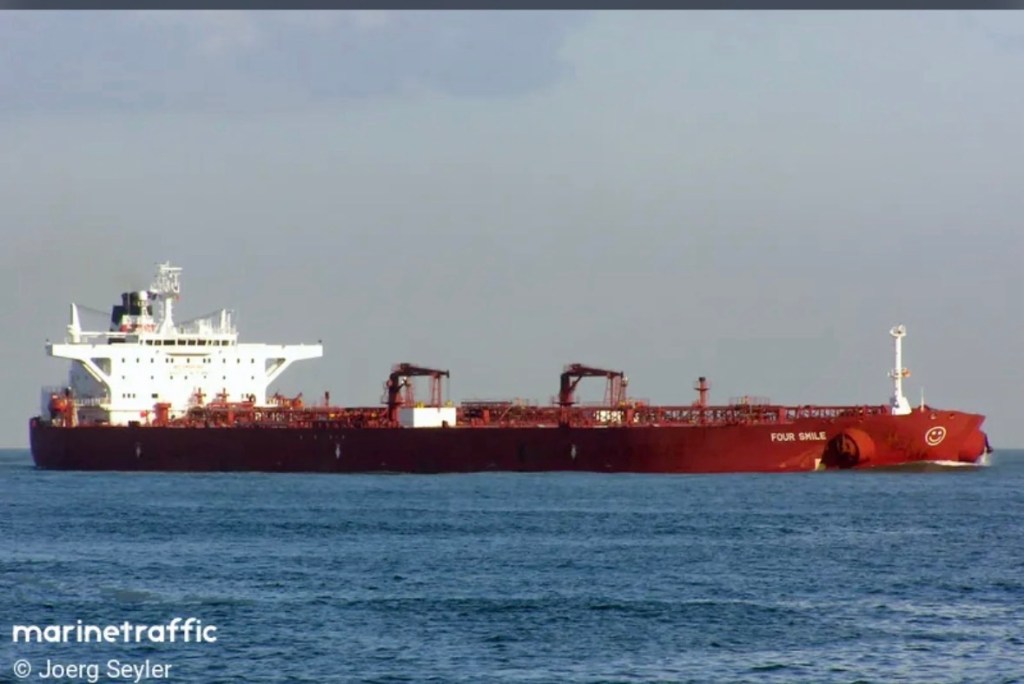
The Kylo is Comoros-flagged, and a 25 year old. The 160,573 ton Suezmax tanker was anchored to the east of the Strait of Hormuz admid other ships waiting to load. Per the video it was hit with multiple pieces of ordnance.
These tankers are apart of the Iranian shadow fleet—a fleet of ships that use concealing tactics (illegal flag and name changes) to hide, not so much what they are hauling but where it’s from.
Video taken by the crew of the Iranian general cargo ship Iran Shahed (IMO:9184691) ,which recorded the radio call of the U.S. aircraft in the minutes before the strike on the M/T Stark 1. The fighter pilot gave the crew three minutes to evacuate the stern of the ship.
“Let the message to the IRGC be clear: If you shoot at two of our ships, we will impose an even higher economic cost, taking out three of yours,” said Adm. Brad Cooper, CENTCOM commander. “We will not hesitate to defend American forces, and if necessary, destroy Iran’s limited and exposed oil fleet.”
On Tuesday July 7 2026, the U.S. launched a wave of strikes on Iran in retaliation for recent strikes carried out in international shipping by Iran. U.S. Central Command (CENTCOM) put the following statement following the strikes.
Video from Bandar Abbas showed explosions as the U.S. Air Force and Navy carried out their strikes over 80 targets, including 60 IRGC speedboats in and near the Strait of Hormuz.
Video shows U.S.Strikes on Bandar Abbas.
The U.S. also targeted Iranian air defense systems, command and control networks, coastal radar sites, and anti-ship missile capabilities. This is the largest strike since the ceasefire was agreed upon in April.
Further explosions were reported in Sirik and as far as Kharg Island, Iran’s largest oil facility handling 90% of its oil export. The U.S. previously struck targets on the island in April; however, it stuck to just hitting military sites and infrastructure and leaving the oil export untouched.
Official U.S. of the strikes
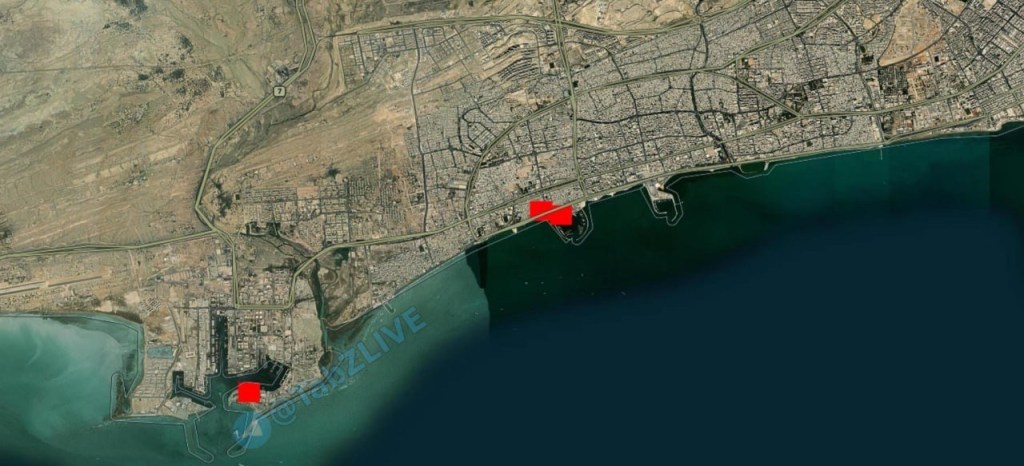
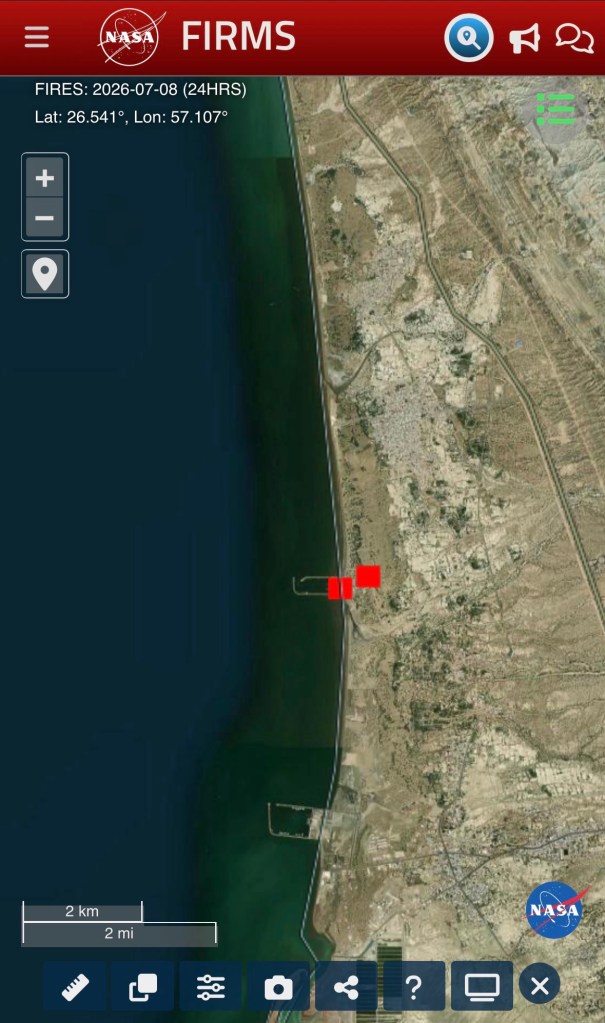
NASA Firms is a satellite program used primarily to track wildfires. That data can also be used to track combat strikes. Some area show on FIRMS every days, such as industrial zones however tonight shows multiple fires where we wouldn’t expect to see fires in Iran, and specially looking at Bandar Abbas and the Geruk area.
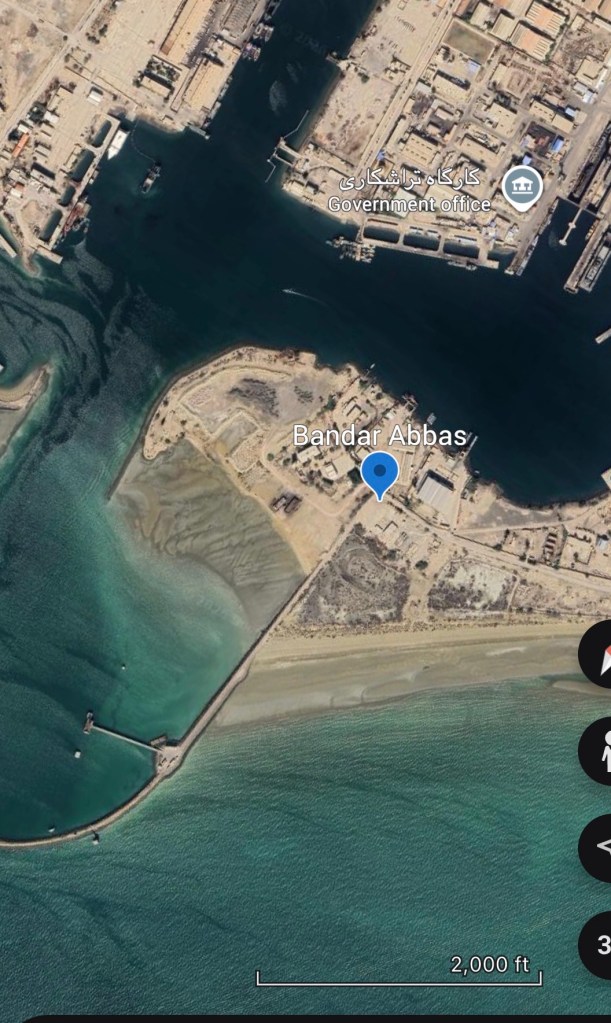
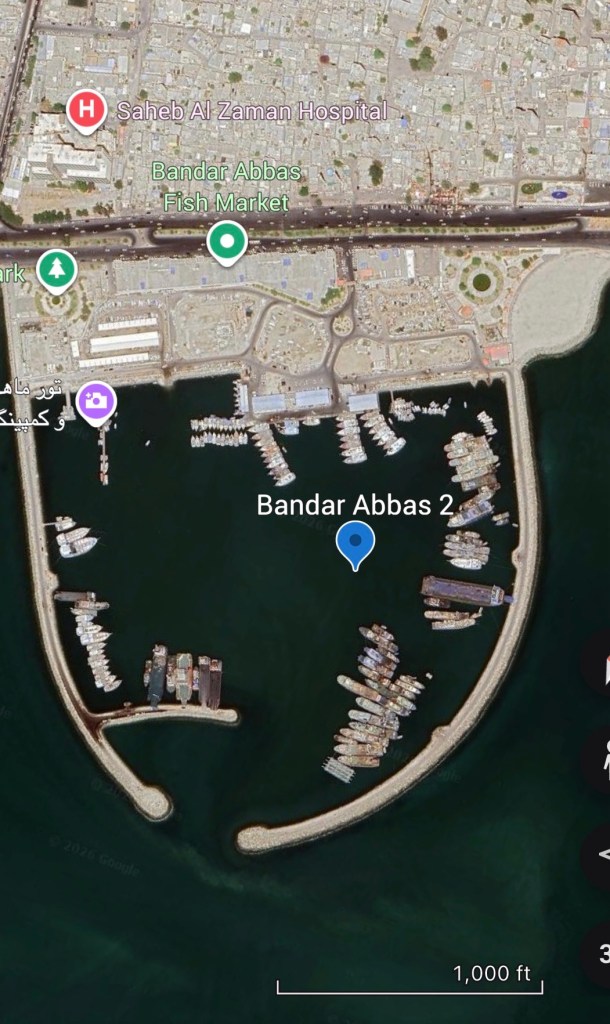
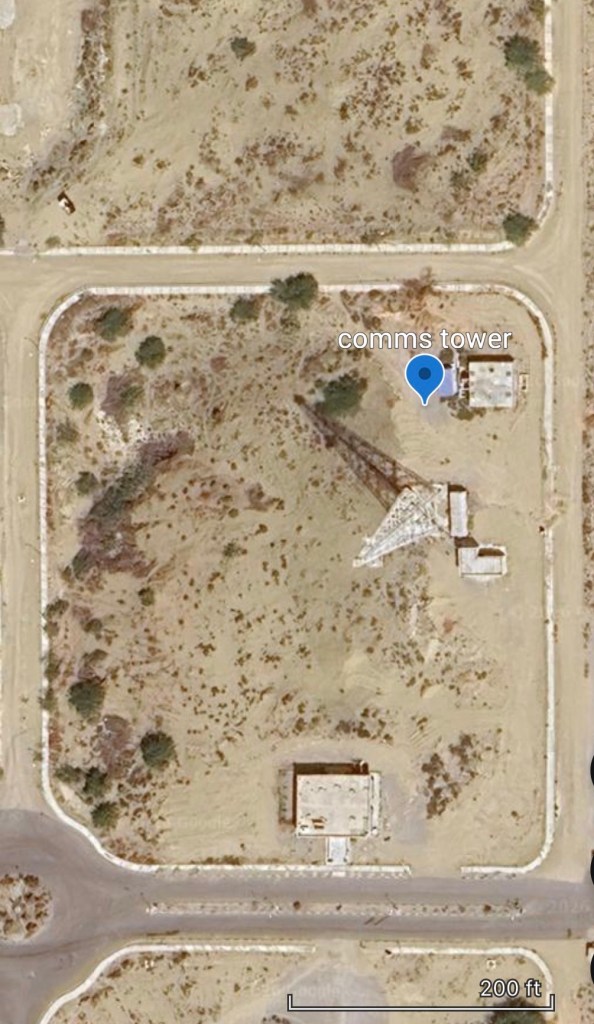
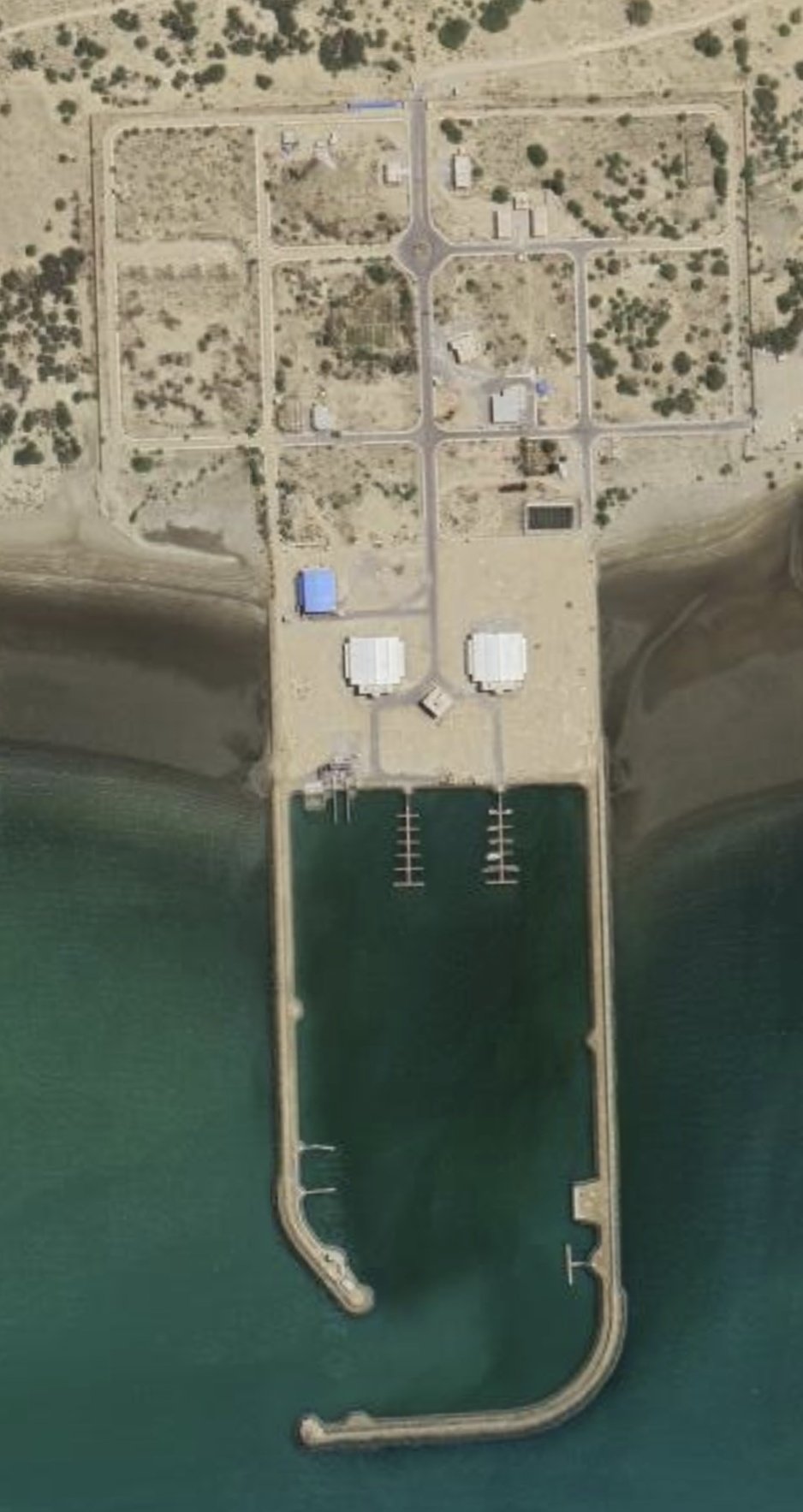
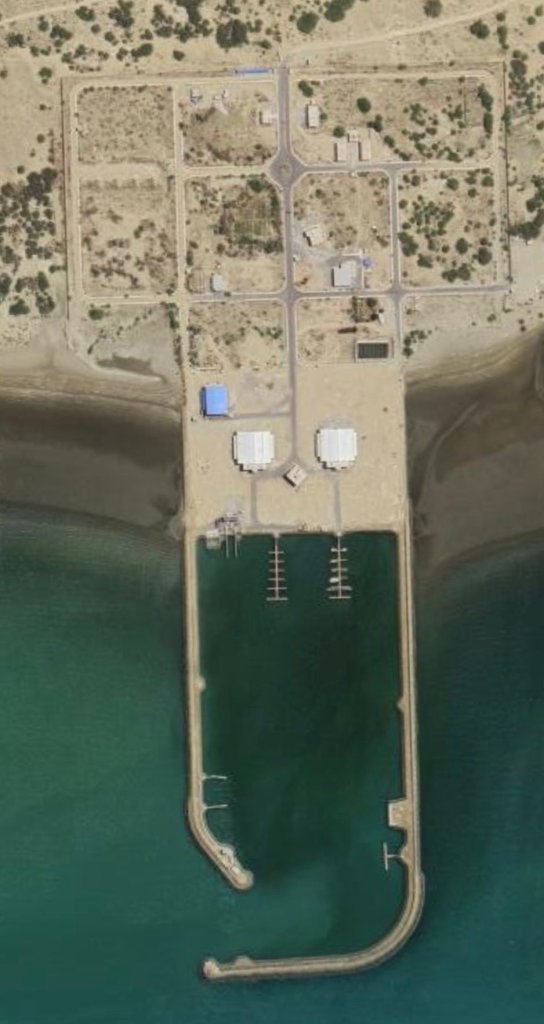
Strikes one and two in Bandar Abbas show what seems to be strikes on the port where smaller IRGC patrol boats are kept. Video from the city confirms this as well. Close up on the port to the left. Second portNASA FIRMS shows potentially two locations struck here at Sarkhur Tahruyi. The boat dock itself as well as what looks to be a comms tower of some sort. This comms antenna is right beside the dock and also shows signs of being struck.
Iranian response
Khatam al-Anbiya Central, Iran’s top joint military command, put out a statement saying that the U.S. had committed a “blatant act of aggression” by targeting parts of southern Iran. The statement said Iranian armed forces would deliver a “crushing response.” The command also said that it would accept no U.S. interference in the management of the Strait of Hormuz and that the only safe passage for commercial shipping and tankers was the route Iran has laid out.
In the hours after Bahrain was the first to report incoming Iranian drones and missiles, they announced their people should seek shelter and that their army was engaging hostile missiles. Kuwait also received incoming fire.
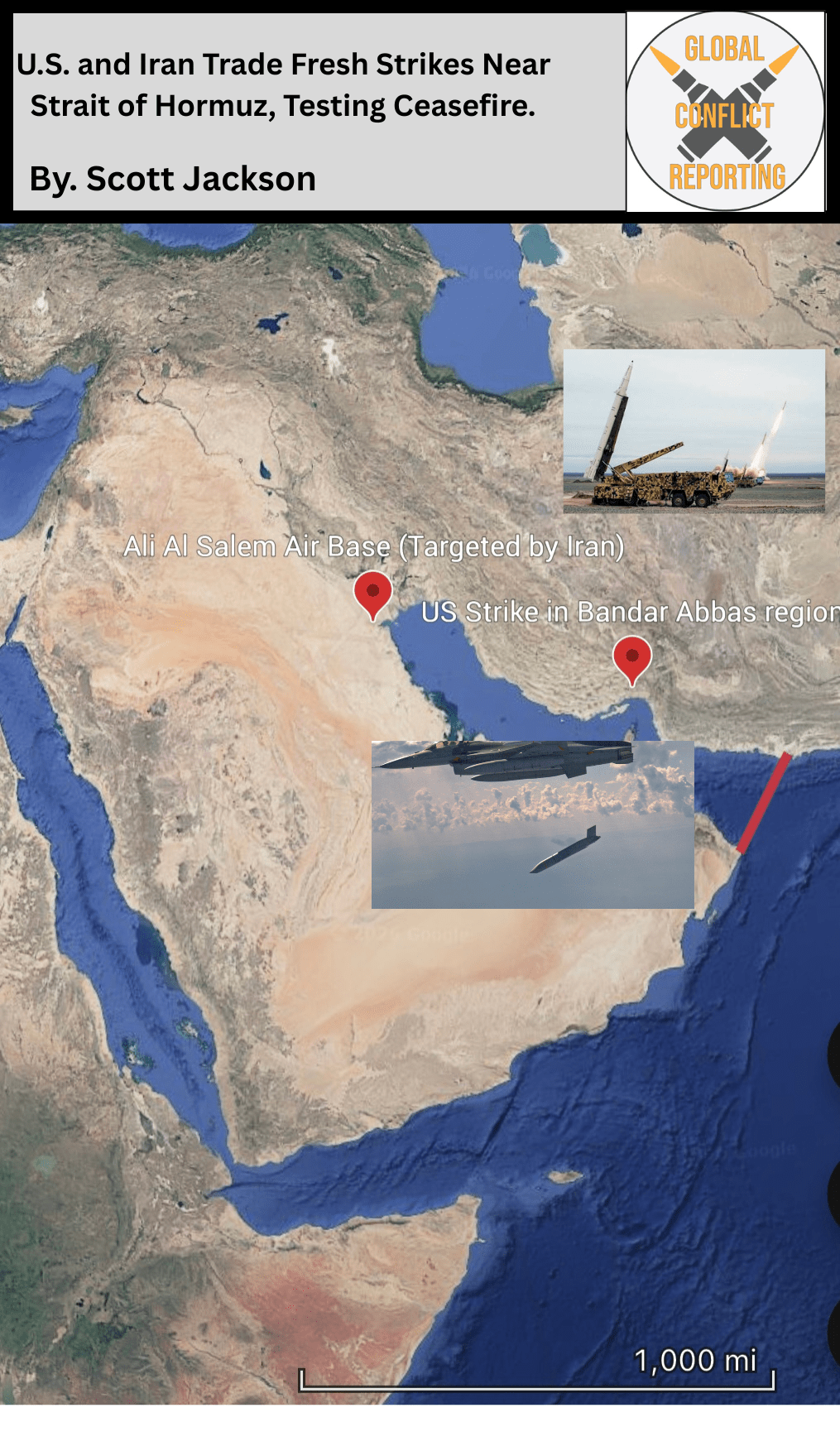
Just after midnight local time on the night going into June 1 2026, Iran’s Islamic Revolutionary Guard Corps (IRGC) launched a short-range ballistic missile (SRBM) targeting the Ali Al Salem Air Base in Kuwait, a key hub for U.S. and coalition forces. Kuwaiti air defenses intercepted the Fateh-110 missile, but falling debris caused minor injuries to five U.S. personnel and contractors.
According to U.S. Central Command (CENTCOM), American forces had conducted self-defense strikes over the weekend against Iranian military targets on Qeshm Island and near Goruk in southern Iran. The strikes hit Iranian air defense systems, a ground control station linked to drone operations, and facilities associated with one-way attack drones. CENTCOM stated the action was in response to Iran’s downing of a U.S. MQ-9 drone over the Persian Gulf and attempts to mine the Strait of Hormuz in recent days.
Iran has released footage of the interception of a U.S. MQ-1 drone it shot down yesterday.
After heavy losses among its MQ-9 drones, American regime appears to be turning back to the older MQ-1 fleet. pic.twitter.com/Lnas1GJMmg
Local residents in Sirik County, Hormozgan Province, reported hearing multiple explosions around 4:00 a.m. local time on Sunday, with additional blasts roughly 30 minutes later. Eyewitness accounts and online reports indicated that an IRGC Navy facility near the village of Goruk was struck, consistent with CENTCOM’s description of the targets. Iranian sources says they launched their missile at the airbase which this attack was launched from.
The exchange comes amid a fragile ceasefire in the ongoing 2026 Iran War. While official negotiations between the U.S. and Iran continue, progress has stalled. Iranian officials have conditioned further talks on an end to Israel’s military operations in Lebanon. Both sides have accused each other of violating the ceasefire in recent weeks through limited but recurring strikes. U.S. president Donald Trump has said on social media that he believes that Tehran wants to reach a deal however iranian officials have expressed some concern and frustration over the “constantly changing” U.S. negotiating stance.
للتنبيه العاجل: وقف إطلاق النار بين إيران والولايات المتحدة يُعدّ، من دون أي لبس، وقفاً شاملاً لإطلاق النار في جميع الجبهات، بما في ذلك لبنان. وإن انتهاك هذا الوقف في أي من الجبهات يُعد انتهاكاً له في جميع الجبهات. وتتحمل الولايات المتحدة وإسرائيل مسؤولية تبعات أي انتهاك للهدنة. https://t.co/ib3qupctnk
This war, which was started by the U.S. officially on February 28 has killed thousands of people, mainly in Iran and Lebanon. It has also caused economic hardship around the globe by pushing up energy prices since Iran effectively closed the Strait of Hormuz, a vital global supply route for oil and liquefied natural gas. While a number of vessels have been escorted through the strait in the last week, it will take several months before prices start trending back down.
The U.S. points for the negotiations have been publicly released and widely reported. They include Iran reopening the Strait of Hormuz, free of tolls, and restoring international commercial shipping. While there has been progress made here, Iran has continued to demand a right to manage the strait (jointly with Oman). The United Nations Convention on the Law of the Sea (UNCLOS), has rules about waterways like this remaining international seaways open to global trade. The other large point for the US in the negotiations is the Iranian stockpile of enriched Uranium. In October 2025 Iran officially ended the 2015 JCPOA and declared there was no more restrictions on its nuclear program. Iran claims it has a right to enrich uranium (Current estimates have their stocks of uranium enriched to a near weapons grade 60%) for commercial/use however nuclear experts argue it would take little effort to convert the material for use in nuclear weapons. Iran already poses many long range missiles that could be changed into nuclear missiles if they went that route.
Global Conflict Reporting is a completely independent project run by one person, If you would like to support my work you can sign up for a membership on the Patreon (Link below), or one time/reoccurring donations through the website.
Wednesday, May 27, 2026, U.S. forces launched a fresh wave of strikes on Iranian targets, primarily in southern Iran. The strikes came after U.S. Central Command (CENTCOM) reported that Iran had launched a ballistic missile toward a U.S. base in Kuwait. The missile was reported as being intercepted by Kuwait forces. Hours earlier, Iran had launched a wave of four one-way attack drones, which were shot down by U.S. forces.
This exchange continues a pattern of back-and-forth attacks in the past week – from both sides – that has put the fragile April ceasefire to the test as negotiations are currently ongoing. A further 60 day ceasefire is awaiting a signature from U.S. President Donald Trump today.
Timeline of strikes
Here’s a timeline of events over the past week to provide clearer context:
May 25, 2026
Iran attempted to deploy naval mines near the Strait of Hormuz, posing risks to U.S. forces and shipping. U.S. forces responded by sinking IRGC vessels involved in the mine-laying efforts. Iran then fired surface-to-air missiles (SAMs) at U.S. aircraft. These actions set the stage for the clashes that followed.
[Video Placeholder: Claimed intercepted missile tracking an F-35 or related footage]
May 26, 2026 (Monday)
U.S. CENTCOM carried out “self-defense” strikes in southern Iran, primarily in the Bandar Abbas area. The targets included Iranian missile launch sites and boats allegedly attempting to emplace naval mines in or near the Strait of Hormuz.
The U.S. described the operation as necessary to protect troops and maritime traffic during the ongoing ceasefire. Some Iranian personnel were reported killed. Iranian officials viewed the strikes as a violation of the ceasefire.
May 27, 2026 (Tuesday)
U.S. forces shot down four Iranian one-way attack drones that were threatening the Strait of Hormuz area. They also struck an Iranian ground control station near Bandar Abbas International Airport to prevent a fifth drone launch.
May 28, 2026 (Wednesday/Thursday, ongoing)
The U.S. carried out additional defensive strikes near Bandar Abbas, targeting a military/ground control site linked to drone threats. U.S. forces intercepted Iranian drones. CENTCOM emphasized restraint while defending U.S. forces and interests.
Video reportedly shows the U.S. attack on Bandar Abbas. A cruise missile can be seen flying through the sky before it strikes a target out of view of the camera.
In response, Iran’s Islamic Revolutionary Guard Corps (IRGC) launched a retaliatory ballistic missile (and reportedly a drone) attack toward a U.S. air base. The IRGC claimed it targeted the base responsible for the strikes near Bandar Abbas, which has been widely linked to facilities in Kuwait. Kuwait activated its air defenses and intercepted the incoming missile(s) and drones. No major casualties were reported. The IRGC called the strike a “serious warning” and threatened more decisive action if U.S. aggression continues.
🇮🇷 #Iran – 🇺🇸 #US: The IRGC has released a statement claiming responsibility for a missile strike against what it described as a “US military airbase” in Kuwait, allegedly in response to new American "defensive" strikes on an Iranian military site.
CENTCOM labeled Iran’s attack an “egregious ceasefire violation.” Iran also reported incidents involving warning shots at ships in the Hormuz area.
Iranian sources dispute the U.S. claim of conducting purely self-defense strikes, arguing that Iran was only responding to aggressive U.S. actions.
The White House and Tehran are currently working on a 60-day extension of the ceasefire to allow more time for negotiations.
BREAKING: The Iranian Air Defense Force published this video showing the shootdown of an AGM-158B JASSM-ER stealth cruise missile launched by the U.S. military against a military site in Iran this morning.#OperationEpicFury#OperationLionsRoarpic.twitter.com/tCtBiaEQjm
— Babak Taghvaee – The Crisis Watch (@BabakTaghvaee1) May 28, 2026
Video released from the IRGC shows the shoot down of a US AGM-158B JASSM-ER stealth cruise missile. The video is the view from a thermal detection systems, which is built around passive Infrared signals which can detect stealth aircraft because of the heat they emit. Earlier in the war a U.S. F-35 was struck because it was detected and tracked with this technology.
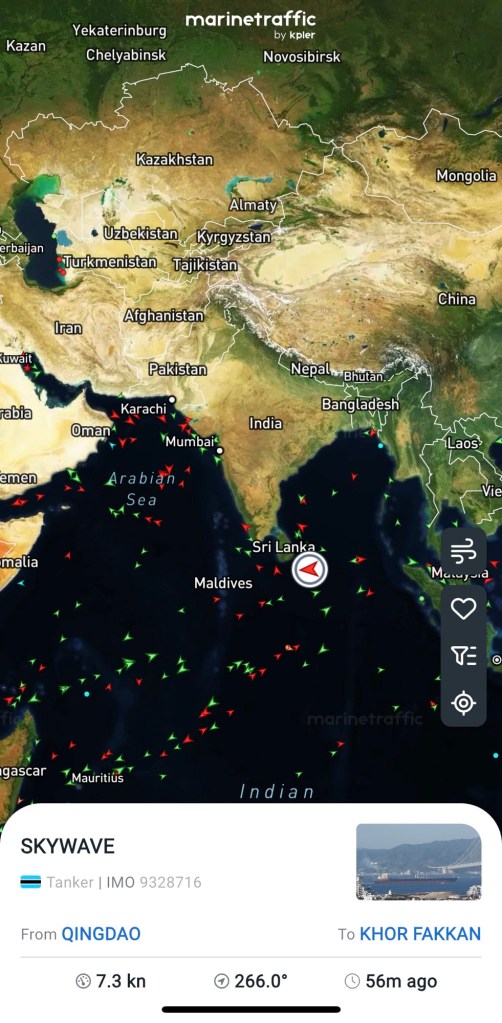
On Tuesday, May 19, 2026, U.S. forces seized an Iranian vessel in the Indian Ocean. The vessel was the Very Large Crude Carrier (VLCC) Skywave (IMO: 9328716). The story was originally reported by The Wall Street Journal, citing three U.S. officials. Ship-tracking data showed that the Skywave was sailing west of Malaysia on Tuesday after exiting the Malacca Strait. The Wall Street Journal reported that the ship was boarded overnight while it was halfway between Malaysia and Sri Lanka. The U.S. has not yet confirmed the seizure.
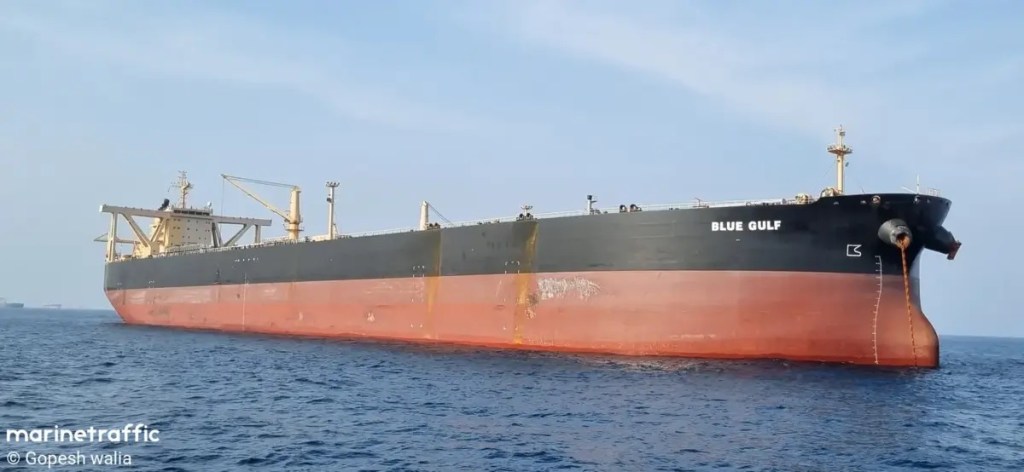
Image shows the ship before its name change to Skywave.
The ship is currently flagged in Botswana, a known cover for shadow tankers. As a landlocked country, Botswana has no national maritime or ship registry. Other maritime tracking sites list it as flagged in Comoros–another common shadow-fleet jurisdiction–providing probable evidence that the vessel routinely changes its flag. The ship changed its name in 2025 after it was sanctioned by the U.S. At that time, when it was called the Blue Gulf, it was registered in Palau.
Lloyd’s List Intelligence reports that the ship loaded more than a million barrels of crude oil at Kharg Island in February before heading to Asian waters. It is not publicly known whether the ship was able to offload its cargo in Asian ports.
Image from MarineTraffic shows a current reported position of Skywave.
This is the third time the U.S. has seized an Iranian tanker, following the seizures of the Majestic X and Tifani in April, both in the Indian Ocean. These operations form part of a blockade of Iranian shipping into the Persian Gulf as well as a broader crackdown on Iranian shipping worldwide. Iran’s tanker fleet generates revenue for the regime, which is then used to fund its military and proxy forces. The seizures tie into the wider U.S.–Israeli Operation Epic Fury and the effort to dismantle Iran’s nuclear program, among other objectives. Iran has denounced the actions as “armed piracy” and a violation of the fragile ceasefire established in April.
The Department of Justice and the Office of Foreign Assets Control (OFAC) also announced today that they are sanctioning an additional 19 tankers linked to the Iranian oil trade. The move is part of a campaign the U.S. calls “Economic Fury.”
The US action is a blockade of Iran’s ports and coastline, not a blockade of the Strait of Hormuz. Enforcement will occur inside Iran’s territorial seas and in international waters. In addition to this blockade, the Joint Force, through operations and activities in other areas of responsibility, like the Pacific Area of Responsibility under the command of Admiral Paparo, will actively pursue any Iranian flagged vessel or any vessel attempting to provide material support to Iran….This includes Dark Fleet vessels carrying Iranian oil. As most of you know, Dark Fleet vessels are those illicit or illegal ships evading international regulations, sanctions or insurance requirements. More than 10,000 sailors, Marines and Airmen, over a dozen ships and dozens of aircraft are executing this mission.
Chairman of the Joint Chiefs of Staff General Dan Caine,
Background
Tensions between the United States and Iran have escalated over Tehran’s nuclear program and its support for proxy militias across the Middle East. Operation Epic Fury, a coordinated U.S.–Israeli campaign launched earlier this year, combines naval interdictions, expanded economic sanctions, and intelligence operations to disrupt Iran’s shadow tanker fleet and starve the regime of the oil revenue that funds its military and destabilizing activities. The fragile ceasefire negotiated in April 2026 offered only a temporary pause in hostilities; both sides continue to accuse each other of violations, keeping the region on edge as the U.S. presses forward with its goal of preventing Iran from achieving nuclear breakout capability.
Earlier today, Iranian forces launched an attack on several targets across the Middle East, releasing videos showing the launch of cruise missiles and anti-ship ballistic missiles from mobile truck launchers. This appears to have been a response to a U.S. operation carried out this morning, which escorted two merchant ships through the Strait of Hormuz and out of the Persian Gulf.
During the U.S. mission, dubbed “Project Freedom,” several U.S. AH-64 Apache and MH-60 Seahawk helicopters sank six Iranian boats that the U.S. claimed were threatening commercial shipping. During the operation, it was also reported that Iran had launched new attacks aimed at American warships as well as merchant vessels.
During a press conference, Navy Adm. Brad Cooper, head of U.S. Central Command (CENTCOM), spoke with the press. Below are some key points.
“We have an enormous amount of capability and firepower concentrated in and around the strait, including AH-64 Apache and MH-60 Seahawk helicopters used just this morning to eliminate six Iranian small boats threatening commercial shipping. So we’re backing up commitment with action,” he continued. “We also have A-10s, F-15s, F-16s, F/A-18s, F-35s, EA-18 Growlers, RC-135s, KC-46s, and KC-135 fixed-wing aircraft, and numerous U.S. warships, including destroyers, two carrier strike groups, an amphibious readiness group, and a Marine Expeditionary Unit.”
Remarks to media today from Adm. Brad Cooper, CENTCOM commander, on Project Freedom: pic.twitter.com/kIFFLf2vpd
“The cruise missiles were going after both U.S. Navy ships, but mostly after commercial shipping,” Cooper added when asked about attacks so far. “We defended both ourselves and, consistent with our commitment, we defended all those commercial ships.”
Guided-missile destroyer USS Pinckney (DDG 91) observes a merchant vessel while on patrol enforcing the U.S. blockade against Iran. As of today, 50 commercial vessels have been redirected by U.S. forces to ensure compliance. pic.twitter.com/wm7onmQCke
“The President has also said that if the process [Project Freedom] is interfered with, we will react forcefully. And over the last 12 hours, Iran has interfered. The IRGC [Islamic Revolutionary Guard Corps] has launched multiple cruise missiles, drones, and small boats at ships we are protecting. We have defeated each and every one of those threats through the clinical application of defensive munitions.”
“I can confirm there’s been no U.S. military ship hit, and there’s been no U.S.-flagged ship that has been hit.”
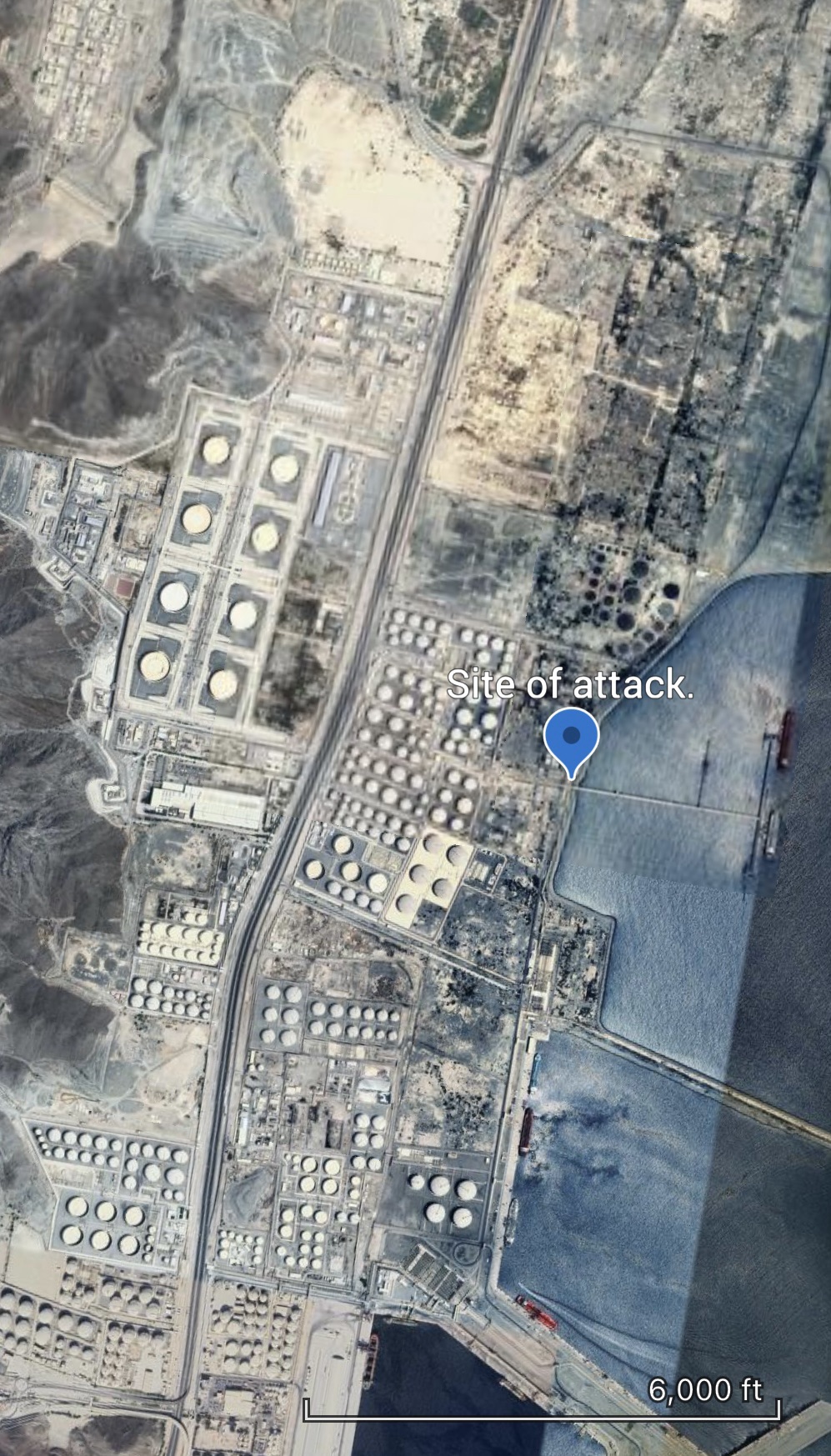
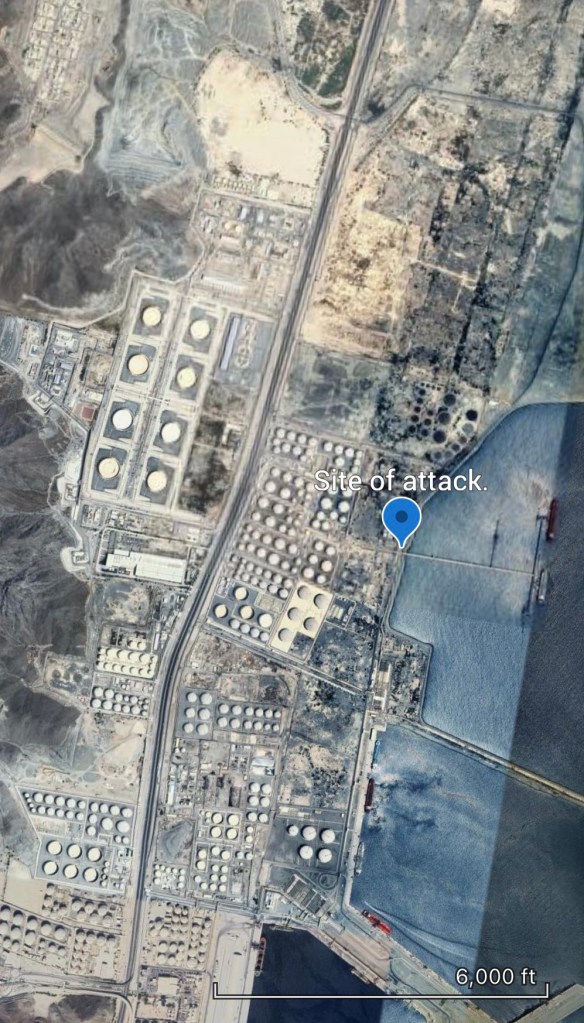
The UAE Minister of Defence said on social media that UAE air defense systems “engaged 12 ballistic missiles, 3 cruise missiles, and 4 UAVs launched from Iran, resulting in 3 moderate injuries.” The minister was referring to three Indian nationals moderately injured in a drone strike on the Fujairah Oil Industry Zone. The attack appears to have hit the connecting pipes that lead to a terminal used to load oil onto tankers.
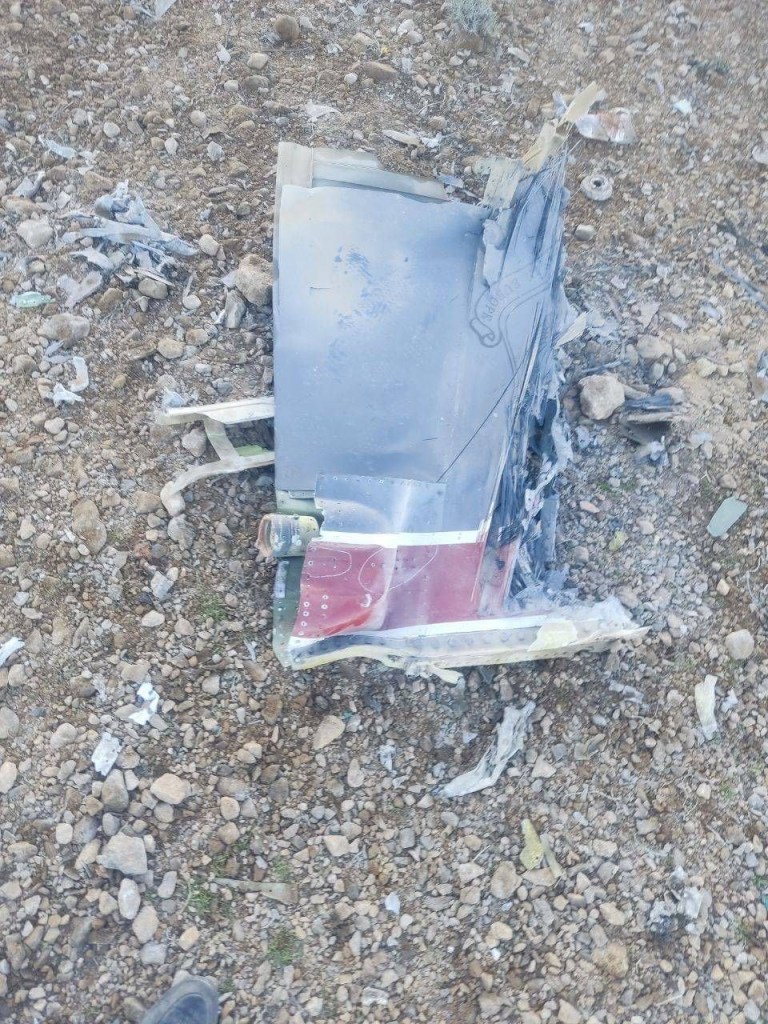
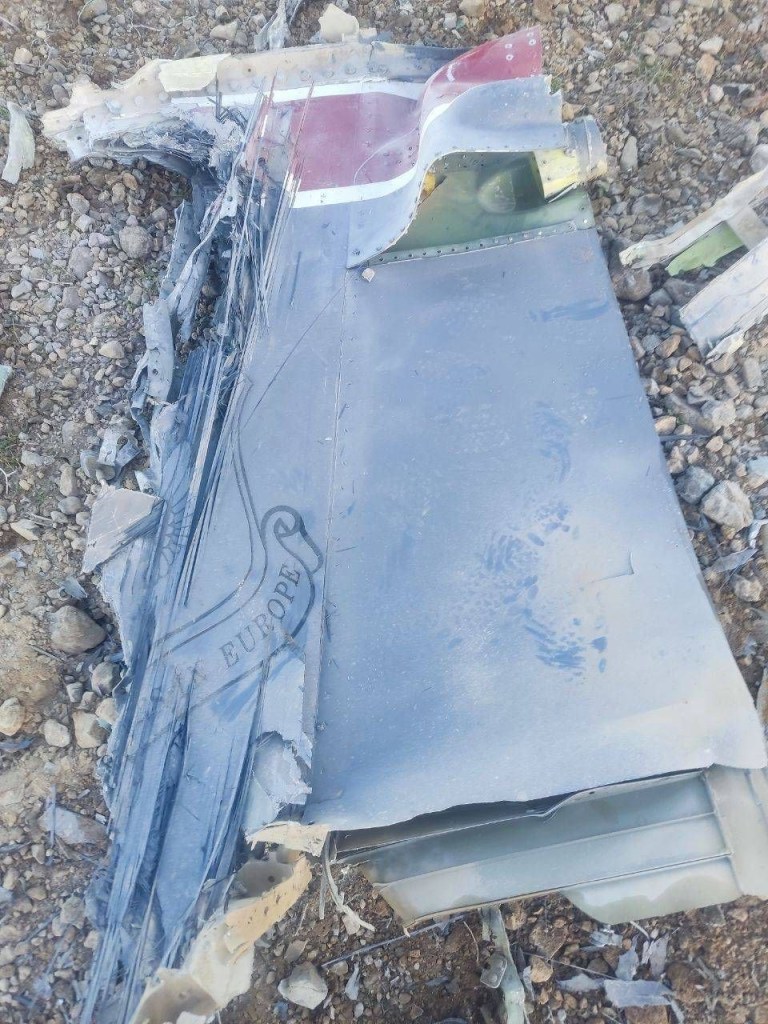
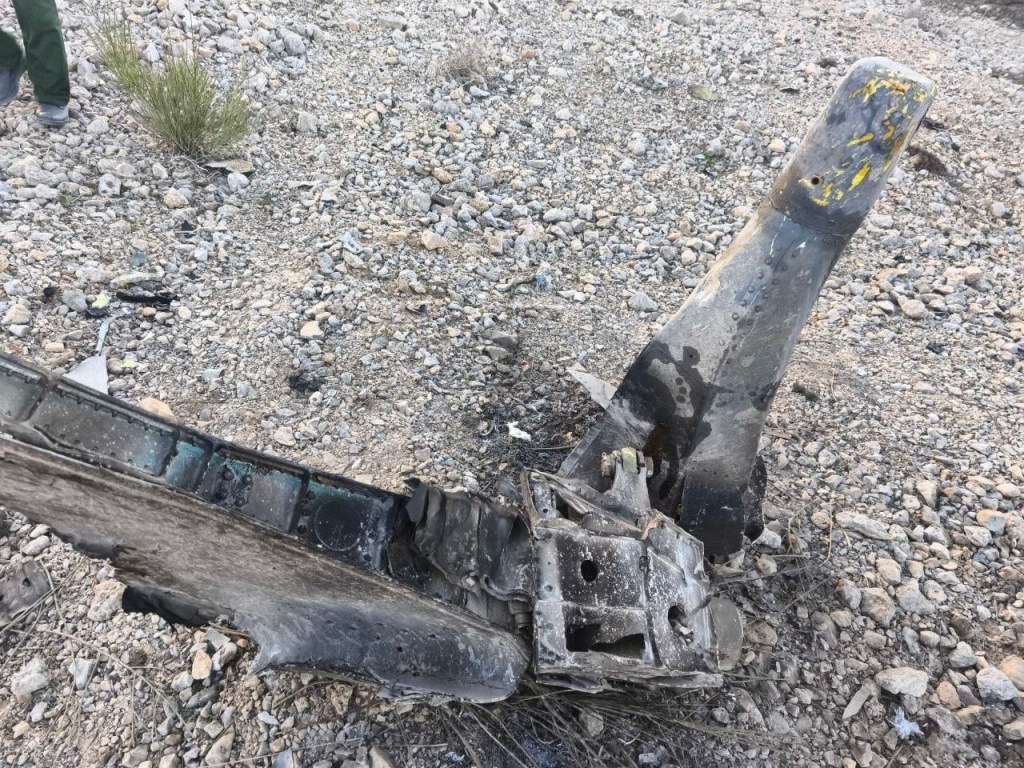
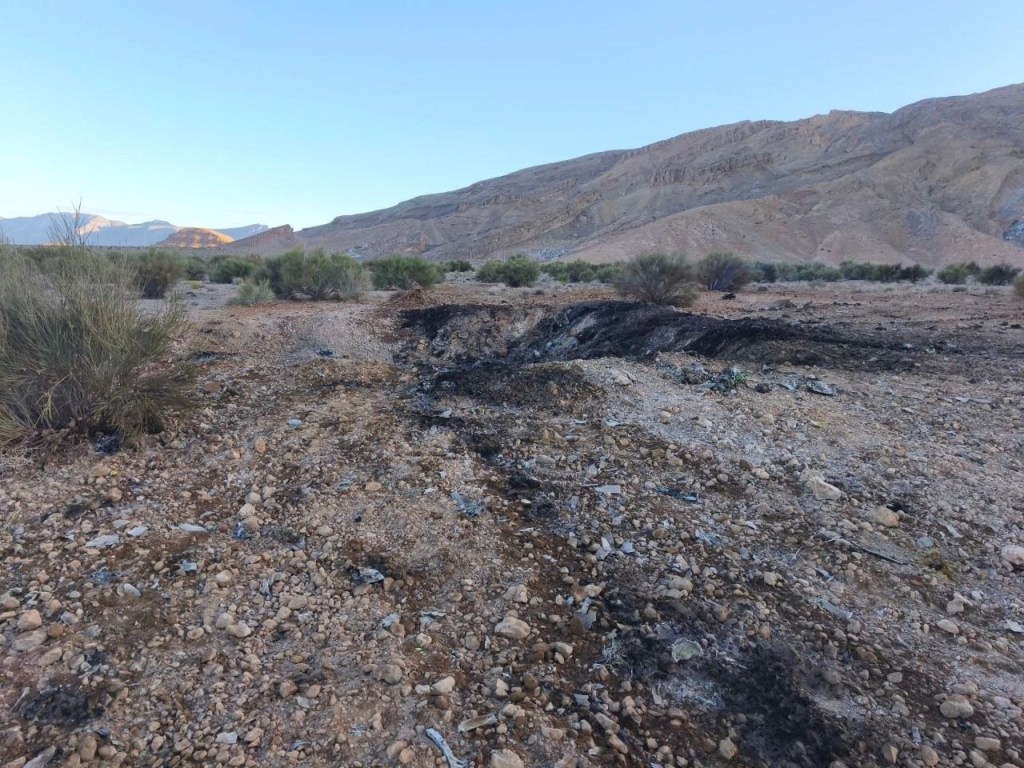
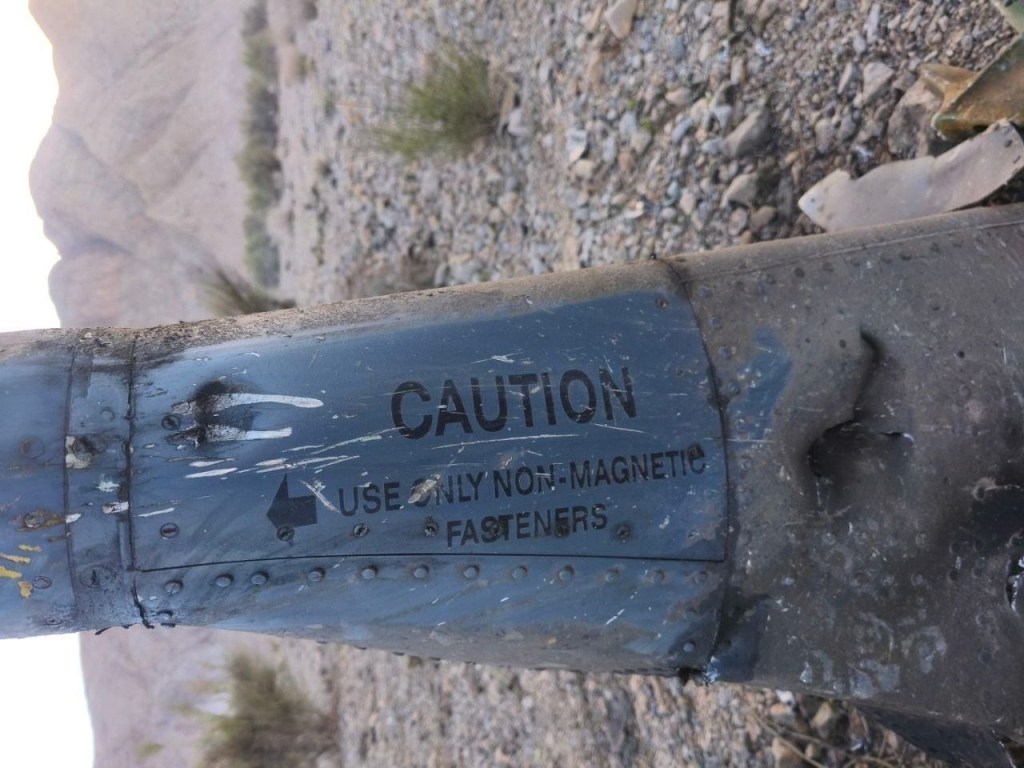
Following the downing of a U.S. Air Force F-15E Strike Eagle the U.S. carried out a rescue operation behind Iranian lines. The operation took place over the course of two days and involved a large number of aircraft.
At this point before we go any further I’d like to say that this account of events is what I believe to have happened going off of images and videos and public statements from officials (both named and unnamed) ,to the best of my ability. It’s very likely some information was intentionally released to mislead or deceive.There are reports of the CIA being involved in the effort to persuade the Iranians that the weapons systems officer was located somewhere else than where rescue efforts were focused. For some reason after the mission was complete the CIA disclosed this information to media outlets via their public relations office. President Trump and Air Force Gen. Dan Caine, chairman of the Joint Chiefs of Staff also offered up details of this operation and all of its complexities after its conclusion however this is the governments account of the events, a fact which should be taken into account when going through the information.
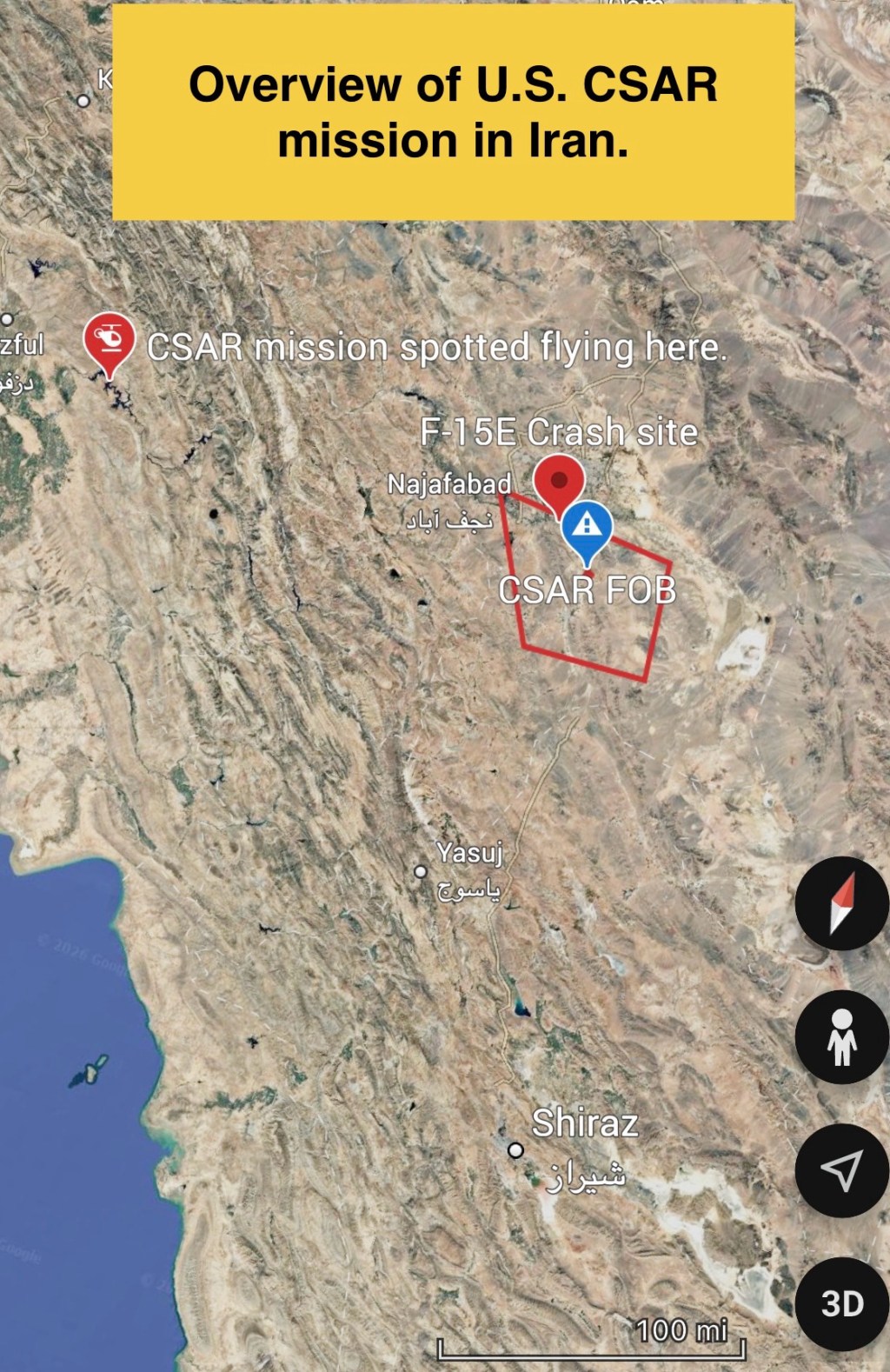
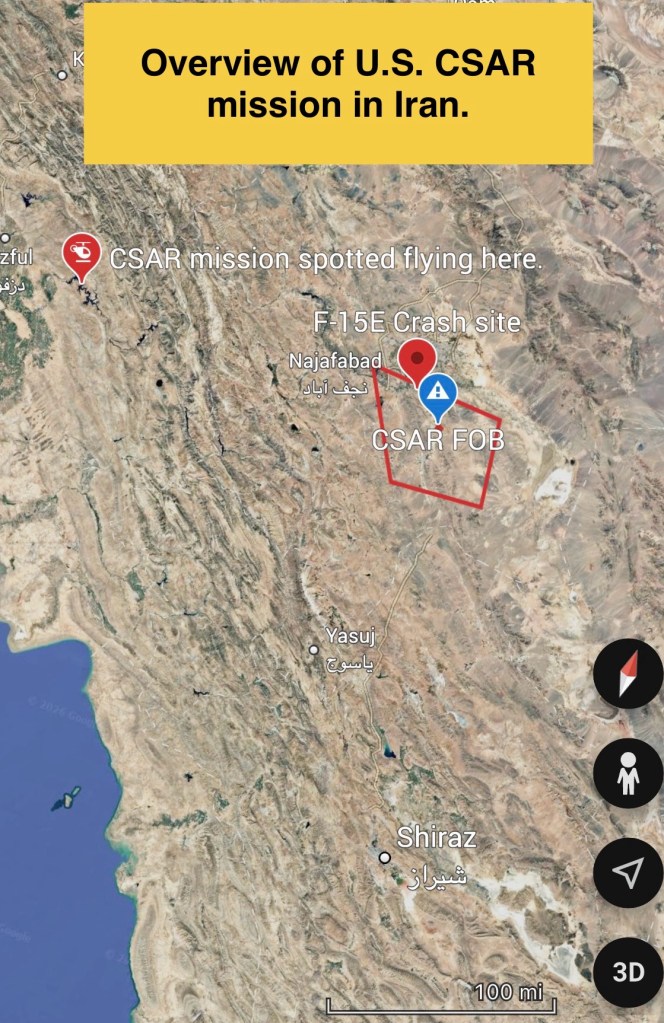
Image shows an overview of the area for the whole operation. The helicopter symbol shows the earliest sighting of US forces. The majority of the sightings were geolocated between there and the FOB- forward operating base, set up closer to where the crash site was geolocated.
On April 3rd, 2026 it was reported that a US F-15E Strike Eagle from the 494th Fighter Squadron out of RAF Lakenheath had been lost somewhere over the western region of Iran. This was the first time a U.S. fighter has been lost from enemy combat since the start of the war. By the time the incident was reported, videos were being posted by locals from the area showing what appears to be CSAR (Combat Search and Rescue) units attempting to locate the two crewmen- call signs DUDE44 Bravo and DUDE44 Alpha, from the downed F-15E.
Iranian channels publish footage of U.S. Air Force HC-130J Combat King II and HH-60G Pave Hawk search and rescue (SAR) aircraft conducting an operation in Kohgiluyeh and Boyer-Ahmad province in southern Iran this afternoon.
— Status-6 (War & Military News) (@Archer83Able) April 3, 2026
The first crewmember was rescued the day of the shootdown. At the time I personally was informed of the shootdown (About 15 minutes before the stories dropped on mainstream) I was already seeing videos of US aircraft flying low over western Iran. It was pretty clear based on the assets we were seeing that a Combat Search and Rescue operation was underway. A HC-130 Combat King II (CSAR C-130 variant), flanked by 2 HH-60G Pave Hawk helicopters. These aircraft are specifically designed to go behind enemy lines and rescue downed pilots. All three can fly very low over a search area to locate downed pilots. The Combat King operates as a sort of mobile command post and surveillance platform. It’s able to refuel the helicopters and carries refueling pods on underwing pylons and additional internal fuel tanks in the cargo bay. The plane has also been modified and given the ability to receive fuel from boom equipped tankers.
A U.S. Air Force HC-130J “Combat King II” Combat Search and Rescue (CSAR) Aircraft seen flying extremely low over the countryside of Southern Iran, as the search continues for the crew of a downed American F-15E Strike Eagle. pic.twitter.com/vQL7umqmYy
The first day’s operation was, by all accounts, a success as the pilot of the Strike Eagle was rescued by one of the Pave Hawk helicopters and extracted. As the CSAR units entered Iran a number of fighters, including an A-10 and drones were “violently suppressing and engaging the enemy in a close-in gunfight to keep them away from the front seater” according to General Caine. On the way out of Iran the rescue helicopters took a significant amount of ground fire and several people were injured as well as the helicopters being damaged, however they managed to get the pilot back to safety. By this time, it appears that they knew where the Weapon Systems Officer was, however they didn’t want to risk losing a helicopter and its crew to ground fire, especially when they had been stirring up the hornets nest for several hours already. The mission had been supported by a number of other aerial units, reportedly several F-35’ and the A-10 that was mentioned above. That A-10, which was reportedly the main point of contact with DUDE44 Alpha “was hit by enemy fire,” said Caine. “This pilot continued to fight, continued the mission, and then upon exit, flew his aircraft into another country and determined that the airplane was not land-able. The pilot then made the decision to eject over friendly territory, and was quickly and safely recovered and is doing fine.” The A-10 incident likely caused alot of the confusion that occurred on that first day as people read stories about two pilots being recovered they mistakenly thought that they were referring to both Strike Eagle crewmen.
As they were extracting the pilot, under reported heavy ground fire several people were injured and the helicopters were damaged. However the pilot was flown to safety and everybody made it back. A low-level rescue mission across Iran seems pretty crazy but the operation shifted into an even bolder phase on Day 2.
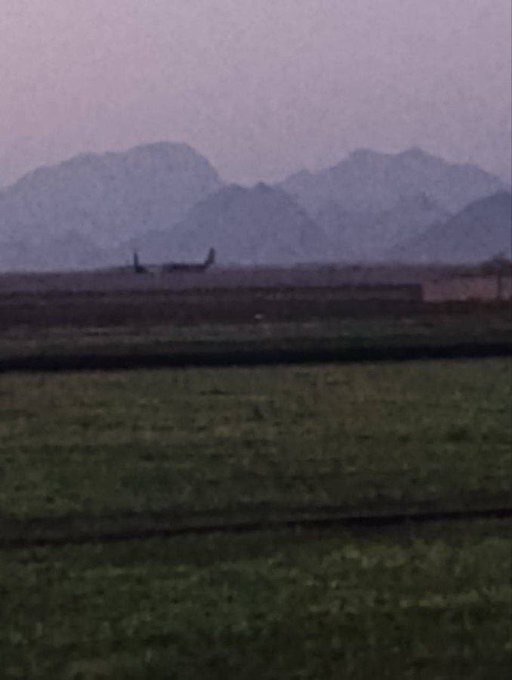
On Day 2 it was revealed that two C-130 (MC-130 variants?) had landed at a small agriculture landing strip roughly 33 miles south of Isfahan- a major Iranian city that, with its missile production complexes, airbases, and uranium conversion facilitate is an important hub for the Iranian military and the IRGC.
Images showing the planes at the airstrip that was used as a FOB (Forward Operating Base) for the rescue.
Images were released showing that U.S. forces had taken over the above mentioned airstrip and had set up a forward operating base of sorts. After the operation concluded President Trump revealed that “hundreds” of people had taken part in the operation. This leads us to believe that the force they landed at that airport was significant.
The Weapon systems officer was reportedly hiding at the top of a mountain that he had climbed after ejecting from his airplane and being separated from the pilot. Almost 50 hours after the plane was shot down the operation to rescue the wounded WSO began on Easter Sunday.
“He scaled cliff faces bleeding rather profusely, treated his own wounds and contacted American forces to transmit his location,”
President Donald Trump speaking about the WSO.
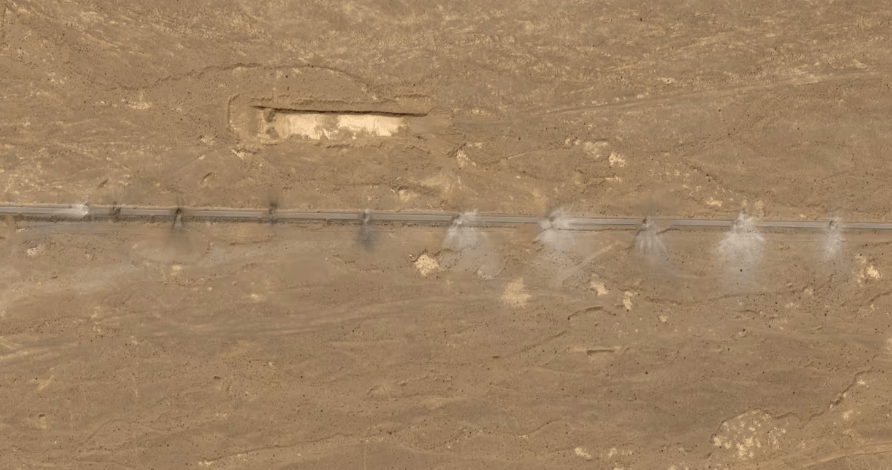
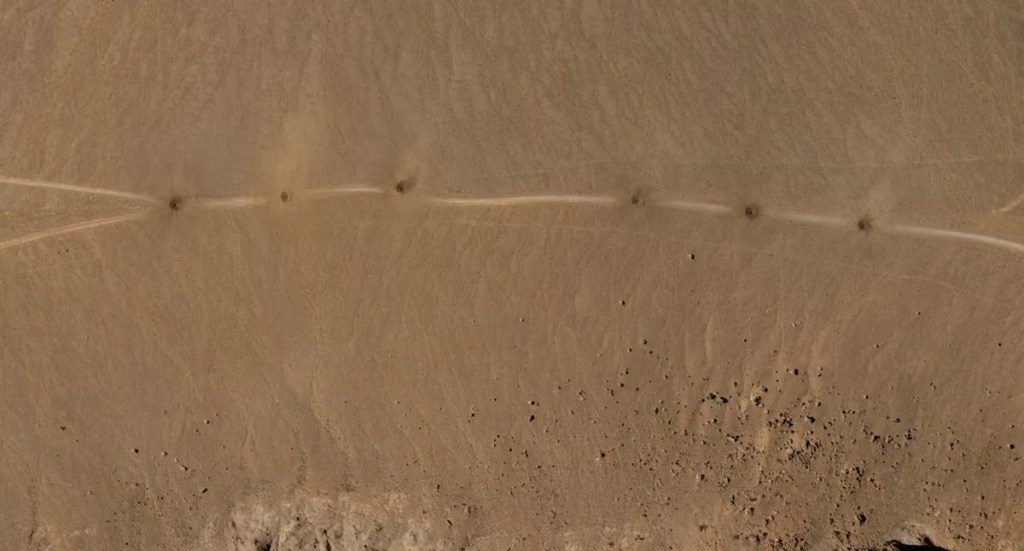
According to President Trump once the WSO was located a massive force was mobilized to retrieve him from his hiding spot. The force involved 155 aircraft, including four bombers, 64 fighters, 48 refueling tankers, 13 rescue aircraft and more. The four bombers, likely B-1 Lancers or B-52’s cratered a number of roads leading to the mountain where the WSO was hiding, dropping at least 100 2000lb bombs according to the Wall Street Journal article linked below.
Some of those roads can be seen on satellite images released in the days since.
Images shows some of the blast left by 2000lb bombs dropped by the U.S. during the rescue operation.
Not all of the assets listed above were involved in the main effort to rescue the stranded WSO, in fact according to the White House many of the airplanes were used in diversion tactics, running strikes to cause confusion and keep the Irans running around. At this point several thousand Iranians were running around trying to capture the American. The longer this mission went on the more dangerous it was for everybody involved.
While all of these was happening a refueling and rearming point had been established at the farm airstrip and two MC-130J special operations cargo planes that included several little bird helicopters and other equipment and soldiers.
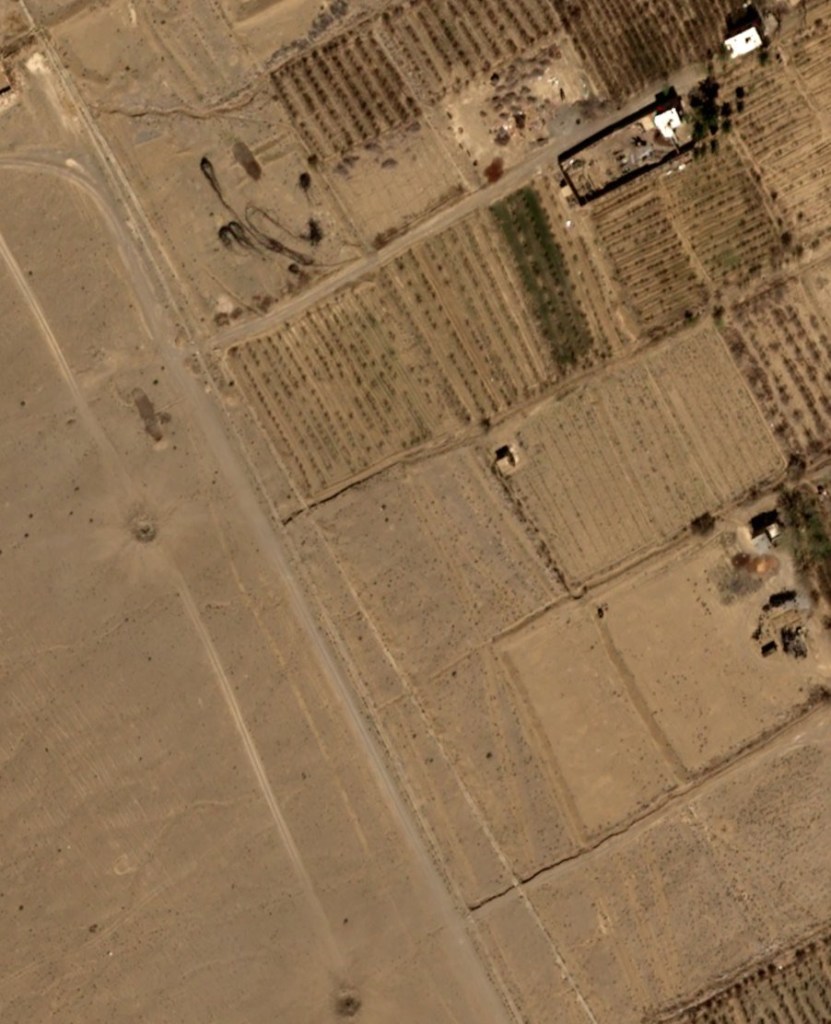
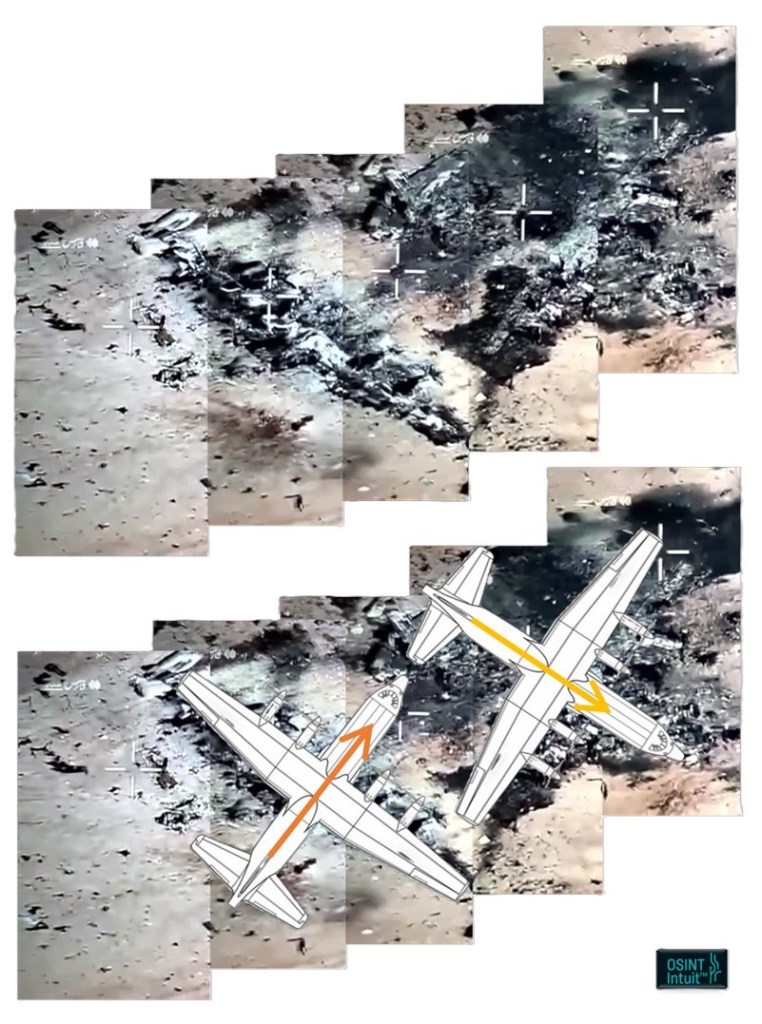
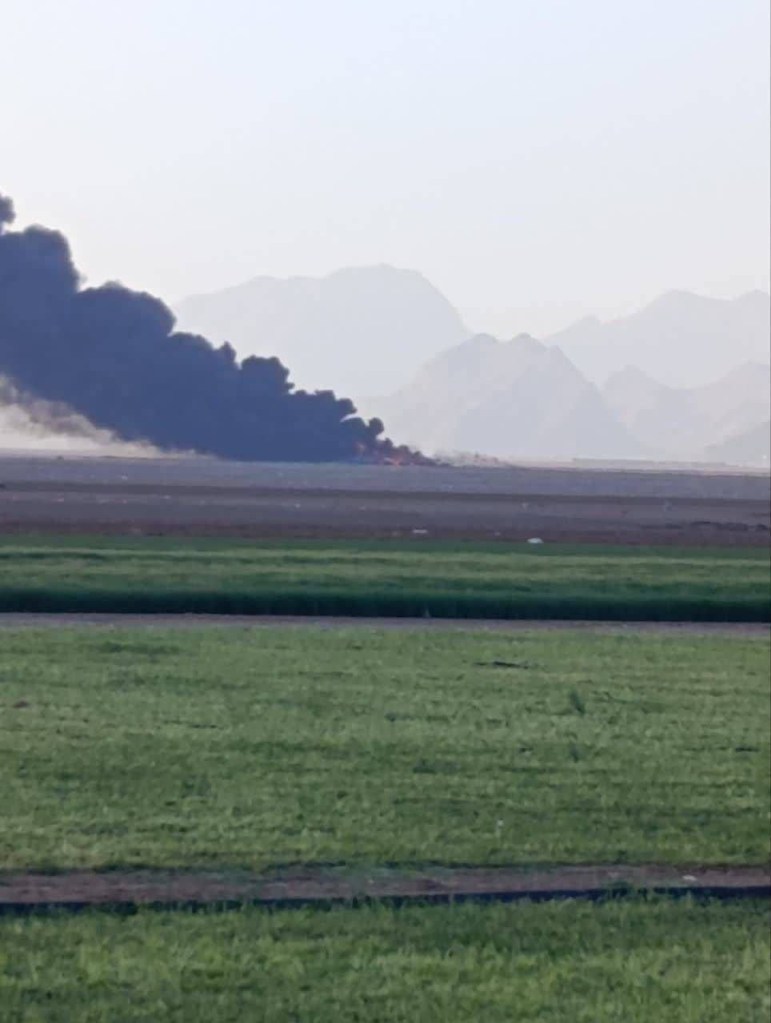
After the wounded WSO was recovered he was pulled back to this farm landing strip. Trump said that with the MC-130s were stuck in the wet, sandy soil, “we blew them up to smithereens.” The helicopters brought in by plane were also blown up in place as well, because the aircraft that replaced the Commando IIs weren’t capable of exfilling them and leaving them intact ment leaving them in the hands of the enemy. To replace the stuck cargo special forces cargo planes they brought in “lighter, faster aircraft…” said Trump” came in and brought them out.”
Several images mashed together shows the site where the MC-130’s were destroyed by U.S. forces. You can see which way they were facing from what is left. The landing site after the destruction of the MC-130’s and helicopters.
Estimated location of 2 hc/mc 130 and 2 little birds south of Isfahan. Est C: 32.258394, 51.901927 Satellite imagery from Landsat confirms that an old runway was used as a forward operating location for last night's rescue mission. A burn mark from the deliberately destroyed… pic.twitter.com/ZJbAmhZ5Ky
— Major Sammer Pal Toorr (Infantry Combat Veteran) (@samartoor3086) April 5, 2026
This post shows some video taken after the operation. The videos show the landing field where the U.S. set up its base for the operation.
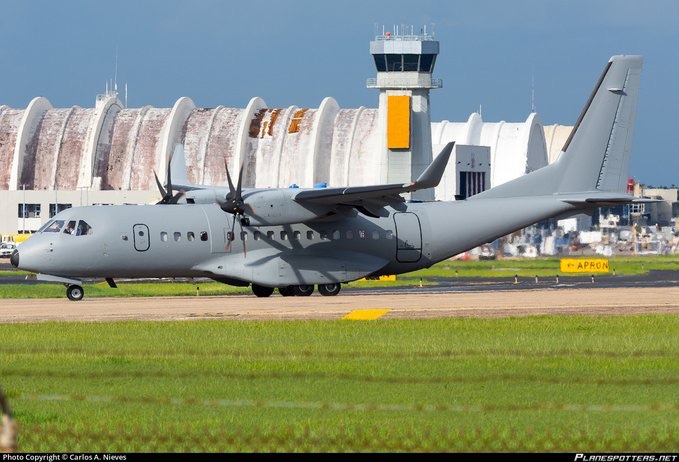
It’s almost certain the airplane he is talking about is the CASA C-295W Perssauder, a short take off and landing twin turboprop plane that are modified with special forces operations in mind.
Spotted flying at low level over western Iran this morning; a C-295W from the USAF’s 427th Special Operations Squadron, a clandestine unit that reportedly specializes in infiltration and exfiltration into enemy territory. pic.twitter.com/4UfAFj7AQb
Video of the backup exfill plane heading to pick up the U.S. personnel who’s plane got stuck in the sand.
At least one of these was filmed by locals coming into the region at the end of Sunday. As @OSINTTechnical mentions these are from the 427th Special Operations Squadron and specifically handle infiltration and exfiltration from hostile territory.
A better look at the C-295W Perssauder.
This is the plane that ultimately brought the WSO out of enemy territory after his multi-day ordeal, climbing a mountain and being shot down and injured behind enemy lines.
We know that Israeli forces also aided in reconnaissance and intelligence information regarding the location and status of the WSO during his time hiding from Iranian forces.
During the time of the rescue Fox News and several other outlets reported a strike being ordered using B-2 Spirit stealth bombers loaded with Massive Ordnance Penetrators to strike an IRGC underground headquarters outside of the Iranian capital, Tehran.
You can be sure there is much about this strike that will remain unknown until somebody writes a book about it. Until then this is everything GCR has managed to gather since the two crew were first reported down inside of Iranian borders.
Sources
(There was some great reporting done on this whole thing, I’d like to list a couple here as well as some extra videos and post)
❗️The United States has launched a large-scale search and evacuation operation for the pilots of an F-15 fighter jet shot down this morning in western Iran.
A solid shout out to Google Earth Pro (the Desktop version ). They moved over to a browser based version years ago but thankfully this version is still available. It’s better in pretty much every way.
And to all of you for the years of support in some cases. I wouldn’t be here without all of you who take the time to read my work and support it in various ways. I’m competing with corporate giants on some of these stories media empires with huge investigative teams and lots of money so I appreciate every single person that supports GCR.
This website is ad free and free to read, forever, so if you want to donate to help me grow and support all of this I’ll post two links below. My Patreon is a monthly membership for a dollar. I occasionally post extra articles there for my members.





You must be logged in to post a comment.