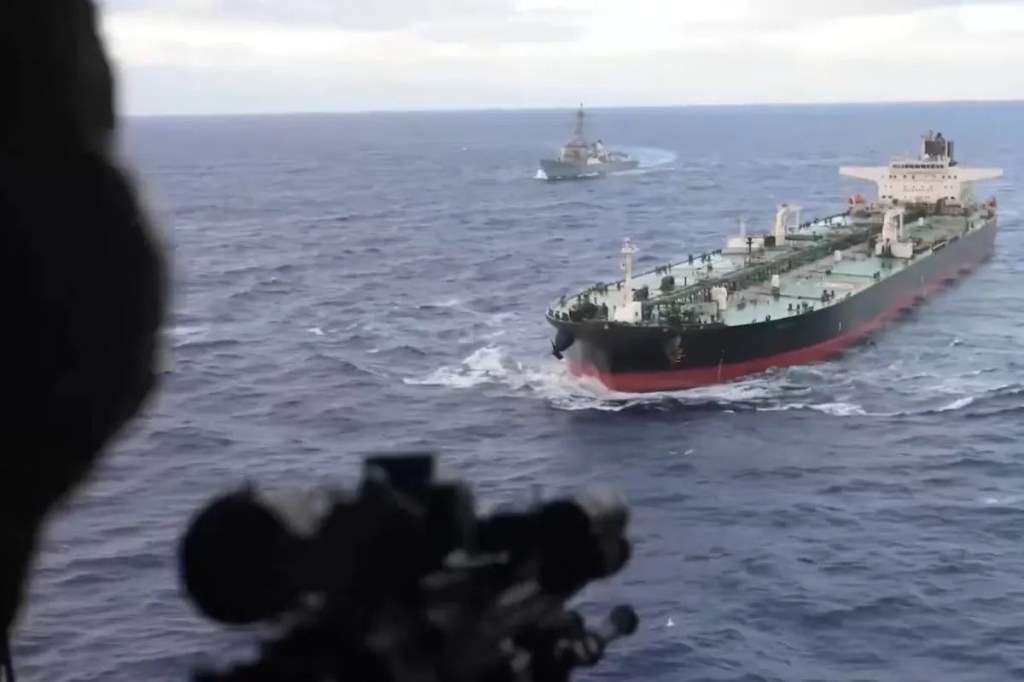
On September 5, 2026, U.S. forces struck and disabled three Iranian crude oil tankers after Iran’s Islamic Revolutionary Guard Corps (IRGC) fired ballistic missiles at elements of the U.S. Navy, according to a report by U.S. Centcom.
Iranian forces fired upon an unnamed aircraft carrier and guided-missile destroyer, which evaded the Iranian missiles. No U.S. personnel were harmed, according to the statement from CENTCOM.
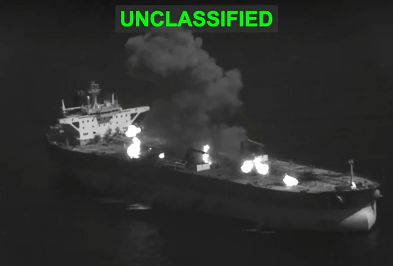
In response to the attack, U.S. forces targeted and disabled the M/V Downy near Kharg Island and the M/T Stark 1 near Jask. A third tanker, the unladen, Kylo also sometimes referred to as the Noxen, was also hit and completely destroyed in the Gulf of Oman.
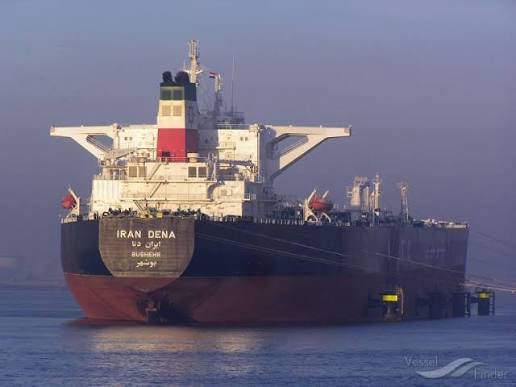
Video is the strikes. M/V Downy (IMO:9218480)
M/V Downy is a 22 year old, 296,977 ton, Iran-flagged Very Large Crude Carrier (VLCC). Downy (IMO 9218480) was struck in the stern with the intent of diabling its steering.
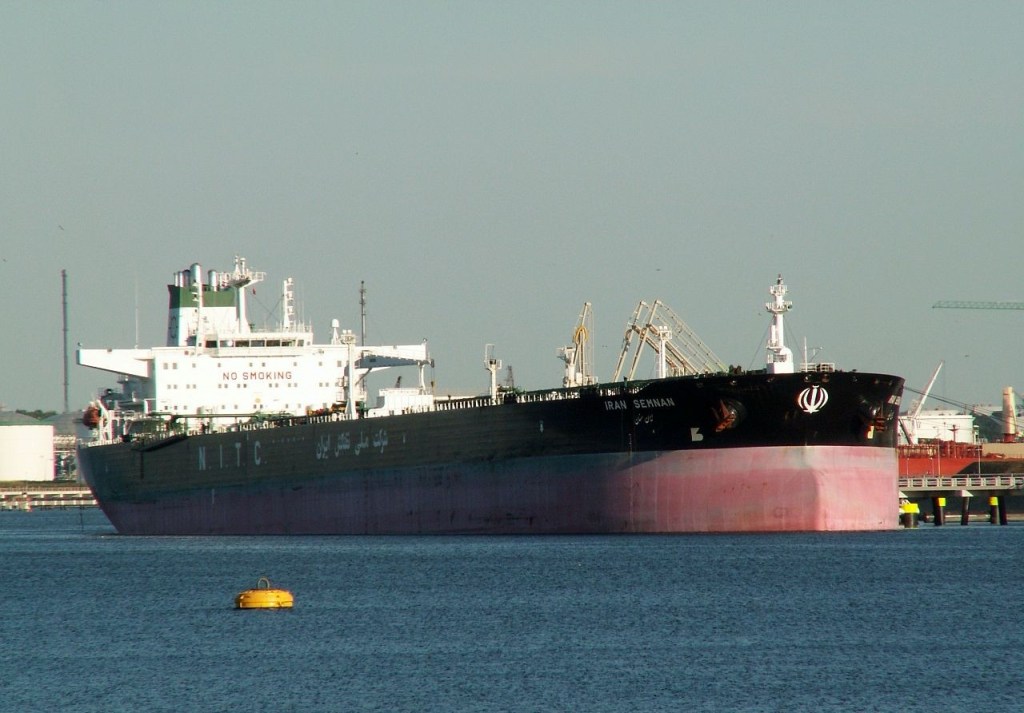
M/T Stark 1 IMO:9171450)
26 year old, 159,681 ton, Iran-flagged Suezmax tanker Stark I (IMO 9171450) suffered a similar hit. It’s believed both of these were disabled rather than destroyed because they were loaded. (Judging by their draft)
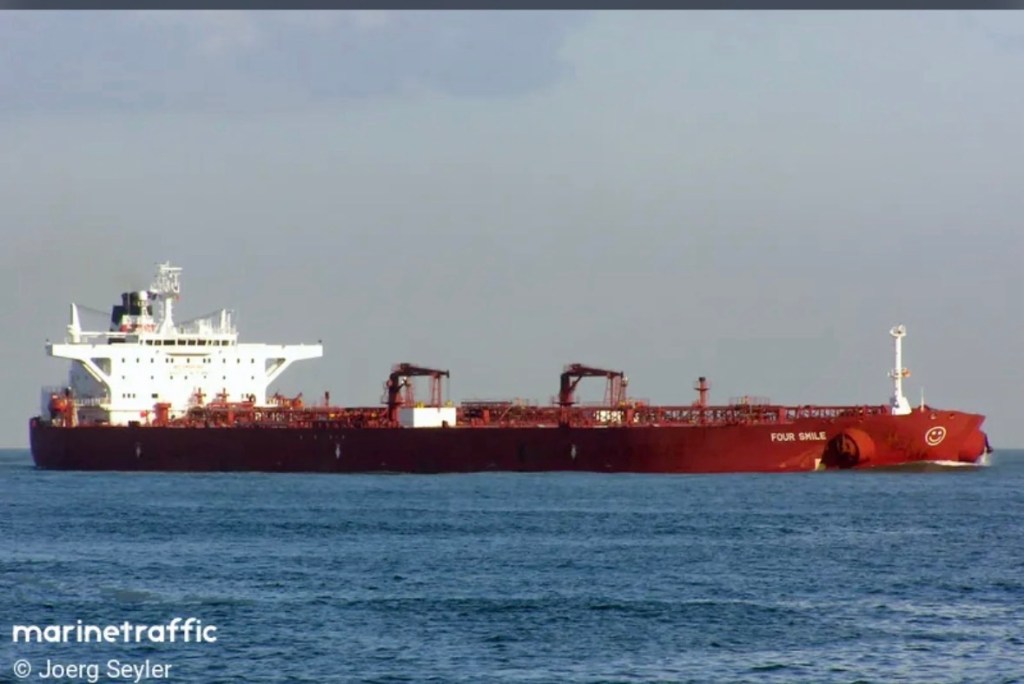
Kylo (IMO:9189146)
The Kylo is Comoros-flagged, and a 25 year old. The 160,573 ton Suezmax tanker was anchored to the east of the Strait of Hormuz admid other ships waiting to load. Per the video it was hit with multiple pieces of ordnance.
These tankers are apart of the Iranian shadow fleet—a fleet of ships that use concealing tactics (illegal flag and name changes) to hide, not so much what they are hauling but where it’s from.
Video taken by the crew of the Iranian general cargo ship Iran Shahed (IMO:9184691) ,which recorded the radio call of the U.S. aircraft in the minutes before the strike on the M/T Stark 1. The fighter pilot gave the crew three minutes to evacuate the stern of the ship.
“Let the message to the IRGC be clear: If you shoot at two of our ships, we will impose an even higher economic cost, taking out three of yours,” said Adm. Brad Cooper, CENTCOM commander. “We will not hesitate to defend American forces, and if necessary, destroy Iran’s limited and exposed oil fleet.”
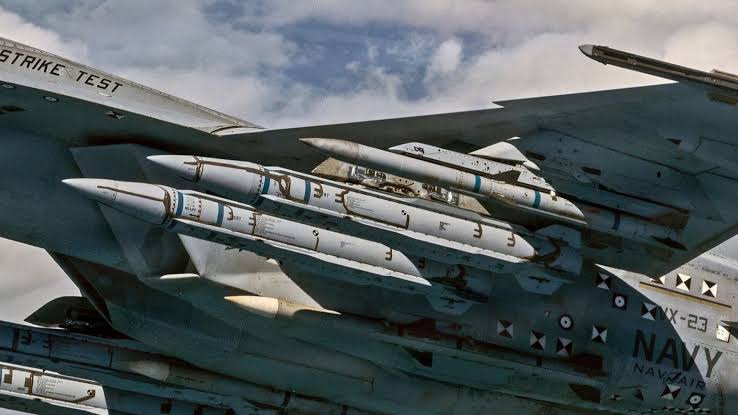
This week, the AIM-242 Malice, a LRAAM (Long Range Air-to-air Missile), was announced by the U.S. Navy.
We don’t know much about the missile, but what we do know is that it was quietly worked on by Raytheon and is capable of hitting targets over 250 nautical miles (463 kilometers) away, according to Navy reporting. Its 13.5″ diameter and aerodynamic profile were built for range as well as for the ability to be carried by fighters with internal weapons bays.
The missile was officially announced on August 22, 2026, at the Tailhook symposium in Reno, Nevada. The Navy announced there that the weapon was already in flight testing and being developed for deployment on the Boeing F/A-18E/F Super Hornet, the Lockheed Martin F-35, and the future F/A-XX program.
Two AIM-424
It’s thought that the development of the AIM-424 comes from the Long-Range Engagement Weapon (LREW) special access program first disclosed to the public in 2017. At the time, the US Air Force was looking for a two-stage air-to-air missile that could be carried in the internal weapons bay of a stealth fighter (F-35 or F-22), a similar use case to AIM-424.
The range of the AIM-424 has been quoted as around 250 nautical miles, which is similar to the publicly reported upper limits of the AIM-174B Gunslinger, which is a derivative of the sea-based RIM-174B Standard Extended Range Active Radar Missile (ERAM, Standard Missile-6, or SM-6). What the AIM-424 brings to the table is versatility, as the Gunslinger is a much larger missile and currently only known to be carried by the Boeing F/A-18E/F Super Hornet.
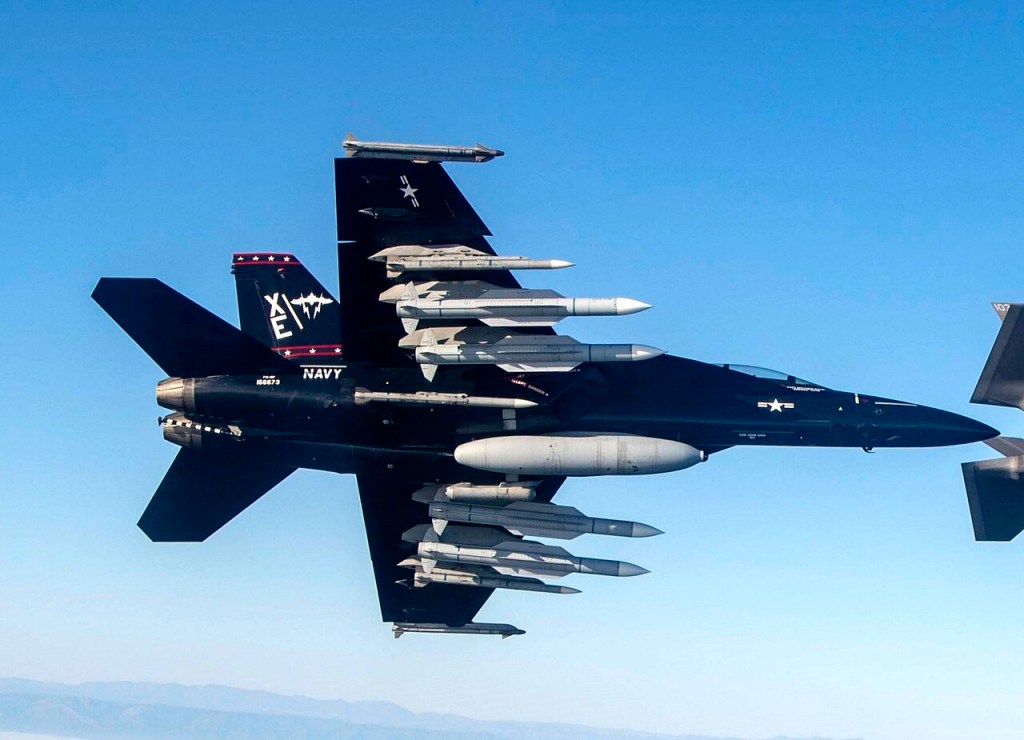
A U.S. Navy Boeing F/A-18F Super Hornet (BuNo 166673) of Air Test and Evaluation Squadron 9 (VX-9) flies over the Point Mugu Sea Range in Southern California (USA), 24 September 2024. The aircraft carries two AIM-9X Sidewinder missiles, three AIM-120 AMRAAM and four AIM-174B long-range air-to-air missiles, an infrared search and track system (IRST) in a modified drop tank on its centerline, as well as an ATFLIR targeting pod on its left cheek station.
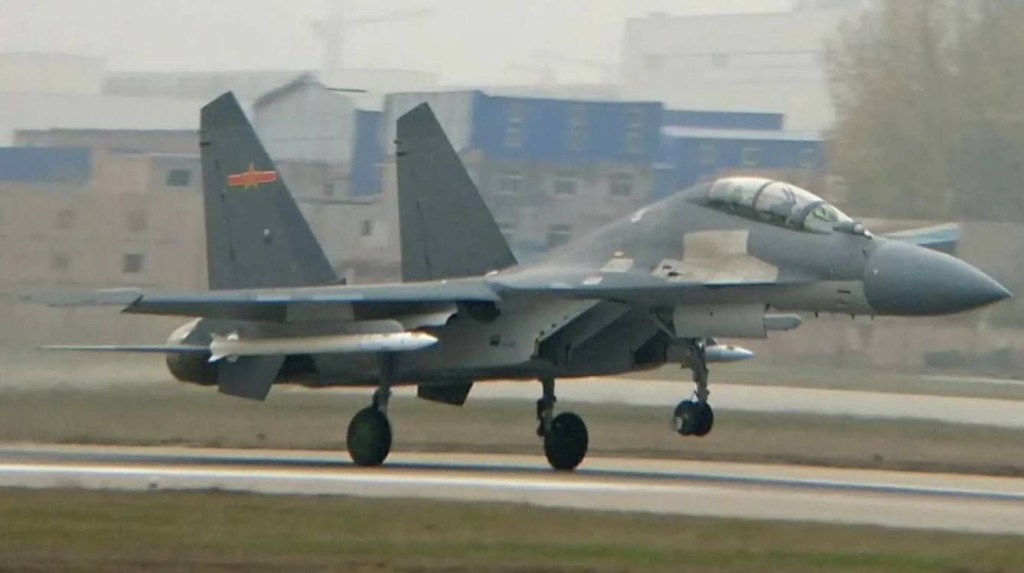
The U.S. Air Force and Navy have both put a priority on extending the engagement range of its fighters as the U.S.’s potential enemies extend the range of their armaments. China fields the PL-17 with a reported range of over 300 miles.
PLA Air Force J-16, armed with the PL-17 long-range air-to-air missile
An important caveat to all of this is that the published range figures are usually much larger than what the missile can reasonably expect to make a hit on a target. The range is tested using high altitude, in good weather conditions, against a non-maneuvering target. The tests don’t use any sort of jamming or defensive countermeasures. Taking these factors into account, the range these that any air-to-air missile can expect to score a kill is much shorter than what is published.
In air-to-air combat, you have a concept of the No-Escape Zone (NEZ). This is the volume of space in which the target cannot defeat the missile through pure kinematics (turning away, accelerating, diving, or any combination of those) no matter how well the pilot flies. Outside the NEZ, the probability of kill (Pk) falls off steeply. For many conventional solid-rocket missiles (most of them), the NEZ is often roughly one-third (or less) of the advertised maximum range.
A related concept is the practical effective engagement range against an alert, maneuvering fighter that is using countermeasures. That distance is usually even shorter than the pure kinematic NEZ once you factor in real-world degradation factors.
Most missiles that use solid rocket fuel burn their fuel very quickly, most medium range within the first 10-12 seconds of launch. After that, burnout the missile is coasting. It is a finite amount of energy that it must manage all the way to the target. Course corrections and drag come into play, and at very long range, the missile could simply lose all energy and “go ballistic”, keeping a straight course and falling to the Earth.
While these factors are all important it shows why companies are continuing to push the envelope and produce these long range systems, as the more you can push the ideal range, the longer range that the missile will have under less than ideal combat situations where the enemy is jamming the missile, and using ever tool he has to evade.
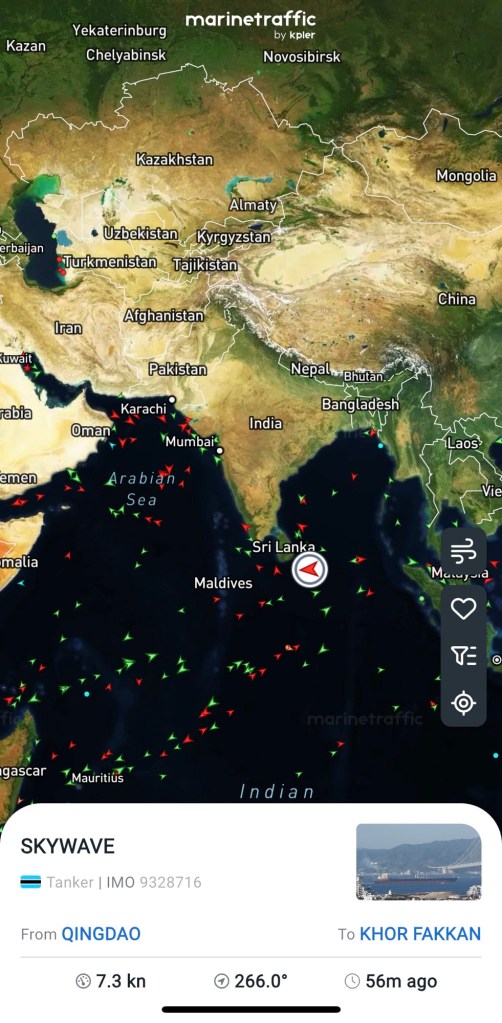
On Tuesday, May 19, 2026, U.S. forces seized an Iranian vessel in the Indian Ocean. The vessel was the Very Large Crude Carrier (VLCC) Skywave (IMO: 9328716). The story was originally reported by The Wall Street Journal, citing three U.S. officials. Ship-tracking data showed that the Skywave was sailing west of Malaysia on Tuesday after exiting the Malacca Strait. The Wall Street Journal reported that the ship was boarded overnight while it was halfway between Malaysia and Sri Lanka. The U.S. has not yet confirmed the seizure.
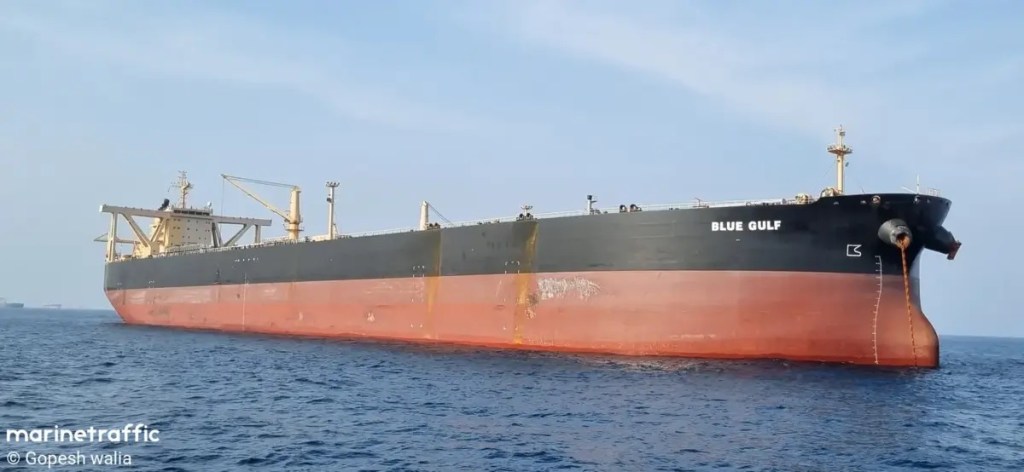
Image shows the ship before its name change to Skywave.
The ship is currently flagged in Botswana, a known cover for shadow tankers. As a landlocked country, Botswana has no national maritime or ship registry. Other maritime tracking sites list it as flagged in Comoros–another common shadow-fleet jurisdiction–providing probable evidence that the vessel routinely changes its flag. The ship changed its name in 2025 after it was sanctioned by the U.S. At that time, when it was called the Blue Gulf, it was registered in Palau.
Lloyd’s List Intelligence reports that the ship loaded more than a million barrels of crude oil at Kharg Island in February before heading to Asian waters. It is not publicly known whether the ship was able to offload its cargo in Asian ports.
Image from MarineTraffic shows a current reported position of Skywave.
This is the third time the U.S. has seized an Iranian tanker, following the seizures of the Majestic X and Tifani in April, both in the Indian Ocean. These operations form part of a blockade of Iranian shipping into the Persian Gulf as well as a broader crackdown on Iranian shipping worldwide. Iran’s tanker fleet generates revenue for the regime, which is then used to fund its military and proxy forces. The seizures tie into the wider U.S.–Israeli Operation Epic Fury and the effort to dismantle Iran’s nuclear program, among other objectives. Iran has denounced the actions as “armed piracy” and a violation of the fragile ceasefire established in April.
The Department of Justice and the Office of Foreign Assets Control (OFAC) also announced today that they are sanctioning an additional 19 tankers linked to the Iranian oil trade. The move is part of a campaign the U.S. calls “Economic Fury.”
The US action is a blockade of Iran’s ports and coastline, not a blockade of the Strait of Hormuz. Enforcement will occur inside Iran’s territorial seas and in international waters. In addition to this blockade, the Joint Force, through operations and activities in other areas of responsibility, like the Pacific Area of Responsibility under the command of Admiral Paparo, will actively pursue any Iranian flagged vessel or any vessel attempting to provide material support to Iran….This includes Dark Fleet vessels carrying Iranian oil. As most of you know, Dark Fleet vessels are those illicit or illegal ships evading international regulations, sanctions or insurance requirements. More than 10,000 sailors, Marines and Airmen, over a dozen ships and dozens of aircraft are executing this mission.
Chairman of the Joint Chiefs of Staff General Dan Caine,
Background
Tensions between the United States and Iran have escalated over Tehran’s nuclear program and its support for proxy militias across the Middle East. Operation Epic Fury, a coordinated U.S.–Israeli campaign launched earlier this year, combines naval interdictions, expanded economic sanctions, and intelligence operations to disrupt Iran’s shadow tanker fleet and starve the regime of the oil revenue that funds its military and destabilizing activities. The fragile ceasefire negotiated in April 2026 offered only a temporary pause in hostilities; both sides continue to accuse each other of violations, keeping the region on edge as the U.S. presses forward with its goal of preventing Iran from achieving nuclear breakout capability.
Earlier today, Iranian forces launched an attack on several targets across the Middle East, releasing videos showing the launch of cruise missiles and anti-ship ballistic missiles from mobile truck launchers. This appears to have been a response to a U.S. operation carried out this morning, which escorted two merchant ships through the Strait of Hormuz and out of the Persian Gulf.
During the U.S. mission, dubbed “Project Freedom,” several U.S. AH-64 Apache and MH-60 Seahawk helicopters sank six Iranian boats that the U.S. claimed were threatening commercial shipping. During the operation, it was also reported that Iran had launched new attacks aimed at American warships as well as merchant vessels.
During a press conference, Navy Adm. Brad Cooper, head of U.S. Central Command (CENTCOM), spoke with the press. Below are some key points.
“We have an enormous amount of capability and firepower concentrated in and around the strait, including AH-64 Apache and MH-60 Seahawk helicopters used just this morning to eliminate six Iranian small boats threatening commercial shipping. So we’re backing up commitment with action,” he continued. “We also have A-10s, F-15s, F-16s, F/A-18s, F-35s, EA-18 Growlers, RC-135s, KC-46s, and KC-135 fixed-wing aircraft, and numerous U.S. warships, including destroyers, two carrier strike groups, an amphibious readiness group, and a Marine Expeditionary Unit.”
Remarks to media today from Adm. Brad Cooper, CENTCOM commander, on Project Freedom: pic.twitter.com/kIFFLf2vpd
“The cruise missiles were going after both U.S. Navy ships, but mostly after commercial shipping,” Cooper added when asked about attacks so far. “We defended both ourselves and, consistent with our commitment, we defended all those commercial ships.”
Guided-missile destroyer USS Pinckney (DDG 91) observes a merchant vessel while on patrol enforcing the U.S. blockade against Iran. As of today, 50 commercial vessels have been redirected by U.S. forces to ensure compliance. pic.twitter.com/wm7onmQCke
“The President has also said that if the process [Project Freedom] is interfered with, we will react forcefully. And over the last 12 hours, Iran has interfered. The IRGC [Islamic Revolutionary Guard Corps] has launched multiple cruise missiles, drones, and small boats at ships we are protecting. We have defeated each and every one of those threats through the clinical application of defensive munitions.”
“I can confirm there’s been no U.S. military ship hit, and there’s been no U.S.-flagged ship that has been hit.”
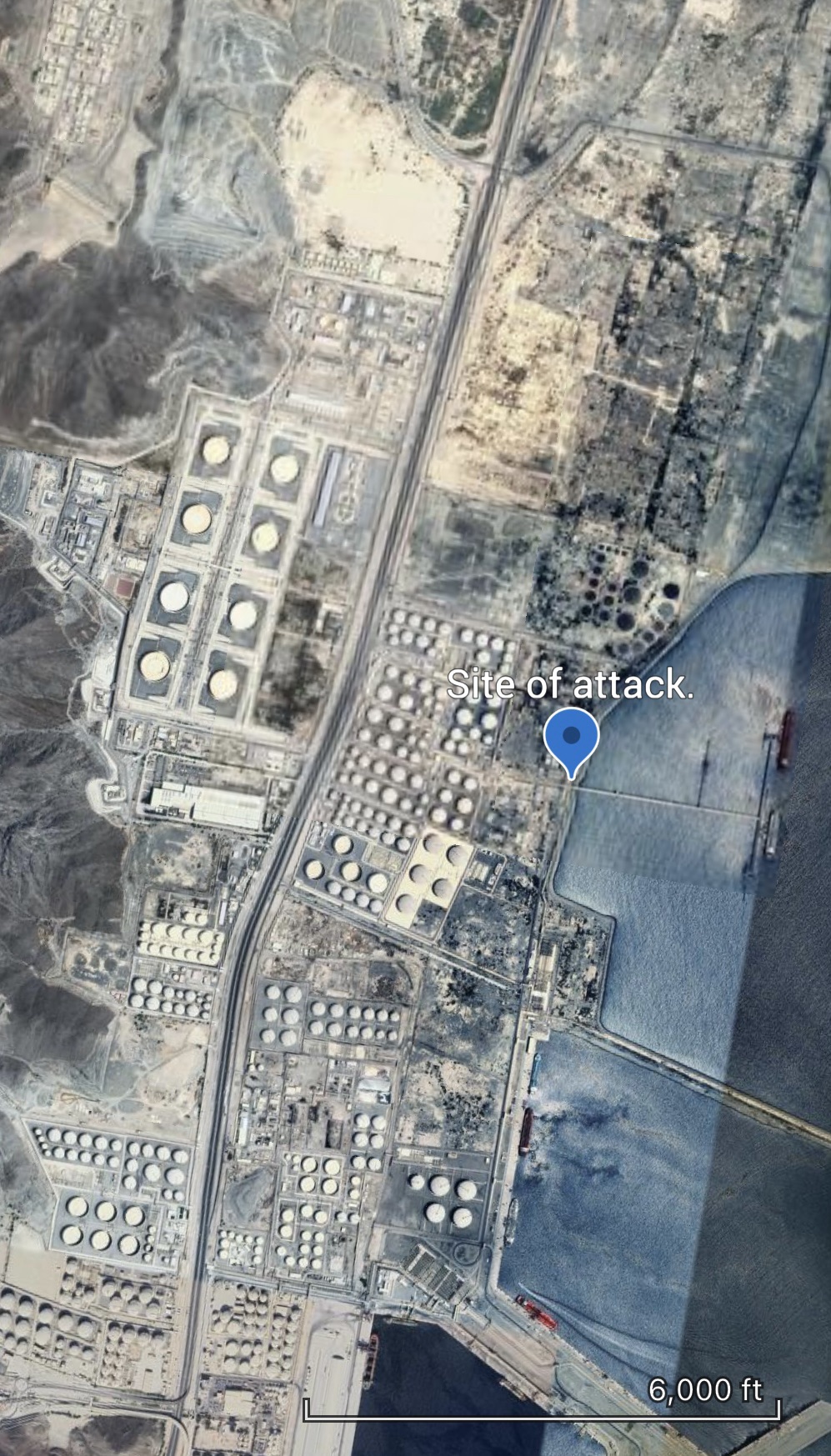
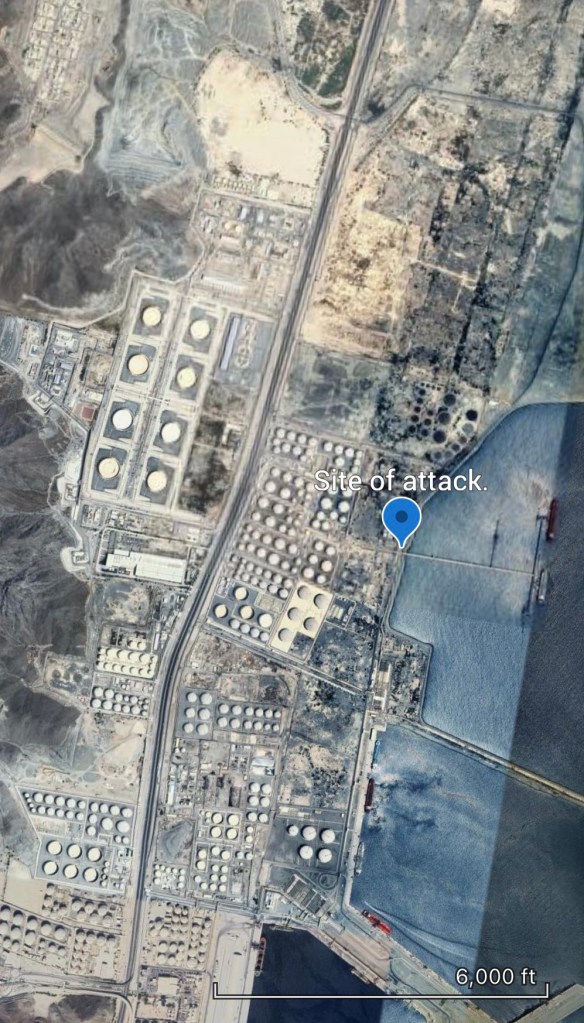
The UAE Minister of Defence said on social media that UAE air defense systems “engaged 12 ballistic missiles, 3 cruise missiles, and 4 UAVs launched from Iran, resulting in 3 moderate injuries.” The minister was referring to three Indian nationals moderately injured in a drone strike on the Fujairah Oil Industry Zone. The attack appears to have hit the connecting pipes that lead to a terminal used to load oil onto tankers.
On April 20th 2026, the U.S. Naval air systems command (NAVAIR) released a video showing the test fire of a new derivative of the Joint Direct Attack Munition (JDAM) precision-guided weapon.
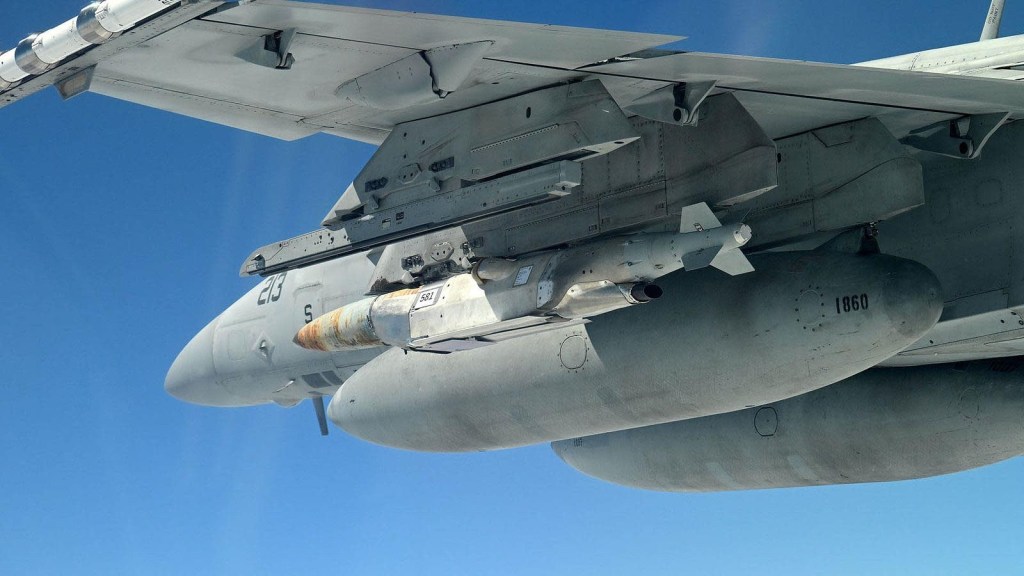
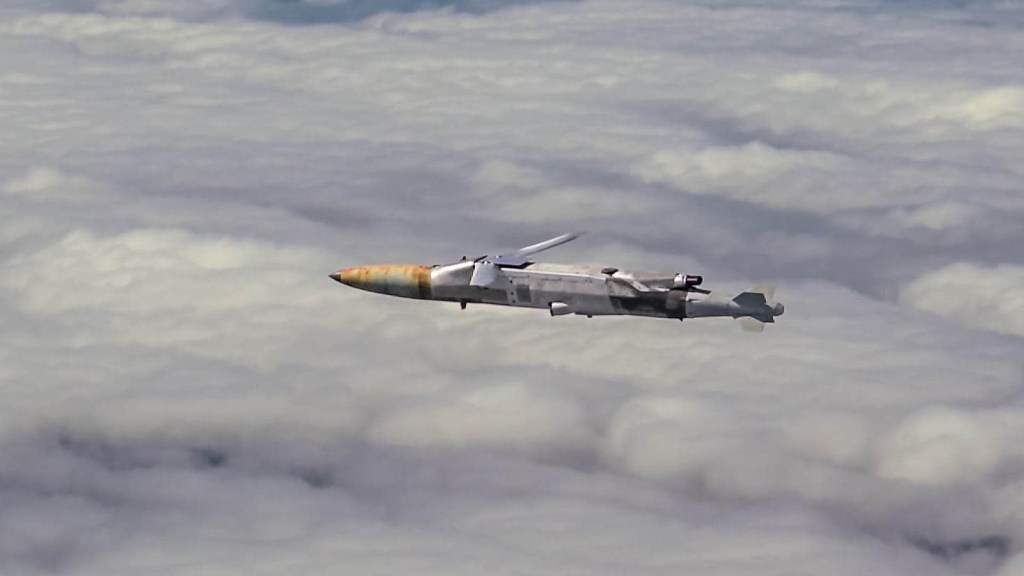
JDAM-LR shown after being deployed from a Navy F/A-18 Super Hornet.
The video shows a Navy F/A-18 Super Hornet firing off what is being called the GBU-76 JDAM-LR (Long Range); it is a rocket-powered version of the weapon that can be used to attack targets on land or sea. With a range of 300 nautical miles, this version gives a significantly longer range then even the unpowered JDAM-ER (Extended Range) series.
The weapons were tested in early April, being fired from both an F/A-18E and F/A-18F flying out of China Lake Naval Weapons Station, Air Test and Evaluation Squadron 31 VX-31 “Dust Devils,”. The fighters flew to Point Mugu, on the coast of California. On the first test, Boeing says the weapons demonstrated safe separation, engine start, cruise and guidance through terminal flight and impact in water after a 34-minute flight.Boeing reported that the weapon flew for 200nm and landed within meters of its planned target. The next test was done on April 3rd, and the weapon flew a second planned flight profile, “..successfully incorporating altitude changes and weapon maneuvering during an otherwise similar flight.”
A New Era for Precision Strike: JDAM LR Completes Milestone Test Flights
The U.S. Navy has successfully demonstrated the new JDAM Long Range variant, marking a huge step in bringing affordable, long-range standoff capabilities to the Carrier Air Wing.https://t.co/GvMomaPnSppic.twitter.com/cNgEgnZGXy
Video taken during the test was released in a NAVAIR post on social media.
“First flight is a critical step in capturing the JDAM Long Range franchise program. This weapon brings the cruise missile concept to the JDAM family at a lower cost, enabling large production quantities.”
Bob Ciesla, Precision Engagement Systems vice president
This weapon provides the navy with a low-cost, precision standoff weapon with a striking distance of 300nm. A range like this lowers the risk to the platforms launching them and increases their strike options.
Some of the things they hope to achieve with this weapon is-
Integrate onto any aircraft that already carries traditional JDAMs, both external and in internal weapon bays. That includes U.S. Air Force and U.S. Navy fighters and bombers, and many global allies ― more than 15 platforms and 3,500 aircraft.
Support conventional direct attack, maritime strike and aerial-mining missions, adding key components to the proven JDAM system:
TDI-J85 turbine engine from Kratos Defense & Security Solutions Inc. (NASDAQ: KTOS), incorporating modular, compact air-breathing propulsion technology into the JDAM family.
Wing kits from Ferra Engineering in Brisbane, Australia, as a continuation of the Australian Defence Force’s Global Supply Chain Program.
Brief History
The JDAM family of weapons has been used extensively since its inception in 1998. First seeing combat in the NATO intervention in Kosovo in 1999 to great success, being dropped in the first night of operation Allied Force by two B-2 spirit bombers out of Whiteman Air Force Base each dropped 16 JDAM’s (mostly the GBU-31 2,000 lb variant), striking fixed Serb targets. Over the next 76 days the U.S. B-2 bombers dropped more than 600 JDAM’s, achieving high reliability and accuracy against hardened targets in all weather conditions.
“The success of JDAM LR is built on decades of the JDAM system and the maturation, investment, and work of the team to make that system robust and available.”
Ernie Moretti, Joint Direct Attack Munition director
The JDAM’s massive success during Operation Allied Force led to the weapon being deployed heavily in every conflict since then. The JDAM could deliver GPS/INS precision without laser designation or visual acquisition of the target.
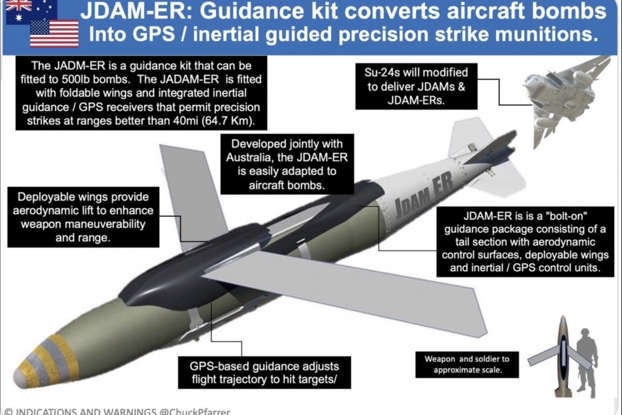
The simplicity of the JDAM is what has led to much of its success. It’s fairly cheap to build the components needed to turn a regular gravity bomb into a precision tool. Over the years the system has received several upgrades, like laser sensors for advanced tracking of moving targets (LJDAM) and an extended-range wing kit (JDAM ER) that expands a standard JDAM’s range to more than 40 nautical miles. Boeing notes in their press release that the JDAM-LR will be able to gain additional functionality over time through modifications for different uses.
March 13th it was announced that a Marine Expeditionary Unit and its supporting warships would be deploying to the Middle East region at the request of the U.S. Central Command, to help with the current operation in Iran.
This move was originally reported by the Wall Street journal and is seen as a response to the ongoing attempted closure of the Strait of Hormuz, a thin stretch of ocean that Iran has threatened to close for years, cutting off much of the oil coming from the region. The closure has had a direct effect on oil prices and the price at the pump in America and beyond.
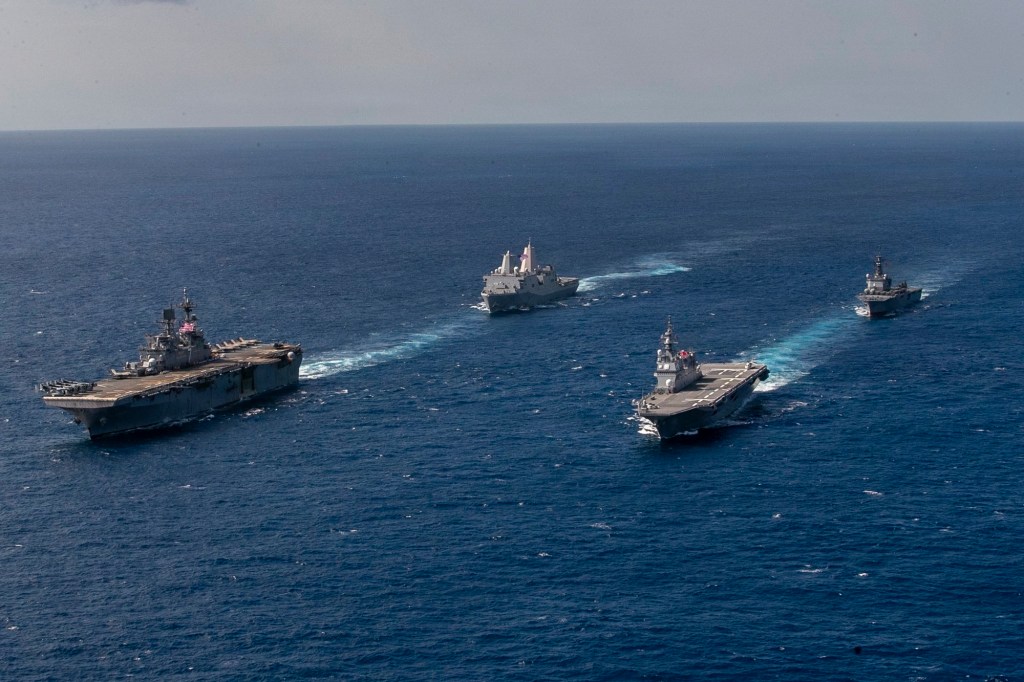
The Wall Street journal reported that the U.S. Secretary of Defense Pete Hegseth has approved a request from CENTCOM for an element of an Amphibious Ready Group as well as the attached Marine Expeditionary Unit, according to three US officials who spoke with the WSJ. The amphibious ready group or ARG is usually made up of an assault ship, two (SAN ANTONIO-Class) transport docks, and a support vessel that carries an embarked Marine Expeditionary Unit (MEU) of at least 2,200 Marines. In this case the sources who spoke to the WSJ said the USS Tripoli(LHA-7) is being sent from its usual base in Japan along with the USS San Diego (LPD-22) and USS New Orleans (LPD-18). These ships make up the 31st Marine Expeditionary Unit (31st MEU).
If needed, other MEU’s are also available for operations in the Middle East.
The Marine Expeditionary Unit was developed as a highly versatile, somewhat self-contained fighting force that can be called upon to quickly respond to situations. They were put together and usually kept in areas where the U.S. expects to need marines quickly, such as the pacific or often in the Middle East.
As stated by the Marines website the four elements of the MEU are as follows.
Command Element – Serves as the headquarters for the entire unit and allows a single command to exercise control over all ground, aviation, and combat service support forces.
Ground Combat Element – Provides the MEU with its main combat punch. Built around a Marine infantry battalion, the GCE is reinforced with tanks, artillery, amphibious vehicles, engineers, and reconnaissance assets.
Aviation Combat Element – The ACE consists of a composite medium helicopter squadron containing transport helicopters of various models and capabilities, attack helicopters and jets, air defense teams, and all necessary ground support assets.
Logistics Combat Element – Providing the MEU with mission-essential support such as medical/dental assistance, motor transport, supply, equipment maintenance, and landing is the mission of the LCE.
The marine website also list some of the missions that the MEU trains for.
– Peacekeeping/Enforcement
-Humanitarian/Disaster Relief
– Security Operations
– Noncombatant Evacuation Operations
– Reinforcement Operations
– Amphibious Raids/Assaults/Demonstrations
– Tactical Deception Operations
– Airfield/Port Seizures
– Show-of-Force Operations
– Reconnaissance and Surveillance
– Seizure/Recovery of Offshore Energy Facilities
Having the MEU available in the region does not necessarily mean that they will be used for ground combat roles. Iran still has a large fighting force made up of Iranian Revolutionary Guards Corp as well as the regular army meaning any ground operation will likely involve considerably more troops than come with the MEU. However the MEU provides a wide range of options for commanders to use towards completing their goals.
Let’s look at some of what the MEU brings to the fight.
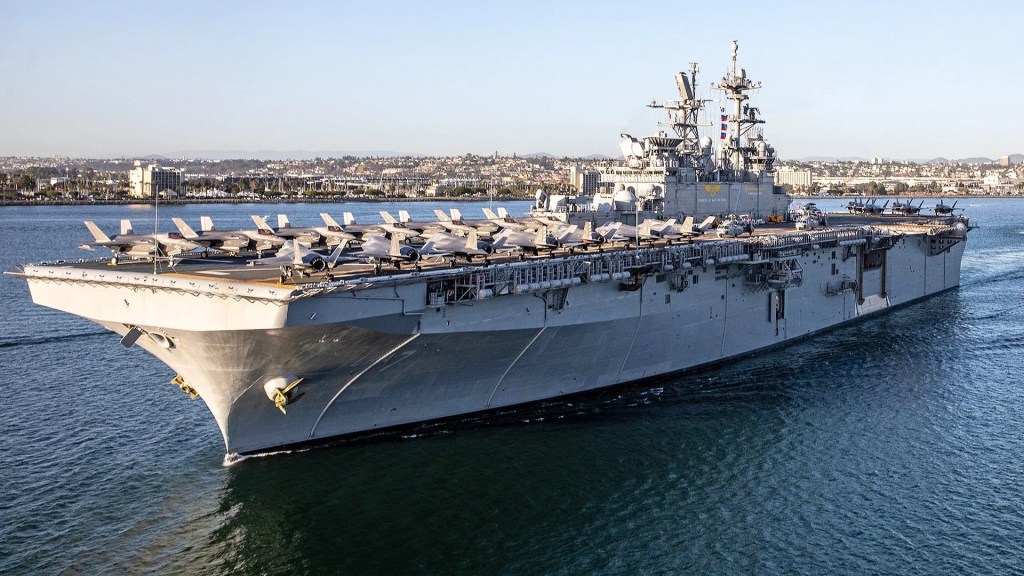
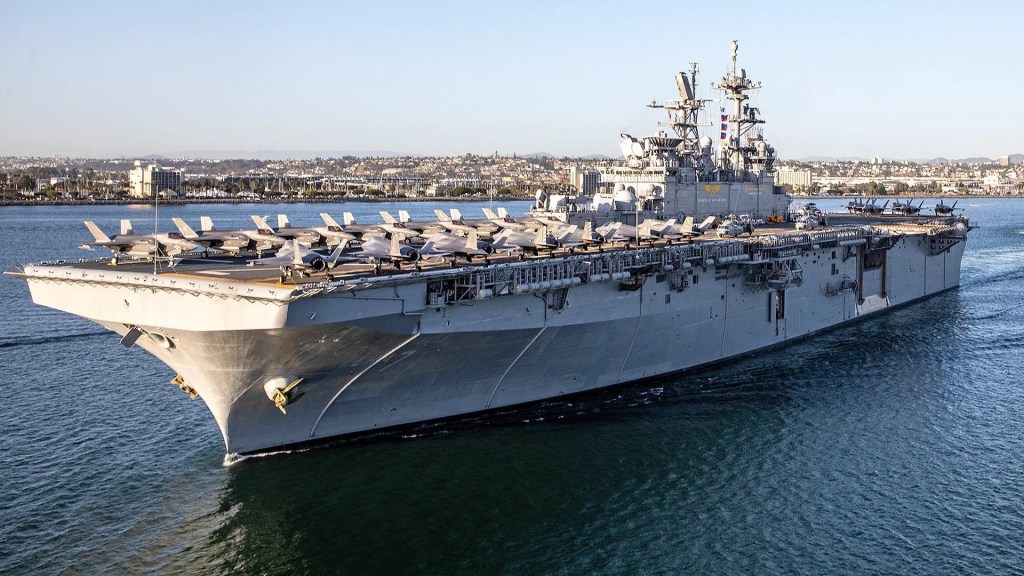
The USS Tripoli (LHA-7) is the second of the America-class amphibious assault ships, which is itself an upgrade on the Wasp-Class amphibious assault ship. This class removed the well deck usually used for landing ships, giving the Tripoli, and the America much more hanger space as well as extra aviation repair and armament storage.
USS Tripoli with its F-35B’s on deck.
The ship is protected by RIM-116 Rolling airframe missiles for protection primarily against anti-ship missiles.
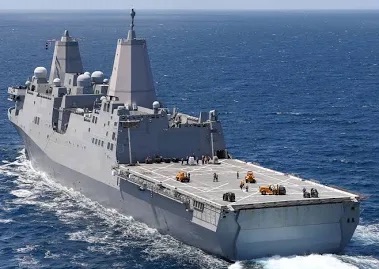
USS San Diego and USS New Orleans are both San Antonio-Class Amphibious Transport Docks. These ships mostly focus on carrying Marines and using their large CH-53 Sea Knight and MV-22 Osprey’s and landing ships to put a good sized marine fighting force anywhere nearby in a short amount of time, useful for seizing a landing zone for example.
USS San Diego
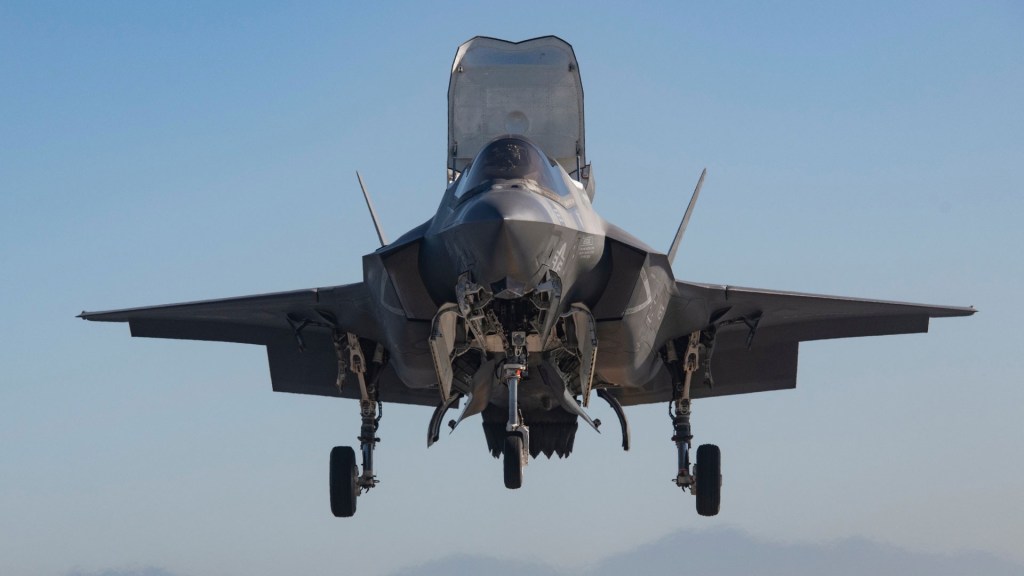
The ability of the 31st MEU to to strike targets using the F-35B’s as well as AH-1Z Viper and UH-1Y Venom helicopters it’s important in supporting the marine fighters and would be especially useful for hunting down the slow flying Shahed drones as well as the smaller craft used by the Iranian navy.
F-35B in its vertical lift mode.
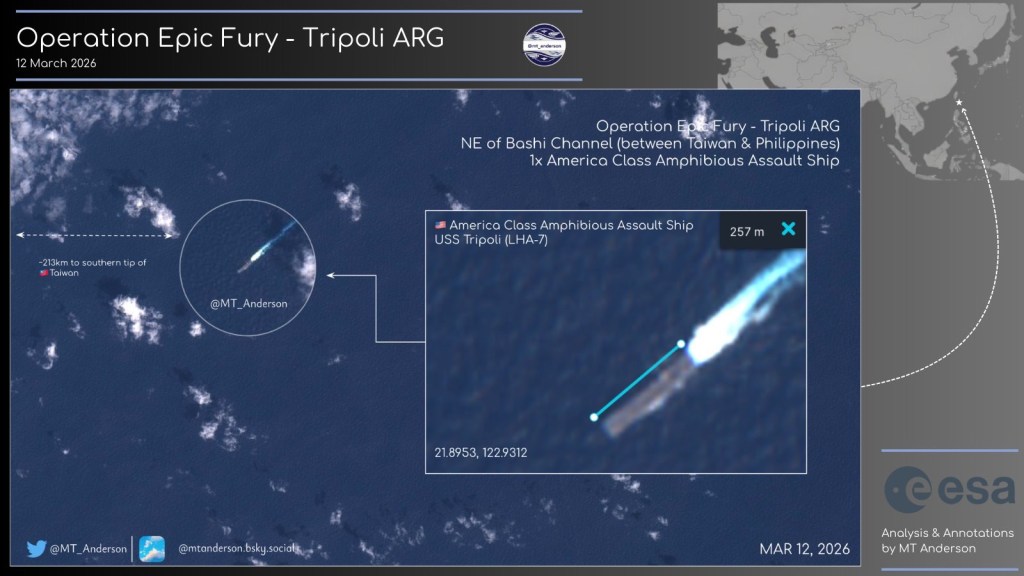
The 31st MEU should arrive in the Middle East in about two weeks.the Tripoli was spotted on satellite imagery heading south from its Okinawa home port.
Shows the USS Tripoli heading south west as it makes its journey to the Middle East.
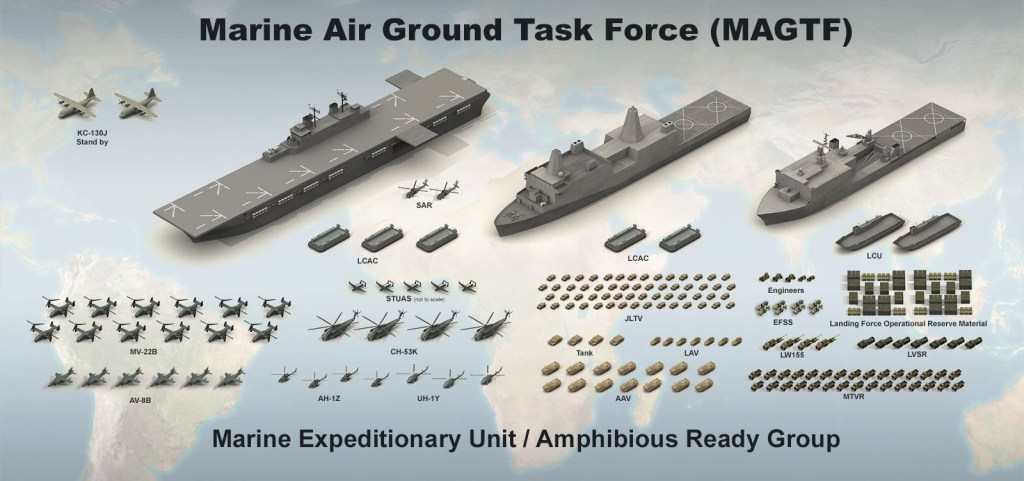
The other Marine expeditionary units could be called to the region if needed.
An older image but minus the AV-88B’s represents what a lot of the MEU’s are working with as far as equipment and numbers. The plan is to switch out the AV-88B’s for F-35B’s.
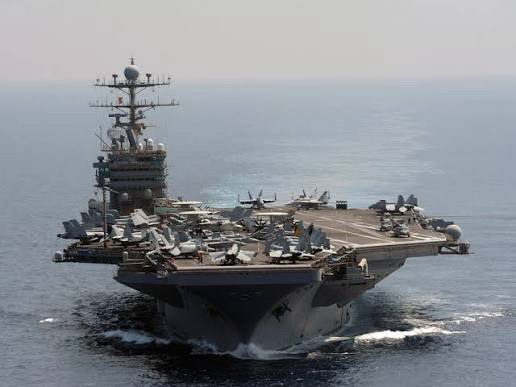
The New York Times has reported that the USS Gerald R. Ford Carrier Strike Group (CSG) will join the Abraham Lincoln CSG which arrived in the Arabian Sea earlier this month. This addition of another aircraft carrier, its escorts, and the air wing, will bolster the offensive and defensive capabilities of the forces in the region. The Ford left the Middle East late in 2025 and arrived in the Caribbean at the end of January 2026 for Operation Southern Spear, now it’s been ordered back, extending its current deployment past the normal 7 month rotation.
Both carriers, as well as the other forces in the region, including several squadrons of F-15E Strike Eagles and F-35, are a part of a military buildup to put pressure on the Iranian regime. US president Donald Trump, had threatened military strikes if Iran refused to stop its violent crackdown on anti-regime protesters. The crackdown and murder carried out by soldiers of the state was well recorded and spread through social media, even through a complete internet blackout in Iran.
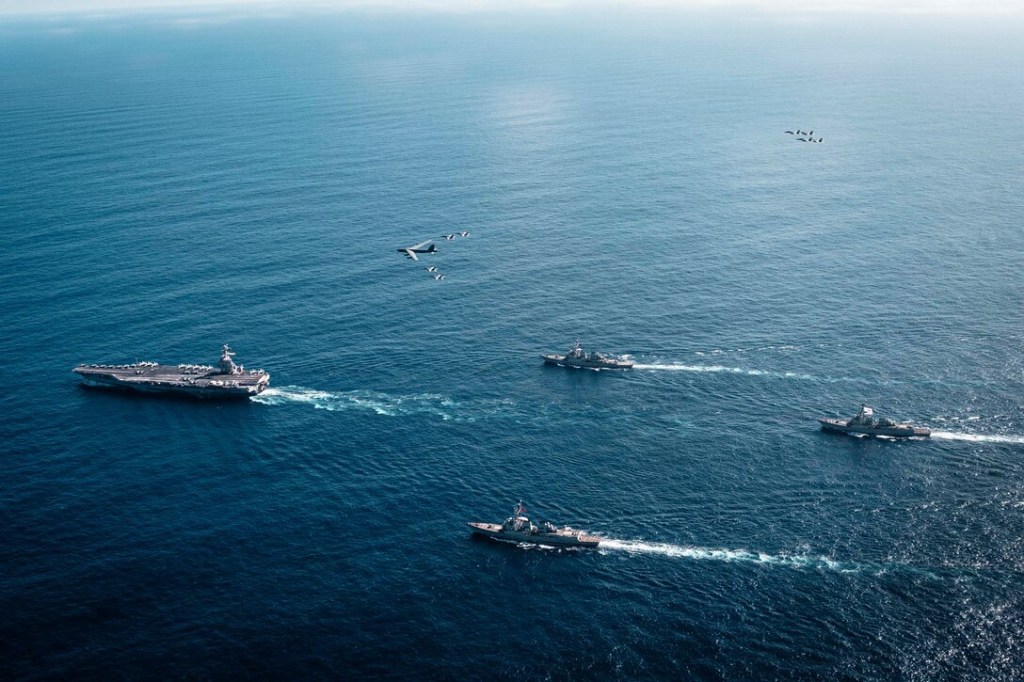
The USS Gerald R Ford CSG
Recent image of the USS Ford CSG during its operations in the Caribbean. (Bonus B-52 flyover).
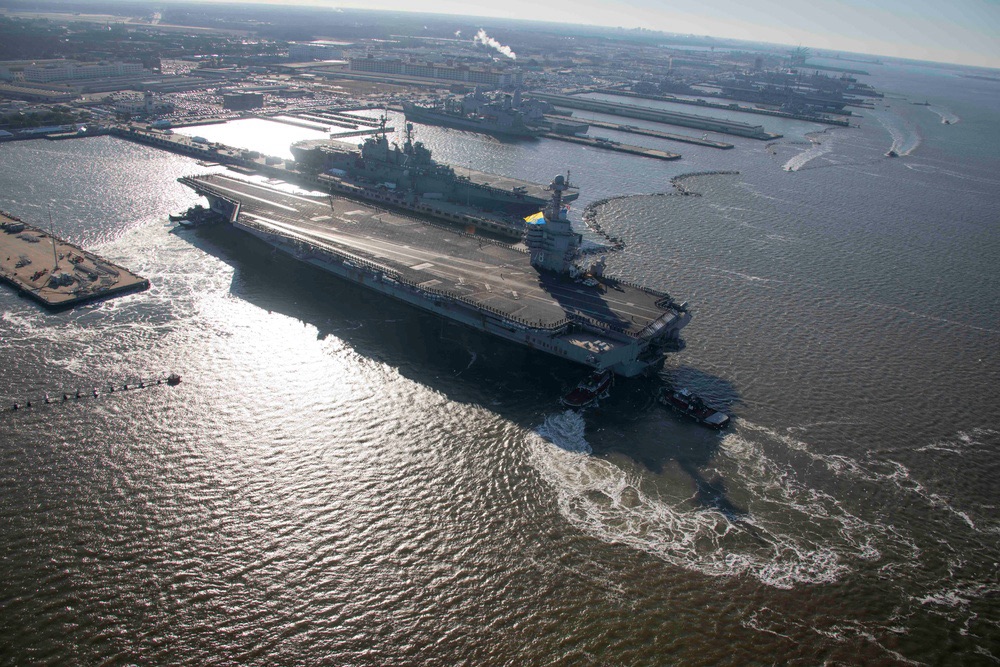
The Gerald R. Ford-Class Carrier, USS Gerald R. Ford (CVN-78) homeported at Naval Station Norfolk in Virginia.
USS Ford returns to naval station Norfolk.
Arleigh Burke-Class Guided Missile Destroyers USS Bainbridge (DDG-96) and USS Mahan (DDG-72), both homeported at Naval Station Norfolk in Virginia. Also included is the Air Defense commander USS Winston S. Churchill (DDG-81) which is homeported at Naval Station Mayport, Florida.
On the Ford is Carrier Air wing 8, details listed below.
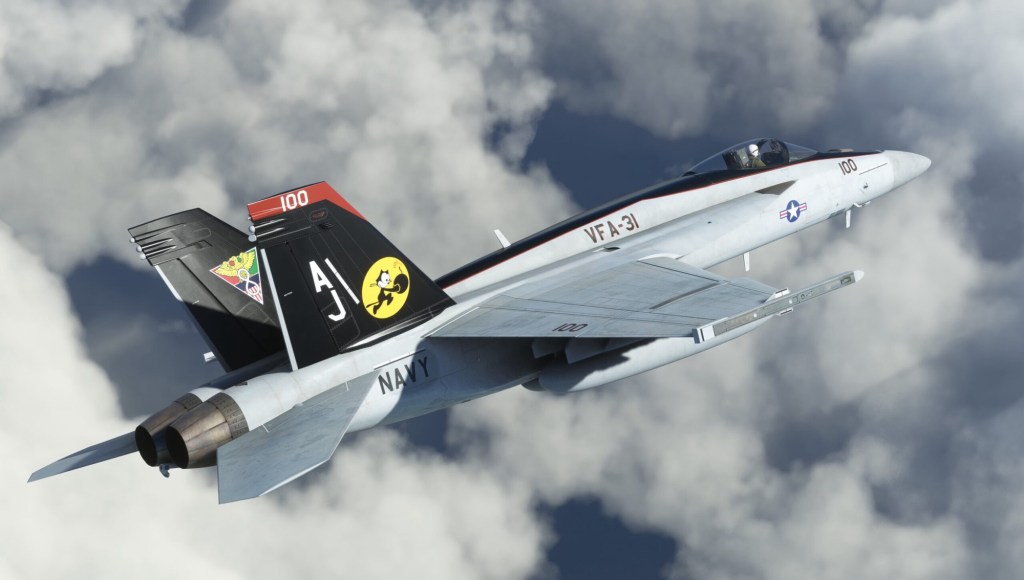
The “Tomcatters” of Strike Fighter Squadron (VFA) 31. Flying F/A-18E Super Hornets from Naval Air Station Oceana, Virginia
VFA-31 Super Hornet
The “Ragin Bulls” of VFA 37,also flying F/A-18E Super Hornets from Naval Air Station Oceana.
The “Golden Warriors” of VFA 87 flying F/A-18E superhornets from Naval Air Station Oceana.
The “Black Lions” of VFA 213, F/A-18F superhornets from Naval Air Station Oceana.
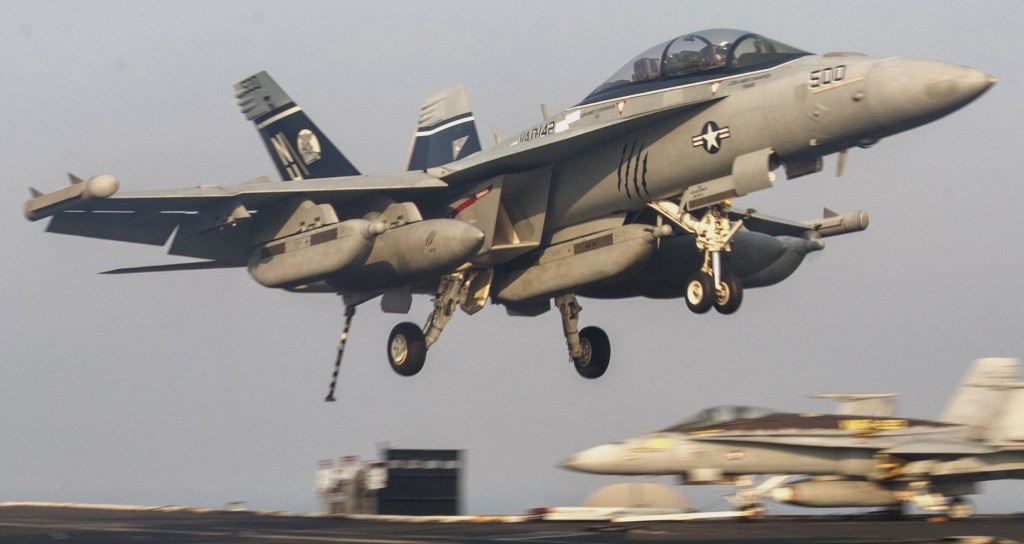
The “Gray Wolves” of Electronic Attack Squadron (VAQ) 142 flying EA-18G Growlers from Naval Air Station Whidbey Island, Washington.
VAQ-142 Growler
The “Bear Aces” of Airborne Command and Control Squadron (VAW) 124 Flying E-2D Hawkeye from Naval Air Station Norfolk,Virginia.
The “Rawhides” of Fleet Logistics Squadron (VRC) 40 Det. Flying C-2A Greyhounds from Naval Air Station Norfolk.
The “Spartans” of Helicopter Maritime Strike Squadron (HSM) 70 flying MH-60R Seahawks from Naval Air Station Jacksonville, Fla.
The “Tridents” of Helicopter Sea Combat Squadron (HSC) 9 flying MH-60S Seahawks from Naval Air Station Norfolk.
The CSG will also be accompanied by at least one unnamed attack submarine which is standard procedure.
Low missiles production a constant problem.
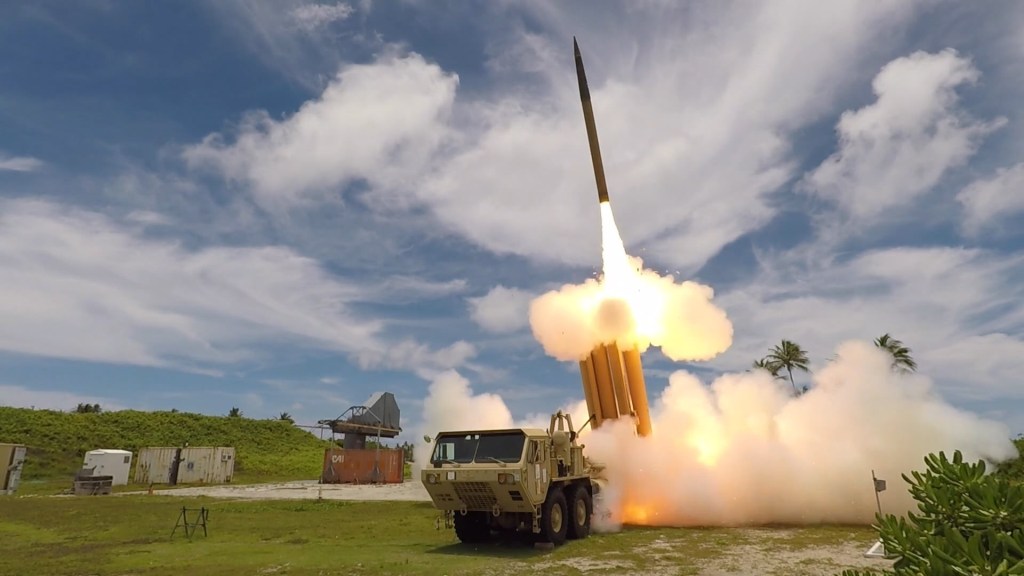
According to a recent article by the New York Times, when Trump made his threats to Iran in January the Pentagon begged him to slow down because the usual mass of US assets and forces in the region had been either redeployed or used up in the recent engagements. The U.S. burned through several months If not years worth of production of its Patriot missile stock during the Iranian ballistic missile attacks on Israel. Not to mention the even more valuable THAAD interceptor missiles,used specificly for long range theater air defense, and recently reported to have been deployed to an airbase in Jordan, had at least 25% of total stocks in 2025 engagements. A large number of Sea and air-launched air defense missiles (SM-2, SM-6) were also expended, especially in the Red Sea, during Operation Prosperity Guardian, firing hundreds of missiles defending the sea lanes against Houthi anti-ship ballistic missiles and drones.
US THAAD (Terminal High Altitude Area Defense)
While missile production has pretty much gone up across all of the defense companies, there hasn’t been a long enough time for the military to benefit from these production increases. Take the Patriot missiles for example, an important asset for any future war, Lockheed Martin only makes around 600 of them a year.
Bottom line and some opinions.
With the addition of the second CSG in the region, the potential for strikes on Iran in the near future has increased in my opinion. The Ford has been on deployment since June of 2025, being redirected multiple times to respond to the changing geopolitical landscape around the world. Moving the ford to the Middle East instead of waiting for another carrier to be available shows that the leadership believes it is important to have an another carrier there, right now.
I also believe that the U.S. should do whatever it can to avoid a long drawn out engagement in the Middle East at this time. The best option would be another “Midnight Hammer” style raid where they target several high value targets with anything other than TLAM cruise missiles, another asset the US (and CENTCOM especially) likes to deploy like it’s going out of style. My thinking here is that while the U.S. should do whatever it can for the people of Iran they also need to follow their own recommendation of focusing on the Pacific and countering China. Not to get too far off the original article but China is growing into a major threat in the Pacific and has the range with its weapons to make any engagement against them a nightmare without a surplus of land and and sea based advanced air defense weapons. The U.S. should have a base line, this is how many missiles that planners think we need for defending against China’s missiles in the Pacific and then not letting CENTCOM fire off 40-50 PAC-2 and 3 missiles in a weekend.


You must be logged in to post a comment.