April 18th Status of the Strait
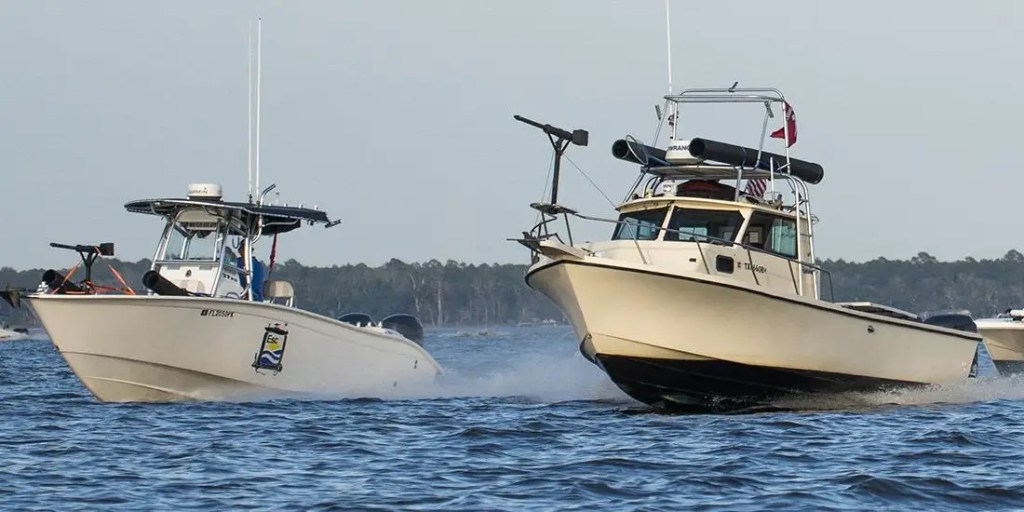
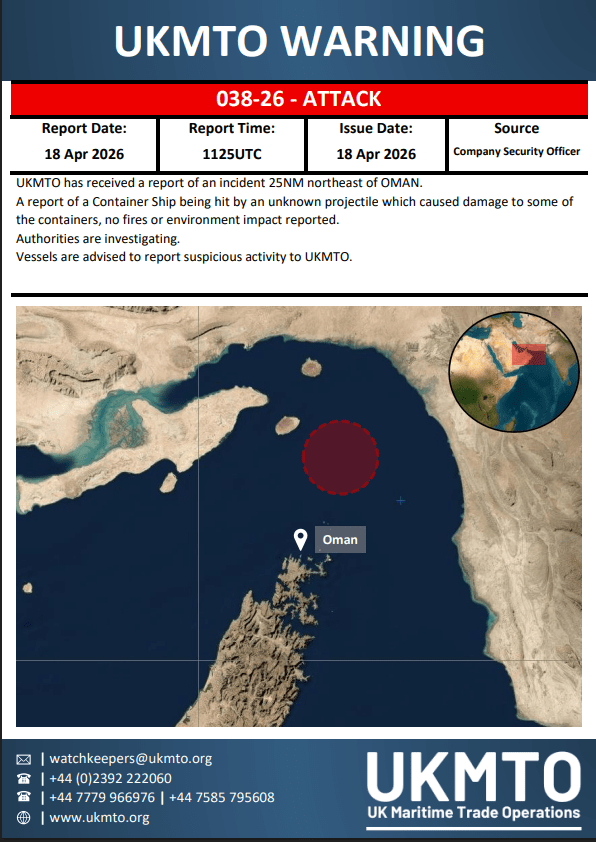
After a brief opening yesterday, Iran has reimposed restrictions on traffic through the Strait of Hormuz. This has once again caused chaos, as ships attempting to make the trip have been forced to turn around—this time under direct threat of fire. Yesterday, a number of vessels attempted to make the trip before abruptly turning back toward the Gulf. This happened again this morning, with at least two ships reporting to the United Kingdom Maritime Trade Organization (UKMTO) that they had been fired upon by small IRGC gunboats. The vessel, whose name has not been released yet, reported to UKMTO that it was 20 nautical miles (nm) off the coast of Oman when the incident took place. The tanker and crew are reported safe at this time. The captain reported receiving no radio contact from the gunboats. Iran has made no official statement of the incident at this time.
Yesterday an announcement was made to ships attempting to make the voyage through the strait. It was recorded on the bridge of one of the vessels; this is the bridge of the Bhagya Laxmi but multiple vessels reported hearing the message or one similar.
Iran Claims U.S. Breaches of Trust
Iran claims the United States has made repeated “breaches of trust,” with some officials going so far as to accuse the U.S. of “acts of piracy.” The Khatam al-Anbiya Central Headquarters—the top operational command-and-control hub for the Armed Forces of Iran—released a televised statement specifically citing “repeated breaches of trust” as the reason for reimposing “strict management and control” over the Strait. They accused the U.S. of continuing a naval blockade of Iranian ports despite previous good-faith agreements. From their perspective, the U.S. should have ceased the ongoing blockade. Whether that was part of an agreement the U.S. made with Iran during the ceasefire put in place last week, we do not know. The current blockade was never mentioned specifically in any reporting I have seen on the terms of the April 7–8 ceasefire. No formal announcement was made on what exactly was agreed upon in the ceasefire. For now, we only know the terms that have been announced publicly by both sides.
“For this reason [U.S. continued naval blockade], control of the Strait of Hormuz has reverted to its previous state, and this strategic waterway is under the strict management and control of the armed forces.”
“Until the United States restores the complete freedom of navigation for vessels from an Iranian origin to a destination, and from a destination back to Iran, the situation in the Strait of Hormuz will remain strictly controlled and in its previous state.”
-Statement on Iranian State Media from the Khatam al-Anbiya Central Headquarters
U.S. and Iran Ceasefire: What We Know
The April 7–8 ceasefire stopped the wave of U.S. and Israeli attacks on Iran and was supposed to reopen the Strait of Hormuz for tankers and other maritime traffic. The specifics of the agreement are not publicly known, but we can review what both sides have stated publicly or through official announcements.
The main point is that the ceasefire imposed a two-week halt to the fighting. While those two weeks are quickly coming to an end, both sides appear interested in negotiations and, at a minimum, an extension of the ceasefire.
- The U.S. and Israel would stop all offensive operations against Iran.
- Iran would cease its “defensive operations” and retaliatory strikes, provided U.S. and Israeli attacks stop.
The Strait of Hormuz was a major U.S. condition in the agreement:
- Iran agreed to the “complete, immediate, and safe opening” of the strait for commercial shipping during the ceasefire period.
- Passage is coordinated by Iran’s Armed Forces, with “due consideration of technical limitations.”
- Iran (and Oman) may charge transit fees to fund reconstruction.
- The U.S. has said it will help manage traffic buildup. Iran has since declared the strait fully open for the remainder of the ceasefire.
 Global Conflict Reporting
Leave a comment