Category: US Air Force

  • F-15s deployed to protect Diego Garcia.

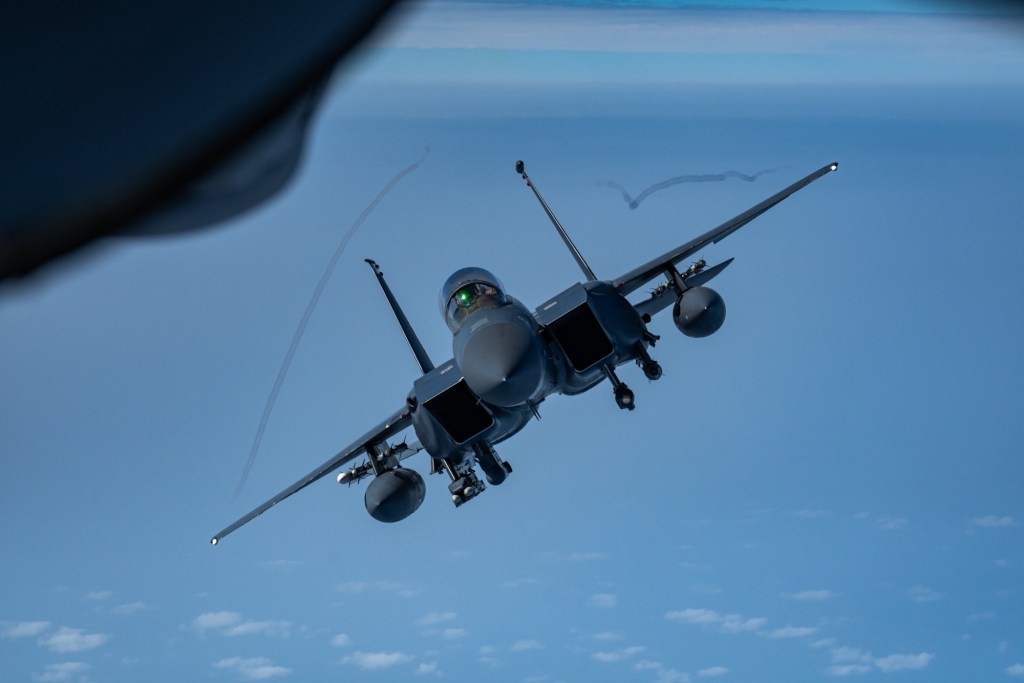
    Picture of an F-15E

    By. Scott Jackson


    05/20/2025

    The U.S. Air Force has sent several F-15 fighters to the base at Diego Garcia in the Indian Ocean. The fighters are being deployed to help protect the isolated base as well as the important strategic asserts currently deployed there.

    In recent months the base has been the subject of many talks as the arrival of a number of long range strategic bombers was noted by analysts. Satellite imagery taken in late March shows at least 4 B-2 Spirit long range stealth bombers.
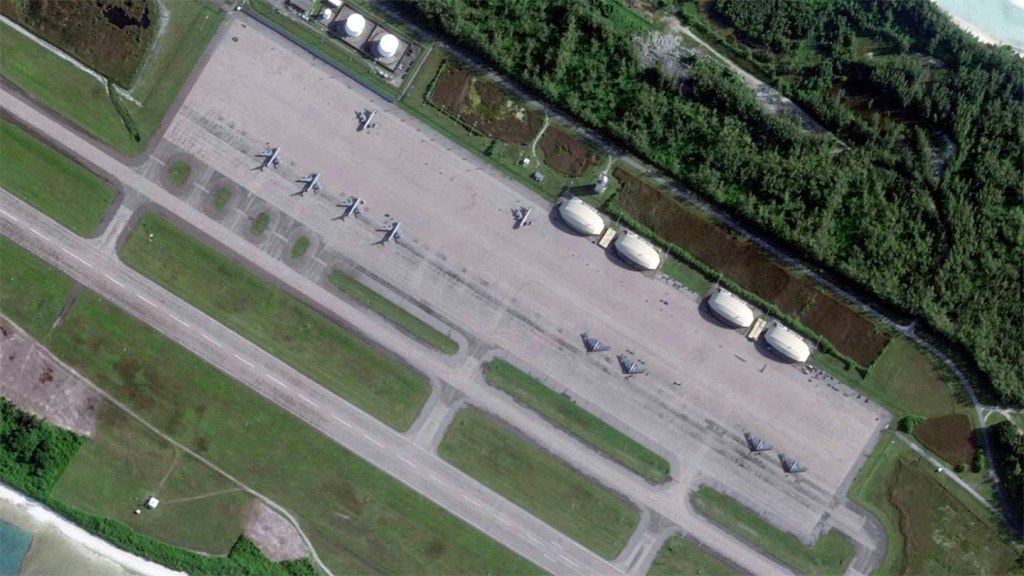
    Image taken in late March showing some of the B-2s as well as the refueling aircraft.

    The bombers were used to strike targets in Yemen before the White House announced thag the U.S. had completed its mission in the region (to the dismay of Israel and several other American partners in the region).

    The B-2s have reportedly since left the base but for a time their presence overlapped with that another titan of American air power, 4 B-52H’s that are currently still stationed at the base as of writing.

    At the time this article was started their was believed to be 4 F-15’s that had been moved to the Indian Ocean to help protect the island base and the bombers however TWZ (Who originally broke this story) have since wrote another article and added two more fighters bringing the total to six. While official sources decline to state where the F-15s were moved from, open source trackers believe the jets came from Kadena Air Base in Okinawa, Japan. This belief comes from watching the flight tracking data. While fighter jets don’t usually broadcast their live position through ADS-B, the refueling aircraft often do and can be tracked.
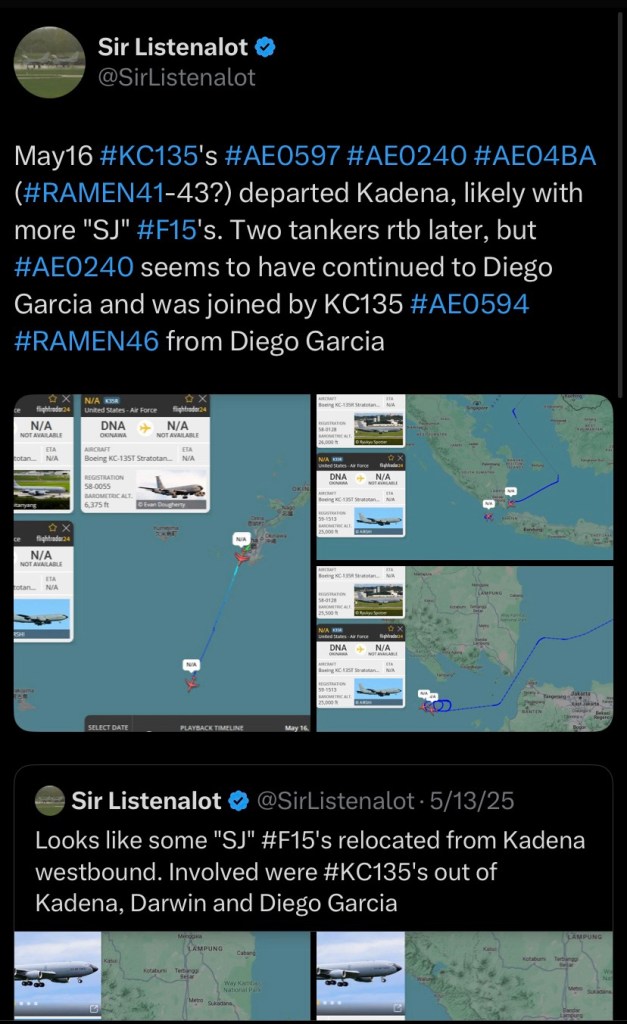
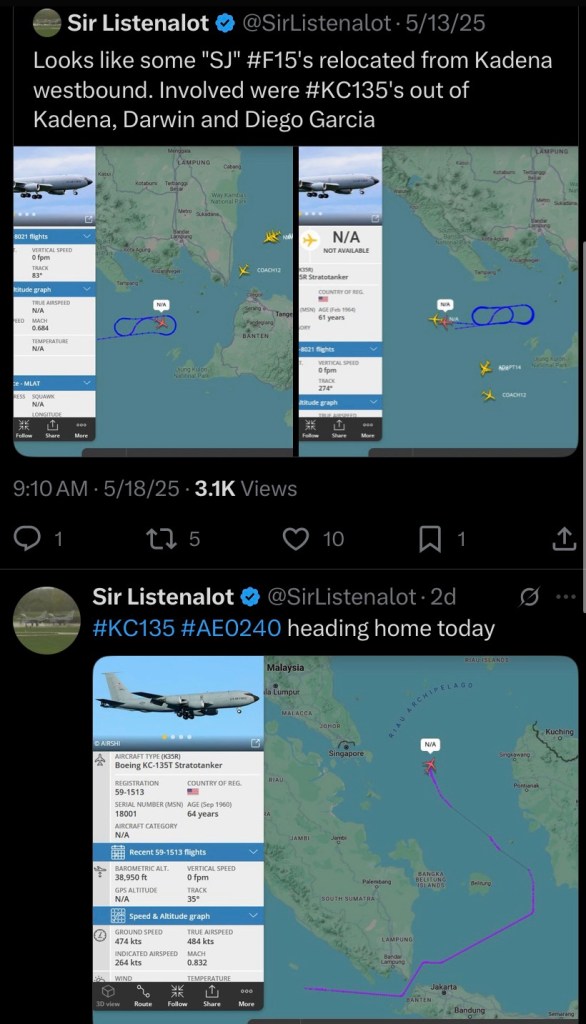
    Kadena airbase in Japan is located 4,000 miles away from the Diego Garcia base in the Indian Ocean.

    Last month Kadena received a contingent of F-15E’s forward deployed from the 336th Fighter Squadron (FS) (Also called the Rocketeers) at Seymour Johnson Air Force Base in North Carolina. Their relatively close proximity to an otherwise remote island makes them ideal candidates for this ACE force protection mission.

    “As the Keystone of the Pacific, Kadena is a pivotal hub for Agile Combat Employment (ACE),” from an Air Force press briefing on the deployment of the 336th to Kadena.“The 18th Wing will continue to receive rotational units that strengthen capabilities, such as ACE, and project combat power in concert with allies and partners.”

    From The War Zone on ACE (From the article that originally broke this story).

    ‘ACE is a term that currently refers to a set of concepts for distributed and disaggregated operations centered heavily on short notice and otherwise irregular deployments, often to remote, austere, or otherwise non-traditional locales.’

    Diego Garcia is one of the most “Austere or otherwise non traditional locales” while still being critically important to Department of Defense operations in the region. While remote the base is used for multiple different DoD needs such as hosting space force activities, being an important navy port(Especially to the nuclear submarine fleet) and using its lagoon as a shelter for the Sealift Command Prepositioning Ship Squadron.

    While the bases remote location protects it from attack, some have suggested that Iran would be capable of hitting the base using missile carrying smaller warheads. Besides Iran, other peer and near-peer adversaries and potential adversaries have the ability to carry out longer range strikes using bombers, drones or missiles, making the presence of these fighters a welcome sight.


    The War Zone originally broke this story, go check them out, their articles have always been a huge inspiration and they do some really amazing work.

    Thank you for taking the time to read and for your constant support. I wouldn’t be here without you all. To further support my work I would invite you to sign up for my Patreon, where I will be releasing some podcast episodes very soon. Membership and access to the podcast is $1 a month. I wanted to keep it cheap as a thank you for joining me on this adventure and allowing me to do what I love.

    -Scott
  • US bombers fly training mission with South Korean Air Force.

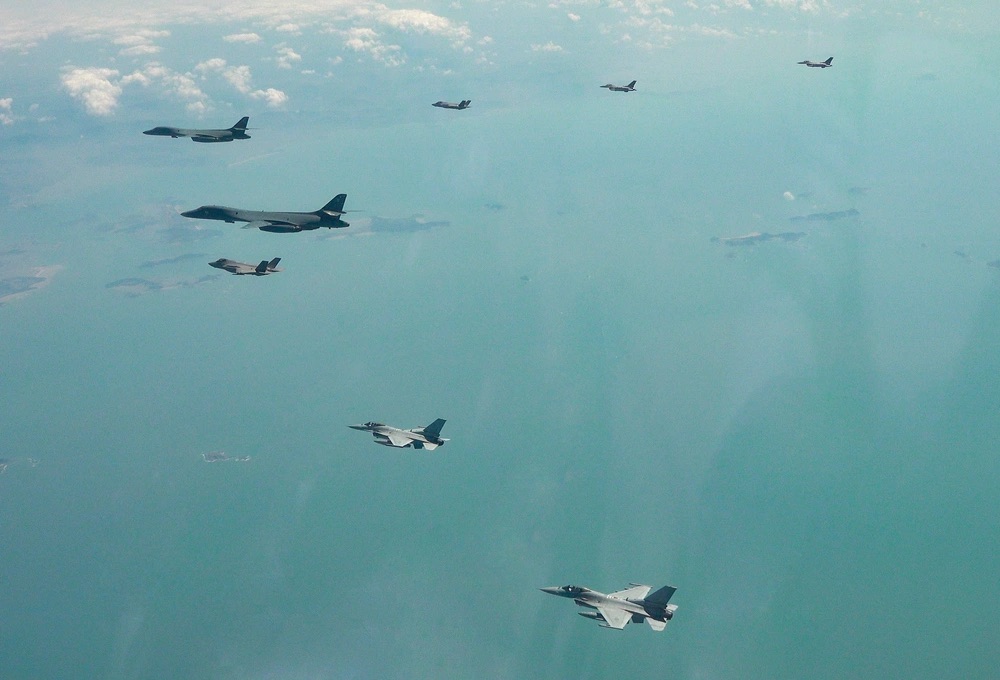
    Two U.S. Air Force B-1 Lancers fly in formation with two U.S. F-16 Fighting Falcons and two Republic of Korea Air Force F-35A Lightning IIs

    By. Scott Jackson


    04/15/2024

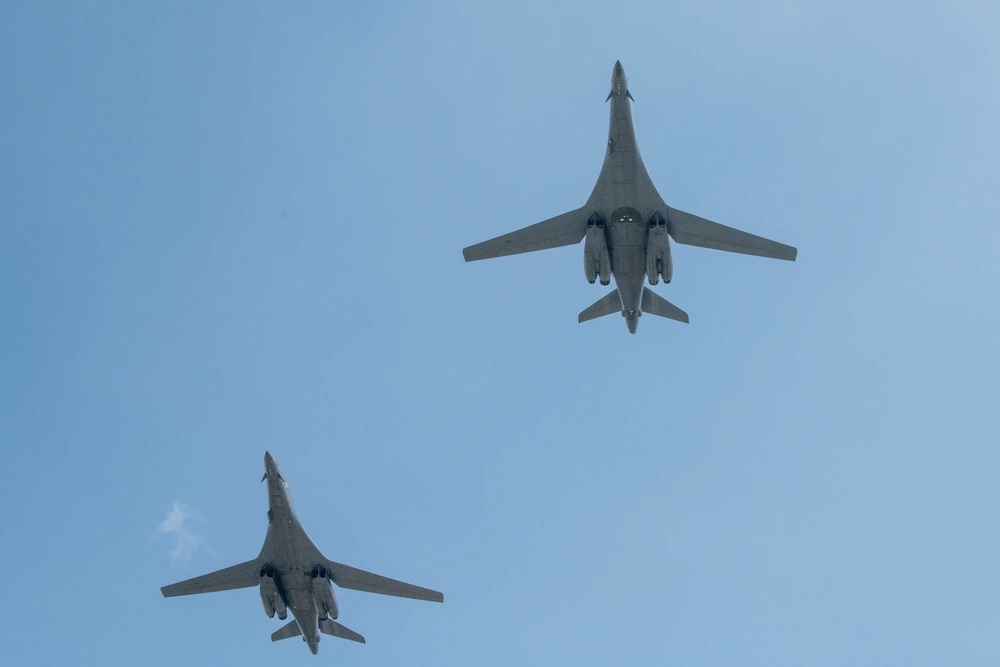
    Earlier today a pair of U.S. Air Force B-1B Lancers flew across the pacific to train with air units from the Republic of Korea (South Korea).The bombers were joined by two U.S. F-16s and two F-35 Lightning’s II from They carried out what the Air Force is calling offensive and defensive counter air training.

    These missions are important for improving and honing the combat skills between the partner nations as they develops combat procedures with newly acquired tech like the F-35, which given its massive increase in technology requires years of training to fully unlock its full potential on the battlefield.

    I’ve had the chance to speak with several 5th gen fighter pilots (F-22 and F-35 both) one told me that you can get almost lost or freeze up when trying to process all of the data that the F-35 will give you.F-35 crashes (or less serious incidents) have happened because problems happened while pilots were distracted or they simply got overwhelmed. The F-35 especially demands a huge cognitive load. I’ll add an article of somebody else bringing this up.  -Scott


    https://www.businessinsider.com/test-pilot-f-35-demands-more-than-great-flying-skills-2023-11

    “Our two nations will continue to enhance combined training to deter and respond to North Korean threats through close cooperation,”

    -the South Korean defense ministry said.

    “The training demonstrated the combined extended deterrence posture of the ROK-U.S. alliance in response to North Korea’s advancing nuclear and missile threats,” the Defense Ministry said in a press statement. “It also aimed to enhance interoperability between the two forces.”

    This action also had the added effect of being a “show of force” to North Korea as well as other countries in the area (China and Russia). On the day North Korea was celebrating the birthday of Dictator Kim Jung Un’s great Grandfather and North Korean state founder , Kim Il Sung.

    The two B-1Bs conducting a flyover of Osan Air Base in South Korea.

    The bombers then did a quick flyover of the Osan Airbase and then left the area.

    It’s expected that this will cause a reaction in North Korea. North Korean missile teat have been carried out in the aftermath of these bomber missions in the past. The U.S. and South Korea are likely to increase patrols until things cool down.

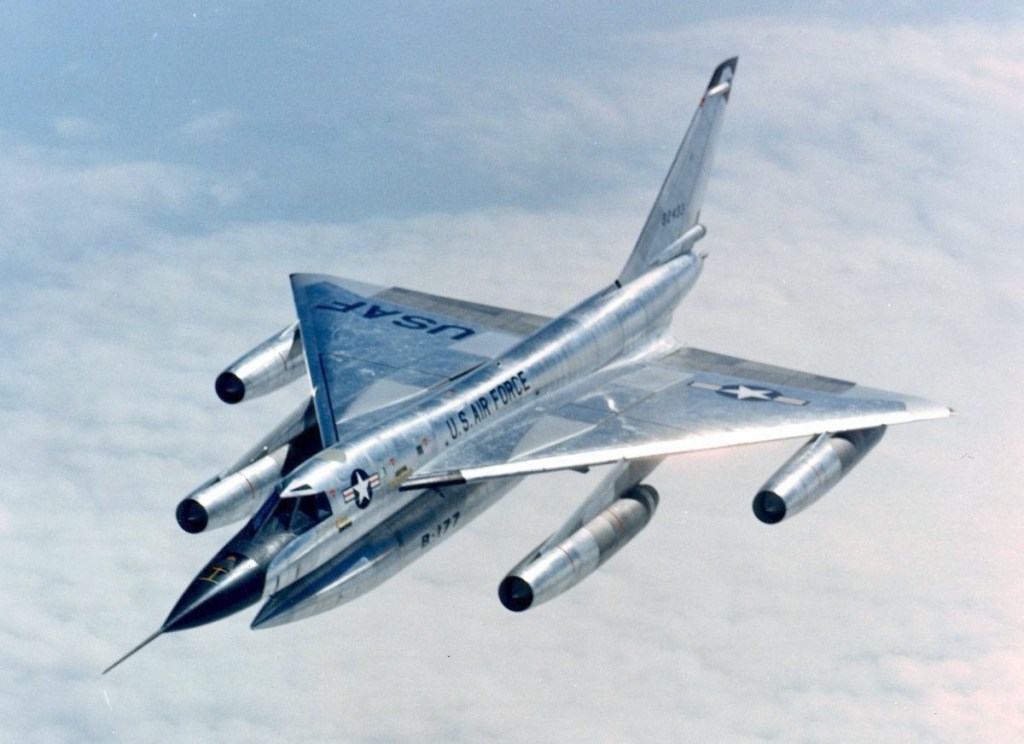
    The Rockwell (now Boeing) B-1b lancer, affectionately called “the bone” by those who know and love her is a swept-wing long-range strategic bomber in the U.S. Air Force. The bomber was developed as a way to combine the payload of the B-52’s with the speed of the Convair B-58 Hustler. Originally the Air Force had chose the B-70 Valkyrie for the task, a high altitude bomber with similar speed and altitude capability as the U-2. Around the early 50’s the Soviet unions interceptors at the day couldn’t keep up and the B-70 would have been able to simply fly right past them. However as Surface to Air missile systems improved the ability to fly very fast at low altitudes became the doctrine the Air Force wanted to pursue.

    The Cold War Convair B-58 Hustler.
    Prototype North American XB-70 Valkyrie flying at three times the speed of sound.

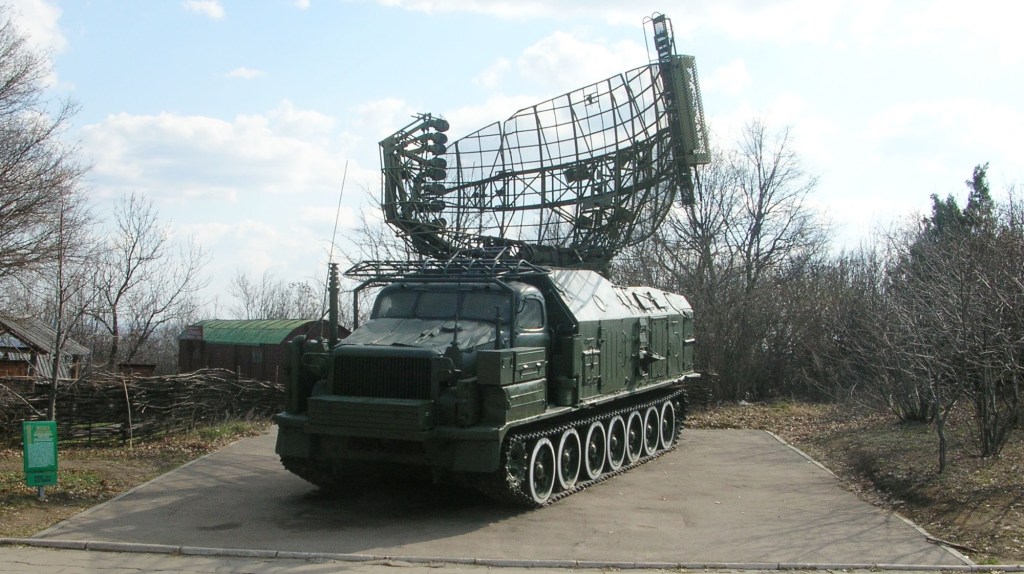
    Radars of the day (and today) have several weaknesses, one being that they are only as effective as they can reach with their waves. Terrain and the horizon are the biggest factors here so a bomber flying low enough and far enough away can avoid most radar instillations.

    P-40 Bronya (NATO reporting name-Long track)

    The bone was chosen as its ability to fly low and at high speed would keep the crews and aircraft safe as well as make it more likely they could continue their mission. You might ask why the B-52 of the day, which is still in operation (with some upgrades) was spared from the chopping block like the idea for the B-70 and the answer was because it’s huge fuel capacity made it able to operate at lower altitudes longer and upgraded conventional munitions capability made it able strong asset for nuclear deterrence as well as conventional warfare. However the Air Force uses both bombers for different reasons. Nobody is going to ask the Stratofortress to go zipping through a canyon and pop over a valley to hit a target.

    I have the perfect video that displays the capabilities of the B-1 and why even still today these monsters are still considered one of the baddest planes in the arsenal.

    B-1B Lancer terrain following at Edward’s AFB.

    The jet is surprisingly low and if you didn’t know he was coming you would only have a couple very precious seconds to react. That’s why.

    Anyway I could write all day about this plane but I think I’ve said enough for now.


    Thank you for reading. I hope you get as much out of what I’m doing here as I get out of making these reports. If so I would invite you to join my Patreon. Doing that would help me more than I can describe. I’ve kept it as cheap as possible to become a member. It’s only a $1.00. However a dollar from even half of my Facebook followers would be a life changing amount of money for me and for this page.

    Thank you for all the support over the years. Here’s to many more.

    -Scott