By. Scott Jackson
February 24th, 2025
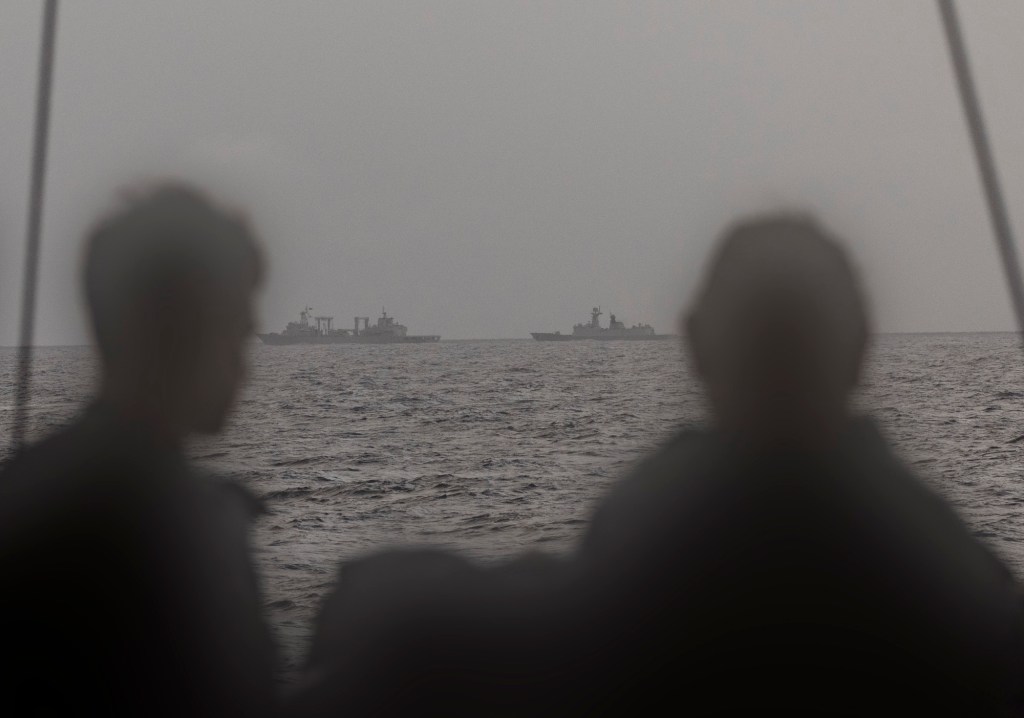
Chinese People’s Liberation Army Navy (PLAN) ships, first spotted last week according to Australian officials, have carried out a military drill in the Tasman Sea, the area between Australia and New Zealand. The drill, carried out on Friday, consisted of ship maneuvers as well as a live-fire component. Air traffic in the region was warned only moments before the live fire drills started and were forced to divert to other routes.
“We haven’t been given a reason as to why they’re here in this configuration with this set of ships, with these different set of capabilities, and we don’t really have a sense of, you know, we haven’t been told where they’re going and why.”
Said New Zealand Prime Minister Christopher Luxon. He continued
“They are in international waters, they are completely within the balance of international law and the UN Convention on the law on the sea, which is important, it is important that all countries have freedom of navigation, it works for us when we are out and about in the world as well.”
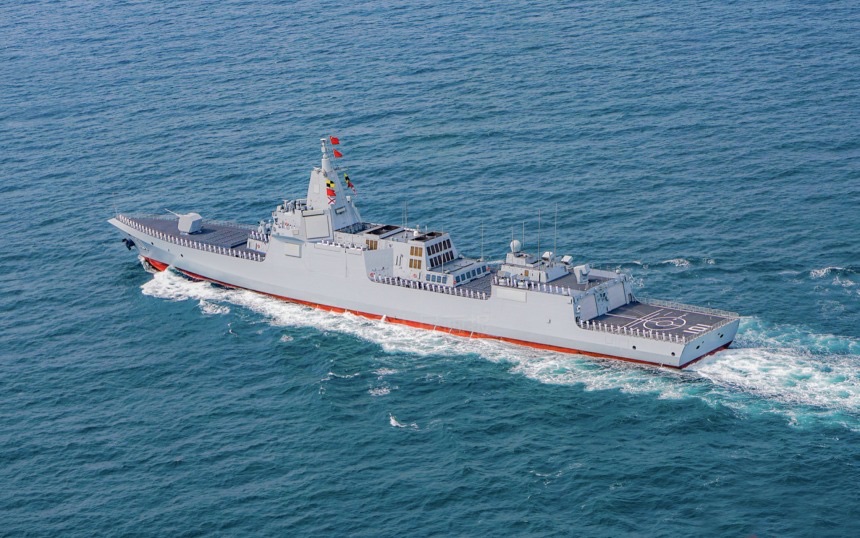
The task force of Chinese ships was led by Type 055 destroyer Zunyi. Also was the Type 054A Frigate Hengyang, and Type 903 replenishment ship Weishanhu.
These ships represent some of the most advanced Chinese navel tech. The Type 055 class in specific is a suspected game changer in modern Navel warfare and has shown itself on paper, and simulations, at least, as a capable multi-mission platform. Let’s look closer at the ships.
designation Renhai-class cruiser.
Type 055 Destroyer Zunyi.
NATO reporting classification: Renhai-class cruiser.
China has built 8 of its planned 16 Type 055 class destroyers. Their large size led to NATO classifying these, not as destroyers, but as cruisers. Its displacement (weight of the water it moves when floating) of 13,000 to 14,000 tons is larger than the American Ticonderoga-class guided-Missile cruiser at 9,800 tons. The two ships are often compared in size and firepower.
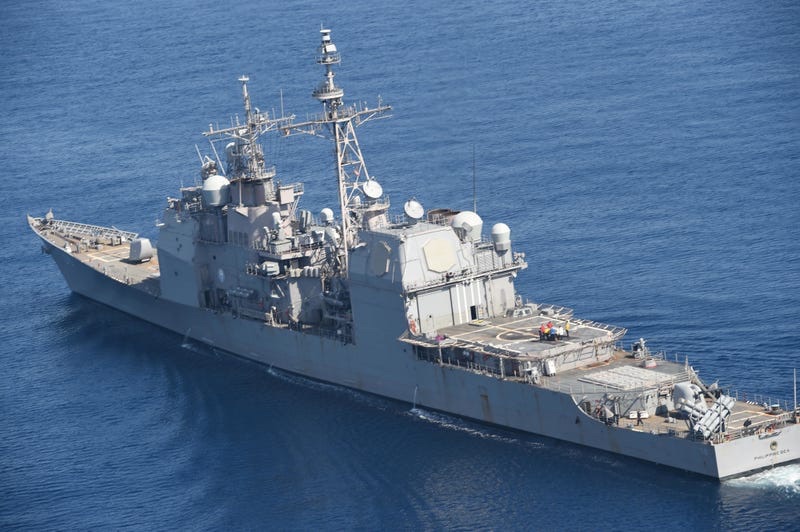
The U.S. Ticonderoga class guided missile cruiser is an important part of any carrier strike group, often taking the job of commander of the air defense with its long range guided missiles. However the US fleet only has 9 of these cruisers in active duty and plans to phase them out by 2029, leaving the navy to fill the role of the Tico with Arleigh Burke flight III Destroyers as well as new upcoming ships still on the drawing board.
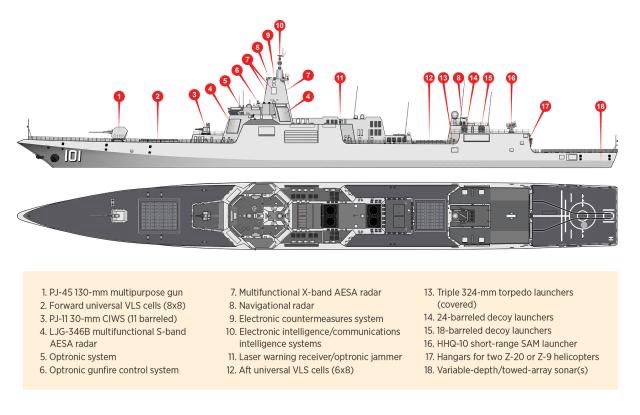
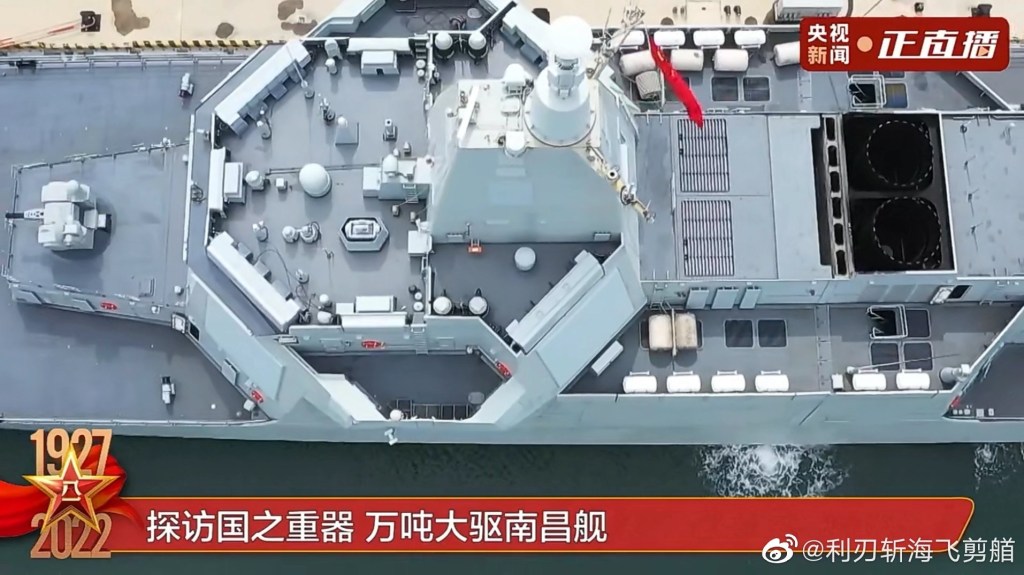
Back to the Type 055. China planes to use these as long range escorts for its growing carrier fleet. It’s 112 Vertical Launch System (VLS) missile tubes. 64 of those are located forward, arrayed in an 8×8 pattern with the last 48 being put further aft behind the bridge. The missile tubes will carry a variety of different missiles for different task. The HHQ-9B surface-to-air missile with their around 100nm range. Also the YJ-18 antiship cruise missiles with a 290 nm range. The ship is also, reportedly, able to carry and fire anti-submarine missile as well as certain land attack cruise missiles. The missile cells are large enough to accommodate future weapons such as large anti-ship ballistic missiles.
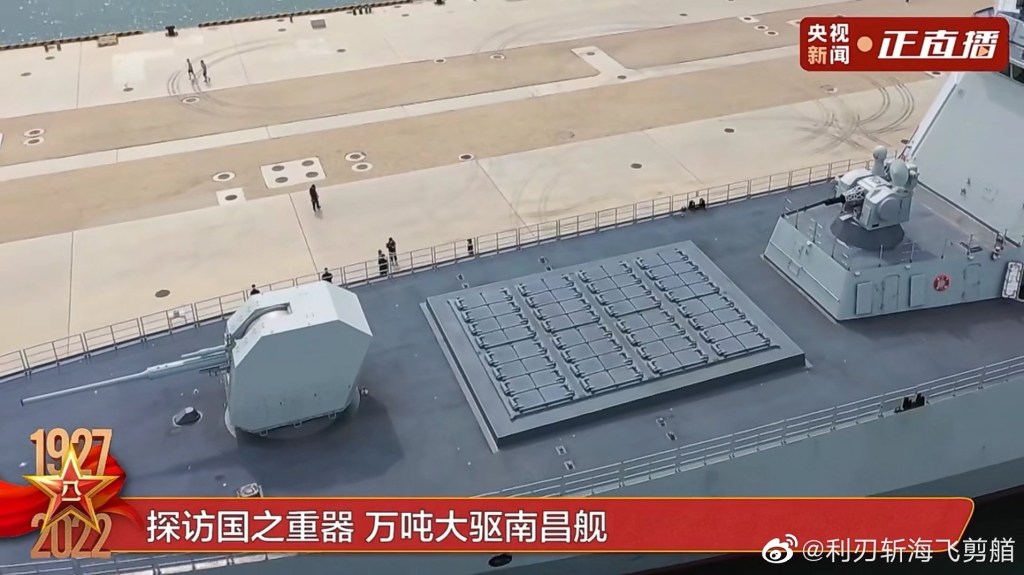
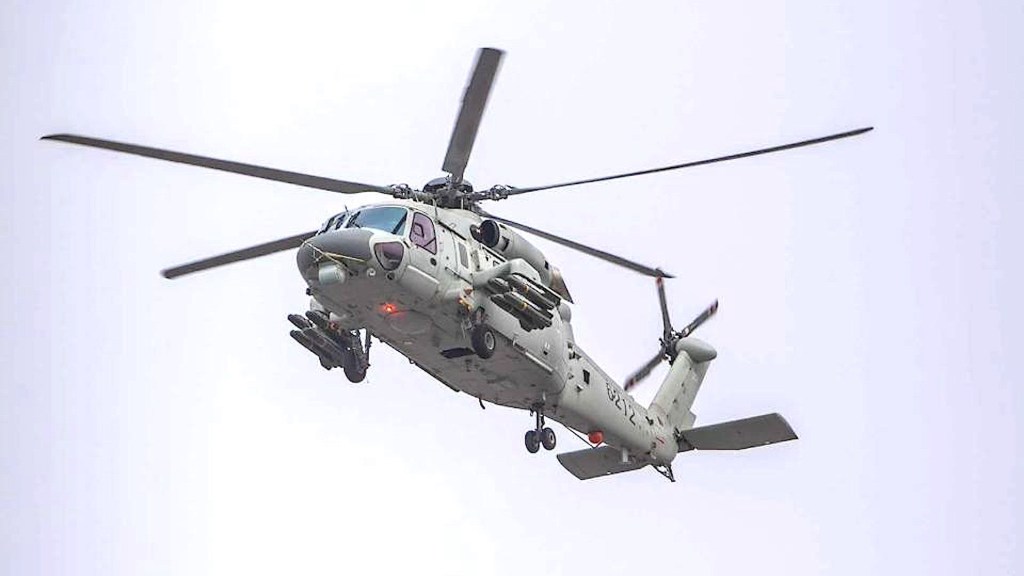
For close in fighting the ship comes equipped with a single 130mm gun mounted in a forward turret as well as its single 30mm close-in weapons system (CIWS), mounted on a raised platform in front of the bridge. Another 24-cell HHQ-10 point-defense SAM launcher is located on top of the helicopter hangar. For short range anti-submarine warfare she carries two triple 324-mm torpedo launchers. The helicopter hanger mentioned above is large enough for China’s Harbin Z-9 or the newer Harbin Z-20F (very similar to the Sikorsky H-60/S-70). The helicopters are usually used for Anti- Submarine warfare, being used to drop sonar-buoys in the water to detect submerged targets and to then drop torpedoes. Some helicopters are also outfitted with air-to ground surface missiles like the KD-10, similar to the American Hellfire missile.

As far as sensors the Type 055 carries Four-panel Type 346B active electronically scanned array (AESA) radar (NATO reporting name Dragon Eye),housed in an integrated mast. This dragon eye radar has a reported range of over 400km. Additionally forward facing hull mounted sonar and variable depth towed sonar arrays. Others have dug deeper into the radar specifics on this ship, I recommend a guy called Sub Brief. He makes great video briefs on various modern warships. He’s on Patreon and elsewhere. Definitely worth the dollar a month I spend on his work and I can’t recommend enough. I wish I had known about his video on this ship before I wrote this because it would have saved me hours.
Some of the ships capabilities are kept secret. Little is known about the Electronic Warfare capabilities of the Type 055. Recents rumors state that the ship has the ability to jam the passive radar of specifically the U.S. Lockheed Martin made AGM-158C LRASM or Long Range Anti-Ship Missiles. The rumors come from a simulation result released by China that showed one of their Type 055s being defeated by a wave of these missiles however the ship and its crew has managed to not only knock out the GPS targeting ability of the missile, but also in jamming its passive radar. Radar jamming is nothing new, however jamming a passive radar signal rather than an active signal requires being able to ascertain the location of the radar receiver in the missile. This is a hard task with the stealthy LRASM. Jamming its GPS capability means they were able to either put out enough power to stop any signal from any of the GNSS satellites from which a missile or munition can receive signals or by directly sending the missile a signal which is less likely as the missile is programmed to only receive signals in an encrypted M-Code. Now this simulation was run by a state run institution so, take with salt, but if true it’s a big deal and shows a formidable defensive EW suite capable of spoofing the signal on missiles with very small radar cross sections.
A formidable fighter the Type 055 has one major weakness. While the ship can reach 30 knots, she will quickly burn fuel and lose range. To maintain her most fuel efficient speed she needs to cruise at a staggeringly slow 12 knots. Most American ships of comparable size can cruise effectively at 30 knots for much longer ranges.
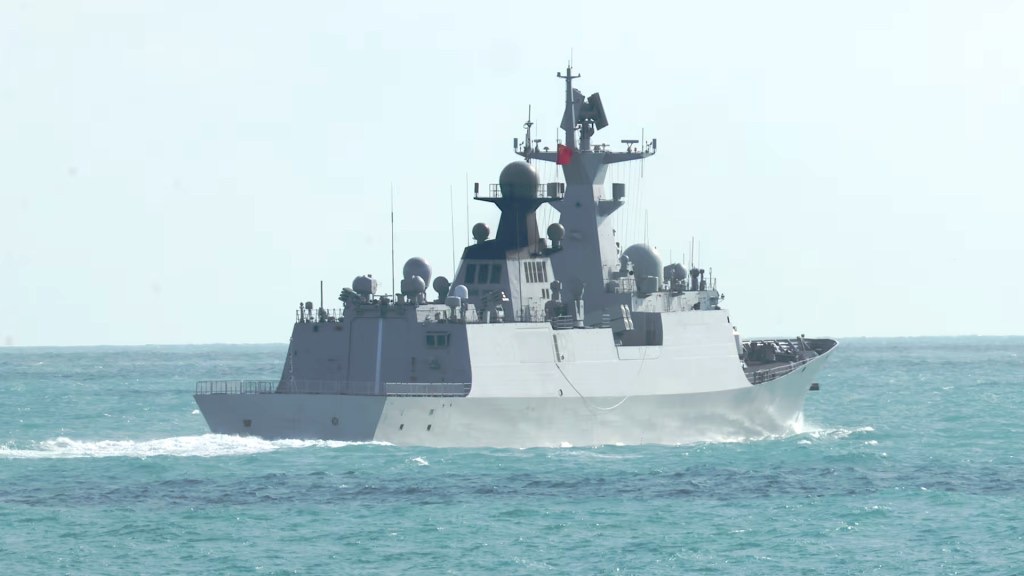
Type 054A Frigate Hengyang
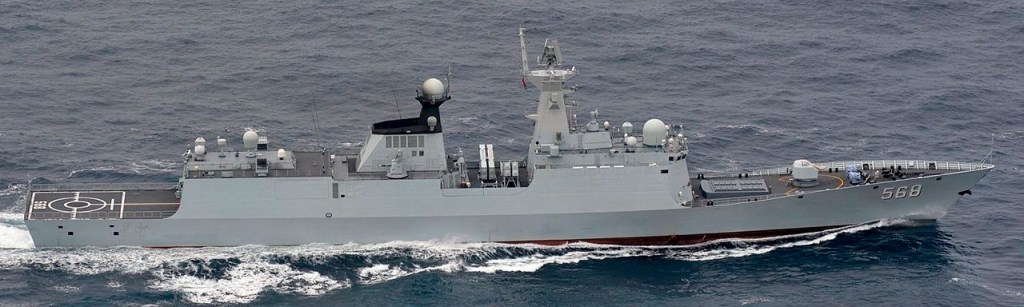
The Type 054A guided missile frigate (NATO reporting name Jiangkai II). This class of ship is the most numerous in the Chinese PLAN with 40 of these currently in active service and at least a dozen more being ordered.
Its predecessor the Type 054 was heavily influenced (like many modern fighting ships) by the La Fayette-class general purpose stealth frigate built in the 80’s and 90’s. The 054A model keeps that same hull while building more towards ship capable of operating during a large-scale/High intensity conflict. She carries a 32 cell VLS system carrying a mix of medium range HQ-16 SAM anti-air missiles and AU-8 rocket assisted ASW torpedoes (ASROC) as well as a 2×4 box launcher aft loaded with subsonic YJ-83 anti-ship missiles. The frigate also has a H/PJ-26 76mm DP gun forward and x2 30mm close in weapons systems (CIWS) for missile defense.
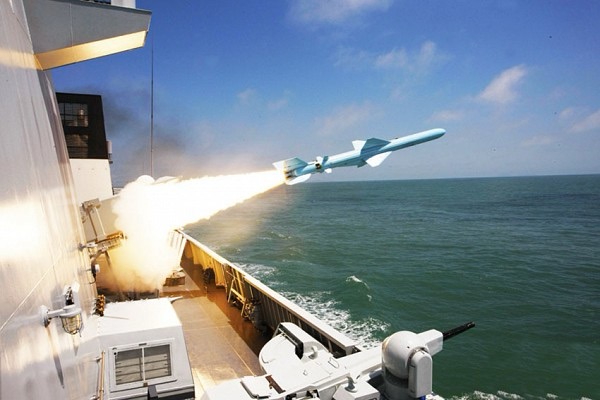
The frigates last offensive capabilities come from her 324mm triple torpedo tubes for YU-7 torpedoes And the Type 87 240mm ASW rocket launchers used for targeting enemy submarines.
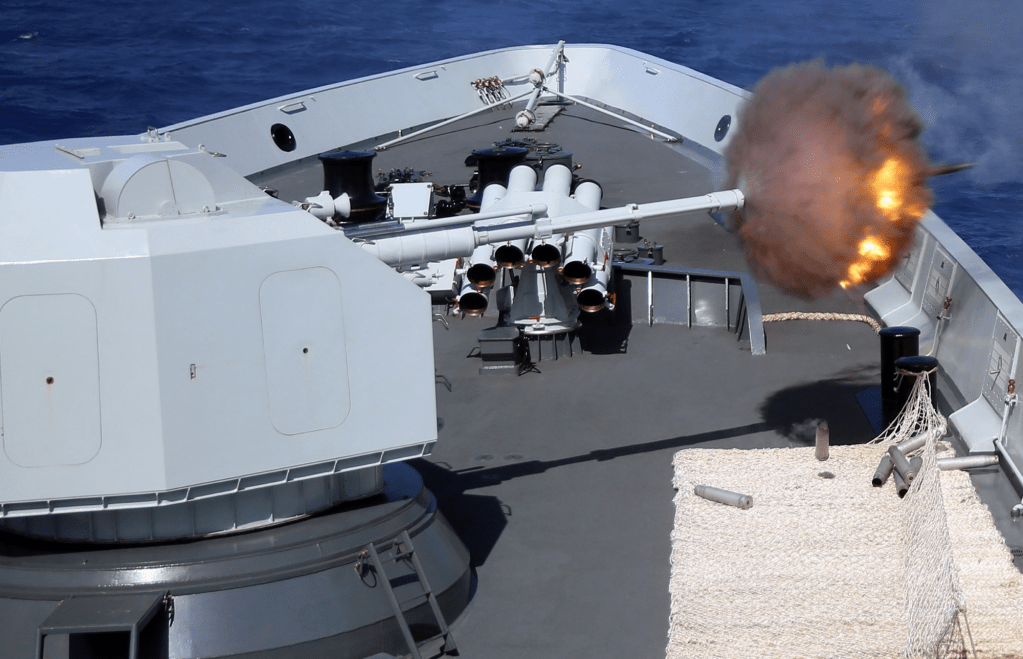
For radar the ship relays on a Chinese version of the Russian made Band Stand (MR-331 Mineral-ME naval radar) known in China as the Type 366. It has an average detection range of about 250km. Like any good sub hunter she has the H/SJD-9 active/passive hull sonar for underwater detection as well as a variable depth H/SJG-206 towed line array sonar array that trailed behind the ship and is almost irreplaceable when it comes to ASW. The rest of the radars are specifically for fire control of the guns and work in concert with the main Type 336.
The Type 054A has all the normal EW and countermeasures you would expect from a modern warship. Chaff and decoy systems as well as the Kashtan-3 missile jamming system.
Types 903 replenishment ship Weishanhu
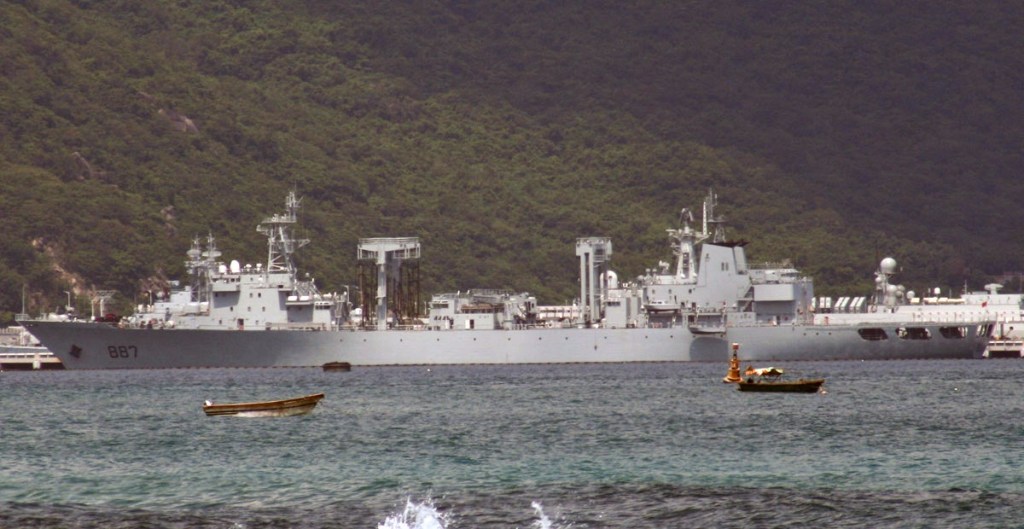
China has 8 of these massive oilers for its auxiliary fleet support for their longer range blue water operations away from their shores. Chinas navel doctrine, primary, combines their fleet of warships supported by the Air Force and territorial forces. A fight between a large force (like the US) would have them try to draw the U.S. closer to China so their ground and air based missile forces can join in.
The only weapons they have our the 4 CIWS for missile defense. They also carry basic radar/ sonar and comms. These aren’t really worth going to deep in I just wanted to include it because it was supporting the other two ships near Australia.
 Global Conflict Reporting
Leave a comment