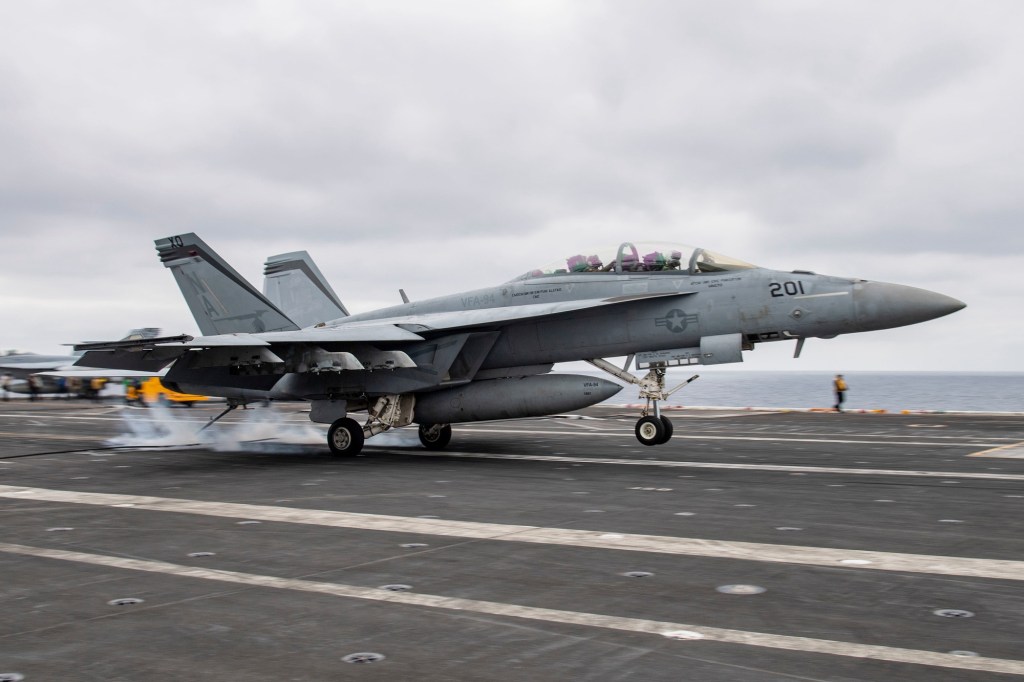
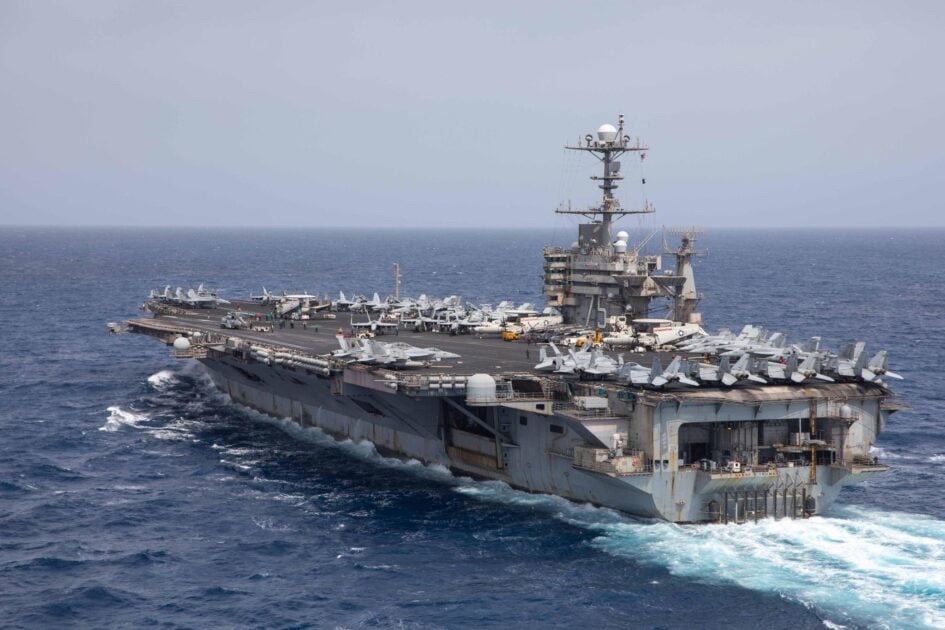
Today according to the U.S. Navy an F/A-18 Super Hornet was lost overseas from the USS Harry S. Truman (CVN 75). The jet and its two aviators were attempting to land when an “arrestment failure” occurred. The plane failed to catch it wire or the wire broke, either way the plane went off the end of the ahip causing the pilot and weapons officer to eject into the Red Sea.
Both pilot and weapons officer were picked up by a rescue helicopter from the Truman. They suffered minor injuries but are alive. The jet was not recovered.
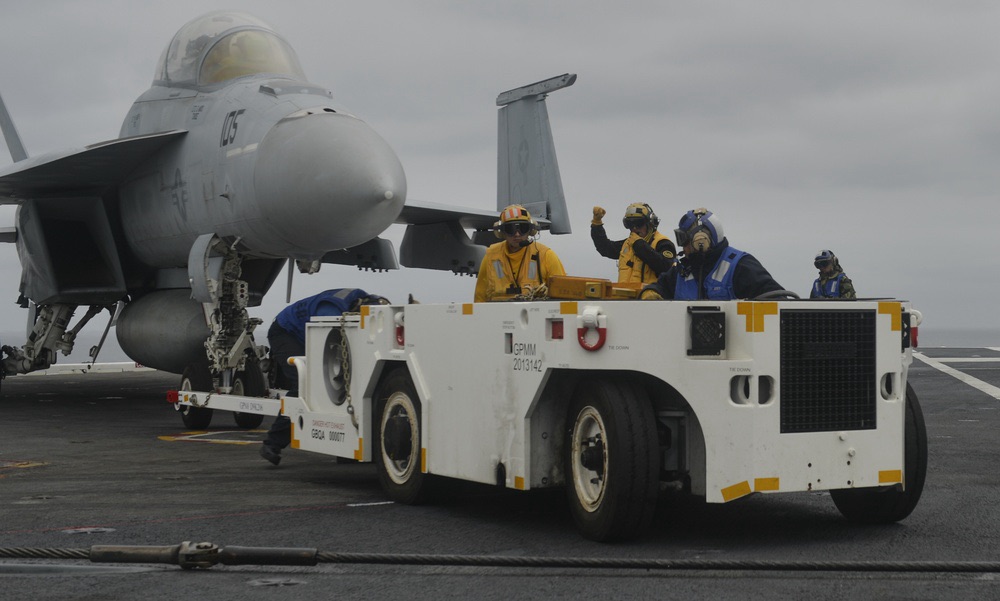
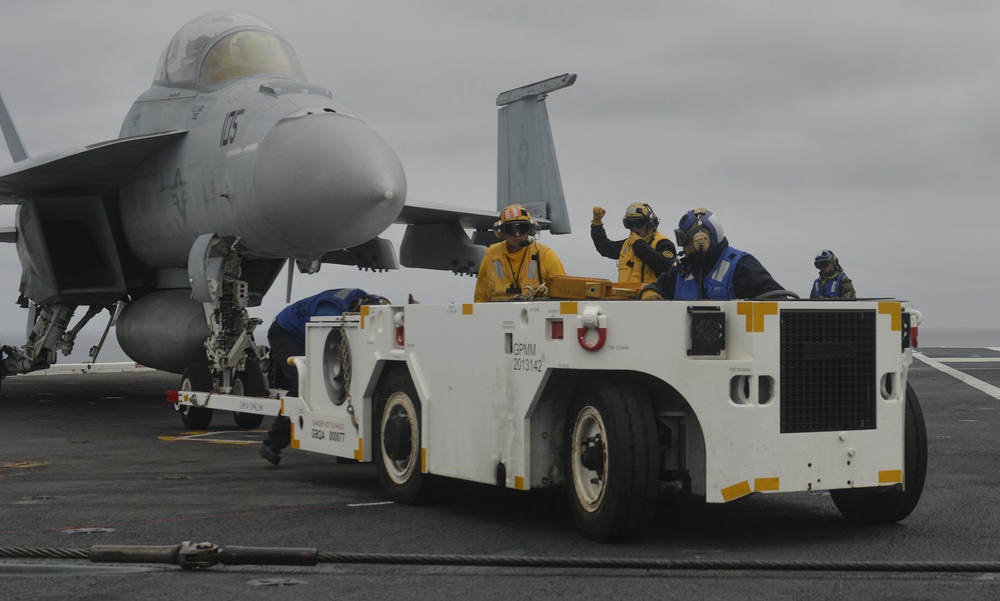
This is the second loss of a Super Hornet this week. The first was caused by an accident during a high speed turn where the hanger crew lost control of the jet and a towing trailer. No injuries reported there.
Super Hornet and towing tractor.
The Truman was also reportedly fired upon earlier on Tuesday according to CNN. This was in the hours before the ceasefire was announced. I don’t believe the two events from today are related.
The F/A-18 cost around 70 million dollars.
Reached out to centcom for a statement, I’ll update with a response if received. I’ve had good luck when emailing them but it’s hit or miss with the DoD.
Thank you for reading. I hope you get as much out of what I’m doing here as I get out of making these reports. If so I would invite you to join my Patreon. Doing that would help me more than I can describe. I’ve kept it as cheap as possible to become a member. It’s only a $1.00. However a dollar from even half of my Facebook followers would be a life changing amount of money for me and for this page.
Thank you for all the support over the years and as we continue to grow and evolve.
After a months long bombing campaign against the Iranian backed Houthi terrorist in western Yemen, the White House has today announced that those strike will stop immediately. This was announced after Houthi leadership made contact with the U.S. leadership and according to trump agreed to stop striking ships in the Red Sea. This puts a close to “Operation Rough Rider” under president Trump as well as hundreds of strike carried out by the former Biden administration.
The announcement was made during Trump’s meeting with Canadian PM Mark Carney. The conversation with the Houthis had been had the night before.
“They have capitulated, but more importantly … we will take their word,” Trump said. “They say they will not be blowing up ships anymore.”
It’s very likely Iran played a part in this turn. Possibly telling the Houthis to cease their actions against shipping following threats from the U.S. during the ongoing negotiations.
Trump wouldn’t say specifics on who he talked to only that the k do that the Houthis would be backing down came from “a good source”. The Houthis, reeling from yesterday’s attack by Israel released this statement yesterday.
“The operations of our armed forces will continue and the support by Yemen to Palestine will only end with the end of the aggression and siege against Gaza,” -Houthi statement from Al Masirah TV.
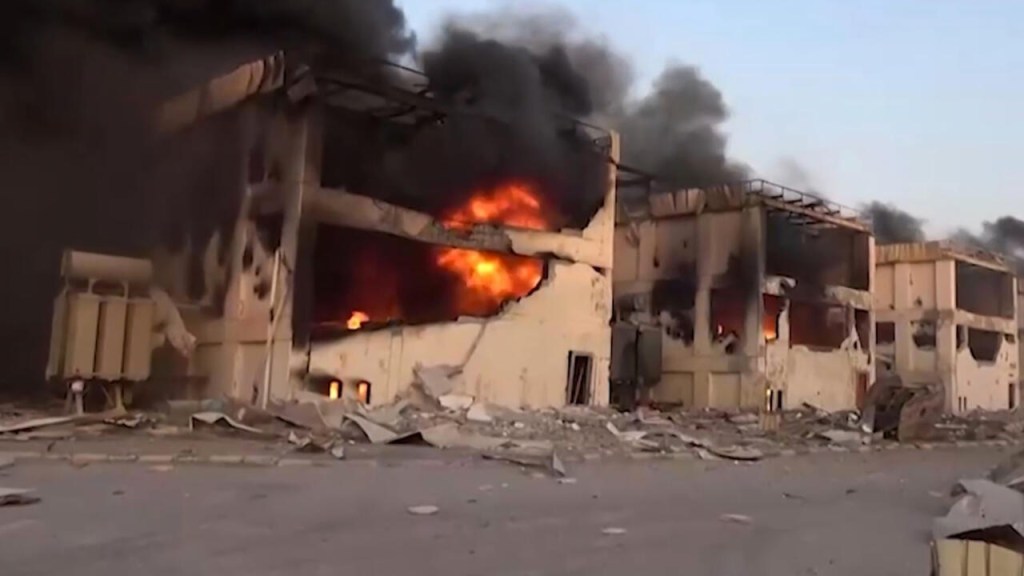
While the U.S. has agreed to stop bombing the Houthis, Israel is another matter and have carried out more strikes since what was reported yesterday. Locals in Yemen as well as the IDF report the bombing of Sana’a airport as well as various power stations, and another concrete factory. Videos included below.
CRAZY FOOTAGE 🔴
Full footage of the aftermath at Sana’a International Airport following IDF strikes.
Video showing the full footage of the aftermath of the attack on Sana’a international airport.
🚨 Breaking: Reports from Yemen that the entire international terminal of Sanaa Airport, including all airplanes there, have been destroyed pic.twitter.com/ehpwgh3Car
The U.S. has brought in a large amount of military assets to carry out its attacks against the Houthis. Currently from the navy two aircraft carriers are operating in the region, the USS Carl Vinson (CVN 70) and USS Harry S Truman (CVN 75), these ships are both escorted and supported by numerous destroyer squadrons and several cruisers, not to mention their air wings. Several other destroyers have been ordered to the region and are operating separately of the carrier strike groups. Also USS Gettysburg (CG-64) and USS Princeton (CG-59) both Ticonderoga class guided missile cruisers have also been ordered to the region as apart of Operation Prosperity Guardian and have been used to strike Houthi targets as well. At least one Ohio class submarine USS Georgia (SSGN-729) has been spotted in theater as well. The Air Force has sent a large number of planes to the region included F-35s and F-22s as well as B-2 Spirit bombers stationed at Diego Garcia. As of several hours ago a pair of B-52s were heading towards the region from the continental US. It’s likely at least some of these assets will remain in the CENTCOM area of responsibility as negotiations with Iran over their nuclear program continue. The White House and Trump have threatened to use military force if the negotiations fail.
Image from USNi news shows the current general location of the U.S. aircraft carriers.
The Truman just several days ago had its deployment to the Middle East extended by another week, to continue to keep up a high tempo of attacks against the Houthis. This could possibly be extended further if negotiations are unsuccessful.
After writing this it was announced that Oman had carried out the negotiations between the Houthis and the US. They had been the go between in the conversation which led to the U.S. ceasing it’s military strikes.
I’d like to thank everybody for the constant support I’ve received. These last 5 years have flown by but I feel like GCR continues to grow and improve in its reporting and analysis. I’m always open to comments and questions and can be reached on Facebook or through my email which is listed on the website.
I’m currently looking for guest for a future podcast series I’m planning on running. If you have an interesting military story to tell contact me and let’s talk. I want to hear your stories.
If you would like to go the extra mile and further support me and the work being done here, you can sign up for my Patreon through the button below for only $1.00 a month. Future video and audio projects to be released there soon.
The U.S. navy confirmed moments ago that an F/A-18 Super Hornet assigned to the USS Harry S. Truman and Carrier Air Wing 1 has been lost overseas during a towing operation in the carriers hanger bay. The super Hornet is a single seat fighter from the Knight Hawks” of Strike Fighter Squadron (VFA) 136.
The aircraft was being towed around the hanger when the tow crew lost control of the aircraft and tractor and both were lost overboard.
“Sailors towing the aircraft took immediate action to move clear of the aircraft before it fell overboard. An investigation is underway.”
-Statement from the Navy
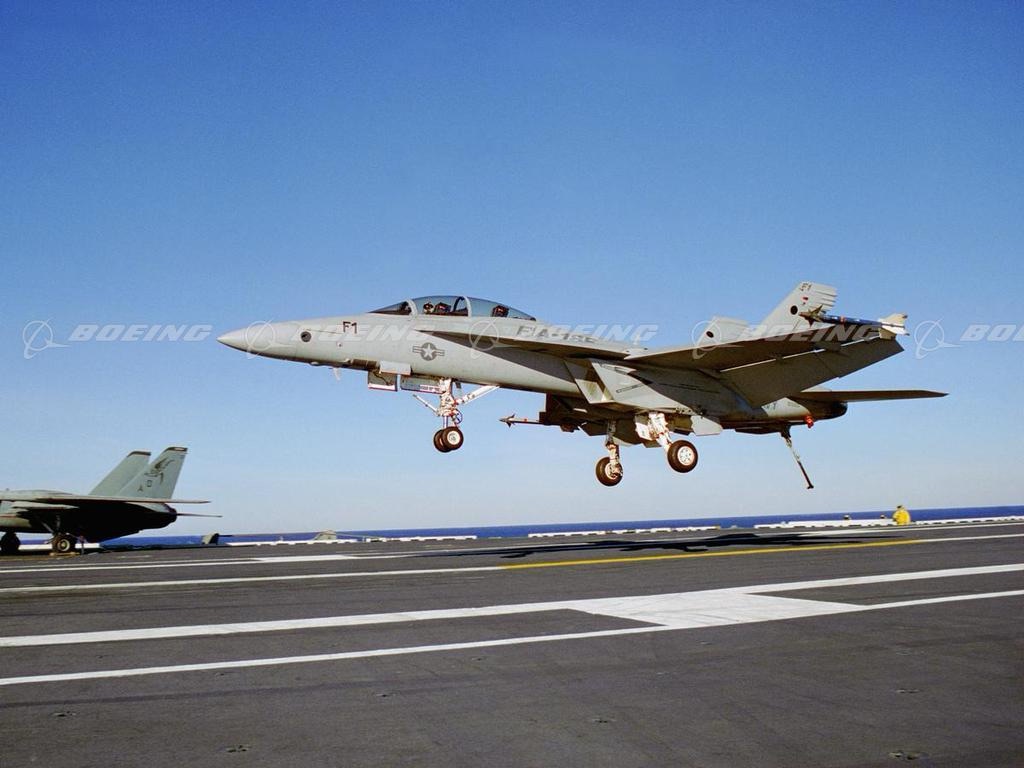
Stock photo showing an F/A-18 and one of the towing tractors.
According to the statement no sailers were lost however one was injured in the incident. The carrier and her strike group remain mission capable and will continue operations in the Red Sea. For the past months the Red Sea has been the site of major operations against Houthi forces who have attacked international shipping. US forces have struck upwards of 800 targets over the course of the last month.
Thank you for reading. I hope you get as much out of what I’m doing here as I get out of making these reports. If so I would invite you to join my Patreon. Doing that would help me more than I can describe. I’ve kept it as cheap as possible to become a member. It’s only a $1.00. However a dollar from even half of my Facebook followers would be a life changing amount of money for me and for this page.
Thank you for all the support over the years and as we continue to grow and evolve.
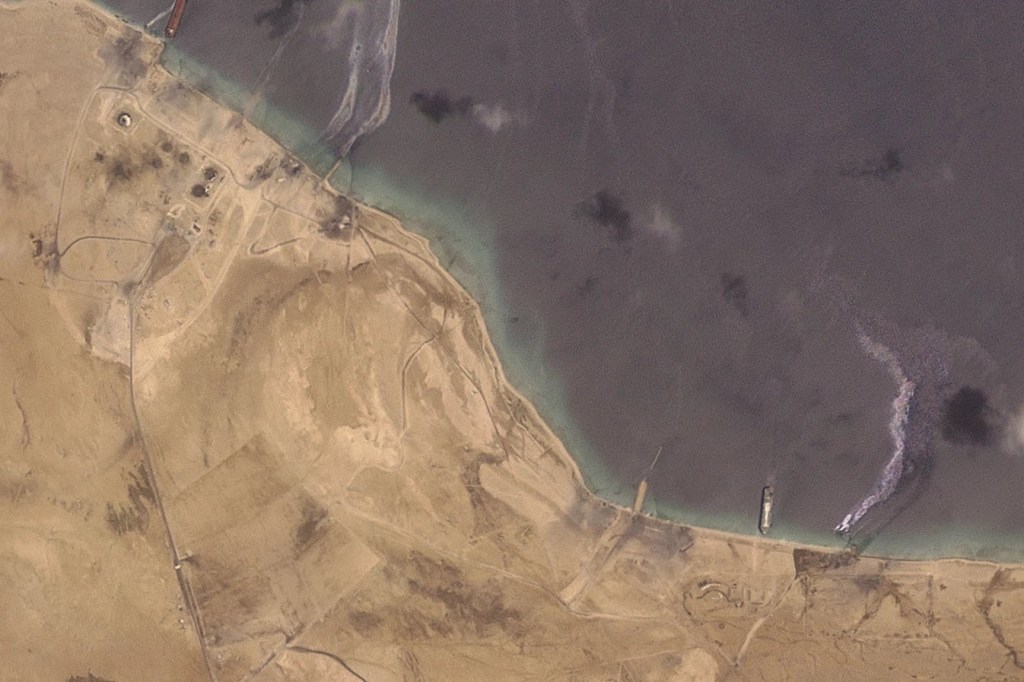
On Friday, the US stuck at an the oil port at Ras Isa in one of the largest attacks in the group since the current U.S. administration launched its strikes.
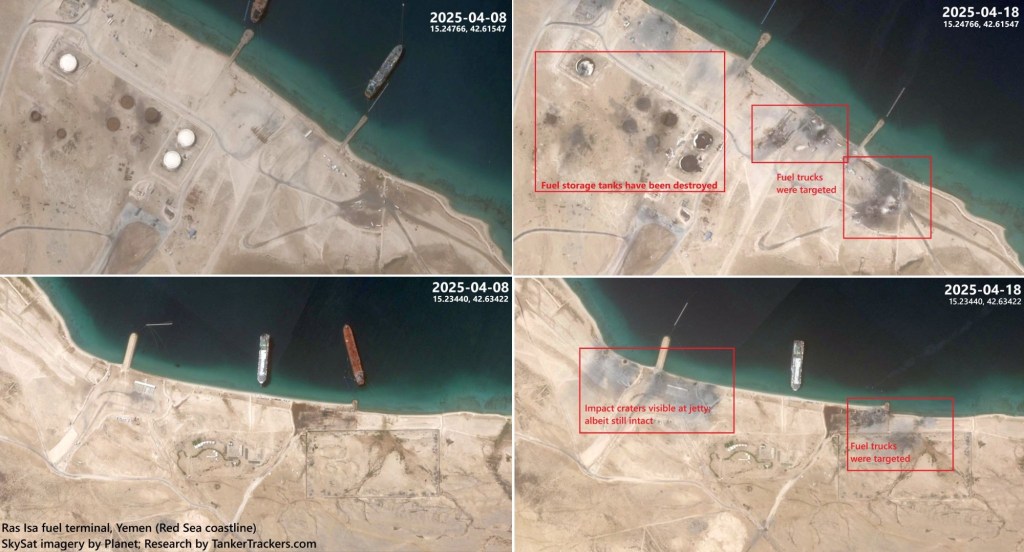
Satellite images released afterwords show the extent of the damage. I screenshot from a news report on the strike.
From CENTCOM:
“U.S. forces took action to eliminate this source of fuel for the Iran-backed Houthi terrorists and deprive them of illegal revenue that has funded Houthi efforts to terrorize the entire region for over 10 years.”
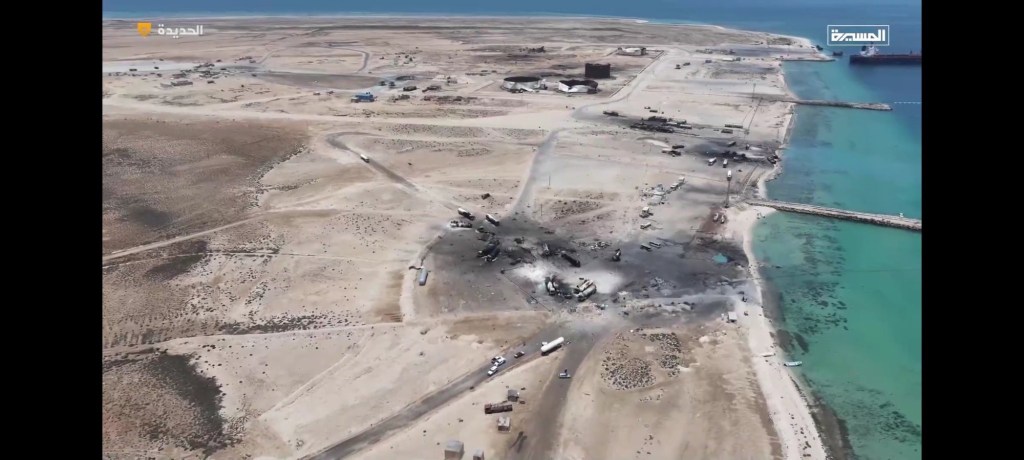
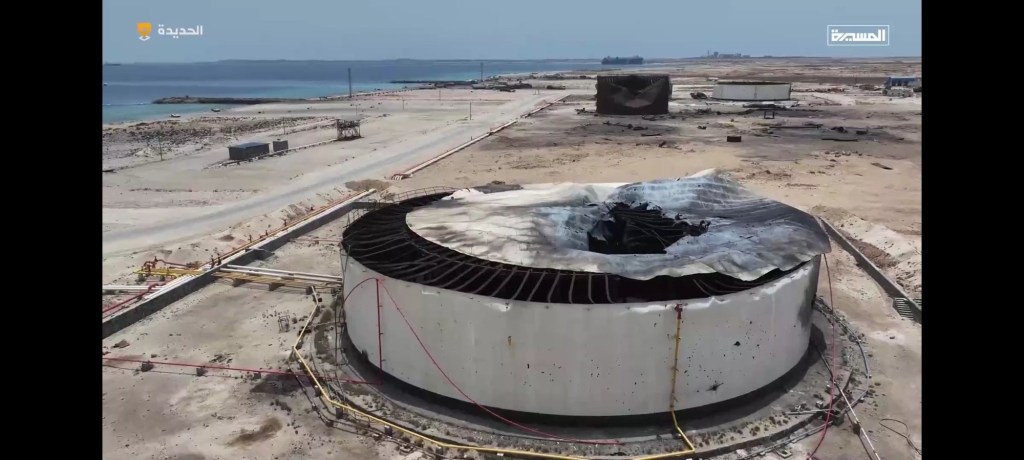
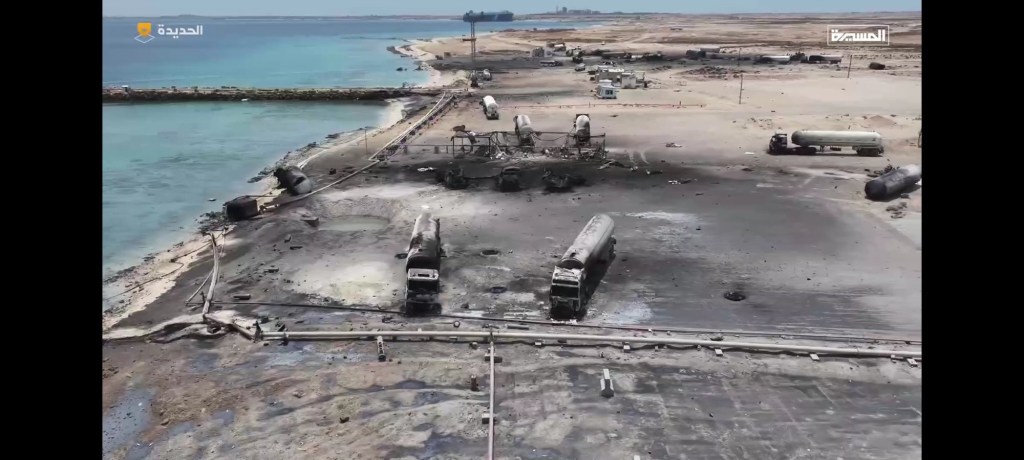
The strike destroyed several oil storage tanks as well as a number of oil transport trucks. Also destroyed was the equipment to load and unload oil into ships.
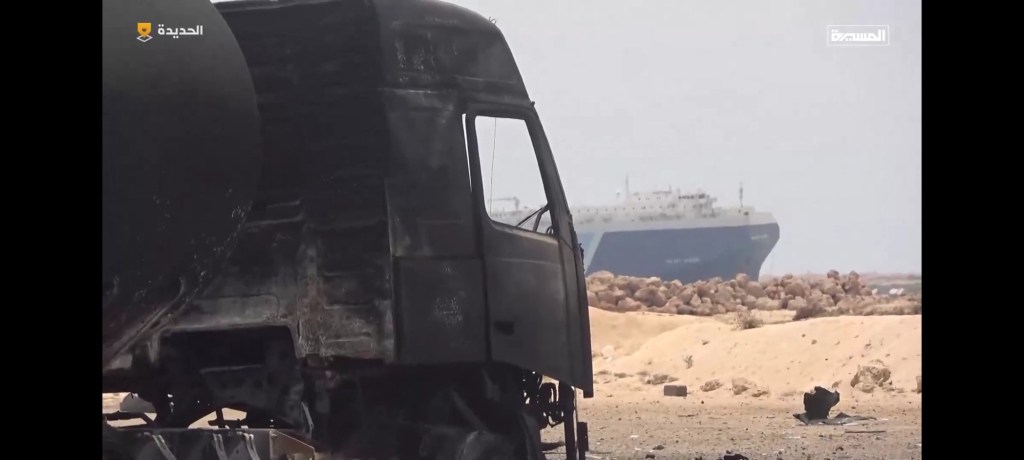
Images showing the aftermath of the attack.
The Houthis claim the strike killed 74 people and injured another 171 others. They aired footage afterwords on their al-Masirah satellite news channel of the site showing blown up trucks and corpses strewn about the area. The Houthi denounced the strike as a “completely unjustified aggression.”
CENTCOM declined to answer specific questions on civilian casualties however said that “this strike was not intended to harm the people of Yemen.”
This strike will likely have far reaching consequences for the Houthi as well as the people of Yemen. The U.S. is looking at this strike as a message to those who continue to supply the Houthis even through the sanctions. Iran is the biggest supporter of the group, however they also have done business with China and Russia.
The Ras Isa port was an important economic point for the country (as well as the Houthi group). The port is located in the Hodeida governorate along the Red Sea and is just off Kamaran Island which has seen heavy U.S. strikes in recent days.
Image from @Tankertrackers showing the site.
Twitter group @TankerTrackers has recently reported that vessels that were in the port at the time have been held under threat of violence from the Houthis who demand they not leave without unloading their cargo. They also note that the GALAXY LEADER (9237307) vessel is still being held in the port. The cargo vessel was hijacked on November 19, 2023.
Thank you for reading. I hope you get as much out of what I’m doing here as I get out of making these reports. If so I would invite you to join my Patreon. Doing that would help me more than I can describe. I’ve kept it as cheap as possible to become a member. It’s only a $1.00. However a dollar from even half of my Facebook followers would be a life changing amount of money for me and for this page.
Thank you for all the support over the years and as we continue to grow and evolve.
The U.S. has accused a Chinese Satellite company of aiding the Iranian backed Houthi rebels with its targeting of ships in the Red Sea. The U.S. State department has said that data and imagery from the satellite firm is directly being used to target and attack US and international shipping.
Chang Guang Satellite Technology Company Limited.
Tammy Bruce said that Chang Guang Satellite Technology Company Limited, is the company helping the Houthis.
“We can confirm the reporting that Chang Guang Satellite Technology Company Limited is directly supporting Iran-backed Houthi terrorist attacks on U.S. interests,”
Tammy Bruce State Department Spokeperson told Fox News. She later continued,
“China consistently attempts … to frame itself as a global peacemaker … however, it is clear that Beijing and China-based companies provide key economic and technical support to regimes like Russia, North Korea and Iran and its proxies,”
GCR reached out for a statement from the company named here however after a day I’ve heard nothing back yet. Will update if they respond to me directly.
Middle East image from satellite.
In a statement to other media outlets this was the statement from the company.
“In our global operations, we strictly comply with relevant laws, regulations, and industry standards both in China and internationally. With a mature business model and high-quality services, we are committed to contributing Chinese expertise and solutions to the advancement of the global remote sensing industry,”
Chinese Foreign Ministry spokesman Lin Jian claims that China has played a positive role in easing tensions in the region.
The Houthis have carried out a number of attacks on international shipping through the area, using missiles, drones and attempted hijacking. These attacks have been ongoing since the October 7th 2023 attack on Israel by Hamas, the war in Gaza afterwords has been a brutal one, claiming the lives of many and destroying whole swaths of Gaza. The Houthis along with other Iranian backed proxy groups have shown support for Palestinian Hamas (the Iranian backed Palestinian liberation group fighting Israel) in various ways. The Houthis in Yemen have disrupted international shipping and regularly launched ballistic missiles at Israel. Hezbollah has also joined with regular rocket attacks. These attacks drove Israel to invade L Lebanon in October 1st 2024 . Iran itself has also launched several large scale attacks on Israel.
Thank you for reading. I hope you get as much out of what I’m doing here as I get out of making these reports. If so I would invite you to join my Patreon. Doing that would help me more than I can describe. I’ve kept it as cheap as possible to become a member. It’s only a $1.00. However a dollar from even half of my Facebook followers would be a life changing amount of money for me and for this page.
Thank you for all the support over the years and as we continue to grow and evolve.
F-35C’s with Strike Fighter Squadron 97 (VFA-97) and EA-18G “Growlers” with Electronic Attack Squadron 136 (VAQ-136), both attached to Carrier Air Wing 2 (CVW-2).
April 14, 2024
Yesterday video footage was sent to me showing some footage taken in the USS Carl Vinson (CVN 70) confirming that the ship had arrived at the Gulf of Oman. The USS Carl Vinson has joined the USS Harry S. Truman (CVN-75) in carrying out strikes against Houthi targets in western Yemen.
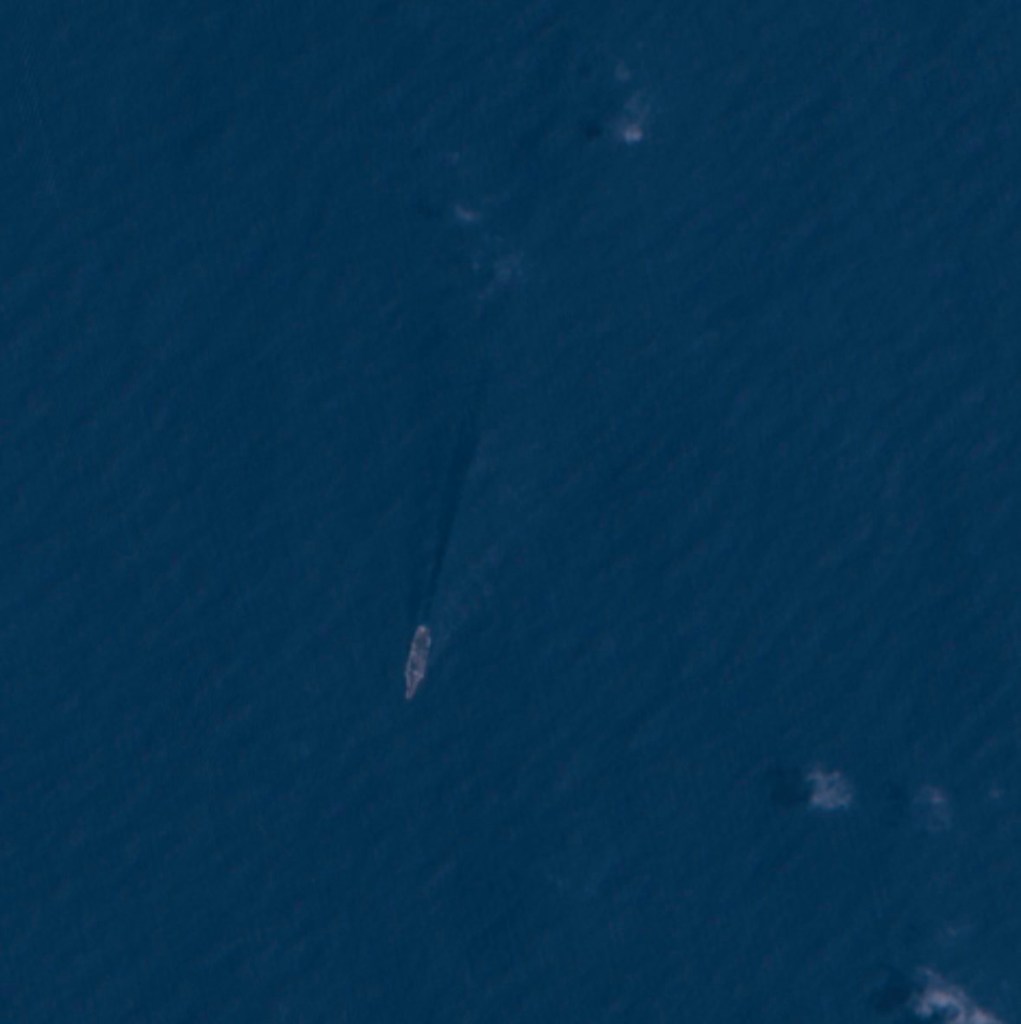
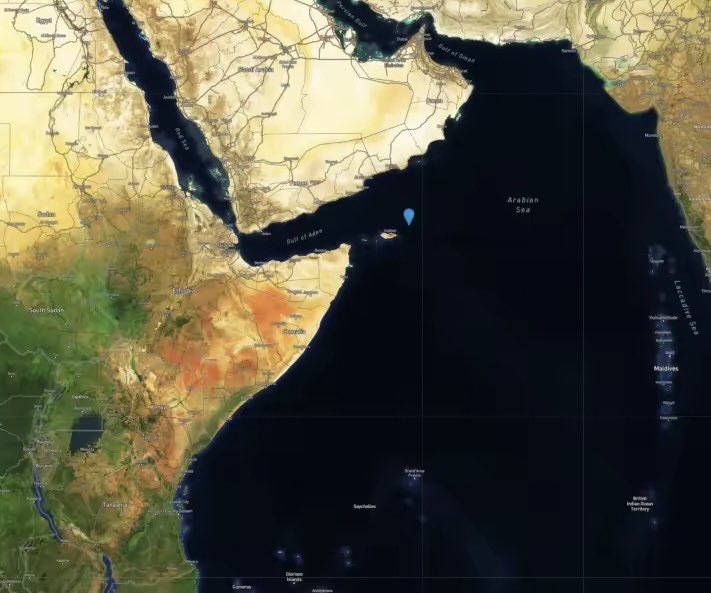
The USS Carl Vinson (CVN 70) spotted entering the Gulf of Aden., passing to the north of Socotra Island. She was spotted by satilites of the European space agency.Location of USS Carl Vinson when photographed by satellites.
Media in Yemen is reporting Houthi areas receiving nearly daily strikes by US forces.
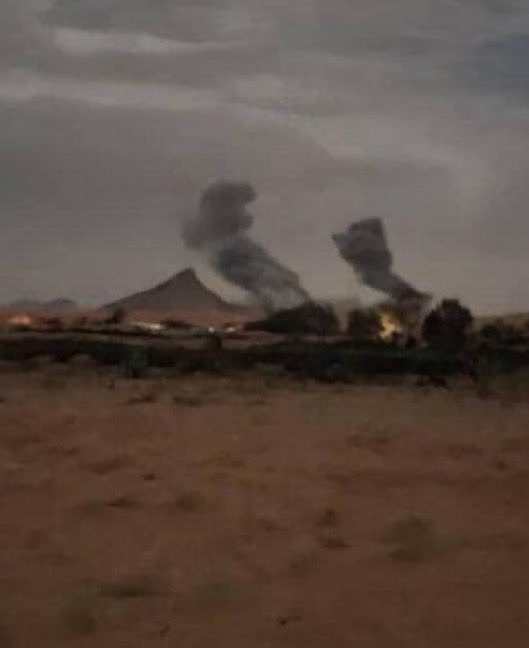
Aftermath of one of the strikes outside of Sanaa.
Targets have included Houthi weapons manufacturing and storage as well as platforms for launching these weapons. Also radar, and air defense systems as well as high level officers in the Houthi organization.
Thank you for reading. I hope you get as much out of what I’m doing here as I get out of making these reports. If so I would invite you to join my Patreon. Doing that would help me more than I can describe. I’ve kept it as cheap as possible to become a member. It’s only a $1.00.
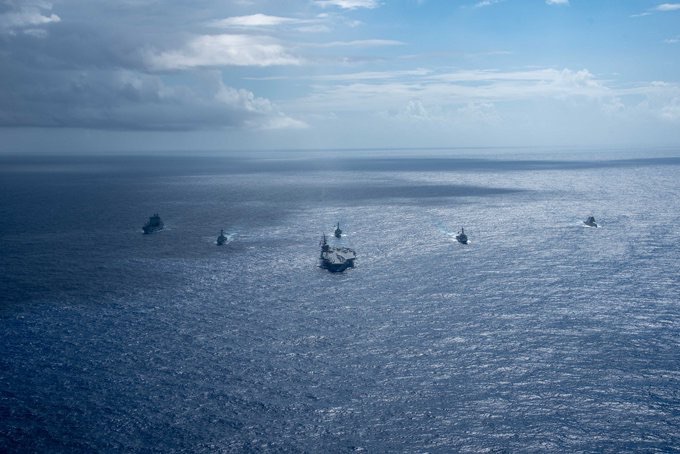
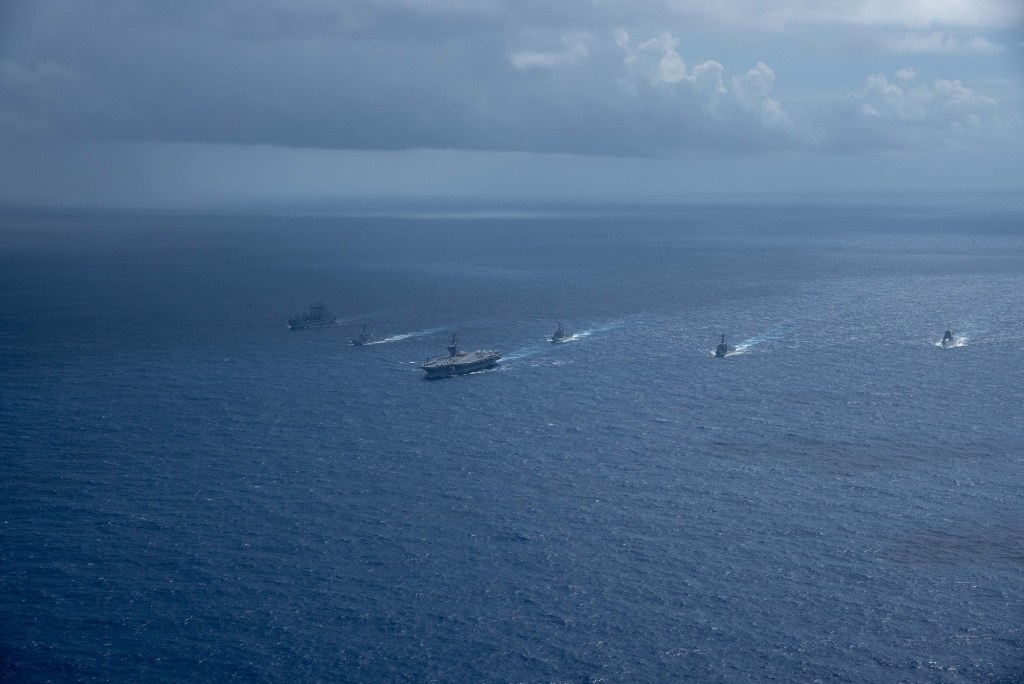
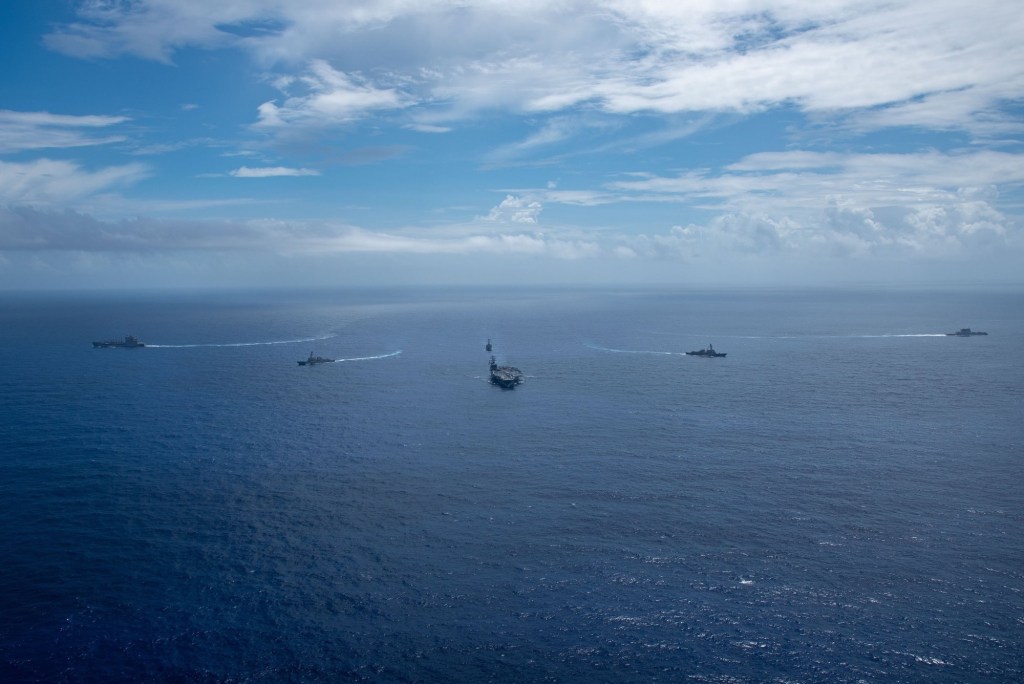
Today the U.S. Navy’s 7th Fleet released several images showing the USS Nimitz (CVN 68) on their final deployments before her planned 2026/2027 decommissioning.
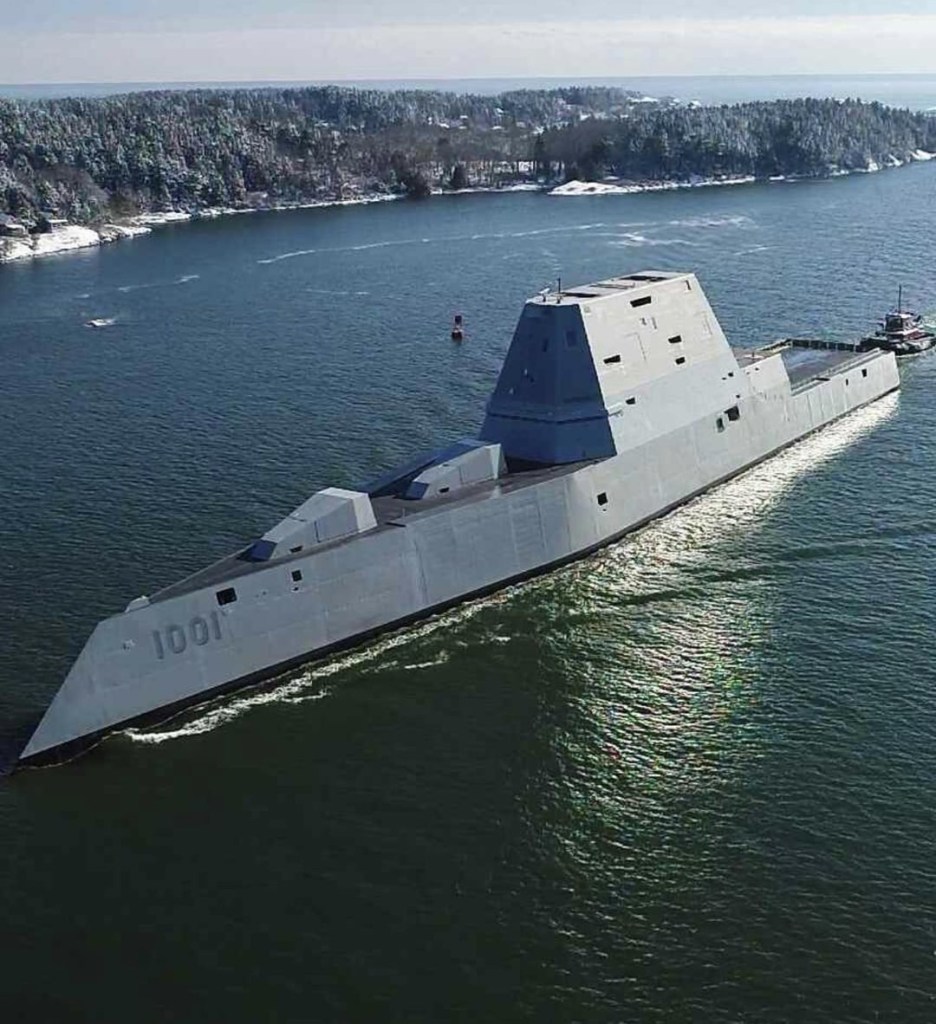
However, while the Nimitz is a good looking ship the rare part was one of its escorts in Carrier Strike Group 11 (CSG 11). Included in the pictures was USS Michael Monsoor (DDG 1001). One of only three commissioned Zumwalt-Class Stealth Missile Destroyer.
The Zumwalt-class Michael Monsoor, along with the Nimitz and the rest of CSG 11 are currently on deployment in the Pacific Ocean region.
Also included in the image are Arleigh Burke-Class Guided-Missile Destroyers; USS Curtis Wilbur (DDG l54), USS Gridley (DDG 101), and USS Lenah Sutcliffe Higbee (DDG 123) And U.S. Navy Replenishment Tanker, USNS John Lewis (T-AO-205).
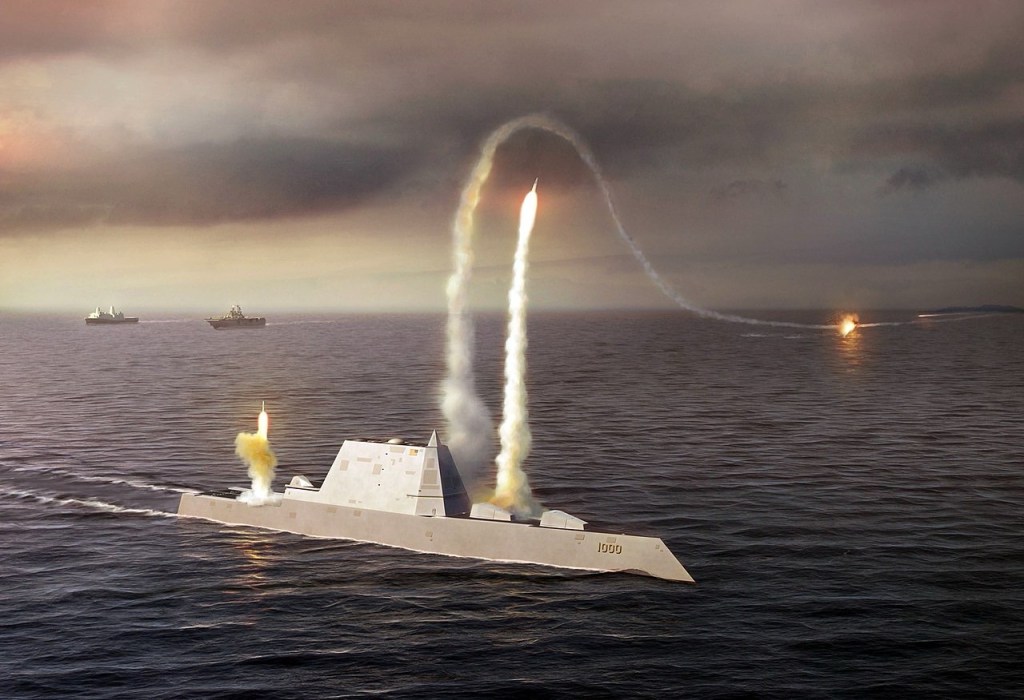
To the future… and beyond.
The Zumwalt class was originally designed with littoral operations in mind and they were given a pair of Advanced Gun System (AGS) for their main guns. The AGS was designed for shore bombardment fire missions in support of ground operations however the ammo was very expensive (estimated at $800,000 to $1,000,000 per round in 2016) and only one ammo type was designed so now the gun has no ammo and the weapons is useless. The navy will eventually replace the guns with other systems like large Vertical Launch Cells for the navy’s hypersonic missile currently being tested by the USS Zumwalt. The AGS was designed around the time of the battleships being decommissioned. The navy was nervous about giving up its ability to carry out shore bombardment so the AGS was designed. The now canceled round that would have been fired by the AGS is the Long Range Land Attack Projectile (LRLAP) a rocket assisted precision GPS guided 155mm high explosive warhead that could fire 100 nautical miles.
USS Michael Monsoor.
Zumwalt’s odd shape came from the SC-21 (Surface Combatant for the 21st Century) research and development program started back in 1994. The program came up with many interesting designs such as the DD-21 or the destroyer for the 21st century, which has the distinctive hull now used by the Zumwalt class.
I see a bit of inspiration from the French La Fayette-class stealth frigate in both ships.
Concept art for the DD-21. The ship was thought up as a capable land, air and sea attack ship for the 21st century. This design went on to inspire the Zumwalt class. .
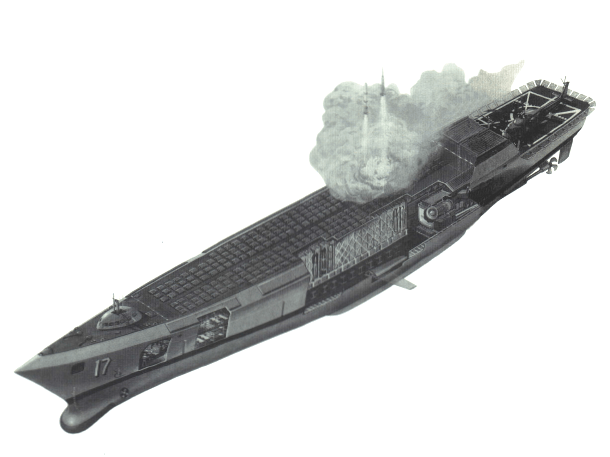
Aside from the DD-21 the SC-21 had several other interesting ideas I found in my research. One was called an arsenal ship. A massive floating missile platform with as many as 500 VLS cells loaded with Tomahawk cruise missiles. The ship was to be controlled by either a small crew or remotely piloted by crew members on one of the other ship. Todays navy thinking would have an aegis equipped cruiser other ship manually controlling this ship or possible one of the AWACS or AEW planes.
Concept art for the Arsenal ship.
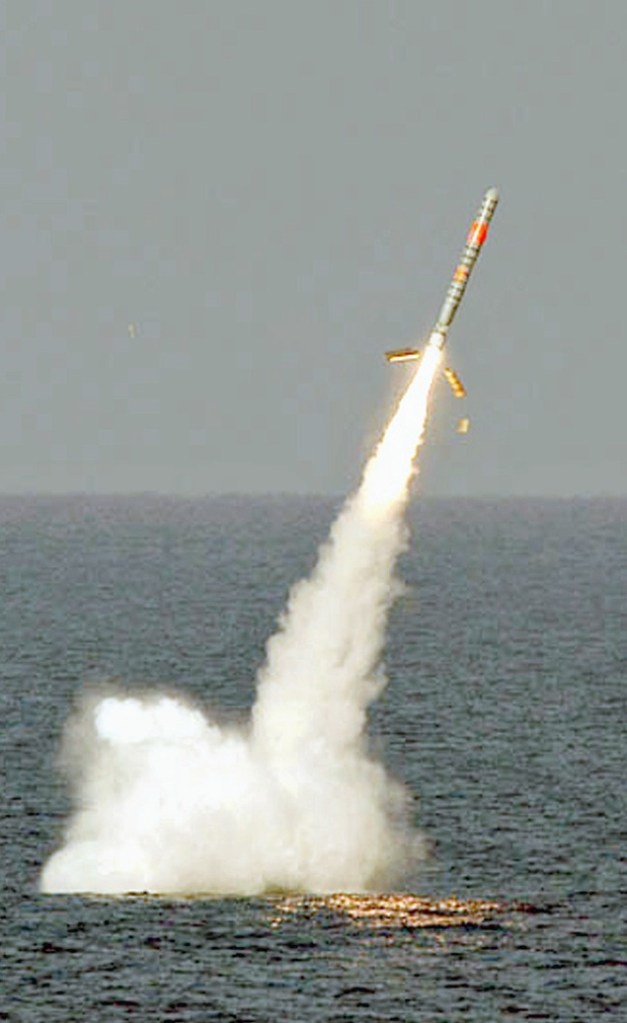
The role this arsenal ship would have played is largely filled by the U.S. submarine fleet at the moment as the four oldest of the ballistic missile SSBN subs have been converted to the SSGN configuration. This change took the Trident missile cells and changed them out their nuclear payload for smaller but more numerous cruise missiles.
Tomahawk test-fire from USS Florida. 2008.
Thank you for reading. Your support keeps this page going and gives me the funds to continue to not only maintain GCR but to grow as well. If you want to support my work further the link to my Patreon page is below. I also have a buy me a coffee account if you would like to give a one time donation.




 Global Conflict Reporting
You must be logged in to post a comment.