Tag: US Navy

  • Iran and United States send threats over Iranian nuclear capabilities.

    By Scott Jackson

    April 2nd, 2025

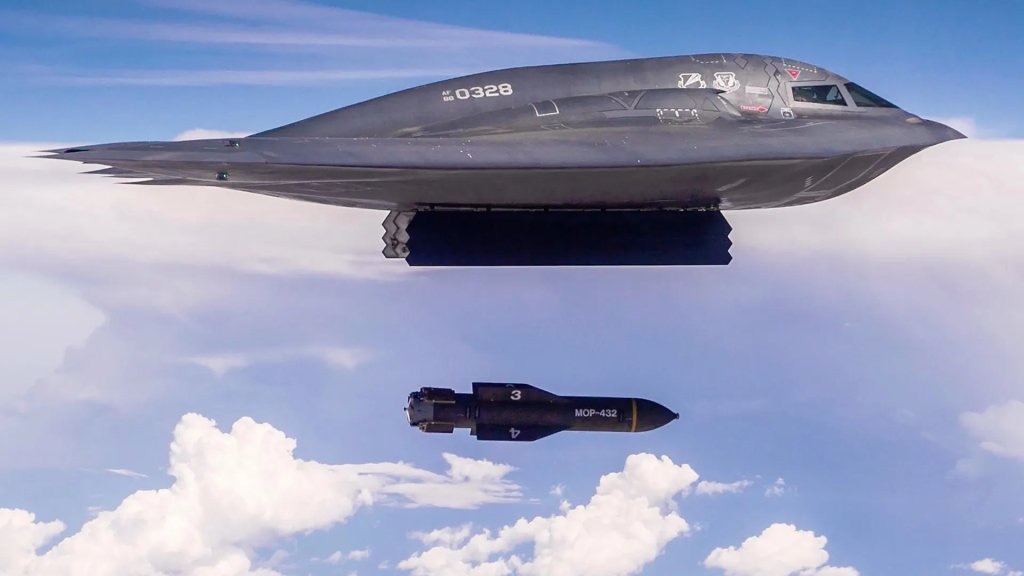
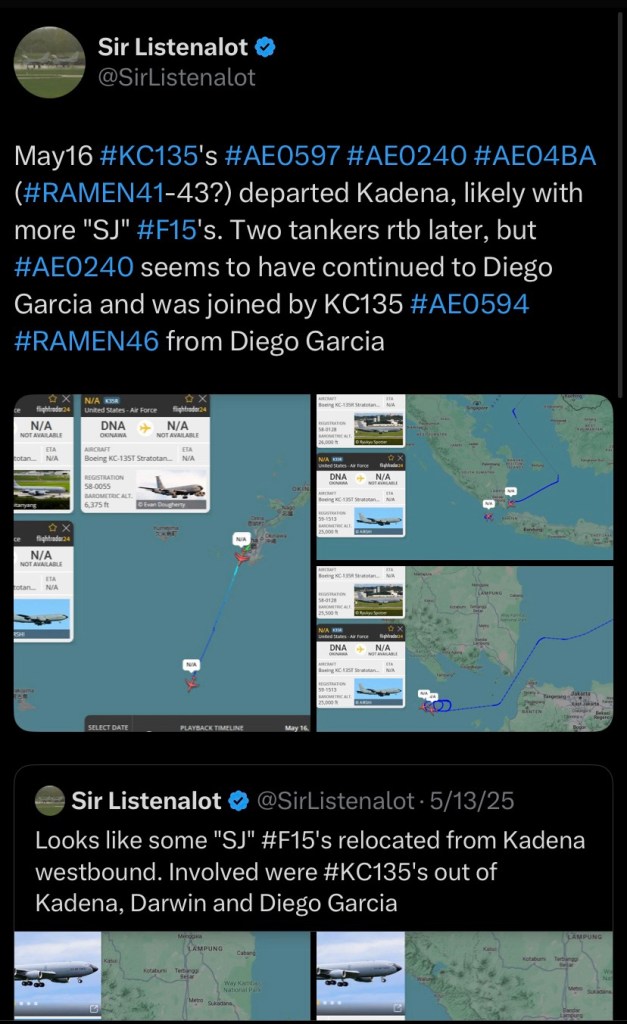
    The past couple days have seen a rise in the already complicated tensions between the United States and Iran. US president Donald Trump threatened that bombs would fly “like they have never seen” unless Iran agreed to come to negotiations regarding Irans nuclear capabilities. The threat comes as a number of B-2 Spirit long-range strategic bombers were not so quietly flown to Diego Garcia, an island strategic airbase located on the Indian Ocean.

    “If they don’t make a deal, there will be bombing,” Trump told NBC News over the weekend, adding “it will be bombing the likes of which they have never seen before.”

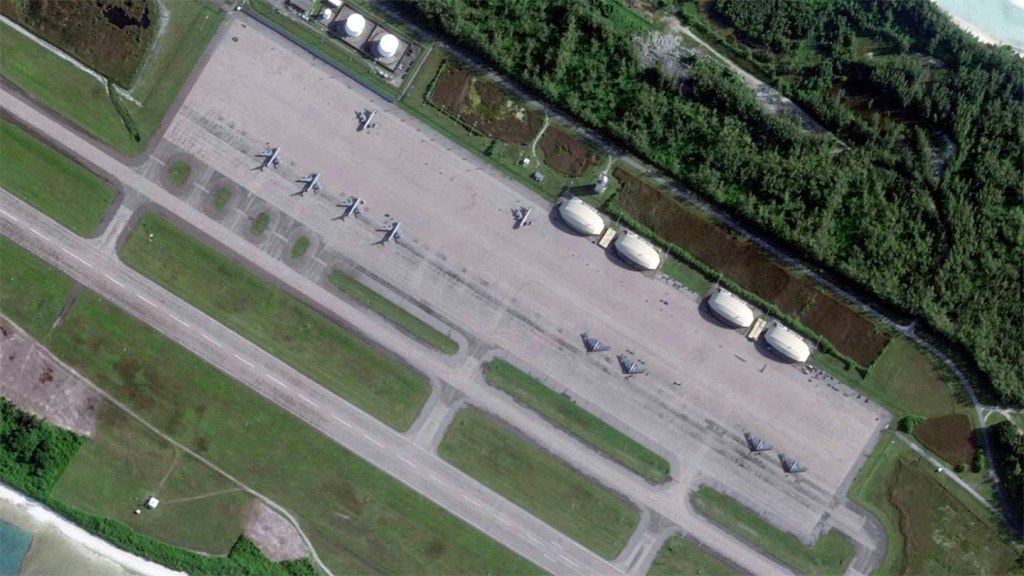
    6 US Air Force B-2 “Spirit” shown here on satellite imagery taken in the last day.

    This remote airbase has long been used to station bombers for strikes into the Middle East region. The bombers arriving highlights a recent buildup of US military forces in the Middle East, mostly air and navy assets. Two US carriers were ordered to the region, the USS Harry S Truman already in the area as well as the USS Carl Vinson (CVN 70) which will arrive in the upcoming weeks.

    Stock image. Carrier and her strike group.

    Iran neglected to the offer of direct negotiations with the US however said they are open to indirect negotiations. While they claim to not be pursuing nuclear weapons right now, they say that if they are targeted for attack by the U.S. or Israel they would be forced to pursue nuclear weapons. They also made threats against the multiple US forces in the Middle East and furthermore claimed they would attack any base used by the Americans to attack Iran. This was likely to dissuade America’s allies from allowing America to launch attacks from their airbases. While Irans capabilities are obviously miles behind what the US can bring to a fight, that doesn’t make them completely toothless. Iran has massive stocks of missiles and drones, including ballistic missiles. One specific threat was made by an unnamed Iranian official and reported by Tehran Times. The threat was towards the Diego Garcia airbase which is around 3700km away from southern Iran. Irans longest range missile has a reported range of around 2500km meaning they would need to decrease the payload in these missiles to cut off some of the weight and extend ranges. On top of that IRGC Navy Commander Admiral Alireza Tangsiri suggested on March 29 that Iran may close the Strait of Hormuz if the United States and Israel attack Iran. And of course threats have been leveled towards Israel threatening another missile attack if they were targeted.

    Trump sent a letter on March 5th to Iran that brought up the discussion of negotiations over Irans nuclear projects however president Trump also demanded that Iran curtail its missile program and stop supporting terror groups in the region (Hamas, Houthis, Hezbollah, etc). I A senior Iranian military official stated on March 29 that Iran will “never negotiate” on its missiles or the “capabilities” of the Axis of Resistance.


  • US Pentagon orders second Aircraft Carrier to the Middle East.

    By. Scott Jackson

    March 23rd, 2025

    The U.S. Department of Defense has ordered the USS Carl Vinson(CVN-70) to the Middle East after its current deployment ends. All this is with the backdrop of a nonstop U.S. offensive on Iranian backed Houthi terrorist in Western Yemen,ongoing for over a week.

    USS Carl Vinson Transitions the Philippines Sea Jan. 2 2022.

    Currently the USS Carl Vinson along with her CSG have been assigned to the 7th fleet in the East Asia region but will leave for the Middle East soon. The CSG is expected to take two-three weeks to arrive when it will join the USS Harry S. Truman already in the region. The Truman has been carrying out daily strikes on Houthi targets. Truman’s deployment was scheduled to end soon but was extended at least a month, possibly longer.

    Recent footage showing operations from the USS Harry S Truman Strike group as they carry out strikes against the Houthis.

    The USS Carl Vinson Carrier Strike Group is at last sighting made up of Ticonderoga-Class Guided missile cruiser USS Princeton (CG 59)as well as the Arleigh Burke-Class Guided Missile Destroyers USS Sterett (DDG 104) and USS Ralph Johnson (DDG 114).

    Makeup of the Carl Vinsons Air Wing.

    The USS Carl Vinson was the Navy’s test bed for integrating 5th generation fighter jets into the Carrier Air wing. Specifically adding F-35C’s Lightning II which are capable of being launched from the Carrier. The F-35’s are a great addition to the fleet, adding an impressive Multi-Mission capable airframe to an already dominant group of war fighting planes. The officers of the Carl Vinson noted that the F-35 paired really well with the electronic attack capabilities of the EA-18G Growler. Using them together in combined operations made for a hard to beat team, heavy jamming and EW mixed with the amazing stealth of the F-35.

  • Yemen and Iran vow to escalate after U.S. airstrikes in Yemen.

    Yemen and Iran vow to escalate after U.S. airstrikes in Yemen.

    By. Scott Jackson

    March 16, 2025

    Last night the U.S. launched a wave of airstrikes across Houthi controlled territory in Yemen. Videos released by US Central Command social media showed F/A-18 Super Hornets launched from the USS Harry S. Truman carrying a number of munitions, mostly Joint Standoff Weapons or JSOW’s, a glide bomb capable of being launched outside of the range of standard air defenses. Also involved in the attack on Houthi positions was the USS Gettysburg (CG-64), a Ticonderoga-Class Guided missile cruiser and apart of the USS Harry S Truman Carrier Strike Group. An unidentified destroyer also took part in the attack.

    The Houthis, showing solidarity with Hamas during their war with Israel started attacking any shipping in the Red Sea with connections to the US, Israel or their allies. While the U.S. navy was sent to defend Freedom of Navigation in the Red Sea, two ships were sunk and more received damage with over a hundred ships being targeted. Hundreds of drones and missiles were shot down and 2 sailers were killed. These attacks stopped once the ceasefire between Hamas and Israel has been signed but the Houthis threatened to start again, earlier this week.

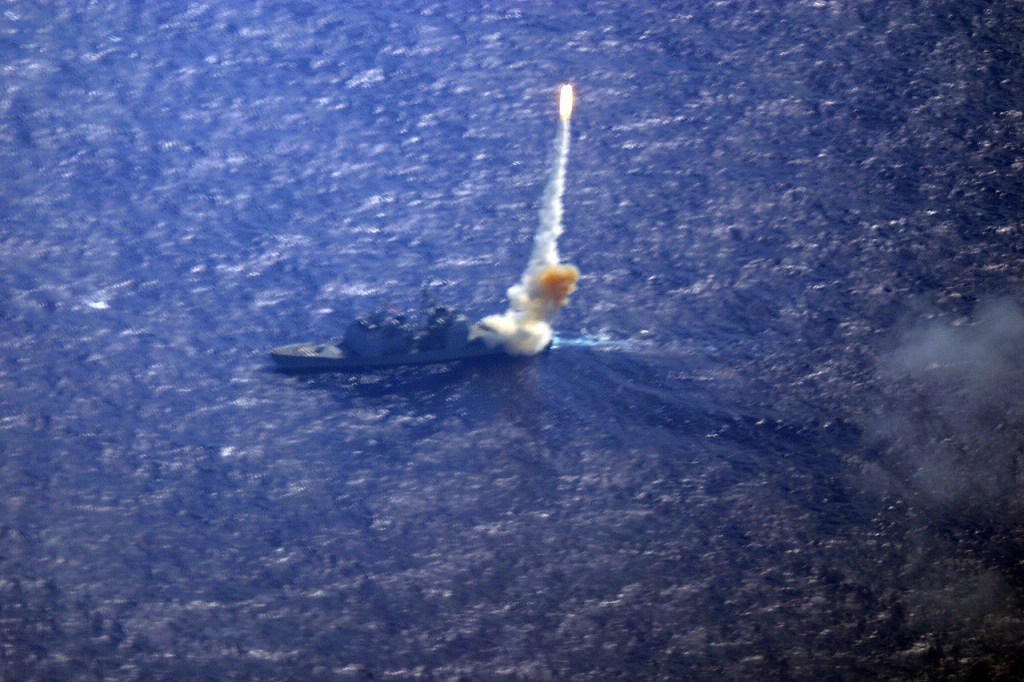
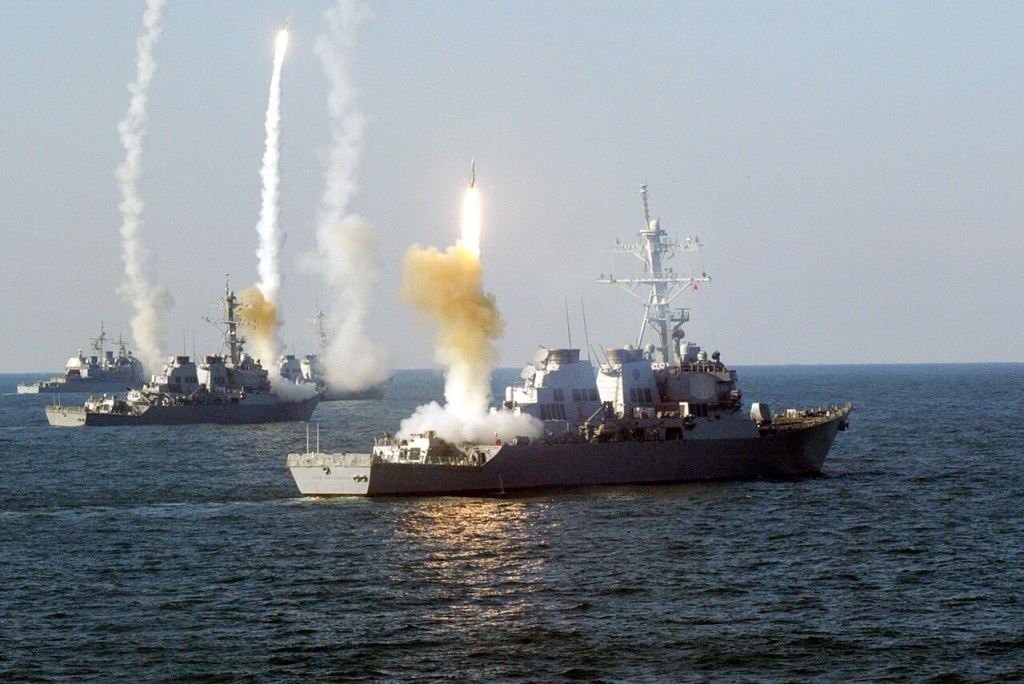
    Video shows the USS Gettysburg (CG-64) and an unidentified Arleigh Burke Guided Missile Destroyer launching a TLAM (Tomahawk Land Attack Cruise Missile) during last nights attack. Right now there are 3 Arleigh Burke’s in the CENTCOM area and it could be any of the 3. The USS Jason Dunham (DDG-109), the USS Stout (DDG-55), and the USS Sullivan (DDG-68).

    The U.S. and UK previously struck Yemen during the last U.S. administration, however this strike was carried out by the U.S. military alone. It is the Trump Administrations first strike against the Houthis. Secretary of State Marco Rubio made sure to point out that these strikes were not one off retaliation strikes as carried out by the last administration.

    We’re not going to have these people controlling which ships can go through and which ones cannot, and so your question is, How long will this go on? It will go on until they no longer have the capacity to do that.

    Secretaey of State Marco Rubio.

    Video shows a strike on a target in Houthi territory.

    Last nights attacks were reported to have struck neighborhoods in Sanaa’s northern Shouab district and at least 4 strikes on the Eastern Geraf neighborhood that holds the Houthi headquarters for its political bureau as well as other military facilities.

    Other strikes were reported in the southwestern Dhamar providence and the capital of the area, also called Dhamar. No specific target is known in that region.

    Irans response to the strikes was a statement from foreign minister, Abbas Araghchi, who posted on Twitter and urged the U.S. tj stop its airstrikes, and said that Washington could not dictate Iran’s foreign policy. An Iranian General, Hossein Salami denied that Iran was backing the rebel group. Iranian weapons shipments have been coming into Yemen for sometime, the Houthis would not survive without financial and military help from Iran.

    After reaching out to The Navy as well as CENTCOM’s press office the only response I received so far was from the navy who referred me to several social media post and directed me to contact CENTCOM, who has yet to respond to my inquiries. This was the response even the larger media company’s were receiving so no surprise there. Mainly I’m interested in post strike assessment as well as what was targeted specifically. I assume missile and drone production and storage but there is really no way to know as the Houthis aren’t saying. When I know more, so will you.

  • US targets Houthi territory in Yemen with wave of airstrikes.

    US targets Houthi territory in Yemen with wave of airstrikes.

    By. Scott Jackson

    March 15, 2025

    The U.S. has launch a wave of airstrikes on the Houthi sites in Yemen with confirmation that at least some of the strikes struck in Sanaa.

    “Our brave Warfighters are right now carrying out aerial attacks on the terrorists’ bases, leaders, and missile defenses to protect American shipping, air, and naval assets, and to restore Navigational Freedom,”

    US President Donald Trump during the strike. He also said,

    “Funded by Iran, the Houthi thugs have fired missiles at US aircraft, and targeted our troops and Allies. ”

    And..

    “No terrorist force will stop American commercial and naval vessels from freely sailing the Waterways of the World.”

    While Houthi attacks in international shipping had stopped since the ceasefire between Israel and Hamas todays attack is in response to a statement put out by the Houthis two days ago saying that any Israeli or U.S. linked ship that came close to Yemen would be attacked in the Red Sea, Gulf of Aden and Bab al-Mandeb Strait. Houthi spokesman Brig. Gen. Yahya Sare’e said on Twitter that the Houthi threat to attack these ships would be in place until Israel resumed Gaza crossings, as well as aid delivery’s into the region.

    Houthi militants had spent over a year, since the Hamas attack on Israel in October 7th, 2023 attacking any ship with (and some without) any link to Israel and the U.S. with several ships being damaged by anti-ship ballistic missile or drone attacks. The U.S., in response, deployed several CSG’s (Carrier Strike Groups) into the region to counter this Houthi threat. US carrier aircraft conducted a number of strikes on Houthi targets in Yemen. Currently the Harry S. Truman is deployed to the area, having resumed her deployment after some repairs from an accident that occurred in the Suez.

    A Houthi anti-ship ballistic missile. The Houthis were the first to fire an ASBM in anger.

    This video shows the strikers launching from the USS Harry S. Truman. A mix of F/A-18 Super Hornets for air cover as well as for the actual strike task. These are accompanied by growlers who will cover all electronic warfare and jamming.

    Cue up “Danger Zone”

    This short video shows the strike on Sanaa. Houthi sources claim 13 killed and another 9 wounded. They also report an additional strike north of Sanaa near the border near Saudi Arabia.

    U.S. President Trump issued a direct warning to Iran for their support to the Houthis, promising to hold them “fully accountable” for the actions of the Houthis, Irans proxy. This comes two weeks after a letter was sent from the U.S. to Iran offering a path to restarting bilateral talks.

  • Navy Growler crashes over San Diego harbor. 

    Navy Growler crashes over San Diego harbor. 

    By: Scott Jackson

    February 12,2025
    EA-18G Growler.

    Today, at around 10:15 PDT A US navy Boeing EA-18G Growler Electronic Attack Jet assigned to Electronic Attack Squadron (VAQ) 135 crashed while taking off at NAS (Navel Air Station) North Island. The pilot and copilot are both unharmed as they ejected into the San Diego harbor and were picked up. The crew were originally picked up by a sport fishing charter boat the M/V Marietta, before being transferred to a Customs and border patrol craft according to radio calls made in the area that were recorded. The customs patrol boat  transported them back to shore where they are now receiving medical attention at UC San Diego Health. 

    With the crew being recovered emergency crews will respond to the wreckage to investigate as well as clean up and debris and fuel from the crash. According to radio calls from the area there is a large amount of fuel and the navy has dispatched response teams.

    The cause of the crash is under investigation. 

    CCTV Video shows the EA-18G Growler coming in down in a quick descent. Essentially falling out of the sky. The camera barely catches it.

    The aircraft had traveled to San Diego for ongoing exercises, leaving its home airbase at NAS Whidbey Island in Washington State. It’s unknown if the aircraft was taking part in the Bamboo Eagle 25-1 exercise currently taking place in the pacific. 

    NAS Whidbey Island

    Bamboo Eagle is a massive event focused on a possible high stakes conflict in the Pacific Ocean with China. Being led by the U.S. Air Force Warfare Center in Nellis it has brought dozens of not hundreds of military aircraft to the region for this combined arms operation with the U.S. and several key allies. 

    Video taken from twitter user San Diego web cams shows footage from their livestream as well as the radio calls that happens after the crash.

    The EA-18G Growler is the U.S. Navy’s Electronic Attack aircraft that began to replace the EA-6B Prowler around the late 2010s. Based on the airframe of the F/A-18(E/F) It has since then become an integral part of the carrier air wing. The Growler swapped out the Super hornets main cannon with a strong AN/APG-79 AESA Radar. The plane has 9 weapons hard points but will almost always have 5 of those hard points taken up by ALQ-99 Tactical Jamming pods. The hard points that are left open are usually equipped with either AIM-120 AMRAAM for air threats or more likely AGM-88 HARM Anti-Radiation Missile that track enemy radar signals. The two wingtip rails that would usually hold AIM-9X sidewinders was replaced for AN/ALQ-218 passive radar warning receivers to detect enemy radar.

    While mostly known for jamming enemy radar enemy communication can also be jammed by the Growlers suite of comms jamming systems.

    Australian EA-18G Growler

    While the growler with its jamming pods can defeat all current air and surface threats it comes up against its future is always in question as new and more advanced radars are developed and fielded and it’s jamming pods become out of date. The airframe is only as good as its equipment that needs to be updated in the near future.


    Author note.

    We here at GCR respect and appreciate any aircraft and crew capable of the roles of SEAD and DEAD. Suppression and destruction of enemy air defense is one of the most important roles in the always critical task of establishing aerial supremacy. The Growler holds a special place in my heart as did the Prowler that came before. Hats off to all of today and yesterday’s Electronic Attack Planes as well as the F-4 that carried out the insane Wild Weasel missions.

    If you are somebody with knowledge of this story contact Scott at GCR. My contact info is on the Website and I would love to talk on or off the record regarding this story.

  • Daily Briefing

    February 5th,2025

    By Scott Jackson

    Arleigh Burke-Class Guided-Missile Destroyer, USS Preble (DDG-88) utilizing its High Energy Laser with Integrated Optical-Dazzler and Surveillance (HELIOS) Weapons System. 

    USS Preble (DDG-88) firing its HELIOS system.

    Helios is apart of a larger program aimed at the development of Solid State Lasers (SSL). Some of the other lasers being developed include the 

    -Ruggedized High Energy Laser (RHEL);

    -Optical Dazzling Interdictor, Navy (ODIN); -Solid State Laser Technology Maturation (SSL-TM) 

    -High Energy Laser Counter-ASCM Program (HELCA), for shooting down anti-ship cruise missiles. 

    All of these I’ve listed are in varying states of development and wont be fielded until a future date however HELIOS has been in a testing phase since 2021 and now has been fully integrated into the combat systems of at least the USS Preble (DDG-88) where it will be used to counter drones, small boat threats and missiles. 

    The main advantage of the direct energy weapons is the price. Lasers cost about $1 to fire compared to some missiles getting into the tens of millions of dollars. 


    Russias losses in Ukraine for the month of January reached almost 50,000, the second highest since the early days of the war.

    According to the General Staff of the Armed Forces of Ukraine in the month of January 2025, the Russian armed forces lost 48,240 soldiers and 573 Russian armored vehicles and 230 tanks. In the Russian order of battle this is roughly equivalent to 3 motorized rifle divisions. In that time the Russian army has managed to take roughly 500 sq. kilometers (193 sq miles) in the Kursk Region as well as Ukraine. These numbers are almost identically to December of 2024 numbers except they took 100km more territory.

    The situation in Ukraine remains much as it has the past couple months. Ukrainian forces continues to reinforce defensive points while Russia has kept its army’s pushing into enemy territory. Ukrainian forces have stepped up the intensity of attacks on Russian oil and gas infrastructure, with the Ukrainian security services (USB) targeting the regions of Volgograd and Astrakhan.

    Astrakhan Gas Processing Plant

    Future daily briefs will have more Ukraine reporting as I reconnect with my sources and find new ones.


    Iraqi airstrike kills 5 ISIS operatives in Iraq.

    On January 31, Iraqi Security Forces (ISF), supported by U.S. Central Command (CENTCOM) forces conducted an airstrike near Kirkuk, Iraq. The attack killed 5 ISIS fighters according to CENTCOM.

    “An initial post-strike clearance found multiple explosive suicide belts and other materials,”

    CENTCOM confirmed in a statement, underscoring the strike’s role in weakening the group’s operational capabilities.

    “ISIS remains a threat to the region and beyond, and CENTCOM, along with partners and allies, will continue to aggressively pursue these terrorists to protect the homeland,” 

    This operation was backed by Coalition Joint Task Force – Operation Inherent Resolve (CTF-OIR), which provided intelligence and technical support for the strike.

    U.S. forces have recently stepped up strikes against ISIS targets since the fall of the Assad Regime in Syria. With the state being weakened it was a possibility that Daesh could attempt a comeback.

    On the same note….

    US Africa Command carries out airstrikes on ISIS in Somalia.

    On February 1st, 2025, US president Donald Trump, in his first major U.S. Strike overseas since he took office, ordered US forces to carry out airstrikes on ISIS targets in Northern Somalia in the Golis Mountains. Defense Secretary Pete Hegseth said that “multiple operatives” were killed in the strike.

    F/A-18 Super Hornet

    The strikes were carried out by planes from the navy and Air Force. FA-18 Super Hornets took part from the USS Harry S. Truman currently stationed in the Red Sea.

    While the main threat in the area has been Al-Shabab, ISIL has been involved in attacks in Southern and Central Somalia. Even while facing the threat of US bombings as well as the policing actions of the Somolian Security Forces, and a fierce rivalry with Al-Shabob ISIS (ISIL) continues to grow and gain a strong foundation in the country.

  •  White House announces the names of two new Ford Class aircraft carrier. 

    The White House on Monday annonced that it would be naming two of its future planned Gerald R. Ford-class nuclear powered aircraft carriers after former presidents. The USS William J. Clinton and USS George W. Bush, after the 42nd and 43rd U.S. presidents.

    “Their legacies will endure through these aircraft carriers, which serve as formidable platforms dedicated to safeguarding our national security and strengthening our resolve to protect this nation against any who would threaten our freedoms and way of life,“ said Secretary of the Navy Carlos Del Toro. 

    These ships will be the 5th and 6th of the Ford-class. As of writing this only one of the class exists which is the lead ship in the series USS Gerald R. Ford. Ford was named after the 38th president of the United States, who served on the light aircraft carrier Monterey in WW2 in the Pacific. The Ford-Class carrier to this day remains the largest carrier/warship ever created. 


    Evolution of Power : Ford-Class carrier upgrades and capabilities.

    USS Gerald R. Ford departs Navel Station Norfolk for its first deployment.
    Photo by Petty Officer First Class William Spears.

    What makes the Ford-class Special? 

    The Ford-class was created to offer a number of improvements over the Nimitz-class carrier which had been the standard for 40 years and is now being phased out, replaced by the Ford-class.What improvements make the Ford-class so special? Well let’s talk about it. Most of this info comes from testing on the only Current Ford class in use, the USS Gerald R. Ford (CVN 78)

    Cmdr. Robert Kurrle, the commanding officer of the “Golden Warriors” of Strike Fighter Squadron (VFA) 87, conducts his final carrier landing on the first-in-class aircraft carrier USS Gerald R. Ford’s (CVN 78) flight deck. Photo by Petty Officer 2nd Class Zackery Guth.

    Improved aircraft launch and recovery systems. Specifically the EMALS or Electromagnetic Aircraft Launch System replace the steam powered catapults used in the past giving fighter pilots a smoother takeoff with less maintenance. On the landing side we have the AAG or Advanced Arresting Gear which in testing so far with the Gerald R Ford has shown an increased smoothness with landing as well as the capability to catch heavier aircraft and UAVs (more in those in a bit).

    Island of USS Gerald R. Ford (CVN 78). You can see its radar here. Unknown photograph.

    To help with protecting the airspace around the carrier and its strike group the Ford Class Carriers all for the most part come equipped with the AN/SPY-/6(V)4 radar. SPY-6 for short. While the USS Gerald R. Ford has an older model and will be upgraded the future ships in the class will receive the upgraded SPY-6. This radar is one of the strongest parts of the ship giving the carrier the ability to defend against multiple threats from 360 degrees at the same time, including Hypersonic, Cruise, and ballistic missiles. It’s also highly resistant to enemy jamming efforts. The data collected can all be shared between the battle group and aircraft like the F-35 and EC-2 Hawkeye, further strengthen the groups defenses and offensive capabilities during battle. Info collected from the carrier battle groups radar and other sensors can be filtered through several different systems and processed and sent to whoever needs the info at the time. For example every CSG (carrier strike group) is going to have an Air Warfare Commander that will usually be the captain of an Aegis equipped Ticonderoga-Class Guided Missile Cruiser. His teams mission is obvious, to protect the Strike group from all manned aerial units and missiles and is one of the most important jobs in the CSG. The information taken from the carriers Radar on the Ford-class carriers can be transmitted instantly to the CIC (Combat Information Center)aboard the designated Air Warfare cruiser where the commander and his team can quickly make decisions based on that data to protect the CSG.

    Combat Information Center on the Gerald R. Ford

    I mentioned above that data could be shared between the CSG and I’d like to highlight this for a moment because I think it’s important. These systems are used throughout the navy. CEC or Cooperative Engagement Capability is a network of sensors and fire control systems all working together towards a complete battlefield picture for all aircraft and surface ships. Think about a computer network. The computers can all transmit data to one another through a high speed, encrypted, wireless connection allowing all these systems to operate together towards a unified goal. 

    A littoral battle underway as multiple hostile and friendly targets need to be identified and tracked.

    This would include systems like Aegis. Aegis is a series of radar,computers and different weapons systems that all work together be an effective missile defense system. While the carrier itself is not technically considered aegis its radar can be used to in the process to help shooting down threats. The last system I’ll mention is Link 16. Link 16 is a tactical data exchange network that allows ships and aircraft and ground forces to share a tactical picture in near real time. It supports text messages,imagery, voice through digital channel frequencies that operate using radio waves.  Link 16 is being used throughout NATO for the different nations to all be able to share their view of the battlefield.this system allows,for example- the stealthy F-35C lightning with its upgraded radar to communicate with the E2-D Advanced Hawkeye who can relay the signal to the 

    F/A-18 (and surface ships) allowing the Lightnings to act as a sort forward observer, tracking enemy’s and preselecting targets. 

    Planned air wing of the USS John F. Kennedy, The next Ford Class Carrier.

    Moving on. Let’s look at the main role of the carrier which is power projection through its air power. Its hanger capacity has been extended allowing it to support up to 90 aircraft of the current carrier air wing makeup. The future will likely see the navy’s workhorse F/A- 18 Super Hornet all replaced by F-35c Lightnings but for now it appears that they are running a mixture of the two mostly as a way to keep cost down if I had to guess. 

    Other aircraft operating from the Ford Class will be fairly standard except for a few instances. E/A-18 Growlers will remain a huge part of the carrier air wing being the electronic Warfare and SEAD/DEAD (Suppression/Destruction Enemy Air Defense) of Master that it is. The command and control E-2D Advanced Hawkeyes are the shiny big brother to the Hawkeye of olden days. Northrop Grumman took an “if it isn’t broke don’t fix it” approach to the beefed up Hawkeyes and instead of changing anything they just made it better in almost every way. The same is true for the SH-60 Seahawks which will cover helicopter operations. 

    F/A-18 Super hornet. No introduction needed. These are the ground strikers and air to air defenders of the fleet.
    E/A-18 Growler. The SEAD/DEAD powerhouse and the reason why the enemy’s never see what hit them.
    E-2D Advanced Hawkeye. Airborne radar as well as Command and Control. These guys are the Taskmasters. They make sure everybody is in the right place doing what they need to do.

    There is one other addition to be added to all Ford class carriers. The addition of an unmanned warfare center to operate any and all unmanned drones deployed by the CSG. The one major planned unmanned system is the MQ-25 Stingray. The Stingray is still in development but is expected to make its way to the fleet in the next couple years. The Stingray will handle all the carrier aerial refueling needs. 

    MQ-25 Stingray aerial refueling isn’t sexy, until you really need gas.

    All in all the Ford Class carriers will provide a net positive in war-fighting ability to the US  navy in a time when politics and budget constraints in the acquisition department have yielded several platforms that failed to meet expectations. The next Ford Class Carrier is set to be delivered to the Navy this year as long as there are no delays. 

  • US Department of Defense reveals the amount of munitions expended while engaging the Houthis in the Red Sea. 

    US Department of Defense reveals the amount of munitions expended while engaging the Houthis in the Red Sea. 

    The US military has been engaged in defensive operations against the Yemeni Houthis for the past 15 months in the waters of the Red Sea and in the Arabian Sea as well as the sky’s above Yemen. Several different US carrier strike groups have been deployed into the area to protect the billions of dollars of international commerce that moves through the Red Sea daily heading to and from the Suez Canal. The Houthis have targeted any ship they believe is connected in any way to America or Israel as a way to show support for Palestinian terror group Hamas and their war with Israel in Gaza. 

    The Head of Naval Surface Forces Vice Admiral Brendan McLane revealed at a Surface Navy Association conference that was attended by journalists from The War Zone( TWZ is great, I always recommend them when they come up) just how many munitions had been expended in the operation. Statements made by the Vice Admiral also give us a more detailed look at how the operation has been going and what US forces as well as their European allies have been dealing with. US CENTCOM which is the United States military command over The Middle East  region regularly puts out reports and social media post however they can sometimes be sparse with the details. 

    The U.S. Navy Surface Fleet has expended 400 individual munitions against the Iranian backed Houthis.

    The Vice Admiral also gave an example of the current state of modern surface warfare by talking about a recent engagement that the sailers aboard the Arleigh Burke class destroyer USS Spruance (DDG 111).

    “They were in a fight where they shot down 3 anti-ship ballistic missiles(ASBM), 3 anti-ship cruise missile (ASCM) and 7 one-way [unmanned aerial vehicles, or UAVs],” McLane said. “So that’s how it kind of rolls up.”

    USS Spruance (DDG 111) after its return to its homeport, Naval Base San Diego, Cali

    I’d like to break down the specific munitions, what they are used for, and maybe most importantly- the cost to the American taxpayers. 

    USS Chung-Hoon (DDG 93) fires an SM-2 missile.

    SM-2 missiles (RIM-66)

    120 expended. This missile is the workhorse of US navy air defense, being used to take out incoming anti ship missiles as well as other 

    missiles and incoming enemy jet fighters.. High speed-highly maneuverable and considered one of the best in the world at what it does. The Sm-2 has a reported range of 90 nautical miles and can reach an altitude of 65,000 ft. A cornerstone of the fleets layered air defense systems. 

    SM-2

    Cost vary on specific missile block but these come in at roughly $2 million USD per. 

    The U.S. is reported to have around 12,000 of these in its stocks.

    US Aegis Destroyer intercepts Medium-Range Ballistic Missile with new SM-6 SWUP Missile.

    SM-6 missiles (RIM-174)

    80 expended

    This is a newer addition to the fleet and the navy has a more limited stock of these missile with only 500 being reported to have been delivered according to the Raytheon website. 

    Coming equipped with the active radar seeker found in the Air-to-air AIM-120C AMRAAM, This missile is capable of a wide range of task being capable of defensive anti air against missile (including ballistic missile in their final terminal phase) as well as manned and unmanned air units. Its high speed also makes it a useful anti surface weapons although it’s high cost makes other weapons better choices. The thought behind this missile was warship today have limited space and a weapon that can effectively do everything is a benefit.  The explosive warhead as opposed to a hit-to-kill style missile makes this missile capable of potentially defeating the Chinese DF-21D and DF-25B anti-ship ballistic missiles. 

    SM-6 missile profile.

    Cost average around $3.9 million per. 

    A combined 20 expended from the 

    Sea sparrow and the SM-3. 

    Sea Sparrow launch

    Sea Sparrow ESSM

    Medium-range, semi-active homing missile that makes flight corrections via radar and midcourse data uplinks. The missile provides reliable ship self-defense capability against agile, high-speed, low-altitude anti-ship cruise missiles (ASCMs), low velocity air threats (LVATs), such as helicopters, and high-speed, maneuverable surface threats

    Sea Sparrow Profile

     $787K – $972K depending on configuration

    SM-3 launched from the USS McCampbell (DDG 85) intercepts ballistic missile .

    SM-3 (RIM-161)

    The SM-3 is the main ballistic missile defense of the fleet. It uses its powerful kinetic energy to utilize a hit-to-kill method of attack. It has a lower production rate than everything else on the list which also puts a heavy cost on these missile, especially if you have to fire more than one at a time. 

    SM-3 missile profile

    Anywhere from $10 million to $30 million (this price likely to come down some as missile production is ramped up as announced earlier today. 

    While the expenditure of these weapons is something to be concerned about it only highlights the logistical issues that the US would have in a near peer, great power conflict when the amount of munitions expended in the Red Sea over the past year would equal only several days of fighting in say the pacific against China. Addressing these procurement and cost issues is paramount if the US is to remain a dominant force on the world’s stage.