Tag: US Navy

  • US Navy P-8 Poseidon photographed with something new.

    By. Scott Jackson


    09/15/2025

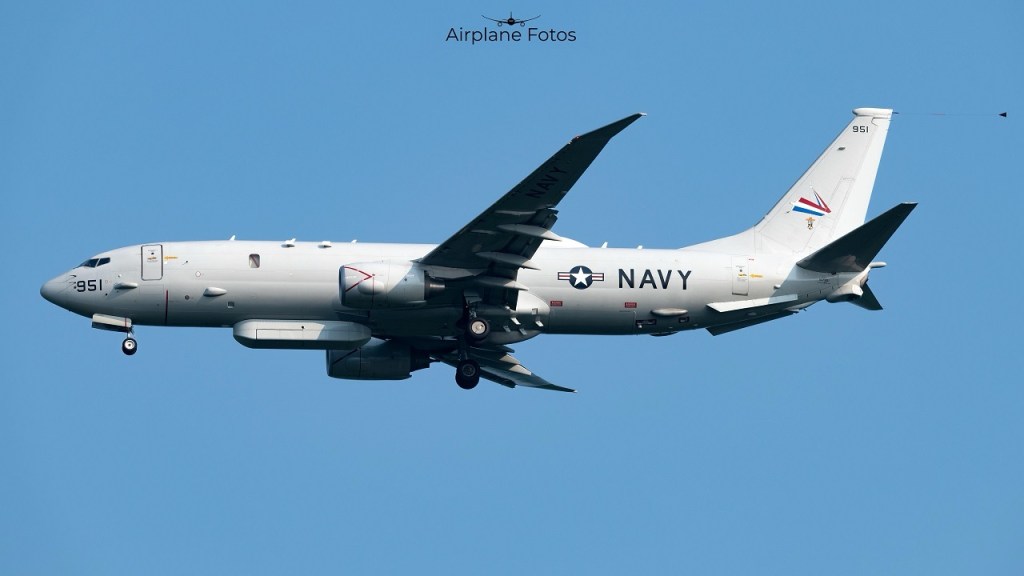
    The U.S. Navy Boeing P-8 Poseidon has been in service with the United States Navy since 2012 when it replaced the fleets aging and legendary P-3 Orions. The P-8 is a heavily modified version of a Boeing 737-800 passenger airliner. Swapping out the passengers and the passenger comforts with the equipment needed to preform the arduous and often overlooked task of Maritime Patrol and Anti- Submarine Warfare (ASW).

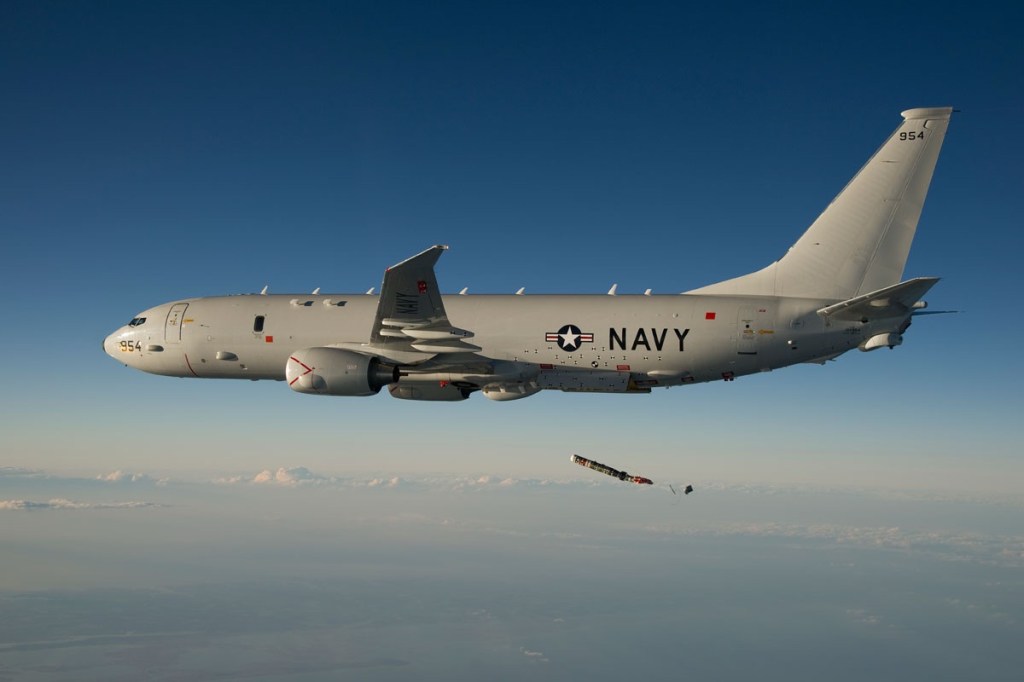
    United States Navy P-8A Poseidon dropping one of its Mark 54 torpedo.

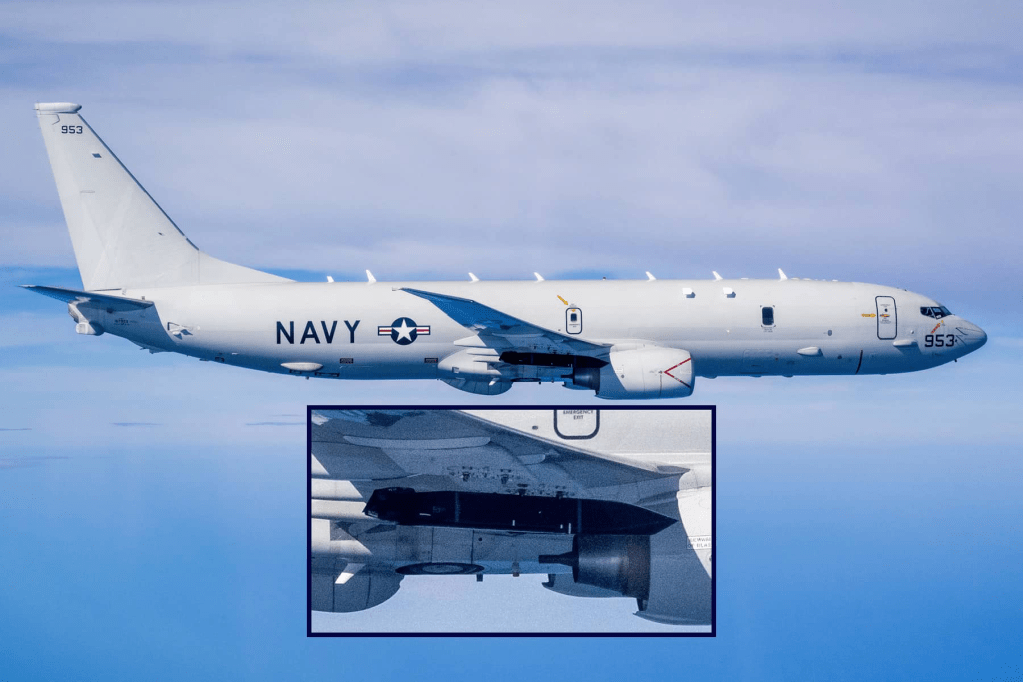
    Featuring advanced sensors for tracking surface ships and submarines, including air-dropped sonar bouys and its AN/APY-10 surface search radar. In addition to detection and tracking systems, the P-8 can carry several weapons. Mostly the MK-54 airdropped torpedoes for ASW work but also the AGM-84 Harpoon Anti-Ship missile. That was until the navy released the photo below showing something new. But back to that in a minute.

    U.S. navy P-8 Poseidon shown with the AGM-158 LRASM.
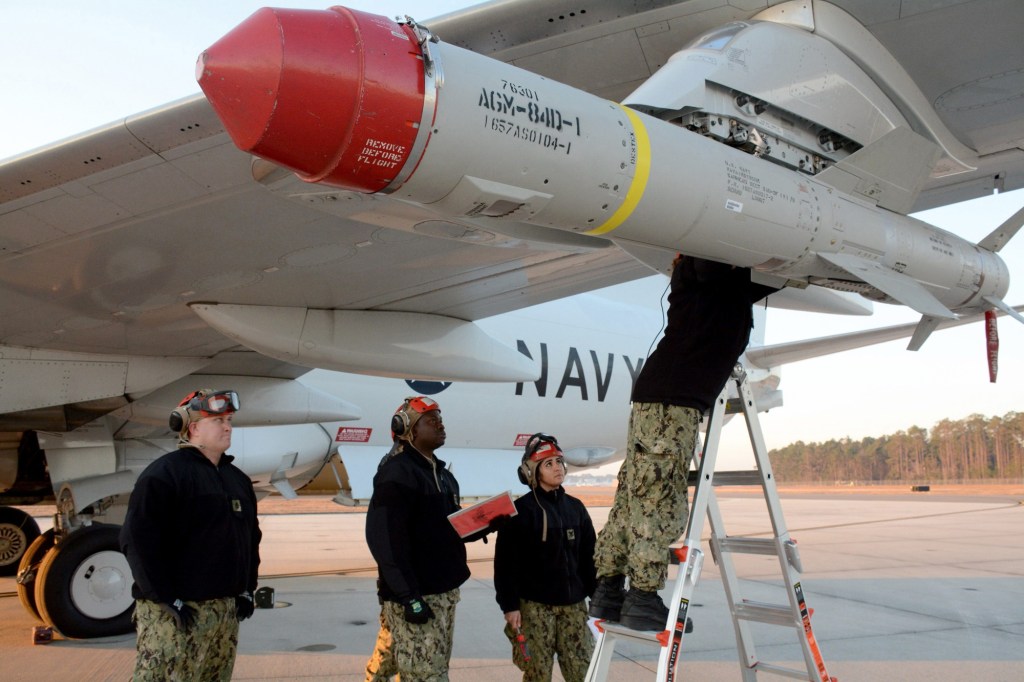
    United States Navy P-8A Poseidon with a AGM-84D-1 Harpoon missile. The 84D-1 is an upgraded an extended range version of the Harpoon.

    While the Harpoon’s almost 5 decades of service and extensive use in combat shows it is still a very capable weapon, it is outmatched in range by the air defense systems of some of the U.S. adversaries, especially the older models which are mostly if not all being phased out in favor of the II and II +.

    The original Harpoon Block 1 missile has a range of around 80-100 miles.

    The Block II has less range improvements at around 81 miles but was made me for combat around littoral waters so not as much range was needed.

    Block II+ER, the newest generation of the Harpoon in use has a range of around 190-200 miles.

    The Block II and Block II+ER have advanced capabilities added in like improved GPS guidance, and protection from Electronic interference. It’s possible that the Harpoon will still be used in some cases where the range and stealth of the LRASM isn’t needed.

    While the harpoon isnt the United States only anti-ship missile it is the one that was specifically designed for that role. Some other choices include the AGM-84H/K SLAM ER which is kind of a sibling offshoot of the Harpoon and is an air launched land attack missile that can be used to target maritime targets. It has a range of 170 miles.

    Enter the Lockheed Martin’s AGM-158C LRASM.

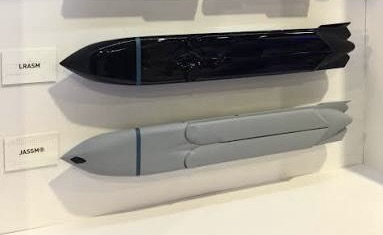
    A display showing a LRASM and a JASSM

    The AGM-158C is a derivative of the AGM-158B JASSM ER (Joint Air-To-Surface Standoff Missile Extended Range), a low detection air launched cruise missile designed by Lockheed Martin. The JASSM first entered combat striking Syrian government alleged chemical weapons targets in 2018 and more recently striking targets in Yemen.

    The AGM-158C LRASM is a stealth launched anti-ship cruise missile. This integration has been planned for several years now and is giving the P-8 an effective surface weapon that better keeps the aircraft and crew out of harms way. The LRASM can also be used on the B-1 Bomber, the Navy F/A-18’s, and on any non internal pylons on the F-35.

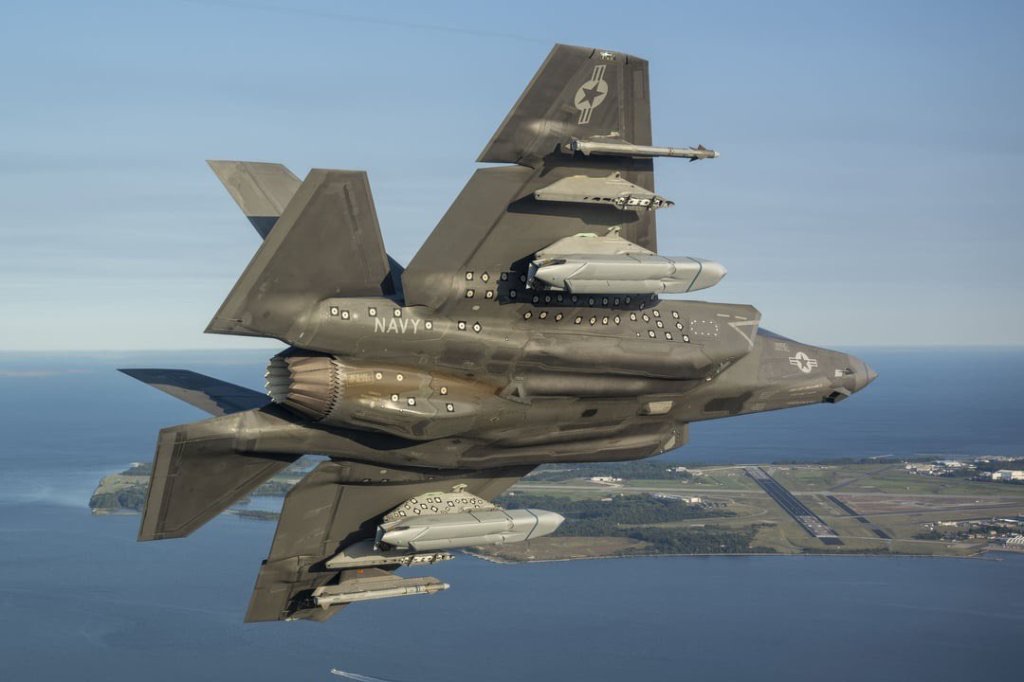
    F-35 test flight with the LRASM. Note, Neither LRASM Or JASSM can be carried internally by the F-35, it has to go on an outside pylon, which takes away some of the stealth of the jet.
    The Rockwell B-1 Lancer carries out an integrated test with the LRASM. Capable of carrying 24 internally, an announced pylon could add 6 more externally.

    The LRASM has an incredibly advanced targeting and navigations suite and even more so for planned upgrades for this missile. The range of the LRASM depends on the block number. These numbers are also mostly estimates and going off of what public data is available, which is limited. The C-1 variant is listed as having a range of greater than around 200 nautical miles, the C-2 is said to be in the +500 miles range and the new C-3 they are working on is rumored to be in the 1000 mile range but is still in development. The C-3 of the future is supposed to be being developed with Artificial Intelligence integration which will allow data links between the missiles and allow them, according to John Keller from Military Aerospace Electronic, `advanced autonomous mission planning, target discrimination, and attack coordination, adjust flight paths based on real-time data, identify and track moving targets, and adapt to changing conditions like jamming and interference.

    Adding this capability to the P-8 allows them to not only detect the enemy but to also engage them with the safety that range gives you.

  • U.S. Navy increases presence in Latin/South American waters in effort to fight drug trafficking coming from Venezuela.

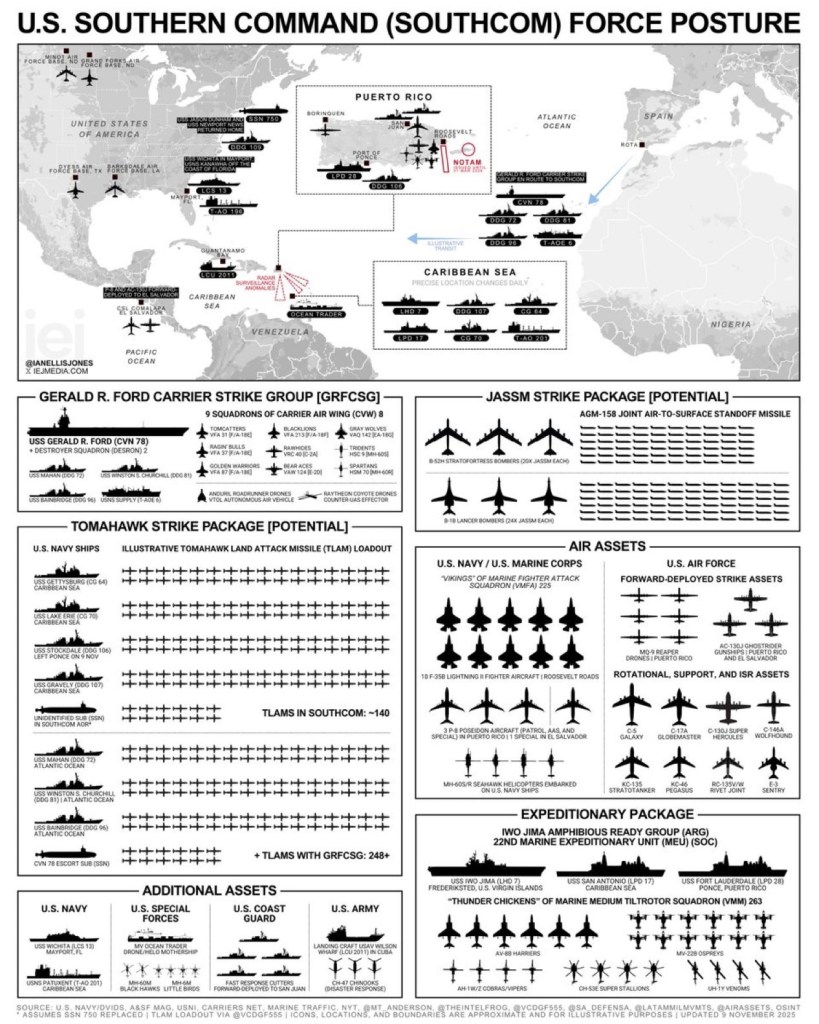
    Map put together by Ian Ellis Jones over on Twitter shows the ships currently moving into the South American region. Some of the locations are true, as of when the image was posted, others are approximate.

    By. Scott Jackson


    08/30/2025

    A look at the recent increase in U.S. forces already in or heading to the Caribbean.

    The U.S. is increasing its presence in the region in an effort, they say, to deal with drug trafficking. This has been a big issue for Washington and is currently causing some tension as the White House called Venezuelan leader Maduro a “Narco-Terrorist” and have made him the main focus of these efforts. Is this a regular drug operation, or something more? For now nobody’s sure.

    So far eight ships and a submarine have been deployed to the 4th fleet/Southern Command [SOCOM] AOR. Making this the largest confrontation between Venezuela and the U.S. in years.

    For Venezuelan President Nicolas Maduro, this attention only strengthens his goverment hold on the country. The U.S. feels Maduro’s election back in 2013 and 2024 was due to election interference and say his victory was only assured because of ballot stuffing and other types of election fraud. Currently Washington has a $50 million dollar bounty for his arrest on charges of drug trafficking. Maduro’s response to the threat of the U.S. warships steaming towards southern waters was to declare that Venezuela would respond with the activation of 4.5 million militiamen.

    “This week, I will activate a special plan with more than 4.5 million militiamen to ensure coverage of the entire national territory — militias that are prepared, activated and armed,” Maduro announced on state television.

    Most believe that this move by Washington is aimed more at a show of force over actual U.S. intervention in the region, but in case it’s not just a well armed navel stroll around the block let’s go over some things.

    Who is Nicolás Maduro?

    Nicolás Maduro speaking to his supporters about the American forces heading towards Venezuela.

    Maduro was born in 1962 and before he was a president he made his money as a bus driver for a long time before rising to become a trade union leader. In 2003 he was elected to the National Assembly and frim there appointed to a number of positions under the then president Hugo Chávez. He served as the president of the National Assembly in 2005-06, and as Minister of Foreign Affairs from 2006-2012. From then on he was Vice President under Hugo Chávez until his death in 2013. After Chávez’s death Maduro assumed the role of president and has stayed in the role ever since. Since then, Maduro has managed to stay in office, consolidating power along the way. The elections the country has run show Maduro winning, however claims of election rigging have run rampant.

    Since Maduro rise to power Venezuela has been forced to endure widespread authoritarian rule marked by rigged elections, human rights abuse and economic hardship. Maduro’s goverment can be characterized by its mass allegations of corruption, the suppression of critical information and poor leadership. Widespread shortages have plagued the country and inflation of its currency, the Bolivar, has skyrocketed, tripling in the last several years. For a country as resource rich as Venezuela is, having one of the largest oil deposits in the world, these problems are inflicted mostly by the actions and policy of their government.

    Demonstrators clash with members of Venezuelan National Guard during a rally demanding a referendum to remove Venezuela’s President Nicolas Maduro in San Cristobal, Venezuela October 26, 2016. Photo: Carlos Eduardo

    What U.S. assets are being sent to Venezuela?

    For now it seems that the bulk of the forces being mobilized for this operation -whatever it ultimately ends up lmbeing, are from the USS Navy with some help from the Air Force.

    Earlier today radio calls from a USAF RC-135 ‘Rivet Joint’ were recorded as they communicated with the Mcdall tower out in Tampa Fl. The RC-135 was refueling “somewhere over the Caribbean”. This means that the Air Force is doing ELINT missions and gathering data from the region. The Rivet Joint is capable of picking up radar signals from hundreds of miles away as well as other types of electronic surveillance and reconnaissance.

    We also have reports of Navy P-8 Poseidon’s out of San Juan patrolling around the Caribbean several days ago. These planes are mostly used for anti-submarine work but can still be used as spotters for surface ships as well.

    Venezuela has one submarine that might or might not be operational so I don’t see the ASW assets getting all that much use here.

    Ticonderoga-Class launching one of its standard missiles.

    On to the ships. So far 9 ships have been ordered to the area. The most recent of the bunch is the Ticonderoga-Class guided missile cruiser USS Lake Erie (CG-70) and the Los Angeles-Class fast attack submarine USS Newport News (SSN-750).

    Los Angeles class submarine operating at periscope depth.

    Three of the ships are Arleigh Burke-Class guided missile destroyers. USS Gravley (DDG-107), USS Jason Dunham (DDG-109), and USS Sampson (DDG-102). These ships along with the Lake Erie provide the bulk of the firepower. All of the ships listed so far, including the submarine are capable and likely carrying a number of Tomahawk cruise missiles, among others.

    Arleigh burke-Class destroyers intercepting targets during an exercise

    Last but not least we have the USS Minneapolis-Saint Paul (LCS-21) a Freedom-Class littoral combat ship. These ships were, according to the navy “envisioned to be a networked, agile, stealthy surface combatant capable of defeating anti-access  and asymmetrical threats in the littorals.” Littorals refers to an area of the sea close to shore. Basically these ships are comparable to what other navies call corvettes.

    Each of the freedom class comes with a hanger for the SH-60 or MH-60 Seahawk, as well as a ramp in the stern for launching smaller boats. These ships are capable of transporting and launching a small assault force with troops and fighting vehicles.

    Image shows the USS Minneapolis-Saint Paul.

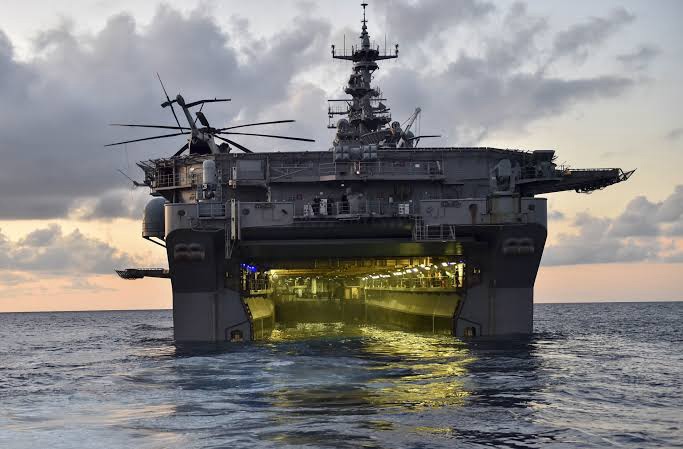
    Next is the USS Iwo Jima (LHD-7) classified as a Wasp-Class amphibious assault ship and landing helicopter dock.

    USS Iwo Jima (LHD-7) in the Atlantic sometime in 2008.

    This ship carries various aircraft- mostly helicopters, and a lot of Marines as well as their equipment. This ship is essentially a floating marine base of operations capable of transporting them and their equipment into hostile territory and supporting them the AV-8B Harriers until 2027 when most of the assault ships are switching to F-35B’s. I don’t know if the Iwo Jima currently employs harriers or The F-35 currently.

    USS Iwo Jima hiding in the fog.
    Marine Vertical take off F-35B coming in for a landing.

    Moving on to the last two ships on our list we have the USS San Antonio (LPD-17) and the USS Fort Lauderdale (LPD-28) both of which are San Antonio-class amphibious transport dock’s. These ships are similar to the Wasp-class in that they are filled with marines and can be used as a launching point for their operations. They have a hanger for helicopters (or Ospreys) but lack the topside deck for planes.

    Cut-away view of the San Antonio class.
    Artist concept of the San Antonio class.

    These ships are designed as survivable and stealthy transports for ground forces. As shown in the image above they are also designed around the idea of launching the marines hovercraft to quickly transport massive amounts of marines and their equipment to the shores.

  • Fire aboard USS New Orleans (LPD-18) while at anchor in Okinawa Japan

    By. Scott Jackson


    08/21/2025

    A fire aboard the San Antonio-class amphibious transport ship USS New Orleans (LPD-18) has, after 12 hours, been extinguished according to the U.S. Navy 7th fleet. The ship was anchored in the harbor at Okinawa at the time of the fire and it at least appears that the marines were not currently on the ship, however 2 sailers received minor injuries during the incident and were treated on board.

    Video during the efforts to control the fire as tugboats cool down the metal of the hull with water.

    The crew fighting the fire was assisted by sailors from another San Antonio-class amphibious transport ship, USS San Diego (LPD-17) which was moored at the White Beach Navel Facility. The crew was also assisted by the Japanese Coast Guard and military.

    At this time the cause of the fire is still under investigation. The ship remains in Nakagusuku bay.

    The New Orleans is apart of the Navy’s forward-deployed amphibious forces based in Japan.

    The fire began at 4:00 PM on August 20th. Judging by where the tugs are spraying it appears the fire started near the living spaces and stores of the ship.

    The navy overhauled how it fights fires after a 2020 fire on the big deck amphibious warship, USS Bonhomme Richard (LHD-6) burned for four days and resulted in the total loss of the ship.

  • US Navy F-35C Crashes near Naval Air Station in California.

    By. Scott Jackson


    07/31/2025

    Early reports are coming out about a US Navy F-35C that has crashed in the area. The jet was out of Naval Air Station Lemoore in Central California and was apart of VFA-125, The ‘Rough Riders’. VFA-125 is a navy training squadron teaching pilots how to fly the F-35.

    Report from California Highway Patrol indicating the jet thag crashed was an F-35.

    Details are still coming in but CBS news reports that the crash happened sometimes around 6:30 PM in a small field near the NAS. Fire fighters announced later that 10 acres of grass had been burned because of a small fire caused by the crash.

    The area being reported as the site of the crash.

    We have no info on what caused the accident but we do know that the pilot safely ejected. The Navy will launch its investigation as soon as possible.

    Analysis

    The F-35 with all of its stealth and technical advancements is certainly a wonder of modern engineering. It’s basically a supercomputer that flys. That being said, it’s also highly distracting to fly, according to current and former pilots with experience with the airframe. The F-35 is capable of presenting a large amount of data to its operator. Pilots have reported that the overload of data can cause some distraction and a feeling of being overwhelmed. This is a completely personal opinion, but I’ve long pondered how much the F-35 would have benefited from being a two-seater and implementing a Weapons/Systems Officer to help with the workload.

    The multi-mission and networked super speed information transferring capabilities of the jet gives you so much data, that pilots can become distracted trying to take it all in. We don’t know that this is what’s happened, it probably wasn’t, but I wanted to mention it. More than that, the jet has also had mechanical and software problems that have contributed to issues in the past. I won’t try to say for sure what happened but keep it mind that, sometimes, student pilots crash airplanes. We will know more after the investigation.

    F-35 Cockpit

    Update

    “NAS Lemoore can confirm an aviation incident on the Operations side of the installation. At 1830, an F-35C attached to the VFA-125 “Rough Raiders” went
    down not far from NAS Lemoore. NAS Lemoore can confirm the pilot successfully ejected and is safe. There are no additional affected personnel.
    The cause of the incident is under investigation.”


    I know I’ve been radio silent  for a little while now. I’ve been filling for my boss at work as she recovers from a knee surgery so I haven’t had a lot of time during the day to write as I usually would.  But things are clearing up and you’ll be hearing more from me. 

    -Scott
  • F-35C crashes from Naval air station in California

    By. Scott Jackson


    07/31/2025

    Early reports are coming out about a US Navy F-35C that has crashed in the area. The jet was out of Naval Air Station Lemoore in Central California and was apart of VFA-125, The ‘Rough Riders’. VFA-125 is a training squadron.

    Details are still coming in but CBS news reports that the crash happened sometimes around 6:30 PM in a small field near West Cadillac and South Dickinson street. Fire fighters announced later that 10 acres of grass had been burned.

    We have no info on what caused the accident but we do know that the pilot safely ejected.

    More on this as updates as released.

  • US strikes on Iran; Operation Midnight Hammer.

    By. Scott Jackson


    06/21/2025

    According to US President Donald Trump, the attack last night at about 2:00 am (local time) on three of Iran’s nuclear sites was a success. Speaking to Fox News an hour or so after the attack Trump said that a total of six of the GBU-57 Massive Ordnance Penetrator- a 30,000 pound, GPS guided, “bunker buster” on Fordow others were used elsewhere. The bombs were dropped by USAF B-2 Spirit stealth bombers into Iran’s Fordow Fuel Enrichment Plant. It was later reported that 7 bombers total took part in the strike, as well as a support package provided by CENTCOM.

    The Natanz and Isfahan Nuclear facilities were hit with 30 BGM-109 “Tomahawk” land-attack cruise missiles (TLAM) fired from the USS Georgia (SSGN 729).

    The result, Trump claims, was the complete destruction of all three plants.

    Satellite images from the awesome people over at Planet labs shows us the impact spot for the GBU-57’s.

    Fordow Fuel Enrichment Facility several months ago.
    Fordow image taken today, the morning after the attack 06/22/2025) .

    These next images show the spot a little better. From Maxar.

    This one clearly shows the impact crater where the bomb burrowed its way through the soil and into the mountain. The ridge of the mountain is different in this video showing just how destructive the blast actually was.

    This last image below is from Maxar as well and shows the 6 holes left by the bunker busting behemoths as they slammed through the mountain.

    You can see the entrance holes from six individual bomb in this zoomed in image of the site. The holes are in two groups fairly close together.

    In this image we can see just how accurate a B-2 launched GBU-57 MOP really is. Being GPS guided, they can almost put one in the hole left by one of the others. As a B-2 can carry two of these bombs it would appear that at least three of the stealth bombers took part in this strike. My thinking is that the two made their individual drops and the third one put one more on top of each group. Total it’s being reported that 14 of the bunker busting bombs were used according to Joint Chiefs of Staff General Dan Cain.

    In the weeks and days leading up to the strikes satellite images show a large number of trucks in site leading analysts to believe that a large portion of the valuable equipment had been moved from Fordow. In the following pictures 16 trucks can be seen with heavy equipment located near the entrance.

    The strikes were proceeded by a reported heavy wave of GPS jamming and other electronic interference. I haven’t heard exactly what support craft took part in this mission. The F-35 is capable of Electronic Warfare as is the EA-18G Growlers flying from the US aircraft carriers in the region. The electronic jamming added to the stealth feature of the bombers and Iran reportedly never got a shot off at them. Another suspected factor that’s come up is that it’s being reported that Israel destroyed the air defense around Fordow, specifically, at the request of the U.S. administration. This is a closer coordination between the two countries militaries than most suspected, given some of the recent comments through the media. Israeli officials had stated just hours before the attack that Israel would not wait for the two week deadline that Trump gave himself to make a decision.

    That decision was apparently made in the very last minutes as the bombers were in the air over Iran, US president Donald Trump have the order to SECDEF Pete Hegseth to bomb the facilities.

    In the aftermath of the strike Iranian officials were livid. Iran’s foreign minister accused Washington of crossing “a very big red line” and that the U.S. would face consequences. US officials, like SECDEF Pete Hegseth messaging on this has remained focused on the destruction of Iran’s nuclear facilities, as they try to separate Americas goals from those of Israel who likely seeks complete regime change.

    “the United States is not at war with Iran….We are at war with its nuclear ambitions,” 

    US Vice President JD Vance.

    Iran responded to the attacks by launching a ballistic missile attack in Tel Aviv several hours later, one of the largest since the start of hostilities.

    Israel today, has continued its strikes on Iran with reports of strikes in Tehran as well as Tabriz.

    B-2 Spirit

    For more from GCR:

    https://linktr.ee/globalconflictreporting


    Thanks for reading. Your support is always appreciated and your shares of my articles and post helps grow this page giving us more resources to continue to out back into it. 
    As GCR continues to grow I’m looking to expand into making a podcast. If you know anybody with knowledge or experiences that are relevant to what we write about here let me know.
    -Scott
  • F-15s deployed to protect Diego Garcia.

    Picture of an F-15E

    By. Scott Jackson


    05/20/2025

    The U.S. Air Force has sent several F-15 fighters to the base at Diego Garcia in the Indian Ocean. The fighters are being deployed to help protect the isolated base as well as the important strategic asserts currently deployed there.

    In recent months the base has been the subject of many talks as the arrival of a number of long range strategic bombers was noted by analysts. Satellite imagery taken in late March shows at least 4 B-2 Spirit long range stealth bombers.

    Image taken in late March showing some of the B-2s as well as the refueling aircraft.

    The bombers were used to strike targets in Yemen before the White House announced thag the U.S. had completed its mission in the region (to the dismay of Israel and several other American partners in the region).

    The B-2s have reportedly since left the base but for a time their presence overlapped with that another titan of American air power, 4 B-52H’s that are currently still stationed at the base as of writing.

    At the time this article was started their was believed to be 4 F-15’s that had been moved to the Indian Ocean to help protect the island base and the bombers however TWZ (Who originally broke this story) have since wrote another article and added two more fighters bringing the total to six. While official sources decline to state where the F-15s were moved from, open source trackers believe the jets came from Kadena Air Base in Okinawa, Japan. This belief comes from watching the flight tracking data. While fighter jets don’t usually broadcast their live position through ADS-B, the refueling aircraft often do and can be tracked.

    Kadena airbase in Japan is located 4,000 miles away from the Diego Garcia base in the Indian Ocean.

    Last month Kadena received a contingent of F-15E’s forward deployed from the 336th Fighter Squadron (FS) (Also called the Rocketeers) at Seymour Johnson Air Force Base in North Carolina. Their relatively close proximity to an otherwise remote island makes them ideal candidates for this ACE force protection mission.

    “As the Keystone of the Pacific, Kadena is a pivotal hub for Agile Combat Employment (ACE),” from an Air Force press briefing on the deployment of the 336th to Kadena.“The 18th Wing will continue to receive rotational units that strengthen capabilities, such as ACE, and project combat power in concert with allies and partners.”

    From The War Zone on ACE (From the article that originally broke this story).

    ‘ACE is a term that currently refers to a set of concepts for distributed and disaggregated operations centered heavily on short notice and otherwise irregular deployments, often to remote, austere, or otherwise non-traditional locales.’

    Diego Garcia is one of the most “Austere or otherwise non traditional locales” while still being critically important to Department of Defense operations in the region. While remote the base is used for multiple different DoD needs such as hosting space force activities, being an important navy port(Especially to the nuclear submarine fleet) and using its lagoon as a shelter for the Sealift Command Prepositioning Ship Squadron.

    While the bases remote location protects it from attack, some have suggested that Iran would be capable of hitting the base using missile carrying smaller warheads. Besides Iran, other peer and near-peer adversaries and potential adversaries have the ability to carry out longer range strikes using bombers, drones or missiles, making the presence of these fighters a welcome sight.


    The War Zone originally broke this story, go check them out, their articles have always been a huge inspiration and they do some really amazing work.

    Thank you for taking the time to read and for your constant support. I wouldn’t be here without you all. To further support my work I would invite you to sign up for my Patreon, where I will be releasing some podcast episodes very soon. Membership and access to the podcast is $1 a month. I wanted to keep it cheap as a thank you for joining me on this adventure and allowing me to do what I love.

    -Scott

  • NATO carries out several large navel exercise across multiple theaters.

    By. Scott Jackson


    05/14/2025

    Over the past several days the North Atlantic Treaty organization or NATO has carried out a series of large navel focused exercises across the Baltic, North Atlantic, Mediterranean and Norwegian Seas.

    For those who don’t know NATO is a military alliance between 32 member nations. Formed in 1949 as a way to provide collective defense to its members from the then perceived threat posed by the Soviet Union. It remained in place after the fall of the Soviet Union and the Warsaw Pact.

    The fighting forces of of NATO are made up of the military’s of the nations that make up the treaty by rotating voluntary forces. However NATO keeps several permanent navel fleets standing as apart of NRF- NATO’s Response Force. The fleets are made up of mostly destroyers and frigates from rotating in from member nations with the supply ships used by the fleet being the only constant.

    Some of rhe ships of Standing NATO Maritime Group Two (SNMG2).

    The past weeks exercises not only focused on their specific goals (which I’ll get to below) but showcased the just massive amount of firepower and capabilities that NATO and its combined nations can field. Let’s take a closer look.


    Dynamic mongoose 25

    “Dynamic Mongoose is NATO’s largest and most intensive annual anti-submarine warfare exercise in Northern European waters. This year’s version, Dynamic Mongoose 25, has come to an end. It was both a great success and a memorable experience. With over 10 countries participating—with submarines, frigates, support ships, helicopters, Maritime Patrol Aircraft, and coast guard vessels—we have truly shown we are stronger together.”

    Royal Netherlands Navy Commodore Arjen S. Warnaar, Commander of Standing NATO Maritime Group 1 (SNMG1)

    Brining together frigates, submarines, support ships and aviation maritime patrol craft Dynamic Mongoose is the largest ASW exercises conducted annually by NATO. The event was hosted by the Icelandic Coast Guard and involved personnel and equipment from more than 10 member nations all led by NATO’s Allied Maritime Command (MARCOM). Carried out in the waters of the North Atlantic the forces would carry out different scenarios all designed around Anti Submarine Warfare and all of its complexities. The event teaches the crews how different crews and assets with very different abilities can work together to solve problems.

    Dynamic mongoose had the participating sides rotate through hunting and evading in complex undersea warfare scenarios in the challenging conditions of the North Atlantic waters.

    The GIUK-N Gap was a big focus for the event and is a key maritime corridor between Greenland, Iceland, and the United Kingdom/Norway. This event focused on an area that would be one of the most important areas should the capabilities become necessary. In a war between NATO and Russia for example, thag corridor would likely be a hot spot for submarines and has been considered strategically important since the beginning of the 20th century.

    A map showing the GIUK-N Gap.
    Images from a previous year’s Dynamic Mongoose.

    Formidable shield 25

    Belgian navy frigate BNS Louise-Marie fires off a Sea Sparrow missile.

    Participating nations include crews, ships from Belgium, Canada, Denmark, France, Italy, The Netherlands, Norway, Spain, U.K., and U.S. with the Australians providing a radar sensor for data collection only.

    Formidable Shield is the biennially (During the odd numbered years) occurring largest live fire exercise carried out in Europe. This year the event was carried out from Norway and the United Kingdom and the North Sea and Atlantic.

    This exercise focuses on Integrated air and missile defense among the different nations focusing on interoperability and the different procedures. In an overall defense plan, knowing your allies capabilities and their procedures and process is a positive. Learning what they can do, how do they do it, and how can everybody come together to strengthen everybody else.

    This years event was carried out with the ships of the U.S. 6th Fleet and executed by Naval Striking and Support Forces NATO (STRIKFORNATO) and with participation from 11 member nations.

    NATO’s SNMG1 fleet taking part in Formidable shield 25.

    “There is simply no substitute for the training and learning that occurs when we operate in these intensely realistic scenarios…Training as a collective using NATO command and control reporting structure forges the bonds of interoperability and strengthens the alliance as a whole. Exercises like ASD/FS are critical for refining our collective integrated air and missile defense capabilities, ensuring we can respond effectively to any threat from any direction and maintain a credible deterrent posture.”

    Capt. Michael Dwan, Commander, Task Group 154.64 and STRIKFORNATO’s U.S. Maritime Ballistic Missile Defense Assets Advisor

    Netherlands Navy HNLMS De Ruyter (F804) De Zeven Provinciën-class guided-missile frigate served as the command ship for the event which will last for 3 weeks. During that time the participating ships will conduct live fire drills against unmanned drone and surface targets as well as subsonic, supersonic, and ballistic targets. Multiple nations ground based air defense systems will also be involved with the exercise.

    The event is in part put together by UK defense company QinetiQ who supply alot of the targets that will be used as well as helps with range measurements.

    Mediterranean strike

    Royal Navy aircraft carrier HMS Prince of Wales (RO9), left and Italian Navy aircraft carrier ITS Cavour (550), right, lead the Mediterranean fleet.

    Med strike is a large exercise ptaking place in the Mediterranean. It’s brought together one of the largest military navel fleets seen in decades and includes, 21 ships from the UK and Italian navy’s. 3 submarines, 41 aircraft( half of which are F-35B’s) 19 helicopters and 10 maritime patrol aircraft and more than 8,000 crew and sailers.

    Like most of these events this one has a large focus on multi-national cooperation between the different nations involved. Canada, France, Italy, Portugal, Norway, Spain,Turkey, UK and the United States. The participants will work together on several drills including, live fire exercises, air defense exercises, anti-submarine warfare, and drill covering defense against hostile drones. Also one drill will focus on cross deck flying between some of the F-35s utilizing both carrier decks for takeoff and landing.

    Some images from the exercise.

    Open Spirit

    Ships from 11 nations come together in the Baltic for Open Spirit.

    Open spirit is less of an exercise and more of a yearly operation however I thought I would mention it as well since it is happening now.

    During the world’s two great wars, WW1 and WW2 the waters of the Baltic were heavily mined. Estonia, Latvia and Lithuania rotate yearly on leading this NATO event which see ships coming in to attempt to locate and destroy these “Historic weapons”. Last year’s event found around 40 weapons in the waters off of Estonia and was joined by a ship from the Finnish Navy for their very first NATO operation.

    This year the focus will be on Lithuania and success is already at hand as the first of the years weapons have been found and disposed of. An explosive device was located some 38 nautical miles from Klaipėda port gate, in Lithuania by French minesweeper FS Andromeda which is currently sailing with Standing NATO Mine Countermeasures Group 1 (SNMCG1)

    An image from Open Spirit 24 showing the destruction of a historic weapons on the seabed.

    This operation makes the waters of the Baltic much safer for general maritime activities. Since 1997, just in Lithuania more than 200 mines, bombs, torpedoes, the remains of 17 sunken ships and two aircraft have been discovered.


    All of these exercises have one major theme in common which I think is important. All of them focus mainly on how to accomplish the task while utilizing every nations strengths and working together. The working together part is a big one. NATO would crumble if these very different nations didn’t share a common focus. I suspect that the early days of the treaty were filled with a lot of communication breakdowns.


    I want to thank each and every one of you for being here and reading. It’s through the support I’ve received that has brought GCR to where it is today. While I feel we have accomplished some major goals I still want to do more and with you all behind me it’s not a question of if but when. I have some major projects in the works right now and a good number of you will already have access to those when they drop on Patreon. 

    I can finally say that the plan is to do a big weekly recap show and possibly another if I can find some people interested in being interviewed. I’m looking to talk to people who are knowledgeable about the regions we cover or people who have interesting stories related to conflict or geopolitics. That will all drop for the members on Patreon, they have been patient long enough and I think they deserve something special. If you want access to that when it drops as well as other future benefits I’ll link to the Patreon below. It’s $1 dollar a month.

    Anyway I just wanted to let everybody know about what I have going on and what I’d like to accomplish this week. I’m excited to do something new. I love writing but this will have me outside of my comfort zone and that will be good. If people like it maybe I’ll make it a daily or every couple days kind of thing.

    -Scott

  • Second US Navy Jet lost from USS Harry S. Truman in a week.

    By.Scott Jackson


    05/06/2025

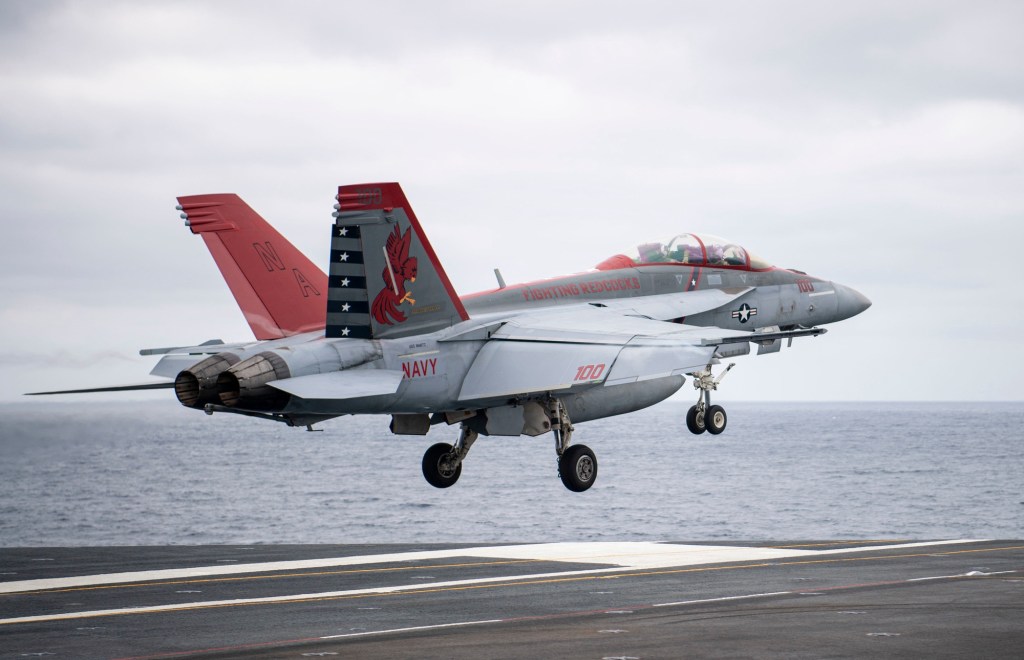
    Today according to the U.S. Navy an F/A-18 Super Hornet was lost overseas from the USS Harry S. Truman (CVN 75). The jet and its two aviators were attempting to land when an “arrestment failure” occurred. The plane failed to catch it wire or the wire broke, either way the plane went off the end of the ahip causing the pilot and weapons officer to eject into the Red Sea.

    Both pilot and weapons officer were picked up by a rescue helicopter from the Truman. They suffered minor injuries but are alive. The jet was not recovered.

    This is the second loss of a Super Hornet this week. The first was caused by an accident during a high speed turn where the hanger crew lost control of the jet and a towing trailer. No injuries reported there.

    Super Hornet and towing tractor.

    The Truman was also reportedly fired upon earlier on Tuesday according to CNN. This was in the hours before the ceasefire was announced. I don’t believe the two events from today are related.

    The F/A-18 cost around 70 million dollars.

    Reached out to centcom for a statement, I’ll update with a response if received. I’ve had good luck when emailing them but it’s hit or miss with the DoD.


    Thank you for reading. I hope you get as much out of what I’m doing here as I get out of making these reports. If so I would invite you to join my Patreon. Doing that would help me more than I can describe. I’ve kept it as cheap as possible to become a member. It’s only a $1.00. However a dollar from even half of my Facebook followers would be a life changing amount of money for me and for this page.

    Thank you for all the support over the years and as we continue to grow and evolve.

    -Scott

  • President Trump orders US forces to stop striking targets in Yemen; effective immediately.

    By. Scott Jackson


    05/06/2025

    After a months long bombing campaign against the Iranian backed Houthi terrorist in western Yemen, the White House has today announced that those strike will stop immediately. This was announced after Houthi leadership made contact with the U.S. leadership and according to trump agreed to stop striking ships in the Red Sea. This puts a close to “Operation Rough Rider” under president Trump as well as hundreds of strike carried out by the former Biden administration.

    The announcement was made during Trump’s meeting with Canadian PM Mark Carney. The conversation with the Houthis had been had the night before.

    “They have capitulated, but more importantly … we will take their word,” Trump said. “They say they will not be blowing up ships anymore.”

    It’s very likely Iran played a part in this turn. Possibly telling the Houthis to cease their actions against shipping following threats from the U.S. during the ongoing negotiations.

    Trump wouldn’t say specifics on who he talked to only that the k do that the Houthis would be backing down came from “a good source”. The Houthis, reeling from yesterday’s attack by Israel released this statement yesterday.

    “The operations of our armed forces will continue and the support by Yemen to Palestine will only end with the end of the aggression and siege against Gaza,” -Houthi statement from Al Masirah TV.

    While the U.S. has agreed to stop bombing the Houthis, Israel is another matter and have carried out more strikes since what was reported yesterday. Locals in Yemen as well as the IDF report the bombing of Sana’a airport as well as various power stations, and another concrete factory. Videos included below.

    Video showing the full footage of the aftermath of the attack on Sana’a international airport.

    US forces in the region.

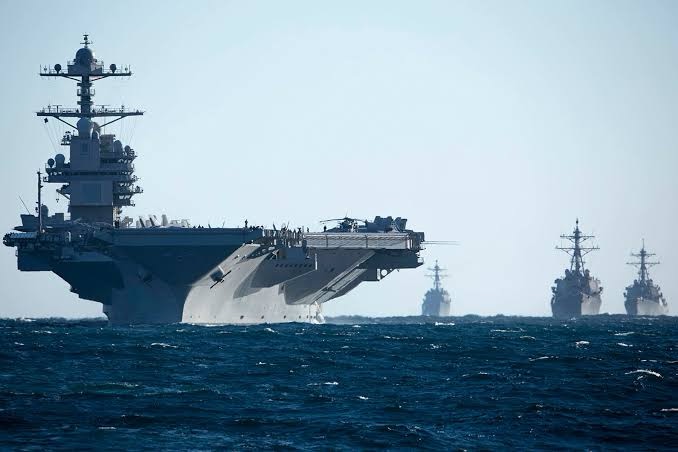
    The U.S. has brought in a large amount of military assets to carry out its attacks against the Houthis. Currently from the navy two aircraft carriers are operating in the region, the USS Carl Vinson (CVN 70) and USS Harry S Truman (CVN 75), these ships are both escorted and supported by numerous destroyer squadrons and several cruisers, not to mention their air wings. Several other destroyers have been ordered to the region and are operating separately of the carrier strike groups. Also USS Gettysburg (CG-64) and USS Princeton (CG-59) both Ticonderoga class guided missile cruisers have also been ordered to the region as apart of Operation Prosperity Guardian and have been used to strike Houthi targets as well. At least one Ohio class submarine USS Georgia (SSGN-729) has been spotted in theater as well. The Air Force has sent a large number of planes to the region included F-35s and F-22s as well as B-2 Spirit bombers stationed at Diego Garcia. As of several hours ago a pair of B-52s were heading towards the region from the continental US. It’s likely at least some of these assets will remain in the CENTCOM area of responsibility as negotiations with Iran over their nuclear program continue. The White House and Trump have threatened to use military force if the negotiations fail.

    Image from USNi news shows the current general location of the U.S. aircraft carriers.

    The Truman just several days ago had its deployment to the Middle East extended by another week, to continue to keep up a high tempo of attacks against the Houthis. This could possibly be extended further if negotiations are unsuccessful.

    After writing this it was announced that Oman had carried out the negotiations between the Houthis and the US. They had been the go between in the conversation which led to the U.S. ceasing it’s military strikes.


    I’d like to thank everybody for the constant support I’ve received. These last 5 years have flown by but I feel like GCR continues to grow and improve in its reporting and analysis. I’m always open to comments and questions and can be reached on Facebook or through my email which is listed on the website. 

    I’m currently looking for guest for a future podcast series I’m planning on running. If you have an interesting military story to tell contact me and let’s talk. I want to hear your stories.

    If you would like to go the extra mile and further support me and the work being done here, you can sign up for my Patreon through the button below for only $1.00 a month. Future video and audio projects to be released there soon.

    -Scott