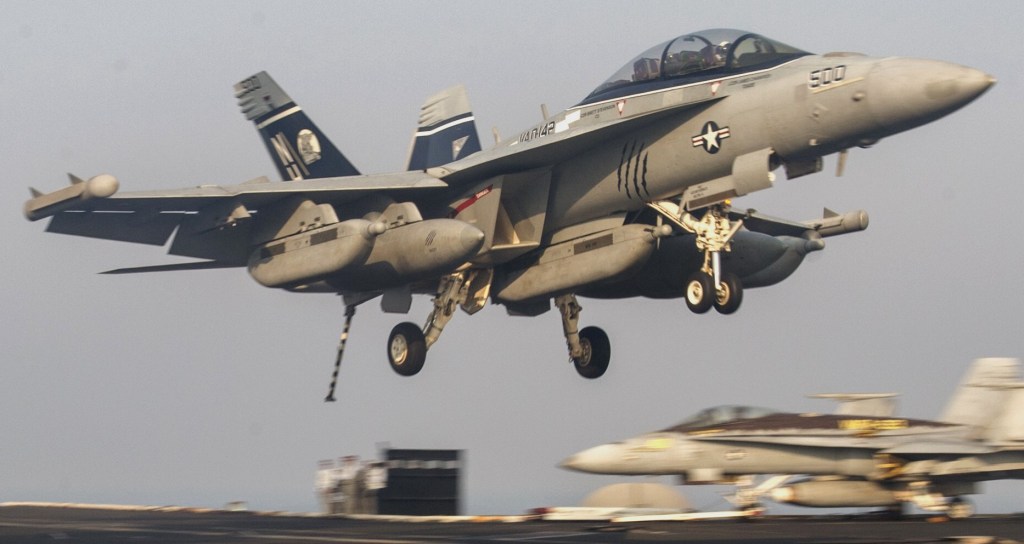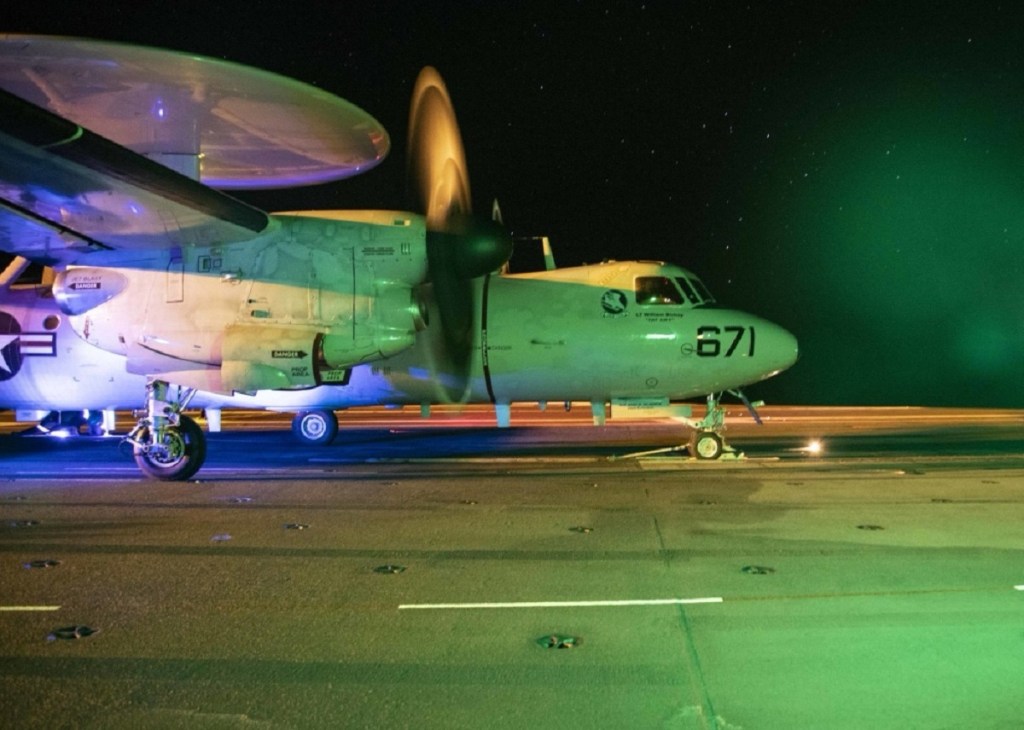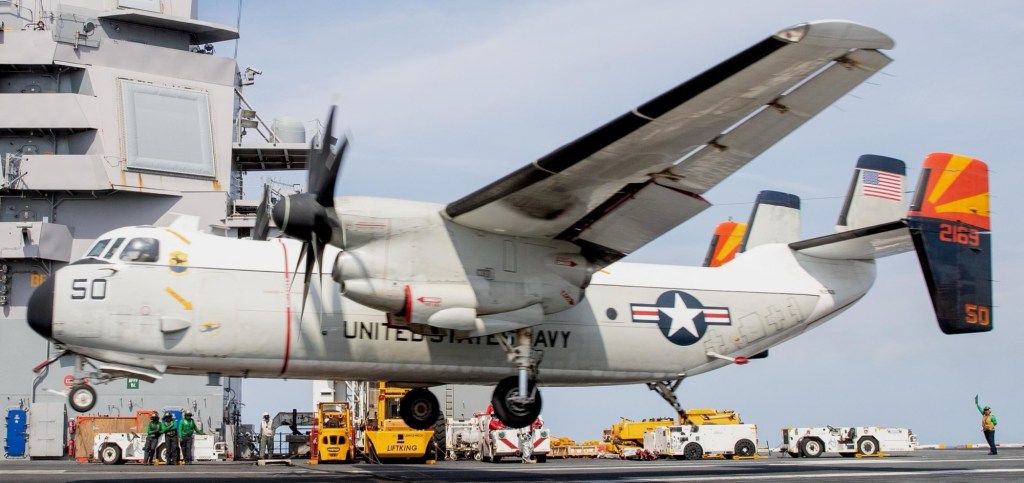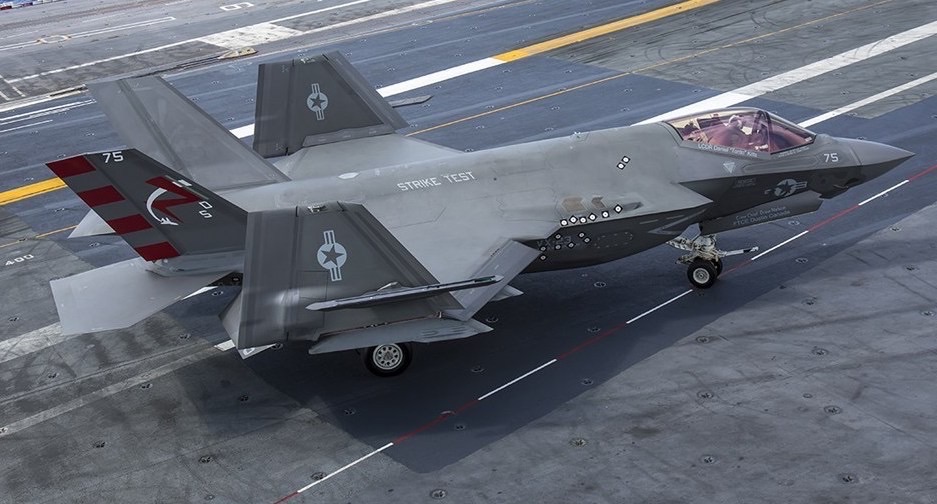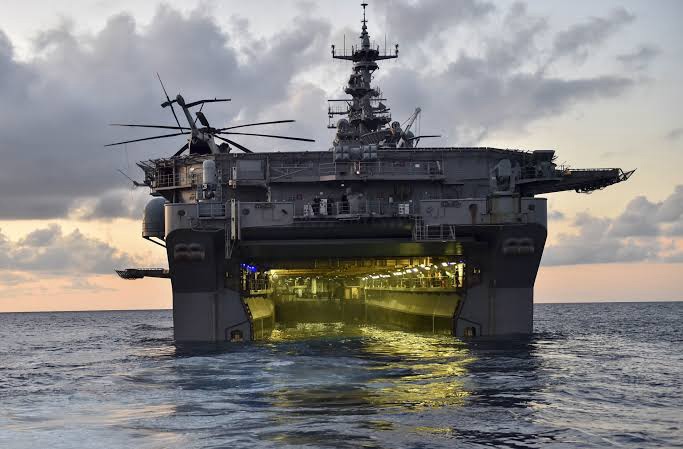
A look inside the well deck of the USS Iwo Jima (LHD-7)
By.Scott Jackson
10.19.2025
The United States Department of Defense and White House released footage showing the destruction of a Venezuelan submarine reported to be involved in cartel drug trafficking operations and the transportation of fentanyl, a powerful synthetic opiate. The sub was destroyed on Thursday.
While all the media and even this article calls the vessel a submarine it’s more like a semi- submersible. Most of the vessel is underwater but it doesn’t have the capability to fully submerge itself. If this vessel is anything like others that have been stopped trying to smuggle drugs into America in the past, it was made with fiberglass and plywood.
Video of the strike on the Venezuelan semi-submersible.
The submarine had two survivors who were rescued by a US helicopter and taken to a Navy ship in the area. The men will eventually be repatriated to their home countries according to the US. The men are from Ecuador and Colombia. The bombing of the sub killed two other men, both alleged to be Narco terrorists. Sending the men back to their home countries helps the US avoid any turbulent legal issues of detaining the men whose drug trafficking crimes don’t exactly fit under the laws of war.
Neither the pentagon or the White House offered any other comments when asked by GCR or other media outlets.
Moving on to today, it was just several hours ago reported that the US said they had carried out a strike on a vessel associated with a Colombian leftist rebel group,National Liberation Army.
This strike has led to a falling out between US president Trump and Columbian President Gustavo Petro as the Colombian President accused the US of murder. “US government officials have committed a murder and violated our sovereignty in territorial waters. Fisherman Alejandro Carranza had no ties to the drug trade and his daily activity was fishing,” said Gustavo Petro on a post on social media. He added “The Colombian boat was adrift and had its distress signal up due to an engine failure. We await explanations from the US government.”
Trump and Colombian President Gustavo Petro
That US response was swift, with Trump and the White House cutting off all subsidies. Trump said the Columbian president “is an illegal drug leader strongly encouraging the massive production of drugs, in big and small fields, all over Columbia”.
Trump later ranted on Truth Social “It has become the biggest business in Columbia, by far, and Petro does nothing to stop it, despite large scale payments and subsidies from the USA that are nothing more than a long term rip off of America. AS OF TODAY, THESE PAYMENTS, OR ANY OTHER FORM OF PAYMENT, OR SUBSIDIES, WILL NO LONGER BE MADE TO COLUMBIA,”
Trump continued “The purpose of this drug production is the sale of massive amounts of product into the United States, causing death, destruction, and havoc,” the president said.
“Petro, a low rated and very unpopular leader, with a fresh mouth toward America, better close up these killing fields immediately, or the United States will close them up for him, and it won’t be done nicely.”
On October the 3rd, US Southern Command released footage from US operations ongoing in the Caribbean. The video shows the loading of a U.S. Marine F-35B Lightning II with live munitions at the now reactivated Roosevelt Road Naval Station.
Image from Google Earth showing the location of Roosevelt Road.Closer look at the airport.
This aircraft, if it was just one jet, it’s not clear in the video, was outfitted with a mixture of air-to-ground and air-to-air weapons. My info is coming from publicly available information on the weapons systems and some of my own knowledge of this topic from years of research. Any mistakes or opinions are,as always, my own. The first clip shows the loading of an AIM-9X Sidewinder. The AIM-9X is an inferred guided, proximity fused weapon.
Variations of the Sidewinder started life as the primary weapon of many early Cold War era jets alongside their main cannons. This is not that Sidewinder, it is so updated and advanced it’s hard to even think of this as the same missile. The original AIM-9 Sidewinder used in Vietnam had an abysmal success rate that averaged somewhere around 9%. So 1 out of 10 would hit their targets. While the original weapon could only heat-track a target aircraft’s exhaust, this weapon is capable of detecting the heat from the friction of the target aircraft going through the sky making shots at the front or side of the target a possibility. A thrust vectoring engine on the AIM-9X gives it incredible maneuverability. The publicly available information puts the range at somewhere around 10-15 miles depending on some factors(Altitude-speed etc.)that can shorten or extend that range. This is not your grandfather’s Sidewinder.
F-22 firing an AIM-9 Sidewinder
Moving on we get a quick look at one that’s probably familiar to you (if not by look, then by name) the GBU-54(V)/B LJDAM (Laser Joint Direct Attack Munition).This is the laser guided version of a pretty standard MK 82 500 pound air-to-ground bomb with the added bolt-on JDAM guidance kit giving it some pretty spectacular accuracy.
JDAM on display at Airforce Museum
JDAM is like an aftermarket part for a bomb turning it into a GPS guided precision weapon.We don’t talk enough about the effect that the JDAM and other guidance systems have had on tactical bombing, long gone are the days you have to drop 12 bombs to hit one target. If the target is a house, a decent pilot can hit the house 90% of the time, a great pilot and a bit of laser guidance can put a JDAM through the window.
This is how you used to drop bombs. Multiple at a time and hope that you hit your target.
The last weapon shown is the AIM-120 AMRAAM-C/D (Advanced Medium Range Air-To-Air Missile) or, sometimes called Slammers after their first 3 shots resulted in 3 enemy takedowns in Iraq and Bosnia.The C/D is the model number for the missile, I’ve added both models because they showed two different missile models in the USSOCOM video. The AIM-120 is a BVR (Beyond Visible Range) with active radar-homing capable of striking targets at extreme ranges. Publicly available data puts the range of the AIM-120 listed at around 80 miles. The range numbers can be a little deceiving, you have to take into account that these numbers are based on any number of specific conditions for the enemy and the weapons platform. For a missile like the AIM-120 D model, while it will travel over 100 miles, its effective range is closer to 60-70 miles.
F/A-18 Super Hornet loaded with 10 AMRAMM’s.(Murder Hornet configuration)
None of these weapons are rare, two of them, the SIdewinder and AMRAAM you will find on almost every fighter in the air fleet and the laser JDAM has been used heavily since the 90’s. I’m a little uncertain on exactly how many weapons this plane in the video launched with as the F-35 in its stealth mode can only hold so many weapons, and the B version has a smaller weapons bay than the others because of the lift fan. The two weapons bays can hold two AMRAAM’s each. I’m guessing here but maybe one JDAM and a sidewinder on one side and then the two AMRAAMS on the other.
The F-35 is technically capable of carrying more weapons on outside hard points, however this harms the stealth of the aircraft, giving it a larger radar cross section, or RCS. The idea was to use stealth mode during the opening days of a conflict and then to switch to what the manufacturer, Lockheed Martin calls “Beast mode” that the F-35B can be once air dominance has been achieved.
Stealth mode F-35 loaded with two JDAM’s and two AMRAAM’s.“Beast Mode” F-35 loaded with six JDAMS, Two AMRAAM’s and Two wingtip Sidewinders.
US Navy E-6B Mercury refueling from a KC-135 Stratotanker.
By.Scott Jackson
09/24/2025
On the night of September 23-24 both France and the United States carried out separate nuclear exercises. These exercises act as apart of a deterrence strategy aimed at making any potential adversaries think twice about attacking. They also provide real life training for the crews involved preparing them for a day that they hope never happens.
Some components of these drills were monitored in real time.
COST43 a U.S. Navy E-6B Mercury.
COST43 the callsign for a U.S. Navy E-6B Mercury, the Airborne Nuclear Command Post and Communications Relay. The jet is seen in the above image heading back to Ramstein AFB, Germany after this mornings nuclear exercise by U.S. Strategic Command (STRATCOM) over Northern Europe.
Today the U.S. Navy confirmed the suspected launch of one of its Submarine launched Trident II Life Extension Program (D5LE) Submarine-Launched Ballistic Missile (SLBM) from an Ohio-Class Ballistic Missile Submarine off the east coast of Florida.
On Sunday September 19th, the night sky in Puerto Rico were lit up as the launch could be seen from the Caribbean island.
This launch was apart of a preplanned set of launches to evaluate and ensure the continued reliability and accuracy of the system. The navy statement also added that this launch was not done as a response to any ongoing world events. It’s likely the proximity to Venezuela prompted that last part of the statement.
On Wednesday night, September 17,2025, a helicopter crashed near the Joint Base Lewis-McChord in Washington.
“Joint Base Lewis-McChord confirms that a helicopter crashed on the evening of Sept. 17 in a rural area near the installation,” said Scot Keith, JBLM Garrison Public Affairs Officer. “The incident occurred at approximately 9 p.m.PDT. This remains a developing situation, and no additional details are available at this time.”
Civilian and military search and rescue crews responded to an area around Summit Lake, about 35 miles west of Joint Base Lewis-McChord, near to where the military said they lost contact with their helicopter and.
“Deputies have located what is believed to be the scene. We have been advised that the military lost contact with a helicopter in the area, and we are working closely with JBLM to deploy any resources needed to assist.” wrote the Thurston County Sheriff’s Department on its Facebook page.
Later on Wednesday night, in a separate post, the sheriff said that deputies that had first responded and found the crash site had to stop rescue efforts because of the heat from the scene melting their shoes.
Joint Base Lewis-McChord is a combined Army/Airforce base about 10 miles south of Tacoma. The 16th Combat Aviation Brigade operates out of Gray Army Airfield on the south end of the base. The unit is part of the 7th Infantry Division and I Corps, both of which have their headquarters at the base. While we don’t for sure know what kind of helicopter crashed. We know that the brigade flies the AH-64E Apache, CH-47 Chinook, and UH-60 Black Hawk. Civilians in the comment section of the sheriff’s department’s facebook post mentioned that at the stated time of the crash, that they had seen either a Blackhawk or an Apache.
This is an ongoing situation still however it’s not looking good for the crew. The crash is the suspected cause of a several acre fire that the rescue crews had to battle.
New information received as I was finishing this article reveal that the helicopter involved was a MH-60M “Black Hawk”with the 160th Special Operations Aviation Regiment (SOAR), also known as the Night Stalkers. The Night Stalkers are some of the best of the best in helicopter aviation and are the guys called when the Seal Teams or Delta or any of those black ops guys need a lift. If this wasn’t a mechanical issue it could probably be attributed to the type of flying required by these guys. Low flying at high speeds comes to mind when I think of the kind of training being done by these guys, so as sad as it is, these things are bound to happen sometimes. People often forget about how dangerous training can be even when carried out far away from a battleground.

The U.S. Navy Boeing P-8 Poseidon has been in service with the United States Navy since 2012 when it replaced the fleets aging and legendary P-3 Orions. The P-8 is a heavily modified version of a Boeing 737-800 passenger airliner. Swapping out the passengers and the passenger comforts with the equipment needed to preform the arduous and often overlooked task of Maritime Patrol and Anti- Submarine Warfare (ASW).
United States Navy P-8A Poseidon dropping one of its Mark 54 torpedo.
Featuring advanced sensors for tracking surface ships and submarines, including air-dropped sonar bouys and its AN/APY-10 surface search radar. In addition to detection and tracking systems, the P-8 can carry several weapons. Mostly the MK-54 airdropped torpedoes for ASW work but also the AGM-84 Harpoon Anti-Ship missile. That was until the navy released the photo below showing something new. But back to that in a minute.
U.S. navy P-8 Poseidon shown with the AGM-158 LRASM. United States Navy P-8A Poseidon with a AGM-84D-1 Harpoon missile. The 84D-1 is an upgraded an extended range version of the Harpoon.
While the Harpoon’s almost 5 decades of service and extensive use in combat shows it is still a very capable weapon, it is outmatched in range by the air defense systems of some of the U.S. adversaries, especially the older models which are mostly if not all being phased out in favor of the II and II +.
The original Harpoon Block 1 missile has a range of around 80-100 miles.
The Block II has less range improvements at around 81 miles but was made me for combat around littoral waters so not as much range was needed.
Block II+ER, the newest generation of the Harpoon in use has a range of around 190-200 miles.
The Block II and Block II+ER have advanced capabilities added in like improved GPS guidance, and protection from Electronic interference. It’s possible that the Harpoon will still be used in some cases where the range and stealth of the LRASM isn’t needed.
While the harpoon isnt the United States only anti-ship missile it is the one that was specifically designed for that role. Some other choices include the AGM-84H/K SLAM ER which is kind of a sibling offshoot of the Harpoon and is an air launched land attack missile that can be used to target maritime targets. It has a range of 170 miles.
Enter the Lockheed Martin’s AGM-158C LRASM.
A display showing a LRASM and a JASSM
The AGM-158C is a derivative of the AGM-158B JASSM ER (Joint Air-To-Surface Standoff Missile Extended Range), a low detection air launched cruise missile designed by Lockheed Martin. The JASSM first entered combat striking Syrian government alleged chemical weapons targets in 2018 and more recently striking targets in Yemen.
The AGM-158C LRASM is a stealth launched anti-ship cruise missile. This integration has been planned for several years now and is giving the P-8 an effective surface weapon that better keeps the aircraft and crew out of harms way. The LRASM can also be used on the B-1 Bomber, the Navy F/A-18’s, and on any non internal pylons on the F-35.
F-35 test flight with the LRASM. Note, Neither LRASM Or JASSM can be carried internally by the F-35, it has to go on an outside pylon, which takes away some of the stealth of the jet. The Rockwell B-1 Lancer carries out an integrated test with the LRASM. Capable of carrying 24 internally, an announced pylon could add 6 more externally.
The LRASM has an incredibly advanced targeting and navigations suite and even more so for planned upgrades for this missile. The range of the LRASM depends on the block number. These numbers are also mostly estimates and going off of what public data is available, which is limited. The C-1 variant is listed as having a range of greater than around 200 nautical miles, the C-2 is said to be in the +500 miles range and the new C-3 they are working on is rumored to be in the 1000 mile range but is still in development. The C-3 of the future is supposed to be being developed with Artificial Intelligence integration which will allow data links between the missiles and allow them, according to John Keller from Military Aerospace Electronic, `advanced autonomous mission planning, target discrimination, and attack coordination, adjust flight paths based on real-time data, identify and track moving targets, and adapt to changing conditions like jamming and interference.
Adding this capability to the P-8 allows them to not only detect the enemy but to also engage them with the safety that range gives you.
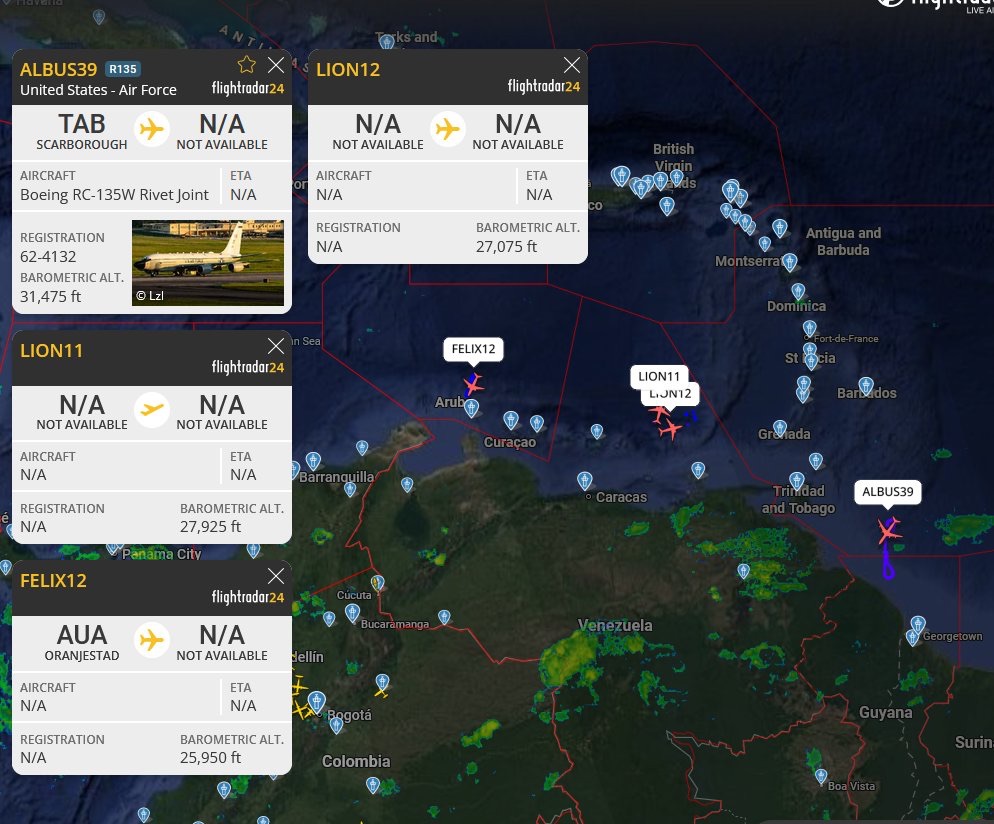
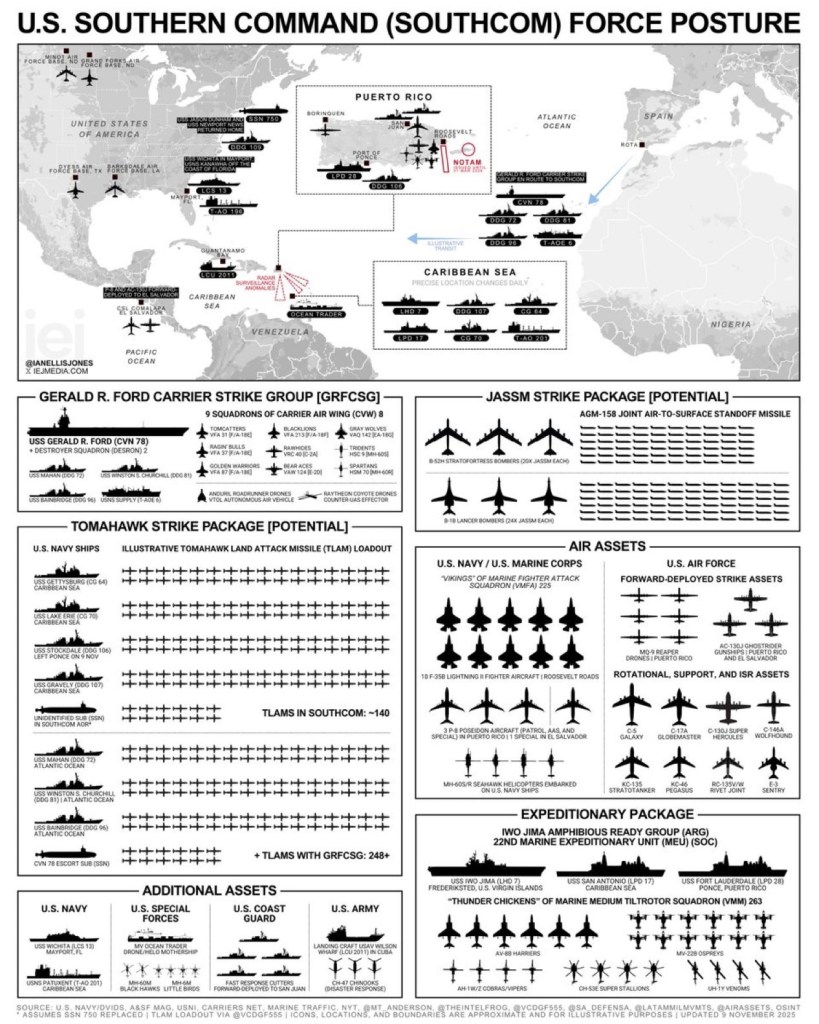
Map put together by Ian Ellis Jones over on Twitter shows the ships currently moving into the South American region. Some of the locations are true, as of when the image was posted, others are approximate.
By. Scott Jackson
08/30/2025
A look at the recent increase in U.S. forces already in or heading to the Caribbean.
The U.S. is increasing its presence in the region in an effort, they say, to deal with drug trafficking. This has been a big issue for Washington and is currently causing some tension as the White House called Venezuelan leader Maduro a “Narco-Terrorist” and have made him the main focus of these efforts. Is this a regular drug operation, or something more? For now nobody’s sure.
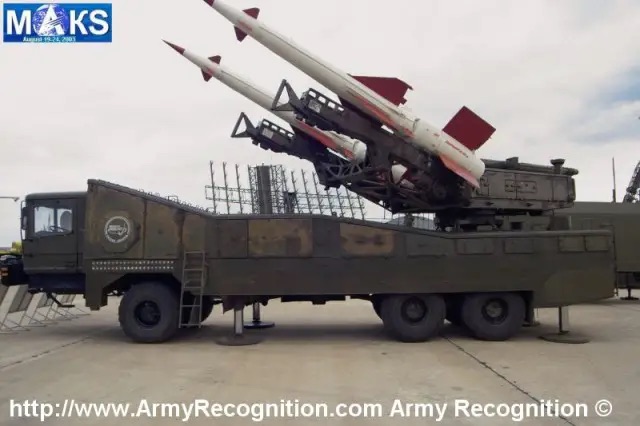
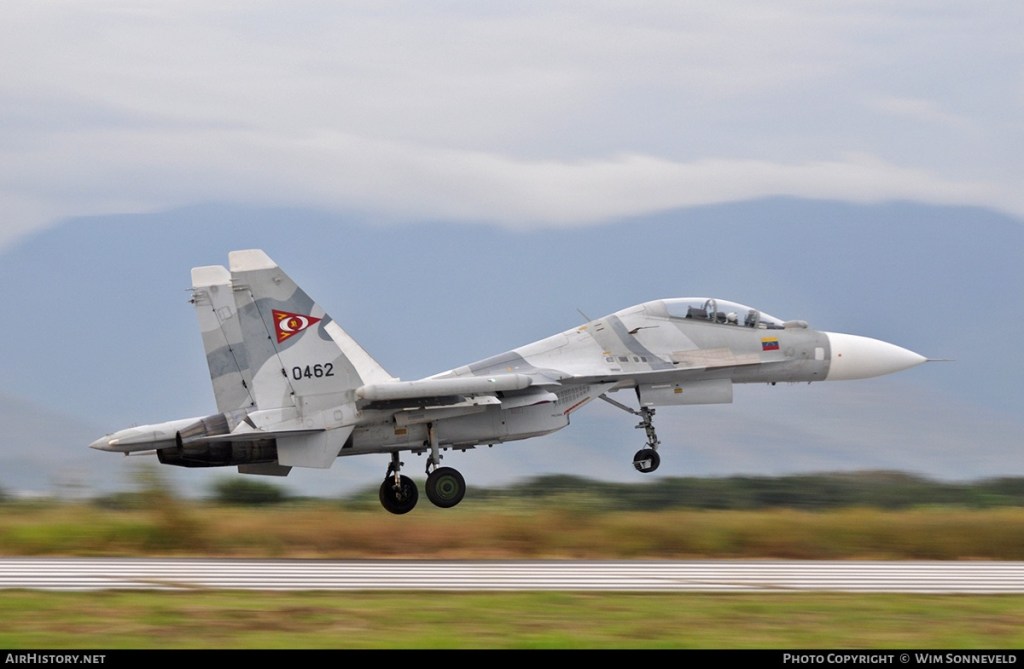
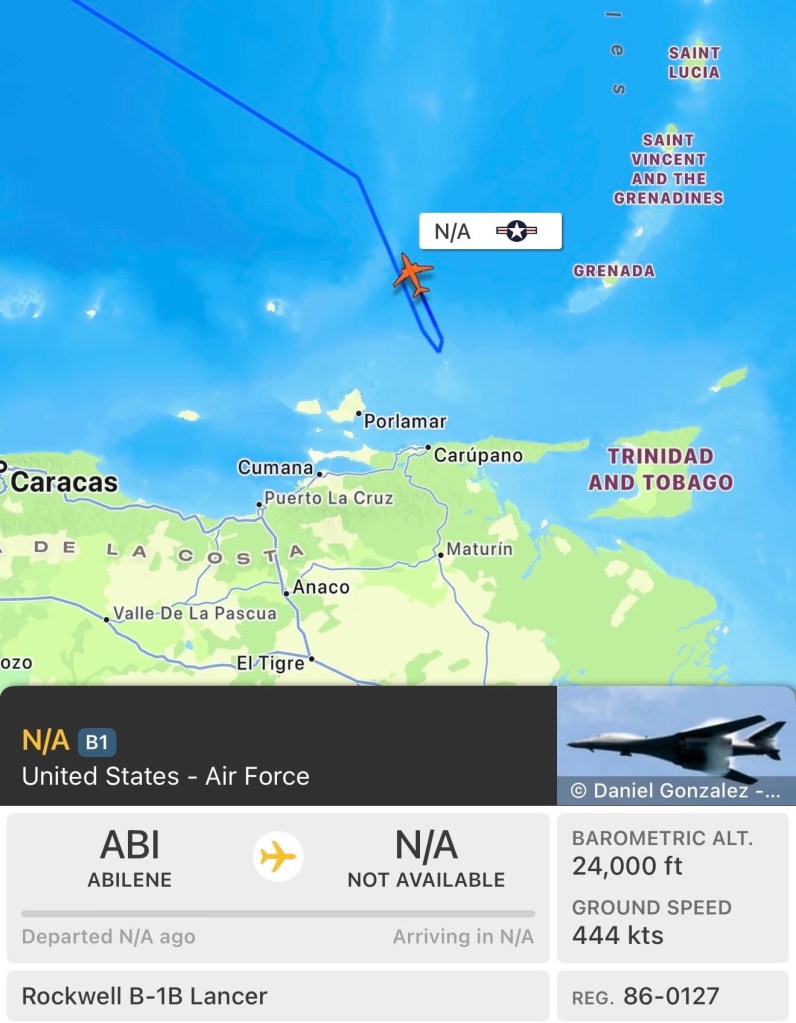
So far eight ships and a submarine have been deployed to the 4th fleet/Southern Command [SOCOM] AOR. Making this the largest confrontation between Venezuela and the U.S. in years.
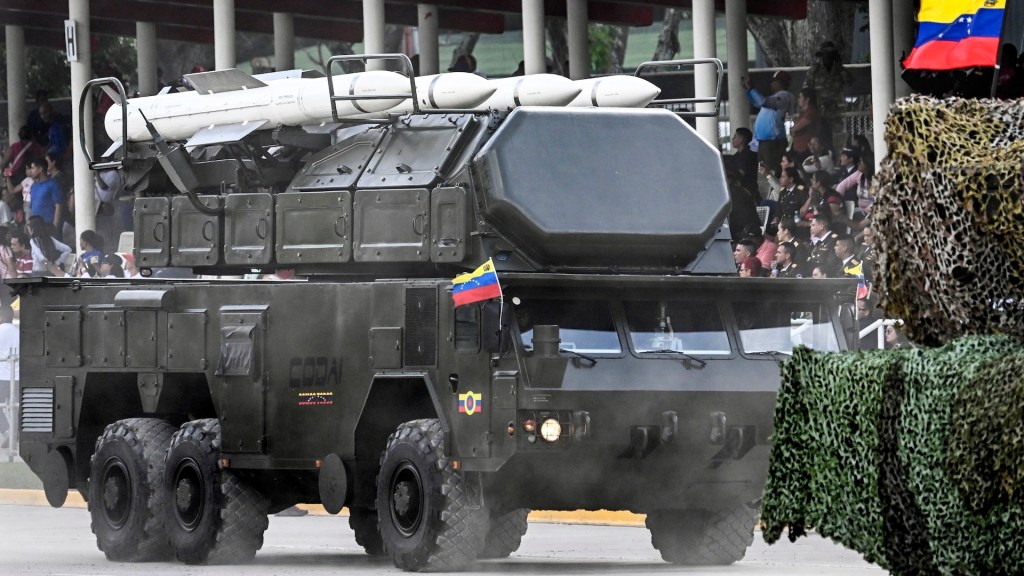
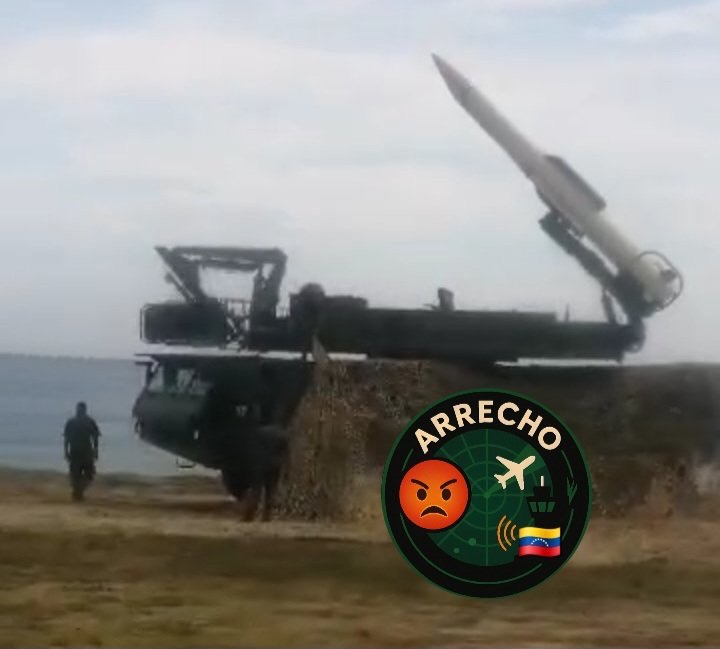
For Venezuelan President Nicolas Maduro, this attention only strengthens his goverment hold on the country. The U.S. feels Maduro’s election back in 2013 and 2024 was due to election interference and say his victory was only assured because of ballot stuffing and other types of election fraud. Currently Washington has a $50 million dollar bounty for his arrest on charges of drug trafficking. Maduro’s response to the threat of the U.S. warships steaming towards southern waters was to declare that Venezuela would respond with the activation of 4.5 million militiamen.
“This week, I will activate a special plan with more than 4.5 million militiamen to ensure coverage of the entire national territory — militias that are prepared, activated and armed,” Maduro announced on state television.
Most believe that this move by Washington is aimed more at a show of force over actual U.S. intervention in the region, but in case it’s not just a well armed navel stroll around the block let’s go over some things.
Who is Nicolás Maduro?
Nicolás Maduro speaking to his supporters about the American forces heading towards Venezuela.
Maduro was born in 1962 and before he was a president he made his money as a bus driver for a long time before rising to become a trade union leader. In 2003 he was elected to the National Assembly and frim there appointed to a number of positions under the then president Hugo Chávez. He served as the president of the National Assembly in 2005-06, and as Minister of Foreign Affairs from 2006-2012. From then on he was Vice President under Hugo Chávez until his death in 2013. After Chávez’s death Maduro assumed the role of president and has stayed in the role ever since. Since then, Maduro has managed to stay in office, consolidating power along the way. The elections the country has run show Maduro winning, however claims of election rigging have run rampant.
Since Maduro rise to power Venezuela has been forced to endure widespread authoritarian rule marked by rigged elections, human rights abuse and economic hardship. Maduro’s goverment can be characterized by its mass allegations of corruption, the suppression of critical information and poor leadership. Widespread shortages have plagued the country and inflation of its currency, the Bolivar, has skyrocketed, tripling in the last several years. For a country as resource rich as Venezuela is, having one of the largest oil deposits in the world, these problems are inflicted mostly by the actions and policy of their government.
Demonstrators clash with members of Venezuelan National Guard during a rally demanding a referendum to remove Venezuela’s President Nicolas Maduro in San Cristobal, Venezuela October 26, 2016. Photo: Carlos Eduardo
What U.S. assets are being sent to Venezuela?
For now it seems that the bulk of the forces being mobilized for this operation -whatever it ultimately ends up lmbeing, are from the USS Navy with some help from the Air Force.
Earlier today radio calls from a USAF RC-135 ‘Rivet Joint’ were recorded as they communicated with the Mcdall tower out in Tampa Fl. The RC-135 was refueling “somewhere over the Caribbean”. This means that the Air Force is doing ELINT missions and gathering data from the region. The Rivet Joint is capable of picking up radar signals from hundreds of miles away as well as other types of electronic surveillance and reconnaissance.
ABATE07 (KC-135) is somewhere over the Caribbean right now fueling a RC-135.
We also have reports of Navy P-8 Poseidon’s out of San Juan patrolling around the Caribbean several days ago. These planes are mostly used for anti-submarine work but can still be used as spotters for surface ships as well.
Venezuela has one submarine that might or might not be operational so I don’t see the ASW assets getting all that much use here.
Ticonderoga-Class launching one of its standard missiles.
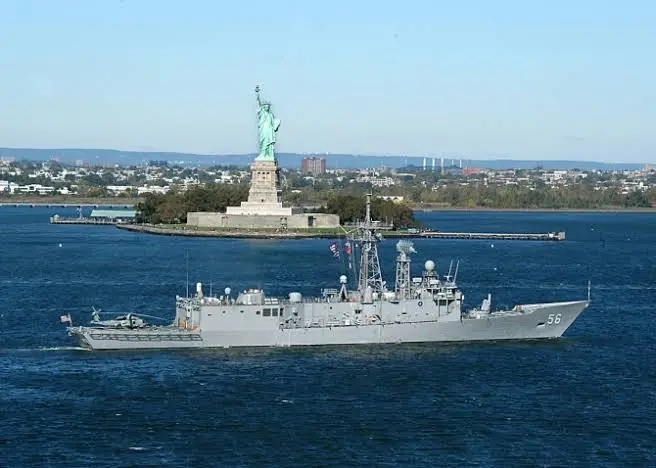
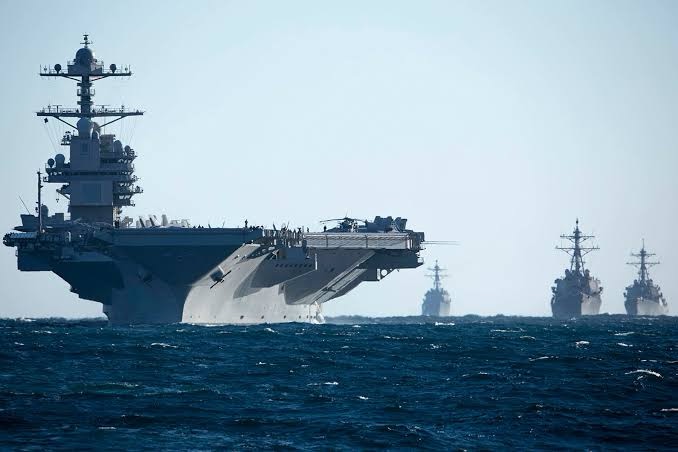
On to the ships. So far 9 ships have been ordered to the area. The most recent of the bunch is the Ticonderoga-Class guided missile cruiser USS Lake Erie (CG-70) and the Los Angeles-Class fast attack submarine USS Newport News (SSN-750).
Los Angeles class submarine operating at periscope depth.
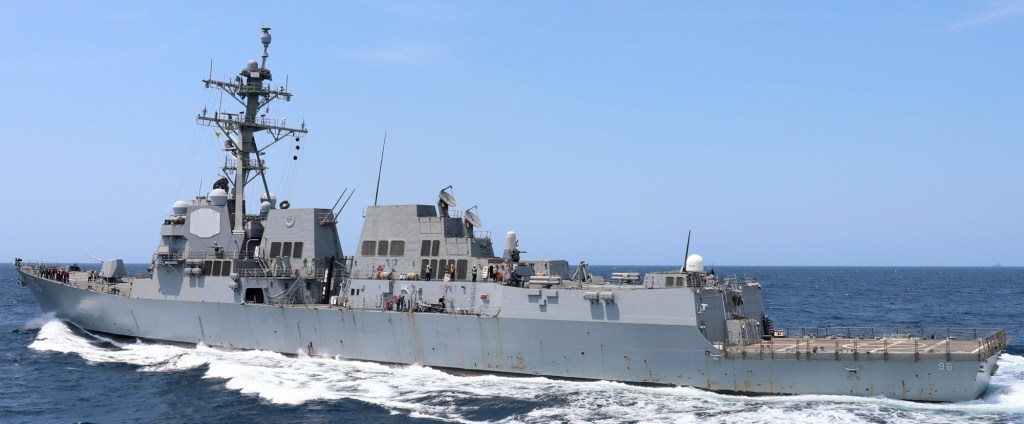
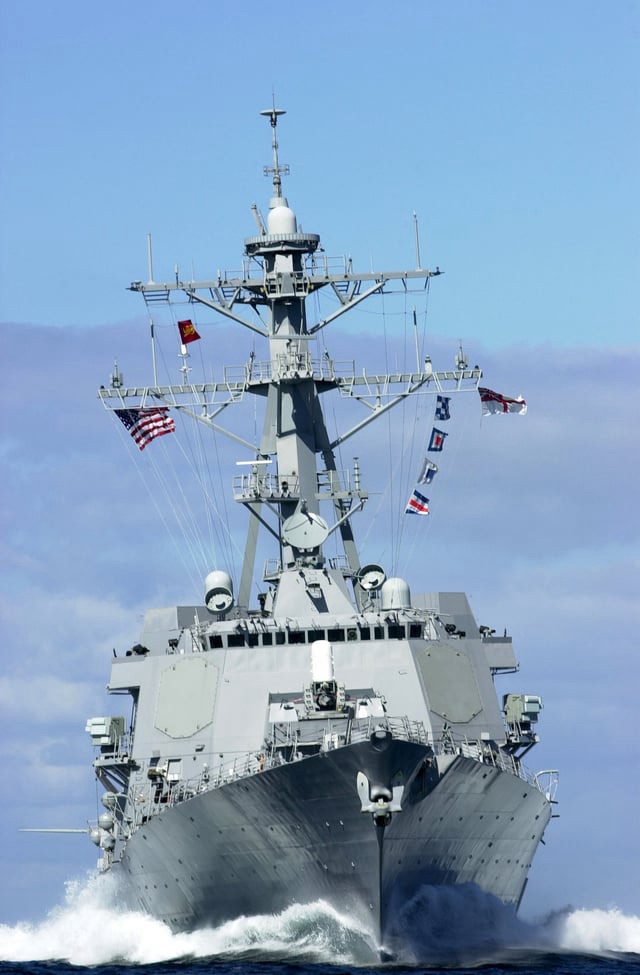
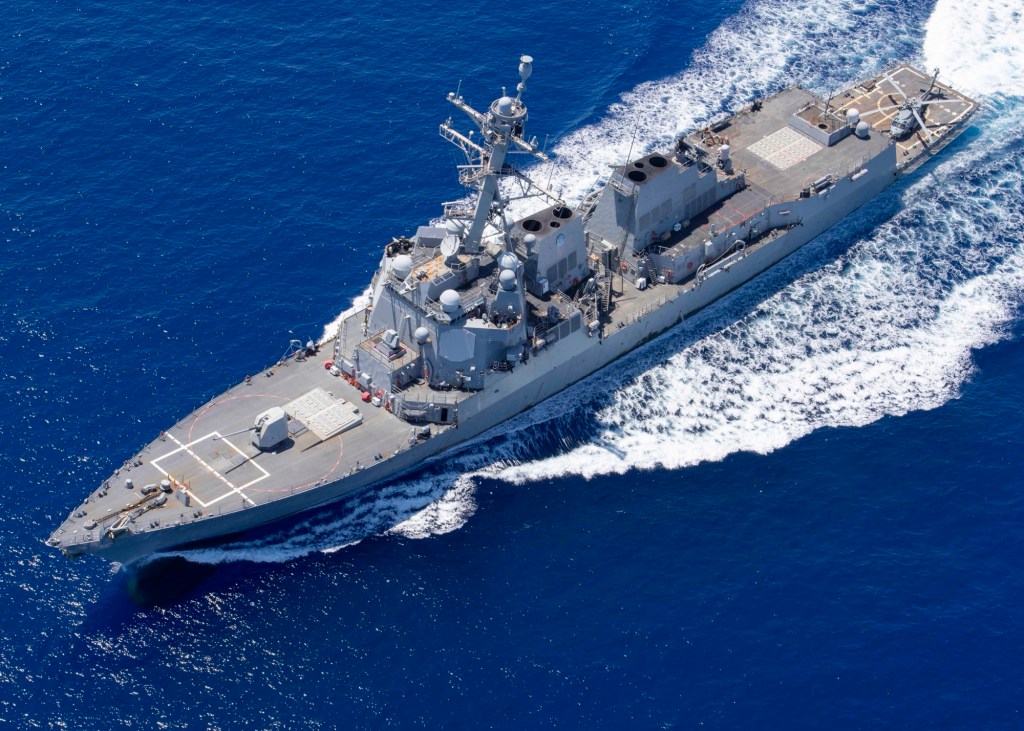
Three of the ships are Arleigh Burke-Class guided missile destroyers. USS Gravley (DDG-107), USS Jason Dunham (DDG-109), and USS Sampson (DDG-102). These ships along with the Lake Erie provide the bulk of the firepower. All of the ships listed so far, including the submarine are capable and likely carrying a number of Tomahawk cruise missiles, among others.
Arleigh burke-Class destroyers intercepting targets during an exercise
Last but not least we have the USS Minneapolis-Saint Paul (LCS-21) a Freedom-Class littoral combat ship. These ships were, according to the navy “envisioned to be a networked, agile, stealthy surface combatant capable of defeating anti-access and asymmetrical threats in the littorals.” Littorals refers to an area of the sea close to shore. Basically these ships are comparable to what other navies call corvettes.
Each of the freedom class comes with a hanger for the SH-60 or MH-60 Seahawk, as well as a ramp in the stern for launching smaller boats. These ships are capable of transporting and launching a small assault force with troops and fighting vehicles.
Image shows the USS Minneapolis-Saint Paul.
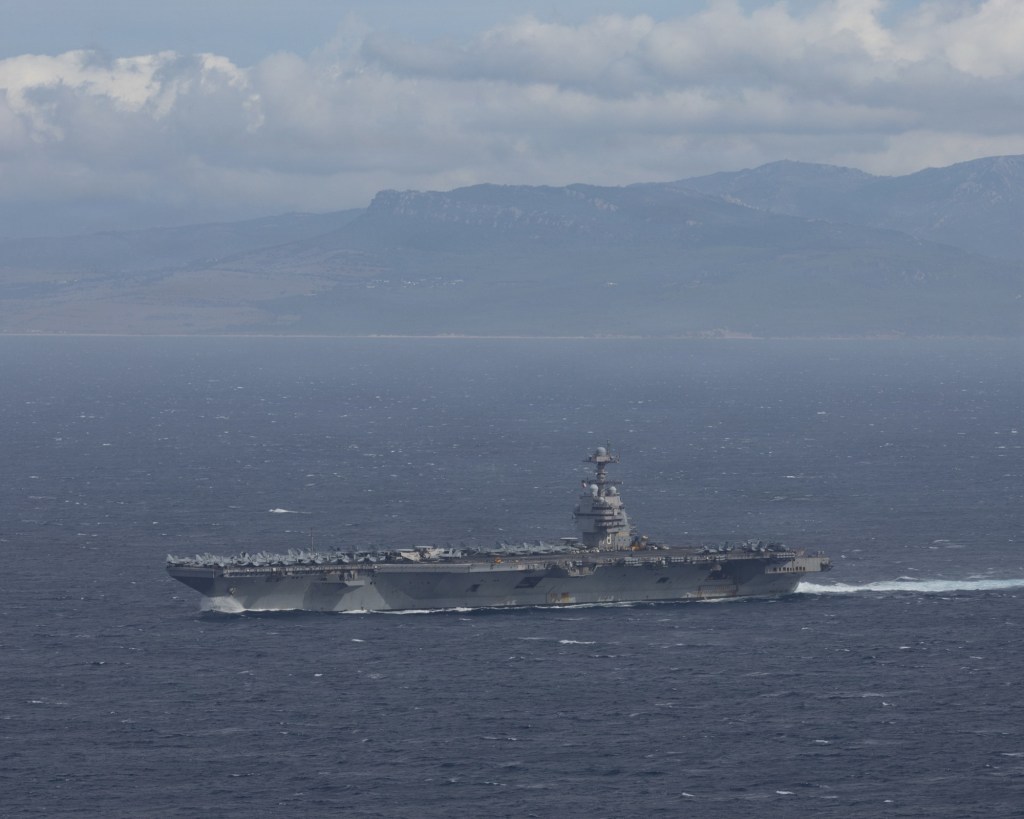
Next is the USS Iwo Jima (LHD-7) classified as a Wasp-Class amphibious assault ship and landing helicopter dock.
USS Iwo Jima (LHD-7) in the Atlantic sometime in 2008.
This ship carries various aircraft- mostly helicopters, and a lot of Marines as well as their equipment. This ship is essentially a floating marine base of operations capable of transporting them and their equipment into hostile territory and supporting them the AV-8B Harriers until 2027 when most of the assault ships are switching to F-35B’s. I don’t know if the Iwo Jima currently employs harriers or The F-35 currently.
USS Iwo Jima hiding in the fog.Marine Vertical take off F-35B coming in for a landing.
Moving on to the last two ships on our list we have the USS San Antonio (LPD-17) and the USS Fort Lauderdale (LPD-28) both of which are San Antonio-class amphibious transport dock’s. These ships are similar to the Wasp-class in that they are filled with marines and can be used as a launching point for their operations. They have a hanger for helicopters (or Ospreys) but lack the topside deck for planes.
Cut-away view of the San Antonio class. Artist concept of the San Antonio class.
These ships are designed as survivable and stealthy transports for ground forces. As shown in the image above they are also designed around the idea of launching the marines hovercraft to quickly transport massive amounts of marines and their equipment to the shores.
At 12:29PM on January 28th, 2025 a United States Air Force F-35A crashed at Eielson Air Force Base in Alaska. Video released of the incident shows that while on a training flight, the pilot, flying with the 354th Fighter Wing, lost control of his jet and was forced to eject while the jet crashes into the ground moments later.
Video of the incident. F-35 tail number 19-5535
The report going over the investigation into this crash came out today and fully explained the cascade of events that caused the crash. The culprit was water that had contaminated the hydraulic fluid for the nose landing gear. This water caused freezing in the hydraulic system and caused the nose gear to not retract properly and left it cantered 17 degrees to the left.The pilot initially on a call with Lockheed Martin engineers and together over the course of an hour efforts were made to fix the nose gear by doing touch and go landings. After the second touch and go landing the struts on both left and right landing gear had ice form around them causing them not to extend after the takeoff. Because of this, the aircraft’s “weight on wheels” sensors showed the aircraft as being on the ground and the plane automatically flipped to on the ground flight controls, while the plane was airborne. The pilot lost control at this point and made the decision to eject as the jet became uncontrollable . The jet crashed to the grounds of Eielson Air Force immediately after the ejection.
The pilot was treated at the time for minor, non life threatening injuries.
A fire aboard the San Antonio-class amphibious transport ship USS New Orleans (LPD-18) has, after 12 hours, been extinguished according to the U.S. Navy 7th fleet. The ship was anchored in the harbor at Okinawa at the time of the fire and it at least appears that the marines were not currently on the ship, however 2 sailers received minor injuries during the incident and were treated on board.
Video during the efforts to control the fire as tugboats cool down the metal of the hull with water.
The crew fighting the fire was assisted by sailors from another San Antonio-class amphibious transport ship, USS San Diego (LPD-17) which was moored at the White Beach Navel Facility. The crew was also assisted by the Japanese Coast Guard and military.
At this time the cause of the fire is still under investigation. The ship remains in Nakagusuku bay.
The New Orleans is apart of the Navy’s forward-deployed amphibious forces based in Japan.
The fire began at 4:00 PM on August 20th. Judging by where the tugs are spraying it appears the fire started near the living spaces and stores of the ship.
The navy overhauled how it fights fires after a 2020 fire on the big deck amphibious warship, USS Bonhomme Richard (LHD-6) burned for four days and resulted in the total loss of the ship.
SPC Taylor Adam Lee accused of trying to sell secrets Russia.
By. Scott Jackson
08/07/2025
On Wednesday August 6th, the FBI reported the arrest of Spc. Taylor Adam Lee, an American soldier who is accused of allegedly trying to steal and share classified information with Russia.
Taylor Adam Lee is a 22 year old, active member of the US Army, most recently stationed at Fort Bliss In Texas as a tanker with the 1st Armored Division. According to prosecutors and the military he was arrested on Wednesday and charged under the Espionage Act with attempted transmission of national defense information to a foreign adversary. Additionally, he was charged under the Arms Export Control Act. The government has requested that Lee be held without bond.
According to the US Justice Department, Lee “transmitted export-controlled technical information on the M1A2 Abrams Tank online and offered assistance to the Russian Federation.” He was attempting to trade the information he possessed on the Abrams to get citizenship in the Russian Federation. It’s unclear how it was revealed to investigators that Lee was looking to trade US secrets on its tanks to Russia.
The M1A2 Abrams Main Battle Tank.
Writing earlier this year Lee said online that “the USA is not happy with me for trying to expose their weaknesses,” and, “At this point I’d even volunteer to assist the Russian federation when I’m there in any way.” (CBS News)
During a meeting in July Spc. Lee met with somebody who he believed was a representative of the Russian federations intelligence services. At this meeting he handed over an SD card with technical data and other information regarding the Abrams Main Battle Tank. A discussion took place where Lee offered to give a physical piece of tech from the tank to the Russian “agent”.
After the meeting Lee messaged the agent “Mission accomplished.” He was later arrested by the FBI’s El Paso field office.
Lee at the time held a Top-Secret security clearance. This would have given him access to sensitive information on many of the US military’s systems.
GCR has reached out to the US Army and will update if a response is received.
The adversaries of the US regularly attempt to get active duty military members to share secrets, the widespread use of the internet has increased the risk of this happening greatly. In 2024 US officials warned that there was a large uptick in foreign spies targeting American’s through social media.
Update
As of this morning, I received back a response from the army as well as a statement from the first armored division. No new information but it helped me fill some things in
You must be logged in to post a comment.