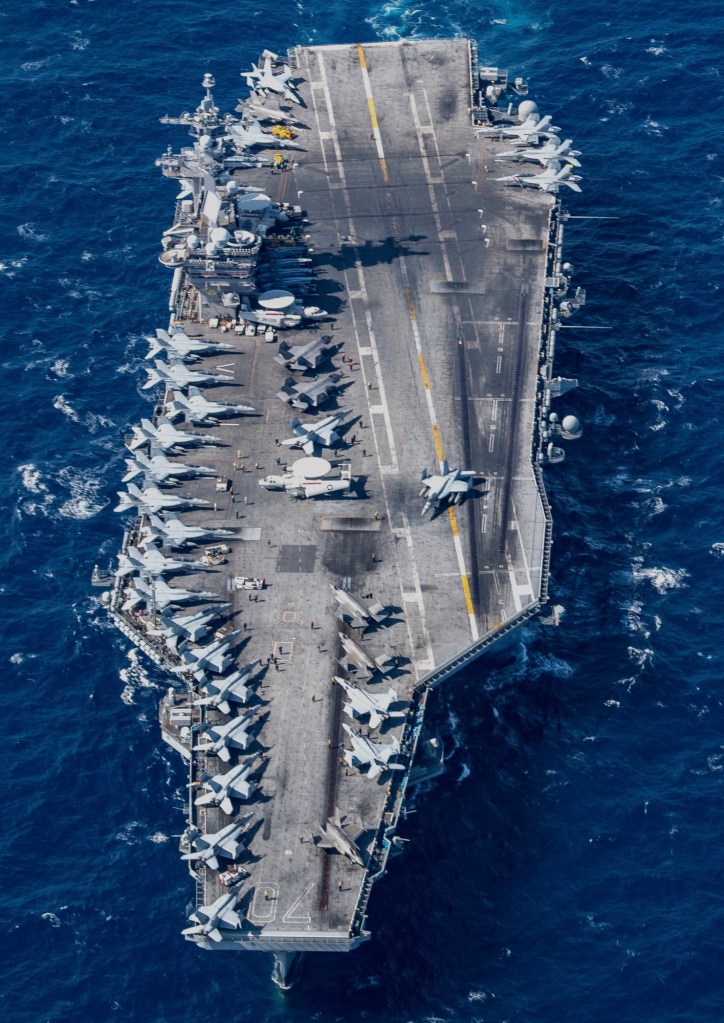
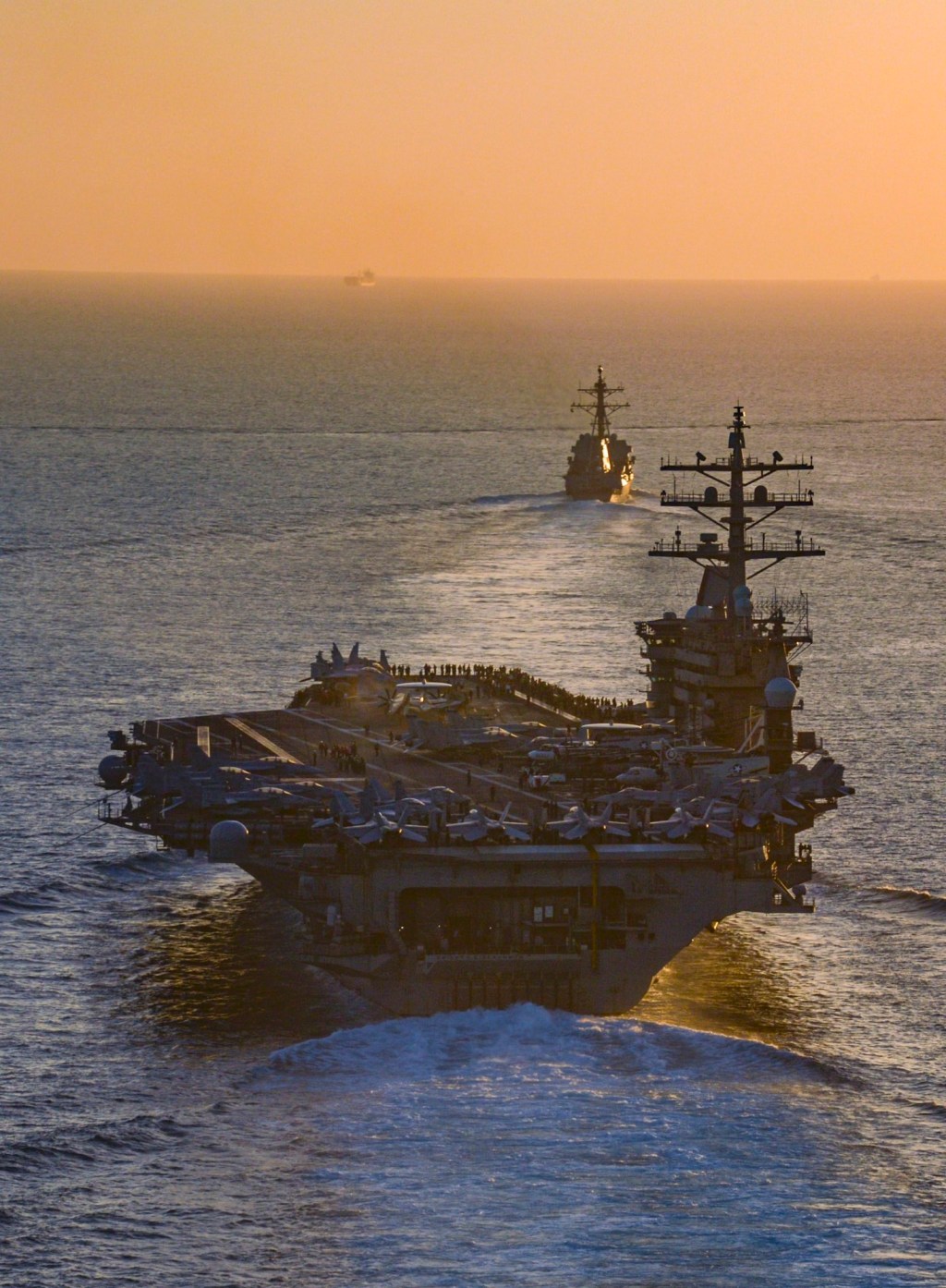
The U.S. Department of Defense has ordered the USS Carl Vinson(CVN-70) to the Middle East after its current deployment ends. All this is with the backdrop of a nonstop U.S. offensive on Iranian backed Houthi terrorist in Western Yemen,ongoing for over a week.
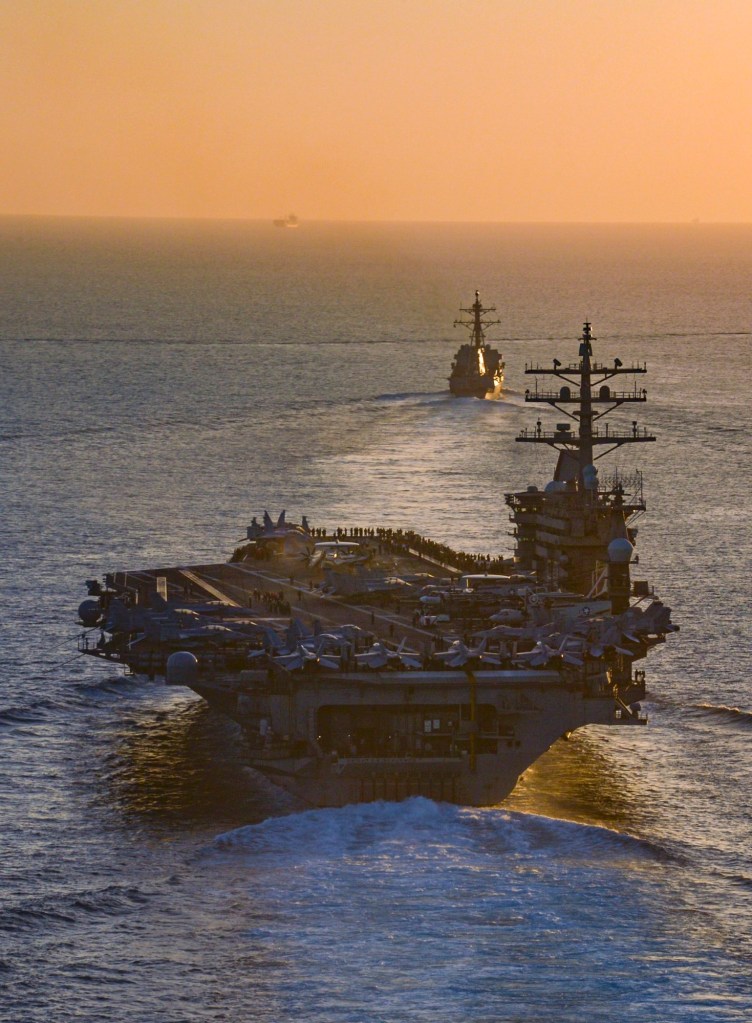
USS Carl Vinson Transitions the Philippines Sea Jan. 2 2022.
Currently the USS Carl Vinson along with her CSG have been assigned to the 7th fleet in the East Asia region but will leave for the Middle East soon. The CSG is expected to take two-three weeks to arrive when it will join the USS Harry S. Truman already in the region. The Truman has been carrying out daily strikes on Houthi targets. Truman’s deployment was scheduled to end soon but was extended at least a month, possibly longer.
Recent footage showing operations from the USS Harry S Truman Strike group as they carry out strikes against the Houthis.
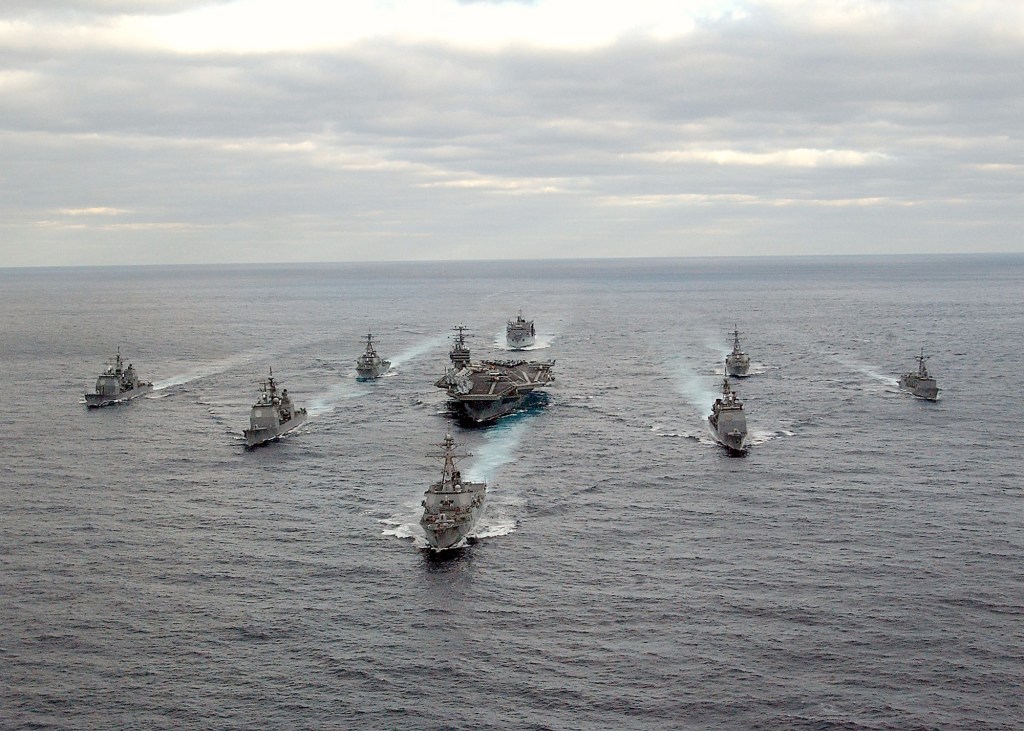
The USS Carl Vinson Carrier Strike Group is at last sighting made up of Ticonderoga-Class Guided missile cruiser USS Princeton (CG 59)as well as the Arleigh Burke-Class Guided Missile Destroyers USS Sterett (DDG 104) and USS Ralph Johnson (DDG 114).
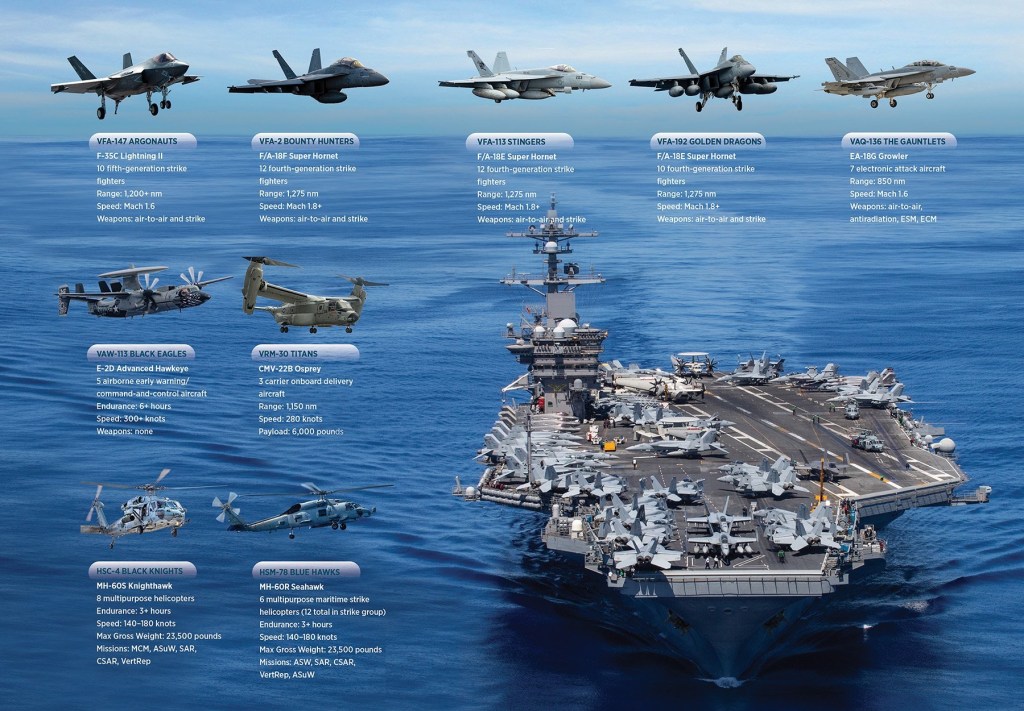
Makeup of the Carl Vinsons Air Wing.
The USS Carl Vinson was the Navy’s test bed for integrating 5th generation fighter jets into the Carrier Air wing. Specifically adding F-35C’s Lightning II which are capable of being launched from the Carrier. The F-35’s are a great addition to the fleet, adding an impressive Multi-Mission capable airframe to an already dominant group of war fighting planes. The officers of the Carl Vinson noted that the F-35 paired really well with the electronic attack capabilities of the EA-18G Growler. Using them together in combined operations made for a hard to beat team, heavy jamming and EW mixed with the amazing stealth of the F-35.
Last night the U.S. launched a wave of airstrikes across Houthi controlled territory in Yemen. Videos released by US Central Command social media showed F/A-18 Super Hornets launched from the USS Harry S. Truman carrying a number of munitions, mostly Joint Standoff Weapons or JSOW’s, a glide bomb capable of being launched outside of the range of standard air defenses. Also involved in the attack on Houthi positions was the USS Gettysburg (CG-64), a Ticonderoga-Class Guided missile cruiser and apart of the USS Harry S Truman Carrier Strike Group. An unidentified destroyer also took part in the attack.
The Houthis, showing solidarity with Hamas during their war with Israel started attacking any shipping in the Red Sea with connections to the US, Israel or their allies. While the U.S. navy was sent to defend Freedom of Navigation in the Red Sea, two ships were sunk and more received damage with over a hundred ships being targeted. Hundreds of drones and missiles were shot down and 2 sailers were killed. These attacks stopped once the ceasefire between Hamas and Israel has been signed but the Houthis threatened to start again, earlier this week.
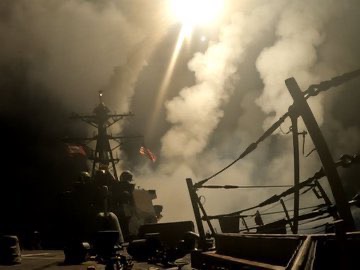
Video shows the USS Gettysburg (CG-64) and an unidentified Arleigh Burke Guided Missile Destroyer launching a TLAM (Tomahawk Land Attack Cruise Missile) during last nights attack. Right now there are 3 Arleigh Burke’s in the CENTCOM area and it could be any of the 3. The USS Jason Dunham (DDG-109), the USS Stout (DDG-55), and the USS Sullivan (DDG-68).
The U.S. and UK previously struck Yemen during the last U.S. administration, however this strike was carried out by the U.S. military alone. It is the Trump Administrations first strike against the Houthis. Secretary of State Marco Rubio made sure to point out that these strikes were not one off retaliation strikes as carried out by the last administration.
We’re not going to have these people controlling which ships can go through and which ones cannot, and so your question is, How long will this go on? It will go on until they no longer have the capacity to do that.
Secretaey of State Marco Rubio.
Video shows a strike on a target in Houthi territory.
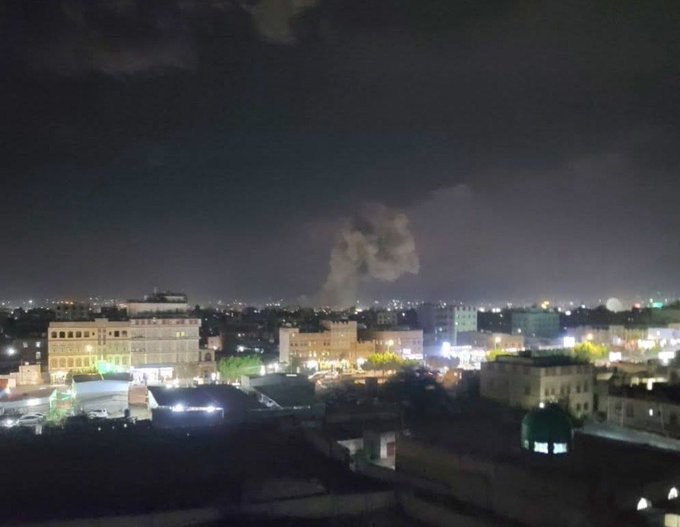
Last nights attacks were reported to have struck neighborhoods in Sanaa’s northern Shouab district and at least 4 strikes on the Eastern Geraf neighborhood that holds the Houthi headquarters for its political bureau as well as other military facilities.
Other strikes were reported in the southwestern Dhamar providence and the capital of the area, also called Dhamar. No specific target is known in that region.
Irans response to the strikes was a statement from foreign minister, Abbas Araghchi, who posted on Twitter and urged the U.S. tj stop its airstrikes, and said that Washington could not dictate Iran’s foreign policy. An Iranian General, Hossein Salami denied that Iran was backing the rebel group. Iranian weapons shipments have been coming into Yemen for sometime, the Houthis would not survive without financial and military help from Iran.
After reaching out to The Navy as well as CENTCOM’s press office the only response I received so far was from the navy who referred me to several social media post and directed me to contact CENTCOM, who has yet to respond to my inquiries. This was the response even the larger media company’s were receiving so no surprise there. Mainly I’m interested in post strike assessment as well as what was targeted specifically. I assume missile and drone production and storage but there is really no way to know as the Houthis aren’t saying. When I know more, so will you.
The U.S. has launch a wave of airstrikes on the Houthi sites in Yemen with confirmation that at least some of the strikes struck in Sanaa.
“Our brave Warfighters are right now carrying out aerial attacks on the terrorists’ bases, leaders, and missile defenses to protect American shipping, air, and naval assets, and to restore Navigational Freedom,”
US President Donald Trump during the strike. He also said,
“Funded by Iran, the Houthi thugs have fired missiles at US aircraft, and targeted our troops and Allies. ”
And..
“No terrorist force will stop American commercial and naval vessels from freely sailing the Waterways of the World.”
While Houthi attacks in international shipping had stopped since the ceasefire between Israel and Hamas todays attack is in response to a statement put out by the Houthis two days ago saying that any Israeli or U.S. linked ship that came close to Yemen would be attacked in the Red Sea, Gulf of Aden and Bab al-Mandeb Strait. Houthi spokesman Brig. Gen. Yahya Sare’e said on Twitter that the Houthi threat to attack these ships would be in place until Israel resumed Gaza crossings, as well as aid delivery’s into the region.
Houthi militants had spent over a year, since the Hamas attack on Israel in October 7th, 2023 attacking any ship with (and some without) any link to Israel and the U.S. with several ships being damaged by anti-ship ballistic missile or drone attacks. The U.S., in response, deployed several CSG’s (Carrier Strike Groups) into the region to counter this Houthi threat. US carrier aircraft conducted a number of strikes on Houthi targets in Yemen. Currently the Harry S. Truman is deployed to the area, having resumed her deployment after some repairs from an accident that occurred in the Suez.
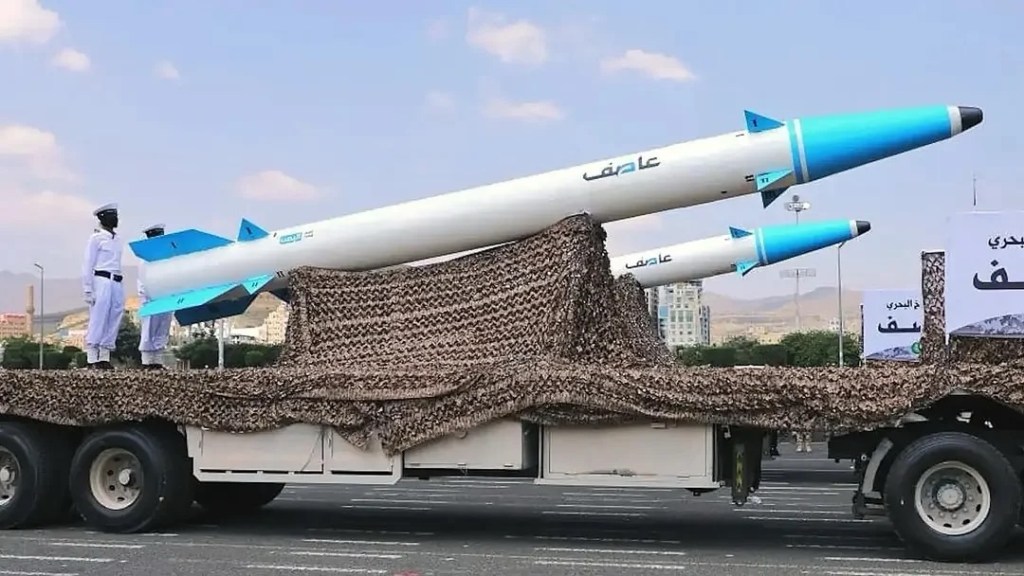
A Houthi anti-ship ballistic missile. The Houthis were the first to fire an ASBM in anger.
This video shows the strikers launching from the USS Harry S. Truman. A mix of F/A-18 Super Hornets for air cover as well as for the actual strike task. These are accompanied by growlers who will cover all electronic warfare and jamming.
Cue up “Danger Zone”
This short video shows the strike on Sanaa. Houthi sources claim 13 killed and another 9 wounded. They also report an additional strike north of Sanaa near the border near Saudi Arabia.
U.S. President Trump issued a direct warning to Iran for their support to the Houthis, promising to hold them “fully accountable” for the actions of the Houthis, Irans proxy. This comes two weeks after a letter was sent from the U.S. to Iran offering a path to restarting bilateral talks.
The US military has been engaged in defensive operations against the Yemeni Houthis for the past 15 months in the waters of the Red Sea and in the Arabian Sea as well as the sky’s above Yemen. Several different US carrier strike groups have been deployed into the area to protect the billions of dollars of international commerce that moves through the Red Sea daily heading to and from the Suez Canal. The Houthis have targeted any ship they believe is connected in any way to America or Israel as a way to show support for Palestinian terror group Hamas and their war with Israel in Gaza.
The Head of Naval Surface Forces Vice Admiral Brendan McLane revealed at a Surface Navy Association conference that was attended by journalists from The War Zone( TWZ is great, I always recommend them when they come up) just how many munitions had been expended in the operation. Statements made by the Vice Admiral also give us a more detailed look at how the operation has been going and what US forces as well as their European allies have been dealing with. US CENTCOM which is the United States military command over The Middle East region regularly puts out reports and social media post however they can sometimes be sparse with the details.
The U.S. Navy Surface Fleet has expended 400 individual munitions against the Iranian backed Houthis.
The Vice Admiral also gave an example of the current state of modern surface warfare by talking about a recent engagement that the sailers aboard the Arleigh Burke class destroyer USS Spruance (DDG 111).
“They were in a fight where they shot down 3 anti-ship ballistic missiles(ASBM), 3 anti-ship cruise missile (ASCM) and 7 one-way [unmanned aerial vehicles, or UAVs],” McLane said. “So that’s how it kind of rolls up.”
USS Spruance (DDG 111) after its return to its homeport, Naval Base San Diego, Cali
I’d like to break down the specific munitions, what they are used for, and maybe most importantly- the cost to the American taxpayers.
USS Chung-Hoon (DDG 93) fires an SM-2 missile.
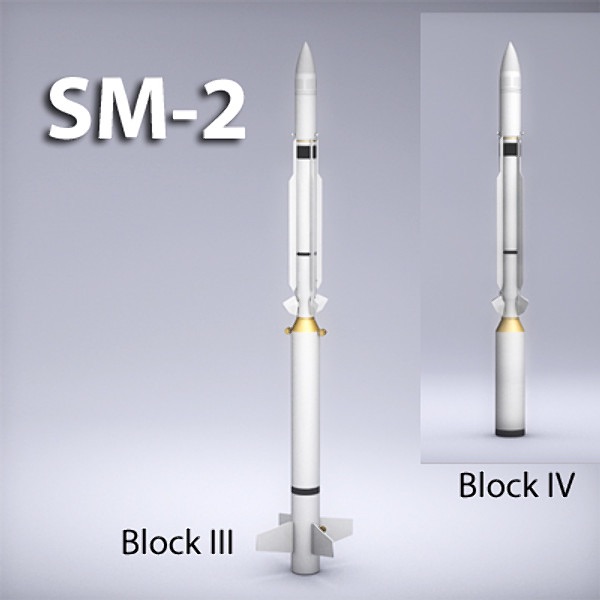
SM-2 missiles (RIM-66)
120 expended. This missile is the workhorse of US navy air defense, being used to take out incoming anti ship missiles as well as other
missiles and incoming enemy jet fighters.. High speed-highly maneuverable and considered one of the best in the world at what it does. The Sm-2 has a reported range of 90 nautical miles and can reach an altitude of 65,000 ft. A cornerstone of the fleets layered air defense systems.
SM-2
Cost vary on specific missile block but these come in at roughly $2 million USD per.
The U.S. is reported to have around 12,000 of these in its stocks.
US Aegis Destroyer intercepts Medium-Range Ballistic Missile with new SM-6 SWUP Missile.
SM-6 missiles (RIM-174)
80 expended
This is a newer addition to the fleet and the navy has a more limited stock of these missile with only 500 being reported to have been delivered according to the Raytheon website.
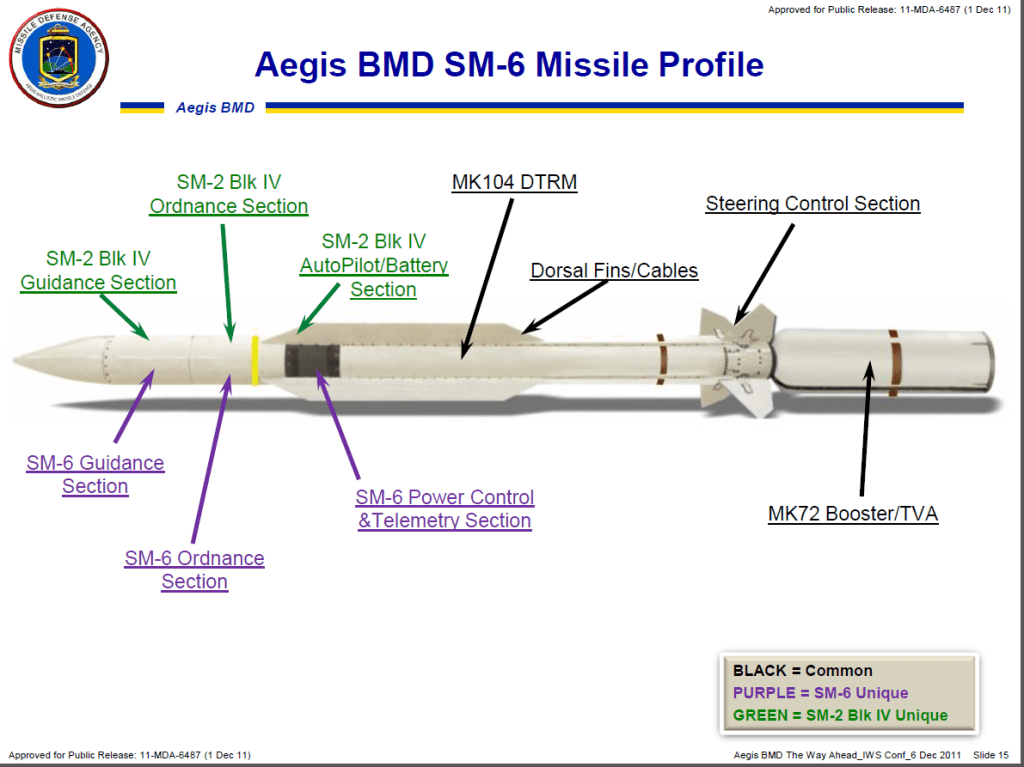
Coming equipped with the active radar seeker found in the Air-to-air AIM-120C AMRAAM, This missile is capable of a wide range of task being capable of defensive anti air against missile (including ballistic missile in their final terminal phase) as well as manned and unmanned air units. Its high speed also makes it a useful anti surface weapons although it’s high cost makes other weapons better choices. The thought behind this missile was warship today have limited space and a weapon that can effectively do everything is a benefit. The explosive warhead as opposed to a hit-to-kill style missile makes this missile capable of potentially defeating the Chinese DF-21D and DF-25B anti-ship ballistic missiles.
SM-6 missile profile.
Cost average around $3.9 million per.
A combined 20 expended from the
Sea sparrow and the SM-3.
Sea Sparrow launch
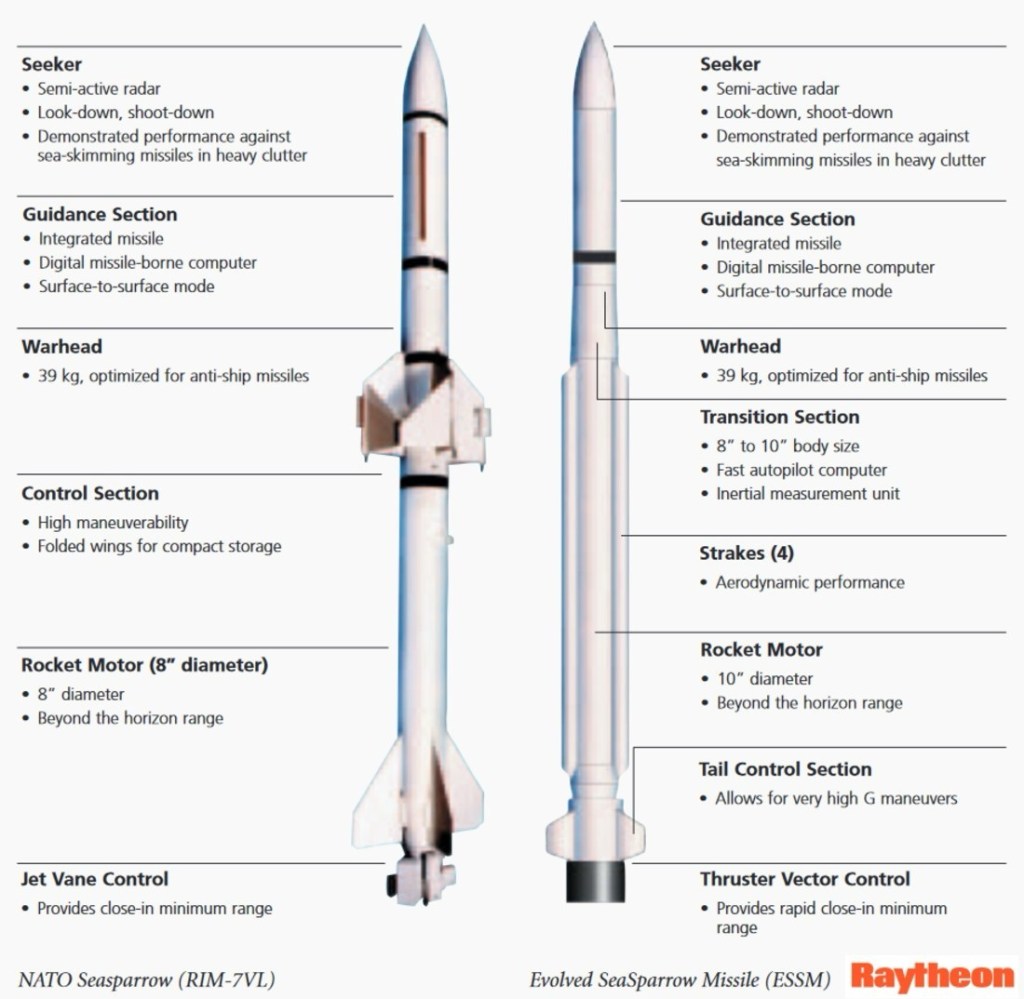
Sea Sparrow ESSM
Medium-range, semi-active homing missile that makes flight corrections via radar and midcourse data uplinks. The missile provides reliable ship self-defense capability against agile, high-speed, low-altitude anti-ship cruise missiles (ASCMs), low velocity air threats (LVATs), such as helicopters, and high-speed, maneuverable surface threats
Sea Sparrow Profile
$787K – $972K depending on configuration
SM-3 launched from the USS McCampbell (DDG 85) intercepts ballistic missile .
SM-3 (RIM-161)
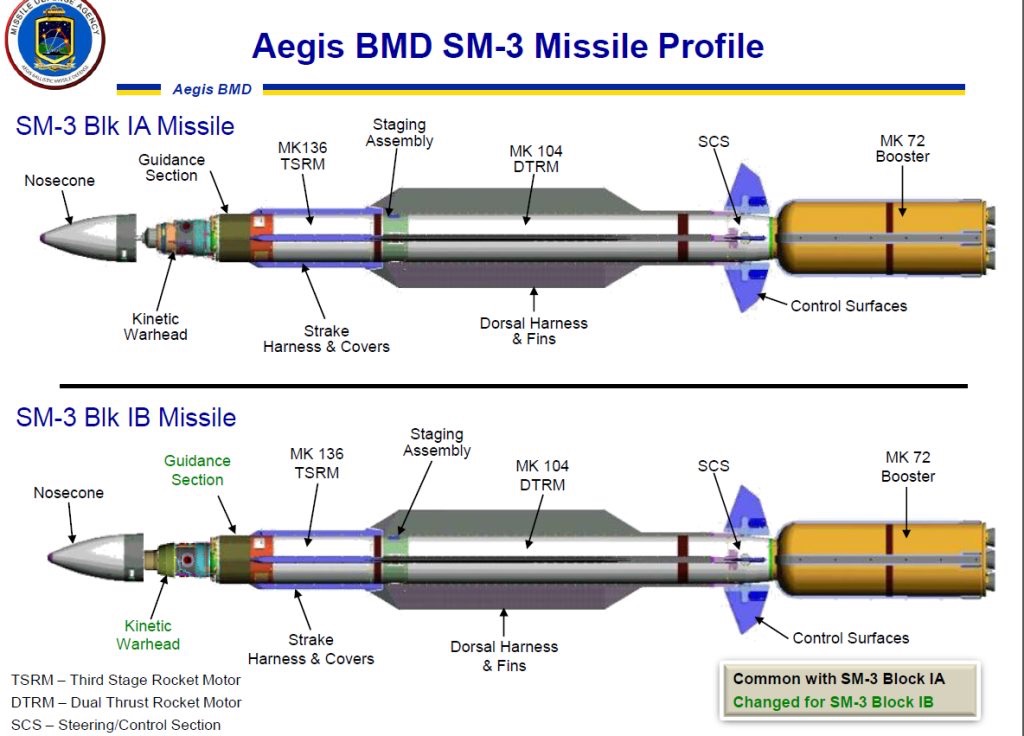
The SM-3 is the main ballistic missile defense of the fleet. It uses its powerful kinetic energy to utilize a hit-to-kill method of attack. It has a lower production rate than everything else on the list which also puts a heavy cost on these missile, especially if you have to fire more than one at a time.
SM-3 missile profile
Anywhere from $10 million to $30 million (this price likely to come down some as missile production is ramped up as announced earlier today.
While the expenditure of these weapons is something to be concerned about it only highlights the logistical issues that the US would have in a near peer, great power conflict when the amount of munitions expended in the Red Sea over the past year would equal only several days of fighting in say the pacific against China. Addressing these procurement and cost issues is paramount if the US is to remain a dominant force on the world’s stage.



You must be logged in to post a comment.