Houthi forces based in Yemen have struck the King Khalid International Airport in Riyadh, Saudi Arabia, with ballistic missiles.
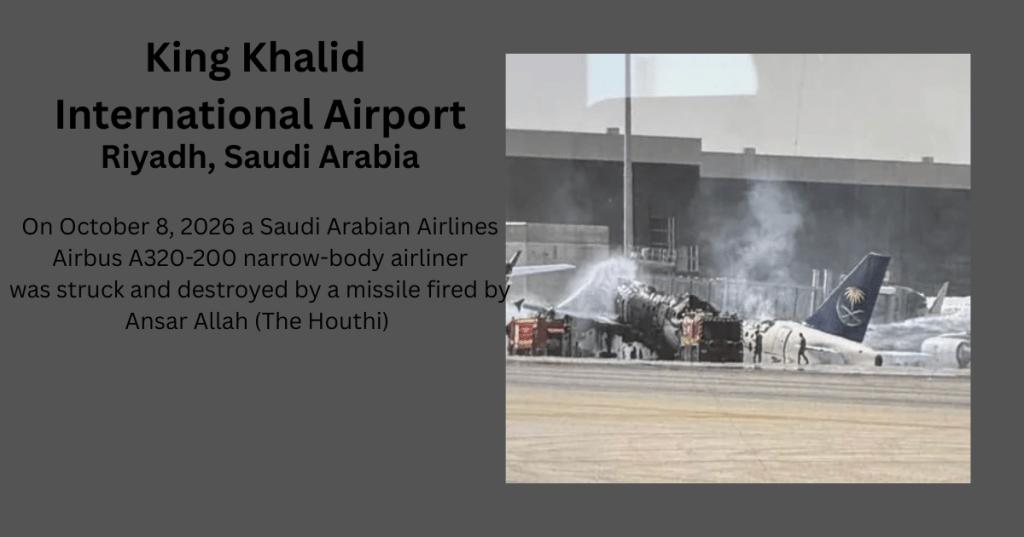
The attack was reported this morning, October 8, 2026, and images and video were released showing smoke coming from the scene.
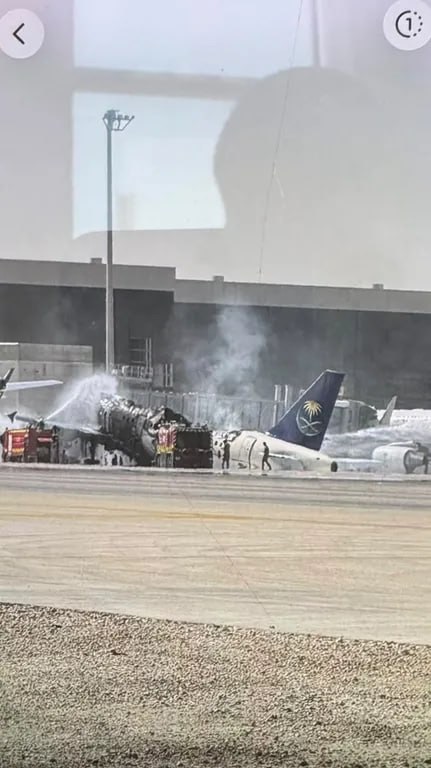
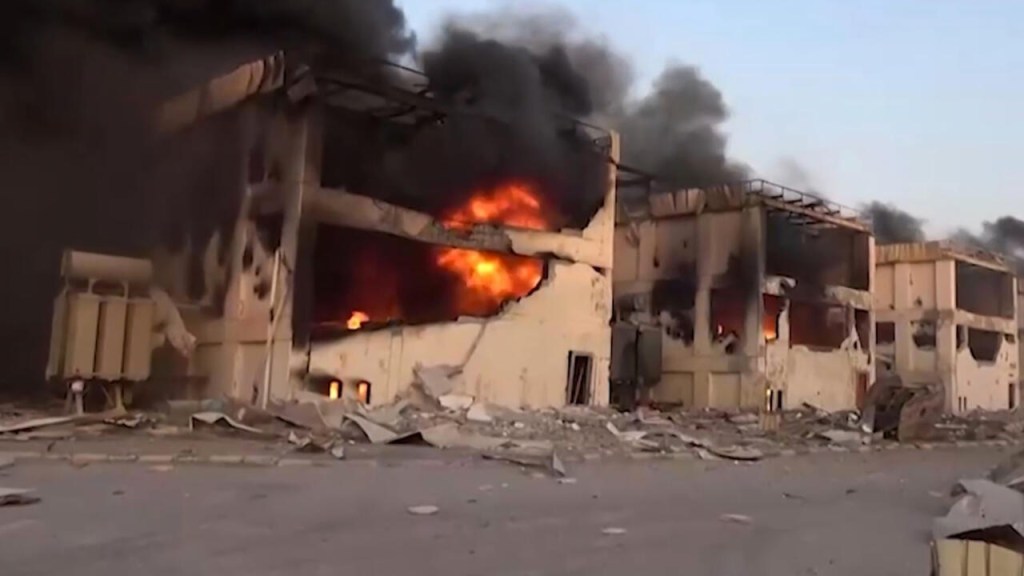
Smoke coming from King Khalid International Airport.
Destroyed in the attack was an Airbus A320-200 narrow-body airliner owned by state-owned Saudi Arabian Airlines. The plane was parked in a terminal at the time of the strike but no passengers were on board.
Aftermath of the strike which destroyed a Saudi Airbus A320-200. The Saudi airlines tail is clear in the image.
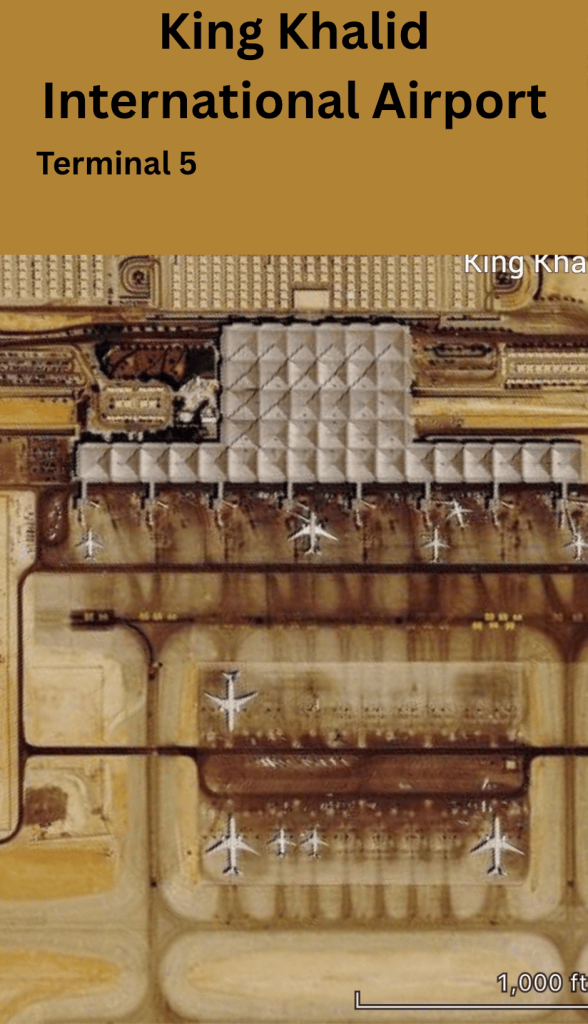
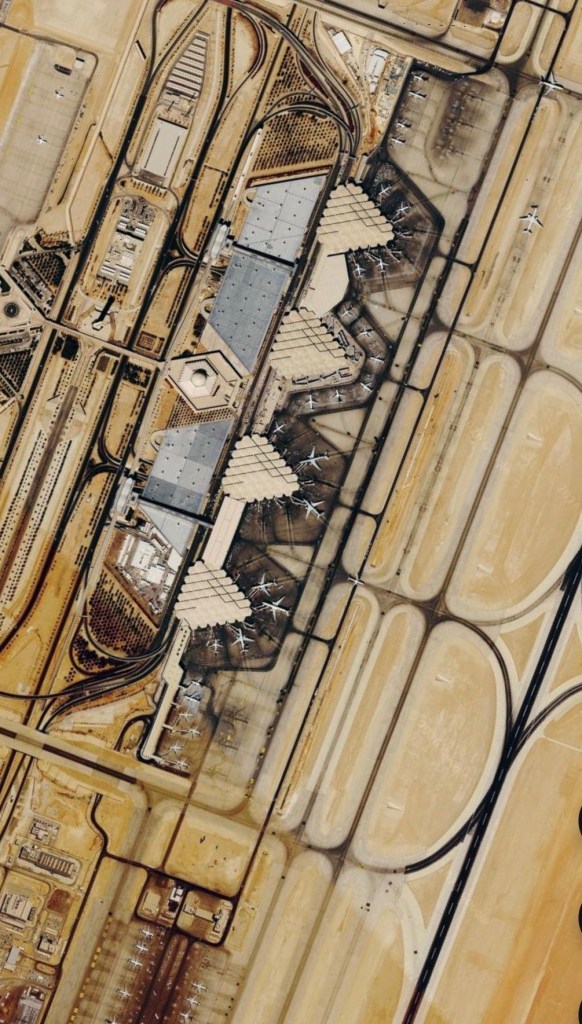
GCR has analyzed video and images of the strike and determined that the plane was sitting at one if the gates at Terminal 5 at the time of the strike. (Image with post) This terminal is newer than the others and used for the domestic Saudi flights. The roof and shape of the building were key to the identification as the building is flat faced with the other 4 terminals all follow the same style with a portion of the terminal gates protruding out. The roof pattern was also noted in as the overhang is specificity different from the thermals 1-4.
The site GCR believes the plane was sitting when it was hit. It’s unclear from the footage exactly where however this terminal has enough individual characteristics that distinguish it from the other four terminals that we are confident in this general location. The shape of the building and roof matches images and videos available of the scene. Terminals 1-4 going right to left. Here the gates in the terminal partridge from the terminal in a way which doesn’t match the image, leaving only Terminal 5 as the possible location.
Airlines Lufthansa and Air India announced through company spokesperson’s statements to media that they have cancelled flights into Riyadh for the next several days. A Lufthansa spokesman cited “current developments in the Middle East” to Reuters as the reason for the suspension. Others have followed since.
Saudi Arabia said that during the attack, additional missiles were intercepted by air defense; however, debris from the falling munitions landed on a school and medical center.
Saudi aviation authorities on Wednesday said that three people had been killed and a more than 30 injured in strikes Riyadh airport and Abha airport in the southwest earlier this week. This is the third day in a row the airport in Riyadh has been targeted.
The Houthis have claimed they are targeting Saudi Arabia due to the kingdom’s support for Yemeni government forces currently fighting against the Houthis. Saudi Arabia is backing the government forces currently fighting an offensive and attempting to retake some of the territory lost in a recent Houthi blitz down the Red Sea coast. That offensive put the Houthis in a strategic position if they wanted to project power into the Red Sea and the Bab Al-Mandab strait.
The conflict between the Houthis and the Yemeni government forces plus Saudi Arabia is an extension of the U.S./Iran war with the Houthis being a major proxy of Iran, receiving material support and training.
A disclaimer, any geolocation in this article or any others is just my best guess with the current information and any images and videos available. While I go to great lengths to make sure the information on this website is always true, I am human and reserve the right to make mistakes. Should you spot a mistake in the facts or geolocation work reach out to us directly through our email, available on our contact page.
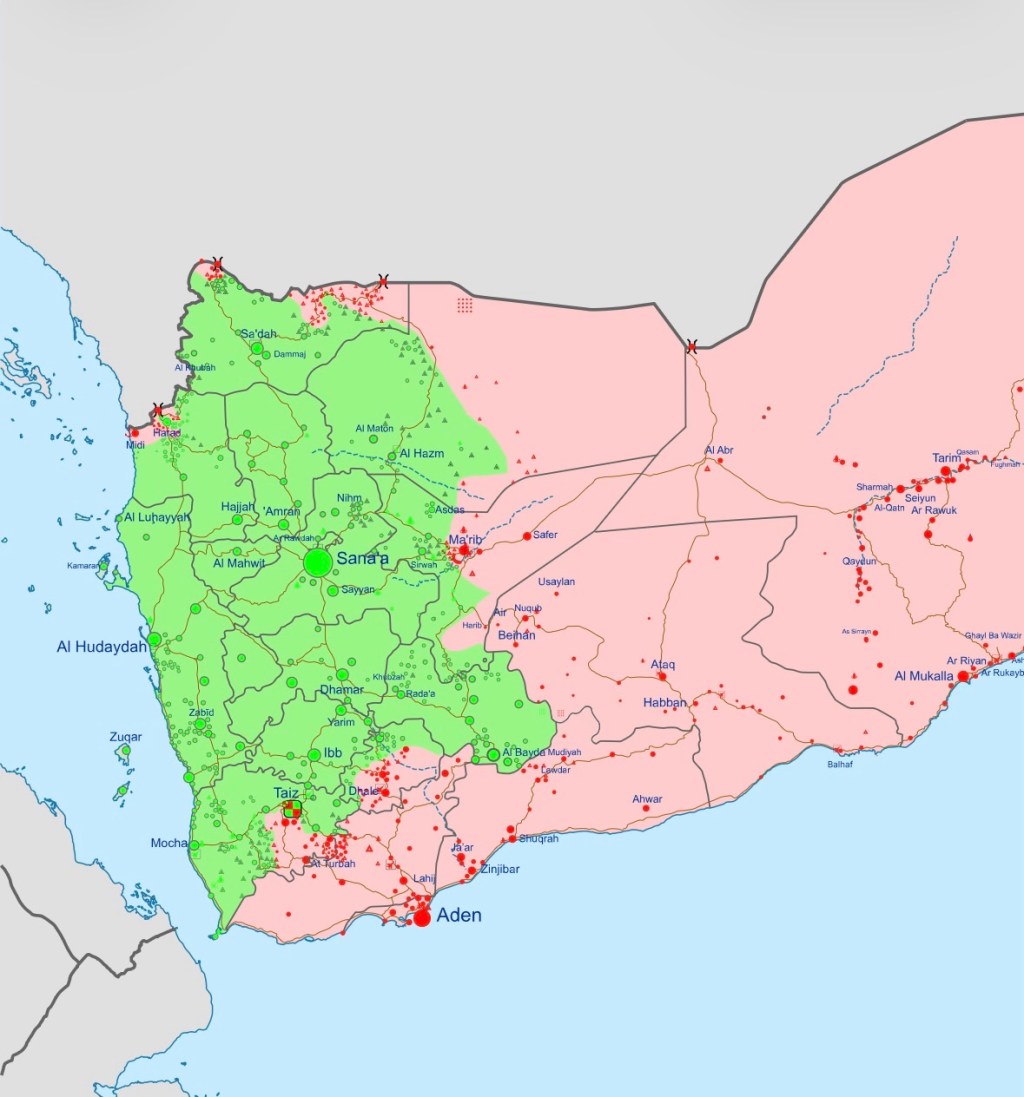
The security situation in Yemen has been violently changed in the past week as Houthi forces in Yemen made a coordinated push down the western coast. A fighting force made up of Yemeni government soldiers and National Resistance Forces (Tareq Saleh) withdrew from the city of Mocha rather than attempt to hold it. That port city is now under solid Houthi control. Government sources further reported that the Houthis had pushed towards the Hanish islands, attacking with rockets and boat-borne landings. Government forces chose to fall back to Dhubab, the last significant town facing Perim Island and the Bab el-Mandeb. More on Dhubab later.
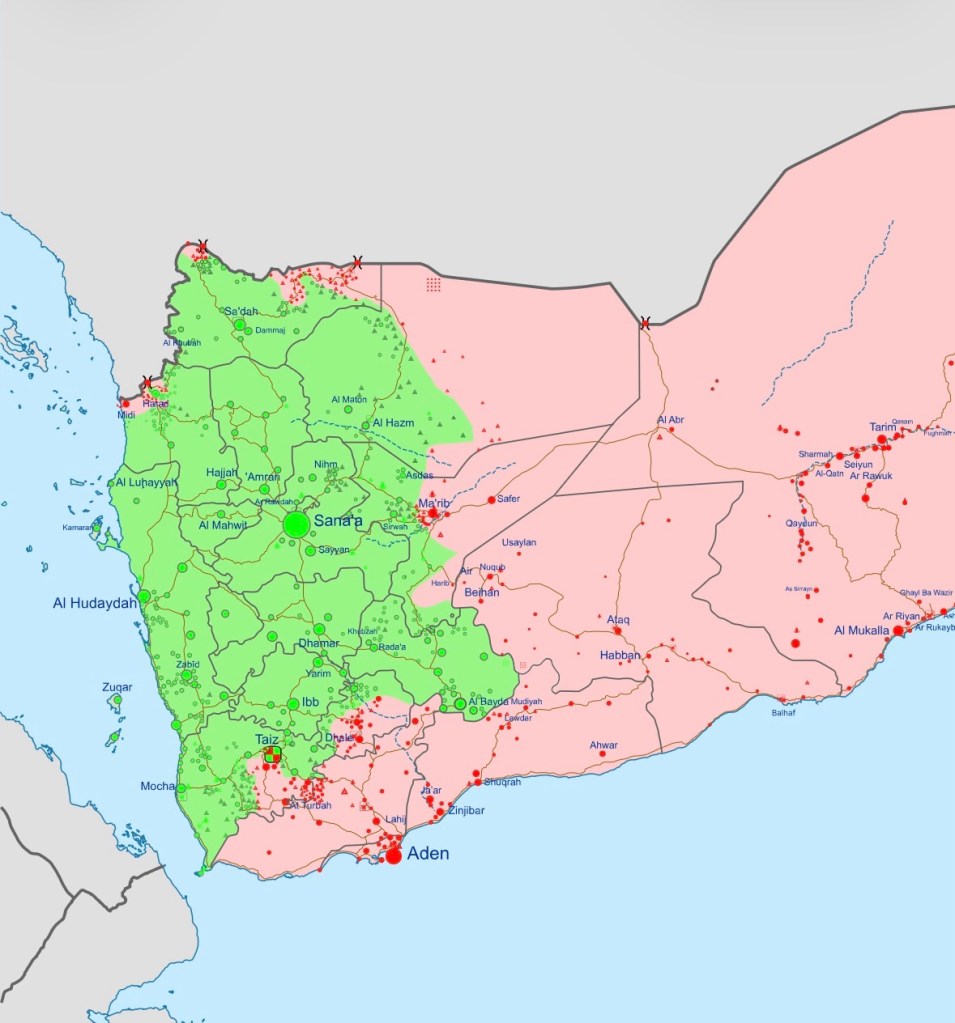
Map showing the current state of the conflict in Yemen including the newly taken Houthi territory. Green=Houthi control, Red= Saudi-backed Yemeni Government control.
Several reports from Reuters and Al Jazera mention Yemeni government taking heavy losses at Hays, al-Wazi‘iyah, and the Khalid ibn al-Walid base, all along the costal plains in the days leading up to and the day of the loss of Mocha. The bottom line is that the Yemeni government lost the whole of their government-held Red Sea coastal belt in Taiz governorate and, according to its own officials, the main offshore positions that matter for the strait.
Moving on the Sept 11. the strategic situation in Yemen gets even worse. Two Yemeni government officials told Reuters that the town of Dhubab had been lost. The Houthis had already taken Perim, the island just across the strait from Dhubab when the forces had withdrawn from there as well. Perim Island is strategically important as it sits directly in the middle of the Bab al-Mandab Strait, where it divides the waterway into two channels. This gives them direct line of sight on incoming and outgoing shipping in one of one of the most strategic choke points in the world. So far, the Houthis are saying that shipping will not be impacted besides Saudi Arabia’s shipping. While they have said this before, notably with the U.S. and Israel during their support for Palestinian Hamas during the fighting in Gaza.
It’s fairly common knowledge that the Houthis are backed by Iran indirectly, Tehran offers them weapons and supplies as well as training. This has been expanded as Reuters said that their source’s claimed two Iranian sources told Reuters that Tehran instructed the Houthis in the last week to escalate attacks on Saudi Arabia and promised additional funding, weapons and senior officers.
With Iran and the U.S. currently locked over the Strait of Hormuz the Red Sea has turned into an important route for middle eastern oil production as most countries with the capability to do so have been pumping their oil across the country to the West and then loading there.
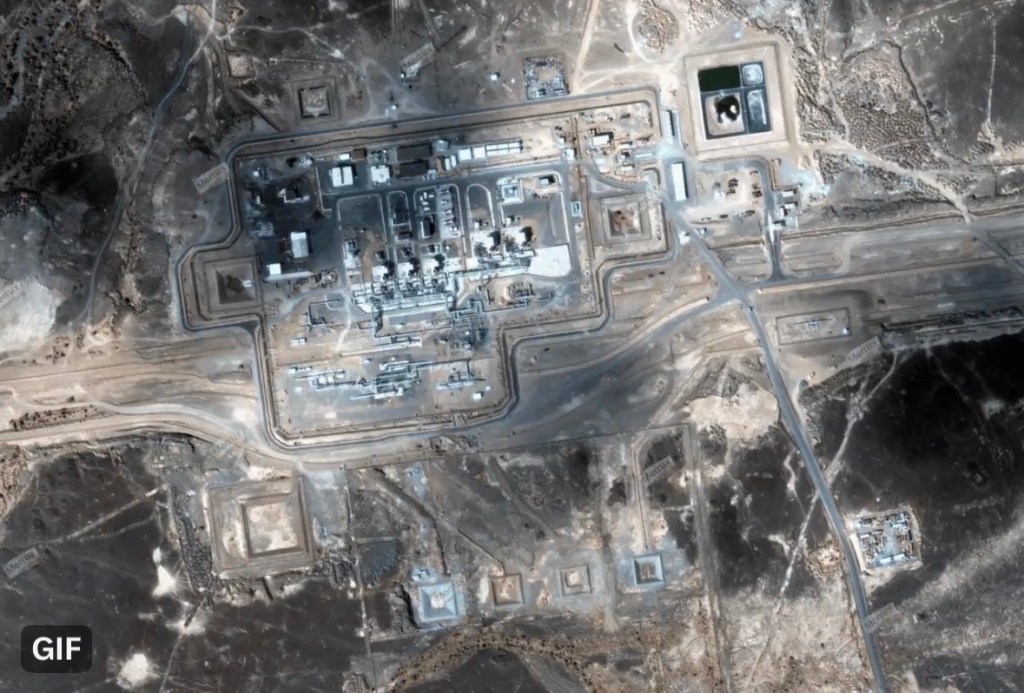
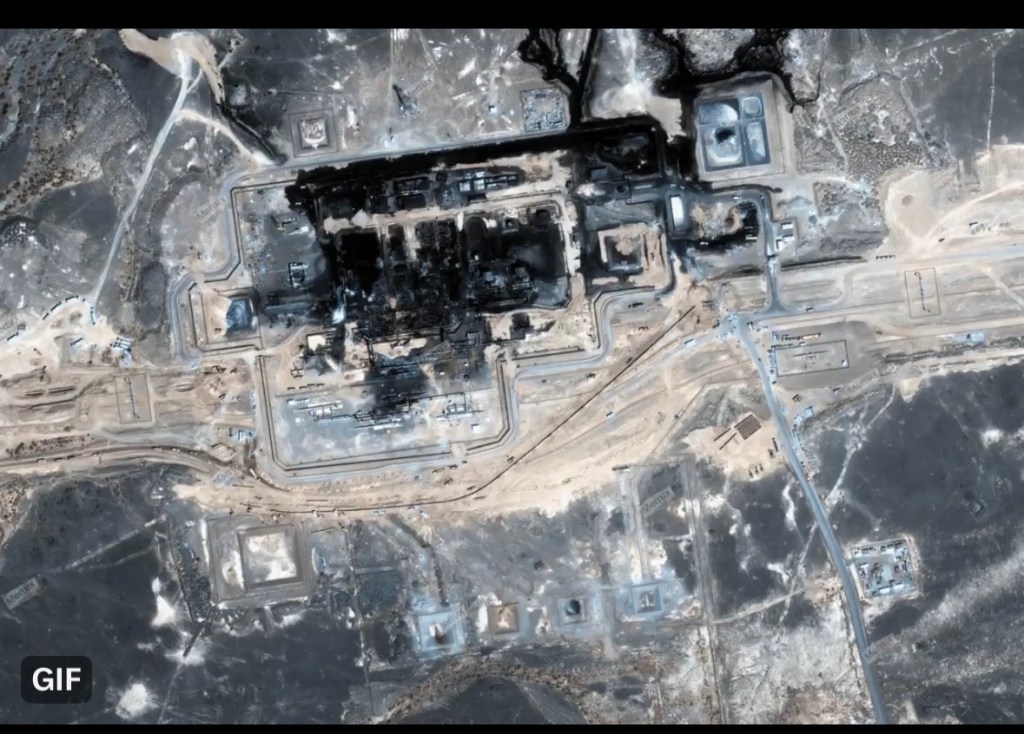
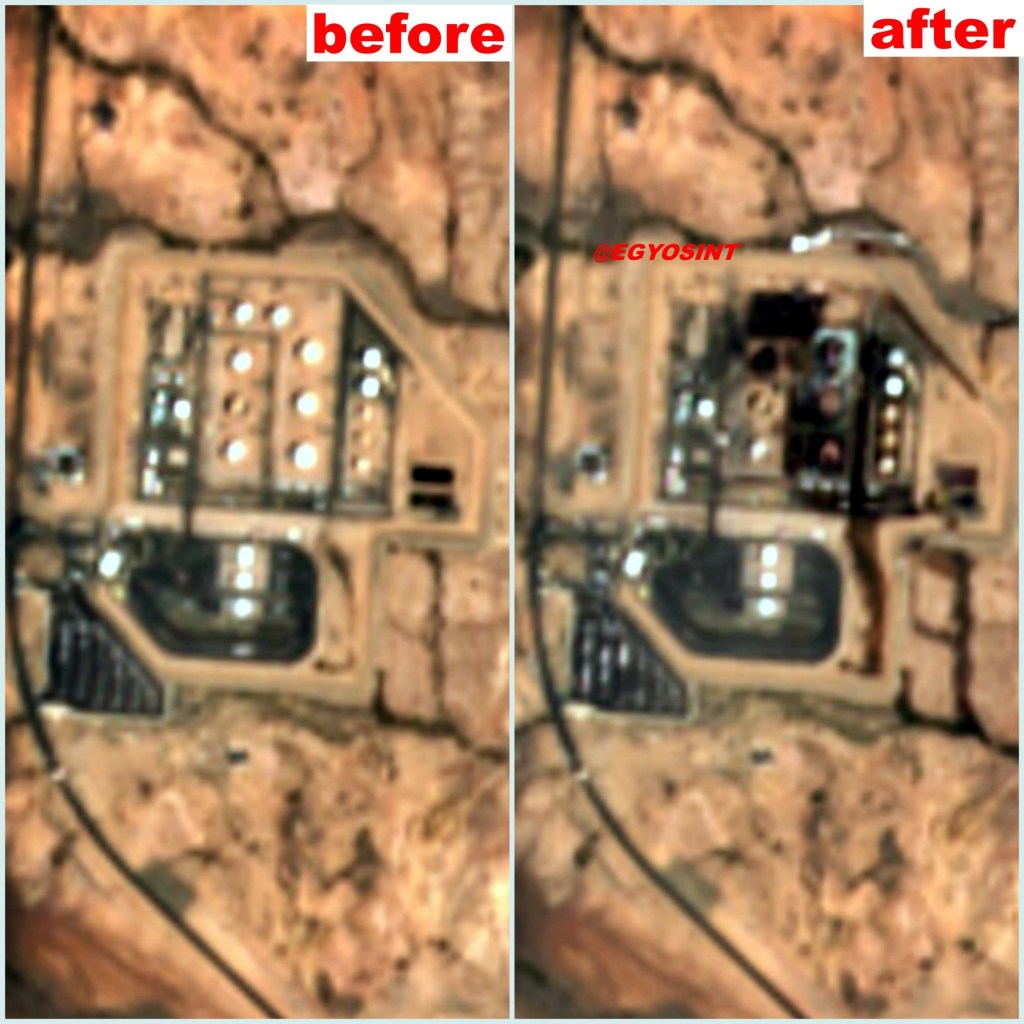
Saudi Arabia took a hit as it was forced to temporarily close their East-West oil pipeline, a 1,200km (746-mile) conduit stretching across the Arabian Peninsula. The pipeline was reported on Sept. 11 as being attacked by projectiles and drones launched from Iraq. Iraq has a large number of Iranian backed groups which are linked to the attacks.
Before image showing the pumping station of the Saudi East-West pipeline. Photos released by Maxar,After images.
Aramco’s Abha bulk plant also received damage according to satellites image analysis. This damage was first seen on imagery from Sept 8.
Sentinal-2 imagery shows the aftermath of some sort of an attack on the Saudi Abha bulk plant.
In the days since the attack, multiple pumping stations on the Saudi “East-West” pipeline have been confirmed to have been attacked. This video includes the images from above as well as additional images of other locations.
Video from SOAR showing the Saudi pumping stations that have been targeted in the days since the Houthis campaign’s begun.
Reports from sources who spoke to CNN of Yemeni forces that were stationed in some of these towns as being partially made up of “ghost soldiers”, or only existing on paper to collect a salary make the Yemeni withdrawal and losses make more sense.After the government forces pulled out of their positions, Houthi soldiers were shown loading up Saudi/U.S. vehicles that were left behind.
Video reportedly shows the equipment captured by the Houthis.
The Houthis (Ansar Allah) have four primary goals in this conflict according to the Institute for the Study of War — ending Saudi military operations in Yemen, lifting the Saudi blockade of Houthi-controlled Yemeni ports and airports, coercing Saudi Arabia to pay Houthi civil servant salaries, and coercing Saudi Arabia to pay reparations to Yemeni civilians.
During the attack on Mocha, Saudi Crown Prince Mohammed bin Salman reportedly called President Trump twice on September 10 (as Mocha was falling) and urged American strikes against the advancing Houthis. Trump declined, with Us officials framing the reasoning that the U.S. president didn’t want to open up another major combat theater while U.S. forces are focused on Iran and the Strait of Hormuz.
For now, U.S. involvement in Yemen is limited to around 100 personal sent to act as advisors to Saudi Arabia who the U.S. hopes can manage the situation in this front.
Saudi Arabia carried out reportedly anywhere from several dozen to over a hundred bombing attacks on the advancing Houthi forces during their march to Mocha and Dhubab. These attacks did little to stop or slow Houthi advances. Yemeni forces report a lack of airstrikes during critical hours of fighting in Mocha.
Saudi Arabia has changed their Yemen strategy since around 2015 choosing to focus more on containment and diplomacy and limited pressure on the ground. However that was mostly as a way to avoid a full escalation in which Houthi forces targeted Saudi energy infrastructure which is now happening anyway. Saudi Arabia, like the U.S. is also facing a shortage of air defense missile interceptors which has led to key energy installations being targeted by Iranian backed elements, including the Houthis.
For now as an overall update, the Houthis are currently consolidating their control over their newly taken territories. They are digging in around the Bab-el Mandeb region in an effort to hold that area because of the large strategic advantage they hold with it . They are also moving in logistics and administration personnel to further help control the newly taken regions. The Houthis in 2014 received a lot of support from Hezbollah in Lebanon, another group with a strong focus on acting as a state institution and actually bringing benefits to the populations of regions they patrol.
This article was written primarily on and around the 11th and 12th but I took a little break and was going to just scrap this article but figured it had a lot of good info and is still relevant to everything that happened. I’ve updated some things to reflect on new information.
Right now 15 sailers are missing and presumed dead after Houthi forces carried out their second attack and subsequent sinking of a cargo ship in the Red Sea this week.
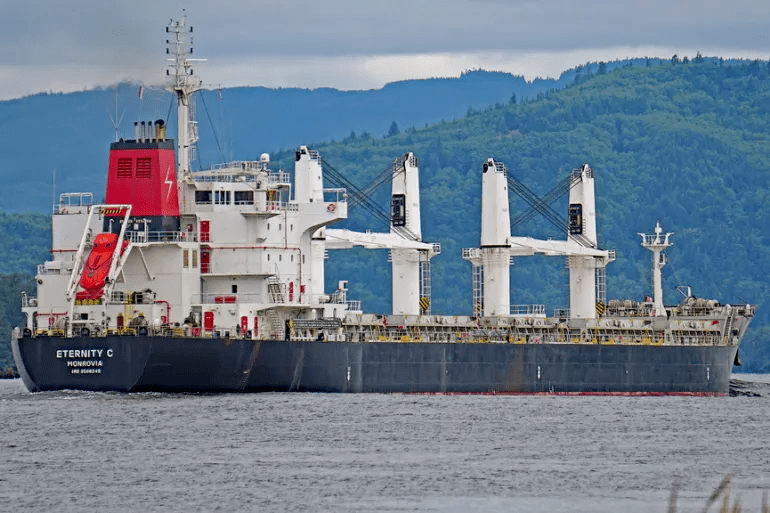
Image taken of the Eternity C frim 2019.
The Eternity C, a Greek-owned cargo vessel was attacked on Monday, one day after the attack on the ‘Magic Seas’, showing an increase in the Houthis willingness to attack shipping since the ceasefire with the U.S.
The attacks main thrust , according to the United Kingdom Maritime Trade Operation, started around 1703 (5:03PM) on Monday. At that time the company security officer reported that the ship had been hit with multiple Rocket propelled grenade rounds and was being approached by multiple small craft. They had been in and out of fights with this group of boats for the past day as they attempted to get through the Red Sea.
10 minutes after the first UKMTO report Eternity C, reported that the vessel has sustained significant damage and has lost all propulsion. At this point the ship was surrounded and taking continuous fire from the small boats. The boat was completely overrun after that.
The Europeans unions defensive operation in the region- Operation Aspides, rescued several of the crew of the Eternity C floated in the water for 24 hours before a rescue could be made. The Yemeni Navy also responded to rescue survivors.
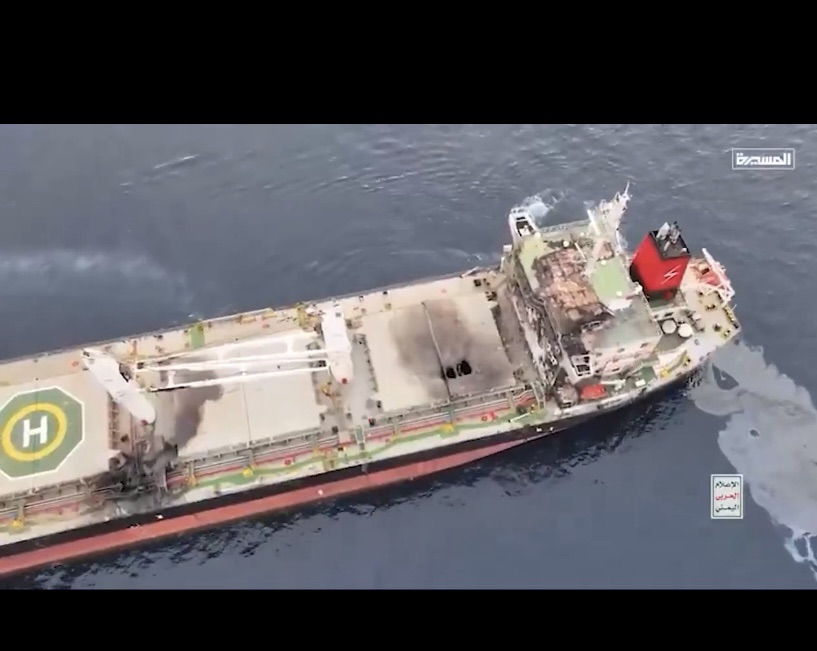
The Houthis claimed responsibility for the assault, releasing several videos. One I’ve included as they are both very similar The ship is filmed as it slowly sinks after being struck with a missile which caused damage to the deck but did not cause the sinking. Holes caused by off screen damage can be seen at the ships water line.
The U.S. mission in government controlled parts of the Yemen, accused the Houthis of kidnapping many of the survivors of the ship who have yet to be found.
Update-
Of the crew, 10 were rescued, 3 were killed and 12 are suspected to have been kidnapped.
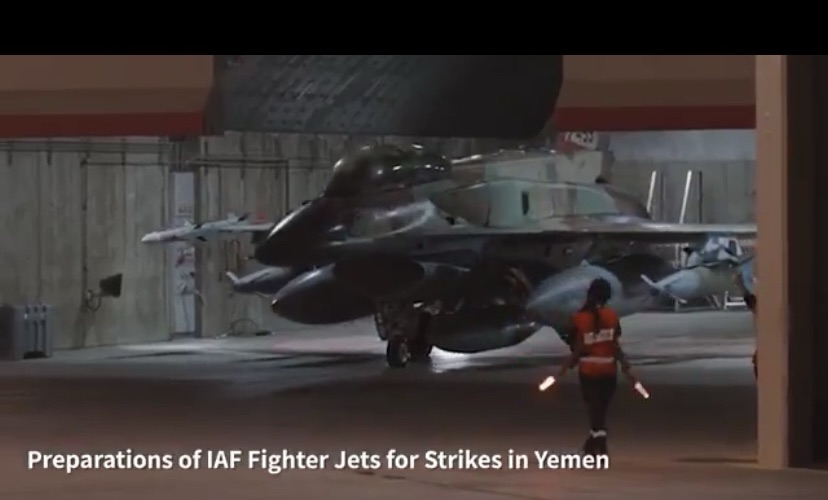
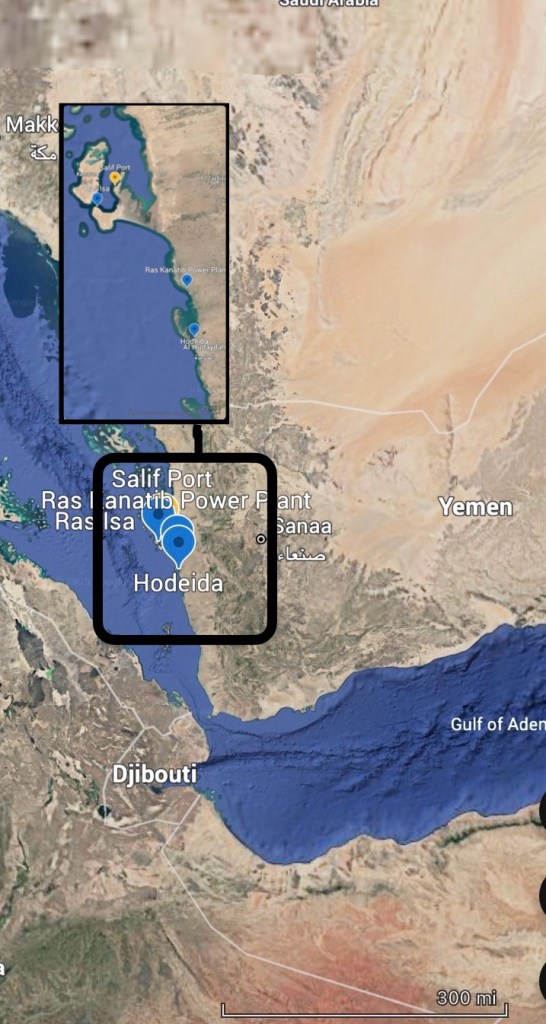
Around midnight on Sunday night going into Monday Israeli forces carried out airstrike across three Houthi controlled ports in Yemen. The ports of Hodeida, Ras Isa and Salif were all struck. They alleged that the ports were being used by the Houthis to “transfer weapons from the Iranian regime,” according to a statement from the IDF. Ras Kanatib power planet was also struck.
We don’t know specifically what aircraft carried out the attack only that F-16’s were used.
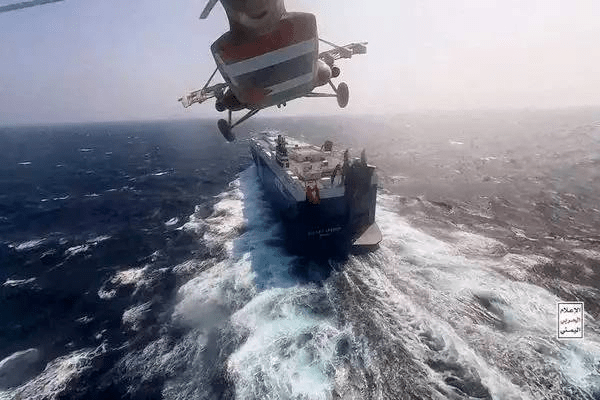
During those strike the IDF also struck the M/S Galaxy Leader, a cargo ship hijacked by Houthi forces in November 2023 following the start of the war between Hamas and Israel. The Houthis, like the other major Iranian backed groups all launched separate campaigns after the attack on Israel on October 27th 2023 . The Houthis are strong supporters of Palestinian Hamas, regularly attacking Israel with ballistic missiles and striking at ships in the Red Sea connected to Israel and America. These attacks in the Red Sea put shipping in the region to a standstill Most trade has recovered although the supply route has been extended as ships make their way around Africa instead of through the Red Sea. Along with impacting trade these Houthi attacks have also forced the U.S. to up its presence in the region, tying down one or more carrier strike groups at a time as they attempted to protect shipping from Houthi anti-ship ballistic missile and drone attacks.
Still frim the video showing the Houthi capture of the M/S Galaxy Leader.
After the capture of the M/S Galaxy Leader,a bulk roll on-roll off style car carrier, in November of 2023 the crew remained hostages in Yemen until January of this year (2025) when a ceasefire deal was signed between Israel and Hamas.
“Houthi forces installed a radar system on the ship and have been using it to track vessels in the international maritime arena to facilitate further terrorist activities,” the IDF said in the statement speaking about the ship since it has been held be the Houthis and used to help them in their attacks.
Last nights IDF operation followed a recent wave of ballistic missile attacked launched from the Houthis on Israel, the most recent was intercepted on Saturday. The Houthis also claimed responsibility for an attempted hijacking and attack that took place on the Bulk carrier, ‘Magic Seas’ on Sunday. The group claimed the ship had used Israeli ports recently, trying to justify their actions. However the ships operator-Stem shipping- said that the vessel had made a port call to Israel in the past but viewed this trip as safe because it had nothing to do with Israel.
The crew of ‘Magic Seas’, -19 in total- had to abandon ship after the attack on Sunday due to fire and flooding. The ship is now sunk but the crew was rescued by an operation led by the United Arab Emeries in coordination with the United Kingdom Maritime Trade Operation (UKMTO).
Thank you for reading. Your support is always appreciated.
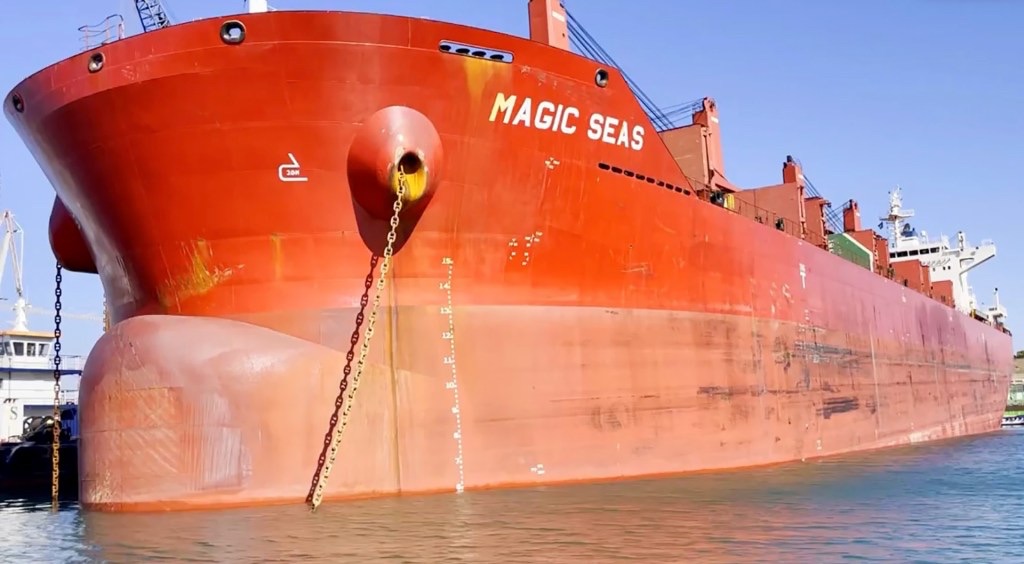
Several hours ago the M/S ‘Magic Seas‘ a Greek-flagged and Liberian registered cargo carrier traveling through the Red Sea was attacked by multiple Houthie boats who exchanged small arms fire at the ship in an attempt to hijack the vessel. The ships security team returned fire. During the course of the firefight the vessel was struck with an unknown (at the time) projectile which started a fire. The ships crew ultimately had to abandon their ship as its condition became dire.
Magic Seas set ablaze after an attack carried out by Houthi fighters.
This is the first attack from the Houthi rebels of Yemen since December of last year. They took credit shortly after the attack occurred,claiming it was in support of Palestinians in the ongoing war between Hamas and Israel.
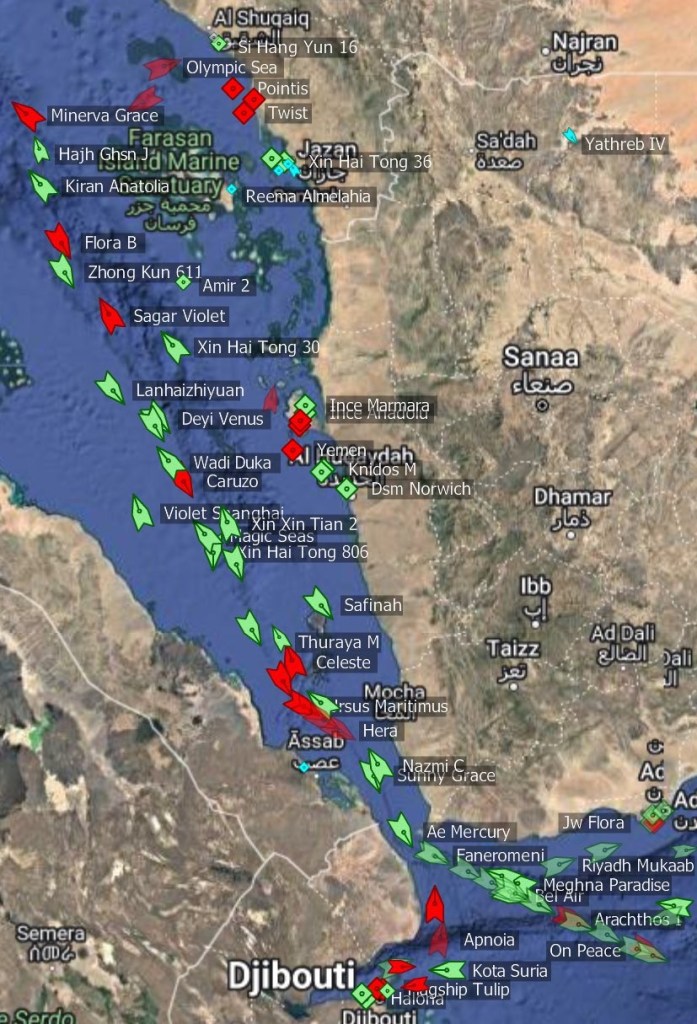
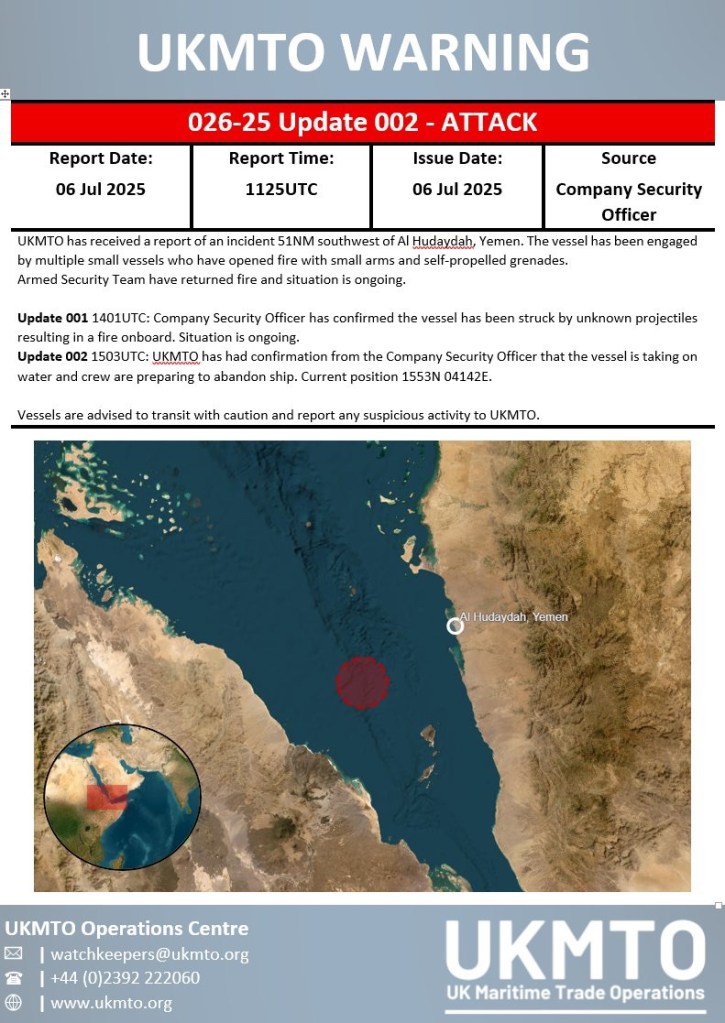
When the attack occurred the ship was about nautical miles southwest of the Yemeni port of Hodiedah. The report from the UKMTO says that at 1125 UTC the ahip came under attack from 8 skiffs carrying multiple fighters apiece that opened up with small arms fire and RPG’s, and also attacked with unscrewed drone boats.
Magic Seas.The first update from the UK Maritime Trade Operations informing of the attacks. An update from several hours later confirming that the ship was taking on water and the crew was abandoning ship.
In their statement, published on the Al Ansar Telegram channel, the Houthis claimed that the ship for the profile for ships that should be targeted. They also stated that four navel drones took part in the attack on the Magic Seas. They indicated that two of the drones collided with the port side of the ship which caused the fire.
Houthi attacks on shipping in the Red Sea started in November 2023, In support of Hamas and their war against Israel in Gaza. Since then dozens of vessels have been attacked, most with Iranian supplied ballistic missiles fired from Yemen. Shipping company’s from most of the worlds nations have all had to weigh the options of a faster trip through the Red Sea and the danger of a Houthi missile attack, or a safer but much longer and more costly trip around the Horn of Africa. In total the Houthis managed to sink two ships- the M/S Tutor and M/S Rubymar and damaged many more. Four mariners have been killed total with many more being held hostage.
(By my memory over 30 ships were attack,possibly more.)
In 2024 the Biden administration started up near daily airstrikes against the Houthis targeting missiles and drone production sites, their launching infrastructure and military infrastructure, radar, and air defense. The changing of the US administration seen a change to the policy against the Houthis with a monthlong campaign of airstrikes being carried out in March.
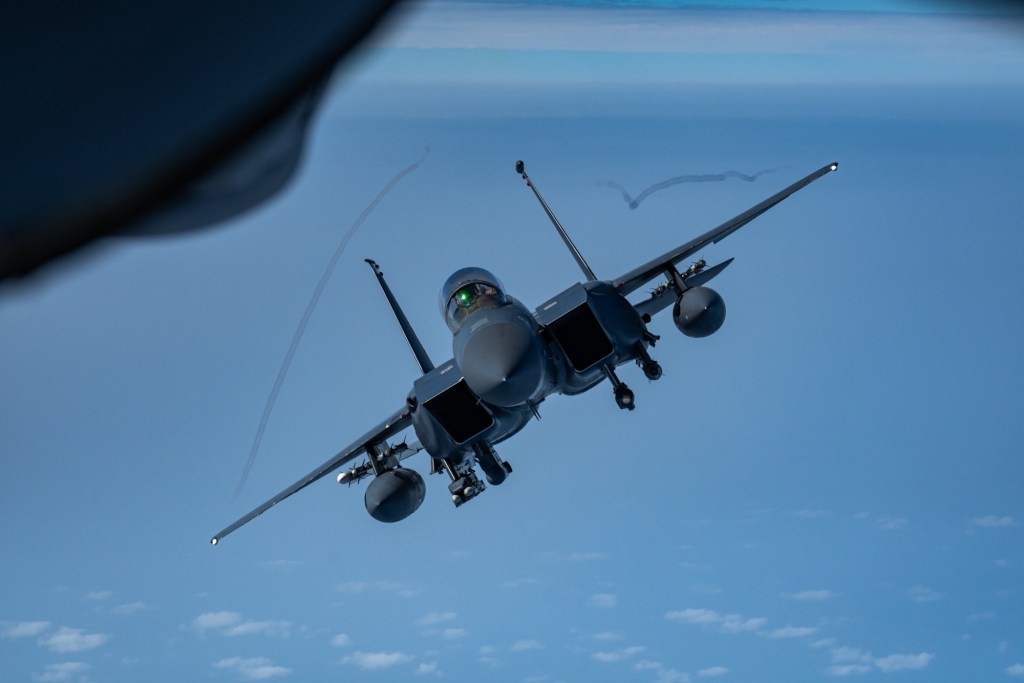
The U.S. Air Force has sent several F-15 fighters to the base at Diego Garcia in the Indian Ocean. The fighters are being deployed to help protect the isolated base as well as the important strategic asserts currently deployed there.
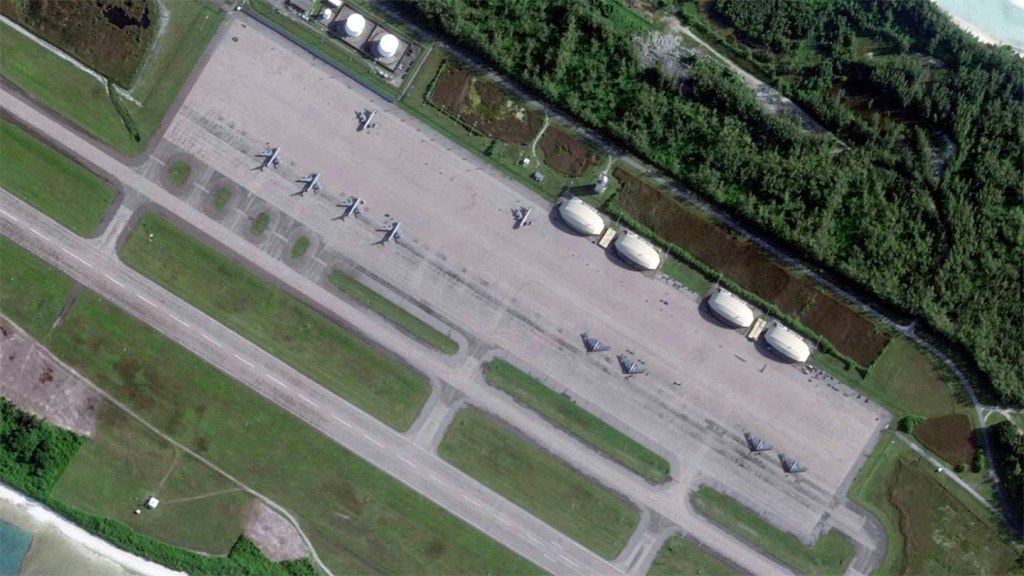
In recent months the base has been the subject of many talks as the arrival of a number of long range strategic bombers was noted by analysts. Satellite imagery taken in late March shows at least 4 B-2 Spirit long range stealth bombers.
Image taken in late March showing some of the B-2s as well as the refueling aircraft.
The bombers were used to strike targets in Yemen before the White House announced thag the U.S. had completed its mission in the region (to the dismay of Israel and several other American partners in the region).
The B-2s have reportedly since left the base but for a time their presence overlapped with that another titan of American air power, 4 B-52H’s that are currently still stationed at the base as of writing.
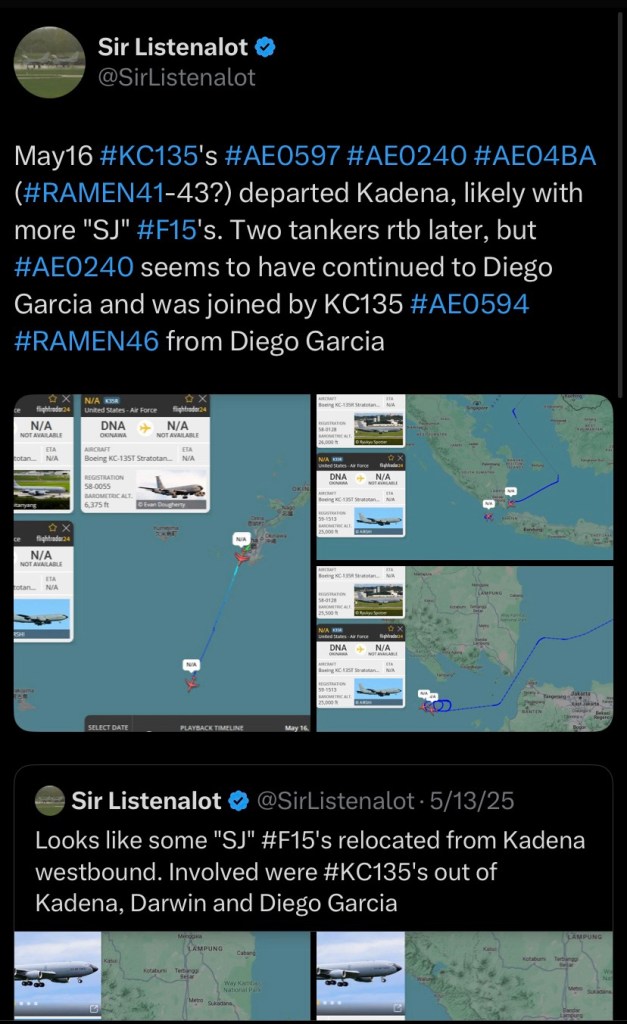
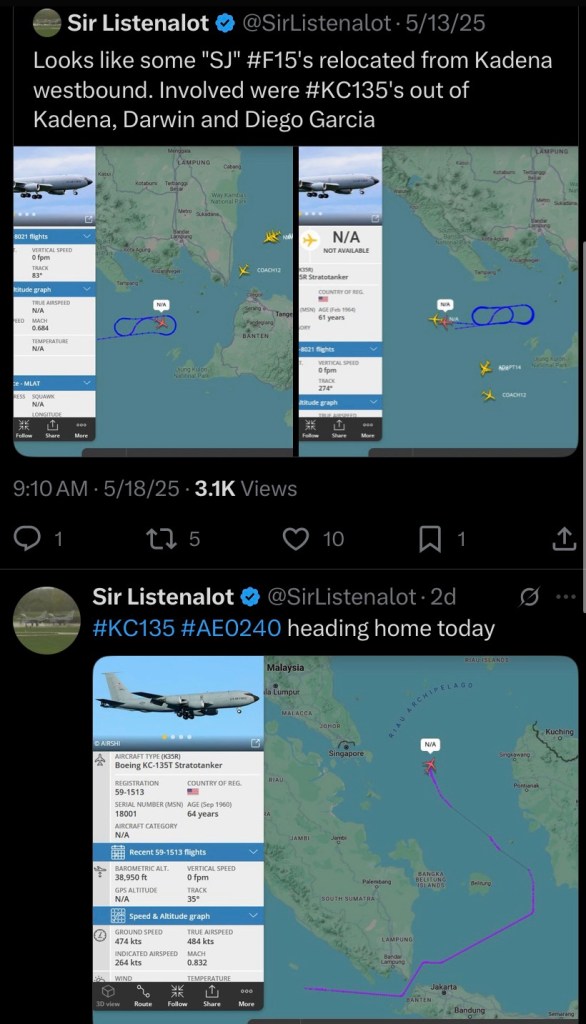
At the time this article was started their was believed to be 4 F-15’s that had been moved to the Indian Ocean to help protect the island base and the bombers however TWZ (Who originally broke this story) have since wrote another article and added two more fighters bringing the total to six. While official sources decline to state where the F-15s were moved from, open source trackers believe the jets came from Kadena Air Base in Okinawa, Japan. This belief comes from watching the flight tracking data. While fighter jets don’t usually broadcast their live position through ADS-B, the refueling aircraft often do and can be tracked.
Kadena airbase in Japan is located 4,000 miles away from the Diego Garcia base in the Indian Ocean.
Last month Kadena received a contingent of F-15E’s forward deployed from the 336th Fighter Squadron (FS) (Also called the Rocketeers) at Seymour Johnson Air Force Base in North Carolina. Their relatively close proximity to an otherwise remote island makes them ideal candidates for this ACE force protection mission.
“As the Keystone of the Pacific, Kadena is a pivotal hub for Agile Combat Employment (ACE),” from an Air Force press briefing on the deployment of the 336th to Kadena.“The 18th Wing will continue to receive rotational units that strengthen capabilities, such as ACE, and project combat power in concert with allies and partners.”
From The War Zone on ACE (From the article that originally broke this story).
‘ACE is a term that currently refers to a set of concepts for distributed and disaggregated operations centered heavily on short notice and otherwise irregular deployments, often to remote, austere, or otherwise non-traditional locales.’
Diego Garcia is one of the most “Austere or otherwise non traditional locales” while still being critically important to Department of Defense operations in the region. While remote the base is used for multiple different DoD needs such as hosting space force activities, being an important navy port(Especially to the nuclear submarine fleet) and using its lagoon as a shelter for the Sealift Command Prepositioning Ship Squadron.
While the bases remote location protects it from attack, some have suggested that Iran would be capable of hitting the base using missile carrying smaller warheads. Besides Iran, other peer and near-peer adversaries and potential adversaries have the ability to carry out longer range strikes using bombers, drones or missiles, making the presence of these fighters a welcome sight.
The War Zone originally broke this story, go check them out, their articles have always been a huge inspiration and they do some really amazing work.
Thank you for taking the time to read and for your constant support. I wouldn’t be here without you all. To further support my work I would invite you to sign up for my Patreon, where I will be releasing some podcast episodes very soon. Membership and access to the podcast is $1 a month. I wanted to keep it cheap as a thank you for joining me on this adventure and allowing me to do what I love.
After a months long bombing campaign against the Iranian backed Houthi terrorist in western Yemen, the White House has today announced that those strike will stop immediately. This was announced after Houthi leadership made contact with the U.S. leadership and according to trump agreed to stop striking ships in the Red Sea. This puts a close to “Operation Rough Rider” under president Trump as well as hundreds of strike carried out by the former Biden administration.
The announcement was made during Trump’s meeting with Canadian PM Mark Carney. The conversation with the Houthis had been had the night before.
“They have capitulated, but more importantly … we will take their word,” Trump said. “They say they will not be blowing up ships anymore.”
It’s very likely Iran played a part in this turn. Possibly telling the Houthis to cease their actions against shipping following threats from the U.S. during the ongoing negotiations.
Trump wouldn’t say specifics on who he talked to only that the k do that the Houthis would be backing down came from “a good source”. The Houthis, reeling from yesterday’s attack by Israel released this statement yesterday.
“The operations of our armed forces will continue and the support by Yemen to Palestine will only end with the end of the aggression and siege against Gaza,” -Houthi statement from Al Masirah TV.
While the U.S. has agreed to stop bombing the Houthis, Israel is another matter and have carried out more strikes since what was reported yesterday. Locals in Yemen as well as the IDF report the bombing of Sana’a airport as well as various power stations, and another concrete factory. Videos included below.
CRAZY FOOTAGE 🔴
Full footage of the aftermath at Sana’a International Airport following IDF strikes.
Video showing the full footage of the aftermath of the attack on Sana’a international airport.
🚨 Breaking: Reports from Yemen that the entire international terminal of Sanaa Airport, including all airplanes there, have been destroyed pic.twitter.com/ehpwgh3Car
The U.S. has brought in a large amount of military assets to carry out its attacks against the Houthis. Currently from the navy two aircraft carriers are operating in the region, the USS Carl Vinson (CVN 70) and USS Harry S Truman (CVN 75), these ships are both escorted and supported by numerous destroyer squadrons and several cruisers, not to mention their air wings. Several other destroyers have been ordered to the region and are operating separately of the carrier strike groups. Also USS Gettysburg (CG-64) and USS Princeton (CG-59) both Ticonderoga class guided missile cruisers have also been ordered to the region as apart of Operation Prosperity Guardian and have been used to strike Houthi targets as well. At least one Ohio class submarine USS Georgia (SSGN-729) has been spotted in theater as well. The Air Force has sent a large number of planes to the region included F-35s and F-22s as well as B-2 Spirit bombers stationed at Diego Garcia. As of several hours ago a pair of B-52s were heading towards the region from the continental US. It’s likely at least some of these assets will remain in the CENTCOM area of responsibility as negotiations with Iran over their nuclear program continue. The White House and Trump have threatened to use military force if the negotiations fail.
Image from USNi news shows the current general location of the U.S. aircraft carriers.
The Truman just several days ago had its deployment to the Middle East extended by another week, to continue to keep up a high tempo of attacks against the Houthis. This could possibly be extended further if negotiations are unsuccessful.
After writing this it was announced that Oman had carried out the negotiations between the Houthis and the US. They had been the go between in the conversation which led to the U.S. ceasing it’s military strikes.
I’d like to thank everybody for the constant support I’ve received. These last 5 years have flown by but I feel like GCR continues to grow and improve in its reporting and analysis. I’m always open to comments and questions and can be reached on Facebook or through my email which is listed on the website.
I’m currently looking for guest for a future podcast series I’m planning on running. If you have an interesting military story to tell contact me and let’s talk. I want to hear your stories.
If you would like to go the extra mile and further support me and the work being done here, you can sign up for my Patreon through the button below for only $1.00 a month. Future video and audio projects to be released there soon.



You must be logged in to post a comment.