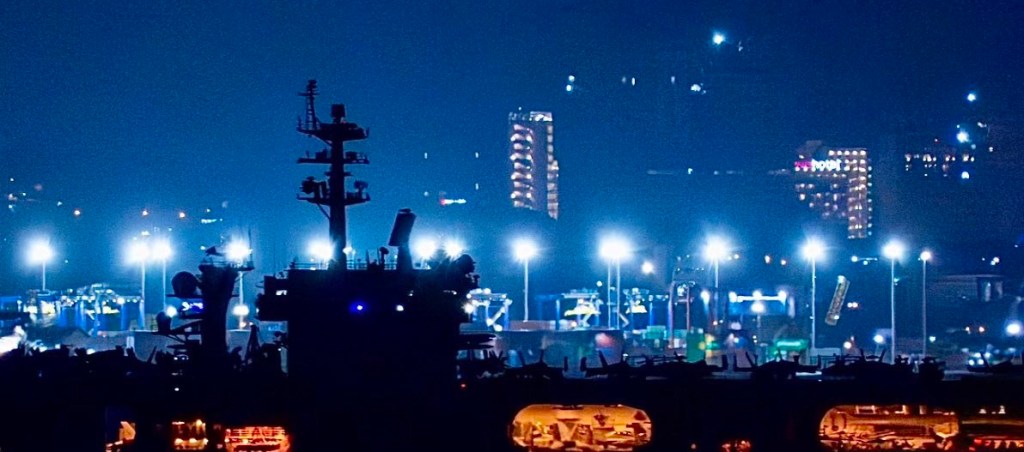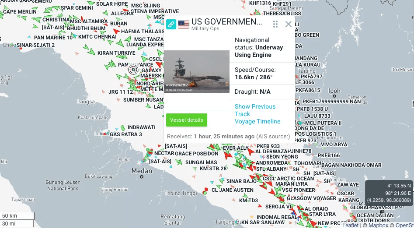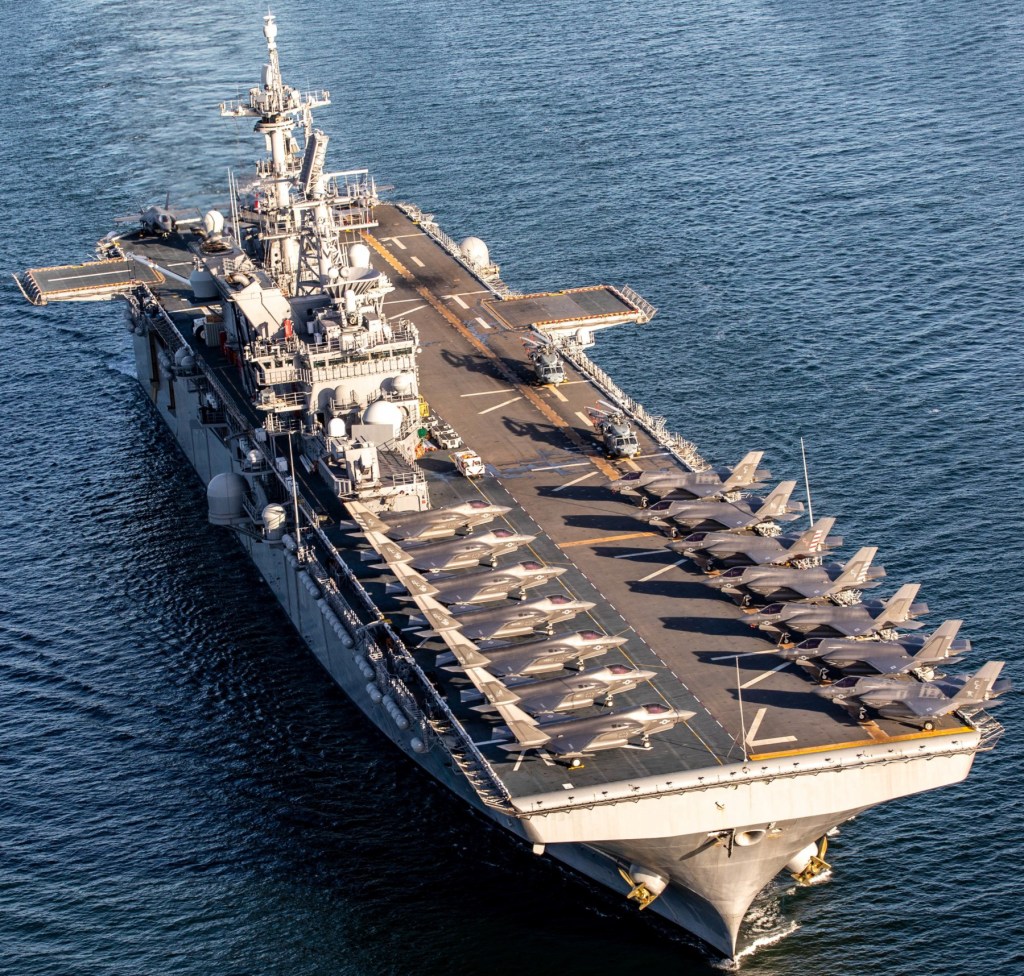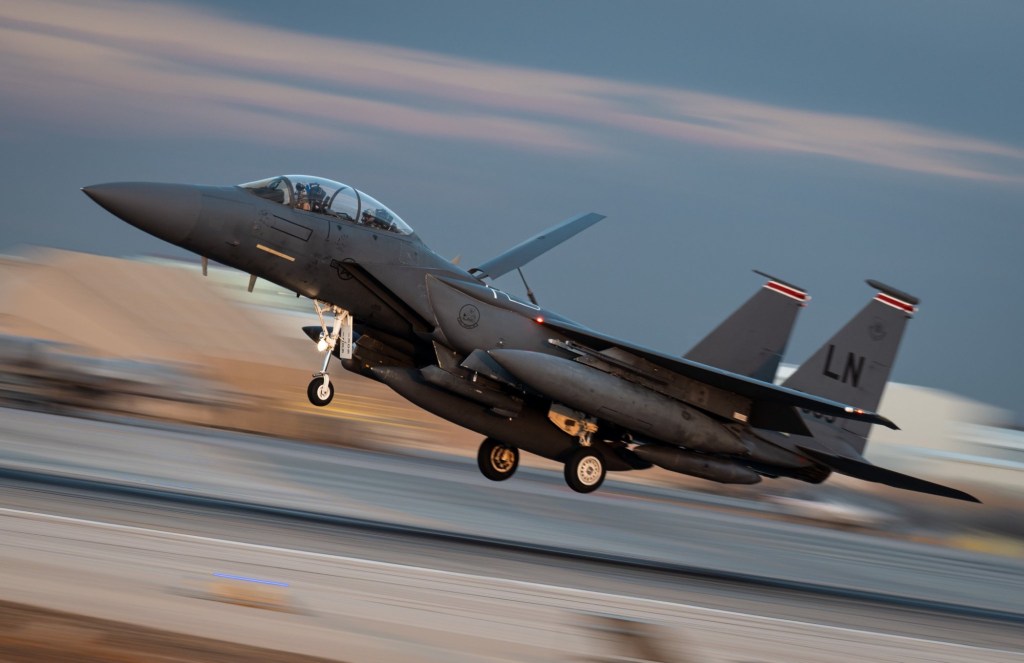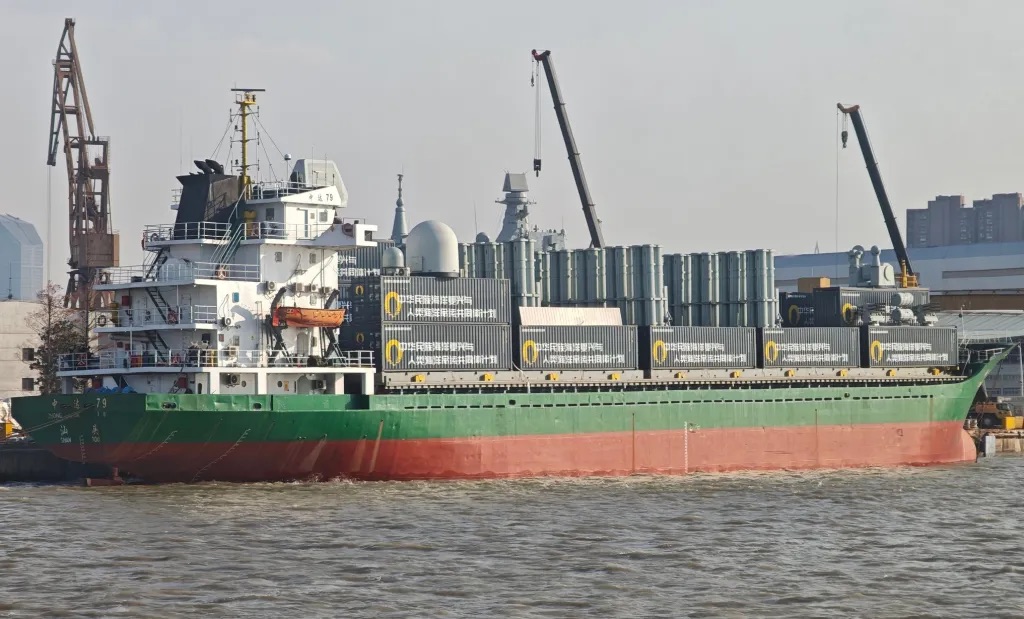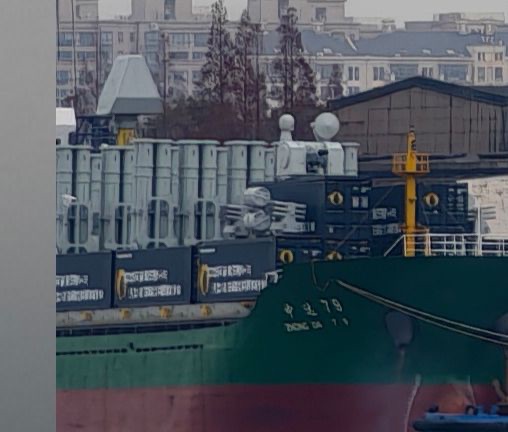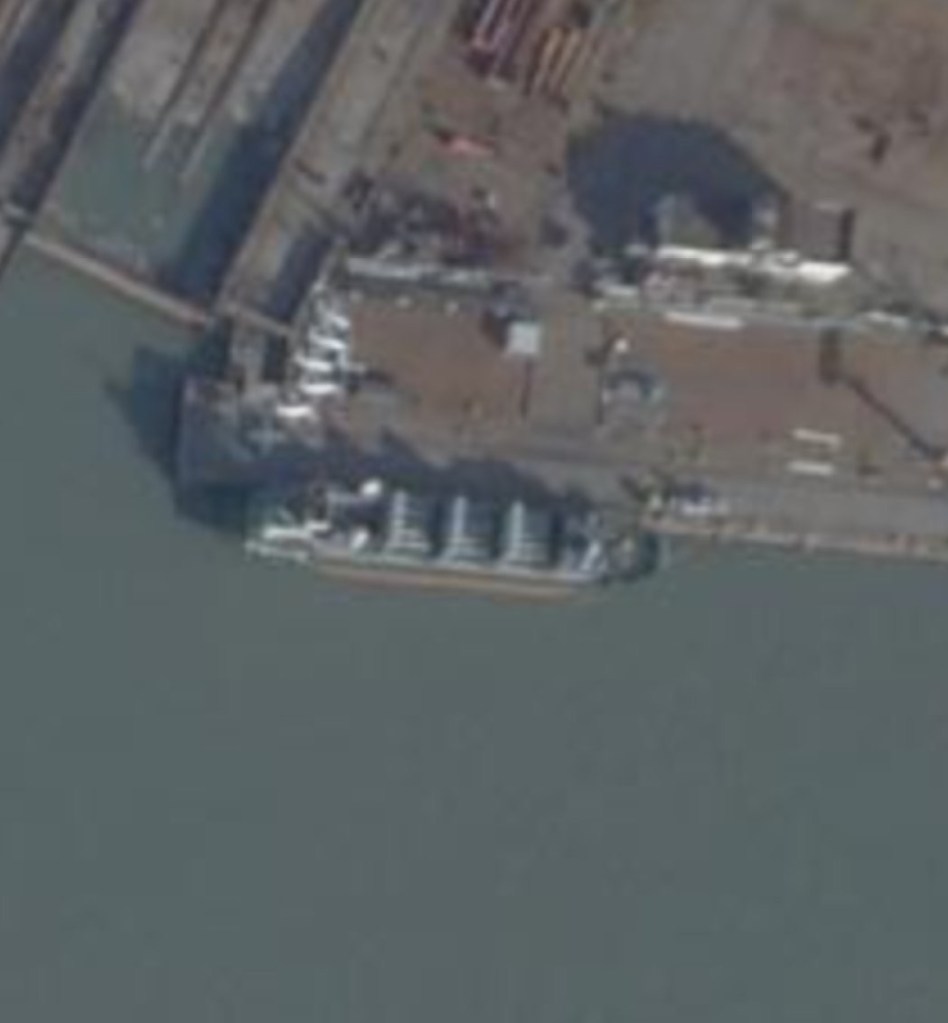
Several days ago images were released from China showing a glimpse of an idea that was first discussed in World War 2. The images show a standard container ship however on closer inspection it’s revealed that the containers on the ship are housing dozens of vertical launch missile tubes as well as other military equipment turning the ship from a standard hauler into a weapon in disguise.
Image showing the VLS tubes as well as the decoy launcher and radar.
The ship’s deck is almost covered with these containerized launchers. After counting I believe it has a total of 60 launchers. From their size I would estimate this is a universal style system capable of launching several types of missiles. Including surface-to-air and land attack. We can also see a bit of what looks like the hydraulic system which can be used to raise the launch tubes out of the containers.
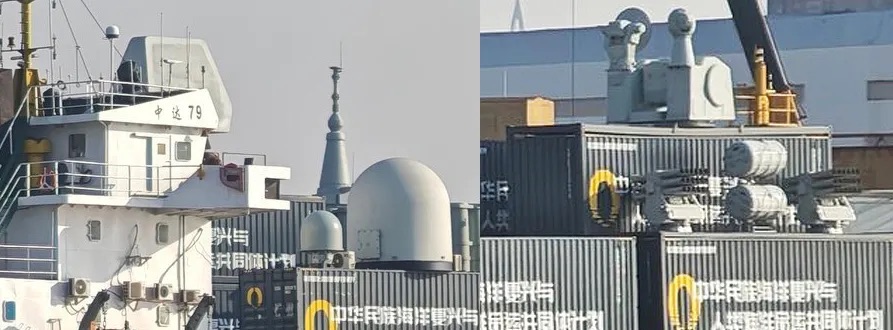
The ship is also outfitted with a number of other upgrades like a Type 1130 30mm CIWS (Close-In Weapon System) mounted above a container. This is useful for engaging incoming threats although its short range makes it a last resort. Another container is outfitted with a Type 726 decoy launcher. These decoy launchers can reportedly fire a number of differ types of countermeasures.
Image showing the CIWS as well as the decoy launcher and radar.
The ship comes with several radar systems. One large flat panel AESA (Active Electronically Scanned Array) radar (Possibly in the Type 364/ Dragon eye family).
China isnt the only country to work towards the development of containerized weapons. Iran and the U.S. have both made advancements in this field, although neither has deployed them to my knowledge.
China has continued to attempt to leverage their civilian maritime tech capabilities for military purposes. This includes converted semi-submersible vessel for launching helicopters, and a ferry to support invasion operations. Weapons hidden in plain sight like this could become a problem in the future as the tech improves, their disguise look more authentic, and their number increase. A fleet of these armed with anti-ship missiles operating in a heavy shipping lane could shut down a country’s trade. Operating as apart of a fleet they could be loaded up with surface-to-air missiles for added fleet air- defense.
Right now this ship isn’t hard to spot as a military boat. The CIWS isn’t able to be hidden away as it seems to just be bolted to the top of a container. It’s unclear if the radar can be hidden away.
This is definitely something that’s going to be more of a problem in the future, how close we are to that future, is unclear. Gathering more intel and data on this and other weapons systems remains critical for the U.S. as China pushes towards maritime domination in the pacific and beyond.
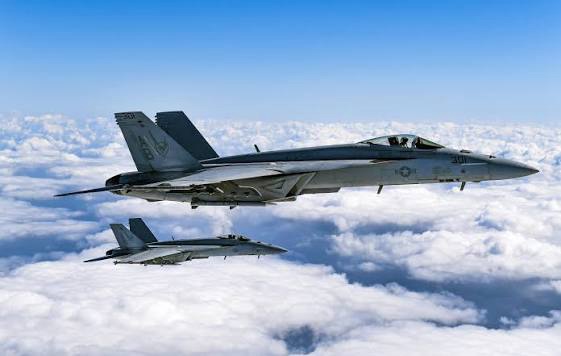
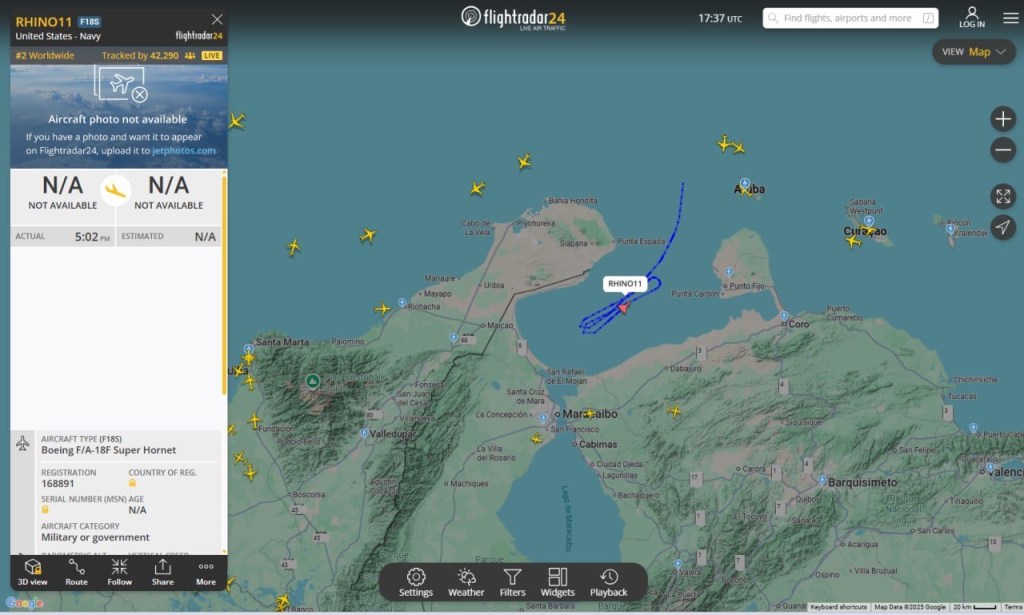
Two F/A-18’s were seen flying deep into the Gulf of Venezuela on the 9th, staying there for around 40 minutes according to flight tracking data. The Gulf of Venezuela is a fairly small body of water surrounded on three sides by parts of Venezuela. At its widest the Gulf is only around 150 miles wide (West to East) and 75 miles long (North to South) and the opening of the mouth of the area is only 52 miles wide. Venezuela’s border extends out from its coast 12 miles in every direction not leaving much room for the jets to operate. Venezuela actually claims all of the Gulf as an area of importance to them and considers it all their territory, a claim which the US has debated and challenged for decades.
Image from FlightRadar24 showing the two F/A-18 Super Hornets in the Gulf of Venezuela. Call signs- RHINO11 and RHINO12.
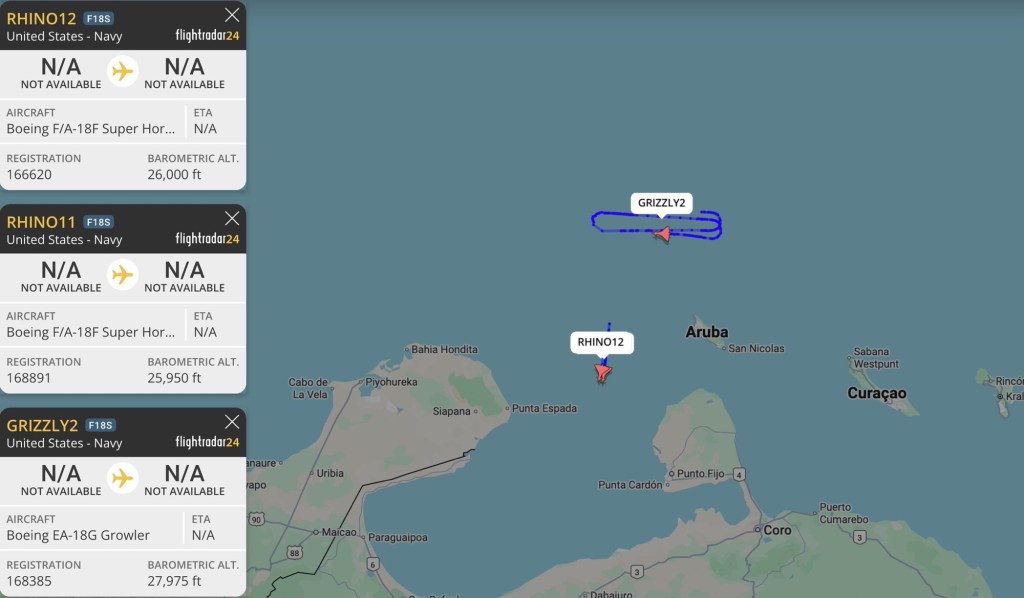
Working alongside the F/A-18’s were at least two of the EA-18G Growlers Electronic Warfare aircraft which went into an orbit a couple hundred miles north of the Gulf. Grizzly 1 and Grizzly 2 are the call signs.
Image from FlightRadar24 show the F/A-18 SuperHornets and north of them the EA-18 Growlers.
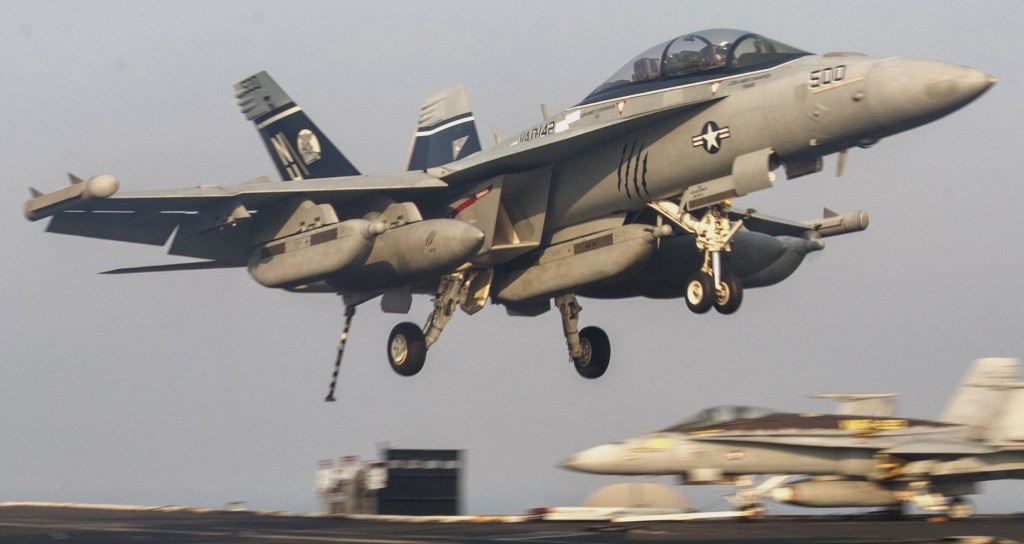
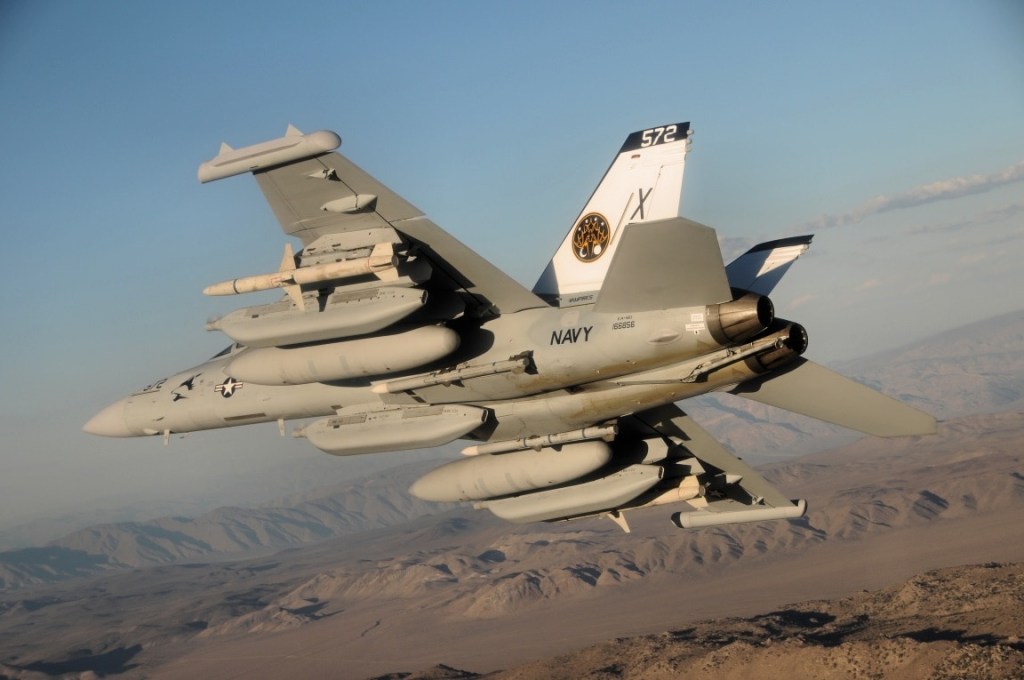
The Growler specializes in electronic attack. Using its overpowering Next Generation Jammer pod carried underwing, it can disrupt modern radar systems on air defense or other air units allowing the growler and other allied planes to get in and out of a mission area without being seen in cases where old radar are being used.
Electronic attack and radar jamming are poorly understood by most people and there is a lot about the NGJ pods (and even the legacy AN/ALQ-99 Tactical Jamming System) that is still classified. However these jamming pods work by attacking the connection between a radar and its target and can reflect a distorted signal back to the receiver.A jamming pod can disrupt a radar by flooding the radar with noise (think of looking into a spotlight)—injecting false signals, alter the timing, or deceiving the radar into tracking a “ghost” location. The tactical advantages of this are obvious, making the growler also amazing at anti-radar and anti air defense missions, also known as SEAD/DEAD. Suppression or Destruction of Enemy air defense. The growlers here could have been jamming the radar for the SuperHornets but more likely they were gathering intelligence on the signals that Venezuela was sending out, in case they are needed for a future strike missions. The last of its features I’d like to point out is the growlers APG-79 Active Electronically Scanned Array (AESA) Radar which it was probably using here to scan the Venezuelan coastline.
It’s believed both the Super Hornets as well as the Growlers are operating from the aircraft carrier USS Gerald R Ford (CVN-78) which arrived in the Caribbean last month.
The article I’m liking too is more reading for how the growlers jamming actually works and what some lf the systems limitations are. Highly recommend.
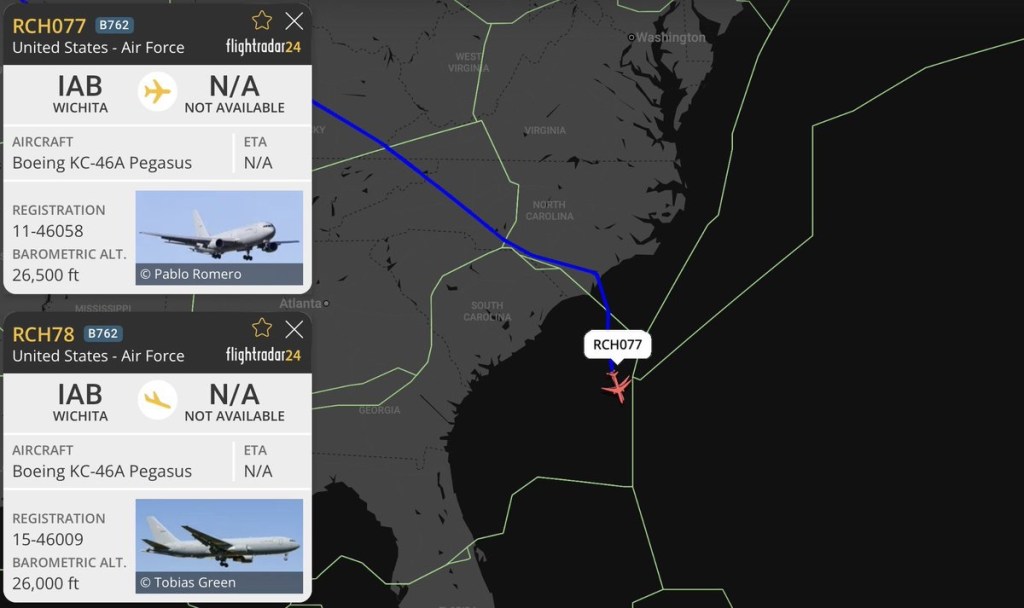
Another event that was missed yesterday was a transfer of several aircraft (possibly Growlers) from Naval Air Station Whidbey Island in Washington State to the Caribbean. Their presence was noted by flight trackers who also often listen to radio comms between aircraft and Air Traffic Control. They were ferried to the Caribbean by two KC-46A Pegasus aerial refueling jets.
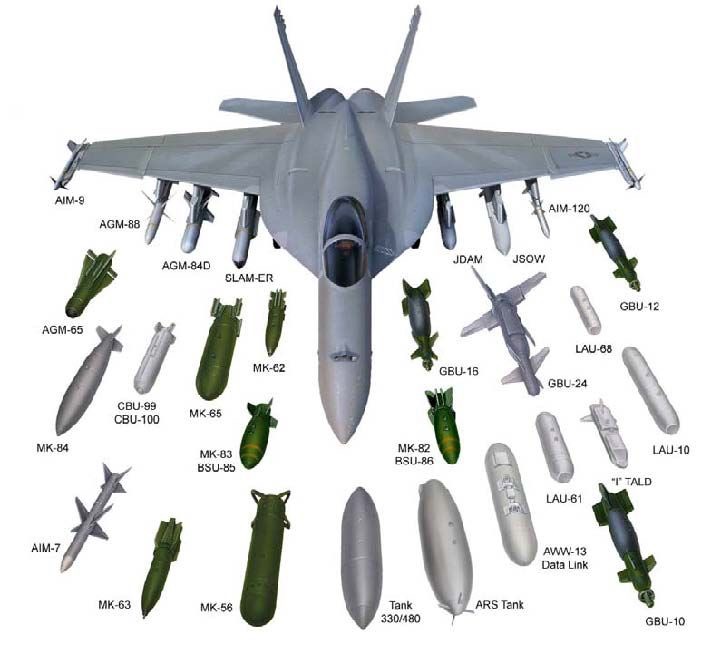
An image showcasing the E/A-18 Growler and its multiple Jamming pods.This one is also packing several anti-radiation missiles that can be set to launch automatically when detecting an enemy radar.
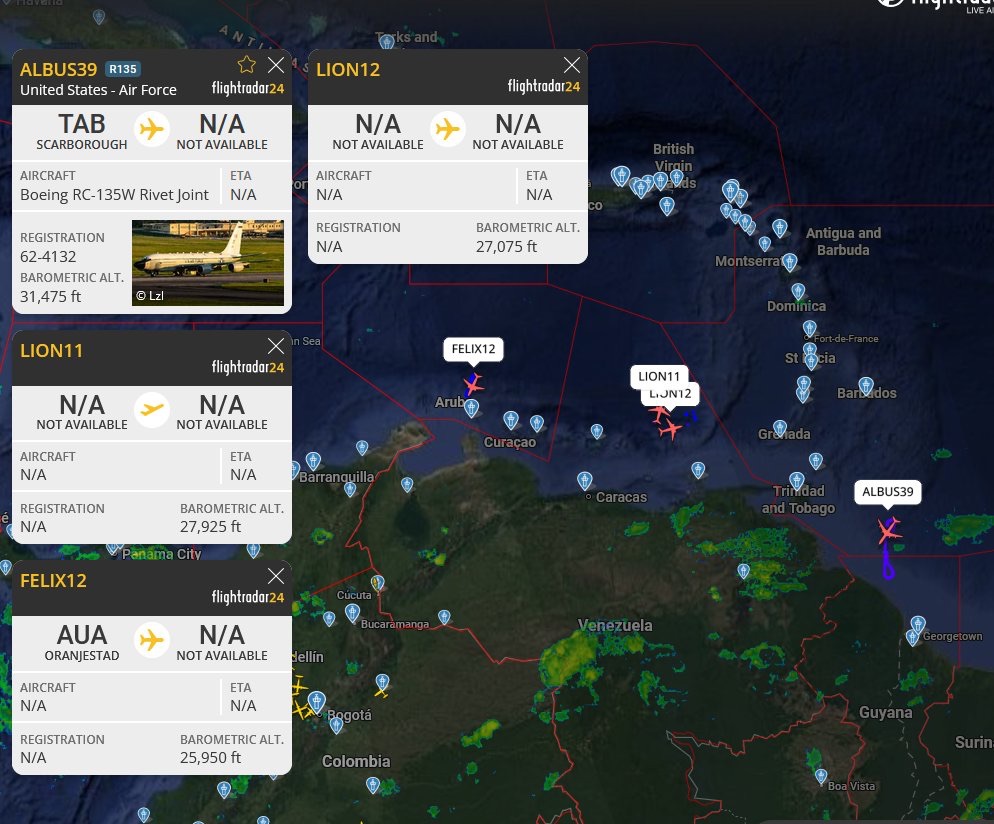
US aircraft have probed Venezuelan air defense in this same area before utilizing at least one Boeing RC-135 Rivet Joint reconnaissance aircraft along with several other unidentified aircraft. The US has recently been very public with its aircraft operations in the Caribbean, possibly as a sign to the Maduro regime of its willingness and ability to escalate the situation further if President Trump’s demands aren’t met.
Flightradar24 showing an RC-135 Rivet Joint and several unknown aircraft operating off the coast of Venezuela.
In response to an email inquiry sent by GCR to USSOUTHCOM we received this statement from a SOUTHCOM Spokesperson. .
“We conduct routine, lawful operations in international airspace, including over the Gulf of Venezuela. We will continue to fly safely, professionally, and in accordance with international law to protect the homeland, monitor illicit activity, and support stability across the Americas.”
Today, the Secretary of the Navy John Phelan announced that the U.S. navy would be walking away from the Constellation-Class frigate program and putting more effort towards further new class of warships able to be built quicker. The navy says they have a need for 73 small surface ships.
Under terms set with shipbuilder Fincantieri Marinette Marine, the Wisconsin shipyard will finish the first two ships in the series. So Constellation(FFG-62) and Congress (FFG-63) will still be built, however the other four ships that had been ordered will not be.
In the past the plan was for the navy to build 20 of these ships at around $1.1 billion a piece. A navy factsheet called the class a “an agile, multi-mission warship,” capable of operating in open ocean or coastal environments, “providing increased combat-credible forward presence that provides a military advantage at sea,”
The program’s costs have continued to rise since the original announcement,mostly due to design additions and changes. Recently, images were shared online that showed that the ship was nowhere near complete. At an estimated displacement of 7,200 tons the whole point of the program was to fill a gap between the 10,000-ton Arleigh Burke-class guided-missile destroyers – the workhorse of the US fleet – and 3,500-ton littoral combat ships. (Another ship seen mostly as a failure.) At the beginning of the program the Constellation-Class was seen as a way to get hulls in the water faster, as it was based on an Italian design, with specific modifications for the U.S. navy’s needs. Those modifications are part of what slowed down the production of the ship as those modifications expanded and cost ballooned, leaving the ship being dreadfully behind schedule. Its 2026 launch was pushed to 2029.
An update shared in April of 2025 showing the current progress of the ship.
The U.S. navy hasn’t had a frigate in its inventory since the decommissioning of the Oliver Hazard Perry-class USS Simpson (FFG-55) in 2015.
Oliver Hazard Perry-class USS Simpson (FFG-55) passing the Statue of Liberty in New York City.
The Constellation-Class was seen as a way to quickly add ships to the U.S. navy. An important goal now more than ever as the military is allegedly making a shift to counter growing threats in the Pacific. China, according to a Pentagon report, is expected to have around 400 ships(50 of them frigates) in the water by the end of this year, a huge leap from the current U.S. number of 240 ships and submarines. This is troubling to analysts who believe the nation with the larger fleet will win.
“We are reshaping how the Navy builds its fleet. Today, I can announce the first public action is a strategic shift away from the Constellation-class frigate program,” reads the statement from Secretary of the Navy John Phelan. “The Navy and our industry partners have reached a comprehensive framework that terminates, for the Navy’s convenience, the last four ships of the class, which have not begun construction.”
A defense official who is quoted by USNI is quoted saying “A key factor in this decision is the need to grow the fleet faster to meet tomorrow’s threats. This framework seeks to put the Navy on a path to more rapidly construct new classes of ships and deliver capabilities our war fighters need in greater numbers and faster,”
It’s no secret that America has a major shortage in shipbuilding capability allowing the Fincantieri Marinette Marine to continue to operate and build the two Constellation-class ships will keep the workers employed for several more years and allow the shipbuilding firm the chance to bid in future U.S. navy contracts when they are finished.
Last week, Italian Aeronautica Militare Eurofighter Typhoons intercepted a TU-134 “Black Pearl” over the Baltic Sea while taking part in their routine Baltic Air Policing (BAP). The Black Pearl is a pretty rare sight only spotted in the Baltic twice since 2020. “Black Pearl” is the name given to the plane by western military analysts, its actual NATO designation is “Crusty-B”.
The Typhoons were stationed at Ämari Air Base in Estonia. They recently replaced the Italian F-35’s that were stationed at the same base. The Italians are taking part in the multinational NATO operation Eastern Sentry.
The TU-134 “Black Pearl” accompanied by two Su-30SM2 and a SU-24.
At the time of interception of “The Black Pearl”, a modified version of the civilian Tupolev TU-134, the district plane was being accompanied by two Sukhoi Su-30SM2 “Flankers” and what is believed to be a Su-24MR “Fencer”. The “Flankers” are operated by the Russian Navy, while the “Fencer” is from the Russian Air Force.
Sukhoi Su-24 Flanker. Italian Typhoon tailing the two SU-30’s.
The Black Pearl is a Tu-134UBL (now Tu-134A-4 VIP transport) that was at one time used to train pilots and navigators of Russia’s strategic bomber forces. Anything from the Tu- 160’s to the Tu-22M3 and Tu-95MS. The Russians added a very sharply pointed, bomber-like nose and a black paint job. The jet is now mostly used as a VIP transport. As it was encountered over the Baltic it’s likely it was hauling Russian VIPs to the Russian enclave in Kaliningrade.
NATO air command shared the images on November 21st, but implied that the images weren’t taken that day.
Over the last week 🇮🇹 jets deployed at Amari 🇪🇪scrambled to intercept multiple 🇷🇺 assets. NATO Air Policing in the Baltic region ensures security of @NATO airspace under Eastern Sentry#EasternSentry is enhancing flexibility and strength to NATO's posture on the eastern flank pic.twitter.com/UElLnTi7VJ
The plane was intercepted in 2020 by F-16’s from the Belgium Air Force that were also conducting a BAP. They managed to capture an inferred image of the plane from the F-16’s Sniper Advanced Targeting Pod.
IR imagery of the Black Pearl taken from the Sniper pod of a Bulgarian F-16.
The Black Pearl is an interesting variant of an aircraft that you don’t see very much anynore.
It’s believed the Black Pearl was shepherding the fighters for delivery to the 4th Guards Naval Assault Aviation Regiment of the 34th Mixed Aviation Division, assigned to Baltic Fleet Aviation and based at Chernyakhovsk Air Base in Kaliningrad, according to KEY.AERO.
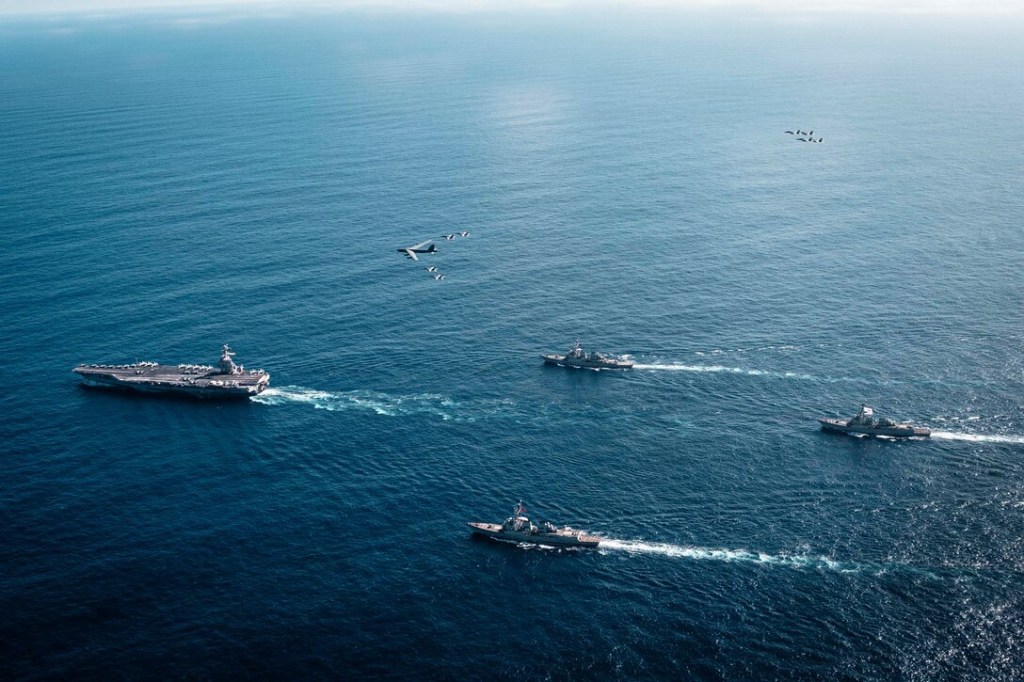
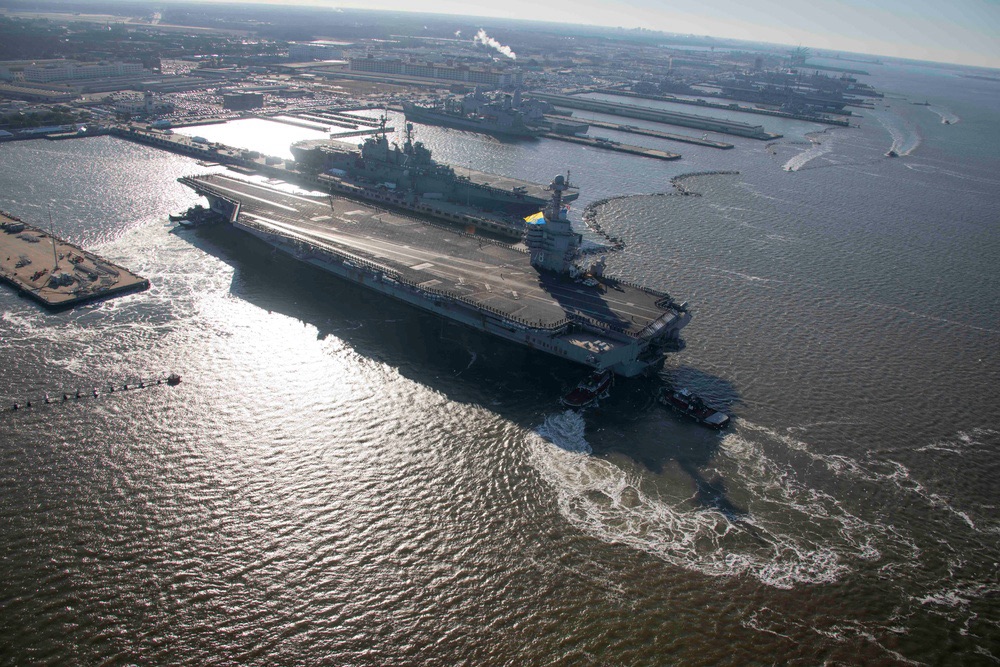
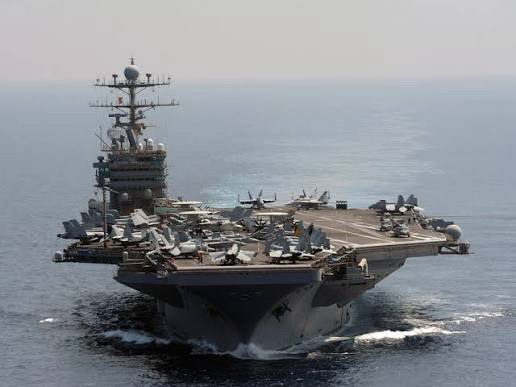
Today the USS Gerold R.Ford (CVN-78) , a Ford-Class nuclear powered aircraft carrier, has entered the waters of the Caribbean, joining the fourth fleet and coming under the command of US SOUTHCOM(Southern Command). The Ford, its escorts and its Carrier Air Wing are just the most recent additions in a large military buildup, adding to the tensions in the region.
“The enhanced U.S. force presence in the USSOUTHCOM AOR will bolster U.S. capacity to detect, monitor, and disrupt illicit actors and activities that compromise the safety and prosperity of the United States homeland and our security in the Western Hemisphere,” said Chief Pentagon Spokesperson Sean Parnell. “These forces will enhance and augment existing capabilities to disrupt narcotics trafficking and degrade and dismantle Transnational Criminal Organizations.”
This deployment to the region was ordered by Washington at the tail end of November.
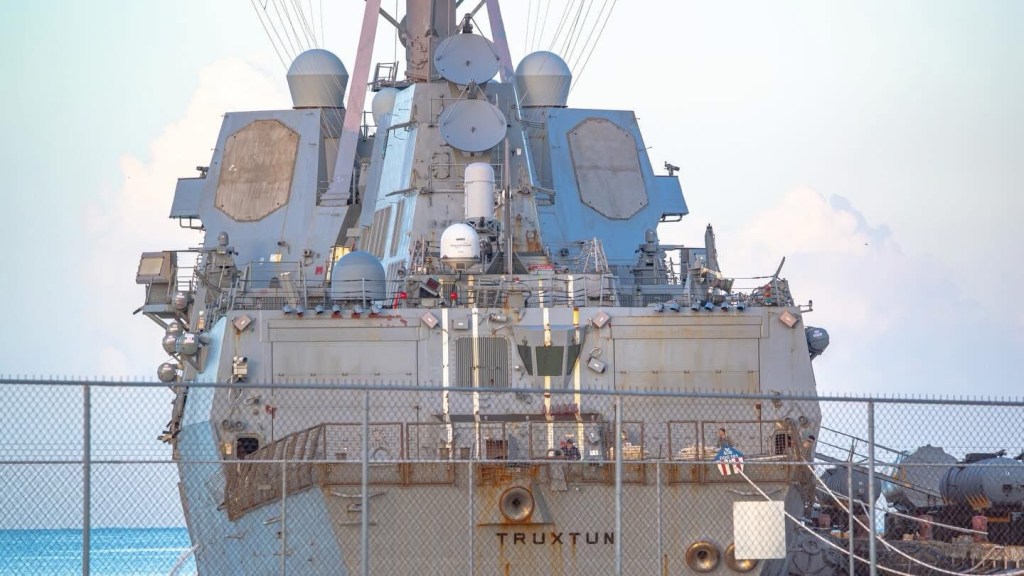
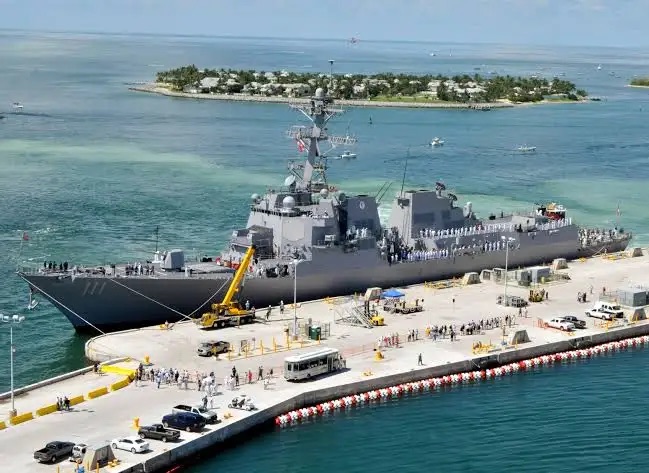
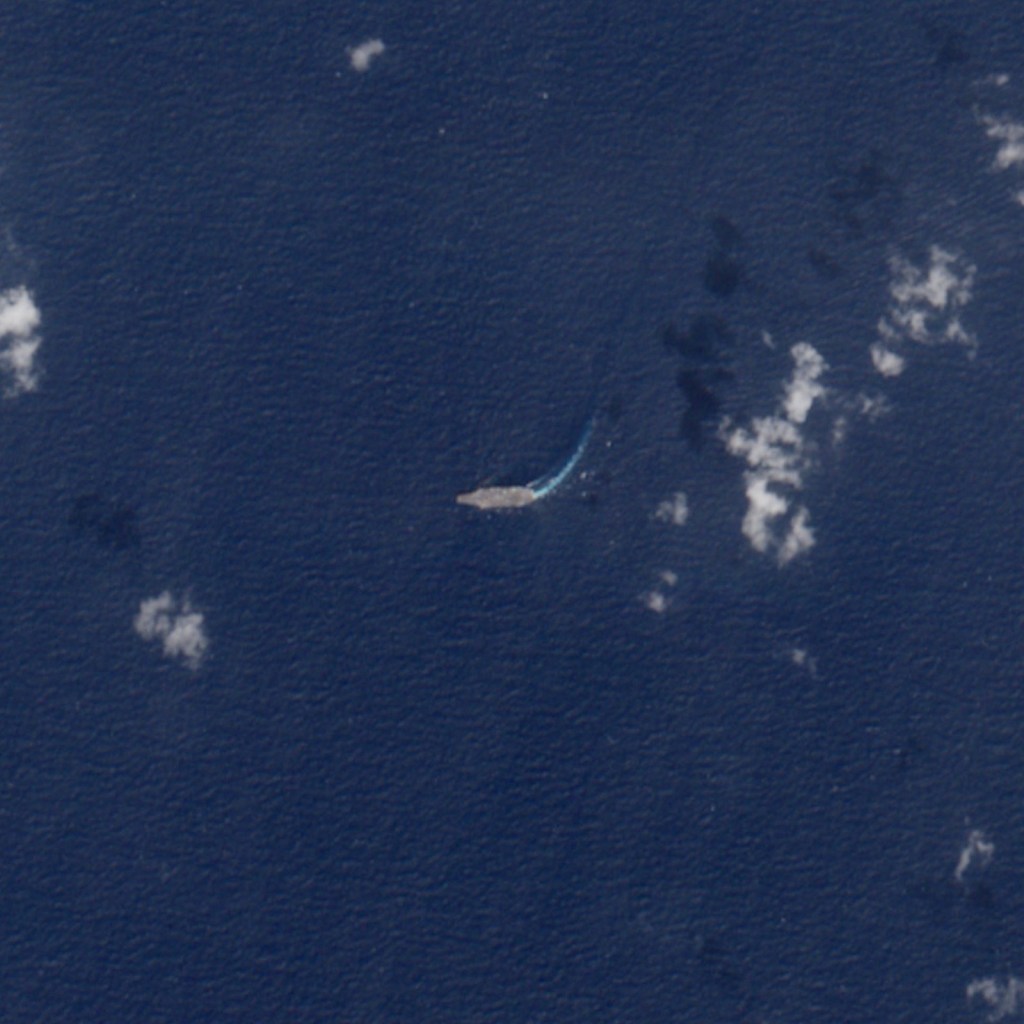
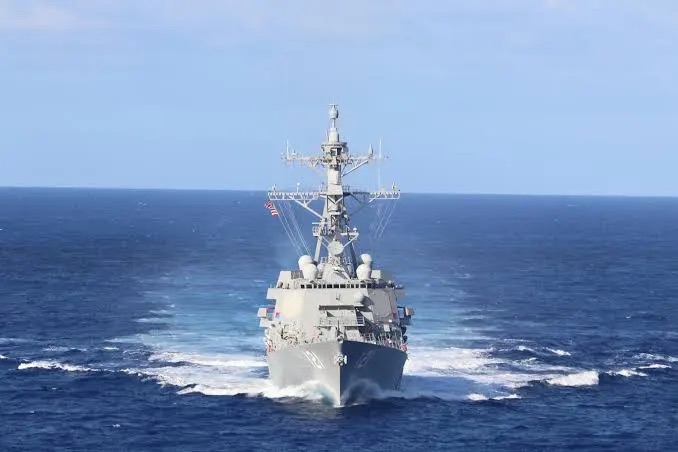
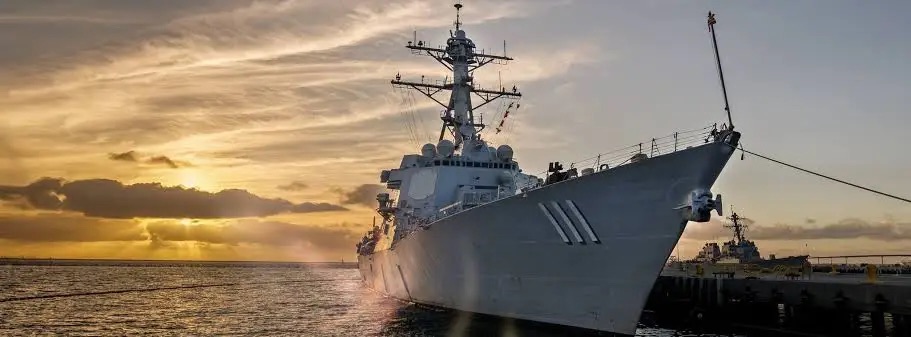
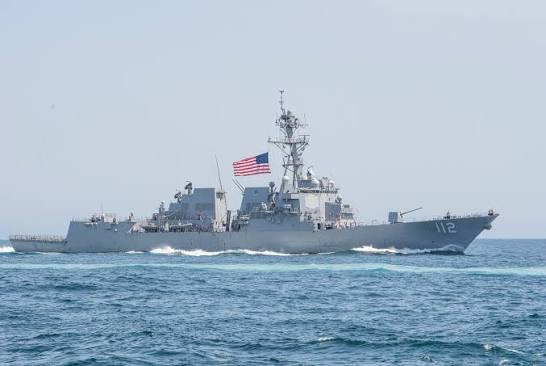
According to the navy’s statement on their website the Ford is supported by Destroyer Squadron Two’s Arleigh Burke-class guided-missile destroyers USS Bainbridge (DDG 96) and USS Mahan (DDG 72), and the integrated air and missile defense command ship USS Winston S. Churchill (DDG 81).
USS Bainbridge (DDG-96)USS Mahan (DDG-72) USS Winston S. Churchill (DDG 81)
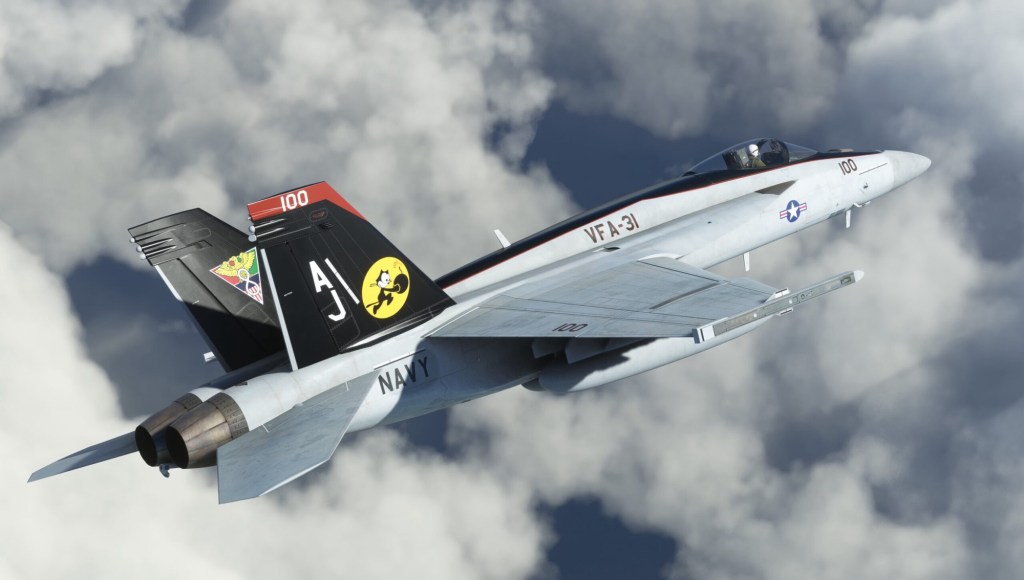
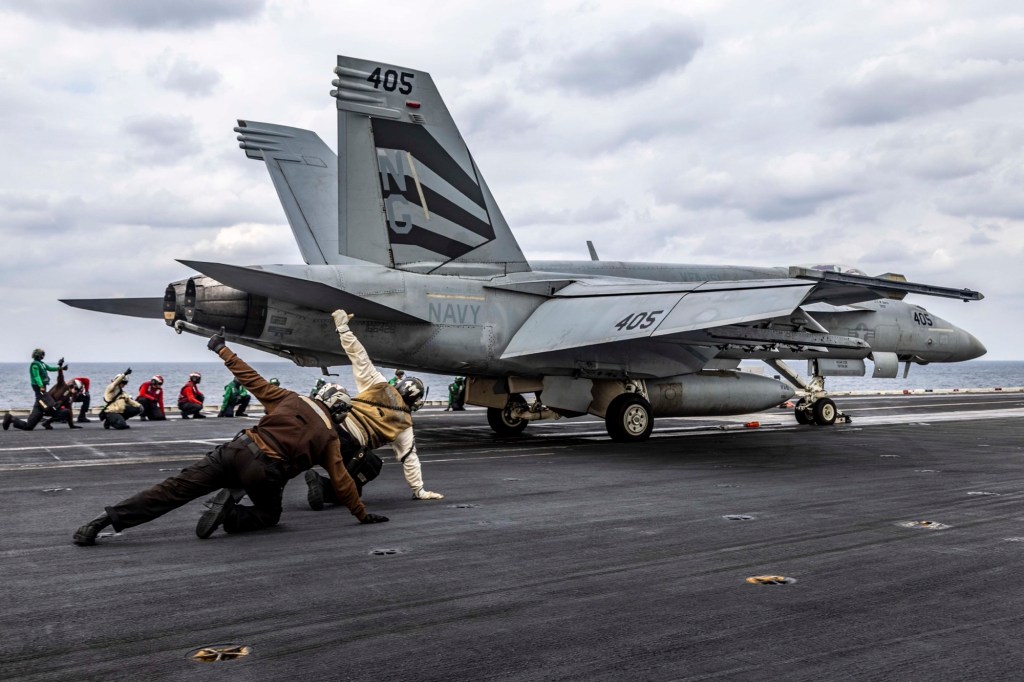
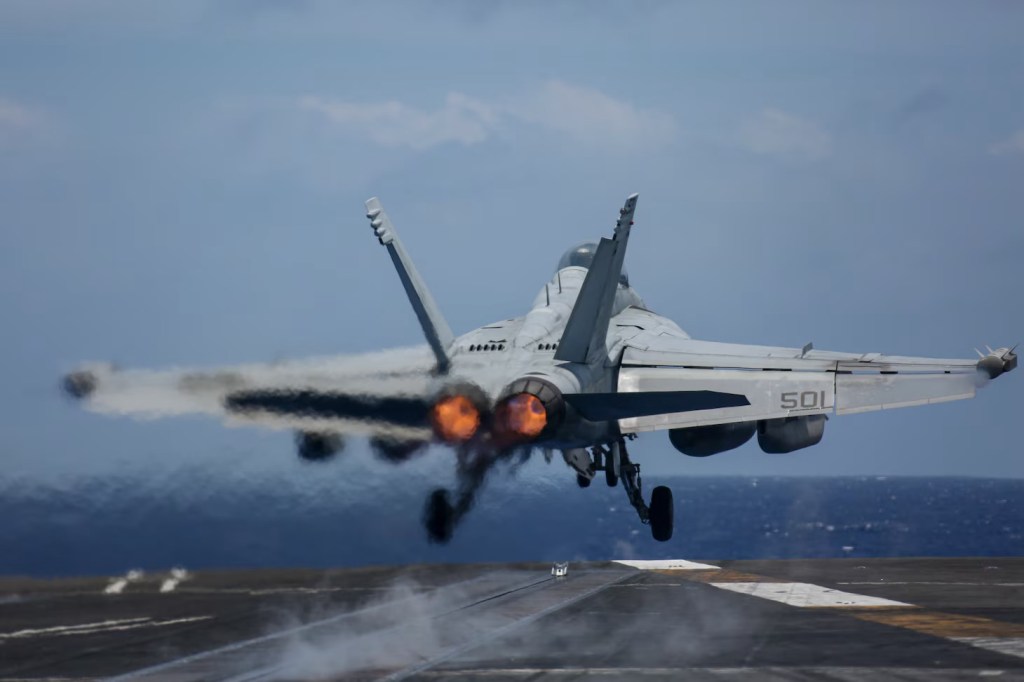
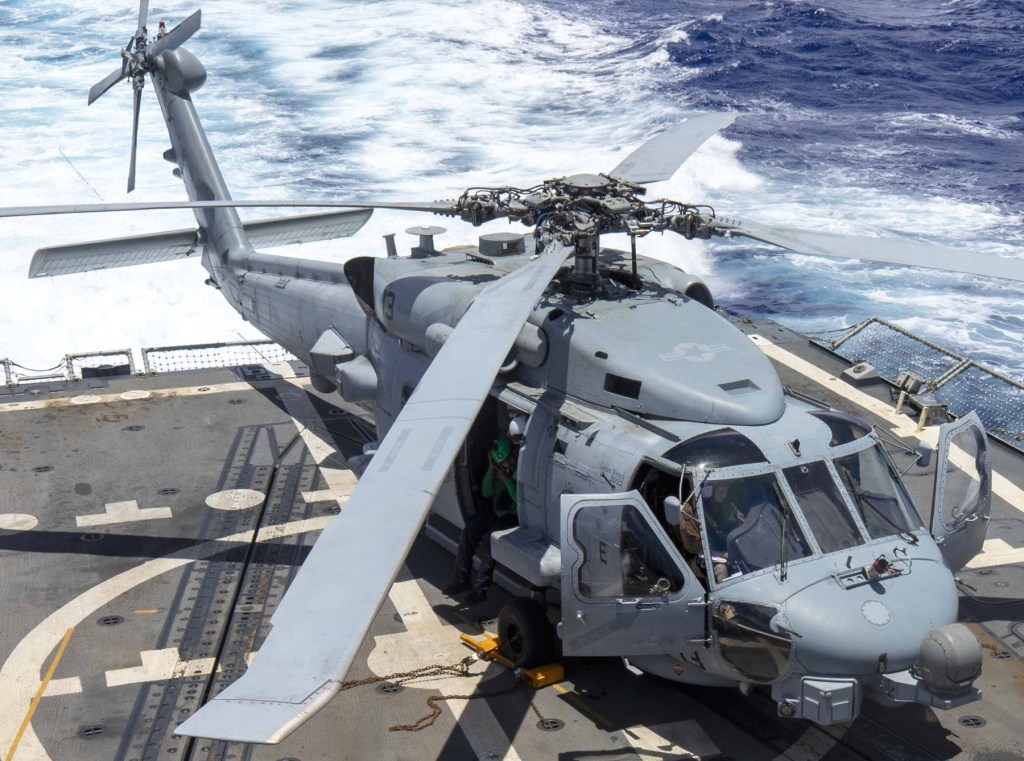
The embarked squadrons aboard Gerald R. Ford include Strike Fighter Squadron (VFA) 31, VFA 37, and VFA 87, flying the F/A-18E Super Hornet; VFA 213, flying the F/A-18F Super Hornet; Electronic Attack Squadron 142, flying the E/A-18G Growler; Airborne Command and Control Squadron 124, flying the airborne command and control E-2D Advanced Hawkeye; Helicopter Sea Combat Squadron (HSC) 9, flying the MH-60S Seahawk; Helicopter Maritime Strike Squadron (HSM) 70, flying the MH-60R Seahawk; and a detachment from Fleet Logistics Support Squadron (VRC) 40, flying the Carrier Onboard Delivery C-2A Greyhound.
F/A-18F Pilot LCDR Jamie R. Struck the makes first carrier arrested landing using AAG system aboard USS Gerald R. Ford (CVN-78) off the Virginia coast. US Navy PhotoEA-18G Growler with Electronic Attack Squadron 142E-2D Advanced Hawkeye Two Carrier Air Wing 8 MH-60S Sea Hawks, attached to Helicopter Sea Combat Squadron 9, fly in formation over the world’s largest aircraft carrier, USS Gerald R. Ford (CVN 78), during an aerial change of commandCarrier Onboard Delivery C-2A Greyhound.
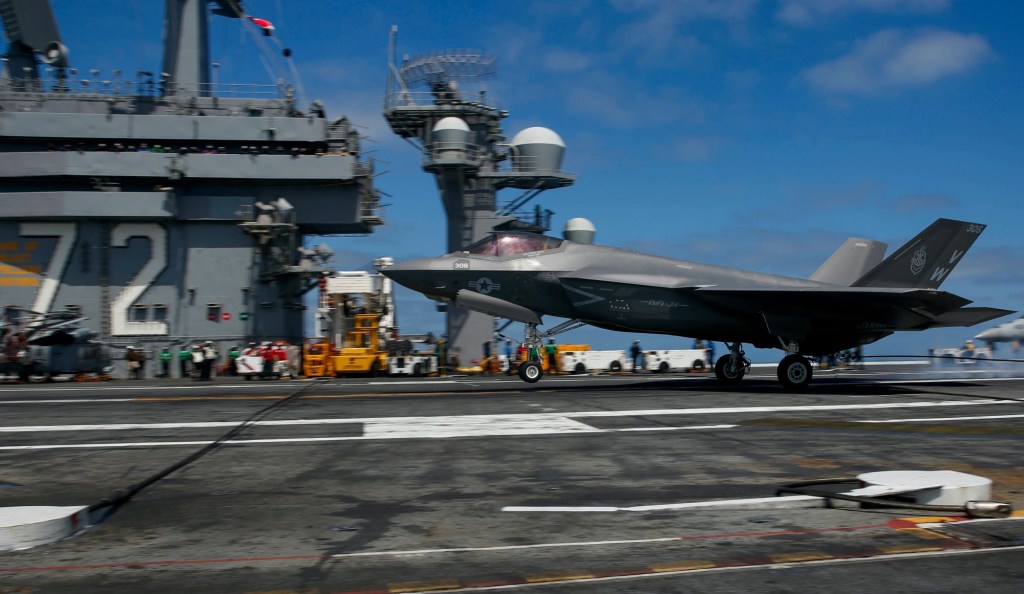
The Ford has yet to undergo its refit which will allow it to launch the F-35C’s so its combat air wing is made up entirely of Super Hornets.
Carrier capable F-35C Lightning II
Background
The U.S. for the past month has been carrying out a large number of strikes aimed at curtailing the drug trade coming into America. The White House has singeled out Venezuela as a large contributor to that issue and has called for Venezuelan President Maduro to crack down on cartels operating in his country. The U.S. military has carried out 19 strikes so far on alleged drug smuggling boats out at sea. The White House says these boats (and one semi-submersible) were moving drugs towards America.
Yesterday, at the direction of President Trump, two lethal kinetic strikes were conducted on two vessels operated by Designated Terrorist Organizations.
These vessels were known by our intelligence to be associated with illicit narcotics smuggling, were carrying narcotics, and… pic.twitter.com/ocUoGzwwDO
SecDef Pete Hegseth’s Twitter post that showed video of two separate strikes on two suspected drug boats.Attack platform unknown.
If all of these boats carried drugs then potentially thousands of pounds of life shattering narcotics have been removed from the markets, however that is barely a fraction of the drugs suspected to be moving through America’s cities and streets daily. There is no data about exactly how much illegal narcotics comes into America each day but judging by the almost 3000 pounds the authorities catch coming in daily it’s thought to be many times more.
While Venezuela isn’t the only origin of the drugs on America’s streets it is one of them, with cartels dealing in large amounts of narcotics, mostly cocaine. The opioid synthetic fentanyl is not believed to be being shipped through Venezuela, as much as the White House had made that claim. Fentanyl is largely produced in Mexico, with the precursor chemicals coming from China. It’s smuggled across the border at the Mexican/American border crossing as well as ports and even airports. With that being said the White House has also made statements about working with the Mexican government to fight the cartels there, using US special operations forces and Central Intelligence Agency agents.
Venezuela’s main cartel that the White House has focused on is the Cartel of the Sons (Cartel de los Soles). This cartel is thought by the Trump administration to be headed by Venezuelan President Nicolas Maduro, as well as other high ranking members of the Venezuelan armed forces.
If the U.S. carries out ground strikes against cartel targets, especially cartel leadership there is a strong possibility it will lead to an open war being declared on the U.S. by Venezuela, especially as Maduro believes that Donold Trump is trying to remove him from power.
Analysis:
It’s believed that with the arrival of the USS Ford and its strike group the U.S. military will eventually carry out ground strike missions with the intent of striking cartel targets linked to drug storage and production. That would cause the Venezuelan military to respond. We know they will because they have essentially said that they would. They have already started moving air defense systems and reaching out to their allies for support. Russia has sent several large transport planes to the country in recent weeks.
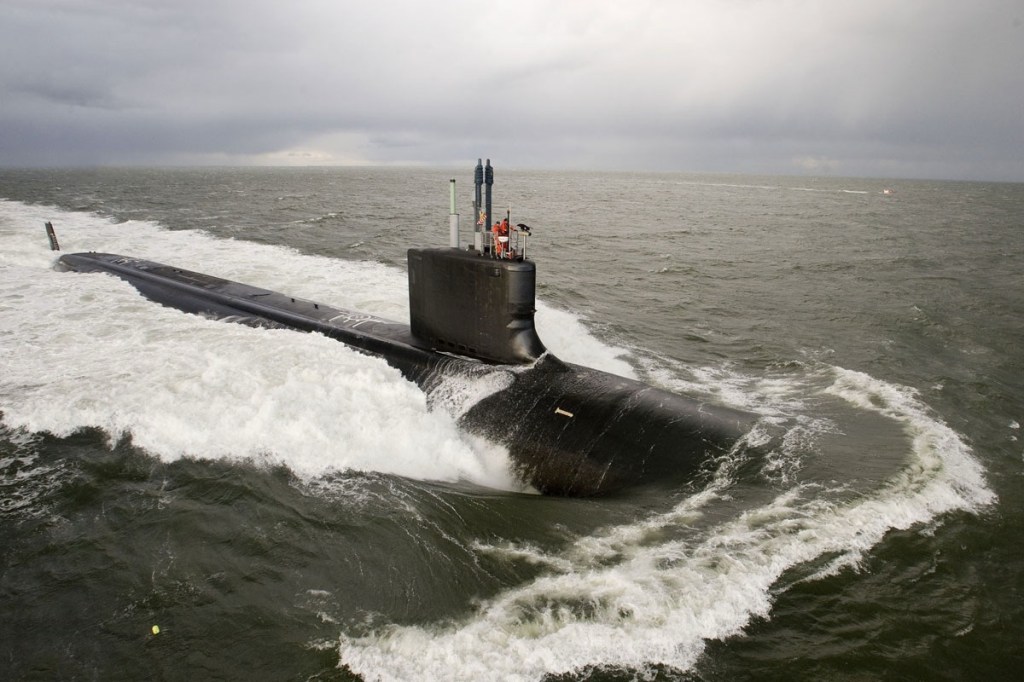
The U.S. has built a sizable force in the region as shown in the image below. Five Arleigh Burke Guided missile destroyers and two Ticonderoga-Class Guided missile cruisers make up the bulk of the missile attack capability that’s close by. We also have at least one submarine, likely two of the carrier came with her own as an escort.
We don’t know if the U.S. will launch these strikes but Trump has signaled multiple times that this is a direction he wants to move in, even saying “the land is going to be next” following multiple strikes on alleged drug-trafficking vessels.
Venezuelan media reported as this article was being finalized that they were mobilizing mass amounts of people and were preparing to mount a guerrilla style defensive in the event the U.S. tries to land soldiers in the country.
Maduro on state TV mentioned a “prolonged resistance” with small teams spread across the country carrying out sabotage missions and other insurgent/guerrilla tactics.
On October 21st one of Russia’s top generals announced that Russia had carried out a test on the claimed, nuclear powered ‘Burevestnik’ subsonic cruise missile.
Burevestnik launcher.
“We have launched a multi-hour flight of a nuclear-powered missile and it covered a 14,000km (8,700-mile) distance, which is not the limit,” Chief of General Staff Valery Gerasimov told President Vladimir Putin in a televised meeting.
Code named SSC-X-9 Skyfall by NATO this low flying cruise missile is suspected to be powered by a miniature nuclear reactor that kicks in after the missile has been launched conventionally from the ground. This reactor gives it an incredible range.
General Gerasimov said the missile flew for a total of 15 hours on its latest test while its horizontal and vertical capabilities were tested.
Trial of 🇷🇺Russia's Burevestnik nuclear-powered cruise missile with unlimited range successfully completed
The rocket flew ~8,700 miles for ~15 hours in a test on Oct 21, per Gen. Staff Chief Gerasimov
“Therefore, it demonstrated high capabilities to bypass missile and air defence systems,” Tass reported Gen Gerasimov as saying.
First mentioned in 2018 this missile has been debated in defense circles and among analysts who can’t agree on its claimed effectiveness. It’s suspected, and claimed by Russia, to be able to strike the United States, while being launched from anywhere in Russia. The missile can carry a conventional warhead but is designed with nuclear warheads in mind.
The News agency Reuters did an investigation into the suspected launch site for the weapon last year in September. This investigation concluded that the site for the launch of Skyfall was a nuclear storage facility located about 300 miles North of Moscow known as Vologda-20.
Vologda-20
Decker Eveleth, an analyst with the CNA research and analysis organization found this satellite imagery and identified at least 9 horizontal launch pads under construction. The launch platforms are in three groups located inside a high berm to shield them from direct attacks. The high berm surrounding the groups also protects in case of accidental explosion from destroying or detonating the other missiles and launchers. The site shows what Decker believes to be lightning rods to protect the large metal equipment from Mother Nature.
Closer look at the launchpads.
The berms are further linked to roads which run to buildings where the missiles are likely being stored and serviced.
Decker concludes the site is built “for a large, fixed missile system and the only large, fixed missile system that they’re (Russia) currently developing is the Skyfall,”
Because Skyfall’s launch site is connected to a nuclear weapons storage site, it will allow Russia to quickly pull from storage to load and fire the weapon.
GCR analysis.
This missile has some interesting features if everything Russia says about it is true. A missile’s range is usually determined by how much fuel they can carry. Since this allegedly runs on a small nuclear reactor (after launch) this missile could loiter for extended periods of time. We are talking about maybe days of flight time here. This weapon also had a much lower suspected cruise altitude of a reported 164 to 328 feet, compared to conventional powered cruise missiles.
Some western sources believe that Skyfall’s subsonic speeds will make it detectable by current detection methods. A response to this by Russian military expert Alexei Leonkov says the weapon is designed to be used to knock out the “remnants” of the enemy’s command and control systems, military bases, factories and power plants after Russian ICBMs have already been launched, operating in areas where air defense is already weakened or destroyed.
So while detecting it might be possible, it’s not likely this weapon is going to be used for anything other than what I suspect would be the very last war the earth ever has. Even if it’s used in a conventional manner this weapon still contains nuclear material, and will leave behind radiation upon detonation.
The Pentagon has announced that the USS Gerald R. Ford (CVN- 78) and its Carrier Strike Group (CSG) is being redeployed to the Caribbean in an effort to bolster the forces currently involved in counter-narcotic operations in the region. This comes a day after the announcement that the White House was going to Congress with notice that the president was planning to conduct ground operations in Venezuela. These operations will likely target suspected drug production operations and other assets under the control of the cartels operating in the country. That being said, the Venezuelan military is unlikely to just watch as US forces carry out strikes in their country, meaning the U.S. will likely preemptively target assets under the control of Venezuelan President Maduro’s forces. Radar, air defense and any air units are to be a high priority for suppression or destruction.
At last report the Ford CSG was operating in the Adriatic Sea off the coast of Italy and various parts of the Mediterranean. It will take the CSG at least several days to assume a position within range of Venezuela.
The USS Gerald R. Ford Carrier Strike Group includes the carrier along with three Areleigh Burke-class guided missile destroyers acting as escorts.
USS Bainbridge DDG-96
USS Mahan DDG-72
The USS Winston Churchill DDG-81 is acting as the CSG’s Air Defense Commander.
Making up the air power of the CSG is Carrier Wing 8, made up of the following.
The “Tomcatters” of Strike Fighter Squadron (VFA) 31 F/A-18E
The “Ragin Bulls” of VFA 37 – F/A-18E
The “Golden Warriors” of VFA 87 – F/A-18E
.The “Black Lions” of VFA 213 – F/A-18F
The “Gray Wolves” of Electronic Attack Squadron (VAQ) 142 – EA-18G
The “Bear Aces” of Airborne Command and Control Squadron (VAW) 124 – E-2D
The “Rawhides” of Fleet Logistics Squadron (VRC) 40 Det. – C-2A
The “Spartans” of Helicopter Maritime Strike Squadron (HSM) 70 – MH-60R
The “Tridents” of Helicopter Sea Combat Squadron (HSC) 9 – MH-60S
Fleet info pulled from various public sources as well as the GCR database.
You must be logged in to post a comment.