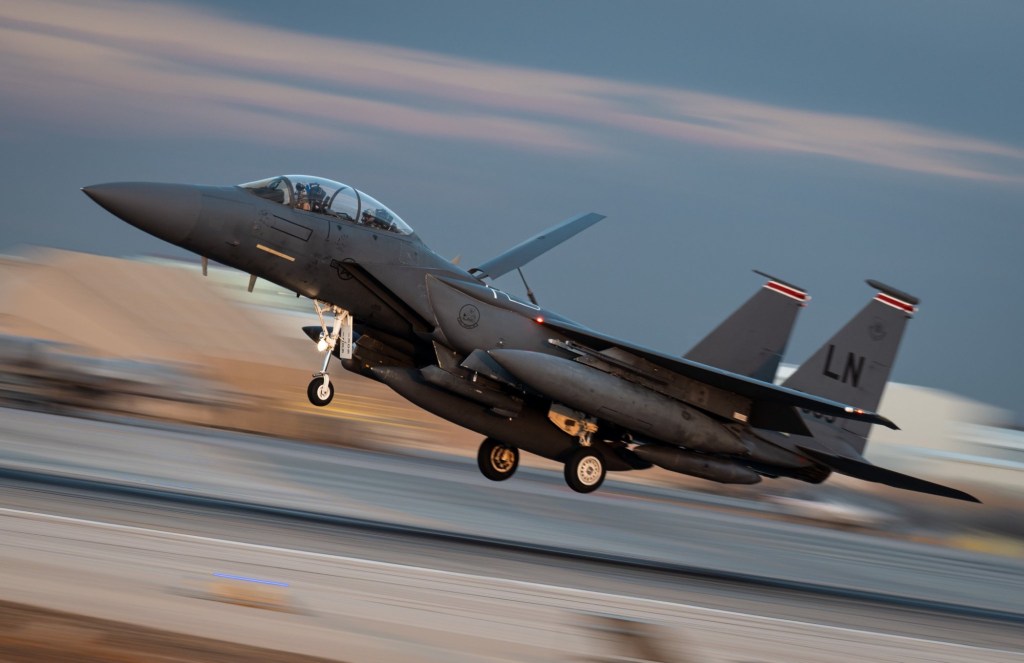
Two F/A-18’s were seen flying deep into the Gulf of Venezuela on the 9th, staying there for around 40 minutes according to flight tracking data. The Gulf of Venezuela is a fairly small body of water surrounded on three sides by parts of Venezuela. At its widest the Gulf is only around 150 miles wide (West to East) and 75 miles long (North to South) and the opening of the mouth of the area is only 52 miles wide. Venezuela’s border extends out from its coast 12 miles in every direction not leaving much room for the jets to operate. Venezuela actually claims all of the Gulf as an area of importance to them and considers it all their territory, a claim which the US has debated and challenged for decades.
Image from FlightRadar24 showing the two F/A-18 Super Hornets in the Gulf of Venezuela. Call signs- RHINO11 and RHINO12.
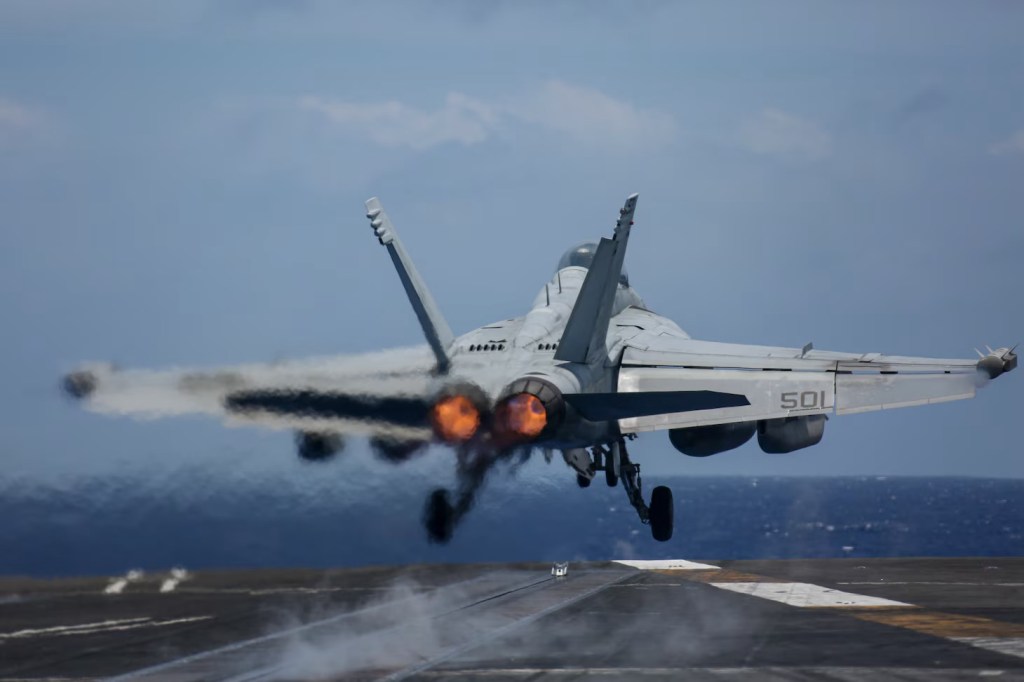
Working alongside the F/A-18’s were at least two of the EA-18G Growlers Electronic Warfare aircraft which went into an orbit a couple hundred miles north of the Gulf. Grizzly 1 and Grizzly 2 are the call signs.
Image from FlightRadar24 show the F/A-18 SuperHornets and north of them the EA-18 Growlers.
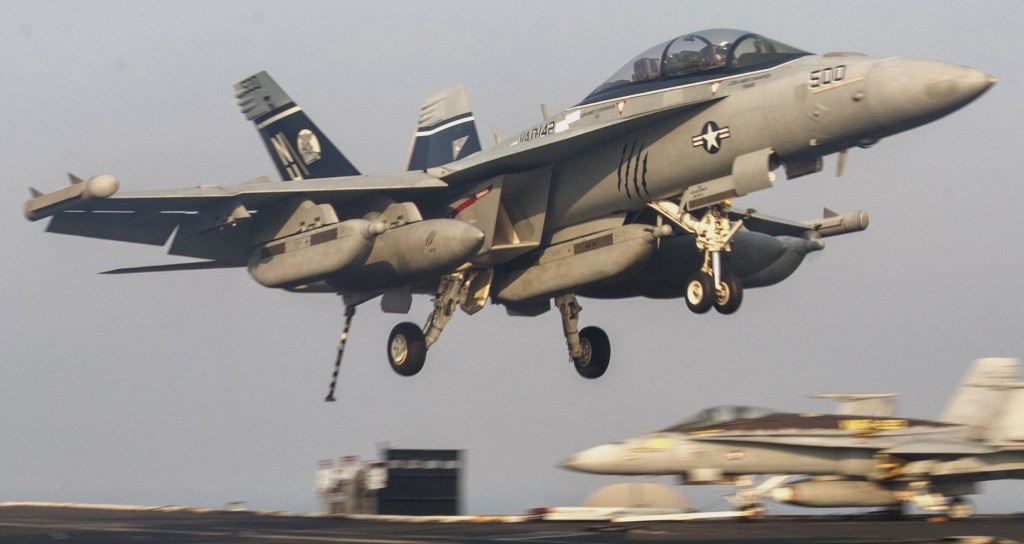
The Growler specializes in electronic attack. Using its overpowering Next Generation Jammer pod carried underwing, it can disrupt modern radar systems on air defense or other air units allowing the growler and other allied planes to get in and out of a mission area without being seen in cases where old radar are being used.
Electronic attack and radar jamming are poorly understood by most people and there is a lot about the NGJ pods (and even the legacy AN/ALQ-99 Tactical Jamming System) that is still classified. However these jamming pods work by attacking the connection between a radar and its target and can reflect a distorted signal back to the receiver.A jamming pod can disrupt a radar by flooding the radar with noise (think of looking into a spotlight)—injecting false signals, alter the timing, or deceiving the radar into tracking a “ghost” location. The tactical advantages of this are obvious, making the growler also amazing at anti-radar and anti air defense missions, also known as SEAD/DEAD. Suppression or Destruction of Enemy air defense. The growlers here could have been jamming the radar for the SuperHornets but more likely they were gathering intelligence on the signals that Venezuela was sending out, in case they are needed for a future strike missions. The last of its features I’d like to point out is the growlers APG-79 Active Electronically Scanned Array (AESA) Radar which it was probably using here to scan the Venezuelan coastline.
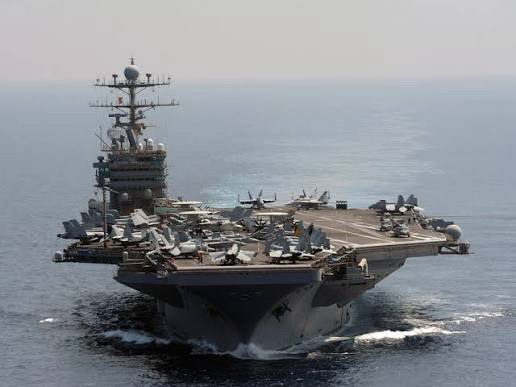
It’s believed both the Super Hornets as well as the Growlers are operating from the aircraft carrier USS Gerald R Ford (CVN-78) which arrived in the Caribbean last month.
The article I’m liking too is more reading for how the growlers jamming actually works and what some lf the systems limitations are. Highly recommend.
Another event that was missed yesterday was a transfer of several aircraft (possibly Growlers) from Naval Air Station Whidbey Island in Washington State to the Caribbean. Their presence was noted by flight trackers who also often listen to radio comms between aircraft and Air Traffic Control. They were ferried to the Caribbean by two KC-46A Pegasus aerial refueling jets.
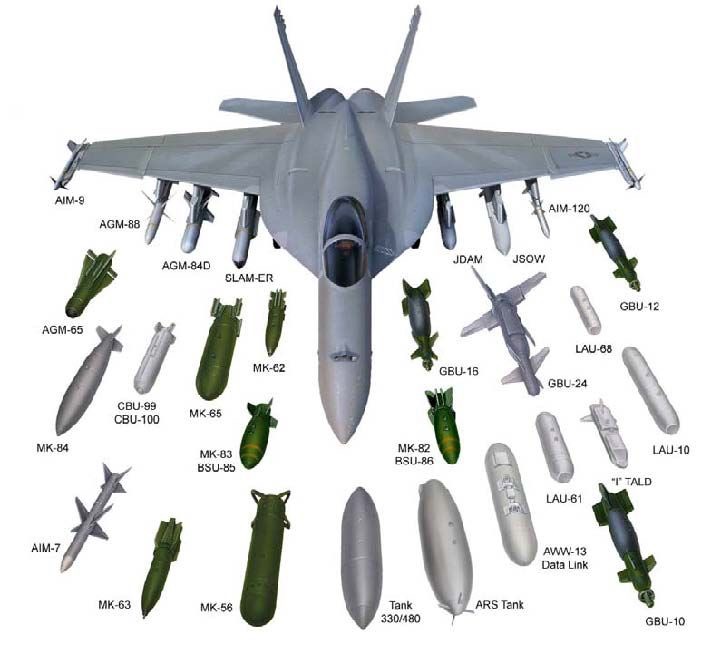
An image showcasing the E/A-18 Growler and its multiple Jamming pods.This one is also packing several anti-radiation missiles that can be set to launch automatically when detecting an enemy radar.
US aircraft have probed Venezuelan air defense in this same area before utilizing at least one Boeing RC-135 Rivet Joint reconnaissance aircraft along with several other unidentified aircraft. The US has recently been very public with its aircraft operations in the Caribbean, possibly as a sign to the Maduro regime of its willingness and ability to escalate the situation further if President Trump’s demands aren’t met.
Flightradar24 showing an RC-135 Rivet Joint and several unknown aircraft operating off the coast of Venezuela.
In response to an email inquiry sent by GCR to USSOUTHCOM we received this statement from a SOUTHCOM Spokesperson. .
“We conduct routine, lawful operations in international airspace, including over the Gulf of Venezuela. We will continue to fly safely, professionally, and in accordance with international law to protect the homeland, monitor illicit activity, and support stability across the Americas.”
Today, the Secretary of the Navy John Phelan announced that the U.S. navy would be walking away from the Constellation-Class frigate program and putting more effort towards further new class of warships able to be built quicker. The navy says they have a need for 73 small surface ships.
Under terms set with shipbuilder Fincantieri Marinette Marine, the Wisconsin shipyard will finish the first two ships in the series. So Constellation(FFG-62) and Congress (FFG-63) will still be built, however the other four ships that had been ordered will not be.
In the past the plan was for the navy to build 20 of these ships at around $1.1 billion a piece. A navy factsheet called the class a “an agile, multi-mission warship,” capable of operating in open ocean or coastal environments, “providing increased combat-credible forward presence that provides a military advantage at sea,”
The program’s costs have continued to rise since the original announcement,mostly due to design additions and changes. Recently, images were shared online that showed that the ship was nowhere near complete. At an estimated displacement of 7,200 tons the whole point of the program was to fill a gap between the 10,000-ton Arleigh Burke-class guided-missile destroyers – the workhorse of the US fleet – and 3,500-ton littoral combat ships. (Another ship seen mostly as a failure.) At the beginning of the program the Constellation-Class was seen as a way to get hulls in the water faster, as it was based on an Italian design, with specific modifications for the U.S. navy’s needs. Those modifications are part of what slowed down the production of the ship as those modifications expanded and cost ballooned, leaving the ship being dreadfully behind schedule. Its 2026 launch was pushed to 2029.
An update shared in April of 2025 showing the current progress of the ship.
The U.S. navy hasn’t had a frigate in its inventory since the decommissioning of the Oliver Hazard Perry-class USS Simpson (FFG-55) in 2015.
Oliver Hazard Perry-class USS Simpson (FFG-55) passing the Statue of Liberty in New York City.
The Constellation-Class was seen as a way to quickly add ships to the U.S. navy. An important goal now more than ever as the military is allegedly making a shift to counter growing threats in the Pacific. China, according to a Pentagon report, is expected to have around 400 ships(50 of them frigates) in the water by the end of this year, a huge leap from the current U.S. number of 240 ships and submarines. This is troubling to analysts who believe the nation with the larger fleet will win.
“We are reshaping how the Navy builds its fleet. Today, I can announce the first public action is a strategic shift away from the Constellation-class frigate program,” reads the statement from Secretary of the Navy John Phelan. “The Navy and our industry partners have reached a comprehensive framework that terminates, for the Navy’s convenience, the last four ships of the class, which have not begun construction.”
A defense official who is quoted by USNI is quoted saying “A key factor in this decision is the need to grow the fleet faster to meet tomorrow’s threats. This framework seeks to put the Navy on a path to more rapidly construct new classes of ships and deliver capabilities our war fighters need in greater numbers and faster,”
It’s no secret that America has a major shortage in shipbuilding capability allowing the Fincantieri Marinette Marine to continue to operate and build the two Constellation-class ships will keep the workers employed for several more years and allow the shipbuilding firm the chance to bid in future U.S. navy contracts when they are finished.
Last week, Italian Aeronautica Militare Eurofighter Typhoons intercepted a TU-134 “Black Pearl” over the Baltic Sea while taking part in their routine Baltic Air Policing (BAP). The Black Pearl is a pretty rare sight only spotted in the Baltic twice since 2020. “Black Pearl” is the name given to the plane by western military analysts, its actual NATO designation is “Crusty-B”.
The Typhoons were stationed at Ämari Air Base in Estonia. They recently replaced the Italian F-35’s that were stationed at the same base. The Italians are taking part in the multinational NATO operation Eastern Sentry.
The TU-134 “Black Pearl” accompanied by two Su-30SM2 and a SU-24.
At the time of interception of “The Black Pearl”, a modified version of the civilian Tupolev TU-134, the district plane was being accompanied by two Sukhoi Su-30SM2 “Flankers” and what is believed to be a Su-24MR “Fencer”. The “Flankers” are operated by the Russian Navy, while the “Fencer” is from the Russian Air Force.
Sukhoi Su-24 Flanker. Italian Typhoon tailing the two SU-30’s.
The Black Pearl is a Tu-134UBL (now Tu-134A-4 VIP transport) that was at one time used to train pilots and navigators of Russia’s strategic bomber forces. Anything from the Tu- 160’s to the Tu-22M3 and Tu-95MS. The Russians added a very sharply pointed, bomber-like nose and a black paint job. The jet is now mostly used as a VIP transport. As it was encountered over the Baltic it’s likely it was hauling Russian VIPs to the Russian enclave in Kaliningrade.
NATO air command shared the images on November 21st, but implied that the images weren’t taken that day.
Over the last week 🇮🇹 jets deployed at Amari 🇪🇪scrambled to intercept multiple 🇷🇺 assets. NATO Air Policing in the Baltic region ensures security of @NATO airspace under Eastern Sentry#EasternSentry is enhancing flexibility and strength to NATO's posture on the eastern flank pic.twitter.com/UElLnTi7VJ
The plane was intercepted in 2020 by F-16’s from the Belgium Air Force that were also conducting a BAP. They managed to capture an inferred image of the plane from the F-16’s Sniper Advanced Targeting Pod.
IR imagery of the Black Pearl taken from the Sniper pod of a Bulgarian F-16.
The Black Pearl is an interesting variant of an aircraft that you don’t see very much anynore.
It’s believed the Black Pearl was shepherding the fighters for delivery to the 4th Guards Naval Assault Aviation Regiment of the 34th Mixed Aviation Division, assigned to Baltic Fleet Aviation and based at Chernyakhovsk Air Base in Kaliningrad, according to KEY.AERO.
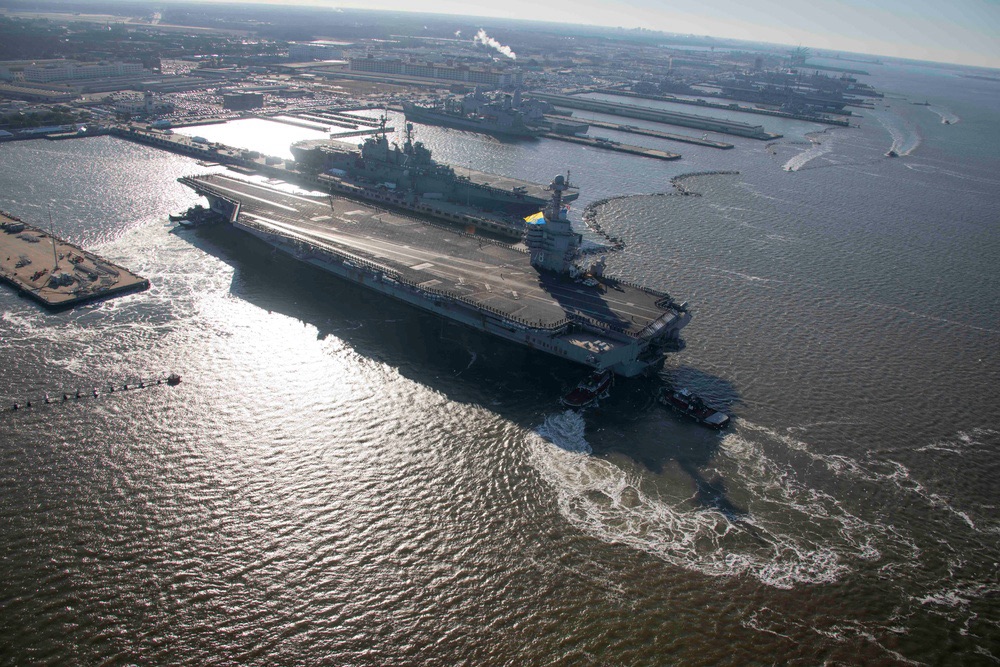
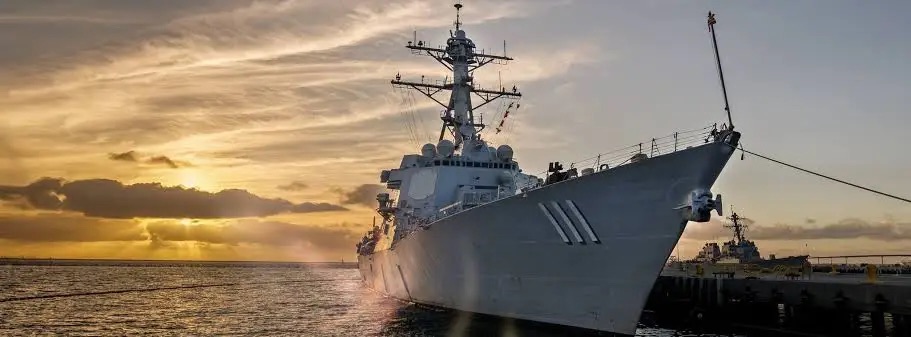
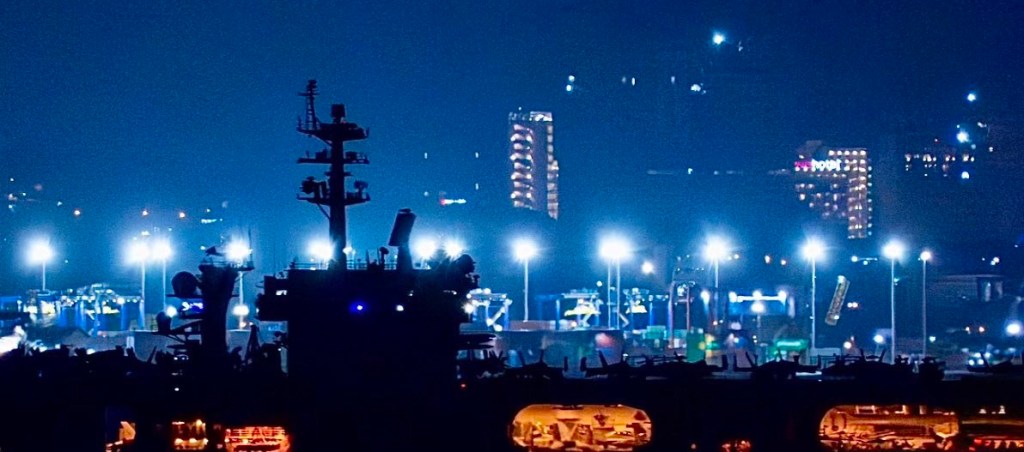
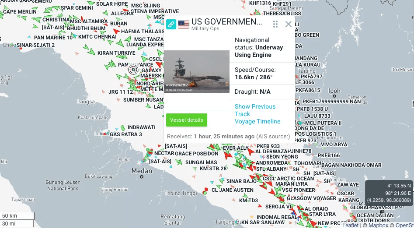
Today the USS Gerold R.Ford (CVN-78) , a Ford-Class nuclear powered aircraft carrier, has entered the waters of the Caribbean, joining the fourth fleet and coming under the command of US SOUTHCOM(Southern Command). The Ford, its escorts and its Carrier Air Wing are just the most recent additions in a large military buildup, adding to the tensions in the region.
“The enhanced U.S. force presence in the USSOUTHCOM AOR will bolster U.S. capacity to detect, monitor, and disrupt illicit actors and activities that compromise the safety and prosperity of the United States homeland and our security in the Western Hemisphere,” said Chief Pentagon Spokesperson Sean Parnell. “These forces will enhance and augment existing capabilities to disrupt narcotics trafficking and degrade and dismantle Transnational Criminal Organizations.”
This deployment to the region was ordered by Washington at the tail end of November.
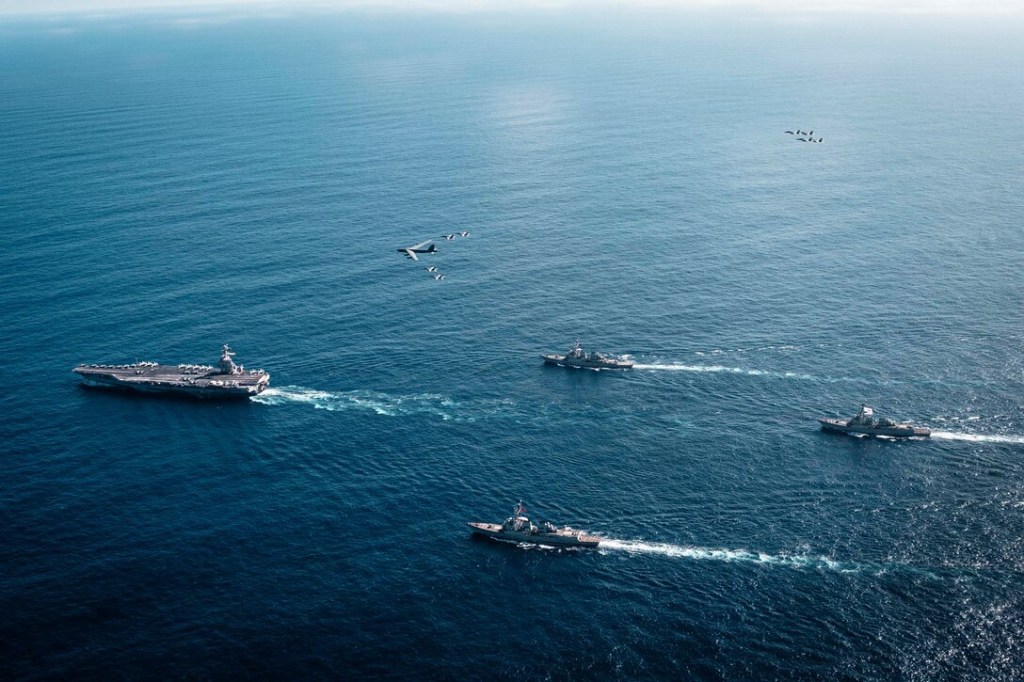
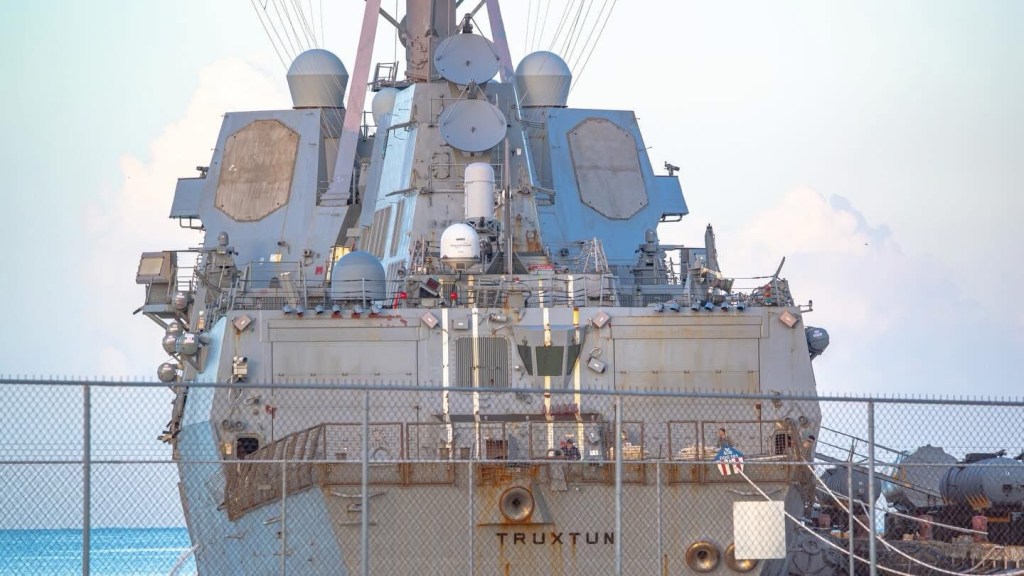
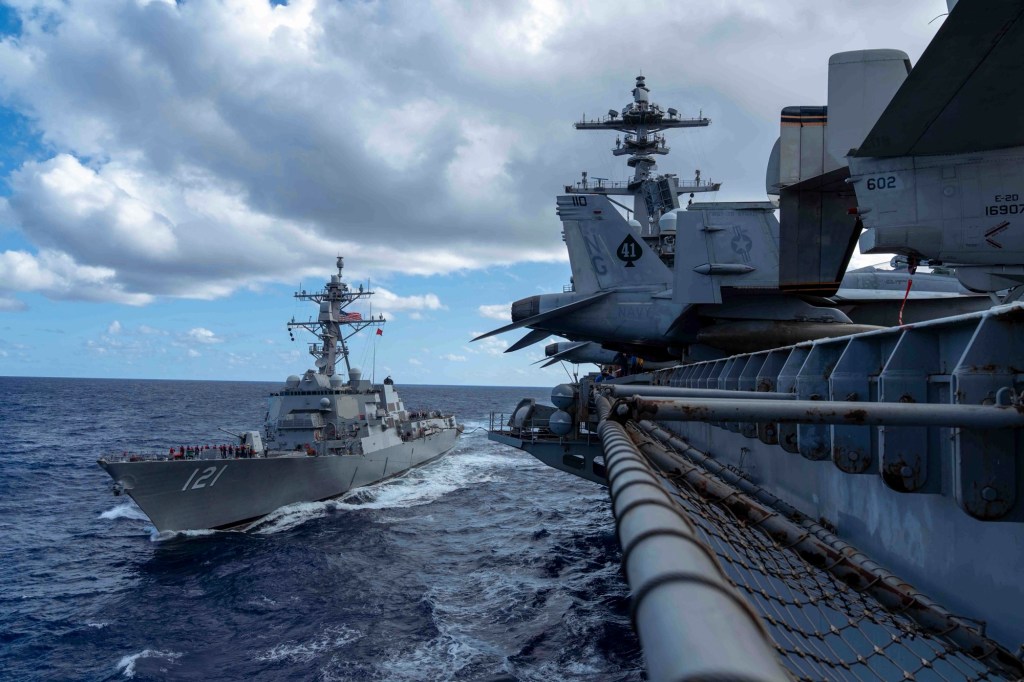
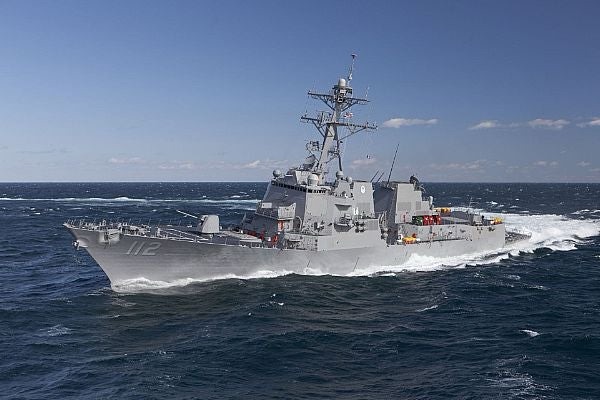
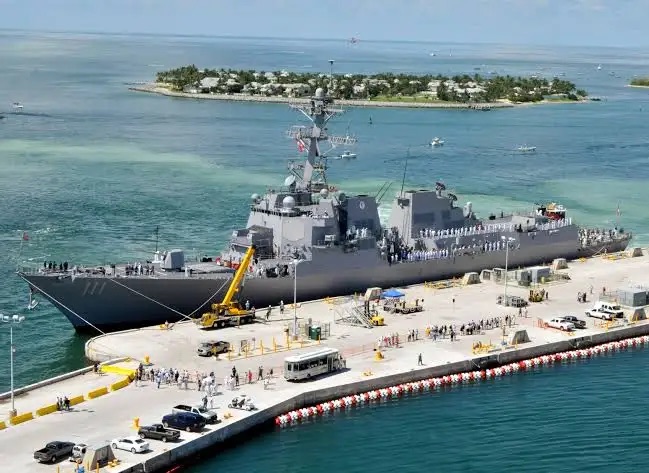
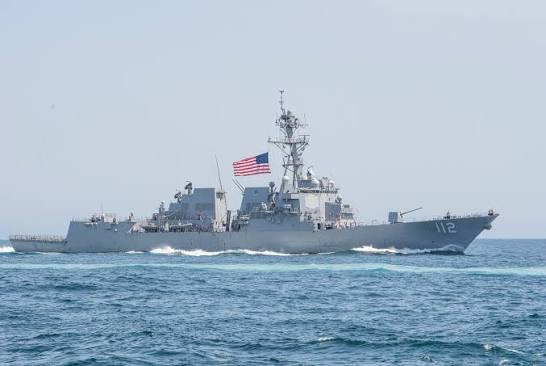
According to the navy’s statement on their website the Ford is supported by Destroyer Squadron Two’s Arleigh Burke-class guided-missile destroyers USS Bainbridge (DDG 96) and USS Mahan (DDG 72), and the integrated air and missile defense command ship USS Winston S. Churchill (DDG 81).
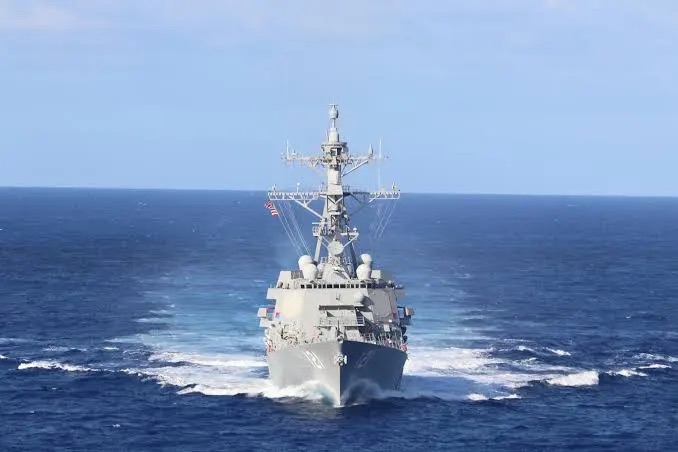
USS Bainbridge (DDG-96)USS Mahan (DDG-72) USS Winston S. Churchill (DDG 81)
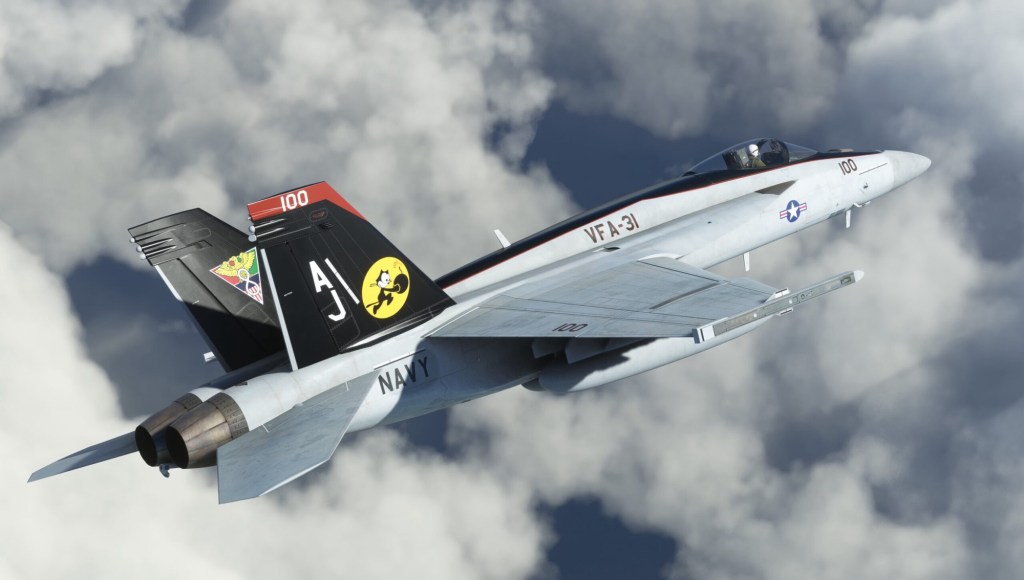
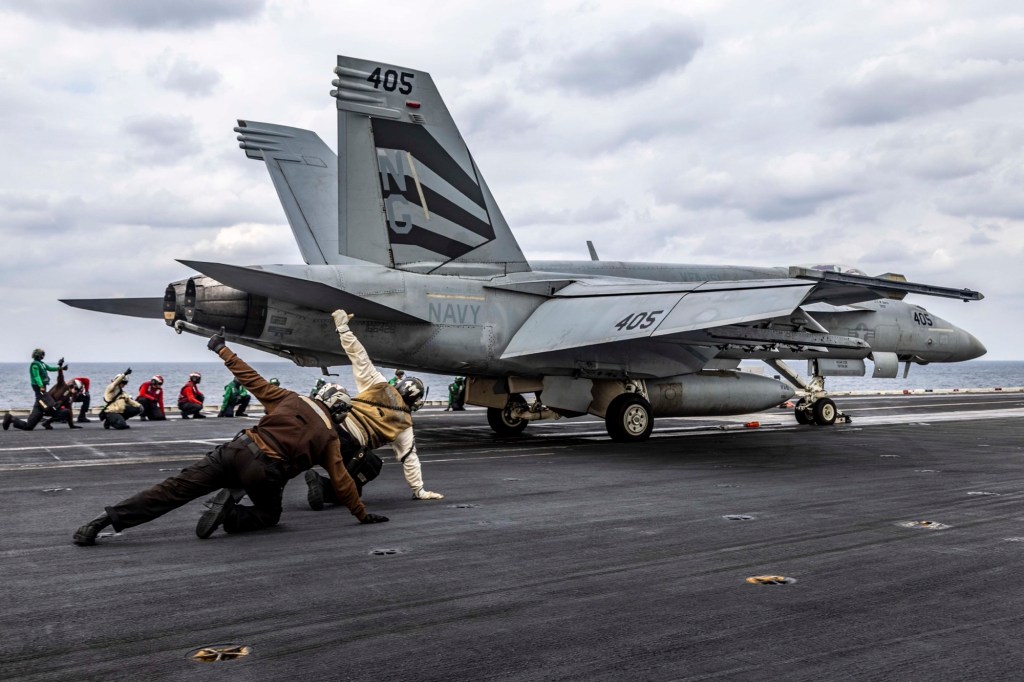
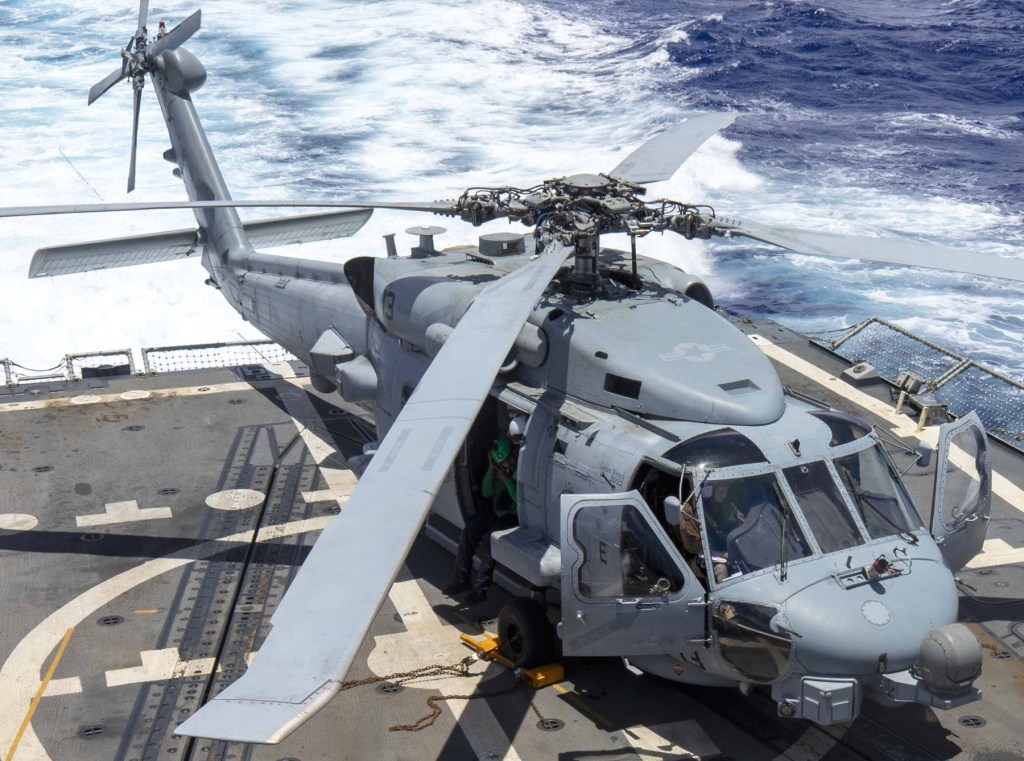
The embarked squadrons aboard Gerald R. Ford include Strike Fighter Squadron (VFA) 31, VFA 37, and VFA 87, flying the F/A-18E Super Hornet; VFA 213, flying the F/A-18F Super Hornet; Electronic Attack Squadron 142, flying the E/A-18G Growler; Airborne Command and Control Squadron 124, flying the airborne command and control E-2D Advanced Hawkeye; Helicopter Sea Combat Squadron (HSC) 9, flying the MH-60S Seahawk; Helicopter Maritime Strike Squadron (HSM) 70, flying the MH-60R Seahawk; and a detachment from Fleet Logistics Support Squadron (VRC) 40, flying the Carrier Onboard Delivery C-2A Greyhound.
F/A-18F Pilot LCDR Jamie R. Struck the makes first carrier arrested landing using AAG system aboard USS Gerald R. Ford (CVN-78) off the Virginia coast. US Navy PhotoEA-18G Growler with Electronic Attack Squadron 142E-2D Advanced Hawkeye Two Carrier Air Wing 8 MH-60S Sea Hawks, attached to Helicopter Sea Combat Squadron 9, fly in formation over the world’s largest aircraft carrier, USS Gerald R. Ford (CVN 78), during an aerial change of commandCarrier Onboard Delivery C-2A Greyhound.
The Ford has yet to undergo its refit which will allow it to launch the F-35C’s so its combat air wing is made up entirely of Super Hornets.
Carrier capable F-35C Lightning II
Background
The U.S. for the past month has been carrying out a large number of strikes aimed at curtailing the drug trade coming into America. The White House has singeled out Venezuela as a large contributor to that issue and has called for Venezuelan President Maduro to crack down on cartels operating in his country. The U.S. military has carried out 19 strikes so far on alleged drug smuggling boats out at sea. The White House says these boats (and one semi-submersible) were moving drugs towards America.
Yesterday, at the direction of President Trump, two lethal kinetic strikes were conducted on two vessels operated by Designated Terrorist Organizations.
These vessels were known by our intelligence to be associated with illicit narcotics smuggling, were carrying narcotics, and… pic.twitter.com/ocUoGzwwDO
SecDef Pete Hegseth’s Twitter post that showed video of two separate strikes on two suspected drug boats.Attack platform unknown.
If all of these boats carried drugs then potentially thousands of pounds of life shattering narcotics have been removed from the markets, however that is barely a fraction of the drugs suspected to be moving through America’s cities and streets daily. There is no data about exactly how much illegal narcotics comes into America each day but judging by the almost 3000 pounds the authorities catch coming in daily it’s thought to be many times more.
While Venezuela isn’t the only origin of the drugs on America’s streets it is one of them, with cartels dealing in large amounts of narcotics, mostly cocaine. The opioid synthetic fentanyl is not believed to be being shipped through Venezuela, as much as the White House had made that claim. Fentanyl is largely produced in Mexico, with the precursor chemicals coming from China. It’s smuggled across the border at the Mexican/American border crossing as well as ports and even airports. With that being said the White House has also made statements about working with the Mexican government to fight the cartels there, using US special operations forces and Central Intelligence Agency agents.
Venezuela’s main cartel that the White House has focused on is the Cartel of the Sons (Cartel de los Soles). This cartel is thought by the Trump administration to be headed by Venezuelan President Nicolas Maduro, as well as other high ranking members of the Venezuelan armed forces.
If the U.S. carries out ground strikes against cartel targets, especially cartel leadership there is a strong possibility it will lead to an open war being declared on the U.S. by Venezuela, especially as Maduro believes that Donold Trump is trying to remove him from power.
Analysis:
It’s believed that with the arrival of the USS Ford and its strike group the U.S. military will eventually carry out ground strike missions with the intent of striking cartel targets linked to drug storage and production. That would cause the Venezuelan military to respond. We know they will because they have essentially said that they would. They have already started moving air defense systems and reaching out to their allies for support. Russia has sent several large transport planes to the country in recent weeks.
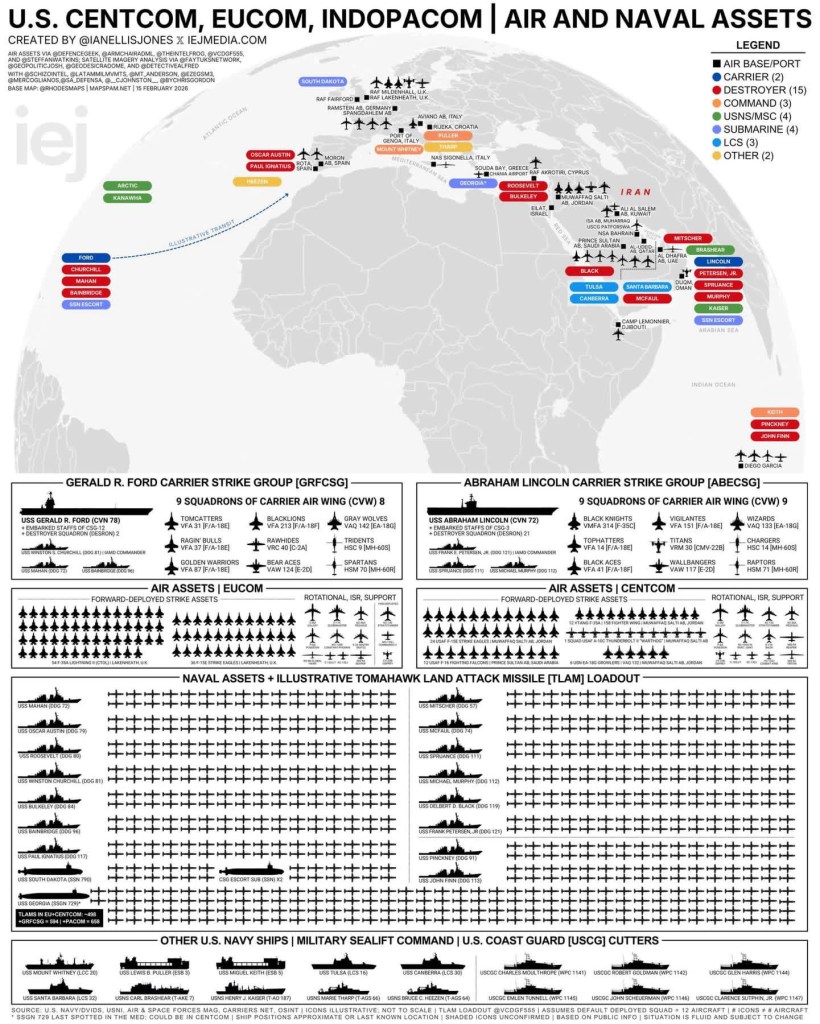
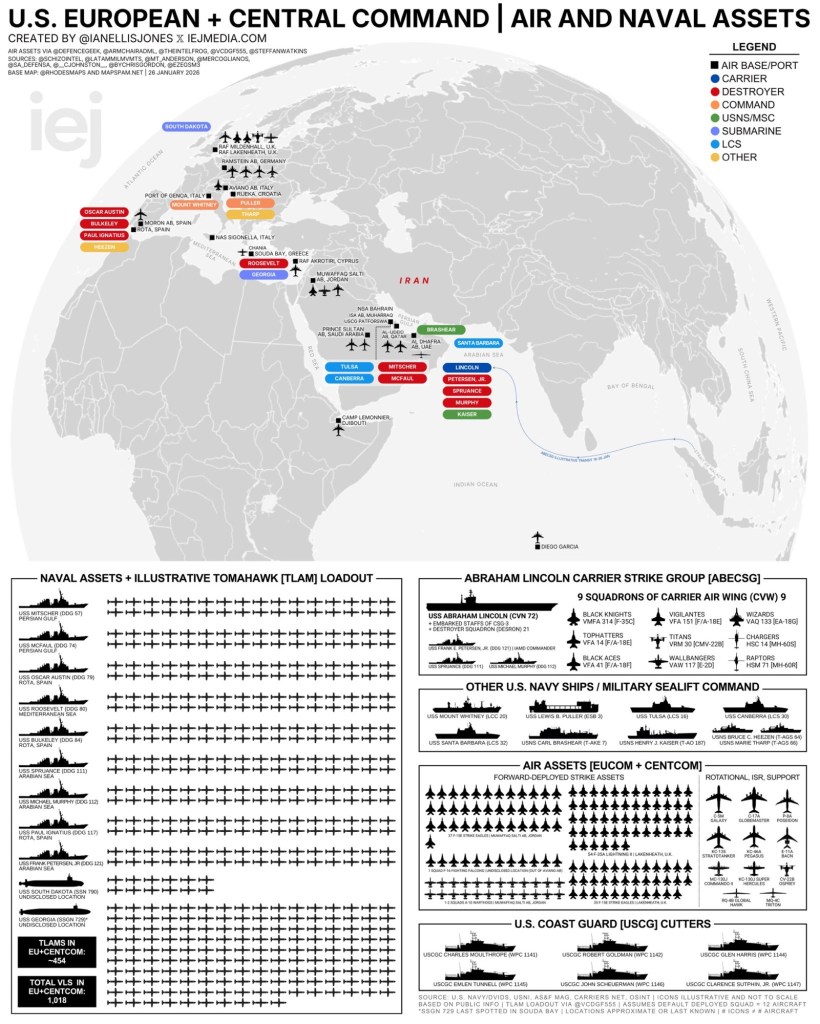
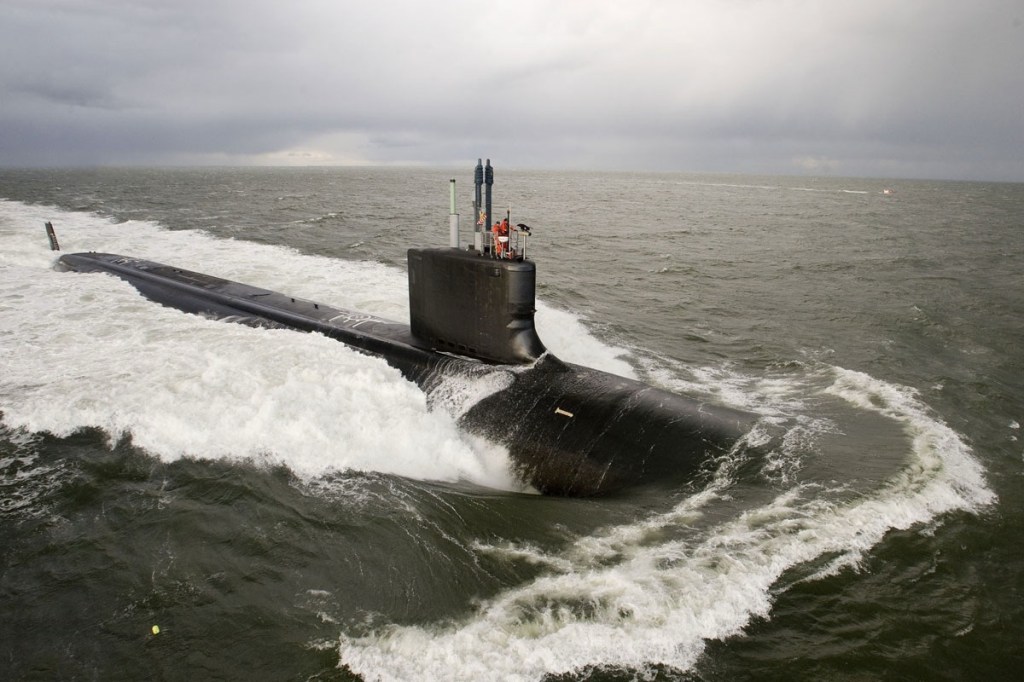
The U.S. has built a sizable force in the region as shown in the image below. Five Arleigh Burke Guided missile destroyers and two Ticonderoga-Class Guided missile cruisers make up the bulk of the missile attack capability that’s close by. We also have at least one submarine, likely two of the carrier came with her own as an escort.
We don’t know if the U.S. will launch these strikes but Trump has signaled multiple times that this is a direction he wants to move in, even saying “the land is going to be next” following multiple strikes on alleged drug-trafficking vessels.
Venezuelan media reported as this article was being finalized that they were mobilizing mass amounts of people and were preparing to mount a guerrilla style defensive in the event the U.S. tries to land soldiers in the country.
Maduro on state TV mentioned a “prolonged resistance” with small teams spread across the country carrying out sabotage missions and other insurgent/guerrilla tactics.
On October 21st one of Russia’s top generals announced that Russia had carried out a test on the claimed, nuclear powered ‘Burevestnik’ subsonic cruise missile.
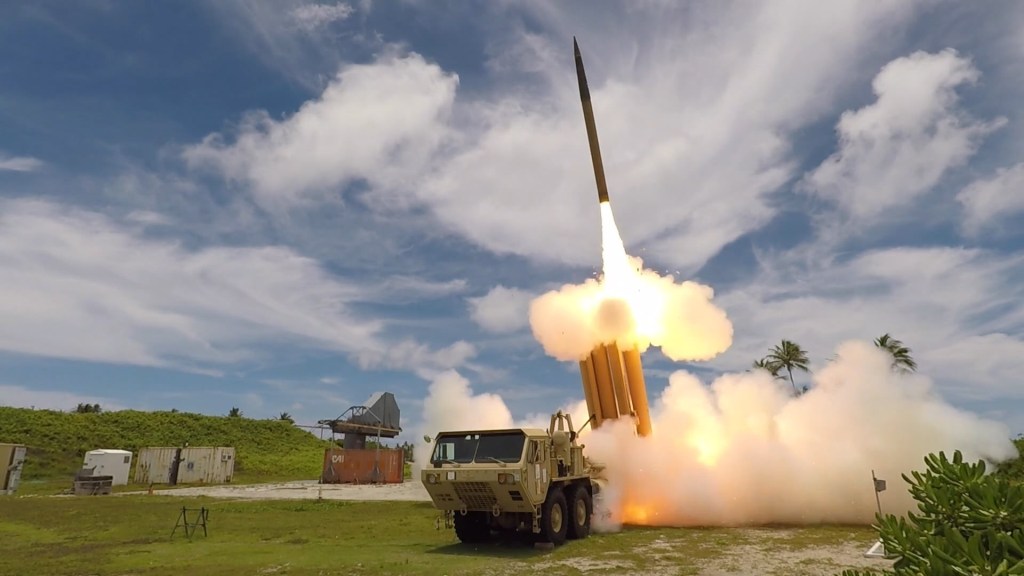
Burevestnik launcher.
“We have launched a multi-hour flight of a nuclear-powered missile and it covered a 14,000km (8,700-mile) distance, which is not the limit,” Chief of General Staff Valery Gerasimov told President Vladimir Putin in a televised meeting.
Code named SSC-X-9 Skyfall by NATO this low flying cruise missile is suspected to be powered by a miniature nuclear reactor that kicks in after the missile has been launched conventionally from the ground. This reactor gives it an incredible range.
General Gerasimov said the missile flew for a total of 15 hours on its latest test while its horizontal and vertical capabilities were tested.
Trial of 🇷🇺Russia's Burevestnik nuclear-powered cruise missile with unlimited range successfully completed
The rocket flew ~8,700 miles for ~15 hours in a test on Oct 21, per Gen. Staff Chief Gerasimov
“Therefore, it demonstrated high capabilities to bypass missile and air defence systems,” Tass reported Gen Gerasimov as saying.
First mentioned in 2018 this missile has been debated in defense circles and among analysts who can’t agree on its claimed effectiveness. It’s suspected, and claimed by Russia, to be able to strike the United States, while being launched from anywhere in Russia. The missile can carry a conventional warhead but is designed with nuclear warheads in mind.
The News agency Reuters did an investigation into the suspected launch site for the weapon last year in September. This investigation concluded that the site for the launch of Skyfall was a nuclear storage facility located about 300 miles North of Moscow known as Vologda-20.
Vologda-20
Decker Eveleth, an analyst with the CNA research and analysis organization found this satellite imagery and identified at least 9 horizontal launch pads under construction. The launch platforms are in three groups located inside a high berm to shield them from direct attacks. The high berm surrounding the groups also protects in case of accidental explosion from destroying or detonating the other missiles and launchers. The site shows what Decker believes to be lightning rods to protect the large metal equipment from Mother Nature.
Closer look at the launchpads.
The berms are further linked to roads which run to buildings where the missiles are likely being stored and serviced.
Decker concludes the site is built “for a large, fixed missile system and the only large, fixed missile system that they’re (Russia) currently developing is the Skyfall,”
Because Skyfall’s launch site is connected to a nuclear weapons storage site, it will allow Russia to quickly pull from storage to load and fire the weapon.
GCR analysis.
This missile has some interesting features if everything Russia says about it is true. A missile’s range is usually determined by how much fuel they can carry. Since this allegedly runs on a small nuclear reactor (after launch) this missile could loiter for extended periods of time. We are talking about maybe days of flight time here. This weapon also had a much lower suspected cruise altitude of a reported 164 to 328 feet, compared to conventional powered cruise missiles.
Some western sources believe that Skyfall’s subsonic speeds will make it detectable by current detection methods. A response to this by Russian military expert Alexei Leonkov says the weapon is designed to be used to knock out the “remnants” of the enemy’s command and control systems, military bases, factories and power plants after Russian ICBMs have already been launched, operating in areas where air defense is already weakened or destroyed.
So while detecting it might be possible, it’s not likely this weapon is going to be used for anything other than what I suspect would be the very last war the earth ever has. Even if it’s used in a conventional manner this weapon still contains nuclear material, and will leave behind radiation upon detonation.
The Pentagon has announced that the USS Gerald R. Ford (CVN- 78) and its Carrier Strike Group (CSG) is being redeployed to the Caribbean in an effort to bolster the forces currently involved in counter-narcotic operations in the region. This comes a day after the announcement that the White House was going to Congress with notice that the president was planning to conduct ground operations in Venezuela. These operations will likely target suspected drug production operations and other assets under the control of the cartels operating in the country. That being said, the Venezuelan military is unlikely to just watch as US forces carry out strikes in their country, meaning the U.S. will likely preemptively target assets under the control of Venezuelan President Maduro’s forces. Radar, air defense and any air units are to be a high priority for suppression or destruction.
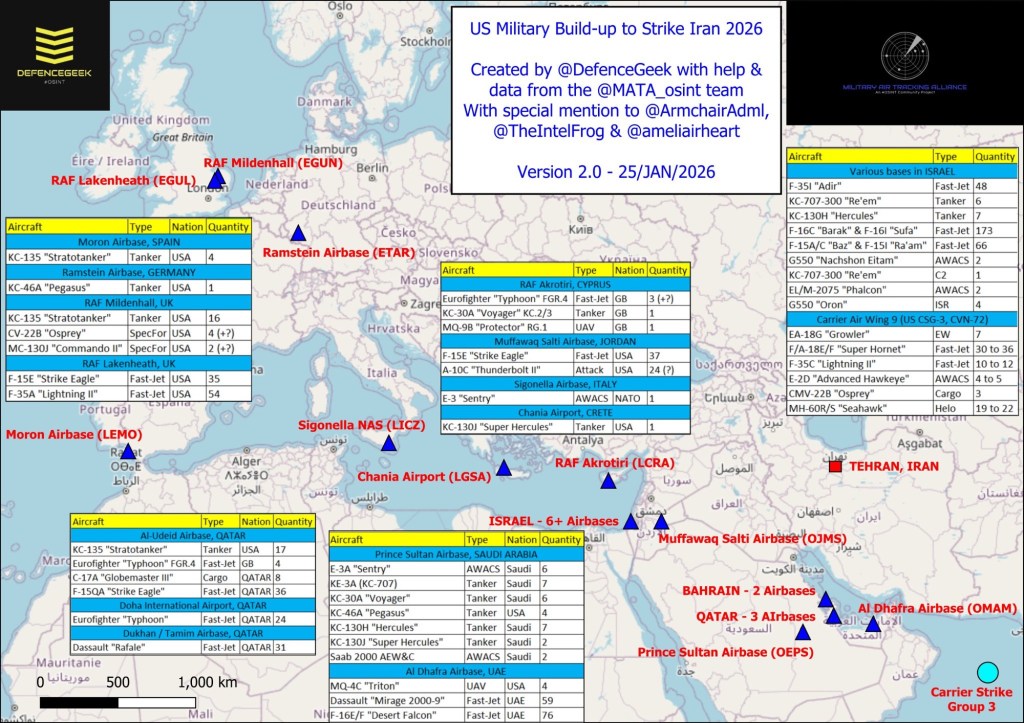
At last report the Ford CSG was operating in the Adriatic Sea off the coast of Italy and various parts of the Mediterranean. It will take the CSG at least several days to assume a position within range of Venezuela.
The USS Gerald R. Ford Carrier Strike Group includes the carrier along with three Areleigh Burke-class guided missile destroyers acting as escorts.
USS Bainbridge DDG-96
USS Mahan DDG-72
The USS Winston Churchill DDG-81 is acting as the CSG’s Air Defense Commander.
Making up the air power of the CSG is Carrier Wing 8, made up of the following.
The “Tomcatters” of Strike Fighter Squadron (VFA) 31 F/A-18E
The “Ragin Bulls” of VFA 37 – F/A-18E
The “Golden Warriors” of VFA 87 – F/A-18E
.The “Black Lions” of VFA 213 – F/A-18F
The “Gray Wolves” of Electronic Attack Squadron (VAQ) 142 – EA-18G
The “Bear Aces” of Airborne Command and Control Squadron (VAW) 124 – E-2D
The “Rawhides” of Fleet Logistics Squadron (VRC) 40 Det. – C-2A
The “Spartans” of Helicopter Maritime Strike Squadron (HSM) 70 – MH-60R
The “Tridents” of Helicopter Sea Combat Squadron (HSC) 9 – MH-60S
Fleet info pulled from various public sources as well as the GCR database.
With the announcement of United States ground operations planned for Venezuela, I thought we might take a look at the Ejército Bolivariano (Bolivarian Army) defenses and capabilities. What exactly are they working with and how will the US, using what we know they have in the region, counter these systems.
First lets look at the most recent movements.This is a Buk-M2E Surface-to-Air Missile System (NATO-SA-27) spotted this morning in the area of Naiguata, on the coast of Venezuela. This is possibly the same system that was spotted in the same area several weeks ago and is set up in almost the same spot.
The SA-27 has a maximum engagement range of around 70km (about 43 miles), and its search radar has a search range of over 150km(about 93 miles). We don’t see the Buk’s “snowdrift” radar present in the image. If I was setting this up I would position the radar in the hills that overlook the coast, giving it a better view of the area. This system is no joke and has given Ukraine all sorts of problems in that war. The system can launch 4 missiles before needing a reload.
SA-27 and range circle. SA-27 on the beach of Naiguata.
Venezuela’s military isn’t super modernized so a lot of the equipment they are working with are older Soviet/Russian systems, including S-300VM’s (NATO-SA-12A Gladiator) which Maduro’s predecessor got in a deal to loan russia a couple billion dollars in the 2010s.Its reported they only have a limited number of these (Possibly 4 launchers) These have likely been repositioned to protect the capital and other strategic sites around the country. The range of these depends on the missile, which are the 9M83M and 9M82M. These are claimed to be able to hit targets out to a range of 81 miles and 124 miles, respectively. Each launcher holds 2 missiles each, and takes around an hour to reload.
S-300VM Gladiator
The last Surface to air missile system we will talk about is a lesser known one, The S-125 Neva/Pechora (NATO- SA-3 Goa), Most well known for shooting down a F-111 Nighthawk over Serbia. This is an older system with a decent range of anywhere from 15km to 35+km depending on the actual missile used.
S-125 Neva/Pechora (NATO- SA-3 Goa)
The last bit of air defense the EB possesses was reported on by mainstream media today with their story of Maduro threatening that he has 5000 missile systems at the ready, what he was referring to was the countries stock of Man portable air defense systems (MANPADS), mainly Igla-S (SA-24 Grinch) and the Swedish RBS 70. Short range rockets that can be fired by almost anybody but very short range. 6km(3 miles) up to 11,000ft, so not really a threat to anything flying at a normal altitude but still worth considering in mission planning.
While their air defense is outdated at best and possibly nonfunctioning in the worst of cases, their air fleet is nothing to ignore, around 20 Su-30MK2V Flanker’s make up the bulk of their fighting power. The Su-30 can be outfitted with the R-77 missiles (AA-12 Adder). This missile has a 50km(31Miles) range and is guided by a datalink from the jet before switching to an active radar guidance. It’s also been proposed that this weapon has a home-on-jam feature which forces the missile to target the source of any electronic jamming.
Su-30MK2V Flanker
The flankers can also carry the R-27 (AA-10 Alamo) which are shorter range and use passive radar guidance as well as inferred, though not exactly.This missile comes in several variants, like the semi-active radar-homing R-27R and the infrared-guided R-27T, as well as the longer-range radar-guided R-27ER and the infrared-guided R-27ET. The R-27R is reportedly around 37 miles, and 31 miles for the R-27T. The extended-range versions are able to hit targets at a maximum range of 59 miles (R-27ER) or 56 miles (R-27ET).
The close range engagements for the SU-30 are handled by the R-73(NATO-AA-11 Archer) which is similar to something like an AIM-9 Sidewinder. Includes features like all-aspect infrared seeker, high off-boresight capability, thrust-vectoring controls, and the ability to be cued by the pilot’s helmet-mounted sight.maximum range of around 18.6 miles against a head-on target, or 8.7 miles in a tail-on engagement
Venezuela also possesses some (maybe 3 that fly) F-16A/B’s once purchased from the US in the 1980s, when relations were much warmer. Two of these were involved in a show of force conducted against an Arleigh Burke class destroyer USS Jason Dunham, last month.These are not the F-16’s you might see today, these planes carry no beyond visible range weapons and lack the upgrades given to today’s F-16’s. The best weapon they possibly have is the Israeli supplied Python-4, a supplement for the AIM-9 Sidewinders. These are possibly the oldest and most out of date F-16’s flying in the world and are mostly there for show.
U.S. Military buildup
While the U.S. has comparatively unlimited resources to throw at this. Realistically they are more likely to use what they have in hand and what’s readily available. I’ve gone over most of this in the past but it’s worth a refresher.
Let’s start with what we won’t see. Last week, the White House confirmed that US President Donold Trump had authorized the Central Intelligence Agency to operate within Venezuela. This is possible, probable even.
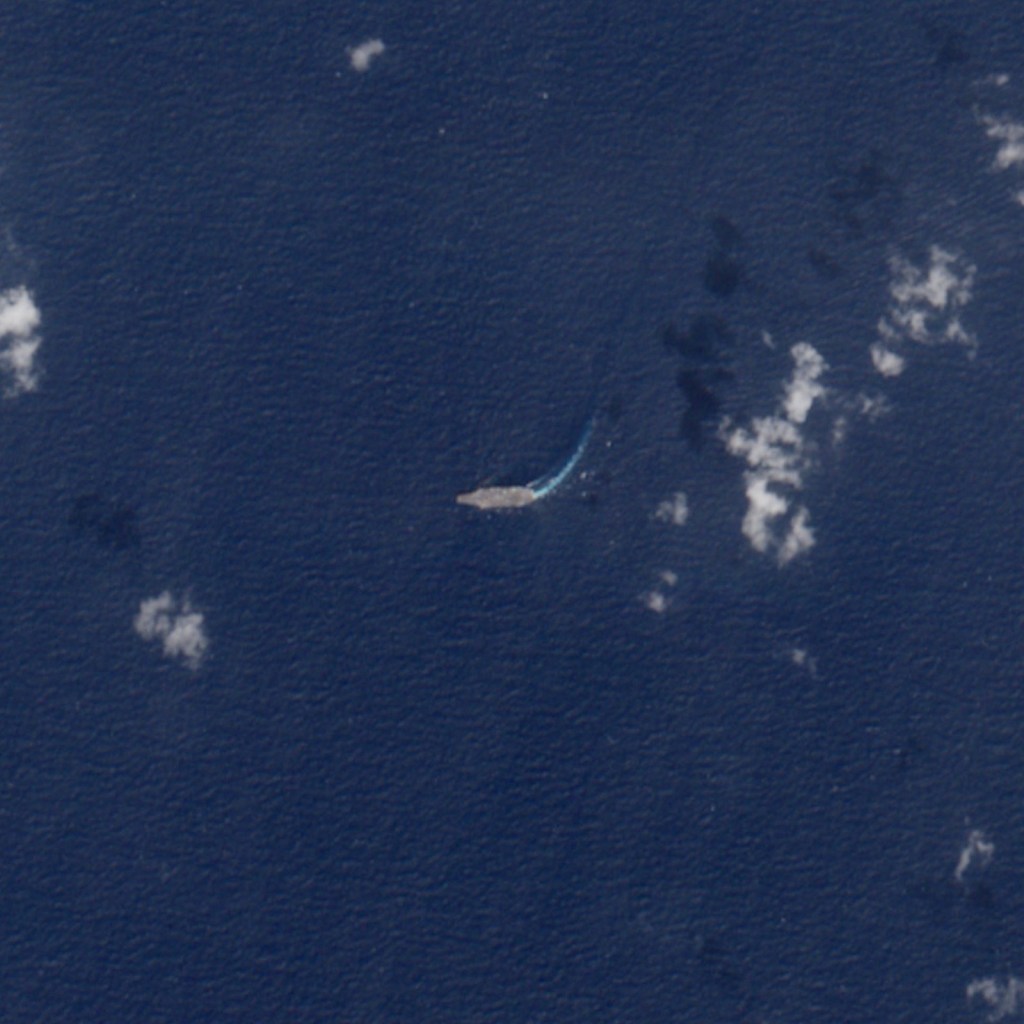
Image shows satellite photo showing the spec ops Ghost-ship M/V Ocean Trader in the Caribbean.
We also have satellite images (confirmed later) that show that the MV Ocean Trader is in the area. This is a highly modified vehicular carrier and more so this ship is a special forces helicopter/drone mothership. This lines up with images and reports that put the US Army 160th special operations aviation regiment ”Nightstalkers” in the area, possibly operating from the ship.
Little birds and Blackhawks from 160th Nightstalkers SOAR
Moving on with the rest of the assets. Let’s start with everything that shoots a Tomahawk Cruise Missile. We have 3 Arleigh Burke-Class Guided Missile Destroyers.
-USS Stockdale DDG-106
-USS Gravley DDG-107
-USS Jason Dunham DDG-109
USS Stockdale
-We also have the Ticonderoga-Class USS Lake Erie CG-70.
All of these are going to have around 32 cruise missiles apiece.
-In addition we have the submarine USS Newport News SSN 750 with another 12 Cruise missile.
-USS Wichita LCS 13
Three supply ships
-USNS Kanawha T-AO-196
-USNS Henry J Kaiser T-AO-187
-USNS Joshua Humphreys T-AO-188
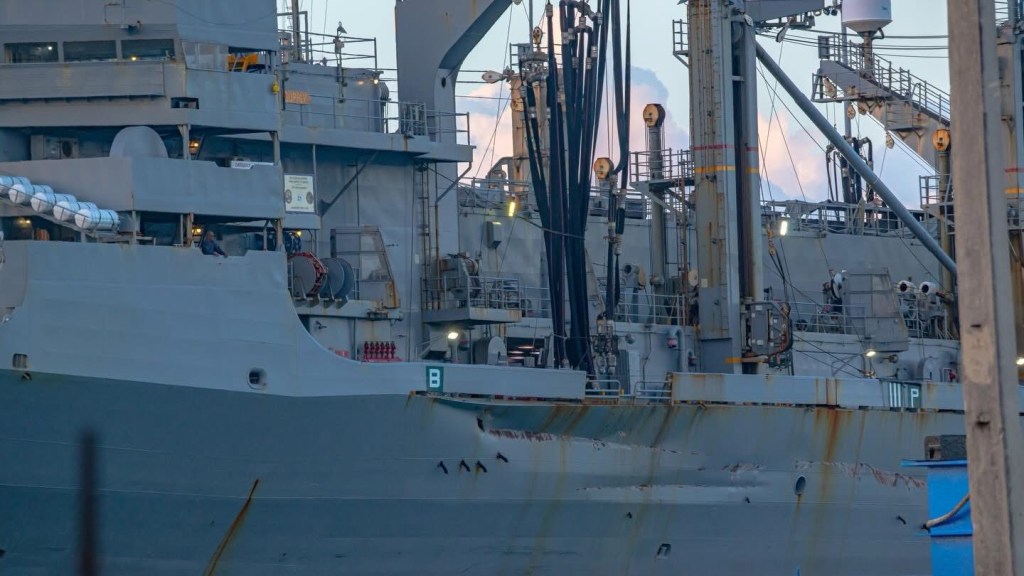
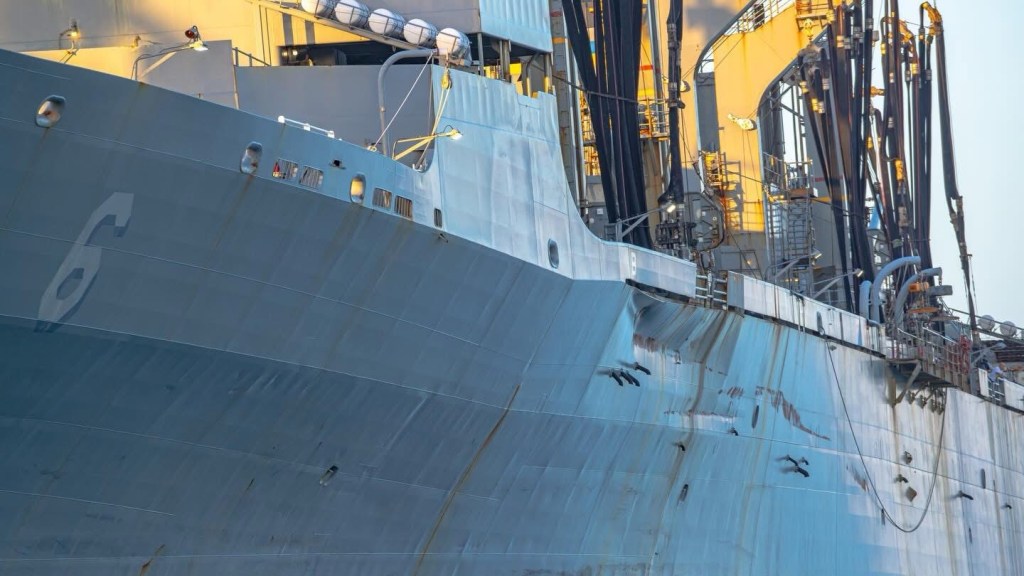
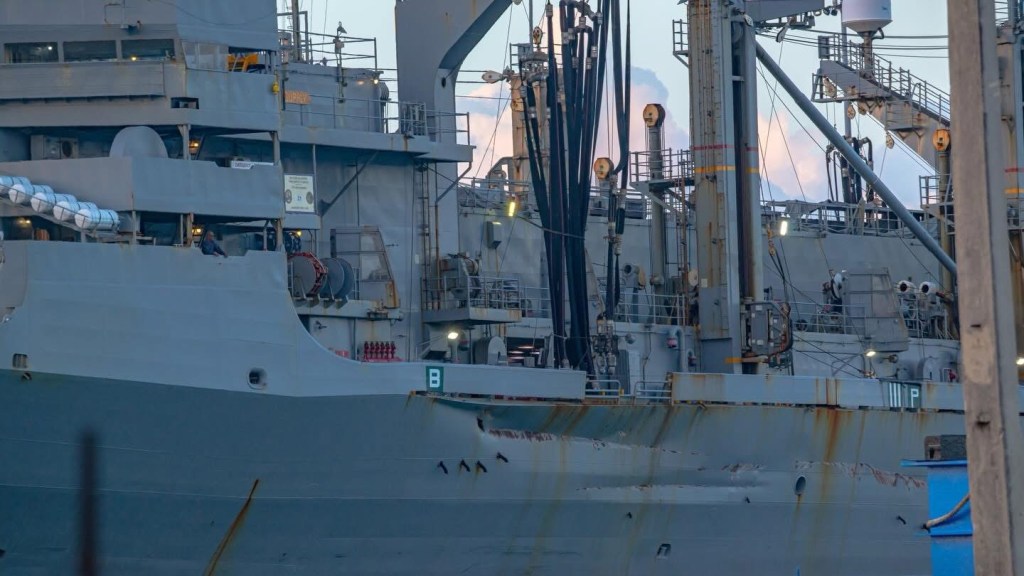
USNS Henry J Kaiser T-AO-187 replenishment oiler
Next is the Iwo Jima Amphibious Ready Group (ARG) with the 22nd Marine Expeditionary Unit (MEU) (SOC) made up of the
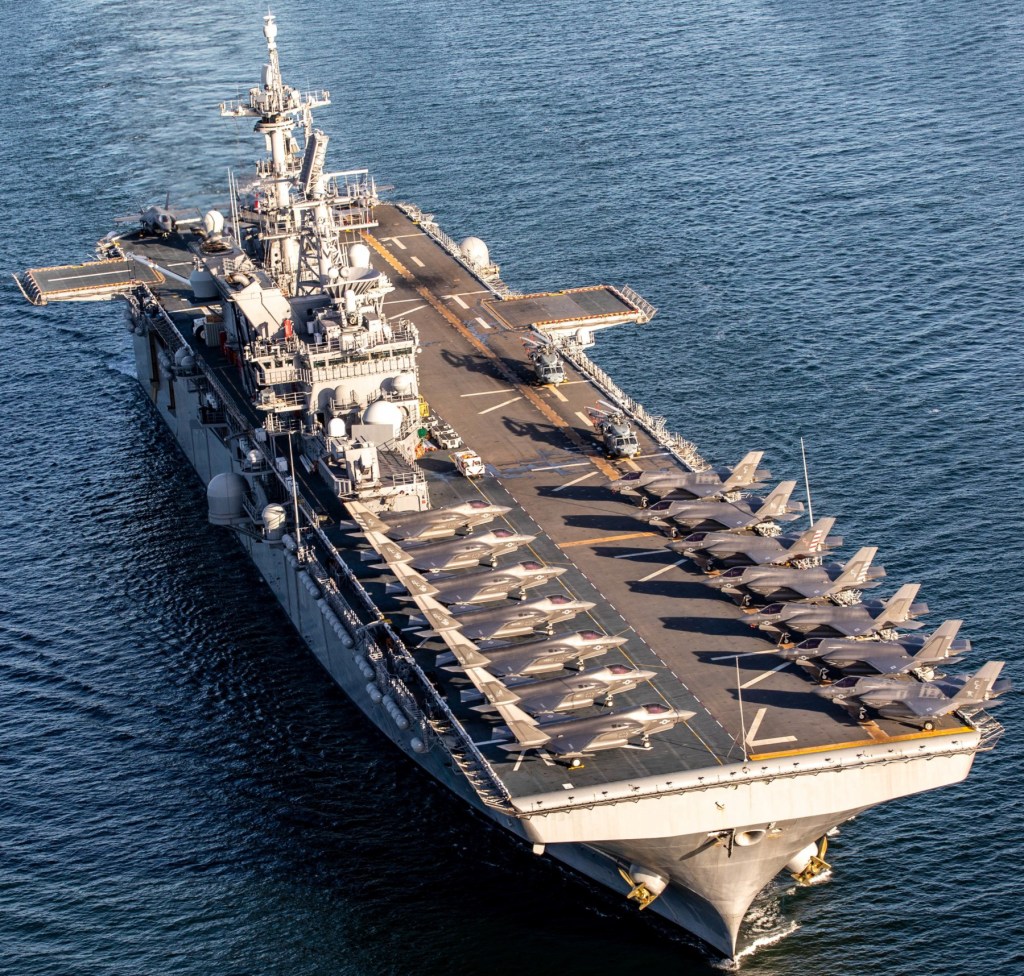
-Wasp-class Amphibious Assault Ship USS Iwo Jima LHD 7
-Amphibious transport dock USS San Antonio LPD 17, and USS Fort Lauderdale LPD 28.
The above group had limited air-to-ground capability with its Harriers as well as transport options for the marines stationed aboard.
Rounding this list off we have
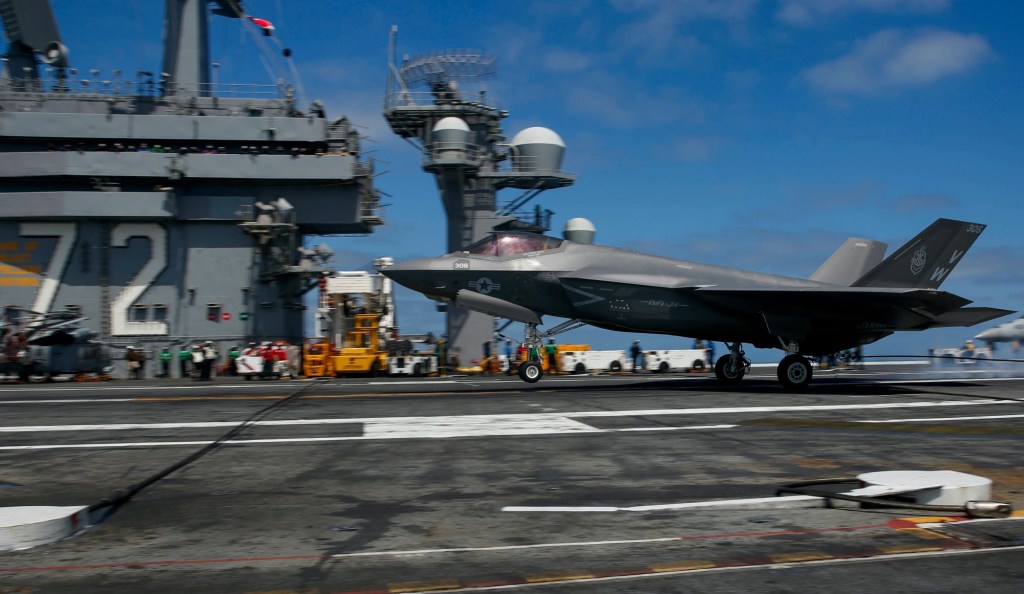
-At least 10 F-35’s from the “Vikings” of Marine Fighter Attack Squadron (VMFA) 225 stationed at Puerto Rico’s Roosevelt Roads Naval Station.
At least two AC-130 Ghostrider Gunship
-a reported total of around 10,000 soldiers.(not sure if this includes the 2,000 marines)
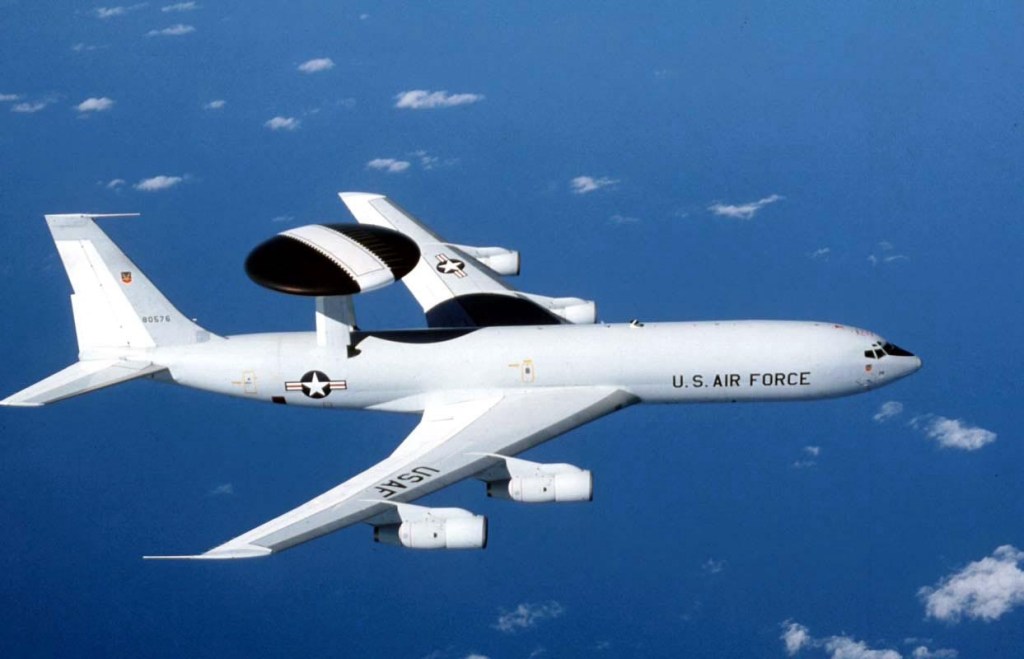
We also have a collection of aircraft that have appeared in the region but not necessarily stuck around,2 B-52H Stratofortress Bombers, B-1B-Lancer Bombers, a number of KC-135 Stratotankers, Dozens of Cargo planes (C-5 Galaxy’s and C-130’s) EC-3 Sentry AWACS ,and P-8 Poseidon ASW/Maritime Patrol plane.
While this list is large, I’m sure it’s not all of the assets currently in the theater. One of the United States best advantages here is it being close to home, allowing them to call in pretty much anything they want. The question isn’t whether the Venezuelan military will be defeated, it’s more like “how long will they last?”
As I finished this, a B-1B lancer flew just within range of where that BUK is sitting and then turned around. Playing Peek-A-boo. just thought that was interesting considering this article started with talking about the range of that system.
Two big announcements have come in the past three days signaling that Ukraine is looking to make changes to its military air power. Currently Ukraine’s military uses a mixture of old Soviet equipment plus whatever platforms have been bought or donated to them by their partners in Europe and America.
This weekend it was announced that Bell Textron, the American Aerospace company responsible for the AH-1Z Viper and UH-1Y Venom helicopters, have signed a ‘memorandum of understanding’ in Washington with the government in Ukraine. Essentially this starts the ball rolling on future aircraft deliveries, after the framework and support for the systems have been built in Ukraine. The statement released by the company and government of Ukraine mentions that these helicopters are likely to be built in Ukraine, bolstering Ukraine’s defense industry and going a far step to modernize Ukraine’s helicopter fleet.
Ukraine’s helicopter fleet is currently made up of mostly old Soviet systems. The Mil Mi-24 (Hind) gunship has been a workhorse in the current war and while effective for what it does, It’s an older platform with limitations. This deal will give Ukraine a fleet of modernized helicopters with a proven track record of combat capabilities. A huge benefit is that the Venom and Viper share 84% commonality meaning training pilots and support crew is much quicker.
While this deal isn’t finalized it does signal that the process is in the works and should go through as long as the U.S. government agrees to it. If the deal goes through it’s likely a number of aircraft will be transferred to Ukraine so they can start training pilots and the support crew on their operations.
The AH-1Z Viper attack chopper is a twin engine attack helicopter with a speed of 300KTS and a range of 310 nautical miles. The platform provides an excellent ground attack platform, carrying a main gun as well as air-to-ground missiles with the option of carrying sidewinders for engaging air targets. These helicopters are also survivable in the worst cases with self sealing fuel cells and armored crash resistant seats for the crew.
The Venom on the other hand is a jack-of-all-trades workhorse. There is a reason it’s sometimes called the Super Huey as the spirit of the Huey from the Vietnam days lives on in the Venom. It’s mostly used for carrying supplies or troops but it can also be equipped with rockets and door guns in case you just really need the extra firepower or a AN/ALQ-231(V)3 Intrepid Tiger II sensor pod for precision electronic attack capabilities (maybe in support of a squad of Vipers, for example.) Its speed is similar to that of a viper however its unladen range is a bit further. With a 2000lb payload its range is 150NM.
Ukraine’s helicopter fleet isn’t the only upgrade Ukraine is looking to. Just today Ukraine President Zelenskyy met with the Swedish government and signed another letter of intent, for the purchase of as many as 150 of the Swedish made Saab Jas-39 Gripen E fighter jets.
The Gripen is a single engine, supersonic, multi-role fighter jet. A highly maneuverable fighter, the Gripen is designed for what’s known as JAS in the Swedish language, Jakt (Air-to-air), attack (air-to-surface) and Spaning (Reconnaissance). The E version of this fighter is built with some higher end capabilities including electronic warfare, a more powerful engine, and increased weapons capacity.
A look inside the well deck of the USS Iwo Jima (LHD-7)
By.Scott Jackson
10.19.2025
The United States Department of Defense and White House released footage showing the destruction of a Venezuelan submarine reported to be involved in cartel drug trafficking operations and the transportation of fentanyl, a powerful synthetic opiate. The sub was destroyed on Thursday.
While all the media and even this article calls the vessel a submarine it’s more like a semi- submersible. Most of the vessel is underwater but it doesn’t have the capability to fully submerge itself. If this vessel is anything like others that have been stopped trying to smuggle drugs into America in the past, it was made with fiberglass and plywood.
Video of the strike on the Venezuelan semi-submersible.
The submarine had two survivors who were rescued by a US helicopter and taken to a Navy ship in the area. The men will eventually be repatriated to their home countries according to the US. The men are from Ecuador and Colombia. The bombing of the sub killed two other men, both alleged to be Narco terrorists. Sending the men back to their home countries helps the US avoid any turbulent legal issues of detaining the men whose drug trafficking crimes don’t exactly fit under the laws of war.
Neither the pentagon or the White House offered any other comments when asked by GCR or other media outlets.
Moving on to today, it was just several hours ago reported that the US said they had carried out a strike on a vessel associated with a Colombian leftist rebel group,National Liberation Army.
This strike has led to a falling out between US president Trump and Columbian President Gustavo Petro as the Colombian President accused the US of murder. “US government officials have committed a murder and violated our sovereignty in territorial waters. Fisherman Alejandro Carranza had no ties to the drug trade and his daily activity was fishing,” said Gustavo Petro on a post on social media. He added “The Colombian boat was adrift and had its distress signal up due to an engine failure. We await explanations from the US government.”
Trump and Colombian President Gustavo Petro
That US response was swift, with Trump and the White House cutting off all subsidies. Trump said the Columbian president “is an illegal drug leader strongly encouraging the massive production of drugs, in big and small fields, all over Columbia”.
Trump later ranted on Truth Social “It has become the biggest business in Columbia, by far, and Petro does nothing to stop it, despite large scale payments and subsidies from the USA that are nothing more than a long term rip off of America. AS OF TODAY, THESE PAYMENTS, OR ANY OTHER FORM OF PAYMENT, OR SUBSIDIES, WILL NO LONGER BE MADE TO COLUMBIA,”
Trump continued “The purpose of this drug production is the sale of massive amounts of product into the United States, causing death, destruction, and havoc,” the president said.
“Petro, a low rated and very unpopular leader, with a fresh mouth toward America, better close up these killing fields immediately, or the United States will close them up for him, and it won’t be done nicely.”
On October the 3rd, US Southern Command released footage from US operations ongoing in the Caribbean. The video shows the loading of a U.S. Marine F-35B Lightning II with live munitions at the now reactivated Roosevelt Road Naval Station.
Image from Google Earth showing the location of Roosevelt Road.Closer look at the airport.
This aircraft, if it was just one jet, it’s not clear in the video, was outfitted with a mixture of air-to-ground and air-to-air weapons. My info is coming from publicly available information on the weapons systems and some of my own knowledge of this topic from years of research. Any mistakes or opinions are,as always, my own. The first clip shows the loading of an AIM-9X Sidewinder. The AIM-9X is an inferred guided, proximity fused weapon.
Variations of the Sidewinder started life as the primary weapon of many early Cold War era jets alongside their main cannons. This is not that Sidewinder, it is so updated and advanced it’s hard to even think of this as the same missile. The original AIM-9 Sidewinder used in Vietnam had an abysmal success rate that averaged somewhere around 9%. So 1 out of 10 would hit their targets. While the original weapon could only heat-track a target aircraft’s exhaust, this weapon is capable of detecting the heat from the friction of the target aircraft going through the sky making shots at the front or side of the target a possibility. A thrust vectoring engine on the AIM-9X gives it incredible maneuverability. The publicly available information puts the range at somewhere around 10-15 miles depending on some factors(Altitude-speed etc.)that can shorten or extend that range. This is not your grandfather’s Sidewinder.
F-22 firing an AIM-9 Sidewinder
Moving on we get a quick look at one that’s probably familiar to you (if not by look, then by name) the GBU-54(V)/B LJDAM (Laser Joint Direct Attack Munition).This is the laser guided version of a pretty standard MK 82 500 pound air-to-ground bomb with the added bolt-on JDAM guidance kit giving it some pretty spectacular accuracy.
JDAM on display at Airforce Museum
JDAM is like an aftermarket part for a bomb turning it into a GPS guided precision weapon.We don’t talk enough about the effect that the JDAM and other guidance systems have had on tactical bombing, long gone are the days you have to drop 12 bombs to hit one target. If the target is a house, a decent pilot can hit the house 90% of the time, a great pilot and a bit of laser guidance can put a JDAM through the window.
This is how you used to drop bombs. Multiple at a time and hope that you hit your target.
The last weapon shown is the AIM-120 AMRAAM-C/D (Advanced Medium Range Air-To-Air Missile) or, sometimes called Slammers after their first 3 shots resulted in 3 enemy takedowns in Iraq and Bosnia.The C/D is the model number for the missile, I’ve added both models because they showed two different missile models in the USSOCOM video. The AIM-120 is a BVR (Beyond Visible Range) with active radar-homing capable of striking targets at extreme ranges. Publicly available data puts the range of the AIM-120 listed at around 80 miles. The range numbers can be a little deceiving, you have to take into account that these numbers are based on any number of specific conditions for the enemy and the weapons platform. For a missile like the AIM-120 D model, while it will travel over 100 miles, its effective range is closer to 60-70 miles.
F/A-18 Super Hornet loaded with 10 AMRAMM’s.(Murder Hornet configuration)
None of these weapons are rare, two of them, the SIdewinder and AMRAAM you will find on almost every fighter in the air fleet and the laser JDAM has been used heavily since the 90’s. I’m a little uncertain on exactly how many weapons this plane in the video launched with as the F-35 in its stealth mode can only hold so many weapons, and the B version has a smaller weapons bay than the others because of the lift fan. The two weapons bays can hold two AMRAAM’s each. I’m guessing here but maybe one JDAM and a sidewinder on one side and then the two AMRAAMS on the other.
The F-35 is technically capable of carrying more weapons on outside hard points, however this harms the stealth of the aircraft, giving it a larger radar cross section, or RCS. The idea was to use stealth mode during the opening days of a conflict and then to switch to what the manufacturer, Lockheed Martin calls “Beast mode” that the F-35B can be once air dominance has been achieved.
Stealth mode F-35 loaded with two JDAM’s and two AMRAAM’s.“Beast Mode” F-35 loaded with six JDAMS, Two AMRAAM’s and Two wingtip Sidewinders.
You must be logged in to post a comment.