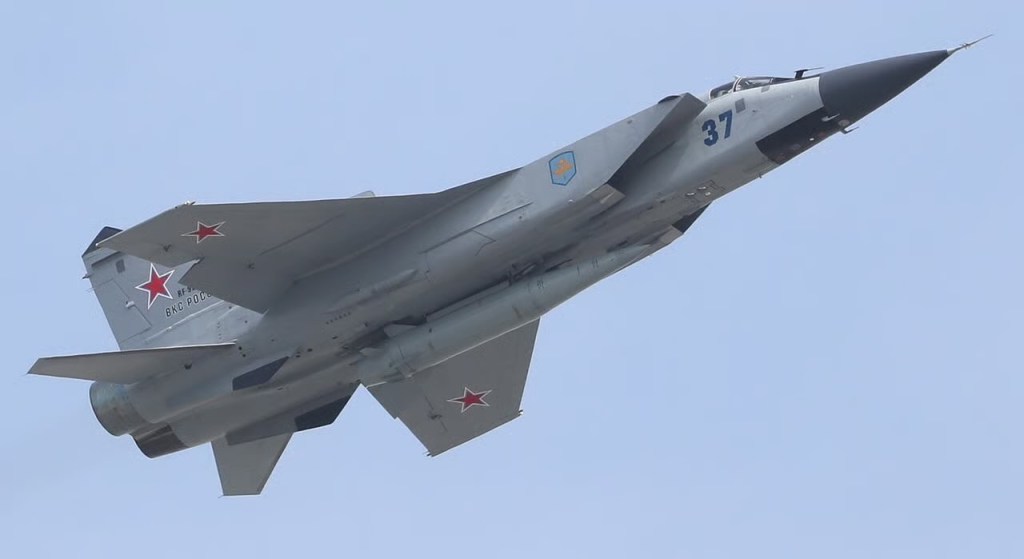
Today, in an act that the Estonian foreign minister is calling “unprecedentedly brazen”, three Russian MIG-31 “Foxhound” fighter jets violated Estonia’s border and remained inside Estonia for 12 minutes. They crossed the border in the area of the Gulf of Finland.
Russian MIG-31 “Foxhound”
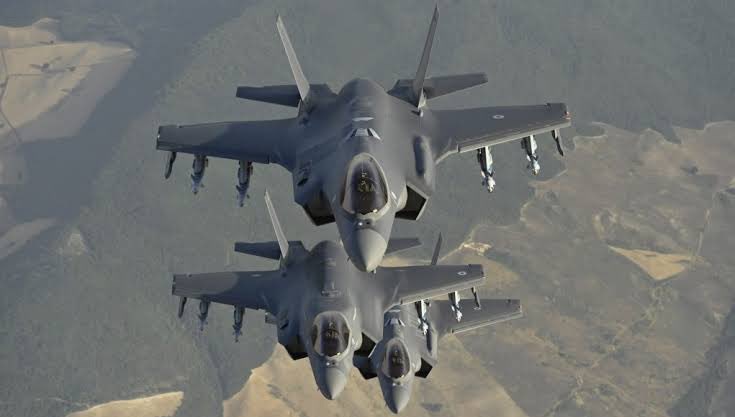
NATO forces responded to intercept the Russian fighters with several Italian F-35’s being scrambled to track and intercept the Russian MIG’s. The alliance’s spokeswoman Allison Hart said ”This is yet another example of reckless Russian behavior and NATO’s ability to respond.”
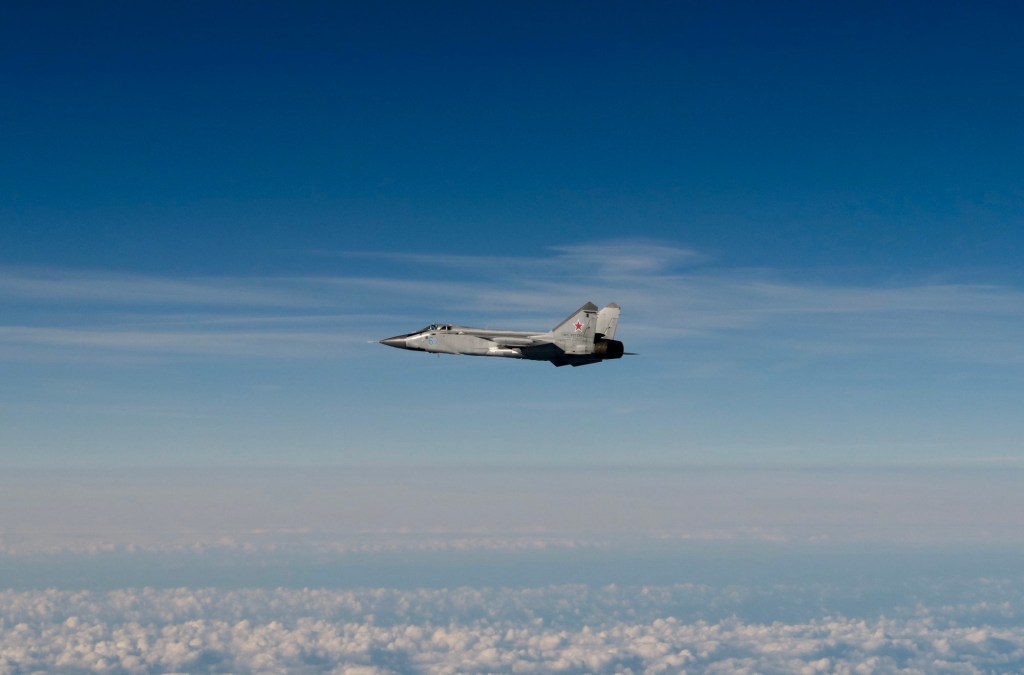
Swedish forces also responded with several JAS 39 Gripen scrambling to the Baltic area where they intercepted and tracked the three Russian jets.
Russian Mig-31Swedish JAS 39 Gripen
Tensions between NATO and Russia have remained high since the start of the Russian invasion of Ukraine but spiked even more recently as Russian drones flew into Polish airspace just 10 days ago. NATO responded to shoot down some of the drones in that incident as well. Poland called the incursion a deliberate effort to test NATO’s willingness to respond and its readiness.
“..three fighter jets entered our airspace, is unprecedentedly brazen-clear proof of Russia’s growing aggression.”
“Russia has violated Estonian airspace four times already this year, which is unacceptable in itself, but today’s violation, during which three fighter jets entered our airspace, is unprecedentedly brazen-clear proof of Russia’s growing aggression.” Margus Tsahkna, Estonian minister of foreign affairs. He continued “Russia’s ever-increasing testing of borders and aggressiveness must be responded to by rapidly strengthening political and economic pressure,”
In response to the incident in Poland, and now Estonia, NATO has launched new air patrol operations in eastern and Northern Europe. This operation is going by the name Eastern Sentry and is modeled after the Baltic Sentry operations that have been taking place in the Baltic. Baltic sentry added new aircraft and ships to its patrols after the recent Russian incursions and continuing acts of sabotage. The operation includes increasing air and sea patrols, as well as an increase in ground based interceptor launchers and radar. Eastern Sentry will focua mainly on Poland however it can be shifted to deal with Russian threats in other countries.
“Russia’s recklessness in the air along our eastern flank is increasing in frequency,” said NATO’s Secretary General Mark Rutte. He added that drones have recently violated the airspace of Estonia, Latvia, Lithuania and Romania.
“This was no accident.” EU foreign policy chief Kaja Kallas speaking on the Estonian situation.
The Russian ministry of defense has declined to respond to an email from GCR.
At the time of writing another situation is ongoing with 2 other Russian jets doing a low flying pass on one of polands Petrobaltic oil and gas platform in the Baltic Sea. While Polish airspace was not violated in this case it shows the willingness to engage in aggressive behavior on the side of Russia.
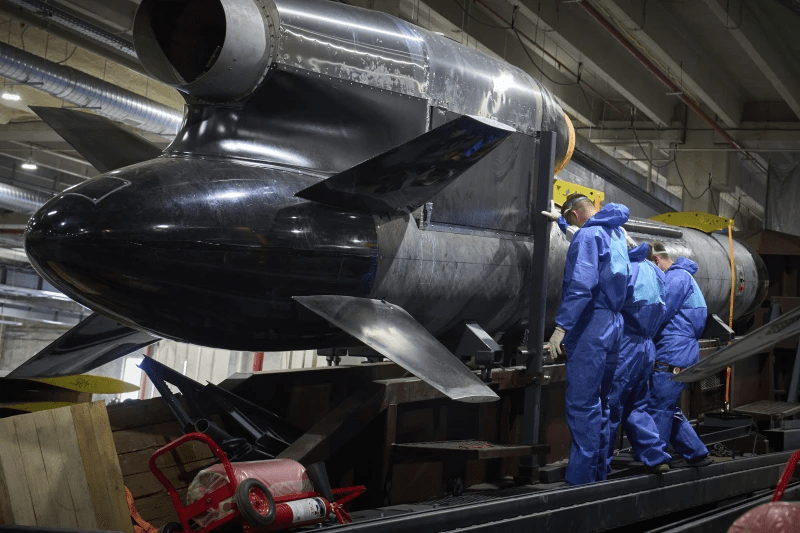
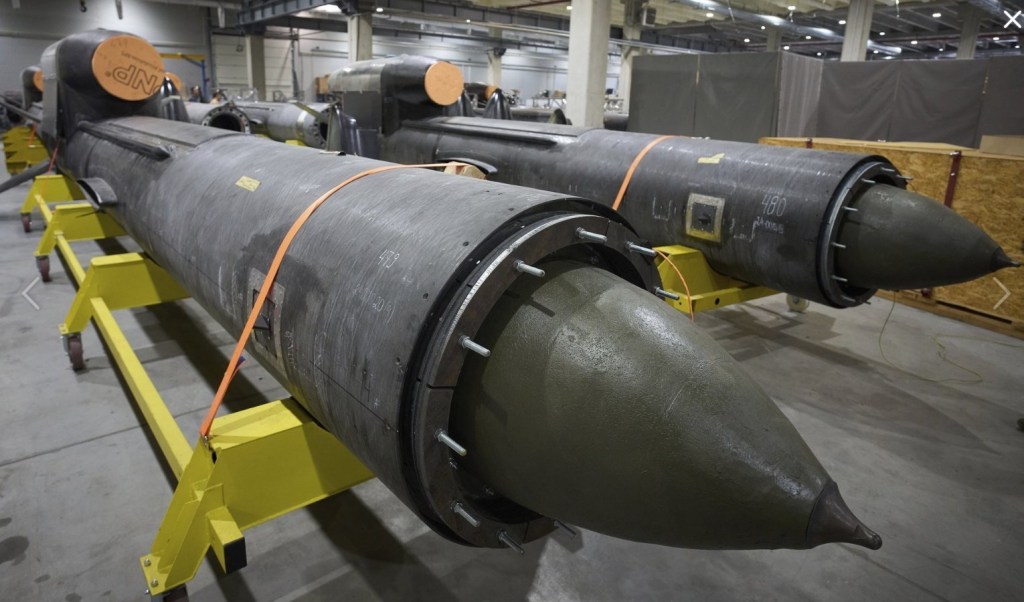
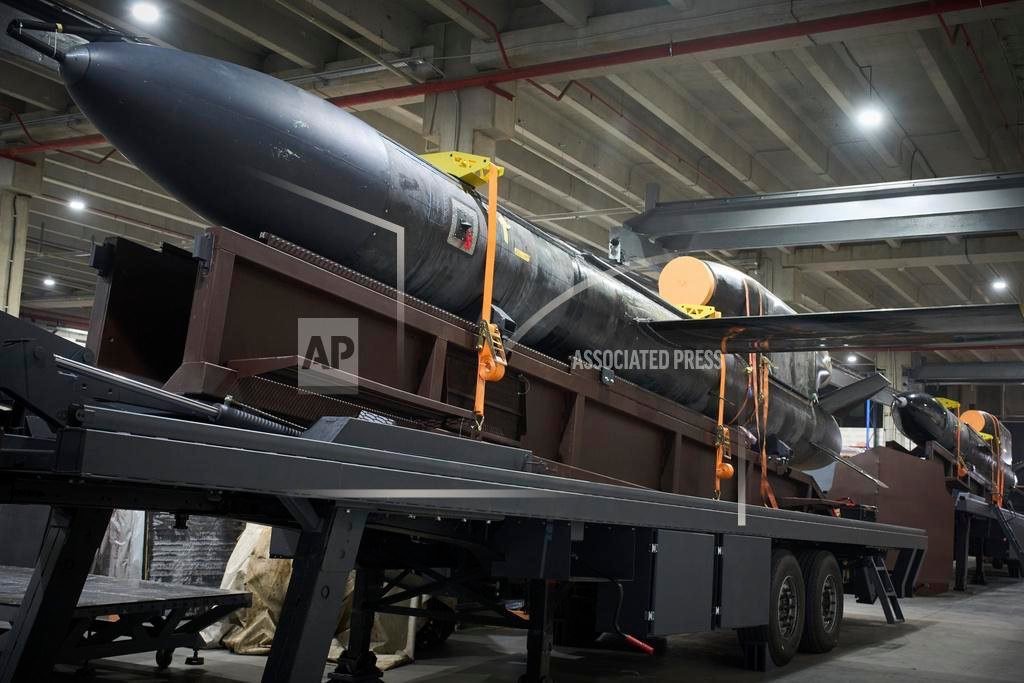
On August 17th, Ukraine’s Yefrem Lukatsky a well known AP photojournalist released images showing the production of Ukraines previously unannounced, ground- launched, long ranged cruise missile, the FP-5 ‘Flamingo’. This Ukrainian produced cruise missile could become a strong contender for Ukraine’s most effective long range weapon systems.
The Flamingo is designed and built by Ukrainian defense company Fire Point. According to, the missile has a six meter wingspan and a takeoff weight of 13,000 lbs on takeoff. The payload capacity is 1,150 lbs. Its publicly started range is 1865 miles.
A look at the tail of the missile showing the engine on top of the weapon, much like designs from the 50s-60s
“We came up with it pretty fast. It took less than nine months to develop it from an idea to its first successful tests on the battlefield. I will not tell you about its exact speed, but I can say it’s faster than all the other missiles we currently have,” said Iryna Terekh the company’s CEO while adding adding: “It is completely Ukrainian-made.
The missile is already casing a stir in Russia, the state run agency TASS put out an article last week downplaying the threat posed by this missile. The article also tried to undercut the Ukrainian achievement by saying the missile was from a British design, which the Ukrainian company Fire Point denies. However the impact of the missile is already being felt on the battlefield.
“We watched Russian reaction to our first missions and I can tell you the more successful the mission was, the more Russians tried to choke all publicity around it,”Terekh said.
The missile is already in production making several units a day. The company claims they can make that 200 a day by the end of the year.
With the number Ukraine’s Fire point company is planning to make along with the range this weapons could vastly shift the course of this war, putting a good percentage of Russia industries, both defense and civilian into range of Ukraines new missiles.
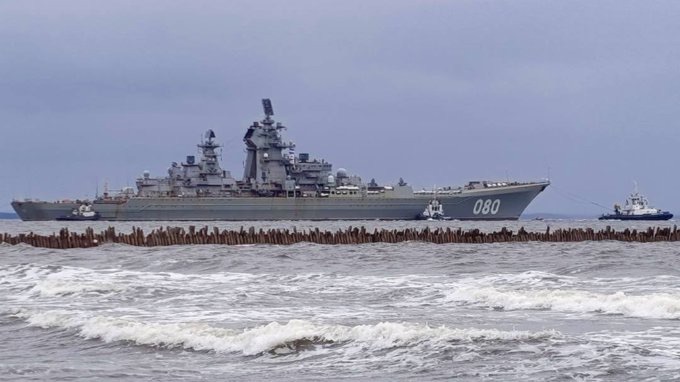
The Project 1144 Orlan Admiral Nakhimov last sailed in 1997. It was brought into the Sevmash shipyard in the port city of Severodvinsk with the intent for a major refit and modernization. The refit took almost 30 years but the time has come and this week the RFS Admiral Nakhimov was seen sailing under her own power as she undergoes sea trials to test its new and old systems. The large cruiser has seen a modernization to its weapons systems and sensors which the Russian leadership hopes will put fear into the enemies of the Russian navy.
Admiral Nakhimov
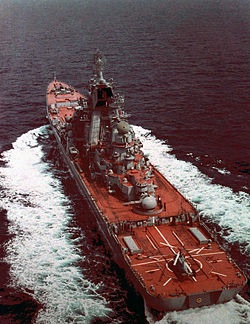
The Project 1144 battlecruiser (referred to as the Kirov-class by NATO), is a powerhouse of a ship. Called a nuclear-powered guided missile heavy cruiser by the Soviets, and besides aircraft carriers, it is today, the largest surface combatant in the world. At 827 ft long it is as large as some of the dreadnoughts and battleships of the early 20th century. During World War 2, the battleships were the dominant force until aircraft carriers were developed which could sink a battleship without it ever having fired a shot. Battleships spent the rest of the war far away from most combat. The reason battleships are no longer used is simple: big ships are easier to sink and the larger the ship, the larger the loss when they are destroyed, taking with them more men, and more weapons than their smaller peers. A country’s navy could build one large ship or several smaller ships that can do mostly same task and be less of a liability if sunk. The last of the battleships were used by the U.S. as glorified missile platforms and artillery pieces, with 2 modernized Iowa-classes being used in the gulf war. The Kirovs were built around this time during the Cold War as a direct counter to the Benjamin Franklin-class nuclear submarine. For all its anti-sea and air based weaponry the original primary job of this battleship sized cruiser was that of ASW: anti submarine warfare, sometimes called awful slow warfare by its practitioners. The Kirovs all came with ten torpedo tubes which launched torpedoes or anti-submarine missiles. They also had advanced sensors for detecting them and 3 helicopters which could carry ASW weapons.
The Admiral Nakhimov other weapons before the modernization included the main weapon, 20 of the P-700 Granit (Shipwreck) anti-ship missiles which could destroy a ship out to 300 miles.This missiles was designed to sink American carriers these missiles outrange the newest American Anti-Ship missiles, the AGM-84H/K SLAM-ER (Standoff Land Attack Missile-Expanded Response) by 100 miles, according to the publicly available data. It’s been claimed that the missile, when fired in a swarm (group of 4–8) has a unique guidance mode. One of the weapons climbs to a higher altitude and designates targets to the group while the others fly low to the sea and keep their onboard sensors in a passive mode, only flipping on active guidance in the final seconds before launch. If the targeting missile is destroyed another will rise to take its place. The missile responsible for target designation climbs in short pop-ups, so as to be harder to intercept. The missiles are linked by data connections, forming a network. The missile’s predecessors, the P-500 and the Bazalt and the P-1000 Vulkan were capable of this guidance technique as well. Now those P-700 missiles have been removed giving space for some of the 176 Vertical Launch Cells 80 of which can hold the subsonic Kalibr cruise missile, the supersonic Oniks anti-ship missile, and the hypersonic Tsirkon cruise missiles. That leaves 96 cells reserved for surface to air missiles. The original Kirov-class ships came with the S-300F systems in rotary tubes below deck however there are some reports that these were replaced with the S-400F system giving them around 250 miles of air defense protection. It layers that protection with the more medium range abilities of 6 Pantsir-M air defense systems as well as a number of AK-630 close-in weapon systems. Additionally, the 130mm AK-130 dual purpose naval gun has been replaced by a modern 130mm AK-192M naval gun.
The 176 launch cells make this ship the most heavily armed capital ship on the planet currently, surpassing the 122 cells on the American Ticonderoga-Class cruisers or the 96 on the Arleigh Burke destroyers. The Chinese Type 055 Renhai-class cruisers carry 112.
The Admiral Nakhimov’s sea trials will take several months at least, with the first stages testing the ships safety, navigation, and propulsion systems and later the weapons and combat effectiveness. After that the vessel will be taken back into the service of the Russian Navy. The earliest estimates for the end of the sea trials put it at the end of the year before the ships return to active service, taking the flagship role with the Northern Fleet and the Russian Navy. At this The RFS Pyotr Velikiy, the current Kirov-class flagship of the Russian Navy is not likely to undergo the same modernization of the Admiral Nakhimov and is more likely to be decommissioned as the cost is simply too great for Russia to foot at this time. The Pyotr Velikiy has also been in service for a good while longer than her sistership, making her more worn down after decades of operation.
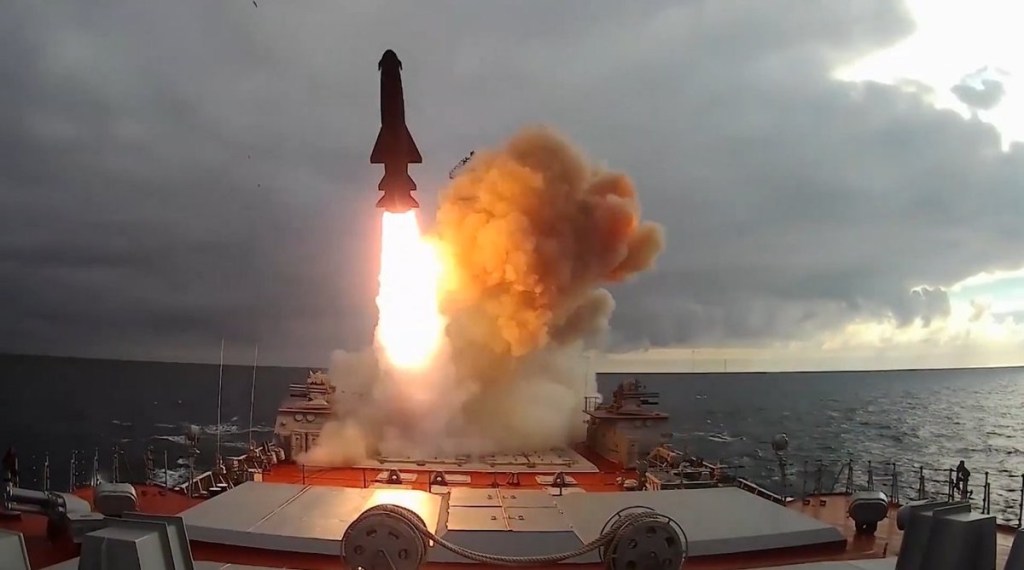
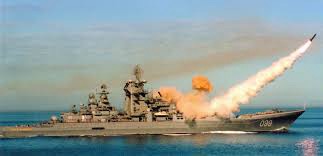
Images showing Admiral Nakhimov firing one of its P-700 Granit anti-ahip missiles.
When RFS Admiral Nakhimov replaces the RFS Pyotr Velikiy the Russian navy will only have three cruisers left in their navy, the RFS Marshal Ustanov in the Northern Fleet, and the RFS Varyag in the Pacific Fleet. Both cruisers are part of the Slava-class missile cruisers which are also coming to the end of their service life. It’s possible in the near future the Admiral Nakhimov could become Russia’s only capital warship in the fleet. Russian shipyards are unable to build new large ships for the time being and even repair work is becoming an impossible task. Recently, plans for the repair and refit of Russia’s sole aircraft carrier, the RFS Admiral Kuznetsov, were canceled.
The Admiral Nakhimov will likely take an important role in the Russian surface fleet, with its numerous long range weapons systems, the ship can be used to interdict a large area at sea and provide protection for a Russian fleet during their operations.
The Ukraine conflict has carried on for 11 years now with the full scale invasion going on 3 and a half years. While Ukraine has done a massive job holding back the forces of one of the largest militaries in the world, recent battlefield changes have the potential to change the course of the whole war to the detriment of Ukraine.
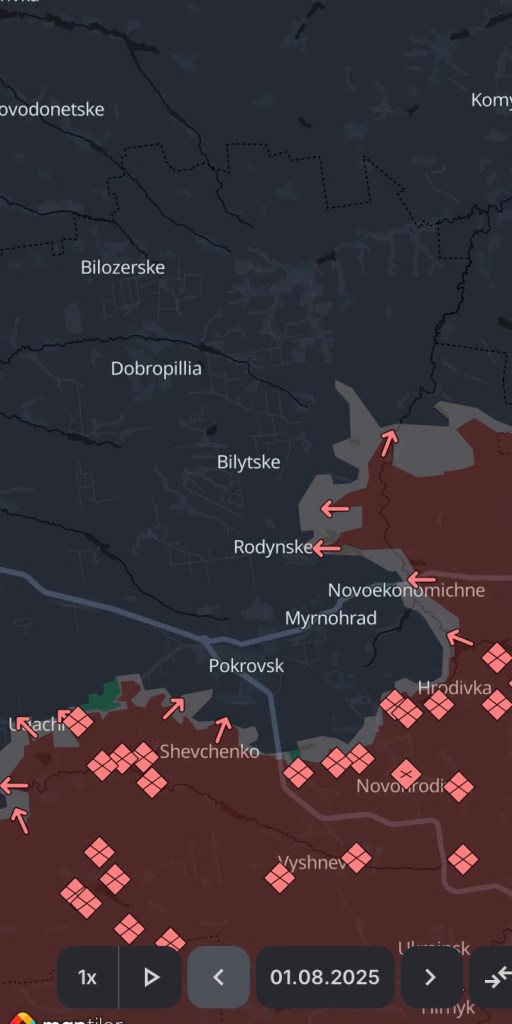
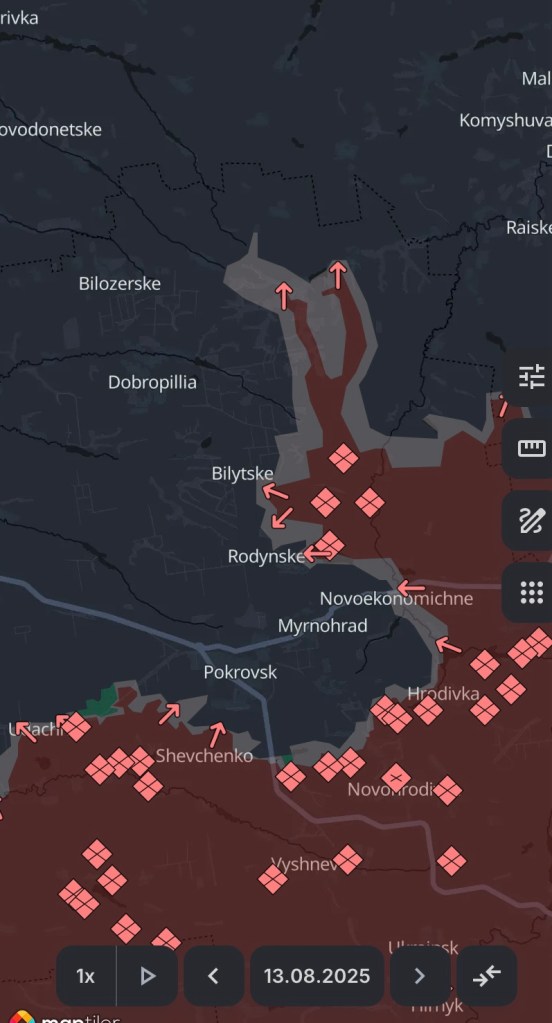
Russian forces have carried out some of their largest advances of this year, pushing past current frontlines near Pokrovsk. Low numbers of Ukrainian frontline defenders has allowed small groups of Russian soldiers to push past the current mostly stagnant frontlines getting miles behind the front, at current estimates about 10km behind the lines. If Russia has the reinforcements to push soldiers through these gaps in a larger scale, it could cause major problems for Ukraine. However local reports have it that while Russia is pushing people into the area, it’s leaving other nearby Russian positions undefended.
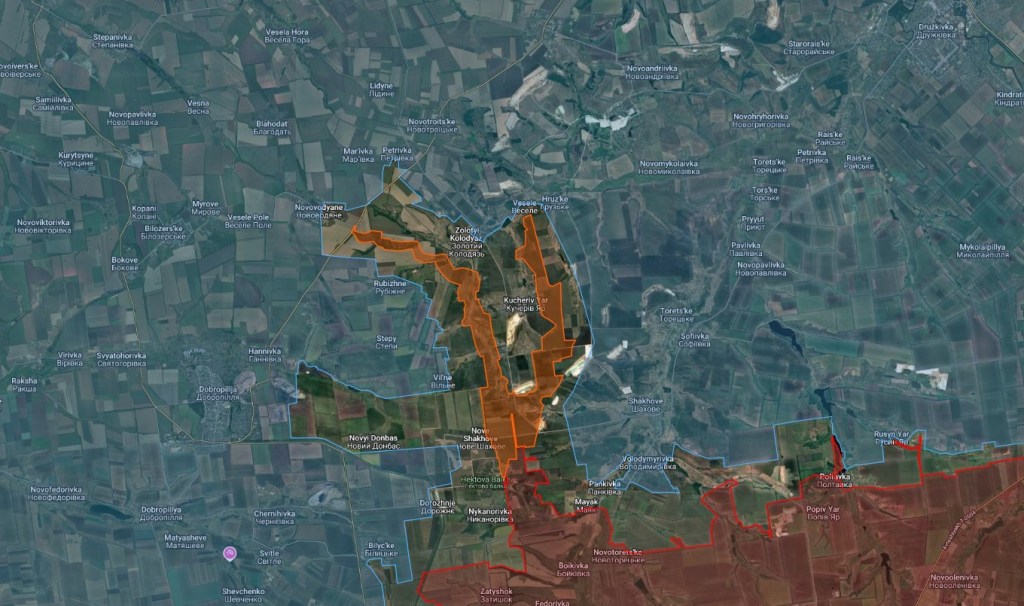
Image showing the
Ukrainian sources are saying that the current situation is chaotic at best. Their enemy has found a weakness and is doing everything possible to exploit it, advancing along a two pronged attack to the West of Pokrovsk. Ukraine needs to rush reinforcements to the region to fill the gaps and attempt to stop a breakthrough and collapse of the front.
Image from Deep state maps showing the front in this region at the beginning of the month. From yesterday.
Donetsk has seen some of the heaviest fighting of the war and will see even more fighting as Putin and Trump meet in a few days in Alaska. Zelensky believes this attack is aimed at influencing the negotiations. Making it look like Russia is advancing quickly while Ukraine is losing ground. It’s believed Putin will make this a case to Trump in an effort to get him to try to force Ukraine to seek concessions.
“The Defense Forces are taking effective measures to stop the advance of Russian troops on the Dobropillia and Pokrovsk directions, where the Russian forces have concentrated over 110,000 personnel,”
Andriy Kovalov spokesperson of the general staff of the Ukraine Armed Forces
Analysis
While the situation hasn’t yet become unmanageable, I don’t want to downplay how serious this could be if it’s ignored. I won’t sugarcoat it. If Ukraine lacks the reinforcements to patch up their defenses they could lose the whole region and make their position in this war even worse. Ukraine has done an amazing job of doing the impossible in holding off one of the largest armies in the world up to this point. Making sure they rush defenders into this region, anybody they can spare, is paramount.
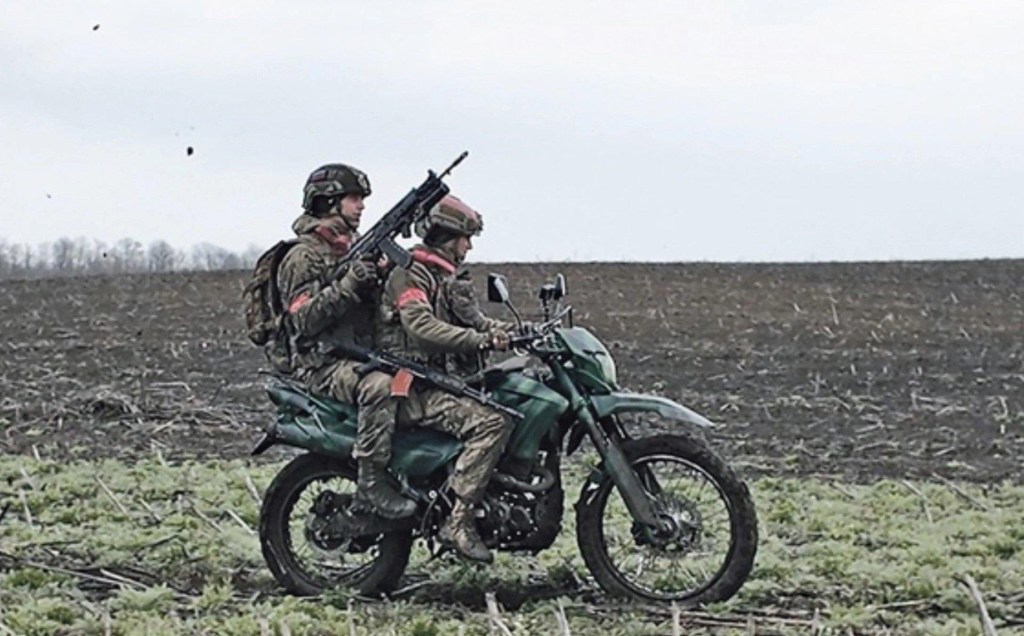
Russia seems to have used small groups operating mostly as a sort of light infantry to push these gaps. Using infantry on dirt bikes and bikes to move troops across open ground quickly.
These groups used reconnaissance drones to lead the way and the operations would tell them where to move and when making their losses negligible. In the weeks before now Russia has ramped up its strikes in the region. Open source analysts have noted the increase in glide bomb and artillery strikes in the region as Russia worked to soften up some of the more dug in of the Ukrainian troops who are operating out of trench bunkers and blown out basements.
I’ve wrote this article over two days and as I finished it Ukraine was reporting repealing some of these advancing troops.
Azhur, a battalion commander with Ukraine’s 117th Brigade, said, “Are we holding them? We are. Are we pushing them? We are pushing. Are we advancing? We are.”
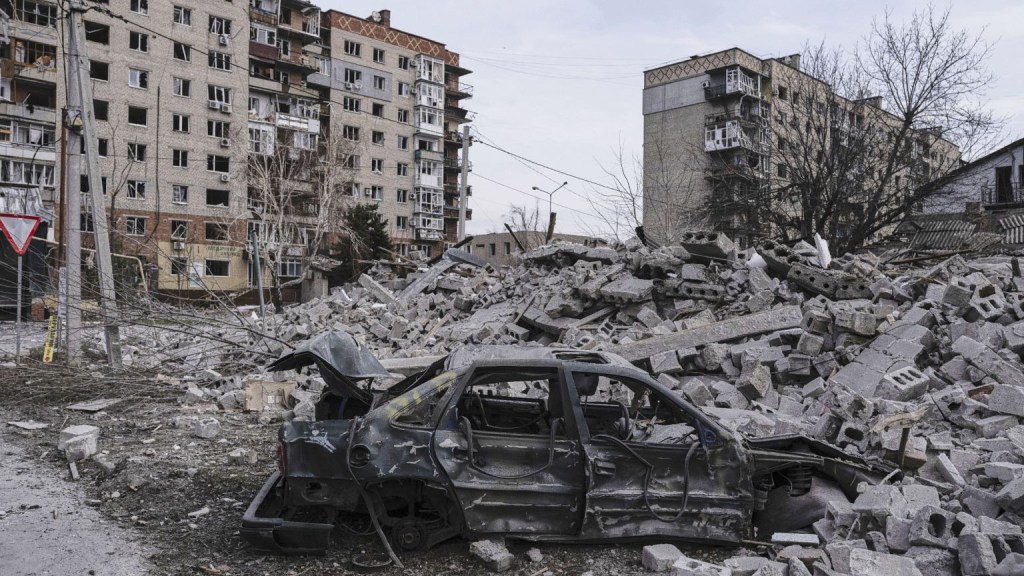
Photo from Pokrovsk.
While this recent offensive feels mostly like a push to give Russia more to bargain with at the negotiating table I believe Ukraine also has an ace up their sleeve. The constant wave of attacks on Russian oil and gas production has done untold damage to the Russian economic outlook, losing them hundreds of millions, possibly close to a billion in revenue. Not only that but the war itself has taken its own toll on the Russian economy.
More on this as the situation develops. If you want to know what I suspect will happen I think it’s possible these Russian soldiers could be cut off from their support and destroyed but we’ll see.
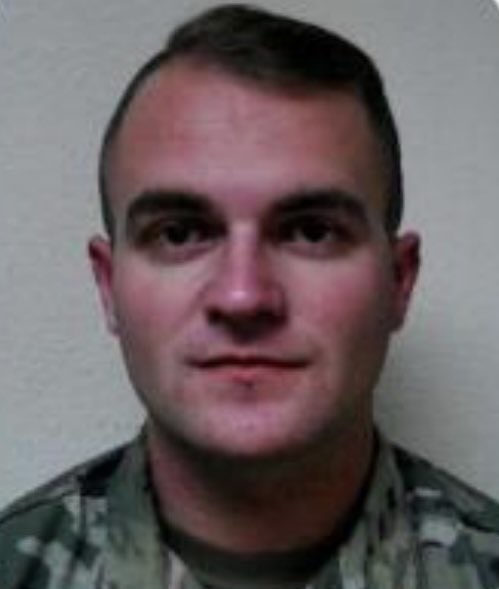
SPC Taylor Adam Lee accused of trying to sell secrets Russia.
By. Scott Jackson
08/07/2025
On Wednesday August 6th, the FBI reported the arrest of Spc. Taylor Adam Lee, an American soldier who is accused of allegedly trying to steal and share classified information with Russia.
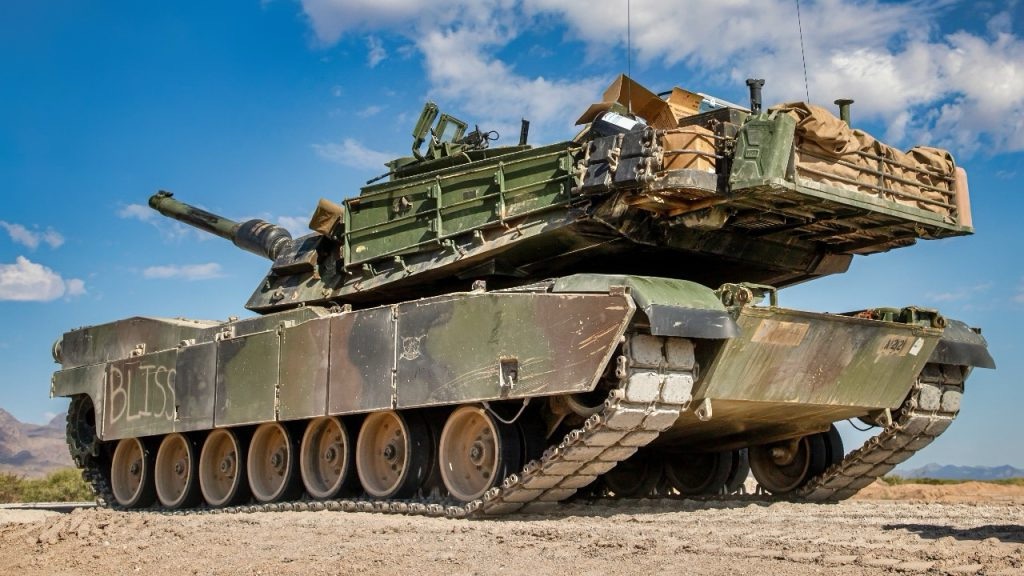
Taylor Adam Lee is a 22 year old, active member of the US Army, most recently stationed at Fort Bliss In Texas as a tanker with the 1st Armored Division. According to prosecutors and the military he was arrested on Wednesday and charged under the Espionage Act with attempted transmission of national defense information to a foreign adversary. Additionally, he was charged under the Arms Export Control Act. The government has requested that Lee be held without bond.
According to the US Justice Department, Lee “transmitted export-controlled technical information on the M1A2 Abrams Tank online and offered assistance to the Russian Federation.” He was attempting to trade the information he possessed on the Abrams to get citizenship in the Russian Federation. It’s unclear how it was revealed to investigators that Lee was looking to trade US secrets on its tanks to Russia.
The M1A2 Abrams Main Battle Tank.
Writing earlier this year Lee said online that “the USA is not happy with me for trying to expose their weaknesses,” and, “At this point I’d even volunteer to assist the Russian federation when I’m there in any way.” (CBS News)
During a meeting in July Spc. Lee met with somebody who he believed was a representative of the Russian federations intelligence services. At this meeting he handed over an SD card with technical data and other information regarding the Abrams Main Battle Tank. A discussion took place where Lee offered to give a physical piece of tech from the tank to the Russian “agent”.
After the meeting Lee messaged the agent “Mission accomplished.” He was later arrested by the FBI’s El Paso field office.
Lee at the time held a Top-Secret security clearance. This would have given him access to sensitive information on many of the US military’s systems.
GCR has reached out to the US Army and will update if a response is received.
The adversaries of the US regularly attempt to get active duty military members to share secrets, the widespread use of the internet has increased the risk of this happening greatly. In 2024 US officials warned that there was a large uptick in foreign spies targeting American’s through social media.
Update
As of this morning, I received back a response from the army as well as a statement from the first armored division. No new information but it helped me fill some things in
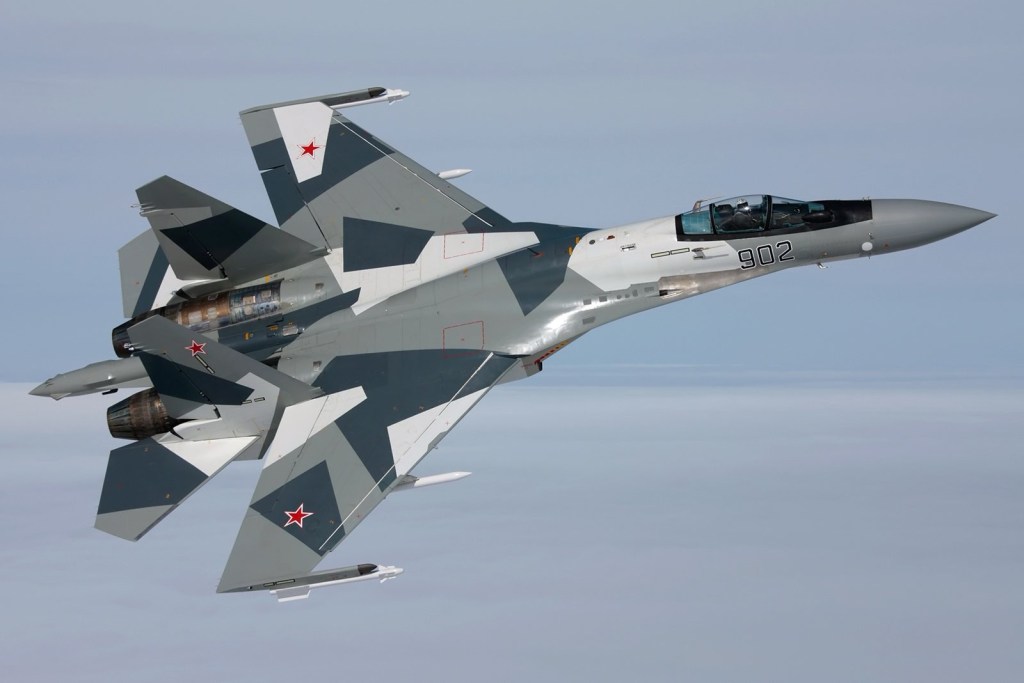
According to video evidence as well as Russian and Ukrainian sources, Ukraine has downed a Russian Sukhoi Su-35 this morning.
“This morning, on June 7, 2025, as a result of a successful Air Force operation in the Kursk direction, a Russian Su-35 fighter jet was shot down,”
Statement made on telegram from the Ukrainian military.
The Russian army hasn’t yet responded to this claim however sources claiming to be Russian soldiers have chimed in. They say the plane was shot down but that the pilot had ejected.
Video showing the wreckage of the Su-35 after being shot down.
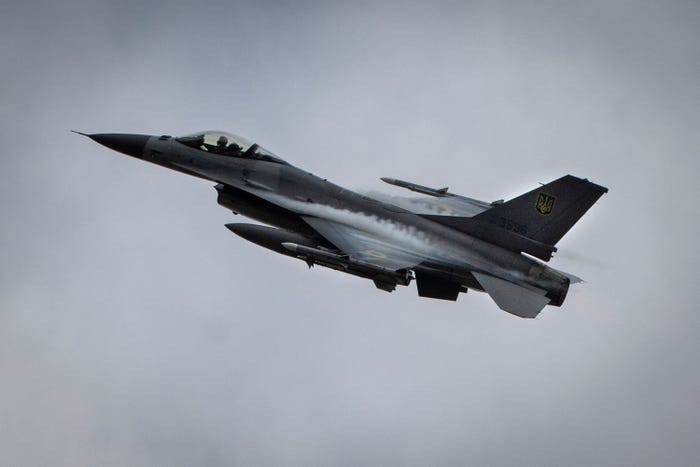
Claims have appeared online saying that a Dutch supplied F-16 using an AMRAAM was responsible for the downing.
The crash is near Yurasovo village in the Kursk direction.
On Sunday, we reported on a major covert drone attack carried out by Ukraine on Russian airbases across the country destroying a not insignificant percentage of Russia’s long range strategic bomber fleet. This attack stunned Moscow as well as western leaders who by all accounts weren’t made aware of the strike beforehand.
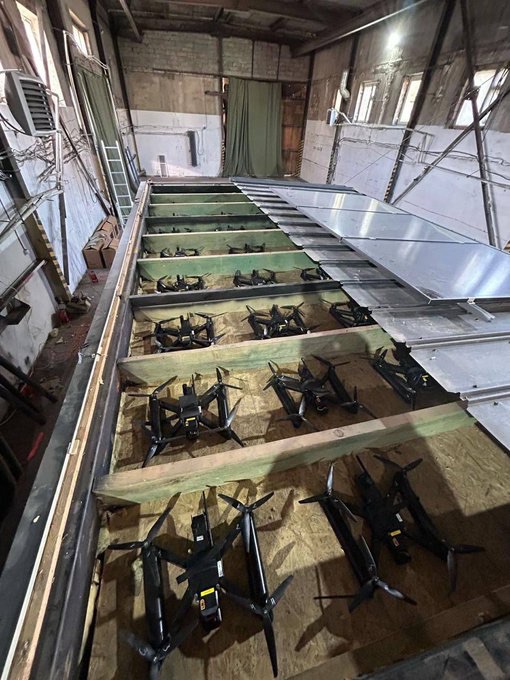
‘Operation Spiderweb’, the name given to the operation was carried out using semi trucks that were loaded up with a reported 117 drones total. The drones were used to target 4-5 different airbases spread all over Russia with the furthest being in Siberia.
The trailers on the semi trucks were each disguised as sheds being hauled. When parked near their targets the roof was activated remotely and would slid off allowing the drones inside to be piloted remotely into their targets. Ukraine has done mass drone attacks before, often even but drones launched from Ukraine have to travel much further and are at a greater danger of being shot down by Russian Air Defense.
Image released by Ukrainian security services shows the back of the trucks which were used as makeshift drone carriers.
The drivers of the trucks were all Russian truck drivers contracted out by one (or several guys) using the name Artyom. They were contacted with delivery instructions and all had similar stories about getting to their drop off point and then the roof sliding off and drones started flying out. Russia is still investigating.
Let’s go over each of the airbases and look at the numbers for Russian loses as best we can. These numbers are all based on satellite images received as well as open source information. Take the following breakdown for what it’s worth, an analysis done with less than an optimal amount of data.
Before we jump in I’ll link to some videos one from the day of the attack and the other released today which has some more data we can use and is almost 5 minutes long.
Here is the first.
Video shows the first footage most were shown of Operation Spider Web.
Belaya Airbase. Probably the hardest hit of the airbases.
This video was released the day after the attack and shows strikes from all of the bases. A lot of the analysis I’m doing here will include things seen in this video.
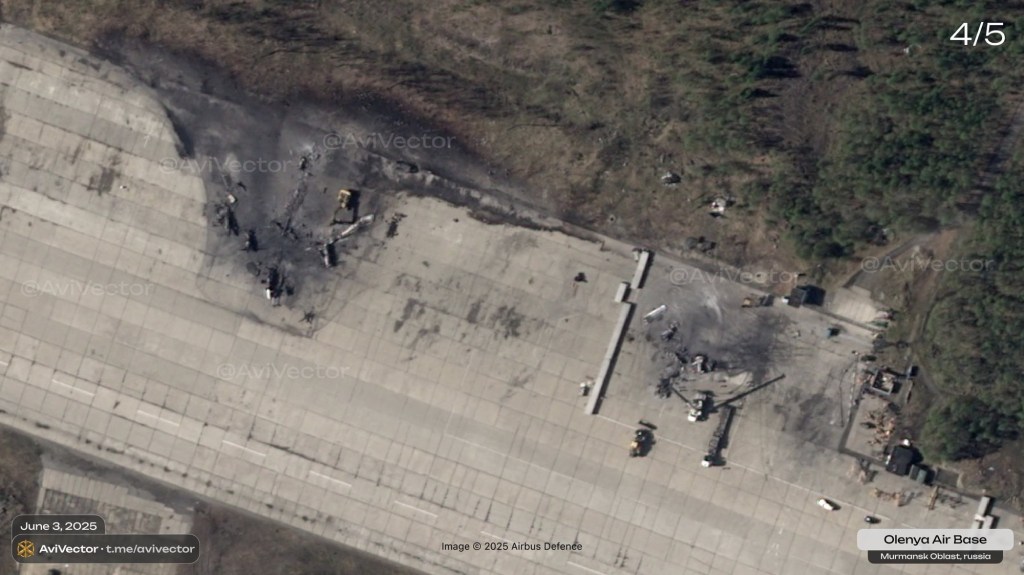
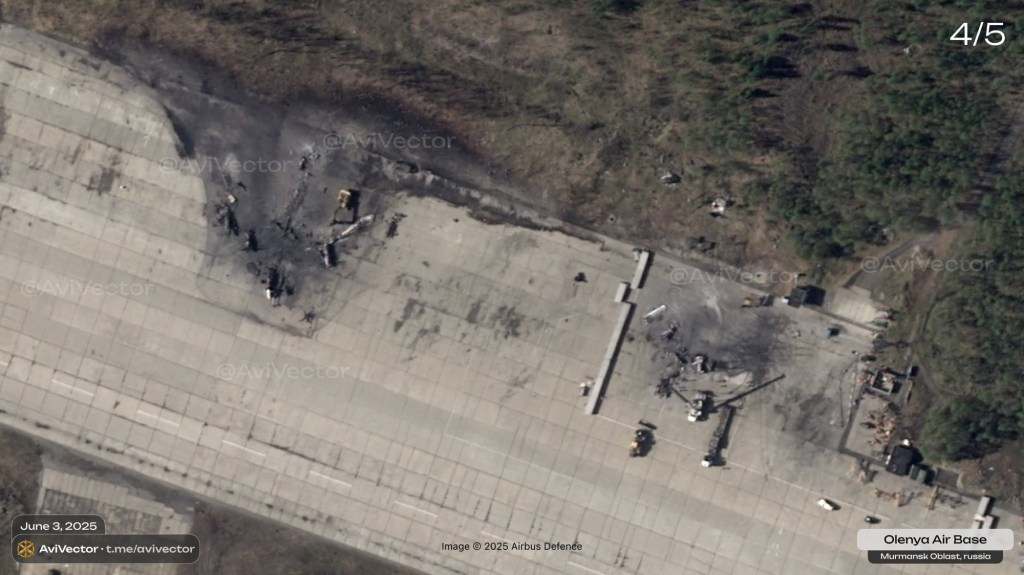
Olenya Air Base
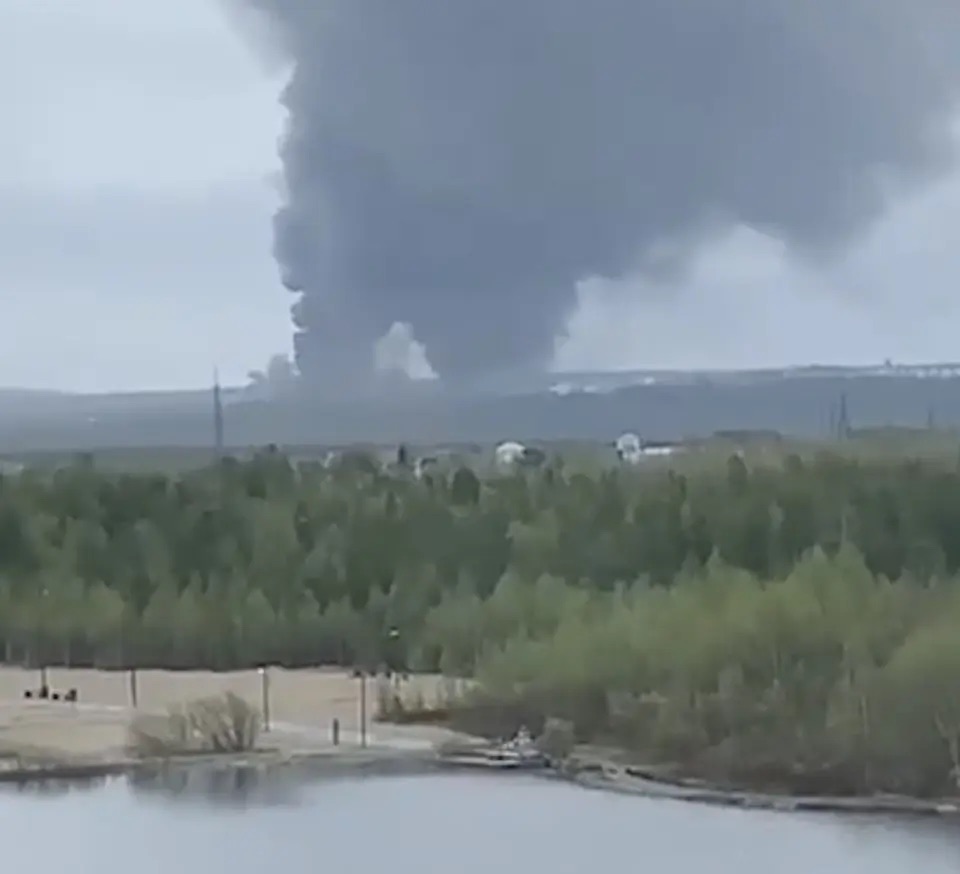
Olenya Air Base directly after the drone attack.
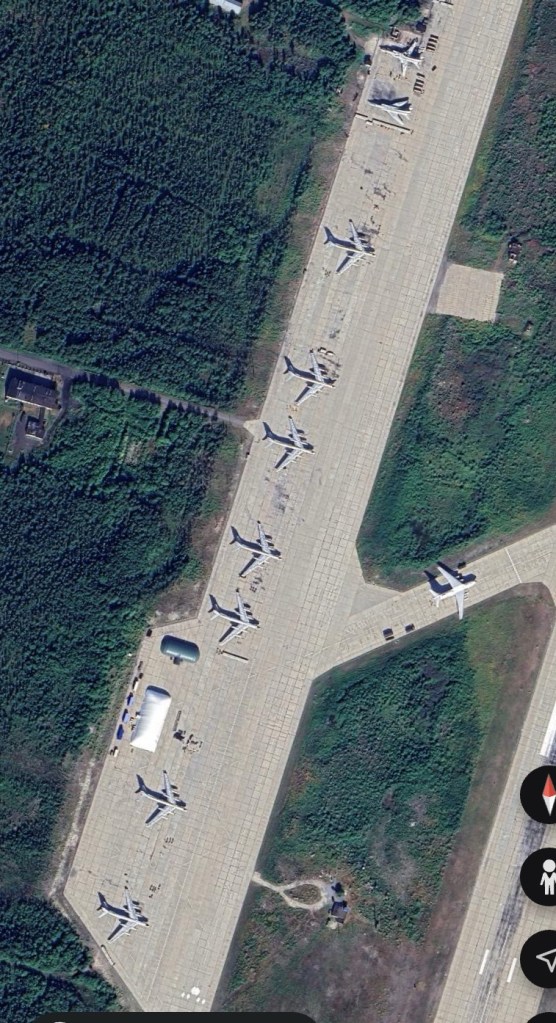
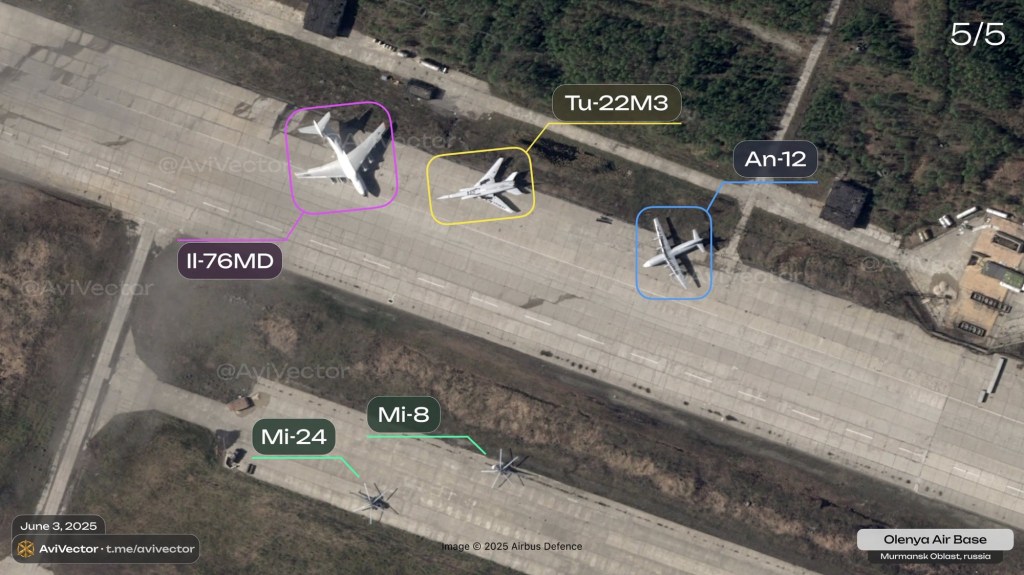
On the Kola Peninsula, Air Base Olenya is an important part of Russia’s military operations. The bases aircraft are mostly made up with a collection of Sukhoi Su-24 and Tupolev Tu-95s.
Most recent Google Earth Image from Olenya Air Base.Most recent imagery shows a line of TU-95This image is from Olenya but more recent than the Google earth inages.
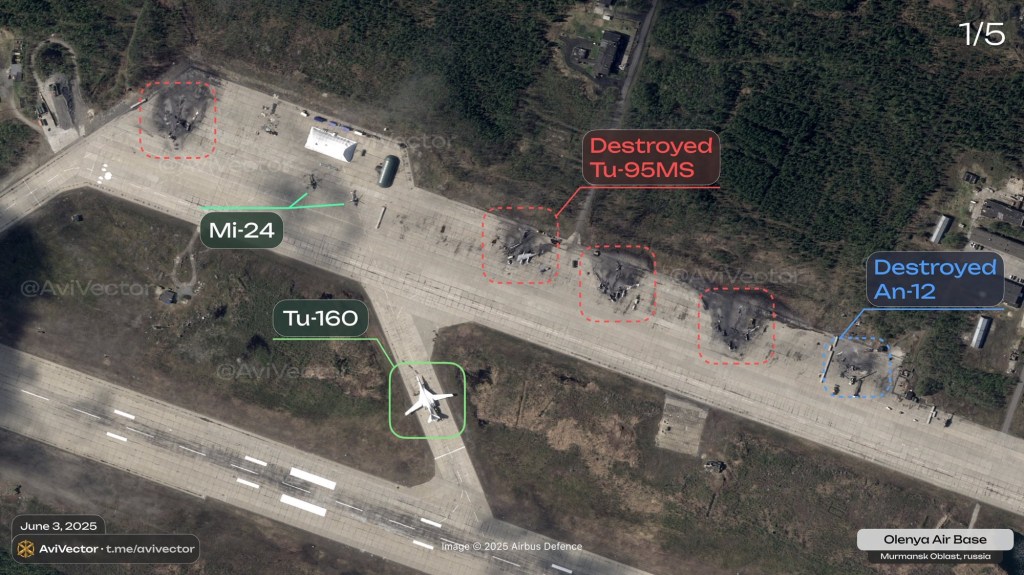
After Ukraine’s attack images look a bit different.
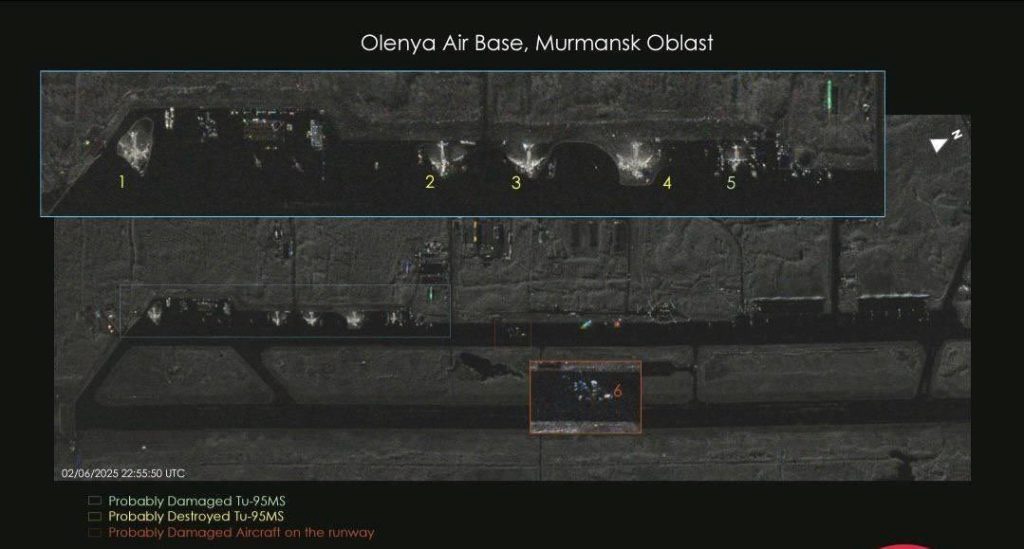
The below shows the wider view in the aftermath of the attack .
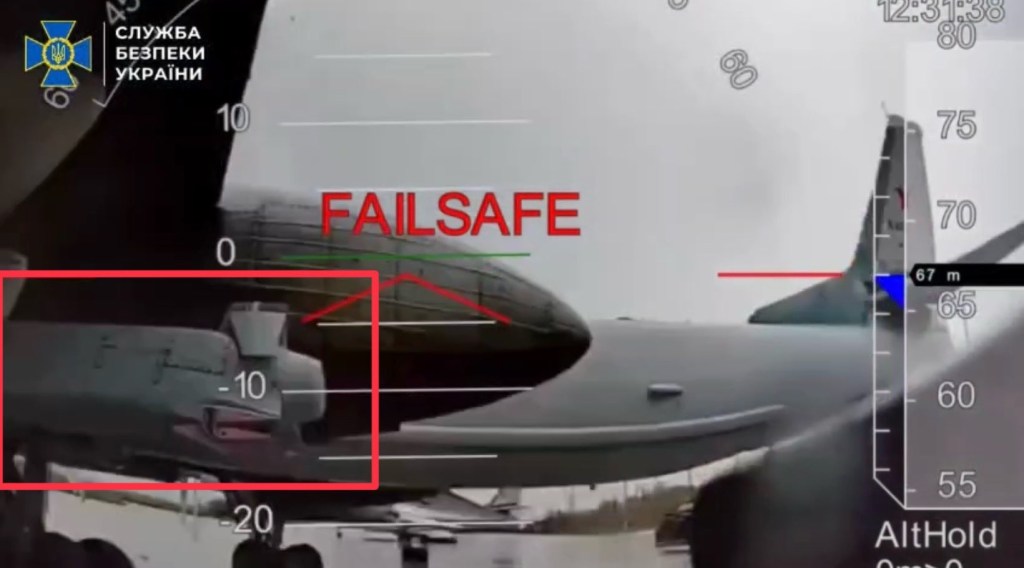
After looking at this data as well as the video clips of the attacks it’s believed that at least 4 Russian Tu-95 bombers were destroyed at Olenya air base along with one An-12 transport aircraft.
Online sleuths have pointed out that in the video released after the attack you can see that at least one of the Tu-95’s had already been loaded with Kh-101 cruise missile. These bombers among others have been responsible for the recent missile wave attacks launched at Ukraine and her city’s. Some of the largest missile and drone attacks of the war have been carried out in the past 2 weeks.
Alleged Russian cruise missile spotted during operation spiderweb.
Ivanovo
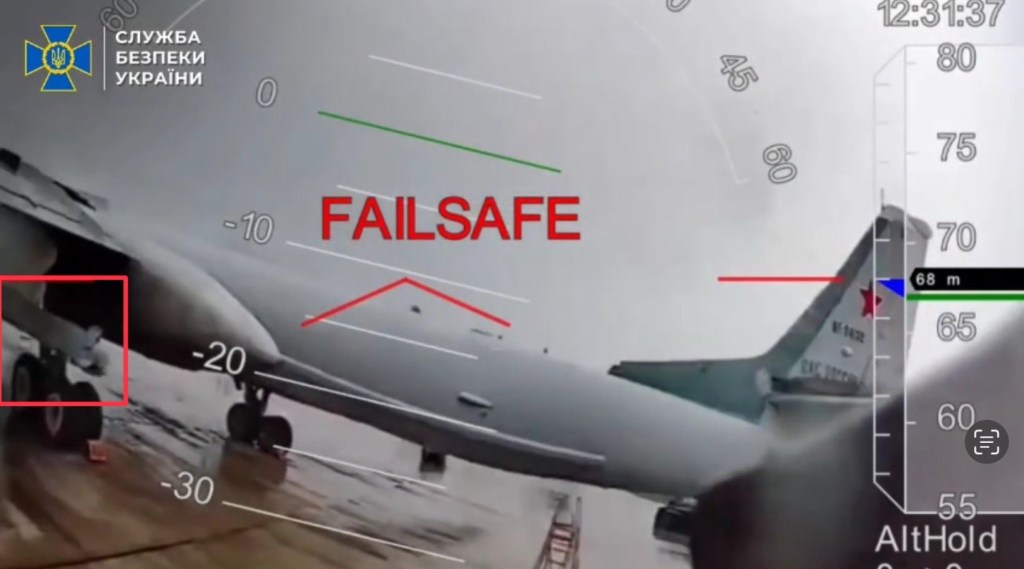
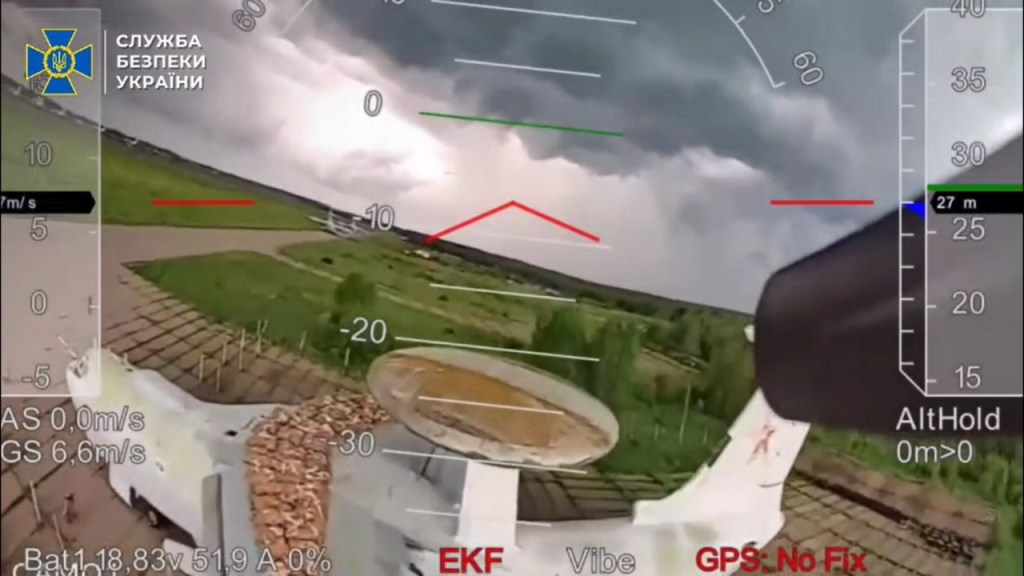
Ivanovo Severny Air base houses the 144th AEW&C regiment as well as rhe 610th Combat Use and Retraining Center for Military Transport Aviation.. The Ivanovo airbase houses a number of retired A-50 (and possibly active A-50’s) as well as transport aircraft like the Il-76. The video shows two A-50s being struck however I don’t know if these are the operational A-50s. Now we know Ukraine watched and planned this mission for a year and a half. I would like to think they wouldn’t waste the time attacking an airfield that holds nothing except some old parts planes. They had great Intel for this operation so it’s possible but I wanted to at least mention the uncertainty.
Two images from a drone on the day of the strikes. These planes are covered in tires and other things used to break up line of sight for drones. Russia often uses tires for this purpose.
Dyagilevo air base
Of all the airbases. This is the one I have the least data for. I’ve yet to see satellite imagery from after the attack so I’ll just go by the video. It seems that a number of Tu-22s were targeted. At least 4 possibly more however I did notice that some of the planes shown in the video were struck multiple times. Will update this if I can get more info.
Belaya
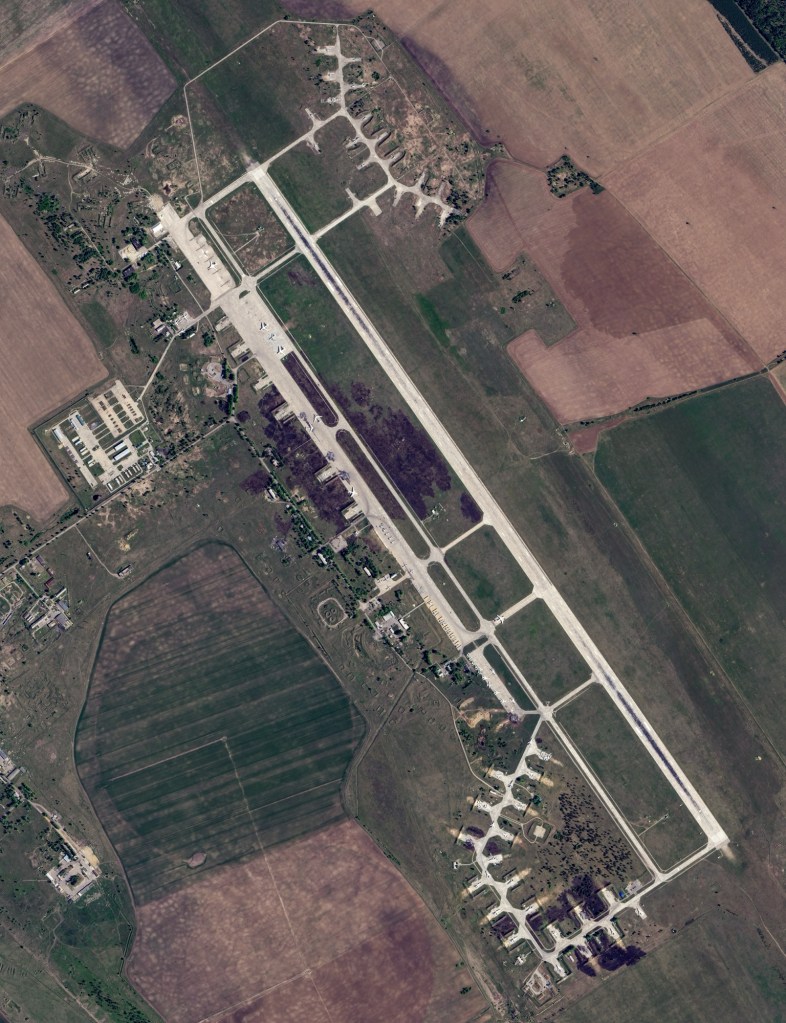
Belaya air base in theUsolsky District, Irkutsk Oblast was hit pretty aggressively compared to the others.
The base houses two types of Russias strategic bombers with the 200th Guards Heavy Bomber Aviation Brest Red Banner Order of Suvorov Regiment using Tu-22M3, the 444th Heavy Bomber Aviation Regiment with the Tu-22M3 and the 181st Independent Composite Aviation Squadron with the Antinov A-12 and A-30. Present at the base during the attack were also Tu-95s.
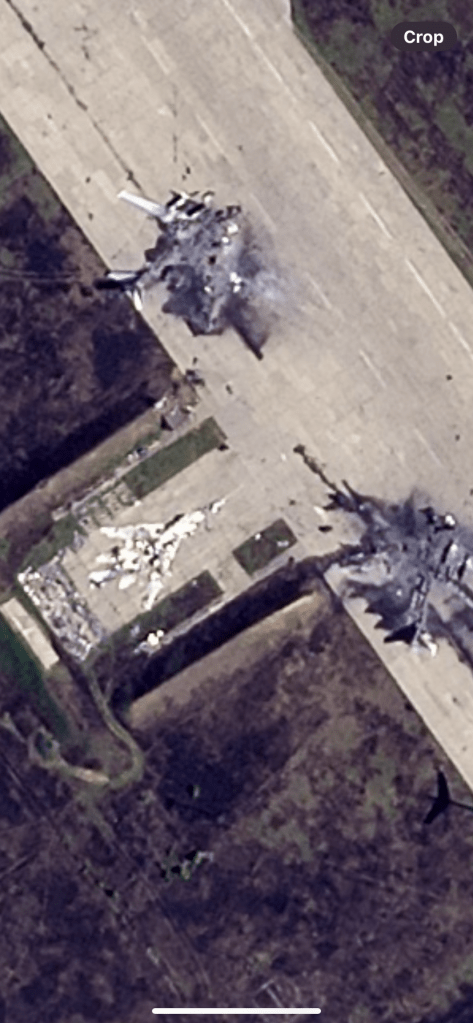
This is the before shot of the airbase. Included fkr comparison with the after shot. This base has several decoy parking slots used to fool drones and satellites. That being said the paint for the decoys is very old so it’s fairly easy to spot. Sat images done by Planet labs.The shot after Operation Spiderweb. Sat images done by Planet labs.
If my math is correct this airbase lost at least a solid 4 Tu-22’s, those are the ones that I can see, from the images, burned up and are completely destroyed. The video m of the attack shows multiple other Tu-22s that were targeted making me think that there is a good chance that some were damaged and need repaired or are not recoverable but we just can’t see it. So for now I’m sticking with 4 but it has an asterisk.
I’m not counting this one, which is an obvious decoy. The fake wreckage might have fooled me but I’ve seen this base before. Pictures of this spot exist prior to the operation.
The image with the decoy shows 2 of the 3 completely destroyed Tu-95’s. There is one more further down the runway which can be seen in the imagery and is shown to be struck in the video.
Afterthoughts
This attack will go down as one of Ukraines highlight moments in the war, showing a weakness in Russia’s current method of parking their airplanes.
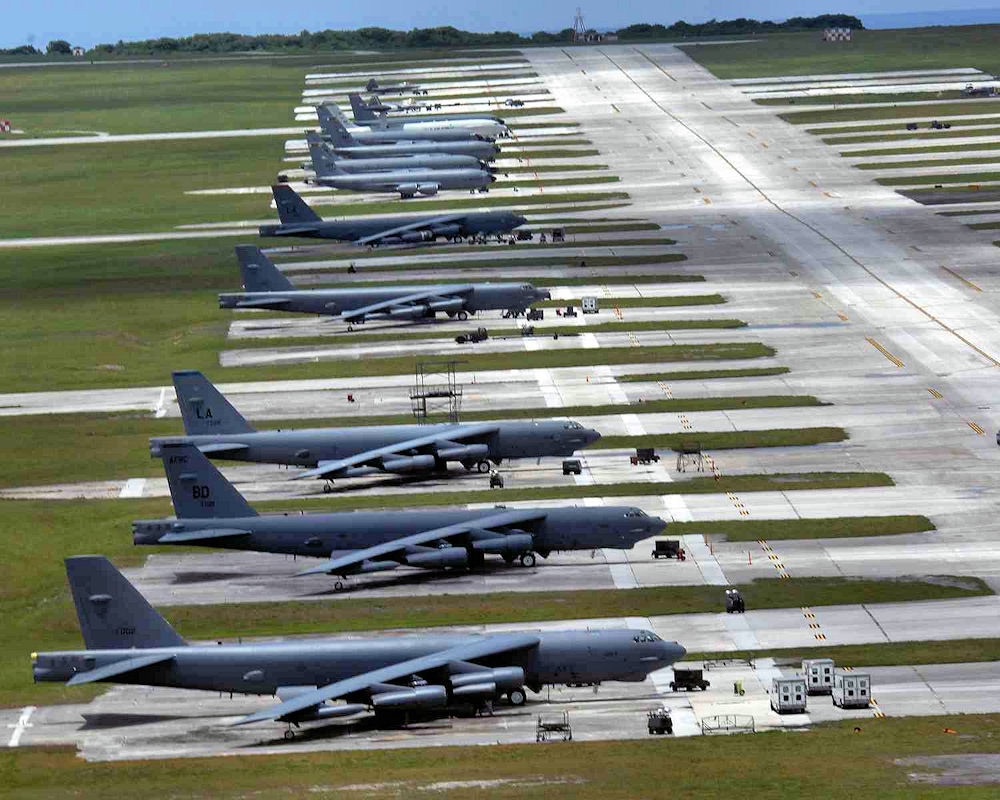
The line of B-52 Stratofortress at Anderson AFB.
However. While my own country of the U.S. does have Hardened Aircraft Shelters, they are usually only found being used on the frontlines areas like the Middle East or in The Pacific. Protecting those w deployed assets is extremely important but it’s becoming increasingly glaring that some day, one of the US’s enemy’s could stage a similar attack, knocking out multiple squadrons of long range bombers before anybody even knows what’s happening. China on the other hand has been ahead of the game in this field building vast hundreds of these shelters for their air fleets. China who also happens to be in the forefront of drone warfare and combat tech. Could it be thag China sees a threat because they know the possibility’s of what rcan be accomplished with drones?
The opening of a Hardened aircraft shelter located in South Korea.
I’d like to thank everybody who provided imagery for this, especially planet labs who allows me to be on their mailing list to receive these images when something big happens. That was a nice surprise after I started trying to find sat images to find them in my email.













 Global Conflict Reporting
You must be logged in to post a comment.