Author: Scott Jackson

  • Russian President admits Russian military at fault for the downing of Azerbaijan Flight 8243.

    By. Scott Jackson


    10.09.2025

    Russian President Vladimir Putin has acknowledged that the Russian federation is responsible for the downing of the Azerbaijani Airlines, Flight 8243 on Christmas Day 2024. 

    The plane, an Embaer 190 took off from Heydar Aliyev International Airport carrying 62 passengers and 5 crew. 

    The flight first experienced issues about 40 minutes after takeoff when it first entered the Russian airspace around Grozny. The pilots reported losing GPS navigational systems, due to jamming. The plane continued its approach at the Kadyrov Grozny International Airport in the Chechen capital. At this time the pilots reported twice tried to land at Grozny but were ultimately diverted due to fog. 81 minutes into the flight, and while the plane was still over Grozny,  passengers at this time reported an explosion and shrapnel striking the aircraft. The pilots thought they had experienced a bird strike and proceeded to initiate emergency protocols and squawked 7700, which signals to others that the flight is experiencing an emergency. They then turned back towards the Caspian Sea.

    The plane made it across the Caspian and back to Azerbaijan but the pilots were not able to maintain control of the aircraft while trying to put it down in Baku.  Video from the ground showed the plane changing altitude at a very quick rate as the plane pitched up and down as the pilots fought to bring the plane down with increasingly unresponsive controls. 

    Video from the crash of Azerbaijani Airlines Flight 8243.

    The plane ultimately crashed, bursting into a large fireball and split in half. Of the 67 people on board, 38 were killed. Almost immediately after the crash there were questions. What actually happened to flight 8243?

    Photos from the crash showed damage not consistent with a bird strike. Damage to the tail looked more like the damage from the explosion of an air defense missile. In fact, several passengers had been injured from shrapnel from the explosion. 

    An image from the crash. The tail of the plane shows shrapnel damage.

    Russia right away denied that this had happened. Several days later The New York Times put out a report which stated that Azerbaijani investigators believed that a Russian Pantsir S-1 had actually shot the plane. On February 4th, investigators found fragments from a Pantsir S-1 missile inside the airplane’s fuselage. 

    At the time the plane was attempting to land the city was under warning as Ukrainian drones had been spotted in the area and shot down. 

    On December 28th Russian President Vladimir Putin apologized to the Azerbaijani President Ilham Aliyev for the “tragic incident” although he didn’t elaborate further on the incident. 

    Today the Russian president, speaking with the Azerbaijani leader Ilham Aliyev, admitted to him that Russian air defense was responsible for the crash and that two Russian air defense missiles had exploded near the plane.

    The Russian President very rarely admits to mistakes by his military. More than a decade after a  Malaysian flight was brought down over Ukraine by Russian defense systems, Putin still denies Russian involvement.

    The previous denial of the Russian involvement in the Azerbaijani airlines flight has caused some tension between Russian and Azerbaijan causing Aliyev to become increasingly critical of Moscow, even offering support to Ukraine and condemning what he called the “soviet occupation” of Azerbaijan. Some in the country were even calling for the relationship between Russia and Azerbaijan to be cut. It’s likely this admission of guilt by the Russian leadership is more about saving the relationship with an increasingly strong ally. 

  • Breaking down the recent Video from US Southern Command.

    By. Scott Jackson


    10.05.2025

    The video from US Southern Command (USSOUTHCOM)

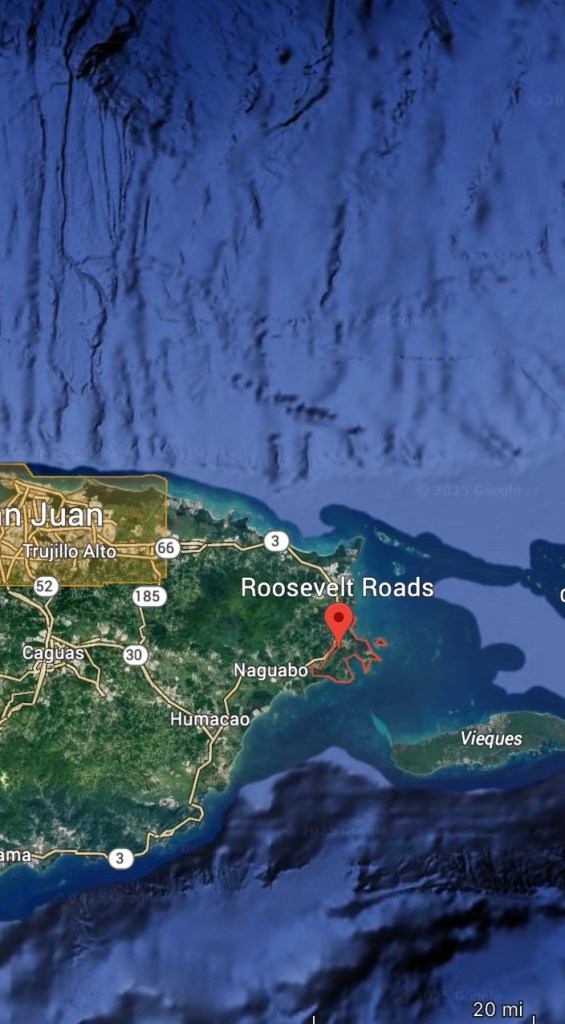
    On October the 3rd, US Southern Command released footage from US operations ongoing in the Caribbean. The video shows the loading of a U.S. Marine F-35B Lightning II with live munitions at the now reactivated Roosevelt Road Naval Station.

    Image from Google Earth showing the location of Roosevelt Road.
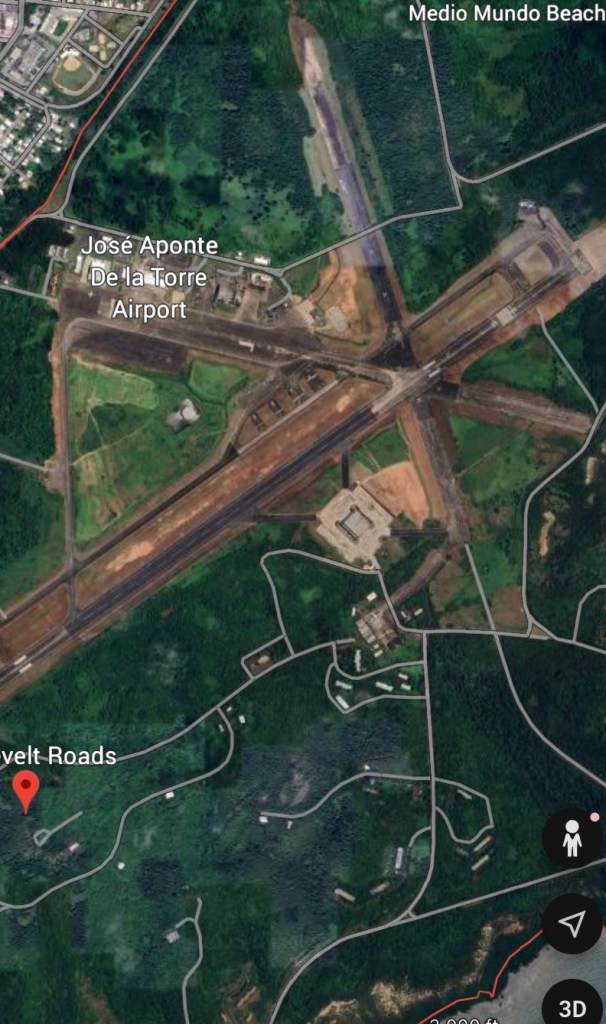
    Closer look at the airport.

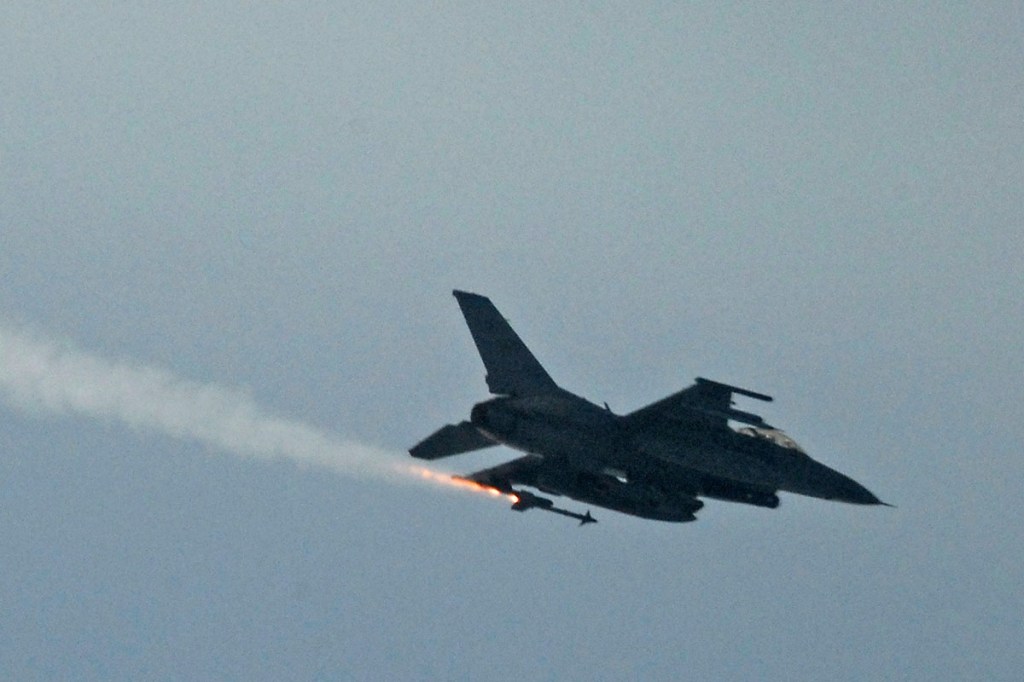
    This aircraft, if it was just one jet, it’s not clear in the video, was outfitted with a mixture of air-to-ground and air-to-air weapons. My info is coming from publicly available information on the weapons systems and some of my own knowledge of this topic from years of research. Any mistakes or opinions are,as always, my own. The first clip shows the loading of an AIM-9X Sidewinder. The AIM-9X is an inferred guided, proximity fused weapon. 

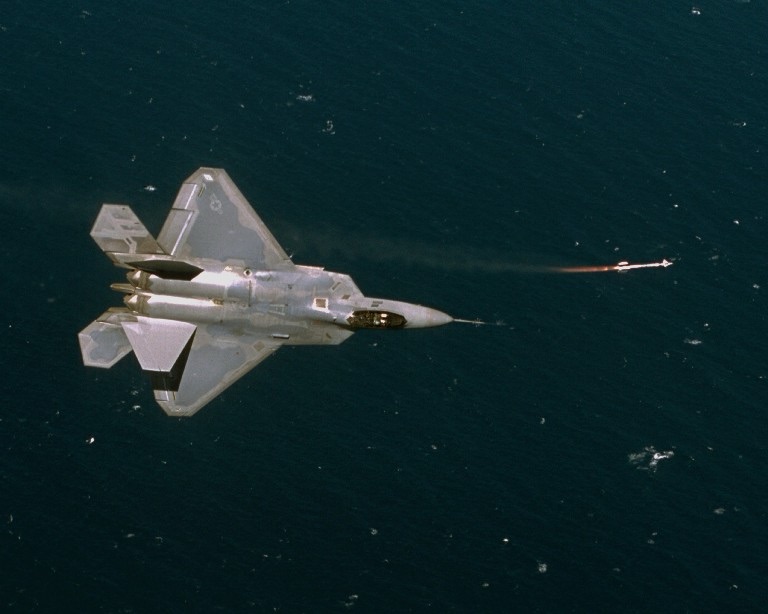
    Variations of the Sidewinder started life as the primary weapon of many early Cold War era jets alongside their main cannons. This is not that Sidewinder, it is so updated and advanced it’s hard to even think of this as the same missile. The original AIM-9 Sidewinder used in Vietnam had an abysmal success rate that averaged somewhere around 9%. So 1 out of 10 would hit their targets. While the original weapon could only heat-track a target aircraft’s exhaust, this weapon is capable of detecting the heat from the friction of the target aircraft going through the sky making shots at the front or side of the target a possibility. A thrust vectoring engine on the AIM-9X gives it incredible maneuverability. The publicly available information puts the range at somewhere around 10-15 miles depending on some factors(Altitude-speed etc.)that can shorten or extend that range. This is not your grandfather’s Sidewinder.

    F-22 firing an AIM-9 Sidewinder

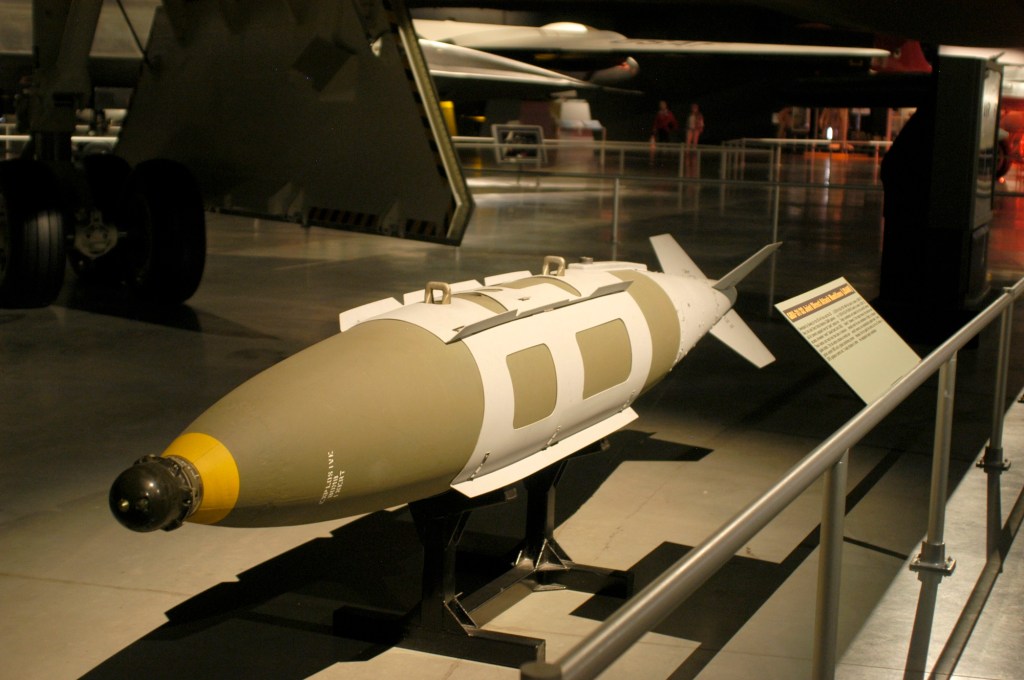
    Moving on we get a quick look at one that’s probably familiar to you (if not by look, then by name) the GBU-54(V)/B LJDAM (Laser Joint Direct Attack Munition).This is the laser guided version of a pretty standard MK 82 500 pound air-to-ground bomb with the added bolt-on JDAM guidance kit giving it some pretty spectacular accuracy. 

    JDAM on display at Airforce Museum

    JDAM is like an aftermarket part for a bomb turning it into a GPS guided precision weapon.We don’t talk enough about the effect that the JDAM and other guidance systems have had on tactical bombing, long gone are the days you have to drop 12 bombs to hit one target. If the target is a house, a decent pilot can hit the house 90% of the time, a great pilot and a bit of laser guidance can put a JDAM through the window. 

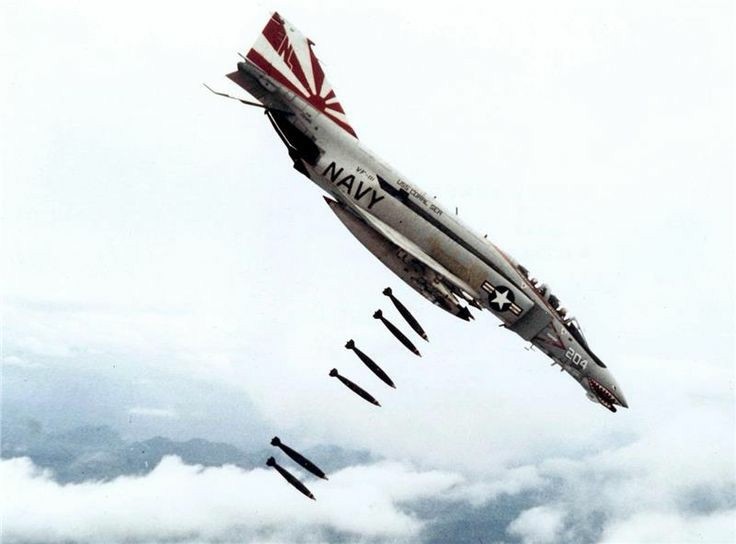
    This is how you used to drop bombs. Multiple at a time and hope that you hit your target.

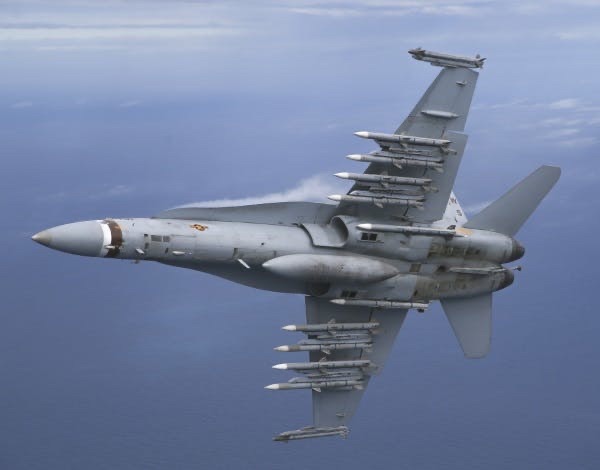
    The last weapon shown is the AIM-120 AMRAAM-C/D (Advanced Medium Range Air-To-Air Missile) or, sometimes called Slammers after their first 3 shots resulted in 3 enemy takedowns in Iraq and Bosnia.The C/D is the model number for the missile, I’ve added both models because they showed two different missile models in the USSOCOM video. The AIM-120 is a BVR (Beyond Visible Range) with active radar-homing capable of striking targets at extreme ranges. Publicly available data puts the range of the AIM-120 listed at around 80 miles. The range numbers can be a little deceiving, you have to take into account that these numbers are based on any number of specific conditions for the enemy and the weapons platform. For a missile like the AIM-120 D model, while it will travel over 100 miles, its effective range is closer to 60-70 miles. 

    F/A-18 Super Hornet loaded with 10 AMRAMM’s.(Murder Hornet configuration)

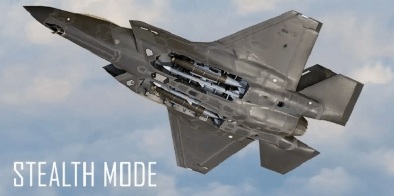
    None of these weapons are rare, two of them, the SIdewinder and AMRAAM you will find on almost every fighter in the air fleet and the laser JDAM has been used heavily since the 90’s. I’m a little uncertain on exactly how many weapons this plane in the video launched with as the F-35 in its stealth mode can only hold so many weapons, and the B version has a smaller weapons bay than the others because of the lift fan.  The two weapons bays can hold two AMRAAM’s each. I’m guessing here but maybe one JDAM and a sidewinder on one side and then the two AMRAAMS on the other. 

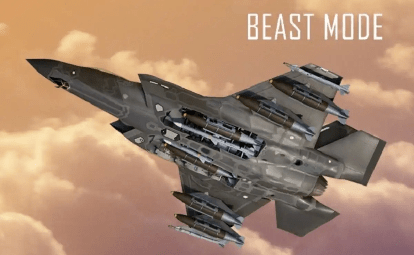
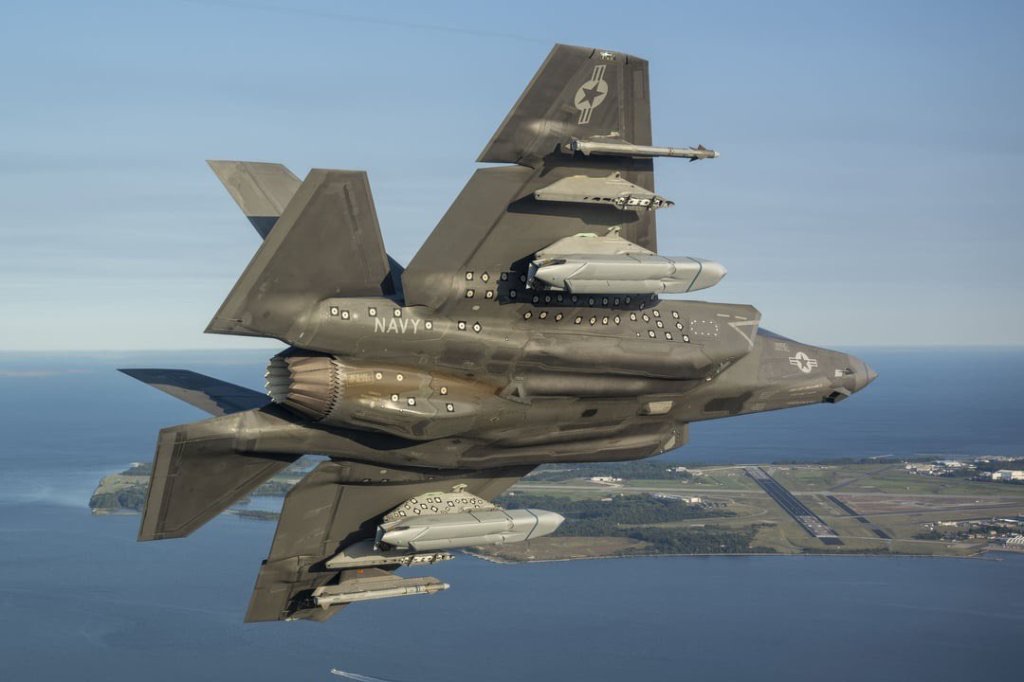
    The F-35 is technically capable of carrying more weapons on outside hard points, however this harms the stealth of the aircraft, giving it a larger radar cross section, or RCS. The idea was to use stealth mode during the opening days of a conflict and then to switch to what the manufacturer, Lockheed Martin calls “Beast mode” that the F-35B can be once air dominance has been achieved. 

    Stealth mode F-35 loaded with two JDAM’s and two AMRAAM’s.
    “Beast Mode” F-35 loaded with six JDAMS, Two AMRAAM’s and Two wingtip Sidewinders.
  • Several NATO nations carry out nuclear exercises.

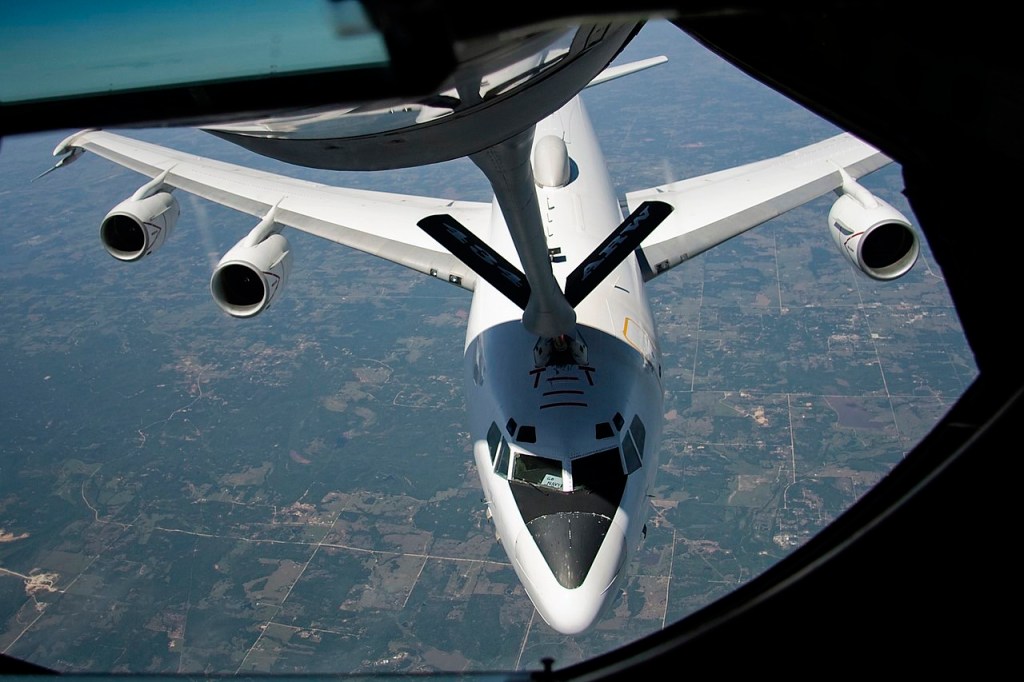
    US Navy E-6B Mercury refueling from a KC-135 Stratotanker.

    By.Scott Jackson


    09/24/2025

    On the night of September 23-24 both France and the United States carried out separate nuclear exercises. These exercises act as apart of a deterrence strategy aimed at making any potential adversaries think twice about attacking. They also provide real life training for the crews involved preparing them for a day that they hope never happens.

    Some components of these drills were monitored in real time.

    COST43 a U.S. Navy E-6B Mercury.

    COST43 the callsign for a U.S. Navy E-6B Mercury, the Airborne Nuclear Command Post and Communications Relay. The jet is seen in the above image heading back to Ramstein AFB, Germany after this mornings nuclear exercise by U.S. Strategic Command (STRATCOM) over Northern Europe.

    (more…)
  • US Navy confirms Trident II test launch.

    By. Scott Jackson


    09/23/2025

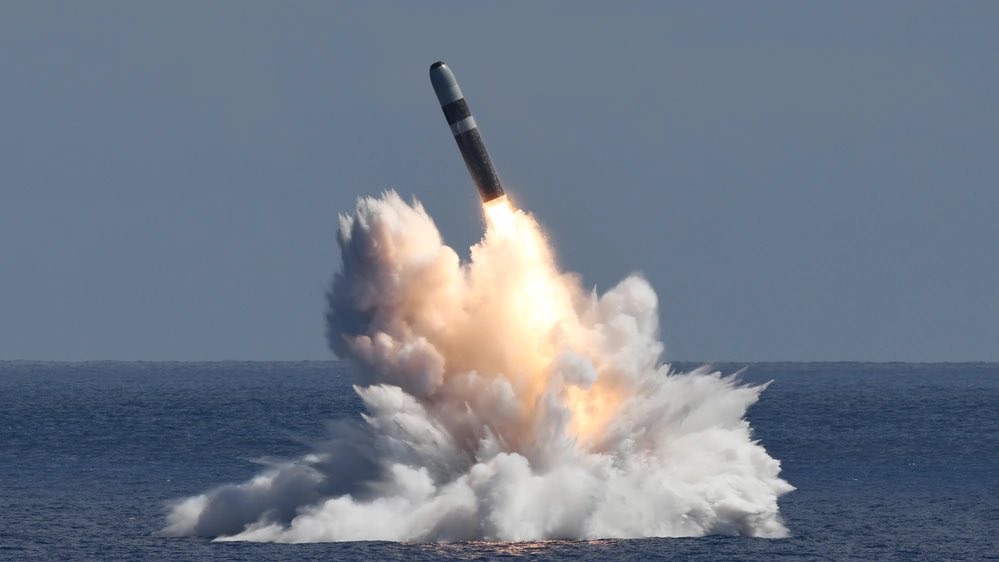
    Today the U.S. Navy confirmed the suspected launch of one of its Submarine launched Trident II Life Extension Program (D5LE) Submarine-Launched Ballistic Missile (SLBM) from an Ohio-Class Ballistic Missile Submarine off the east coast of Florida.

    On Sunday September 19th, the night sky in Puerto Rico were lit up as the launch could be seen from the Caribbean island.

    This launch was apart of a preplanned set of launches to evaluate and ensure the continued reliability and accuracy of the system. The navy statement also added that this launch was not done as a response to any ongoing world events. It’s likely the proximity to Venezuela prompted that last part of the statement.

    (more…)
  • NATO scrambles as Russian aircraft violate Estonian airspace.

    By. Scott Jackson


    09/19/2025

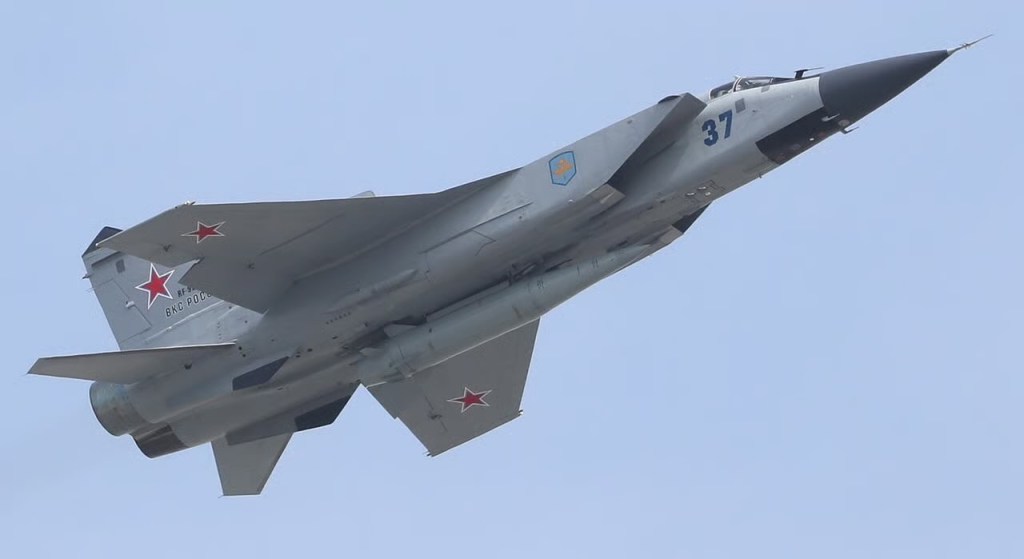
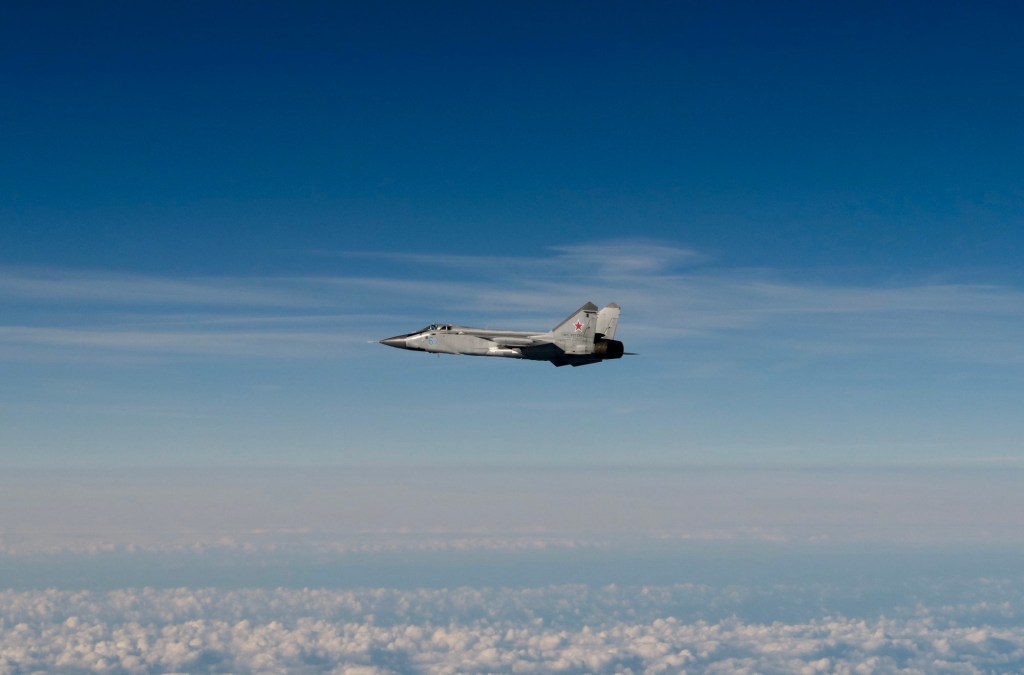
    Today, in an act that the Estonian foreign minister is calling  “unprecedentedly brazen”, three Russian MIG-31 “Foxhound” fighter jets violated Estonia’s border and remained inside Estonia for 12 minutes. They crossed the border in the area of the Gulf of Finland.

    Russian MIG-31 “Foxhound”

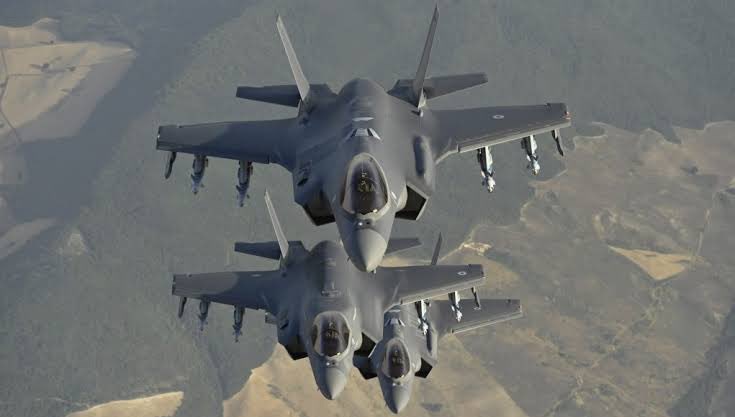
    NATO forces responded to intercept the Russian fighters with several Italian F-35’s being scrambled to track and intercept the Russian MIG’s. The alliance’s spokeswoman Allison Hart said ”This is yet another example of reckless Russian behavior and NATO’s ability to respond.”

    Swedish forces also responded with several JAS 39 Gripen scrambling to the Baltic area where they intercepted and tracked the three Russian jets.

    Russian Mig-31
    Swedish JAS 39 Gripen

    Tensions between NATO and Russia have remained high since the start of the Russian invasion of Ukraine but spiked even more recently as Russian drones flew into Polish airspace just 10 days ago. NATO responded to shoot down some of the drones in that incident as well. Poland called the incursion a deliberate effort to test NATO’s willingness to respond and its readiness. 

    “..three fighter jets entered our airspace, is unprecedentedly brazen-clear proof of Russia’s growing aggression.”

    “Russia has violated Estonian airspace four times already this year, which is unacceptable in itself, but today’s violation, during which three fighter jets entered our airspace, is unprecedentedly brazen-clear proof of Russia’s growing aggression.” Margus Tsahkna, Estonian minister of foreign affairs. He continued “Russia’s ever-increasing testing of borders and aggressiveness must be responded to by rapidly strengthening political and economic pressure,”

    In response to the incident in Poland, and now Estonia, NATO has launched new air patrol operations in eastern and Northern Europe. This operation is going by the name Eastern Sentry and is modeled after the Baltic Sentry operations that have been taking place in the Baltic. Baltic sentry added new aircraft and ships to its patrols after the recent Russian incursions and continuing acts of sabotage. The operation includes increasing air and sea patrols, as well as an increase in ground based interceptor launchers and radar. Eastern Sentry will focua mainly on Poland however it can be shifted to deal with Russian threats in other countries. 

    “Russia’s recklessness in the air along our eastern flank is increasing in frequency,” said NATO’s Secretary General Mark Rutte. He added that drones have recently violated the airspace of Estonia, Latvia, Lithuania and Romania.

    “This was no accident.” EU foreign policy chief Kaja Kallas speaking on the Estonian situation. 

    The Russian ministry of defense has declined to respond to an email from GCR. 

    At the time of writing another situation is ongoing with 2 other Russian jets doing a low flying pass on one of polands Petrobaltic oil and gas platform in the Baltic Sea. While Polish airspace was not violated in this case it shows the willingness to engage in aggressive behavior on the side of Russia.


  • US Army helicopter crashes near a base in Washington. (Update)

    By. Scott Jackson


    On Wednesday night, September 17,2025, a helicopter crashed near the Joint Base Lewis-McChord in Washington.

    “Joint Base Lewis-McChord confirms that a helicopter crashed on the evening of Sept. 17 in a rural area near the installation,” said Scot Keith, JBLM Garrison Public Affairs Officer. “The incident occurred at approximately 9 p.m.PDT. This remains a developing situation, and no additional details are available at this time.”

    Civilian and military search and rescue crews responded to an area around Summit Lake, about 35 miles west of Joint Base Lewis-McChord, near to where the military said they lost contact with their helicopter and.

    “Deputies have located what is believed to be the scene. We have been advised that the military lost contact with a helicopter in the area, and we are working closely with JBLM to deploy any resources needed to assist.” wrote the Thurston County Sheriff’s Department on its Facebook page.

    Later on Wednesday night, in a separate post, the sheriff said that deputies that had first responded and found the crash site had to stop rescue efforts because of the heat from the scene melting their shoes.

    Joint Base Lewis-McChord is a combined Army/Airforce base about 10 miles south of Tacoma. The 16th Combat Aviation Brigade operates out of Gray Army Airfield on the south end of the base. The unit is part of the 7th Infantry Division and I Corps, both of which have their headquarters at the base. While we don’t for sure know what kind of helicopter crashed. We know that the brigade flies the AH-64E Apache, CH-47 Chinook, and UH-60 Black Hawk. Civilians in the comment section of the sheriff’s department’s facebook post mentioned that at the stated time of the crash, that they had seen either a Blackhawk or an Apache.

    This is an ongoing situation still however it’s not looking good for the crew. The crash is the suspected cause of a several acre fire that the rescue crews had to battle.


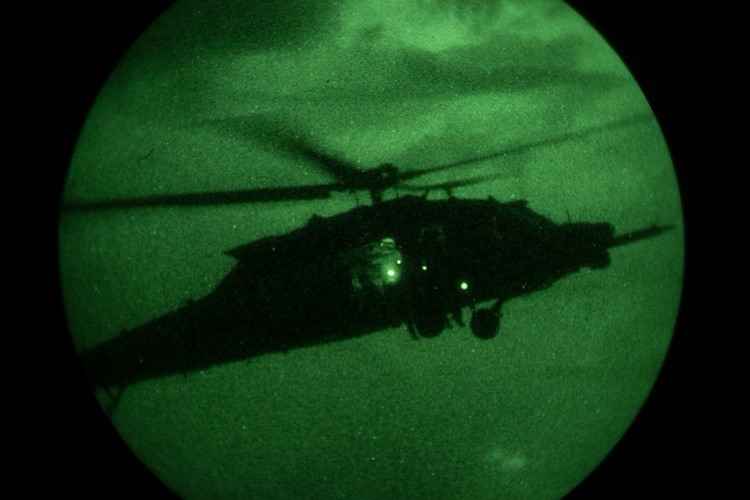
    New information received as I was finishing this article reveal that the helicopter involved was a
    MH-60M “Black Hawk”with the 160th Special Operations Aviation Regiment (SOAR), also known as the Night Stalkers. The Night Stalkers are some of the best of the best in helicopter aviation and are the guys called when the Seal Teams or Delta or any of those black ops guys need a lift. If this wasn’t a mechanical issue it could probably be attributed to the type of flying required by these guys. Low flying at high speeds comes to mind when I think of the kind of training being done by these guys, so as sad as it is, these things are bound to happen sometimes. People often forget about how dangerous training can be even when carried out far away from a battleground. 

  • US Navy P-8 Poseidon photographed with something new.

    By. Scott Jackson


    09/15/2025

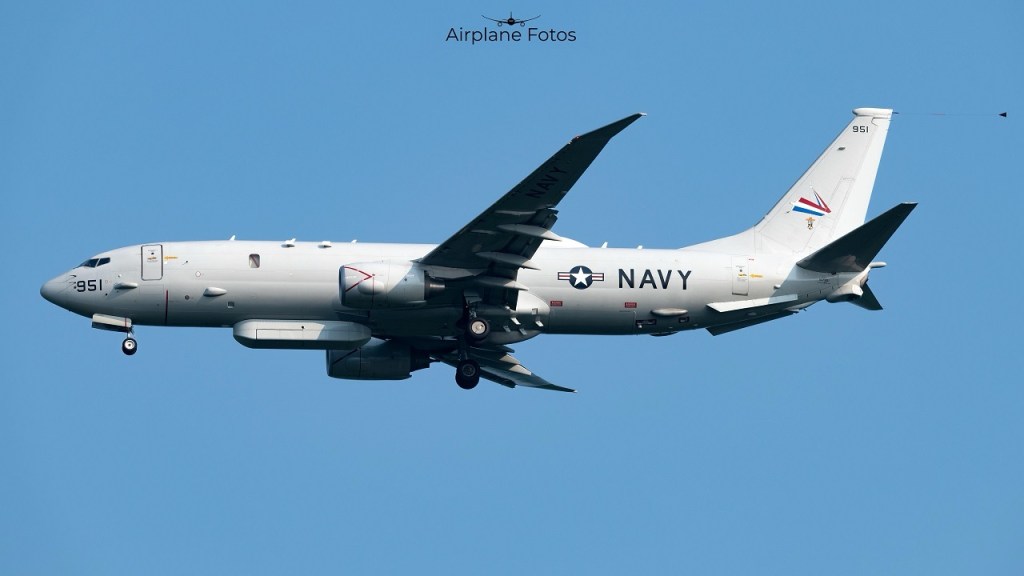
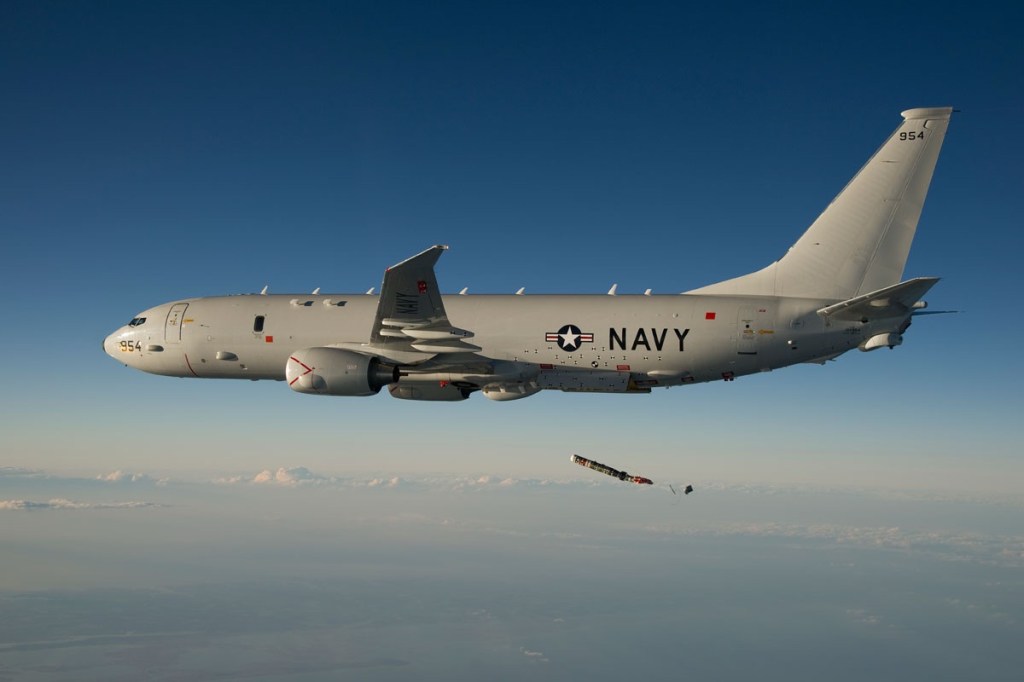
    The U.S. Navy Boeing P-8 Poseidon has been in service with the United States Navy since 2012 when it replaced the fleets aging and legendary P-3 Orions. The P-8 is a heavily modified version of a Boeing 737-800 passenger airliner. Swapping out the passengers and the passenger comforts with the equipment needed to preform the arduous and often overlooked task of Maritime Patrol and Anti- Submarine Warfare (ASW).

    United States Navy P-8A Poseidon dropping one of its Mark 54 torpedo.

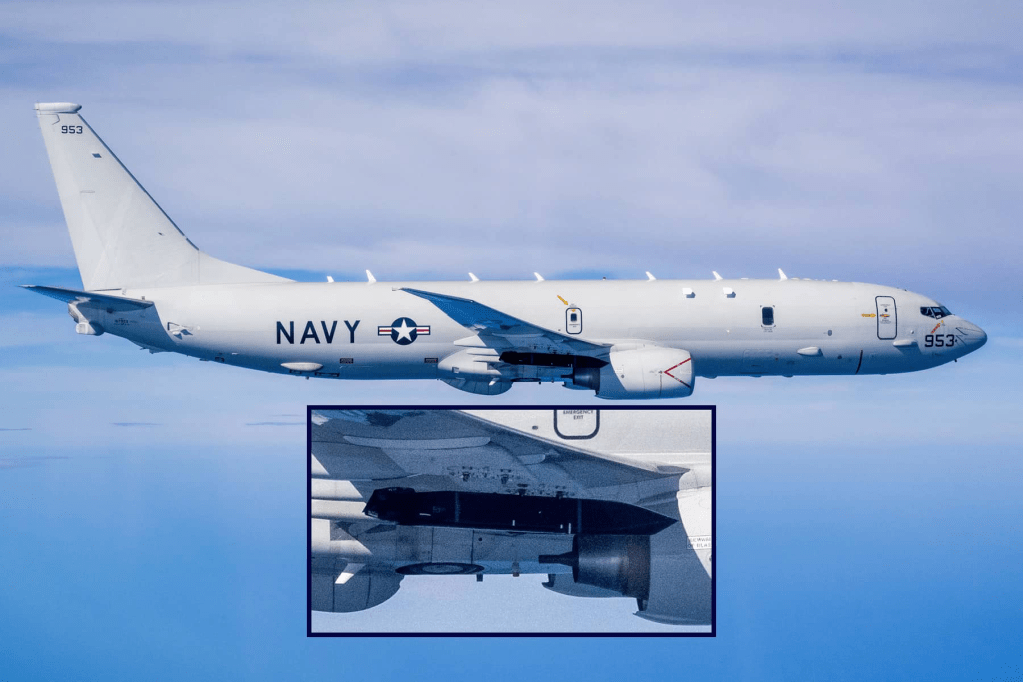
    Featuring advanced sensors for tracking surface ships and submarines, including air-dropped sonar bouys and its AN/APY-10 surface search radar. In addition to detection and tracking systems, the P-8 can carry several weapons. Mostly the MK-54 airdropped torpedoes for ASW work but also the AGM-84 Harpoon Anti-Ship missile. That was until the navy released the photo below showing something new. But back to that in a minute.

    U.S. navy P-8 Poseidon shown with the AGM-158 LRASM.
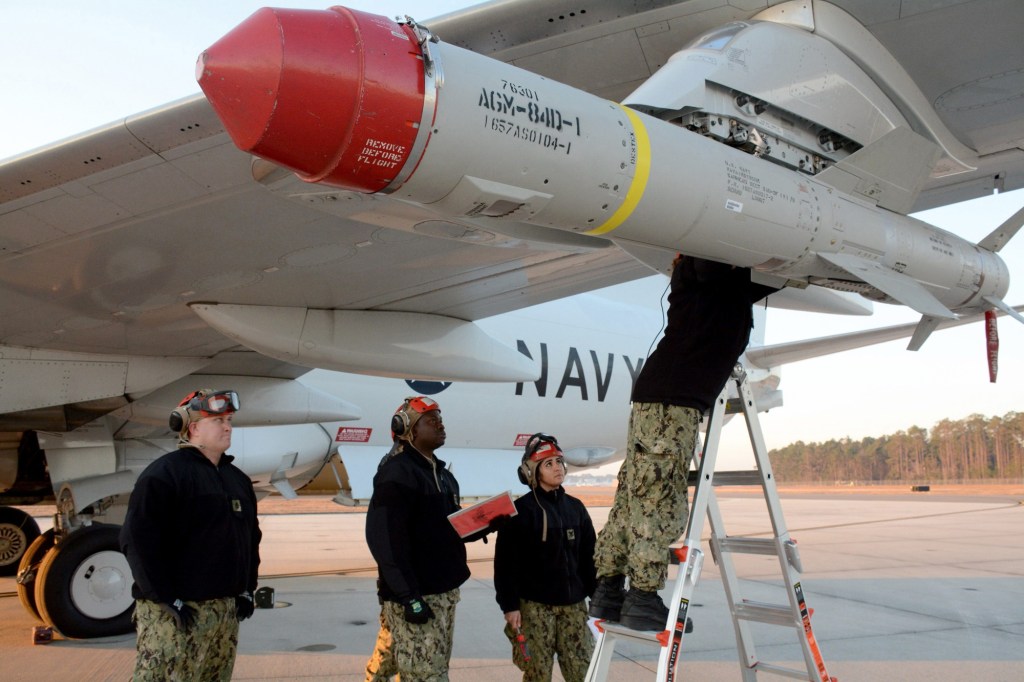
    United States Navy P-8A Poseidon with a AGM-84D-1 Harpoon missile. The 84D-1 is an upgraded an extended range version of the Harpoon.

    While the Harpoon’s almost 5 decades of service and extensive use in combat shows it is still a very capable weapon, it is outmatched in range by the air defense systems of some of the U.S. adversaries, especially the older models which are mostly if not all being phased out in favor of the II and II +.

    The original Harpoon Block 1 missile has a range of around 80-100 miles.

    The Block II has less range improvements at around 81 miles but was made me for combat around littoral waters so not as much range was needed.

    Block II+ER, the newest generation of the Harpoon in use has a range of around 190-200 miles.

    The Block II and Block II+ER have advanced capabilities added in like improved GPS guidance, and protection from Electronic interference. It’s possible that the Harpoon will still be used in some cases where the range and stealth of the LRASM isn’t needed.

    While the harpoon isnt the United States only anti-ship missile it is the one that was specifically designed for that role. Some other choices include the AGM-84H/K SLAM ER which is kind of a sibling offshoot of the Harpoon and is an air launched land attack missile that can be used to target maritime targets. It has a range of 170 miles.

    Enter the Lockheed Martin’s AGM-158C LRASM.

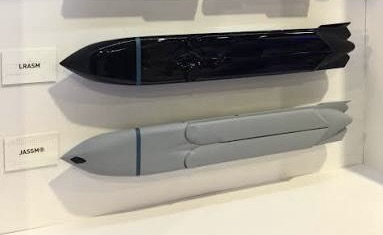
    A display showing a LRASM and a JASSM

    The AGM-158C is a derivative of the AGM-158B JASSM ER (Joint Air-To-Surface Standoff Missile Extended Range), a low detection air launched cruise missile designed by Lockheed Martin. The JASSM first entered combat striking Syrian government alleged chemical weapons targets in 2018 and more recently striking targets in Yemen.

    The AGM-158C LRASM is a stealth launched anti-ship cruise missile. This integration has been planned for several years now and is giving the P-8 an effective surface weapon that better keeps the aircraft and crew out of harms way. The LRASM can also be used on the B-1 Bomber, the Navy F/A-18’s, and on any non internal pylons on the F-35.

    F-35 test flight with the LRASM. Note, Neither LRASM Or JASSM can be carried internally by the F-35, it has to go on an outside pylon, which takes away some of the stealth of the jet.
    The Rockwell B-1 Lancer carries out an integrated test with the LRASM. Capable of carrying 24 internally, an announced pylon could add 6 more externally.

    The LRASM has an incredibly advanced targeting and navigations suite and even more so for planned upgrades for this missile. The range of the LRASM depends on the block number. These numbers are also mostly estimates and going off of what public data is available, which is limited. The C-1 variant is listed as having a range of greater than around 200 nautical miles, the C-2 is said to be in the +500 miles range and the new C-3 they are working on is rumored to be in the 1000 mile range but is still in development. The C-3 of the future is supposed to be being developed with Artificial Intelligence integration which will allow data links between the missiles and allow them, according to John Keller from Military Aerospace Electronic, `advanced autonomous mission planning, target discrimination, and attack coordination, adjust flight paths based on real-time data, identify and track moving targets, and adapt to changing conditions like jamming and interference.

    Adding this capability to the P-8 allows them to not only detect the enemy but to also engage them with the safety that range gives you.