Early this morning, Ukrainian drone forces launched an attack on the Rostov-on-Don region of Russia, starting a large fire at a facility connected to the Novoshakhtinsk Oil Products Plant (also called NZNP or Yug Rusi). The facility isn’t the refinery but instead a riverside oil-loading terminal used to store and pump oil to ships on the Don River or trains. The Don River feeds out to the Sea of Azov and the Black Sea.
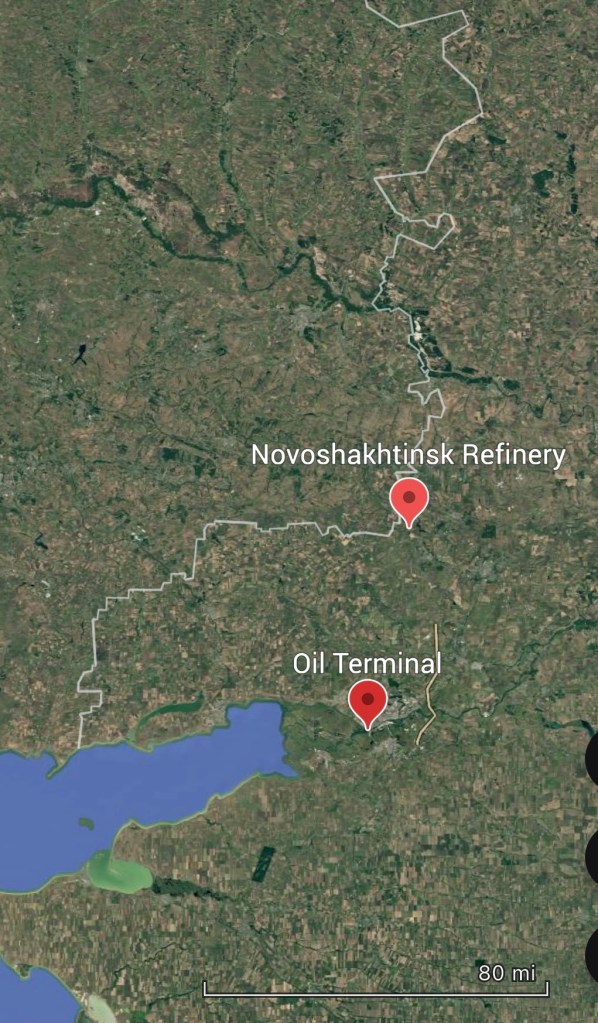
The facility mostly handles oil products from the Novoshakhtinsk Oil Refinery, 46 miles to the north. This facility was also attacked back on September 25, 2026, and a large fire resulted from it.
Google Earth view showing the location of the Oil Refinery and the Oil-Loading Terminal.
Videos circulating on multiple accounts on Telegram appeared to show large fires coming from the facility as well as thick smoke.
Ukraine has so far not taken credit for the attack. Russian authorities only admit that air defense was active this morning, but wouldn’t confirm damage to the site.
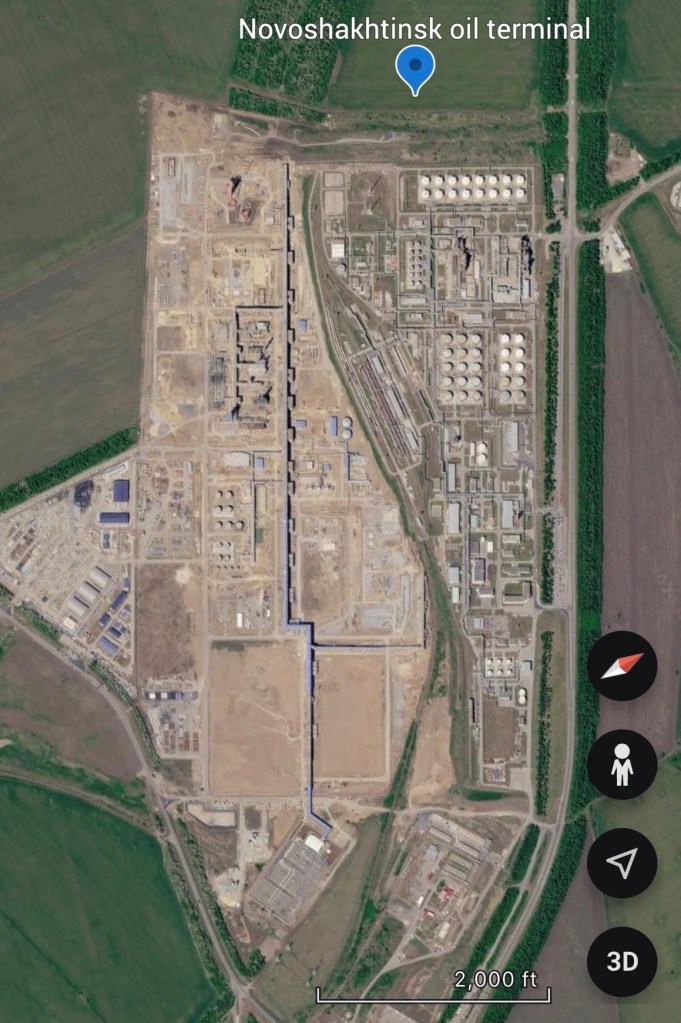
The location of the oil refinery can be seen below. It’s a large facility with room to grow. As mentioned before, the site has been targeted 5 times before, most recently on September 25, 2026.
Google Earth image of the Novoshakhtinsk Oil Products Plant (NZNP)The Oil-Loading Terminal
The site is one of the larger refineries in southern Russia. The facility processes 5.6 million tonnes of crude per year. The site mainly produces fuel oil (mazut), furnace fuel, marine fuel, diesel, and straight-run gasoline/naphtha.
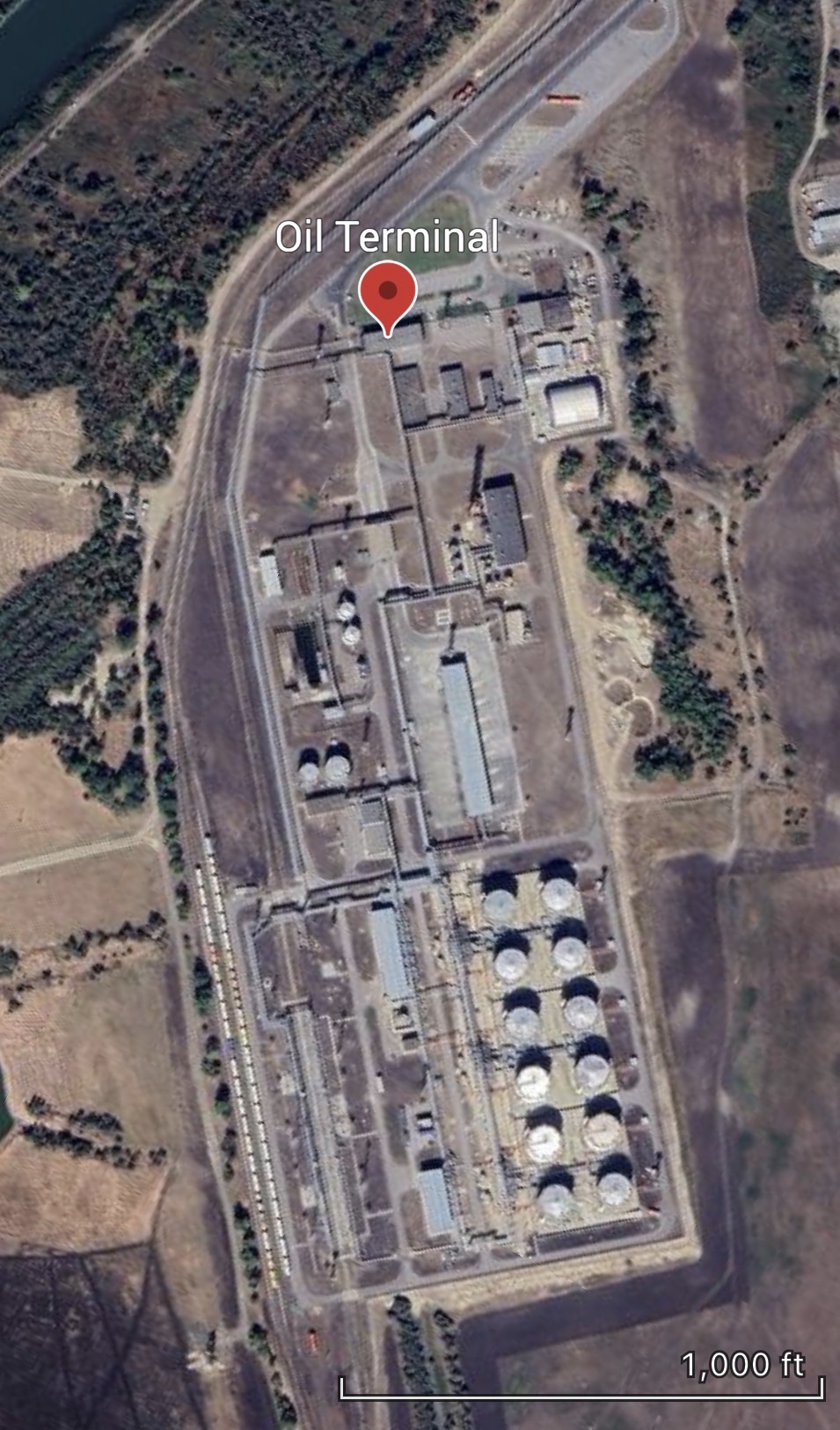
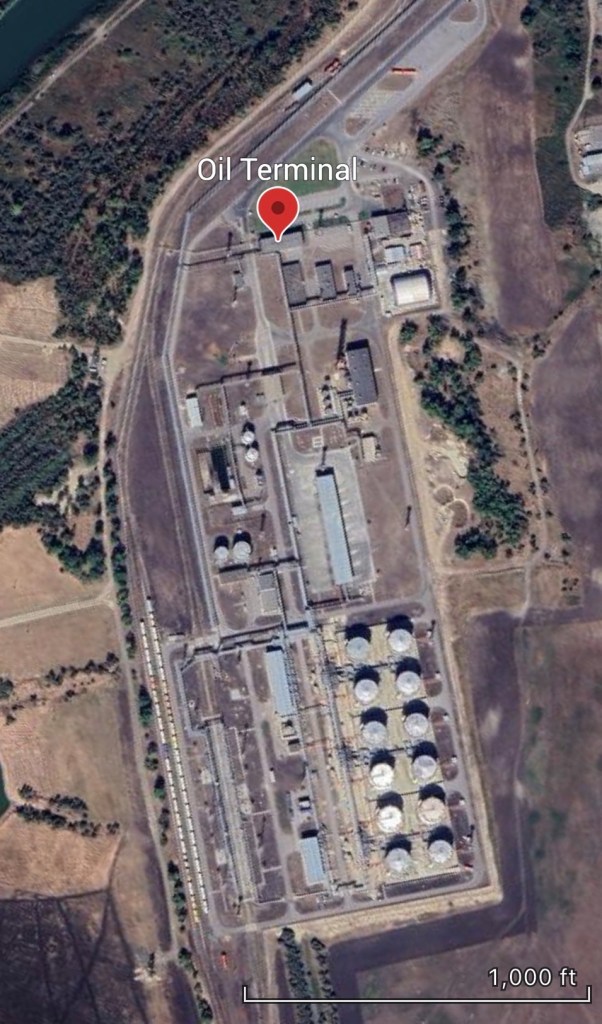
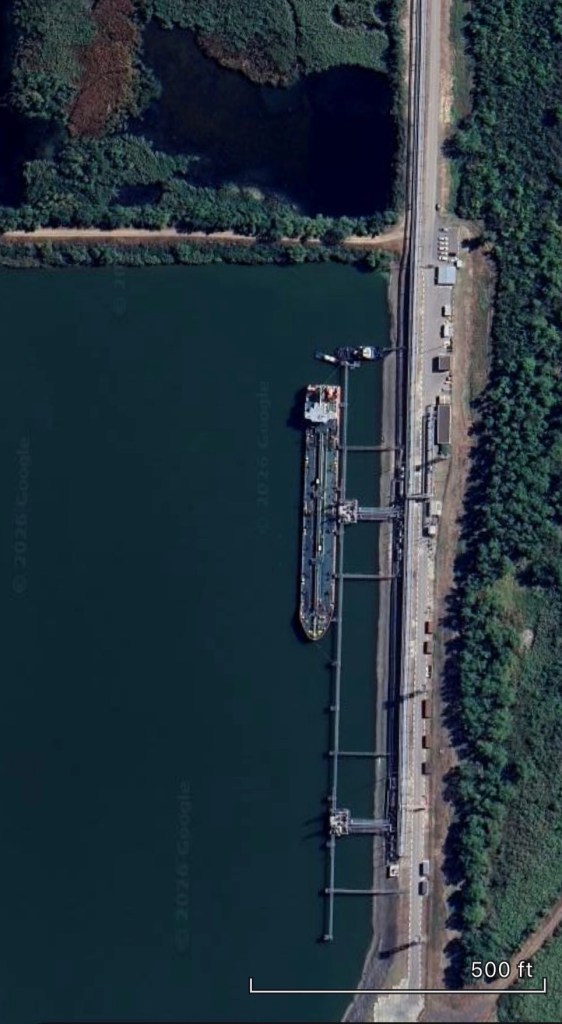
The Oil-Loading Terminal (shown below) sits almost 50 miles away on the River Don and handles loading onto trains and river barges. Products go to domestic southern Russian markets, military supply, and export (including via the Sea of Azov).
Image shows the river loading terminal.
This strike happened on the night of the day that U.S. President Donald Trump announced on social media a deal made with Russian President Vladimir Putin. The statement said that Russia will supply diesel to global and U.S. markets to help reduce fuel prices, leading to a temporary lift of US sanctions on Russian fuel.
Ukraine’s President Zelenskyy argued that the deal would not help in achieving peace and would instead allow Russia to continue its aggression. Even many of Trump’s fellow Republicans have condemned this agreement, the details of which can be seen in Trump’s post below.
U.S. President Donald Trump’s Truth Social post announcing the deal with Russia.
Most of the criticism of the deal stems from the low amounts of product actually being sent. Energy analysts and experts have said that the U.S. alone uses approximately 3.6 million to 3.9 million barrels of diesel a day (or roughly 414,000 tonnes), making the first shipment enough to cover one single day of U.S. use. The other shipments are larger, but the whole deal total only covers 3-4 days of America’s diesel needs.
This deal reverses many of the sanctions put on Russia, at least temporarily. It gives Russia financial relief at a time when Ukraine feels pressure is more important.
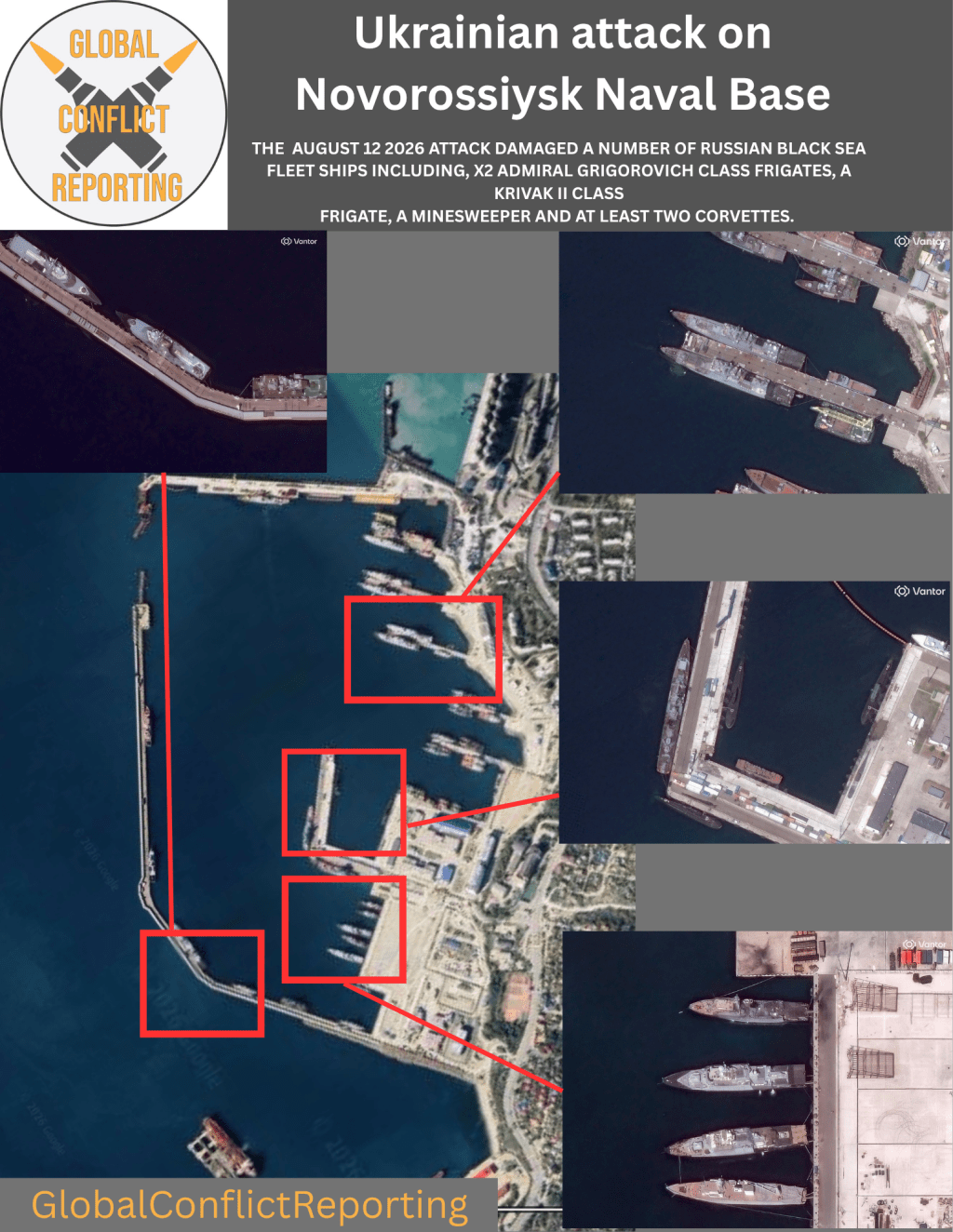
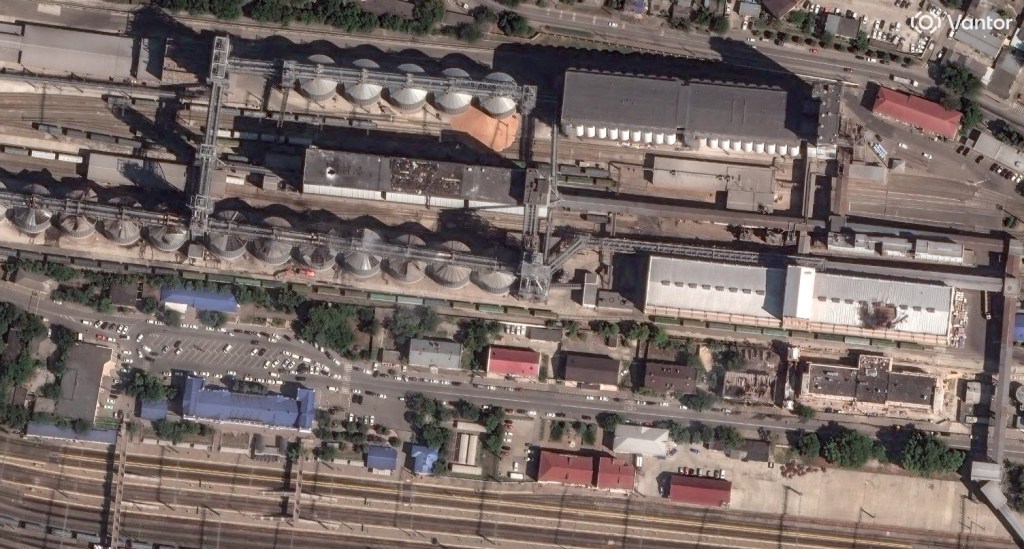
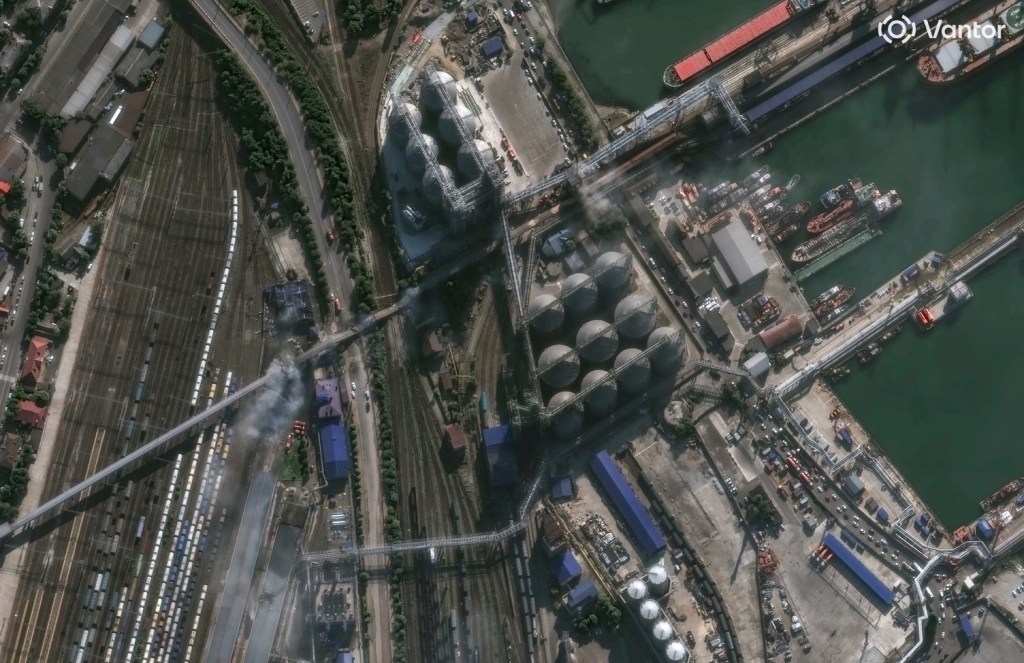
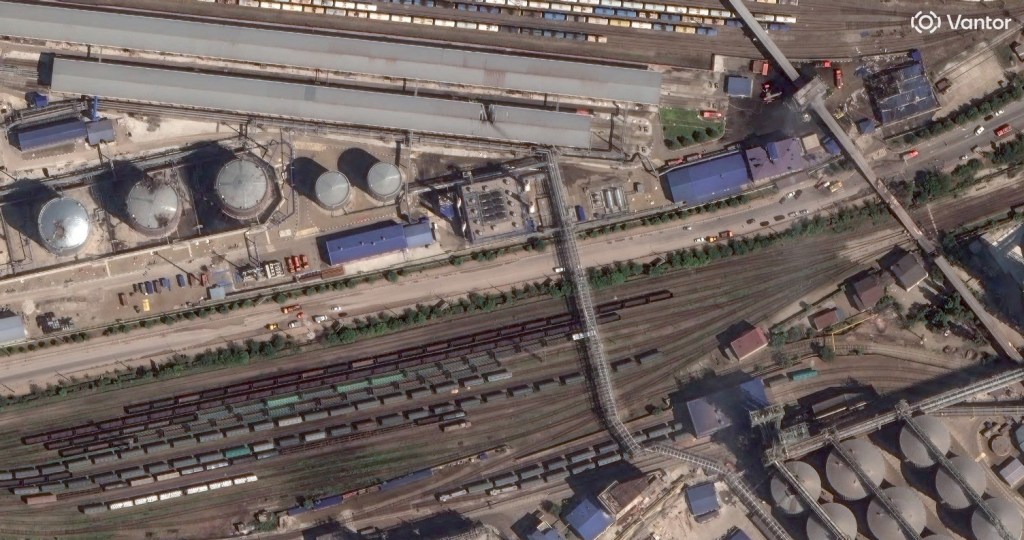
On Wednesday, August 12 2026, Ukranian forces launched a massive attack on the Russian Black Sea port city of Novorissiyskz. The attack was one of the largest that have hit the city and targeted warships at the naval base as well as at least two major grain terminals that were forced to shut down.
Ukrainian President Vladimir Zelenskyy described the attack as a success and said that Ukraine had launched a unique mixture of long-range drones and weapons to target Russian fleet vessels in the bay area of the city. He called out damage to Russia’s Admiral Essen and Admiral Makarov frigates, a large landing ship, a corvette, and other vessels were struck in the attack.
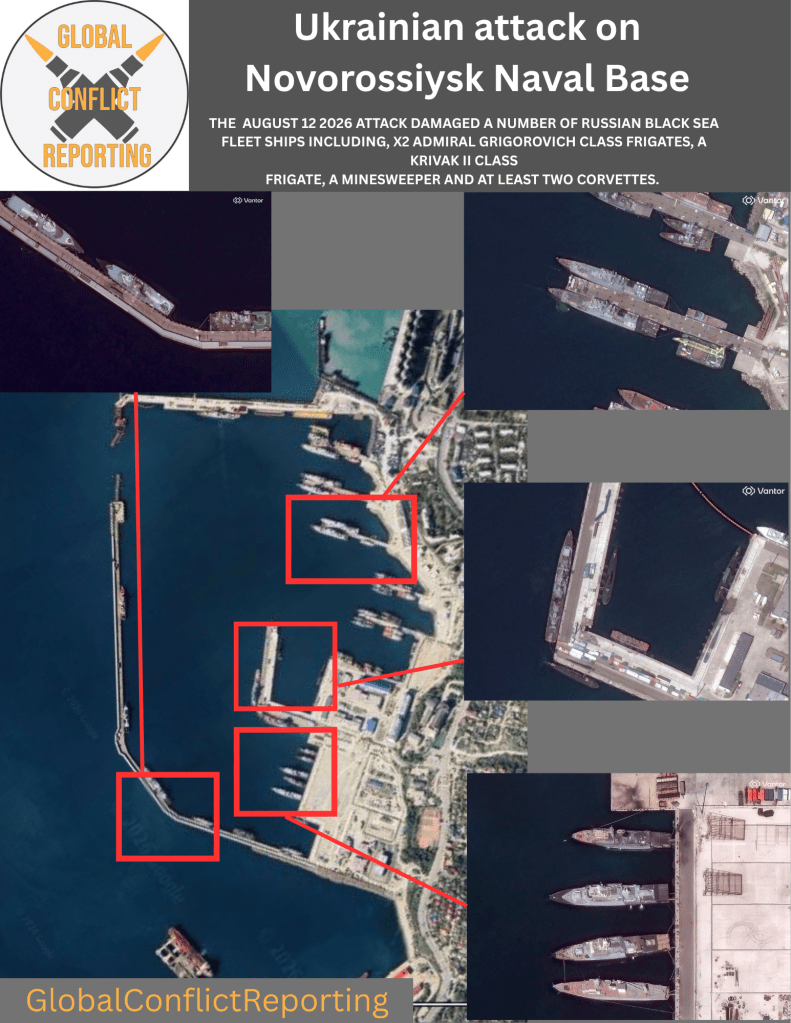
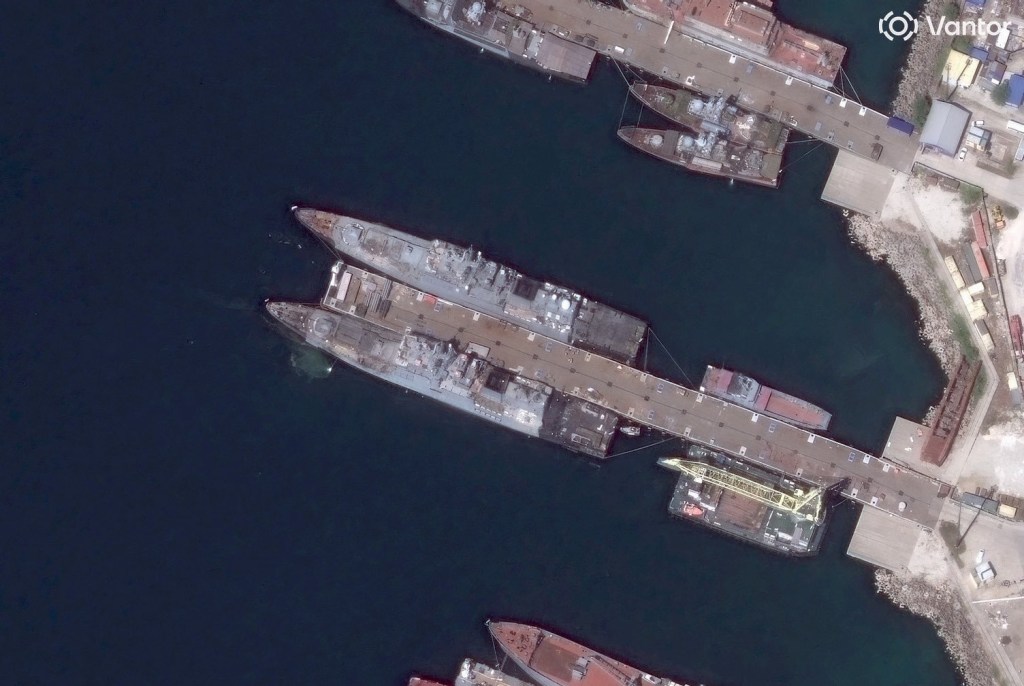
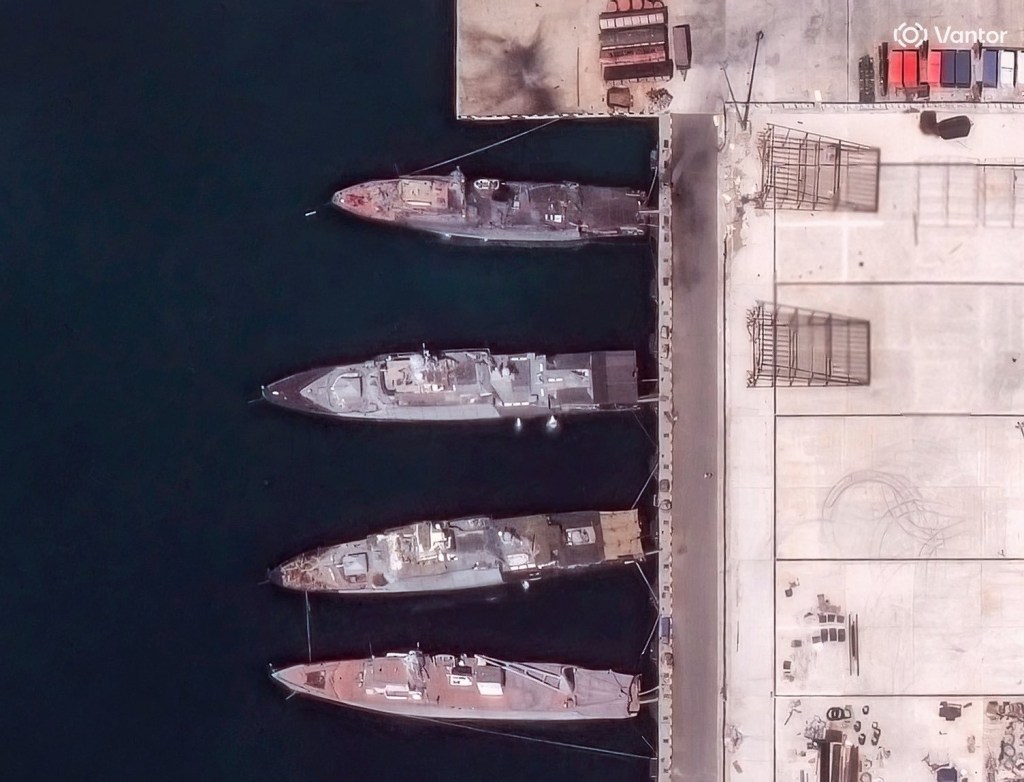
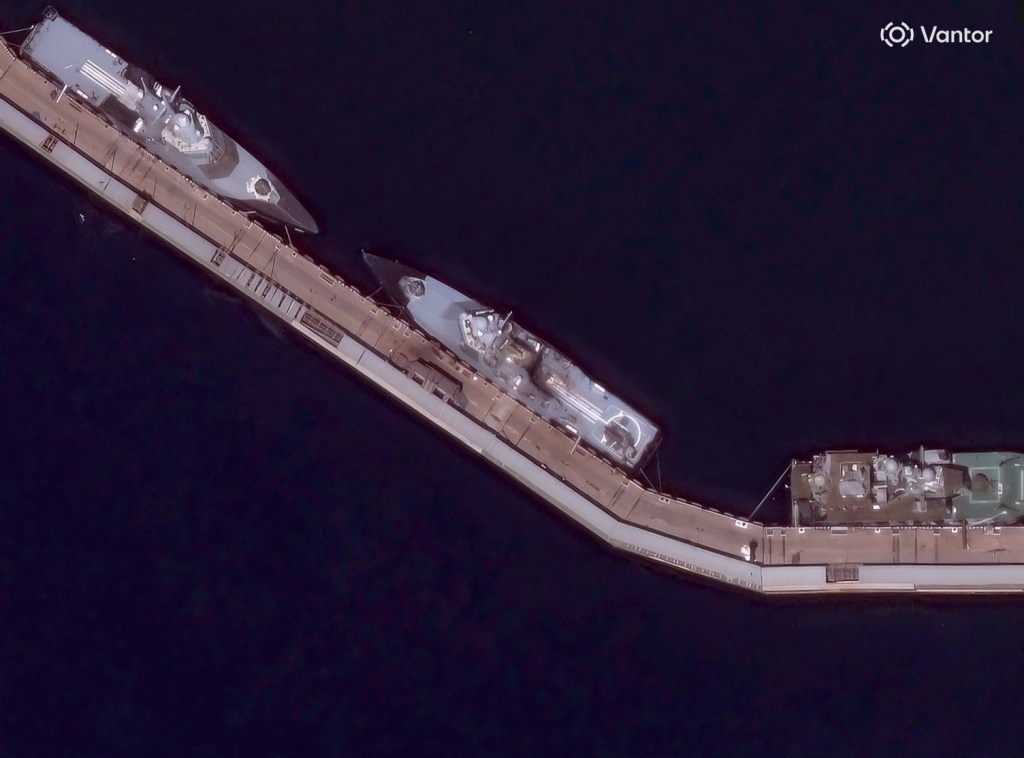
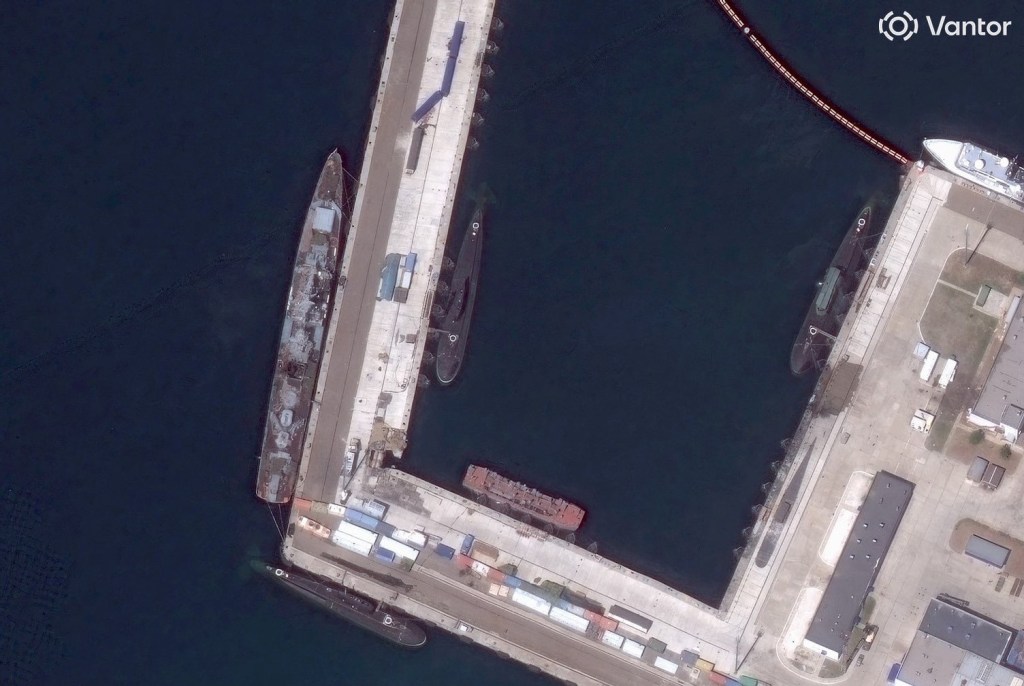
Satellite images below show the damage to the vessels.
Two Russian Project 11356R/Admiral Grigorovich class frigates, the Admiral Essen-class guided missile frigate (Top) and the Admiral Makarov (Bottom). Both capable of launching long range Kalibr cruise missile. The ships seem to have been hit multiple times including in the upper bow of the ship where the VLS cells are located.266M class minesweeper (top) shows signs of fire damage on the stern area as well as port areas around the ship.Two corvettes. Unknown class. Possible Project 22160. As the old navy saying goes, “Hot dog pack, Smokestack, Knife in the Back, two Guns in the Back — Krivak.” Project 1135M / Krivak II Class Guided Missile Frigate, Pitlivy. Damage to the ship appears to focus on the smoke stack. It’s possible the two Kilo class submarines were also damaged but it’s not clear.
The marks that were noted with the images look like what’s known as short-duration fires, indicative of a drone strike. That is a quick blast and maybe a bit of lingering fire. It’s a lot harder to tell from this resolution what exactly is damaged on the ships and surrounding area.
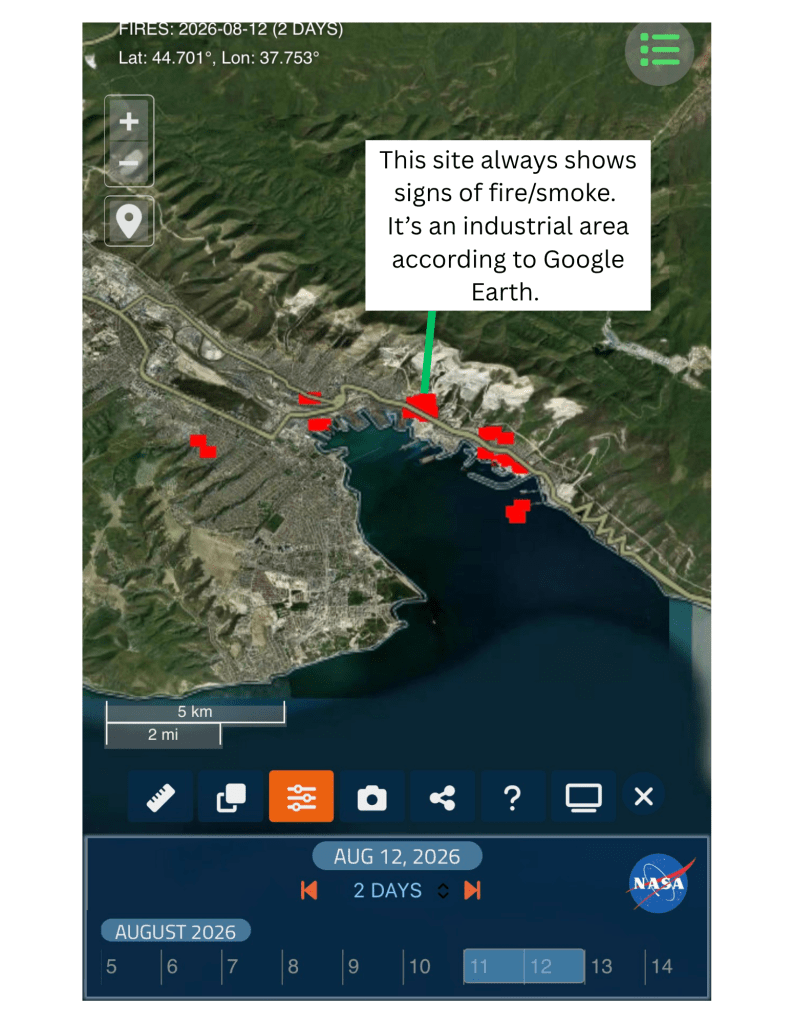
After the attacks NASA FIRMS detected fire at multiple areas around the city.
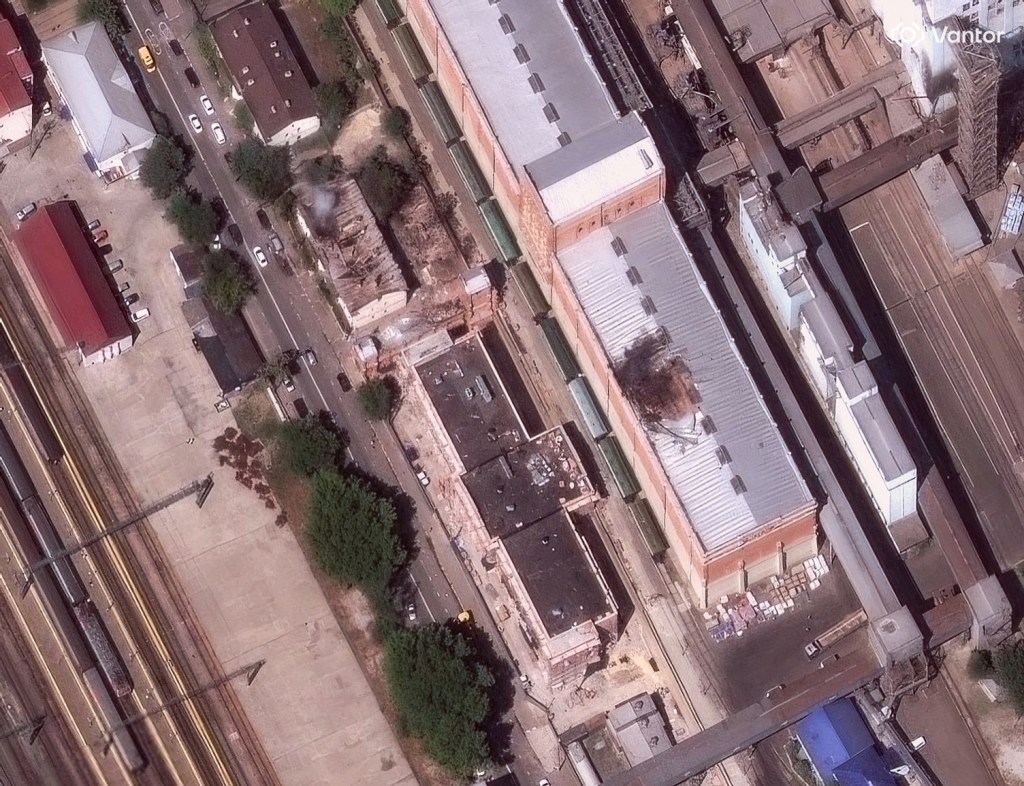
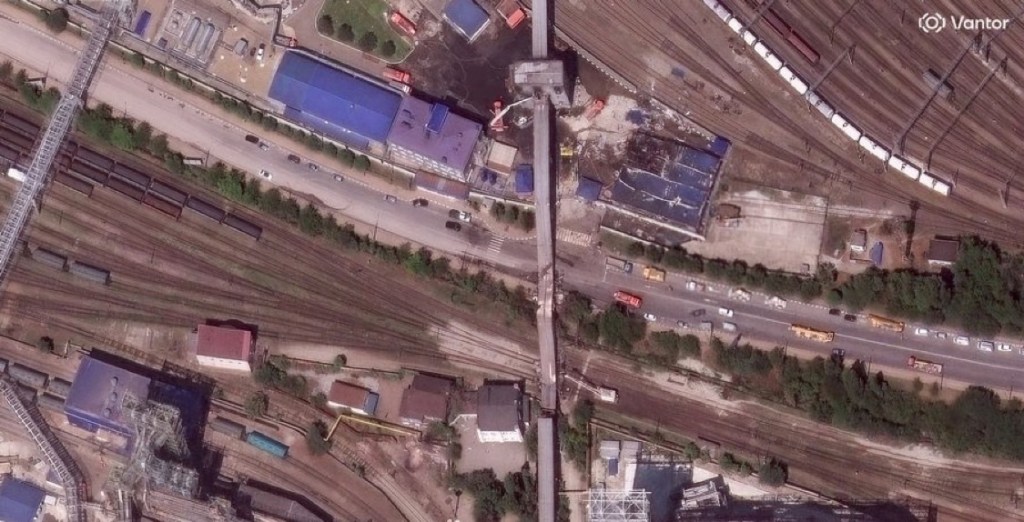
More images have been released online showing damage to grain and port infrastructure.
building damage at the grain facility. Loading terminal for the port damaged. More building damage. Bridge dropped across the train tracks, closing traffic on the road and the tracks. Better shot of the bridge. Before
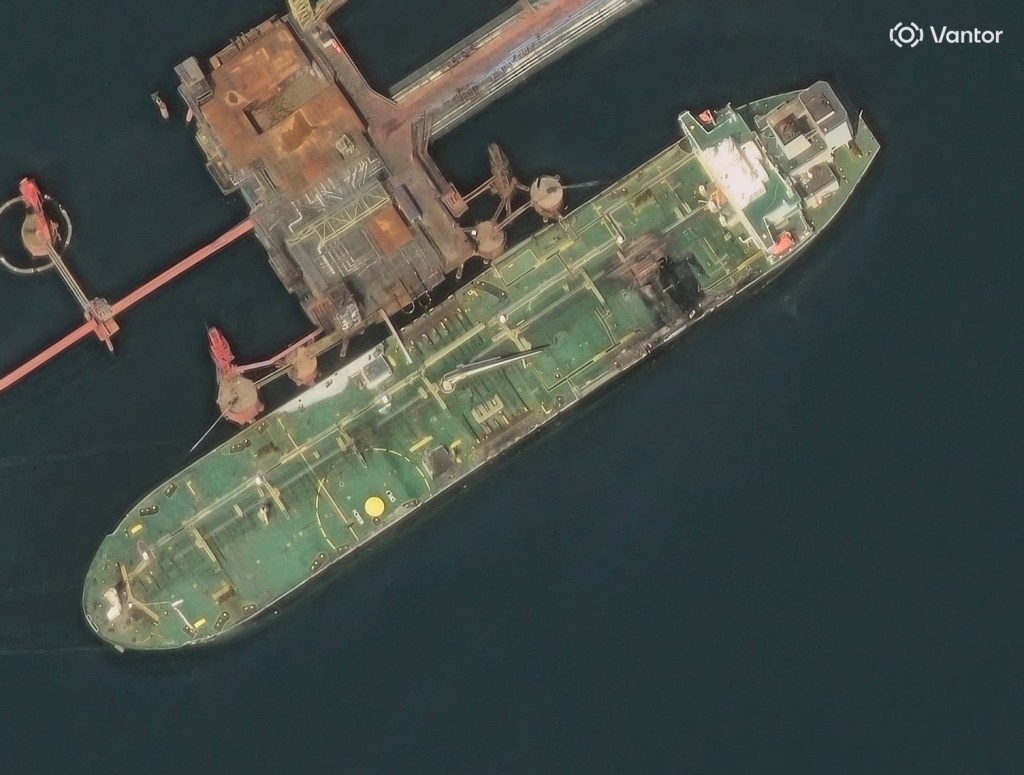
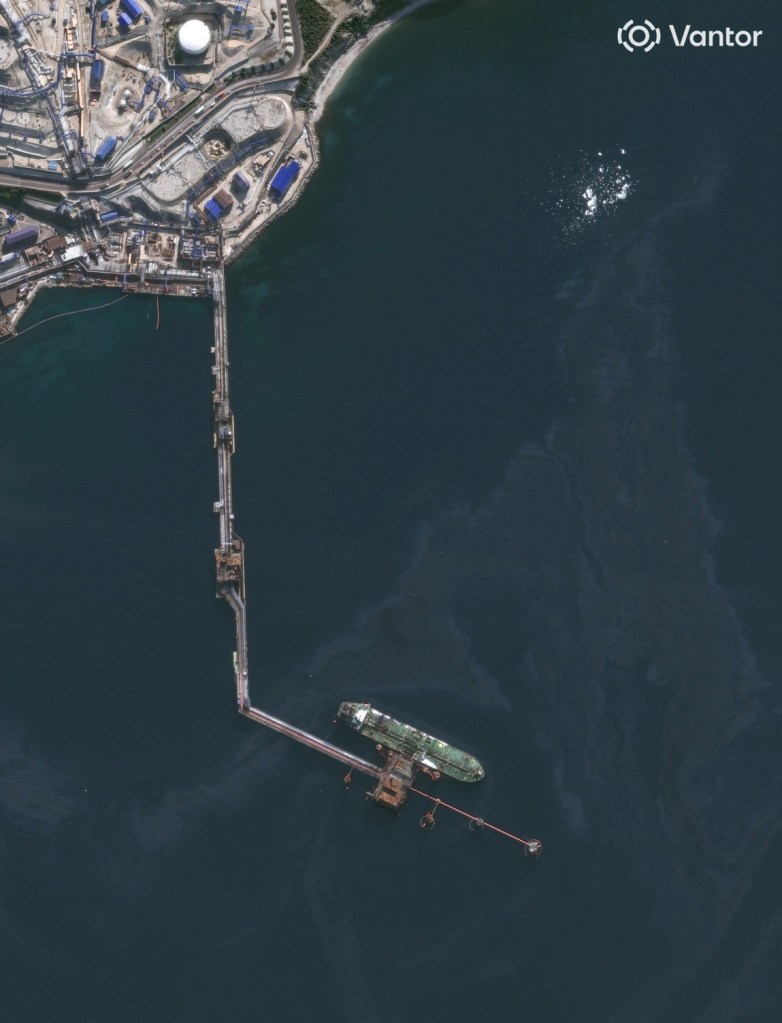
This image is thought to show an oil spill after a tanker was damaged during the attack.
Importance of Novorissiyskz and the fall of the Black Sea Fleet.
Novorossiysk has been important to Russia even before they were forced to pull what remained of the Black Sea Fleet out of Sevastopol in Crimea. Novorossiysk sits at the intersection of key transport corridors linking Russia to the Mediterranean, Middle East, Africa, Asia, and beyond, and connects to major rail and road networks serving Russia’s grain-producing regions in the south and Volga areas. The port handles a large percentage of Russia’s seaborne exports with some estimates putting it at around 20% of all exports. Grain, oil, and general goods all flow through the port.
Russia has invested in expanding the port at Novorossiysk but the recent attacks and the overall war have caused some delays in those plans.
The Black Sea Fleet, once one of the prides of all of the Russian military, is now functionally out of the war as the number of losses has crippled the fleet’s ability to project power.
Early in the war, the fleet was used to launch large, coordinated cruise missile strikes across Ukraine; however, early losses of key ships showed signs of things to come.
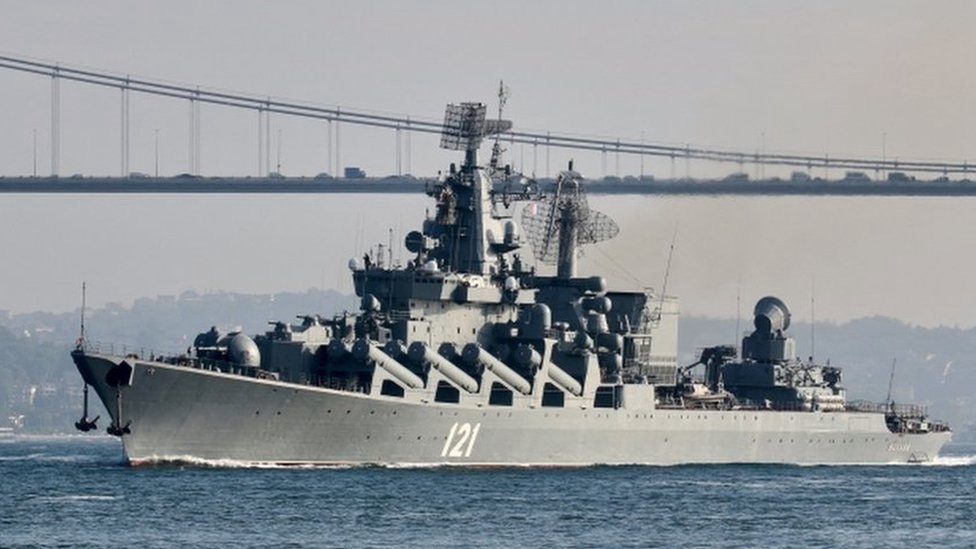
In March 2022, Ukraine took out the landing ship Saratov with a Tochka-U ballistic missile. The next month, the Black Sea Fleet flagship, the missile cruiser Moskva, was lost to a Ukrainian Neptune anti-ship missile. The sinking of the Moskva was a huge loss to Russian command and control, air defense coverage, and prestige.
Soviet era missile cruiser Moskva
By 2023, Ukraine was given stocks of high-tech Western munitions (Storm Shadow/SCALP) as well as improvements to their own domestically produced weapons. This allowed Ukraine to begin striking targets in Sevastopol in Crimea. Infrastructure, dry docks, and ships in port were all targeted, as well as the headquarters of the Black Sea fleet, which was destroyed. In September of 2023, the improved Kilo submarine Rostov-on-Don was struck while in dry dock in Sevastopol.
Destruction of the Black Sea Fleet Headquarters in Sevastopol in occupied Crimea.
Moving into 2023 Russia ability to resupply or conduct amphibious operations with its landing ships is severely degraded as multiple landing and supply ships are sunk. At this point Ukraine has moved on from missiles to surface based attack drones. Multiple Ropucha-class landing ships are lost. Russia was already moving some of the fleet out of Sevastopol by this point, dispersing the fleet to other locations, most ended up at Novocherkassk. Multiple maritime assessments by the United Kingdom and others say that at this point Russia’s Black Sea fleets freedom of maneuver was already under serious pressure.
In 2023-2024 Continued sea drone, aerial drone, and missile attacks made Sevastopol increasingly untenable as a primary operating base. Russia moved the bulk of its remaining major combatants to Novorossiysk on the Russian mainland coast. Key 2024 losses included additional landing ships (Caesar Kunikov), the corvette Ivanovets, the patrol ship Sergei Kotov, and others to USVs and missiles.
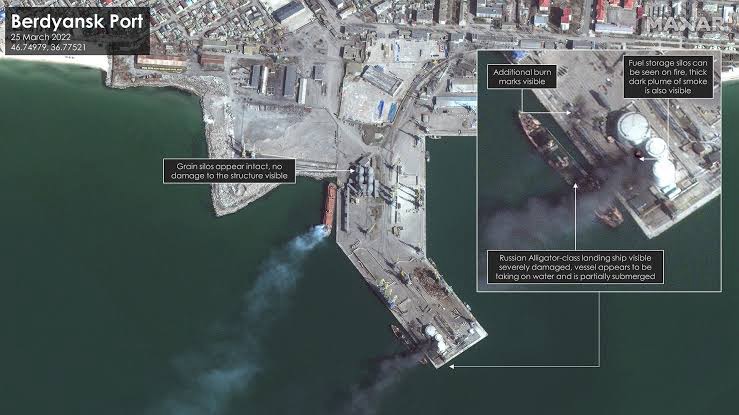
Satellite images shows the loss of a landing ship at the occupied port of Berdyansk.
An early war goal for Russia was the taking of the city of Odessa, a major grain and port that’s location was and is strategically important— especially to the defense of the fleet. Hundreds of articles written in the early days of the war covered the possibility of Russia attempting an amphibious landing to take Odessa. By early 2024, those articles have become irrelevant as the estimated 9-12 operational prewar landing ships have been attrited to 4.
Article covers a possible Russian amphibious landing of Odessa.
By mid-to-late 2024, Western assessments (including UK MoD) characterized the BSF’s surface strike role as “functionally inactive.” Russia retained the ability to launch Kalibr missiles from surviving surface ships and especially submarines, as well as from coastal batteries (Bastion-P and Bal systems), but large-scale surface operations in the western and central Black Sea had largely ceased. Ukraine successfully opened and sustained a maritime grain corridor (mainly from Odessa) under these conditions.
That brings us to now. The Russian Black Sea fleets most important assets are the ships that are already damaged and awaiting repairs. Repairs and maintenance have slowed to a crawl because ships in dry docks are often targeted and destroyed. Even Submarines faced growing threats from underwater drones and combined strikes. Surface ships and support vessels continued to take losses. By early 2026, Ukrainian Ministry of Defence assessments (corroborated in broad terms by independent analyses) indicated that approximately 30% of the fleets pre-war combat strength had been destroyed or seriously damaged. Some counts of major combatants and overall capability degradation run higher depending on their individual methodology.
Novorossiysk became the fleet’s last major functional base and primary concentration point. Russia fortified it with air defenses and other measures, and some submarines were fitted with counter-drone cages and partially submerged at berth for protection. However, Ukrainian long-range systems (aerial drones, Neptune variants, surface drones, and coordinated multi-domain packages) repeatedly have managed to reach the port.
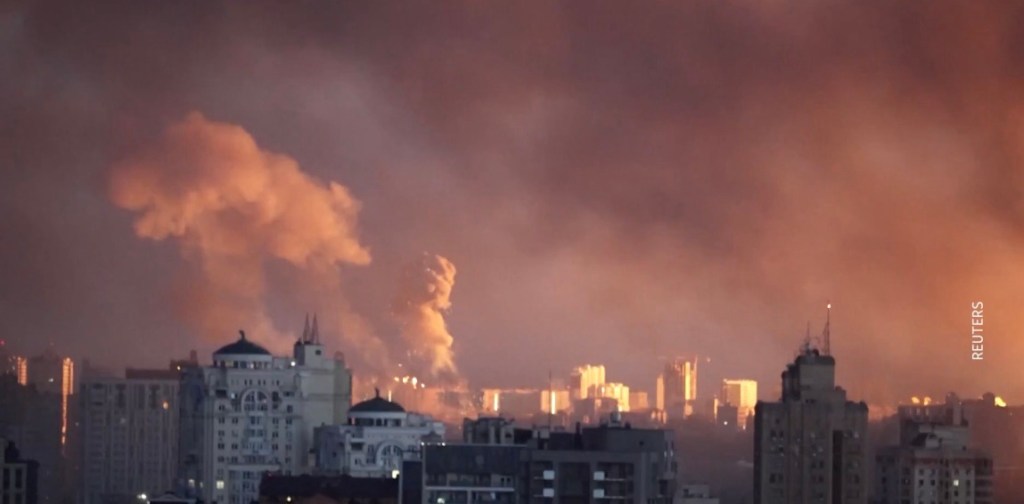
Overnight on May 23-24 2026, at least four people were killed and 100 wounded in one of the largest Russian air attacks in years. While strikes were launched across multiple regions, the main target was clear: the capital, Kyiv.
Video shows moments from the Russian attack on Kyiv.
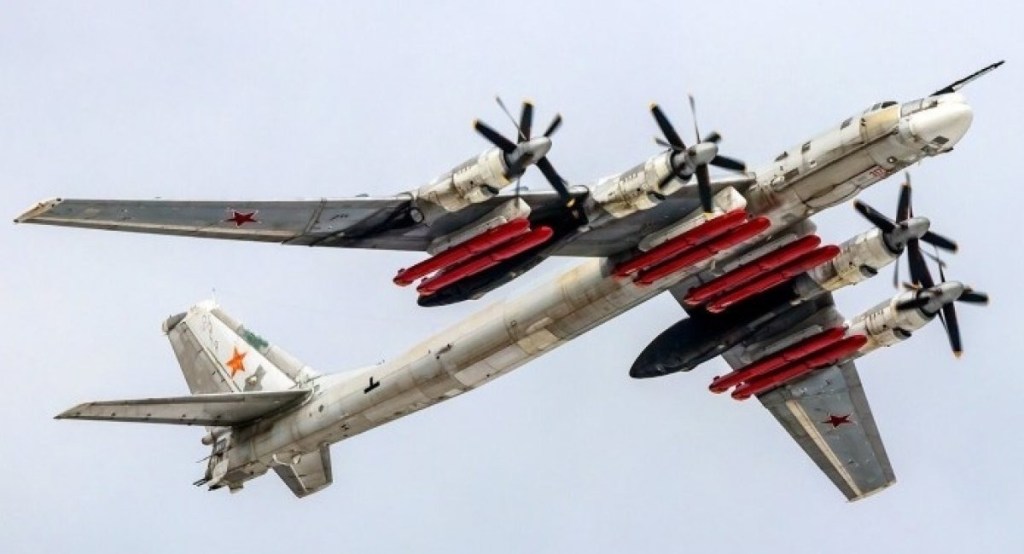
The city was hit with multiple Kh-101/Kalibr cruise missiles, Shahed drones, and ballistic missiles. After 1 a.m., explosions rang out across Kyiv following a warning from the United States and Europe that Russia might launch one of its hypersonic Oreshnik ballistic missiles. This was not only one of the largest recent attacks — it ranks among the largest of the entire war with 90 missiles (including 36 ballistic) and an estimated 600 drones being used in the attack.
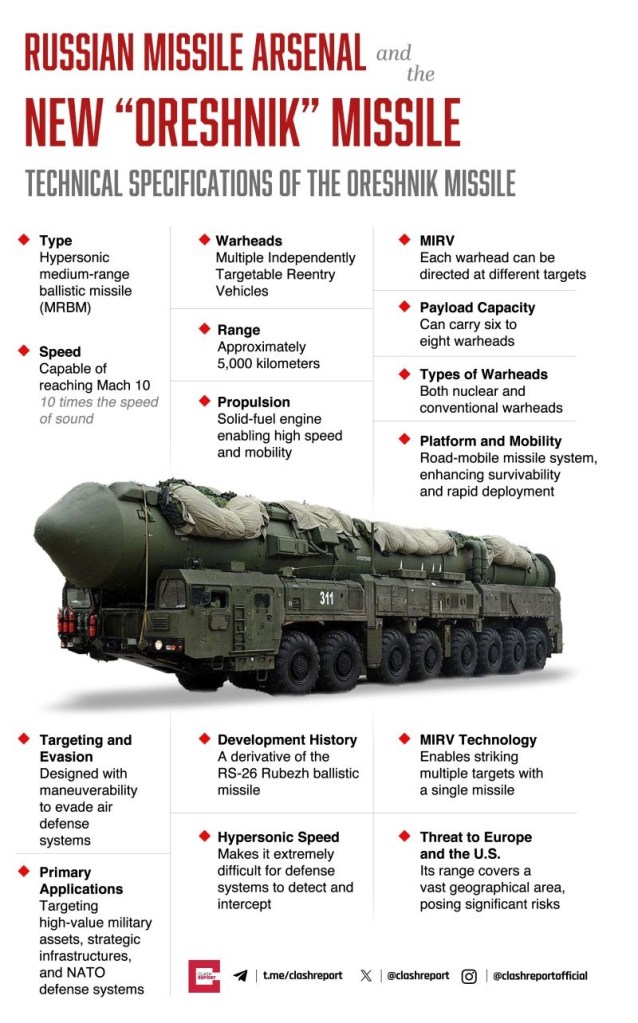
Videos from Bila Tserkva, a city roughly 40 miles (64 km) from Kyiv’s outskirts, captured the Oreshnik strike. It is not yet known what, if anything, was damaged or why that area was targeted in specific. Although the attack looked dramatic, the Oreshnik intermediate-range ballistic missile (IRBM) was designed primarily as a nuclear delivery system. It is very similar to Russia’s RS-26 Rubezh (NATO: SS-X-31), which was test-fired a handful of times but never fully fielded. Both missiles are equipped with multiple independently targetable reentry vehicles (MIRVs). These break apart into six individual submunitions during the exo-atmospheric flight phase, allowing them to strike separate targets — a capability ideal for delivering multiple nuclear warheads.
Some information of the Russian Oreshnik missile.
In its non-nuclear form – which lacks any conventional warhead and relies solely on kinetic energy – the Oreshnik has so far proved to be more of a threat than a practical battlefield weapon. Nuclear weapons experts have described its accuracy as “good enough to deliver a nuclear weapon, but not enough to deliver conventional weapons effectively.” Last night marked the third known use of the Oreshnik. It was deployed on November 20 2024 to hit Ukraines PA Pivdenmash facility in Dinipro, and again earlier this year on January 6 to hit the city of Lviv.
The hours-long attack sent Kyiv residents huddling in subway tunnels and other designated bomb shelters as Russia appeared to fire missiles at random. Russian Telegram channels shared a photo of a damaged apartment block and claimed it was the headquarters for the entire Ukrainian Army. One area hit particularly hard was the Lukyanivka district, north of Kyiv’s city center. That district is home to a missile production plant that has been targeted multiple times during the war. Apart from those specifics residential buildings, a market that burned down several schools, and a water supply facility along with damage reported in dozens of other locations across multiple districts.
“It’s important that this does not remain without consequences for Russia…“Decisions are needed – from the United States, from Europe and others.”
President Volodymyr Zelenskyy said on the Telegram messaging app, urging international action.
Ukraine’s Western allies have described the use of an IRBM as an escalation. Germany and the UK condemned the attack, while Kaja Kallas, the European Union’s top diplomat, accused Moscow of “a political scare tactic and reckless nuclear brinkmanship.”
Russia described the attack as retaliation for an attack they claim targeted student dormitories, among other recent Ukranian drone strikes. Ukraine says that they only strike “military and military supporting infrastructure.”
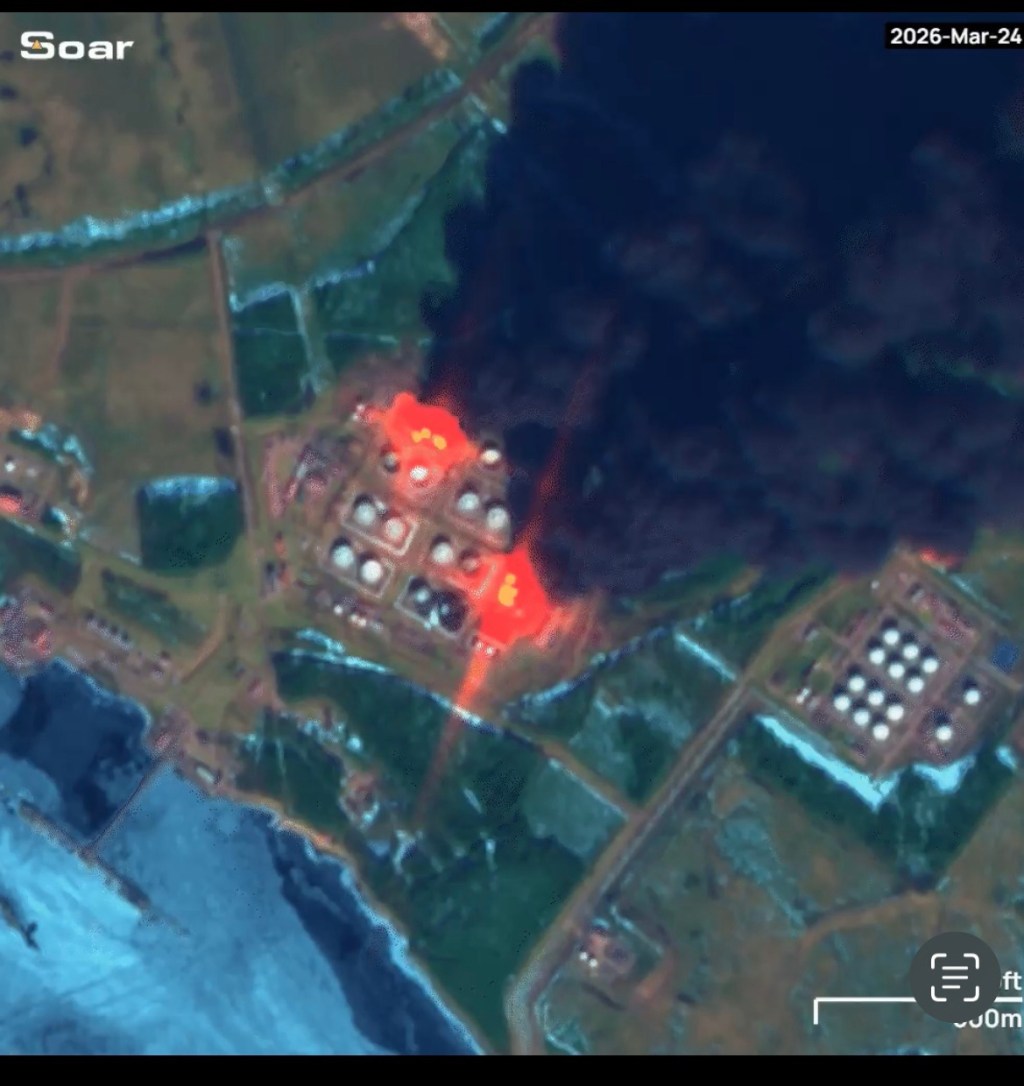
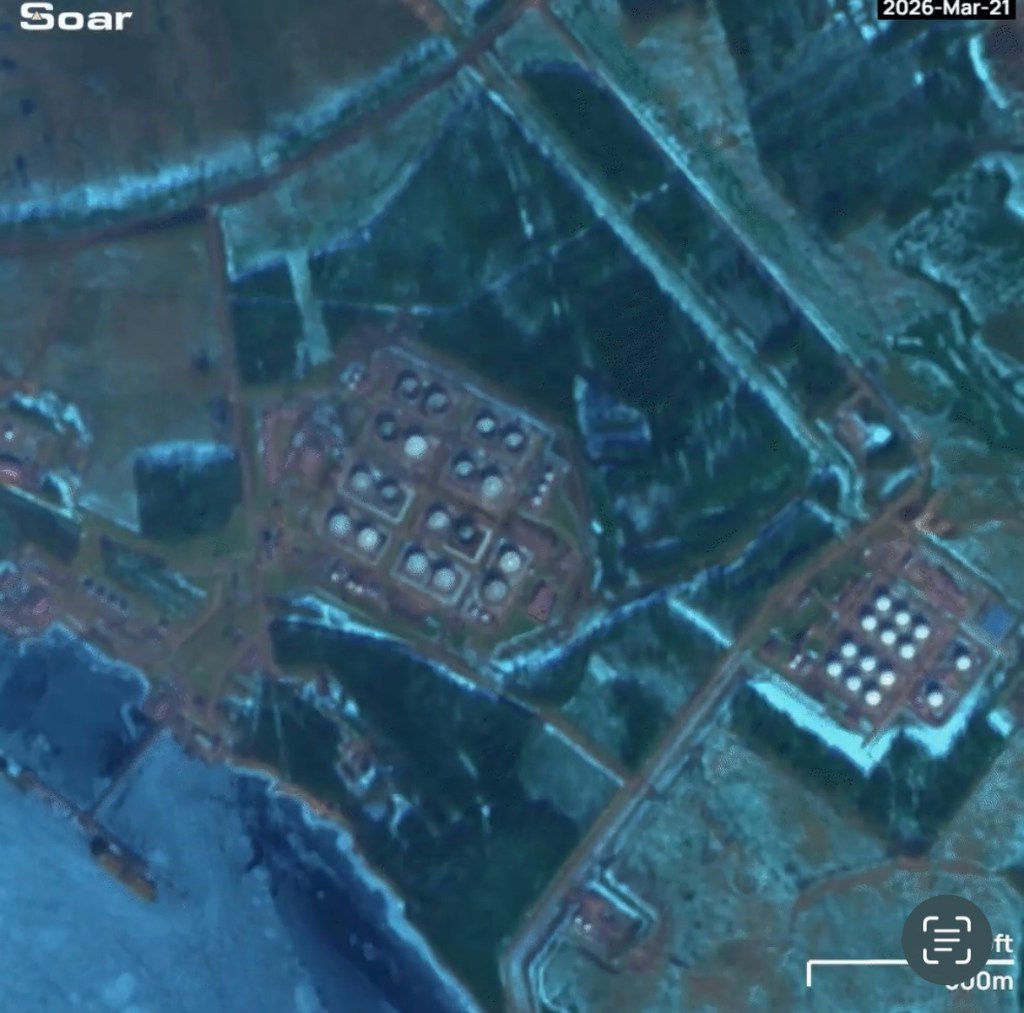
On March 22nd going into the 23rd Ukraine launched a large-scale drone attack on the Primorsk Oil Port in the Leningrad region, in the coast of the Gulf of Finland.
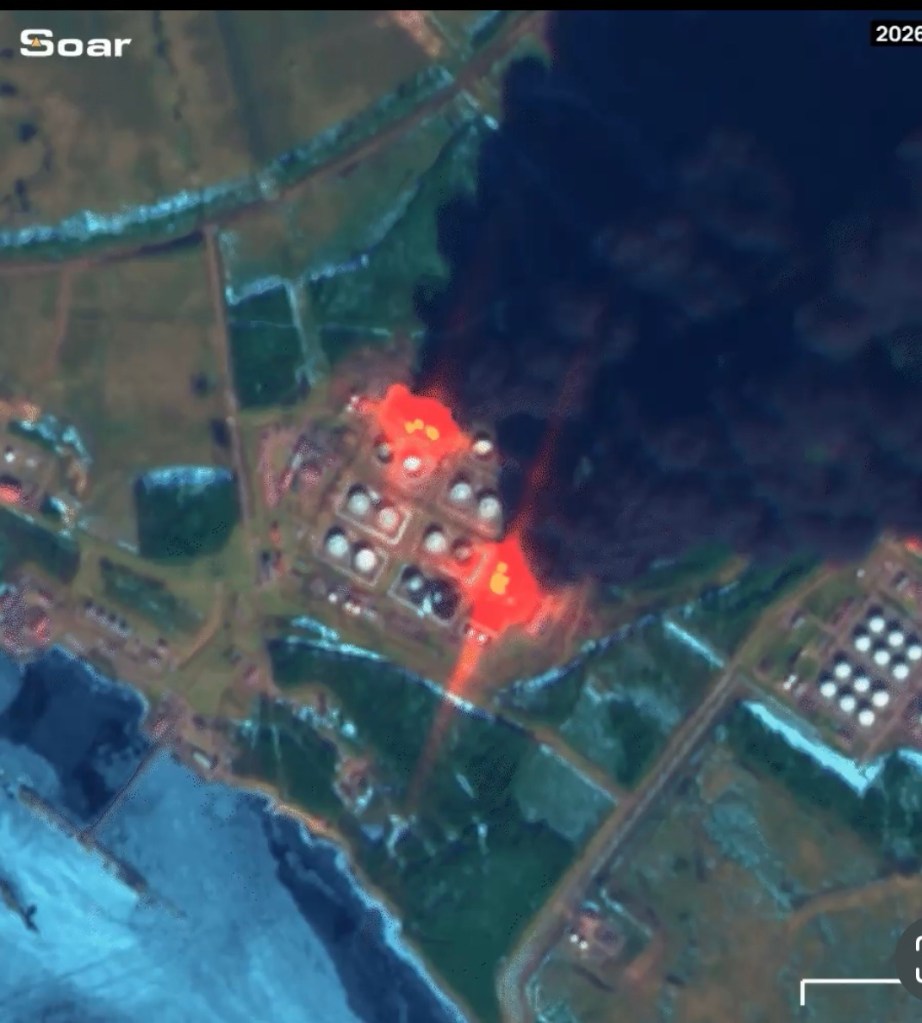
Image taken March 21st 2026 of the Primorsk Oil Port shows the terminal before the strike. Satellite image released by Soar and taken March 24th, 2026 shows the result of the attack with multiple destroyed and damaged oil storage tanks.
Ukrainian forces launched a long-range coordinated attack using multiple Kamikaze drones which traveled through hundreds of miles of Russian air defense and struck the facility, damaging multiple fuel storage tanks in the compound. Leningrad Governor Alexander Drozdenko publicly confirmed fires in “several fuel reservoirs” and said emergency crews had been fighting the blaze while workers were evacuated.
The fires were still burning 48 hours after.
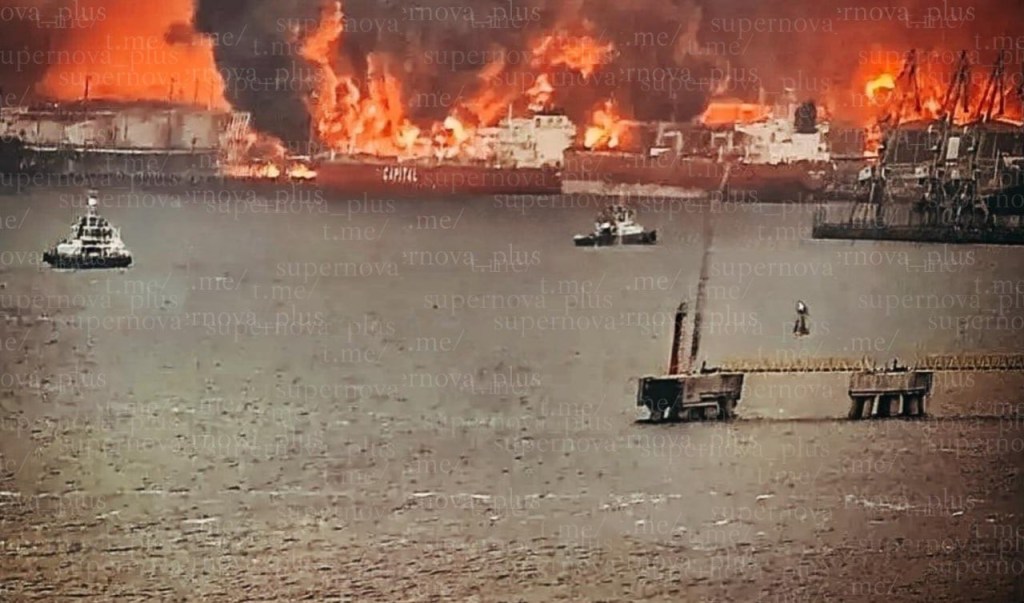
An image taken after the attack on Ust-Luga.
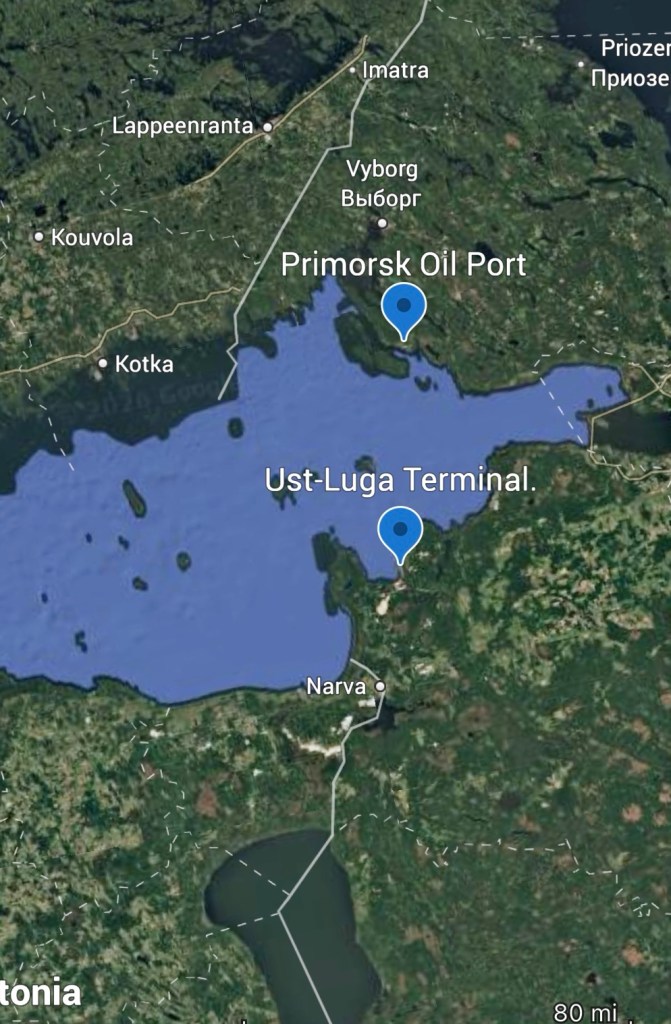
On the next night night a similar attack was carried out directly across the Gulf of Finland on the Ust-Luga terminal, along with many other oil production facilities in that general area in what Ukraine is calling the single largest night of drone attacks in the war.
No satellite images have been released yet but we’ve plotted out both locations on Google Earth to show the proximity of the terminals to each other.
As of this month the attacks in Russia’s oil industry has caused a drop in exports by 40%. Ukraine is attempting to disrupt any Russian infrastructure that finances the ongoing war. Both sites halted production on Wednesday.
Around the time the Ust-Luga site was hit, one Ukrainian drone landed in Latvia and one crashed at an Estonian power station without causing damage.
A source that spoke to Reuters told them that the reserves had been lit on fire and that Ust-Luga had been sealed off.
The attack damaged oil loading stands as well as the tanks. The tanks are a fairly easy thing to replace but the equipment to transfer the oil to the ships is more expensive and harder to get making these strikes more devastating than just hitting the oil.
Still frim the video shows the attack on the Russian port of Novorossiysk.
By. Scott Jackson
12/18/2025
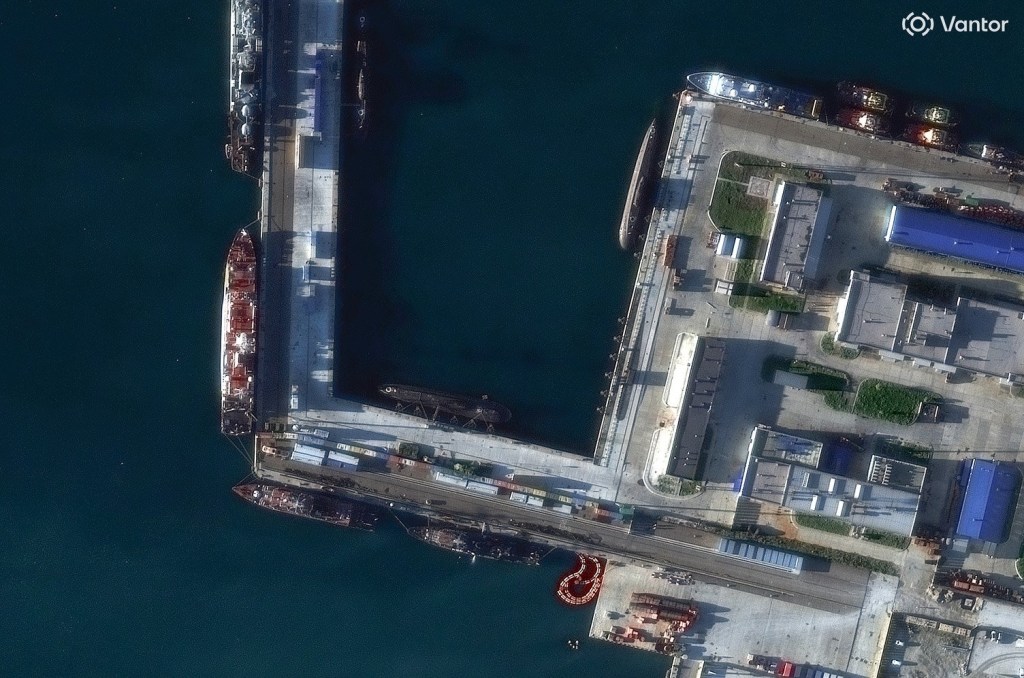
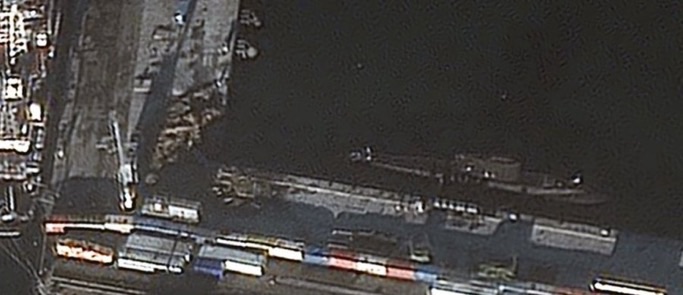
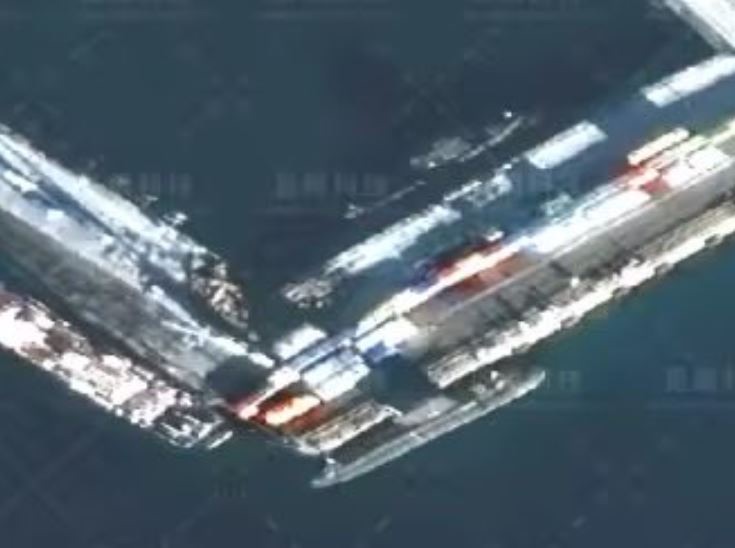
Satellite images from December 16th show the aftermath of the Ukrainian drone attack on the port at Novorossiysk.
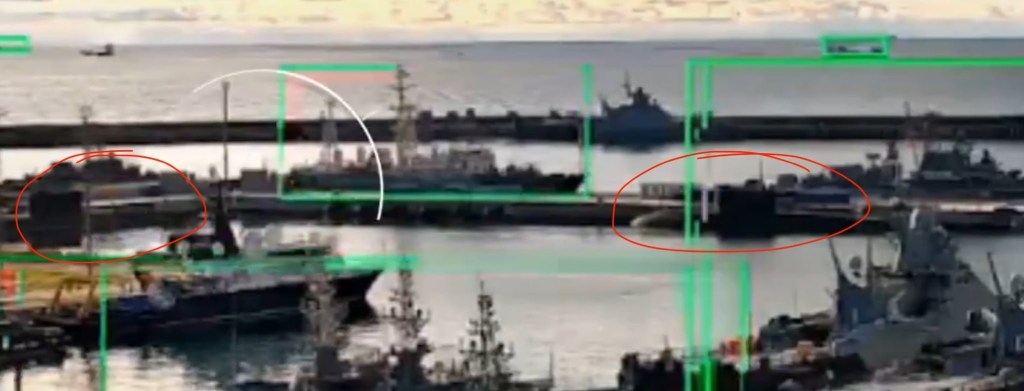
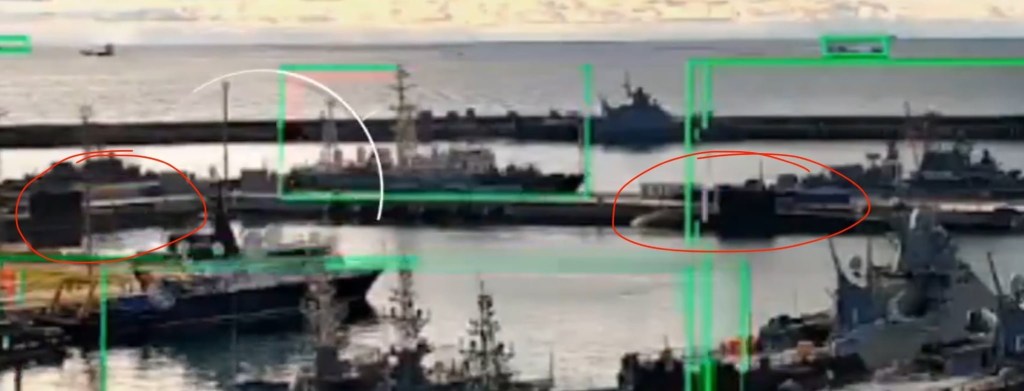
On the 15th, Ukrainian forces launched an attack on the port of Novorossiysk. The attack was carried out by elements of the 13th Main Directorate of Military Counterintelligence of the SBU and the Ukrainian Naval Forces. The attack was carried out using a type of unscrewed submersible and appears to have been filmed from somewhere nearby. The video doesn’t show as much as you hope when looking at footage like this and that has led to some debate over the effectiveness of the strike.
⚡️BREAKING: Ukraine just made naval warfare history.
Ukraine’s Security Service hit a Russian Kilo-class submarine in Novorossiysk using Sub Sea Baby underwater drones, leaving the sub critically damaged and effectively knocked out, the SBU reports. pic.twitter.com/VkrXDhOzGH
The before and after image show a clear spot of damage to the pier where the explosion happened and it looks like most of the damage is focused away from the submarine.
Before the attack. After.
Russia also put out a video showing what they claim to be the sub in the aftermath, however they don’t show any area that would have received more than minimal blast damage.
🚨 The Russian submarine Ukraine claimed to have destroyed… just reappeared completely intact!
According to Russia’s Ministry of Defense: ❌ The Ukrainian drone attack in Novorossiysk failed. ❌ No damage to any ship or submarine in the Black Sea Fleet. ❌ The claims by… pic.twitter.com/qgjrHpVx3Y
Twitter post with the Russian video showing the aftermath of the attack.
Analysis
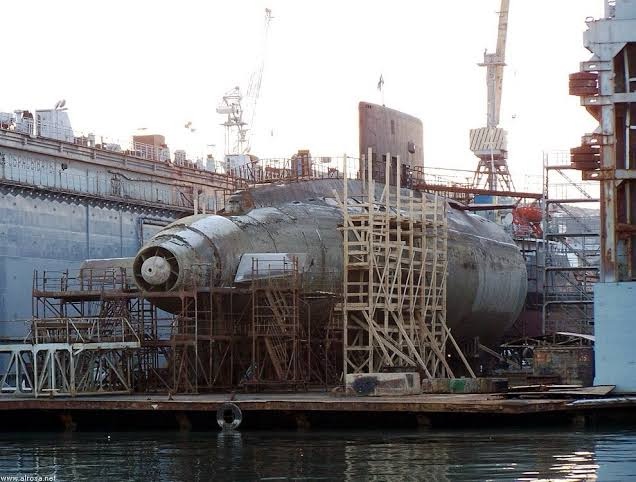
It’s unclear from any of the photos or videos how much damage was sustained by the Kilo. After speaking with several submariner’s I’ve come to the conclusion that this attack failed at its intended goal. This subs depth rating is somewhere around 300 meters (984ft). At those depths and even half of those depth you have pressure put on the sub to keep it from imploding in on itself. Meaning sub hulls are built to withstand an immense amount of pressure. This explosion, with it not actually detonating on impact with the sub, preferably with some sort of shaped charge to punch through the hull, left the Kilo mostly undamaged. If the sub received any damage at all it’s going to be mostly superficial and able to be quickly repaired.
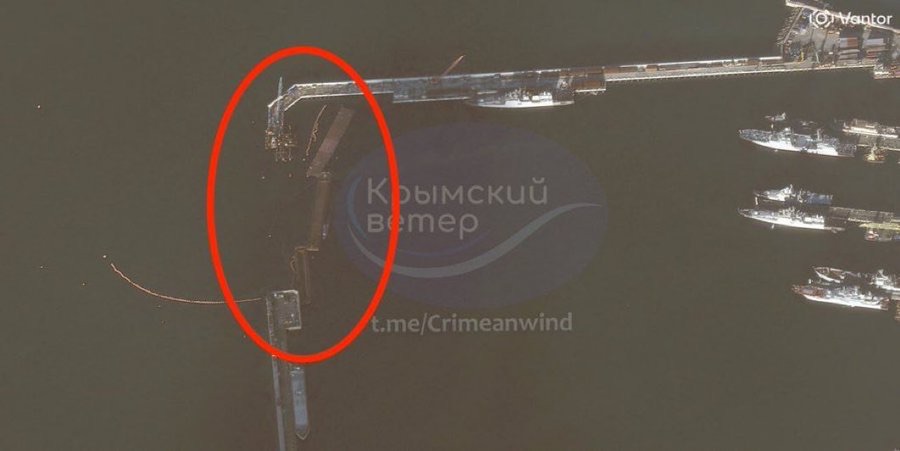
One effect this strike had was the closing off of the port in Novorossiysk with barges in an effect to stop Ukraine from attempting the same trick twice. Now that the sub sea drone is operational, I expect more attacks on Russian sub- and surface vessels in the future.
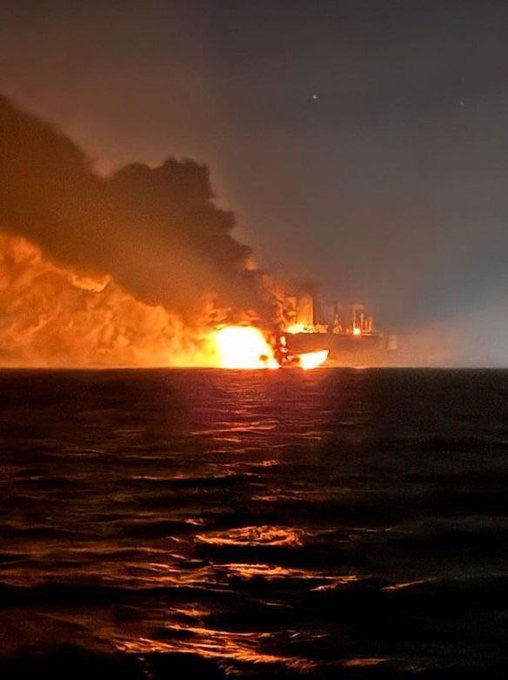
Today Ukraine announced that its military had launched attacks on two sanctioned Russian Oil tankers operating in the Black Sea.
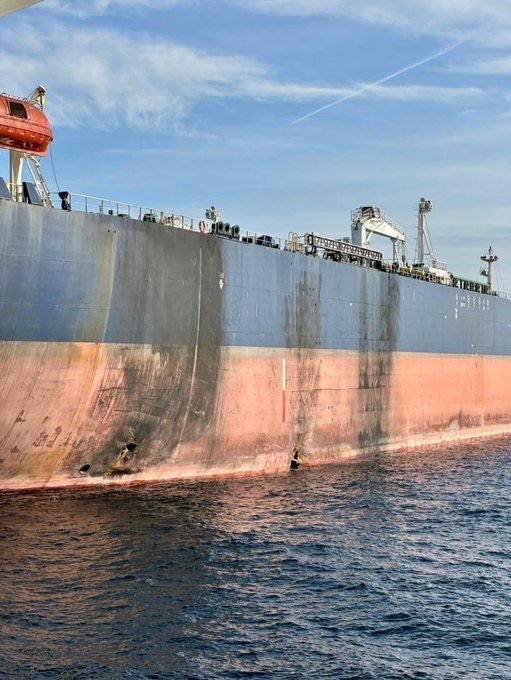
The ships, identified as the Gambian-flagged Kairos and Virat were empty at the time of the attacks and it is reported they were heading to the Russian city of Novorossiysk, a major port and oil hub for Russia especially in the Black Sea region.
Tanker Virat after the attack. Mostly minor damage on this ship.
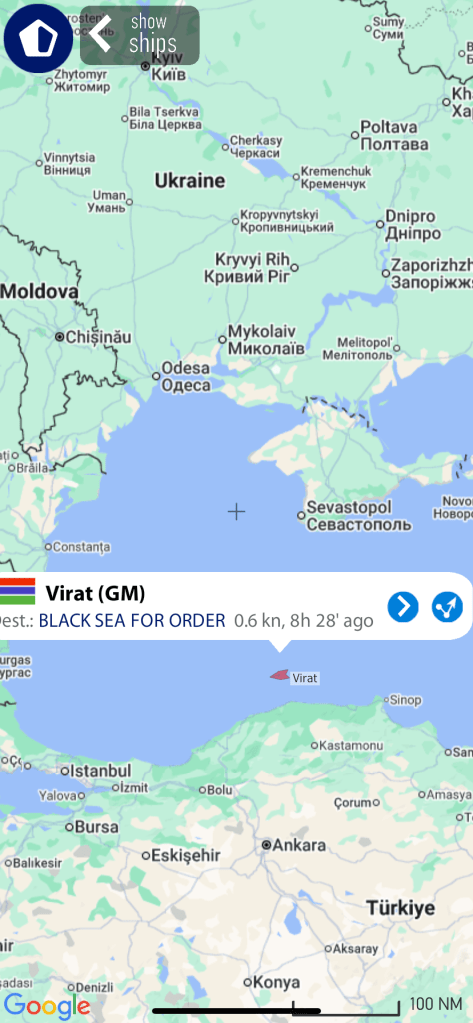
During an interview with Turkish broadcaster NTV, Abdulkadir Uraloğlu,the transport and infrastructure minister for Turkey, said the attacks took place within the country’s exclusive economic zone.
The Russia shadow fleet oil tanker Virat stopped near Turkey after it was attacked by Ukranian sea drones.
This attack is being reported by Ukraine as a joint operation between the SBU’s 13th Main Directorate of Military Counterintelligence with the Ukrainian Navy. The operation was carried out with Ukrainian “Sea Baby” drones which can travel long distances.
Video of the events were relesed across social media.
Морські дрони СБУ Sea Baby уразили в Чорному морі два підсанкційні танкери тіньового флоту РФ KAIRO та VIRAT.
Це була спільна операція 13-го Головного Управління військової контррозвідки СБУ з ВМС України.
The Russian dark fleet oil tankers Kairos (left) and Virat (right) were heavily damaged in the Black Sea yesterday after being targeted by a number of Ukrainian USVs. pic.twitter.com/cH9re9neTM
Both ships attacked have been under sanctions by the UK and European Union. However these two ships and the many more like them continue to find Russia’s nearly four year long war. They continue to haul Russias crude oil and funnel money to Moscow, fueling Russias economy.
“The Russian shadow fleet has become almost a tumour on global shipping,” said Elisabeth Braw, a senior fellow with the Atlantic Council’s Transatlantic Security Initiative.
“The shadow fleet has grown exponentially, and Western governments have tried sanctioning specific vessels … but every time that happens, another vessel enters the shadow fleet.”
These Russian shadow ships often carry “flags of convenience” often being flagged in places with little knowledge or experience in maritime affairs, places like the Gambia and Cook Islands.
Ships that’s are sanctioned have no access to western ports and personnel. They are barred from trading from many nations however are still able to find buyers in China and even in Europe. Some European nations still buy Russian gas and oil either directly or through a third party.
The Russian shadow fleet is made up of as many as a reported 1500 ship as of 2024 highlighting the ineffectiveness of the western sanctions to slow the flow of Russian oil. This is one reason why Ukraine has taken such an interest in targeting Russian oil production choosing instead to attempt to stop it at its source.
Two big announcements have come in the past three days signaling that Ukraine is looking to make changes to its military air power. Currently Ukraine’s military uses a mixture of old Soviet equipment plus whatever platforms have been bought or donated to them by their partners in Europe and America.
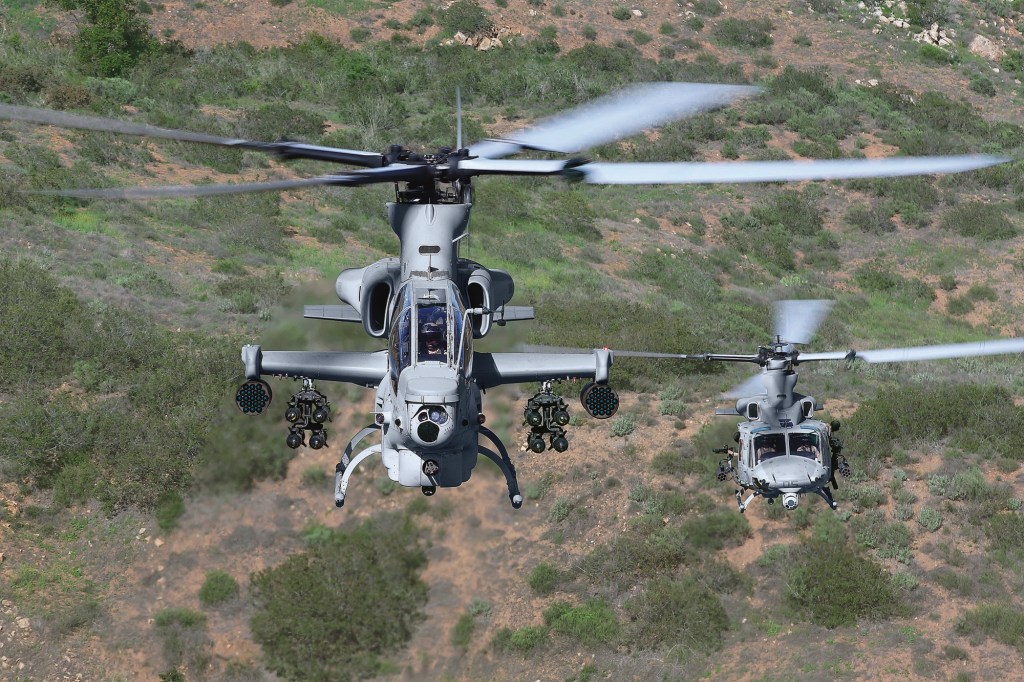
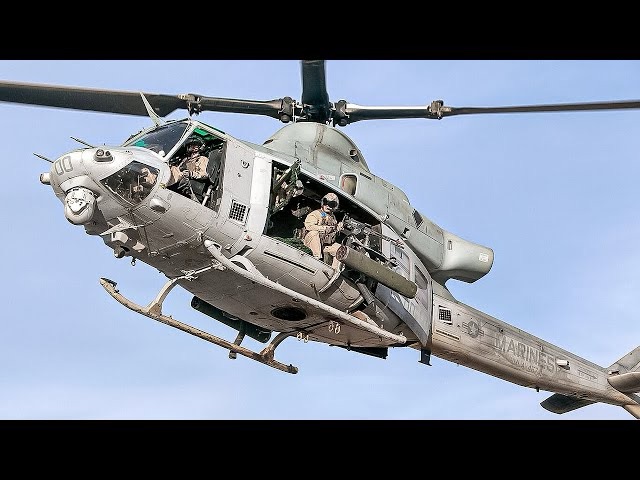
This weekend it was announced that Bell Textron, the American Aerospace company responsible for the AH-1Z Viper and UH-1Y Venom helicopters, have signed a ‘memorandum of understanding’ in Washington with the government in Ukraine. Essentially this starts the ball rolling on future aircraft deliveries, after the framework and support for the systems have been built in Ukraine. The statement released by the company and government of Ukraine mentions that these helicopters are likely to be built in Ukraine, bolstering Ukraine’s defense industry and going a far step to modernize Ukraine’s helicopter fleet.
Ukraine’s helicopter fleet is currently made up of mostly old Soviet systems. The Mil Mi-24 (Hind) gunship has been a workhorse in the current war and while effective for what it does, It’s an older platform with limitations. This deal will give Ukraine a fleet of modernized helicopters with a proven track record of combat capabilities. A huge benefit is that the Venom and Viper share 84% commonality meaning training pilots and support crew is much quicker.
While this deal isn’t finalized it does signal that the process is in the works and should go through as long as the U.S. government agrees to it. If the deal goes through it’s likely a number of aircraft will be transferred to Ukraine so they can start training pilots and the support crew on their operations.
The AH-1Z Viper attack chopper is a twin engine attack helicopter with a speed of 300KTS and a range of 310 nautical miles. The platform provides an excellent ground attack platform, carrying a main gun as well as air-to-ground missiles with the option of carrying sidewinders for engaging air targets. These helicopters are also survivable in the worst cases with self sealing fuel cells and armored crash resistant seats for the crew.
The Venom on the other hand is a jack-of-all-trades workhorse. There is a reason it’s sometimes called the Super Huey as the spirit of the Huey from the Vietnam days lives on in the Venom. It’s mostly used for carrying supplies or troops but it can also be equipped with rockets and door guns in case you just really need the extra firepower or a AN/ALQ-231(V)3 Intrepid Tiger II sensor pod for precision electronic attack capabilities (maybe in support of a squad of Vipers, for example.) Its speed is similar to that of a viper however its unladen range is a bit further. With a 2000lb payload its range is 150NM.
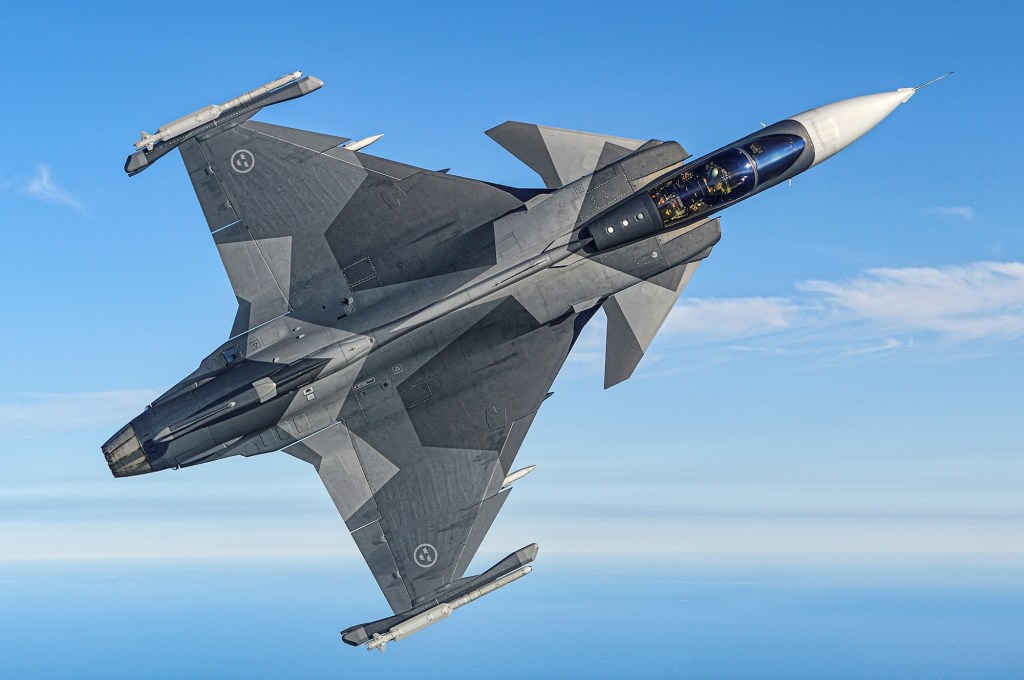
Ukraine’s helicopter fleet isn’t the only upgrade Ukraine is looking to. Just today Ukraine President Zelenskyy met with the Swedish government and signed another letter of intent, for the purchase of as many as 150 of the Swedish made Saab Jas-39 Gripen E fighter jets.
The Gripen is a single engine, supersonic, multi-role fighter jet. A highly maneuverable fighter, the Gripen is designed for what’s known as JAS in the Swedish language, Jakt (Air-to-air), attack (air-to-surface) and Spaning (Reconnaissance). The E version of this fighter is built with some higher end capabilities including electronic warfare, a more powerful engine, and increased weapons capacity.





You must be logged in to post a comment.