(Reader discretion advised.)
By. Scott Jackson
10.31.2025
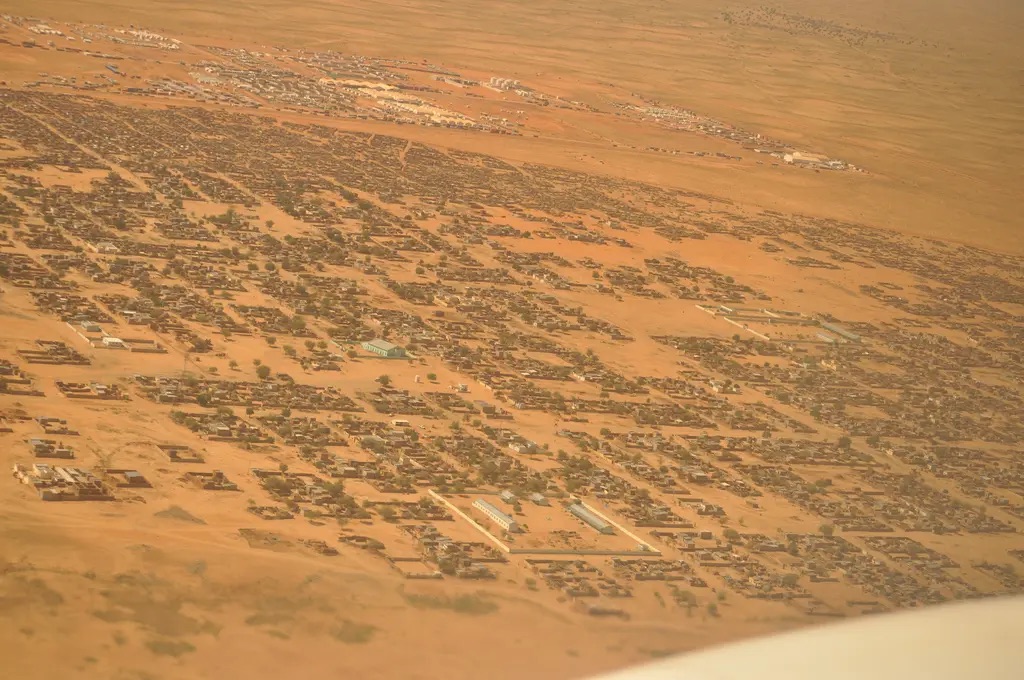
The city of El-Fashar is in the Darfur province in the western region of Sudan. For the past eighteen months the city has been under a constant siege by members of the Rapid Support Force, or RSF.
The people of Sudan, for the last two years have found themselves trapped between a rock and a hard place. Since April in 2023 two rival factions of the Sudanese military have fought a bloody war for control of the country. Sudan is one of the most bloodied countries in the modern day with millions dead over the course of 20 something military coups and at least 3 civil wars since the 1950’s.
This article looks at the background of that war, some of the players, and recent events.
Background
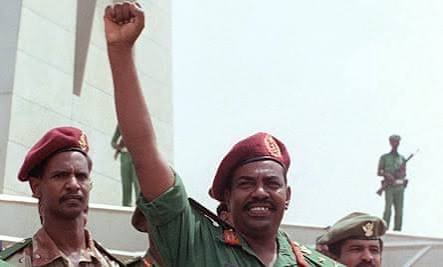
Tensions arose in 2019 between the Sudanese Armed Forces (SAF) led by the country’s current de facto leader General Abdel Fattah Al-Burhan, and Mohamed Hamdan Dagalo, better known as his Hemedti, the leader of the RSF, couldn’t agree on who should lead the country after they came together to overthrow the President, Omar al-Bashir, who came to power in a coup in 1989.
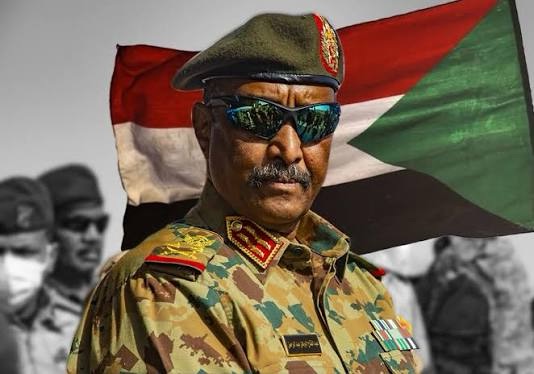
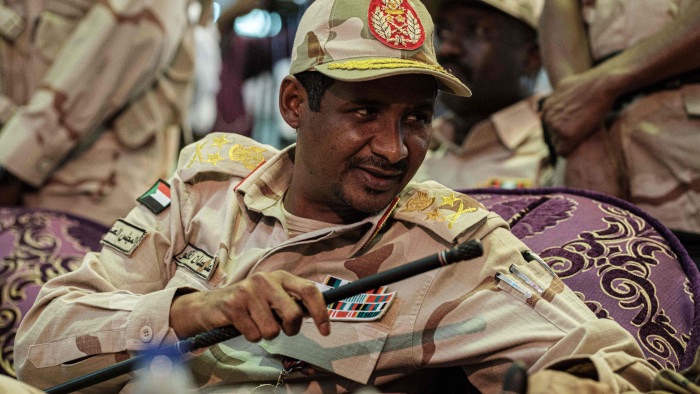
After the overthrow of Bashir the people called for more democracy. They have been through military rule before and weren’t thrilled with the idea of doing it again so an agreement was made to establish a joint civilian/military government. It was short-lived and overthrown in 2021 by General Abdel Fattah Al-Burhan and Hemedti. At the time Al-Burhan was the leader of the country and Hemedti was Al-Burhan’s deputy. This is when the disagreements between the two men started with the tipping point being the attempt to fold the 100,000 man strong Rapid Support Force into the Sudanese army and who would lead that army.
There is some dispute to what side shot first, but the shooting started in April lf 2023 when RSF forces were being redeployed to various different locations around the country. The SAF saw this movement as a threat and from there thr battle for control of the capital city Sudan, Khartoum began. The RSF quickly took most of the city and was only just in March of 2025 pushed back out.
The Siege of El-Fashar.
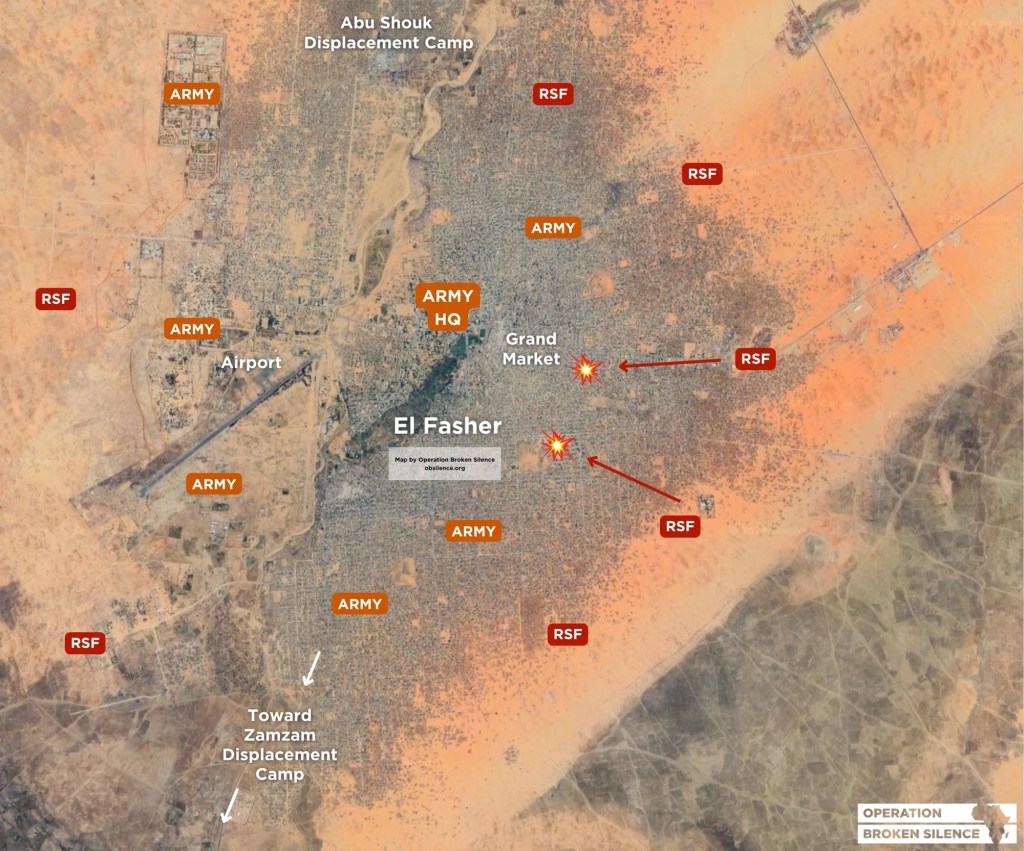
The siege of El-Fashar (also called Al-Fasair) started 18 months ago in may of 2024. From the very start RSF forces halted the flow of humanitarian aid trucks from reaching the city causing mass starvation and an overall worsening condition for those inside the city. The city is important to the SAF as it is their last remaining stronghold in the Darfur region.
During the siege the RSF would regularly shell the city with artillery, causing widespread destruction and deaths. In the first month of the siege the Médecine Sans Frontières (Doctors without Borders) reported widespread injury and death, over 140 had been injured and brought to their facilities in El-Fashir with the majority of the number being civilians. By April 21st they reported 44 killed and 279 wounded. The conditions in the city led to widespread looting, including the hospital. The destruction of the Abu Shouk refugee camp, home to over 100,000 displaced people was burnt to the ground in late April.
A brief ceasefire was held in late April and held until May 12th. During the ceasefire SAF and RSF held positions to the East and West of the city, respectively. During this time civilian life almost returned to normal. One of three markets opened back up – even though by this time the banks had closed and inflation was a major problem in the city. At this time the prisoners in the cities prisons were released due to a lack of food and water.
It seems at this point gangs of roving gunmen formed in an attempt to secure food and supplies for their own, began to roam the street. These men seemed to have no loyalty to either RSF or SAF. Apart from this , general banditry ran rampant in the city. By June 2023 most of the city had no water.
The siege went through various phases of ceasefire and open conflict. The city would be shelled and whitenesses endless gun battles in and around the city. Towards the later stages of the fighting in 2025 a berm was constructed around the city- presumedly by the RSF, to be used to keep people from fleeing(Noticed by researchers from Yale.
Jumping to 2025 larger battles were taking place around the city, and thousands of civilians had been killed. Both the SAF and RSF were taking hundreds of casualties in some of the larger battles. It was in 2025 when the RSF started launching drone attacks against SAF in the city. They had also continued to block aid shipments to the city in a major blockade that the Sudanese army just couldn’t break.
Bodies left where they fell.
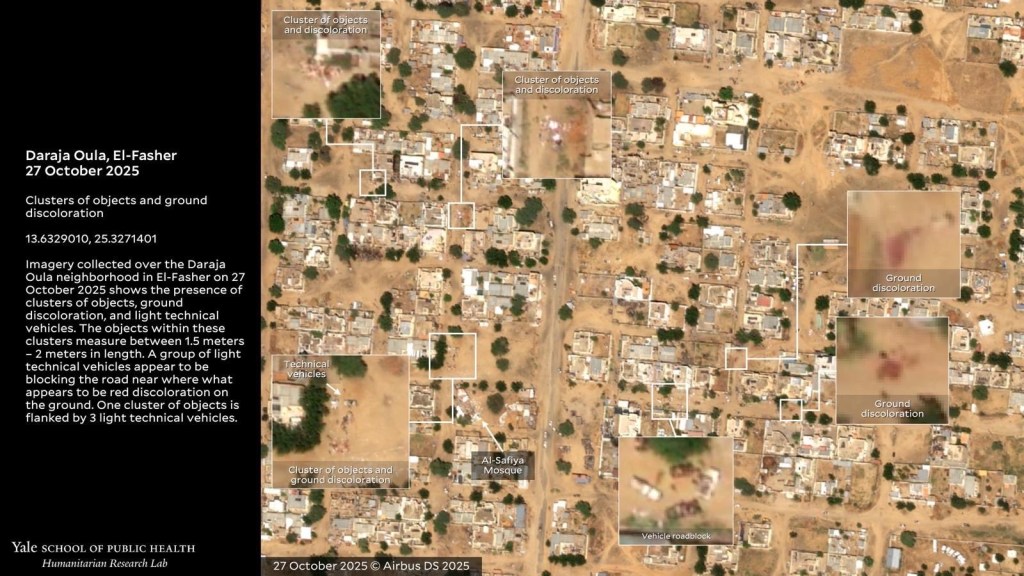
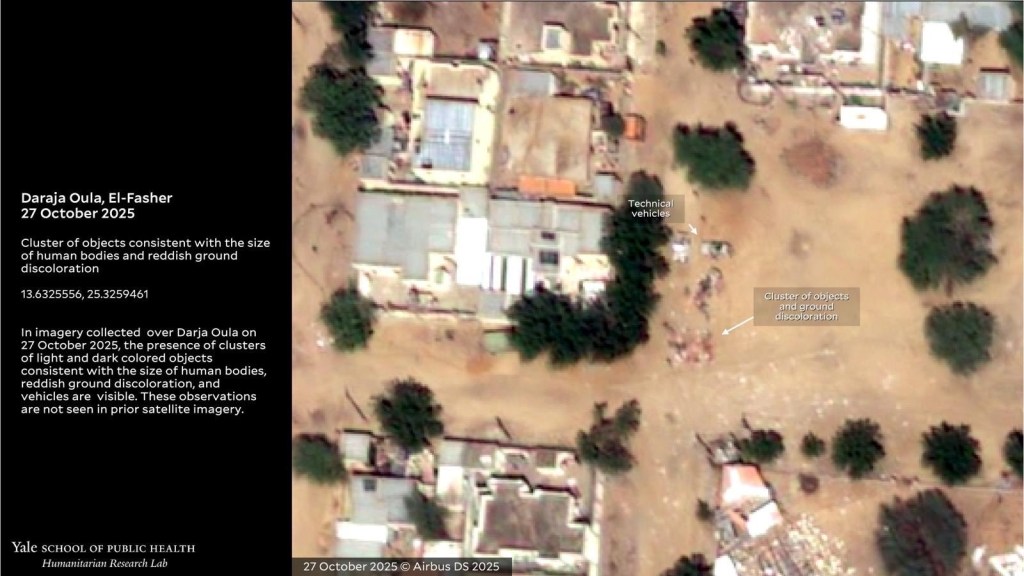
In the end the RAF forced the Sudanese army almost all the way out of the city and people in mass attempted to flee. The SAF began arresting people for running but eventually started moving their forces out of the city. As the RSF moved in they began rounding up civilians who remained and those attempting to flee. Those prisoners were interrogated and executed. Videos show dozens if not hundreds of executions took place,carried out in large part by a man whose name is believed to be Abu Lulu which is verified by BBC verify. Videos have surfaced on 10.31.2025 of that man being arrested by the RSF and thrown into prison.

These videos show men casually shooting men and women as they run away or as they are sitting on the ground after being captured. At one point Abu tells a group to run only as he guns them down after they run for a moment.
Satellite images which were studied and released by the Yale School for Public Health show the city and imply that the RSF went house to house interrogating and killing civilians. Red blotches can be seen in the sand which seem to indicate large pools of blood had been spilled there, some clusters of objects are believed to show where the bodies have been left on the ground, in the groups they were killed with.
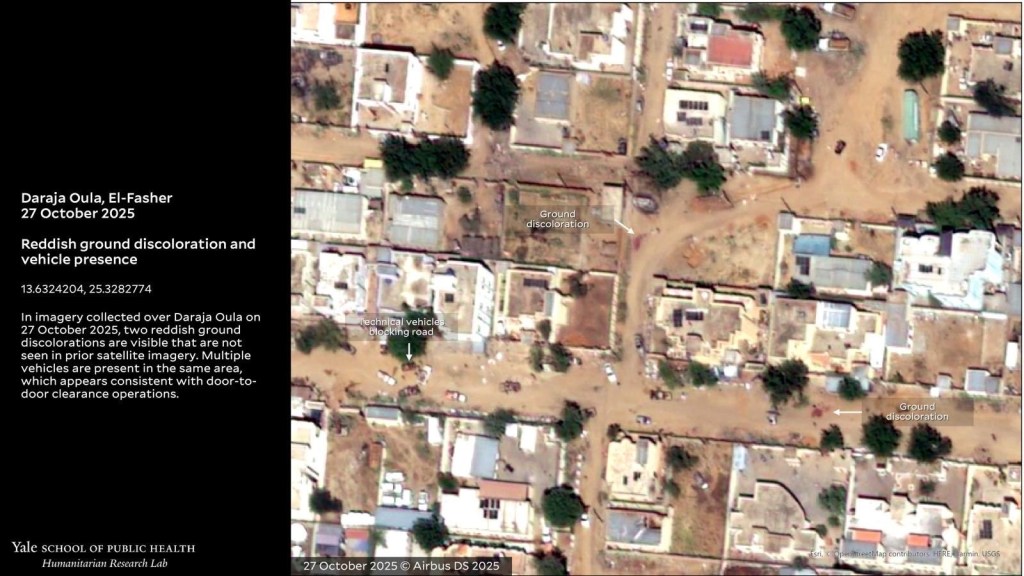


Some more evidence of the RSF killings.
View discretion heavily advised.
https://twitter.com/sudanreeves/status/1983489723273531496?s=46&t=pPISHVltNhVr2rHvuYinRA
https://twitter.com/warfareanalysis/status/1982808696783519930?s=46&t=pPISHVltNhVr2rHvuYinRA
Who are the RSF?
The RSF was formed in 2013 by presidential decree by Omar al-Bashir which mobilized Arab herders to fight against black African insurgents in Darfur who were rebelling against al-Bashir’s leadership. They formed from the “Janjaweed” militia who were already active and militarized. The decree mostly just gave them better weapons and a more unified leadership.
The Janjaweed were made up of mainly the camel-herding nomads from the Mahamid and Mahariya branches of the Rizeigat ethnic group that ranged around northern Darfur and adjoining areas of Chad. This group has been active in the area long before the borders in the area were drawn. Their most infamous leader during the 2003-2005 Darfur war and massacres was Musa Hilal, chief of the Mahamid.
These tribesmen and fighters proved their worth to the President who further formalized their service calling them Border Intelligence Units.
Among these fighters in southern Drafur was one who proved effective time and time again. Mohamed Dagalo, known as “Hemedti” because of his baby-faced looks – Hemedti being a mother’s term for “Little Mohamed”. The name has stuck ever since. He first served in the Sudanese army but left at some point. He joined the Janjaweed and rose through the ranks to become a commander.
In 2007 a critical event happened in Hemedti’s career. He and his soldiers under his command rebelled from President Al-Bashir’s. He and his men felt they had been exploited by being sent to fight on the frontlines and being accused of some atrocities and then left with no support. When Hemedti and his soldiers left they vowed to fight Khartoum “until judgement day”, and tried to cut a deal with the Darfur rebels.
This ended when Hemedti was offered a sweet deal. Back pay for his troops and ranks for his officers and even a promotion himself-to brigadier general. This promotion angered a lot of officers who went to staff college and felt he had done little to earn the title. He and his men accepted this and were folded back into the military of Sudan being put under a branch called the National Intelligence and Security Service (NISS), who were at the time planning a proxy war with the bordering country Chad.
It’s at this time it’s reported that Hemedti had a falling out with the chief mentioned earlier, Musa Hilal. The Generals of Sudan felt Hilal was untrustworthy for his multiple mutinies. Al-Bashir’s generals wanted to deal with Hemedti. It was then in 2013 that the RFS was founded with Hemedti at the head. At the time Bashir thought of Hemedti as a friend and even had a nickname for him- “Himayti”, meaning “My Protector”. This nickname lasted until about the time gold was discovered in Darfur and Brigade General Hemedti decided he wanted to be one of the richest men in Sudan.
Today the RSF is almost a whole different entity, funded heavily by outside state actors. They have received a lot of support from the UAE and Russia (through the Wagner group). The U.N. confirmed reports from sources in Sudan saying that the RSF was receiving weapons and ammo weapons shipments from the UAE several times a week. The UAE has aggressively sought to stop the expansion of Islamic influence across the Middle East. Hemedti has presented himself as a shield against the Islamist-leaning factions that established deep roots in the army and other institutions under Bashir.
On the other hand General Burhan’s closest ally has been Egypt. The two countries share a border and both are currently led by military commanders who overthrew “democracy” elected leaders. The Sudanese government forces have also received support from Iran, using their drones in several major engagements.
Analysis
Sudan is a country where the civil war permeates much of the daily life of many of the country’s inhabitants. Refugees leave ome war torn area only to get caught in the next one.It would be a feat to even count the sheer amount of human rights violations taking place daily. The immense suffering, carried out on the Durfar population by the RSF is not helping them beat the allegations of an attempted genocide. 12 million people have been displaced ans more than half of the country is in need of humanitarian aid.
The country’s economy has collapsed causing widespread shortages of goods and increase in prices on goods that can be provided. Poverty in the country is closing in on 60%.
The complex relationship of all the players involved makes mediation of any kind difficult. Foreign powers being involved has only intensified and stretched out the length of the conflict, again, worsening the humanitarian issues. So far an estimated 150,000 have been killed since the conflict began in 2023.
 Global Conflict Reporting
You must be logged in to post a comment.