On September 5, 2026, U.S. forces struck and disabled three Iranian crude oil tankers after Iran’s Islamic Revolutionary Guard Corps (IRGC) fired ballistic missiles at elements of the U.S. Navy, according to a report by U.S. Centcom.
Iranian forces fired upon an unnamed aircraft carrier and guided-missile destroyer, which evaded the Iranian missiles. No U.S. personnel were harmed, according to the statement from CENTCOM.
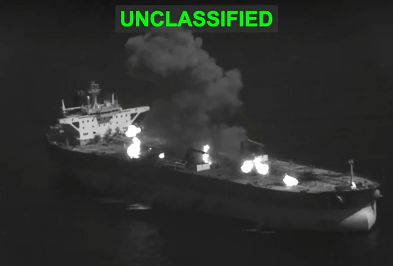
In response to the attack, U.S. forces targeted and disabled the M/V Downy near Kharg Island and the M/T Stark 1 near Jask. A third tanker, the unladen, Kylo also sometimes referred to as the Noxen, was also hit and completely destroyed in the Gulf of Oman.
Video is the strikes. M/V Downy (IMO:9218480)
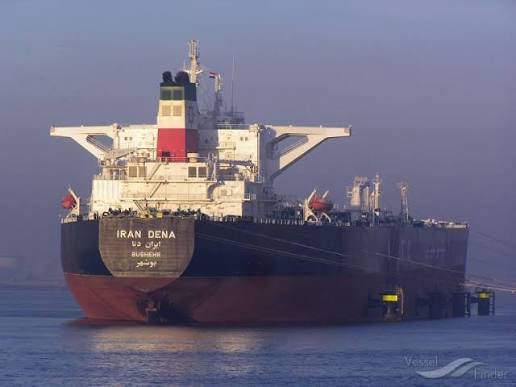
M/V Downy is a 22 year old, 296,977 ton, Iran-flagged Very Large Crude Carrier (VLCC). Downy (IMO 9218480) was struck in the stern with the intent of diabling its steering.
M/T Stark 1 IMO:9171450)
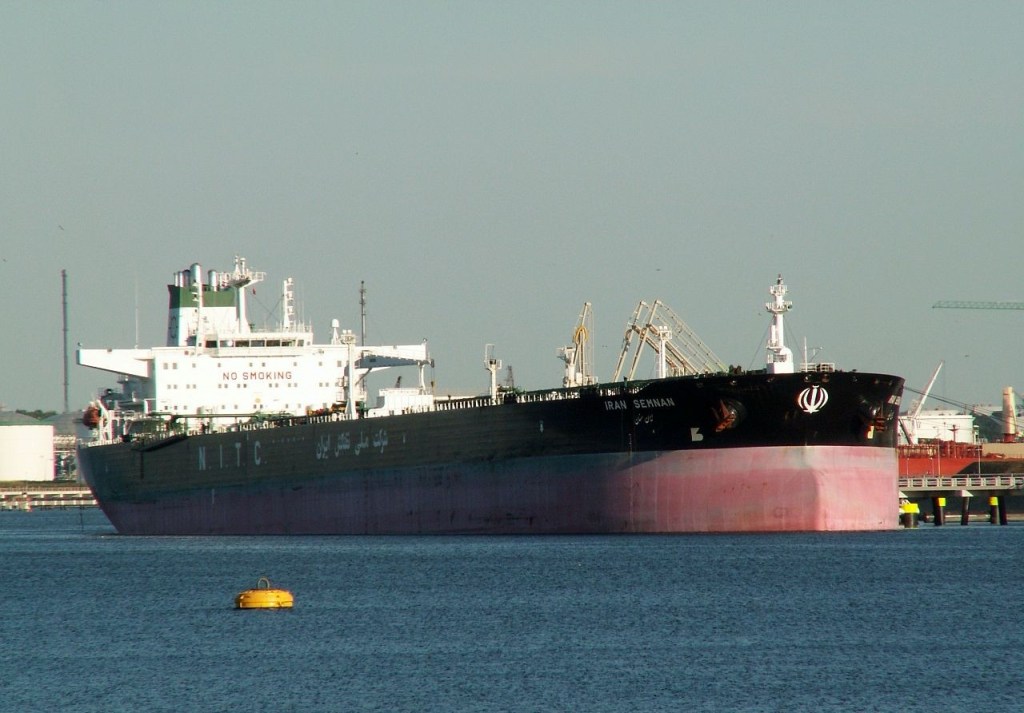
26 year old, 159,681 ton, Iran-flagged Suezmax tanker Stark I (IMO 9171450) suffered a similar hit. It’s believed both of these were disabled rather than destroyed because they were loaded. (Judging by their draft)
Kylo (IMO:9189146)
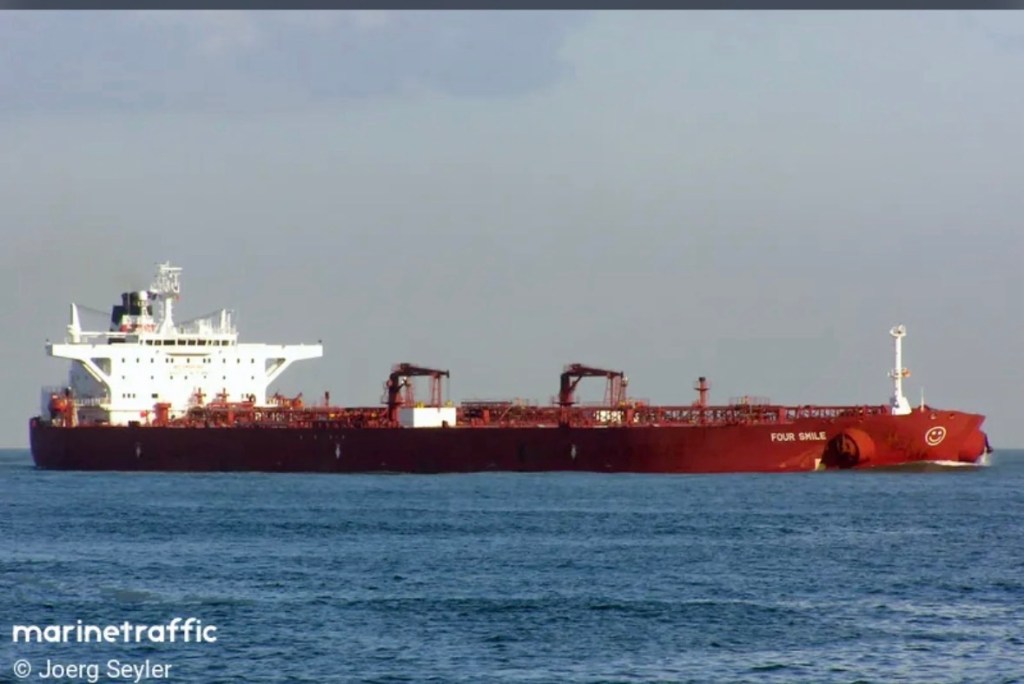
The Kylo is Comoros-flagged, and a 25 year old. The 160,573 ton Suezmax tanker was anchored to the east of the Strait of Hormuz admid other ships waiting to load. Per the video it was hit with multiple pieces of ordnance.
These tankers are apart of the Iranian shadow fleet—a fleet of ships that use concealing tactics (illegal flag and name changes) to hide, not so much what they are hauling but where it’s from.
Video taken by the crew of the Iranian general cargo ship Iran Shahed (IMO:9184691) ,which recorded the radio call of the U.S. aircraft in the minutes before the strike on the M/T Stark 1. The fighter pilot gave the crew three minutes to evacuate the stern of the ship.
“Let the message to the IRGC be clear: If you shoot at two of our ships, we will impose an even higher economic cost, taking out three of yours,” said Adm. Brad Cooper, CENTCOM commander. “We will not hesitate to defend American forces, and if necessary, destroy Iran’s limited and exposed oil fleet.”
September 1, 2026, Jordanian air defenses engaged 13 Iranian ballistic missiles that entered the country’s airspace and destroyed 10 of them. The Jordan Armed Forces said the remaining three landed in remote, unpopulated areas. Jordan reported no injuries, no deaths, and no significant damage to property.
Iran’s Islamic Revolutionary Guard Corps said the barrage was aimed at Camp Titin, a small U.S. Marine training camp south of Aqaba used to train Jordanian forces along the Gulf of Aqaba. Iranian state media claimed the strike destroyed military buildings and helicopters and killed a large number of U.S. personnel. Those claims have not been independently verified. Two U.S. officials told Reuters there were no reported U.S. casualties at facilities in Jordan based on initial information.
Video shows the Iranian ballistic missile impacting near the city of Aqaba.
This was the second Iranian attack into Jordan in roughly 48 hours. Overnight August 30–31, Iran launched missiles and drones at U.S.-linked sites in the kingdom, including the Muwaffaq Salti / Azraq area, after a U.S. strike on Larak Island in the Strait of Hormuz. The two exchanges are the first major kinetic back-and-forth since the June U.S.–Iran Memorandum of Understanding expired in August.
The latest Iranian fire came after a wave of U.S. strikes on September 1. Iranian media and local reports said explosions were heard in Chabahar, Bandar Abbas, Qeshm Island, Konarak, Jask, Sirik, and Minab. CENTCOM did not name those cities. It said U.S. forces struck IRGC air-defense sites, radar systems, maritime assets and facilities, mine-laying capabilities, and communications sites, following attempted IRGC attacks on commercial shipping in the Strait of Hormuz and on American service members.
Video reported to show the U.S. bombardment of Sirik.
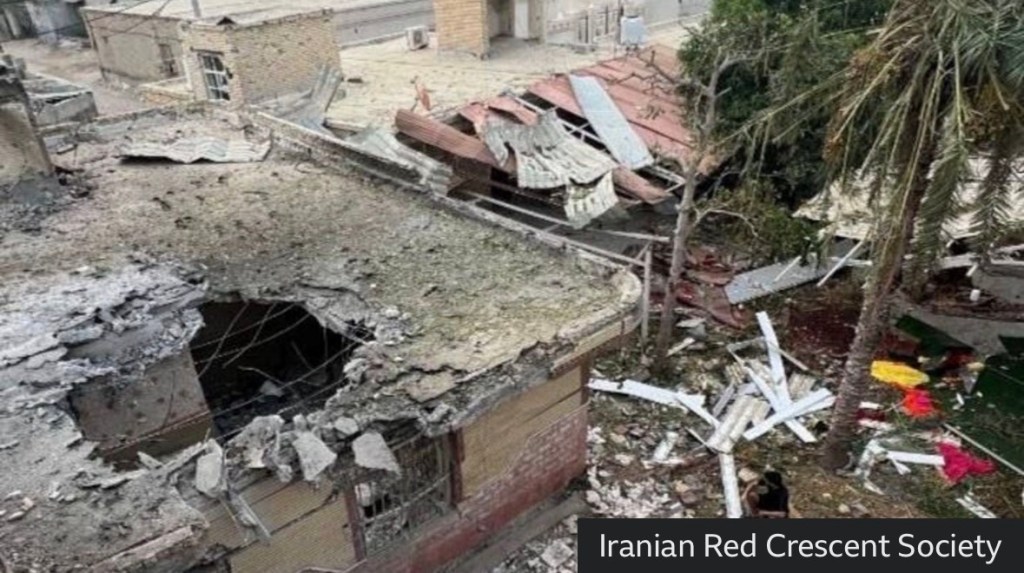
Iranian officials say one of those strikes hit a home during a wedding ceremony in Kuhestak, in Sirik County, killing four people, including a child, and wounding 67 others. Reported figures have varied. The United States says it does not target civilians.
Video taken from Sirik and obtained by GCR confirms that a U.S. strike hit the area. It does not confirm what was hit. Precision geolocation is difficult with the footage currently available. A second video shows the building Iranian media identified as the wedding site. The clip shows a damaged structure. It does not, on its own, prove a wedding was underway.
Video captured in the aftermath of the incident shows a residential style building on fire. Image from the Iranian Red Crescent Society, showing the house which was the site of a bombing in Sirik. This was the site of the alleged wedding celebration.
“Unfortunately, this is a residential building. And unfortunately, this happened during my daughter’s wedding ceremony,” Ali Mallahi, father of the bride and owner of the building, said in a video broadcast by Iranian state media.
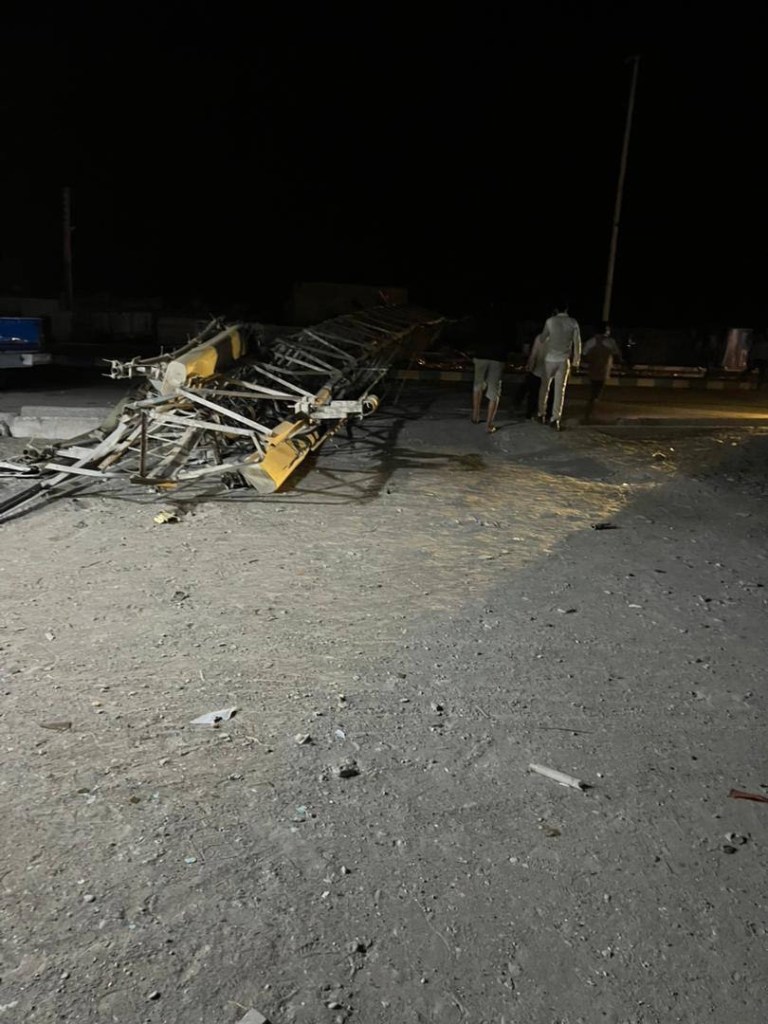
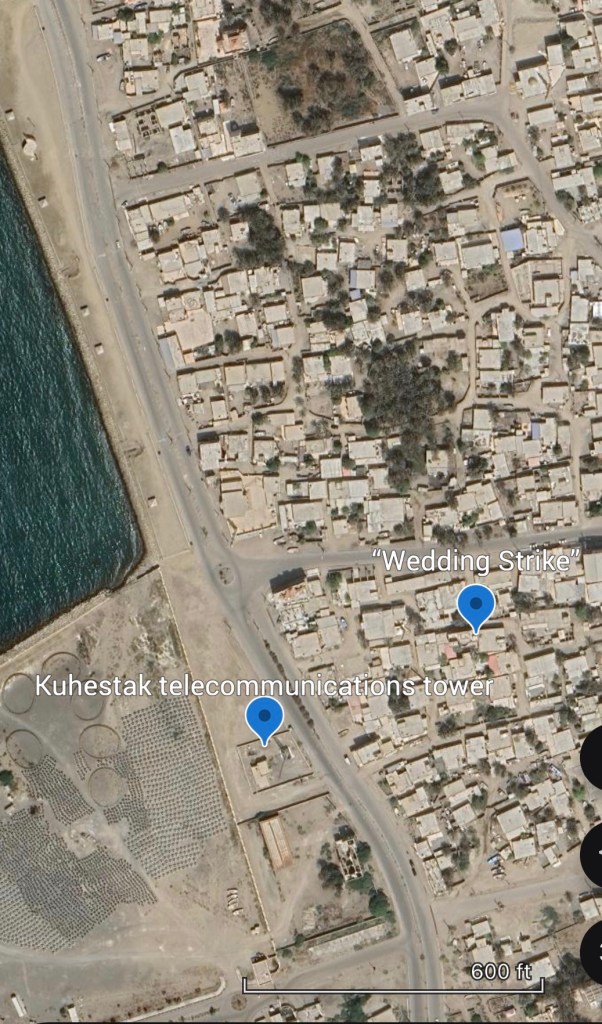
Looking at maps of the area, the U.S. targeted a telecommunications tower in the vicinity of the house, which was struck.
Kuhestak telecommunications tower in SirikThis Google Earth Image shows how close the house and Telecom tower are to each other.
It appears just from looking at the map, the images, and the video from the scene that if the strike on the house wasn’t intentional, it was possibly hit in a U.S. strike that missed its original target, which is only 143 meters away from the house where the wedding celebration was said to be taking place. A tragedy, but one that happens in war often enough. The U.S. faced a similar situation during the raid on Venezuela when one of its upgraded AGM-88 HARM missiles missed its target and hit an apartment.
President Donald Trump said the U.S. operation was a response to Iranian forces attempting to lay more mines in the Strait of Hormuz. Sirik was one of multiple reported aimpoints in that wave, not a standalone strike.
In the hours after the U.S. attacks, IRGC missile forces appear to have targeted Camp Titin in Jordan. Iranian state media presented the camp as a successful hit. Footage obtained by GCR of one incoming missile does not show an intercept and appears to show the weapon striking the side of a mountain rather than a developed part of the camp. That can mean several things: the missile was already going to miss anything that mattered, the air-defense battery chose not to spend an interceptor on it, or the system was occupied with other tracks. Jordan has absorbed a large volume of Iranian fire since the start of hostilities. The more likely reading of this particular clip is that the missile was heading into the high ground around Aqaba and was not assessed as enough of a threat to engage. That is what the video appears to show. It does not prove a successful strike on the camp, and it does not prove Jordanian or U.S. air defenses were out of ammunition.
Today’s exchange is a return to open kinetic strikes. That is a sharp contrast with late August, when U.S. officials leaned hard on economic pressure — including the “Economic Outcast” / “economic D-Day” track and talked as if large new bombing campaigns were no longer the main tool. Limited strikes and intercepts are not the same thing as a full restart of the February war. They are also not the pause Washington had been describing.
Military actions are often used in conjunction with economic pressure to reach a goal. In most cases, military action, nor economic action alone, is enough. Using them together adds extra pressure. It also appears that the military strikes are supporting the economic strikes by targeting radars, air defense, and missile sites near the coast that Iran has tried to use to maintain control over the strait.
CENTCOM said after the strikes:
“U.S. forces struck Islamic Revolutionary Guard Corps (IRGC) targets including air defense sites, radar systems, maritime assets and facilities, mine laying capabilities, and communications sites.
The strikes follow recent attempted attacks by the IRGC against commercial shipping in the Strait of Hormuz and against American service members.
More than 50,000 U.S. service members are currently operating across the Middle East and remain vigilant, lethal, and prepared to continue executing operations directed by the Commander in Chief.”
In the following days, Iran is claiming that the U.S. strike on the wedding is a war crime, a claim being repeated by many in Iran, including Iranian foreign ministry spokesman Esmaeil Baqaei. Iranian authorities say another 14 people were killed in separate attacks that took place at the same time.
CENTCOM video
Author note.
I know this strike was several days before I posted about it. In some cases, I’m not able to verify the footage I’m sent or that I find, and it takes me a while to go through my steps to verify that footage is what it is claiming to be. While GCR does often cover breaking news, its mission is more about analysis and verification. Thank you always for all the support.
Please feel free to comment. I always want to do better. I’m not trained in any of this stuff. Writing, conflict reporting, and analysis is something I’ve taught myself how to do, and I know there are areas I can improve, so please, if you have a question, comment, or anything that can help me improve. Message me on Facebook or I can be reached through the email found on the contact me page.
Earlier today, Iranian forces launched an attack on several targets across the Middle East, releasing videos showing the launch of cruise missiles and anti-ship ballistic missiles from mobile truck launchers. This appears to have been a response to a U.S. operation carried out this morning, which escorted two merchant ships through the Strait of Hormuz and out of the Persian Gulf.
During the U.S. mission, dubbed “Project Freedom,” several U.S. AH-64 Apache and MH-60 Seahawk helicopters sank six Iranian boats that the U.S. claimed were threatening commercial shipping. During the operation, it was also reported that Iran had launched new attacks aimed at American warships as well as merchant vessels.
During a press conference, Navy Adm. Brad Cooper, head of U.S. Central Command (CENTCOM), spoke with the press. Below are some key points.
“We have an enormous amount of capability and firepower concentrated in and around the strait, including AH-64 Apache and MH-60 Seahawk helicopters used just this morning to eliminate six Iranian small boats threatening commercial shipping. So we’re backing up commitment with action,” he continued. “We also have A-10s, F-15s, F-16s, F/A-18s, F-35s, EA-18 Growlers, RC-135s, KC-46s, and KC-135 fixed-wing aircraft, and numerous U.S. warships, including destroyers, two carrier strike groups, an amphibious readiness group, and a Marine Expeditionary Unit.”
Remarks to media today from Adm. Brad Cooper, CENTCOM commander, on Project Freedom: pic.twitter.com/kIFFLf2vpd
“The cruise missiles were going after both U.S. Navy ships, but mostly after commercial shipping,” Cooper added when asked about attacks so far. “We defended both ourselves and, consistent with our commitment, we defended all those commercial ships.”
Guided-missile destroyer USS Pinckney (DDG 91) observes a merchant vessel while on patrol enforcing the U.S. blockade against Iran. As of today, 50 commercial vessels have been redirected by U.S. forces to ensure compliance. pic.twitter.com/wm7onmQCke
“The President has also said that if the process [Project Freedom] is interfered with, we will react forcefully. And over the last 12 hours, Iran has interfered. The IRGC [Islamic Revolutionary Guard Corps] has launched multiple cruise missiles, drones, and small boats at ships we are protecting. We have defeated each and every one of those threats through the clinical application of defensive munitions.”
“I can confirm there’s been no U.S. military ship hit, and there’s been no U.S.-flagged ship that has been hit.”
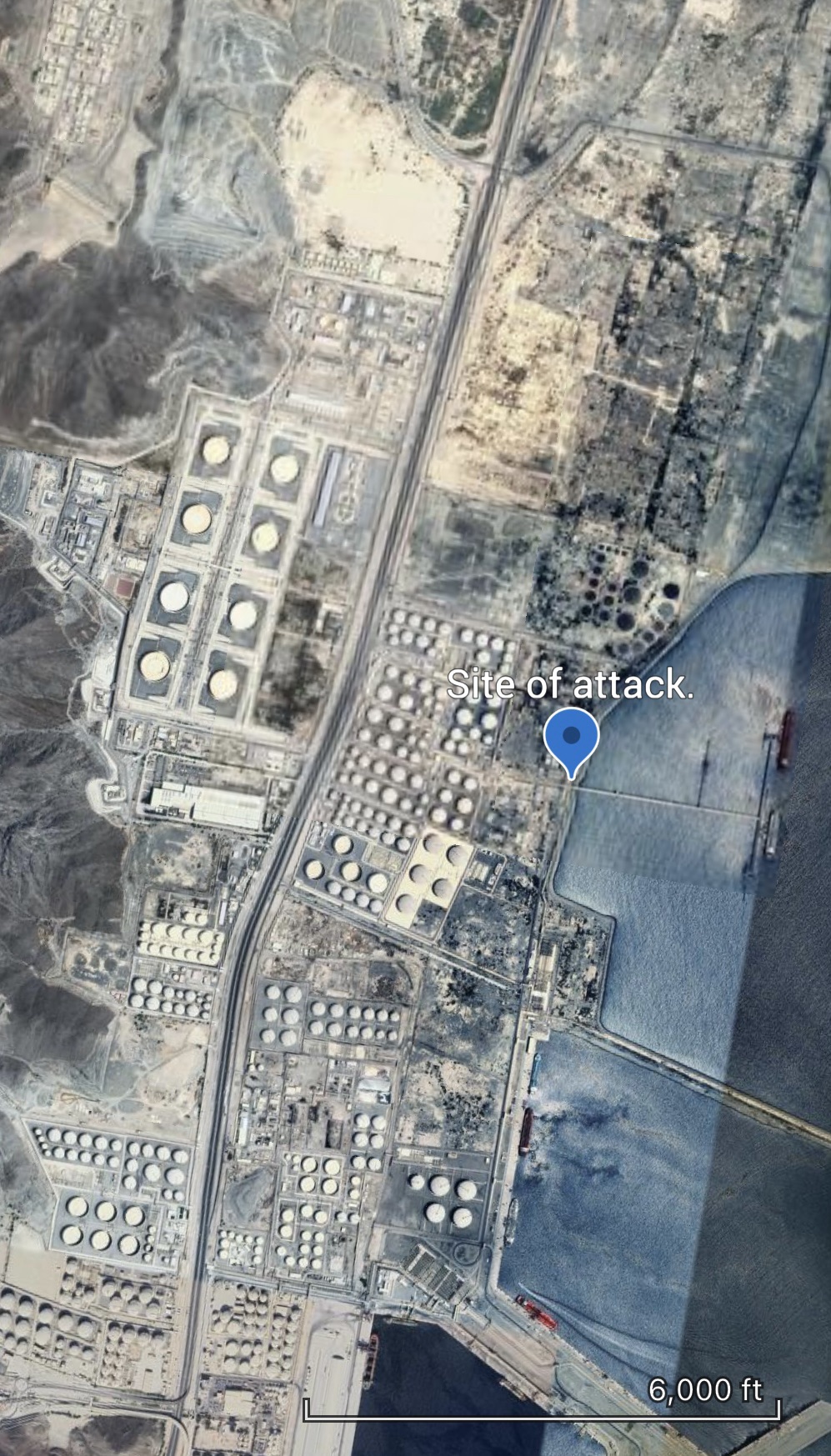
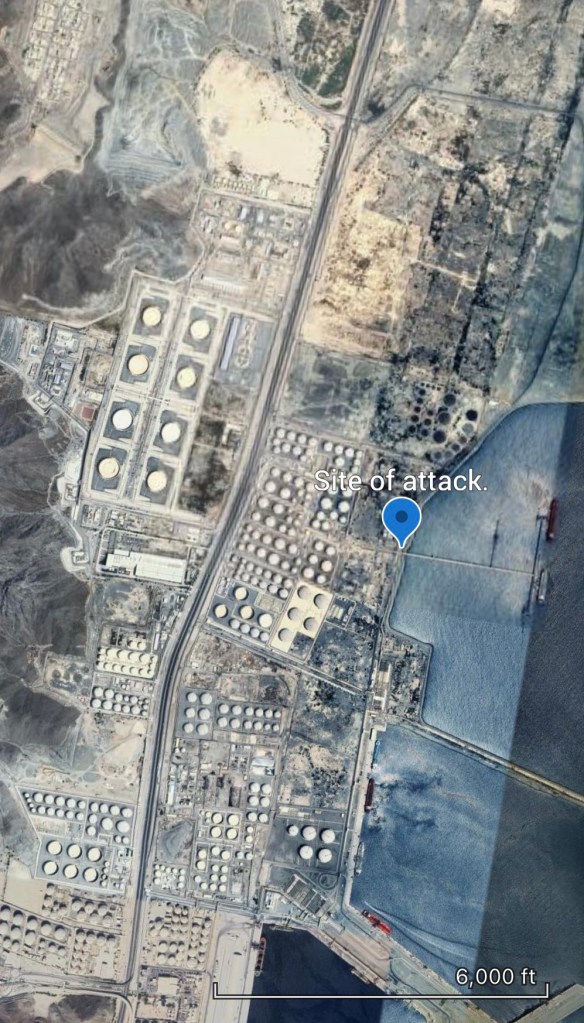
The UAE Minister of Defence said on social media that UAE air defense systems “engaged 12 ballistic missiles, 3 cruise missiles, and 4 UAVs launched from Iran, resulting in 3 moderate injuries.” The minister was referring to three Indian nationals moderately injured in a drone strike on the Fujairah Oil Industry Zone. The attack appears to have hit the connecting pipes that lead to a terminal used to load oil onto tankers.
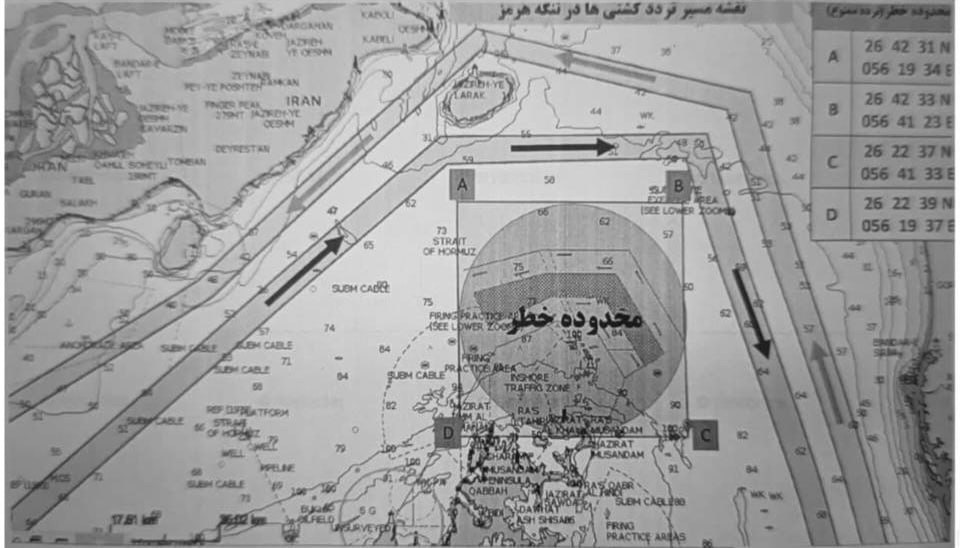
The status regarding the safety of the path through the Strait of Hormuz is now in question after the Iranian Revolutionary Guards Corp (IRGC) Navy announced that the main shipping channel has been mined. The IRGC released a map showing the alternative paths ships must take through the strait.
Map released by Iran showing the safe path through the strait.
As the map shows, ships coming through the Strait must pass to the North of Larak Island, traveling south of Qeshm Island.
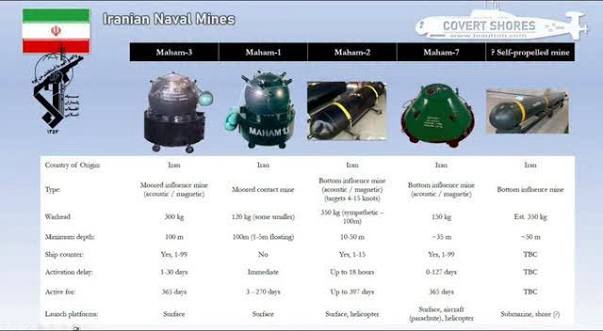
Iran started placing mines in March of 2026, however some reports say that U.S. intelligence tracked Iranian mining preparation earlier than that. The numbers differ depending on who your asking, but officials in the U.S. believe that Iran only managed to place somewhere in between “less than 10” and “not more than a few dozen”. The mines are only one part of the issue as Iran retains the ability to strike at ships by other means, such as drones or with whatever limited number of anti-ship missile launchers they have left.
Diagram from Covert Shores showing the different types of Iranian sea mines.
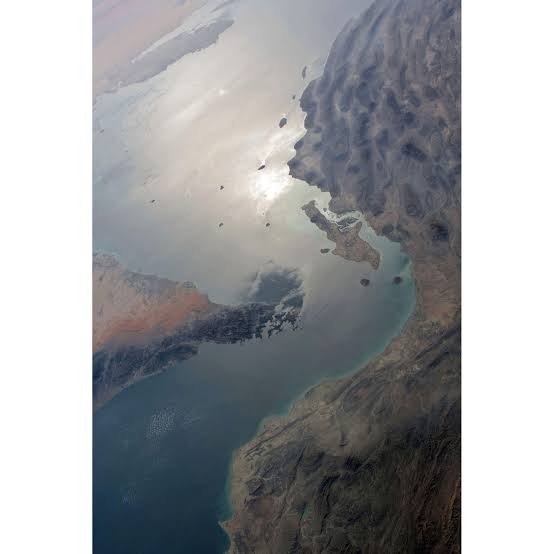
The Strait of Hormuz
The Strait of Hormuz is one of the world’s most important waterways. It connects the Persian Gulf to the Gulf of Oman and the Arabian Sea. What makes the strait so important is the volume of traffic that moves through it. As of 2026, approximately 21 million barrels of oil pass through the strait each day.
Iran sees the strait as the perfect chokepoint, which it (among others) has used in the past as a geopolitical chess piece. The lack of alternative routes for tankers to enter or exit the Persian Gulf means any disruption in traffic flow creates a huge problem for countries that rely on Middle Eastern oil. The strait only being 21 miles wide at its narrowest makes it easy for Iran to cover the strait with even shorter range weapons. At that distance drones could reach a ship in minutes, and faster munitions would strike their target in seconds.
Even with the ceasefire in place, traffic through the strait has remained at a standstill. Most shipping companies have chosen not to risk the journey. Insurance costs have more than doubled from their pre-war levels, placing further strain on the shipping industry. As of this writing on April 10, only seven ships have made the transit in the past 24 hours.
Iran’s Demands on Vessels Transiting the Strait
Iran has imposed several specific conditions that ships must meet to be allowed through the strait. These requirements, enforced primarily by the IRGC Navy, include mandatory prior coordination and explicit permission from Iranian military authorities. Vessels must submit detailed documentation—such as crew lists, cargo manifests, ownership details, and voyage plans—for vetting to confirm they have no ties to “hostile” nations (primarily the United States or Israel). Ships are also required to follow a new northerly route closer to the Iranian coast, passing either side of Larak Island while avoiding the central “Area of Danger” marked on IRGC maps due to alleged mines. In addition, many tankers—especially oil and gas carriers—are required to pay tolls, often described as safe-passage fees, that can reach up to $2 million per vessel or roughly $1 per barrel of oil. Iran has stated that only vessels from “non-hostile” or friendly nations receive priority, and some ships may face inspections. These conditions remain in force even though the strait is nominally open under the ceasefire.
At this time, the strait is considered “open” as a condition of the ceasefire with the U.S.; however, Iran has imposed the conditions described above, which the U.S. appears to have accepted for now. This acceptance is potentially problematic because it lends credibility to Iran’s assertion that it controls the strait. It does not. Passage through straits like Hormuz is governed by UNCLOS—the United Nations Convention on the Law of the Sea—specifically Articles 37–44. These provisions classify the Strait of Hormuz as a strait used for international navigation and prohibit coastal states from controlling access, imposing tolls (or safe-passage fees), or discriminating against vessels based on flag, owner, or destination. The rules governing the Strait of Hormuz and similar international straits are considered customary international law, meaning even states that have not ratified UNCLOS are expected to abide by them. Iran’s attempts to assert control therefore violate international law.
In the past, the U.S. and other powers have regularly conducted “freedom of navigation” operations through the strait to uphold these UNCLOS provisions and push back against Iran’s claims.
The situation remains fluid as ceasefire negotiations continue.


You must be logged in to post a comment.