On March 22nd going into the 23rd Ukraine launched a large-scale drone attack on the Primorsk Oil Port in the Leningrad region, in the coast of the Gulf of Finland.
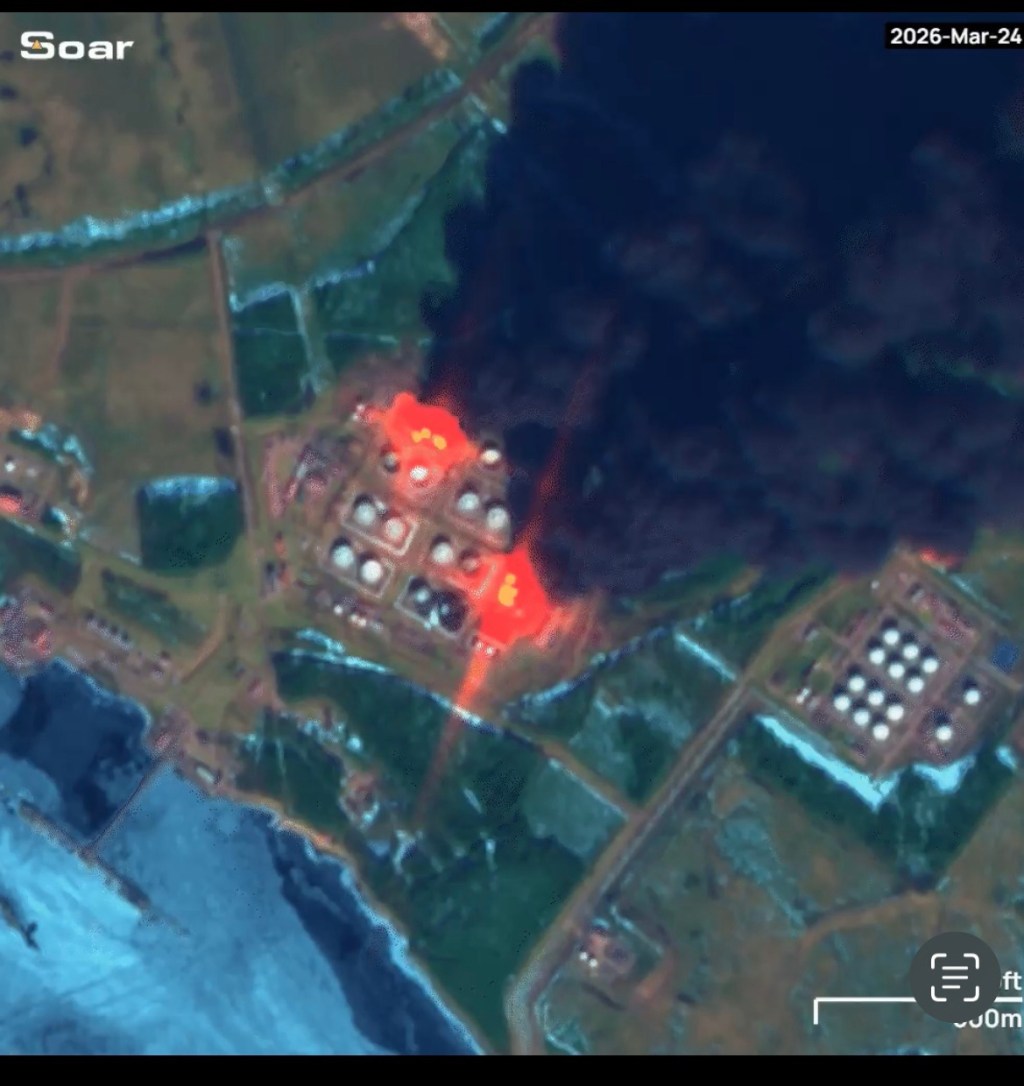
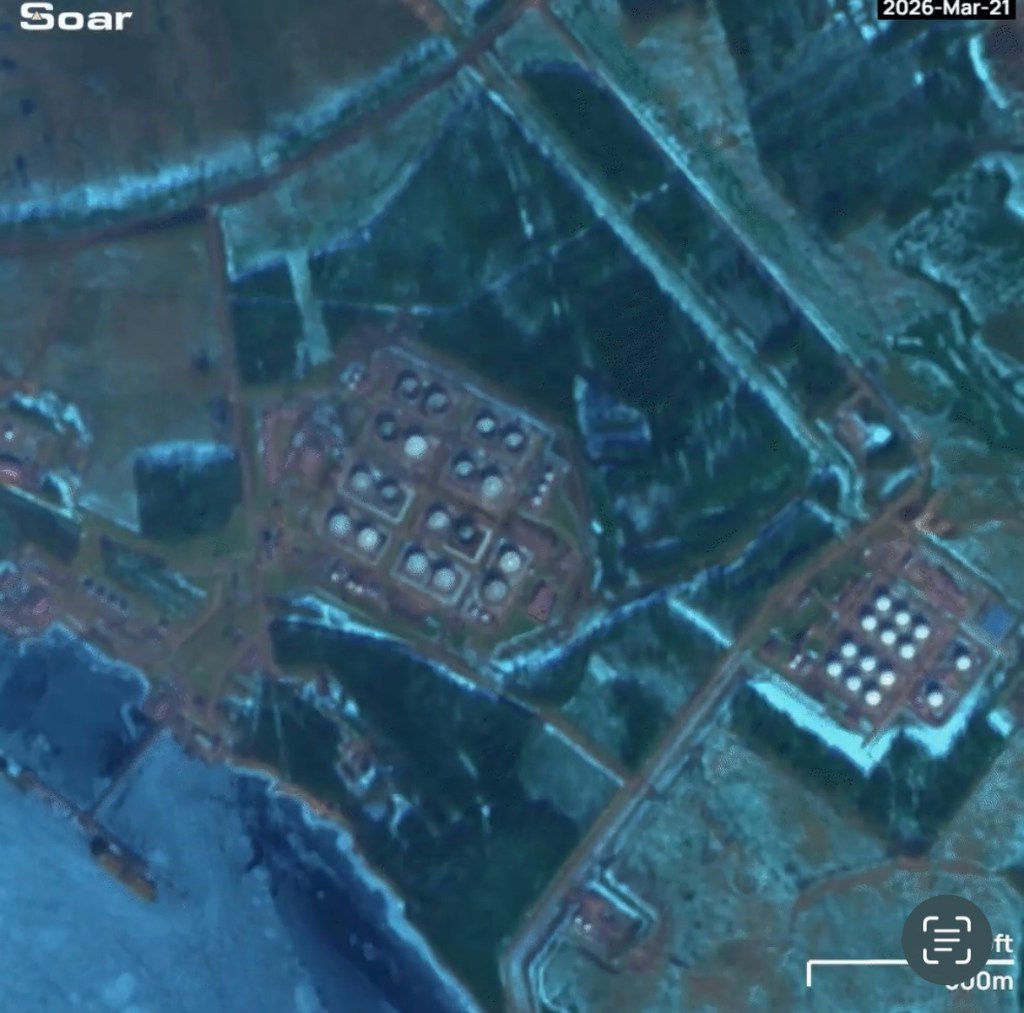
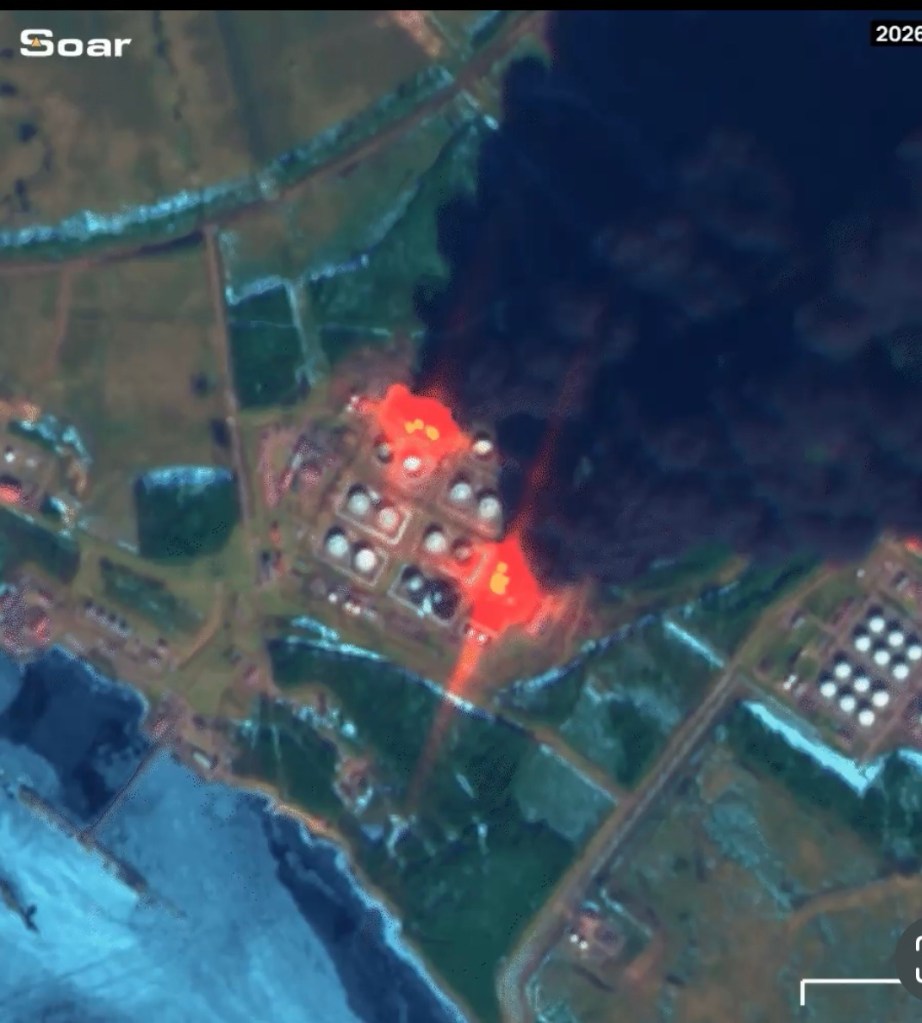
Image taken March 21st 2026 of the Primorsk Oil Port shows the terminal before the strike. Satellite image released by Soar and taken March 24th, 2026 shows the result of the attack with multiple destroyed and damaged oil storage tanks.
Ukrainian forces launched a long-range coordinated attack using multiple Kamikaze drones which traveled through hundreds of miles of Russian air defense and struck the facility, damaging multiple fuel storage tanks in the compound. Leningrad Governor Alexander Drozdenko publicly confirmed fires in “several fuel reservoirs” and said emergency crews had been fighting the blaze while workers were evacuated.
The fires were still burning 48 hours after.
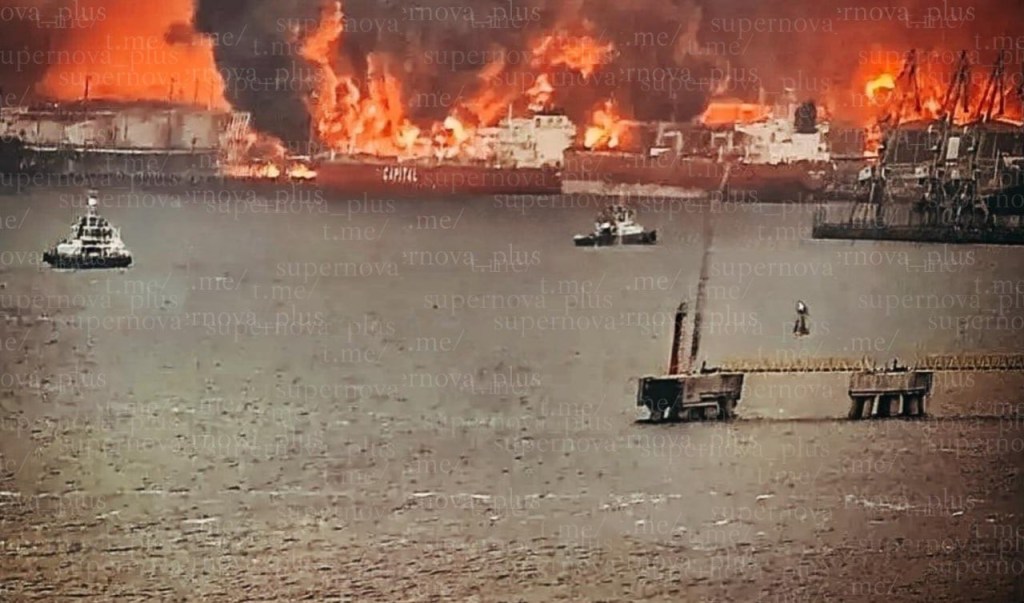
An image taken after the attack on Ust-Luga.
On the next night night a similar attack was carried out directly across the Gulf of Finland on the Ust-Luga terminal, along with many other oil production facilities in that general area in what Ukraine is calling the single largest night of drone attacks in the war.
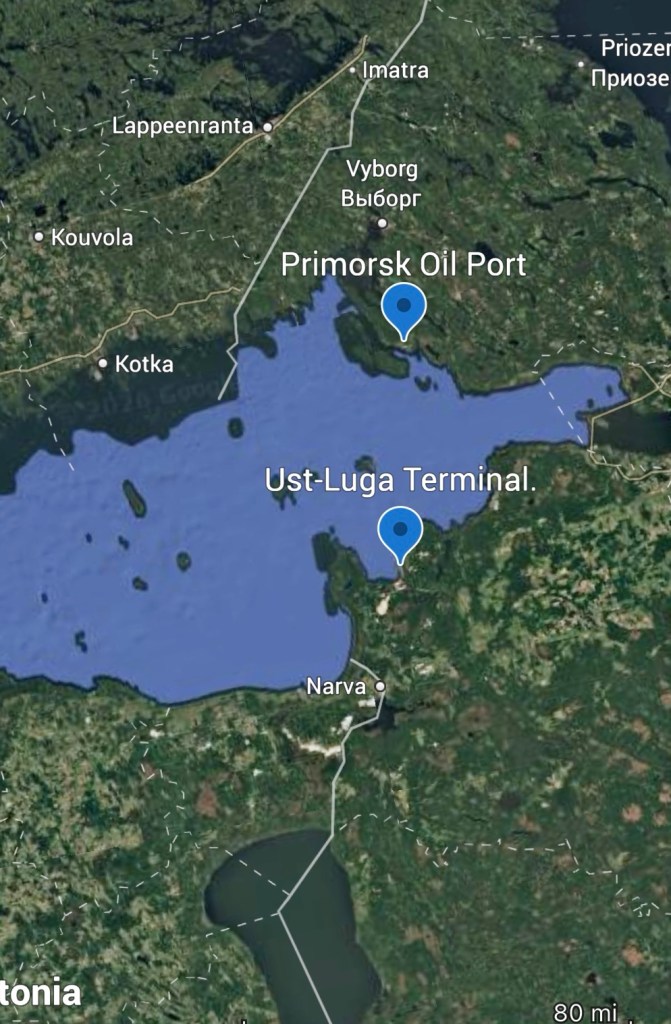
No satellite images have been released yet but we’ve plotted out both locations on Google Earth to show the proximity of the terminals to each other.
As of this month the attacks in Russia’s oil industry has caused a drop in exports by 40%. Ukraine is attempting to disrupt any Russian infrastructure that finances the ongoing war. Both sites halted production on Wednesday.
Around the time the Ust-Luga site was hit, one Ukrainian drone landed in Latvia and one crashed at an Estonian power station without causing damage.
A source that spoke to Reuters told them that the reserves had been lit on fire and that Ust-Luga had been sealed off.
The attack damaged oil loading stands as well as the tanks. The tanks are a fairly easy thing to replace but the equipment to transfer the oil to the ships is more expensive and harder to get making these strikes more devastating than just hitting the oil.
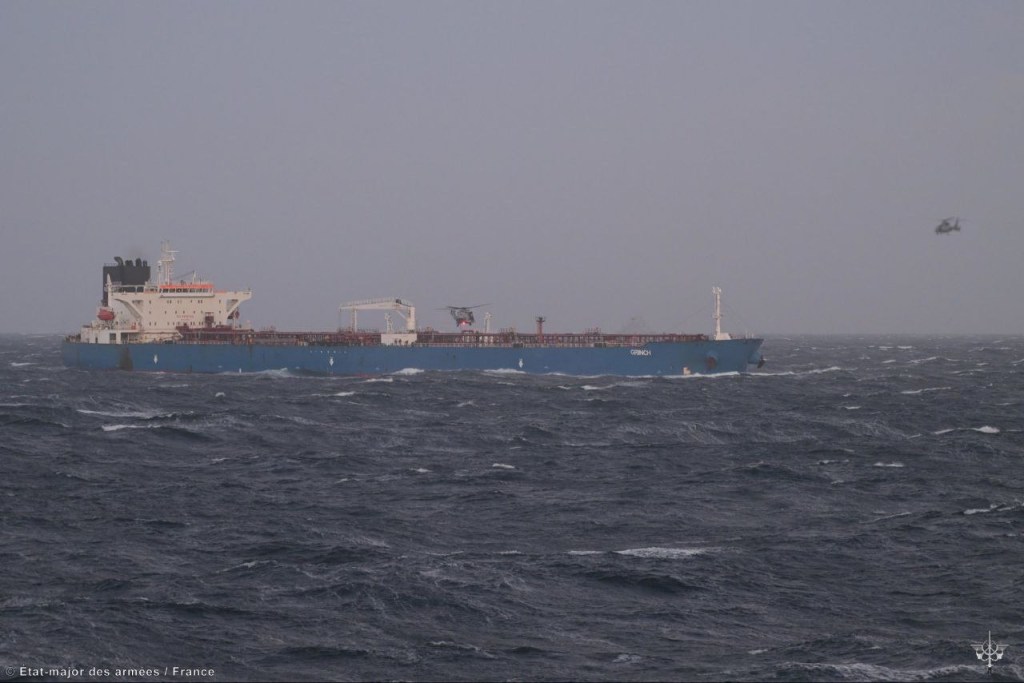
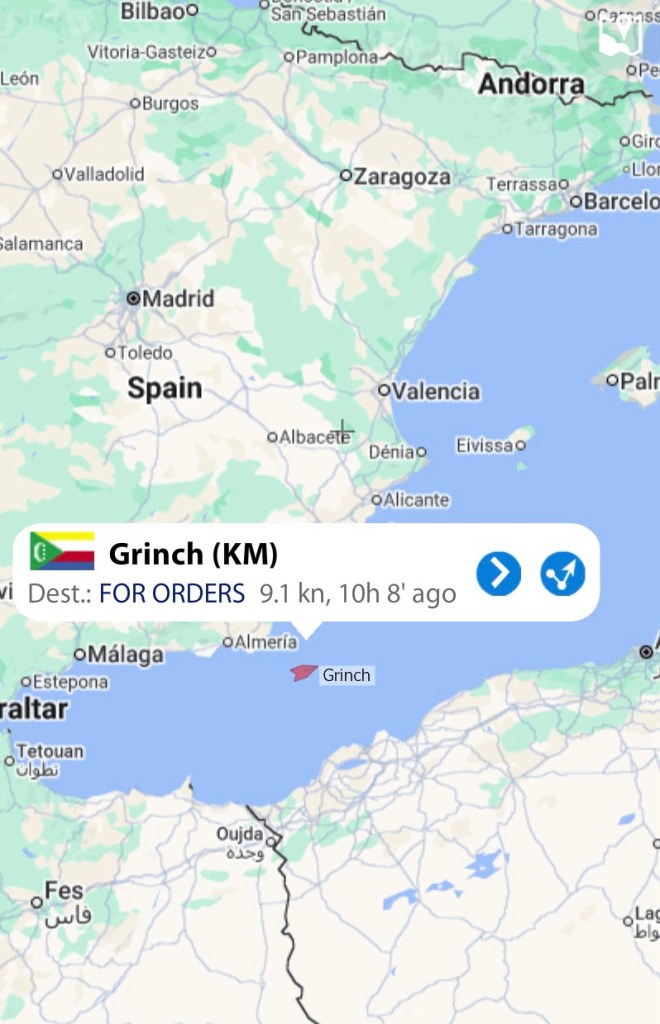
Today French forces seized a Russian “shadow fleet” tanker that was sailing in the Mediterranean. The vessel, an oil tanker flagged from Comoros called ‘Grinch’ (IMO:9288851) was seized in the Alboran Sea, in the Western Mediterranean. The Grinch was boarded on suspicion of flying a false flag, as well as being under international sanctions.
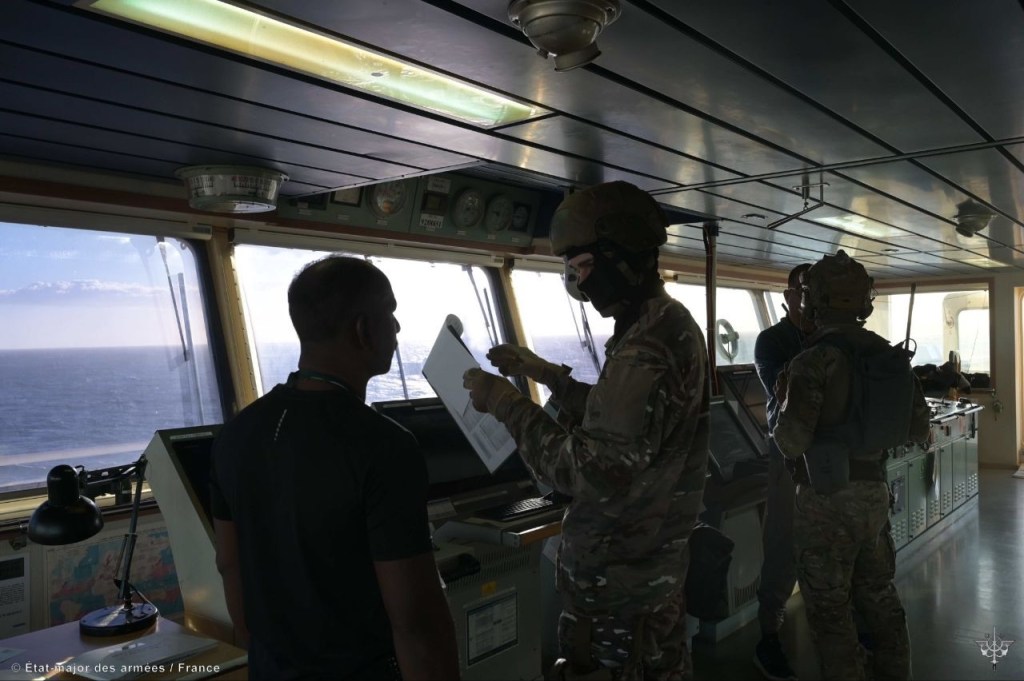
French investigators onboard the Grinch.
The operation was carried out in partnership with UK forces who provided intelligence.
“The operation was conducted on the high seas in the Mediterranean, with the support of several of our allies. It was carried out in strict compliance with the United Nations Convention on the Law of the Sea.”
French President Emmanuel Macron said after the Grinch was seized.
He also said
“We are determined to uphold international law and to ensure the effective enforcement of sanctions,” Macron explained. “The activities of the ‘shadow fleet’ contribute to financing the war of aggression against Ukraine.”
The operation was first announced with a press release from the French Navy
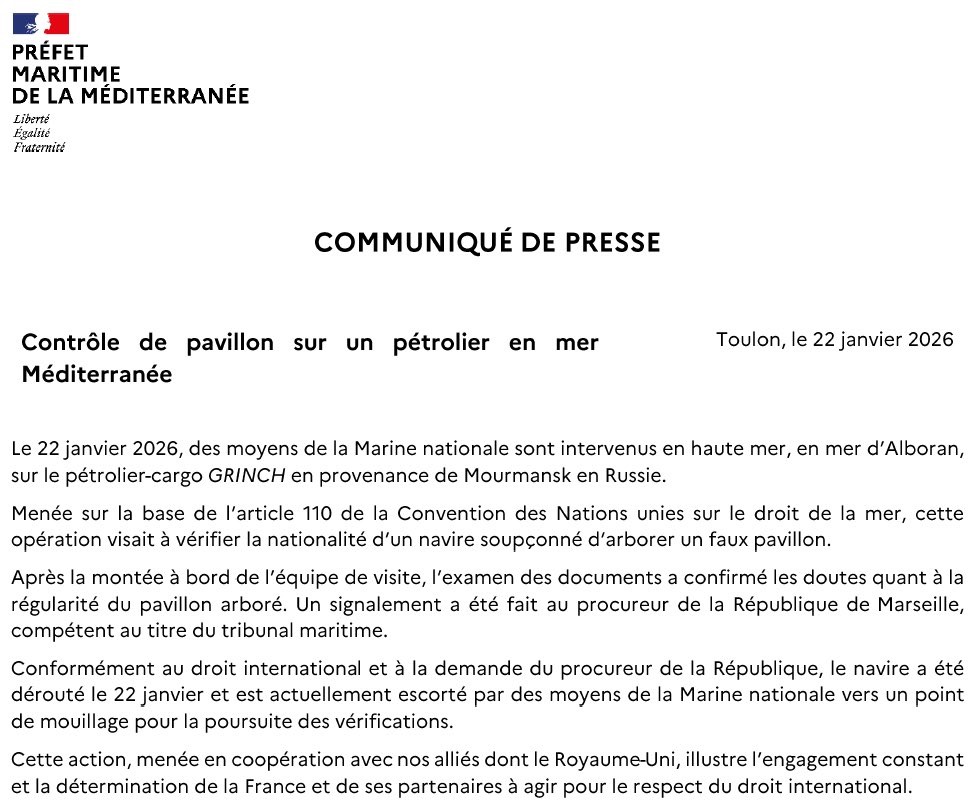
French Navy press release translated below.
“On January 22, 2026, French Navy assets intervened on the high seas, in the Alboran Sea, on the cargo tanker GRINCH, en route from Murmansk, Russia.
Conducted on the basis of Article 110 of the United Nations Convention on the Law of the Sea, this operation aimed to verify the nationality of a vessel suspected of flying a false flag.
After the boarding team, the examination of the documents confirmed the doubts regarding the validity of the flag being flown. A report was filed with the Public Prosecutor in Marseille, who has jurisdiction under the maritime court
In accordance with international law and at the request of the public prosecutor, the vessel was diverted on January 22 and is currently being escorted by French Navy vessels to an anchorage for further investigations.
This action, carried out in cooperation with our allies, including the United Kingdom, illustrates the unwavering commitment and determination of France and its partners to uphold international law.”
End translation.
Last recorded position of the Grinch.
The “shadow fleet” operated by Russia has received a lot of attention in the past,but even more so in the past couple months as both European and U.S. forces have seized multiple vessels suspected of being used to transport Russian oil. These ships are know for using clandestine means and “deceptive shipping practices” to bypass international sanctions put on Russia for its war in Ukraine.
These ships, while called a “shadow” or “dark” fleet operate in the open, with multinational crews (sometimes even carrying Ukrainian crews) using aging ships with many of them being bought for exorbitant prices from the same western nations that sanction Russia in the first place . These ships will use techniques like changing their name and flag to avoid tracking by investigators and law enforcement.
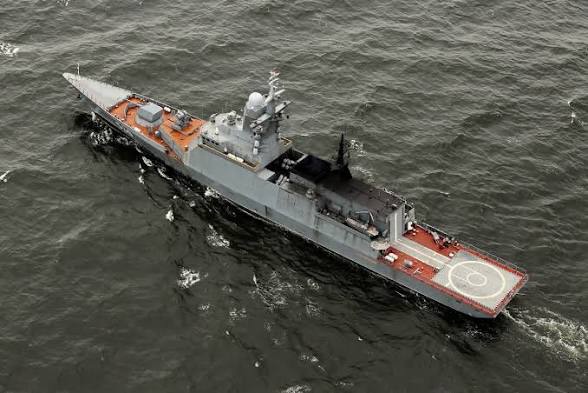
Western powers are taking a stronger stance against Russia’s shadow fleet and Russia is responding, on Monday Russia sent the Project 20380 Steregushchiy-class corvette Boikiy to escort one of its tankers through the English Channel.
Project 20380 Steregushchiy-class corvette Boikiy
The UK especially has signaled its willingness to step up the fight against these ships, specificly as a joint effort. Foreign Secretary Yvette Cooper saying to Politico “We stand ready to work with allies on stronger enforcement around the shadow fleet,”
She also didn’t rule out using the oil seized from these tankers to support Ukrainian war efforts. This gives Russia two choices, risk having their oil money being used to find their enemies or having their oil storage depots sit full. Neither option is ideal especially as Ukraine continues to target Russian oil depots with drones and missiles.
It’s possible that western actions against Russia’s shadow fleet could become a large flashpoint between Russia and western nations, especially if Russia responds to increased pressure with force, bringing the two sides to conflict.
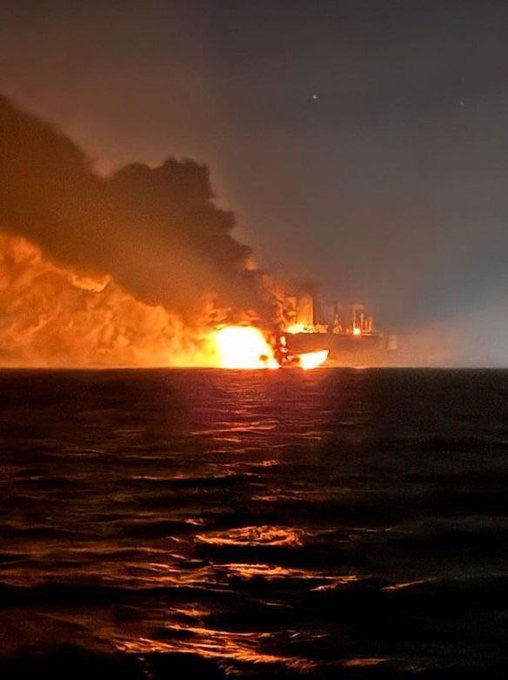
Today Ukraine announced that its military had launched attacks on two sanctioned Russian Oil tankers operating in the Black Sea.
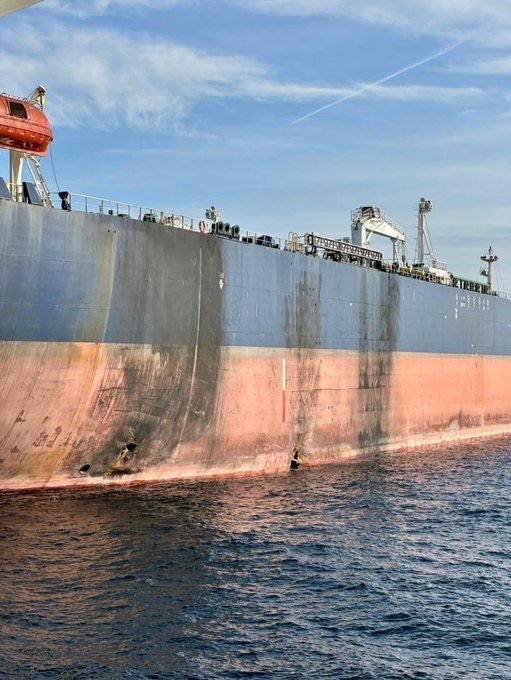
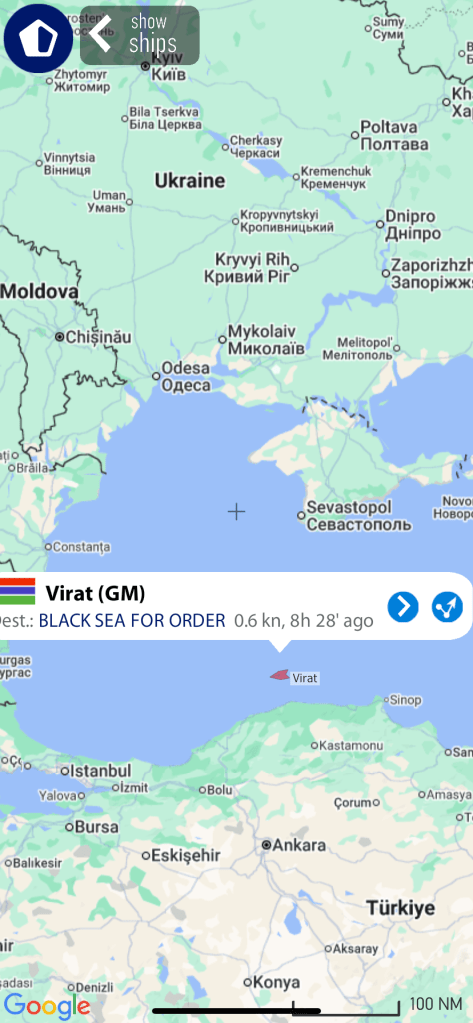
The ships, identified as the Gambian-flagged Kairos and Virat were empty at the time of the attacks and it is reported they were heading to the Russian city of Novorossiysk, a major port and oil hub for Russia especially in the Black Sea region.
Tanker Virat after the attack. Mostly minor damage on this ship.
During an interview with Turkish broadcaster NTV, Abdulkadir Uraloğlu,the transport and infrastructure minister for Turkey, said the attacks took place within the country’s exclusive economic zone.
The Russia shadow fleet oil tanker Virat stopped near Turkey after it was attacked by Ukranian sea drones.
This attack is being reported by Ukraine as a joint operation between the SBU’s 13th Main Directorate of Military Counterintelligence with the Ukrainian Navy. The operation was carried out with Ukrainian “Sea Baby” drones which can travel long distances.
Video of the events were relesed across social media.
Морські дрони СБУ Sea Baby уразили в Чорному морі два підсанкційні танкери тіньового флоту РФ KAIRO та VIRAT.
Це була спільна операція 13-го Головного Управління військової контррозвідки СБУ з ВМС України.
The Russian dark fleet oil tankers Kairos (left) and Virat (right) were heavily damaged in the Black Sea yesterday after being targeted by a number of Ukrainian USVs. pic.twitter.com/cH9re9neTM
Both ships attacked have been under sanctions by the UK and European Union. However these two ships and the many more like them continue to find Russia’s nearly four year long war. They continue to haul Russias crude oil and funnel money to Moscow, fueling Russias economy.
“The Russian shadow fleet has become almost a tumour on global shipping,” said Elisabeth Braw, a senior fellow with the Atlantic Council’s Transatlantic Security Initiative.
“The shadow fleet has grown exponentially, and Western governments have tried sanctioning specific vessels … but every time that happens, another vessel enters the shadow fleet.”
These Russian shadow ships often carry “flags of convenience” often being flagged in places with little knowledge or experience in maritime affairs, places like the Gambia and Cook Islands.
Ships that’s are sanctioned have no access to western ports and personnel. They are barred from trading from many nations however are still able to find buyers in China and even in Europe. Some European nations still buy Russian gas and oil either directly or through a third party.
The Russian shadow fleet is made up of as many as a reported 1500 ship as of 2024 highlighting the ineffectiveness of the western sanctions to slow the flow of Russian oil. This is one reason why Ukraine has taken such an interest in targeting Russian oil production choosing instead to attempt to stop it at its source.
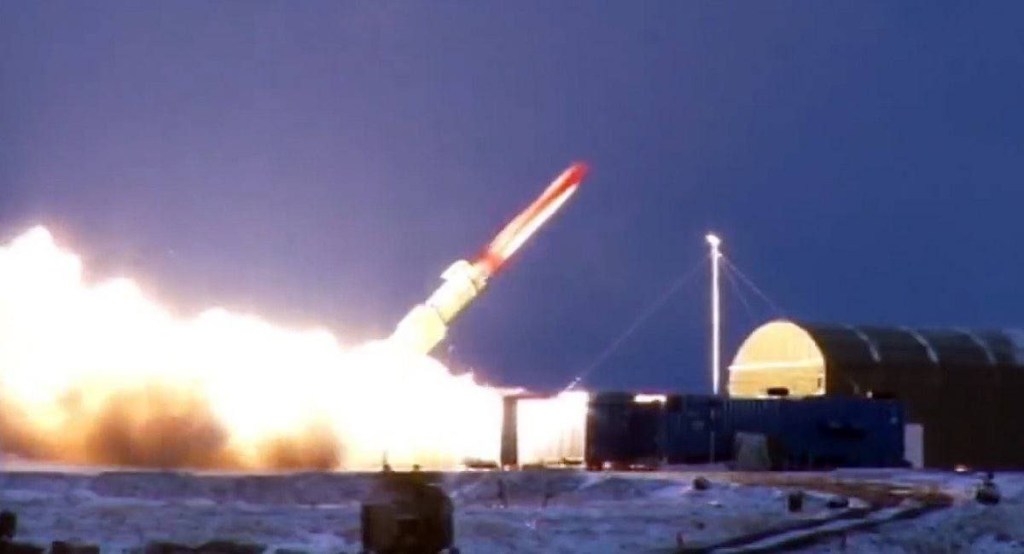
On October 21st one of Russia’s top generals announced that Russia had carried out a test on the claimed, nuclear powered ‘Burevestnik’ subsonic cruise missile.
Burevestnik launcher.
“We have launched a multi-hour flight of a nuclear-powered missile and it covered a 14,000km (8,700-mile) distance, which is not the limit,” Chief of General Staff Valery Gerasimov told President Vladimir Putin in a televised meeting.
Code named SSC-X-9 Skyfall by NATO this low flying cruise missile is suspected to be powered by a miniature nuclear reactor that kicks in after the missile has been launched conventionally from the ground. This reactor gives it an incredible range.
General Gerasimov said the missile flew for a total of 15 hours on its latest test while its horizontal and vertical capabilities were tested.
Trial of 🇷🇺Russia's Burevestnik nuclear-powered cruise missile with unlimited range successfully completed
The rocket flew ~8,700 miles for ~15 hours in a test on Oct 21, per Gen. Staff Chief Gerasimov
“Therefore, it demonstrated high capabilities to bypass missile and air defence systems,” Tass reported Gen Gerasimov as saying.
First mentioned in 2018 this missile has been debated in defense circles and among analysts who can’t agree on its claimed effectiveness. It’s suspected, and claimed by Russia, to be able to strike the United States, while being launched from anywhere in Russia. The missile can carry a conventional warhead but is designed with nuclear warheads in mind.
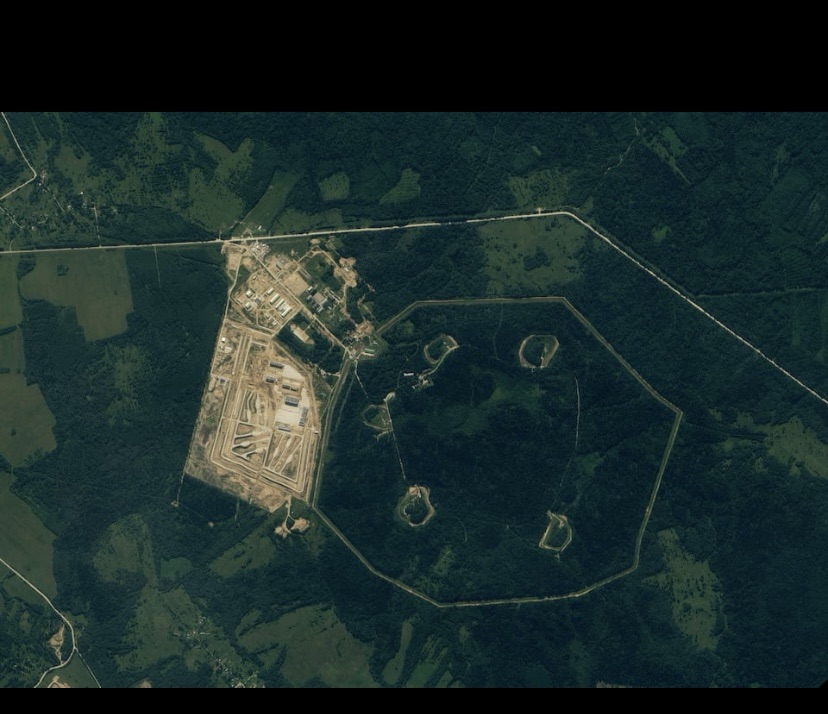
The News agency Reuters did an investigation into the suspected launch site for the weapon last year in September. This investigation concluded that the site for the launch of Skyfall was a nuclear storage facility located about 300 miles North of Moscow known as Vologda-20.
Vologda-20
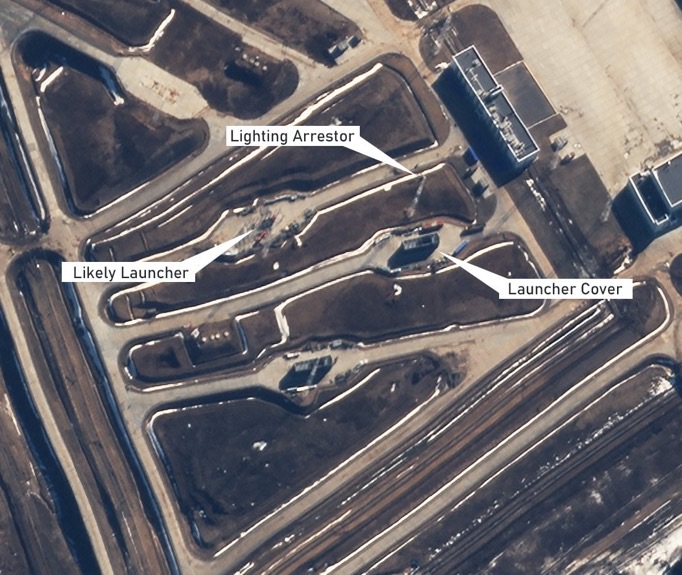
Decker Eveleth, an analyst with the CNA research and analysis organization found this satellite imagery and identified at least 9 horizontal launch pads under construction. The launch platforms are in three groups located inside a high berm to shield them from direct attacks. The high berm surrounding the groups also protects in case of accidental explosion from destroying or detonating the other missiles and launchers. The site shows what Decker believes to be lightning rods to protect the large metal equipment from Mother Nature.
Closer look at the launchpads.
The berms are further linked to roads which run to buildings where the missiles are likely being stored and serviced.
Decker concludes the site is built “for a large, fixed missile system and the only large, fixed missile system that they’re (Russia) currently developing is the Skyfall,”
Because Skyfall’s launch site is connected to a nuclear weapons storage site, it will allow Russia to quickly pull from storage to load and fire the weapon.
GCR analysis.
This missile has some interesting features if everything Russia says about it is true. A missile’s range is usually determined by how much fuel they can carry. Since this allegedly runs on a small nuclear reactor (after launch) this missile could loiter for extended periods of time. We are talking about maybe days of flight time here. This weapon also had a much lower suspected cruise altitude of a reported 164 to 328 feet, compared to conventional powered cruise missiles.
Some western sources believe that Skyfall’s subsonic speeds will make it detectable by current detection methods. A response to this by Russian military expert Alexei Leonkov says the weapon is designed to be used to knock out the “remnants” of the enemy’s command and control systems, military bases, factories and power plants after Russian ICBMs have already been launched, operating in areas where air defense is already weakened or destroyed.
So while detecting it might be possible, it’s not likely this weapon is going to be used for anything other than what I suspect would be the very last war the earth ever has. Even if it’s used in a conventional manner this weapon still contains nuclear material, and will leave behind radiation upon detonation.
Russian President Vladimir Putin has acknowledged that the Russian federation is responsible for the downing of the Azerbaijani Airlines, Flight 8243 on Christmas Day 2024.
The plane, an Embaer 190 took off from Heydar Aliyev International Airport carrying 62 passengers and 5 crew.
The flight first experienced issues about 40 minutes after takeoff when it first entered the Russian airspace around Grozny. The pilots reported losing GPS navigational systems, due to jamming. The plane continued its approach at the Kadyrov Grozny International Airport in the Chechen capital. At this time the pilots reported twice tried to land at Grozny but were ultimately diverted due to fog. 81 minutes into the flight, and while the plane was still over Grozny, passengers at this time reported an explosion and shrapnel striking the aircraft. The pilots thought they had experienced a bird strike and proceeded to initiate emergency protocols and squawked 7700, which signals to others that the flight is experiencing an emergency. They then turned back towards the Caspian Sea.
The plane made it across the Caspian and back to Azerbaijan but the pilots were not able to maintain control of the aircraft while trying to put it down in Baku. Video from the ground showed the plane changing altitude at a very quick rate as the plane pitched up and down as the pilots fought to bring the plane down with increasingly unresponsive controls.
Video from the crash of Azerbaijani Airlines Flight 8243.
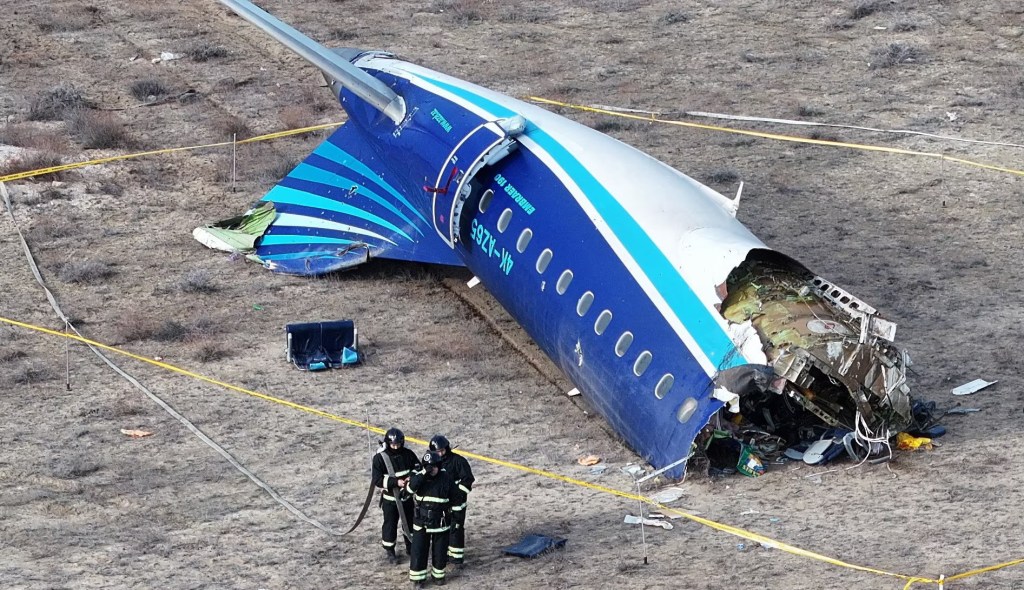
The plane ultimately crashed, bursting into a large fireball and split in half. Of the 67 people on board, 38 were killed. Almost immediately after the crash there were questions. What actually happened to flight 8243?
Photos from the crash showed damage not consistent with a bird strike. Damage to the tail looked more like the damage from the explosion of an air defense missile. In fact, several passengers had been injured from shrapnel from the explosion.
An image from the crash. The tail of the plane shows shrapnel damage.
Russia right away denied that this had happened. Several days later The New York Times put out a report which stated that Azerbaijani investigators believed that a Russian Pantsir S-1 had actually shot the plane. On February 4th, investigators found fragments from a Pantsir S-1 missile inside the airplane’s fuselage.
At the time the plane was attempting to land the city was under warning as Ukrainian drones had been spotted in the area and shot down.
On December 28th Russian President Vladimir Putin apologized to the Azerbaijani President Ilham Aliyev for the “tragic incident” although he didn’t elaborate further on the incident.
Today the Russian president, speaking with the Azerbaijani leader Ilham Aliyev, admitted to him that Russian air defense was responsible for the crash and that two Russian air defense missiles had exploded near the plane.
The Russian President very rarely admits to mistakes by his military. More than a decade after a Malaysian flight was brought down over Ukraine by Russian defense systems, Putin still denies Russian involvement.
The previous denial of the Russian involvement in the Azerbaijani airlines flight has caused some tension between Russian and Azerbaijan causing Aliyev to become increasingly critical of Moscow, even offering support to Ukraine and condemning what he called the “soviet occupation” of Azerbaijan. Some in the country were even calling for the relationship between Russia and Azerbaijan to be cut. It’s likely this admission of guilt by the Russian leadership is more about saving the relationship with an increasingly strong ally.
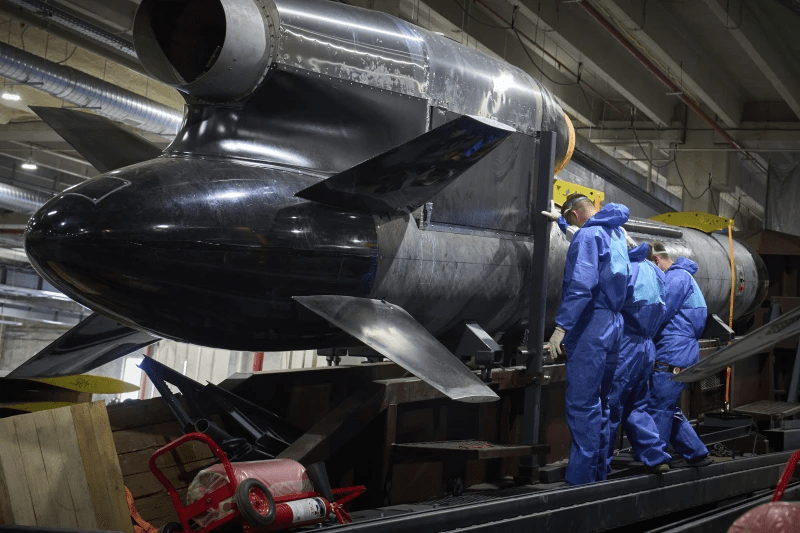
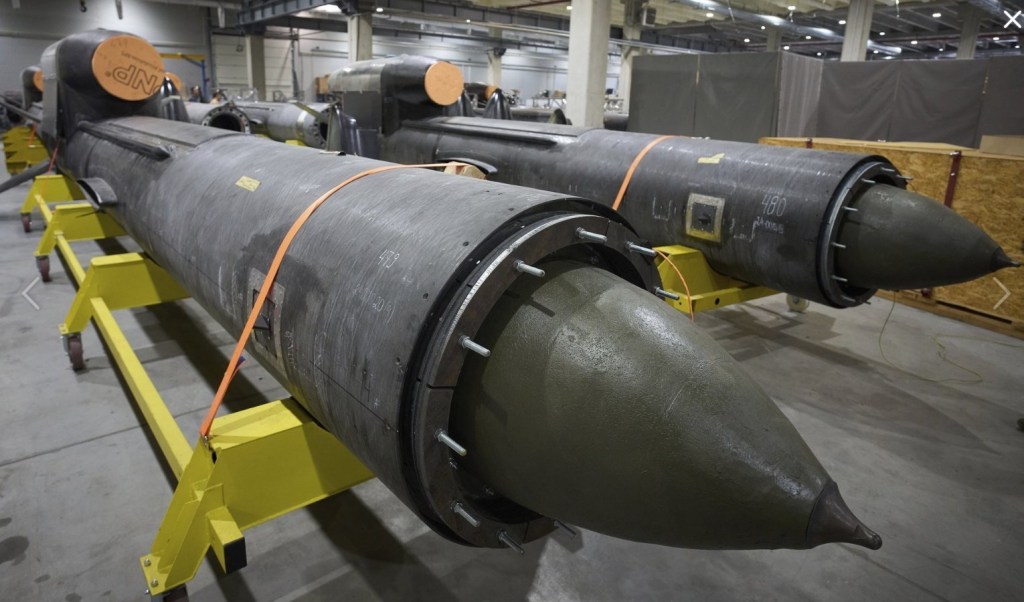
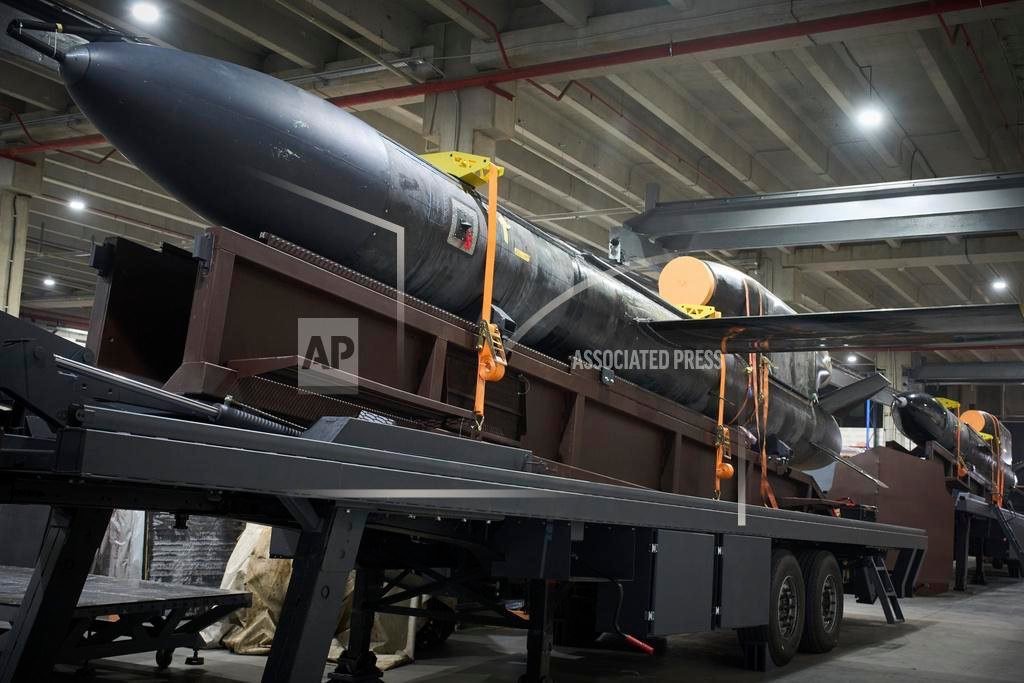
On August 17th, Ukraine’s Yefrem Lukatsky a well known AP photojournalist released images showing the production of Ukraines previously unannounced, ground- launched, long ranged cruise missile, the FP-5 ‘Flamingo’. This Ukrainian produced cruise missile could become a strong contender for Ukraine’s most effective long range weapon systems.
The Flamingo is designed and built by Ukrainian defense company Fire Point. According to, the missile has a six meter wingspan and a takeoff weight of 13,000 lbs on takeoff. The payload capacity is 1,150 lbs. Its publicly started range is 1865 miles.
A look at the tail of the missile showing the engine on top of the weapon, much like designs from the 50s-60s
“We came up with it pretty fast. It took less than nine months to develop it from an idea to its first successful tests on the battlefield. I will not tell you about its exact speed, but I can say it’s faster than all the other missiles we currently have,” said Iryna Terekh the company’s CEO while adding adding: “It is completely Ukrainian-made.
The missile is already casing a stir in Russia, the state run agency TASS put out an article last week downplaying the threat posed by this missile. The article also tried to undercut the Ukrainian achievement by saying the missile was from a British design, which the Ukrainian company Fire Point denies. However the impact of the missile is already being felt on the battlefield.
“We watched Russian reaction to our first missions and I can tell you the more successful the mission was, the more Russians tried to choke all publicity around it,”Terekh said.
The missile is already in production making several units a day. The company claims they can make that 200 a day by the end of the year.
With the number Ukraine’s Fire point company is planning to make along with the range this weapons could vastly shift the course of this war, putting a good percentage of Russia industries, both defense and civilian into range of Ukraines new missiles.
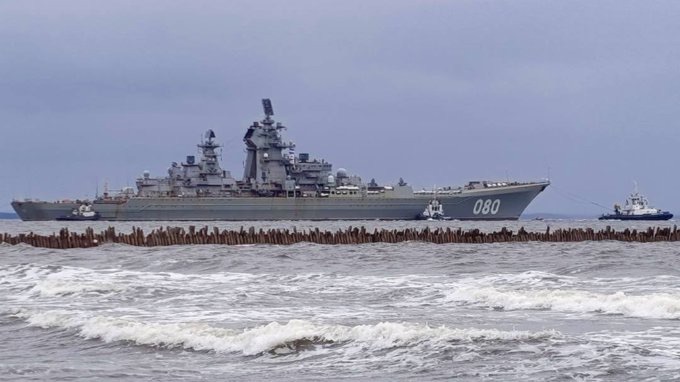
The Project 1144 Orlan Admiral Nakhimov last sailed in 1997. It was brought into the Sevmash shipyard in the port city of Severodvinsk with the intent for a major refit and modernization. The refit took almost 30 years but the time has come and this week the RFS Admiral Nakhimov was seen sailing under her own power as she undergoes sea trials to test its new and old systems. The large cruiser has seen a modernization to its weapons systems and sensors which the Russian leadership hopes will put fear into the enemies of the Russian navy.
Admiral Nakhimov
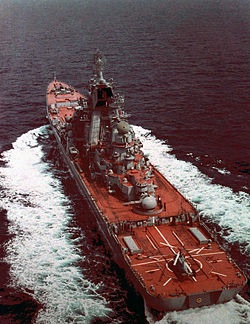
The Project 1144 battlecruiser (referred to as the Kirov-class by NATO), is a powerhouse of a ship. Called a nuclear-powered guided missile heavy cruiser by the Soviets, and besides aircraft carriers, it is today, the largest surface combatant in the world. At 827 ft long it is as large as some of the dreadnoughts and battleships of the early 20th century. During World War 2, the battleships were the dominant force until aircraft carriers were developed which could sink a battleship without it ever having fired a shot. Battleships spent the rest of the war far away from most combat. The reason battleships are no longer used is simple: big ships are easier to sink and the larger the ship, the larger the loss when they are destroyed, taking with them more men, and more weapons than their smaller peers. A country’s navy could build one large ship or several smaller ships that can do mostly same task and be less of a liability if sunk. The last of the battleships were used by the U.S. as glorified missile platforms and artillery pieces, with 2 modernized Iowa-classes being used in the gulf war. The Kirovs were built around this time during the Cold War as a direct counter to the Benjamin Franklin-class nuclear submarine. For all its anti-sea and air based weaponry the original primary job of this battleship sized cruiser was that of ASW: anti submarine warfare, sometimes called awful slow warfare by its practitioners. The Kirovs all came with ten torpedo tubes which launched torpedoes or anti-submarine missiles. They also had advanced sensors for detecting them and 3 helicopters which could carry ASW weapons.
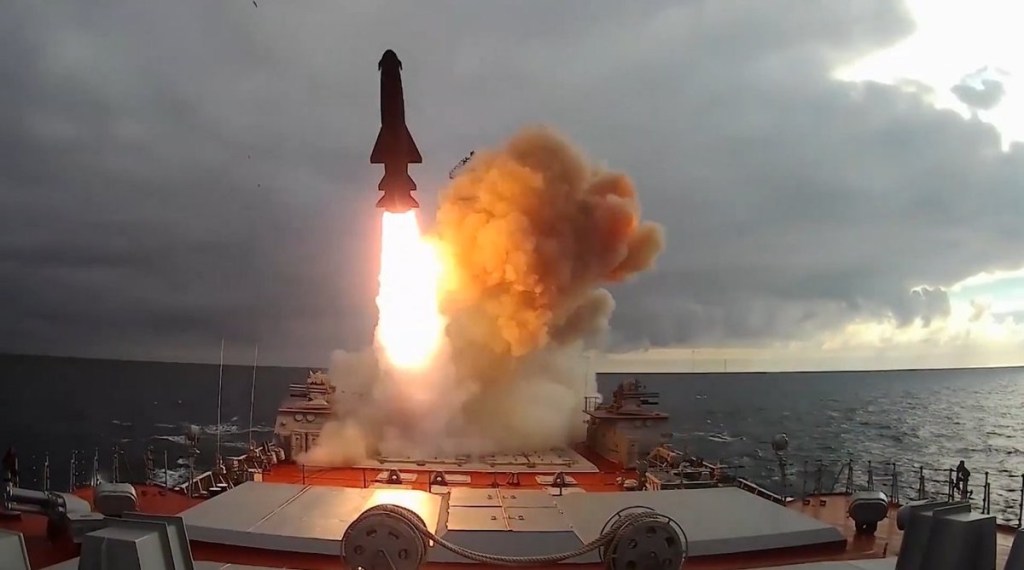
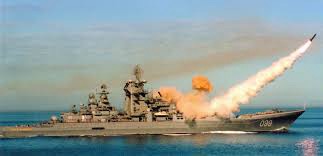
The Admiral Nakhimov other weapons before the modernization included the main weapon, 20 of the P-700 Granit (Shipwreck) anti-ship missiles which could destroy a ship out to 300 miles.This missiles was designed to sink American carriers these missiles outrange the newest American Anti-Ship missiles, the AGM-84H/K SLAM-ER (Standoff Land Attack Missile-Expanded Response) by 100 miles, according to the publicly available data. It’s been claimed that the missile, when fired in a swarm (group of 4–8) has a unique guidance mode. One of the weapons climbs to a higher altitude and designates targets to the group while the others fly low to the sea and keep their onboard sensors in a passive mode, only flipping on active guidance in the final seconds before launch. If the targeting missile is destroyed another will rise to take its place. The missile responsible for target designation climbs in short pop-ups, so as to be harder to intercept. The missiles are linked by data connections, forming a network. The missile’s predecessors, the P-500 and the Bazalt and the P-1000 Vulkan were capable of this guidance technique as well. Now those P-700 missiles have been removed giving space for some of the 176 Vertical Launch Cells 80 of which can hold the subsonic Kalibr cruise missile, the supersonic Oniks anti-ship missile, and the hypersonic Tsirkon cruise missiles. That leaves 96 cells reserved for surface to air missiles. The original Kirov-class ships came with the S-300F systems in rotary tubes below deck however there are some reports that these were replaced with the S-400F system giving them around 250 miles of air defense protection. It layers that protection with the more medium range abilities of 6 Pantsir-M air defense systems as well as a number of AK-630 close-in weapon systems. Additionally, the 130mm AK-130 dual purpose naval gun has been replaced by a modern 130mm AK-192M naval gun.
The 176 launch cells make this ship the most heavily armed capital ship on the planet currently, surpassing the 122 cells on the American Ticonderoga-Class cruisers or the 96 on the Arleigh Burke destroyers. The Chinese Type 055 Renhai-class cruisers carry 112.
The Admiral Nakhimov’s sea trials will take several months at least, with the first stages testing the ships safety, navigation, and propulsion systems and later the weapons and combat effectiveness. After that the vessel will be taken back into the service of the Russian Navy. The earliest estimates for the end of the sea trials put it at the end of the year before the ships return to active service, taking the flagship role with the Northern Fleet and the Russian Navy. At this The RFS Pyotr Velikiy, the current Kirov-class flagship of the Russian Navy is not likely to undergo the same modernization of the Admiral Nakhimov and is more likely to be decommissioned as the cost is simply too great for Russia to foot at this time. The Pyotr Velikiy has also been in service for a good while longer than her sistership, making her more worn down after decades of operation.
Images showing Admiral Nakhimov firing one of its P-700 Granit anti-ahip missiles.
When RFS Admiral Nakhimov replaces the RFS Pyotr Velikiy the Russian navy will only have three cruisers left in their navy, the RFS Marshal Ustanov in the Northern Fleet, and the RFS Varyag in the Pacific Fleet. Both cruisers are part of the Slava-class missile cruisers which are also coming to the end of their service life. It’s possible in the near future the Admiral Nakhimov could become Russia’s only capital warship in the fleet. Russian shipyards are unable to build new large ships for the time being and even repair work is becoming an impossible task. Recently, plans for the repair and refit of Russia’s sole aircraft carrier, the RFS Admiral Kuznetsov, were canceled.
The Admiral Nakhimov will likely take an important role in the Russian surface fleet, with its numerous long range weapons systems, the ship can be used to interdict a large area at sea and provide protection for a Russian fleet during their operations.




 Global Conflict Reporting
You must be logged in to post a comment.