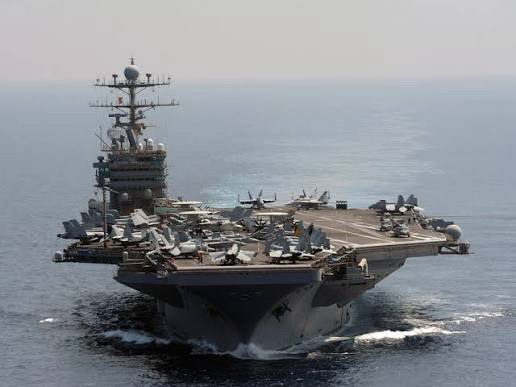
The New York Times has reported that the USS Gerald R. Ford Carrier Strike Group (CSG) will join the Abraham Lincoln CSG which arrived in the Arabian Sea earlier this month. This addition of another aircraft carrier, its escorts, and the air wing, will bolster the offensive and defensive capabilities of the forces in the region. The Ford left the Middle East late in 2025 and arrived in the Caribbean at the end of January 2026 for Operation Southern Spear, now it’s been ordered back, extending its current deployment past the normal 7 month rotation.
Both carriers, as well as the other forces in the region, including several squadrons of F-15E Strike Eagles and F-35, are a part of a military buildup to put pressure on the Iranian regime. US president Donald Trump, had threatened military strikes if Iran refused to stop its violent crackdown on anti-regime protesters. The crackdown and murder carried out by soldiers of the state was well recorded and spread through social media, even through a complete internet blackout in Iran.
The USS Gerald R Ford CSG
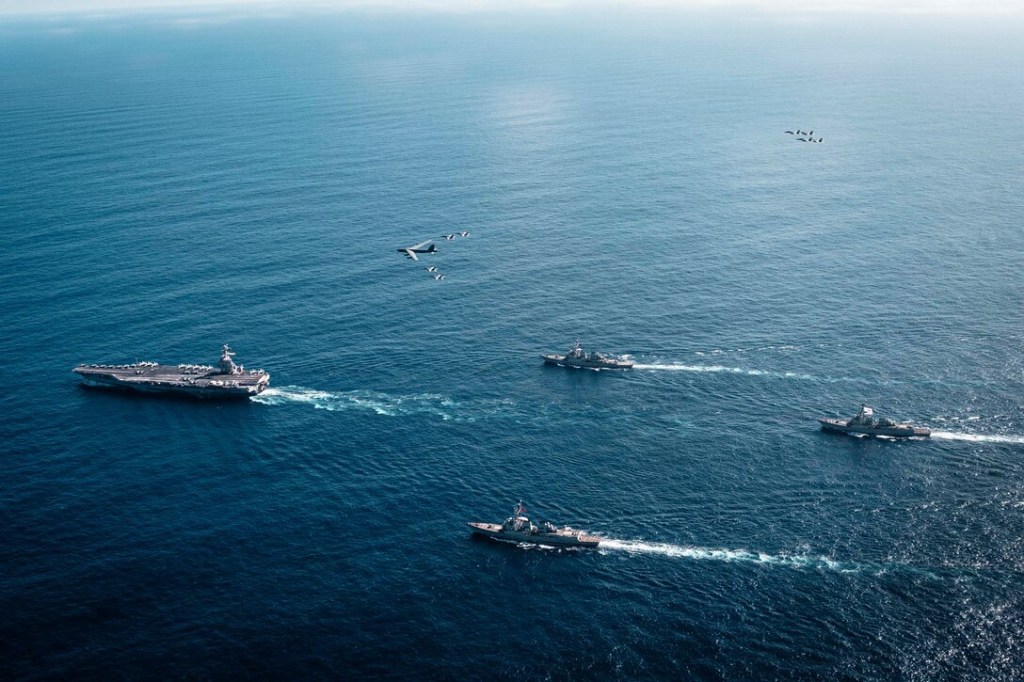
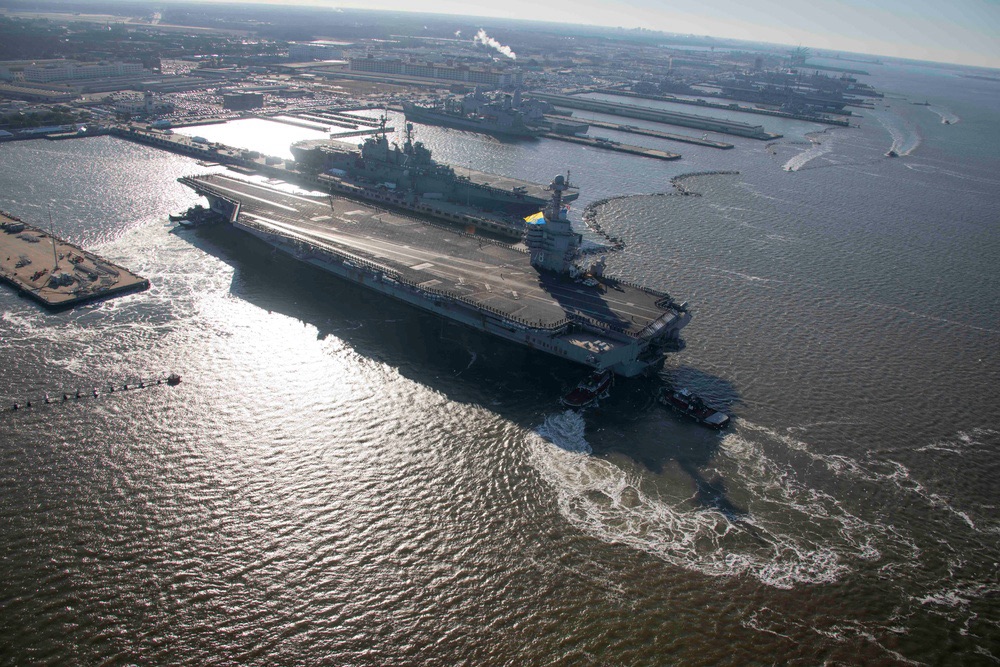
The Gerald R. Ford-Class Carrier, USS Gerald R. Ford (CVN-78) homeported at Naval Station Norfolk in Virginia.
Arleigh Burke-Class Guided Missile Destroyers USS Bainbridge (DDG-96) and USS Mahan (DDG-72), both homeported at Naval Station Norfolk in Virginia. Also included is the Air Defense commander USS Winston S. Churchill (DDG-81) which is homeported at Naval Station Mayport, Florida.
On the Ford is Carrier Air wing 8, details listed below.
The “Tomcatters” of Strike Fighter Squadron (VFA) 31. Flying F/A-18E Super Hornets from Naval Air Station Oceana, Virginia
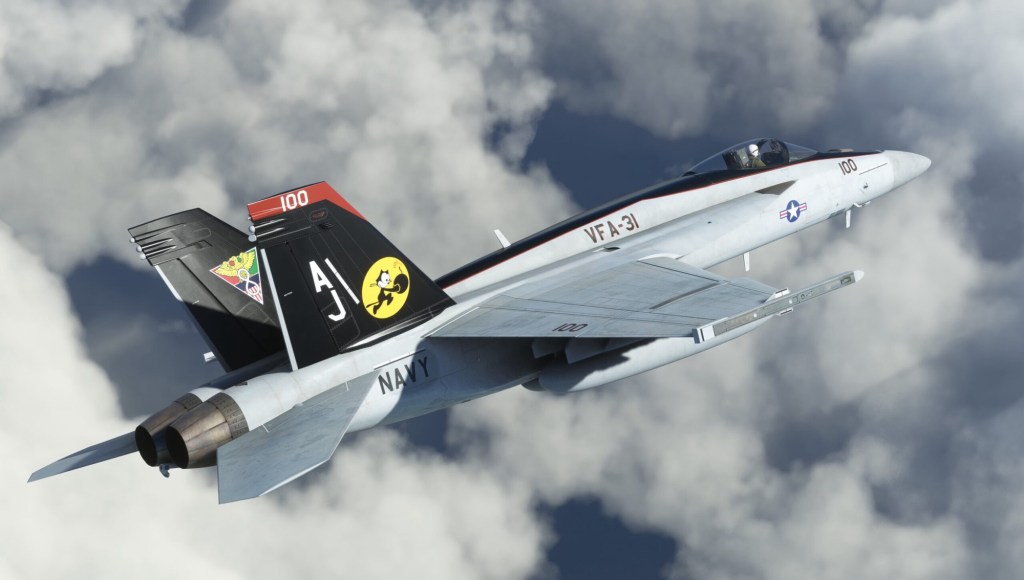
The “Ragin Bulls” of VFA 37,also flying F/A-18E Super Hornets from Naval Air Station Oceana.
The “Golden Warriors” of VFA 87 flying F/A-18E superhornets from Naval Air Station Oceana.
The “Black Lions” of VFA 213, F/A-18F superhornets from Naval Air Station Oceana.
The “Gray Wolves” of Electronic Attack Squadron (VAQ) 142 flying EA-18G Growlers from Naval Air Station Whidbey Island, Washington.
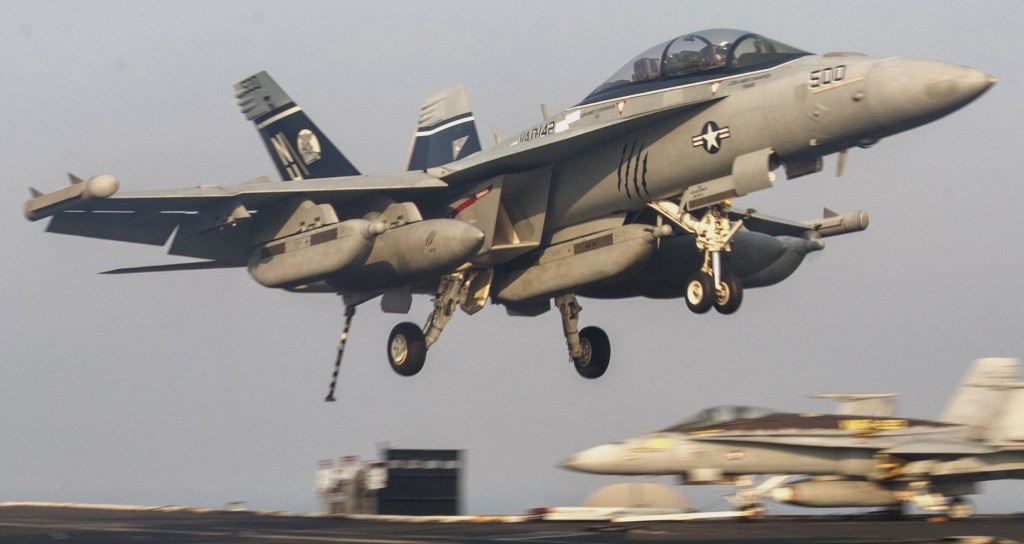
The “Bear Aces” of Airborne Command and Control Squadron (VAW) 124 Flying E-2D Hawkeye from Naval Air Station Norfolk,Virginia.
The “Rawhides” of Fleet Logistics Squadron (VRC) 40 Det. Flying C-2A Greyhounds from Naval Air Station Norfolk.
The “Spartans” of Helicopter Maritime Strike Squadron (HSM) 70 flying MH-60R Seahawks from Naval Air Station Jacksonville, Fla.
The “Tridents” of Helicopter Sea Combat Squadron (HSC) 9 flying MH-60S Seahawks from Naval Air Station Norfolk.
The CSG will also be accompanied by at least one unnamed attack submarine which is standard procedure.
Low missiles production a constant problem.
According to a recent article by the New York Times, when Trump made his threats to Iran in January the Pentagon begged him to slow down because the usual mass of US assets and forces in the region had been either redeployed or used up in the recent engagements. The U.S. burned through several months If not years worth of production of its Patriot missile stock during the Iranian ballistic missile attacks on Israel. Not to mention the even more valuable THAAD interceptor missiles,used specificly for long range theater air defense, and recently reported to have been deployed to an airbase in Jordan, had at least 25% of total stocks in 2025 engagements. A large number of Sea and air-launched air defense missiles (SM-2, SM-6) were also expended, especially in the Red Sea, during Operation Prosperity Guardian, firing hundreds of missiles defending the sea lanes against Houthi anti-ship ballistic missiles and drones.
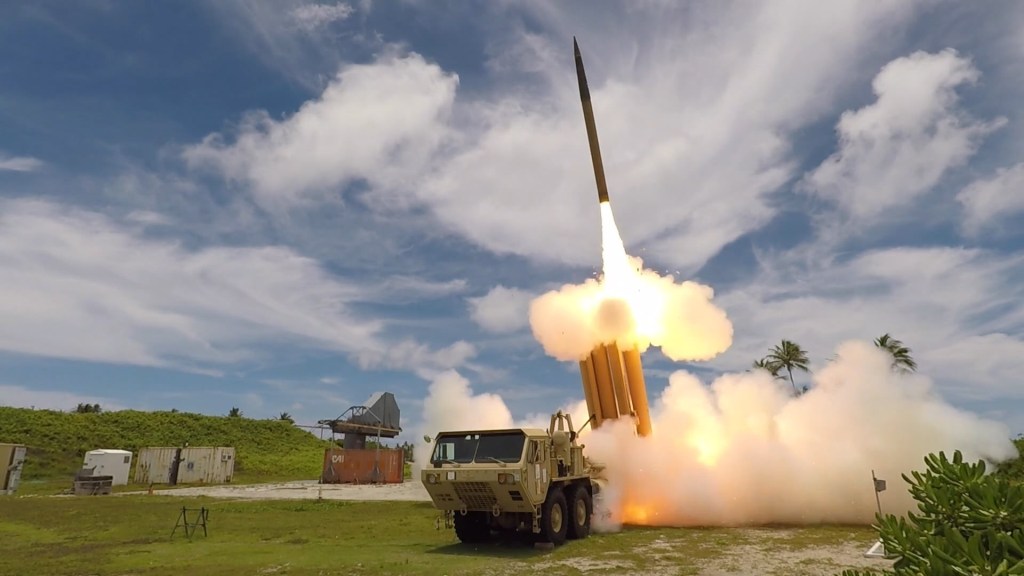
While missile production has pretty much gone up across all of the defense companies, there hasn’t been a long enough time for the military to benefit from these production increases. Take the Patriot missiles for example, an important asset for any future war, Lockheed Martin only makes around 600 of them a year.
Bottom line and some opinions.
With the addition of the second CSG in the region, the potential for strikes on Iran in the near future has increased in my opinion. The Ford has been on deployment since June of 2025, being redirected multiple times to respond to the changing geopolitical landscape around the world. Moving the ford to the Middle East instead of waiting for another carrier to be available shows that the leadership believes it is important to have an another carrier there, right now.
I also believe that the U.S. should do whatever it can to avoid a long drawn out engagement in the Middle East at this time. The best option would be another “Midnight Hammer” style raid where they target several high value targets with anything other than TLAM cruise missiles, another asset the US (and CENTCOM especially) likes to deploy like it’s going out of style. My thinking here is that while the U.S. should do whatever it can for the people of Iran they also need to follow their own recommendation of focusing on the Pacific and countering China. Not to get too far off the original article but China is growing into a major threat in the Pacific and has the range with its weapons to make any engagement against them a nightmare without a surplus of land and and sea based advanced air defense weapons. The U.S. should have a base line, this is how many missiles that planners think we need for defending against China’s missiles in the Pacific and then not letting CENTCOM fire off 40-50 PAC-2 and 3 missiles in a weekend.
What are your thoughts?
Leave a comment or email me at:
GlobalConflictReporting@Proton.me
Always available for questions or comments as well as interviews with subject matter experts.
 Global Conflict Reporting
You must be logged in to post a comment.