Tag: missile

  • U.S. Navy Announces AIM-424 ‘Malice’ LRAAM.

    U.S. Navy Announces AIM-424 ‘Malice’ LRAAM.

    This week, the AIM-242 Malice, a LRAAM (Long Range Air-to-air Missile), was announced by the U.S. Navy. 

    We don’t know much about the missile, but what we do know is that it was quietly worked on by Raytheon and is capable of hitting targets over 250 nautical miles (463 kilometers) away, according to Navy reporting. Its 13.5″ diameter and aerodynamic profile were built for range as well as for the ability to be carried by fighters with internal weapons bays.
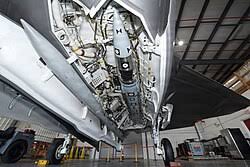
    The missile was officially announced on August 22, 2026, at the Tailhook symposium in Reno, Nevada. The Navy announced there that the weapon was already in flight testing and being developed for deployment on the Boeing F/A-18E/F Super Hornet, the Lockheed Martin F-35, and the future F/A-XX program.  
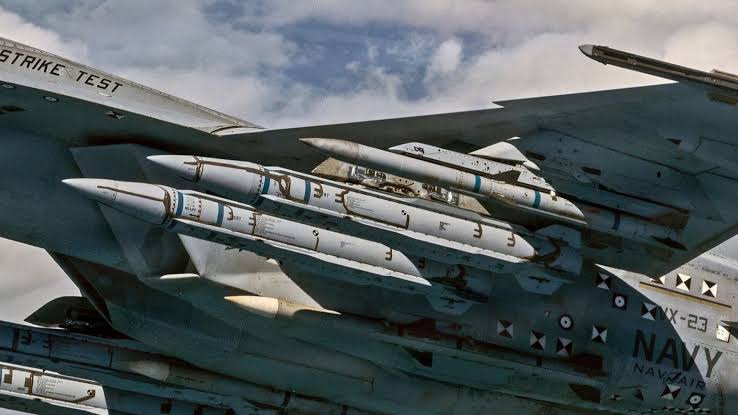
    Two AIM-424

    It’s thought that the development of the AIM-424 comes from the Long-Range Engagement Weapon (LREW) special access program first disclosed to the public in 2017. At the time, the US Air Force was looking for a two-stage air-to-air missile that could be carried in the internal weapons bay of a stealth fighter (F-35 or F-22), a similar use case to AIM-424.

    The range of the AIM-424 has been quoted as around 250 nautical miles, which is similar to the publicly reported upper limits of the AIM-174B Gunslinger, which is a derivative of the sea-based RIM-174B Standard Extended Range Active Radar Missile (ERAM, Standard Missile-6, or SM-6). What the AIM-424 brings to the table is versatility, as the Gunslinger is a much larger missile and currently only known to be carried by the Boeing F/A-18E/F Super Hornet. 
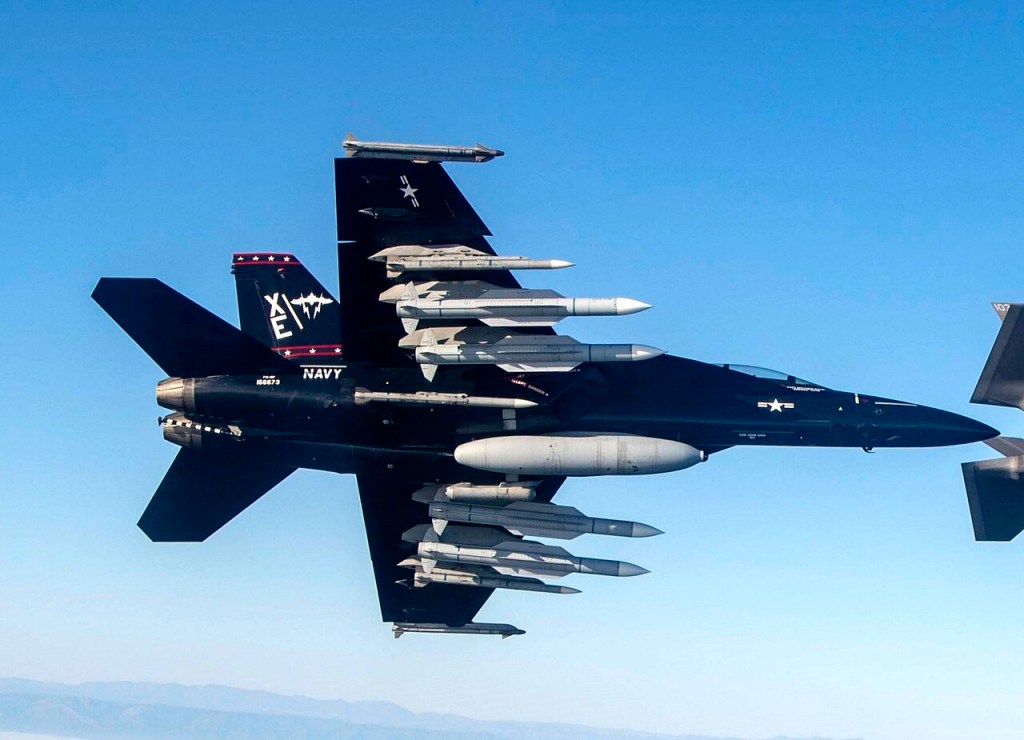

    A U.S. Navy Boeing F/A-18F Super Hornet (BuNo 166673) of Air Test and Evaluation Squadron 9 (VX-9) flies over the Point Mugu Sea Range in Southern California (USA), 24 September 2024. The aircraft carries two AIM-9X Sidewinder missiles, three AIM-120 AMRAAM and four AIM-174B long-range air-to-air missiles, an infrared search and track system (IRST) in a modified drop tank on its centerline, as well as an ATFLIR targeting pod on its left cheek station.

    The U.S. Air Force and Navy have both put a priority on extending the engagement range of its fighters as the U.S.’s potential enemies extend the range of their armaments. China fields the PL-17 with a reported range of over 300 miles.
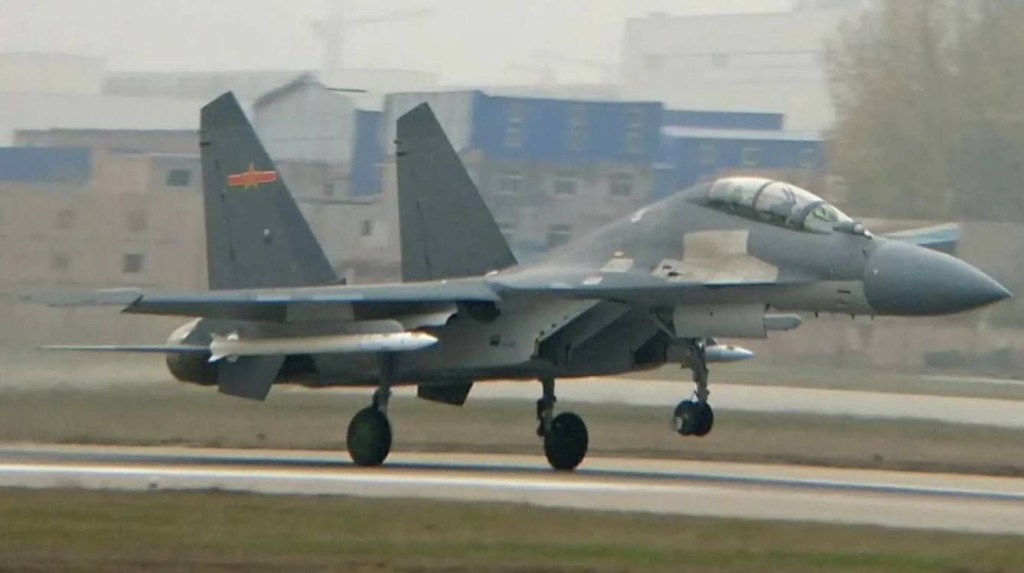
    PLA Air Force J-16, armed with the PL-17 long-range air-to-air missile

    An important caveat to all of this is that the published range figures are usually much larger than what the missile can reasonably expect to make a hit on a target. The range is tested using high altitude, in good weather conditions, against a non-maneuvering target. The tests don’t use any sort of jamming or defensive countermeasures. Taking these factors into account, the range these that any air-to-air missile can expect to score a kill is much shorter than what is published. 

    In air-to-air combat, you have a concept of the No-Escape Zone (NEZ). This is the volume of space in which the target cannot defeat the missile through pure kinematics (turning away, accelerating, diving, or any combination of those) no matter how well the pilot flies. Outside the NEZ, the probability of kill (Pk) falls off steeply. For many conventional solid-rocket missiles (most of them), the NEZ is often roughly one-third (or less) of the advertised maximum range.

     A related concept is the practical effective engagement range against an alert, maneuvering fighter that is using countermeasures. That distance is usually even shorter than the pure kinematic NEZ once you factor in real-world degradation factors. 

    Most missiles that use solid rocket fuel burn their fuel very quickly, most medium range within the first 10-12 seconds of launch. After that, burnout the missile is coasting. It is a finite amount of energy that it must manage all the way to the target. Course corrections and drag come into play, and at very long range, the missile could simply lose all energy and “go ballistic”, keeping a straight course and falling to the Earth. 

    While these factors are all important it shows why companies are continuing to push the envelope and produce these long range systems, as the more you can push the ideal range, the longer range that the missile will have under less than ideal combat situations where the enemy is jamming the missile, and using ever tool he has to evade.
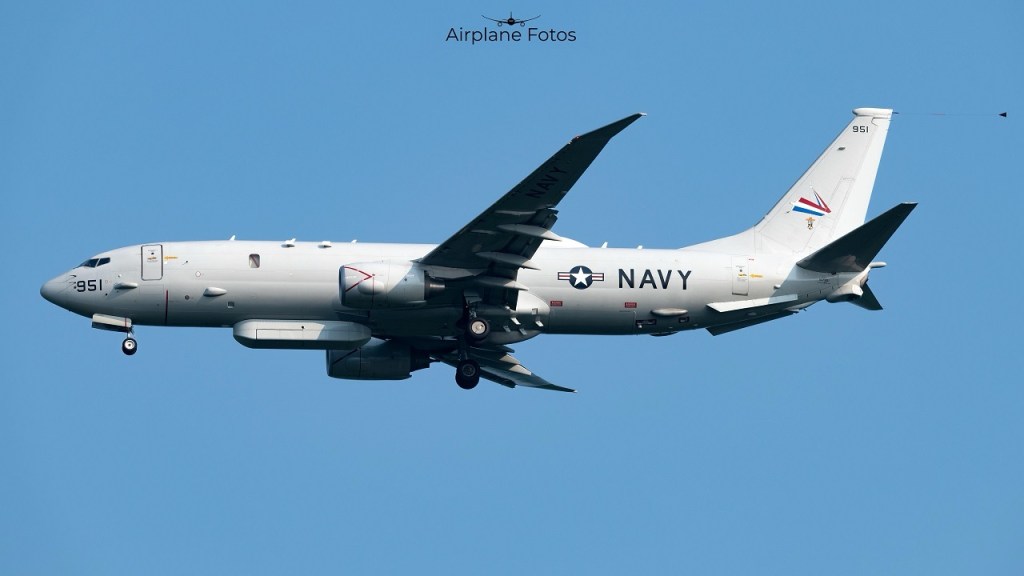
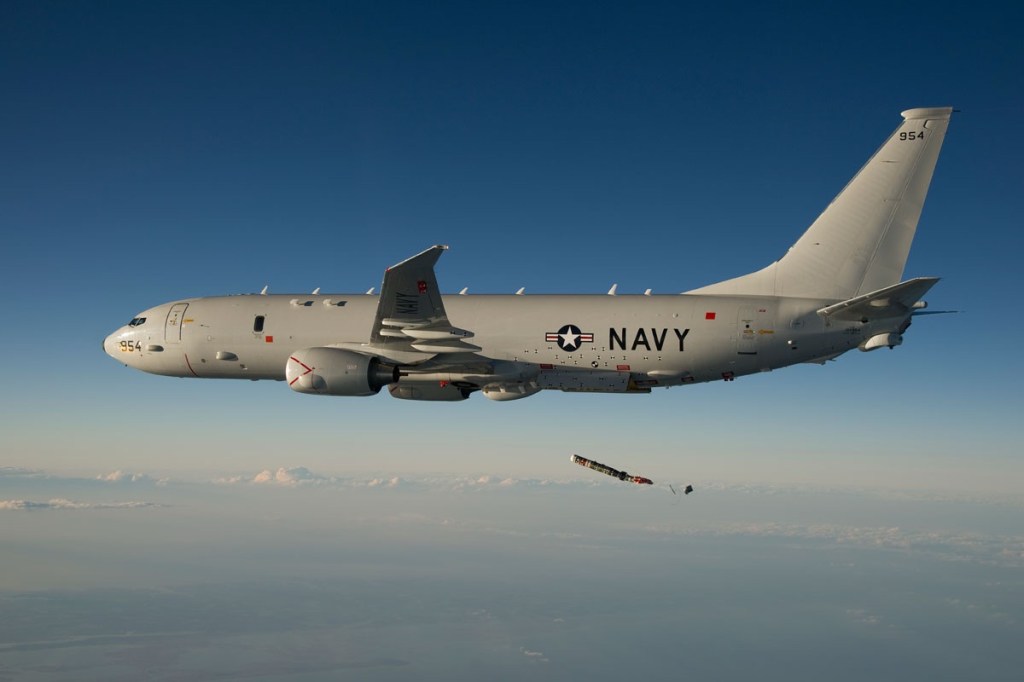
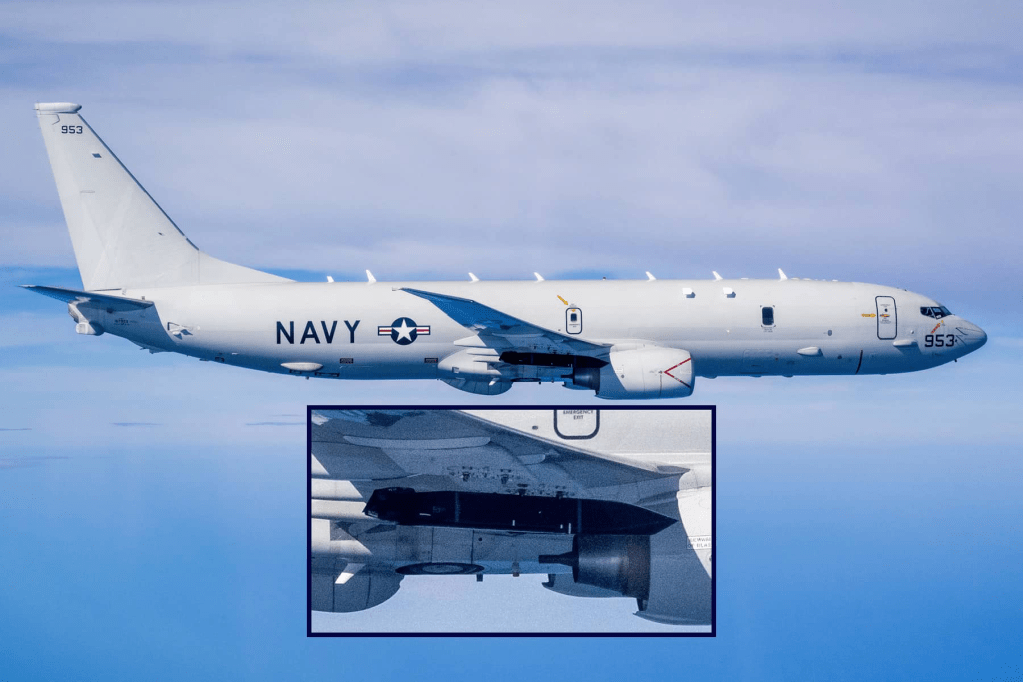
  • US Navy P-8 Poseidon photographed with something new.

    By. Scott Jackson


    09/15/2025

    The U.S. Navy Boeing P-8 Poseidon has been in service with the United States Navy since 2012 when it replaced the fleets aging and legendary P-3 Orions. The P-8 is a heavily modified version of a Boeing 737-800 passenger airliner. Swapping out the passengers and the passenger comforts with the equipment needed to preform the arduous and often overlooked task of Maritime Patrol and Anti- Submarine Warfare (ASW).

    United States Navy P-8A Poseidon dropping one of its Mark 54 torpedo.

    Featuring advanced sensors for tracking surface ships and submarines, including air-dropped sonar bouys and its AN/APY-10 surface search radar. In addition to detection and tracking systems, the P-8 can carry several weapons. Mostly the MK-54 airdropped torpedoes for ASW work but also the AGM-84 Harpoon Anti-Ship missile. That was until the navy released the photo below showing something new. But back to that in a minute.

    U.S. navy P-8 Poseidon shown with the AGM-158 LRASM.
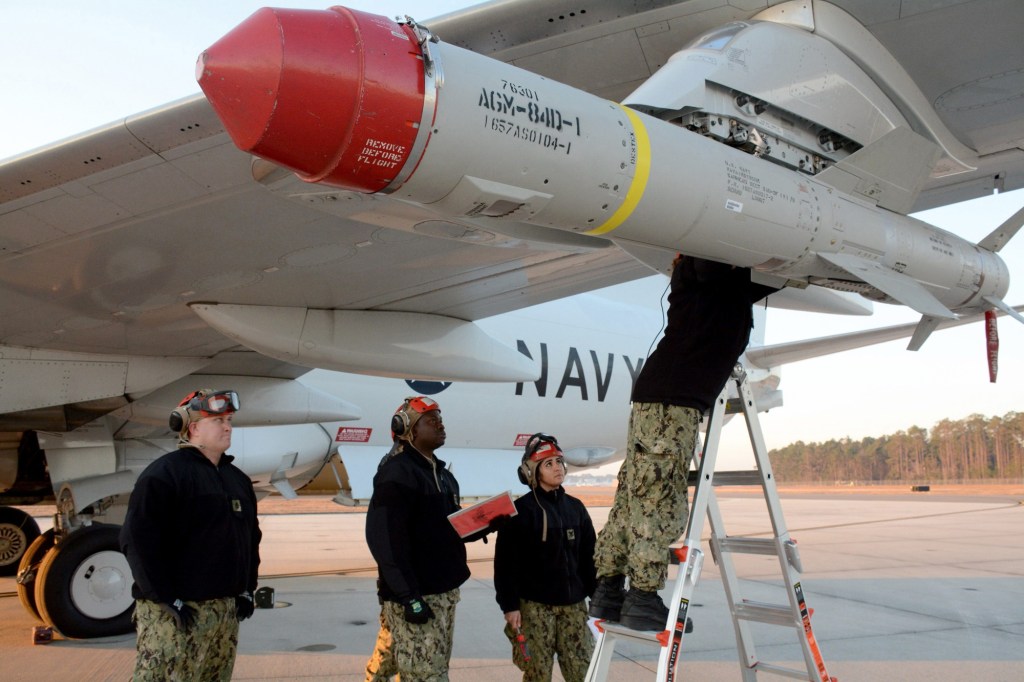
    United States Navy P-8A Poseidon with a AGM-84D-1 Harpoon missile. The 84D-1 is an upgraded an extended range version of the Harpoon.

    While the Harpoon’s almost 5 decades of service and extensive use in combat shows it is still a very capable weapon, it is outmatched in range by the air defense systems of some of the U.S. adversaries, especially the older models which are mostly if not all being phased out in favor of the II and II +.

    The original Harpoon Block 1 missile has a range of around 80-100 miles.

    The Block II has less range improvements at around 81 miles but was made me for combat around littoral waters so not as much range was needed.

    Block II+ER, the newest generation of the Harpoon in use has a range of around 190-200 miles.

    The Block II and Block II+ER have advanced capabilities added in like improved GPS guidance, and protection from Electronic interference. It’s possible that the Harpoon will still be used in some cases where the range and stealth of the LRASM isn’t needed.

    While the harpoon isnt the United States only anti-ship missile it is the one that was specifically designed for that role. Some other choices include the AGM-84H/K SLAM ER which is kind of a sibling offshoot of the Harpoon and is an air launched land attack missile that can be used to target maritime targets. It has a range of 170 miles.

    Enter the Lockheed Martin’s AGM-158C LRASM.

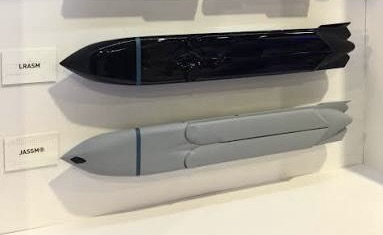
    A display showing a LRASM and a JASSM

    The AGM-158C is a derivative of the AGM-158B JASSM ER (Joint Air-To-Surface Standoff Missile Extended Range), a low detection air launched cruise missile designed by Lockheed Martin. The JASSM first entered combat striking Syrian government alleged chemical weapons targets in 2018 and more recently striking targets in Yemen.

    The AGM-158C LRASM is a stealth launched anti-ship cruise missile. This integration has been planned for several years now and is giving the P-8 an effective surface weapon that better keeps the aircraft and crew out of harms way. The LRASM can also be used on the B-1 Bomber, the Navy F/A-18’s, and on any non internal pylons on the F-35.

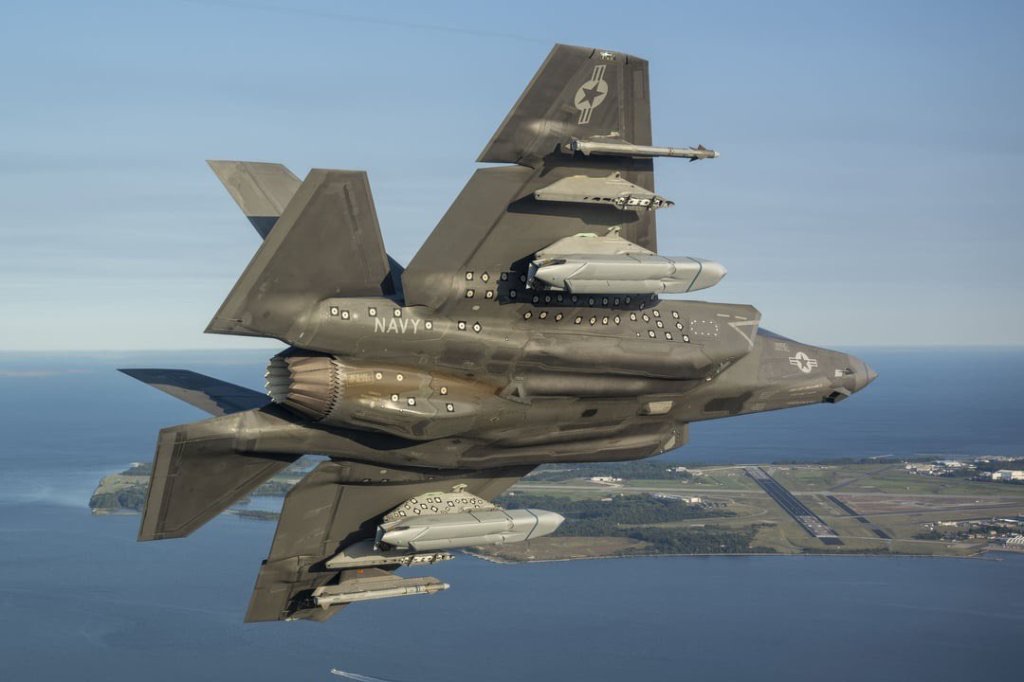
    F-35 test flight with the LRASM. Note, Neither LRASM Or JASSM can be carried internally by the F-35, it has to go on an outside pylon, which takes away some of the stealth of the jet.
    The Rockwell B-1 Lancer carries out an integrated test with the LRASM. Capable of carrying 24 internally, an announced pylon could add 6 more externally.

    The LRASM has an incredibly advanced targeting and navigations suite and even more so for planned upgrades for this missile. The range of the LRASM depends on the block number. These numbers are also mostly estimates and going off of what public data is available, which is limited. The C-1 variant is listed as having a range of greater than around 200 nautical miles, the C-2 is said to be in the +500 miles range and the new C-3 they are working on is rumored to be in the 1000 mile range but is still in development. The C-3 of the future is supposed to be being developed with Artificial Intelligence integration which will allow data links between the missiles and allow them, according to John Keller from Military Aerospace Electronic, `advanced autonomous mission planning, target discrimination, and attack coordination, adjust flight paths based on real-time data, identify and track moving targets, and adapt to changing conditions like jamming and interference.

    Adding this capability to the P-8 allows them to not only detect the enemy but to also engage them with the safety that range gives you.

  • Images show the aftermath of the Iranian retaliation strike on U.S. Al Udeid airbase.

    By. Scott Jackson


    07/15/2025

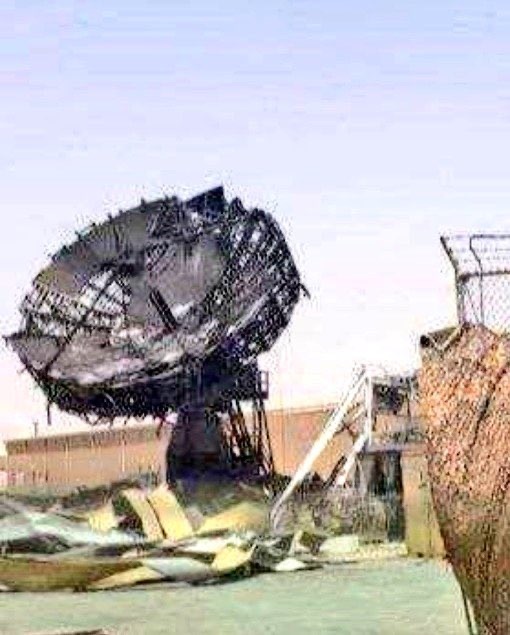
    Recently released images show the damage after an Iranian attack on the U.S. Al Udeid airbase. The June 23rd ballistic missile attack was mostly intercepted, video of which can be seen here.

    Qatari residents watch as US air defenses take out incoming Iranian ballistic missiles.

    Al Udeid is a large military complex and is currently the forward operating base for US Central Command and the USAF Central Command and several air squadrons as well as one from the Royal Air Force. Al Udeid has been an important US instillations since after Desert Storm when a Defense Cooperation Agreement was signed and the base was built in 1996. The U.S. kept the base somewhat secret until the early 2000’s when it was used to launch missions into Afghanistan. Since then the base has remained an important strategical command post for US forces in the Middle East.

    The Iranian attack on June 22nd was being carried out for several reasons but mainly as retaliation for the U.S.’s strike on Iran’s nuclear sites several days earlier. On a deeper level the retaliation was planned because Iran needed to appear to remain strong in front of their allies and the rest of the world. Not striking back, for them, was not an option.

    Hours before the attack the US was made aware of the planned attack by the Qatari government who were told by Iranian officials. This gave the US enough warning that no lives were lost.

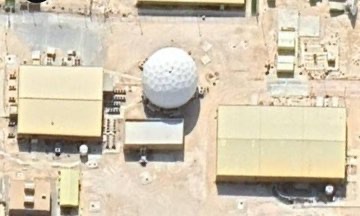
    Above shows a before image of the exact area that received damage. What you’re looking at is a satellite antenna for the Wideband Global SATCOM (WGS) network. It is not a radar as some have reported.

    Here is what it looks like on the inside.

    Inside the radar dome at Al-Udeid.

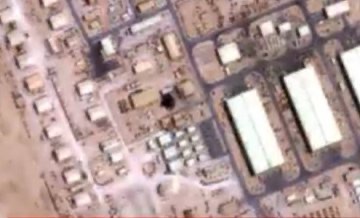
    Several days after the attacks this is what the same spot looked like.

    The back circle is the remains of the radar dome and dish.

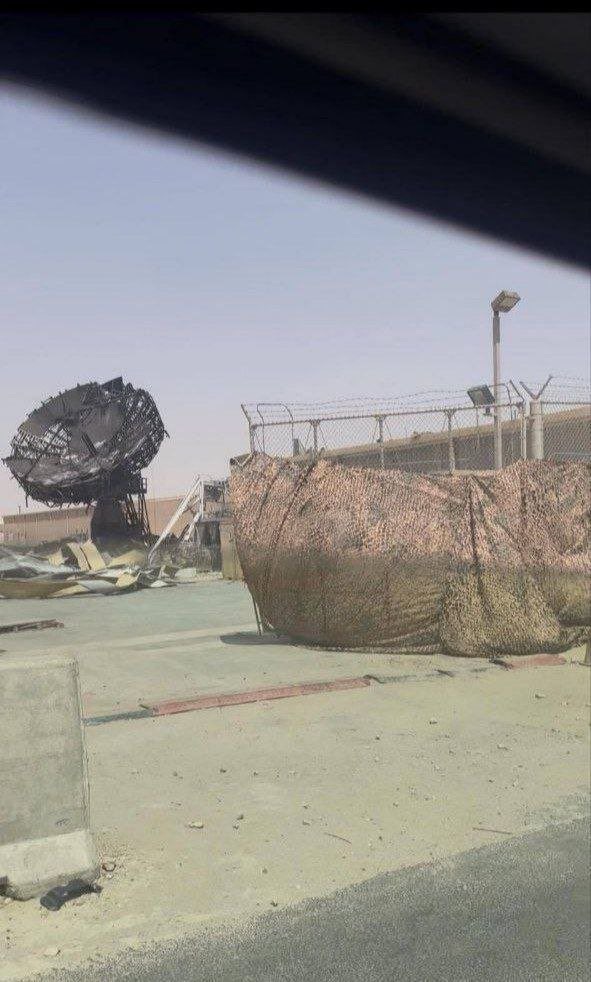
    Looking closer with photos from the ground …

    We knew several days ago that the site had received damage but having pictures from the ground is always a bonus.

    Fixing the damage will be a high priority for the forces at the base. It’s a fairly new system made by L3Harris so it’s likely expensive. I’m the interim it’s possible a smaller version of the same model can be brought in to take care of their immediate communication needs.