Tag: Middle East

  • Daily Briefing

    February 5th,2025

    By Scott Jackson

    Arleigh Burke-Class Guided-Missile Destroyer, USS Preble (DDG-88) utilizing its High Energy Laser with Integrated Optical-Dazzler and Surveillance (HELIOS) Weapons System. 

    USS Preble (DDG-88) firing its HELIOS system.

    Helios is apart of a larger program aimed at the development of Solid State Lasers (SSL). Some of the other lasers being developed include the 

    -Ruggedized High Energy Laser (RHEL);

    -Optical Dazzling Interdictor, Navy (ODIN); -Solid State Laser Technology Maturation (SSL-TM) 

    -High Energy Laser Counter-ASCM Program (HELCA), for shooting down anti-ship cruise missiles. 

    All of these I’ve listed are in varying states of development and wont be fielded until a future date however HELIOS has been in a testing phase since 2021 and now has been fully integrated into the combat systems of at least the USS Preble (DDG-88) where it will be used to counter drones, small boat threats and missiles. 

    The main advantage of the direct energy weapons is the price. Lasers cost about $1 to fire compared to some missiles getting into the tens of millions of dollars. 


    Russias losses in Ukraine for the month of January reached almost 50,000, the second highest since the early days of the war.

    According to the General Staff of the Armed Forces of Ukraine in the month of January 2025, the Russian armed forces lost 48,240 soldiers and 573 Russian armored vehicles and 230 tanks. In the Russian order of battle this is roughly equivalent to 3 motorized rifle divisions. In that time the Russian army has managed to take roughly 500 sq. kilometers (193 sq miles) in the Kursk Region as well as Ukraine. These numbers are almost identically to December of 2024 numbers except they took 100km more territory.

    The situation in Ukraine remains much as it has the past couple months. Ukrainian forces continues to reinforce defensive points while Russia has kept its army’s pushing into enemy territory. Ukrainian forces have stepped up the intensity of attacks on Russian oil and gas infrastructure, with the Ukrainian security services (USB) targeting the regions of Volgograd and Astrakhan.

    Astrakhan Gas Processing Plant

    Future daily briefs will have more Ukraine reporting as I reconnect with my sources and find new ones.


    Iraqi airstrike kills 5 ISIS operatives in Iraq.

    On January 31, Iraqi Security Forces (ISF), supported by U.S. Central Command (CENTCOM) forces conducted an airstrike near Kirkuk, Iraq. The attack killed 5 ISIS fighters according to CENTCOM.

    “An initial post-strike clearance found multiple explosive suicide belts and other materials,”

    CENTCOM confirmed in a statement, underscoring the strike’s role in weakening the group’s operational capabilities.

    “ISIS remains a threat to the region and beyond, and CENTCOM, along with partners and allies, will continue to aggressively pursue these terrorists to protect the homeland,” 

    This operation was backed by Coalition Joint Task Force – Operation Inherent Resolve (CTF-OIR), which provided intelligence and technical support for the strike.

    U.S. forces have recently stepped up strikes against ISIS targets since the fall of the Assad Regime in Syria. With the state being weakened it was a possibility that Daesh could attempt a comeback.

    On the same note….

    US Africa Command carries out airstrikes on ISIS in Somalia.

    On February 1st, 2025, US president Donald Trump, in his first major U.S. Strike overseas since he took office, ordered US forces to carry out airstrikes on ISIS targets in Northern Somalia in the Golis Mountains. Defense Secretary Pete Hegseth said that “multiple operatives” were killed in the strike.

    F/A-18 Super Hornet

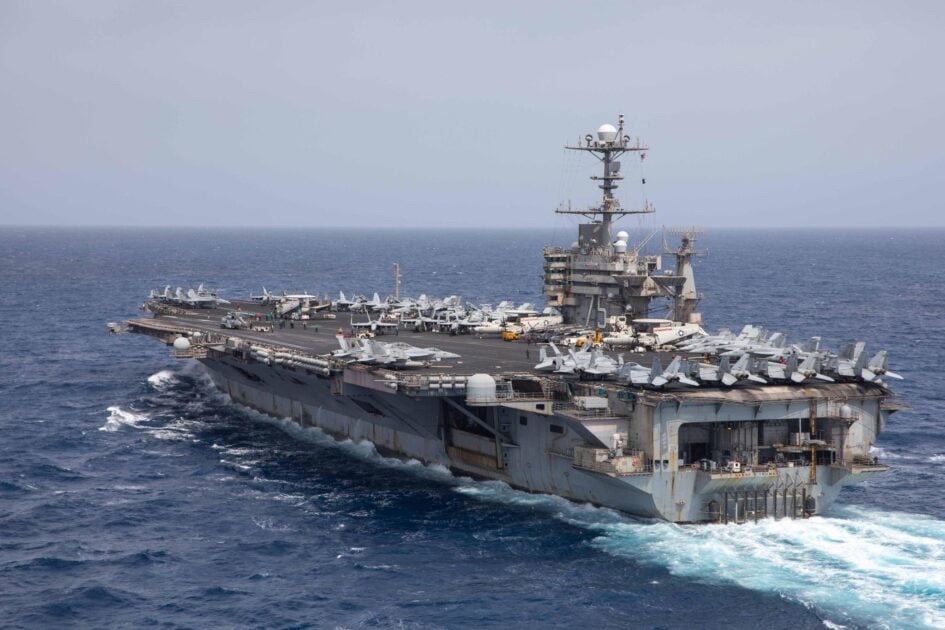
    The strikes were carried out by planes from the navy and Air Force. FA-18 Super Hornets took part from the USS Harry S. Truman currently stationed in the Red Sea.

    While the main threat in the area has been Al-Shabab, ISIL has been involved in attacks in Southern and Central Somalia. Even while facing the threat of US bombings as well as the policing actions of the Somolian Security Forces, and a fierce rivalry with Al-Shabob ISIS (ISIL) continues to grow and gain a strong foundation in the country.

  • Daily Briefing

    By. Scott Jackson

    February 1st, 2025

    US Forces kill senior operative of Terror Group Hurras al-Din in Syria.

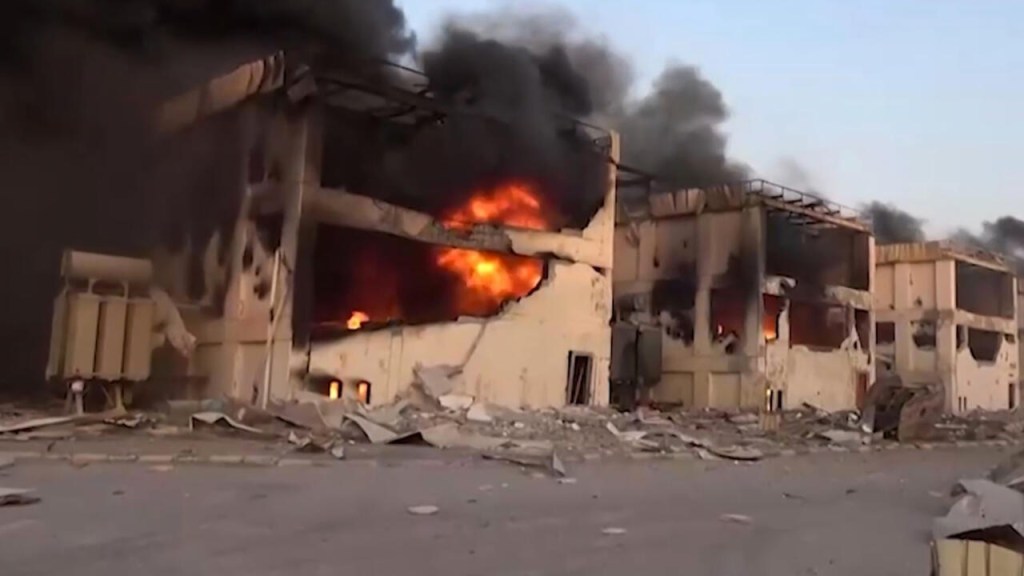
    The aftermath of the airstrike that killed Muhammad Salah al-Za’bir in Northwestern Syria.

    On January 30th US CENTCOM (Central Command) forces conducted an airstrike in northwestern Syria targeting a senior operative of the US classified Terror group Huertas Al-Din (HaD) an affiliate of Al-Qaeda. The target was Muhammad Salah al-Za’bir a former ISIS member who later went on to become a member of the Syrian At-Qaeda branch. Not much else is known about him besides that CENTCOM describes him as a “Senior member” in the group. 

    A statement from CENTCOM on the strike:

    “The airstrike is part of CENTCOM’s ongoing commitment, along with partners in the region, to disrupt and degrade efforts by terrorists to plan, organize and conduct attacks against civilians and military personnel from the U.S., our allies, and our partners throughout the region and beyond”

    It ends with a warning from commander of CENTCOM, Gen. Michael Erik Kurilla.

    “CENTCOM will continue to hunt and kill or capture terrorists and defend our homeland against groups that plot to attack U.S. and allied personnel,”

    (more…)

    Pages: 1 2

  • Two Iranian Cargo ships set to leave China filled with propellant used for ballistic missile production.

    By. Scott Jackson

    January 24,2025

    M/V Golbon and M/V Jairan, Two Iranian flagged containerships have reportedly been loaded with over 1000 tonnes of sodium perchlorate at a Chinese port over the past several days. 

    M/V Jairan
    M/V Golbon

    Sodium perchlorate is used to make ammonium perchlorate which can be used as a solid propellant in ballistic missiles and is controlled under the Missile Technology Control Regime, an international Anti- Proliferation group. 

    (more…)
  • US Department of Defense reveals the amount of munitions expended while engaging the Houthis in the Red Sea. 

    US Department of Defense reveals the amount of munitions expended while engaging the Houthis in the Red Sea. 

    The US military has been engaged in defensive operations against the Yemeni Houthis for the past 15 months in the waters of the Red Sea and in the Arabian Sea as well as the sky’s above Yemen. Several different US carrier strike groups have been deployed into the area to protect the billions of dollars of international commerce that moves through the Red Sea daily heading to and from the Suez Canal. The Houthis have targeted any ship they believe is connected in any way to America or Israel as a way to show support for Palestinian terror group Hamas and their war with Israel in Gaza. 

    The Head of Naval Surface Forces Vice Admiral Brendan McLane revealed at a Surface Navy Association conference that was attended by journalists from The War Zone( TWZ is great, I always recommend them when they come up) just how many munitions had been expended in the operation. Statements made by the Vice Admiral also give us a more detailed look at how the operation has been going and what US forces as well as their European allies have been dealing with. US CENTCOM which is the United States military command over The Middle East  region regularly puts out reports and social media post however they can sometimes be sparse with the details. 

    The U.S. Navy Surface Fleet has expended 400 individual munitions against the Iranian backed Houthis.

    The Vice Admiral also gave an example of the current state of modern surface warfare by talking about a recent engagement that the sailers aboard the Arleigh Burke class destroyer USS Spruance (DDG 111).

    “They were in a fight where they shot down 3 anti-ship ballistic missiles(ASBM), 3 anti-ship cruise missile (ASCM) and 7 one-way [unmanned aerial vehicles, or UAVs],” McLane said. “So that’s how it kind of rolls up.”

    USS Spruance (DDG 111) after its return to its homeport, Naval Base San Diego, Cali

    I’d like to break down the specific munitions, what they are used for, and maybe most importantly- the cost to the American taxpayers. 

    USS Chung-Hoon (DDG 93) fires an SM-2 missile.

    SM-2 missiles (RIM-66)

    120 expended. This missile is the workhorse of US navy air defense, being used to take out incoming anti ship missiles as well as other 

    missiles and incoming enemy jet fighters.. High speed-highly maneuverable and considered one of the best in the world at what it does. The Sm-2 has a reported range of 90 nautical miles and can reach an altitude of 65,000 ft. A cornerstone of the fleets layered air defense systems. 

    SM-2

    Cost vary on specific missile block but these come in at roughly $2 million USD per. 

    The U.S. is reported to have around 12,000 of these in its stocks.

    US Aegis Destroyer intercepts Medium-Range Ballistic Missile with new SM-6 SWUP Missile.

    SM-6 missiles (RIM-174)

    80 expended

    This is a newer addition to the fleet and the navy has a more limited stock of these missile with only 500 being reported to have been delivered according to the Raytheon website. 

    Coming equipped with the active radar seeker found in the Air-to-air AIM-120C AMRAAM, This missile is capable of a wide range of task being capable of defensive anti air against missile (including ballistic missile in their final terminal phase) as well as manned and unmanned air units. Its high speed also makes it a useful anti surface weapons although it’s high cost makes other weapons better choices. The thought behind this missile was warship today have limited space and a weapon that can effectively do everything is a benefit.  The explosive warhead as opposed to a hit-to-kill style missile makes this missile capable of potentially defeating the Chinese DF-21D and DF-25B anti-ship ballistic missiles. 

    SM-6 missile profile.

    Cost average around $3.9 million per. 

    A combined 20 expended from the 

    Sea sparrow and the SM-3. 

    Sea Sparrow launch

    Sea Sparrow ESSM

    Medium-range, semi-active homing missile that makes flight corrections via radar and midcourse data uplinks. The missile provides reliable ship self-defense capability against agile, high-speed, low-altitude anti-ship cruise missiles (ASCMs), low velocity air threats (LVATs), such as helicopters, and high-speed, maneuverable surface threats

    Sea Sparrow Profile

     $787K – $972K depending on configuration

    SM-3 launched from the USS McCampbell (DDG 85) intercepts ballistic missile .

    SM-3 (RIM-161)

    The SM-3 is the main ballistic missile defense of the fleet. It uses its powerful kinetic energy to utilize a hit-to-kill method of attack. It has a lower production rate than everything else on the list which also puts a heavy cost on these missile, especially if you have to fire more than one at a time. 

    SM-3 missile profile

    Anywhere from $10 million to $30 million (this price likely to come down some as missile production is ramped up as announced earlier today. 

    While the expenditure of these weapons is something to be concerned about it only highlights the logistical issues that the US would have in a near peer, great power conflict when the amount of munitions expended in the Red Sea over the past year would equal only several days of fighting in say the pacific against China. Addressing these procurement and cost issues is paramount if the US is to remain a dominant force on the world’s stage.