Tag: Mediterranean

  • US Airforce conducts show of force flight through the Middle East.

    US Airforce conducts show of force flight through the Middle East.

    By: Scott Jackson

    February,20th 2025

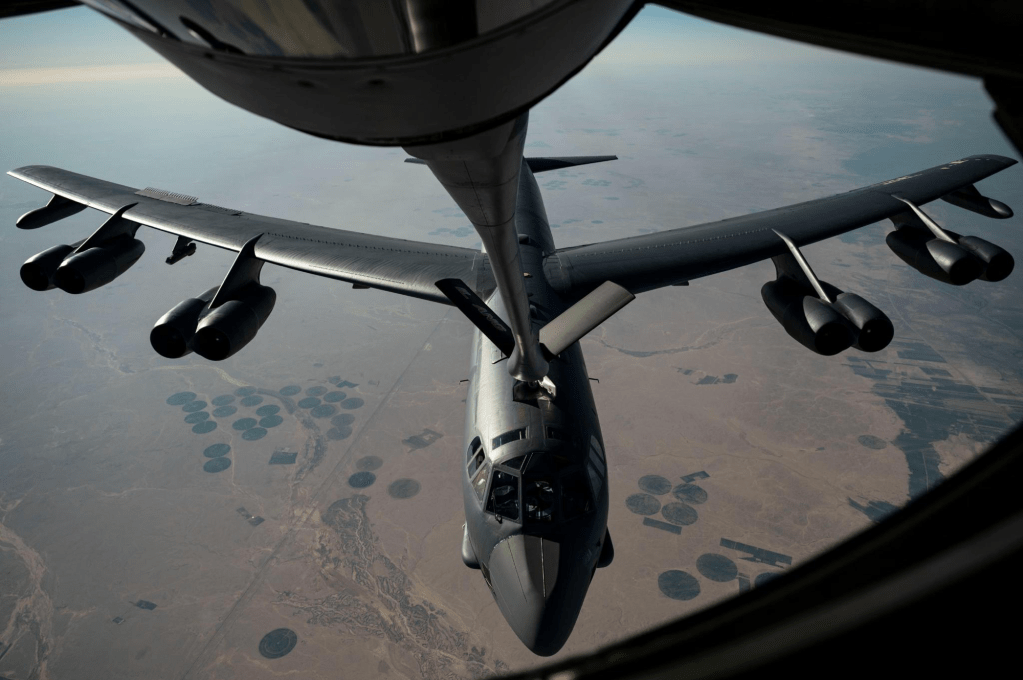
    February 17 concluded a 24 hour flight for a number of US aircraft that went on a “show of force” mission. Also called a “force projection” demonstration through the Middle East.

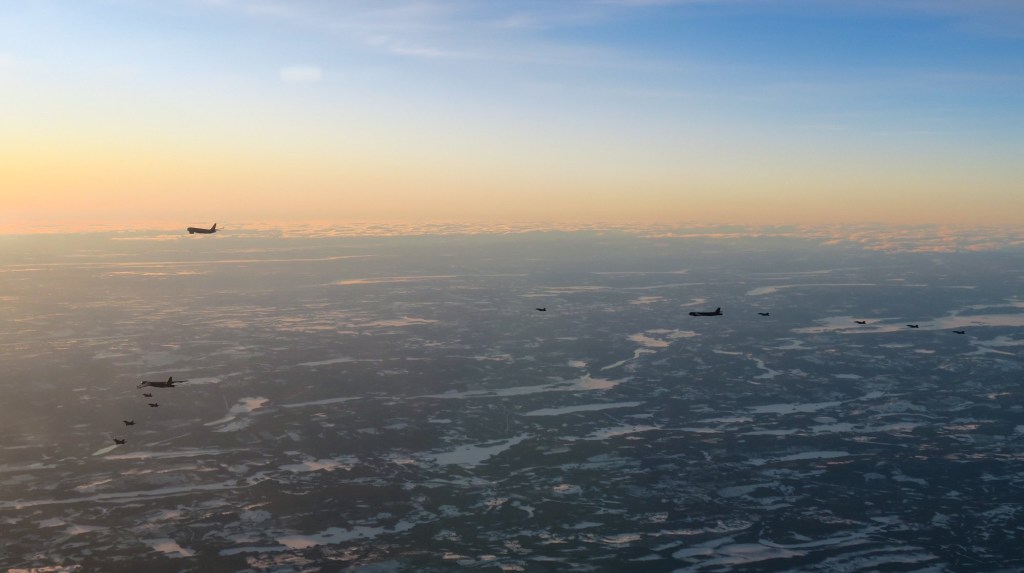
    Flying out of RAF Fairford, South of Birmingham in the United Kingdom, 2 US B-52 Stratofortress long range bombers made their way south over Europe and into the Mediterranean and then on to the Middle East.

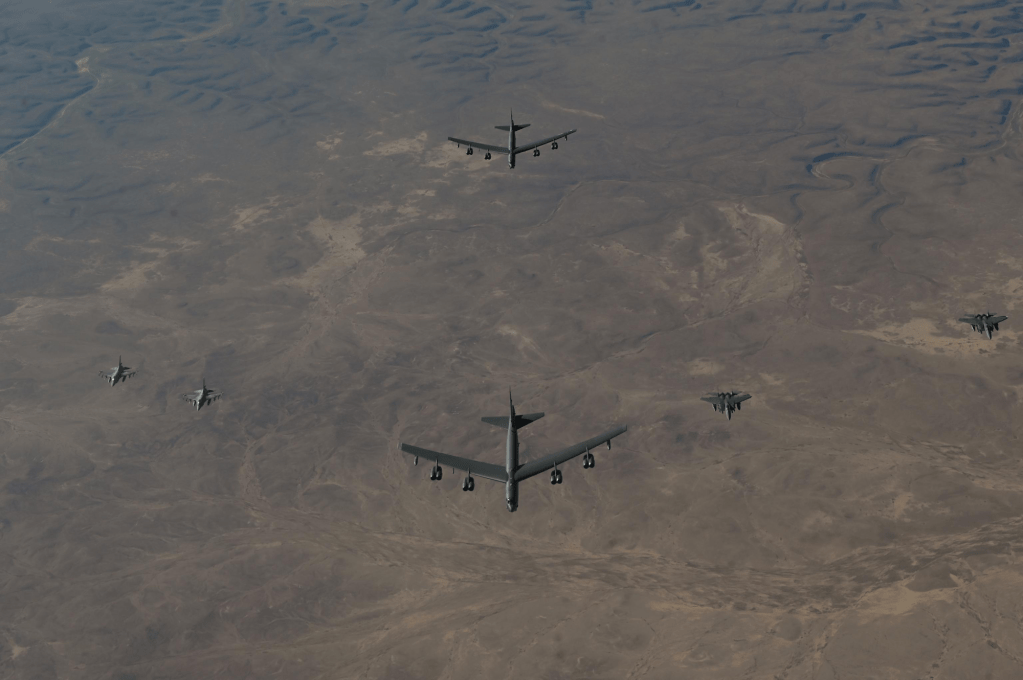
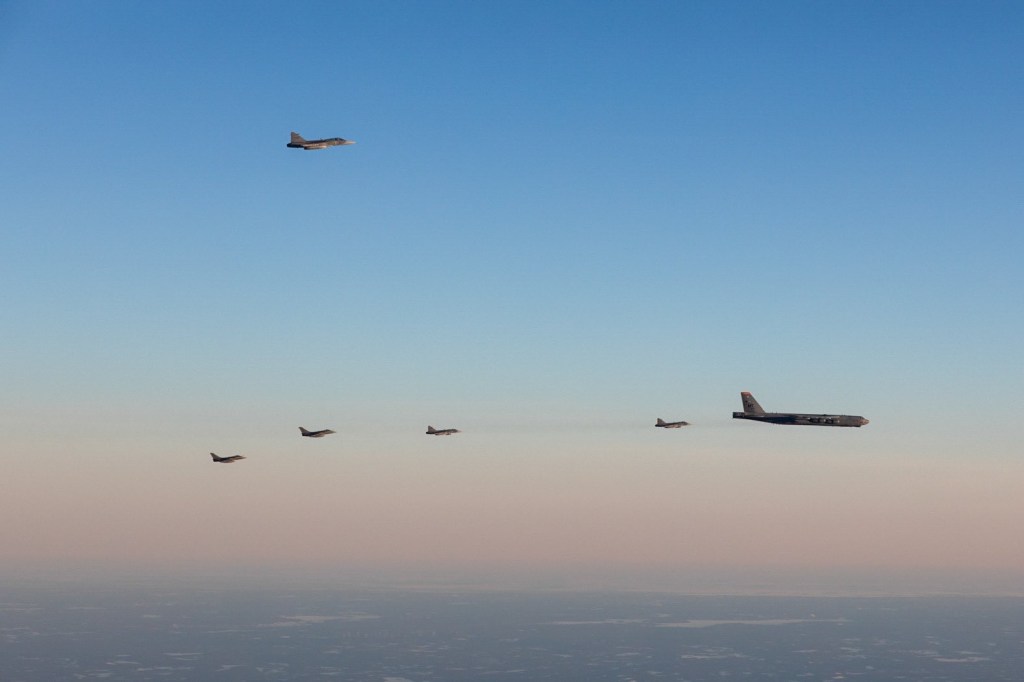
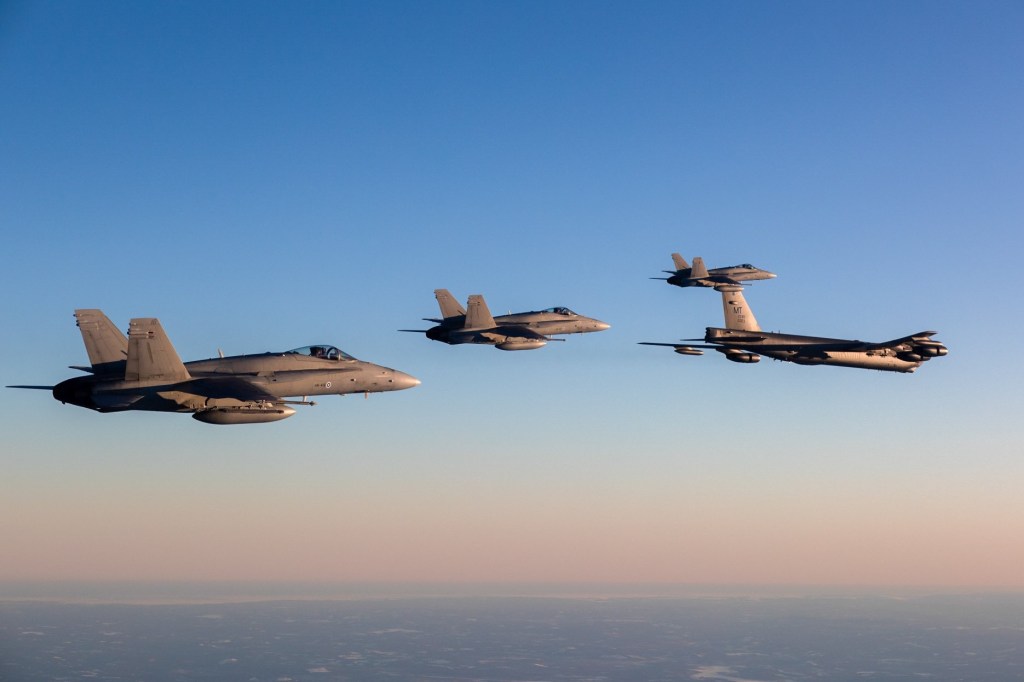
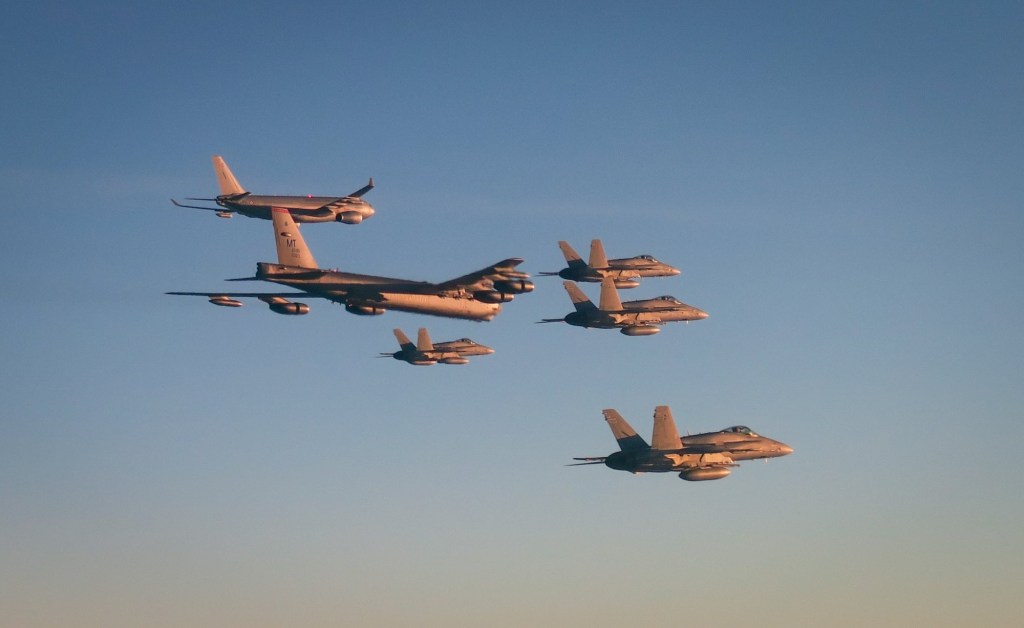
    The Bombers were joined by a number of escorts from 4 regional partner nations at various points during its mission as well as at least 2 U.S. F-15 Strike Eagles.

    B-52s flying with 2 US F-15 Strike Eagles as well as two unknown partner nation F-16s Vipers.

    “Bomber Task Force missions demonstrate U.S. power projection capability, commitment to regional security, and ability to respond to any state or non-state actor seeking to broaden or escalate conflict in the CENTCOM region”said Gen. Michael Erik Kurilla, CENTCOM commander.

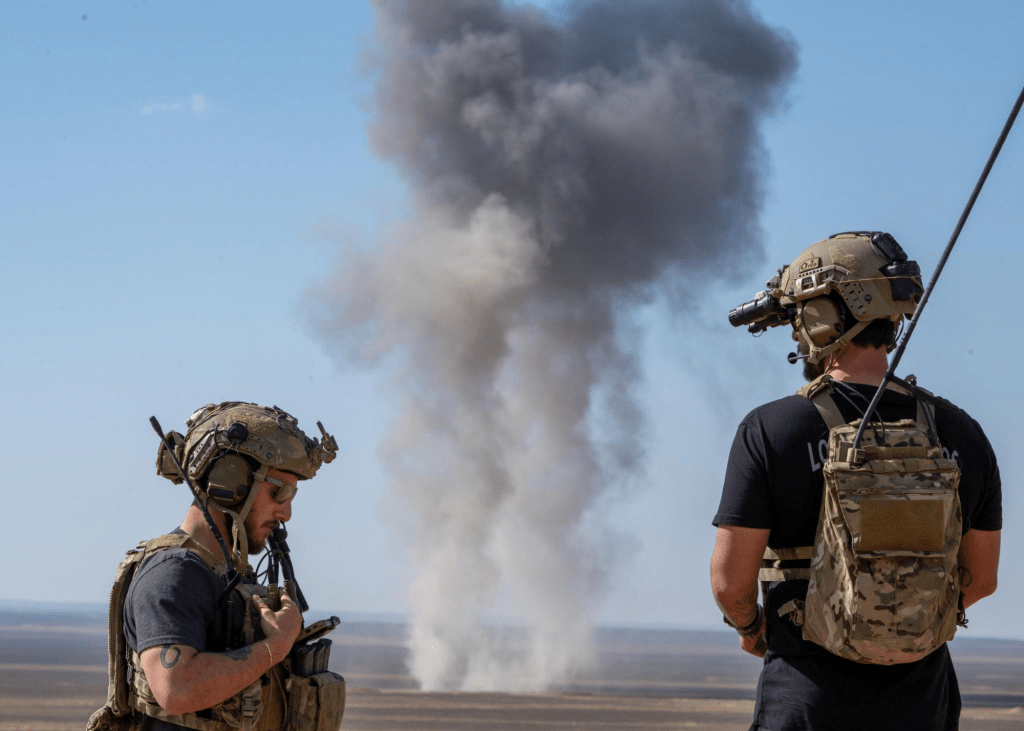
    While being mainly a power projection mission the bombers also took part in dropping live munitions on several target ranges located in partner nations.

    Live fire range bombing (location unknown released by US CENTCOM)

    These bombers are apart of the 69th Expeditionary Bomb Squadron that just started the U.S. Air Forces first European bomber deployment for the year. They will fly out of RAF Fairford and are under command of U.S. Air Forces in Europe-Air Forces Africa (USAFE-AFA).

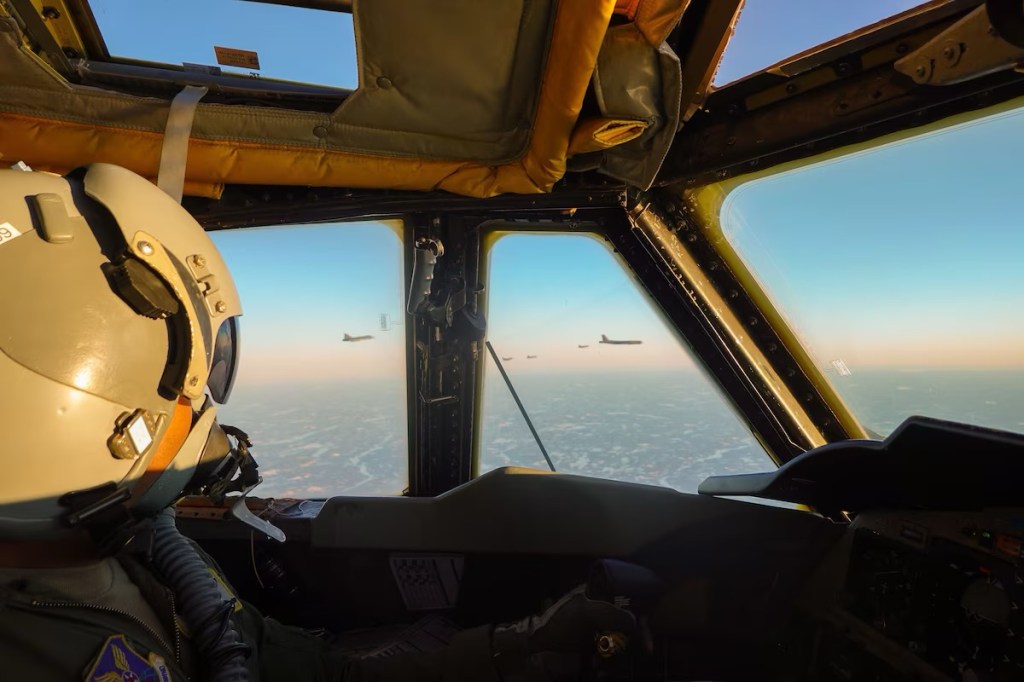
    Some of the B-52s in Europe had already been photographed earlier this week when a picture was released by USAFE out of the cockpit of a B-52 showing them flying alongside French Dassault Rafales, Swedish Saab JAS-39 Gripens, and Finnish F/A-18 Hornets,other photos were later released of the the flight. (shown below)

    While the U.S. has shown a desire to back away from European security it’s likely that the bomber deployments will, at least for the moment remain. US Allies do not, for the most part, have the ground attack capabilities that aircraft like the B-52, the B-1 and the B-2s can bring (as well as the new B-21 Raider. and interest in training alongside these bomber forces remains high.

    (more…)
  • Nimitz-Class Aircraft Carrier USS Harry S. Truman collided with a vessel at the Egyptian port of Said.

    Nimitz-Class Aircraft Carrier USS Harry S. Truman collided with a vessel at the Egyptian port of Said.

    By:Scott Jackson

    February 13th,2025
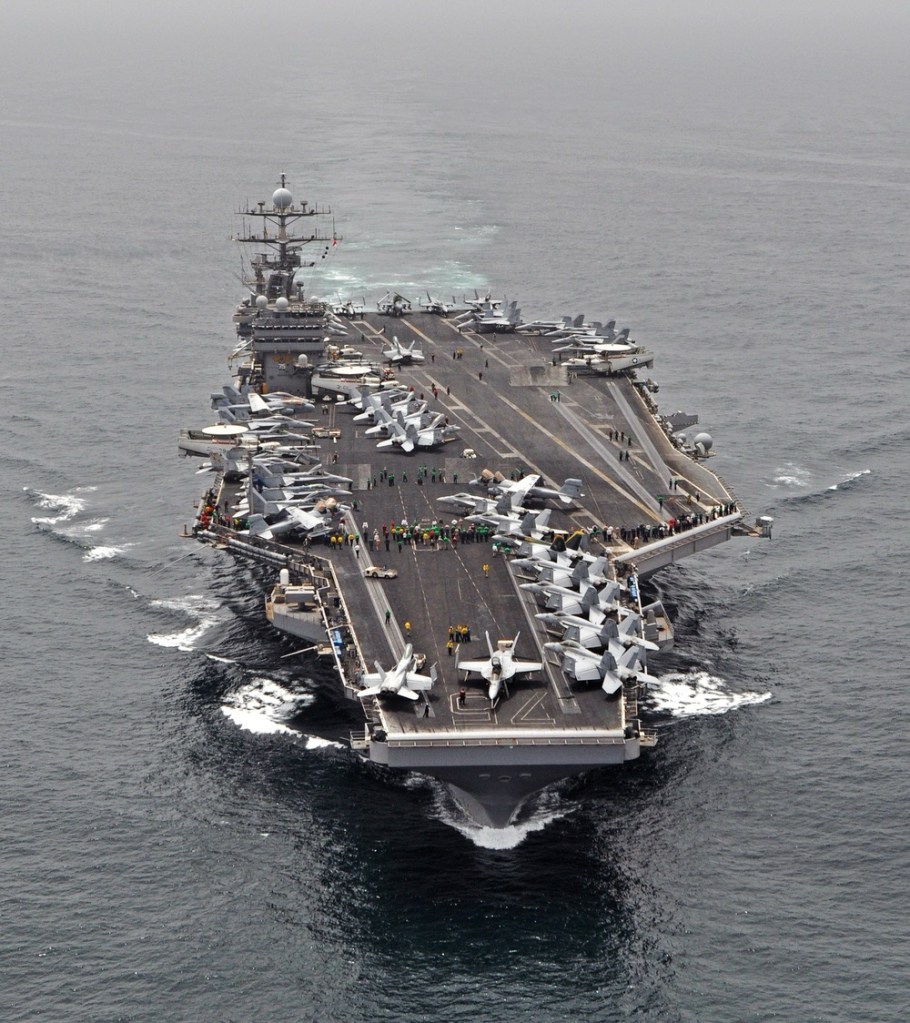
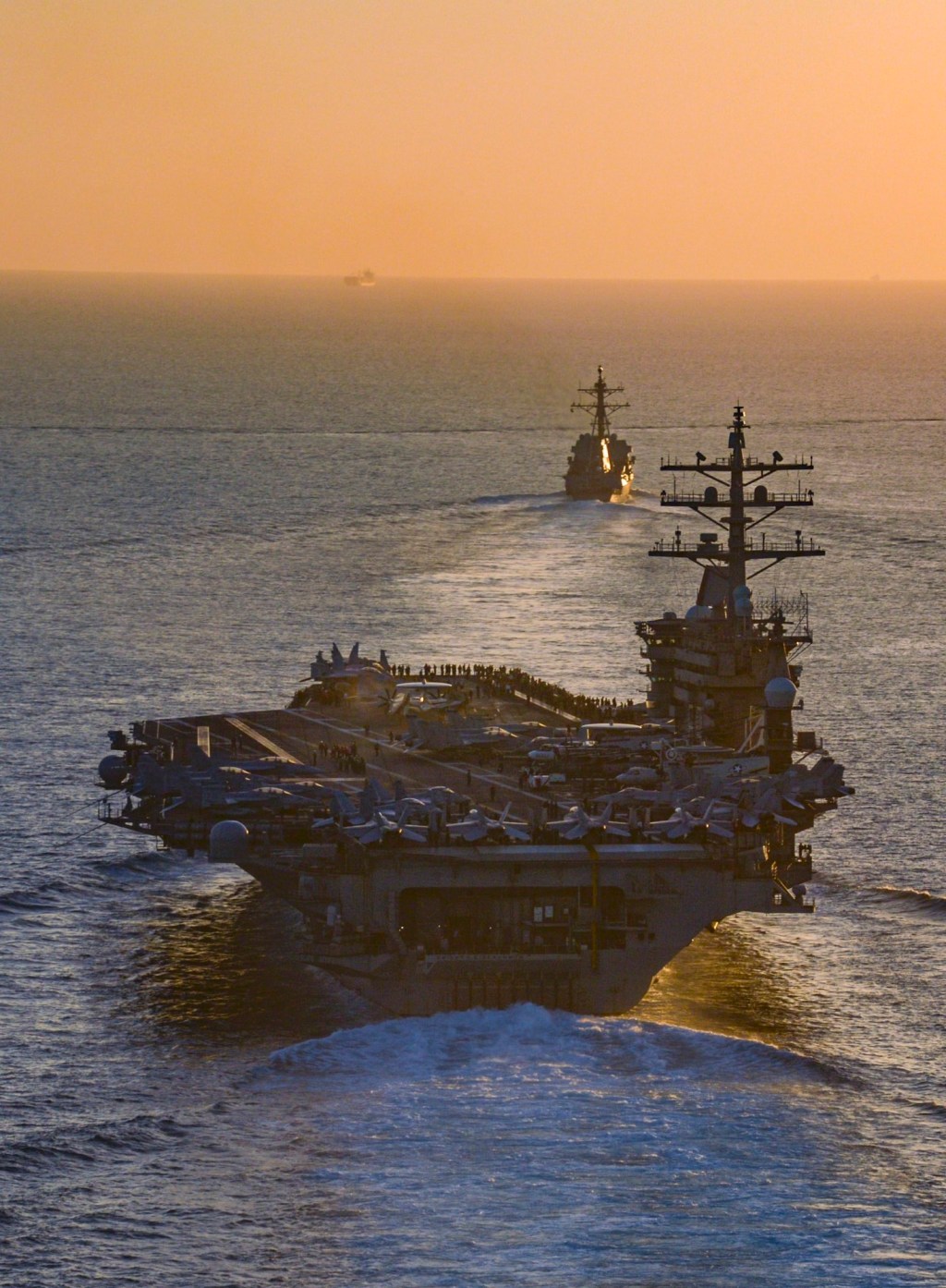
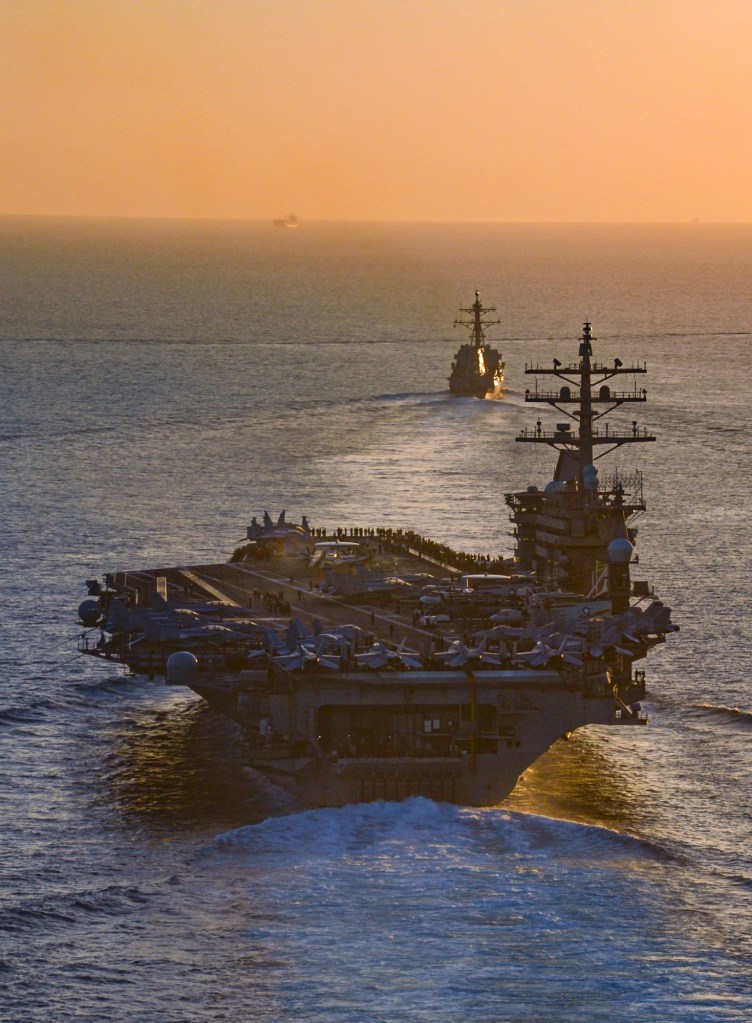
    USS Harry S. Truman.

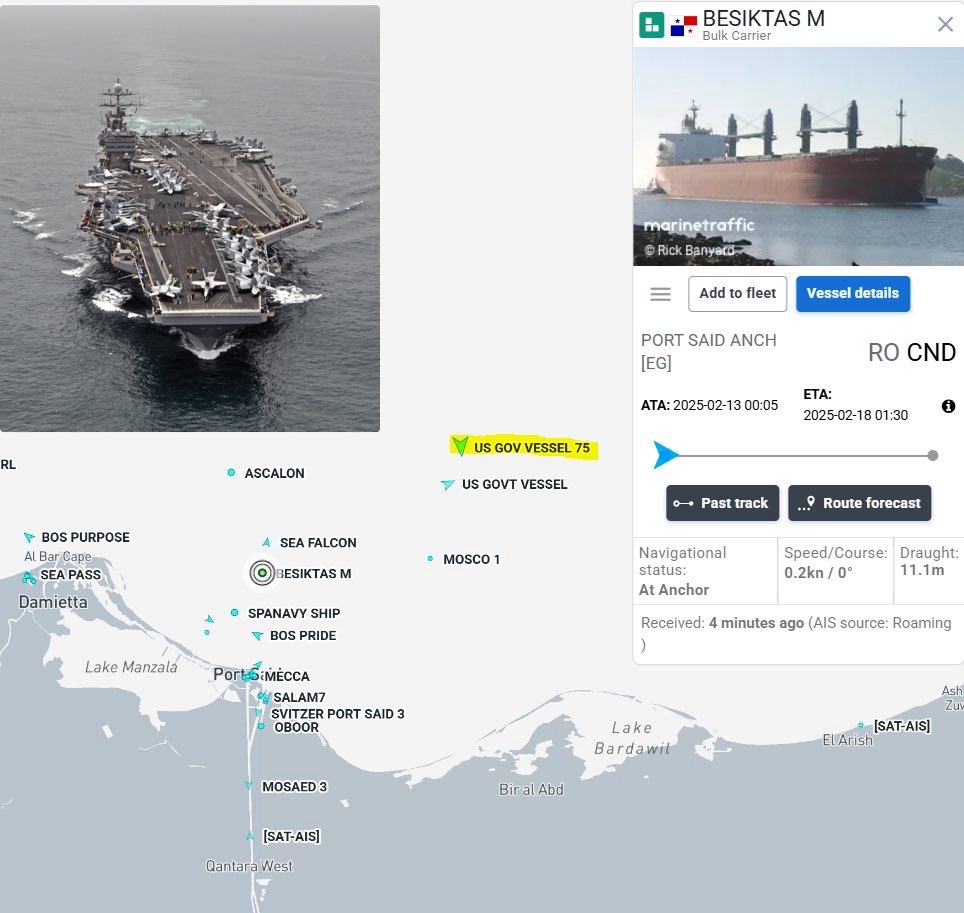
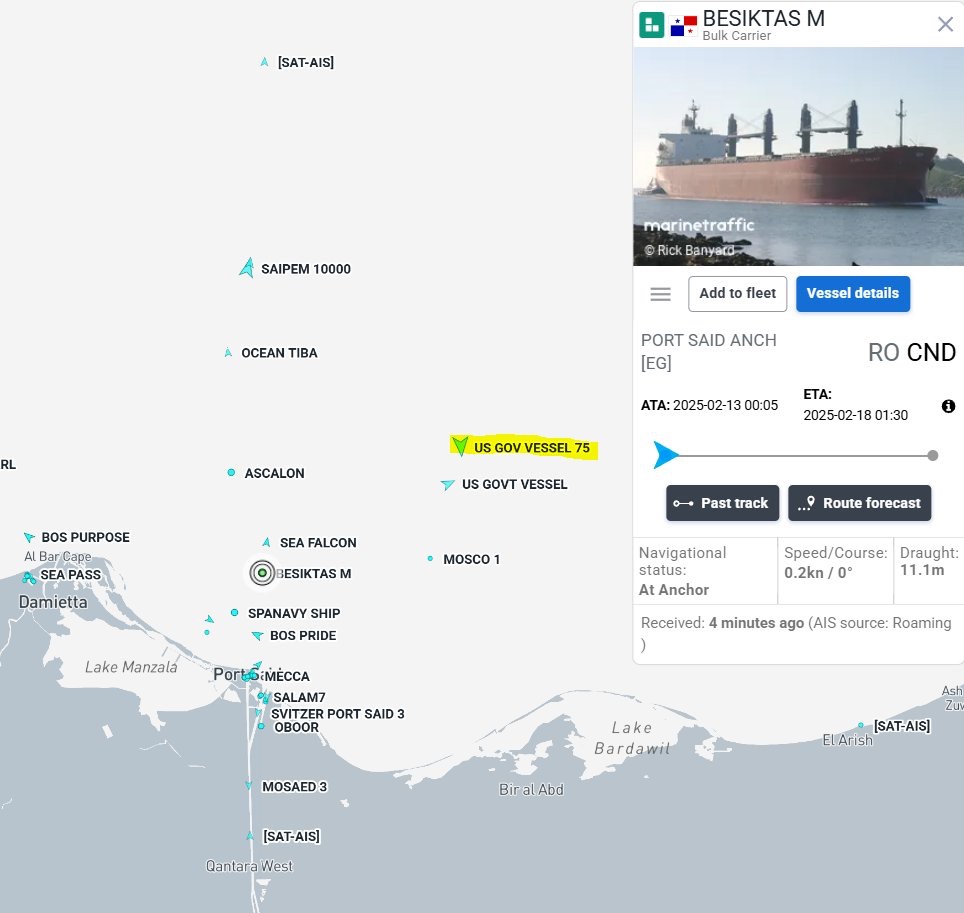
    Yesterday at around 11:46pm local time the US Navy Nimitz-class aircraft carrier USS Harry S. Truman (CVN 75) collided with the M/V Besiktas-M, a merchant vessel at the Egyptian port of Said near the mouth of the Suez Canal.

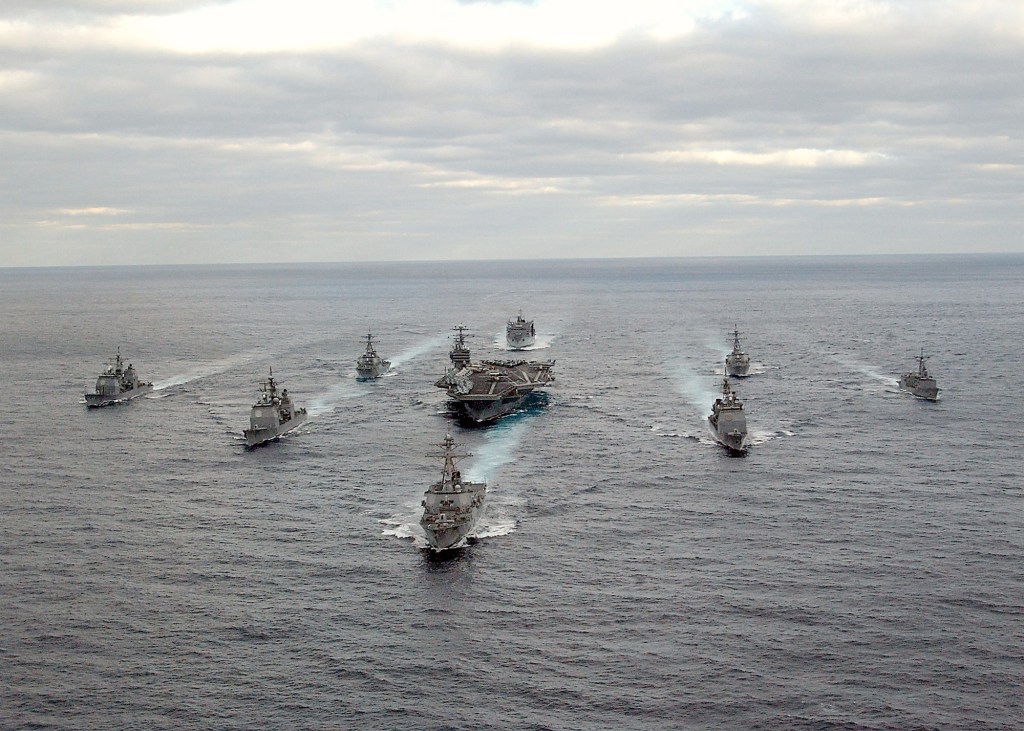
    Position of the ships at the time of writing. (2:25PMEST) Both ships seems to be moving under their own power. Highlighted vessel is the Truman, the other goverment vessel shown to the south of it is the Guided Missile Destroyer USS Jason Dunham (DDG 109) a part of its Strike Group.

    Statements from navy officials say that no flooding occurred because of the collision and that the Truman was undamaged and her nuclear power plant was safe and secure. The status of the Besiktas-M is unknown at this time.

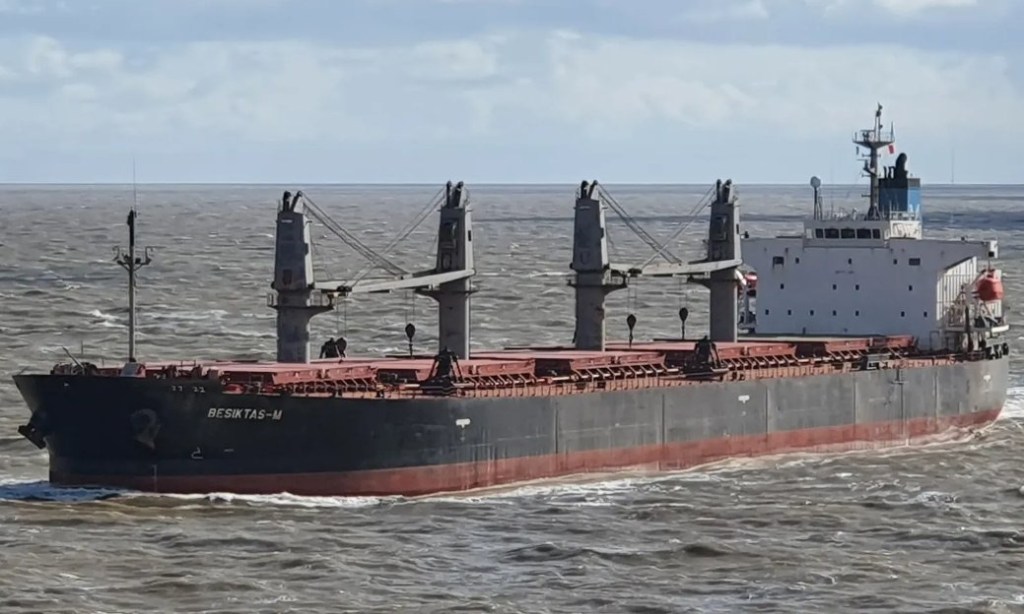
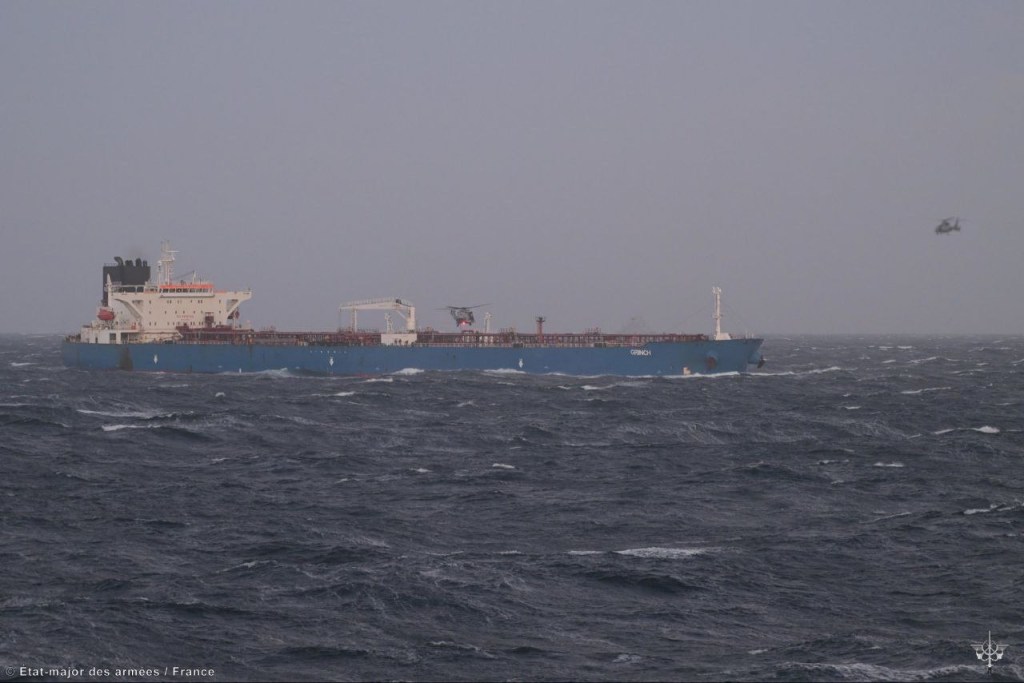
    M/V Besiktas-M

    The Truman was most recently deployed to the Red Sea and Mediterranean to combat the threat from Iranian backed Houthis in Western Yemen, as well as projecting power in the region and supporting other US and allied forces in the area. Recent Iranian actions have made maintaining a force in the Middle East increasing only important.

    The Truman will likely continue or already has continued on its journey back to the Red Sea area. It was returning from a port call in Souda Bay, Crete Greece. NSA Souda Bay provides logistical and operational support to the components of the Harry S. Truman Carrier Strike Group


    BWhile it might seem absurd to think a merchant vessel could get close enough to a carrier to collide with it in the first place because of the almost absurd amount of security around a U.S. Aircraft Carrier. However, in a restricted space such as close to the Suez Canal there isn’t room for everybody to maintain a distance from the carrier strike group and from how I understand it, all anybody can do is follow the international maritime “rules of the road” which have no requirements that merchant vessels make way for a carrier. All the U.S. can legally do is ask them to keep their distance. That’s how I understand it but if I’m wrong I welcome corrections.


    Update

    (5:00PM EST)

    Some more info has come on the merchant ship Besiktas-M. It is a Panamanian-flagged bulk cargo ship. The ship has been heading north through the Suez canal heading to its destination states as being Constanta in Romania on the Black Sea. The Truman was heading south at the time when the mishap took place. The bulk carrier is said to have moderate damage above the waterline but continued under its own power.

  • US Department of Defense reveals the amount of munitions expended while engaging the Houthis in the Red Sea. 

    US Department of Defense reveals the amount of munitions expended while engaging the Houthis in the Red Sea. 

    The US military has been engaged in defensive operations against the Yemeni Houthis for the past 15 months in the waters of the Red Sea and in the Arabian Sea as well as the sky’s above Yemen. Several different US carrier strike groups have been deployed into the area to protect the billions of dollars of international commerce that moves through the Red Sea daily heading to and from the Suez Canal. The Houthis have targeted any ship they believe is connected in any way to America or Israel as a way to show support for Palestinian terror group Hamas and their war with Israel in Gaza. 

    The Head of Naval Surface Forces Vice Admiral Brendan McLane revealed at a Surface Navy Association conference that was attended by journalists from The War Zone( TWZ is great, I always recommend them when they come up) just how many munitions had been expended in the operation. Statements made by the Vice Admiral also give us a more detailed look at how the operation has been going and what US forces as well as their European allies have been dealing with. US CENTCOM which is the United States military command over The Middle East  region regularly puts out reports and social media post however they can sometimes be sparse with the details. 

    The U.S. Navy Surface Fleet has expended 400 individual munitions against the Iranian backed Houthis.

    The Vice Admiral also gave an example of the current state of modern surface warfare by talking about a recent engagement that the sailers aboard the Arleigh Burke class destroyer USS Spruance (DDG 111).

    “They were in a fight where they shot down 3 anti-ship ballistic missiles(ASBM), 3 anti-ship cruise missile (ASCM) and 7 one-way [unmanned aerial vehicles, or UAVs],” McLane said. “So that’s how it kind of rolls up.”

    USS Spruance (DDG 111) after its return to its homeport, Naval Base San Diego, Cali

    I’d like to break down the specific munitions, what they are used for, and maybe most importantly- the cost to the American taxpayers. 

    USS Chung-Hoon (DDG 93) fires an SM-2 missile.

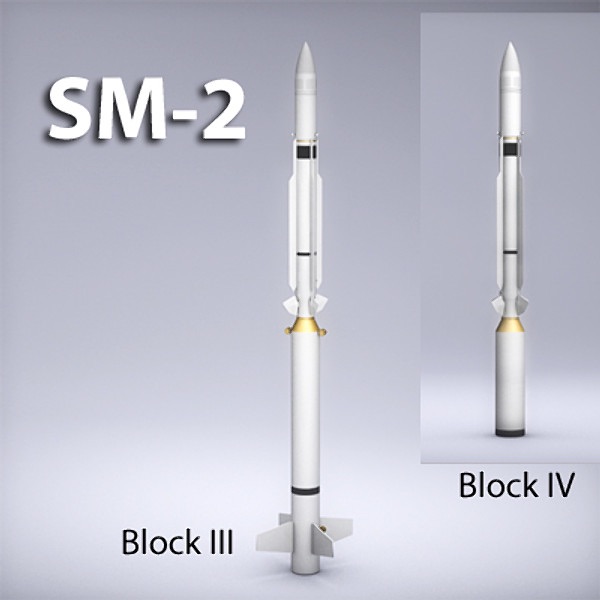
    SM-2 missiles (RIM-66)

    120 expended. This missile is the workhorse of US navy air defense, being used to take out incoming anti ship missiles as well as other 

    missiles and incoming enemy jet fighters.. High speed-highly maneuverable and considered one of the best in the world at what it does. The Sm-2 has a reported range of 90 nautical miles and can reach an altitude of 65,000 ft. A cornerstone of the fleets layered air defense systems. 

    SM-2

    Cost vary on specific missile block but these come in at roughly $2 million USD per. 

    The U.S. is reported to have around 12,000 of these in its stocks.

    US Aegis Destroyer intercepts Medium-Range Ballistic Missile with new SM-6 SWUP Missile.

    SM-6 missiles (RIM-174)

    80 expended

    This is a newer addition to the fleet and the navy has a more limited stock of these missile with only 500 being reported to have been delivered according to the Raytheon website. 

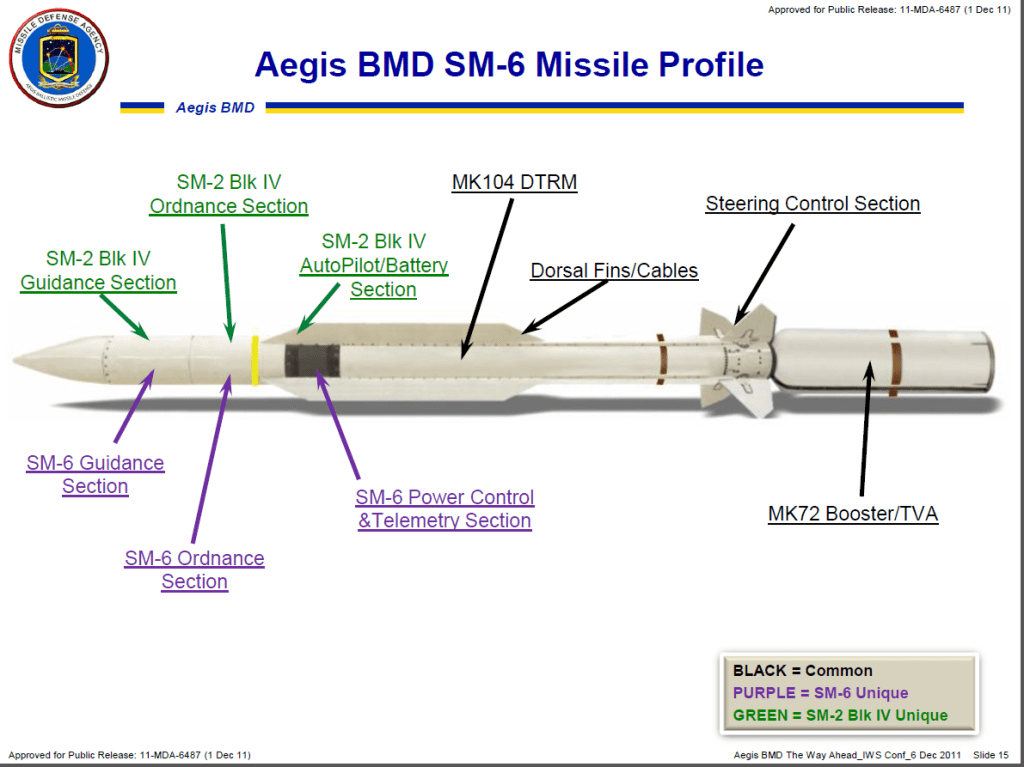
    Coming equipped with the active radar seeker found in the Air-to-air AIM-120C AMRAAM, This missile is capable of a wide range of task being capable of defensive anti air against missile (including ballistic missile in their final terminal phase) as well as manned and unmanned air units. Its high speed also makes it a useful anti surface weapons although it’s high cost makes other weapons better choices. The thought behind this missile was warship today have limited space and a weapon that can effectively do everything is a benefit.  The explosive warhead as opposed to a hit-to-kill style missile makes this missile capable of potentially defeating the Chinese DF-21D and DF-25B anti-ship ballistic missiles. 

    SM-6 missile profile.

    Cost average around $3.9 million per. 

    A combined 20 expended from the 

    Sea sparrow and the SM-3. 

    Sea Sparrow launch

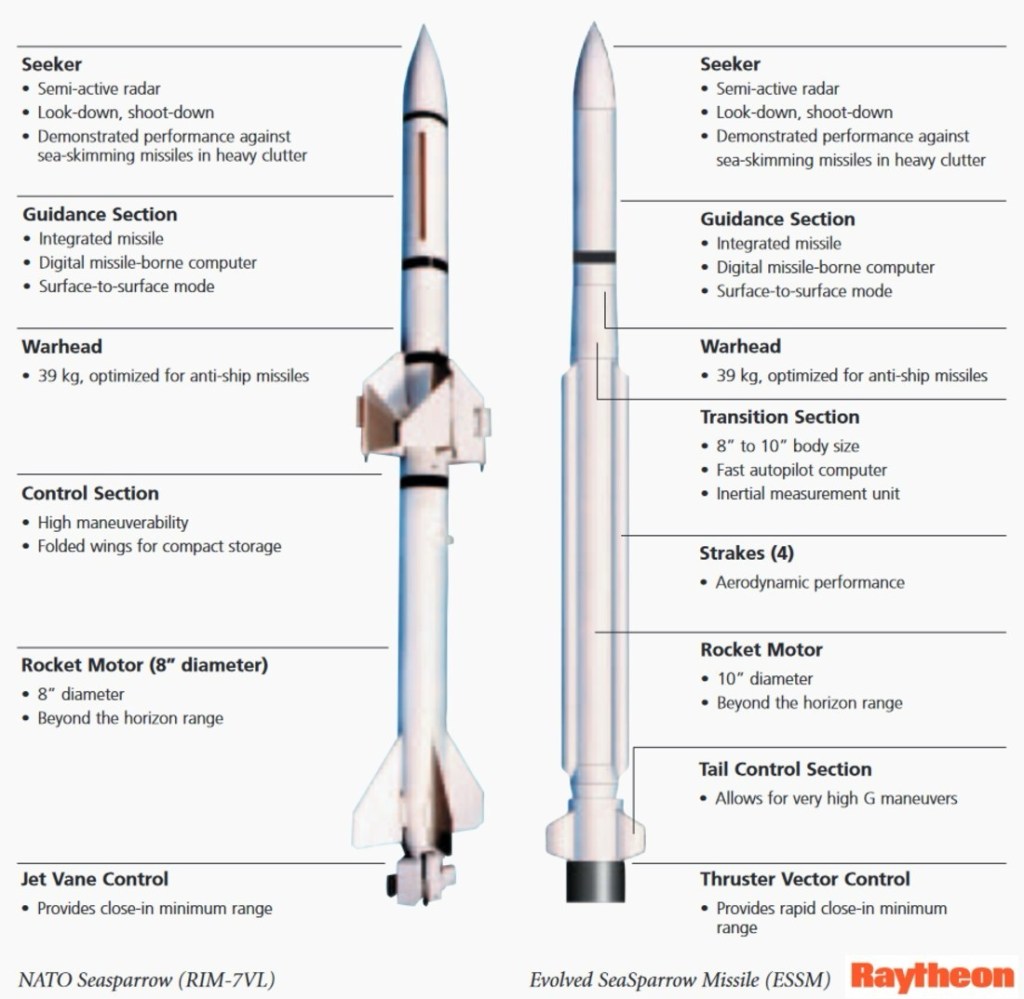
    Sea Sparrow ESSM

    Medium-range, semi-active homing missile that makes flight corrections via radar and midcourse data uplinks. The missile provides reliable ship self-defense capability against agile, high-speed, low-altitude anti-ship cruise missiles (ASCMs), low velocity air threats (LVATs), such as helicopters, and high-speed, maneuverable surface threats

    Sea Sparrow Profile

     $787K – $972K depending on configuration

    SM-3 launched from the USS McCampbell (DDG 85) intercepts ballistic missile .

    SM-3 (RIM-161)

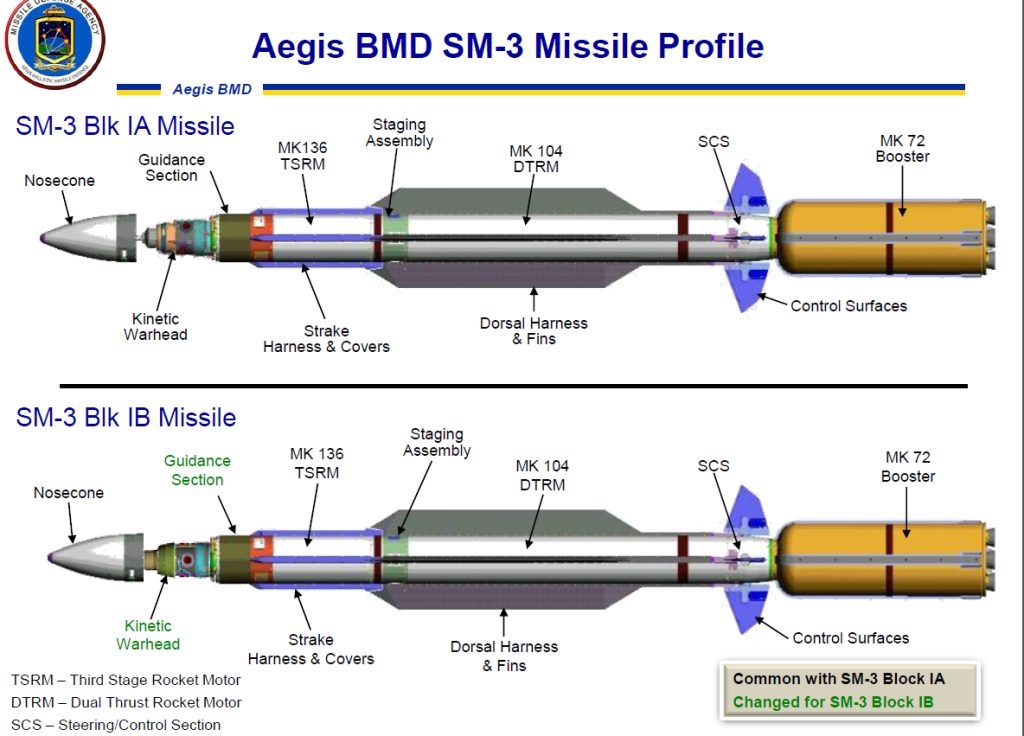
    The SM-3 is the main ballistic missile defense of the fleet. It uses its powerful kinetic energy to utilize a hit-to-kill method of attack. It has a lower production rate than everything else on the list which also puts a heavy cost on these missile, especially if you have to fire more than one at a time. 

    SM-3 missile profile

    Anywhere from $10 million to $30 million (this price likely to come down some as missile production is ramped up as announced earlier today. 

    While the expenditure of these weapons is something to be concerned about it only highlights the logistical issues that the US would have in a near peer, great power conflict when the amount of munitions expended in the Red Sea over the past year would equal only several days of fighting in say the pacific against China. Addressing these procurement and cost issues is paramount if the US is to remain a dominant force on the world’s stage.