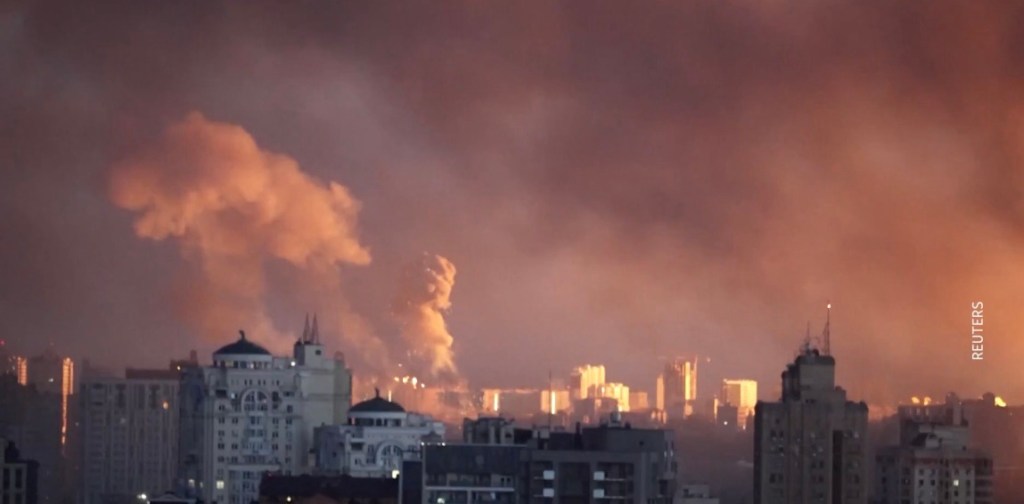
Overnight on May 23-24 2026, at least four people were killed and 100 wounded in one of the largest Russian air attacks in years. While strikes were launched across multiple regions, the main target was clear: the capital, Kyiv.
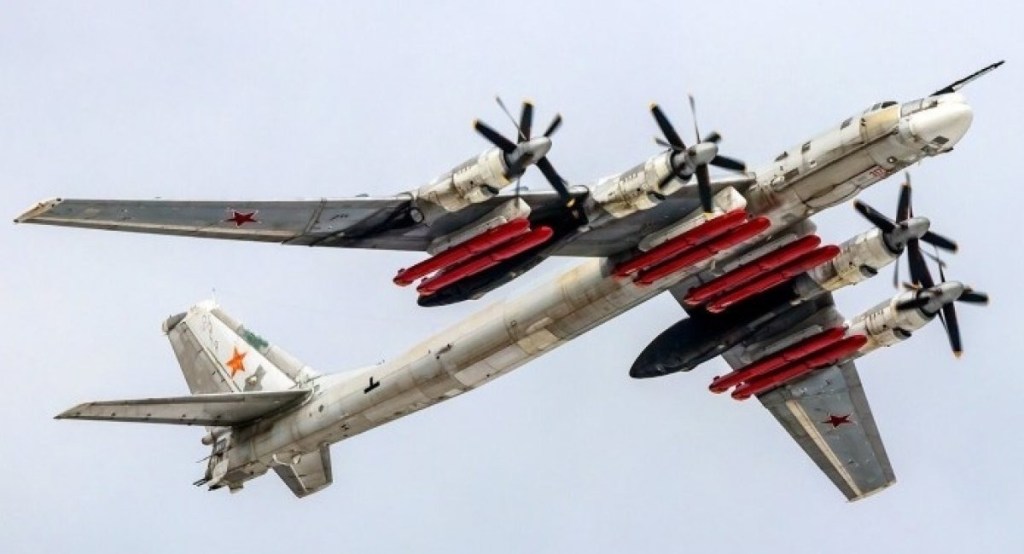
The city was hit with multiple Kh-101/Kalibr cruise missiles, Shahed drones, and ballistic missiles. After 1 a.m., explosions rang out across Kyiv following a warning from the United States and Europe that Russia might launch one of its hypersonic Oreshnik ballistic missiles. This was not only one of the largest recent attacks — it ranks among the largest of the entire war with 90 missiles (including 36 ballistic) and an estimated 600 drones being used in the attack.
Videos from Bila Tserkva, a city roughly 40 miles (64 km) from Kyiv’s outskirts, captured the Oreshnik strike. It is not yet known what, if anything, was damaged or why that area was targeted in specific. Although the attack looked dramatic, the Oreshnik intermediate-range ballistic missile (IRBM) was designed primarily as a nuclear delivery system. It is very similar to Russia’s RS-26 Rubezh (NATO: SS-X-31), which was test-fired a handful of times but never fully fielded. Both missiles are equipped with multiple independently targetable reentry vehicles (MIRVs). These break apart into six individual submunitions during the exo-atmospheric flight phase, allowing them to strike separate targets — a capability ideal for delivering multiple nuclear warheads.
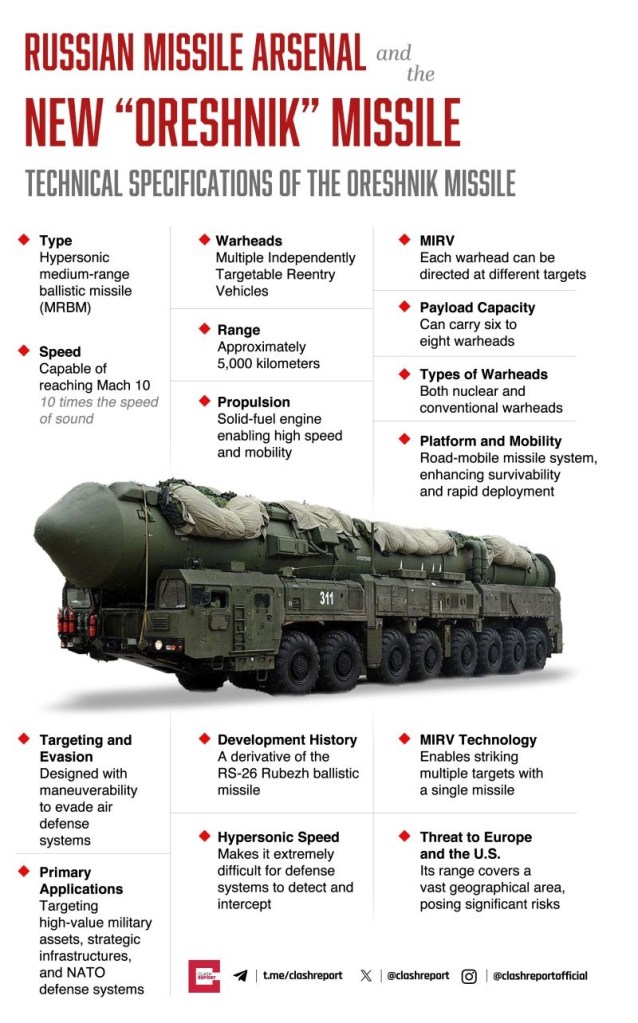
In its non-nuclear form – which lacks any conventional warhead and relies solely on kinetic energy – the Oreshnik has so far proved to be more of a threat than a practical battlefield weapon. Nuclear weapons experts have described its accuracy as “good enough to deliver a nuclear weapon, but not enough to deliver conventional weapons effectively.” Last night marked the third known use of the Oreshnik. It was deployed on November 20 2024 to hit Ukraines PA Pivdenmash facility in Dinipro, and again earlier this year on January 6 to hit the city of Lviv.
The hours-long attack sent Kyiv residents huddling in subway tunnels and other designated bomb shelters as Russia appeared to fire missiles at random. Russian Telegram channels shared a photo of a damaged apartment block and claimed it was the headquarters for the entire Ukrainian Army. One area hit particularly hard was the Lukyanivka district, north of Kyiv’s city center. That district is home to a missile production plant that has been targeted multiple times during the war. Apart from those specifics residential buildings, a market that burned down several schools, and a water supply facility along with damage reported in dozens of other locations across multiple districts.
“It’s important that this does not remain without consequences for Russia…“Decisions are needed – from the United States, from Europe and others.”
President Volodymyr Zelenskyy said on the Telegram messaging app, urging international action.
Ukraine’s Western allies have described the use of an IRBM as an escalation. Germany and the UK condemned the attack, while Kaja Kallas, the European Union’s top diplomat, accused Moscow of “a political scare tactic and reckless nuclear brinkmanship.”
Russia described the attack as retaliation for an attack they claim targeted student dormitories, among other recent Ukranian drone strikes. Ukraine says that they only strike “military and military supporting infrastructure.”


You must be logged in to post a comment.