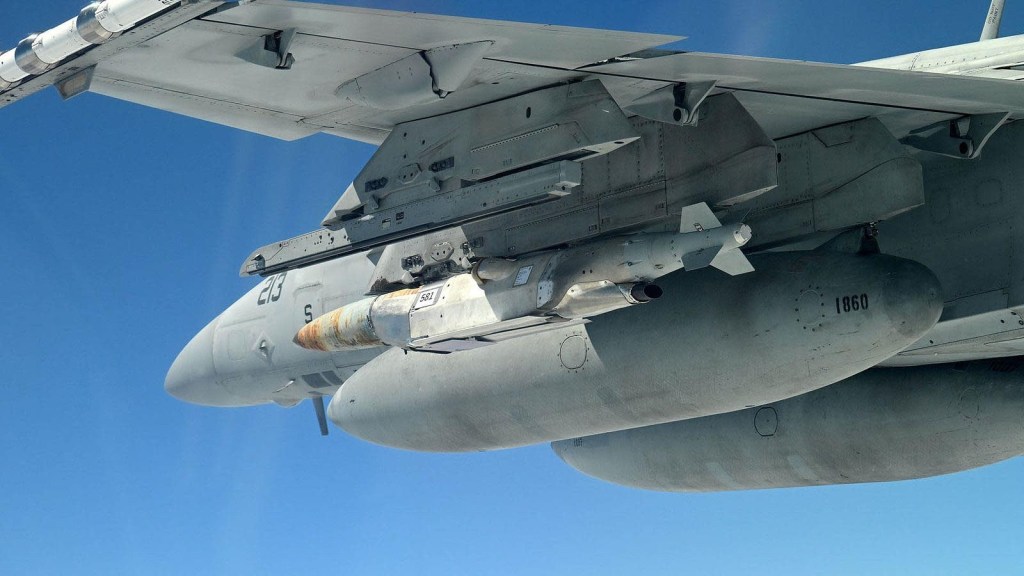
Tag: JDAM

  • US Navy test powered JDAM variant. 

    US Navy test powered JDAM variant. 

    On April 20th 2026, the U.S. Naval air systems command (NAVAIR) released a video showing the test fire of a new derivative of the Joint Direct Attack Munition (JDAM) precision-guided weapon. 
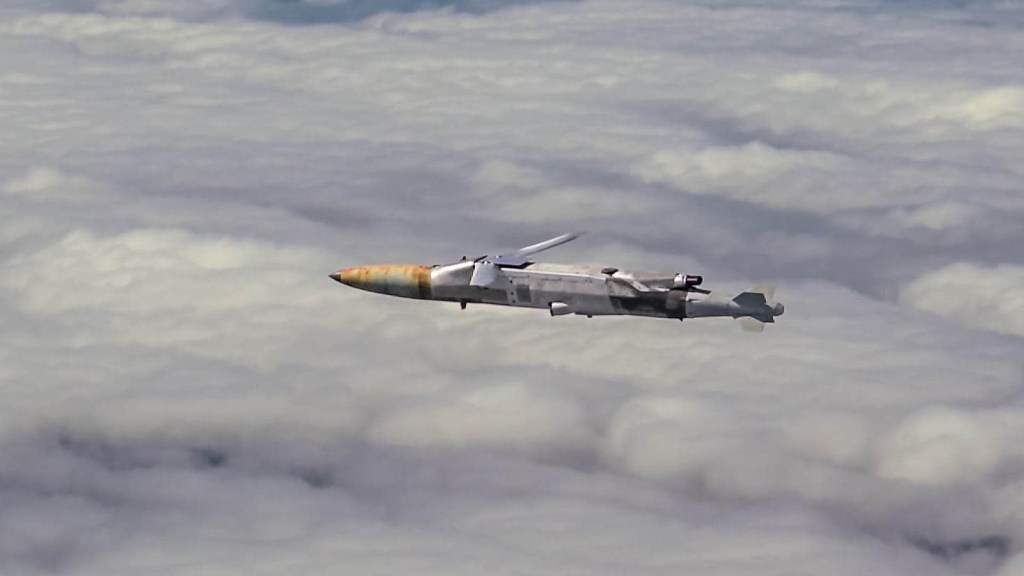
    JDAM-LR shown after being deployed from a Navy F/A-18 Super Hornet.

    The video shows a Navy F/A-18 Super Hornet firing off what is being called the GBU-76 JDAM-LR (Long Range); it is a rocket-powered version of the weapon that can be used to attack targets on land or sea. With a range of 300 nautical miles, this version gives a significantly longer range then even the unpowered JDAM-ER (Extended Range) series. 

    The weapons were tested in early April, being fired from both an F/A-18E and F/A-18F flying out of China Lake Naval Weapons Station, Air Test and Evaluation Squadron 31 VX-31 “Dust Devils,”. The fighters flew to Point Mugu, on the coast of California. On the first test, Boeing says the weapons demonstrated safe separation, engine start, cruise and guidance through terminal flight and impact in water after a 34-minute flight.Boeing reported that the weapon flew for 200nm and landed within meters of its planned target. The next test was done on April 3rd, and the weapon flew a second planned flight profile, “..successfully incorporating altitude changes and weapon maneuvering during an otherwise similar flight.”

    Video taken during the test was released in a NAVAIR post on social media.

    “First flight is a critical step in capturing the JDAM Long Range franchise program. This weapon brings the cruise missile concept to the JDAM family at a lower cost, enabling large production quantities.”

    Bob Ciesla, Precision Engagement Systems vice president

    This weapon provides the navy with a low-cost, precision standoff weapon with a striking distance of 300nm. A range like this lowers the risk to the platforms launching them and increases their strike options. 

    Some of the things they hope to achieve with this weapon is-

    • Integrate onto any aircraft that already carries traditional JDAMs, both external and in internal weapon bays. That includes U.S. Air Force and U.S. Navy fighters and bombers, and many global allies ― more than 15 platforms and 3,500 aircraft.
    • Support conventional direct attack, maritime strike and aerial-mining missions, adding key components to the proven JDAM system:
      • TDI-J85 turbine engine from Kratos Defense & Security Solutions Inc. (NASDAQ: KTOS), incorporating modular, compact air-breathing propulsion technology into the JDAM family.
      • Wing kits from Ferra Engineering in Brisbane, Australia, as a continuation of the Australian Defence Force’s Global Supply Chain Program.

    Brief History

    The JDAM family of weapons has been used extensively since its inception in 1998. First seeing combat in the NATO intervention in Kosovo in 1999 to great success, being dropped in the first night of operation Allied Force by two B-2 spirit bombers out of Whiteman Air Force Base each dropped 16 JDAM’s (mostly the GBU-31 2,000 lb variant), striking fixed Serb targets. Over the next 76 days the U.S. B-2 bombers dropped more than 600 JDAM’s, achieving high reliability and accuracy against hardened targets in all weather conditions. 

    “The success of JDAM LR is built on decades of the JDAM system and the maturation, investment, and work of the team to make that system robust and available.”

    Ernie Moretti, Joint Direct Attack Munition director

    The JDAM’s massive success during Operation Allied Force led to the weapon being deployed heavily in every conflict since then. The JDAM could deliver GPS/INS precision without laser designation or visual acquisition of the target. 

    The simplicity of the JDAM is what has led to much of its success. It’s fairly cheap to build the components needed to turn a regular gravity bomb into a precision tool. Over the years the system has received several upgrades, like  laser sensors for advanced tracking of moving targets (LJDAM) and an extended-range wing kit (JDAM ER) that expands a standard JDAM’s range to more than 40 nautical miles. Boeing notes in their press release that the JDAM-LR will be able to gain additional functionality over time through modifications for different uses. 
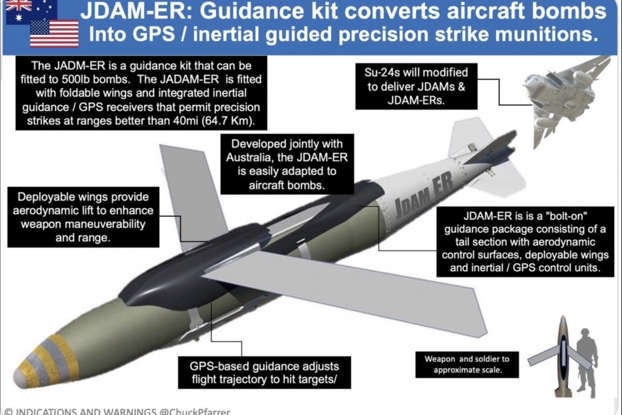
    Diagram of the JDAM-ER

    Sources:

    https://onfirstup.com/boeing/BNN/articles/new-long-range-smart-weapon-flies-hundreds-of-miles-in-first-test-1?bypass_deeplink=true%5D(https://onfirstup.com/boeing/BNN/articles/new-long-range-smart-weapon-flies-hundreds-of-miles-in-first-test-1?bypass_deeplink=true)

    https://www.navalnews.com/event-news/sea-air-space-2026/2026/04/u-s-navy-tests-new-long-range-gbu-75-jdam-lr/

    https://www.airandspaceforces.com/PDF/MagazineArchive/Documents/2006/September%202006/0906JDAM.pdf


  • Breaking down the recent Video from US Southern Command.

    By. Scott Jackson


    10.05.2025

    The video from US Southern Command (USSOUTHCOM)

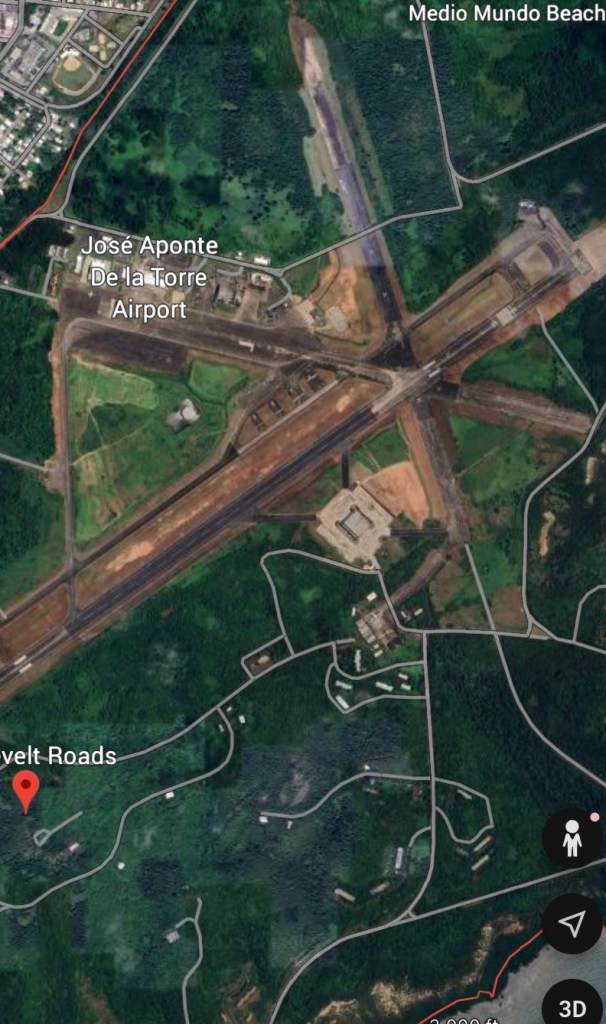
    On October the 3rd, US Southern Command released footage from US operations ongoing in the Caribbean. The video shows the loading of a U.S. Marine F-35B Lightning II with live munitions at the now reactivated Roosevelt Road Naval Station.

    Image from Google Earth showing the location of Roosevelt Road.
    Closer look at the airport.

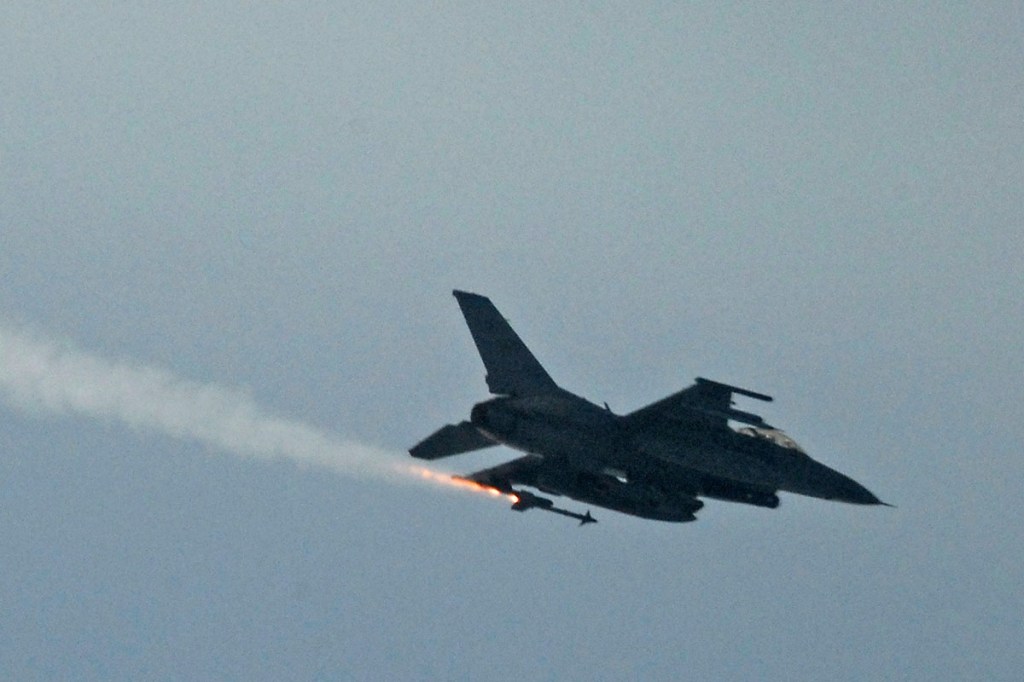
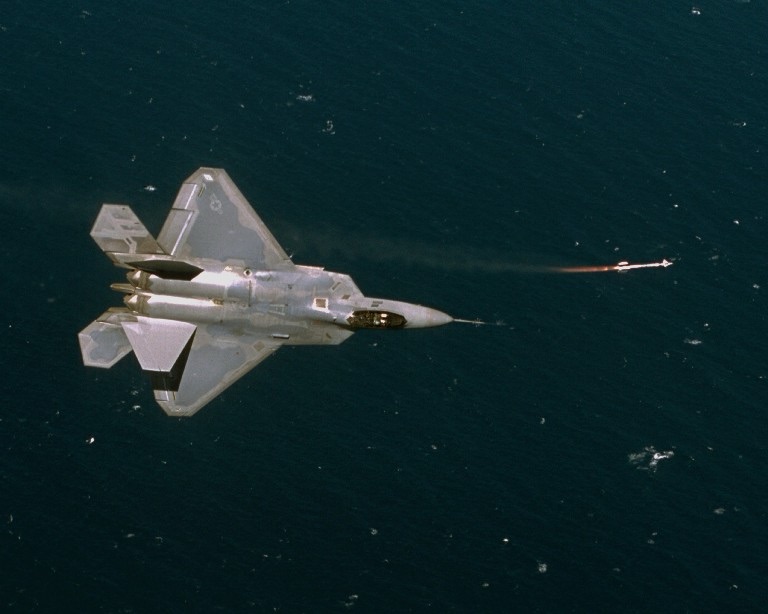
    This aircraft, if it was just one jet, it’s not clear in the video, was outfitted with a mixture of air-to-ground and air-to-air weapons. My info is coming from publicly available information on the weapons systems and some of my own knowledge of this topic from years of research. Any mistakes or opinions are,as always, my own. The first clip shows the loading of an AIM-9X Sidewinder. The AIM-9X is an inferred guided, proximity fused weapon. 

    Variations of the Sidewinder started life as the primary weapon of many early Cold War era jets alongside their main cannons. This is not that Sidewinder, it is so updated and advanced it’s hard to even think of this as the same missile. The original AIM-9 Sidewinder used in Vietnam had an abysmal success rate that averaged somewhere around 9%. So 1 out of 10 would hit their targets. While the original weapon could only heat-track a target aircraft’s exhaust, this weapon is capable of detecting the heat from the friction of the target aircraft going through the sky making shots at the front or side of the target a possibility. A thrust vectoring engine on the AIM-9X gives it incredible maneuverability. The publicly available information puts the range at somewhere around 10-15 miles depending on some factors(Altitude-speed etc.)that can shorten or extend that range. This is not your grandfather’s Sidewinder.

    F-22 firing an AIM-9 Sidewinder

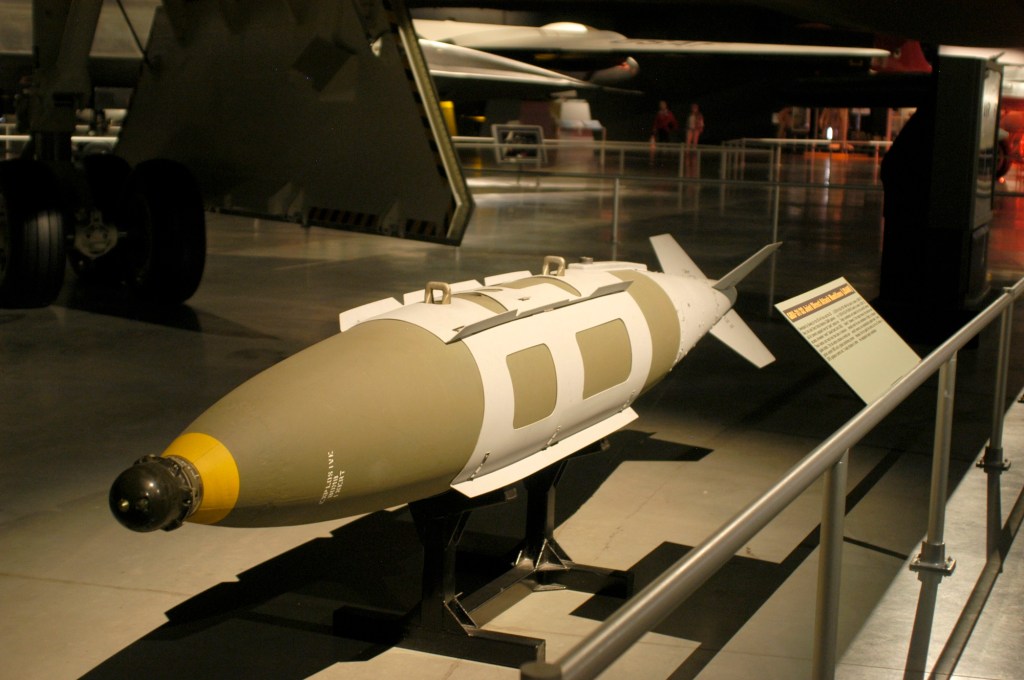
    Moving on we get a quick look at one that’s probably familiar to you (if not by look, then by name) the GBU-54(V)/B LJDAM (Laser Joint Direct Attack Munition).This is the laser guided version of a pretty standard MK 82 500 pound air-to-ground bomb with the added bolt-on JDAM guidance kit giving it some pretty spectacular accuracy. 

    JDAM on display at Airforce Museum

    JDAM is like an aftermarket part for a bomb turning it into a GPS guided precision weapon.We don’t talk enough about the effect that the JDAM and other guidance systems have had on tactical bombing, long gone are the days you have to drop 12 bombs to hit one target. If the target is a house, a decent pilot can hit the house 90% of the time, a great pilot and a bit of laser guidance can put a JDAM through the window. 

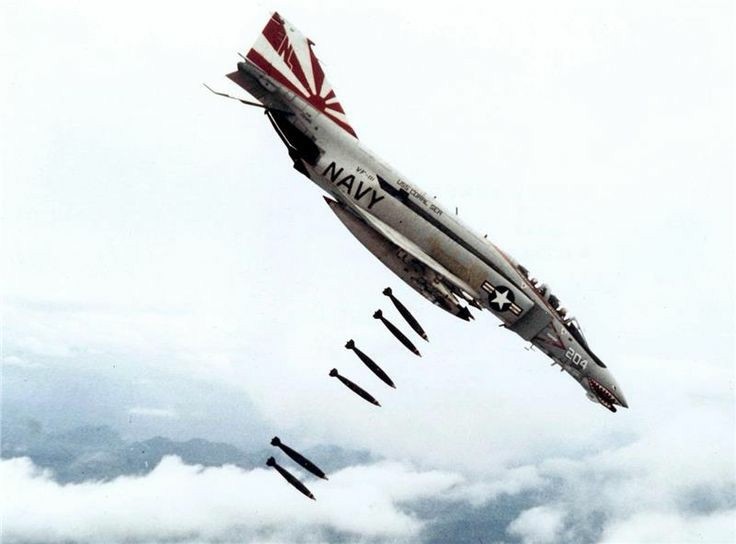
    This is how you used to drop bombs. Multiple at a time and hope that you hit your target.

    The last weapon shown is the AIM-120 AMRAAM-C/D (Advanced Medium Range Air-To-Air Missile) or, sometimes called Slammers after their first 3 shots resulted in 3 enemy takedowns in Iraq and Bosnia.The C/D is the model number for the missile, I’ve added both models because they showed two different missile models in the USSOCOM video. The AIM-120 is a BVR (Beyond Visible Range) with active radar-homing capable of striking targets at extreme ranges. Publicly available data puts the range of the AIM-120 listed at around 80 miles. The range numbers can be a little deceiving, you have to take into account that these numbers are based on any number of specific conditions for the enemy and the weapons platform. For a missile like the AIM-120 D model, while it will travel over 100 miles, its effective range is closer to 60-70 miles. 

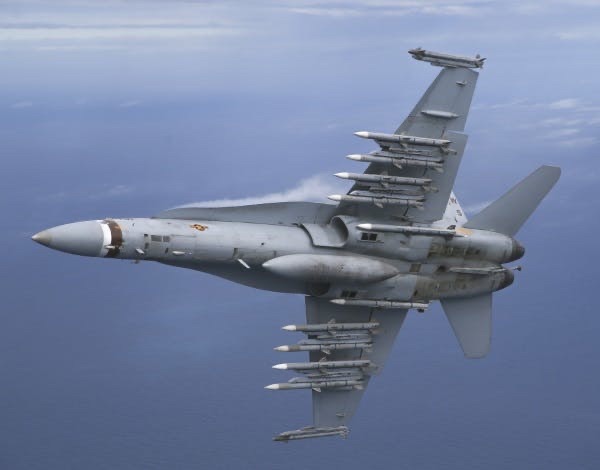
    F/A-18 Super Hornet loaded with 10 AMRAMM’s.(Murder Hornet configuration)

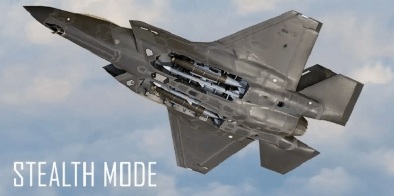
    None of these weapons are rare, two of them, the SIdewinder and AMRAAM you will find on almost every fighter in the air fleet and the laser JDAM has been used heavily since the 90’s. I’m a little uncertain on exactly how many weapons this plane in the video launched with as the F-35 in its stealth mode can only hold so many weapons, and the B version has a smaller weapons bay than the others because of the lift fan.  The two weapons bays can hold two AMRAAM’s each. I’m guessing here but maybe one JDAM and a sidewinder on one side and then the two AMRAAMS on the other. 

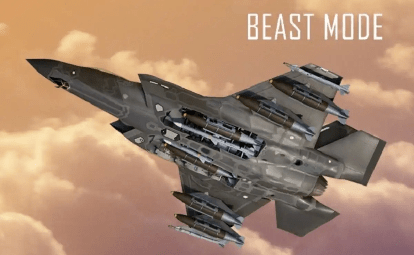
    The F-35 is technically capable of carrying more weapons on outside hard points, however this harms the stealth of the aircraft, giving it a larger radar cross section, or RCS. The idea was to use stealth mode during the opening days of a conflict and then to switch to what the manufacturer, Lockheed Martin calls “Beast mode” that the F-35B can be once air dominance has been achieved. 

    Stealth mode F-35 loaded with two JDAM’s and two AMRAAM’s.
    “Beast Mode” F-35 loaded with six JDAMS, Two AMRAAM’s and Two wingtip Sidewinders.