By. Scott Jackson
12.10.2025
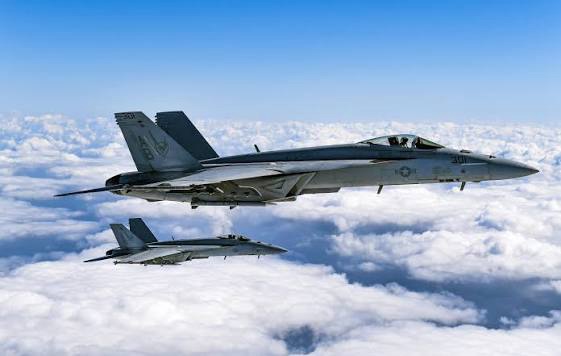
Two F/A-18’s were seen flying deep into the Gulf of Venezuela on the 9th, staying there for around 40 minutes according to flight tracking data. The Gulf of Venezuela is a fairly small body of water surrounded on three sides by parts of Venezuela. At its widest the Gulf is only around 150 miles wide (West to East) and 75 miles long (North to South) and the opening of the mouth of the area is only 52 miles wide. Venezuela’s border extends out from its coast 12 miles in every direction not leaving much room for the jets to operate. Venezuela actually claims all of the Gulf as an area of importance to them and considers it all their territory, a claim which the US has debated and challenged for decades.
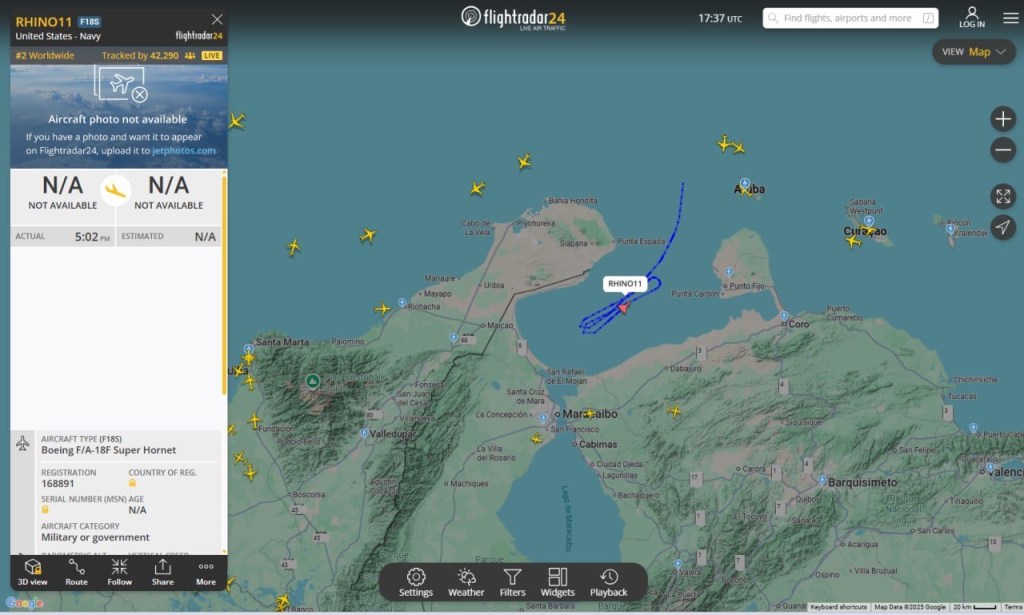
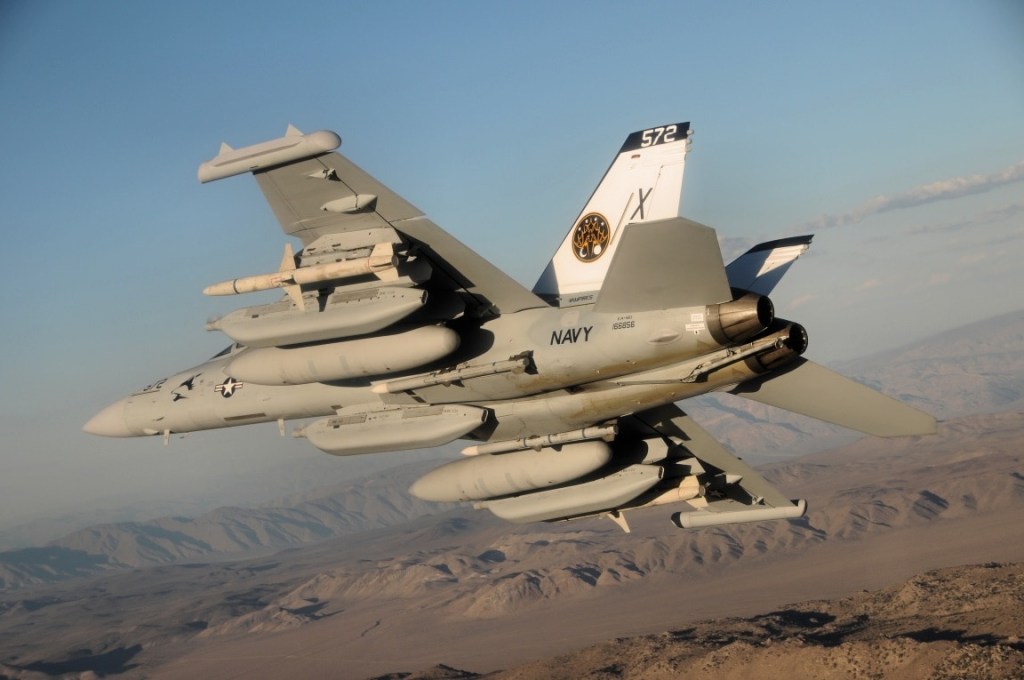
Working alongside the F/A-18’s were at least two of the EA-18G Growlers Electronic Warfare aircraft which went into an orbit a couple hundred miles north of the Gulf. Grizzly 1 and Grizzly 2 are the call signs.
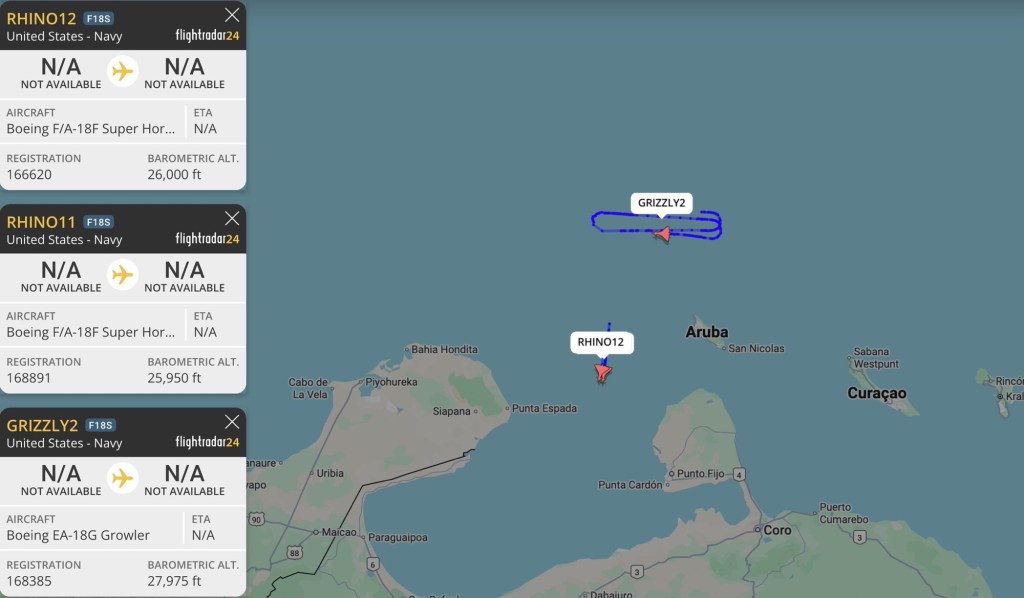
The Growler specializes in electronic attack. Using its overpowering Next Generation Jammer pod carried underwing, it can disrupt modern radar systems on air defense or other air units allowing the growler and other allied planes to get in and out of a mission area without being seen in cases where old radar are being used.
Electronic attack and radar jamming are poorly understood by most people and there is a lot about the NGJ pods (and even the legacy AN/ALQ-99 Tactical Jamming System) that is still classified. However these jamming pods work by attacking the connection between a radar and its target and can reflect a distorted signal back to the receiver.A jamming pod can disrupt a radar by flooding the radar with noise (think of looking into a spotlight)—injecting false signals, alter the timing, or deceiving the radar into tracking a “ghost” location. The tactical advantages of this are obvious, making the growler also amazing at anti-radar and anti air defense missions, also known as SEAD/DEAD. Suppression or Destruction of Enemy air defense. The growlers here could have been jamming the radar for the SuperHornets but more likely they were gathering intelligence on the signals that Venezuela was sending out, in case they are needed for a future strike missions. The last of its features I’d like to point out is the growlers APG-79 Active Electronically Scanned Array (AESA) Radar which it was probably using here to scan the Venezuelan coastline.
It’s believed both the Super Hornets as well as the Growlers are operating from the aircraft carrier USS Gerald R Ford (CVN-78) which arrived in the Caribbean last month.
The article I’m liking too is more reading for how the growlers jamming actually works and what some lf the systems limitations are. Highly recommend.
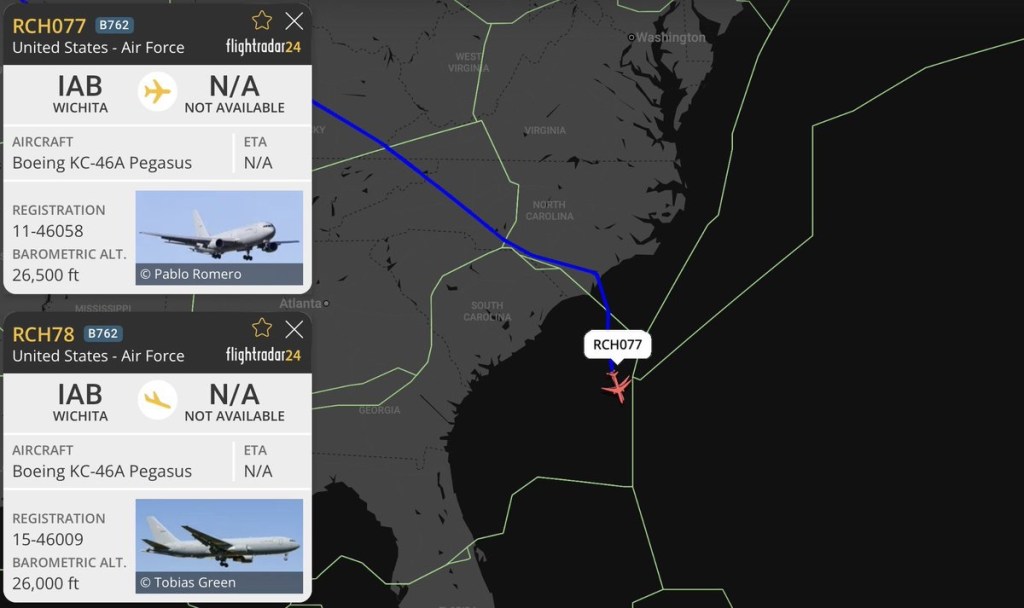
Another event that was missed yesterday was a transfer of several aircraft (possibly Growlers) from Naval Air Station Whidbey Island in Washington State to the Caribbean. Their presence was noted by flight trackers who also often listen to radio comms between aircraft and Air Traffic Control. They were ferried to the Caribbean by two KC-46A Pegasus aerial refueling jets.
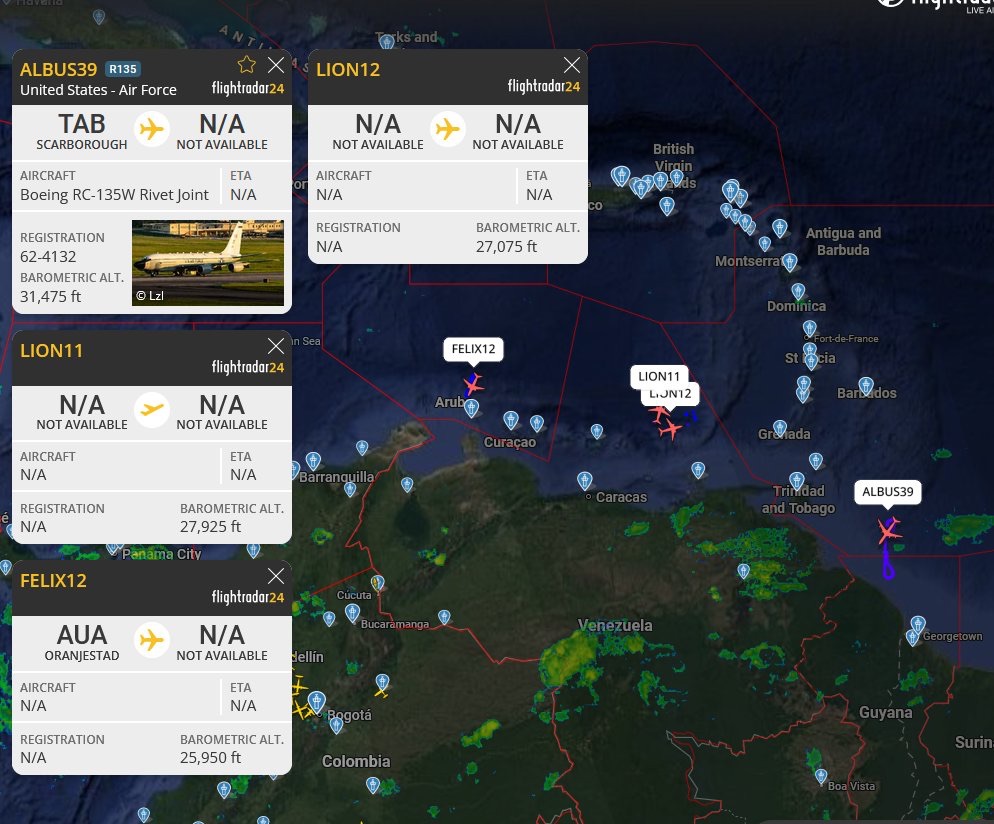
US aircraft have probed Venezuelan air defense in this same area before utilizing at least one Boeing RC-135 Rivet Joint reconnaissance aircraft along with several other unidentified aircraft. The US has recently been very public with its aircraft operations in the Caribbean, possibly as a sign to the Maduro regime of its willingness and ability to escalate the situation further if President Trump’s demands aren’t met.
In response to an email inquiry sent by GCR to USSOUTHCOM we received this statement from a SOUTHCOM Spokesperson. .
“We conduct routine, lawful operations in international airspace, including over the Gulf of Venezuela. We will continue to fly safely, professionally, and in accordance with international law to protect the homeland, monitor illicit activity, and support stability across the Americas.”
 Global Conflict Reporting
You must be logged in to post a comment.