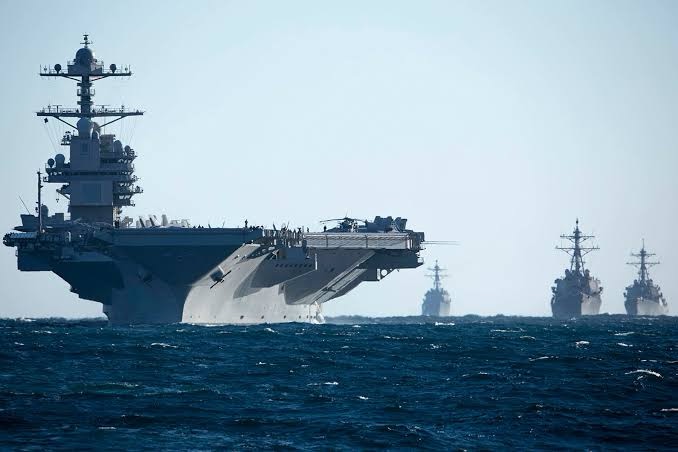
The Pentagon has announced that the USS Gerald R. Ford (CVN- 78) and its Carrier Strike Group (CSG) is being redeployed to the Caribbean in an effort to bolster the forces currently involved in counter-narcotic operations in the region. This comes a day after the announcement that the White House was going to Congress with notice that the president was planning to conduct ground operations in Venezuela. These operations will likely target suspected drug production operations and other assets under the control of the cartels operating in the country. That being said, the Venezuelan military is unlikely to just watch as US forces carry out strikes in their country, meaning the U.S. will likely preemptively target assets under the control of Venezuelan President Maduro’s forces. Radar, air defense and any air units are to be a high priority for suppression or destruction.
At last report the Ford CSG was operating in the Adriatic Sea off the coast of Italy and various parts of the Mediterranean. It will take the CSG at least several days to assume a position within range of Venezuela.
The USS Gerald R. Ford Carrier Strike Group includes the carrier along with three Areleigh Burke-class guided missile destroyers acting as escorts.
USS Bainbridge DDG-96
USS Mahan DDG-72
The USS Winston Churchill DDG-81 is acting as the CSG’s Air Defense Commander.
Making up the air power of the CSG is Carrier Wing 8, made up of the following.
The “Tomcatters” of Strike Fighter Squadron (VFA) 31 F/A-18E
The “Ragin Bulls” of VFA 37 – F/A-18E
The “Golden Warriors” of VFA 87 – F/A-18E
.The “Black Lions” of VFA 213 – F/A-18F
The “Gray Wolves” of Electronic Attack Squadron (VAQ) 142 – EA-18G
The “Bear Aces” of Airborne Command and Control Squadron (VAW) 124 – E-2D
The “Rawhides” of Fleet Logistics Squadron (VRC) 40 Det. – C-2A
The “Spartans” of Helicopter Maritime Strike Squadron (HSM) 70 – MH-60R
The “Tridents” of Helicopter Sea Combat Squadron (HSC) 9 – MH-60S
Fleet info pulled from various public sources as well as the GCR database.
After a months long bombing campaign against the Iranian backed Houthi terrorist in western Yemen, the White House has today announced that those strike will stop immediately. This was announced after Houthi leadership made contact with the U.S. leadership and according to trump agreed to stop striking ships in the Red Sea. This puts a close to “Operation Rough Rider” under president Trump as well as hundreds of strike carried out by the former Biden administration.
The announcement was made during Trump’s meeting with Canadian PM Mark Carney. The conversation with the Houthis had been had the night before.
“They have capitulated, but more importantly … we will take their word,” Trump said. “They say they will not be blowing up ships anymore.”
It’s very likely Iran played a part in this turn. Possibly telling the Houthis to cease their actions against shipping following threats from the U.S. during the ongoing negotiations.
Trump wouldn’t say specifics on who he talked to only that the k do that the Houthis would be backing down came from “a good source”. The Houthis, reeling from yesterday’s attack by Israel released this statement yesterday.
“The operations of our armed forces will continue and the support by Yemen to Palestine will only end with the end of the aggression and siege against Gaza,” -Houthi statement from Al Masirah TV.
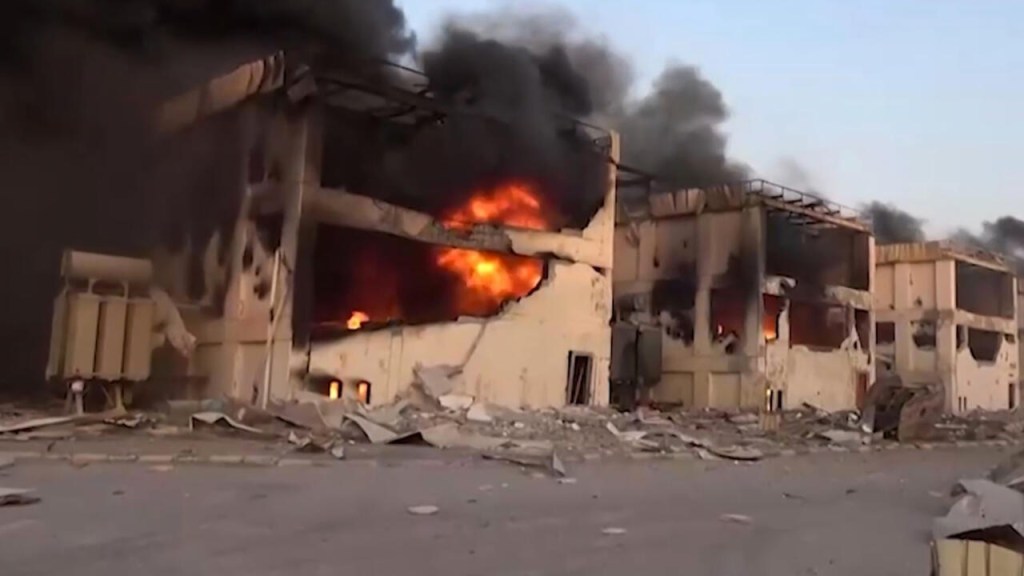
While the U.S. has agreed to stop bombing the Houthis, Israel is another matter and have carried out more strikes since what was reported yesterday. Locals in Yemen as well as the IDF report the bombing of Sana’a airport as well as various power stations, and another concrete factory. Videos included below.
CRAZY FOOTAGE 🔴
Full footage of the aftermath at Sana’a International Airport following IDF strikes.
Video showing the full footage of the aftermath of the attack on Sana’a international airport.
🚨 Breaking: Reports from Yemen that the entire international terminal of Sanaa Airport, including all airplanes there, have been destroyed pic.twitter.com/ehpwgh3Car
The U.S. has brought in a large amount of military assets to carry out its attacks against the Houthis. Currently from the navy two aircraft carriers are operating in the region, the USS Carl Vinson (CVN 70) and USS Harry S Truman (CVN 75), these ships are both escorted and supported by numerous destroyer squadrons and several cruisers, not to mention their air wings. Several other destroyers have been ordered to the region and are operating separately of the carrier strike groups. Also USS Gettysburg (CG-64) and USS Princeton (CG-59) both Ticonderoga class guided missile cruisers have also been ordered to the region as apart of Operation Prosperity Guardian and have been used to strike Houthi targets as well. At least one Ohio class submarine USS Georgia (SSGN-729) has been spotted in theater as well. The Air Force has sent a large number of planes to the region included F-35s and F-22s as well as B-2 Spirit bombers stationed at Diego Garcia. As of several hours ago a pair of B-52s were heading towards the region from the continental US. It’s likely at least some of these assets will remain in the CENTCOM area of responsibility as negotiations with Iran over their nuclear program continue. The White House and Trump have threatened to use military force if the negotiations fail.
Image from USNi news shows the current general location of the U.S. aircraft carriers.
The Truman just several days ago had its deployment to the Middle East extended by another week, to continue to keep up a high tempo of attacks against the Houthis. This could possibly be extended further if negotiations are unsuccessful.
After writing this it was announced that Oman had carried out the negotiations between the Houthis and the US. They had been the go between in the conversation which led to the U.S. ceasing it’s military strikes.
I’d like to thank everybody for the constant support I’ve received. These last 5 years have flown by but I feel like GCR continues to grow and improve in its reporting and analysis. I’m always open to comments and questions and can be reached on Facebook or through my email which is listed on the website.
I’m currently looking for guest for a future podcast series I’m planning on running. If you have an interesting military story to tell contact me and let’s talk. I want to hear your stories.
If you would like to go the extra mile and further support me and the work being done here, you can sign up for my Patreon through the button below for only $1.00 a month. Future video and audio projects to be released there soon.
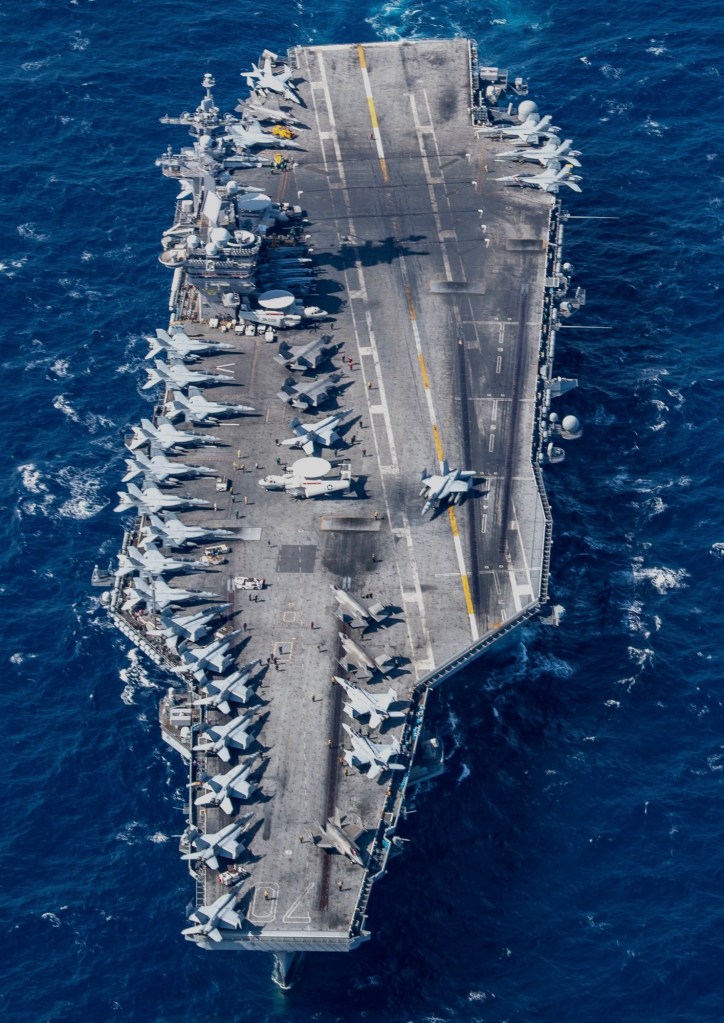
The U.S. Department of Defense has ordered the USS Carl Vinson(CVN-70) to the Middle East after its current deployment ends. All this is with the backdrop of a nonstop U.S. offensive on Iranian backed Houthi terrorist in Western Yemen,ongoing for over a week.
USS Carl Vinson Transitions the Philippines Sea Jan. 2 2022.
Currently the USS Carl Vinson along with her CSG have been assigned to the 7th fleet in the East Asia region but will leave for the Middle East soon. The CSG is expected to take two-three weeks to arrive when it will join the USS Harry S. Truman already in the region. The Truman has been carrying out daily strikes on Houthi targets. Truman’s deployment was scheduled to end soon but was extended at least a month, possibly longer.
Recent footage showing operations from the USS Harry S Truman Strike group as they carry out strikes against the Houthis.
The USS Carl Vinson Carrier Strike Group is at last sighting made up of Ticonderoga-Class Guided missile cruiser USS Princeton (CG 59)as well as the Arleigh Burke-Class Guided Missile Destroyers USS Sterett (DDG 104) and USS Ralph Johnson (DDG 114).
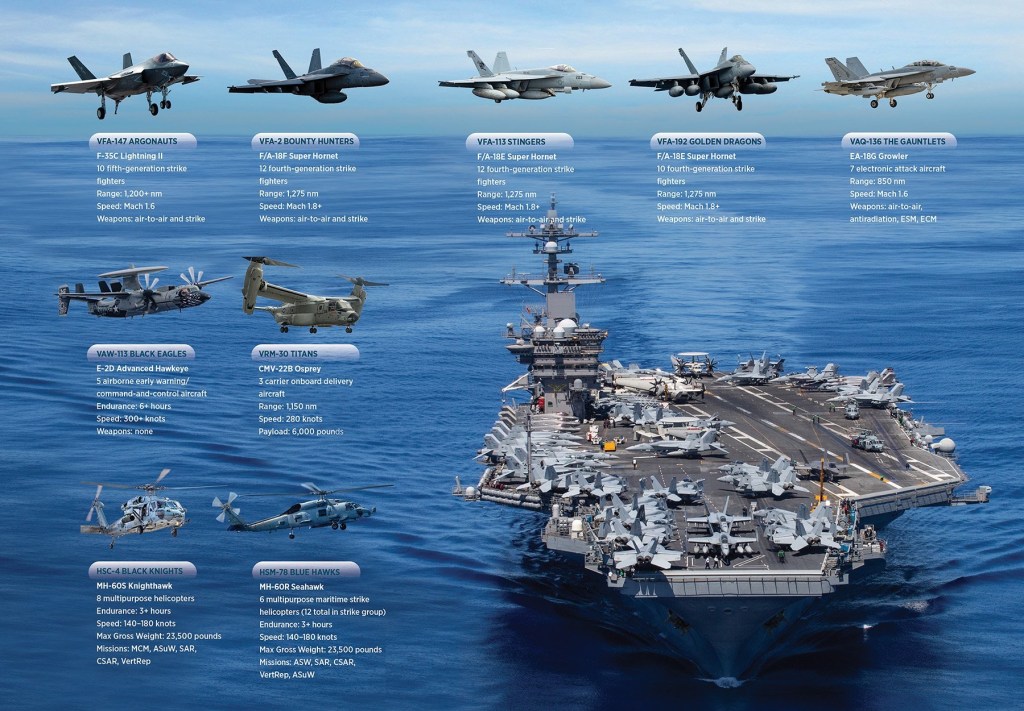
Makeup of the Carl Vinsons Air Wing.
The USS Carl Vinson was the Navy’s test bed for integrating 5th generation fighter jets into the Carrier Air wing. Specifically adding F-35C’s Lightning II which are capable of being launched from the Carrier. The F-35’s are a great addition to the fleet, adding an impressive Multi-Mission capable airframe to an already dominant group of war fighting planes. The officers of the Carl Vinson noted that the F-35 paired really well with the electronic attack capabilities of the EA-18G Growler. Using them together in combined operations made for a hard to beat team, heavy jamming and EW mixed with the amazing stealth of the F-35.
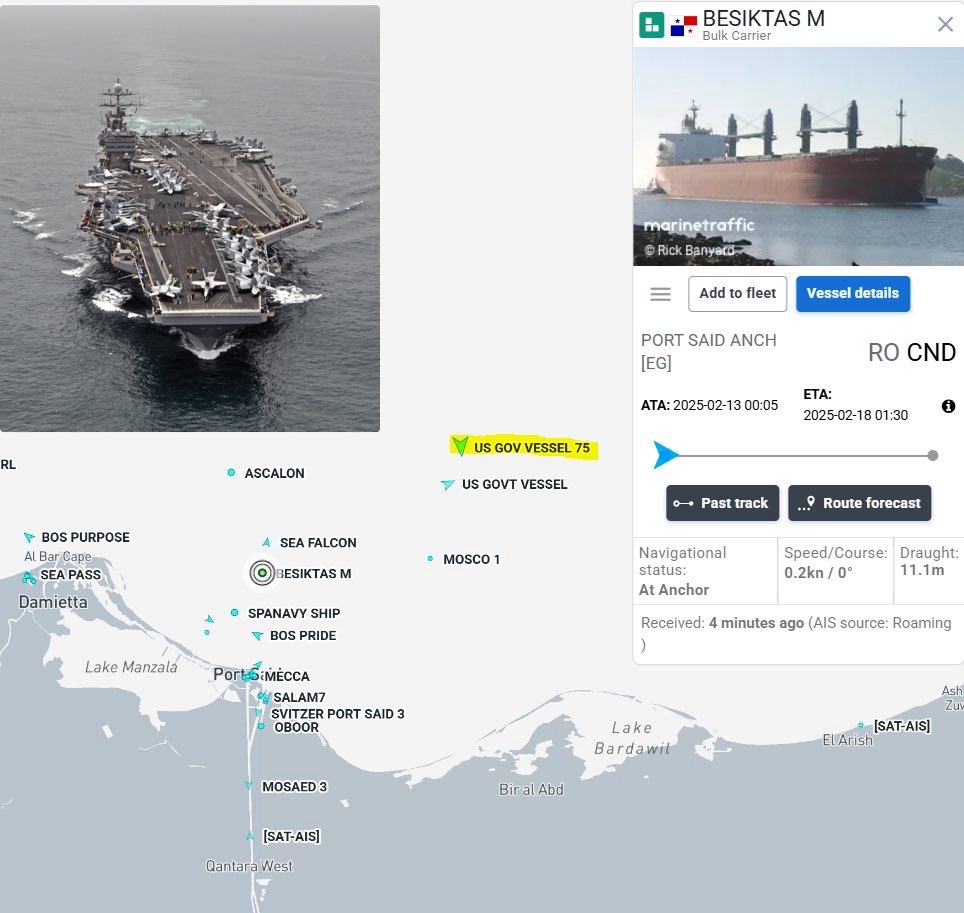
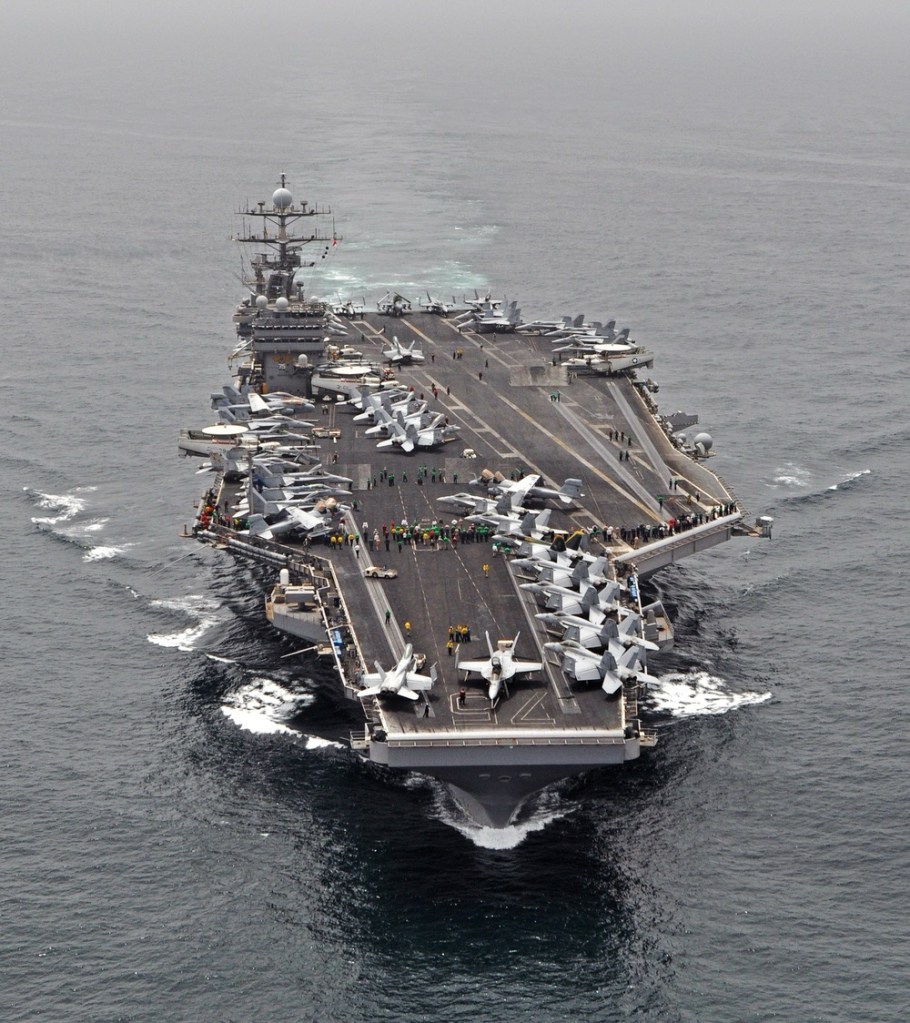
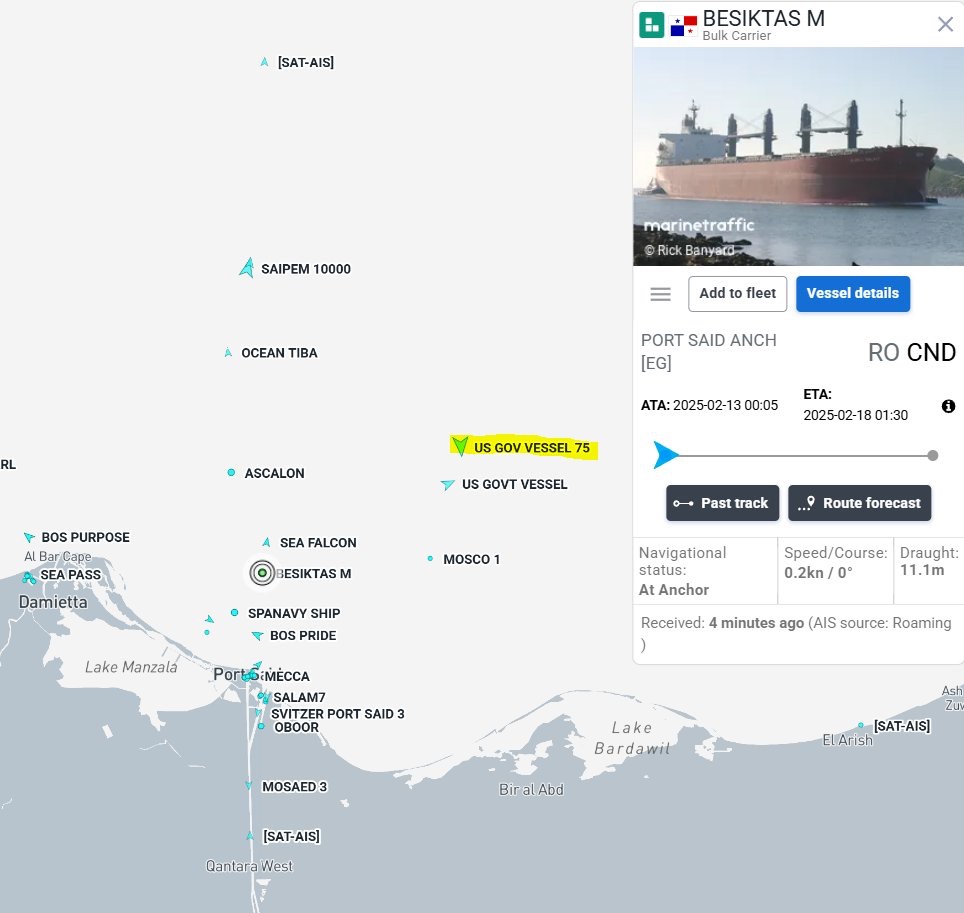
Yesterday at around 11:46pm local time the US Navy Nimitz-class aircraft carrier USS Harry S. Truman (CVN 75) collided with the M/V Besiktas-M, a merchant vessel at the Egyptian port of Said near the mouth of the Suez Canal.
Position of the ships at the time of writing. (2:25PMEST) Both ships seems to be moving under their own power. Highlighted vessel is the Truman, the other goverment vessel shown to the south of it is the Guided Missile Destroyer USS Jason Dunham (DDG 109) a part of its Strike Group.
Statements from navy officials say that no flooding occurred because of the collision and that the Truman was undamaged and her nuclear power plant was safe and secure. The status of the Besiktas-M is unknown at this time.
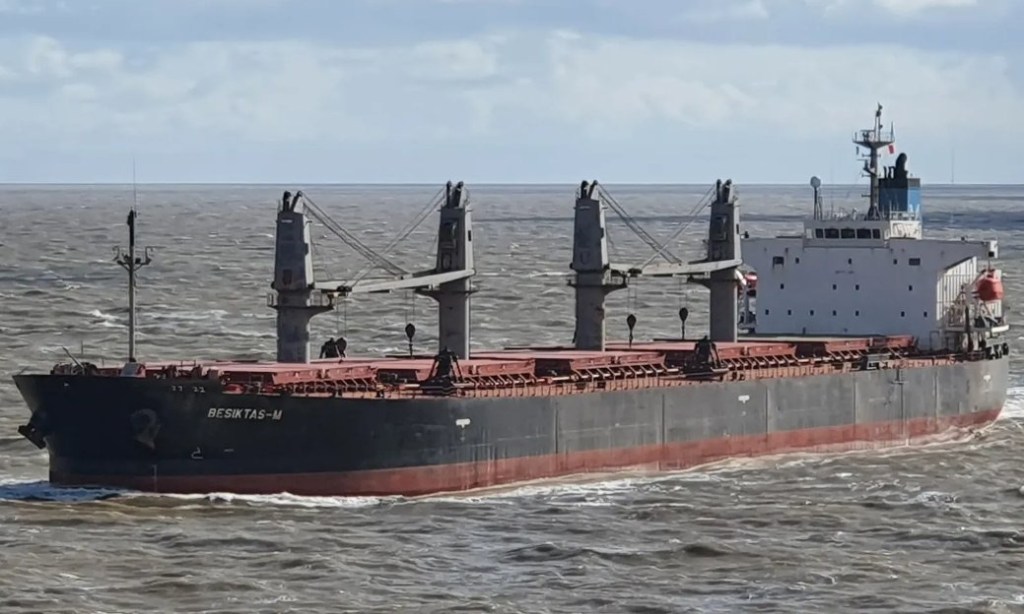
M/V Besiktas-M
The Truman was most recently deployed to the Red Sea and Mediterranean to combat the threat from Iranian backed Houthis in Western Yemen, as well as projecting power in the region and supporting other US and allied forces in the area. Recent Iranian actions have made maintaining a force in the Middle East increasing only important.
The Truman will likely continue or already has continued on its journey back to the Red Sea area. It was returning from a port call in Souda Bay, Crete Greece. NSA Souda Bay provides logistical and operational support to the components of the Harry S. Truman Carrier Strike Group
BWhile it might seem absurd to think a merchant vessel could get close enough to a carrier to collide with it in the first place because of the almost absurd amount of security around a U.S. Aircraft Carrier. However, in a restricted space such as close to the Suez Canal there isn’t room for everybody to maintain a distance from the carrier strike group and from how I understand it, all anybody can do is follow the international maritime “rules of the road” which have no requirements that merchant vessels make way for a carrier. All the U.S. can legally do is ask them to keep their distance. That’s how I understand it but if I’m wrong I welcome corrections.
Update
(5:00PM EST)
Some more info has come on the merchant ship Besiktas-M. It is a Panamanian-flagged bulk cargo ship. The ship has been heading north through the Suez canal heading to its destination states as being Constanta in Romania on the Black Sea. The Truman was heading south at the time when the mishap took place. The bulk carrier is said to have moderate damage above the waterline but continued under its own power.
The White House on Monday annonced that it would be naming two of its future planned Gerald R. Ford-class nuclear powered aircraft carriers after former presidents. The USS William J. Clinton and USS George W. Bush, after the 42nd and 43rd U.S. presidents.
“Their legacies will endure through these aircraft carriers, which serve as formidable platforms dedicated to safeguarding our national security and strengthening our resolve to protect this nation against any who would threaten our freedoms and way of life,“ said Secretary of the Navy Carlos Del Toro.
These ships will be the 5th and 6th of the Ford-class. As of writing this only one of the class exists which is the lead ship in the series USS Gerald R. Ford. Ford was named after the 38th president of the United States, who served on the light aircraft carrier Monterey in WW2 in the Pacific. The Ford-Class carrier to this day remains the largest carrier/warship ever created.
Evolution of Power : Ford-Class carrier upgrades and capabilities.
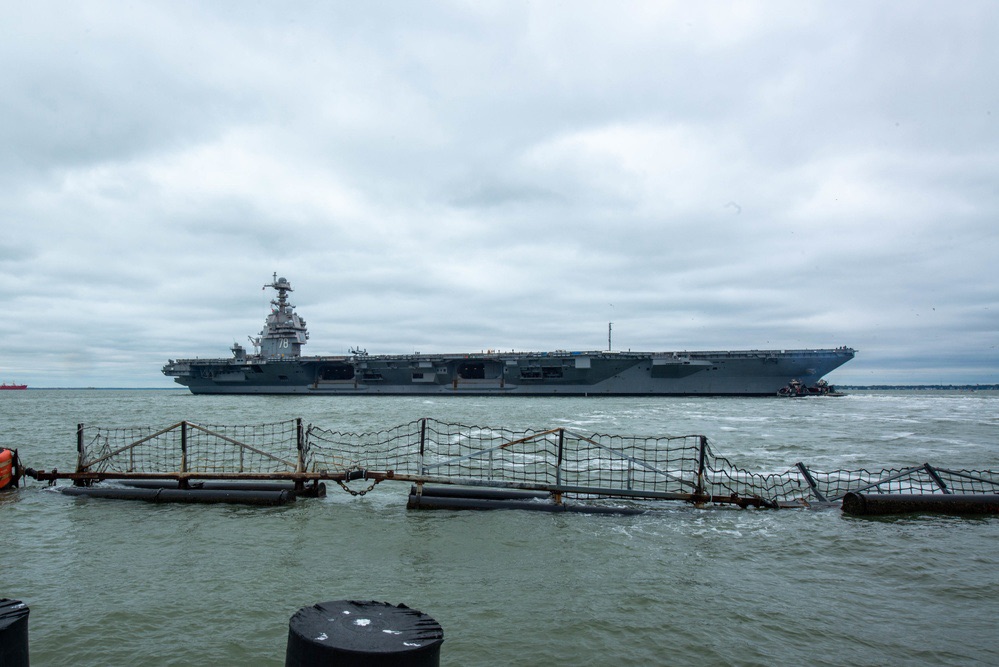
USS Gerald R. Ford departs Navel Station Norfolk for its first deployment. Photo by Petty Officer First Class William Spears.
What makes the Ford-class Special?
The Ford-class was created to offer a number of improvements over the Nimitz-class carrier which had been the standard for 40 years and is now being phased out, replaced by the Ford-class.What improvements make the Ford-class so special? Well let’s talk about it. Most of this info comes from testing on the only Current Ford class in use, the USS Gerald R. Ford (CVN 78)
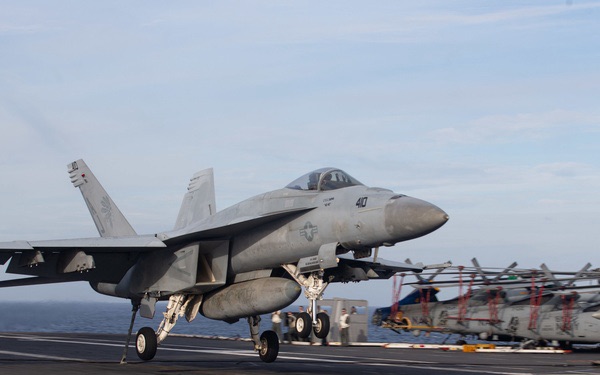
Cmdr. Robert Kurrle, the commanding officer of the “Golden Warriors” of Strike Fighter Squadron (VFA) 87, conducts his final carrier landing on the first-in-class aircraft carrier USS Gerald R. Ford’s (CVN 78) flight deck. Photo by Petty Officer 2nd Class Zackery Guth.
Improved aircraft launch and recovery systems. Specifically the EMALS or Electromagnetic Aircraft Launch System replace the steam powered catapults used in the past giving fighter pilots a smoother takeoff with less maintenance. On the landing side we have the AAG or Advanced Arresting Gear which in testing so far with the Gerald R Ford has shown an increased smoothness with landing as well as the capability to catch heavier aircraft and UAVs (more in those in a bit).
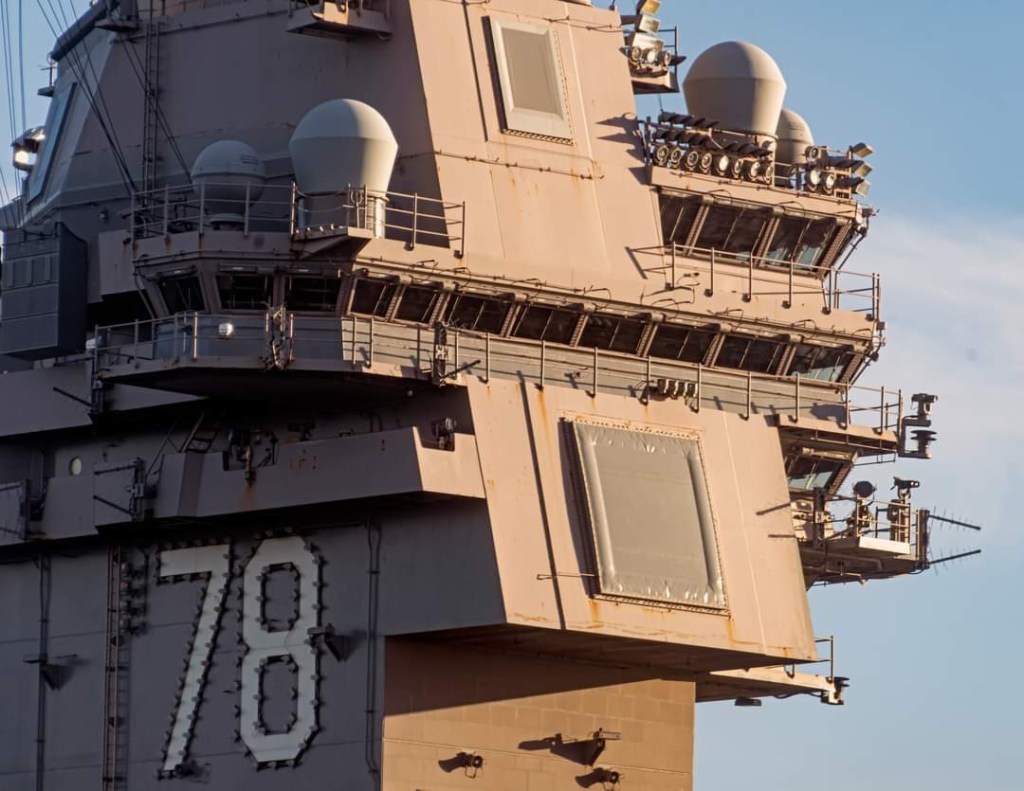
Island of USS Gerald R. Ford (CVN 78). You can see its radar here. Unknown photograph.
To help with protecting the airspace around the carrier and its strike group the Ford Class Carriers all for the most part come equipped with the AN/SPY-/6(V)4 radar. SPY-6 for short. While the USS Gerald R. Ford has an older model and will be upgraded the future ships in the class will receive the upgraded SPY-6. This radar is one of the strongest parts of the ship giving the carrier the ability to defend against multiple threats from 360 degrees at the same time, including Hypersonic, Cruise, and ballistic missiles. It’s also highly resistant to enemy jamming efforts. The data collected can all be shared between the battle group and aircraft like the F-35 and EC-2 Hawkeye, further strengthen the groups defenses and offensive capabilities during battle. Info collected from the carrier battle groups radar and other sensors can be filtered through several different systems and processed and sent to whoever needs the info at the time. For example every CSG (carrier strike group) is going to have an Air Warfare Commander that will usually be the captain of an Aegis equipped Ticonderoga-Class Guided Missile Cruiser. His teams mission is obvious, to protect the Strike group from all manned aerial units and missiles and is one of the most important jobs in the CSG. The information taken from the carriers Radar on the Ford-class carriers can be transmitted instantly to the CIC (Combat Information Center)aboard the designated Air Warfare cruiser where the commander and his team can quickly make decisions based on that data to protect the CSG.
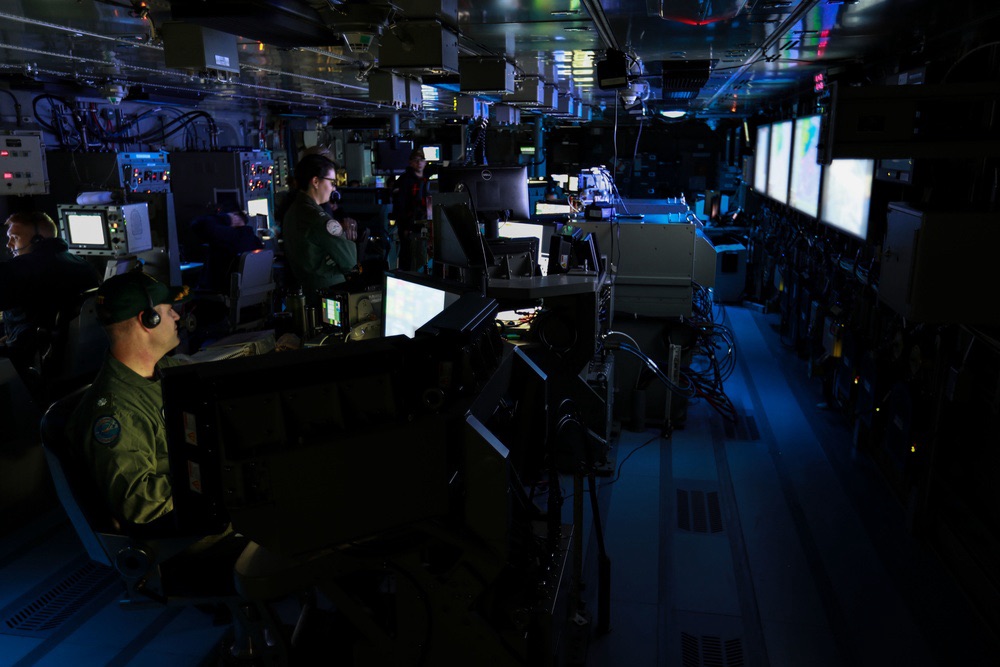
Combat Information Center on the Gerald R. Ford
I mentioned above that data could be shared between the CSG and I’d like to highlight this for a moment because I think it’s important. These systems are used throughout the navy. CEC or Cooperative Engagement Capability is a network of sensors and fire control systems all working together towards a complete battlefield picture for all aircraft and surface ships. Think about a computer network. The computers can all transmit data to one another through a high speed, encrypted, wireless connection allowing all these systems to operate together towards a unified goal.
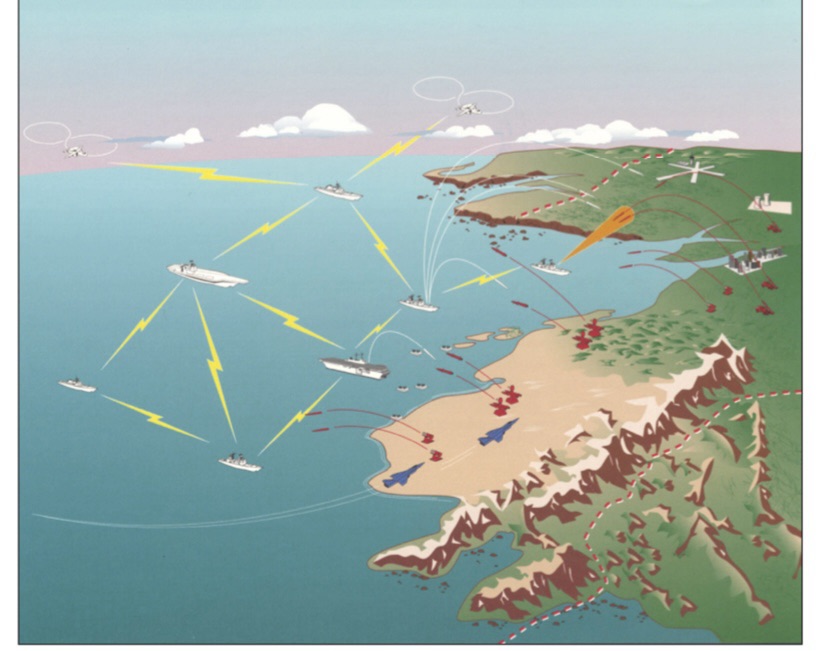
A littoral battle underway as multiple hostile and friendly targets need to be identified and tracked.
This would include systems like Aegis. Aegis is a series of radar,computers and different weapons systems that all work together be an effective missile defense system. While the carrier itself is not technically considered aegis its radar can be used to in the process to help shooting down threats. The last system I’ll mention is Link 16. Link 16 is a tactical data exchange network that allows ships and aircraft and ground forces to share a tactical picture in near real time. It supports text messages,imagery, voice through digital channel frequencies that operate using radio waves. Link 16 is being used throughout NATO for the different nations to all be able to share their view of the battlefield.this system allows,for example- the stealthy F-35C lightning with its upgraded radar to communicate with the E2-D Advanced Hawkeye who can relay the signal to the
F/A-18 (and surface ships) allowing the Lightnings to act as a sort forward observer, tracking enemy’s and preselecting targets.
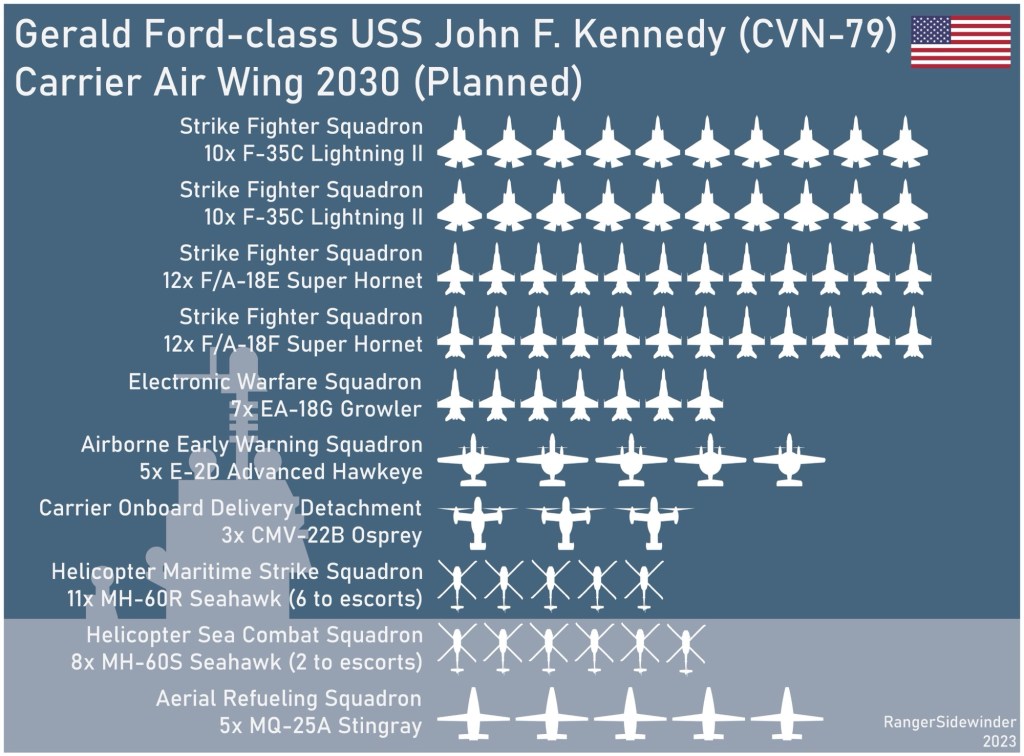
Planned air wing of the USS John F. Kennedy, The next Ford Class Carrier.
Moving on. Let’s look at the main role of the carrier which is power projection through its air power. Its hanger capacity has been extended allowing it to support up to 90 aircraft of the current carrier air wing makeup. The future will likely see the navy’s workhorse F/A- 18 Super Hornet all replaced by F-35c Lightnings but for now it appears that they are running a mixture of the two mostly as a way to keep cost down if I had to guess.
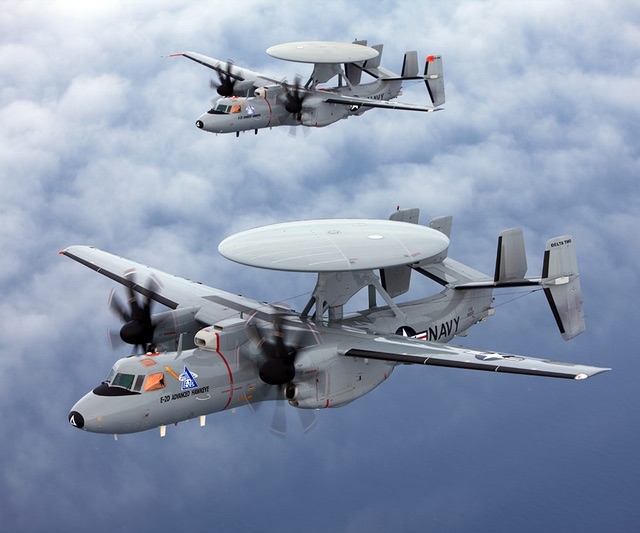
Other aircraft operating from the Ford Class will be fairly standard except for a few instances. E/A-18 Growlers will remain a huge part of the carrier air wing being the electronic Warfare and SEAD/DEAD (Suppression/Destruction Enemy Air Defense) of Master that it is. The command and control E-2D Advanced Hawkeyes are the shiny big brother to the Hawkeye of olden days. Northrop Grumman took an “if it isn’t broke don’t fix it” approach to the beefed up Hawkeyes and instead of changing anything they just made it better in almost every way. The same is true for the SH-60 Seahawks which will cover helicopter operations.
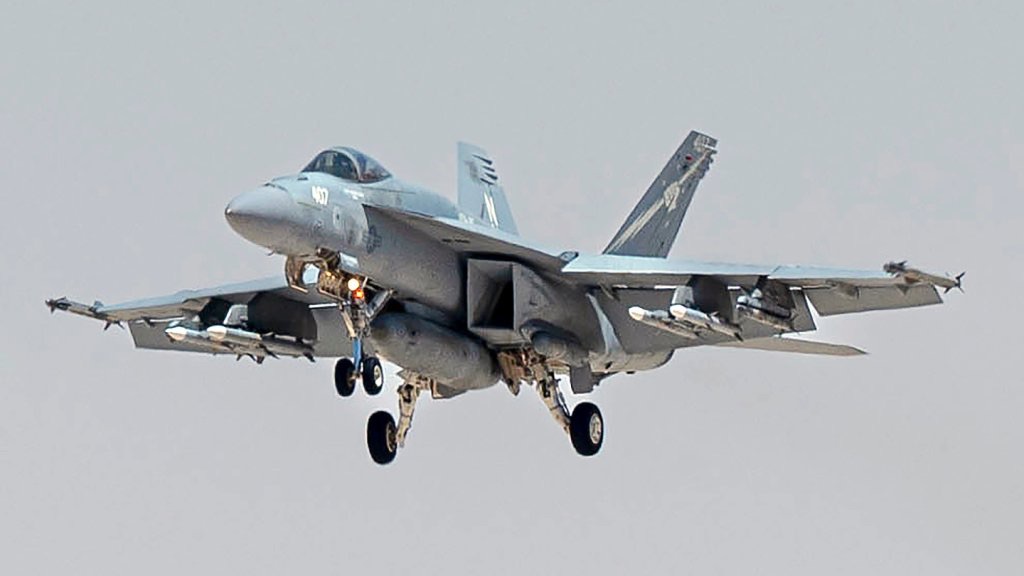
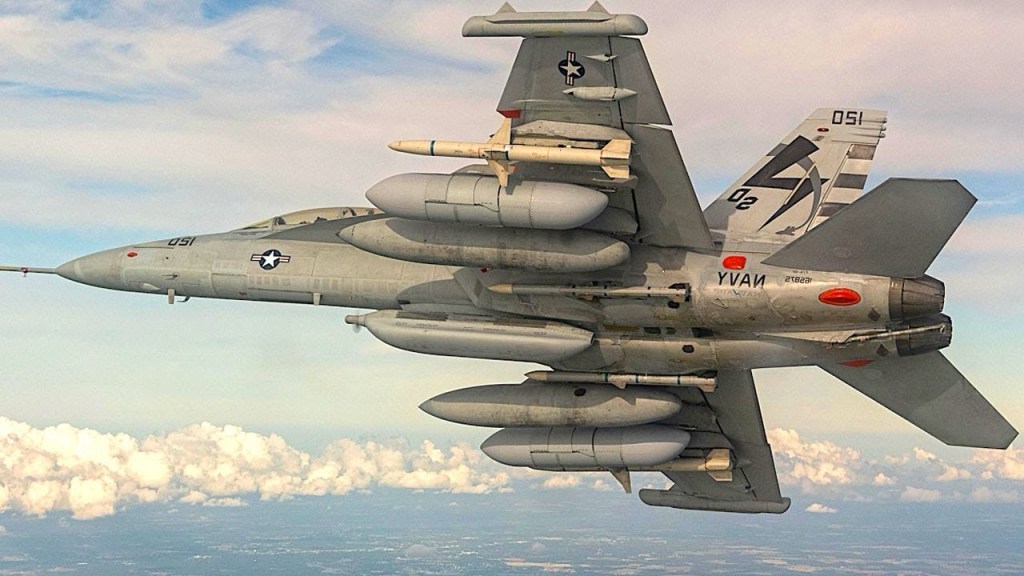
F/A-18 Super hornet. No introduction needed. These are the ground strikers and air to air defenders of the fleet. E/A-18 Growler. The SEAD/DEAD powerhouse and the reason why the enemy’s never see what hit them. E-2D Advanced Hawkeye. Airborne radar as well as Command and Control. These guys are the Taskmasters. They make sure everybody is in the right place doing what they need to do.
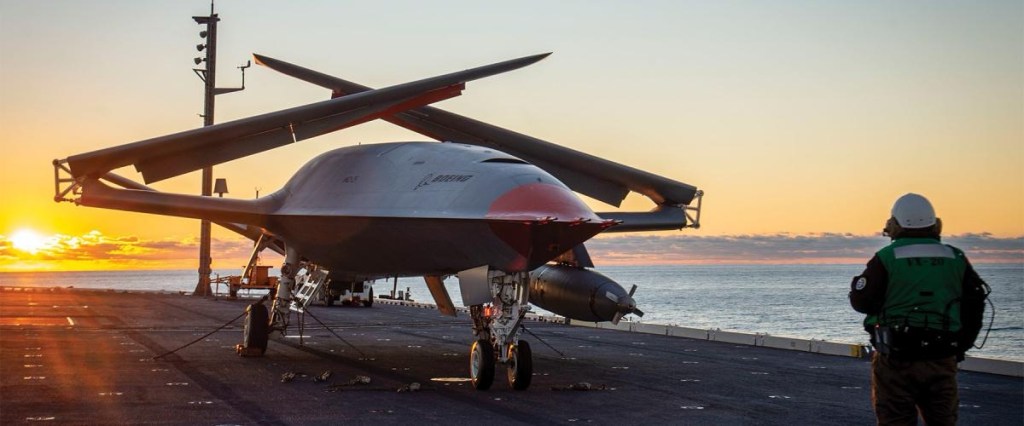
There is one other addition to be added to all Ford class carriers. The addition of an unmanned warfare center to operate any and all unmanned drones deployed by the CSG. The one major planned unmanned system is the MQ-25 Stingray. The Stingray is still in development but is expected to make its way to the fleet in the next couple years. The Stingray will handle all the carrier aerial refueling needs.
MQ-25 Stingray aerial refueling isn’t sexy, until you really need gas.
All in all the Ford Class carriers will provide a net positive in war-fighting ability to the US navy in a time when politics and budget constraints in the acquisition department have yielded several platforms that failed to meet expectations. The next Ford Class Carrier is set to be delivered to the Navy this year as long as there are no delays.


 Global Conflict Reporting
You must be logged in to post a comment.