Tag: Air Defense

  • What were the targets during U.S. strikes in Venezuela.

    By.Scott Jackson


    01/13/2026

    On the morning of January 3rd, the U.S. launched a major operation to capture Venezuelan President Nicolás Maduro. Operation Absolute Resolve as it has come to be known took place mostly in the Caracas region however the U.S. carried out airstrikes elsewhere on certain regime military targets.
    The strikes were carried out in the early morning hours of January 3rd when more than 200 special operations forces surged into Venezuela while aircraft and ships that had been gathering in the Caribbean for months conducted a number of precision airstrikes on (mostly) military targets around the Caracas area. The special forces, being flown by the helicopters of the 160th Special Operations Aviation Regiment “Night stalkers” flew in, suppressed and destroyed enemy air defense and captured Venezuelan President Nicolás Maduro and his wife Cilia Flores.

    This attack was an operational success and caught the National Bolivarian Armed Forces of Venezuela completely off guard. The defenders only managed to launch a handful of Igla shoulder mounted missiles which appear to have all missed. The helicopters used by the Night stalkers have a number of countermeasures against these types of weapons.

    After this the helicopters landed, special forces ground units found and secured Maduro and his wife after fighting through a reported 30 Cuban security guards. Maduro was transported to the USS Iwo Jima after this and from there he was transferred stateside.

    Maduro perpwalk.

    Since the morning of the strike GCR as well as many others have worked verify where some of the strikes took place and I’d like to go over the ones I’ve managed to verify as well as note any other information I have about them.

    With geolocations,most of the time you will have a video and you want to find the location in took place. This case was no different, I had multiple videos and many of them had the same location shown . I also got very lucky in that some of the major networks has marked out strikes their teams had found on a map so I used one of those as an overview. I also grabbed satellite images from where ever I could, much of it is from the Center for Strategic & International Studies (CSIS), as well as released images from Planet labs and Vantor.
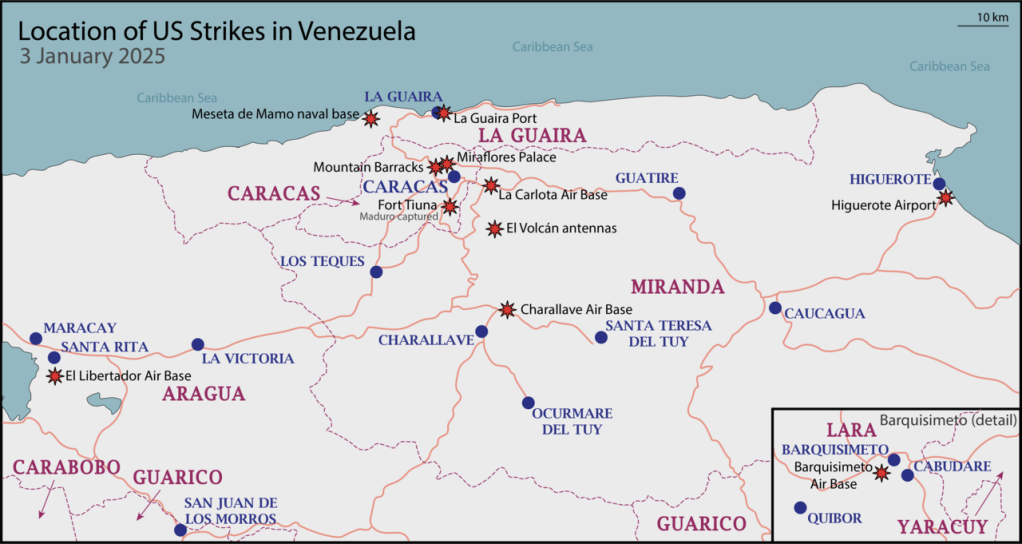
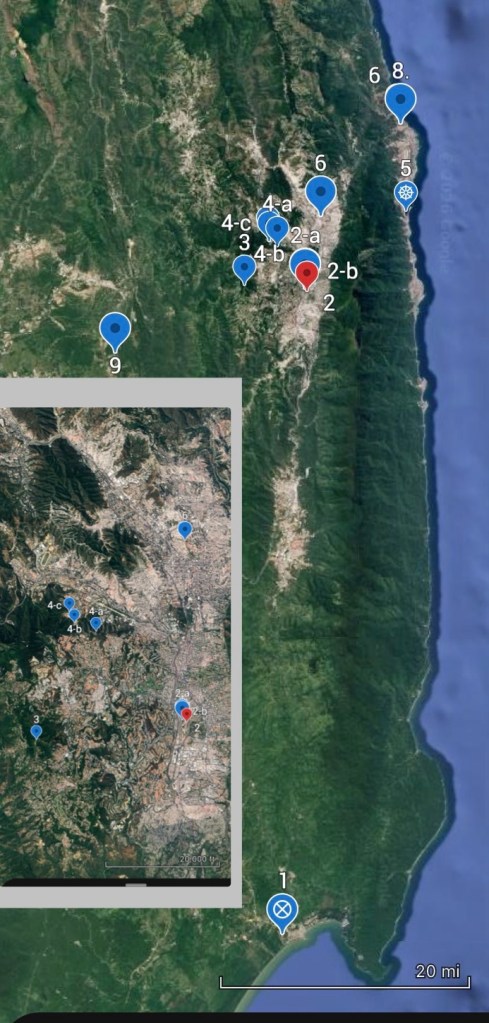
    I found this map on the New York Times website which helped me narrow down locations of strikes making this process a lot quicker.

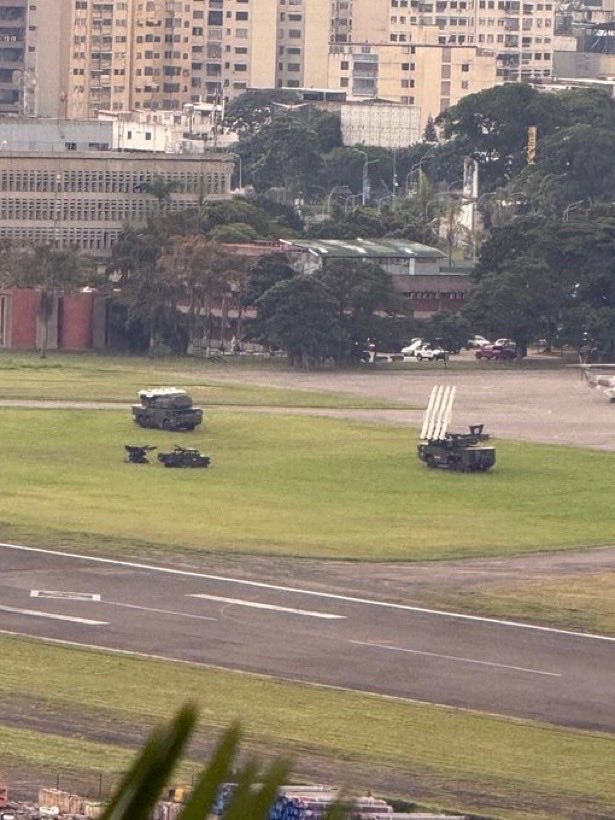
    The Venezuelan air defense is made up of several systems but the one we will be talking about mainly today is the Buk series. The Buk is a family of self propelled, medium- range surface-to-air missile systems.
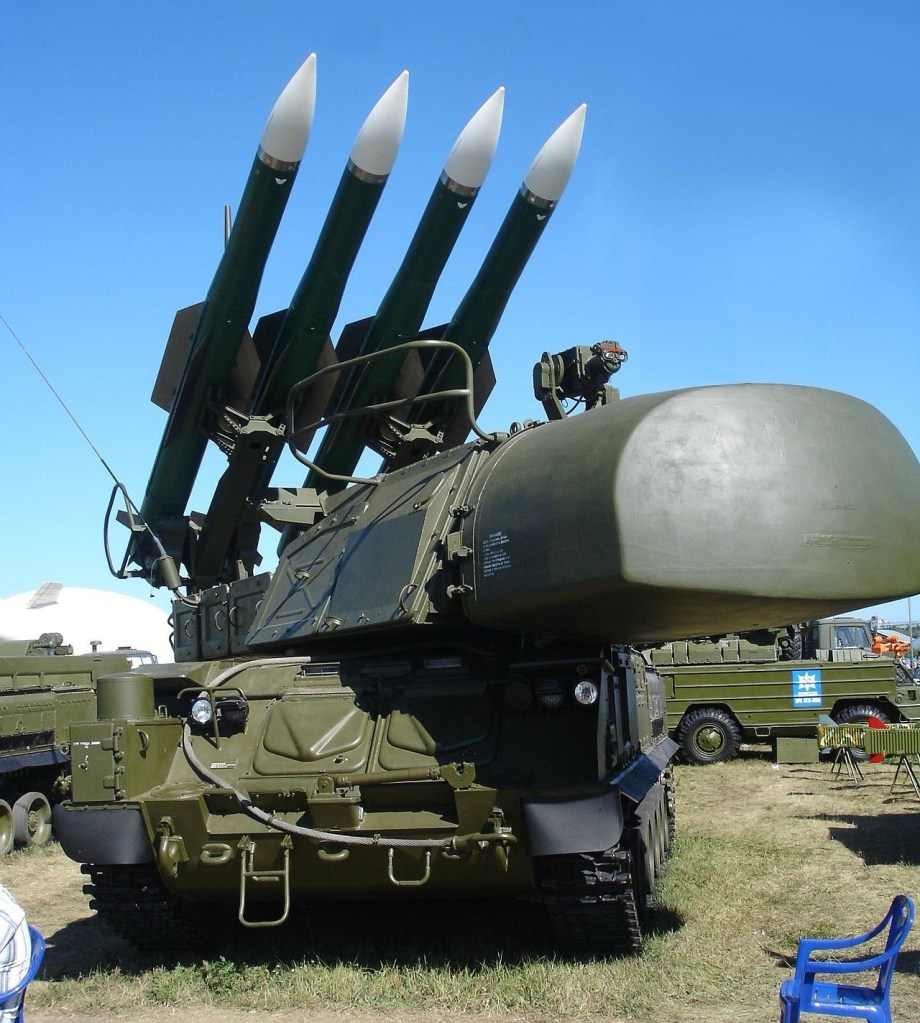
    A Buk-M1-2 SAM system

    It’s been reported in the days since the strike that none of the systems were hooked up to any sort of long- range detection radar and were only using their targeting radar which is very ineffective.

    Former head of the CIA station in Venezuela Richard de la Torre, said that years of corruption, logistical problems, and the impact of international sanctions were the cause of the Venezuelan air defense network being in such a poor combat readiness state.

    Moving on to the strikes.

    Strikes on Aeropuerto airport.

    (Number 1)

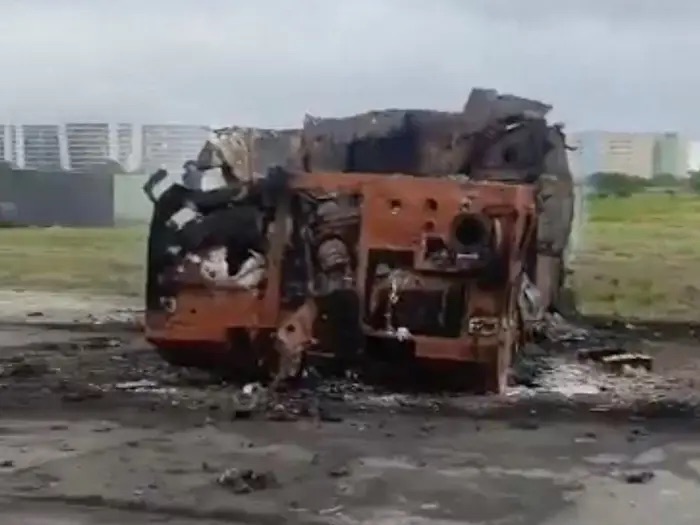
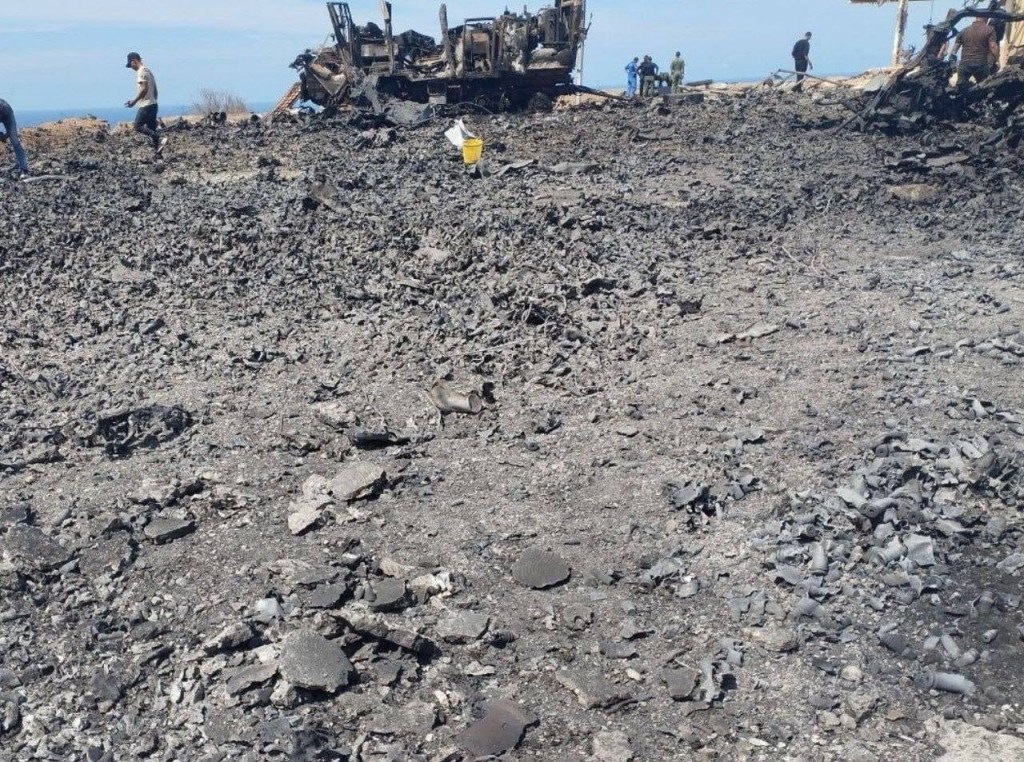
    The first site I looked at was from the airport located in Higuerote. Images taken after the strikes show remains of what we believe were light airplanes and trucks that were used to block off access to the runway. Remains of a Buk air defense system command vehicle were also spotted.
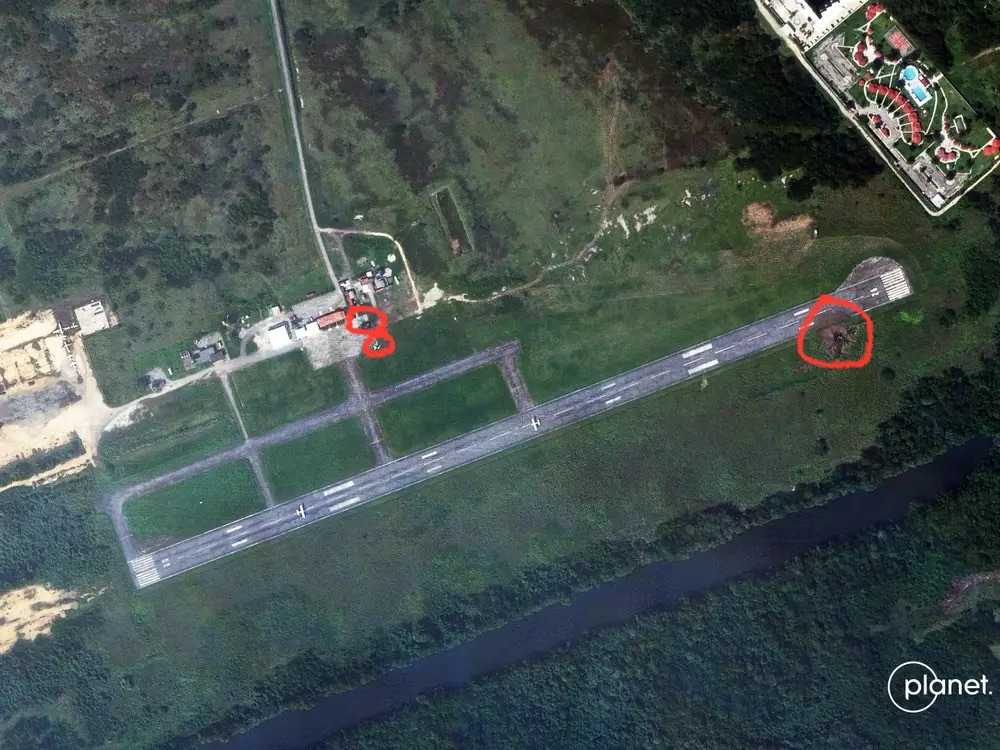
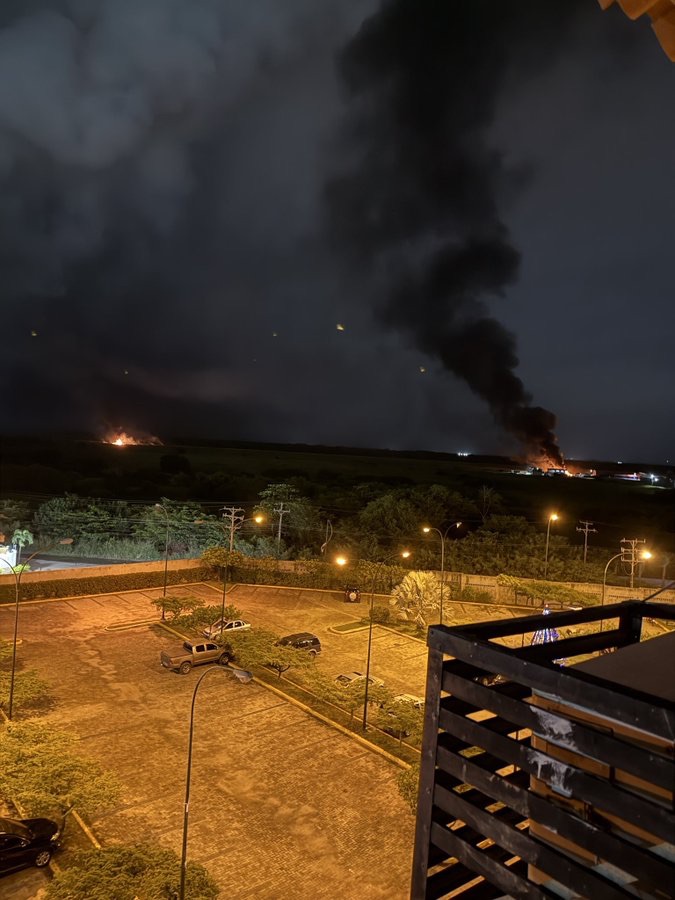
    Two strikes in the center are light the Buk and the light plane. The strike at the end of the runway is an unknown target. You can also see the light planes left on the runway in an attempt to stop US forces frim using this airport.
    A shot of the airport in Higuerote after the strikes.
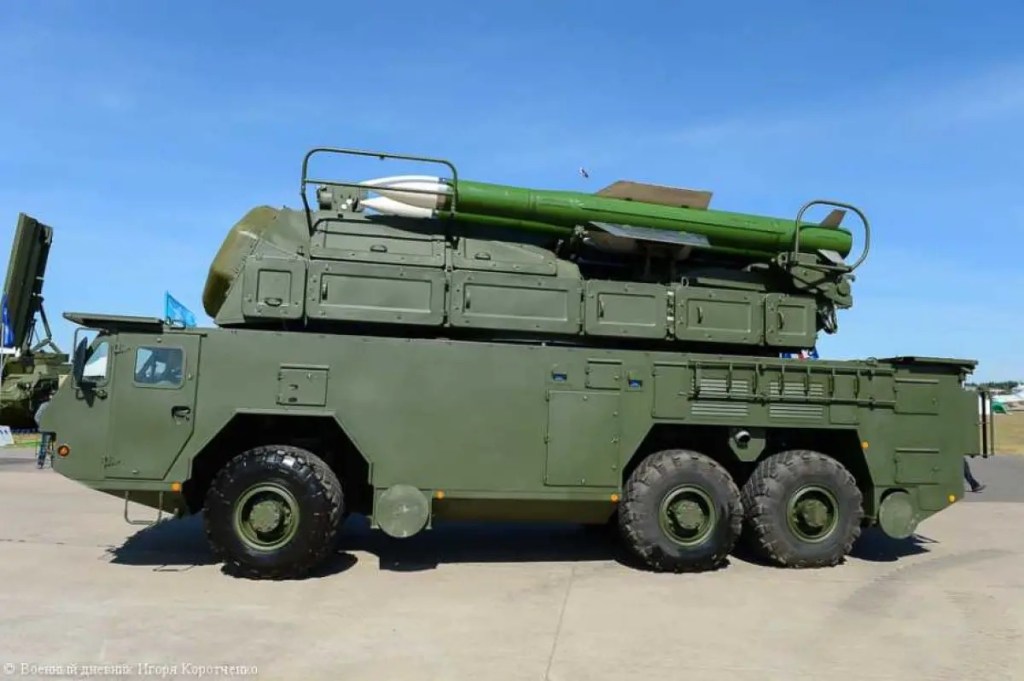
    I believe this to be the remains of a BUK-M2E.
    For comparison.

    Video of the BUK’s ammo cooking off after the strike was caught.

    Strike on Buk-M2E at La Carlota airport.

    (Number 2)

    At la Carlota, the home of the General Command of the Bolivarian Military Aviation much like at Higuerote both serve a duel-role acting as civilian as well as military airports, Battle damage assessments indicate that only exposed air defense was targeted, while the hangers, runways and everything else remains intact and largely undamaged. Possibly trying to keep collateral damage to a minimum as the airport is surrounded by residential buildings on all sides.

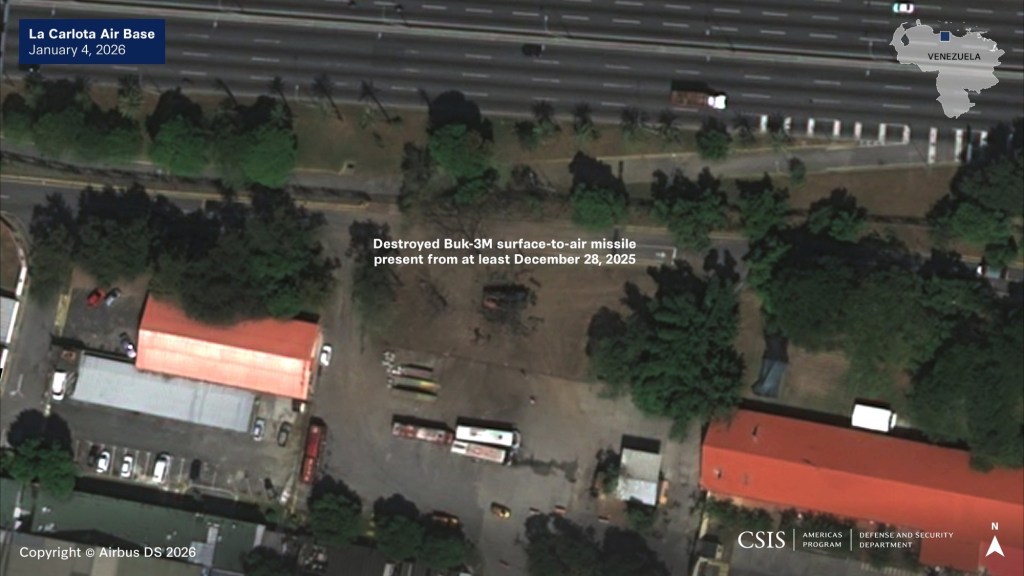
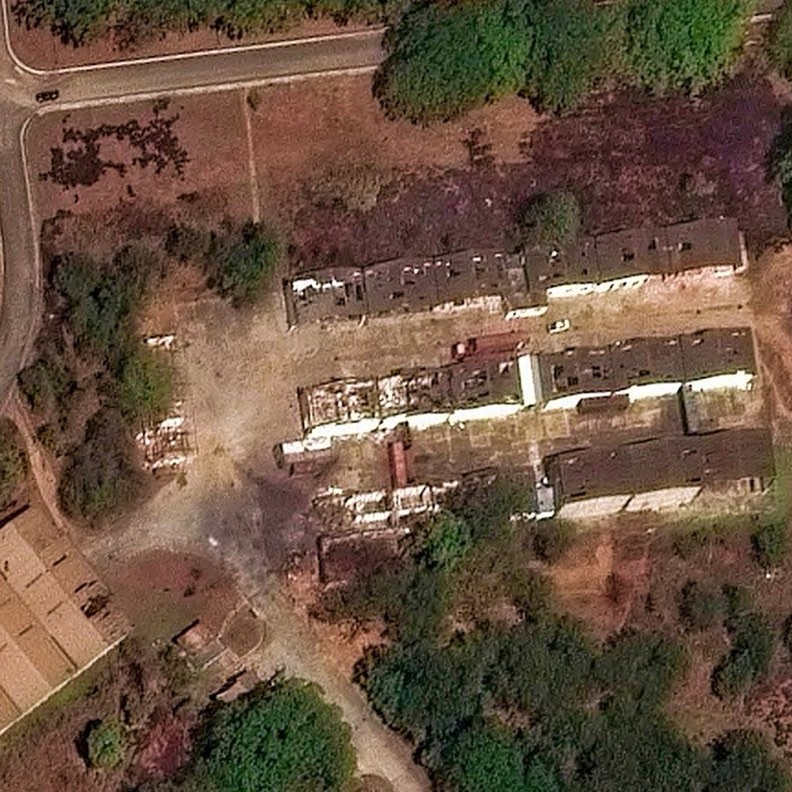
    At least three strikes on the La Carlota airport.
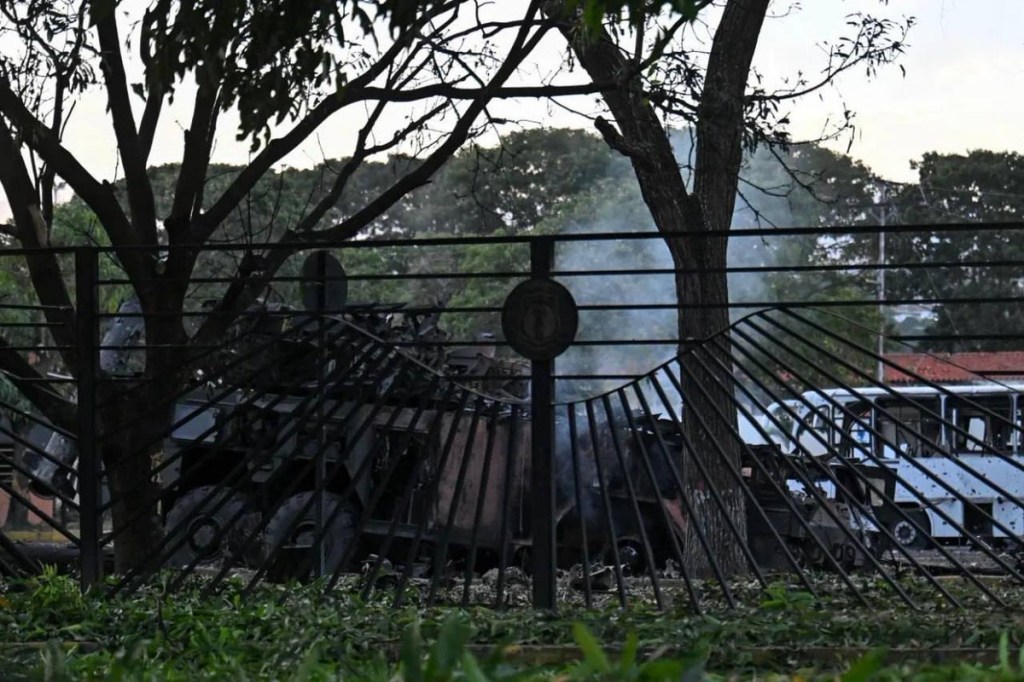
    Image shows the spot the Buk was filmed sitting in the days before the attack. A vehicle is clearly destroyed here.
    Two close-ups of the destroyed Buk. Note the bus visible in both images and satellite imagery.
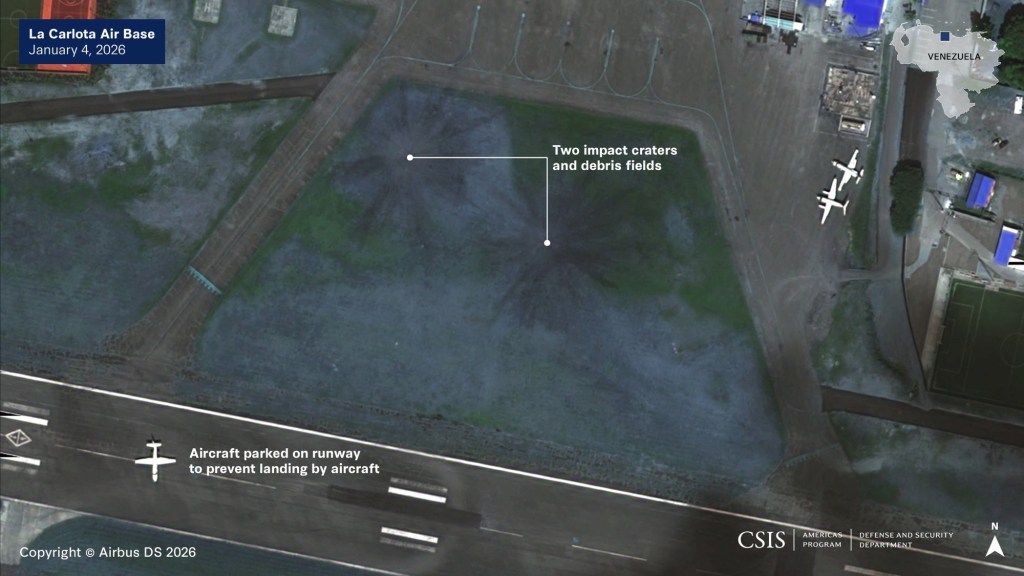
    This spot, closer to the runway shows two clear impact marks.
    This image shows the same spot several days before the strikes. I believe these were the targets.

    Satellite images from the day after the operation show all of the strikes hit in open areas and avoided targeting buildings. Open source data as well as satellite footage show that at least one BUK-M2E was targeted here, but possibly more.

    Strike on El Hatillo Telecom antenna

    (Number 3)
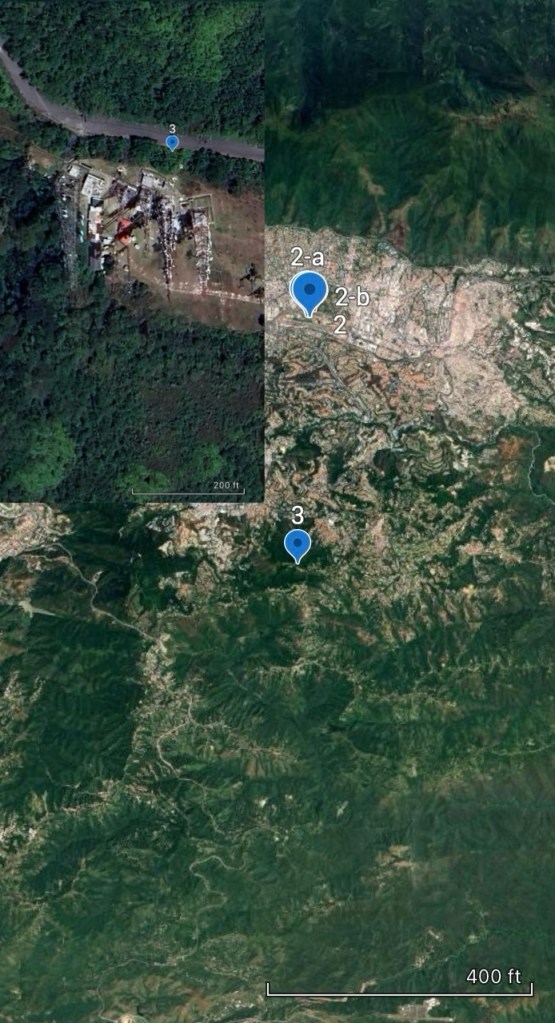
    General location and close up before the strikes.

    This telecommunications antenna was struck on January 3rd. This mixed with the electronic warfare we know were operating in the air would have likely knocked out most of not all communications in the area, causing confusion and preventing the military from coordinating a defense.
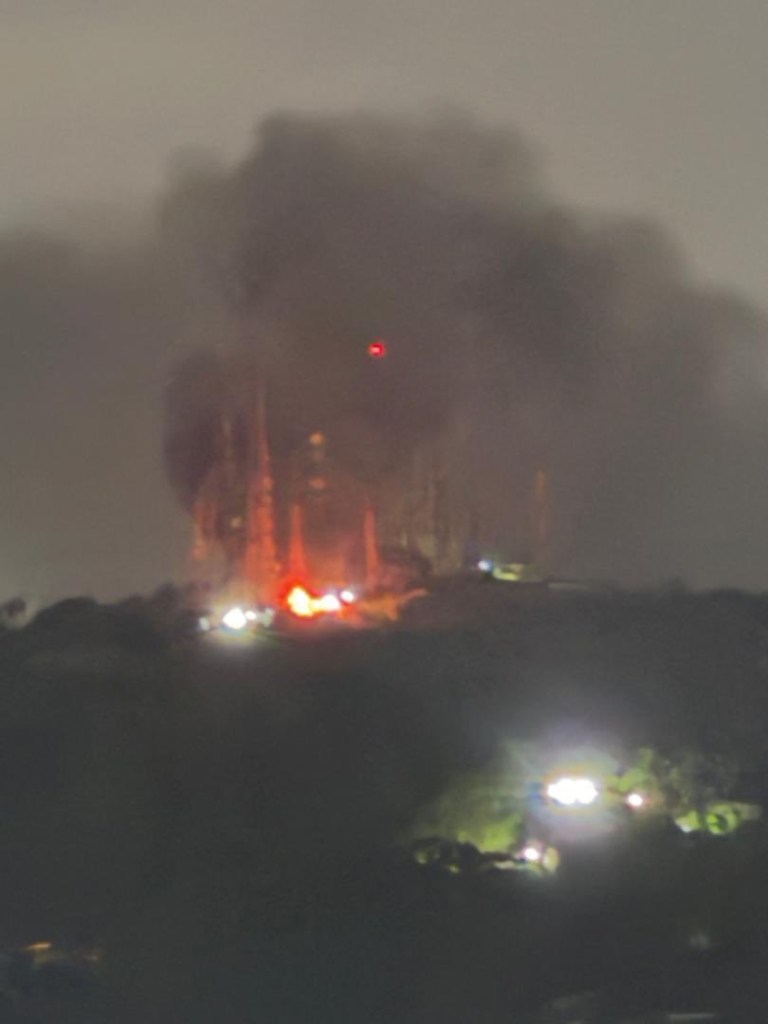
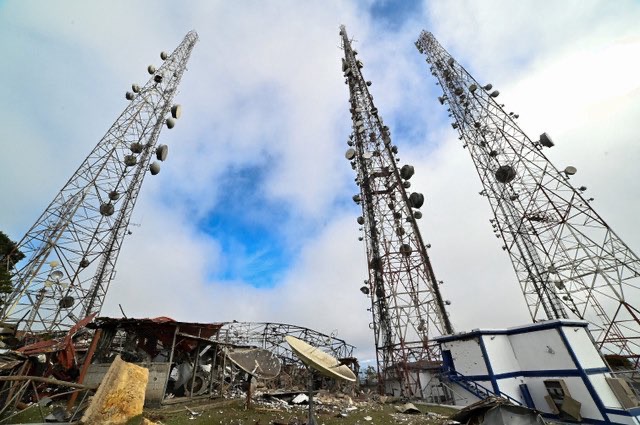
    Directly after the strike.

    Fort Tiuna

    (4A-4C)

    The next set of strikes targeted Fort Tiuna, the military base that housed Maduro and his wife on the night of the raid.
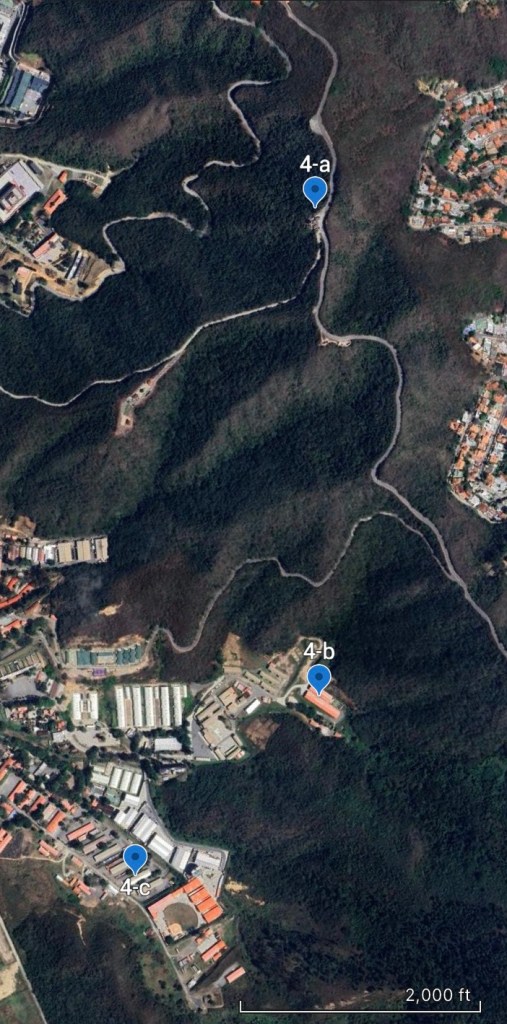
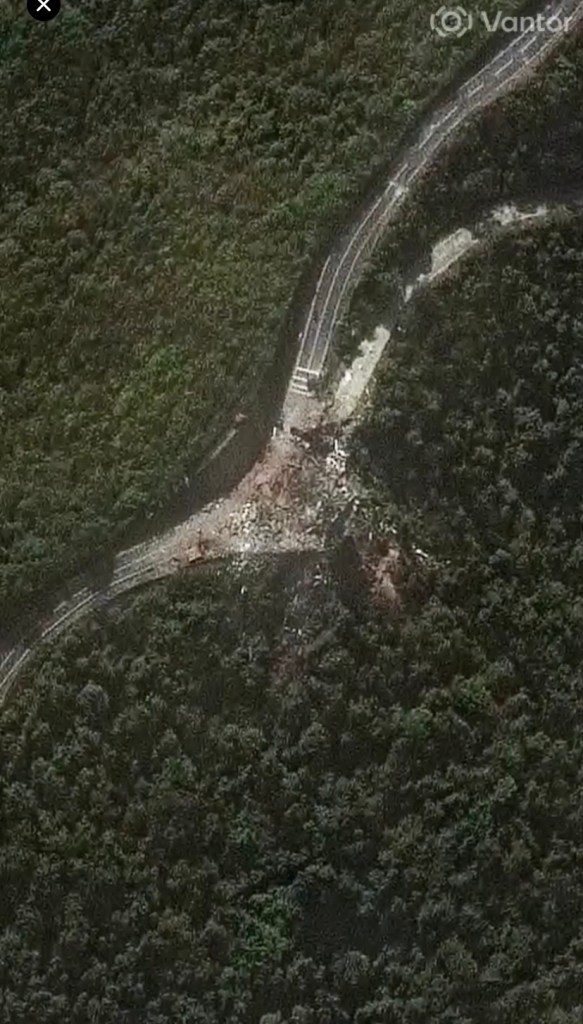
    4a. Hit the what Google Earth has listed as the main entrance for the base. It’s also thought to be one of the entrances for the underground bunker built into the mountain.
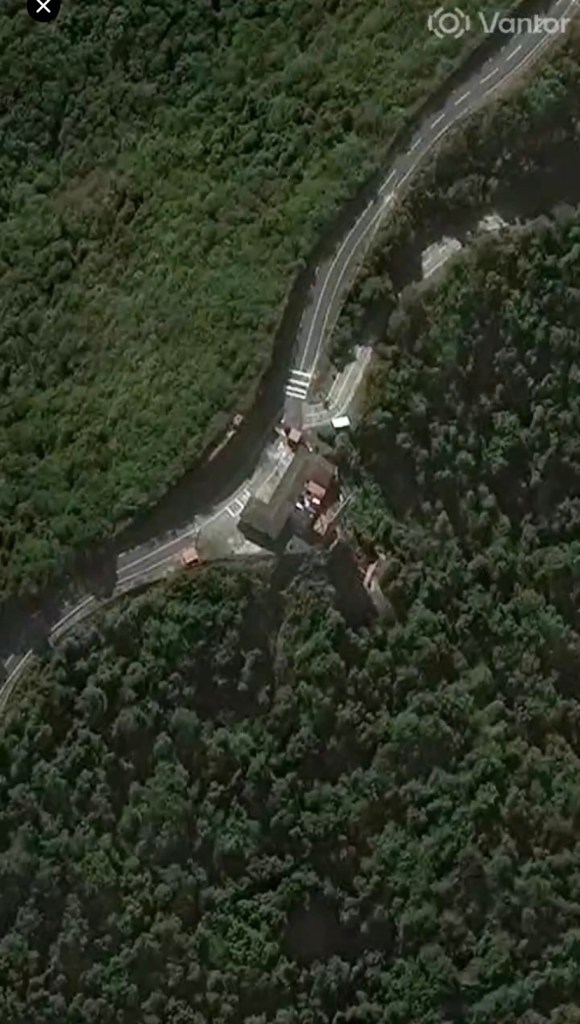
    Before
    After

    4b. This shows the destruction of a building that appears to be used for storage of mikitary equipment. It’s proximity to the mountain is building could also be one of the entrance points for the bunker.
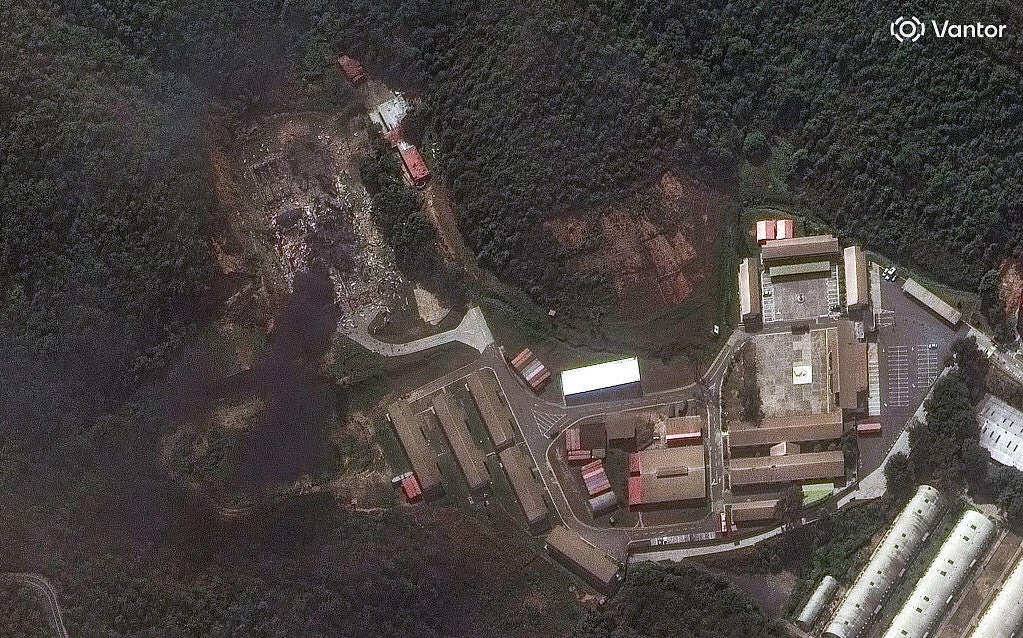
    4c. This next one shows the destruction of a vehicle storage facility as well as another building claimed to be another entrance to the underground bunker.
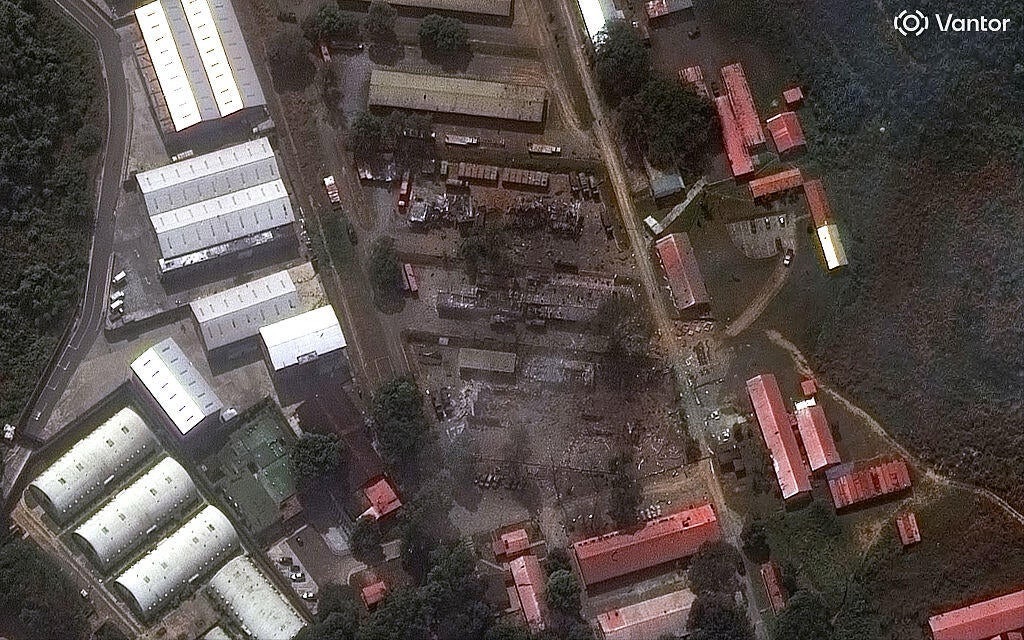
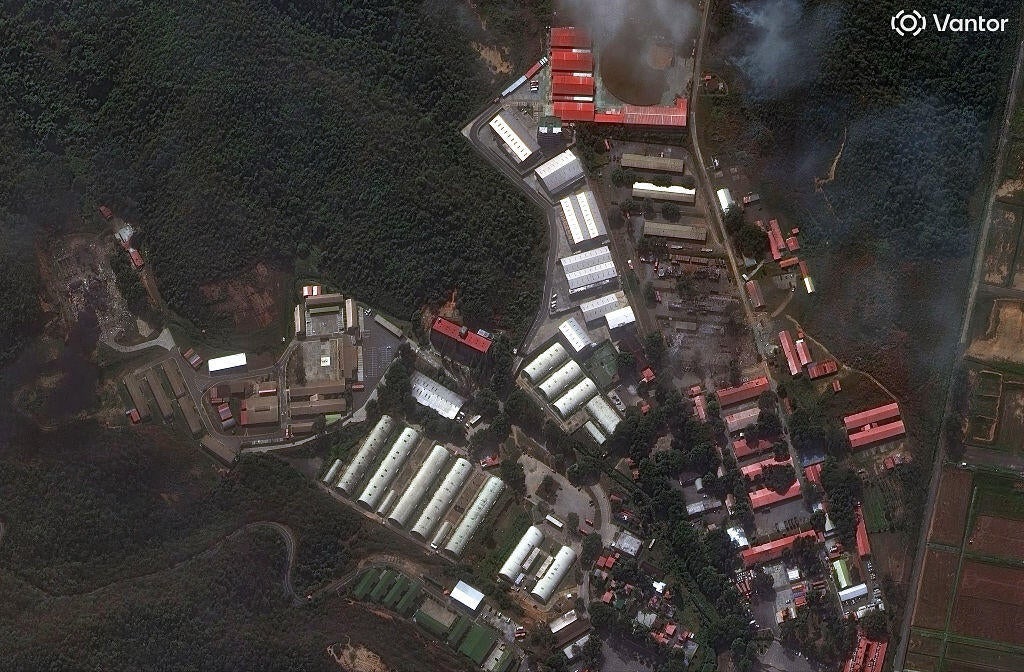
    This shows the after ahot of 4B (far left) and 4C (top and center)

    Strike at the Port of La Guaria

    (Number 5)

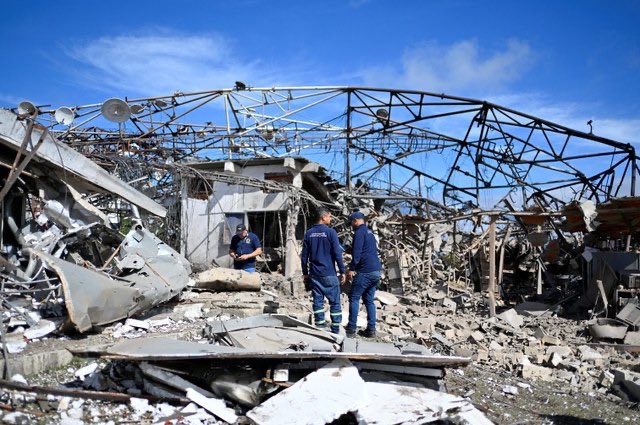
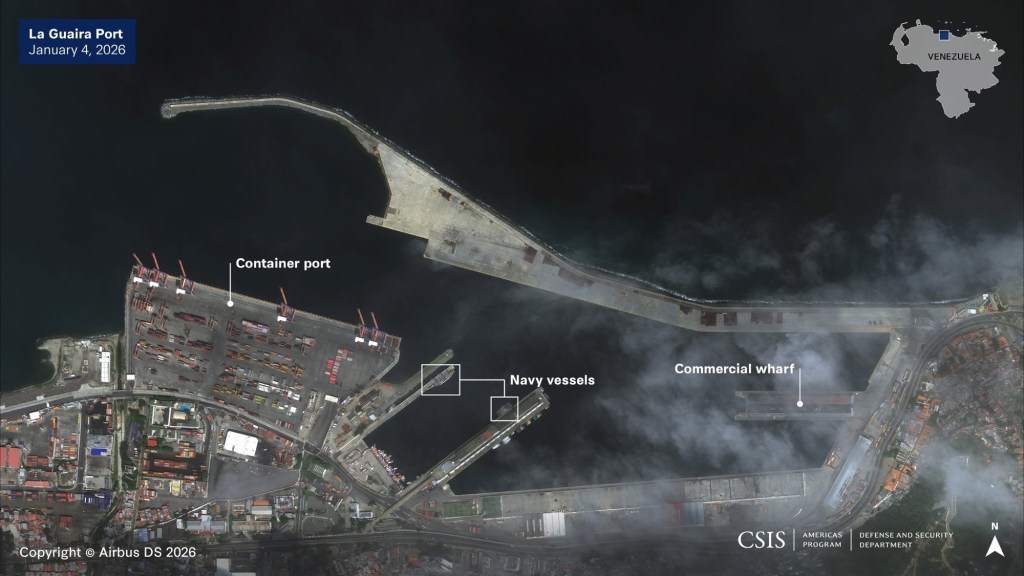
    The strike on the port seems to have yet again targeted part of the Venezuelan air defense network as footage from the aftermath appears to show destroyed Buk systems. Several clips are taken in the direct aftermath of the strike and show the munitions of the AD system being ignited.

    Video of the aftermath. it’s believed that the explosion is the BUK’s missiles cooking off.
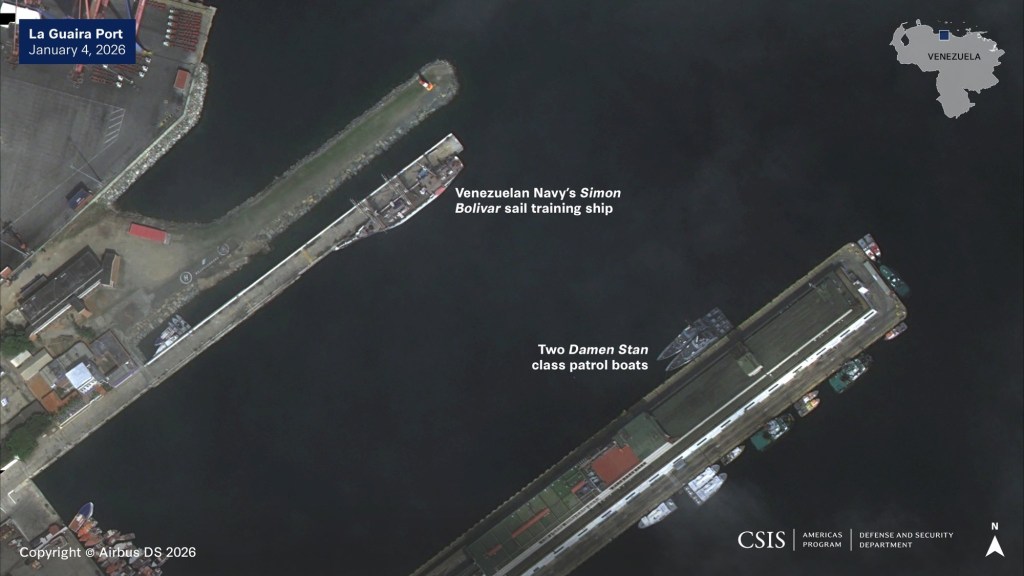
    Video of the direct aftermath of the strike however the poster is wrong about the target. None of the Venezuelan navy ships were targeted.

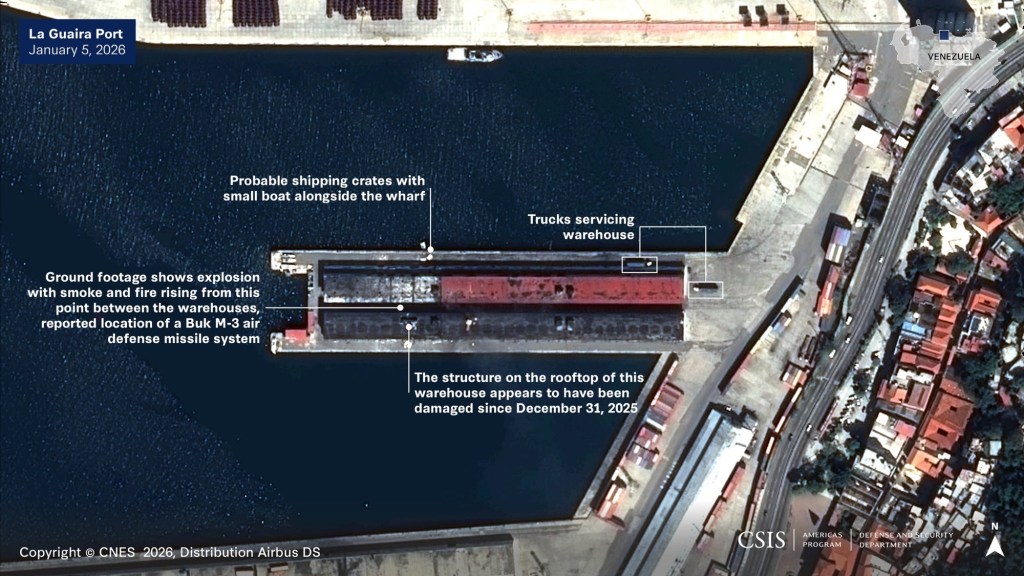
    CSIS has a great analysis of this strike so I’ll share some of that here as well.
    This next video, posted a claim that a warehouse at the port had been targeted because it contained medicines. The video actually proves it was targeted because a Buk launcher was set up between the warehouses, which was clearly the target as the warehouses survive the initial strike but are damaged during the secondary explosions from the missiles cooking off.

    Stills from the video showing a destroyed Buk.

    Strike on the observatory which houses the General Command of the Bolivarian Militia.

    This strike has raised some controversy as it was reported on the day of the strike that the U.S. had attacked the Mausoleum of Hugo Chávez.

    A post claiming the Mausoleum of Hugo Chávez had been hit with a U.S. airstrike.

    This claim has been debunked by others as well as myself. The video is actually being recorded by a guy standing very close to the resting place of the former socialist revolutionary and president. The strike actually struck an observatory. The observatory houses the General Command of the Bolivarian Militia, a civilian volunteer military militia.
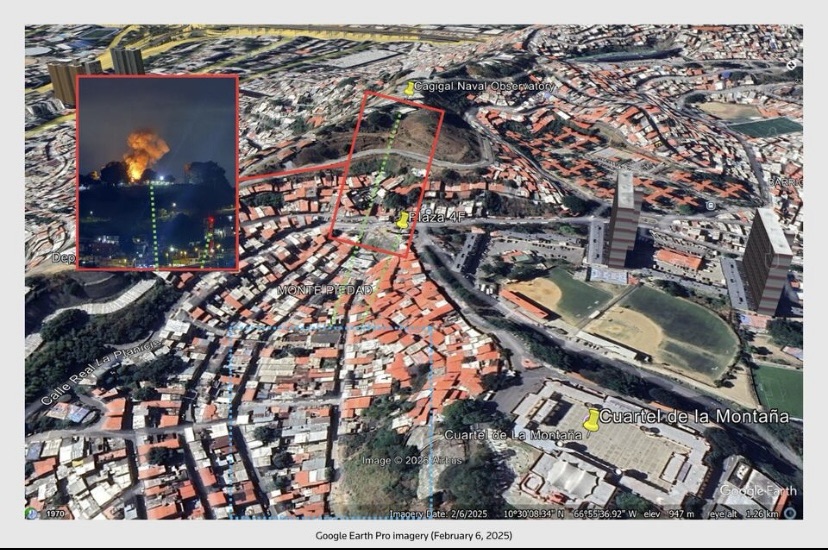
    An image from Google earth showing where the location of the observatory as well as the mausoleum. Based on the angle of the video that was posted the person who took the video was standing only a couple hundred feet to the left of the mausoleum and likely knew its location. This post was misinformation put out specifically to make the U.S. look bad. Image from Reuters.

    Air Defense position near the Naval academy.

    (Number 7)

    This strike targeted an area near the Naval Academy on the coast. This one, like many of the others targeted an area known to have been the location of air defense systems. Historical satellite imagery shows multiple Buk launchers stored here as well as buildings that housed additional launchers.
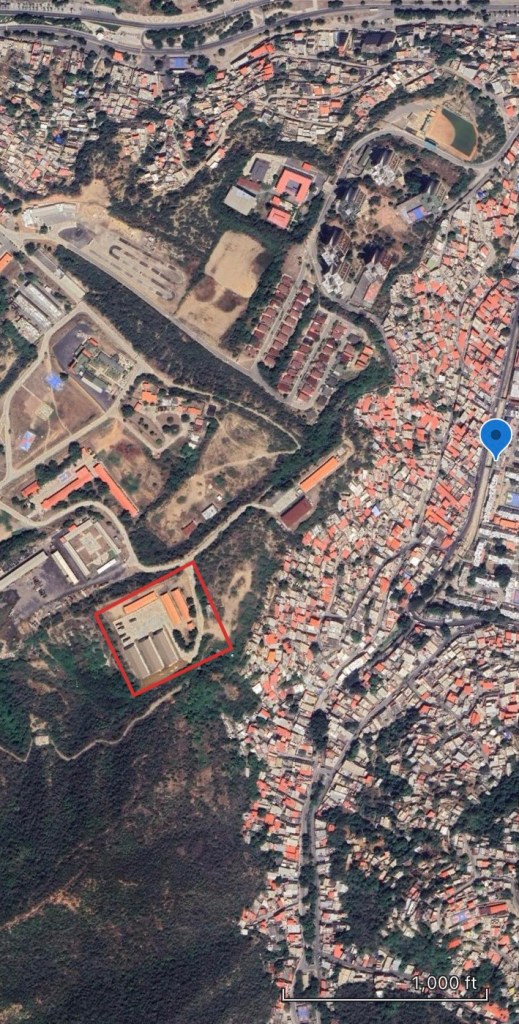
    Red square shows the air defense position.

    Images released in the aftermath of the attacks show that the buildings were housing additional Buk launchers.
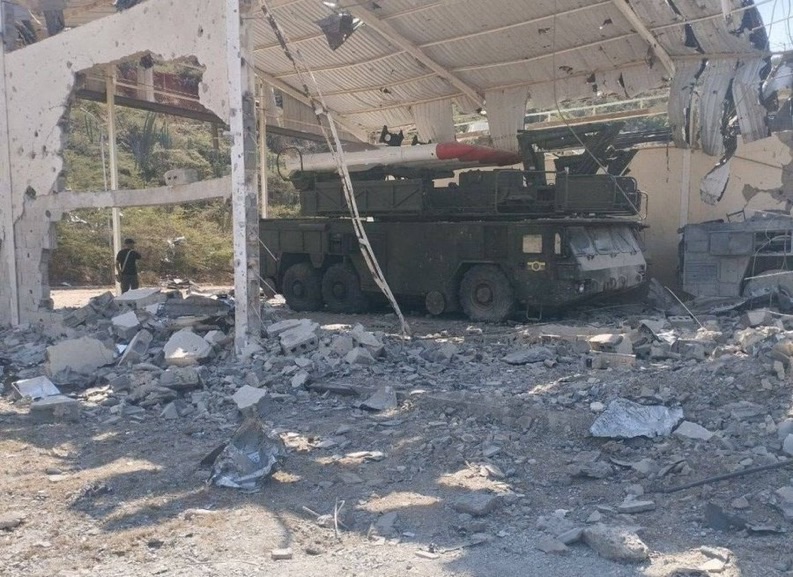
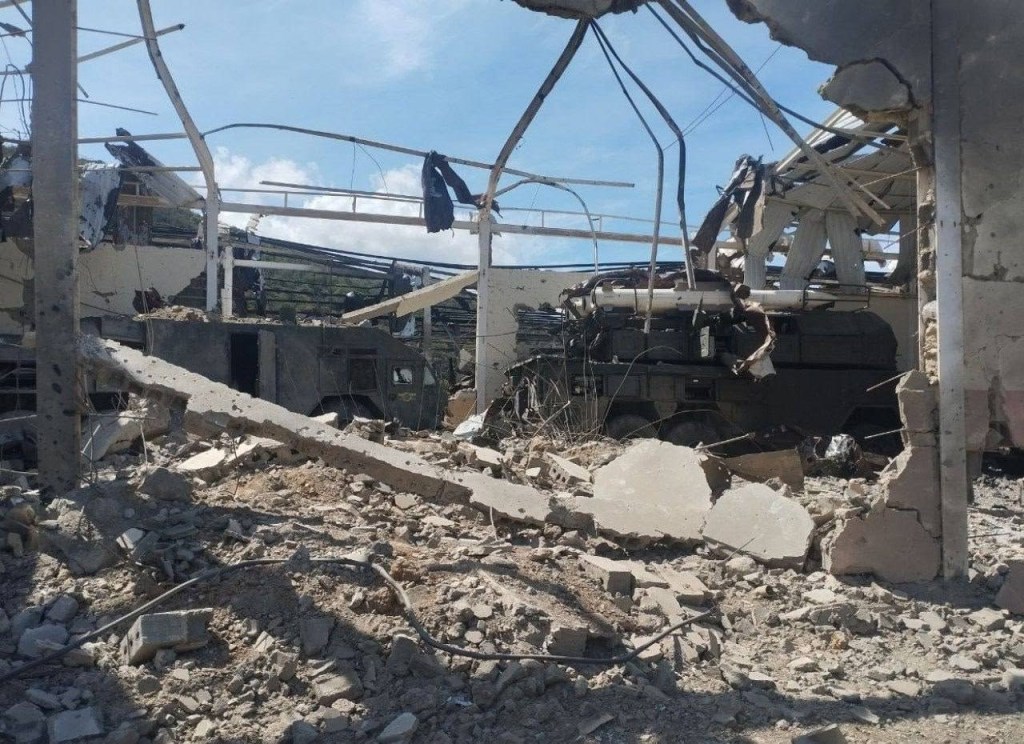
    These destroyed buildings match the ones from the satellite imagery.
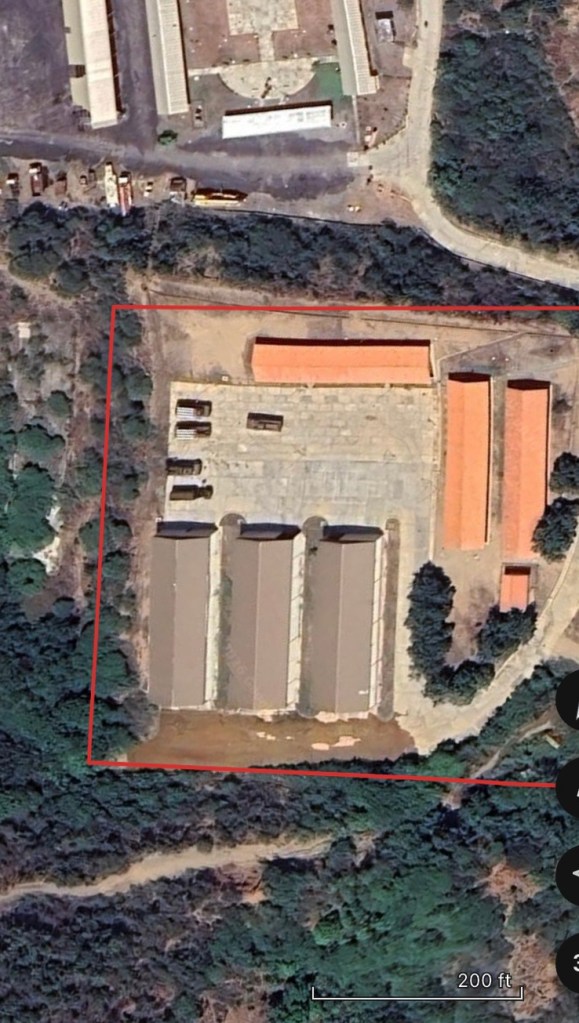
    A mistake.

    (Number 8)

    During the course of the operation the U.S. did an impressive job of protecting the civilians of the city. However evidence from the aftermath shows that a missile that was likely ment for the above air defense site target went off track and struck and apartment in Catia La Mar, killing an elderly lady by the name of Rosa Gonzalez,79.
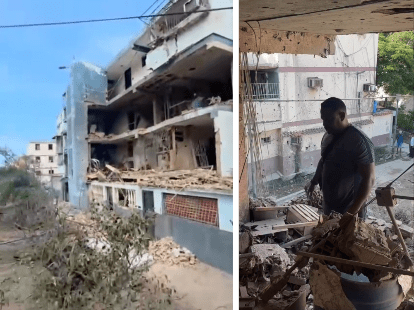
    Screenshot showing the outside and inside of the building that was struck.

    Missile appears to be a US AGM-88 HARM according to experts familiar with the weapons system as well as my own experience. The remains of the missile are shown below as well as with a comparison.
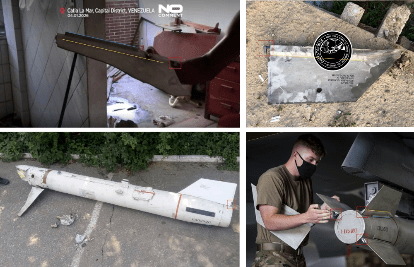
    The AGM-88 HARM/AARGM missile is what’s known as an anti-radiation missile. The missiles function is to home in on radar signals it detects and is used for destroying enemy air defense and radar. The missile can be pre-fired as a plane is flying into an area if it expects an enemy air defense radar will activate. However this missile either had no target or missed its target and hit this apartment.

    Bellingcat does an awesome write up on this incident that I’ll link to here:

    https://www.bellingcat.com/news/2026/01/07/inside-the-strike-the-us-munition-that-hit-a-residential-building-in-venezuela/

    Fort Guaicaipuro

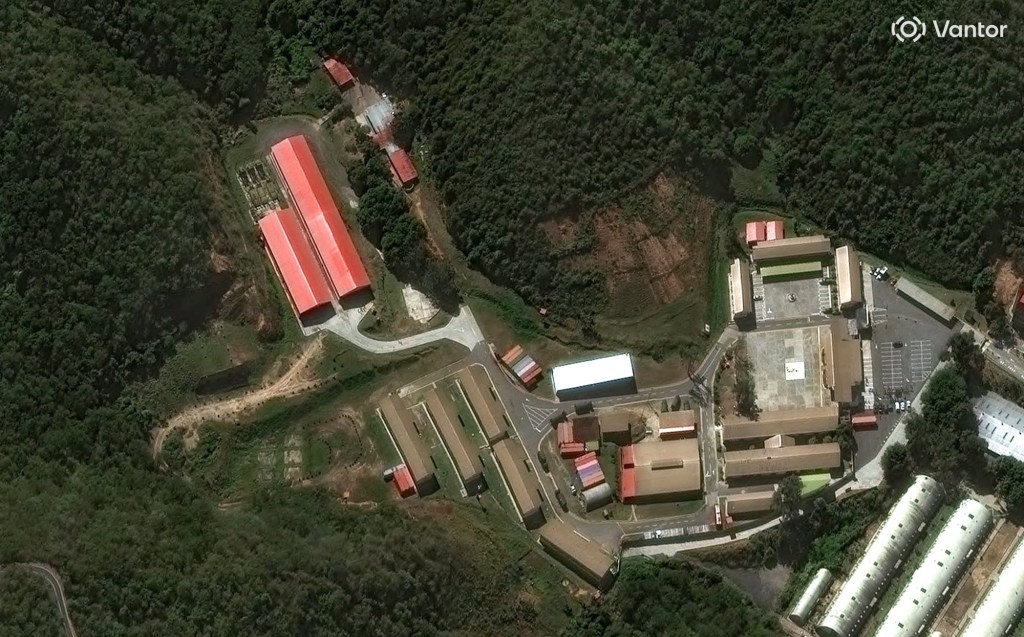
    The last strike I found was on a set of buildings located at Fort Guaicaipuro, south of Caracas.
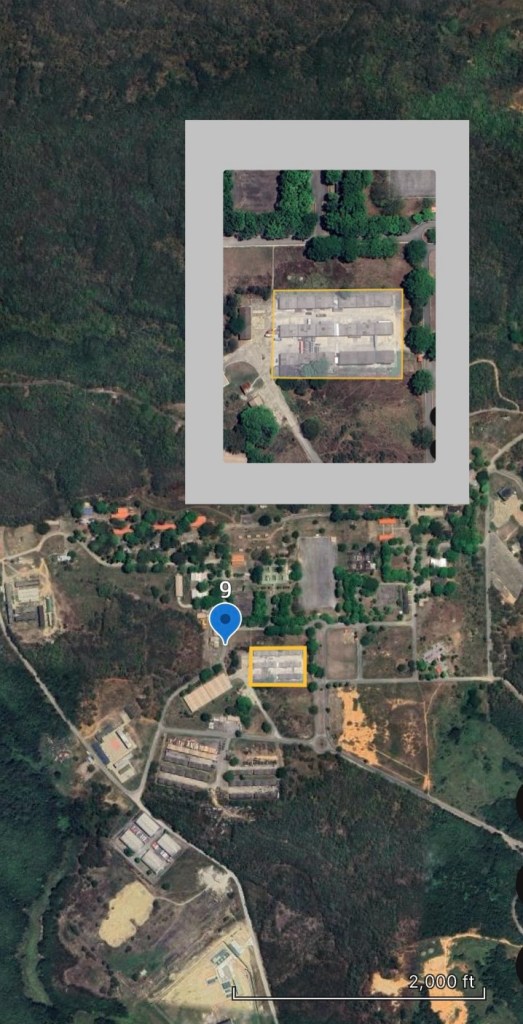
    It’s unclear what is stored at this site as footage from the aftermath has yet to be released.


    Thank you for taking the time to read this. It took me a lot longer than I expected to gather all the data and do the work to geolocate everything. Every time I do a big project like this I learn new skills and hopefully they will carry over and help improve future projects.

    Im positive that some strikes were missed. If so, I’d like to know about it, so send me an email or message on any of my socials. The map from the New York Times has one strike I just couldn’t confirm at the El Libertador airport and I looked but couldn’t find evidence of a strike taking place there.
  • US THAAD missile supply down 20% globally after Middle East engagement.

    By. Scott Jackson


    06/29/2025

    A recent report released by the DoD has annonced that the U.S. has burned through around 15-20% of its global stockpile of interceptor missiles used in the THAAD system, while shooting down Iranian ballistic missiles, defending Israel from attack. THAAD only had its first combat interception last year but its effectiveness has already been well proven and with the data from its recent interceptions its performance will only improve.

    THAAD, or the Terminal High-Altitude Area Defense is a U.S. air defense system that can engage and destroy short-, medium-, and intermediate- range ballistic missiles, inside the earths atmosphere or outside of it.

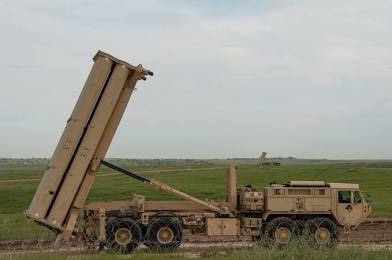
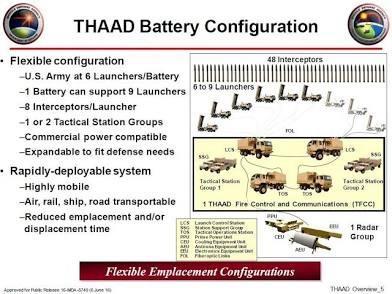
    The U.S. currently has Seven THAAD batteries. Each are made up of at least six truck-mounted launchers with eight interceptor missiles each. The launcher can be reloaded once every half hour. The system is capable of supporting up to 9 launchers.

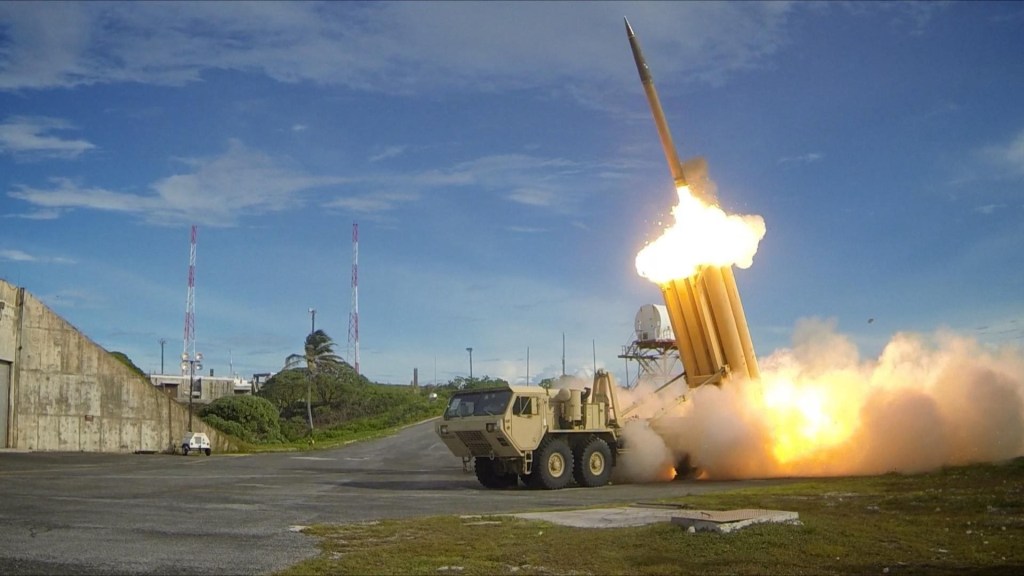
    THAAD mounted on a 4 axle heavy expanded mobility tactical truck (HEMTT)

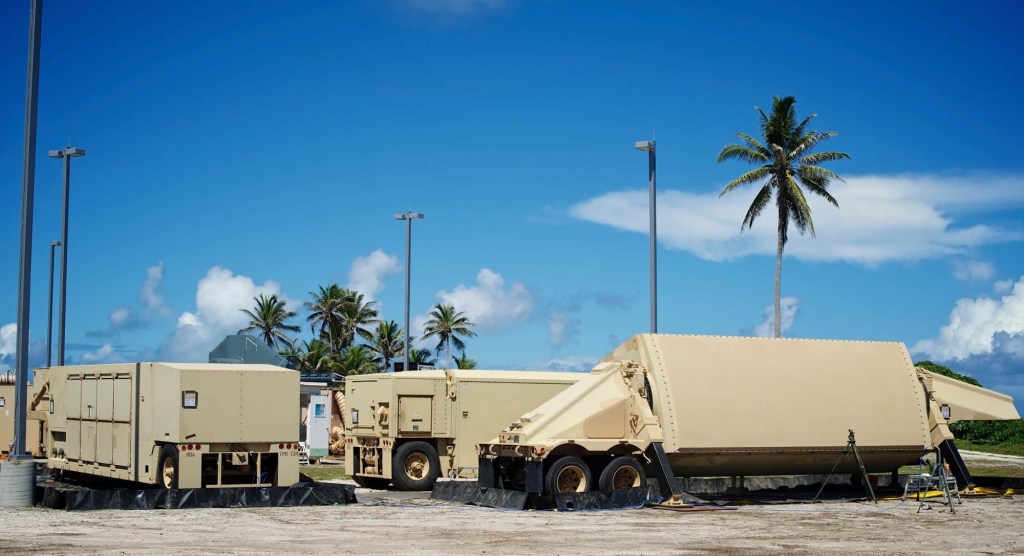
    The battery also consist of a ground based radar. The Army Navy/Transportable Radar Surveillance or AN/TPY-2. The AN/TPY-2 consist of 4 elements: an antenna unit, electronics unit, power and cooling, all on independent trailers. The X-band radar is capable of tracking targets out to between 500 and 1900 miles depending on mode and conditions. The radar is what gives THAAD its impressive accuracy. Note that the launchers can also utilize other radar if problems arise, such as any of the ship based Agis platforms.

    THAAD AN/TPY-2 and supporting systems..

    There is also the THAAD Fire Control and Communications (TFCC) which controls the overall operation of the system and also relays fire control informations to other systems like Patriot and other elements in the joint force. The TFCC includes two main stations: the Tactical Operation Station (TOS) and the Launch Control Station (LCS) . TOS and LCS incorporate wireless datalinks, networking equipment, and fiber optic cable interfaces.

    With near permanent THAAD batteries deployed to South Korea, Israel, and Guam, one can see its importance on some of the most high stress potential future and current conflicts. Finding a solution to a munition shortage problem in this area should become a high priority for the US as well as some of its partners who have bought the system. Defending the airspace during any conflict is paramount and could mean the difference between victory or defeat especially for the U.S. who doctrinally, look to maintain control of the airspace they are operating in.

    With near-permanent US operated THAAD batteries deployed to South Korea, Israel, and Guam, one can see its importance in some of the most high-stress potential future and current conflict zones. Finding a solution to the munition shortage problem in this area should become a high priority for the US and its partners who have purchased the system. Defending airspace during any conflict is paramount and could mean the difference between victory and defeat, especially for the US, which doctrinally aims to maintain control of the airspace it operates in.

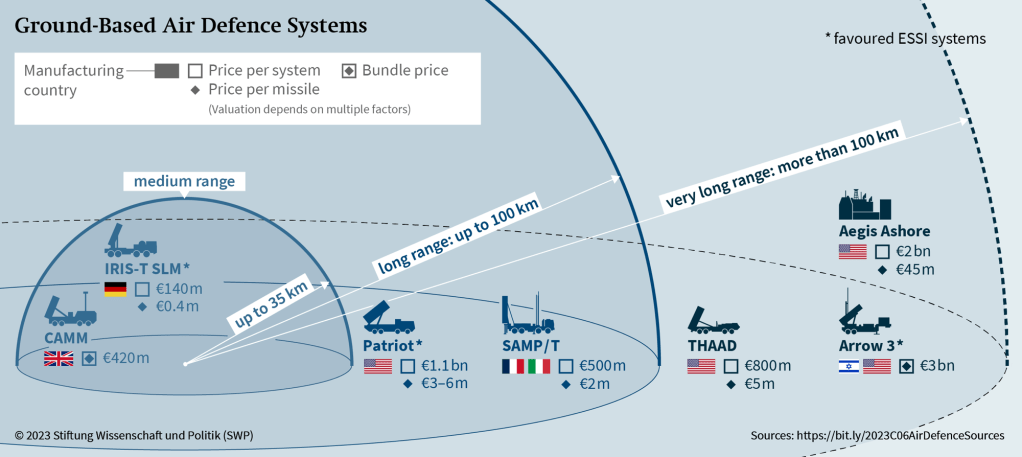
    To combat the shortage in the weapon systems munitions Lockheed Martin has invested in streamlining the process for the production of these highly technical missiles, up to 500 missiles a year for the U.S. ,instead of the current number that hovers around 300. South Korea has chosen to invest more in its own domestic systems hoping to be able to reduce the reliance on the system. The UAE will likely be getting a replenishment of their stock from the U.S.’s stockpile. Overall the U.S. is pushing its NATO allies to develop their own domestic systems as to take some of the pressure off of the THAAD system, and create a more multi-layered threat protection. THAAD works best when supported by other counters to different types of air threats. One example of this is the MIM-104 Patriot system.

    Diagram showing a layered air defense plan where each system complements and enhances the other’s abilities.

    THAAD will continue to be an important part of the United States overall missile defense strategy.

  • US Army General speaks on transfer of patriot air defense battalion to Middle East.

    US Army General speaks on transfer of patriot air defense battalion to Middle East.

    By. Scott Jackson


    04/10/2025

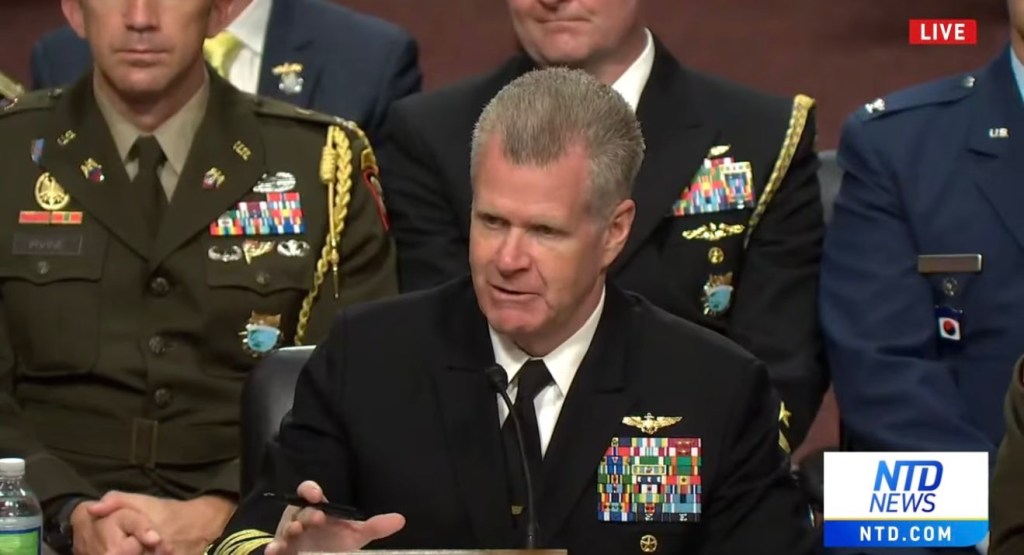
    Two days ago GCR reported that a number of US cargo planes were moving equipment to the Middle East. We have some more information on that today after Admiral Samuel J. Paparo revealed today at a hearing with the Senate Armed Services Committee, that several Patriot battery’s had been taken from South Korea and the Indian Pacific Command (INDOPACOM) and transferred to Central Command (CENTCOM). The airlifts were cauteries out by dozens of C-17’s.

    Admiral Samuel J. Paparo, Senate Armed Services Committee hearing.

    INDOPACOM covers the pacific and Indian Ocean region and is one of the most important military commands for the U.S. as they struggle against Chinese territorial interest with Taiwan as well as other parts of the first island chain. CENTCOM on the other hand, covers the Middle East region and is currently carrying out operations against the Iranian backed Houthis in Yemen. US assets have been reported as being moved to the Middle East in a suspected threat to Iran. US president Donald Trump has made it clear that if negotiations aren’t started with Iran, concerning Irans nuclear program, bombs will be the next step.

    While Iran has little in the way of modern aircraft capable of defending against these hypothetical US strikes, what they do have is hundreds of medium and long range ballistic missiles. High level officials from the Iranian government have made threats towards U.S. military bases in the region as well as the bases of anybody who could help the US with a strike on Irans. This is where the patriot systems come in.

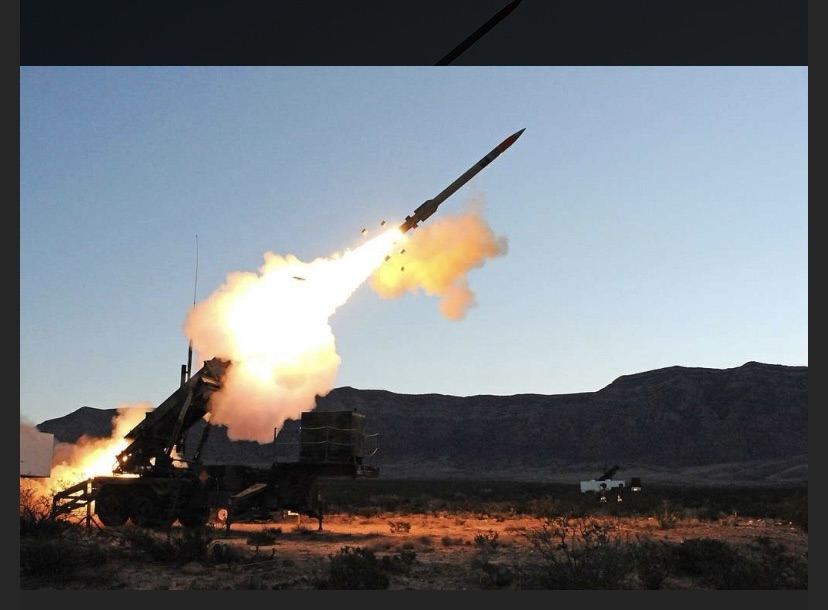
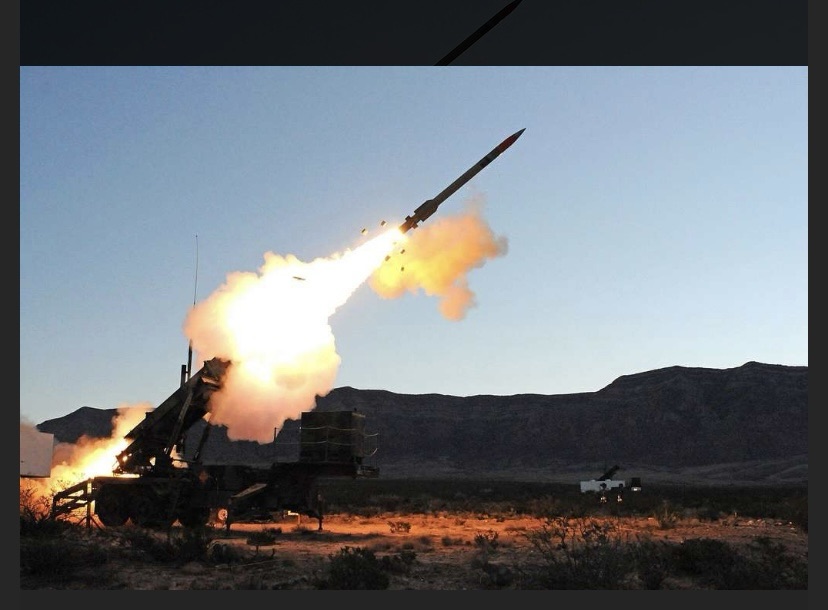
    Patriot missile test

    A patriot battery is made up of the following.

    6-8 launchers

    1 radar set (AN/MPQ-53 phased-array radar)

    An Engagement Control station.

    An Electrical Power Plant

    And an Antenna Mast Group.

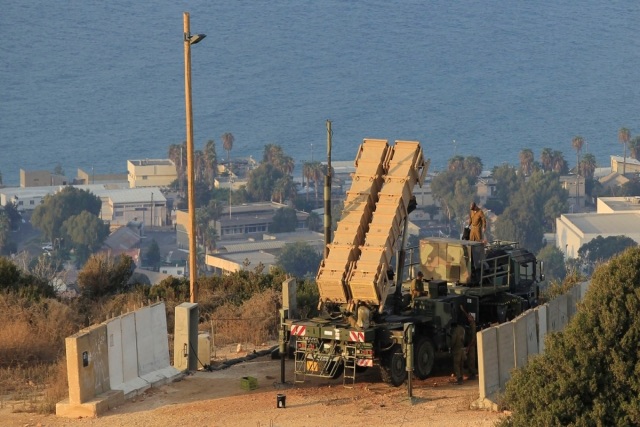
    Patriot PAC 2 launcher in service in Israel.
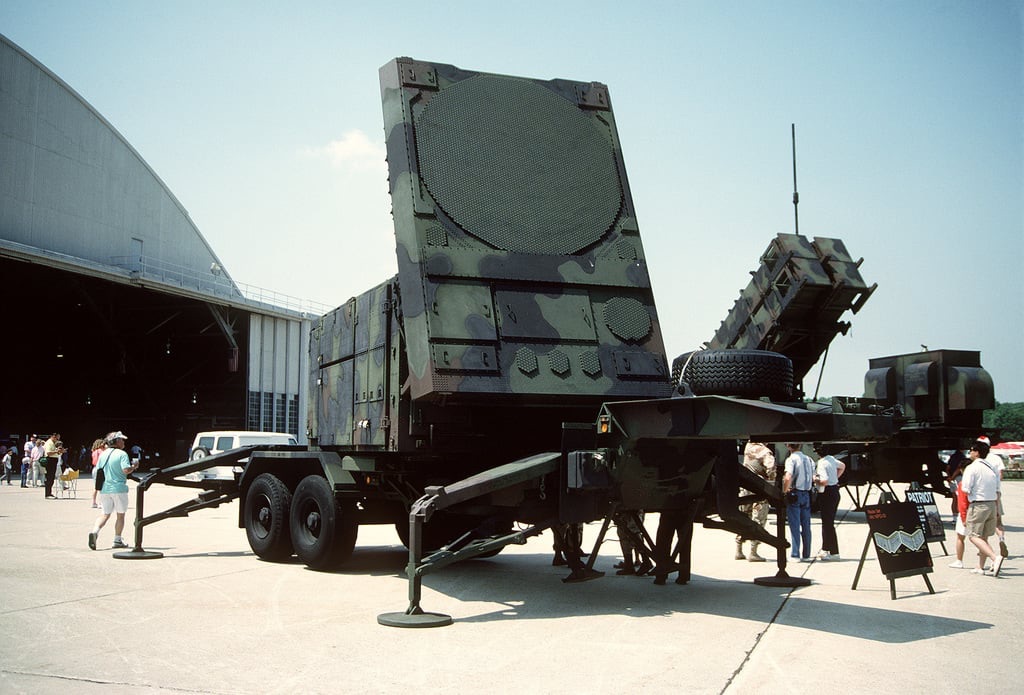
    AN/MPQ-53 phased-array radar

    A patriot battalion is made up of anywhere from 4-6 battery’s and 24-48 launchers as well as the single radar, power, and Fire Control Station each.

    The Patriots in South Korea are apart of an I rig rated defense system and cover US assets in the country like Camp Humphreys in Pyeongtaek and Osan Air Base.

    South Korea has asked the U.S. Department of Defense to temporarily deploy substitute assets, such as alternative air defense systems or combat aircraft, on a rotational basis to cover the hole left in their air defense network with the removal of these systems between February and March. The Patriots are expected to remain in the Middle East for the next at least six months.

    The U.S. has dozens of bases and locations in the region that could come under fire in the near future as tensions rise in the region. Iran has already threatened US forces as a retaliation for a possible strike on Iran’s nuclear facilities. Jordan, Saudi Arabia and Israel all have their own defense networks (some supplemented by THAAD and Patriot systems.)


    Thank you for reading. I hope you get as much out of what I’m doing here as I get out of making these reports. If so I would invite you to join my Patreon. Doing that would help me more than I can describe. I’ve kept it as cheap as possible to become a member. It’s only a $1.00. However a dollar from even half of my Facebook followers would be a life changing amount of money for me and for this page.

    Audio content coming very soon. I’m also looking for interesting people to interview. If that’s you, contact me through my email.

    Thank you for all the support over the years. Here’s to many more.

    -Scott