Category: Weapons Systems

  • U.S. Navy Announces AIM-424 ‘Malice’ LRAAM.

    U.S. Navy Announces AIM-424 ‘Malice’ LRAAM.

    This week, the AIM-242 Malice, a LRAAM (Long Range Air-to-air Missile), was announced by the U.S. Navy. 

    We don’t know much about the missile, but what we do know is that it was quietly worked on by Raytheon and is capable of hitting targets over 250 nautical miles (463 kilometers) away, according to Navy reporting. Its 13.5″ diameter and aerodynamic profile were built for range as well as for the ability to be carried by fighters with internal weapons bays.
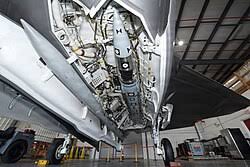
    The missile was officially announced on August 22, 2026, at the Tailhook symposium in Reno, Nevada. The Navy announced there that the weapon was already in flight testing and being developed for deployment on the Boeing F/A-18E/F Super Hornet, the Lockheed Martin F-35, and the future F/A-XX program.  
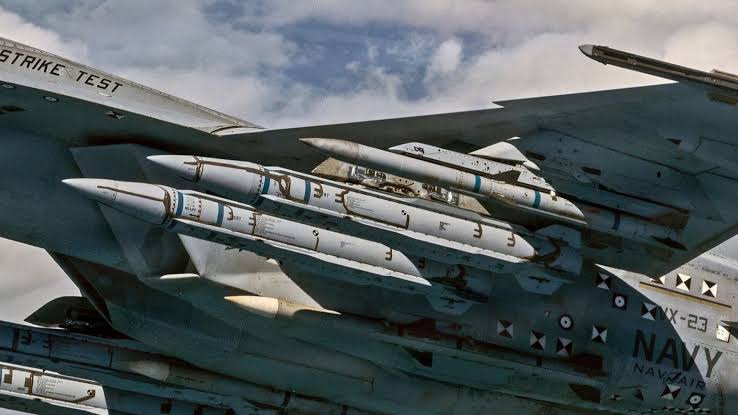
    Two AIM-424

    It’s thought that the development of the AIM-424 comes from the Long-Range Engagement Weapon (LREW) special access program first disclosed to the public in 2017. At the time, the US Air Force was looking for a two-stage air-to-air missile that could be carried in the internal weapons bay of a stealth fighter (F-35 or F-22), a similar use case to AIM-424.

    The range of the AIM-424 has been quoted as around 250 nautical miles, which is similar to the publicly reported upper limits of the AIM-174B Gunslinger, which is a derivative of the sea-based RIM-174B Standard Extended Range Active Radar Missile (ERAM, Standard Missile-6, or SM-6). What the AIM-424 brings to the table is versatility, as the Gunslinger is a much larger missile and currently only known to be carried by the Boeing F/A-18E/F Super Hornet. 
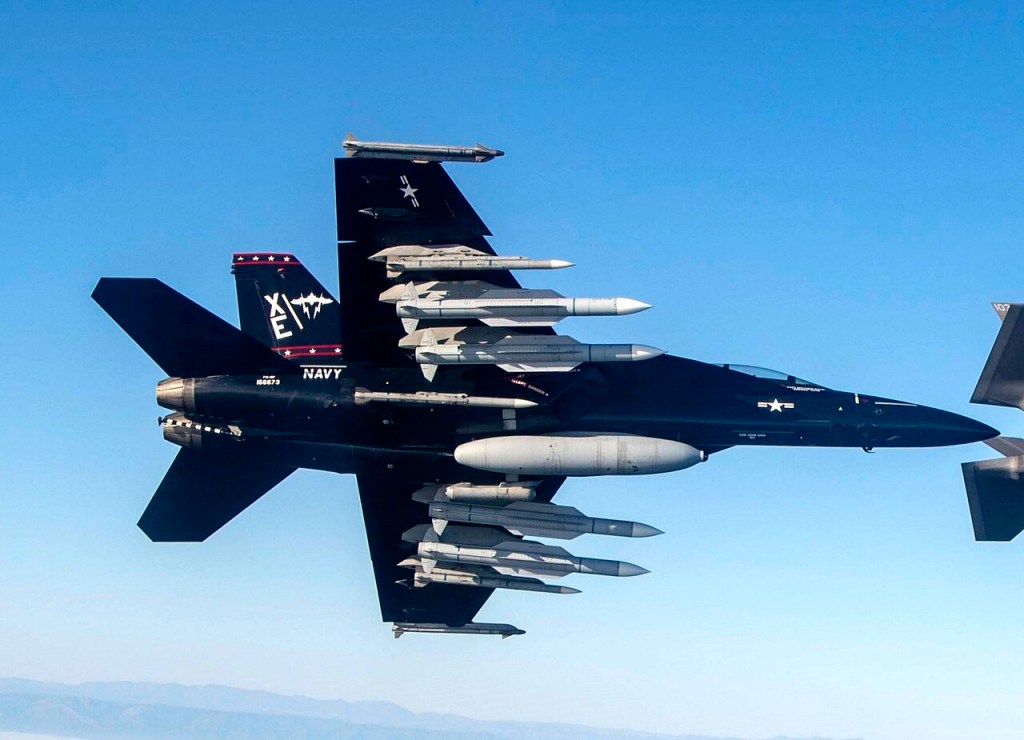

    A U.S. Navy Boeing F/A-18F Super Hornet (BuNo 166673) of Air Test and Evaluation Squadron 9 (VX-9) flies over the Point Mugu Sea Range in Southern California (USA), 24 September 2024. The aircraft carries two AIM-9X Sidewinder missiles, three AIM-120 AMRAAM and four AIM-174B long-range air-to-air missiles, an infrared search and track system (IRST) in a modified drop tank on its centerline, as well as an ATFLIR targeting pod on its left cheek station.

    The U.S. Air Force and Navy have both put a priority on extending the engagement range of its fighters as the U.S.’s potential enemies extend the range of their armaments. China fields the PL-17 with a reported range of over 300 miles.
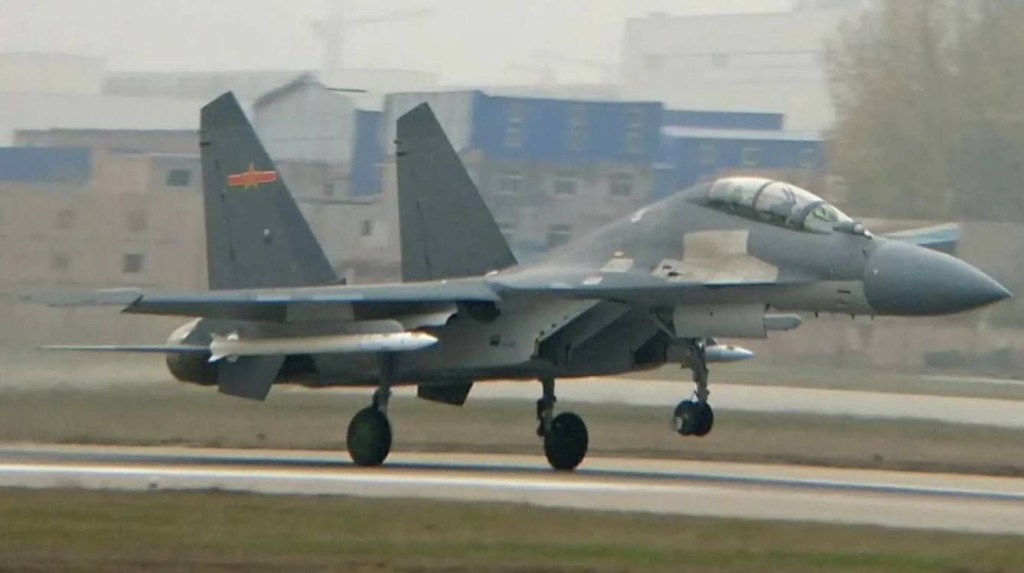
    PLA Air Force J-16, armed with the PL-17 long-range air-to-air missile

    An important caveat to all of this is that the published range figures are usually much larger than what the missile can reasonably expect to make a hit on a target. The range is tested using high altitude, in good weather conditions, against a non-maneuvering target. The tests don’t use any sort of jamming or defensive countermeasures. Taking these factors into account, the range these that any air-to-air missile can expect to score a kill is much shorter than what is published. 

    In air-to-air combat, you have a concept of the No-Escape Zone (NEZ). This is the volume of space in which the target cannot defeat the missile through pure kinematics (turning away, accelerating, diving, or any combination of those) no matter how well the pilot flies. Outside the NEZ, the probability of kill (Pk) falls off steeply. For many conventional solid-rocket missiles (most of them), the NEZ is often roughly one-third (or less) of the advertised maximum range.

     A related concept is the practical effective engagement range against an alert, maneuvering fighter that is using countermeasures. That distance is usually even shorter than the pure kinematic NEZ once you factor in real-world degradation factors. 

    Most missiles that use solid rocket fuel burn their fuel very quickly, most medium range within the first 10-12 seconds of launch. After that, burnout the missile is coasting. It is a finite amount of energy that it must manage all the way to the target. Course corrections and drag come into play, and at very long range, the missile could simply lose all energy and “go ballistic”, keeping a straight course and falling to the Earth. 

    While these factors are all important it shows why companies are continuing to push the envelope and produce these long range systems, as the more you can push the ideal range, the longer range that the missile will have under less than ideal combat situations where the enemy is jamming the missile, and using ever tool he has to evade.
  • Turkey to send a large package of surplus US made munitions to Ukraine

    Turkey to send a large package of surplus US made munitions to Ukraine

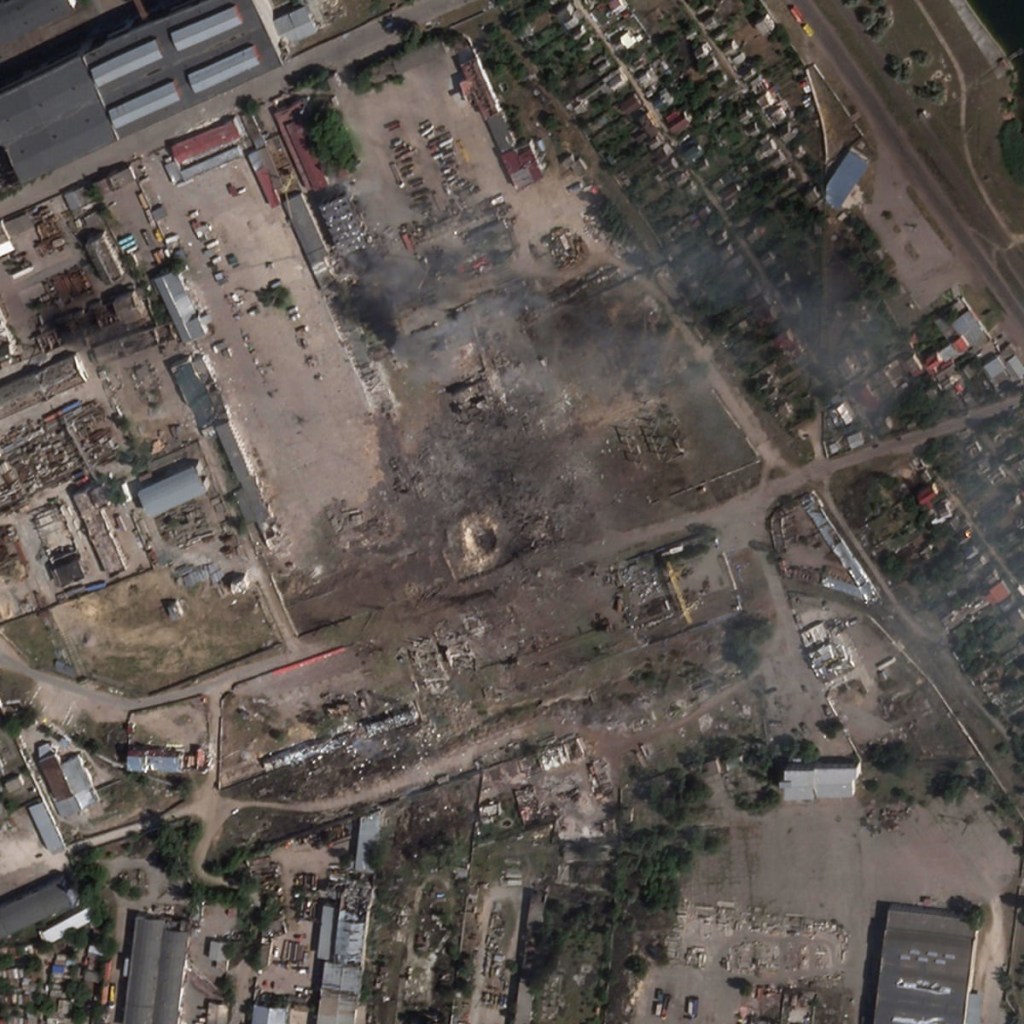
    Image shows the aftermath of a Ukranian HIMAR strike on Nova Kakhovka, in Russia-occupied Kherson early in the war.

    In the next month, Turkey will transfer a large quantity of surplus munitions to Ukraine. The list is made up exclusively of U.S. made long-range strike weapons and artillery platforms according to documents sent to the U.S. Congress. If approved, which it should be, the transfer marks one of the largest transfer of U.S. made weapons by a third country.

    • 70 M39 ATACMS tactical ballistic missiles 
    • 2,500 M26 DPICM rockets 
    • 12x M270 MLRS launchers 
    • 47,000x 203mm DPICM artillery shells

    The U.S. state department notified Congress of the transfer through documents delivered around August 3 and published in the Congressional Record on August 6,. Because the systems are American-made, U.S. authorization is required under the Arms Export Control Act for re-export. The U.S. government has indicated it is prepared to authorize the deal, describing it as consistent with its security assistance objectives. Delivery of the weapons will take place after the mandatory congressional review period (often cited as 15 days.) Congress is in recess at the moment and that 15 days will overlap and likely go through as the transfer doesn’t require Congress to approve, just that they don’t deny it.

    The 12 HIMARS in the list are believed to make up the last of Turkeys HIMARS. Turkey is currently in the middle of an extensive modernization effort of its military so cleaning out some of its older equipment to make room for the new makes sense for them.

    The list is made up of munitions that Ukraine has already used in this war previously. Some to great effect.

    Video shows the deployment of M26 DPICM rockets against a Russian S-400 anti aircraft defense battery.. These HIMAR launched cluster munitions are highly effective against enemy infantry and any equipment that’s not spread out enough.

    The relationship between Moscow and Ankara could be a full article itself covering all of the intricacies with many cases of cooperation and competition. Their relationship could be described as something like a cooperative rivalry. These two nations have worked together in areas like Syria and Turkey has vehemently supported Ukraine’s territorial integrity and right to defend itself.


    M142 HIMARS

    The M142 High Mobility Artillery Rocket System (HIMARS), is a light multiple rocket launcher (MRS) mounted on a M1140 truck frame. Developed in the 90’s for use by the U.S. Army, it saw its first operational combat use in the Iraq War.

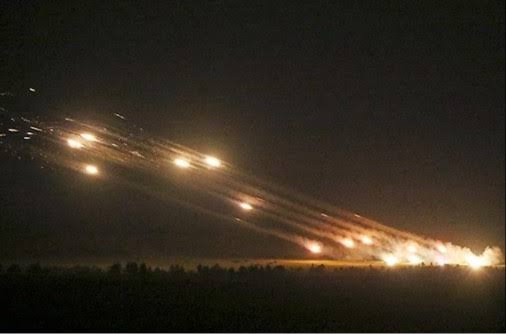
    HIMARS being fired at nights

    Now moving onto the munition, the ATACMS, which stands for Army Tactical Missile System, is a family of 24 inch surface-to-surface missiles. For our purposes we only have to talk about a couple specific ones.

    M39 (ATACMS BLOCK I)

    HIMARS launched inertial guidance short-range ballistic missile with a range of 16–103 miles (25–165 km). The missile carries 950 M74 Anti-personnel and Anti‑materiel (APAM) bomblets which can completely shred anything within around 140 square feet.

    The M26 DPICM rockets being sent are also fired from the HIMAR (and the M270 MLRS) carries a cluster warhead filled with 644 M77 Dual-Purpose Improved Conventional Munitions (DPICM) submunitions designed to suppress area targets, armor, and personnel out to 20 miles (32 km).

    The last munition talked about was the M509A1 203mm DPICM artillery shells, another cluster artillery munition. This one carries 180 M42/M46 dual-purpose anti-personnel and anti-armor submunitions out to the range of around 14-18 miles depending on the artillery used.

  • Russia Hits Kyiv with One of the Largest Attacks of the War – Oreshnik IRBM Used

    Russia Hits Kyiv with One of the Largest Attacks of the War – Oreshnik IRBM Used

    Overnight on May 23-24 2026, at least four people were killed and 100 wounded in one of the largest Russian air attacks in years. While strikes were launched across multiple regions, the main target was clear: the capital, Kyiv.

    Video shows moments from the Russian attack on Kyiv.

    The city was hit with multiple Kh-101/Kalibr cruise missiles, Shahed drones, and ballistic missiles. After 1 a.m., explosions rang out across Kyiv following a warning from the United States and Europe that Russia might launch one of its hypersonic Oreshnik ballistic missiles. This was not only one of the largest recent attacks — it ranks among the largest of the entire war with 90 missiles (including 36 ballistic) and an estimated 600 drones being used in the attack.

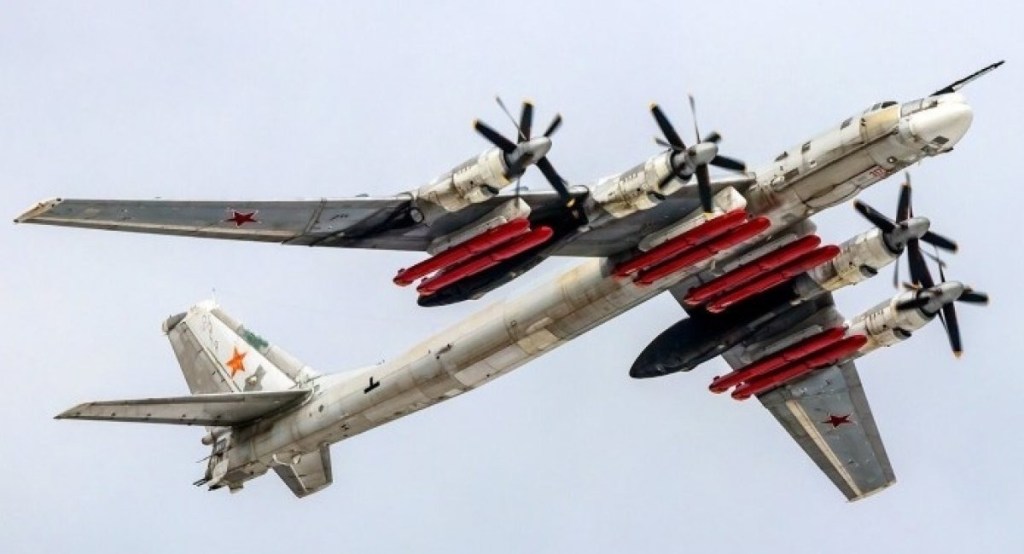
    Russian Tupolev TU-95 (NATO: Bear) carrying KH-101 (NATO: AS-23 “Kodiak”) Cruise missile.
    Video of the Oreshnik strike.

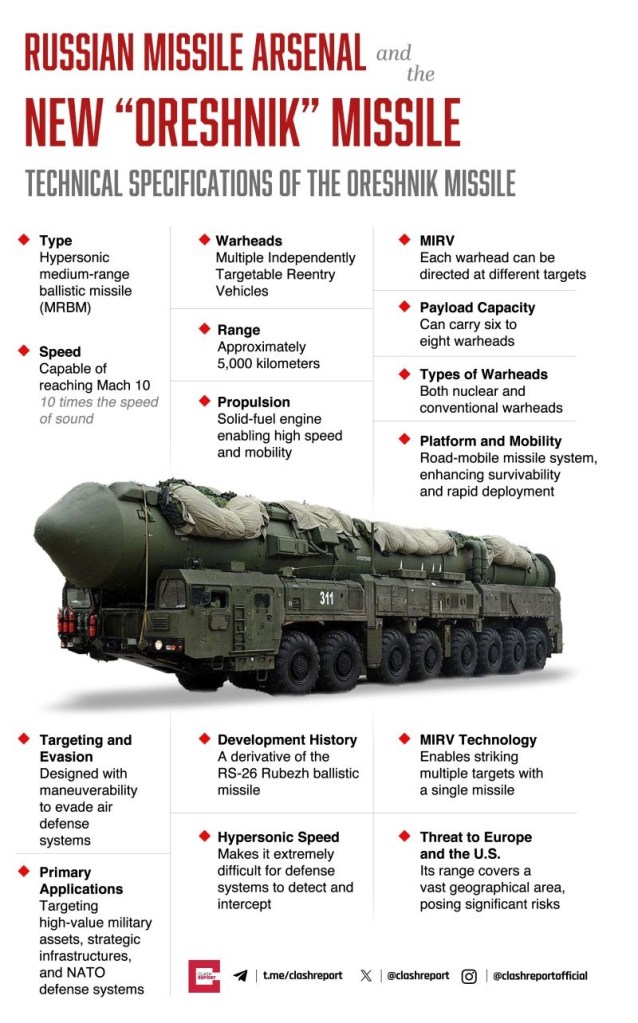
    Videos from Bila Tserkva, a city roughly 40 miles (64 km) from Kyiv’s outskirts, captured the Oreshnik strike. It is not yet known what, if anything, was damaged or why that area was targeted in specific. Although the attack looked dramatic, the Oreshnik intermediate-range ballistic missile (IRBM) was designed primarily as a nuclear delivery system. It is very similar to Russia’s RS-26 Rubezh (NATO: SS-X-31), which was test-fired a handful of times but never fully fielded. Both missiles are equipped with multiple independently targetable reentry vehicles (MIRVs). These break apart into six individual submunitions during the exo-atmospheric flight phase, allowing them to strike separate targets — a capability ideal for delivering multiple nuclear warheads.

    Some information of the Russian Oreshnik missile.

    In its non-nuclear form – which lacks any conventional warhead and relies solely on kinetic energy – the Oreshnik has so far proved to be more of a threat than a practical battlefield weapon. Nuclear weapons experts have described its accuracy as “good enough to deliver a nuclear weapon, but not enough to deliver conventional weapons effectively.” Last night marked the third known use of the Oreshnik. It was deployed on November 20 2024 to hit Ukraines PA Pivdenmash facility in Dinipro, and again earlier this year on January 6 to hit the city of Lviv.

    The hours-long attack sent Kyiv residents huddling in subway tunnels and other designated bomb shelters as Russia appeared to fire missiles at random. Russian Telegram channels shared a photo of a damaged apartment block and claimed it was the headquarters for the entire Ukrainian Army. One area hit particularly hard was the Lukyanivka district, north of Kyiv’s city center. That district is home to a missile production plant that has been targeted multiple times during the war. Apart from those specifics residential buildings, a market that burned down several schools, and a water supply facility along with damage reported in dozens of other locations across multiple districts.

    “It’s important that this does not remain without consequences for Russia…“Decisions are needed – from the United States, from Europe and others.”

    President Volodymyr Zelenskyy said on the Telegram messaging app, urging international action.

    Ukraine’s Western allies have described the use of an IRBM as an escalation. Germany and the UK condemned the attack, while Kaja Kallas, the European Union’s top diplomat, accused Moscow of “a political scare tactic and reckless nuclear brinkmanship.”

    Russia described the attack as retaliation for an attack they claim targeted student dormitories, among other recent Ukranian drone strikes. Ukraine says that they only strike “military and military supporting infrastructure.”

  • US Navy test powered JDAM variant. 

    US Navy test powered JDAM variant. 

    On April 20th 2026, the U.S. Naval air systems command (NAVAIR) released a video showing the test fire of a new derivative of the Joint Direct Attack Munition (JDAM) precision-guided weapon. 

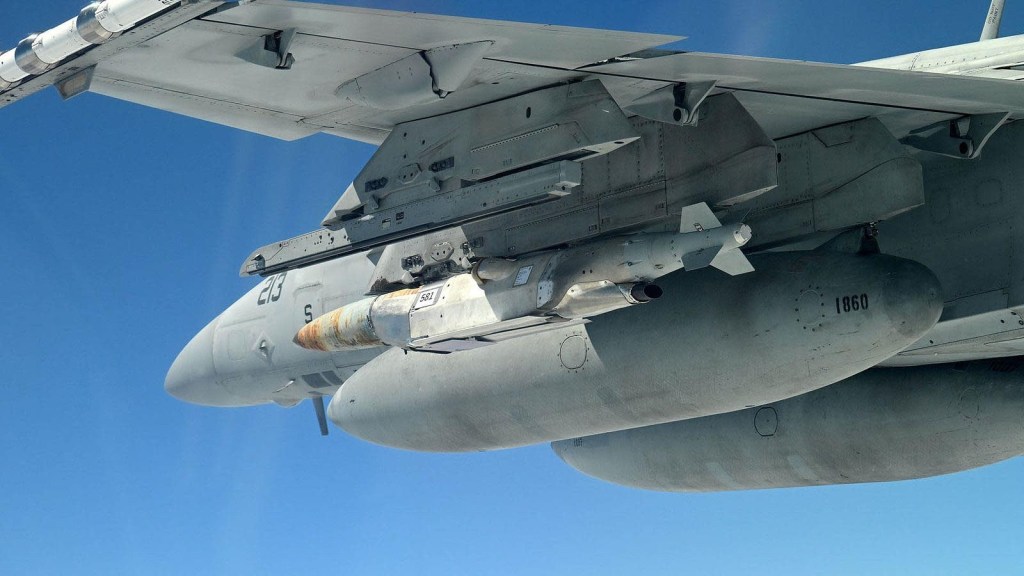
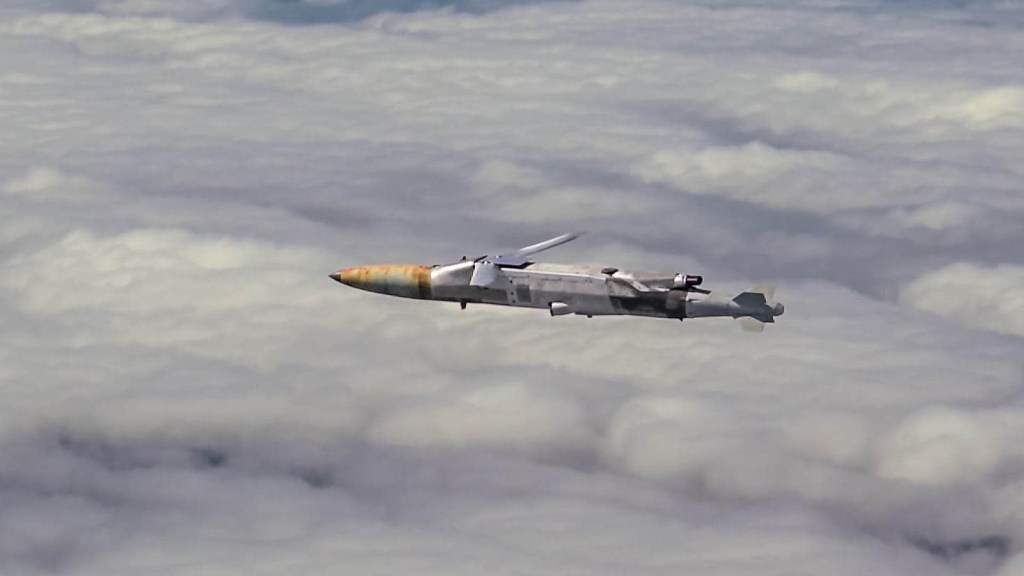
    JDAM-LR shown after being deployed from a Navy F/A-18 Super Hornet.

    The video shows a Navy F/A-18 Super Hornet firing off what is being called the GBU-76 JDAM-LR (Long Range); it is a rocket-powered version of the weapon that can be used to attack targets on land or sea. With a range of 300 nautical miles, this version gives a significantly longer range then even the unpowered JDAM-ER (Extended Range) series. 

    The weapons were tested in early April, being fired from both an F/A-18E and F/A-18F flying out of China Lake Naval Weapons Station, Air Test and Evaluation Squadron 31 VX-31 “Dust Devils,”. The fighters flew to Point Mugu, on the coast of California. On the first test, Boeing says the weapons demonstrated safe separation, engine start, cruise and guidance through terminal flight and impact in water after a 34-minute flight.Boeing reported that the weapon flew for 200nm and landed within meters of its planned target. The next test was done on April 3rd, and the weapon flew a second planned flight profile, “..successfully incorporating altitude changes and weapon maneuvering during an otherwise similar flight.”

    Video taken during the test was released in a NAVAIR post on social media.

    “First flight is a critical step in capturing the JDAM Long Range franchise program. This weapon brings the cruise missile concept to the JDAM family at a lower cost, enabling large production quantities.”

    Bob Ciesla, Precision Engagement Systems vice president

    This weapon provides the navy with a low-cost, precision standoff weapon with a striking distance of 300nm. A range like this lowers the risk to the platforms launching them and increases their strike options. 

    Some of the things they hope to achieve with this weapon is-

    • Integrate onto any aircraft that already carries traditional JDAMs, both external and in internal weapon bays. That includes U.S. Air Force and U.S. Navy fighters and bombers, and many global allies ― more than 15 platforms and 3,500 aircraft.
    • Support conventional direct attack, maritime strike and aerial-mining missions, adding key components to the proven JDAM system:
      • TDI-J85 turbine engine from Kratos Defense & Security Solutions Inc. (NASDAQ: KTOS), incorporating modular, compact air-breathing propulsion technology into the JDAM family.
      • Wing kits from Ferra Engineering in Brisbane, Australia, as a continuation of the Australian Defence Force’s Global Supply Chain Program.

    Brief History

    The JDAM family of weapons has been used extensively since its inception in 1998. First seeing combat in the NATO intervention in Kosovo in 1999 to great success, being dropped in the first night of operation Allied Force by two B-2 spirit bombers out of Whiteman Air Force Base each dropped 16 JDAM’s (mostly the GBU-31 2,000 lb variant), striking fixed Serb targets. Over the next 76 days the U.S. B-2 bombers dropped more than 600 JDAM’s, achieving high reliability and accuracy against hardened targets in all weather conditions. 

    “The success of JDAM LR is built on decades of the JDAM system and the maturation, investment, and work of the team to make that system robust and available.”

    Ernie Moretti, Joint Direct Attack Munition director

    The JDAM’s massive success during Operation Allied Force led to the weapon being deployed heavily in every conflict since then. The JDAM could deliver GPS/INS precision without laser designation or visual acquisition of the target. 

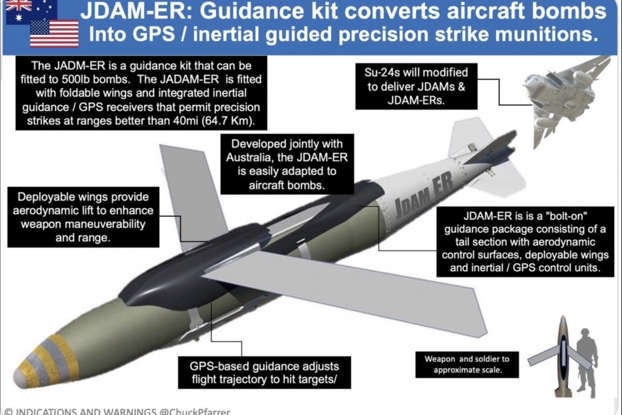
    The simplicity of the JDAM is what has led to much of its success. It’s fairly cheap to build the components needed to turn a regular gravity bomb into a precision tool. Over the years the system has received several upgrades, like  laser sensors for advanced tracking of moving targets (LJDAM) and an extended-range wing kit (JDAM ER) that expands a standard JDAM’s range to more than 40 nautical miles. Boeing notes in their press release that the JDAM-LR will be able to gain additional functionality over time through modifications for different uses. 

    Diagram of the JDAM-ER

    Sources:

    https://onfirstup.com/boeing/BNN/articles/new-long-range-smart-weapon-flies-hundreds-of-miles-in-first-test-1?bypass_deeplink=true%5D(https://onfirstup.com/boeing/BNN/articles/new-long-range-smart-weapon-flies-hundreds-of-miles-in-first-test-1?bypass_deeplink=true)

    https://www.navalnews.com/event-news/sea-air-space-2026/2026/04/u-s-navy-tests-new-long-range-gbu-75-jdam-lr/

    https://www.airandspaceforces.com/PDF/MagazineArchive/Documents/2006/September%202006/0906JDAM.pdf

  • Images from China show a cargo ship armed with containerized missiles.

    By.Scott Jackson


    12.27.2025

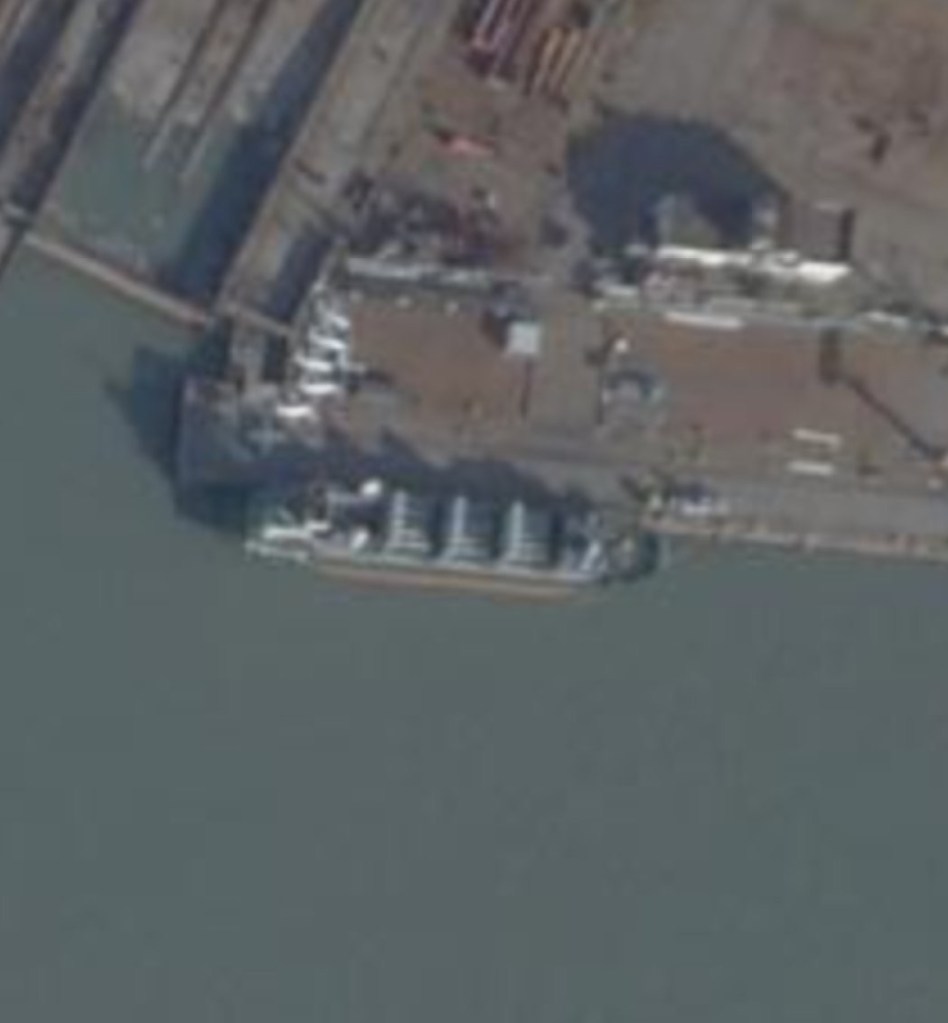
    Several days ago images were released from China showing a glimpse of an idea that was first discussed in World War 2. The images show a standard container ship however on closer inspection it’s revealed that the containers on the ship are housing dozens of vertical launch missile tubes as well as other military equipment turning the ship from a standard hauler into a weapon in disguise.

    Image showing the VLS tubes as well as the decoy launcher and radar.

    The ship’s deck is almost covered with these containerized launchers. After counting I believe it has a total of 60 launchers. From their size I would estimate this is a universal style system capable of launching several types of missiles. Including surface-to-air and land attack. We can also see a bit of what looks like the hydraulic system which can be used to raise the launch tubes out of the containers. 

    The ship is also outfitted with a number of other upgrades like a Type 1130 30mm CIWS (Close-In Weapon System) mounted above a container. This is useful for engaging incoming threats although its short range makes it a last resort. Another container is outfitted with a Type 726 decoy launcher. These decoy launchers can reportedly fire a number of differ types of countermeasures. 

    Image showing the CIWS as well as the decoy launcher and radar.

    The ship comes with several radar systems. One large flat panel AESA (Active Electronically Scanned Array) radar (Possibly in the Type 364/ Dragon eye family).

    China isnt the only country to work towards the development of containerized weapons. Iran and the U.S. have both made advancements in this field, although neither has deployed them to my knowledge.

    China has continued to attempt to leverage their civilian maritime tech capabilities for military purposes. This includes converted semi-submersible vessel for launching helicopters, and a ferry to support invasion operations. Weapons hidden in plain sight like this could become a problem in the future as the tech improves, their disguise look more authentic, and their number increase. A fleet of these armed with anti-ship missiles operating in a heavy shipping lane could shut down a country’s trade. Operating as apart of a fleet they could be loaded up with surface-to-air missiles for added fleet air- defense.

    Right now this ship isn’t hard to spot as a military boat. The CIWS isn’t able to be hidden away as it seems to just be bolted to the top of a container. It’s unclear if the radar can be hidden away.

    This is definitely something that’s going to be more of a problem in the future, how close we are to that future, is unclear. Gathering more intel and data on this and other weapons systems remains critical for the U.S. as China pushes towards maritime domination in the pacific and beyond.

  • Russia test fires a nuclear cruise missile with a nuclear reactor.

    By. Scott Jackson


    10.25.2025

    On October 21st one of Russia’s top generals announced that Russia had carried out a test on the claimed, nuclear powered ‘Burevestnik’ subsonic cruise missile. 

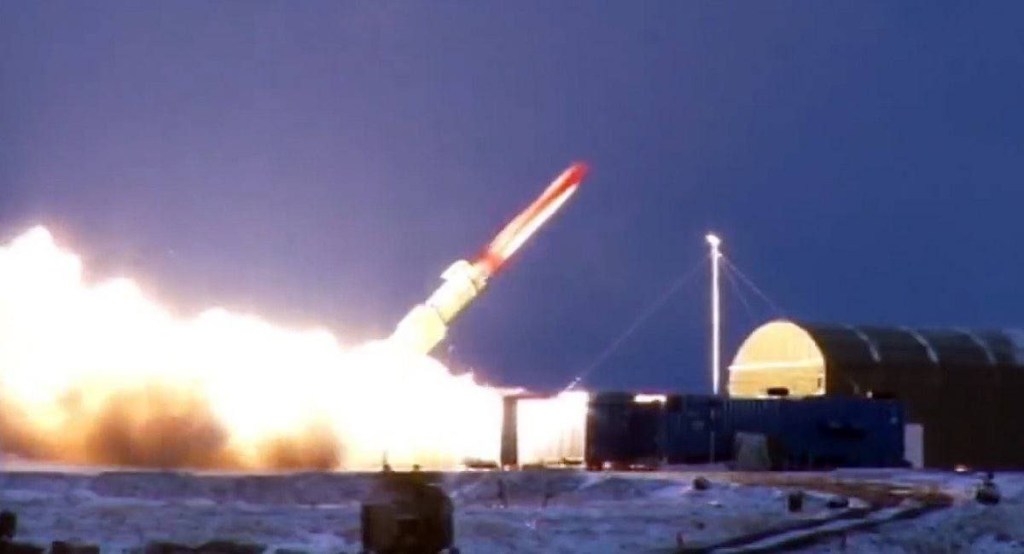
    Burevestnik launcher.

    “We have launched a multi-hour flight of a nuclear-powered missile and it covered a 14,000km (8,700-mile) distance, which is not the limit,” Chief of General Staff Valery Gerasimov told President Vladimir Putin in a televised meeting.

    Code named SSC-X-9 Skyfall by NATO this low flying cruise missile is suspected to be powered by a miniature nuclear reactor that kicks in after the missile has been launched conventionally from the ground. This reactor gives it an incredible range.

    General Gerasimov said the missile flew for a total of 15 hours on its latest test while its horizontal and vertical capabilities were tested. 

    “Therefore, it demonstrated high capabilities to bypass missile and air defence systems,” Tass reported Gen Gerasimov as saying.

    First mentioned in 2018 this missile has been debated in defense circles and among analysts who can’t agree on its claimed effectiveness. It’s suspected, and claimed by Russia, to be able to strike the United States, while being launched from anywhere in Russia. The missile can carry a conventional warhead but is designed with nuclear warheads in mind. 

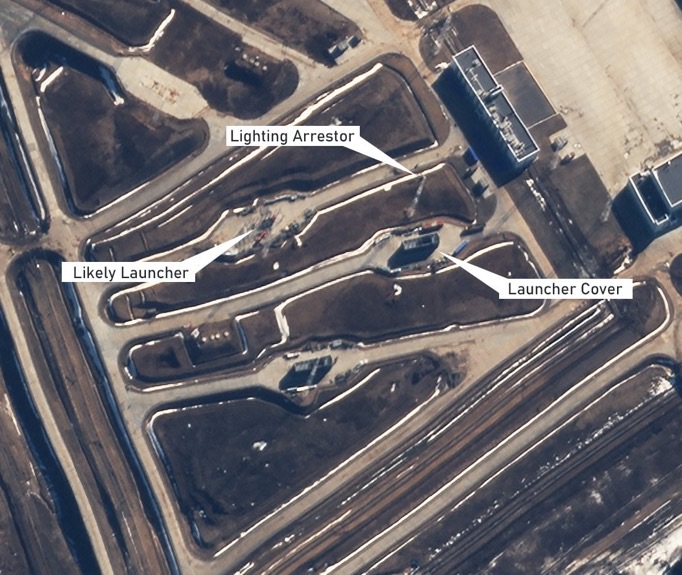
    The News agency Reuters did an investigation into the suspected launch site for the weapon last year in September. This investigation concluded that the site for the launch of Skyfall was a nuclear storage facility located about 300 miles North of Moscow known as Vologda-20. 

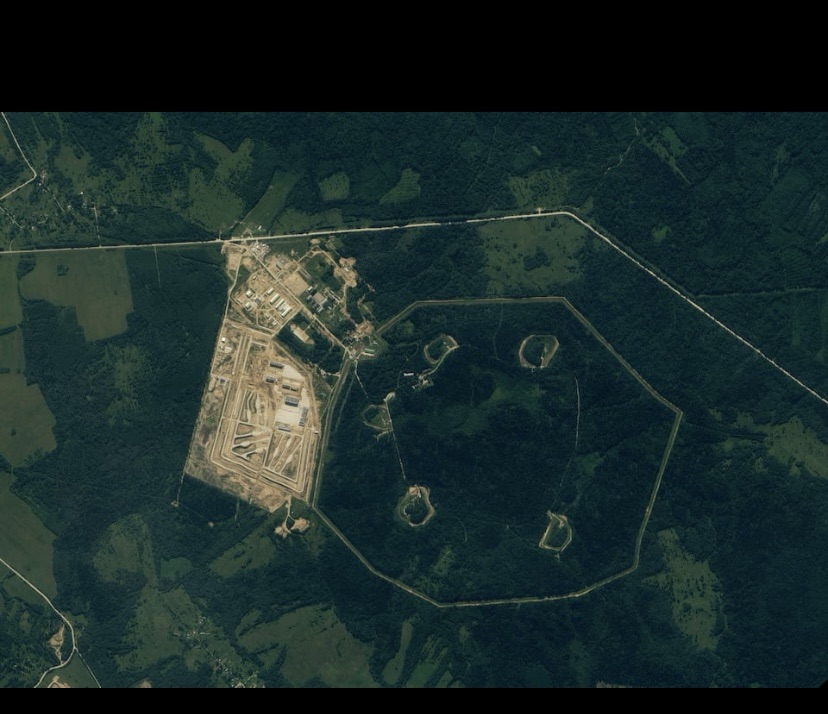
    Vologda-20

    Decker Eveleth, an analyst with the CNA research and analysis organization found this satellite imagery and identified at least 9 horizontal launch pads under construction. The launch platforms are in three groups located inside a high berm to shield them from direct attacks. The high berm surrounding the groups also protects in case of accidental explosion from destroying or detonating the other missiles and  launchers. The site shows what Decker believes to be lightning rods to protect the large metal equipment from Mother Nature. 

    Closer look at the launchpads.

    The berms are further linked to roads which run to buildings where the missiles are likely being stored and serviced. 

    Decker concludes the site is built “for a large, fixed missile system and the only large, fixed missile system that they’re (Russia) currently developing is the Skyfall,”

    Because Skyfall’s launch site is connected to a nuclear weapons storage site, it will allow Russia to quickly pull from storage to load and fire the weapon. 

    GCR analysis.

    This missile has some interesting features if everything Russia says about it is true. A missile’s range is usually determined by how much fuel they can carry. Since this allegedly runs on a small nuclear reactor (after launch) this missile could loiter for extended periods of time. We are talking about maybe days of flight time here. This weapon also had a much lower suspected cruise altitude of a reported 164 to 328 feet, compared to conventional powered cruise missiles. 

    Some western sources believe that Skyfall’s subsonic speeds will make it detectable by current detection methods. A response to this by Russian military expert Alexei Leonkov says the weapon is designed to be used to knock out the “remnants” of the enemy’s command and control systems, military bases, factories and power plants after Russian ICBMs have already been launched, operating in areas where air defense is already weakened or destroyed.  

    So while detecting it might be possible, it’s not likely this weapon is going to be used for anything other than what I suspect would be the very last war the earth ever has. Even if it’s used in a conventional manner this weapon still contains nuclear material, and will leave behind radiation upon detonation.

  • Ukraine makes big decisions regarding the future of its air power. 

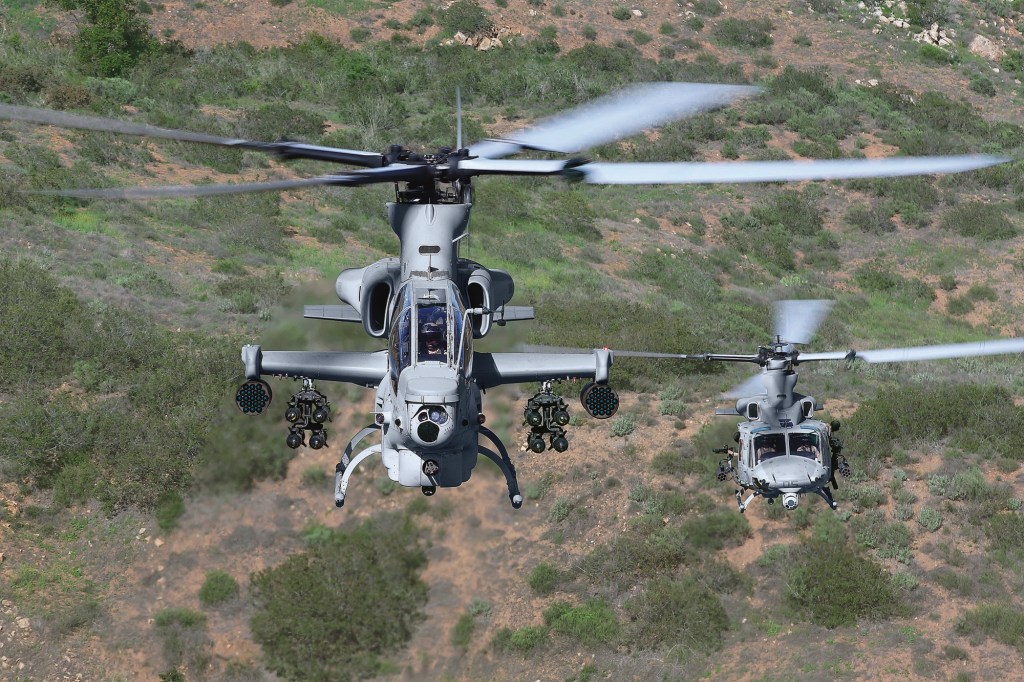
    AH-1Z Viper and UH-1Y Venom

    By.Scott Jackson


    10.22.2025

    Two big announcements have come in the past three days signaling that Ukraine is looking to make changes to its military air power. Currently Ukraine’s military uses a mixture of old Soviet equipment plus whatever platforms have been bought or donated to them by their partners in Europe and America. 

    This weekend it was announced that Bell Textron, the American Aerospace company responsible for the AH-1Z Viper and UH-1Y Venom helicopters, have signed a ‘memorandum of understanding’ in Washington with the government in Ukraine. Essentially this starts the ball rolling on future aircraft deliveries, after the framework and support for the systems have been built in Ukraine. The statement released by the company and government of Ukraine mentions that these helicopters are likely to be built in Ukraine, bolstering Ukraine’s defense industry and going a far step to modernize Ukraine’s helicopter fleet.

    Ukraine’s helicopter fleet is currently made up of mostly old Soviet systems. The Mil Mi-24 (Hind) gunship has been a workhorse in the current war and while effective for what it does, It’s an older platform with limitations. This deal will give Ukraine a fleet of modernized helicopters with a proven track record of combat capabilities. A huge benefit is that the Venom and Viper share 84% commonality meaning training pilots and support crew is much quicker. 

    While this deal isn’t finalized it does signal that the process is in the works and should go through as long as the U.S. government agrees to it. If the deal goes through it’s likely a number of aircraft will be transferred to Ukraine so they can start training pilots and the support crew on their operations. 

    The AH-1Z Viper attack chopper is a twin engine attack helicopter with a speed of 300KTS and a range of 310 nautical miles. The platform provides an excellent ground attack platform, carrying a main gun as well as air-to-ground missiles with the option of carrying sidewinders for engaging air targets. These helicopters are also survivable in the worst cases with self sealing fuel cells and armored crash resistant seats for the crew. 

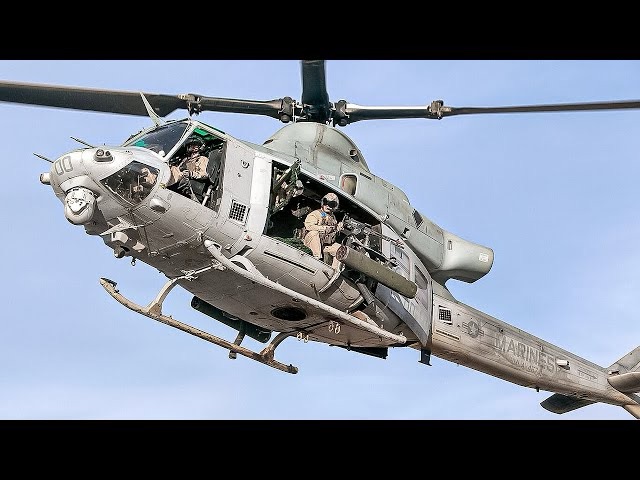
    The Venom on the other hand is a jack-of-all-trades workhorse. There is a reason it’s sometimes called the Super Huey as the spirit of the Huey from the Vietnam days lives on in the Venom. It’s mostly used for carrying supplies or troops but it can also be equipped with rockets and door guns in case you just really need the extra firepower or a AN/ALQ-231(V)3 Intrepid Tiger II sensor pod for precision electronic attack capabilities (maybe in support of a squad of Vipers, for example.) Its speed is similar to that of a viper however its unladen range is a bit further. With a 2000lb payload its range is 150NM.

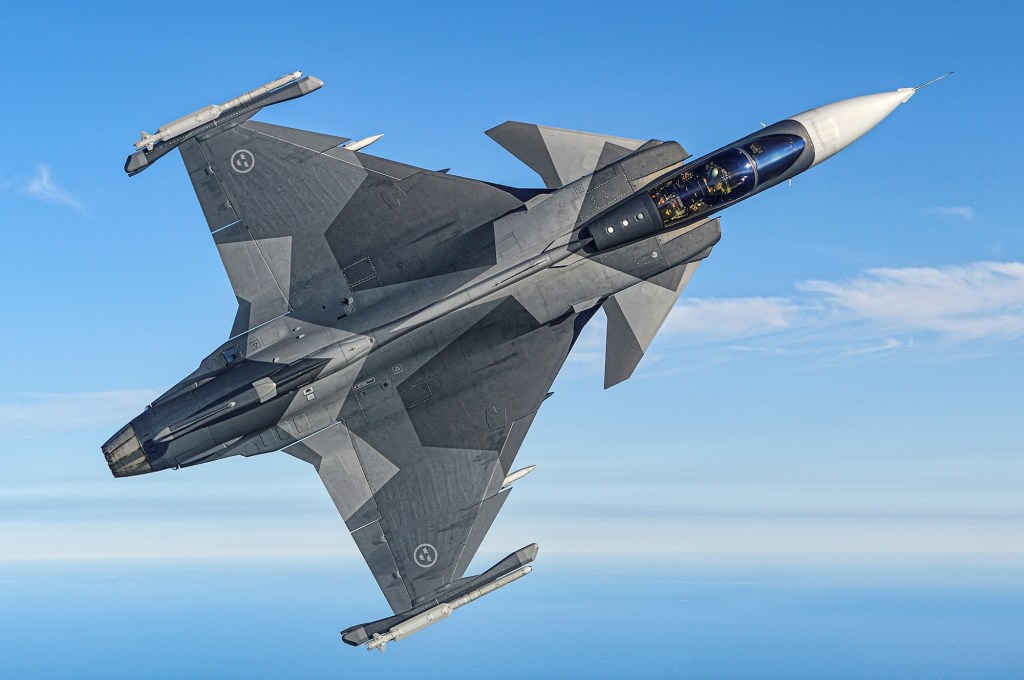
    Ukraine’s helicopter fleet isn’t the only upgrade Ukraine is looking to. Just today Ukraine President Zelenskyy met with the Swedish government and signed another letter of intent, for the purchase of as many as 150 of the Swedish made Saab Jas-39 Gripen E fighter jets. 

    The Gripen is a single engine, supersonic, multi-role fighter jet. A highly maneuverable fighter, the Gripen is designed for what’s known as JAS in the Swedish language, Jakt (Air-to-air), attack (air-to-surface) and Spaning (Reconnaissance). The E version of this fighter is built with some higher end capabilities including electronic warfare, a more powerful engine, and increased weapons capacity.