By.Scott Jackson
12.27.2025
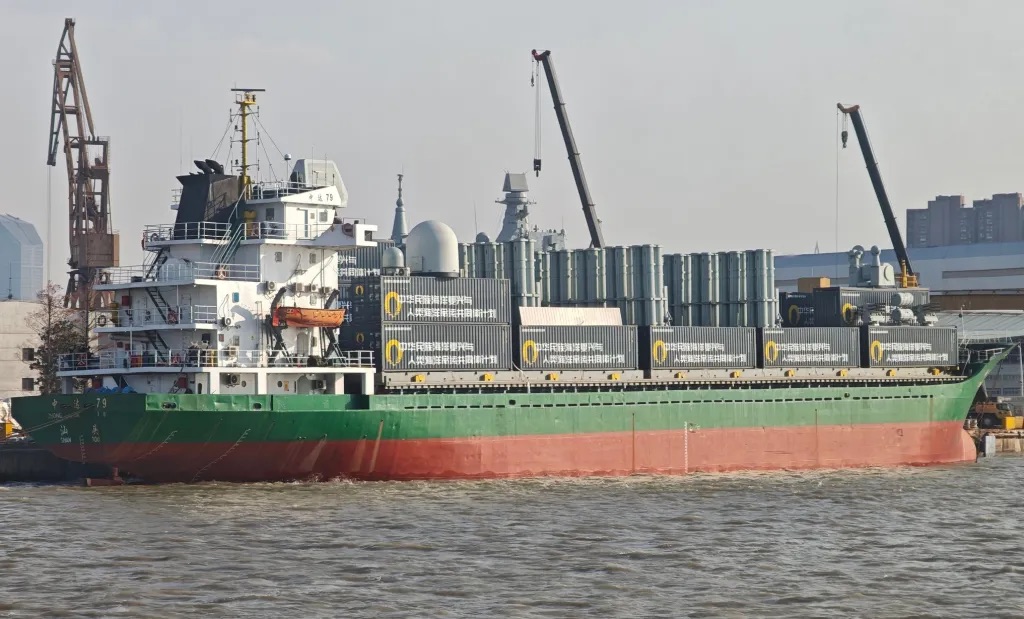
Several days ago images were released from China showing a glimpse of an idea that was first discussed in World War 2. The images show a standard container ship however on closer inspection it’s revealed that the containers on the ship are housing dozens of vertical launch missile tubes as well as other military equipment turning the ship from a standard hauler into a weapon in disguise.
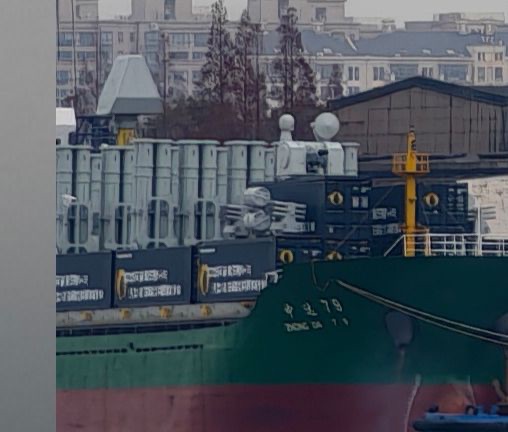
The ship’s deck is almost covered with these containerized launchers. After counting I believe it has a total of 60 launchers. From their size I would estimate this is a universal style system capable of launching several types of missiles. Including surface-to-air and land attack. We can also see a bit of what looks like the hydraulic system which can be used to raise the launch tubes out of the containers.
The ship is also outfitted with a number of other upgrades like a Type 1130 30mm CIWS (Close-In Weapon System) mounted above a container. This is useful for engaging incoming threats although its short range makes it a last resort. Another container is outfitted with a Type 726 decoy launcher. These decoy launchers can reportedly fire a number of differ types of countermeasures.
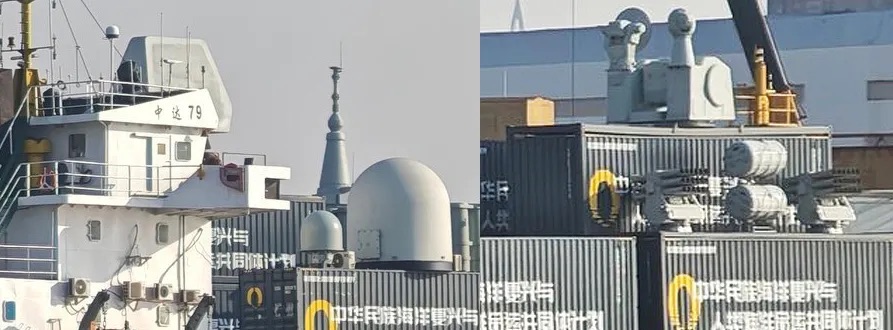
The ship comes with several radar systems. One large flat panel AESA (Active Electronically Scanned Array) radar (Possibly in the Type 364/ Dragon eye family).
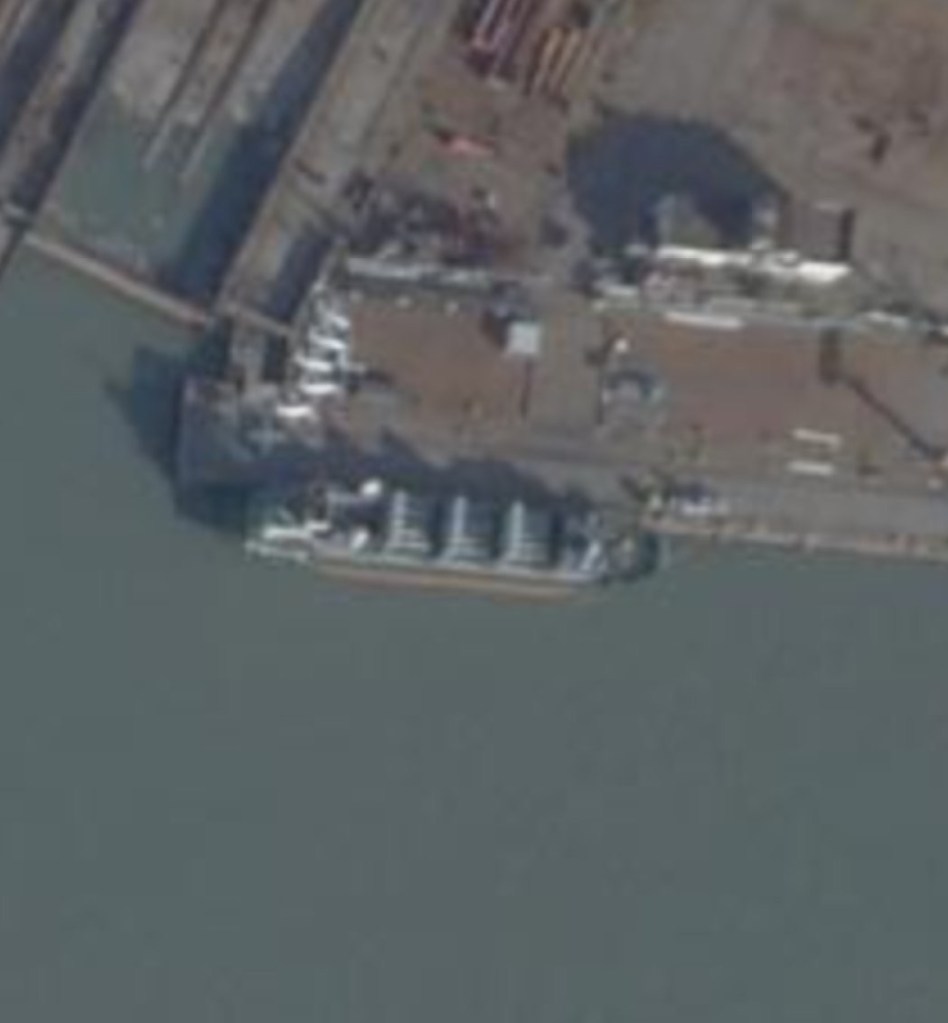
China isnt the only country to work towards the development of containerized weapons. Iran and the U.S. have both made advancements in this field, although neither has deployed them to my knowledge.
China has continued to attempt to leverage their civilian maritime tech capabilities for military purposes. This includes converted semi-submersible vessel for launching helicopters, and a ferry to support invasion operations. Weapons hidden in plain sight like this could become a problem in the future as the tech improves, their disguise look more authentic, and their number increase. A fleet of these armed with anti-ship missiles operating in a heavy shipping lane could shut down a country’s trade. Operating as apart of a fleet they could be loaded up with surface-to-air missiles for added fleet air- defense.
Right now this ship isn’t hard to spot as a military boat. The CIWS isn’t able to be hidden away as it seems to just be bolted to the top of a container. It’s unclear if the radar can be hidden away.
This is definitely something that’s going to be more of a problem in the future, how close we are to that future, is unclear. Gathering more intel and data on this and other weapons systems remains critical for the U.S. as China pushes towards maritime domination in the pacific and beyond.




 Global Conflict Reporting
You must be logged in to post a comment.