Category: Defense and Security

  • Russia test fires a nuclear cruise missile with a nuclear reactor.

    By. Scott Jackson


    10.25.2025

    On October 21st one of Russia’s top generals announced that Russia had carried out a test on the claimed, nuclear powered ‘Burevestnik’ subsonic cruise missile. 

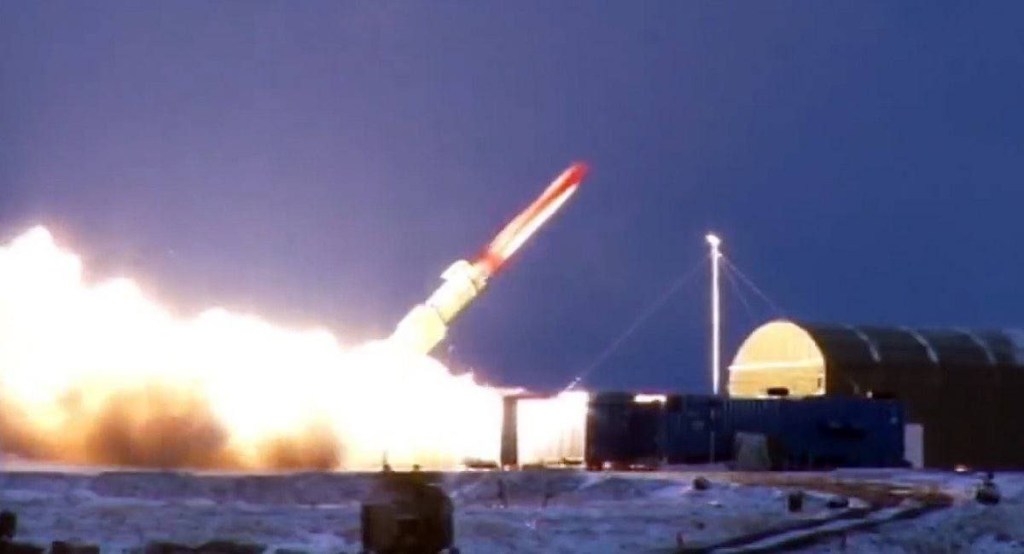
    Burevestnik launcher.

    “We have launched a multi-hour flight of a nuclear-powered missile and it covered a 14,000km (8,700-mile) distance, which is not the limit,” Chief of General Staff Valery Gerasimov told President Vladimir Putin in a televised meeting.

    Code named SSC-X-9 Skyfall by NATO this low flying cruise missile is suspected to be powered by a miniature nuclear reactor that kicks in after the missile has been launched conventionally from the ground. This reactor gives it an incredible range.

    General Gerasimov said the missile flew for a total of 15 hours on its latest test while its horizontal and vertical capabilities were tested. 

    “Therefore, it demonstrated high capabilities to bypass missile and air defence systems,” Tass reported Gen Gerasimov as saying.

    First mentioned in 2018 this missile has been debated in defense circles and among analysts who can’t agree on its claimed effectiveness. It’s suspected, and claimed by Russia, to be able to strike the United States, while being launched from anywhere in Russia. The missile can carry a conventional warhead but is designed with nuclear warheads in mind. 

    The News agency Reuters did an investigation into the suspected launch site for the weapon last year in September. This investigation concluded that the site for the launch of Skyfall was a nuclear storage facility located about 300 miles North of Moscow known as Vologda-20. 
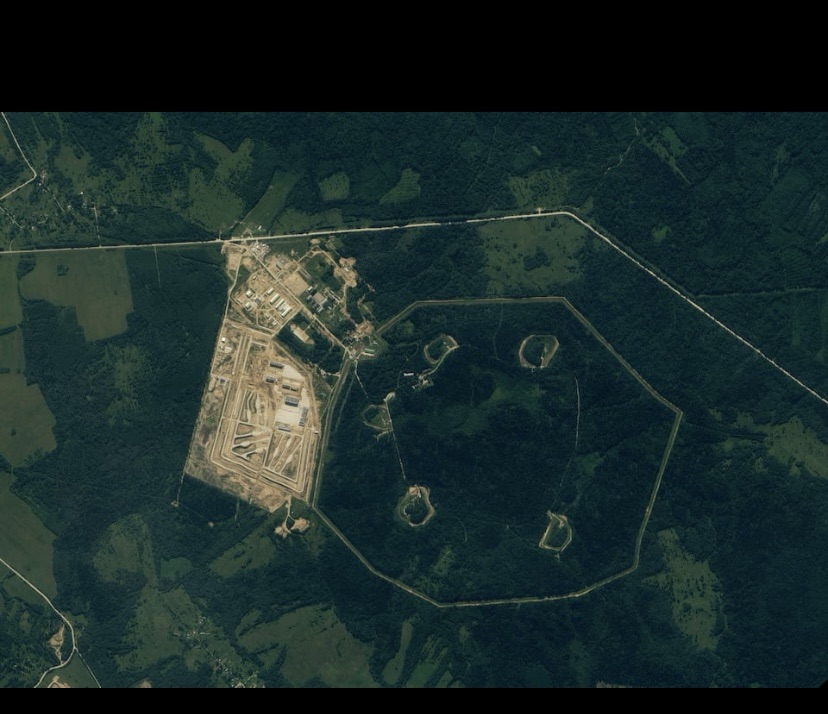
    Vologda-20

    Decker Eveleth, an analyst with the CNA research and analysis organization found this satellite imagery and identified at least 9 horizontal launch pads under construction. The launch platforms are in three groups located inside a high berm to shield them from direct attacks. The high berm surrounding the groups also protects in case of accidental explosion from destroying or detonating the other missiles and  launchers. The site shows what Decker believes to be lightning rods to protect the large metal equipment from Mother Nature. 
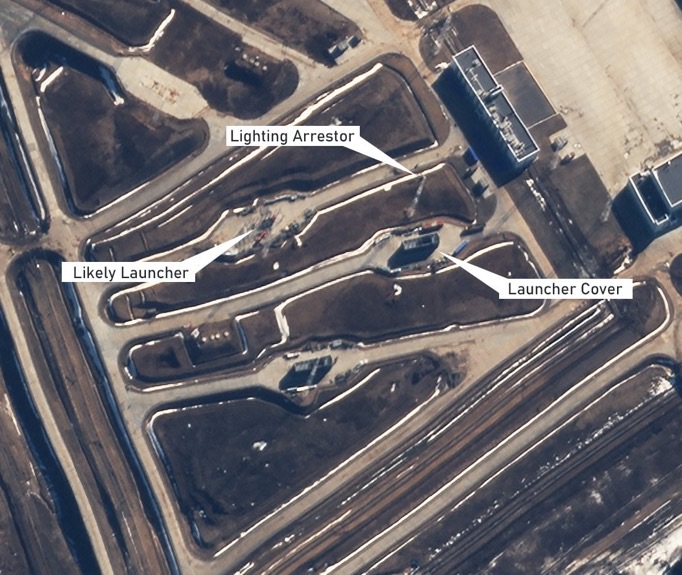
    Closer look at the launchpads.

    The berms are further linked to roads which run to buildings where the missiles are likely being stored and serviced. 

    Decker concludes the site is built “for a large, fixed missile system and the only large, fixed missile system that they’re (Russia) currently developing is the Skyfall,”

    Because Skyfall’s launch site is connected to a nuclear weapons storage site, it will allow Russia to quickly pull from storage to load and fire the weapon. 

    GCR analysis.

    This missile has some interesting features if everything Russia says about it is true. A missile’s range is usually determined by how much fuel they can carry. Since this allegedly runs on a small nuclear reactor (after launch) this missile could loiter for extended periods of time. We are talking about maybe days of flight time here. This weapon also had a much lower suspected cruise altitude of a reported 164 to 328 feet, compared to conventional powered cruise missiles. 

    Some western sources believe that Skyfall’s subsonic speeds will make it detectable by current detection methods. A response to this by Russian military expert Alexei Leonkov says the weapon is designed to be used to knock out the “remnants” of the enemy’s command and control systems, military bases, factories and power plants after Russian ICBMs have already been launched, operating in areas where air defense is already weakened or destroyed.  

    So while detecting it might be possible, it’s not likely this weapon is going to be used for anything other than what I suspect would be the very last war the earth ever has. Even if it’s used in a conventional manner this weapon still contains nuclear material, and will leave behind radiation upon detonation.

  • United States Navy Aircraft Carrier ordered to Caribbean 

    By. Scott Jackson


    10.24.2025

    The Pentagon has announced that the USS Gerald R. Ford (CVN- 78) and its Carrier Strike Group (CSG) is being redeployed to the Caribbean in an effort to bolster the forces currently involved in counter-narcotic operations in the region. This comes a day after the announcement that the White House was going to Congress with notice that the president was planning to conduct ground operations in Venezuela. These operations will likely target suspected drug production operations and other assets under the control of the cartels operating in the country. That being said, the Venezuelan military is unlikely to just watch as US forces carry out strikes in their country, meaning the U.S. will likely preemptively target assets under the control of Venezuelan President Maduro’s forces. Radar, air defense and any air units are to be a high priority for suppression or destruction. 

    At last report the Ford CSG was operating in the Adriatic Sea off the coast of Italy and various parts of the Mediterranean. It will take the CSG at least several days to assume a position within range of Venezuela. 

    The USS Gerald R. Ford Carrier Strike Group includes the carrier along with three Areleigh Burke-class guided missile destroyers acting as escorts. 

    USS Bainbridge DDG-96

    USS Mahan DDG-72

    The USS Winston Churchill DDG-81 is acting as the CSG’s Air Defense Commander. 

    Making up the air power of the CSG is Carrier Wing 8, made up of the following.

    The “Tomcatters” of Strike Fighter Squadron (VFA) 31  F/A-18E

    The “Ragin Bulls” of VFA 37 – F/A-18E 

    The “Golden Warriors” of VFA 87 – F/A-18E 

    .The “Black Lions” of VFA 213 – F/A-18F 

    The “Gray Wolves” of Electronic Attack Squadron (VAQ) 142 – EA-18G  

    The “Bear Aces” of Airborne Command and Control Squadron (VAW) 124 – E-2D 

    The “Rawhides” of Fleet Logistics Squadron (VRC) 40 Det. – C-2A

    The “Spartans” of Helicopter Maritime Strike Squadron (HSM) 70 – MH-60R 

    The “Tridents” of Helicopter Sea Combat Squadron (HSC) 9 – MH-60S 

    Fleet info pulled from various public sources as well as the GCR database.


  • Ukraine makes big decisions regarding the future of its air power. 

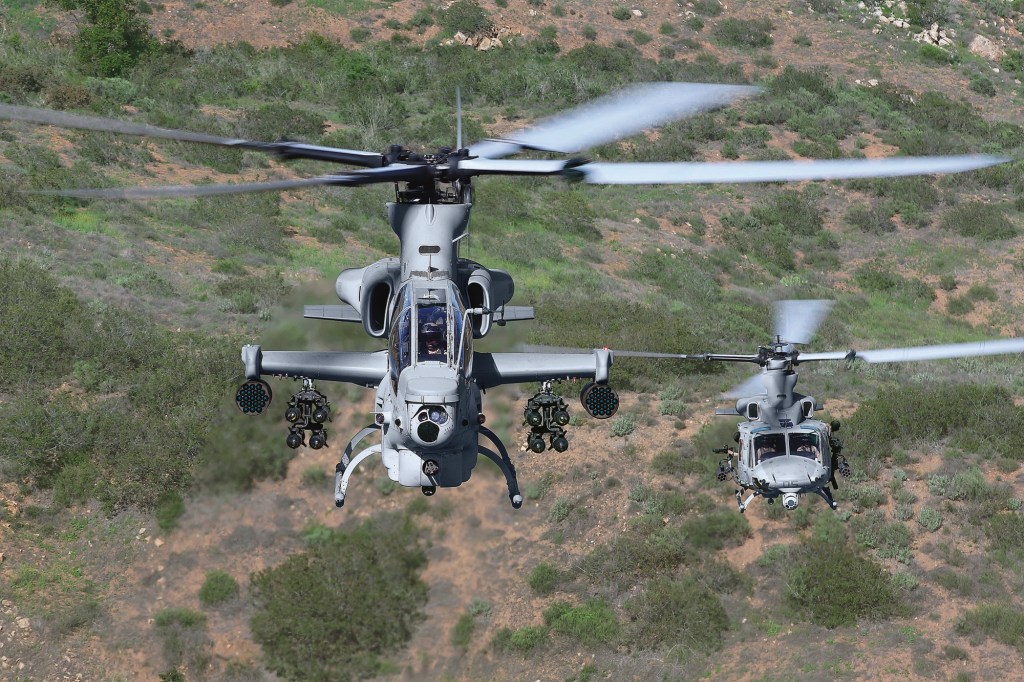
    AH-1Z Viper and UH-1Y Venom

    By.Scott Jackson


    10.22.2025

    Two big announcements have come in the past three days signaling that Ukraine is looking to make changes to its military air power. Currently Ukraine’s military uses a mixture of old Soviet equipment plus whatever platforms have been bought or donated to them by their partners in Europe and America. 

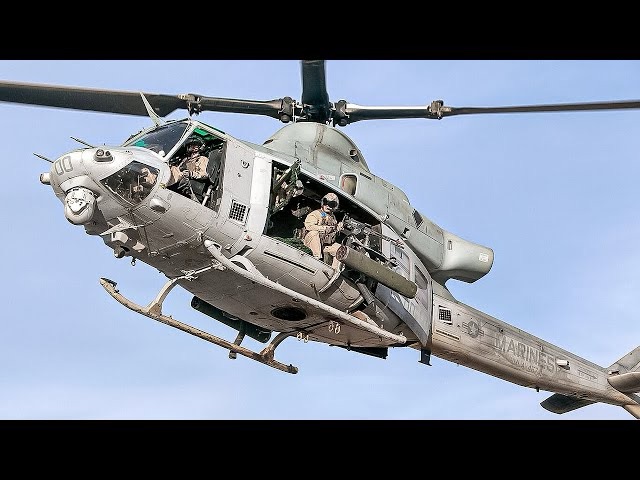
    This weekend it was announced that Bell Textron, the American Aerospace company responsible for the AH-1Z Viper and UH-1Y Venom helicopters, have signed a ‘memorandum of understanding’ in Washington with the government in Ukraine. Essentially this starts the ball rolling on future aircraft deliveries, after the framework and support for the systems have been built in Ukraine. The statement released by the company and government of Ukraine mentions that these helicopters are likely to be built in Ukraine, bolstering Ukraine’s defense industry and going a far step to modernize Ukraine’s helicopter fleet.

    Ukraine’s helicopter fleet is currently made up of mostly old Soviet systems. The Mil Mi-24 (Hind) gunship has been a workhorse in the current war and while effective for what it does, It’s an older platform with limitations. This deal will give Ukraine a fleet of modernized helicopters with a proven track record of combat capabilities. A huge benefit is that the Venom and Viper share 84% commonality meaning training pilots and support crew is much quicker. 

    While this deal isn’t finalized it does signal that the process is in the works and should go through as long as the U.S. government agrees to it. If the deal goes through it’s likely a number of aircraft will be transferred to Ukraine so they can start training pilots and the support crew on their operations. 

    The AH-1Z Viper attack chopper is a twin engine attack helicopter with a speed of 300KTS and a range of 310 nautical miles. The platform provides an excellent ground attack platform, carrying a main gun as well as air-to-ground missiles with the option of carrying sidewinders for engaging air targets. These helicopters are also survivable in the worst cases with self sealing fuel cells and armored crash resistant seats for the crew. 

    The Venom on the other hand is a jack-of-all-trades workhorse. There is a reason it’s sometimes called the Super Huey as the spirit of the Huey from the Vietnam days lives on in the Venom. It’s mostly used for carrying supplies or troops but it can also be equipped with rockets and door guns in case you just really need the extra firepower or a AN/ALQ-231(V)3 Intrepid Tiger II sensor pod for precision electronic attack capabilities (maybe in support of a squad of Vipers, for example.) Its speed is similar to that of a viper however its unladen range is a bit further. With a 2000lb payload its range is 150NM.

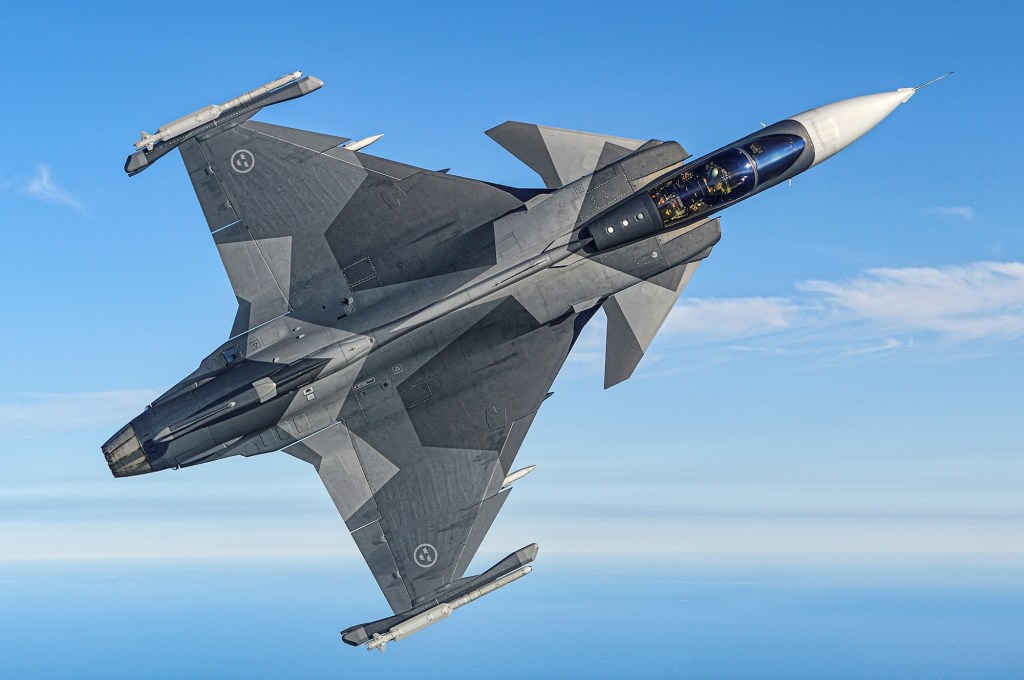
    Ukraine’s helicopter fleet isn’t the only upgrade Ukraine is looking to. Just today Ukraine President Zelenskyy met with the Swedish government and signed another letter of intent, for the purchase of as many as 150 of the Swedish made Saab Jas-39 Gripen E fighter jets. 

    The Gripen is a single engine, supersonic, multi-role fighter jet. A highly maneuverable fighter, the Gripen is designed for what’s known as JAS in the Swedish language, Jakt (Air-to-air), attack (air-to-surface) and Spaning (Reconnaissance). The E version of this fighter is built with some higher end capabilities including electronic warfare, a more powerful engine, and increased weapons capacity.

  • US Navy confirms Trident II test launch.

    By. Scott Jackson


    09/23/2025

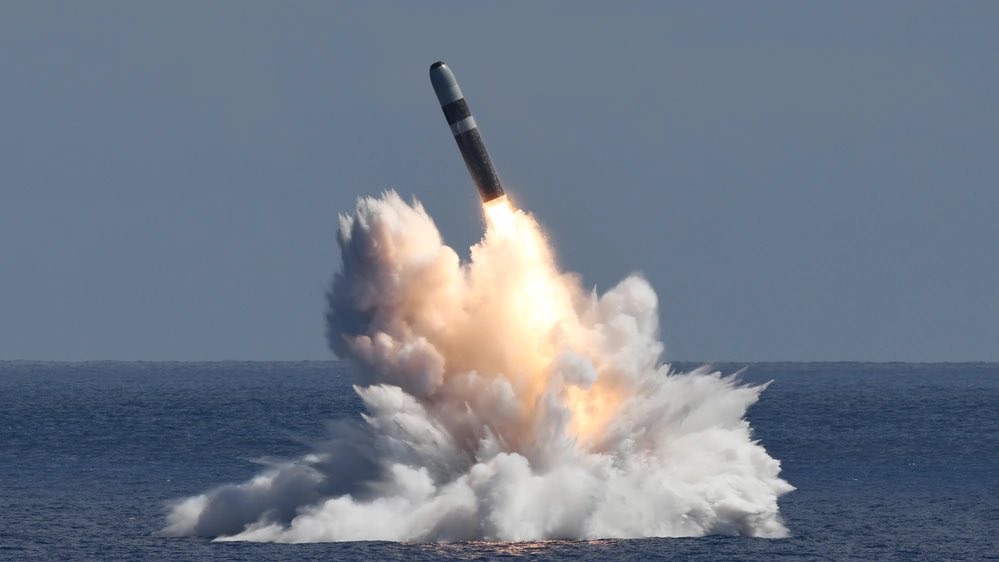
    Today the U.S. Navy confirmed the suspected launch of one of its Submarine launched Trident II Life Extension Program (D5LE) Submarine-Launched Ballistic Missile (SLBM) from an Ohio-Class Ballistic Missile Submarine off the east coast of Florida.

    On Sunday September 19th, the night sky in Puerto Rico were lit up as the launch could be seen from the Caribbean island.

    This launch was apart of a preplanned set of launches to evaluate and ensure the continued reliability and accuracy of the system. The navy statement also added that this launch was not done as a response to any ongoing world events. It’s likely the proximity to Venezuela prompted that last part of the statement.

    (more…)
  • Airmen arrested in the shooting death of another airmen in July. Uncommanded weapons discharge originally blamed.

    By. Scott Jackson


    08/09/2025

    On July 20th, Airman Brayden Lovan, 21, stationed at F.E Warren airbase in Wyoming was killed. His tragic death has led to an investigation into the Sig Sauer M18, the Department of Defense recent procurement for its forces which replaced the aging and well worn Beretta M9’s among others used by the Marine Corps. Now, another airmen is being charged with involuntary manslaughter, making a false statement, and obstruction of Justice.

    While no official report was released on the death of Lovan, the cause was unofficially attributed and reported as being caused by the un-commanded firing of his sidearm while in its holster and being tossed onto a table, which is believed to be the statement that the other airmen (unnamed for now) told to investigators.

    “An individual has now been arrested on suspicion of making a false official statement, obstruction of justice, and involuntary manslaughter,”

    -Spokesman with the Air Force.

    The Air Force called the gunshot an “isolated incident that does not pose a threat to the base or community.”

    In the aftermath of airmen Lovan death the M18 sidearms were pulled from service by the Air Force Global Strike Command until further notice. Since then a force wide review of the weapon has been ordered. The DoD has purchased around 125,000 of the M-18 in 2020.

    “Out of an abundance of caution and to ensure the safety and security of our personnel, the pause will remain in place pending the completion of comprehensive investigations by the Air Force Office of Special Investigations and the AFGSC Safety office,” Air Force Global Strike Command said in a press release in July. “During this period, Security Forces Airmen will be equipped with the M4 rifle, ensuring no lapse in AFGSC’s security posture.”

    Image of the Sig Sauer P320 M18.

    Sig Sauer also put out a statement, offering assistance in any investigation. Normally a weapons manufacturer wouldn’t involve itself a military investigation voluntarily but Sig has recently been combating allegations that their P320 handgun, as well as the military M18 version, having un-commanded discharges. The jury is still out on that allegation, but the allegations alone have hurt the company leading to lawsuits and a spat of online debate.

    “SIG SAUER has ALWAYS and will continue to put the safety and security of the U.S. Military, the law enforcement community, our consumers, and the public first,”

    Sig Sauer said in a statement.

    Airmen Brayden Tyriq Lovan

    Airmen Brayden Tyriq Lovan, 21, from Greenville, Ky joined the service in November 2023. His obituary described him as a “remote targeting engagement system operator,”a job running the bases security towers with the 90th Security Forces Squadron.

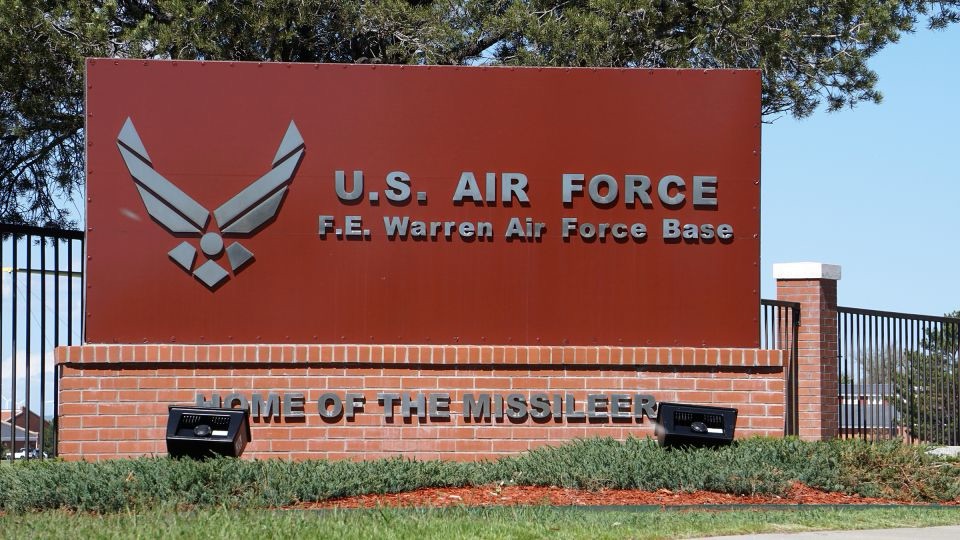
    The Francis. E Warren airbase in Cheyenne, Wyoming is the oldest continuously used airbase in U.S. military service, and is the home of the 90th missile wing, tasked with maintaining and operating the Minuteman III intercontinental ballistic missiles.

    More on this story as it develops.

  • US THAAD missile supply down 20% globally after Middle East engagement.

    By. Scott Jackson


    06/29/2025

    A recent report released by the DoD has annonced that the U.S. has burned through around 15-20% of its global stockpile of interceptor missiles used in the THAAD system, while shooting down Iranian ballistic missiles, defending Israel from attack. THAAD only had its first combat interception last year but its effectiveness has already been well proven and with the data from its recent interceptions its performance will only improve.

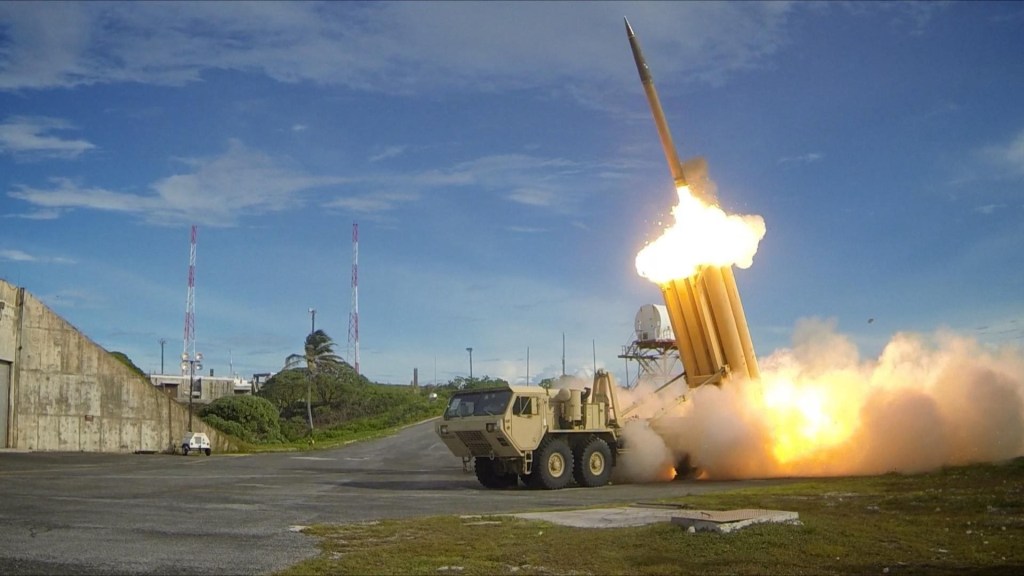
    THAAD, or the Terminal High-Altitude Area Defense is a U.S. air defense system that can engage and destroy short-, medium-, and intermediate- range ballistic missiles, inside the earths atmosphere or outside of it.

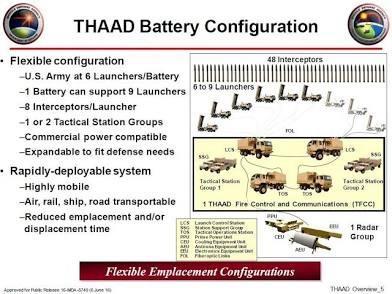
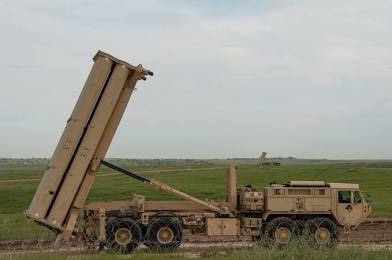
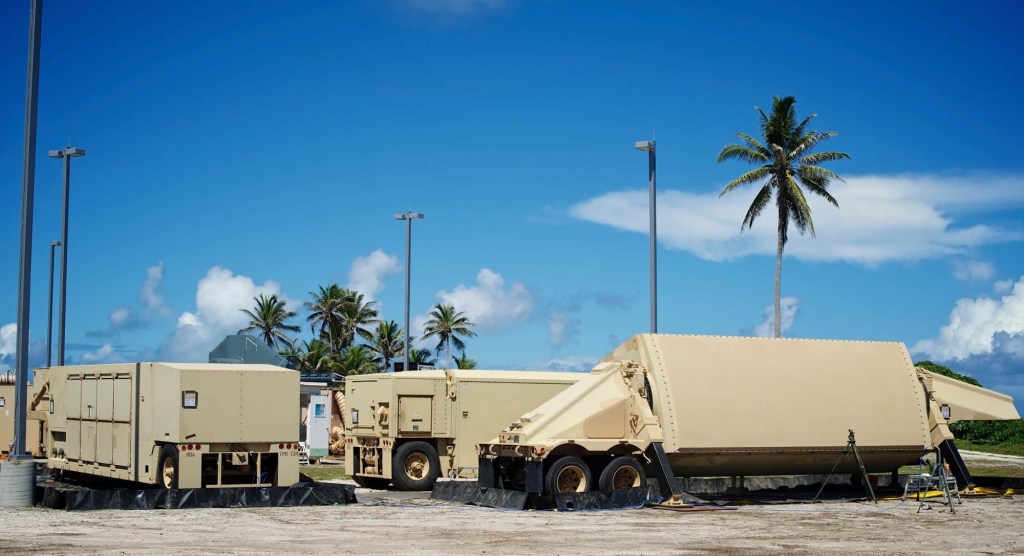
    The U.S. currently has Seven THAAD batteries. Each are made up of at least six truck-mounted launchers with eight interceptor missiles each. The launcher can be reloaded once every half hour. The system is capable of supporting up to 9 launchers.

    THAAD mounted on a 4 axle heavy expanded mobility tactical truck (HEMTT)

    The battery also consist of a ground based radar. The Army Navy/Transportable Radar Surveillance or AN/TPY-2. The AN/TPY-2 consist of 4 elements: an antenna unit, electronics unit, power and cooling, all on independent trailers. The X-band radar is capable of tracking targets out to between 500 and 1900 miles depending on mode and conditions. The radar is what gives THAAD its impressive accuracy. Note that the launchers can also utilize other radar if problems arise, such as any of the ship based Agis platforms.

    THAAD AN/TPY-2 and supporting systems..

    There is also the THAAD Fire Control and Communications (TFCC) which controls the overall operation of the system and also relays fire control informations to other systems like Patriot and other elements in the joint force. The TFCC includes two main stations: the Tactical Operation Station (TOS) and the Launch Control Station (LCS) . TOS and LCS incorporate wireless datalinks, networking equipment, and fiber optic cable interfaces.

    With near permanent THAAD batteries deployed to South Korea, Israel, and Guam, one can see its importance on some of the most high stress potential future and current conflicts. Finding a solution to a munition shortage problem in this area should become a high priority for the US as well as some of its partners who have bought the system. Defending the airspace during any conflict is paramount and could mean the difference between victory or defeat especially for the U.S. who doctrinally, look to maintain control of the airspace they are operating in.

    With near-permanent US operated THAAD batteries deployed to South Korea, Israel, and Guam, one can see its importance in some of the most high-stress potential future and current conflict zones. Finding a solution to the munition shortage problem in this area should become a high priority for the US and its partners who have purchased the system. Defending airspace during any conflict is paramount and could mean the difference between victory and defeat, especially for the US, which doctrinally aims to maintain control of the airspace it operates in.

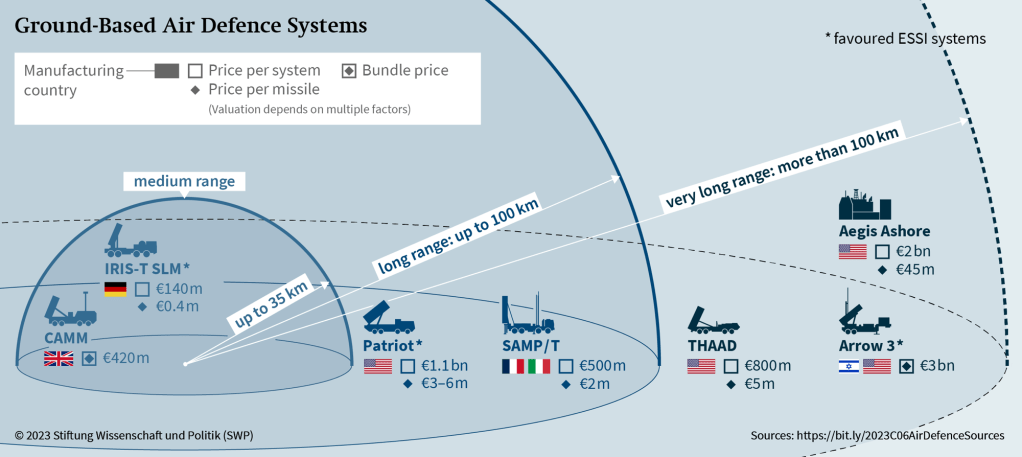
    To combat the shortage in the weapon systems munitions Lockheed Martin has invested in streamlining the process for the production of these highly technical missiles, up to 500 missiles a year for the U.S. ,instead of the current number that hovers around 300. South Korea has chosen to invest more in its own domestic systems hoping to be able to reduce the reliance on the system. The UAE will likely be getting a replenishment of their stock from the U.S.’s stockpile. Overall the U.S. is pushing its NATO allies to develop their own domestic systems as to take some of the pressure off of the THAAD system, and create a more multi-layered threat protection. THAAD works best when supported by other counters to different types of air threats. One example of this is the MIM-104 Patriot system.

    Diagram showing a layered air defense plan where each system complements and enhances the other’s abilities.

    THAAD will continue to be an important part of the United States overall missile defense strategy.

  • Northrop Grumman building apart of facility making ballistic missile parts destroyed by a large explosion.

    By. Scott Jackson


    04/17/20225

    On wendsday morning, April 16, in Promontory, Utah, authorities are investigating a large explosion that destroyed a building that was apart of the Northrop Grumman Innovation Systems facility involved in building rocket motors.

    The building is a complete loss after yesterday mornings explosion.

    Local police received the report of the explosion at 7:38am. Soon after they asked that people stay clear and evacuate the area if necessary as the fire was still going.

    Video taken from KSL chopper 5 that shows the aftermath at the scene.

    “There was an incident in one building at our Promontory, Utah facility this morning and we are working to determine the cause. Employees working in or near the building today are accounted for and there are no significant injuries reported,”

    -a statement from Northrop Grumman.

    Before being squired by Northrop Grumman in 2018 the facility was owned by a company called Orbital ATK. The facility specializes in making solid rocket motors for the military as well as NASA and other commercial aerospace companies. This facility is making the Sentinel intercontinental ballistic missile (ICBM) stage-one solid rocket motor.

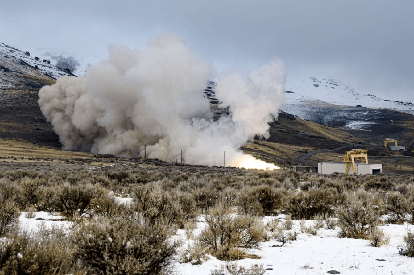
    Full-scale qualification static fire test of the Sentinel intercontinental ballistic missile (ICBM) stage-one solid rocket motor at Northrop Grumman’s facility in Promontory, Utah, March 6, 2025. 

    The Sentinel ICBM program will eventually field 400 missiles in silos and 259 additional units for testing and demonstration. Northrop Grumman is the largest SRM production company in America and one of the o my companies. The only other major company The only other major SRM producer in the United States is Aerojet Rocketdyne, which became part of L3Harris in 2023


    Thank you for reading. I hope you get as much out of what I’m doing here as I get out of making these reports. If so I would invite you to join my Patreon. Doing that would help me more than I can describe. I’ve kept it as cheap as possible to become a member. It’s only a $1.00. However a dollar from even half of my Facebook followers would be a life changing amount of money for me and for this page.

    Thank you for all the support over the years. Here’s to many more.

    -Scott