Category: US military

  • US Airforce conducts show of force flight through the Middle East.

    US Airforce conducts show of force flight through the Middle East.

    By: Scott Jackson

    February,20th 2025

    February 17 concluded a 24 hour flight for a number of US aircraft that went on a “show of force” mission. Also called a “force projection” demonstration through the Middle East.

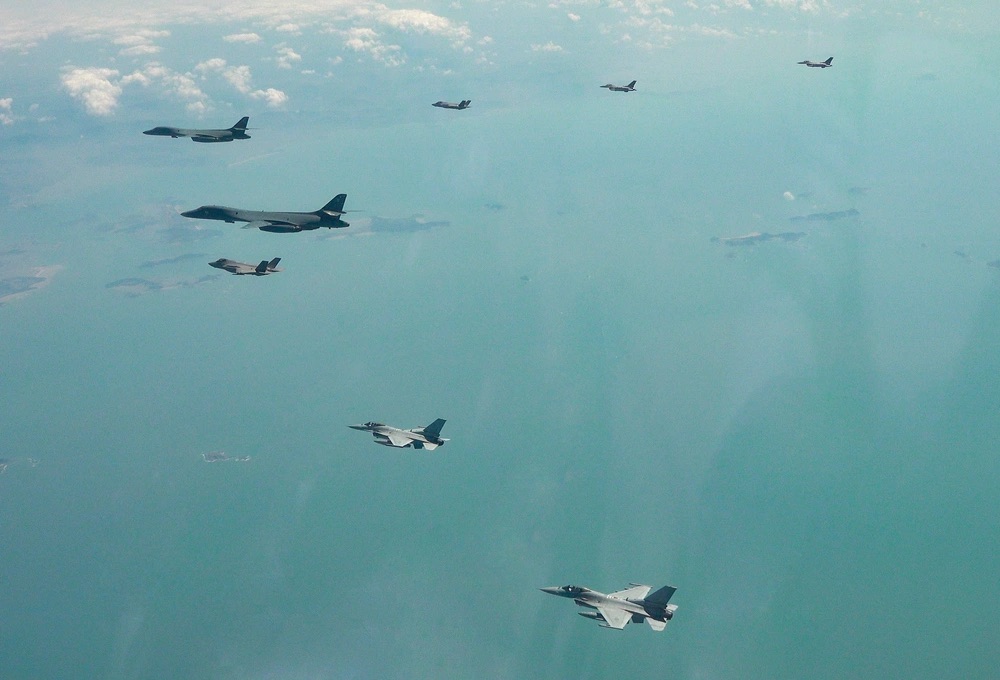
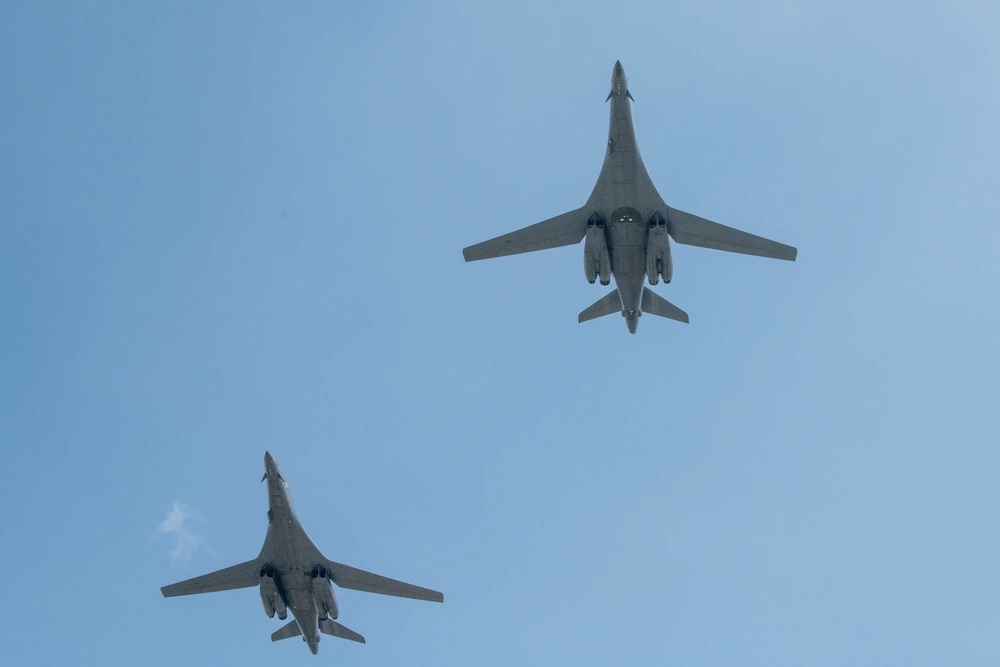
    Flying out of RAF Fairford, South of Birmingham in the United Kingdom, 2 US B-52 Stratofortress long range bombers made their way south over Europe and into the Mediterranean and then on to the Middle East.

    The Bombers were joined by a number of escorts from 4 regional partner nations at various points during its mission as well as at least 2 U.S. F-15 Strike Eagles.

    B-52s flying with 2 US F-15 Strike Eagles as well as two unknown partner nation F-16s Vipers.

    “Bomber Task Force missions demonstrate U.S. power projection capability, commitment to regional security, and ability to respond to any state or non-state actor seeking to broaden or escalate conflict in the CENTCOM region”said Gen. Michael Erik Kurilla, CENTCOM commander.

    While being mainly a power projection mission the bombers also took part in dropping live munitions on several target ranges located in partner nations.

    Live fire range bombing (location unknown released by US CENTCOM)

    These bombers are apart of the 69th Expeditionary Bomb Squadron that just started the U.S. Air Forces first European bomber deployment for the year. They will fly out of RAF Fairford and are under command of U.S. Air Forces in Europe-Air Forces Africa (USAFE-AFA).

    Some of the B-52s in Europe had already been photographed earlier this week when a picture was released by USAFE out of the cockpit of a B-52 showing them flying alongside French Dassault Rafales, Swedish Saab JAS-39 Gripens, and Finnish F/A-18 Hornets,other photos were later released of the the flight. (shown below)

    While the U.S. has shown a desire to back away from European security it’s likely that the bomber deployments will, at least for the moment remain. US Allies do not, for the most part, have the ground attack capabilities that aircraft like the B-52, the B-1 and the B-2s can bring (as well as the new B-21 Raider. and interest in training alongside these bomber forces remains high.

    (more…)
  • Nimitz-Class Aircraft Carrier USS Harry S. Truman collided with a vessel at the Egyptian port of Said.

    Nimitz-Class Aircraft Carrier USS Harry S. Truman collided with a vessel at the Egyptian port of Said.

    By:Scott Jackson

    February 13th,2025
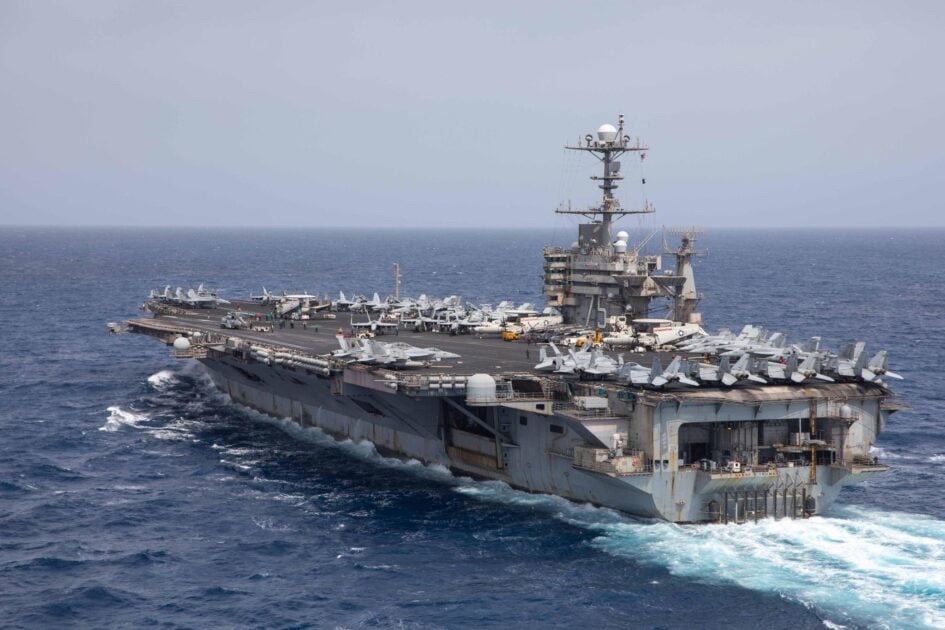
    USS Harry S. Truman.

    Yesterday at around 11:46pm local time the US Navy Nimitz-class aircraft carrier USS Harry S. Truman (CVN 75) collided with the M/V Besiktas-M, a merchant vessel at the Egyptian port of Said near the mouth of the Suez Canal.

    Position of the ships at the time of writing. (2:25PMEST) Both ships seems to be moving under their own power. Highlighted vessel is the Truman, the other goverment vessel shown to the south of it is the Guided Missile Destroyer USS Jason Dunham (DDG 109) a part of its Strike Group.

    Statements from navy officials say that no flooding occurred because of the collision and that the Truman was undamaged and her nuclear power plant was safe and secure. The status of the Besiktas-M is unknown at this time.

    M/V Besiktas-M

    The Truman was most recently deployed to the Red Sea and Mediterranean to combat the threat from Iranian backed Houthis in Western Yemen, as well as projecting power in the region and supporting other US and allied forces in the area. Recent Iranian actions have made maintaining a force in the Middle East increasing only important.

    The Truman will likely continue or already has continued on its journey back to the Red Sea area. It was returning from a port call in Souda Bay, Crete Greece. NSA Souda Bay provides logistical and operational support to the components of the Harry S. Truman Carrier Strike Group


    BWhile it might seem absurd to think a merchant vessel could get close enough to a carrier to collide with it in the first place because of the almost absurd amount of security around a U.S. Aircraft Carrier. However, in a restricted space such as close to the Suez Canal there isn’t room for everybody to maintain a distance from the carrier strike group and from how I understand it, all anybody can do is follow the international maritime “rules of the road” which have no requirements that merchant vessels make way for a carrier. All the U.S. can legally do is ask them to keep their distance. That’s how I understand it but if I’m wrong I welcome corrections.


    Update

    (5:00PM EST)

    Some more info has come on the merchant ship Besiktas-M. It is a Panamanian-flagged bulk cargo ship. The ship has been heading north through the Suez canal heading to its destination states as being Constanta in Romania on the Black Sea. The Truman was heading south at the time when the mishap took place. The bulk carrier is said to have moderate damage above the waterline but continued under its own power.

  • Navy Growler crashes over San Diego harbor. 

    Navy Growler crashes over San Diego harbor. 

    By: Scott Jackson

    February 12,2025
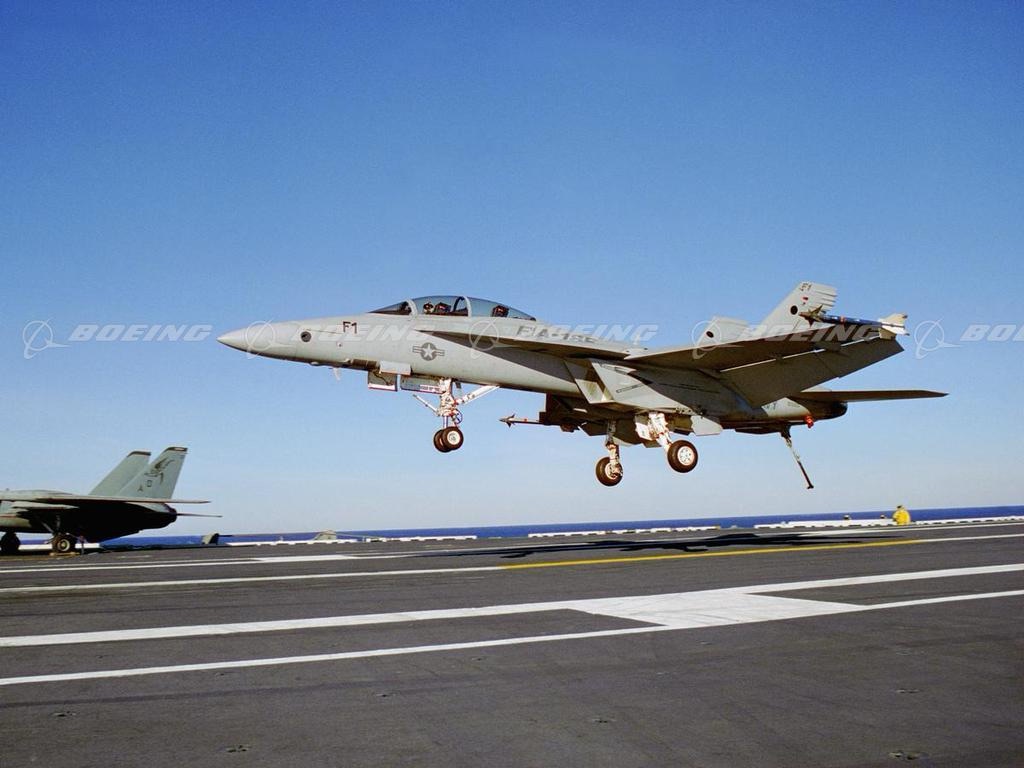
    EA-18G Growler.

    Today, at around 10:15 PDT A US navy Boeing EA-18G Growler Electronic Attack Jet assigned to Electronic Attack Squadron (VAQ) 135 crashed while taking off at NAS (Navel Air Station) North Island. The pilot and copilot are both unharmed as they ejected into the San Diego harbor and were picked up. The crew were originally picked up by a sport fishing charter boat the M/V Marietta, before being transferred to a Customs and border patrol craft according to radio calls made in the area that were recorded. The customs patrol boat  transported them back to shore where they are now receiving medical attention at UC San Diego Health. 

    With the crew being recovered emergency crews will respond to the wreckage to investigate as well as clean up and debris and fuel from the crash. According to radio calls from the area there is a large amount of fuel and the navy has dispatched response teams.

    The cause of the crash is under investigation. 

    CCTV Video shows the EA-18G Growler coming in down in a quick descent. Essentially falling out of the sky. The camera barely catches it.

    The aircraft had traveled to San Diego for ongoing exercises, leaving its home airbase at NAS Whidbey Island in Washington State. It’s unknown if the aircraft was taking part in the Bamboo Eagle 25-1 exercise currently taking place in the pacific. 

    NAS Whidbey Island

    Bamboo Eagle is a massive event focused on a possible high stakes conflict in the Pacific Ocean with China. Being led by the U.S. Air Force Warfare Center in Nellis it has brought dozens of not hundreds of military aircraft to the region for this combined arms operation with the U.S. and several key allies. 

    Video taken from twitter user San Diego web cams shows footage from their livestream as well as the radio calls that happens after the crash.

    The EA-18G Growler is the U.S. Navy’s Electronic Attack aircraft that began to replace the EA-6B Prowler around the late 2010s. Based on the airframe of the F/A-18(E/F) It has since then become an integral part of the carrier air wing. The Growler swapped out the Super hornets main cannon with a strong AN/APG-79 AESA Radar. The plane has 9 weapons hard points but will almost always have 5 of those hard points taken up by ALQ-99 Tactical Jamming pods. The hard points that are left open are usually equipped with either AIM-120 AMRAAM for air threats or more likely AGM-88 HARM Anti-Radiation Missile that track enemy radar signals. The two wingtip rails that would usually hold AIM-9X sidewinders was replaced for AN/ALQ-218 passive radar warning receivers to detect enemy radar.

    While mostly known for jamming enemy radar enemy communication can also be jammed by the Growlers suite of comms jamming systems.

    Australian EA-18G Growler

    While the growler with its jamming pods can defeat all current air and surface threats it comes up against its future is always in question as new and more advanced radars are developed and fielded and it’s jamming pods become out of date. The airframe is only as good as its equipment that needs to be updated in the near future.


    Author note.

    We here at GCR respect and appreciate any aircraft and crew capable of the roles of SEAD and DEAD. Suppression and destruction of enemy air defense is one of the most important roles in the always critical task of establishing aerial supremacy. The Growler holds a special place in my heart as did the Prowler that came before. Hats off to all of today and yesterday’s Electronic Attack Planes as well as the F-4 that carried out the insane Wild Weasel missions.

    If you are somebody with knowledge of this story contact Scott at GCR. My contact info is on the Website and I would love to talk on or off the record regarding this story.

  •  White House announces the names of two new Ford Class aircraft carrier. 

    The White House on Monday annonced that it would be naming two of its future planned Gerald R. Ford-class nuclear powered aircraft carriers after former presidents. The USS William J. Clinton and USS George W. Bush, after the 42nd and 43rd U.S. presidents.

    “Their legacies will endure through these aircraft carriers, which serve as formidable platforms dedicated to safeguarding our national security and strengthening our resolve to protect this nation against any who would threaten our freedoms and way of life,“ said Secretary of the Navy Carlos Del Toro. 

    These ships will be the 5th and 6th of the Ford-class. As of writing this only one of the class exists which is the lead ship in the series USS Gerald R. Ford. Ford was named after the 38th president of the United States, who served on the light aircraft carrier Monterey in WW2 in the Pacific. The Ford-Class carrier to this day remains the largest carrier/warship ever created. 


    Evolution of Power : Ford-Class carrier upgrades and capabilities.

    USS Gerald R. Ford departs Navel Station Norfolk for its first deployment.
    Photo by Petty Officer First Class William Spears.

    What makes the Ford-class Special? 

    The Ford-class was created to offer a number of improvements over the Nimitz-class carrier which had been the standard for 40 years and is now being phased out, replaced by the Ford-class.What improvements make the Ford-class so special? Well let’s talk about it. Most of this info comes from testing on the only Current Ford class in use, the USS Gerald R. Ford (CVN 78)

    Cmdr. Robert Kurrle, the commanding officer of the “Golden Warriors” of Strike Fighter Squadron (VFA) 87, conducts his final carrier landing on the first-in-class aircraft carrier USS Gerald R. Ford’s (CVN 78) flight deck. Photo by Petty Officer 2nd Class Zackery Guth.

    Improved aircraft launch and recovery systems. Specifically the EMALS or Electromagnetic Aircraft Launch System replace the steam powered catapults used in the past giving fighter pilots a smoother takeoff with less maintenance. On the landing side we have the AAG or Advanced Arresting Gear which in testing so far with the Gerald R Ford has shown an increased smoothness with landing as well as the capability to catch heavier aircraft and UAVs (more in those in a bit).

    Island of USS Gerald R. Ford (CVN 78). You can see its radar here. Unknown photograph.

    To help with protecting the airspace around the carrier and its strike group the Ford Class Carriers all for the most part come equipped with the AN/SPY-/6(V)4 radar. SPY-6 for short. While the USS Gerald R. Ford has an older model and will be upgraded the future ships in the class will receive the upgraded SPY-6. This radar is one of the strongest parts of the ship giving the carrier the ability to defend against multiple threats from 360 degrees at the same time, including Hypersonic, Cruise, and ballistic missiles. It’s also highly resistant to enemy jamming efforts. The data collected can all be shared between the battle group and aircraft like the F-35 and EC-2 Hawkeye, further strengthen the groups defenses and offensive capabilities during battle. Info collected from the carrier battle groups radar and other sensors can be filtered through several different systems and processed and sent to whoever needs the info at the time. For example every CSG (carrier strike group) is going to have an Air Warfare Commander that will usually be the captain of an Aegis equipped Ticonderoga-Class Guided Missile Cruiser. His teams mission is obvious, to protect the Strike group from all manned aerial units and missiles and is one of the most important jobs in the CSG. The information taken from the carriers Radar on the Ford-class carriers can be transmitted instantly to the CIC (Combat Information Center)aboard the designated Air Warfare cruiser where the commander and his team can quickly make decisions based on that data to protect the CSG.

    Combat Information Center on the Gerald R. Ford

    I mentioned above that data could be shared between the CSG and I’d like to highlight this for a moment because I think it’s important. These systems are used throughout the navy. CEC or Cooperative Engagement Capability is a network of sensors and fire control systems all working together towards a complete battlefield picture for all aircraft and surface ships. Think about a computer network. The computers can all transmit data to one another through a high speed, encrypted, wireless connection allowing all these systems to operate together towards a unified goal. 

    A littoral battle underway as multiple hostile and friendly targets need to be identified and tracked.

    This would include systems like Aegis. Aegis is a series of radar,computers and different weapons systems that all work together be an effective missile defense system. While the carrier itself is not technically considered aegis its radar can be used to in the process to help shooting down threats. The last system I’ll mention is Link 16. Link 16 is a tactical data exchange network that allows ships and aircraft and ground forces to share a tactical picture in near real time. It supports text messages,imagery, voice through digital channel frequencies that operate using radio waves.  Link 16 is being used throughout NATO for the different nations to all be able to share their view of the battlefield.this system allows,for example- the stealthy F-35C lightning with its upgraded radar to communicate with the E2-D Advanced Hawkeye who can relay the signal to the 

    F/A-18 (and surface ships) allowing the Lightnings to act as a sort forward observer, tracking enemy’s and preselecting targets. 

    Planned air wing of the USS John F. Kennedy, The next Ford Class Carrier.

    Moving on. Let’s look at the main role of the carrier which is power projection through its air power. Its hanger capacity has been extended allowing it to support up to 90 aircraft of the current carrier air wing makeup. The future will likely see the navy’s workhorse F/A- 18 Super Hornet all replaced by F-35c Lightnings but for now it appears that they are running a mixture of the two mostly as a way to keep cost down if I had to guess. 

    Other aircraft operating from the Ford Class will be fairly standard except for a few instances. E/A-18 Growlers will remain a huge part of the carrier air wing being the electronic Warfare and SEAD/DEAD (Suppression/Destruction Enemy Air Defense) of Master that it is. The command and control E-2D Advanced Hawkeyes are the shiny big brother to the Hawkeye of olden days. Northrop Grumman took an “if it isn’t broke don’t fix it” approach to the beefed up Hawkeyes and instead of changing anything they just made it better in almost every way. The same is true for the SH-60 Seahawks which will cover helicopter operations. 

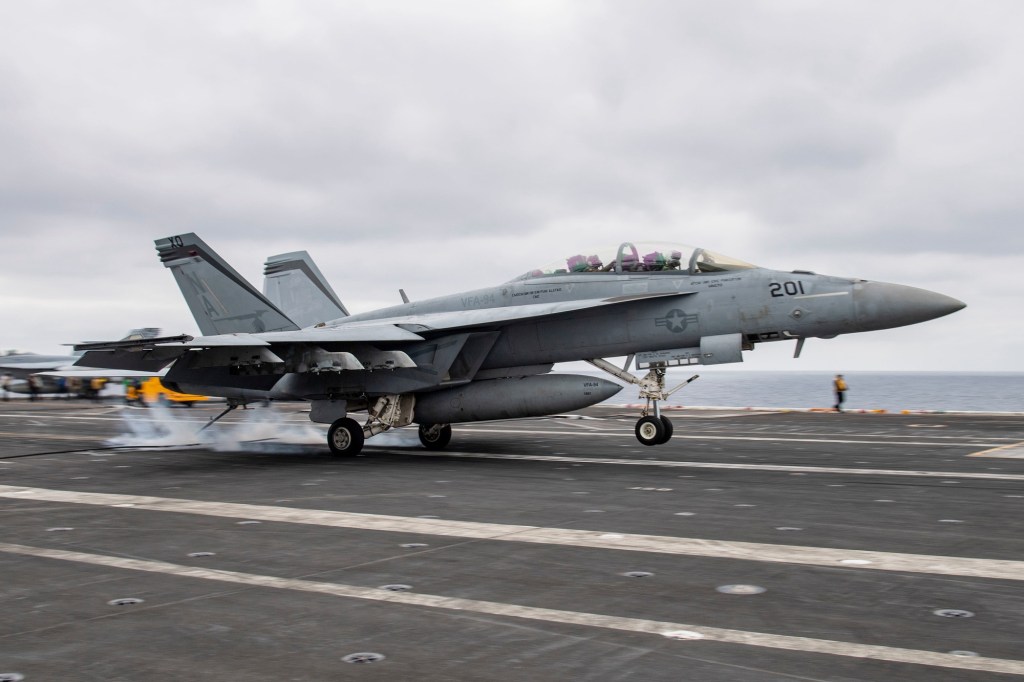
    F/A-18 Super hornet. No introduction needed. These are the ground strikers and air to air defenders of the fleet.
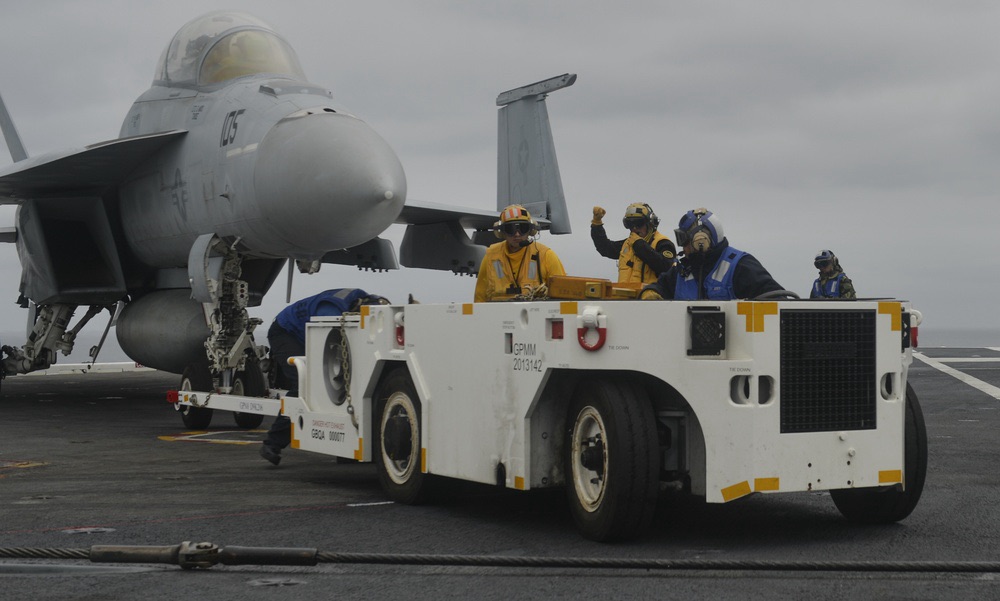
    E/A-18 Growler. The SEAD/DEAD powerhouse and the reason why the enemy’s never see what hit them.
    E-2D Advanced Hawkeye. Airborne radar as well as Command and Control. These guys are the Taskmasters. They make sure everybody is in the right place doing what they need to do.

    There is one other addition to be added to all Ford class carriers. The addition of an unmanned warfare center to operate any and all unmanned drones deployed by the CSG. The one major planned unmanned system is the MQ-25 Stingray. The Stingray is still in development but is expected to make its way to the fleet in the next couple years. The Stingray will handle all the carrier aerial refueling needs. 

    MQ-25 Stingray aerial refueling isn’t sexy, until you really need gas.

    All in all the Ford Class carriers will provide a net positive in war-fighting ability to the US  navy in a time when politics and budget constraints in the acquisition department have yielded several platforms that failed to meet expectations. The next Ford Class Carrier is set to be delivered to the Navy this year as long as there are no delays. 

  • US Department of Defense reveals the amount of munitions expended while engaging the Houthis in the Red Sea. 

    US Department of Defense reveals the amount of munitions expended while engaging the Houthis in the Red Sea. 

    The US military has been engaged in defensive operations against the Yemeni Houthis for the past 15 months in the waters of the Red Sea and in the Arabian Sea as well as the sky’s above Yemen. Several different US carrier strike groups have been deployed into the area to protect the billions of dollars of international commerce that moves through the Red Sea daily heading to and from the Suez Canal. The Houthis have targeted any ship they believe is connected in any way to America or Israel as a way to show support for Palestinian terror group Hamas and their war with Israel in Gaza. 

    The Head of Naval Surface Forces Vice Admiral Brendan McLane revealed at a Surface Navy Association conference that was attended by journalists from The War Zone( TWZ is great, I always recommend them when they come up) just how many munitions had been expended in the operation. Statements made by the Vice Admiral also give us a more detailed look at how the operation has been going and what US forces as well as their European allies have been dealing with. US CENTCOM which is the United States military command over The Middle East  region regularly puts out reports and social media post however they can sometimes be sparse with the details. 

    The U.S. Navy Surface Fleet has expended 400 individual munitions against the Iranian backed Houthis.

    The Vice Admiral also gave an example of the current state of modern surface warfare by talking about a recent engagement that the sailers aboard the Arleigh Burke class destroyer USS Spruance (DDG 111).

    “They were in a fight where they shot down 3 anti-ship ballistic missiles(ASBM), 3 anti-ship cruise missile (ASCM) and 7 one-way [unmanned aerial vehicles, or UAVs],” McLane said. “So that’s how it kind of rolls up.”

    USS Spruance (DDG 111) after its return to its homeport, Naval Base San Diego, Cali

    I’d like to break down the specific munitions, what they are used for, and maybe most importantly- the cost to the American taxpayers. 

    USS Chung-Hoon (DDG 93) fires an SM-2 missile.

    SM-2 missiles (RIM-66)

    120 expended. This missile is the workhorse of US navy air defense, being used to take out incoming anti ship missiles as well as other 

    missiles and incoming enemy jet fighters.. High speed-highly maneuverable and considered one of the best in the world at what it does. The Sm-2 has a reported range of 90 nautical miles and can reach an altitude of 65,000 ft. A cornerstone of the fleets layered air defense systems. 

    SM-2

    Cost vary on specific missile block but these come in at roughly $2 million USD per. 

    The U.S. is reported to have around 12,000 of these in its stocks.

    US Aegis Destroyer intercepts Medium-Range Ballistic Missile with new SM-6 SWUP Missile.

    SM-6 missiles (RIM-174)

    80 expended

    This is a newer addition to the fleet and the navy has a more limited stock of these missile with only 500 being reported to have been delivered according to the Raytheon website. 

    Coming equipped with the active radar seeker found in the Air-to-air AIM-120C AMRAAM, This missile is capable of a wide range of task being capable of defensive anti air against missile (including ballistic missile in their final terminal phase) as well as manned and unmanned air units. Its high speed also makes it a useful anti surface weapons although it’s high cost makes other weapons better choices. The thought behind this missile was warship today have limited space and a weapon that can effectively do everything is a benefit.  The explosive warhead as opposed to a hit-to-kill style missile makes this missile capable of potentially defeating the Chinese DF-21D and DF-25B anti-ship ballistic missiles. 

    SM-6 missile profile.

    Cost average around $3.9 million per. 

    A combined 20 expended from the 

    Sea sparrow and the SM-3. 

    Sea Sparrow launch

    Sea Sparrow ESSM

    Medium-range, semi-active homing missile that makes flight corrections via radar and midcourse data uplinks. The missile provides reliable ship self-defense capability against agile, high-speed, low-altitude anti-ship cruise missiles (ASCMs), low velocity air threats (LVATs), such as helicopters, and high-speed, maneuverable surface threats

    Sea Sparrow Profile

     $787K – $972K depending on configuration

    SM-3 launched from the USS McCampbell (DDG 85) intercepts ballistic missile .

    SM-3 (RIM-161)

    The SM-3 is the main ballistic missile defense of the fleet. It uses its powerful kinetic energy to utilize a hit-to-kill method of attack. It has a lower production rate than everything else on the list which also puts a heavy cost on these missile, especially if you have to fire more than one at a time. 

    SM-3 missile profile

    Anywhere from $10 million to $30 million (this price likely to come down some as missile production is ramped up as announced earlier today. 

    While the expenditure of these weapons is something to be concerned about it only highlights the logistical issues that the US would have in a near peer, great power conflict when the amount of munitions expended in the Red Sea over the past year would equal only several days of fighting in say the pacific against China. Addressing these procurement and cost issues is paramount if the US is to remain a dominant force on the world’s stage.