Category: South America

  • What were the targets during U.S. strikes in Venezuela.

    By.Scott Jackson


    01/13/2026

    On the morning of January 3rd, the U.S. launched a major operation to capture Venezuelan President Nicolás Maduro. Operation Absolute Resolve as it has come to be known took place mostly in the Caracas region however the U.S. carried out airstrikes elsewhere on certain regime military targets.
    The strikes were carried out in the early morning hours of January 3rd when more than 200 special operations forces surged into Venezuela while aircraft and ships that had been gathering in the Caribbean for months conducted a number of precision airstrikes on (mostly) military targets around the Caracas area. The special forces, being flown by the helicopters of the 160th Special Operations Aviation Regiment “Night stalkers” flew in, suppressed and destroyed enemy air defense and captured Venezuelan President Nicolás Maduro and his wife Cilia Flores.

    This attack was an operational success and caught the National Bolivarian Armed Forces of Venezuela completely off guard. The defenders only managed to launch a handful of Igla shoulder mounted missiles which appear to have all missed. The helicopters used by the Night stalkers have a number of countermeasures against these types of weapons.

    After this the helicopters landed, special forces ground units found and secured Maduro and his wife after fighting through a reported 30 Cuban security guards. Maduro was transported to the USS Iwo Jima after this and from there he was transferred stateside.
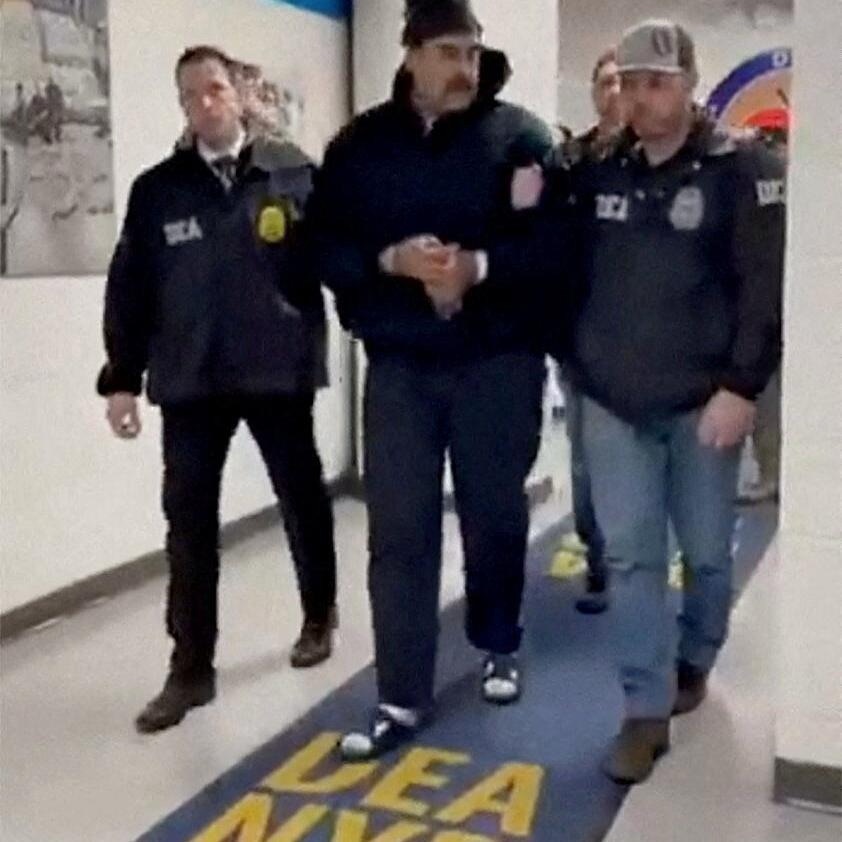
    Maduro perpwalk.

    Since the morning of the strike GCR as well as many others have worked verify where some of the strikes took place and I’d like to go over the ones I’ve managed to verify as well as note any other information I have about them.

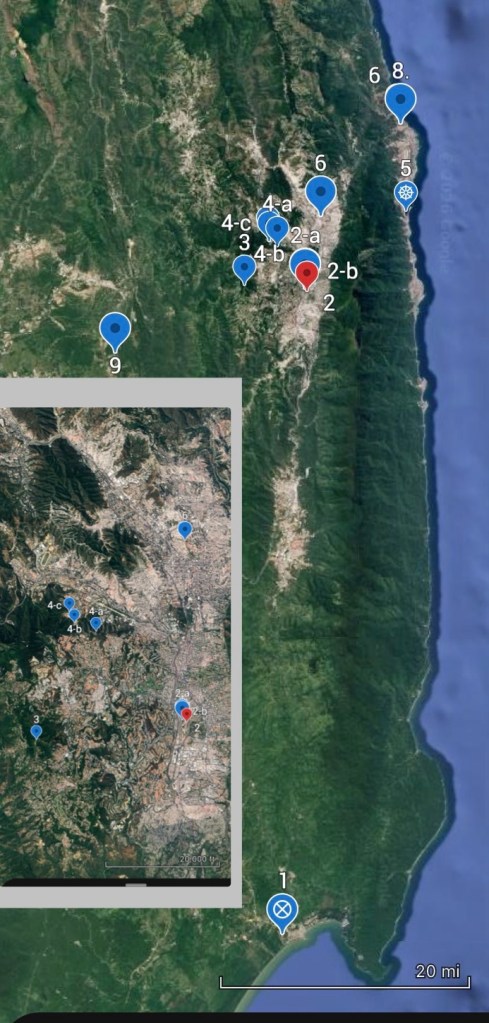
    With geolocations,most of the time you will have a video and you want to find the location in took place. This case was no different, I had multiple videos and many of them had the same location shown . I also got very lucky in that some of the major networks has marked out strikes their teams had found on a map so I used one of those as an overview. I also grabbed satellite images from where ever I could, much of it is from the Center for Strategic & International Studies (CSIS), as well as released images from Planet labs and Vantor.
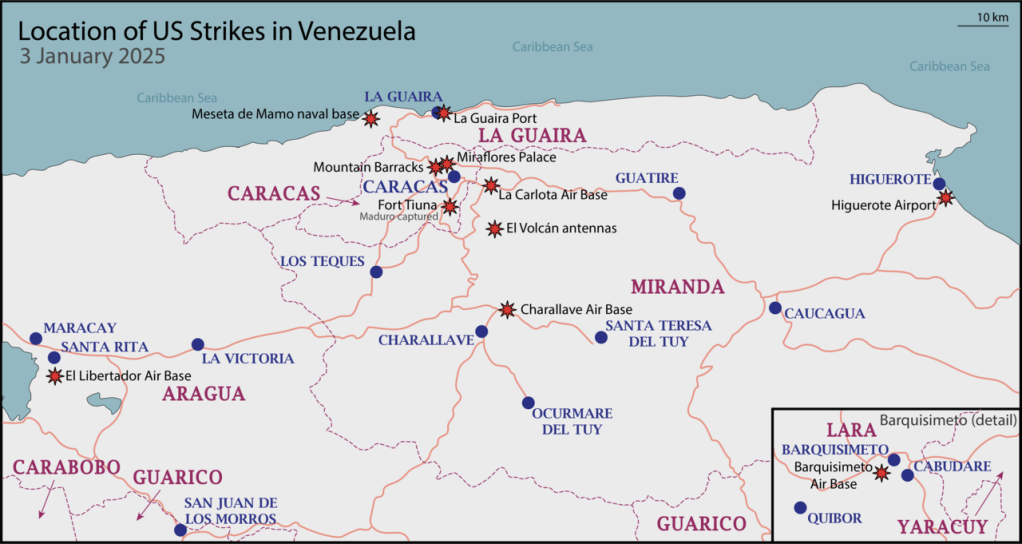
    I found this map on the New York Times website which helped me narrow down locations of strikes making this process a lot quicker.

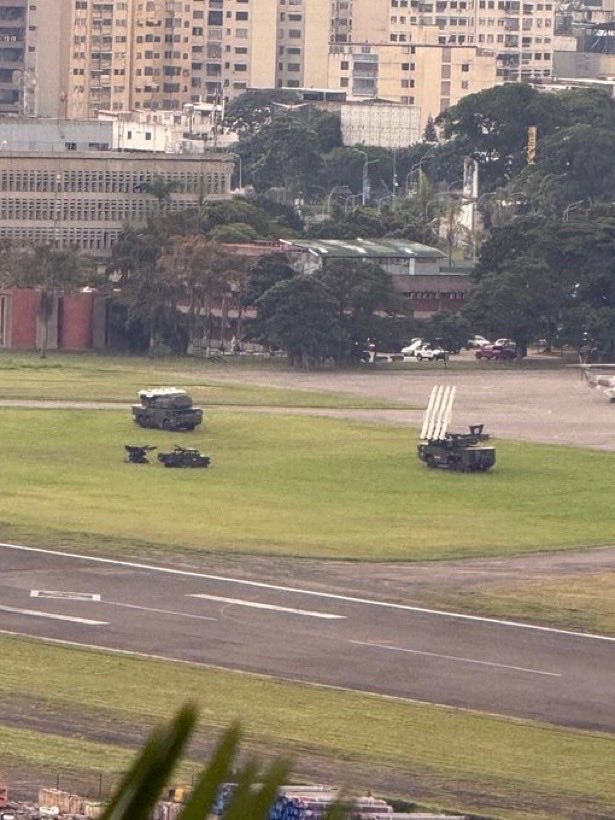
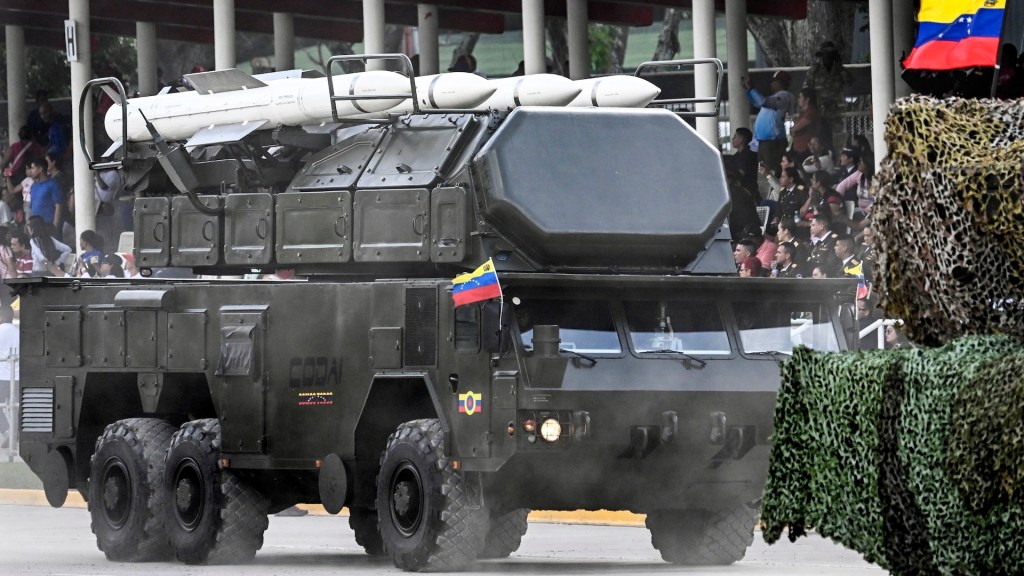
    The Venezuelan air defense is made up of several systems but the one we will be talking about mainly today is the Buk series. The Buk is a family of self propelled, medium- range surface-to-air missile systems.
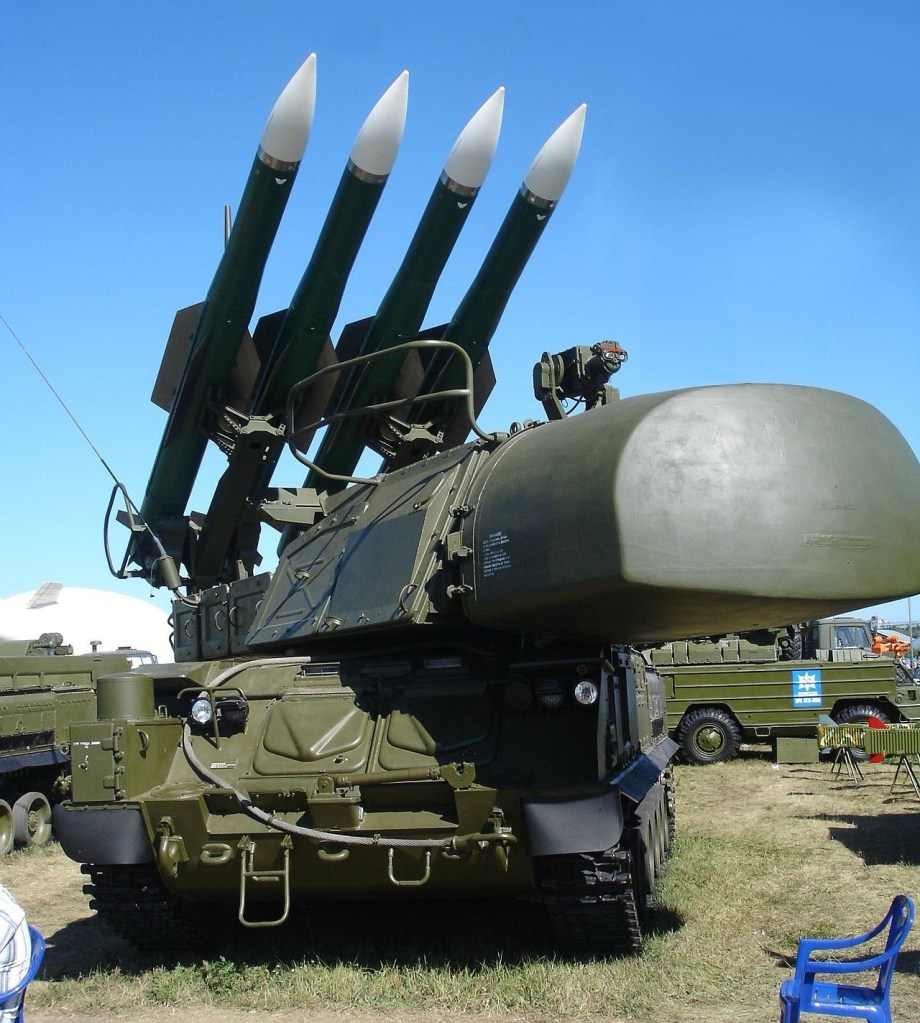
    A Buk-M1-2 SAM system

    It’s been reported in the days since the strike that none of the systems were hooked up to any sort of long- range detection radar and were only using their targeting radar which is very ineffective.

    Former head of the CIA station in Venezuela Richard de la Torre, said that years of corruption, logistical problems, and the impact of international sanctions were the cause of the Venezuelan air defense network being in such a poor combat readiness state.

    Moving on to the strikes.

    Strikes on Aeropuerto airport.

    (Number 1)

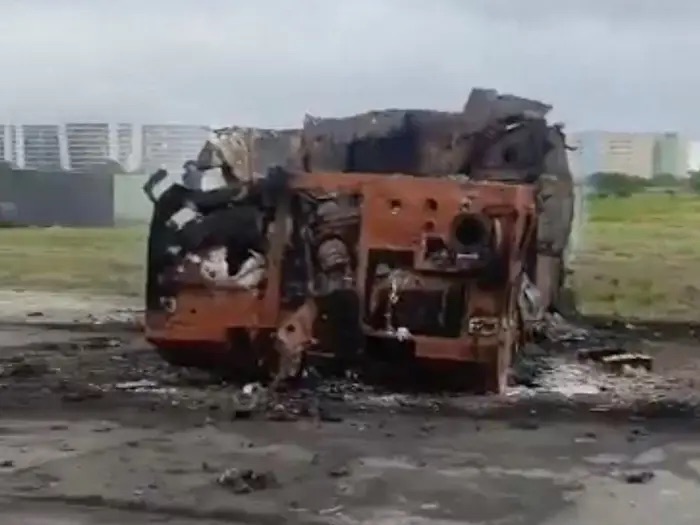
    The first site I looked at was from the airport located in Higuerote. Images taken after the strikes show remains of what we believe were light airplanes and trucks that were used to block off access to the runway. Remains of a Buk air defense system command vehicle were also spotted.
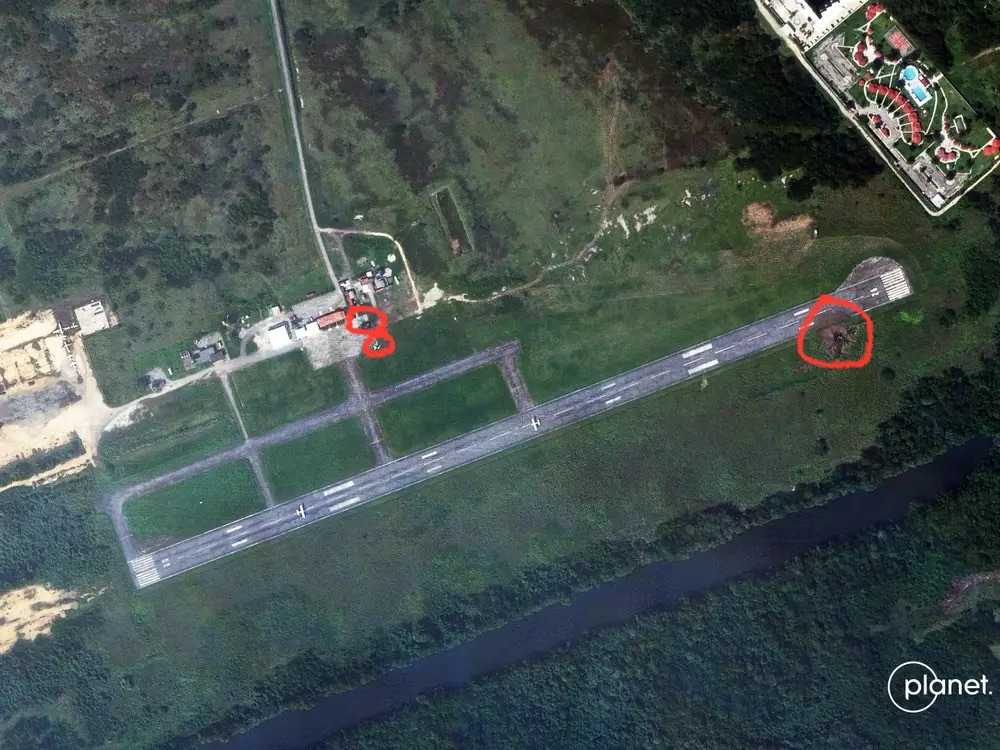
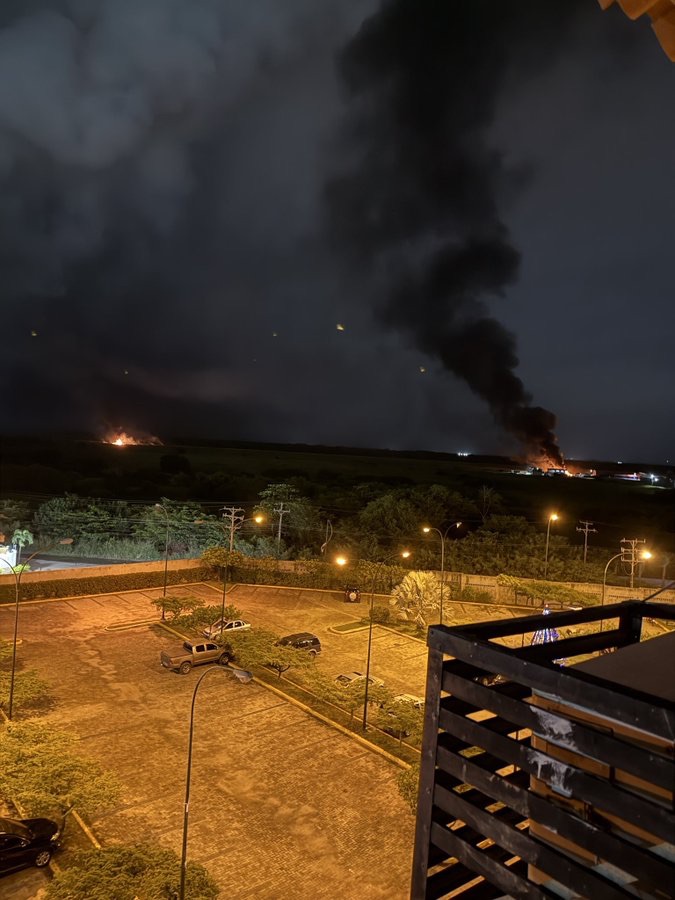
    Two strikes in the center are light the Buk and the light plane. The strike at the end of the runway is an unknown target. You can also see the light planes left on the runway in an attempt to stop US forces frim using this airport.
    A shot of the airport in Higuerote after the strikes.
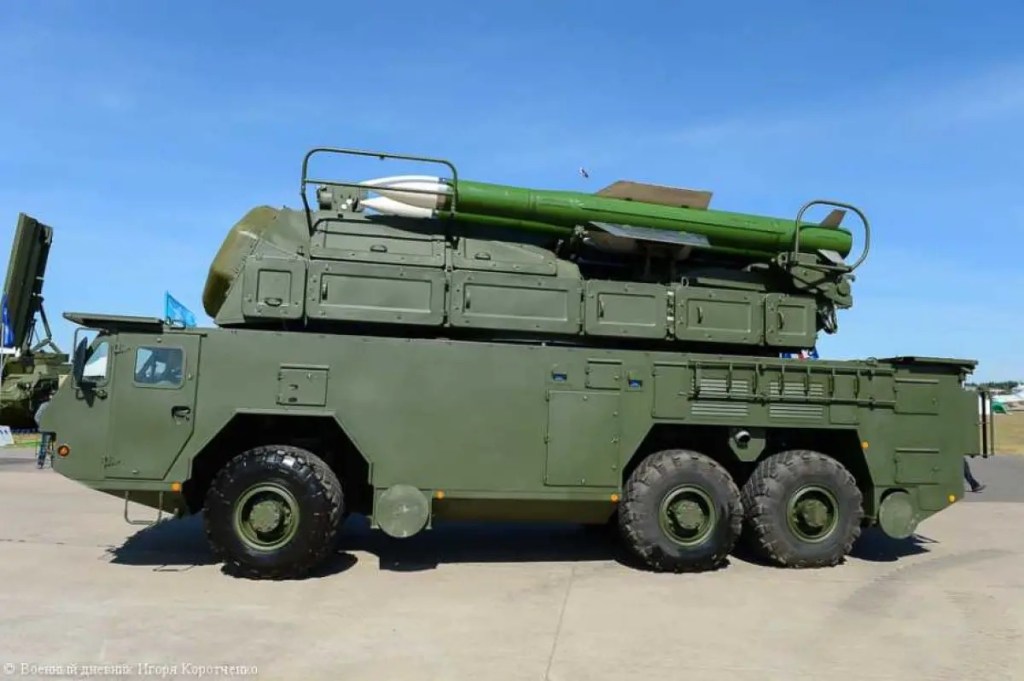
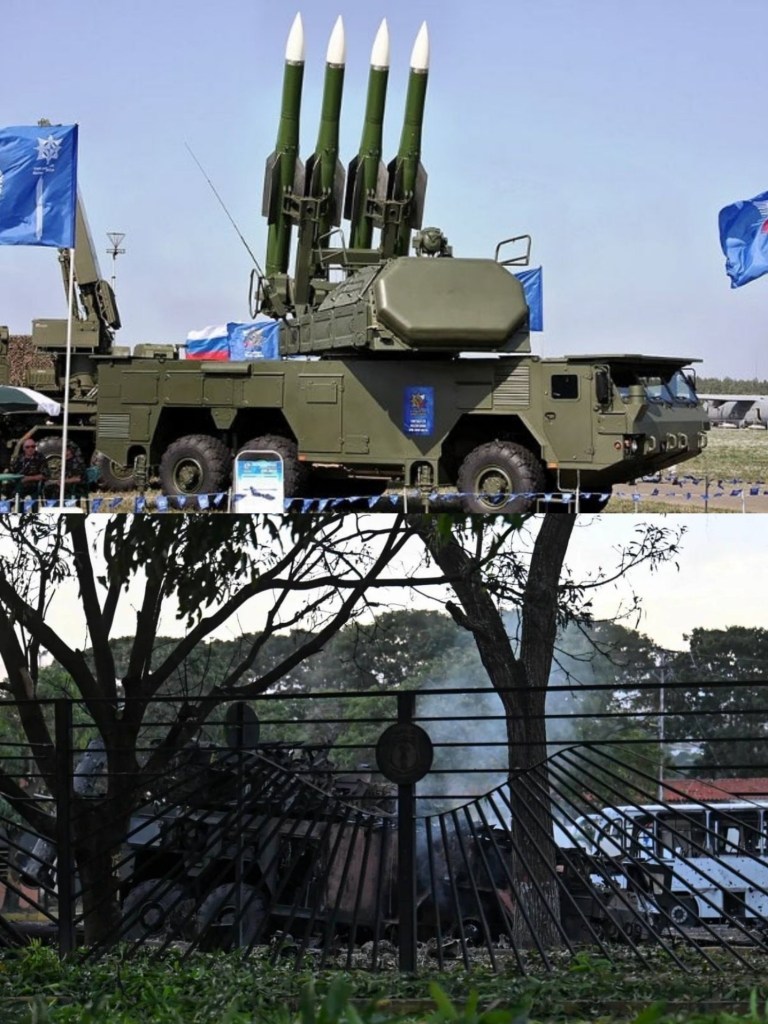
    I believe this to be the remains of a BUK-M2E.
    For comparison.

    Video of the BUK’s ammo cooking off after the strike was caught.

    Strike on Buk-M2E at La Carlota airport.

    (Number 2)

    At la Carlota, the home of the General Command of the Bolivarian Military Aviation much like at Higuerote both serve a duel-role acting as civilian as well as military airports, Battle damage assessments indicate that only exposed air defense was targeted, while the hangers, runways and everything else remains intact and largely undamaged. Possibly trying to keep collateral damage to a minimum as the airport is surrounded by residential buildings on all sides.

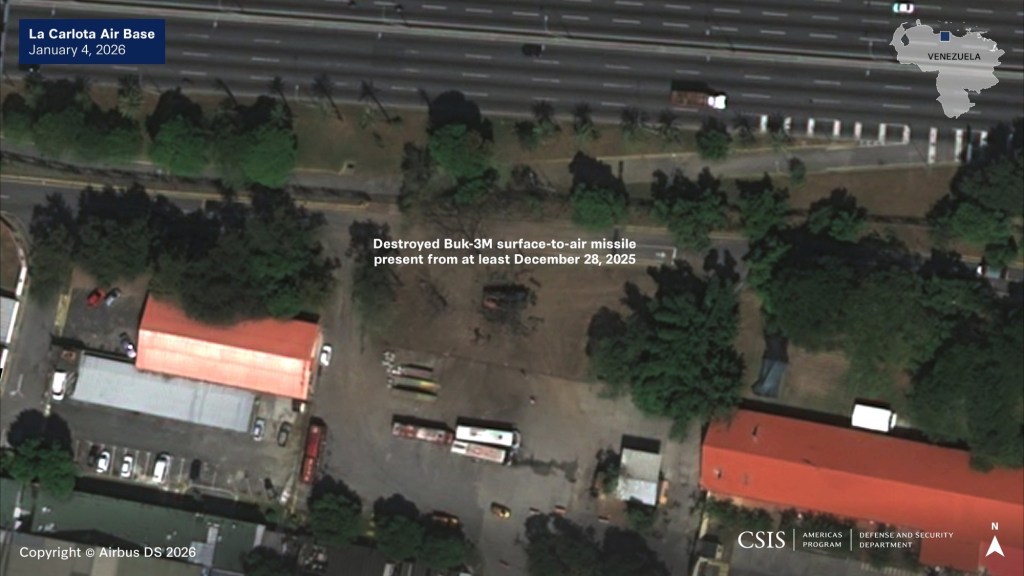
    At least three strikes on the La Carlota airport.
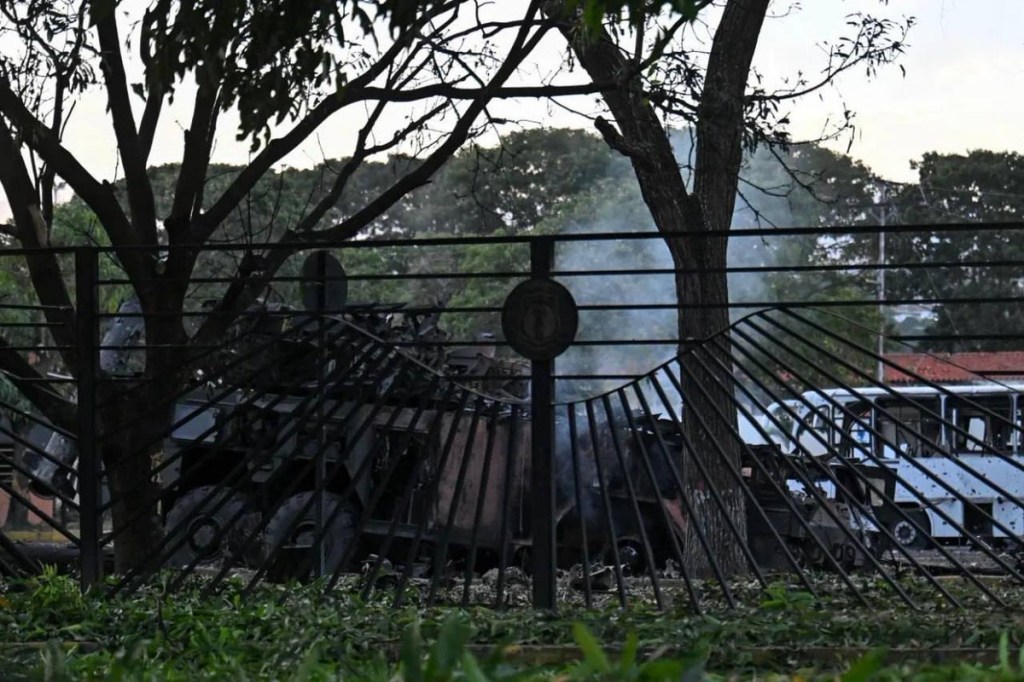
    Image shows the spot the Buk was filmed sitting in the days before the attack. A vehicle is clearly destroyed here.
    Two close-ups of the destroyed Buk. Note the bus visible in both images and satellite imagery.
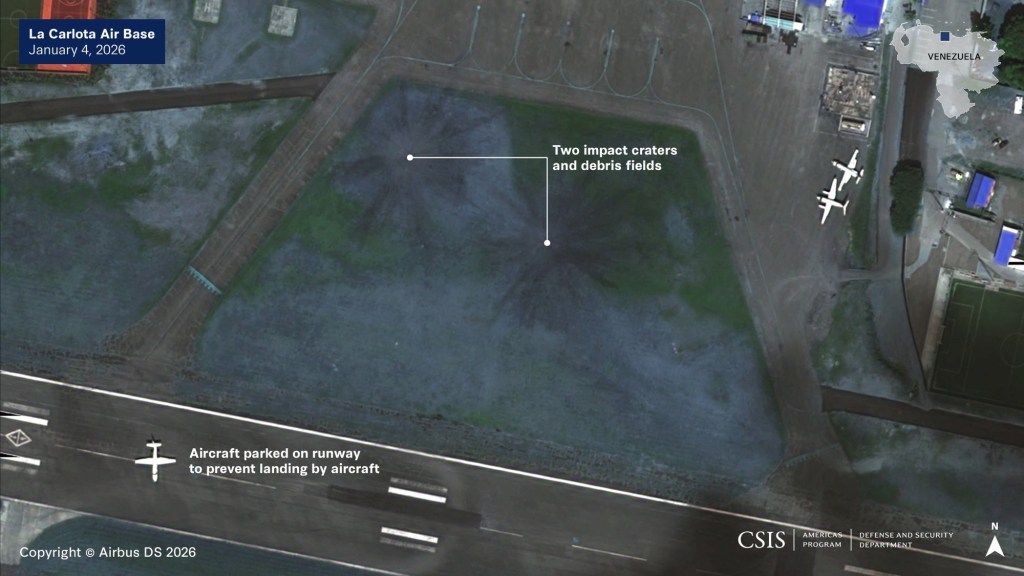
    This spot, closer to the runway shows two clear impact marks.
    This image shows the same spot several days before the strikes. I believe these were the targets.

    Satellite images from the day after the operation show all of the strikes hit in open areas and avoided targeting buildings. Open source data as well as satellite footage show that at least one BUK-M2E was targeted here, but possibly more.

    Strike on El Hatillo Telecom antenna

    (Number 3)
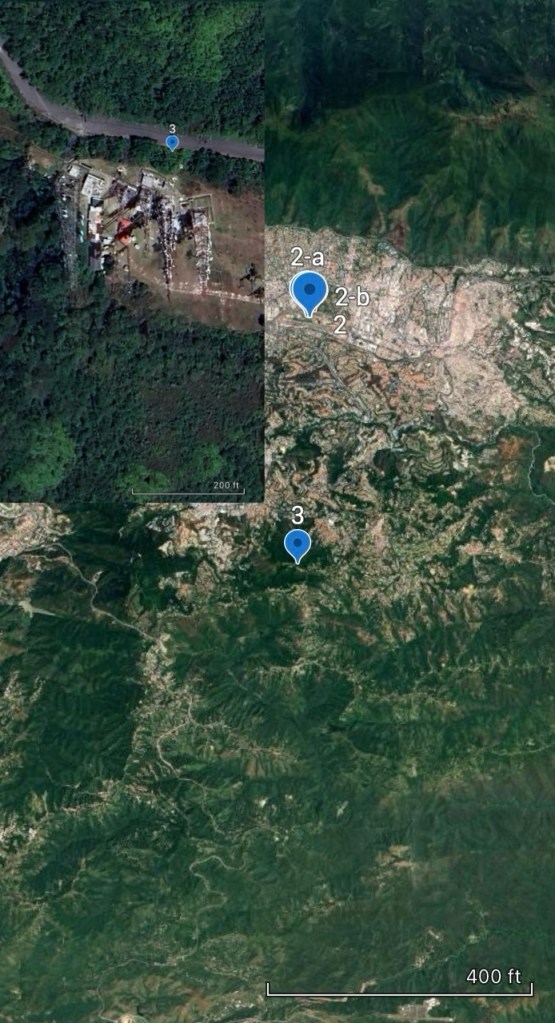
    General location and close up before the strikes.

    This telecommunications antenna was struck on January 3rd. This mixed with the electronic warfare we know were operating in the air would have likely knocked out most of not all communications in the area, causing confusion and preventing the military from coordinating a defense.
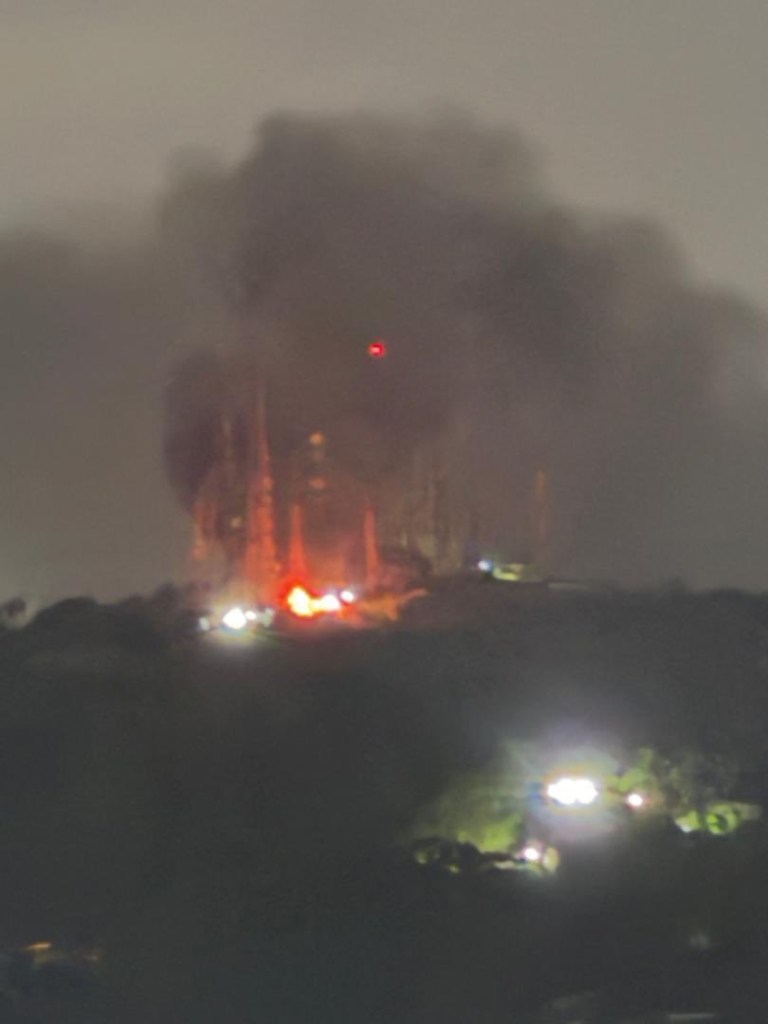
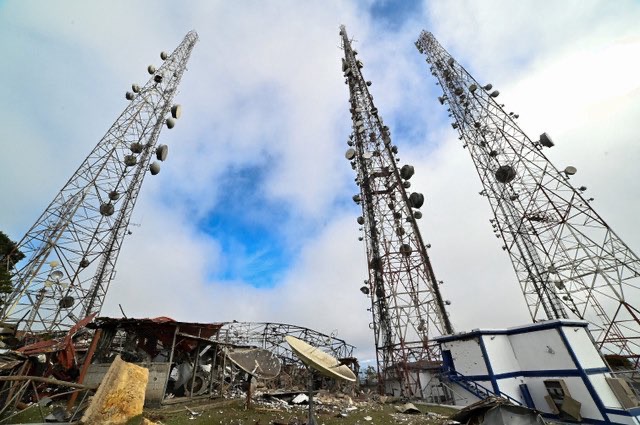
    Directly after the strike.

    Fort Tiuna

    (4A-4C)

    The next set of strikes targeted Fort Tiuna, the military base that housed Maduro and his wife on the night of the raid.
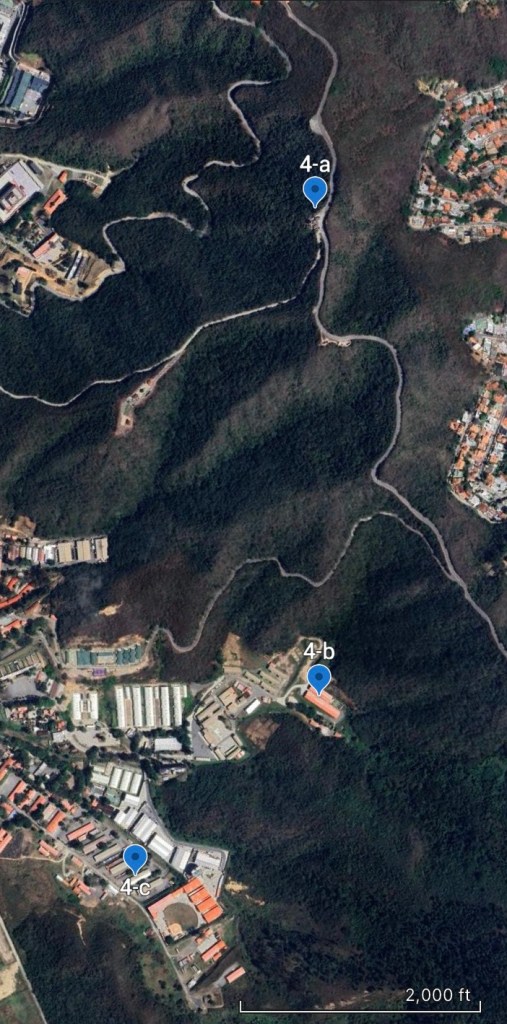
    4a. Hit the what Google Earth has listed as the main entrance for the base. It’s also thought to be one of the entrances for the underground bunker built into the mountain.
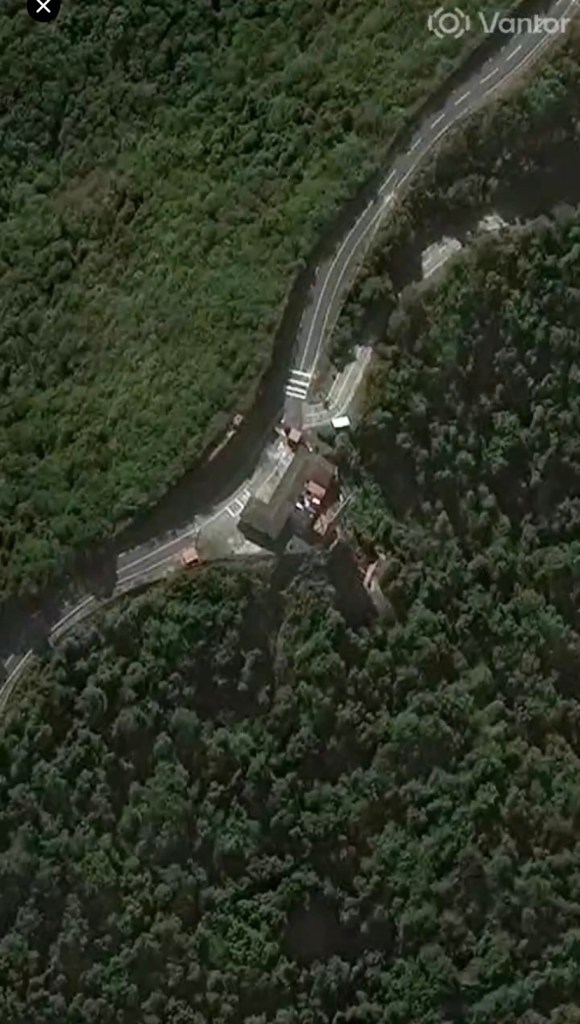
    Before
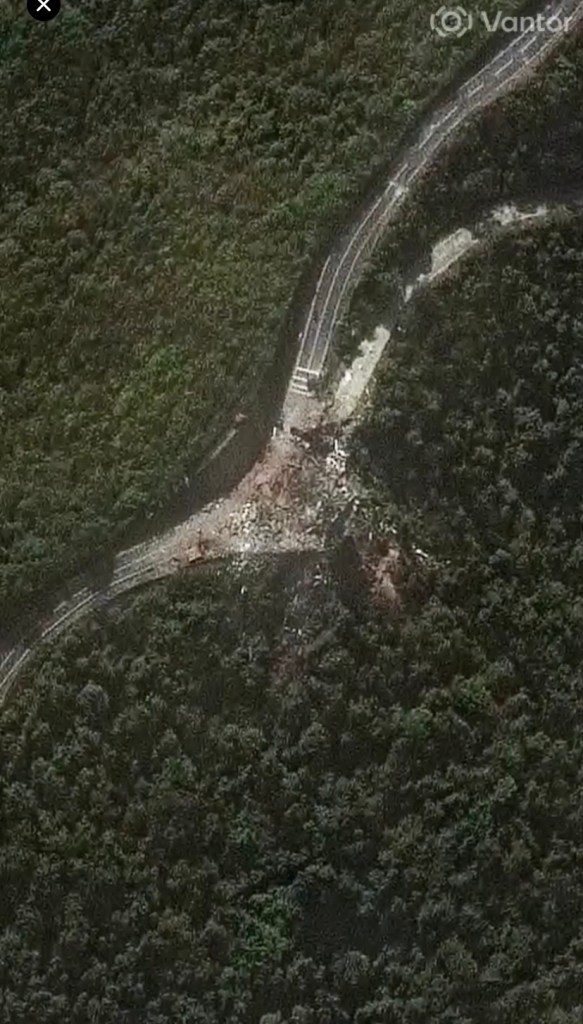
    After

    4b. This shows the destruction of a building that appears to be used for storage of mikitary equipment. It’s proximity to the mountain is building could also be one of the entrance points for the bunker.
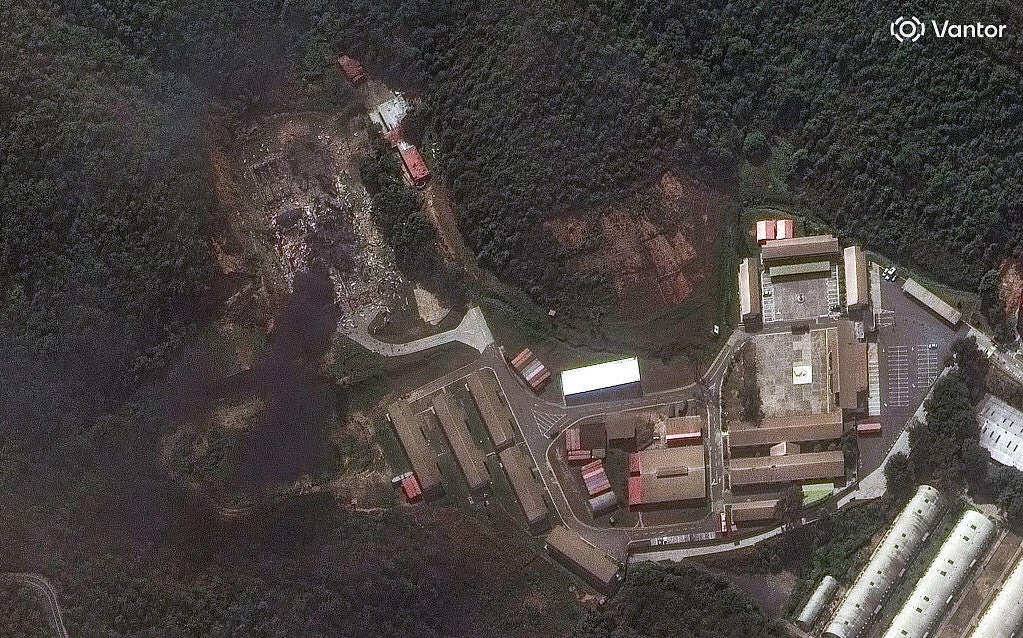
    4c. This next one shows the destruction of a vehicle storage facility as well as another building claimed to be another entrance to the underground bunker.
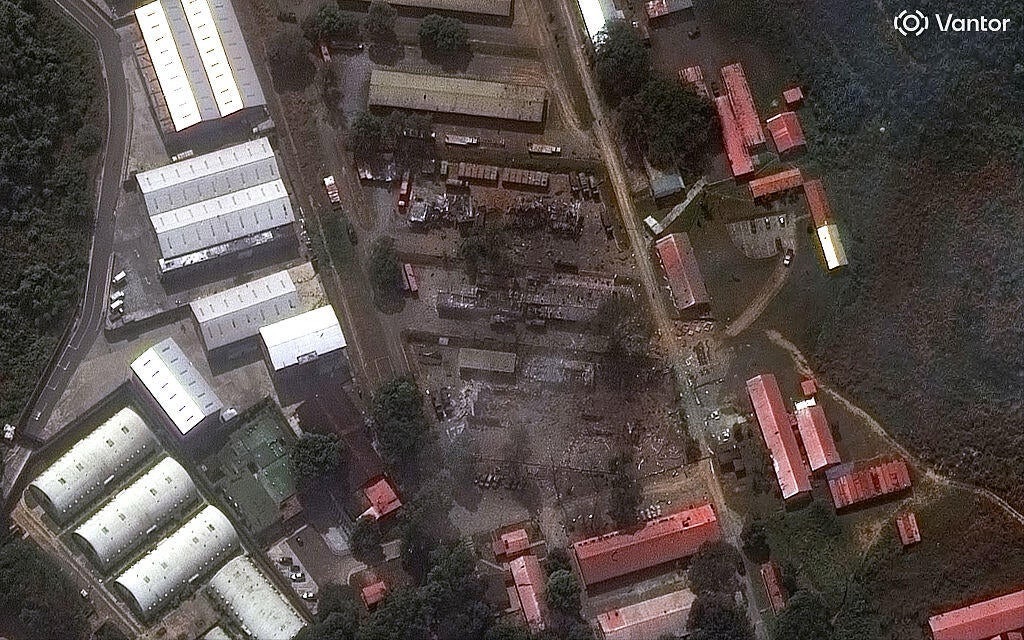
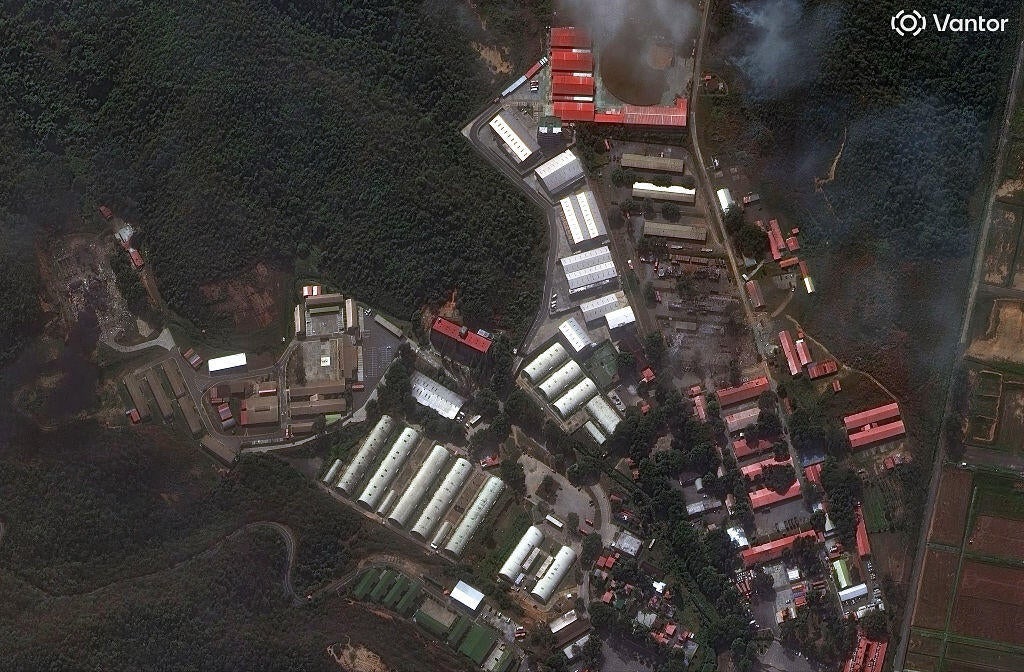
    This shows the after ahot of 4B (far left) and 4C (top and center)

    Strike at the Port of La Guaria

    (Number 5)

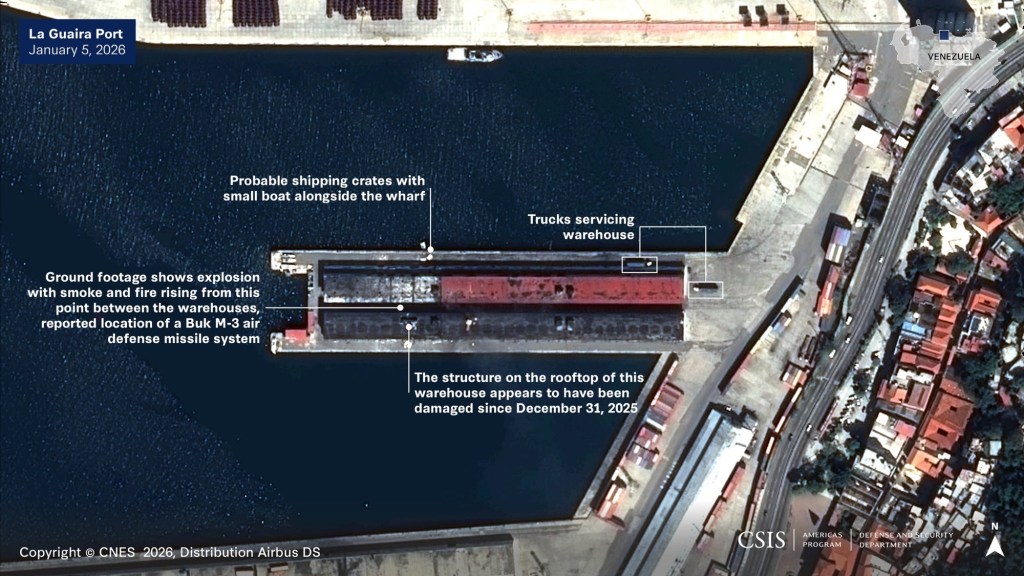
    The strike on the port seems to have yet again targeted part of the Venezuelan air defense network as footage from the aftermath appears to show destroyed Buk systems. Several clips are taken in the direct aftermath of the strike and show the munitions of the AD system being ignited.

    Video of the aftermath. it’s believed that the explosion is the BUK’s missiles cooking off.
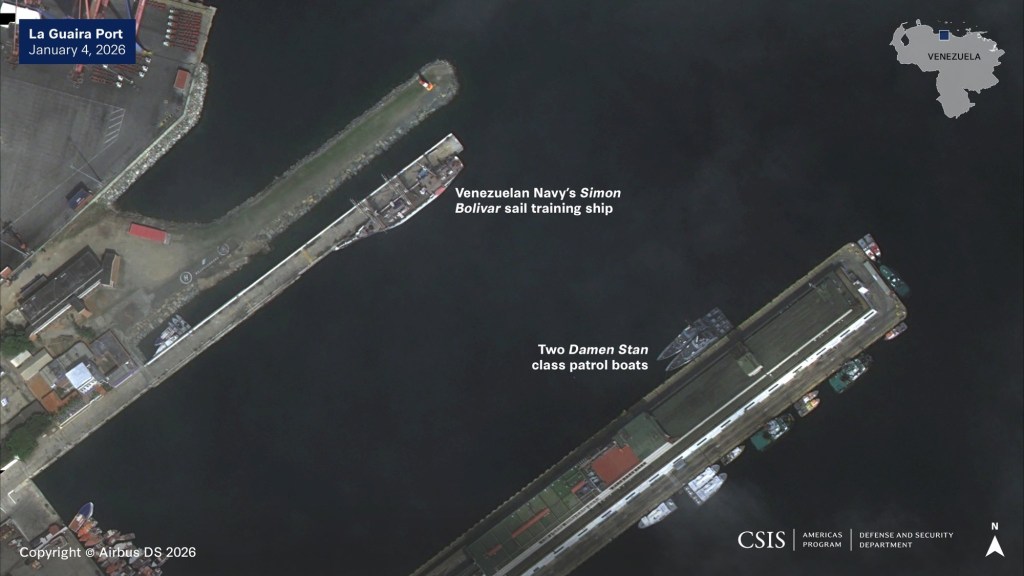
    Video of the direct aftermath of the strike however the poster is wrong about the target. None of the Venezuelan navy ships were targeted.

    CSIS has a great analysis of this strike so I’ll share some of that here as well.
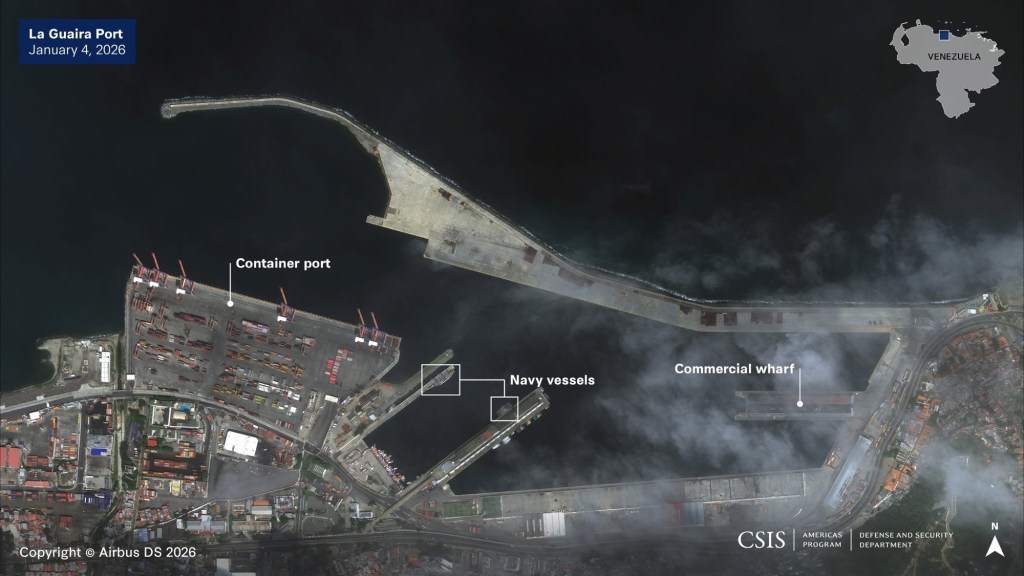
    This next video, posted a claim that a warehouse at the port had been targeted because it contained medicines. The video actually proves it was targeted because a Buk launcher was set up between the warehouses, which was clearly the target as the warehouses survive the initial strike but are damaged during the secondary explosions from the missiles cooking off.

    Stills from the video showing a destroyed Buk.
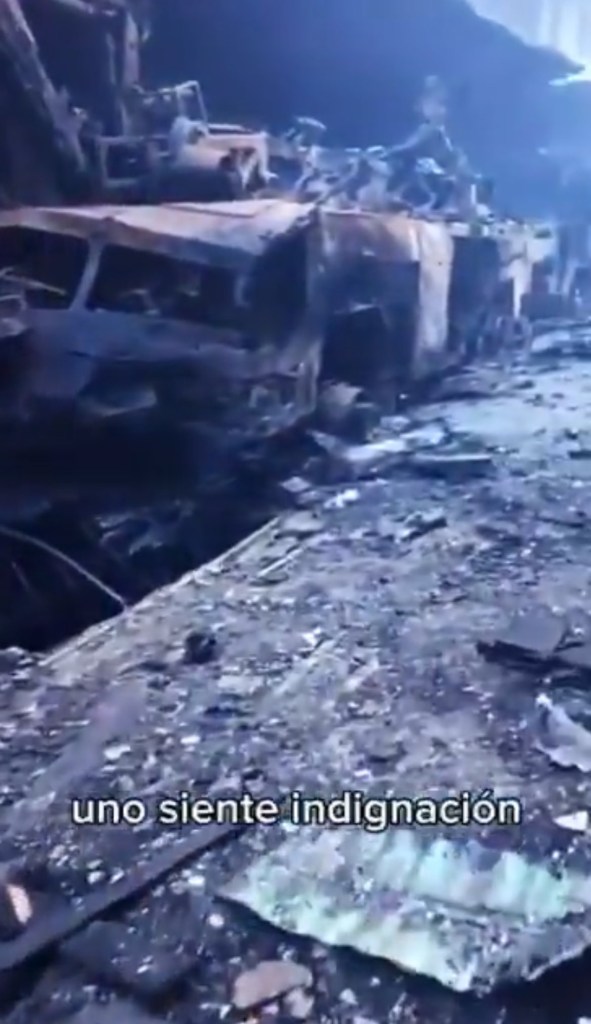
    Strike on the observatory which houses the General Command of the Bolivarian Militia.

    This strike has raised some controversy as it was reported on the day of the strike that the U.S. had attacked the Mausoleum of Hugo Chávez.

    A post claiming the Mausoleum of Hugo Chávez had been hit with a U.S. airstrike.

    This claim has been debunked by others as well as myself. The video is actually being recorded by a guy standing very close to the resting place of the former socialist revolutionary and president. The strike actually struck an observatory. The observatory houses the General Command of the Bolivarian Militia, a civilian volunteer military militia.
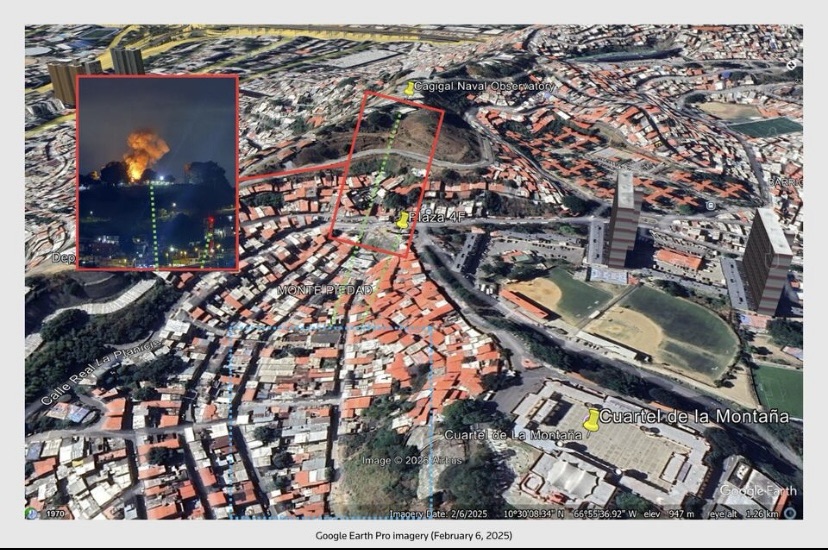
    An image from Google earth showing where the location of the observatory as well as the mausoleum. Based on the angle of the video that was posted the person who took the video was standing only a couple hundred feet to the left of the mausoleum and likely knew its location. This post was misinformation put out specifically to make the U.S. look bad. Image from Reuters.

    Air Defense position near the Naval academy.

    (Number 7)

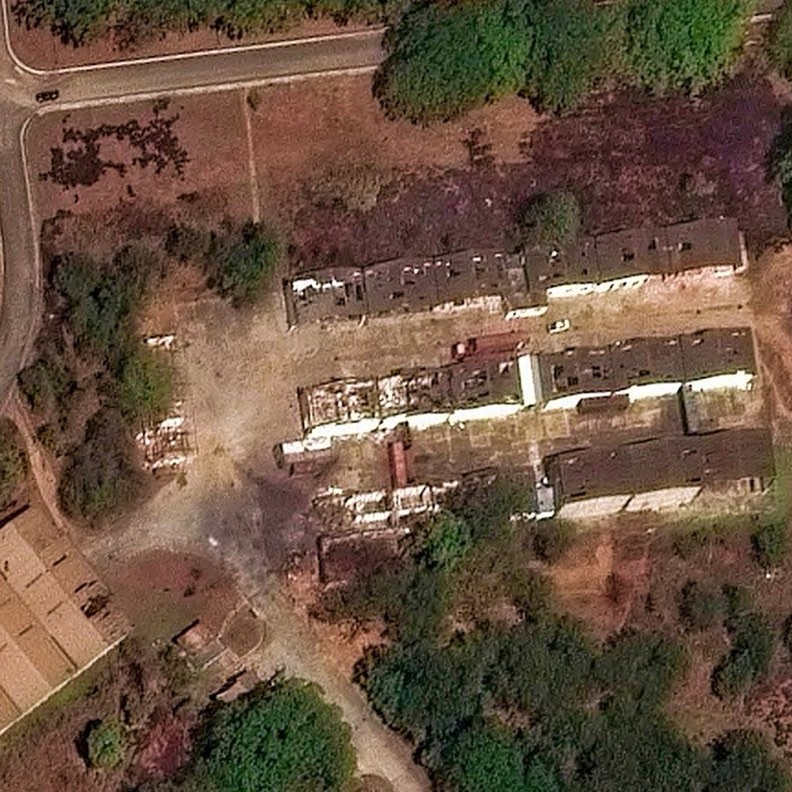
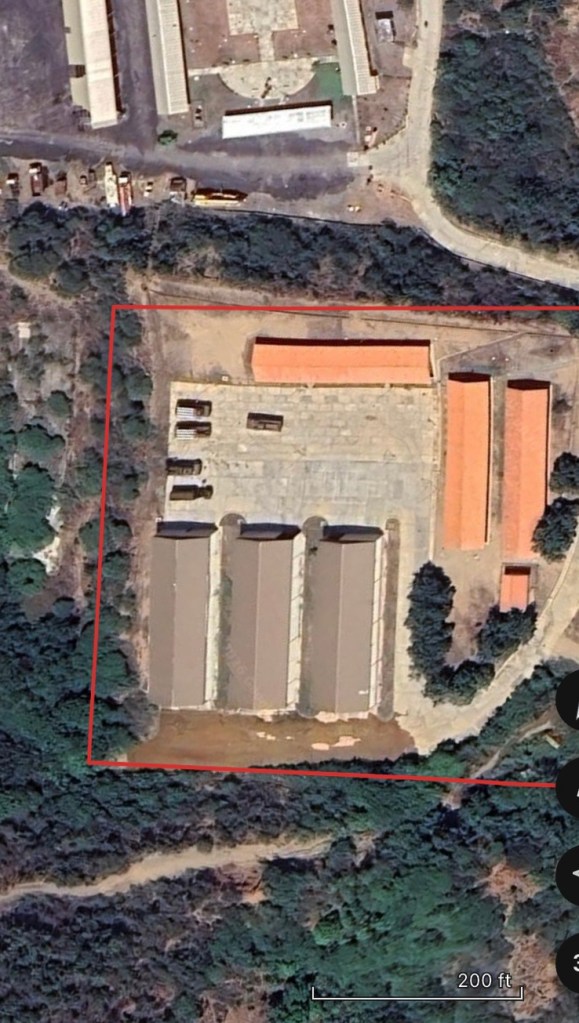
    This strike targeted an area near the Naval Academy on the coast. This one, like many of the others targeted an area known to have been the location of air defense systems. Historical satellite imagery shows multiple Buk launchers stored here as well as buildings that housed additional launchers.
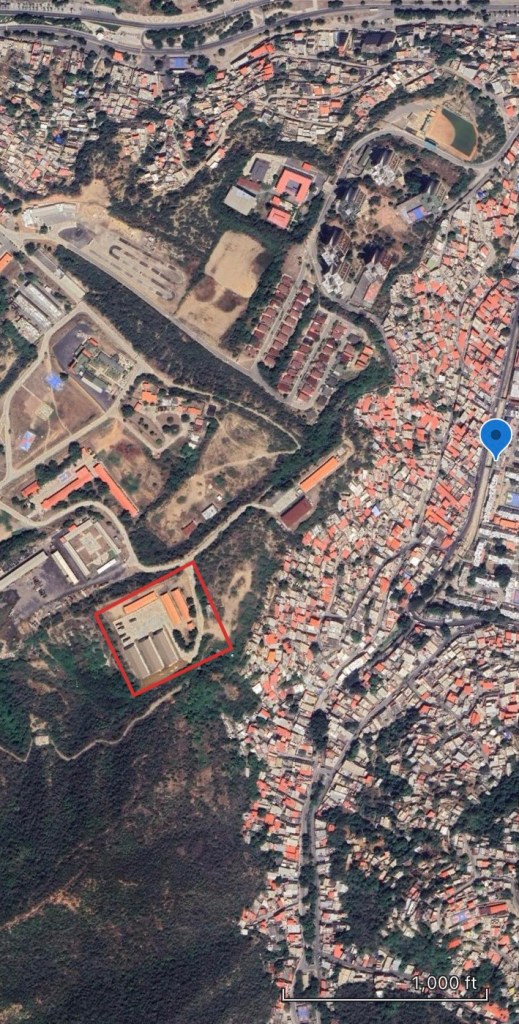
    Red square shows the air defense position.

    Images released in the aftermath of the attacks show that the buildings were housing additional Buk launchers.
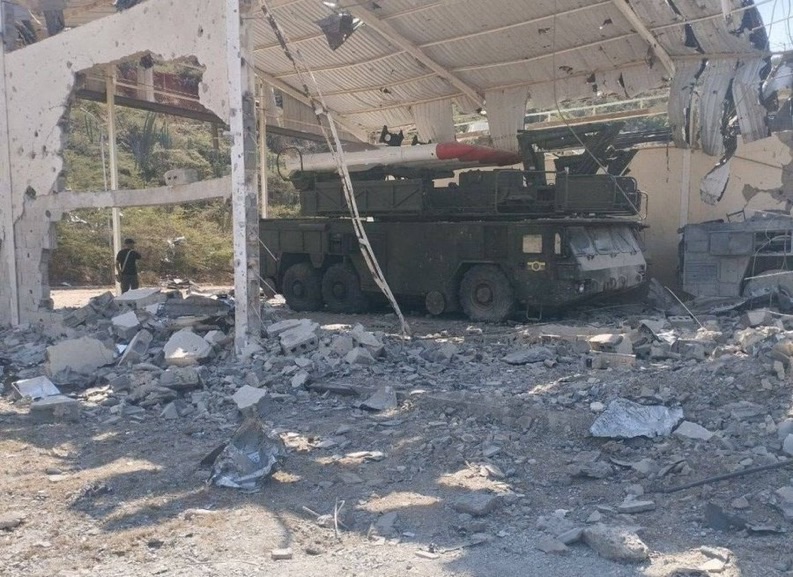
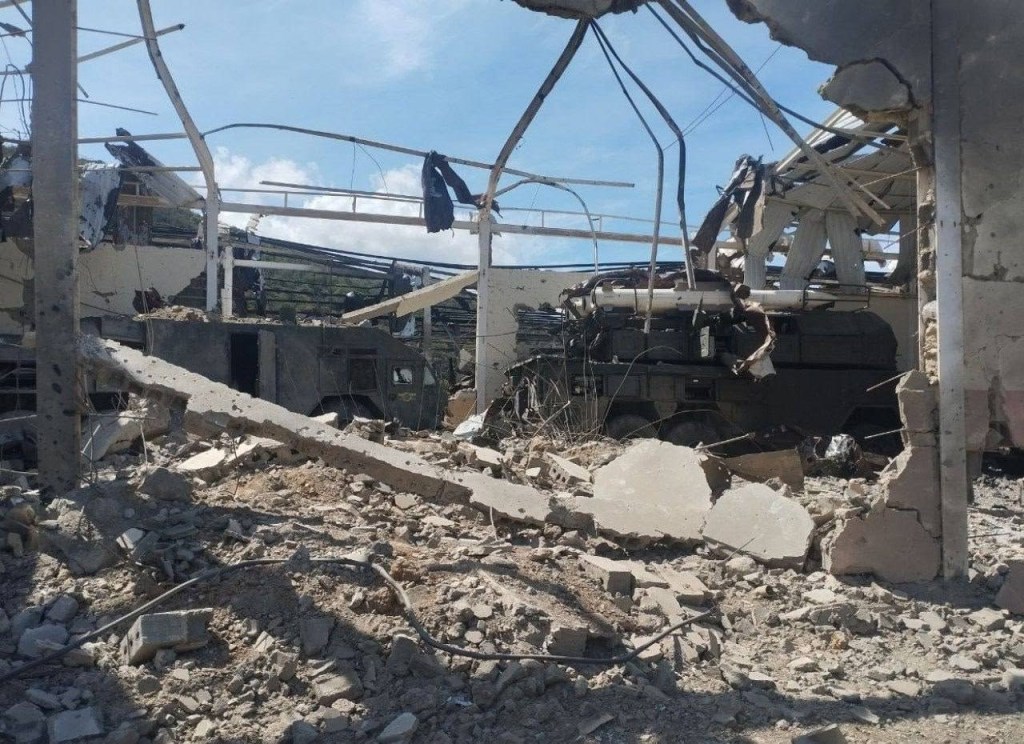
    These destroyed buildings match the ones from the satellite imagery.
    A mistake.

    (Number 8)

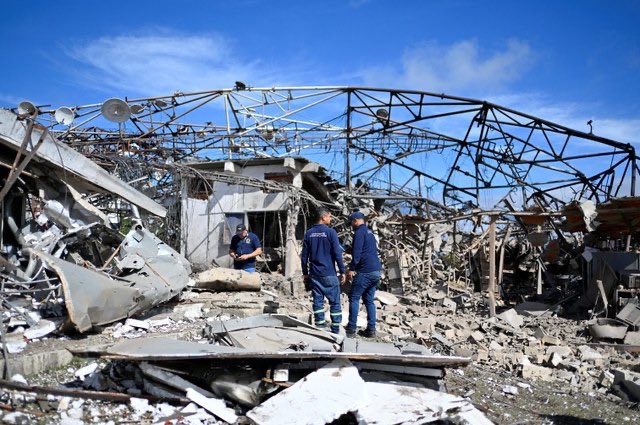
    During the course of the operation the U.S. did an impressive job of protecting the civilians of the city. However evidence from the aftermath shows that a missile that was likely ment for the above air defense site target went off track and struck and apartment in Catia La Mar, killing an elderly lady by the name of Rosa Gonzalez,79.
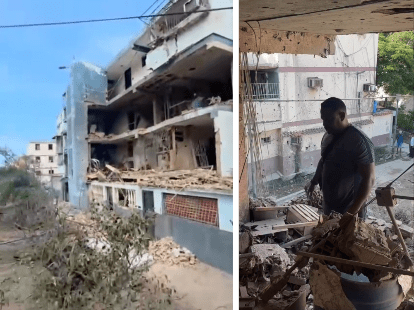
    Screenshot showing the outside and inside of the building that was struck.

    Missile appears to be a US AGM-88 HARM according to experts familiar with the weapons system as well as my own experience. The remains of the missile are shown below as well as with a comparison.
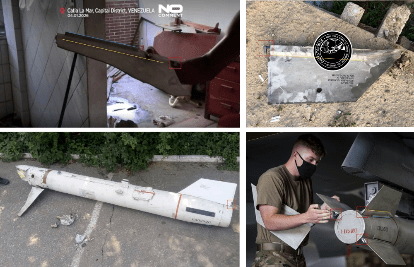
    The AGM-88 HARM/AARGM missile is what’s known as an anti-radiation missile. The missiles function is to home in on radar signals it detects and is used for destroying enemy air defense and radar. The missile can be pre-fired as a plane is flying into an area if it expects an enemy air defense radar will activate. However this missile either had no target or missed its target and hit this apartment.

    Bellingcat does an awesome write up on this incident that I’ll link to here:

    https://www.bellingcat.com/news/2026/01/07/inside-the-strike-the-us-munition-that-hit-a-residential-building-in-venezuela/

    Fort Guaicaipuro

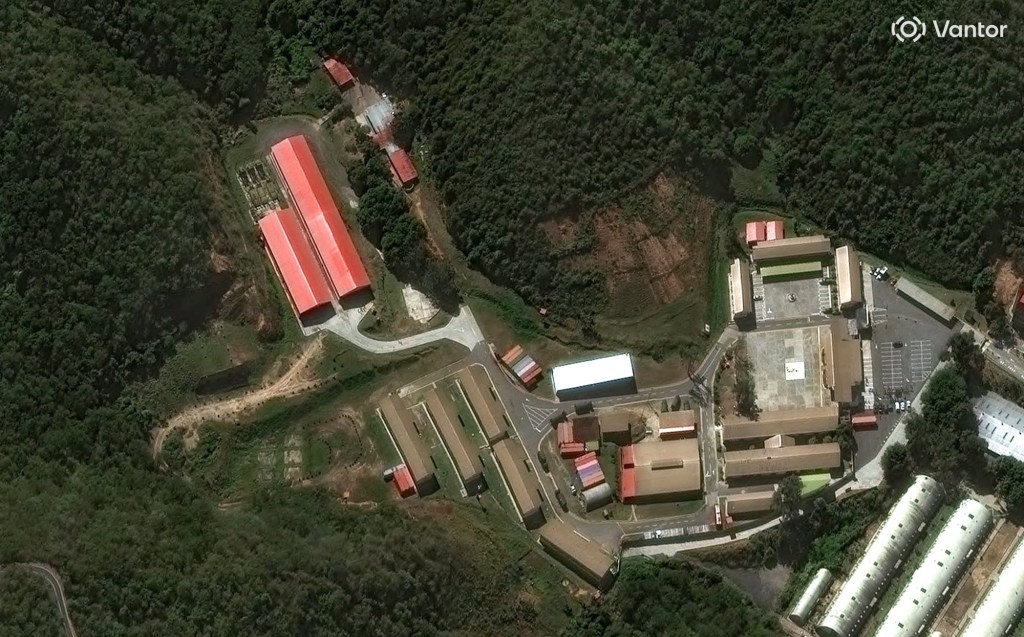
    The last strike I found was on a set of buildings located at Fort Guaicaipuro, south of Caracas.
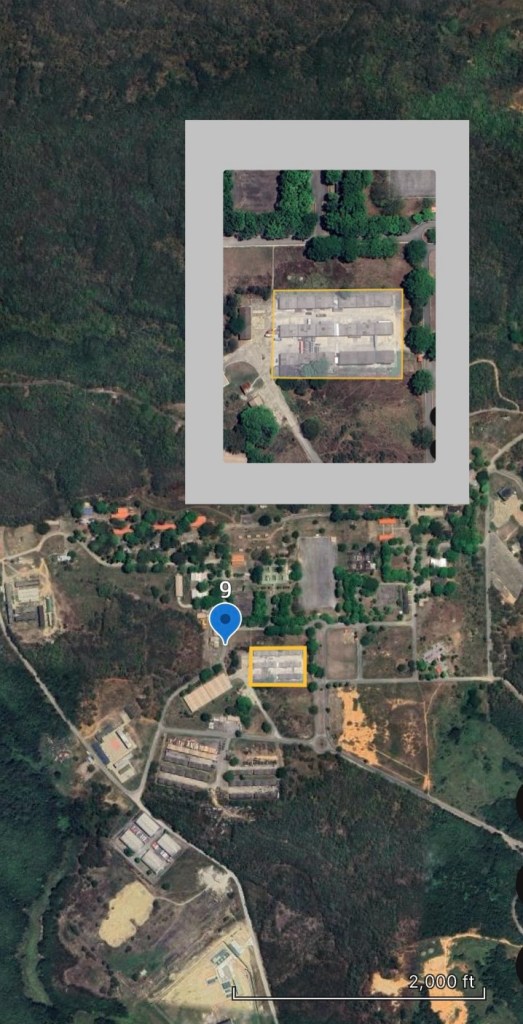
    It’s unclear what is stored at this site as footage from the aftermath has yet to be released.


    Thank you for taking the time to read this. It took me a lot longer than I expected to gather all the data and do the work to geolocate everything. Every time I do a big project like this I learn new skills and hopefully they will carry over and help improve future projects.

    Im positive that some strikes were missed. If so, I’d like to know about it, so send me an email or message on any of my socials. The map from the New York Times has one strike I just couldn’t confirm at the El Libertador airport and I looked but couldn’t find evidence of a strike taking place there.
  • Overview of operation to capture Venezuelan President Maduro-Operation Absolute Resolve.

    By Scott Jackson


    01.04.2026

    In the early morning hours of January 3rd, 2026, US forces launched an operation to capture the president of Venezuela, Nicolas Maduro. The operation was called Operation Absolute Resolve. 

    According to General Dan Caine, chairman of the Joint Chiefs of Staff, At near 1:01AM (EST) US apprehension forces arrived at the residence of Maduro.The area was secured and Maduro, along with his wife Cilia Flores were taken into custody and flown via helicopter to the USS Iwo Jima. 

    Video shows US helicopters on their way to capture Maduro.

    U.S. helicopters firing on Venezuelan positions.
    Believed to be a US Army MH-60 DAP firing on ground targets in Caracas.

    It’s been reported that members of Delta Forces led the ground operations to capture Maduro. According to Trump, Maduro was rushed as he tried to make it into what Trump described as similar to a panic room type area. Soldiers on the mission came equipped with blow torches for cutting through the steel doors of his safety shelter if he had been able to make it that far. It’s also been reported that he and his wife were in bed when the soldiers arrived but with what was taking place outside I doubt they were asleep. Members of the FBI also are reported to have taken part in the raid and it has been reported by ABC News that the CIA managed to track and maintain a lock on Maduro’s position in the time leading up to the operation. It’s possible the CIA had a source inside of the government. 

    The operation had actually been planned for Christmas Day but had to be pushed back due to weather and the launching of the U.S. strikes in Nigeria. 

    This video doesn’t show much but was taken as the opening airstrikes hit Caracas.

    During the operation, multiple airstrikes were carried out across the capital of Caracas and elsewhere. All of the targets confirmed so far have been military targets. Air defense systems seem to have been the main target but some general military sites and ports were struck as well. 

    In a statement given on social media Attorney General Pam Bondi said “Nicolas Maduro and his wife, Cilia Flores, have been indicted in the Southern District of New York,” she continued “Nicolas Maduro has been charged with Narco-Terrorism Conspiracy, Cocaine Importation Conspiracy, Possession of Machineguns and Destructive Devices, and Conspiracy to Possess Machineguns and Destructive Devices against the United States.”

    The operation was carried out with a reported 150 aircraft launched from almost a dozen different locations. F-22’s, F-35’s, B-1’s, EA-18G, E-4’s as well as helicopters. 

    Speaking of helicopters, videos were shared showing what are almost certainly members of the Nightstalkers flying into the city (MH-47 Chinook helicopters as well as MH-60s) engaging targets inside and around Caracas while also being the ride for the ground forces . The Nightstalkers are the 160th SOAR (Special Operations Aviation Regiment) known for being the flight wing of the special forces. 

    The U.S. carried out this operation successfully with zero casualties according to reports. There was a MH-60 Blackhawk that received damage but was able to be flown back. Several U.S. service members were wounded with non life-threatening injuries. On the Venezuelan side the number I’m seeing for casualties is around 40, and I believe those are all Venezuelan military personnel as well as Maduro’s Cuban security team.


    Aftermath and secondary explosions after a U.S. airstrike at the Higuerote airport.

    I’m currently going through and identifying the targets thag were struck. By geolocating the videos we are able to get a better view kd what specificly happened and what the U.S. targets were. I’ll have a more complete report done in the next day or so but for now wanted to look at a couple of the strikes. One strike took place at the airport in Higuerote. The video above shows the direct aftermath of the attack on a Russian supplied 9K317M2 Buk-M2E medium-range air defence system. Below is the same strike filmed from the resort nearby.

    In another clip-caught on a door cam, we have an attack on a telecommunications substation in La Boyera district in Caracas.

    Translation: Video of a house in the La Boyera urbanization, in Caracas, during the attack on the antennas located at El Volcán in the early morning of January 3, 2026.
    It was one of the first targets, probably to cut off the regime’s telecommunications during the operation.


    It’s believed the overall success of this attack was largely attributed to good planning, and good intelligence. Early on when the U.S. first started to increase its presence in the Caribbean one of the big risk noted in attacking Venezuela was the claimed large amount of MANPADS (man-portable air defense systems) in the country.

    Link to source-

    https://www.reuters.com/article/world/exclusive-venezuela-holds-5-000-russian-surface-to-air-manpads-missiles-idUSKBN18I0EA/

    In all of the video footage I see one instance of anything larger than small arms fire coming up into the sky. For the most part Venezuelan air defense was completely silent. It truly seems like this raid caught the whole country off guard. Which is a little surprising given they have been running public simulations of an attack like this for months.

    More on this story in the coming days.

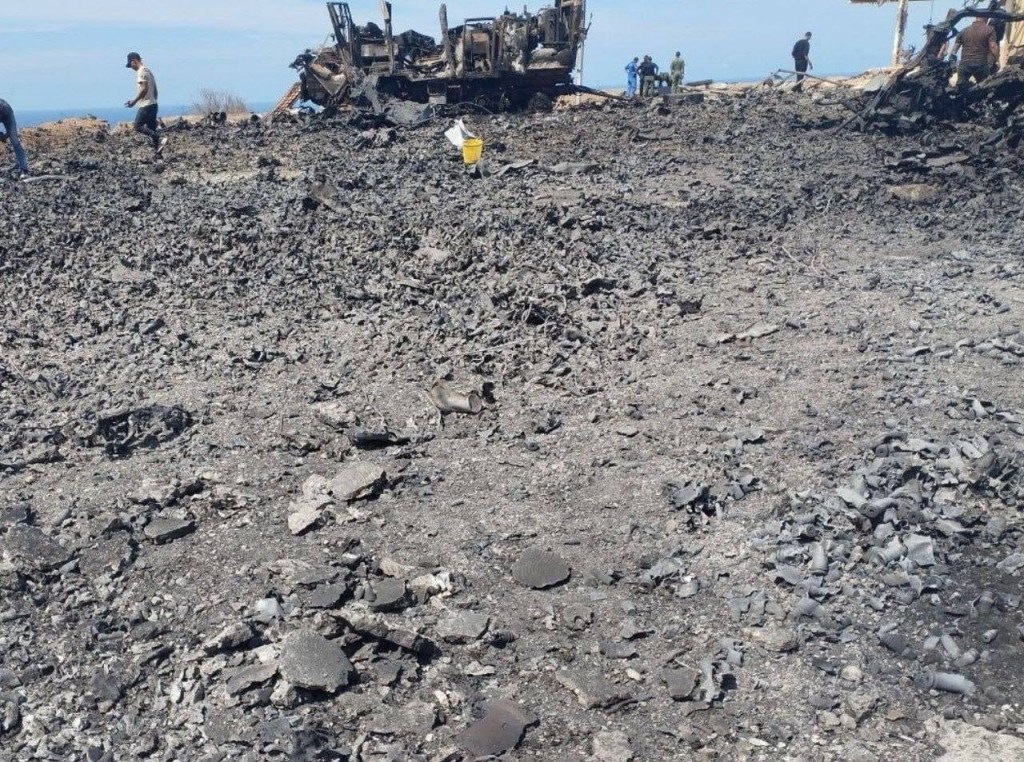
  • Explosion in Venezuela linked to CIA.

    By. Scott Jackson


    12.30.2025

    Last week on the night of December 24th, the CIA carried out a covert drone strike on a port facility located on the coast of Venezuela. This report is based off the statements made by the White House,  CNN’s exclusive coverage of the incident and video from the facility that has been online since before the attack was linked to the U.S.

    Tweet with several videos highlighting the aftermath of the explosion.

    The attack targeted an out of the way port in Maracaibo, that the U.S. believed to have been used by Tren de Aragua in the packing and transport of drugs. Drugs were allegedly stored at a warehouse on the port and then later loaded onto boats for smuggling. The building is owned by Primazol, a chemical production company. According to CNN’s source nobody was present at the time of the attack. 

    The CNN report said two of their sources told them that the strike was carried out with the help of US Special Operations Forces. The report goes on to say that this claim was denied. Col. Allie Weiskopf, a spokesperson for US Special Operations Command said  “Special Operations did not support this operation to include intel support.”So if they did participate, they aren’t saying, which is kind of the nature of special forces, so no surprise there. We know that the White House last month authorized special forces and the CIA  to carry out  operations in the region. 
    This operation was first revealed by the President himself in a much overlooked comment last week however, he kept most of the details to himself. On Monday the president was asked about the strike by Republican doner, John Catsimatidis who has a radio show, to which the president responded “We just knocked out — I don’t know if you read or you saw — they have a big plant, or a big facility, where the ships come from. Two nights ago, we knocked that out. So we hit them very hard,”

    Trump was later asked for more details and said “there was a major explosion in the dock area where they load the boats up with drugs” and that an “implementation area” was “no longer around.”

    One of the sources that CNN is referencing in their article claims that while the strike was successful destroying the building and the boats(as well as the alleged drugs), the source says it’s mostly symbolic because of the amount of similar facilities. 

    The U.S. has launched 30 strikes on boats allegedly loaded with drugs and bound for the states. Targeting the boats is only a temporary fix for a complex problem. Land strikes were always going to be required if the goal of the White House was ending the flow of drugs from Venezuela, which supplies tons and tons of cocaine which when it reaches the US is often turned into crack cocaine, a much more potent and deadly version of the drug. 

    US Intel has long pointed at high ranking members of the Nicolás Maduro regime as the leaders of the Tren de Aragua cartel. With Maduro right at the head.  These strikes and the buildup of military forces are aimed squarely at putting pressure on president Maduro. The question that’s been raised is “to what end?” 

    The U.S. is gathering a large number of forces into the Caribbean, likely to support more ground strikes in the future. The U.S. has also implemented a blockade on all oil products leaving Venezuela having detained at least two ships already. 

  • Navy aircraft operate in the Gulf of Venezuela.

    By. Scott Jackson


    12.10.2025

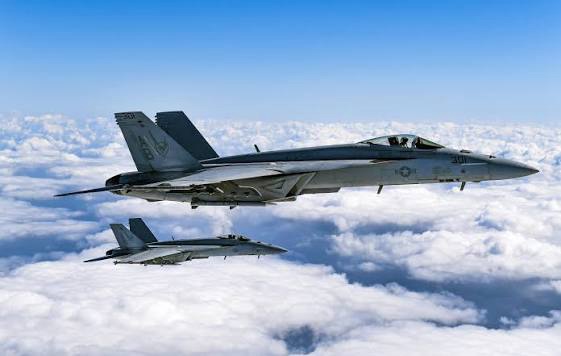
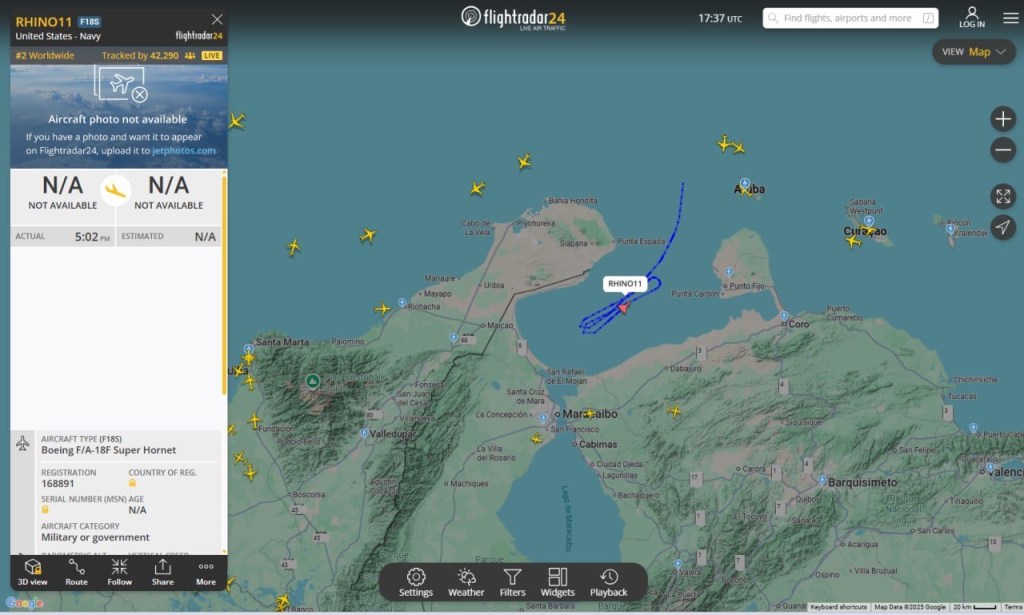
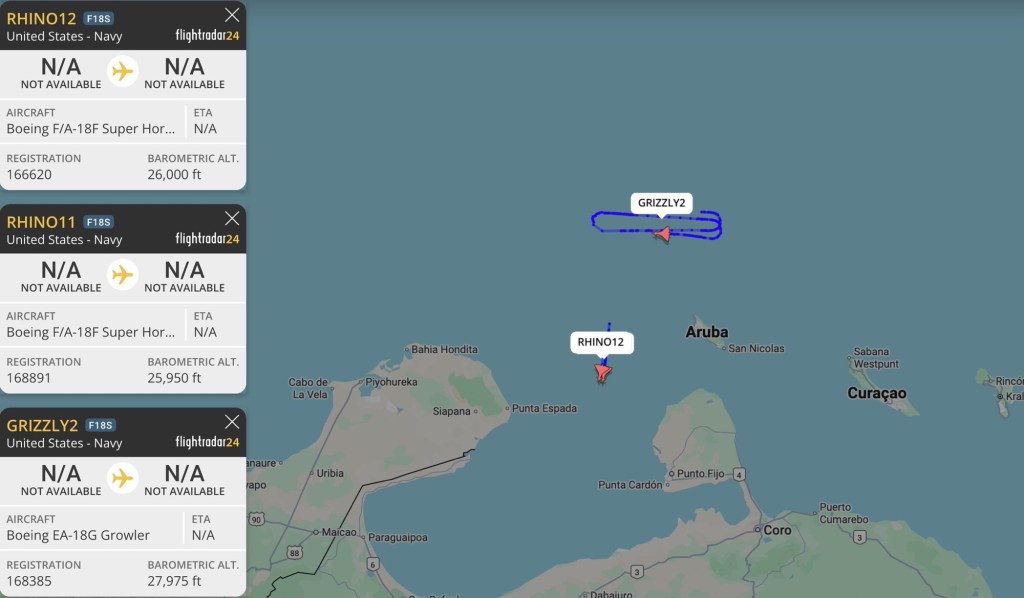
    Two F/A-18’s were seen flying deep into the Gulf of Venezuela on the 9th, staying there for around 40 minutes according to flight tracking data. The Gulf of Venezuela is a fairly small body of water surrounded on three sides by parts of Venezuela. At its widest the Gulf is only around 150 miles wide (West to East) and 75 miles long (North to South) and the opening of the mouth of the area is only 52 miles wide. Venezuela’s border extends out from its coast 12 miles in every direction not leaving much room for the jets to operate. Venezuela actually claims all of the Gulf as an area of importance to them and considers it all their territory, a claim which the US has debated and challenged for decades.

    Image from FlightRadar24 showing the two F/A-18 Super Hornets in the Gulf of Venezuela. Call signs- RHINO11 and RHINO12.

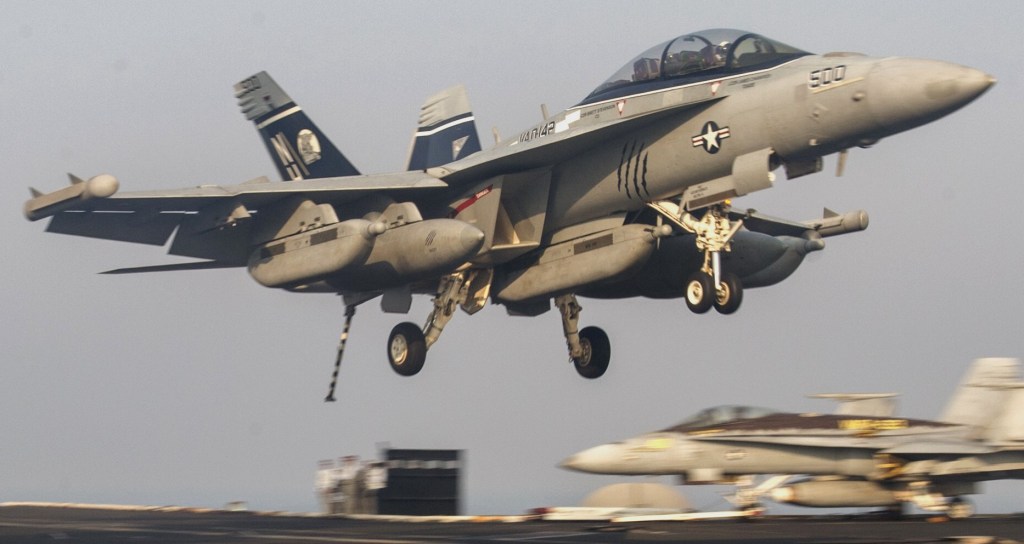
    Working alongside the F/A-18’s were at least two of the EA-18G Growlers Electronic Warfare aircraft which went into an orbit a couple hundred miles north of the Gulf. Grizzly 1 and Grizzly 2 are the call signs.

    Image from FlightRadar24 show the F/A-18 SuperHornets and north of them the EA-18 Growlers.

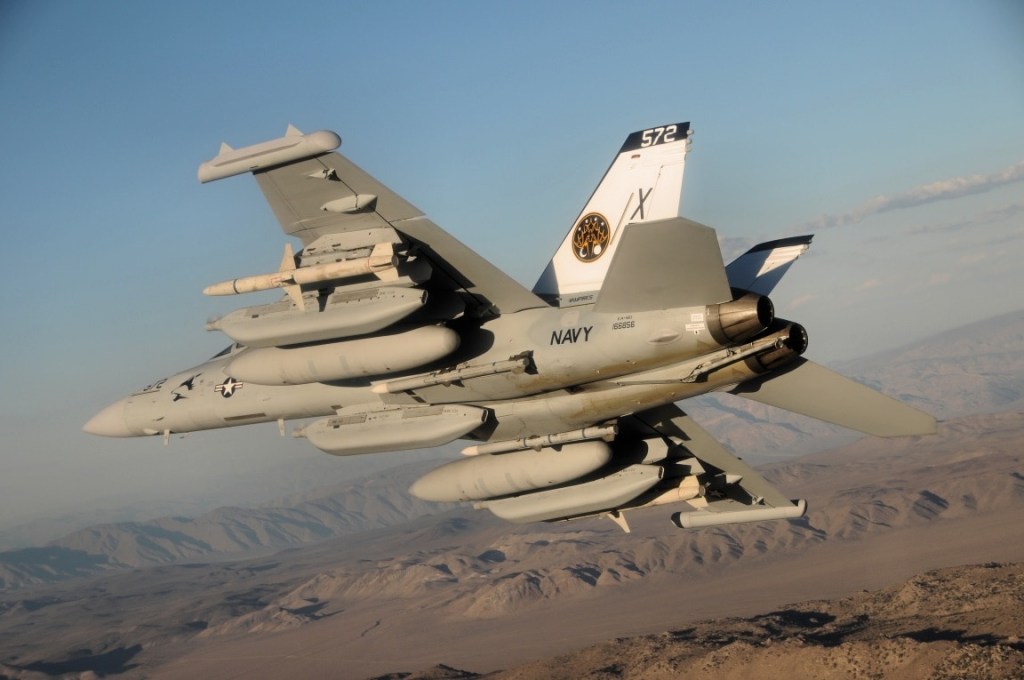
    The Growler specializes in electronic attack. Using its overpowering Next Generation Jammer pod carried underwing, it can disrupt modern radar systems on air defense or other air units allowing the growler and other allied planes to get in and out of a mission area without being seen in cases where old radar are being used.

    Electronic attack and radar jamming are poorly understood by most people and there is a lot about the NGJ pods (and even the legacy AN/ALQ-99 Tactical Jamming System) that is still classified. However these jamming pods work by attacking the connection between a radar and its target and can reflect a distorted signal back to the receiver.A jamming pod can disrupt a radar by flooding the radar with noise (think of looking into a spotlight)—injecting false signals, alter the timing, or deceiving the radar into tracking a “ghost” location. The tactical advantages of this are obvious, making the growler also amazing at anti-radar and anti air defense missions, also known as SEAD/DEAD. Suppression or Destruction of Enemy air defense. The growlers here could have been jamming the radar for the SuperHornets but more likely they were gathering intelligence on the signals that Venezuela was sending out, in case they are needed for a future strike missions. The last of its features I’d like to point out is the growlers APG-79 Active Electronically Scanned Array (AESA) Radar which it was probably using here to scan the Venezuelan coastline.

    It’s believed both the Super Hornets as well as the Growlers are operating from the aircraft carrier USS Gerald R Ford (CVN-78) which arrived in the Caribbean last month.

    The article I’m liking too is more reading for how the growlers jamming actually works and what some lf the systems limitations are. Highly recommend.

    https://theaviationgeekclub.com/us-navy-ea-18g-growler-pilot-explains-why-jamming-pods-dont-turn-a-non-stealth-aircraft-into-a-stealth-aircraft/amp/

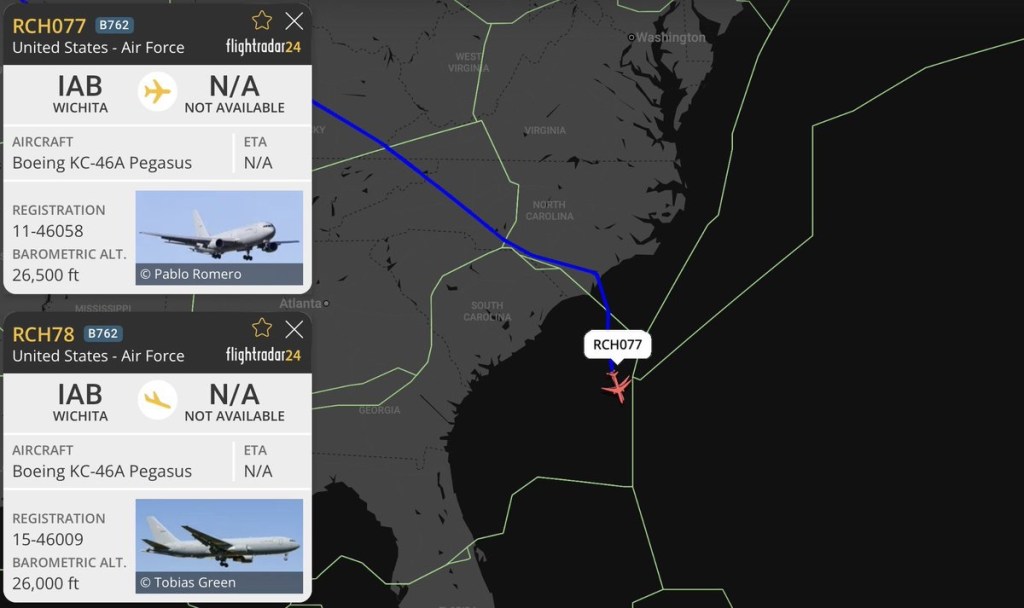
    Two KC-46A Aerial Refueling planes.

    Another event that was missed yesterday was a transfer of several aircraft (possibly Growlers) from Naval Air Station Whidbey Island in Washington State to the Caribbean. Their presence was noted by flight trackers who also often listen to radio comms between aircraft and Air Traffic Control. They were ferried to the Caribbean by two KC-46A Pegasus aerial refueling jets.

    An image showcasing the E/A-18 Growler and its multiple Jamming pods.This one is also packing several anti-radiation missiles that can be set to launch automatically when detecting an enemy radar.

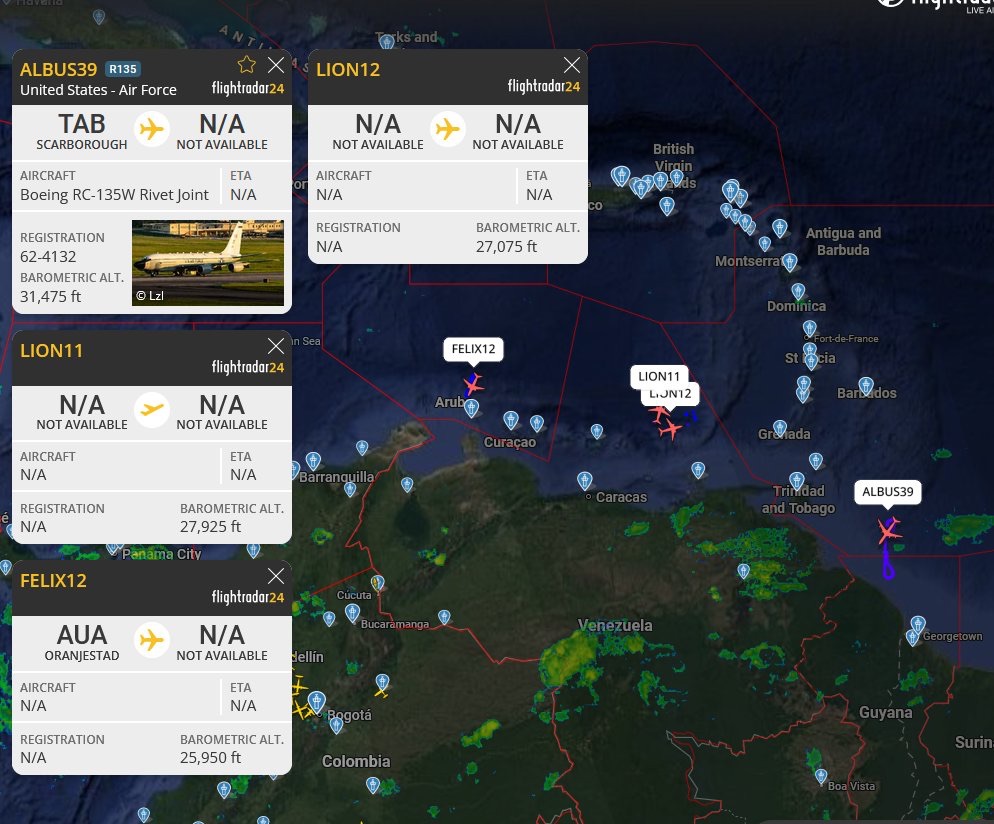
    US aircraft have probed Venezuelan air defense in this same area before utilizing at least one Boeing RC-135 Rivet Joint reconnaissance aircraft along with several other unidentified aircraft. The US has recently been very public with its aircraft operations in the Caribbean, possibly as a sign to the Maduro regime of its willingness and ability to escalate the situation further if President Trump’s demands aren’t met.

    Flightradar24 showing an RC-135 Rivet Joint and several unknown aircraft operating off the coast of Venezuela.

    In response to an email inquiry sent by GCR to USSOUTHCOM we received this statement from a SOUTHCOM Spokesperson. .

    “We conduct routine, lawful operations in international airspace, including over the Gulf of Venezuela. We will continue to fly safely, professionally, and in accordance with international law to protect the homeland, monitor illicit activity, and support stability across the Americas.”

  • USS Ford arrives in Caribbean.

    By.Scott Jackson


    11.11.2025

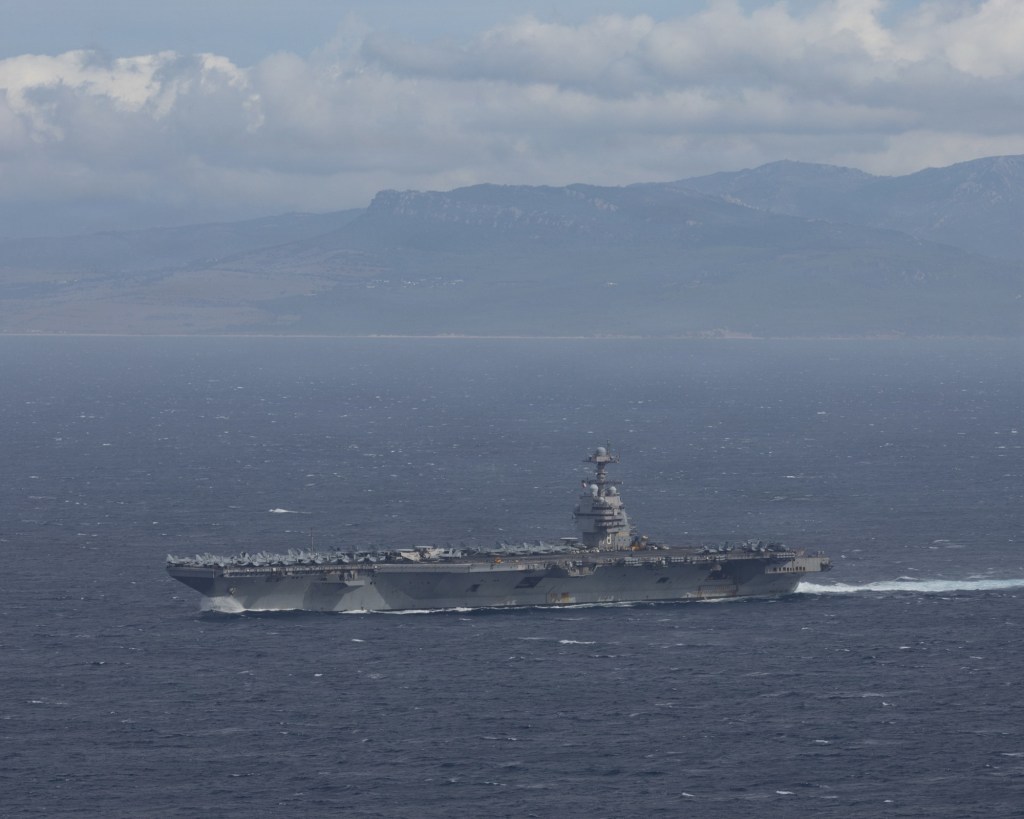
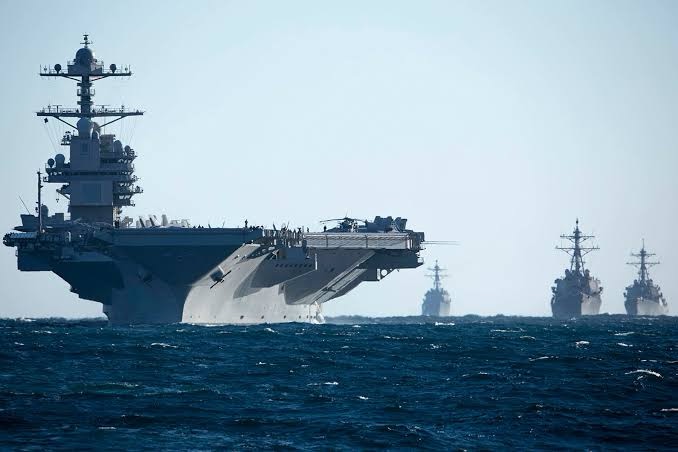
    Today the USS Gerold R.Ford (CVN-78) , a Ford-Class nuclear powered aircraft carrier, has entered the waters of the Caribbean,  joining the fourth fleet and coming under the command of US  SOUTHCOM(Southern Command). The Ford, its escorts and its Carrier Air Wing are just the most recent additions in a large military buildup, adding to the tensions in the region. 

    “The enhanced U.S. force presence in the USSOUTHCOM AOR will bolster U.S. capacity to detect, monitor, and disrupt illicit actors and activities that compromise the safety and prosperity of the United States homeland and our security in the Western Hemisphere,” said Chief Pentagon Spokesperson Sean Parnell. “These forces will enhance and augment existing capabilities to disrupt narcotics trafficking and degrade and dismantle Transnational Criminal Organizations.”

    This deployment to the region was ordered by Washington at the tail end of November. 

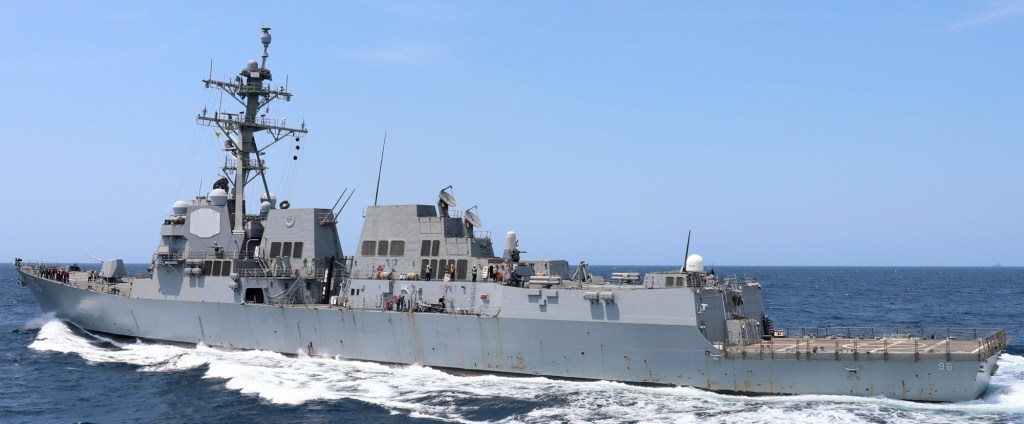
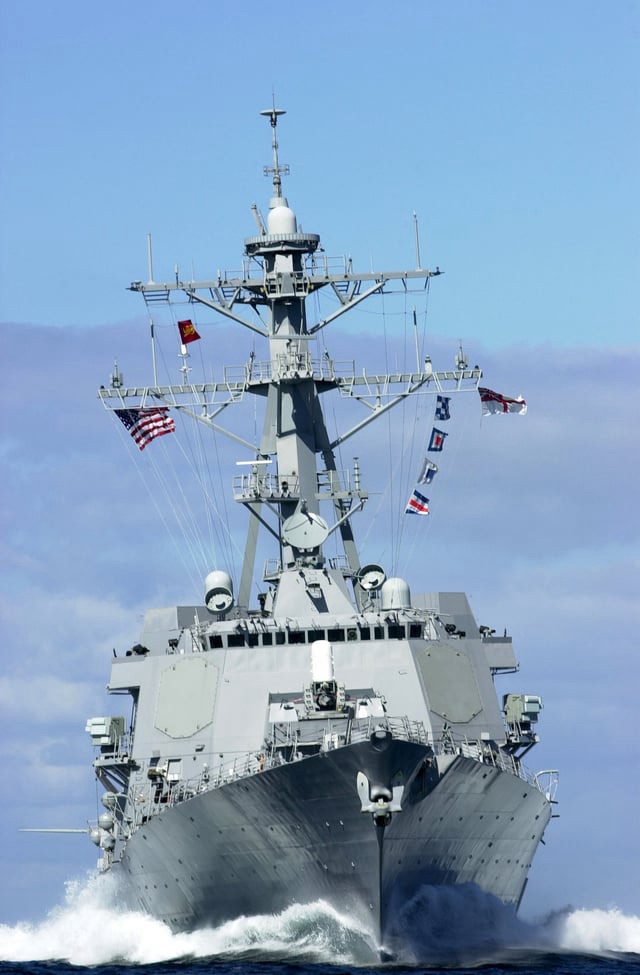
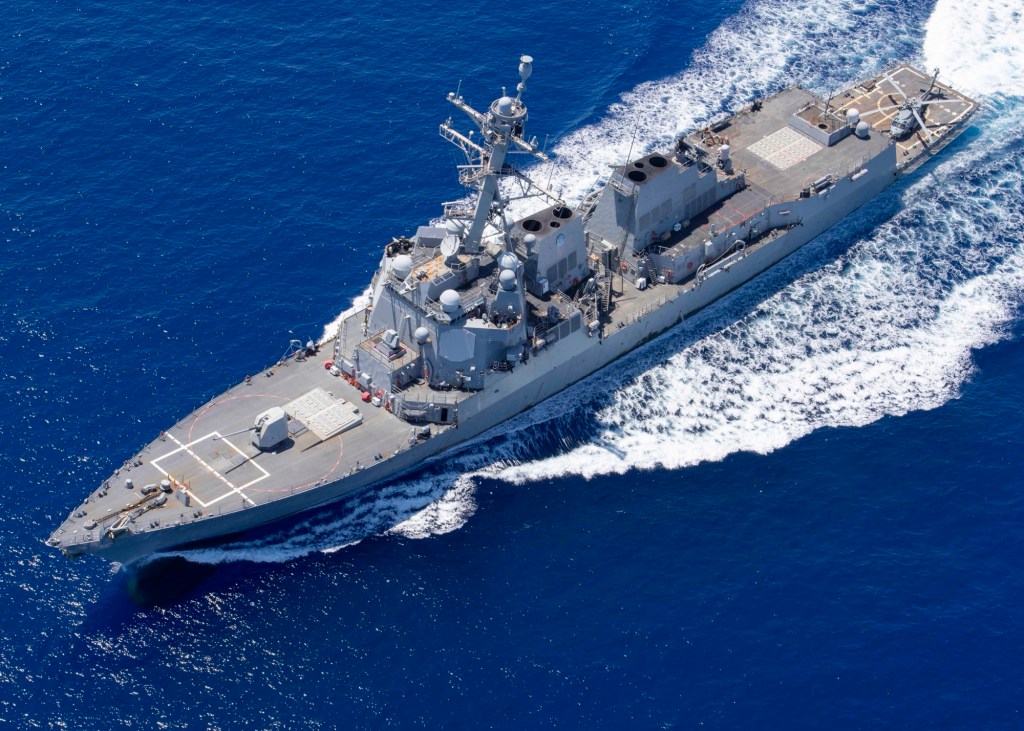
    According to the navy’s statement on their website the Ford  is supported by Destroyer Squadron Two’s Arleigh Burke-class guided-missile destroyers USS Bainbridge (DDG 96) and USS Mahan (DDG 72), and the integrated air and missile defense command ship USS Winston S. Churchill (DDG 81). 

    USS Bainbridge (DDG-96)
    USS Mahan (DDG-72)
    USS Winston S. Churchill (DDG 81)

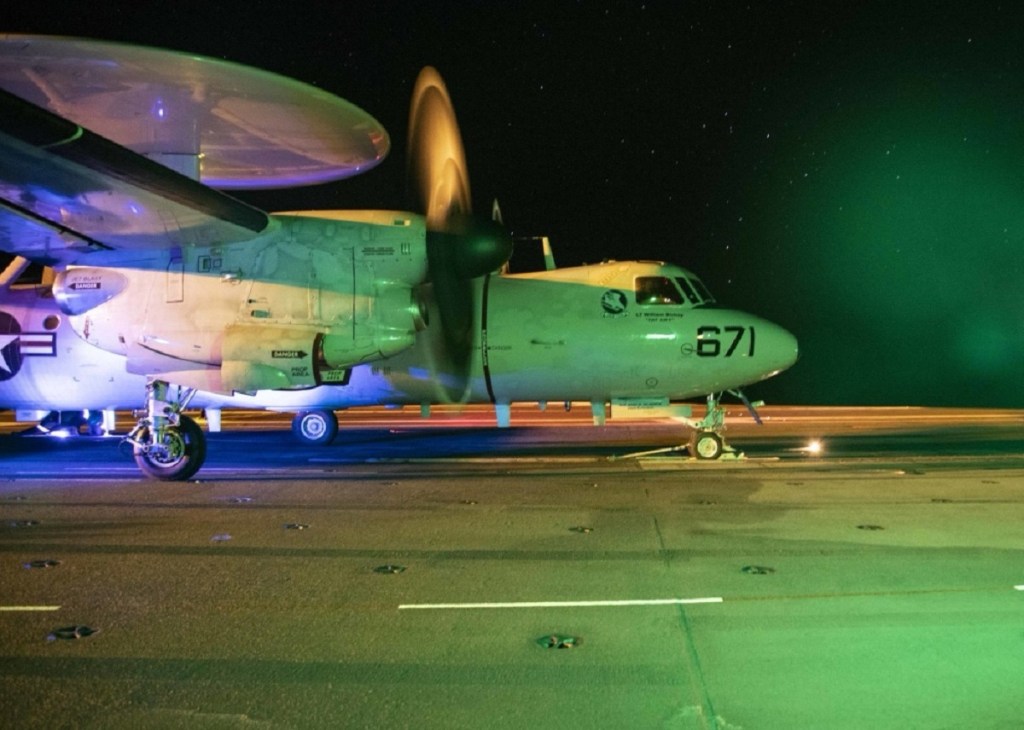
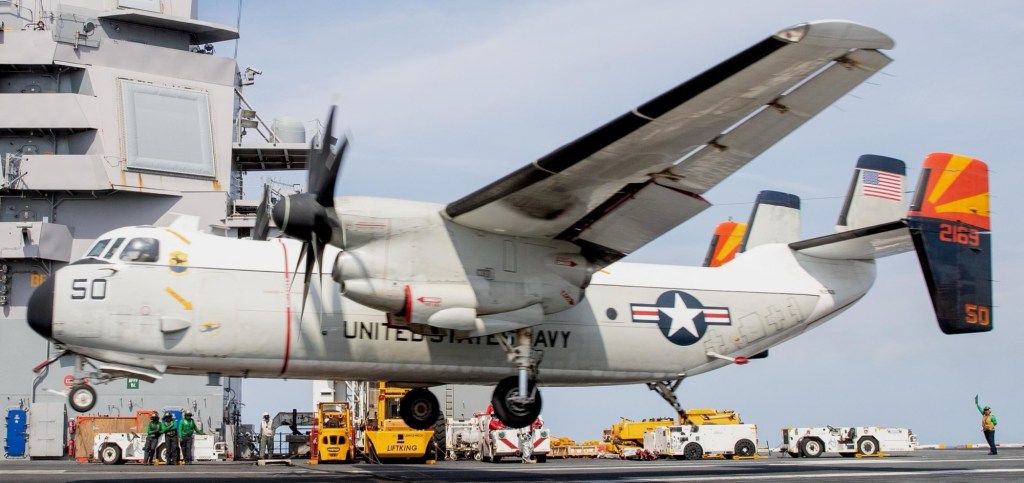
    The embarked squadrons aboard Gerald R. Ford include Strike Fighter Squadron (VFA) 31, VFA 37, and VFA 87, flying the F/A-18E Super Hornet; VFA 213, flying the F/A-18F Super Hornet; Electronic Attack Squadron 142, flying the E/A-18G Growler; Airborne Command and Control Squadron 124, flying the airborne command and control E-2D Advanced Hawkeye; Helicopter Sea Combat Squadron (HSC) 9, flying the MH-60S Seahawk; Helicopter Maritime Strike Squadron (HSM) 70, flying the MH-60R Seahawk; and a detachment from Fleet Logistics Support Squadron (VRC) 40, flying the Carrier Onboard Delivery C-2A Greyhound.

    F/A-18F Pilot LCDR Jamie R. Struck the makes first carrier arrested landing using AAG system aboard USS Gerald R. Ford (CVN-78) off the Virginia coast. US Navy Photo
    EA-18G Growler with Electronic Attack Squadron 142
    E-2D Advanced Hawkeye

    Two Carrier Air Wing 8 MH-60S Sea Hawks, attached to Helicopter Sea Combat Squadron 9, fly in formation over the world’s largest aircraft carrier, USS Gerald R. Ford (CVN 78), during an aerial change of command
    Carrier Onboard Delivery C-2A Greyhound.

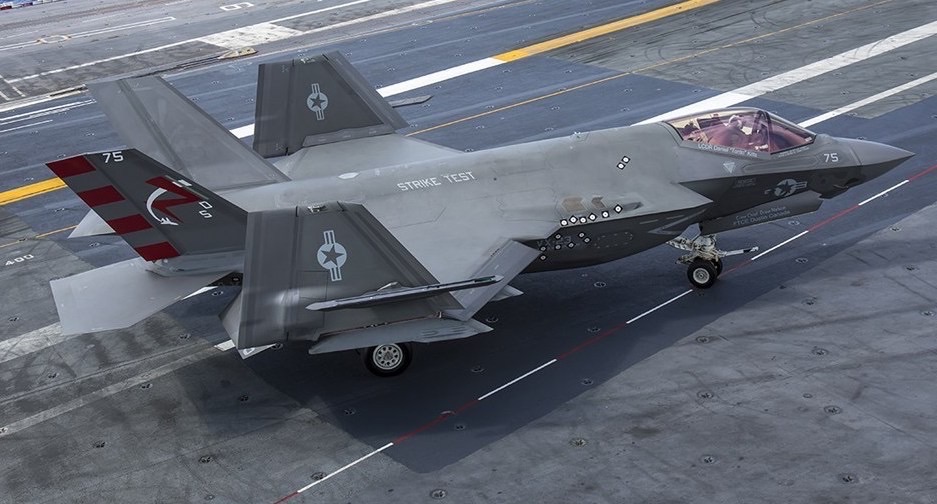
    The Ford has yet to undergo its refit which will allow it to launch the F-35C’s so its combat air wing is made up entirely of Super Hornets.

    Carrier capable F-35C Lightning II

    Background

    The U.S. for the past month has been carrying out a large number of strikes aimed at curtailing the drug trade coming into America. The White House has singeled out Venezuela as a large contributor to that issue and has called for Venezuelan President Maduro to crack down on cartels operating in his country. The U.S. military has carried out 19 strikes so far on alleged drug smuggling boats out at sea. The White House says these boats (and one semi-submersible) were moving drugs towards America. 

    SecDef Pete Hegseth’s Twitter post that showed video of two separate strikes on two suspected drug boats.Attack platform unknown.

    If all of these boats carried drugs then potentially thousands of pounds of life shattering narcotics have been removed from the markets, however that is barely a fraction of the drugs suspected to be moving through America’s cities and streets daily. There is no data about exactly how much illegal narcotics comes into America each day but judging by the almost 3000 pounds the authorities catch coming in daily it’s thought to be many times more. 

    While Venezuela isn’t the only origin of the drugs on America’s streets it is one of them, with cartels dealing in large amounts of narcotics, mostly cocaine. The opioid synthetic fentanyl is not believed to be being shipped through Venezuela, as much as the White House had made that claim. Fentanyl is largely produced in Mexico, with the precursor chemicals coming from China. It’s smuggled across the border at the Mexican/American border crossing as well as ports and even airports. With that being said the White House has also made statements about working with the Mexican government to fight the cartels there, using US special operations forces and Central Intelligence Agency agents. 

    Venezuela’s main cartel that the White House has focused on is the Cartel of the Sons (Cartel de los Soles). This cartel is thought by the Trump administration to be headed by Venezuelan President Nicolas Maduro, as well as other high ranking members of the Venezuelan armed forces. 

    If the U.S. carries out ground strikes against cartel targets, especially cartel leadership there is a strong possibility it will lead to an open war being declared on the U.S. by Venezuela, especially as Maduro believes that Donold Trump is trying to remove him from power. 

    Analysis:

    It’s believed that with the arrival of the USS Ford and its strike group the U.S. military will eventually carry out ground strike missions with the intent of striking cartel targets linked to drug storage and production. That would cause the Venezuelan military to respond. We know they will because they have essentially said that they would. They have already started moving air defense systems and reaching out to their allies for support. Russia has sent several large transport planes to the country in recent weeks. 

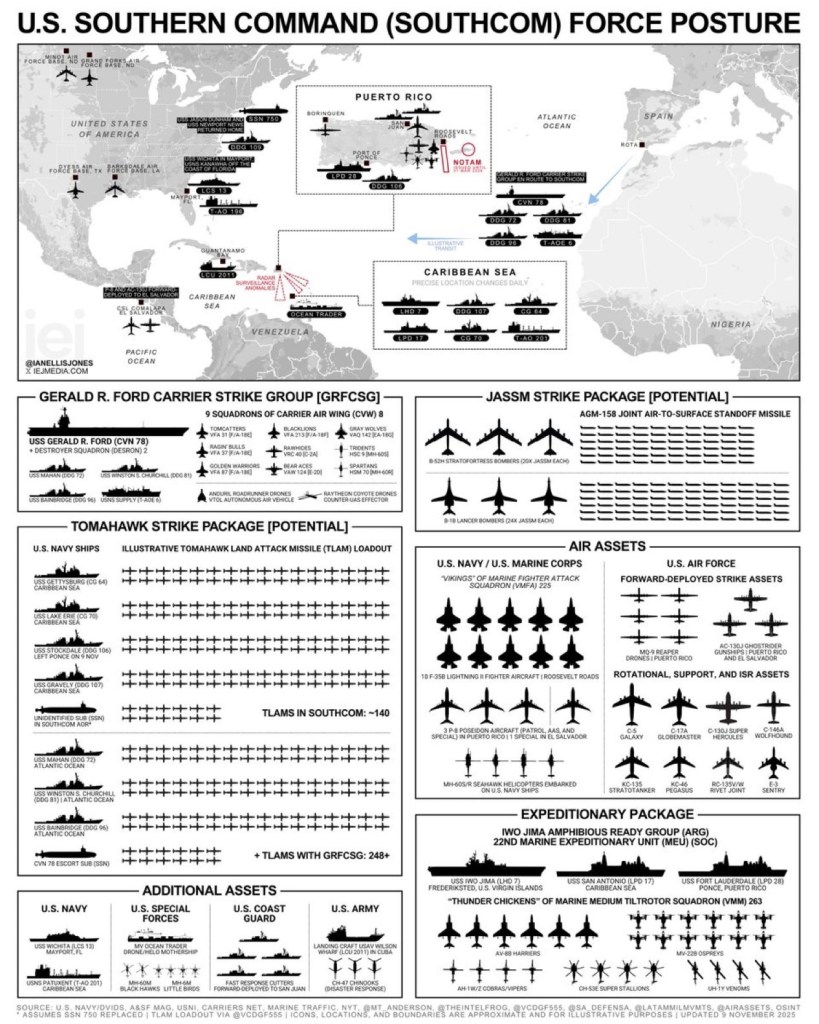
    The U.S. has built a sizable force in the region as shown in the image below. Five Arleigh Burke Guided missile destroyers and two Ticonderoga-Class Guided missile cruisers make up the bulk of the missile attack capability that’s close by. We also have at least one submarine, likely two of the carrier came with her own as an escort.

    We don’t know if the U.S. will launch these strikes but Trump has signaled multiple times that this is a direction he wants to move in, even saying “the land is going to be next” following multiple strikes on alleged drug-trafficking vessels.

    Venezuelan media reported as this article was being finalized that they were mobilizing mass amounts of people and were preparing to mount a guerrilla style defensive in the event the U.S. tries to land soldiers in the country.

    Maduro on state TV mentioned a “prolonged resistance” with small teams spread across the country carrying out sabotage missions and other insurgent/guerrilla tactics.

  • United States Navy Aircraft Carrier ordered to Caribbean 

    By. Scott Jackson


    10.24.2025

    The Pentagon has announced that the USS Gerald R. Ford (CVN- 78) and its Carrier Strike Group (CSG) is being redeployed to the Caribbean in an effort to bolster the forces currently involved in counter-narcotic operations in the region. This comes a day after the announcement that the White House was going to Congress with notice that the president was planning to conduct ground operations in Venezuela. These operations will likely target suspected drug production operations and other assets under the control of the cartels operating in the country. That being said, the Venezuelan military is unlikely to just watch as US forces carry out strikes in their country, meaning the U.S. will likely preemptively target assets under the control of Venezuelan President Maduro’s forces. Radar, air defense and any air units are to be a high priority for suppression or destruction. 

    At last report the Ford CSG was operating in the Adriatic Sea off the coast of Italy and various parts of the Mediterranean. It will take the CSG at least several days to assume a position within range of Venezuela. 

    The USS Gerald R. Ford Carrier Strike Group includes the carrier along with three Areleigh Burke-class guided missile destroyers acting as escorts. 

    USS Bainbridge DDG-96

    USS Mahan DDG-72

    The USS Winston Churchill DDG-81 is acting as the CSG’s Air Defense Commander. 

    Making up the air power of the CSG is Carrier Wing 8, made up of the following.

    The “Tomcatters” of Strike Fighter Squadron (VFA) 31  F/A-18E

    The “Ragin Bulls” of VFA 37 – F/A-18E 

    The “Golden Warriors” of VFA 87 – F/A-18E 

    .The “Black Lions” of VFA 213 – F/A-18F 

    The “Gray Wolves” of Electronic Attack Squadron (VAQ) 142 – EA-18G  

    The “Bear Aces” of Airborne Command and Control Squadron (VAW) 124 – E-2D 

    The “Rawhides” of Fleet Logistics Squadron (VRC) 40 Det. – C-2A

    The “Spartans” of Helicopter Maritime Strike Squadron (HSM) 70 – MH-60R 

    The “Tridents” of Helicopter Sea Combat Squadron (HSC) 9 – MH-60S 

    Fleet info pulled from various public sources as well as the GCR database.


  • A look at Venezuela’s Military Capabilities. 

    By. Scott Jackson


    10.23.2025

    With the announcement of United States ground operations planned for Venezuela, I thought we might take a look at the Ejército Bolivariano (Bolivarian Army) defenses and capabilities. What exactly are they working with and how will the US, using what we know they have in the region, counter these systems.

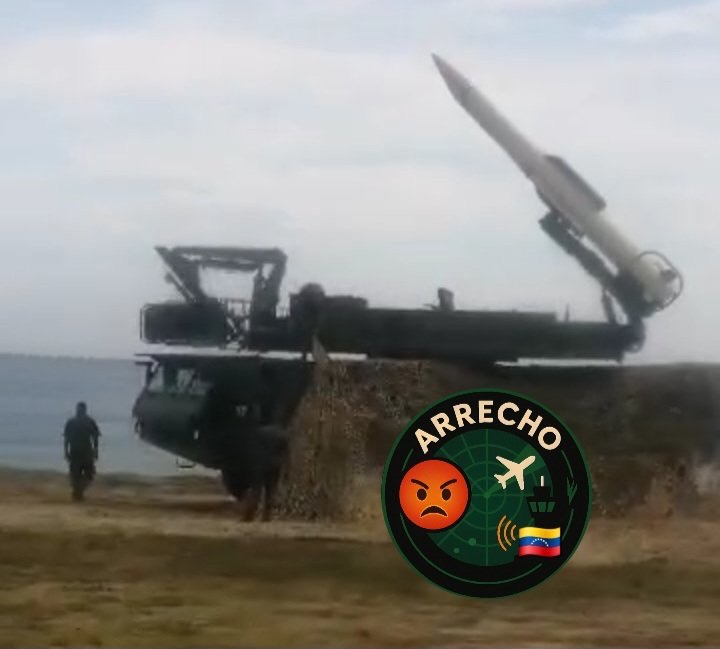
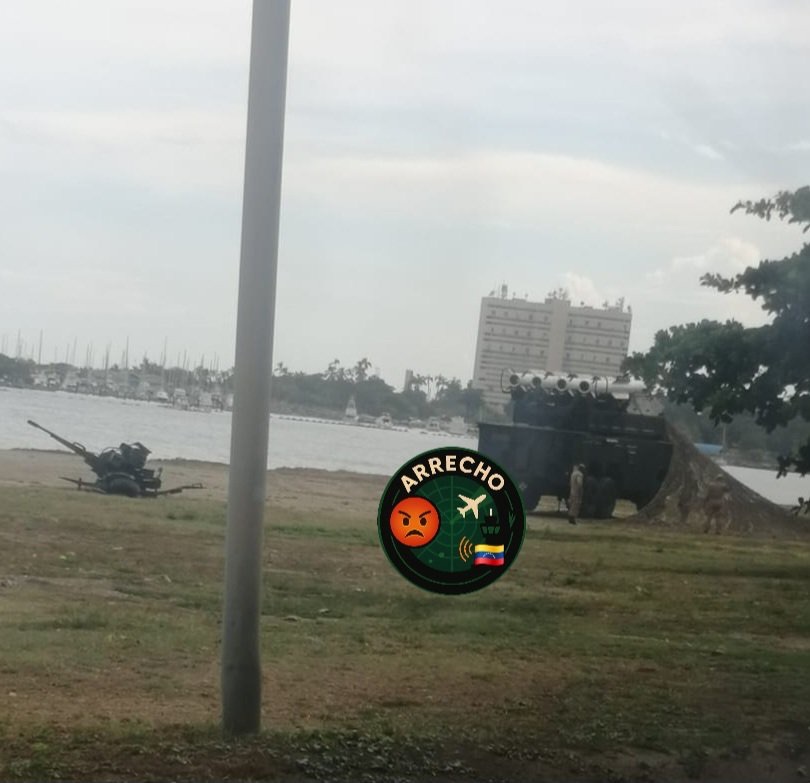
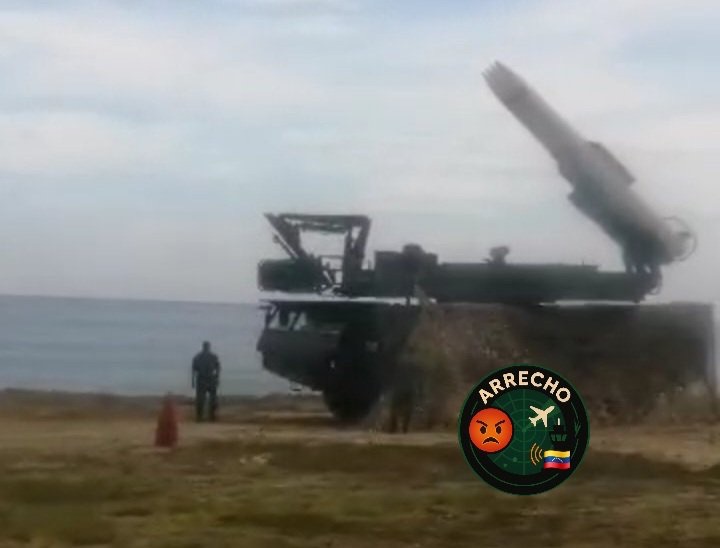
    First lets look at the most recent movements.This is a Buk-M2E Surface-to-Air Missile System (NATO-SA-27) spotted this morning in the area of Naiguata, on the coast of Venezuela. This is possibly the same system that was spotted in the same area several weeks ago and is set up in almost the same spot.

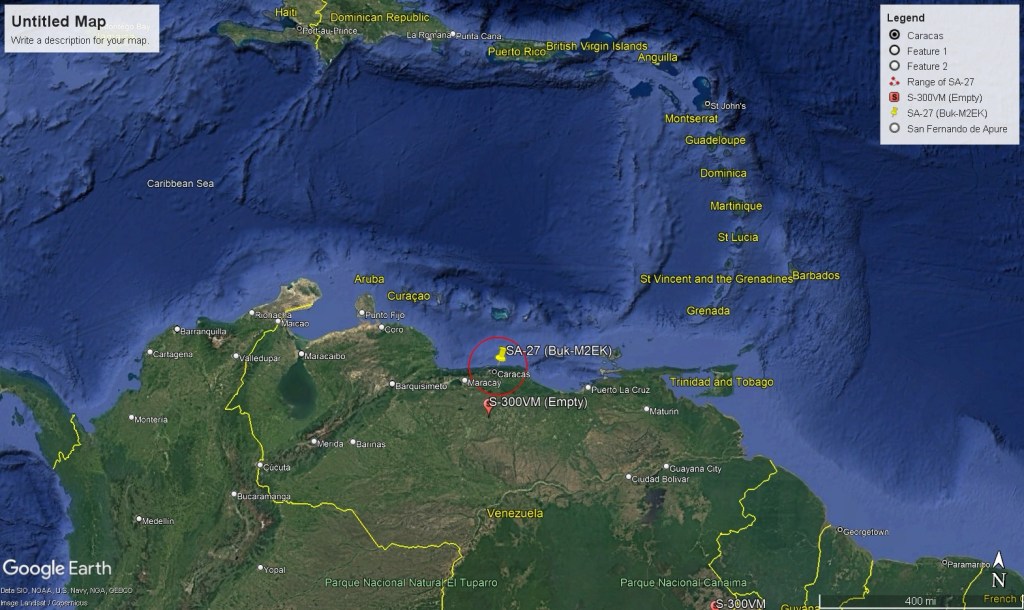
    The SA-27 has a maximum engagement range of around 70km (about 43 miles), and its search radar has a search range of over 150km(about 93 miles). We don’t see the Buk’s  “snowdrift” radar present in the image. If I was setting this up I would position the radar in the hills that overlook the coast, giving it a better view of the area. This system is no joke and has given Ukraine all sorts of problems in that war. The system can launch 4 missiles before needing a reload. 

    SA-27 and range circle.
    SA-27 on the beach of Naiguata.

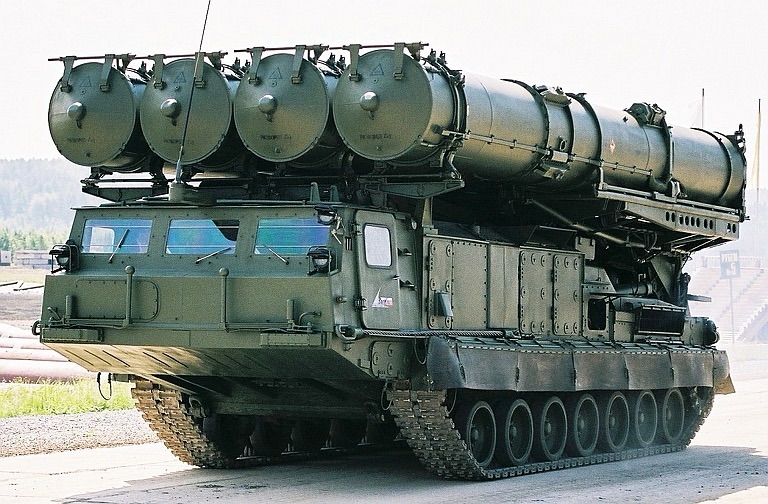
    Venezuela’s military isn’t super modernized so a lot of the equipment they are working with are older Soviet/Russian systems, including S-300VM’s (NATO-SA-12A Gladiator)  which Maduro’s predecessor got in a deal to loan russia a couple billion dollars in the 2010s.Its reported they only have a limited number of these (Possibly 4 launchers) These have likely been repositioned to protect the capital and other strategic sites around the country. The range of these depends on the missile, which are the 9M83M and 9M82M. These are claimed to be able to hit targets out to a range of 81 miles and 124 miles, respectively. Each launcher holds 2 missiles each, and takes around an hour to reload.

    S-300VM Gladiator


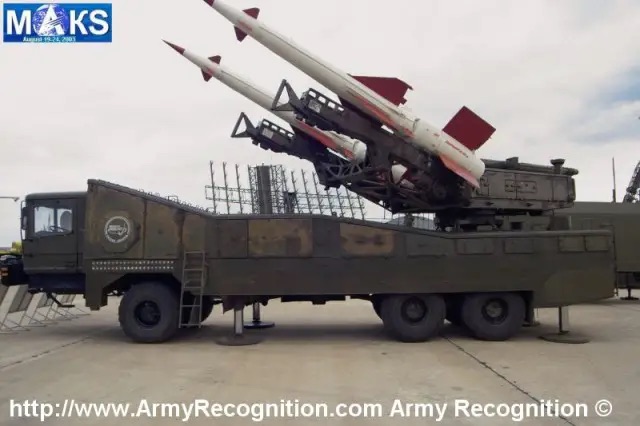
    The last Surface to air missile system we will talk about is a lesser known one, The  S-125 Neva/Pechora (NATO- SA-3 Goa), Most well known for shooting down a F-111 Nighthawk over Serbia. This is an older system with a decent range of anywhere from 15km to 35+km depending on the actual missile used. 

    S-125 Neva/Pechora (NATO- SA-3 Goa)

    The last bit of air defense the EB possesses was reported on by mainstream media today with their story of Maduro threatening that he has 5000 missile systems at the ready, what he was referring to was the countries stock of Man portable air defense systems (MANPADS), mainly Igla-S (SA-24 Grinch) and the Swedish RBS 70. Short range rockets that can be fired by almost anybody but very short range. 6km(3 miles) up to 11,000ft, so not really a threat to anything flying at a normal altitude but still worth considering in mission planning. 

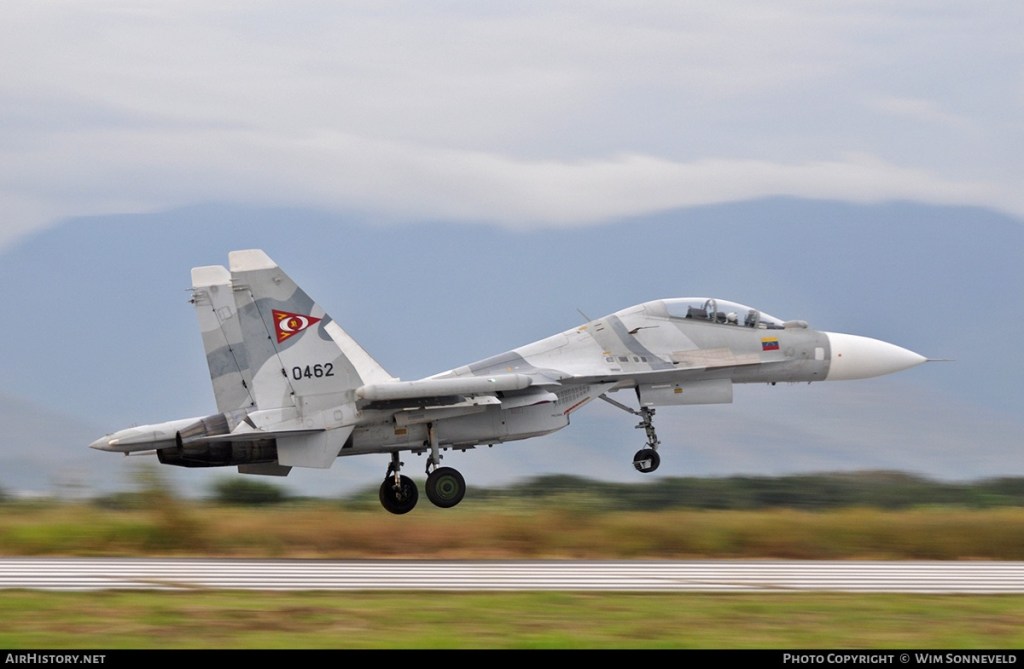
    While their air defense is outdated at best and possibly nonfunctioning in the worst of cases, their air fleet is nothing to ignore, around 20 Su-30MK2V Flanker’s make up the bulk of their fighting power. The Su-30 can be outfitted with the R-77 missiles (AA-12 Adder). This missile has a 50km(31Miles) range and is guided by a datalink from the jet before switching to an active radar guidance. It’s also been proposed that this weapon has a home-on-jam feature which forces the missile to target the source of any electronic jamming. 

    Su-30MK2V Flanker

    The flankers can also carry the R-27 (AA-10 Alamo) which are shorter range and use passive radar guidance as well as inferred, though not exactly.This missile comes in several variants, like the semi-active radar-homing R-27R and the infrared-guided R-27T, as well as the longer-range radar-guided R-27ER and the infrared-guided R-27ET. The R-27R is reportedly around 37 miles, and 31 miles for the R-27T. The extended-range versions are able to hit targets at a maximum range of 59 miles (R-27ER) or 56 miles (R-27ET).

    The close range engagements for the SU-30 are handled by the R-73(NATO-AA-11 Archer) which is similar to something like an AIM-9 Sidewinder. Includes features like all-aspect infrared seeker, high off-boresight capability, thrust-vectoring controls, and the ability to be cued by the pilot’s helmet-mounted sight.maximum range of around 18.6 miles against a head-on target, or 8.7 miles in a tail-on engagement

    Venezuela also possesses some (maybe 3 that fly) F-16A/B’s once purchased from the US in the 1980s, when relations were much warmer. Two of these were involved in a show of force conducted against an Arleigh Burke class destroyer USS Jason Dunham, last month.These are not the F-16’s you might see today, these planes carry no beyond visible range weapons and lack the upgrades given to today’s F-16’s. The best weapon they possibly have is the Israeli supplied Python-4, a supplement for the AIM-9 Sidewinders. These are possibly the oldest and most out of date F-16’s flying in the world and are mostly there for show.

    U.S. Military buildup


    While the U.S. has comparatively unlimited resources to throw at this. Realistically they are more likely to use what they have in hand and what’s readily available. I’ve gone over most of this in the past but it’s worth a refresher. 

    Let’s start with what we won’t see. Last week, the White House confirmed that US President Donold Trump had authorized the Central Intelligence Agency to operate within Venezuela. This is possible, probable even. 

    Image shows satellite photo showing the spec ops Ghost-ship M/V Ocean Trader in the Caribbean.

    We also have satellite images (confirmed later) that show that the MV Ocean Trader is in the area. This is a highly modified vehicular carrier and more so this  ship is a special forces helicopter/drone mothership. This lines up with images and reports that put the US Army 160th special operations aviation regiment ”Nightstalkers” in the area, possibly operating from the ship. 

    Little birds and Blackhawks from 160th Nightstalkers SOAR

    Moving on with the rest of the assets. Let’s start with everything that shoots a Tomahawk Cruise Missile. We have 3 Arleigh Burke-Class Guided Missile Destroyers.

    -USS Stockdale DDG-106

    -USS Gravley DDG-107 

    -USS Jason Dunham DDG-109

    USS Stockdale

     -We also have the Ticonderoga-Class USS Lake Erie CG-70.

    All of these are going to have around 32 cruise missiles apiece. 

    -In addition we have the submarine USS Newport News SSN 750 with another 12 Cruise missile.  

    -USS Wichita LCS 13 

    Three supply ships 

    -USNS Kanawha T-AO-196 

    -USNS Henry J Kaiser T-AO-187 

    -USNS Joshua Humphreys T-AO-188

    USNS Henry J Kaiser T-AO-187  replenishment oiler

    Next is the Iwo Jima Amphibious Ready Group (ARG) with the 22nd Marine Expeditionary Unit (MEU) (SOC) made up of the 

    -Wasp-class Amphibious Assault Ship USS Iwo Jima LHD 7

    -Amphibious transport dock USS San Antonio LPD 17, and USS Fort Lauderdale LPD 28. 

    The above group had limited air-to-ground capability with its Harriers as well as transport options for the marines stationed aboard. 

    Rounding this list off we have 

    -At least 10 F-35’s from the  “Vikings” of Marine Fighter Attack Squadron (VMFA) 225 stationed at Puerto Rico’s Roosevelt Roads Naval Station. 

    At least two AC-130 Ghostrider Gunship 

    -a reported total of around 10,000 soldiers.(not sure if this includes the 2,000 marines) 

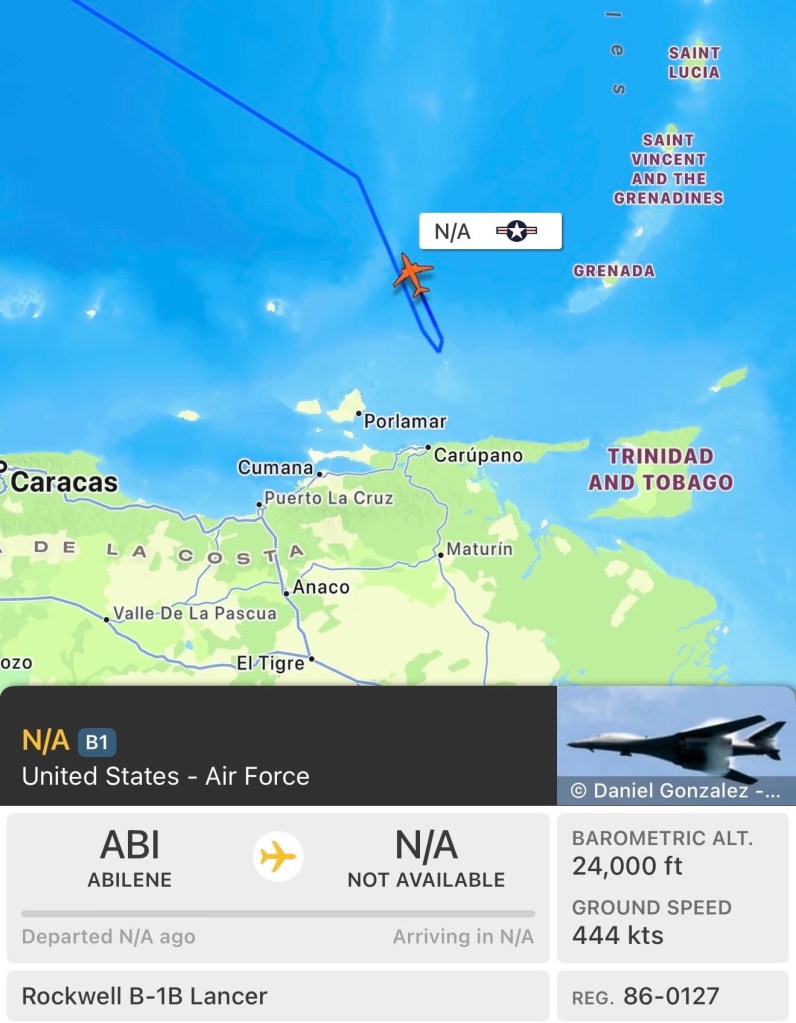
    We also have a collection of aircraft that have appeared in the region  but not necessarily stuck around,2 B-52H Stratofortress Bombers, B-1B-Lancer Bombers,  a number of KC-135 Stratotankers, Dozens of Cargo planes (C-5 Galaxy’s and C-130’s) EC-3 Sentry AWACS ,and P-8 Poseidon ASW/Maritime Patrol plane.  

    While this list is large, I’m sure it’s not all of the assets currently in the theater. One of the United States best advantages here is it being close to home, allowing them to call in pretty much anything they want. The question isn’t whether the Venezuelan military will be defeated, it’s more like “how long will they last?”


    As I finished this, a B-1B lancer flew just within range of where that BUK is sitting and then turned around. Playing Peek-A-boo. just thought that was interesting considering this article started with talking about the range of that system.

  • U.S. continues strikes on drug boats in Caribbean

    A look inside the well deck of the USS Iwo Jima (LHD-7)

    By.Scott Jackson


    10.19.2025

    The United States Department of Defense and White House released footage showing the destruction of a Venezuelan submarine reported to be involved in cartel drug trafficking operations and the transportation of fentanyl, a powerful synthetic opiate. The sub was destroyed on Thursday. 

    While all the media and even this article calls the vessel a submarine it’s more like a semi- submersible. Most of the vessel is underwater but it doesn’t have the capability to fully submerge itself. If this vessel is anything like others that have been stopped trying to smuggle drugs into America in the past, it was made with fiberglass and plywood. 

    Video of the strike on the Venezuelan semi-submersible.

    The submarine had two survivors who were rescued by a US helicopter and taken to a Navy ship in the area. The men will eventually be repatriated to their home countries according to the US. The men are from Ecuador and Colombia.  The bombing of the sub killed two other men, both alleged to be Narco terrorists. Sending the men back to their home countries helps the US avoid any turbulent legal issues of detaining the men whose drug trafficking crimes don’t exactly fit under the laws of war.

    Neither the pentagon or the White House offered any other comments when asked by GCR or other media outlets. 

    Moving on to today, it was just several hours ago reported that the US said they had carried out a strike on a vessel associated with a Colombian leftist rebel group,National Liberation Army.

    This strike has led to a falling out between US president Trump and Columbian President Gustavo Petro as the Colombian President accused the US of murder.
    “US government officials have committed a murder and violated our sovereignty in territorial waters. Fisherman Alejandro Carranza had no ties to the drug trade and his daily activity was fishing,” said Gustavo Petro on a post on social media. He added “The Colombian boat was adrift and had its distress signal up due to an engine failure. We await explanations from the US government.”

    Trump and Colombian President Gustavo Petro

    That US response was swift, with Trump and the White House cutting off all subsidies. Trump said the Columbian president  “is an illegal drug leader strongly encouraging the massive production of drugs, in big and small fields, all over Columbia”.

    Trump later ranted on Truth Social “It has become the biggest business in Columbia, by far, and Petro does nothing to stop it, despite large scale payments and subsidies from the USA that are nothing more than a long term rip off of America. AS OF TODAY, THESE PAYMENTS, OR ANY OTHER FORM OF PAYMENT, OR SUBSIDIES, WILL NO LONGER BE MADE TO COLUMBIA,”

    Trump continued “The purpose of this drug production is the sale of massive amounts of product into the United States, causing death, destruction, and havoc,” the president said.

    “Petro, a low rated and very unpopular leader, with a fresh mouth toward America, better close up these killing fields immediately, or the United States will close them up for him, and it won’t be done nicely.”

    -Statement from Donold Trump.

  • U.S. Navy increases presence in Latin/South American waters in effort to fight drug trafficking coming from Venezuela.

    Map put together by Ian Ellis Jones over on Twitter shows the ships currently moving into the South American region. Some of the locations are true, as of when the image was posted, others are approximate.

    By. Scott Jackson


    08/30/2025

    A look at the recent increase in U.S. forces already in or heading to the Caribbean.

    The U.S. is increasing its presence in the region in an effort, they say, to deal with drug trafficking. This has been a big issue for Washington and is currently causing some tension as the White House called Venezuelan leader Maduro a “Narco-Terrorist” and have made him the main focus of these efforts. Is this a regular drug operation, or something more? For now nobody’s sure.

    So far eight ships and a submarine have been deployed to the 4th fleet/Southern Command [SOCOM] AOR. Making this the largest confrontation between Venezuela and the U.S. in years.

    For Venezuelan President Nicolas Maduro, this attention only strengthens his goverment hold on the country. The U.S. feels Maduro’s election back in 2013 and 2024 was due to election interference and say his victory was only assured because of ballot stuffing and other types of election fraud. Currently Washington has a $50 million dollar bounty for his arrest on charges of drug trafficking. Maduro’s response to the threat of the U.S. warships steaming towards southern waters was to declare that Venezuela would respond with the activation of 4.5 million militiamen.

    “This week, I will activate a special plan with more than 4.5 million militiamen to ensure coverage of the entire national territory — militias that are prepared, activated and armed,” Maduro announced on state television.

    Most believe that this move by Washington is aimed more at a show of force over actual U.S. intervention in the region, but in case it’s not just a well armed navel stroll around the block let’s go over some things.

    Who is Nicolás Maduro?

    Nicolás Maduro speaking to his supporters about the American forces heading towards Venezuela.

    Maduro was born in 1962 and before he was a president he made his money as a bus driver for a long time before rising to become a trade union leader. In 2003 he was elected to the National Assembly and frim there appointed to a number of positions under the then president Hugo Chávez. He served as the president of the National Assembly in 2005-06, and as Minister of Foreign Affairs from 2006-2012. From then on he was Vice President under Hugo Chávez until his death in 2013. After Chávez’s death Maduro assumed the role of president and has stayed in the role ever since. Since then, Maduro has managed to stay in office, consolidating power along the way. The elections the country has run show Maduro winning, however claims of election rigging have run rampant.

    Since Maduro rise to power Venezuela has been forced to endure widespread authoritarian rule marked by rigged elections, human rights abuse and economic hardship. Maduro’s goverment can be characterized by its mass allegations of corruption, the suppression of critical information and poor leadership. Widespread shortages have plagued the country and inflation of its currency, the Bolivar, has skyrocketed, tripling in the last several years. For a country as resource rich as Venezuela is, having one of the largest oil deposits in the world, these problems are inflicted mostly by the actions and policy of their government.

    Demonstrators clash with members of Venezuelan National Guard during a rally demanding a referendum to remove Venezuela’s President Nicolas Maduro in San Cristobal, Venezuela October 26, 2016. Photo: Carlos Eduardo

    What U.S. assets are being sent to Venezuela?

    For now it seems that the bulk of the forces being mobilized for this operation -whatever it ultimately ends up lmbeing, are from the USS Navy with some help from the Air Force.

    Earlier today radio calls from a USAF RC-135 ‘Rivet Joint’ were recorded as they communicated with the Mcdall tower out in Tampa Fl. The RC-135 was refueling “somewhere over the Caribbean”. This means that the Air Force is doing ELINT missions and gathering data from the region. The Rivet Joint is capable of picking up radar signals from hundreds of miles away as well as other types of electronic surveillance and reconnaissance.

    We also have reports of Navy P-8 Poseidon’s out of San Juan patrolling around the Caribbean several days ago. These planes are mostly used for anti-submarine work but can still be used as spotters for surface ships as well.

    Venezuela has one submarine that might or might not be operational so I don’t see the ASW assets getting all that much use here.

    Ticonderoga-Class launching one of its standard missiles.

    On to the ships. So far 9 ships have been ordered to the area. The most recent of the bunch is the Ticonderoga-Class guided missile cruiser USS Lake Erie (CG-70) and the Los Angeles-Class fast attack submarine USS Newport News (SSN-750).

    Los Angeles class submarine operating at periscope depth.

    Three of the ships are Arleigh Burke-Class guided missile destroyers. USS Gravley (DDG-107), USS Jason Dunham (DDG-109), and USS Sampson (DDG-102). These ships along with the Lake Erie provide the bulk of the firepower. All of the ships listed so far, including the submarine are capable and likely carrying a number of Tomahawk cruise missiles, among others.

    Arleigh burke-Class destroyers intercepting targets during an exercise

    Last but not least we have the USS Minneapolis-Saint Paul (LCS-21) a Freedom-Class littoral combat ship. These ships were, according to the navy “envisioned to be a networked, agile, stealthy surface combatant capable of defeating anti-access  and asymmetrical threats in the littorals.” Littorals refers to an area of the sea close to shore. Basically these ships are comparable to what other navies call corvettes.

    Each of the freedom class comes with a hanger for the SH-60 or MH-60 Seahawk, as well as a ramp in the stern for launching smaller boats. These ships are capable of transporting and launching a small assault force with troops and fighting vehicles.

    Image shows the USS Minneapolis-Saint Paul.

    Next is the USS Iwo Jima (LHD-7) classified as a Wasp-Class amphibious assault ship and landing helicopter dock.

    USS Iwo Jima (LHD-7) in the Atlantic sometime in 2008.

    This ship carries various aircraft- mostly helicopters, and a lot of Marines as well as their equipment. This ship is essentially a floating marine base of operations capable of transporting them and their equipment into hostile territory and supporting them the AV-8B Harriers until 2027 when most of the assault ships are switching to F-35B’s. I don’t know if the Iwo Jima currently employs harriers or The F-35 currently.

    USS Iwo Jima hiding in the fog.
    Marine Vertical take off F-35B coming in for a landing.

    Moving on to the last two ships on our list we have the USS San Antonio (LPD-17) and the USS Fort Lauderdale (LPD-28) both of which are San Antonio-class amphibious transport dock’s. These ships are similar to the Wasp-class in that they are filled with marines and can be used as a launching point for their operations. They have a hanger for helicopters (or Ospreys) but lack the topside deck for planes.

    Cut-away view of the San Antonio class.
    Artist concept of the San Antonio class.

    These ships are designed as survivable and stealthy transports for ground forces. As shown in the image above they are also designed around the idea of launching the marines hovercraft to quickly transport massive amounts of marines and their equipment to the shores.