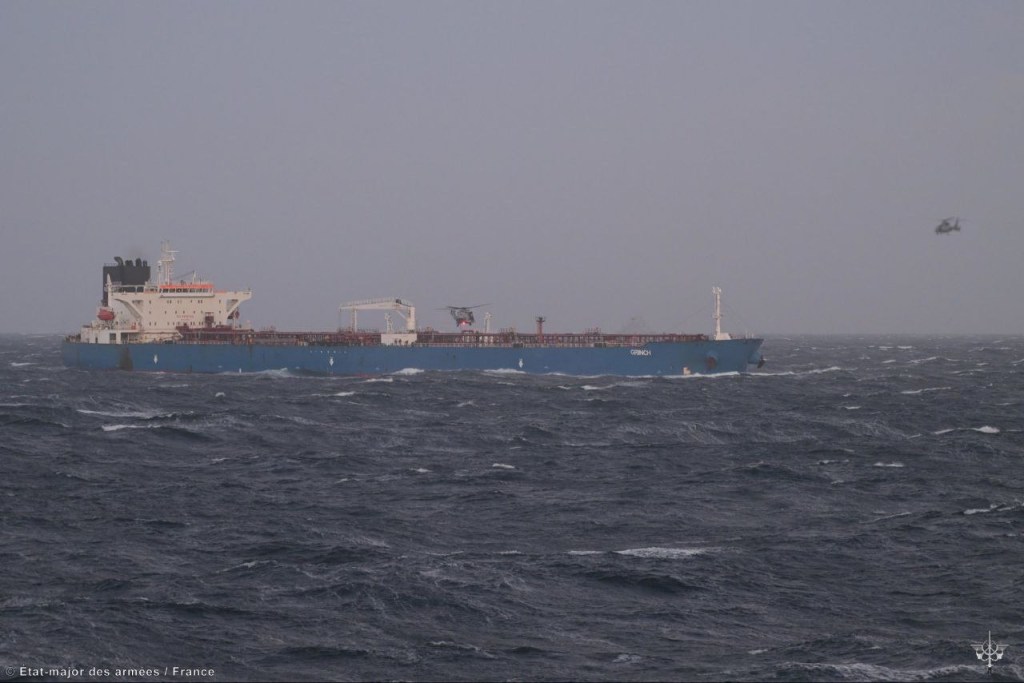
Today French forces seized a Russian “shadow fleet” tanker that was sailing in the Mediterranean. The vessel, an oil tanker flagged from Comoros called ‘Grinch’ (IMO:9288851) was seized in the Alboran Sea, in the Western Mediterranean. The Grinch was boarded on suspicion of flying a false flag, as well as being under international sanctions.
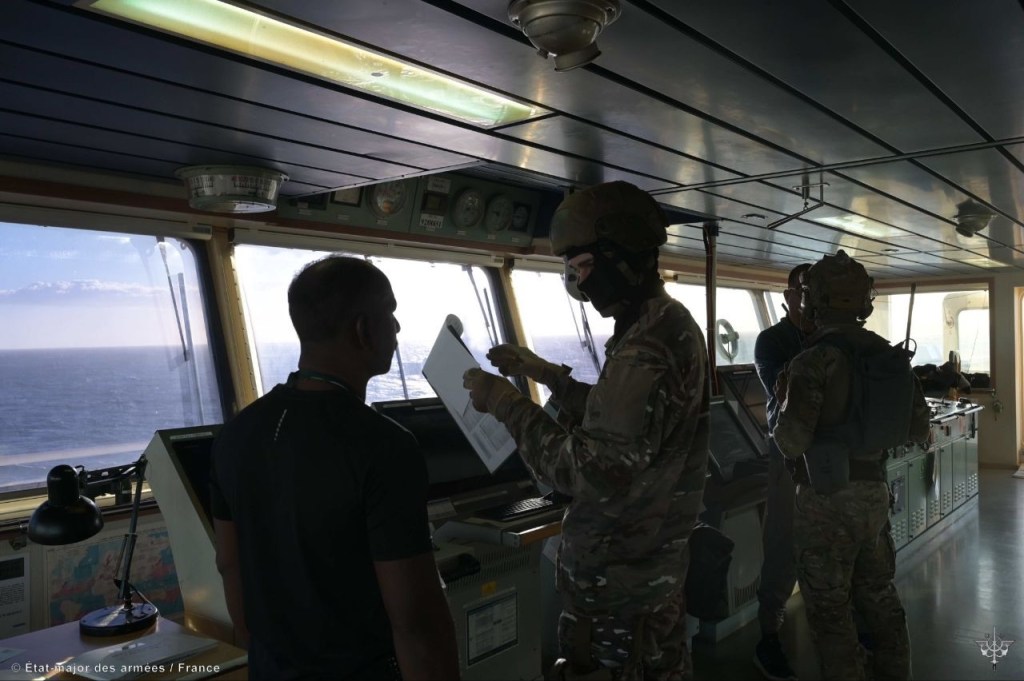
French investigators onboard the Grinch.
The operation was carried out in partnership with UK forces who provided intelligence.
“The operation was conducted on the high seas in the Mediterranean, with the support of several of our allies. It was carried out in strict compliance with the United Nations Convention on the Law of the Sea.”
French President Emmanuel Macron said after the Grinch was seized.
He also said
“We are determined to uphold international law and to ensure the effective enforcement of sanctions,” Macron explained. “The activities of the ‘shadow fleet’ contribute to financing the war of aggression against Ukraine.”
The operation was first announced with a press release from the French Navy
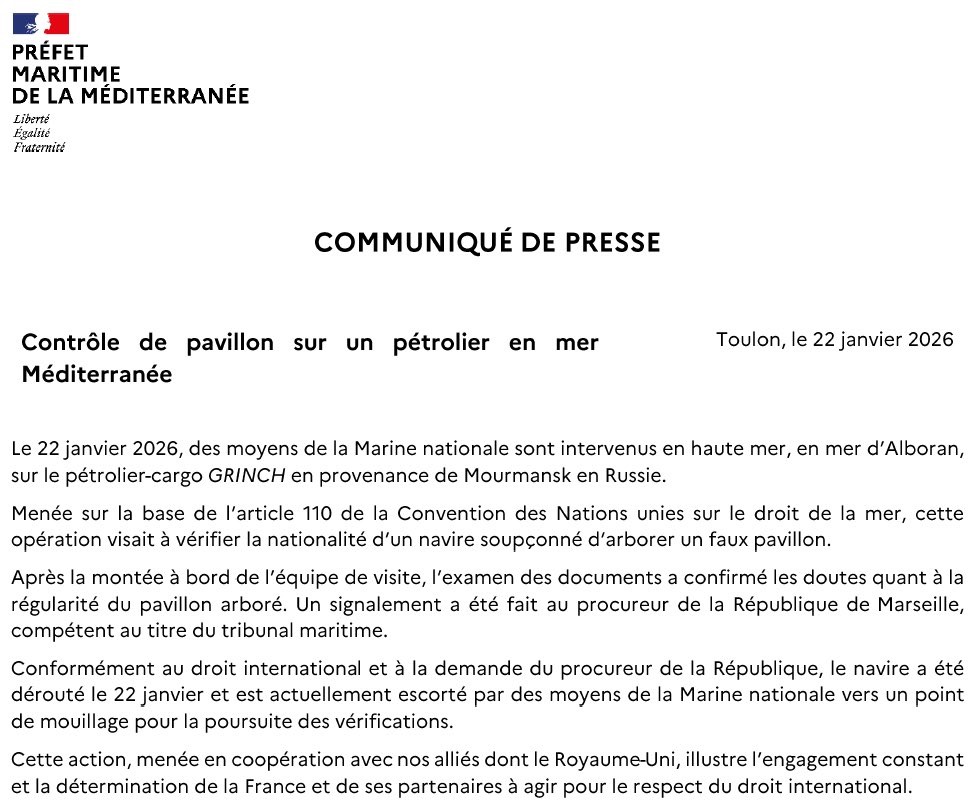
French Navy press release translated below.
“On January 22, 2026, French Navy assets intervened on the high seas, in the Alboran Sea, on the cargo tanker GRINCH, en route from Murmansk, Russia.
Conducted on the basis of Article 110 of the United Nations Convention on the Law of the Sea, this operation aimed to verify the nationality of a vessel suspected of flying a false flag.
After the boarding team, the examination of the documents confirmed the doubts regarding the validity of the flag being flown. A report was filed with the Public Prosecutor in Marseille, who has jurisdiction under the maritime court
In accordance with international law and at the request of the public prosecutor, the vessel was diverted on January 22 and is currently being escorted by French Navy vessels to an anchorage for further investigations.
This action, carried out in cooperation with our allies, including the United Kingdom, illustrates the unwavering commitment and determination of France and its partners to uphold international law.”
End translation.
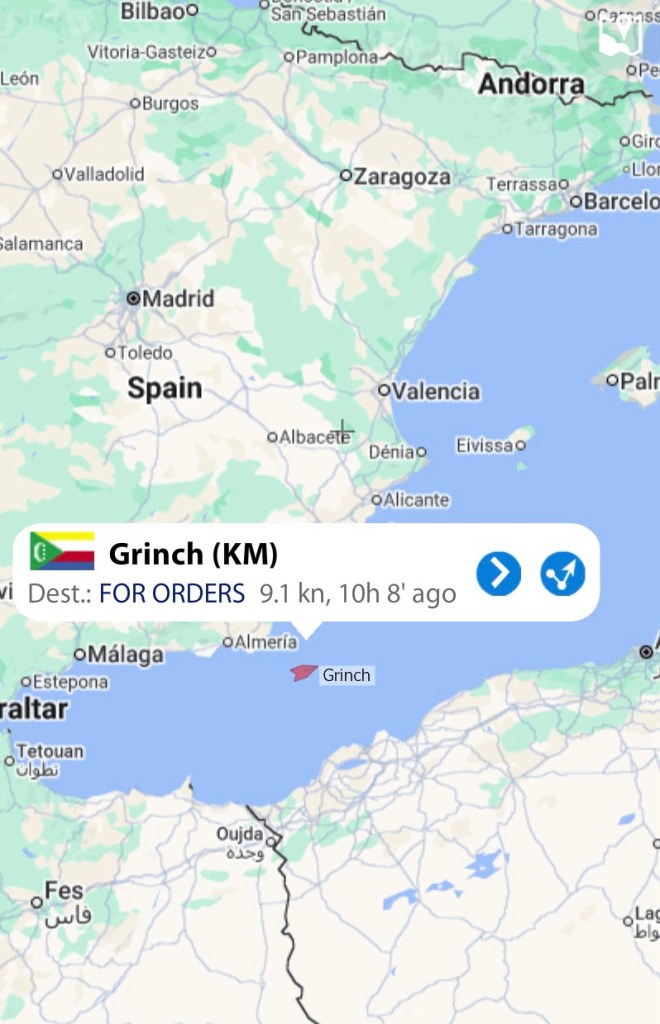
Last recorded position of the Grinch.
The “shadow fleet” operated by Russia has received a lot of attention in the past,but even more so in the past couple months as both European and U.S. forces have seized multiple vessels suspected of being used to transport Russian oil. These ships are know for using clandestine means and “deceptive shipping practices” to bypass international sanctions put on Russia for its war in Ukraine.
These ships, while called a “shadow” or “dark” fleet operate in the open, with multinational crews (sometimes even carrying Ukrainian crews) using aging ships with many of them being bought for exorbitant prices from the same western nations that sanction Russia in the first place . These ships will use techniques like changing their name and flag to avoid tracking by investigators and law enforcement.
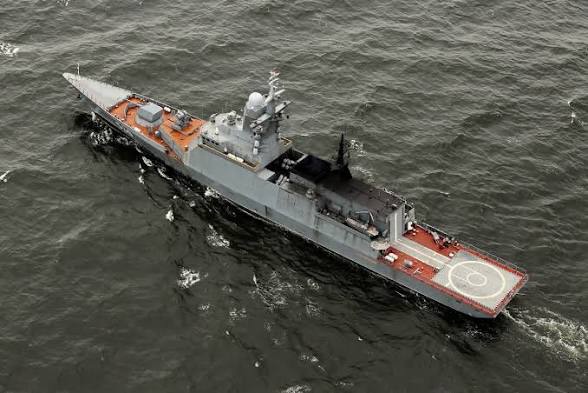
Western powers are taking a stronger stance against Russia’s shadow fleet and Russia is responding, on Monday Russia sent the Project 20380 Steregushchiy-class corvette Boikiy to escort one of its tankers through the English Channel.
Project 20380 Steregushchiy-class corvette Boikiy
The UK especially has signaled its willingness to step up the fight against these ships, specificly as a joint effort. Foreign Secretary Yvette Cooper saying to Politico “We stand ready to work with allies on stronger enforcement around the shadow fleet,”
She also didn’t rule out using the oil seized from these tankers to support Ukrainian war efforts. This gives Russia two choices, risk having their oil money being used to find their enemies or having their oil storage depots sit full. Neither option is ideal especially as Ukraine continues to target Russian oil depots with drones and missiles.
It’s possible that western actions against Russia’s shadow fleet could become a large flashpoint between Russia and western nations, especially if Russia responds to increased pressure with force, bringing the two sides to conflict.
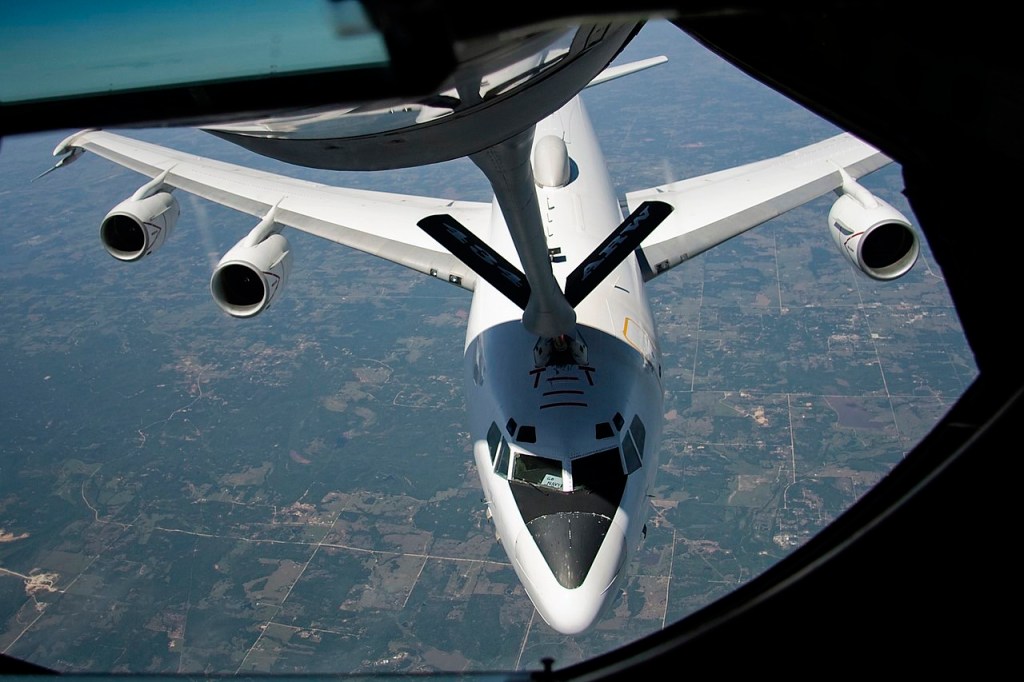
US Navy E-6B Mercury refueling from a KC-135 Stratotanker.
By.Scott Jackson
09/24/2025
On the night of September 23-24 both France and the United States carried out separate nuclear exercises. These exercises act as apart of a deterrence strategy aimed at making any potential adversaries think twice about attacking. They also provide real life training for the crews involved preparing them for a day that they hope never happens.
Some components of these drills were monitored in real time.
COST43 a U.S. Navy E-6B Mercury.
COST43 the callsign for a U.S. Navy E-6B Mercury, the Airborne Nuclear Command Post and Communications Relay. The jet is seen in the above image heading back to Ramstein AFB, Germany after this mornings nuclear exercise by U.S. Strategic Command (STRATCOM) over Northern Europe.
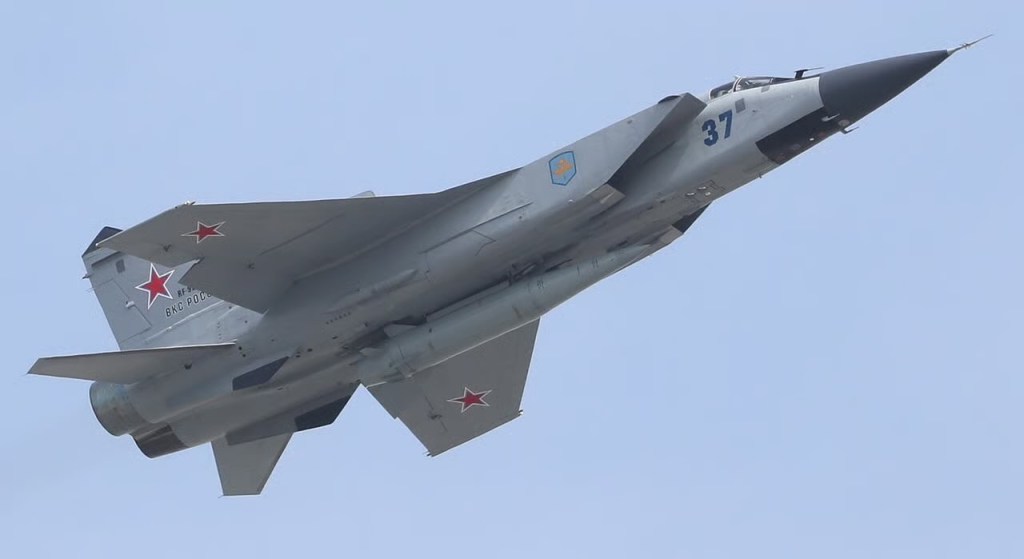
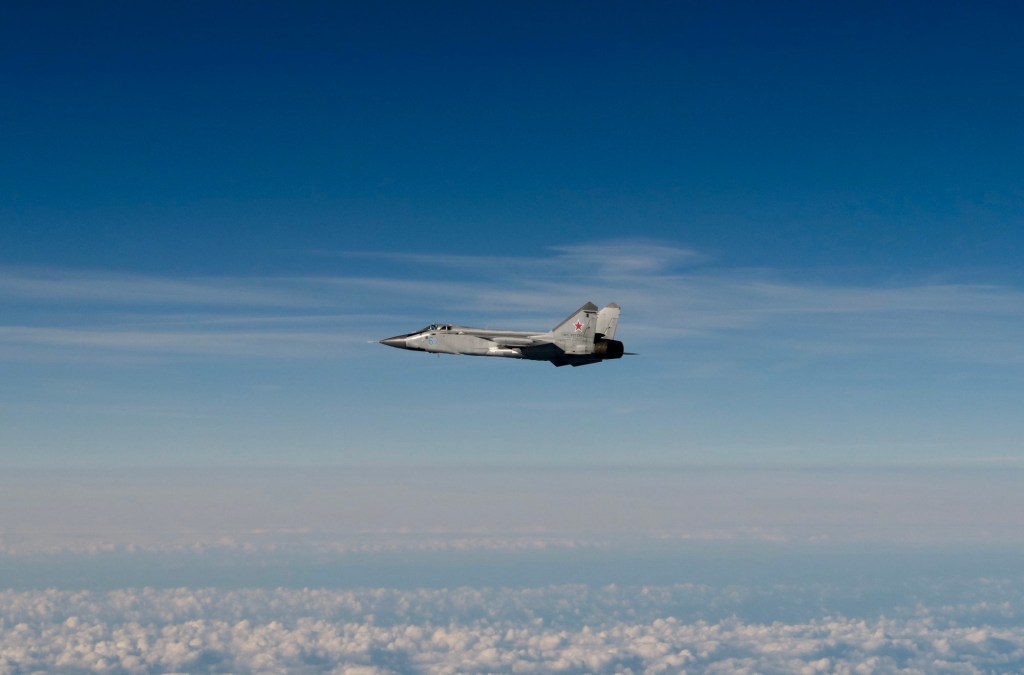
Today, in an act that the Estonian foreign minister is calling “unprecedentedly brazen”, three Russian MIG-31 “Foxhound” fighter jets violated Estonia’s border and remained inside Estonia for 12 minutes. They crossed the border in the area of the Gulf of Finland.
Russian MIG-31 “Foxhound”
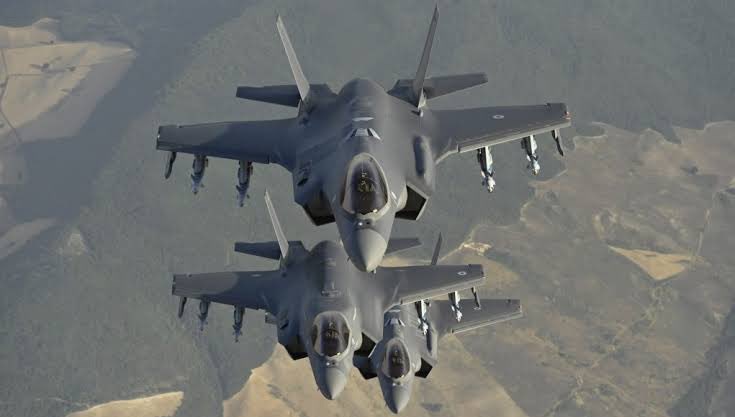
NATO forces responded to intercept the Russian fighters with several Italian F-35’s being scrambled to track and intercept the Russian MIG’s. The alliance’s spokeswoman Allison Hart said ”This is yet another example of reckless Russian behavior and NATO’s ability to respond.”
Swedish forces also responded with several JAS 39 Gripen scrambling to the Baltic area where they intercepted and tracked the three Russian jets.
Russian Mig-31Swedish JAS 39 Gripen
Tensions between NATO and Russia have remained high since the start of the Russian invasion of Ukraine but spiked even more recently as Russian drones flew into Polish airspace just 10 days ago. NATO responded to shoot down some of the drones in that incident as well. Poland called the incursion a deliberate effort to test NATO’s willingness to respond and its readiness.
“..three fighter jets entered our airspace, is unprecedentedly brazen-clear proof of Russia’s growing aggression.”
“Russia has violated Estonian airspace four times already this year, which is unacceptable in itself, but today’s violation, during which three fighter jets entered our airspace, is unprecedentedly brazen-clear proof of Russia’s growing aggression.” Margus Tsahkna, Estonian minister of foreign affairs. He continued “Russia’s ever-increasing testing of borders and aggressiveness must be responded to by rapidly strengthening political and economic pressure,”
In response to the incident in Poland, and now Estonia, NATO has launched new air patrol operations in eastern and Northern Europe. This operation is going by the name Eastern Sentry and is modeled after the Baltic Sentry operations that have been taking place in the Baltic. Baltic sentry added new aircraft and ships to its patrols after the recent Russian incursions and continuing acts of sabotage. The operation includes increasing air and sea patrols, as well as an increase in ground based interceptor launchers and radar. Eastern Sentry will focua mainly on Poland however it can be shifted to deal with Russian threats in other countries.
“Russia’s recklessness in the air along our eastern flank is increasing in frequency,” said NATO’s Secretary General Mark Rutte. He added that drones have recently violated the airspace of Estonia, Latvia, Lithuania and Romania.
“This was no accident.” EU foreign policy chief Kaja Kallas speaking on the Estonian situation.
The Russian ministry of defense has declined to respond to an email from GCR.
At the time of writing another situation is ongoing with 2 other Russian jets doing a low flying pass on one of polands Petrobaltic oil and gas platform in the Baltic Sea. While Polish airspace was not violated in this case it shows the willingness to engage in aggressive behavior on the side of Russia.
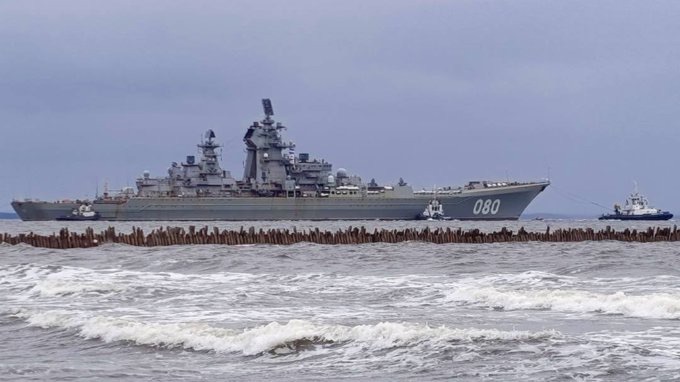
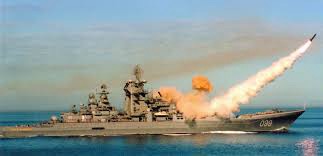
The Project 1144 Orlan Admiral Nakhimov last sailed in 1997. It was brought into the Sevmash shipyard in the port city of Severodvinsk with the intent for a major refit and modernization. The refit took almost 30 years but the time has come and this week the RFS Admiral Nakhimov was seen sailing under her own power as she undergoes sea trials to test its new and old systems. The large cruiser has seen a modernization to its weapons systems and sensors which the Russian leadership hopes will put fear into the enemies of the Russian navy.
Admiral Nakhimov
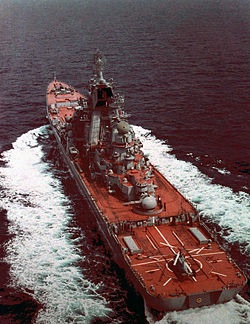
The Project 1144 battlecruiser (referred to as the Kirov-class by NATO), is a powerhouse of a ship. Called a nuclear-powered guided missile heavy cruiser by the Soviets, and besides aircraft carriers, it is today, the largest surface combatant in the world. At 827 ft long it is as large as some of the dreadnoughts and battleships of the early 20th century. During World War 2, the battleships were the dominant force until aircraft carriers were developed which could sink a battleship without it ever having fired a shot. Battleships spent the rest of the war far away from most combat. The reason battleships are no longer used is simple: big ships are easier to sink and the larger the ship, the larger the loss when they are destroyed, taking with them more men, and more weapons than their smaller peers. A country’s navy could build one large ship or several smaller ships that can do mostly same task and be less of a liability if sunk. The last of the battleships were used by the U.S. as glorified missile platforms and artillery pieces, with 2 modernized Iowa-classes being used in the gulf war. The Kirovs were built around this time during the Cold War as a direct counter to the Benjamin Franklin-class nuclear submarine. For all its anti-sea and air based weaponry the original primary job of this battleship sized cruiser was that of ASW: anti submarine warfare, sometimes called awful slow warfare by its practitioners. The Kirovs all came with ten torpedo tubes which launched torpedoes or anti-submarine missiles. They also had advanced sensors for detecting them and 3 helicopters which could carry ASW weapons.
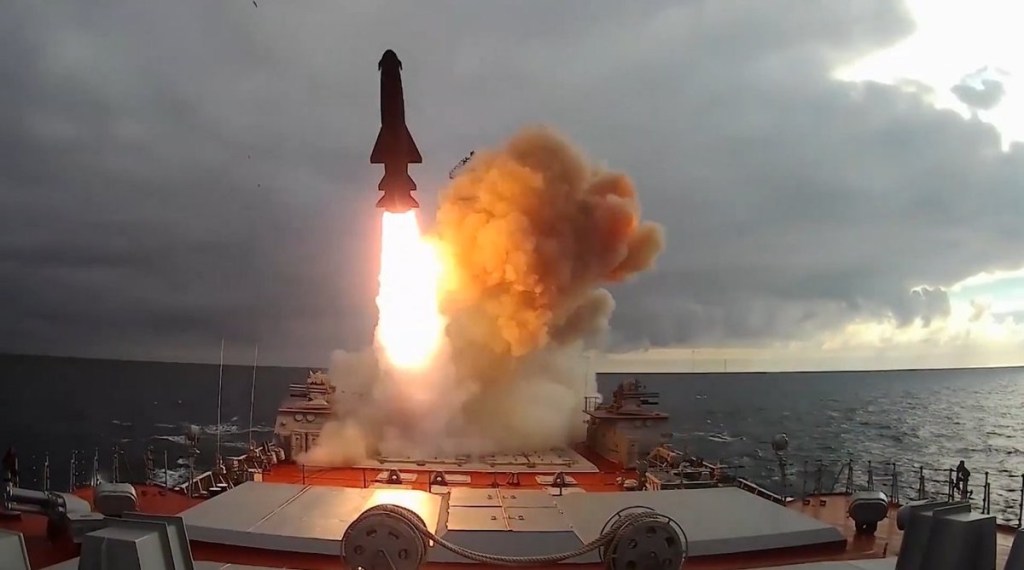
The Admiral Nakhimov other weapons before the modernization included the main weapon, 20 of the P-700 Granit (Shipwreck) anti-ship missiles which could destroy a ship out to 300 miles.This missiles was designed to sink American carriers these missiles outrange the newest American Anti-Ship missiles, the AGM-84H/K SLAM-ER (Standoff Land Attack Missile-Expanded Response) by 100 miles, according to the publicly available data. It’s been claimed that the missile, when fired in a swarm (group of 4–8) has a unique guidance mode. One of the weapons climbs to a higher altitude and designates targets to the group while the others fly low to the sea and keep their onboard sensors in a passive mode, only flipping on active guidance in the final seconds before launch. If the targeting missile is destroyed another will rise to take its place. The missile responsible for target designation climbs in short pop-ups, so as to be harder to intercept. The missiles are linked by data connections, forming a network. The missile’s predecessors, the P-500 and the Bazalt and the P-1000 Vulkan were capable of this guidance technique as well. Now those P-700 missiles have been removed giving space for some of the 176 Vertical Launch Cells 80 of which can hold the subsonic Kalibr cruise missile, the supersonic Oniks anti-ship missile, and the hypersonic Tsirkon cruise missiles. That leaves 96 cells reserved for surface to air missiles. The original Kirov-class ships came with the S-300F systems in rotary tubes below deck however there are some reports that these were replaced with the S-400F system giving them around 250 miles of air defense protection. It layers that protection with the more medium range abilities of 6 Pantsir-M air defense systems as well as a number of AK-630 close-in weapon systems. Additionally, the 130mm AK-130 dual purpose naval gun has been replaced by a modern 130mm AK-192M naval gun.
The 176 launch cells make this ship the most heavily armed capital ship on the planet currently, surpassing the 122 cells on the American Ticonderoga-Class cruisers or the 96 on the Arleigh Burke destroyers. The Chinese Type 055 Renhai-class cruisers carry 112.
The Admiral Nakhimov’s sea trials will take several months at least, with the first stages testing the ships safety, navigation, and propulsion systems and later the weapons and combat effectiveness. After that the vessel will be taken back into the service of the Russian Navy. The earliest estimates for the end of the sea trials put it at the end of the year before the ships return to active service, taking the flagship role with the Northern Fleet and the Russian Navy. At this The RFS Pyotr Velikiy, the current Kirov-class flagship of the Russian Navy is not likely to undergo the same modernization of the Admiral Nakhimov and is more likely to be decommissioned as the cost is simply too great for Russia to foot at this time. The Pyotr Velikiy has also been in service for a good while longer than her sistership, making her more worn down after decades of operation.
Images showing Admiral Nakhimov firing one of its P-700 Granit anti-ahip missiles.
When RFS Admiral Nakhimov replaces the RFS Pyotr Velikiy the Russian navy will only have three cruisers left in their navy, the RFS Marshal Ustanov in the Northern Fleet, and the RFS Varyag in the Pacific Fleet. Both cruisers are part of the Slava-class missile cruisers which are also coming to the end of their service life. It’s possible in the near future the Admiral Nakhimov could become Russia’s only capital warship in the fleet. Russian shipyards are unable to build new large ships for the time being and even repair work is becoming an impossible task. Recently, plans for the repair and refit of Russia’s sole aircraft carrier, the RFS Admiral Kuznetsov, were canceled.
The Admiral Nakhimov will likely take an important role in the Russian surface fleet, with its numerous long range weapons systems, the ship can be used to interdict a large area at sea and provide protection for a Russian fleet during their operations.
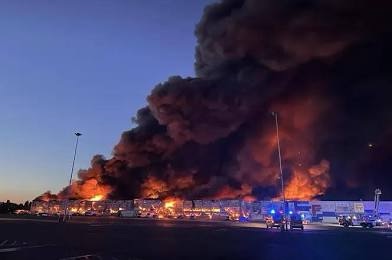
Last year Warsaw’s largest shopping center, Marywilska 44, was burned down leading to a year long investigation that was only concluded earlier this month. That investigation, led to the arrest of several Polish nationals acting as Russian operatives and connected to the Russian state and the GRU, Russia’s secret police.
“We already know for sure that the large fire on Marywilska was the result of arson ordered by Russian services. The actions were coordinated by a person staying in Russia. Some of the perpetrators are already in custody, the rest have been identified and are being sought,”
Polish Prine Minister Donold Tusk writing on Twitter.
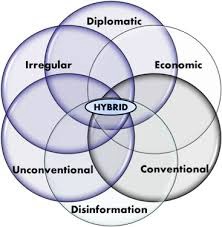
This case of arson was one of several terrorist acts linked to Russia, all being carried out in the weeks leading up the Marywilska 44 fire. Arson is the focus of this article however attempted cyberattacks are another regular occurrence in countries that have shown support for Ukraine since Russia’s invasion. In early 2024 shipments of pillows, cosmetics and sex toys were filled with explosions being detonated in British Birmingham, Leipzig in Germany and in Warsaw, Poland. All of this is apart of an ongoing hybrid warfare campaign being waged by Russia on Poland (among others) as backlash for their support to Ukraine.
Back to the shopping center Investigators in Poland are working with those in Lithuania for a similar series of sabotage activities believed to be linked to Russia according to a statement by Justice Minister Adam Bodnar and Interior Minister. Tomasz Siemoniak. Since some of the perpetrators in Poland had been arrested Polish authorities believe they have enough evidence to directly tie Russia to these crimes and Bodnar and Siemoniak continued in their statement: “Based on the evidence collected, we know that the fire was the result of arson committed at the request of the Russian security services. We have in-depth knowledge about the course of the arson, as well as the way in which the perpetrators documented it.”
The immediate response to these attacks has been the closure of the Russian Consulate in Warsaw Poland however its still believed Russian operatives are carrying out other operations in Poland with several abductions being linked and a string of arson’s. Another consulate had been closed previously by Poland citing its link to a cyberattack, acts of sabotage, as well as other intelligence activities.
This highlights Russia’s willingness and want to wage a sort of hybrid war, using terrorism and other more covert methods in an aim to punish those it views as hostile to Russia. In October of 2024 MI5 Director General Ken McCallum had this to say of the GRU was “…on a sustained mission to generate mayhem on British and European streets”. A Romanian man was attested in 2024 in Birmingham after settling fire to a DHL warehouse on behalf of Russia.
The Baltic nations have also had to deal with this extensively as Russian ships regularly attack underwater cables by dragging their anchors over them. Severing the lines. NATO warships often follow Russian linked ships now, even going so far as to have submarines tail these cargo ships.
Actions like the one here have led to a wave of diplomatic closures as European/western countries,one by one, board up embassy’s and ban Russian diplomats from entry.
Over the past several days the North Atlantic Treaty organization or NATO has carried out a series of large navel focused exercises across the Baltic, North Atlantic, Mediterranean and Norwegian Seas.
For those who don’t know NATO is a military alliance between 32 member nations. Formed in 1949 as a way to provide collective defense to its members from the then perceived threat posed by the Soviet Union. It remained in place after the fall of the Soviet Union and the Warsaw Pact.
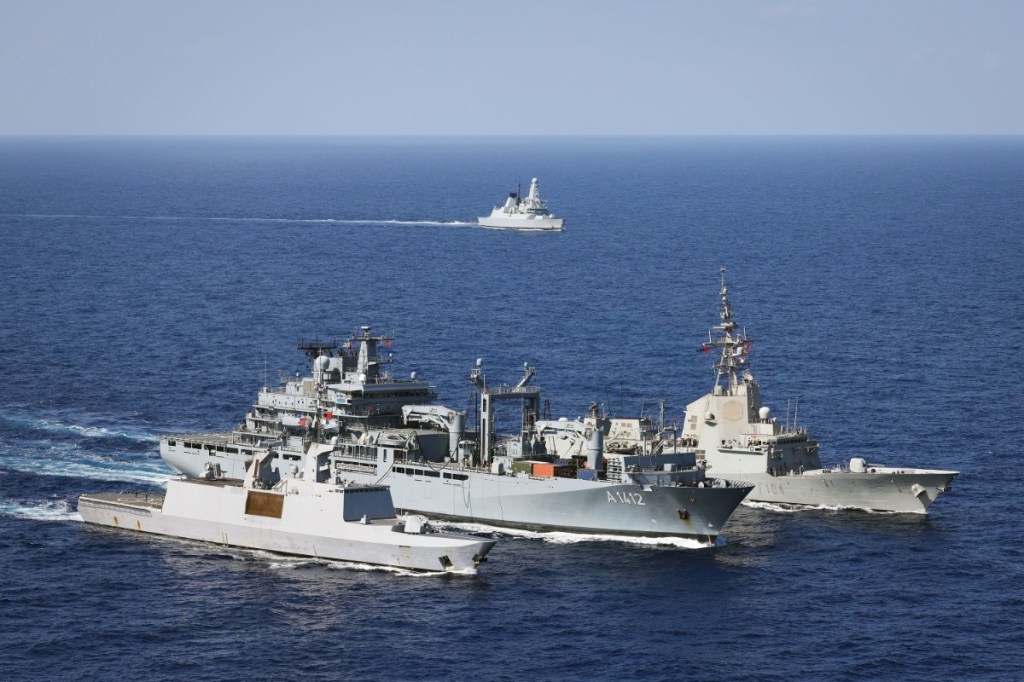
The fighting forces of of NATO are made up of the military’s of the nations that make up the treaty by rotating voluntary forces. However NATO keeps several permanent navel fleets standing as apart of NRF- NATO’s Response Force. The fleets are made up of mostly destroyers and frigates from rotating in from member nations with the supply ships used by the fleet being the only constant.
Some of rhe ships of Standing NATO Maritime Group Two (SNMG2).
The past weeks exercises not only focused on their specific goals (which I’ll get to below) but showcased the just massive amount of firepower and capabilities that NATO and its combined nations can field. Let’s take a closer look.
Dynamic mongoose 25
“Dynamic Mongoose is NATO’s largest and most intensive annual anti-submarine warfare exercise in Northern European waters. This year’s version, Dynamic Mongoose 25, has come to an end. It was both a great success and a memorable experience. With over 10 countries participating—with submarines, frigates, support ships, helicopters, Maritime Patrol Aircraft, and coast guard vessels—we have truly shown we are stronger together.”
Royal Netherlands Navy Commodore Arjen S. Warnaar, Commander of Standing NATO Maritime Group 1 (SNMG1)
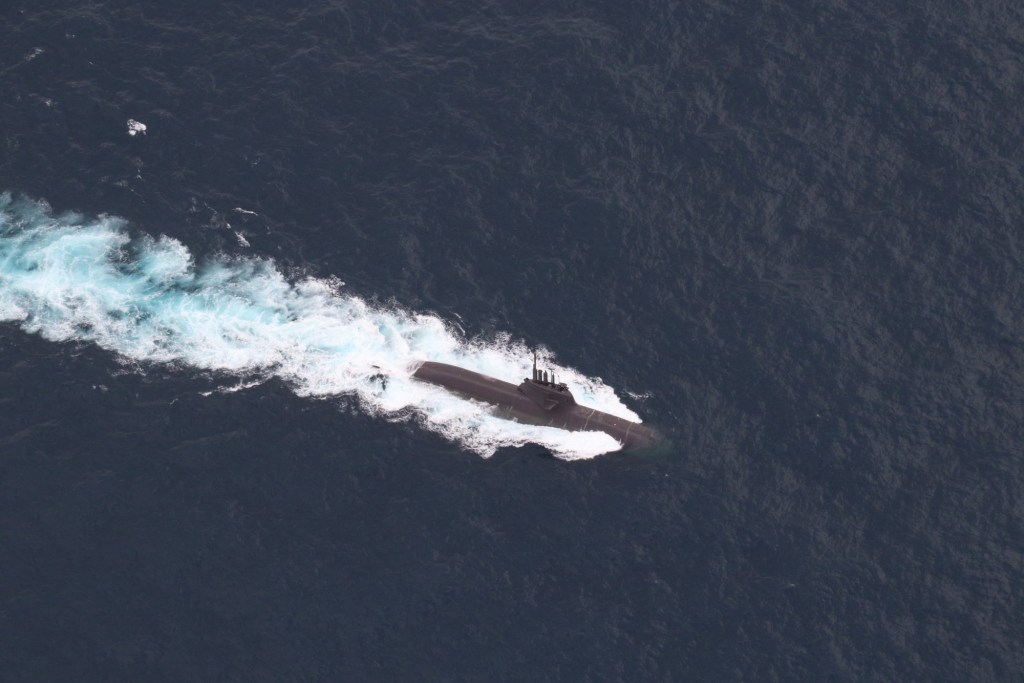
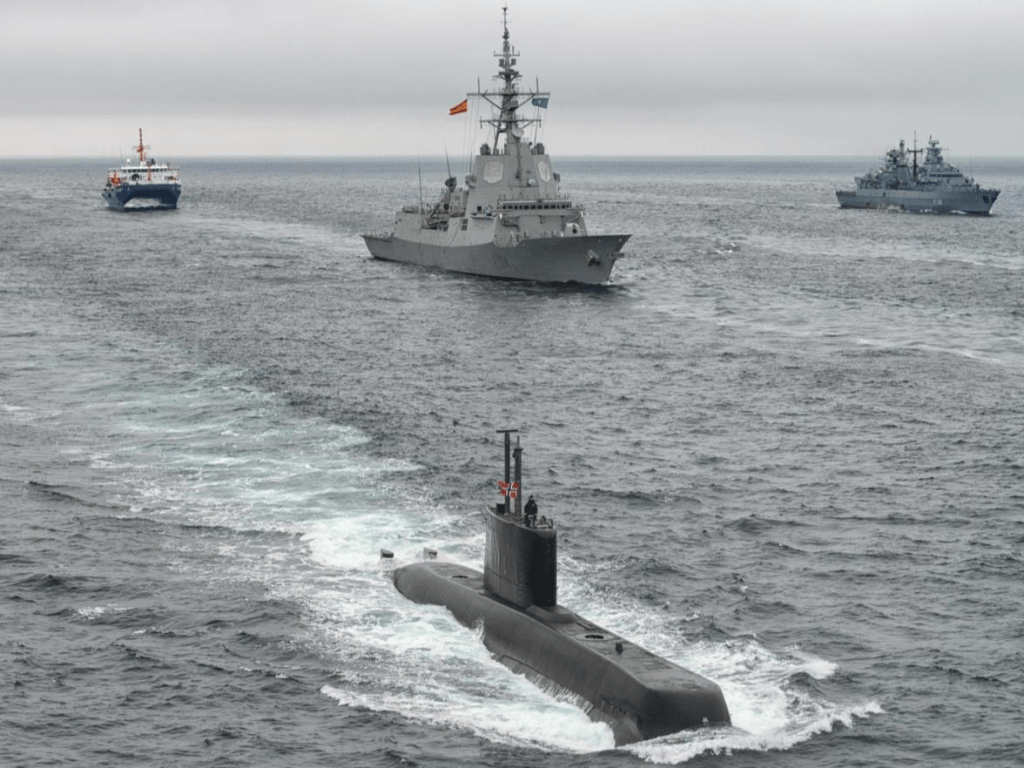
Brining together frigates, submarines, support ships and aviation maritime patrol craft Dynamic Mongoose is the largest ASW exercises conducted annually by NATO. The event was hosted by the Icelandic Coast Guard and involved personnel and equipment from more than 10 member nations all led by NATO’s Allied Maritime Command (MARCOM). Carried out in the waters of the North Atlantic the forces would carry out different scenarios all designed around Anti Submarine Warfare and all of its complexities. The event teaches the crews how different crews and assets with very different abilities can work together to solve problems.
Dynamic mongoose had the participating sides rotate through hunting and evading in complex undersea warfare scenarios in the challenging conditions of the North Atlantic waters.
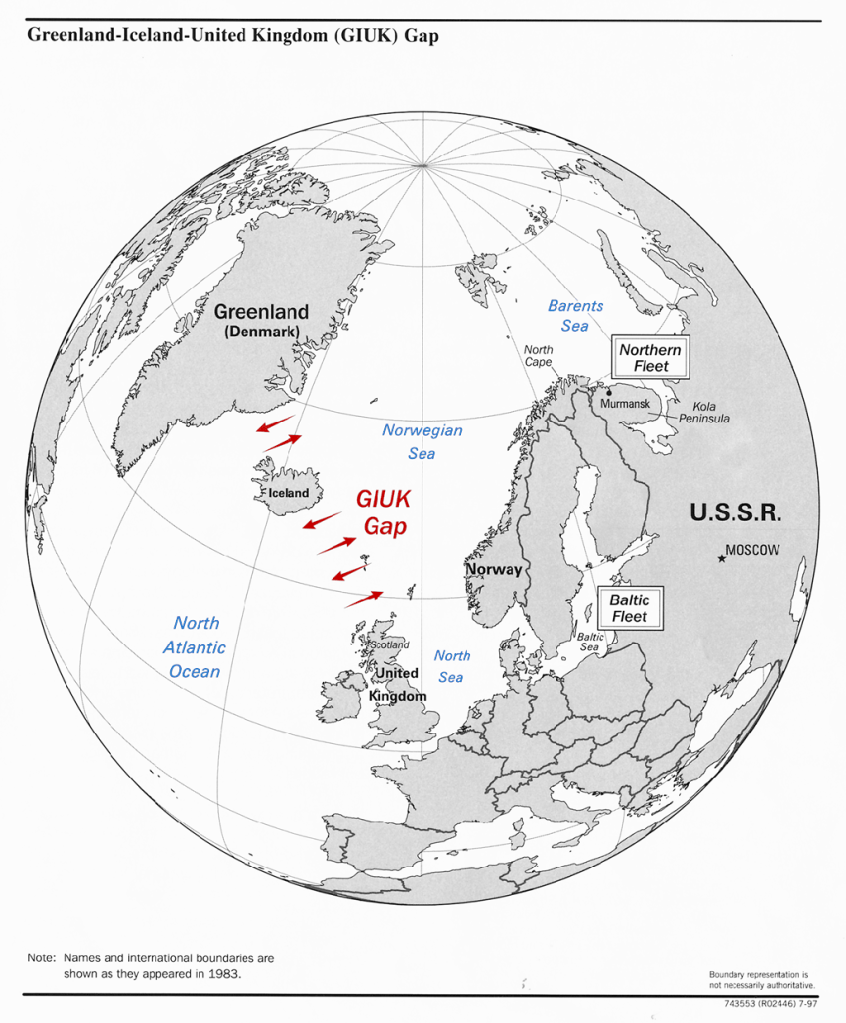
The GIUK-N Gap was a big focus for the event and is a key maritime corridor between Greenland, Iceland, and the United Kingdom/Norway. This event focused on an area that would be one of the most important areas should the capabilities become necessary. In a war between NATO and Russia for example, thag corridor would likely be a hot spot for submarines and has been considered strategically important since the beginning of the 20th century.
A map showing the GIUK-N Gap. Images from a previous year’s Dynamic Mongoose.
Formidable shield 25
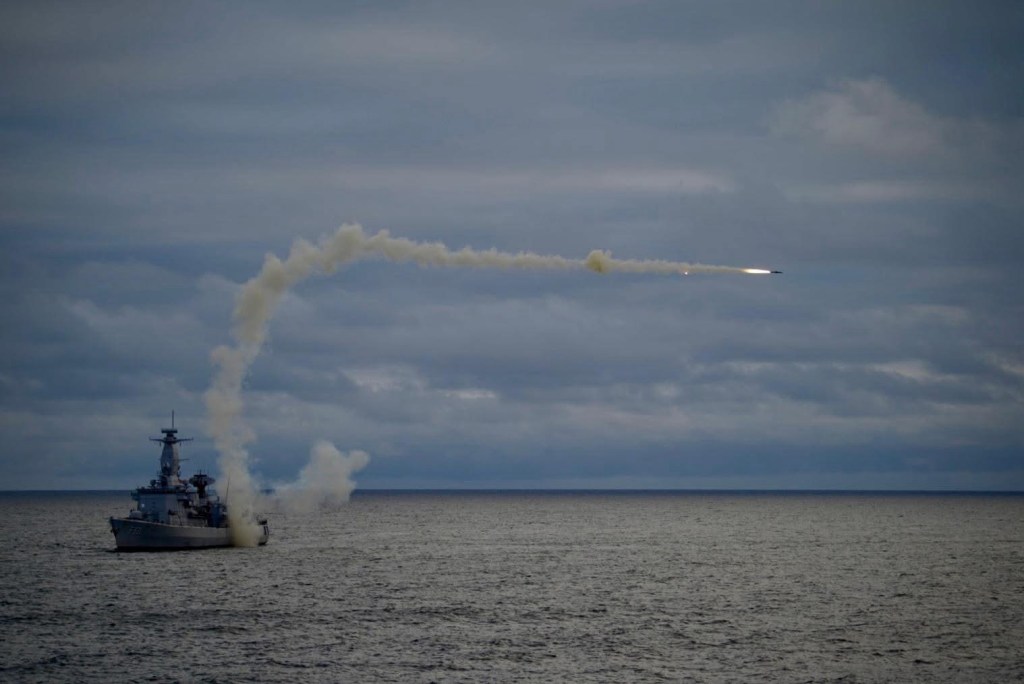
Belgian navy frigate BNS Louise-Marie fires off a Sea Sparrow missile.
Participating nations include crews, ships from Belgium, Canada, Denmark, France, Italy, The Netherlands, Norway, Spain, U.K., and U.S. with the Australians providing a radar sensor for data collection only.
Formidable Shield is the biennially (During the odd numbered years) occurring largest live fire exercise carried out in Europe. This year the event was carried out from Norway and the United Kingdom and the North Sea and Atlantic.
This exercise focuses on Integrated air and missile defense among the different nations focusing on interoperability and the different procedures. In an overall defense plan, knowing your allies capabilities and their procedures and process is a positive. Learning what they can do, how do they do it, and how can everybody come together to strengthen everybody else.
This years event was carried out with the ships of the U.S. 6th Fleet and executed by Naval Striking and Support Forces NATO (STRIKFORNATO) and with participation from 11 member nations.
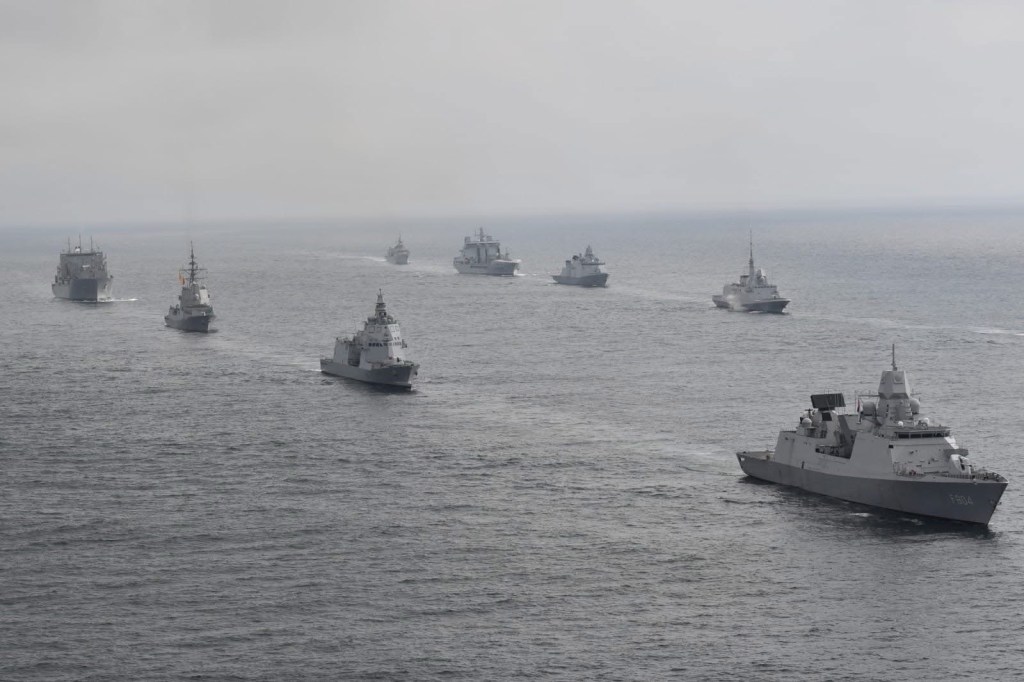
NATO’s SNMG1 fleet taking part in Formidable shield 25.
“There is simply no substitute for the training and learning that occurs when we operate in these intensely realistic scenarios…Training as a collective using NATO command and control reporting structure forges the bonds of interoperability and strengthens the alliance as a whole. Exercises like ASD/FS are critical for refining our collective integrated air and missile defense capabilities, ensuring we can respond effectively to any threat from any direction and maintain a credible deterrent posture.”
Capt. Michael Dwan, Commander, Task Group 154.64 and STRIKFORNATO’s U.S. Maritime Ballistic Missile Defense Assets Advisor
Netherlands Navy HNLMS De Ruyter (F804) De Zeven Provinciën-class guided-missile frigate served as the command ship for the event which will last for 3 weeks. During that time the participating ships will conduct live fire drills against unmanned drone and surface targets as well as subsonic, supersonic, and ballistic targets. Multiple nations ground based air defense systems will also be involved with the exercise.
The event is in part put together by UK defense company QinetiQ who supply alot of the targets that will be used as well as helps with range measurements.
Mediterranean strike
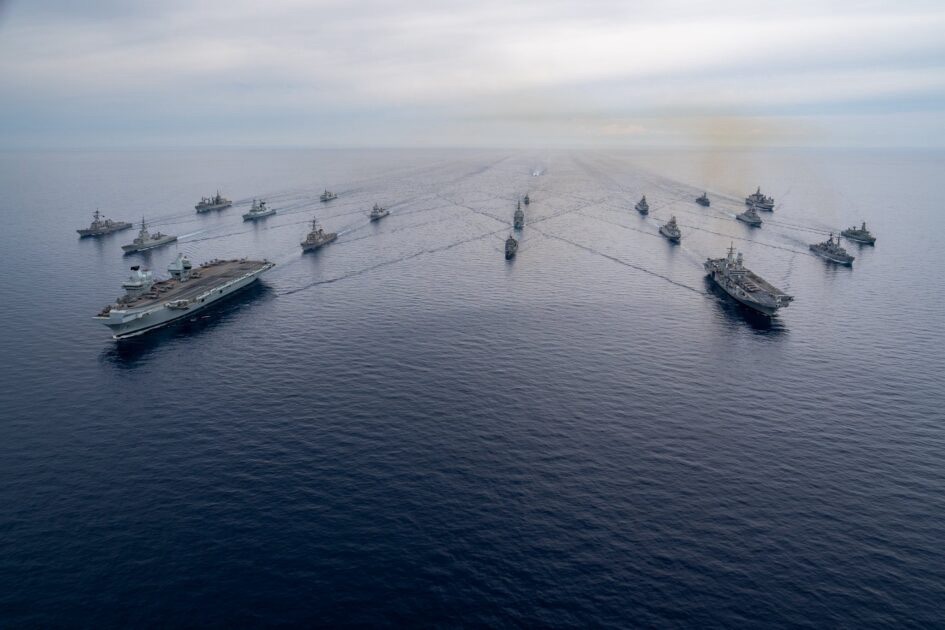
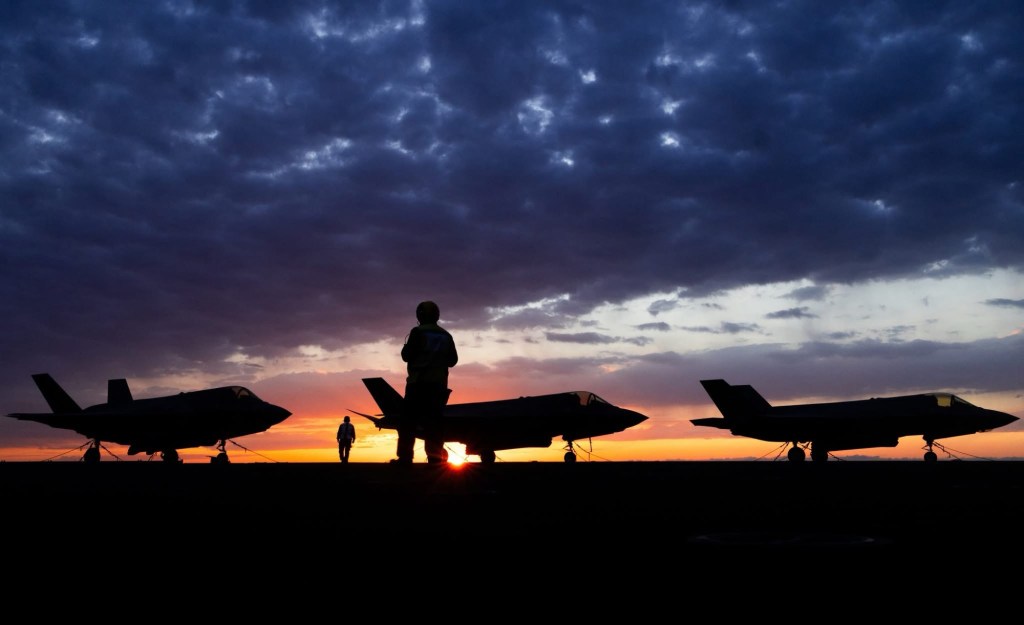
Royal Navy aircraft carrier HMS Prince of Wales (RO9), left and Italian Navy aircraft carrier ITS Cavour (550), right, lead the Mediterranean fleet.
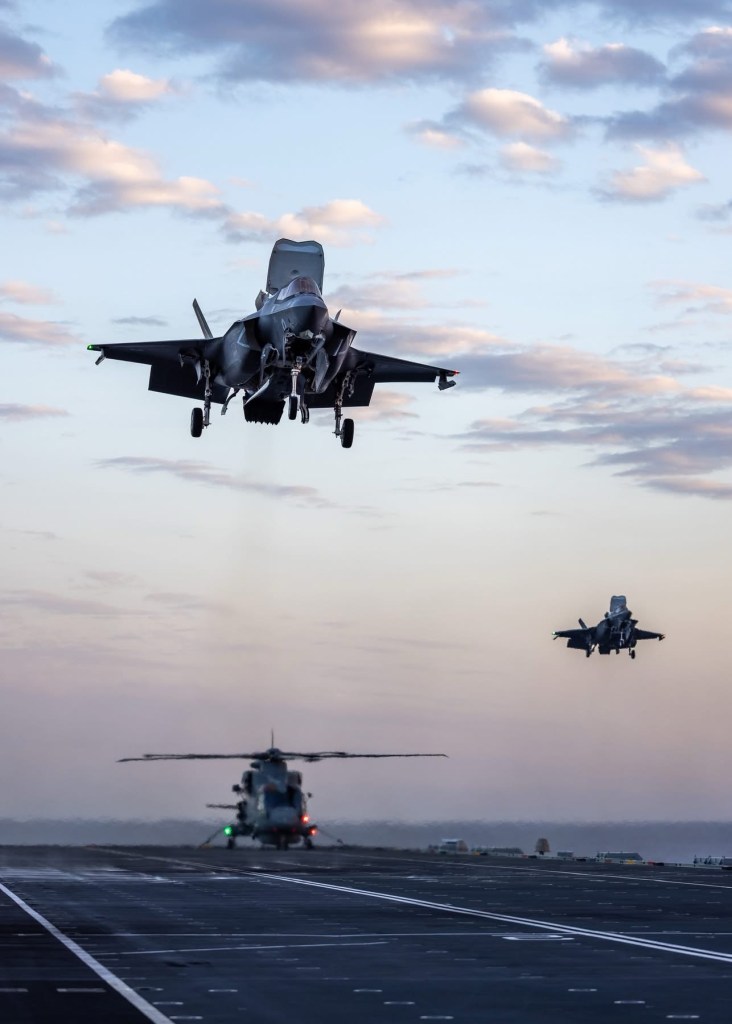
Med strike is a large exercise ptaking place in the Mediterranean. It’s brought together one of the largest military navel fleets seen in decades and includes, 21 ships from the UK and Italian navy’s. 3 submarines, 41 aircraft( half of which are F-35B’s) 19 helicopters and 10 maritime patrol aircraft and more than 8,000 crew and sailers.
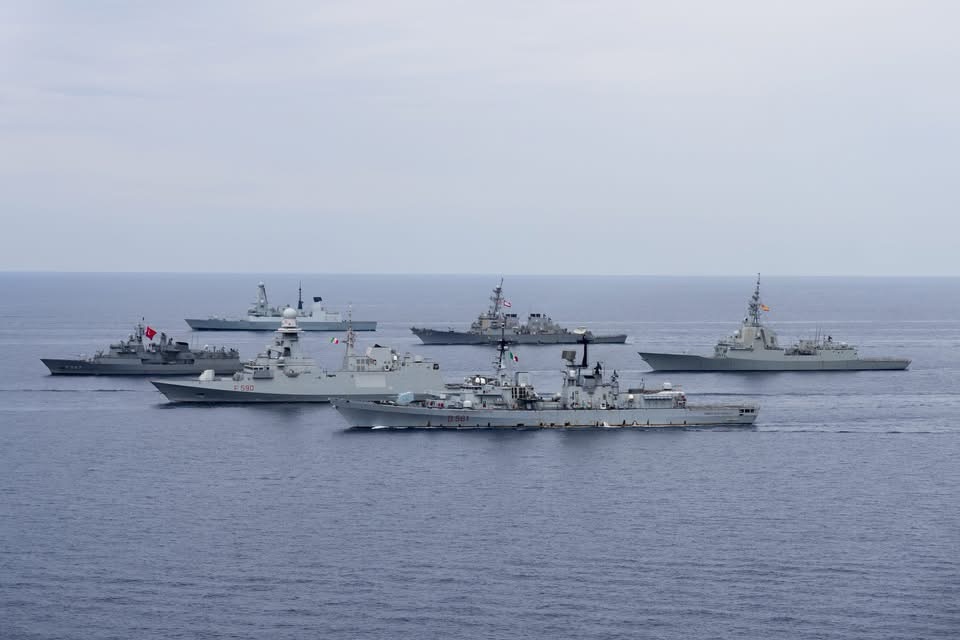
Like most of these events this one has a large focus on multi-national cooperation between the different nations involved. Canada, France, Italy, Portugal, Norway, Spain,Turkey, UK and the United States. The participants will work together on several drills including, live fire exercises, air defense exercises, anti-submarine warfare, and drill covering defense against hostile drones. Also one drill will focus on cross deck flying between some of the F-35s utilizing both carrier decks for takeoff and landing.
Some images from the exercise.
Open Spirit
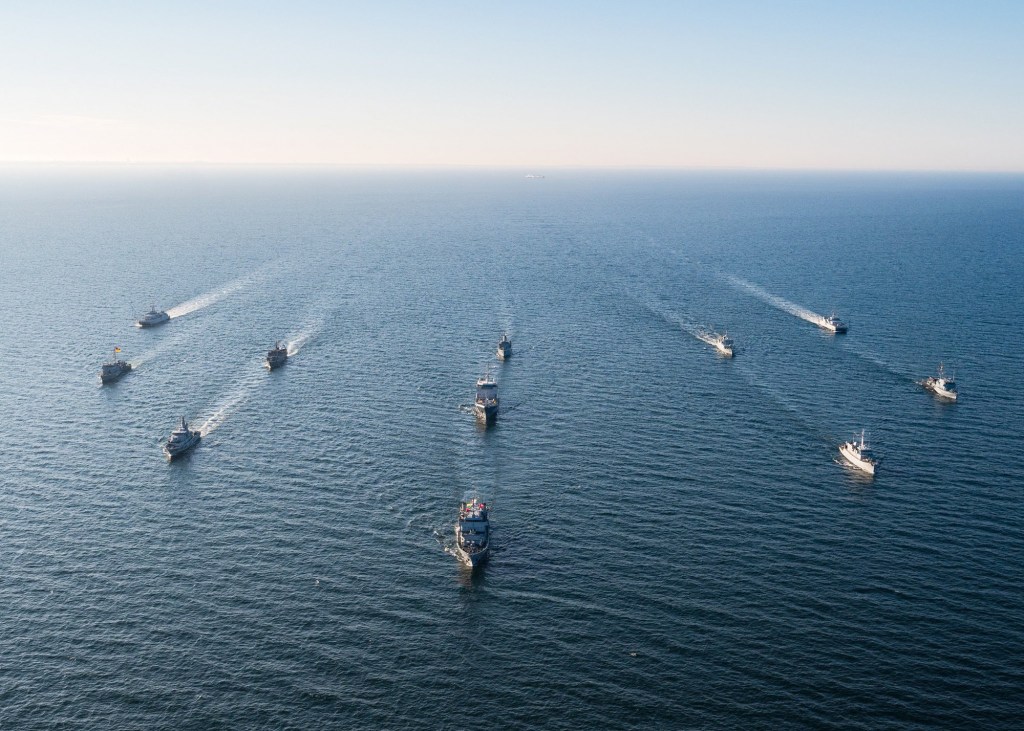
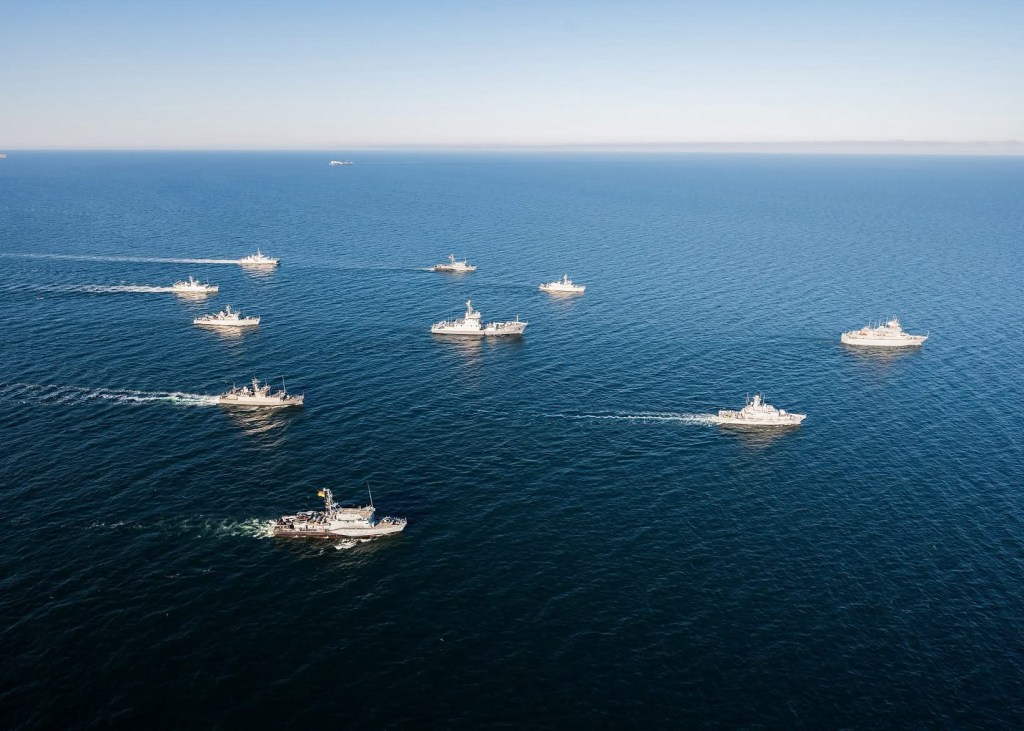
Ships from 11 nations come together in the Baltic for Open Spirit.
Open spirit is less of an exercise and more of a yearly operation however I thought I would mention it as well since it is happening now.
During the world’s two great wars, WW1 and WW2 the waters of the Baltic were heavily mined. Estonia, Latvia and Lithuania rotate yearly on leading this NATO event which see ships coming in to attempt to locate and destroy these “Historic weapons”. Last year’s event found around 40 weapons in the waters off of Estonia and was joined by a ship from the Finnish Navy for their very first NATO operation.
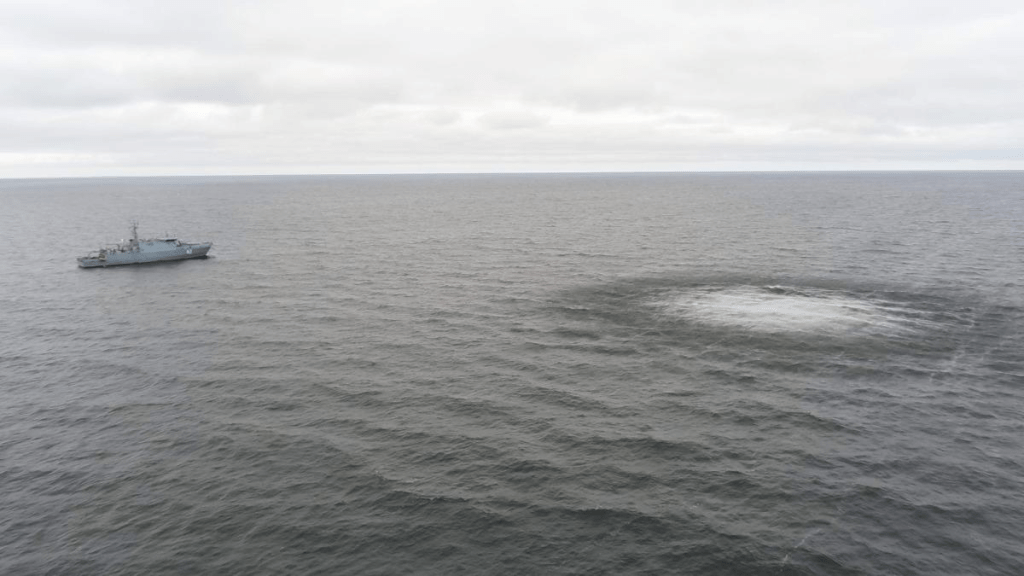
This year the focus will be on Lithuania and success is already at hand as the first of the years weapons have been found and disposed of. An explosive device was located some 38 nautical miles from Klaipėda port gate, in Lithuania by French minesweeper FS Andromeda which is currently sailing with Standing NATO Mine Countermeasures Group 1 (SNMCG1)
An image from Open Spirit 24 showing the destruction of a historic weapons on the seabed.
This operation makes the waters of the Baltic much safer for general maritime activities. Since 1997, just in Lithuania more than 200 mines, bombs, torpedoes, the remains of 17 sunken ships and two aircraft have been discovered.
All of these exercises have one major theme in common which I think is important. All of them focus mainly on how to accomplish the task while utilizing every nations strengths and working together. The working together part is a big one. NATO would crumble if these very different nations didn’t share a common focus. I suspect that the early days of the treaty were filled with a lot of communication breakdowns.
I want to thank each and every one of you for being here and reading. It’s through the support I’ve received that has brought GCR to where it is today. While I feel we have accomplished some major goals I still want to do more and with you all behind me it’s not a question of if but when. I have some major projects in the works right now and a good number of you will already have access to those when they drop on Patreon.
I can finally say that the plan is to do a big weekly recap show and possibly another if I can find some people interested in being interviewed. I’m looking to talk to people who are knowledgeable about the regions we cover or people who have interesting stories related to conflict or geopolitics. That will all drop for the members on Patreon, they have been patient long enough and I think they deserve something special. If you want access to that when it drops as well as other future benefits I’ll link to the Patreon below. It’s $1 dollar a month.
Anyway I just wanted to let everybody know about what I have going on and what I’d like to accomplish this week. I’m excited to do something new. I love writing but this will have me outside of my comfort zone and that will be good. If people like it maybe I’ll make it a daily or every couple days kind of thing.
An ongoing story in Europe as 4 US soldiers have gone missing during a training exercise being carried out in Pabradė, a town near the border between Lithuania and the Belorussian border. The four were all apart of 1st Brigade, 3rd Infantry Division and based at Fort Stewart, Georgia.
A comment from the commanding general
“I would like to personally thank the Lithuanian Armed Forces and first responders who quickly came to our aid in our search operations,” said Lt. Gen. Charles Costanza, the V Corps commanding general. “It’s this kind of teamwork and support that exemplifies the importance of our partnership and our humanity regardless of what flags we wear on our shoulders.”
The army later put out a statement that the crews M88 Hercules armored vehicle they had last been seen in had been found submerged in a body of water and that recovery efforts were ongoing. Members of the U.S. army as well as the Lithuanian army are working to recover the vehicle with the help of civilian agencies.
It’s very likely that the crew was in the vehicle when it was submerged as they probably would have showed up by now. The army would understandably want to notify the families and recover the body’s before any announcement is made.
Our thoughts are with the families and those who knew them.





 Global Conflict Reporting
You must be logged in to post a comment.