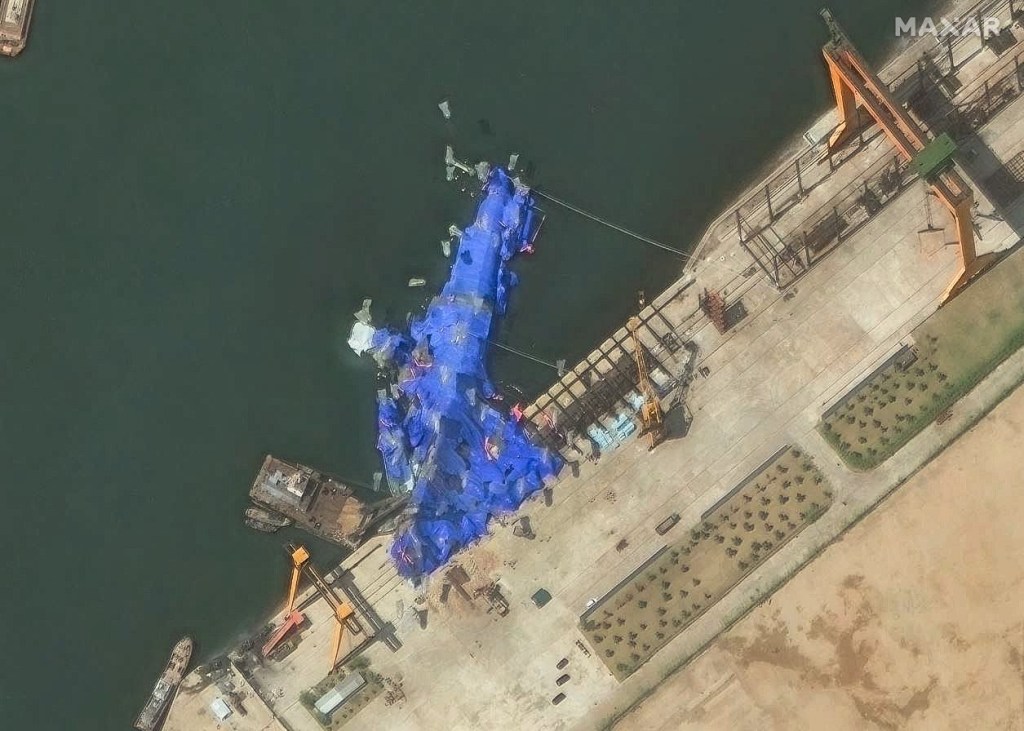
Image shows North Korean Choi-Hyun class guided missile destroyer on its side after a disastrous first launch.
By. Scott Jackson
06/11/2025
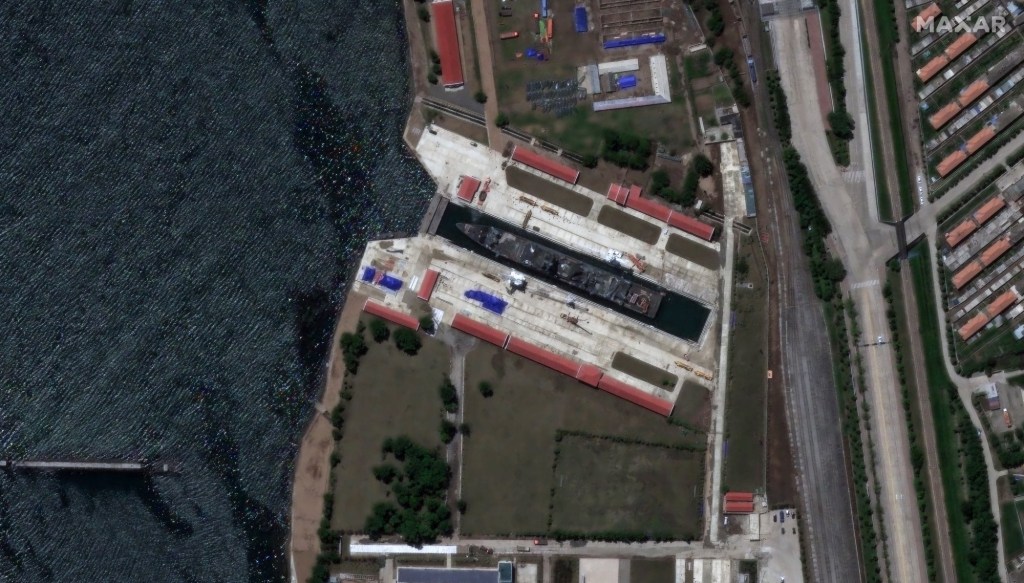
After last months disaster of a launch North Korea seems to have quickly managed to repair their new Choi-Hyun class guided missile destroyer. Images from Maxar show it during its relaunching ceremony.
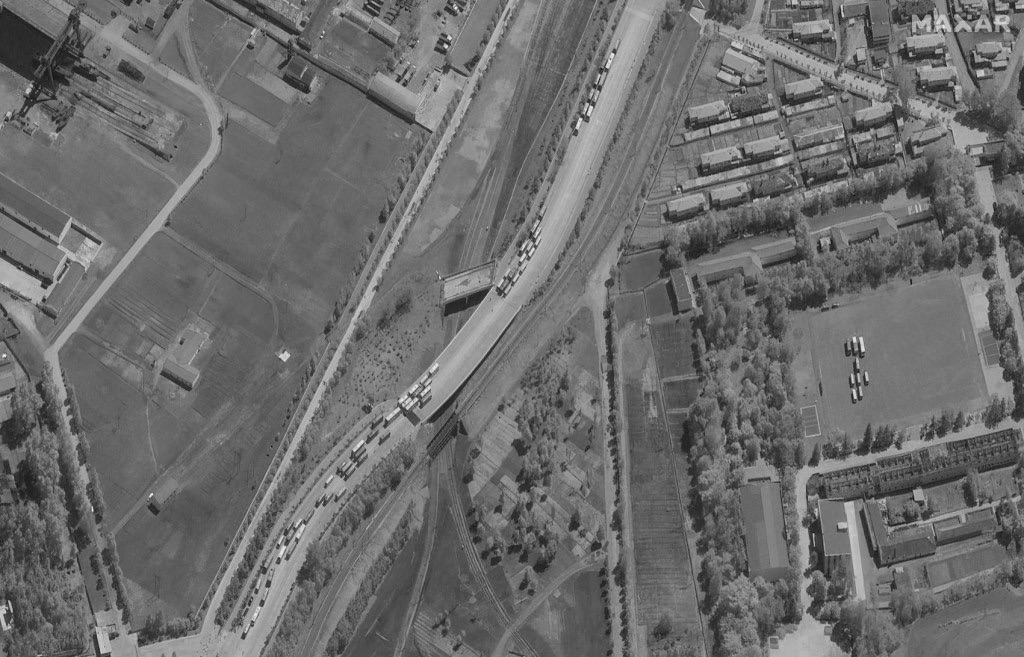
Choi-Hyon class destroyer, this time launched now first instead of sideways. A look at the road near the shipyard showing bud loads of people coming to watch the launching of the ship.
The shipyard where the first launch first took place in the city of Chongjin has a rather narrow harbor area blocking ships from being launched bow first, leaving them with only side launching which is a much harder procedure.
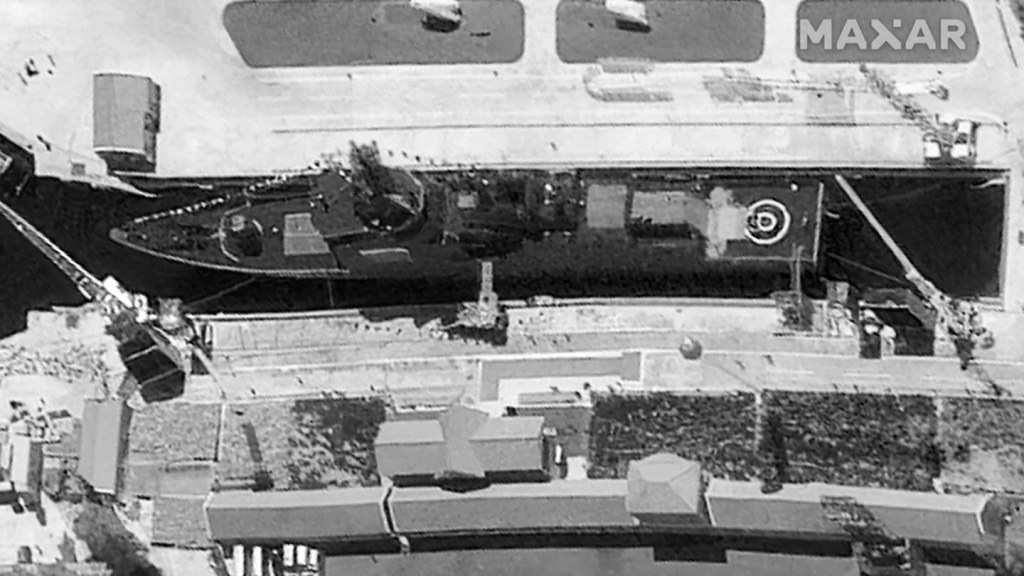
The ship was first launched on may 21st when the accident occurred but was righted by June 2nd after which it was towed to a dry dock in port city of Rajin to the northeast of Chongjin.
This yet to be publicly named ship is second of its class with two more being planned for the future. North Korea plans to utilize these specific vessels as Anti-Air destroyers however we don’t have a full picture of their capabilities.
Image of the ship in dry dock.
The black and white images were taken and released today by the awesome guys over at Maxar. They do amazing things with satellite imagery.
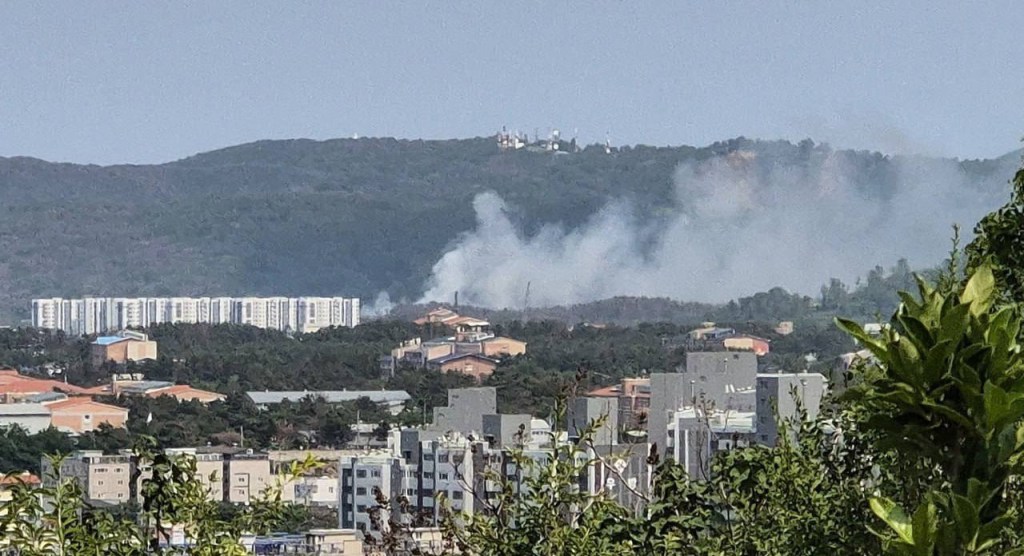
Yesterday on May 29th, 2025, a South Korea Lockheed P-3 Orion MPA took off from its Pohang base at 1:43PM and crashed shortly after takeoff. The South Korean Navy after getting responders to the site of the crash, a crash which was caught partially on video, annonced that all 4 of the crew had died in the crash and subsequent explosion.
Still image taken from the video showing the crash of the P-3.
The South Korean Navy is conducting an investigation into why the plane went down appointing the vice chief of naval operations to investigate the incident.
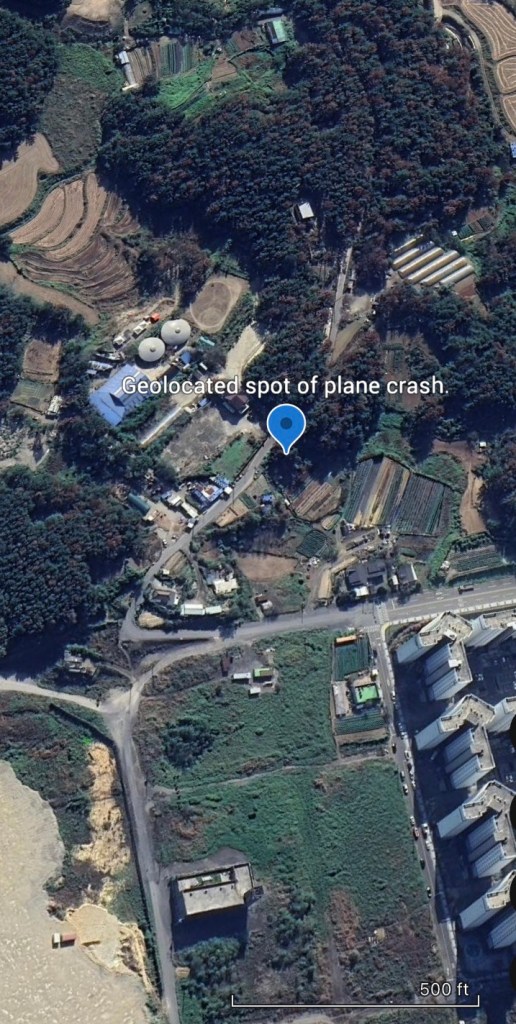
From what we know from the preliminary information It seems after takeoff for a routine training mission the crew of 4 had issues with the plane and attempted to bring it back in for a landing. Not being able to make it back to the airfield the crew seems to have made the decision to put it down into a less dense area striking what looks like the outskirts of a farm.
Scott here.The crew should be commended for managing to get the plane over a less populated area than where they were when it appears problems with the plane started. They saved alot of lives not letting this plane crabs into the many residential areas around here. Just several hundred feet from where they crashed is a large apartment complex.
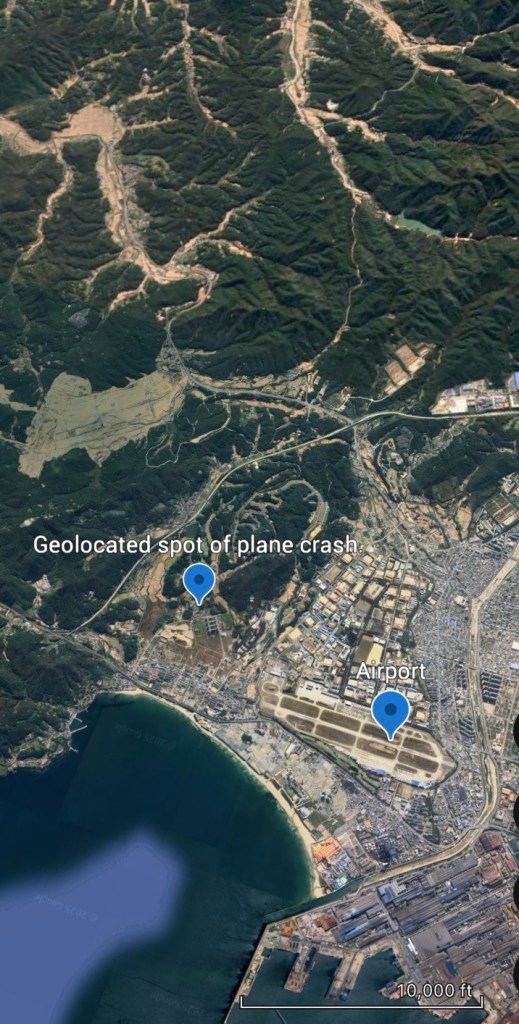
Close approximation of where the plane crashed. These apartments appeared in a lot of the footage locals were taking of the crash which helped with geolocation efforts.
This crash sadly ends the 30 year safety record for the aging but still reliable P-3 Orion. This plane has seen decades of use as a maritime patrol plane as well as a capable ASW (Anti-Submarine warfare) hunter. The plane can be loaded up with dozens of sonar bouy’s which can detect subs as well as the torpedos and depth charges which can be dropped once an enemy sub has been detected. The Orion also has the ability to carry several Harpoon Anti-Ship missiles.
The South Koreans originally acquired 8 P-3C aircraft but liked them so much they latwr doubled that by adding 8 more P-3CK variants (P-3B variants thag were modified by South Korean).
While the investigation is still ongoing for a cause defense analyst have noted the immense strain put on these craft as the South Korean Navy only have a limited number compared to say Japan who operate around 100 of them. This offers broader coverage as well as the increased availability for these planes to rotate through maintenance.
Overview of the area.
Thank you for reading. I’m always open for questions, comments, tips and will entertain the idea of collaboration if you have an interesting project you can get me excited about.
I’m currently working towards starting a podcast of sorts. Well I have several podcast ideas at least. Give me some time, it’s a new platform I’ve never done and will take a lot of research and practice before I’m comfortable with that. If you would like to be apart of that send me an email and tell little about your story and why it applies to what we do here.
This article was fun to write as I was able to get back into geolocation. Nobody online,to my knowledge, had yet worked out the crash site. Usually I’m able to check my work with one of the Geolocation experts but no luck this time.
If you would like to further support my work you can make a one time donation here.
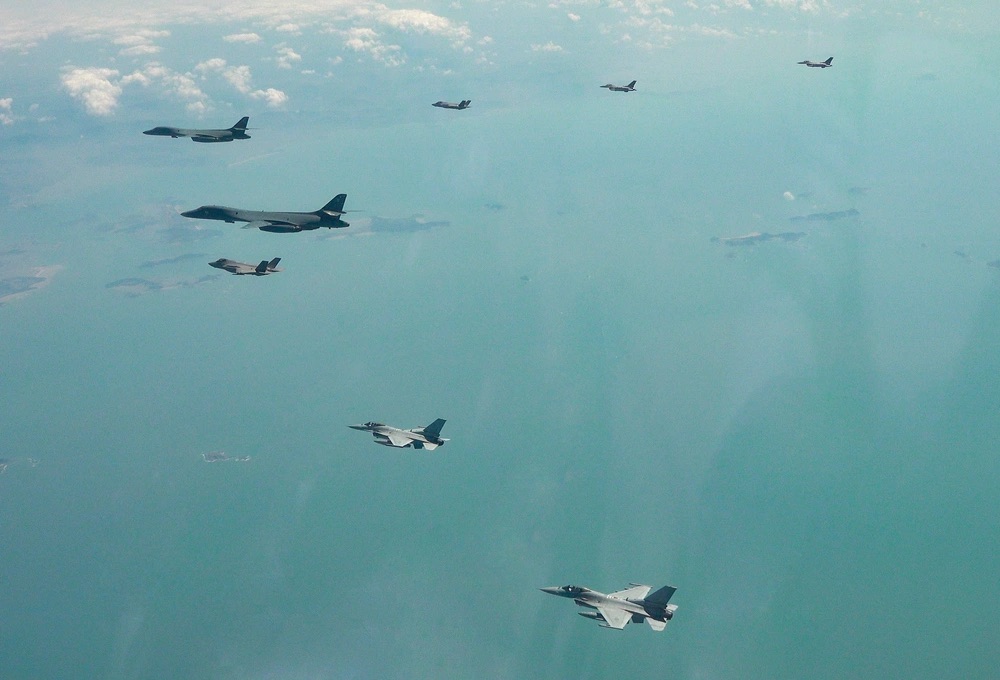
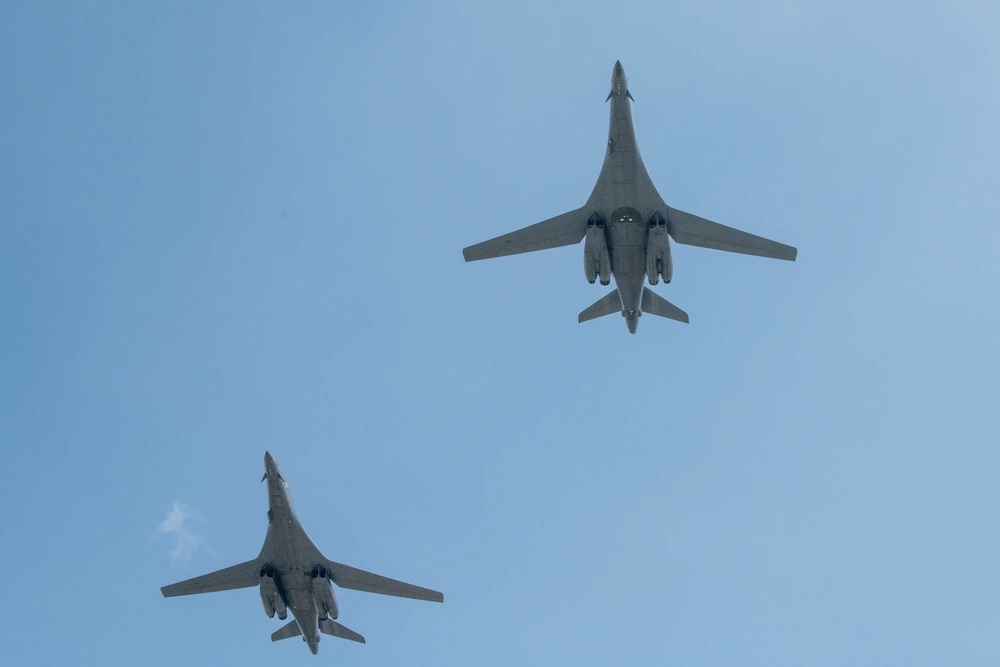
Two U.S. Air Force B-1 Lancers fly in formation with two U.S. F-16 Fighting Falcons and two Republic of Korea Air Force F-35A Lightning IIs
By. Scott Jackson
04/15/2024
Earlier today a pair of U.S. Air Force B-1B Lancers flew across the pacific to train with air units from the Republic of Korea (South Korea).The bombers were joined by two U.S. F-16s and two F-35 Lightning’s II from They carried out what the Air Force is calling offensive and defensive counter air training.
These missions are important for improving and honing the combat skills between the partner nations as they develops combat procedures with newly acquired tech like the F-35, which given its massive increase in technology requires years of training to fully unlock its full potential on the battlefield.
I’ve had the chance to speak with several 5th gen fighter pilots (F-22 and F-35 both) one told me that you can get almost lost or freeze up when trying to process all of the data that the F-35 will give you.F-35 crashes (or less serious incidents) have happened because problems happened while pilots were distracted or they simply got overwhelmed. The F-35 especially demands a huge cognitive load. I’ll add an article of somebody else bringing this up. -Scott
“Our two nations will continue to enhance combined training to deter and respond to North Korean threats through close cooperation,”
-the South Korean defense ministry said.
“The training demonstrated the combined extended deterrence posture of the ROK-U.S. alliance in response to North Korea’s advancing nuclear and missile threats,” the Defense Ministry said in a press statement. “It also aimed to enhance interoperability between the two forces.”
This action also had the added effect of being a “show of force” to North Korea as well as other countries in the area (China and Russia). On the day North Korea was celebrating the birthday of Dictator Kim Jung Un’s great Grandfather and North Korean state founder , Kim Il Sung.
The two B-1Bs conducting a flyover of Osan Air Base in South Korea.
The bombers then did a quick flyover of the Osan Airbase and then left the area.
It’s expected that this will cause a reaction in North Korea. North Korean missile teat have been carried out in the aftermath of these bomber missions in the past. The U.S. and South Korea are likely to increase patrols until things cool down.
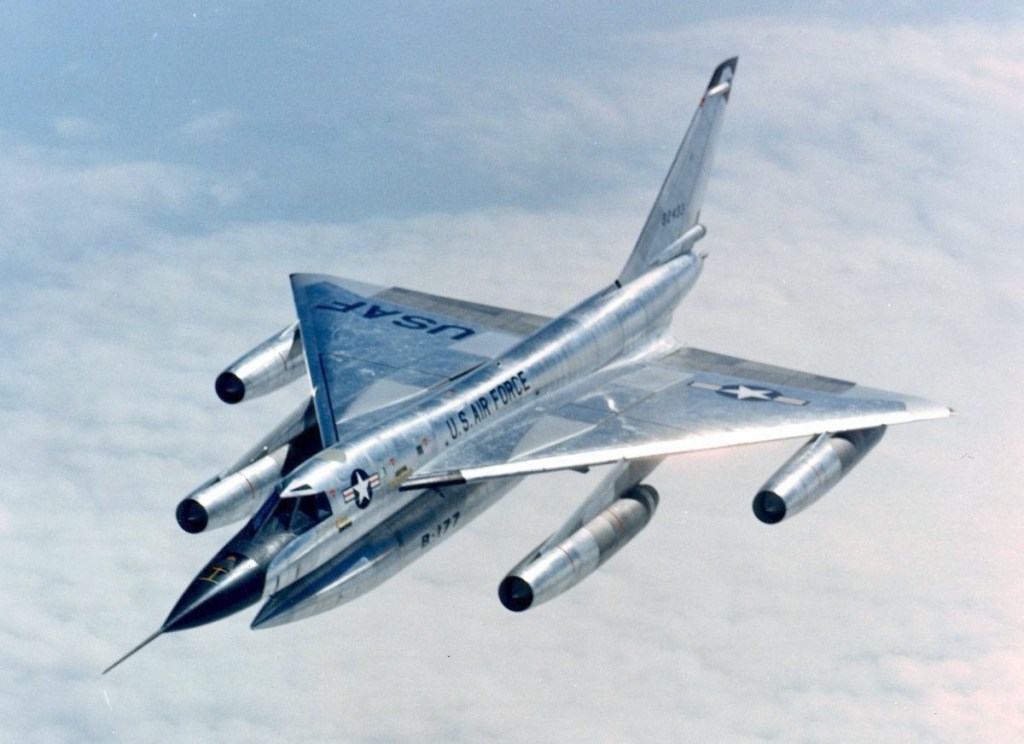
The Rockwell (now Boeing) B-1b lancer, affectionately called “the bone” by those who know and love her is a swept-wing long-range strategic bomber in the U.S. Air Force. The bomber was developed as a way to combine the payload of the B-52’s with the speed of the Convair B-58 Hustler. Originally the Air Force had chose the B-70 Valkyrie for the task, a high altitude bomber with similar speed and altitude capability as the U-2. Around the early 50’s the Soviet unions interceptors at the day couldn’t keep up and the B-70 would have been able to simply fly right past them. However as Surface to Air missile systems improved the ability to fly very fast at low altitudes became the doctrine the Air Force wanted to pursue.
The Cold War Convair B-58 Hustler. Prototype North American XB-70 Valkyrie flying at three times the speed of sound.
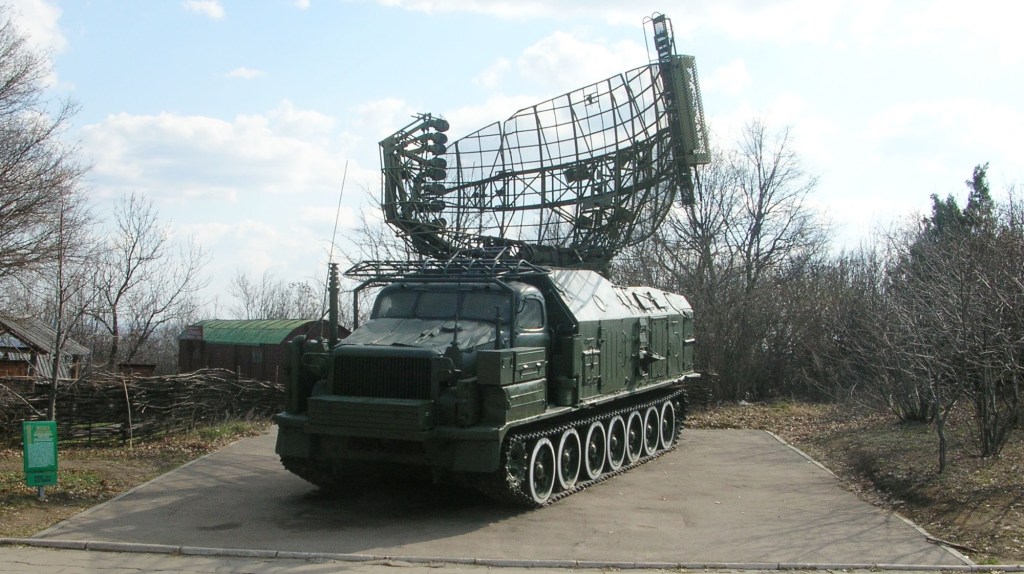
Radars of the day (and today) have several weaknesses, one being that they are only as effective as they can reach with their waves. Terrain and the horizon are the biggest factors here so a bomber flying low enough and far enough away can avoid most radar instillations.
P-40 Bronya (NATO reporting name-Long track)
The bone was chosen as its ability to fly low and at high speed would keep the crews and aircraft safe as well as make it more likely they could continue their mission. You might ask why the B-52 of the day, which is still in operation (with some upgrades) was spared from the chopping block like the idea for the B-70 and the answer was because it’s huge fuel capacity made it able to operate at lower altitudes longer and upgraded conventional munitions capability made it able strong asset for nuclear deterrence as well as conventional warfare. However the Air Force uses both bombers for different reasons. Nobody is going to ask the Stratofortress to go zipping through a canyon and pop over a valley to hit a target.
I have the perfect video that displays the capabilities of the B-1 and why even still today these monsters are still considered one of the baddest planes in the arsenal.
B-1B Lancer terrain following at Edward’s AFB.
The jet is surprisingly low and if you didn’t know he was coming you would only have a couple very precious seconds to react. That’s why.
Anyway I could write all day about this plane but I think I’ve said enough for now.
Thank you for reading. I hope you get as much out of what I’m doing here as I get out of making these reports. If so I would invite you to join my Patreon. Doing that would help me more than I can describe. I’ve kept it as cheap as possible to become a member. It’s only a $1.00. However a dollar from even half of my Facebook followers would be a life changing amount of money for me and for this page.
Thank you for all the support over the years. Here’s to many more.
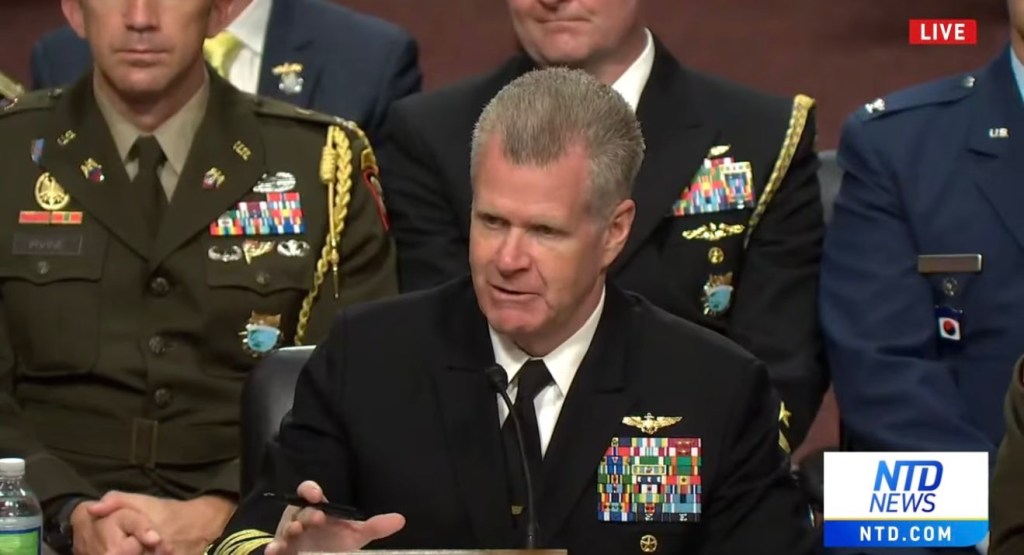
Two days ago GCR reported that a number of US cargo planes were moving equipment to the Middle East. We have some more information on that today after Admiral Samuel J. Paparo revealed today at a hearing with the Senate Armed Services Committee, that several Patriot battery’s had been taken from South Korea and the Indian Pacific Command (INDOPACOM) and transferred to Central Command (CENTCOM). The airlifts were cauteries out by dozens of C-17’s.
Admiral Samuel J. Paparo, Senate Armed Services Committee hearing.
INDOPACOM covers the pacific and Indian Ocean region and is one of the most important military commands for the U.S. as they struggle against Chinese territorial interest with Taiwan as well as other parts of the first island chain. CENTCOM on the other hand, covers the Middle East region and is currently carrying out operations against the Iranian backed Houthis in Yemen. US assets have been reported as being moved to the Middle East in a suspected threat to Iran. US president Donald Trump has made it clear that if negotiations aren’t started with Iran, concerning Irans nuclear program, bombs will be the next step.
While Iran has little in the way of modern aircraft capable of defending against these hypothetical US strikes, what they do have is hundreds of medium and long range ballistic missiles. High level officials from the Iranian government have made threats towards U.S. military bases in the region as well as the bases of anybody who could help the US with a strike on Irans. This is where the patriot systems come in.
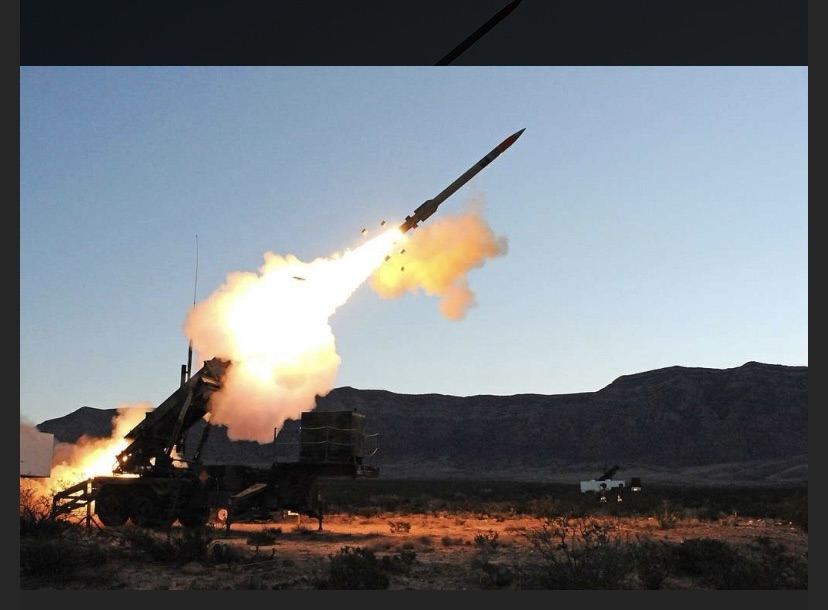
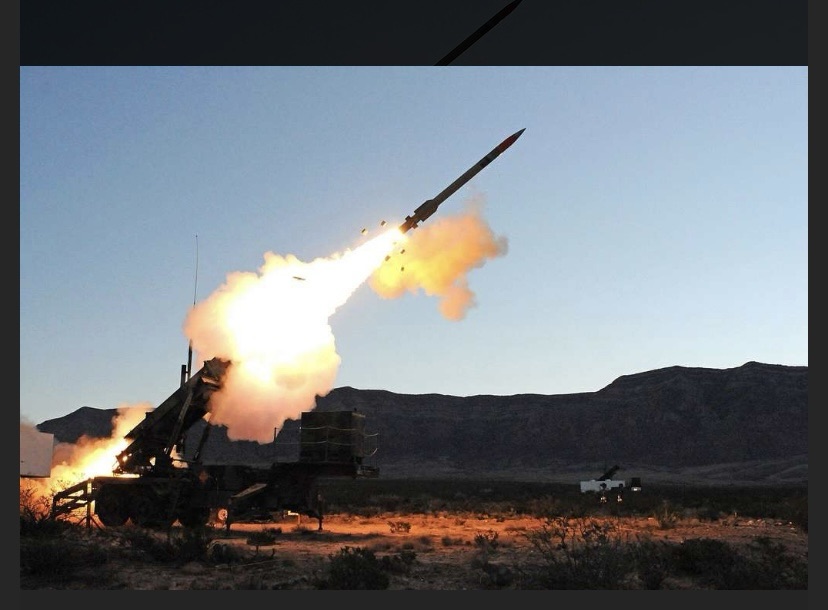
Patriot missile test
A patriot battery is made up of the following.
6-8 launchers
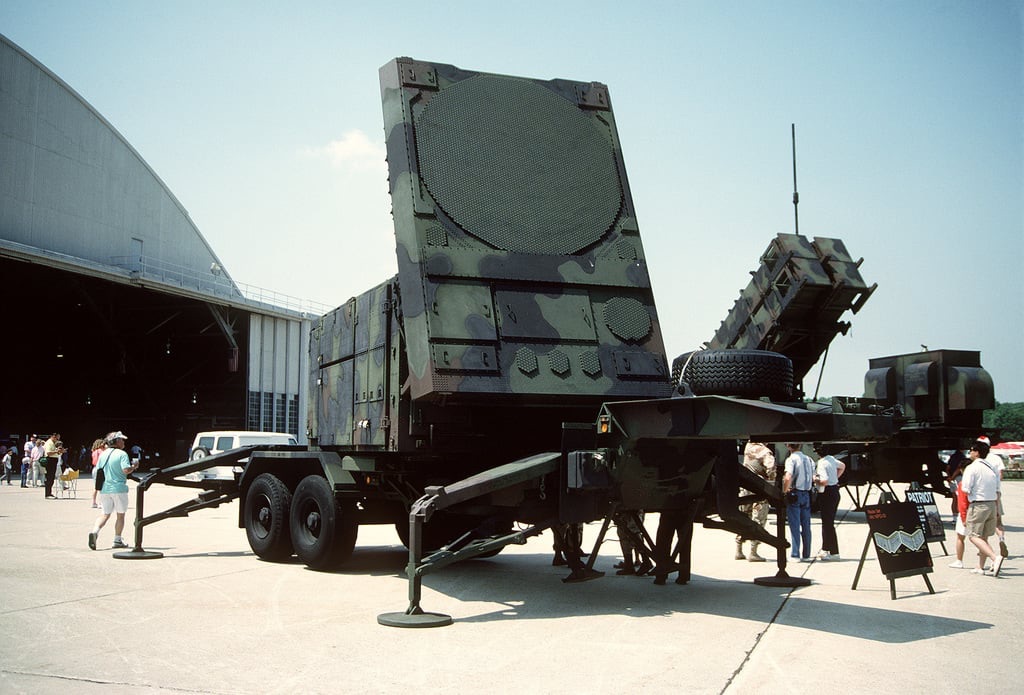
1 radar set (AN/MPQ-53 phased-array radar)
An Engagement Control station.
An Electrical Power Plant
And an Antenna Mast Group.
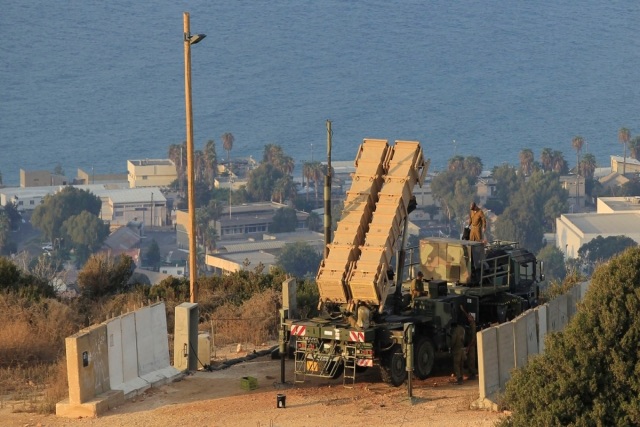
Patriot PAC 2 launcher in service in Israel. AN/MPQ-53 phased-array radar
A patriot battalion is made up of anywhere from 4-6 battery’s and 24-48 launchers as well as the single radar, power, and Fire Control Station each.
The Patriots in South Korea are apart of an I rig rated defense system and cover US assets in the country like Camp Humphreys in Pyeongtaek and Osan Air Base.
South Korea has asked the U.S. Department of Defense to temporarily deploy substitute assets, such as alternative air defense systems or combat aircraft, on a rotational basis to cover the hole left in their air defense network with the removal of these systems between February and March. The Patriots are expected to remain in the Middle East for the next at least six months.
The U.S. has dozens of bases and locations in the region that could come under fire in the near future as tensions rise in the region. Iran has already threatened US forces as a retaliation for a possible strike on Iran’s nuclear facilities. Jordan, Saudi Arabia and Israel all have their own defense networks (some supplemented by THAAD and Patriot systems.)
Thank you for reading. I hope you get as much out of what I’m doing here as I get out of making these reports. If so I would invite you to join my Patreon. Doing that would help me more than I can describe. I’ve kept it as cheap as possible to become a member. It’s only a $1.00. However a dollar from even half of my Facebook followers would be a life changing amount of money for me and for this page.
Audio content coming very soon. I’m also looking for interesting people to interview. If that’s you, contact me through my email.
Thank you for all the support over the years. Here’s to many more.



 Global Conflict Reporting
You must be logged in to post a comment.